Author: Rochelle Parry

  • SEO for Authors – Part Three of Five Things Every Author’s Web Site Needs

    SEO for Authors – Part Three of Five Things Every Author’s Web Site Needs

    The Third Post on the Five Pillars of Effective Website Design will Focus on SEO (Search Engine Optimization)

    What good is having a website, if no one can find you?

    Recap

    Does your website have these five essential website pillars to be effective for promoting you and your work?  

    1. Your Branding Message in a Tagline
    2. Calls to Action – Driving Your Audience to Action
    3. Search Engine Optimization (SEO)
    4. Interaction with Your Visitors
    5. Usability and Readability

    3. Search Engine Optimization (SEO) for Authors

    Content must be coded in text, not as a graphic

    It is important for your website to have certain elements in text rather than images so that search engines will be able to find them and then index them (so that your website will come up on browsers such as Bing, Google, Yahoo). Navigation (links that go to other pages on your website), the site title, your book titles, your author name, page titles, and of course, your content needs to be coded in text, not as a graphic with text embedded. Google “indexes” your site following these page links. With so many Google fonts available, it’s almost a crime to use graphics as navigation elements. WordPress automatically uses text for your navigation, and many themes offer background, font and color options to make your navigation menu more interesting visually.

    Translation: Do not only use an image of your text embedded in a graphic in the header of your website or your digital book cover images and expect to have your website found easily by search engines. Make sure that you always use text in addition to the image graphic of your book covers.

    A photo is worth a thousand words

    Did you know that you can make your images work for you in your search results? They just need an appropriate “title” and “alt” text. These tags don’t show up to the reader, but the search engines will track them IF they are tagged with text. WordPress has text fields you can easily fill in with key words when adding your graphic. Don’t leave these valuable tag fields empty! It also helps if your files are named with a word that describes them, rather than the series of letters and numbers a digital camera might give them.

    Use the correct image size for faster web site load time 

    When you use images, make sure they are optimized for the web. Big, high-resolution profile pictures and book covers are great for print, but will slow down your page load times. Images for the web need to be measured in kilobytes (kb), not megabytes (mb). Google considers page load times when ranking your site; the faster the better. Your site will also rank higher if it is mobile friendly (more on Usability coming up in section 5). As of April 21 2014, Google will begin penalizing sites that are not mobile-friendly.

    Fresh content aids in SEO – even a small paragraph

    Fresh content keeps your site on top of the heap. If you have a blog, it should be incorporated into your website. If you’ve been using Blogspot (blogger) or WordPress, another blogging platform, you can easily integrate those into a domain-based website. It’s recommended to update your blog at least every two weeks. If you don’t have time to blog, there’s no shame in it; just don’t have one. It looks worse to have your last post dated from Christmas 2012 prominently displayed than not to have one. But remember consistent short and sweet  blog posts are better than none. It is freshness and frequency that count, not length and complexity.

    Plugs-ins: The special sauce for ramping-up your SEO indexing

    WordPress has some great paid and free plug-ins to help optimize your site for better search results. All in One SEO Pack has a free and a paid version. These plugins make it easier to add your page titles and meta information.

    Part of the process of discovery when setting up a web site is figuring out what people will be searching for to bring them to your site. These words and phrases can be integrated into each page. Individual pages also need their own titles, so that Google and other browsers will index them correctly.

    Use Google Plus Social Media for extra Google SEO Goodness

    We have a handy guide to getting started on Google Plus. Click here for more information.

    Use words in your URLs instead of numerical codes

    These words can be automatically generated in WordPress by going to the “Permalinks” section in the administrative screen and choosing “Post Name”. Think about the words that a potential visitor to your website might type in her browser search window in order to find your web site. For instance, www.mywebsite.com/bookreviews/ is better than www.mywebsite.com/?p=7846, even though they go to the same page.

    When writing your pages, use sub-headings when topics change. Be sure to use the proper tags, such as <h2> and <h3> for subheads, rather than just enlarging and bolding your text.

    Link from other sites

    Having a trusted site like Chanticleer that has your review listed and linked back to your website will increase your search engine rankings. These are called inbound links, or backlinks. When linking to content from your website, make sure that the links open in a new browser window, so that your site stays active in the viewer’s browser.

    Our next post will focus on interacting with your web site’s visitors.

    We hope that this article has shed some light on areas where your website can be improved to help you reach your audience. The best part is all of these improvements are free if you know how to do it yourself. If not, Chanticleer Reviews offers website assistance and creation as part of their book marketing services targeted specifically for authors.

    Read Part Four Here!

    Rochelle Parry, Chanticleer Reviews’ Creative Director   You are welcome to email me at: RParry@ChantiReviews.com

    Rochelle Parry, webmaster

  • CALLS to ACTION – Part Two of Five Things Every Author’s Web Site Needs

    CALLS to ACTION – Part Two of Five Things Every Author’s Web Site Needs

    [fusion_builder_container hundred_percent=”no” equal_height_columns=”no” menu_anchor=”” hide_on_mobile=”small-visibility,medium-visibility,large-visibility” class=”” id=”” background_color=”” background_image=”” background_position=”center center” background_repeat=”no-repeat” fade=”no” background_parallax=”none” parallax_speed=”0.3″ video_mp4=”” video_webm=”” video_ogv=”” video_url=”” video_aspect_ratio=”16:9″ video_loop=”yes” video_mute=”yes” overlay_color=”” video_preview_image=”” border_color=”” border_style=”solid” padding_top=”” padding_bottom=”” padding_left=”” padding_right=”” type=”legacy”][fusion_builder_row][fusion_builder_column type=”1_1″ layout=”1_1″ background_position=”left top” background_color=”” border_color=”” border_style=”solid” border_position=”all” spacing=”yes” background_image=”” background_repeat=”no-repeat” padding_top=”” padding_right=”” padding_bottom=”” padding_left=”” margin_top=”0px” margin_bottom=”0px” class=”” id=”” animation_type=”” animation_speed=”0.3″ animation_direction=”left” hide_on_mobile=”small-visibility,medium-visibility,large-visibility” center_content=”no” last=”true” min_height=”” hover_type=”none” link=”” border_sizes_top=”” border_sizes_bottom=”” border_sizes_left=”” border_sizes_right=”” first=”true”][fusion_text]

    The Second Post on the Five Pillars of Effective Website Design will Focus on Calls to Action – Driving your web site visitor to take action instead of moving on. 

    Recap

    You already know the obvious elements your website needs, such as your books and where to get them, a page about yourself, a blog (if you keep it up), your contact information, and if appropriate, press page and calendar.

    But does your website have these five essential website pillars to be effective for promoting you and your work?  

    1. Your Branding Message in a Tagline
    2. Calls to Action – Driving Your Audience to Action
    3. Search Engine Optimization (SEO)
    4. Interaction with Your Visitor
    5. Usability and Readability

    Effective Author Website

    2. Drive Audience to Action

    [/fusion_text][/fusion_builder_column][/fusion_builder_row][/fusion_builder_container][fusion_builder_container hundred_percent=”yes” overflow=”visible” type=”legacy”][fusion_builder_row][fusion_builder_column type=”1_1″ layout=”1_1″ background_position=”left top” background_color=”” border_color=”” border_style=”solid” spacing=”yes” background_image=”” background_repeat=”no-repeat” padding_top=”” padding_right=”” padding_bottom=”” padding_left=”” margin_top=”0px” margin_bottom=”0px” class=”” id=”” animation_type=”” animation_speed=”0.3″ animation_direction=”left” hide_on_mobile=”no” center_content=”no” min_height=”none” align_self=”flex-start” border_sizes_undefined=”” first=”true” last=”true” hover_type=”none” link=”” border_position=”all”][fusion_button link=”#” color=”default” size=”xlarge” type=”flat” target=”_self” title=”” button_gradient_top_color=”” button_gradient_bottom_color=”” button_gradient_top_color_hover=”” button_gradient_bottom_color_hover=”” accent_color=”” accent_hover_color=”” bevel_color=”” border_width=”1px” shadow=”” icon=”fa-star” icon_divider=”yes” icon_position=”left” modal=”” animation_type=”0″ animation_direction=”down” animation_speed=”0.1″ alignment=”left” class=”” id=”” border_radius=”0″]Sign Up Here[/fusion_button][fusion_separator style_type=”none” top_margin=”10″ bottom_margin=”10″ sep_color=”” icon=”” width=”” class=”” id=”” /][fusion_button link=”#” color=”default” size=”xlarge” type=”flat” target=”_self” title=”” button_gradient_top_color=”” button_gradient_bottom_color=”” button_gradient_top_color_hover=”” button_gradient_bottom_color_hover=”” accent_color=”” accent_hover_color=”” bevel_color=”” border_width=”1px” shadow=”” icon=”fa-star” icon_divider=”yes” icon_position=”left” modal=”” animation_type=”0″ animation_direction=”down” animation_speed=”0.1″ alignment=”left” class=”” id=”” border_radius=”0″]Click Me Now![/fusion_button][fusion_separator style_type=”none” top_margin=”40″ bottom_margin=”10″ sep_color=”” icon=”” width=”” class=”” id=”” /][fusion_text]

    What is it you want your visitor to do?

    • Buy a book directly?
    • Go to Amazon?
    • Leave a review?
    • Attend your workshop?
    • Subscribe to your newsletter or blog?
    • “Like” you on Facebook or “follow” you on Twitter?
    • Contact you directly?

    What do you want visitors to your website to do first and foremost? Make that item the easiest to find on the webpage and make it easy for your website visitor to take action. It’s okay to have that action on more than one page.

    LINKS Are Your Friends!

    Always have easily accessible links that open in a NEW WINDOW. Once someone is visiting your site, you want to make sure that your site remains open in his/her browser.  Visitors should never have to leave your site to check out your book’s page on Amazon or sign up for your newsletter.

    Links should be easily recognizable as a way to access more information. Try to use highly visible and friendly “buttons” whenever possible.

    And always make triple sure that your links work! 

    How Google Analytics can help you achieve your goals.

    Using Google Analytics, you can track how many people are on your site, what time of day, from what part of the world, what device they used, where they clicked from, how much time they spent on each page before leaving, and more.

    [/fusion_text][/fusion_builder_column][fusion_builder_column type=”1_1″ layout=”1_1″ background_position=”left top” background_color=”” border_color=”” border_style=”solid” spacing=”yes” background_image=”” background_repeat=”no-repeat” padding_top=”” padding_right=”” padding_bottom=”” padding_left=”” margin_top=”0px” margin_bottom=”0px” class=”” id=”” animation_type=”” animation_speed=”0.3″ animation_direction=”left” hide_on_mobile=”no” center_content=”no” min_height=”none” align_self=”flex-start” border_sizes_undefined=”” first=”true” last=”true” hover_type=”none” link=”” border_position=”all”][fusion_text]

    google analytics
    Monitor your traffic with Google Analytics

    By tracking viewer behavior you can determine where visitors spend the most time, vs. where you would like them to spend the most time.

    If visitors are missing the biggest point of your web site, it’s time to look at your layout and site organization, and change it up to drive the traffic where you want it to go.

    You can learn more about Google Analytics here: http://www.google.com/analytics/

    Google makes it easy to set-up! And, here is an eight-minute YouTube video that will take you step by step through the setting up Google Analytics for your web site.

    Our next post will focus on SEO (Search Engine Optimization).

    We hope that this article has shed some light on areas where your website can be improved to help you reach your audience. The best part is all of these improvements are free if you know how to do it yourself. If not, Chanticleer Reviews offers website assistance and creation as part of their book marketing services targeted specifically for authors.

    Read Part Three Here!

    Rochelle Parry, Chanticleer Reviews’ Creative Director   You are welcome to email me at: RParry@ChantiReviews.com

    Rochelle Parry, webmaster[/fusion_text][/fusion_builder_column][/fusion_builder_row][/fusion_builder_container]

  • Five Things Every Author’s Web Site Needs, Part 1 of 5

    Five Things Every Author’s Web Site Needs, Part 1 of 5

    You already know the obvious elements your website needs, such as your booksand where to get them, a page about yourself, a blog (if you keep it up), your contact information, and if appropriate, press page and calendar.

    But does your website have these five essential website pillars to be effective for promoting you and your work?  

    1. Your Branding Message in a Tagline
    2. Calls to Action – Driving Your Audience to Action
    3. Search Engine Optimization (SEO)
    4. Interaction with Your Visitor
    5. Usability and Readability

    The First Post on the Five Pillars of Effective Website Design will focus on your branding message because this will make your website’s information and marketing message more effective.

    Effective Author Website

    1. Your Branding Message

    A tagline should conceptualize your branding message. Websites need to be clear and concise, and only include up front what can be easily digested within seconds. Your first impression needs to be like an ‘elevator pitch’. Your tagline, short and sweet, will appear on every page, in the header.

    Branded as Romance Author
    Branded as Romance Author

    For instance, author Laura Navarre’s tagline is Desire has never been so dangerous. From this short phrase you can gather that she writes romance novels with intrigue and risk.

    Branded as political romance
    Branded as political romance

    Laura also writes under another alias, Nikki Navarre. Although it’s part of the same website, she brands her alter-ego very differently: State secrets have never been this sexy. From this, we know we are going to read politically charged romances, and from the graphics, that they involve the Soviet Union.

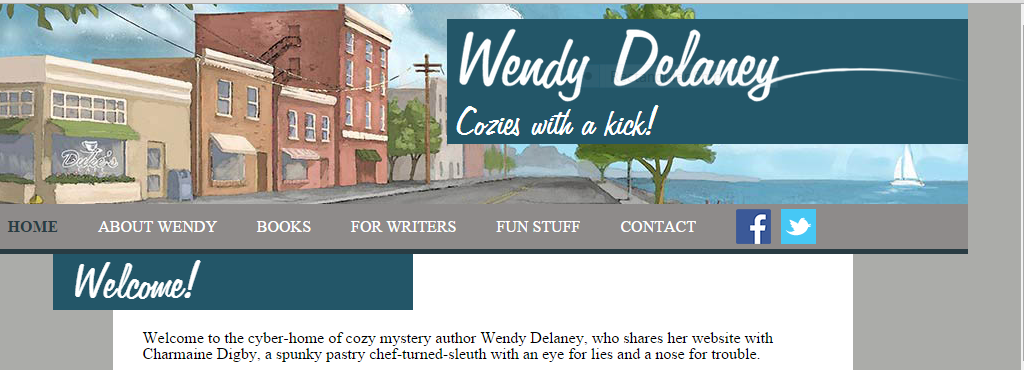
    Wendy Delaney - Chanticleer
    Branded as a Cozy Mystery

    Author Wendy Delaney uses Cozies with a Kick, implying fun mysteries with a tad of spiciness– that these are not grandma’s cozies. You could not confuse these two authors. They are both women, they both write mysteries, but you know they are reaching different audiences.

    Notice how every aspect of their websites focuses and reinforces their specific branding in their web sites visitors’ mind-space.

    See how your website compares with this handy branding checklist for your author web site’s homepage: 

    • Header – Strong Visual Image that Reinforces the Tagline
    • Menu Bar – Easy to Navigate
    • Homepage – says it all: Author, Tagline, Genre, Where to Purchase, How to Contact, Testimonials, and Visitor Engagement
    • Handy Links with Calls to Action
    • A personal note from the author at the bottom of the page to call again (visit again).

    Our next post will focus on Calls to Action.

    We hope that this article has shed some light on areas where your website can be improved to help you reach your audience. The best part is all of these improvements are free if you know how to do it yourself. If not, Chanticleer Reviews offers website assistance and creation as part of their book marketing services targeted specifically for authors.

    See the next article here!

    Rochelle Parry, Chanticleer Reviews’ Creative Director  

    Rochelle Parry, webmaster