Author: P. Socks

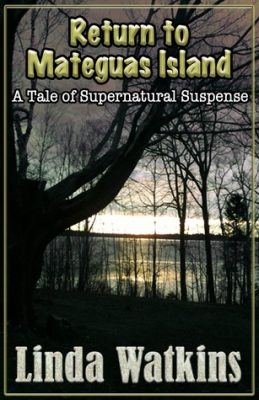
  • RETURN to MATEGUAS ISLAND by Linda Watkins – Literary Thriller/Paranormal/Occult

    RETURN to MATEGUAS ISLAND by Linda Watkins – Literary Thriller/Paranormal/Occult

    Return to Mateguas Island picks right up with the same intrigue, suspense, drama and mystery that Mateguas Island contained. A page turner from the beginning, this is a tale you will not want to walk away from. The story begins years later with, Karen Anderson along with her new husband Dex and her two teenage daughters returning to the island. Karen goes quite reluctantly, but daughters, Sophie and Terri, are on a mission to find out the truth about their father who went missing and subsequently declared dead.

    Return to Mateguas Island would fit nicely in the supernatural genre but has enough suspense throughout to lean toward this genre as well. This mixture of the two genres makes the story more complex and holds the reader’s interest throughout.

    In this second novel, author Linda Watkins has already established and developed her characters and yet goes deeper into development within these pages. The books do stand alone, but to get a full picture, it is advised to start at the beginning with Mateguas Island to fill in backstory and ascertain each character’s story arch as the tale continues.

    This story answers many of the questions from the first book. By the end of Return to Mateguas Island, however, you are left with just as many new questions and just as hungry for a third installment.

    Upon their return, Karen and the girls find the island relatively unchanged from the day they had left it behind. A day Karen hoped would have been the last they would see of this mysterious venue. The memories were too painful and too jarring for Karen and this quickly bubbled to the surface. As with the previous book, there is something just beneath the surface of things that happen on the island, subsequently, as readers dig into the second book, they will find themselves in a familiar environment.

    The story unfolds rather quickly as Karen once again displays odd behavior as the family returns to their old home. The intense story continues as a well-paced read with many twists and turns. The book holds its own next to the first novel and carries the tale, skillfully and smartly weaving in events that serve to whet readers appetites for the third book.

    High suspense and flashes of horror beckon American Gothic readers to Return to Mateguas Island, the second book in Linda Watkins trilogy –a stunning success leaving readers posed in anticipation for the next installment.

    5 Star Best Book Chanticleer Reviews round silver sticker

  • The Other Side of Life by Andy Kutler – World War II/Civil War, Time Travel

    The Other Side of Life by Andy Kutler – World War II/Civil War, Time Travel

    The Other Side of Life by the first-time author Andy Kutler will take you by surprise. This time-spanning book covers two major wars in United States history: World War II and the Civil War – but not how you might think. Kutler pulls this off with an intriguing storyline and well-orchestrated action sequences that put us in place and time.

    The story opens on the deck of the battleship Nevada, part of the U.S Naval fleet on December 7th, 1941. The Japanese fighters rip apart the battleships moored in place. During the attack, Commander Malcolm (Mac) Kelsey is severely wounded – and this is where the story gets interesting.

    Kelsey encounters a certain Mr. Leavitt who offers him a choice: stay right where he is in his broken condition; or, go somewhere else – a place known as The Other Side of Life – where all of his memories are wiped clean. A do-over, if you will.

    Kelsey chooses the latter, but this other side of life is no better – and in some respects worse – than before. He’s fighting for the Union Army in the Civil War. But something has gone wrong: he has retained all of his memories, making him a man outside his own time.

    For four years Kelsey fights for the Union Army, and throughout this period, he struggles (understandably so) with trying to make sense of why he is where he is, and how this all come to be. Upon the conclusion of the war, Kelsey encounters Mr. Kelsey again and faces another choice.

    That choice is perhaps the most interesting and most jarring aspect of the book. The author never does explain quite where it is that Kelsey has gone. A brilliant move! Any reader having even the slightest bit of religious background or spiritual awareness will quickly associate this with heaven – or maybe purgatory – or even nirvana. Using this ambiguous device enables readers to ponder questions like, what would they do in a similar circumstance – the same thing, or maybe something different?

    A captivating historical military story that blends genres and crosses through time and space. Kutler has a flare for describing situations at hand – his descriptions of the Pearl Harbor attack are impeccable – and he brings in multiple characters to help the story unfold. The story may be a  bit unwieldy at times, but in the end, Kutler manages it well even providing an unexpected twist making The Other Side of Life is a satisfying and worthy read. Highly recommended.

  • Thieving Forest by Martha Conway – Women’s Historical Fiction

    The story is set in 1806 and follows five sisters who are on their own after the recent passing of their parents. The five are faced with the choice to remain and run the family store in the tiny settlement along the edge of Ohio’s Great Black Swamp or pull up stakes and join the youngest sister living with their aunt in Philadelphia.

    By the banks of the Great Black Swamp, one woman fights to save her sisters caught between two cultures in Martha Conway’s tale, Thieving Forest.

    The world is filled with such events that when the right author develops characters and plunges them into a real-world timeline, history comes alive. Martha Conway has succeeded in doing this in her debut novel, Thieving Forest.

    Conway turns the story up a notch early as four of the older girls are kidnapped by a band of Potawatomi Indians who raid their home. Seventeen-year-old Susanna is left behind, and though shaken deeply, quickly comes to her senses and determines to rescue her siblings.

    Trust is the theme as the story unfolds. The kidnapping is somewhat of an unexpected occurrence as the family had good relations with the natives. The issue is complex and Susanna finds herself questioning who she can trust along with the sad realization that sometimes people are not always who they claim to be. The sisters are eventually reunited, but as is true in real life, things can never be the same.

    Martha Conway paints a stunning portrait of life in the early days of the United States expansion into the West. She has done her research, and it shows as she delves into Native American tribes and the relationship they have with the European settlers.

    Detailed descriptions of day-to-day life, including the hardships experienced, are fleshed out with complex and engaging characters. A tale of self-discovery, personal growth, romance, family ties, loyalty and more in this book readers will find hard to put down.

    5 Star Best Book Chanticleer Reviews round silver sticker

  • Uzumati: The Tale of the Yosemite by Edmond G. Addeo – Historical Fiction

    Uzumati: The Tale of the Yosemite by Edmond G. Addeo – Historical Fiction

    Three thousand years of epic historical reach, Edmond G. Addeo presents Uzumati: A Tale of the Yosemite, an exceptionally well-crafted novel. The author’s enthusiasm and deep love for his subject matter pay off in a big way.

    Edmund G. Addeo is a master storyteller, talented in weaving historical figures with fictional and displaying the vast stage of the Yosemite Valley for all to enjoy. Readers will be both captivated and entertained by this fascinating story brimming with memorable characters.

    Uzumati is the name given by the Indians 1,200 years ago to the area commonly known as the Yosemite Valley. The book details how the valley was discovered by the Native Americans and then re-discovered by white settlers in the 19th century. This valley, striking in its beauty, proved to be a safe and plentiful site for those fortunate enough to find it and settle there.

    Although Addeo’s story focuses on a time period spanning 3,000 years, his skill as a storyteller is evident. Uzumati is both engaging and easy to read, especially when one considers the amount of time and work invested into bringing this story to print. Addeo spent 50 years researching animals, plants, Native American oral history, and news reports from the later years of the era to ensure the story’s accuracy.

    The book focuses on Choluk, “the discoverer” and his family tree which includes Chief Tenaya who plays an important role. Another memorable player is Major Jim Savage, of the US Army. As the story reaches its climactic conclusion, both Tenaya and Savage are well aware that tensions between the Native American inhabitants and the settlers will likely end in conflict. Readers will find it a struggle to choose a side, and in the end, witness a breathtaking conclusion of betrayal and political treachery.

    Heartbreaking and beautiful, Uzumati: The Tale of the Yosemite is a novel any reader will find hard to put down.

  • WALLS for the WIND by Alethea Williams – The Orphan Trains of Hell on Wheels

    WALLS for the WIND by Alethea Williams – The Orphan Trains of Hell on Wheels

    A poignant tale set in the post-Civil War era of the United States in the rough-and-tumble boomtowns that follow the transcontinental railway as it was being built. The author focuses heavily on the often-forgotten plight of orphaned and immigrant children from the crowded cities of the East where they disembarked from the “coffin ships.” Many were packed on “orphan trains” heading west. The book leads off in New York City and eventually heads to Dakota Territory as readers learn about the plight of these orphans.

    Several children’s welfare movements began to deal with the thousands of homeless children of indentured servants and impoverished immigrants. One of these programs was a welfare program that transported orphaned and homeless children from the highly populated Eastern cities and placed them in foster homes located throughout the rural Midwest. These trains operated from 1854 to 1929 and relocated some 200,000 orphaned, abandoned or homeless children. Their plight is the core of Alethea Williams’ historical fiction titled Walls for the Wind.

    Kit Calhoun’s character, the protagonist, was created to portray one youngster among the estimated 34,000 children roaming the streets of New York City, enmeshed in despair and hopelessness in the 1850s. Kit eventually finds herself in the care of the influential Reverend Howe, founder, and director of the Immigrant Children’s Asylum. Kit is fortunate as she is given education and training as a young ward. As time passes and Kit grows older, she takes a job as assistant to the elderly director, Rev. Howe. Having felt the genuine love and care from a person to redirect the course of her own life, Kit passionately goes about the task of rescuing other homeless children.

    Kit finds the work empowering and important, but she also faces an inner struggle at times that the author, Alethea Williams, expertly develops. The author is adept at weaving historical fact, vivid descriptions of the times, and an engrossing plot-line through a young woman’s perspective in this male dominated time.

    The pace of the novel picks up when Kit heads west on an orphan train to help place children with farm families on the frontier. Obviously, Kit would like to see the children adopted by loving parents, but what she quickly discovers is the families the children are being placed with, treat the children as little more than indentured servants who are forced to pay for their room and board as farmhands and laborers with little nurturing or no time for education.

    Not being able to accept this fate for four particular children, Kit decides to adopt them herself when the Orphan Train reaches its destination in Colorado.

    Though her actions are noble, supporting her newly adopted children is a struggle. They live out of a tent and Kit must take in laundry to earn money. But it’s never enough. To make matters worse, she is assaulted by a gambler. At this point, Kit has total disdain for men as she has come to the belief that all men are users and want women for only one thing. When she finally encounters a man that breaks this mold she openly struggles with trust issues.

    A vivid and multi-layered take on the turbulent post-Civil War times that examines with wide open eyes the Wild West environs and the human cost of the “Manifest Destiny” that lead to Transcontinental railway and the U.S. expansion west.

    Author Alethea Williams’ characters portray the difficulties and challenges of these hard scrabble times with a refreshing perspective from a young woman who is trying to make her way. The closing chapters of this powerful tale play out this struggle in breathtaking fashion. An enlightening and informative read of the United States’ not so distant past.


  • The WARSAW CONSPIRACY by James Conroyd Martin – a political tale of gripping suspense

    The WARSAW CONSPIRACY by James Conroyd Martin – a political tale of gripping suspense

    This gem could be read as a stand-alone novel even though it is James Conroyd Martin’s conclusion to his gripping historical saga on Poland. The Warsaw Conspiracy  is preceded by Push Not the River and Against a Crimson Sky; you do not need to read the first two books in the trilogy to appreciate and enjoy it, but why would you cheat yourself out the total immersion?

    The book covers the Polish revolt of the 1830’s, known as the November Rising or the Cadet Revolt. Martin uses this tumultuous time in Polish history as the backdrop for his sweeping novel. It starts with an armed rebellion of young Polish officers in Warsaw and soon grows as the cadets are joined by other Polish sympathizers in a grandiose stand against the Russian Empire. The uprising is ultimately crushed by the Russian Army and Poland is placed firmly under Russian control. Martin expertly weaves historical figures and events with a cast of fictional characters that carry the story through to its emotional end.

    Martin centers his tale on one extended family giving the story the feel of a family saga set within the greater true-to-life struggle of a nation. This method lends well to the overall scope of the work and the overarching story contained within the pages of this lengthy 510-page novel. Yes, like the other novels in this saga, this book is huge, and will not disappoint readers who love to curl up with a thick juicy novel.

    The family dynamic is a key to the success of this novel. In particular, the relationships centered on Anna, one of the main characters, were fleshed out well, and in effect made her one of the book’s more endearing characters. To drive the story, Martin gives us an excellent Villain we love to hate: Viktor, the head of the Russian secret police, who is as complex and intriguing as he is dastardly. A family man who lovingly kisses his family goodbye in one scene, and in the next, we see him torturing Poles under the guise of extracting confessions. Add to the drama, brothers Mical and Jozef who find themselves caught up in a plot to capture the Grand Duke of Russia. Here you have a story filled with gripping tension that builds throughout the book.

    Author James Martin makes this well-known revolt in Polish history come alive, jump from the pages and captivate the reader. This book is nothing short of a true testimonial to the Polish people and their drive to remain an independent nation. Filled with unstoppable action, edge-of-your-seat suspense, and unforgettable characters, this breathtaking page-turner will remain with readers long after they close their books.

  • I, ANGUS: Book 4 of the Eternity Series by Mike Hartner – historical fiction

    I, ANGUS: Book 4 of the Eternity Series by Mike Hartner – historical fiction

    Immediately, readers are swept up in an adventure taking place in Northern Scotland during these harrowing times. The English have invaded and land is bereft with broken homes and broken families. In particular the story follows the war-ravaged life of fifteen-year-old, Angus Mackenzie. As the first pages of the book unfold Angus is tasked with leaving the safety of his family’s castle to deliver a message from his father to a neighboring king.

    The trip is not an easy one nor is it without profound dangers. Twists and turns occur not only on the trail, but in the journey itself. Eventually Angus makes it to neighboring castle and comes upon Angela, the daughter of the king he was to deliver his father’s message to. Angela is alone in the castle. The return of her father’s rider-less horse one day, was an ominous sign.

    What ensues is the pairs quest to find her father. As the story unfolds these two teens who have been through so much, fall in love in the midst of dark times and terrible hardships. Their travels in search of her father lead them to a battlefield and a cave where they take up temporary residence and nurse wounded soldiers back to health. Thus begins Angus’ personal journey as he grapples with challenges and trials that will test him and shape him.

    Mike Hartner delivers in a young-adult book that is rich in historical details and large on adventure.The author does an exceptional job of making readers care about his main character, Angus. They become emotionally attached to Angus as a young adult and invested in the story as he progresses through middle aged adulthood. Utilizing war torn Scotland as the backdrop Mike Hartner has delivered a gem of a historical fiction novel certain to please many a young adult reader.

    I, Angus is another addition to author Mike Hartner’s The Eternity Series.  Each of the books tells its own story so they can be read as stand-alone volumes. The author presents a main character readers will become emotionally invested in. Set in war torn Scotland and rich in medieval lore with castles and kings and knights, this story will surely please many young adult readers.

  • MATEGUAS ISLAND: A novel of Terror and Suspense (Book 1)- by Linda Watkins

    MATEGUAS ISLAND: A novel of Terror and Suspense (Book 1)- by Linda Watkins

    The author, Linda Watkins, brings a magical, edge-of-your-seat horror in the first book of her series, “Mateguas Island.” This is an engrossing tale that will captivate readers from start to its climatic finish with remarkable character development and a thoroughly gripping plot.

    The story begins when Bill and Karen Anderson land on Mateguas Island in dire straits. Bill has lost his job due to an indiscretion and as a result, lost the house in California, and the lifestyle Karen enjoyed. If Bill’s aunt hadn’t willed her island home to him, he and Karen would be living on the streets. The night of their arrival, a blustery storm hits the small island and sets the dark stage for the story.

    Karen is deeply dismayed by the loss of their high-end home and her comfortable life. She struggles with the close-knit community, the rusty old car she now drives, the non-existent stores, an inferior school system in which she must place their twin daughters, and a husband with whom she struggles to find common ground. In fact, the only that keeps her from leaving is the anguish it would cause their children. If the book were simply about that, you will probably find the story pretty run of the mill. It’s what is operating in the background that makes this tale special.

    In essence, Mateguas Island, is a classic suspense-thriller-horror tale. The story ebbs and flows, dropping hints of something not quite right on the island, and in the home. The twin daughters find a locked box in their room with odd carvings etched in the surface. Bill finds aged drawings on the foundation walls in the home’s basement. The school kids tell the girls their inherited home is haunted, the neighbors tell them a horrific tale. The suspense builds slowly but, tantalizing purposefully as the supporting characters reveal the island’s secrets.

    The stories of the Native American Indians who once dwelled upon the island feel real and honest. When mysterious events begin occurring around the property, the relationship between the two main characters, Bill and Karen, fairs no better. Watkins subtly introduces the beautiful island school teacher, Maggie, and handsome local fisherman, Dex, who, in their own way, add additional turmoil to Bill and Karen’s already strained marriage.

    Linda Watkins is a gifted author who creates believable characters and paints a story with every scene. This book is a must read for fans of American Gothic and suspense novels!

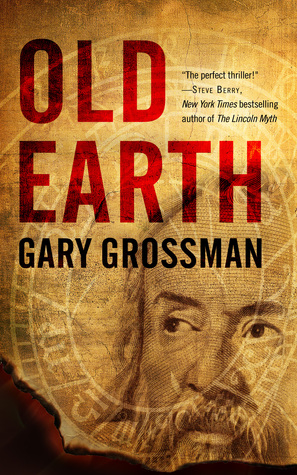
  • OLD EARTH by Gary Grossman – an ancient secret, a secret society, intrigue and espionage

    OLD EARTH by Gary Grossman – an ancient secret, a secret society, intrigue and espionage

    A historical fiction thriller in the vein of “The DaVinci Code.” An ancient secret, safe-guarded for 400 years discovered. A fast-paced thrill ride with a secret society determined to keep the discovery hidden from mankind.

    Old Earth is a gripping tale of historical intrigue and espionage that leads readers on a journey that spans 400 years. The book weaves science, politics and religion into a high-octane thriller. With locations ranging from a cave in Montana to Vatican City, Grossman has created a tale that often leaves you wondering if you are reading a work of fiction or an actual historical account.

    As the book opens, the year is 1601 and you find yourself crawling through a cave in Italy with none other than world renowned scientist Galileo Galilei. He discovers a mysterious black “wall” buried deep within the cave, something that will have implications later in the story and will impact many people. The composition of the wall fascinates Galileo as it absorbs all light and is covered in odd markings. In fact, this discovery plays a role (in Grossman’s telling) in Galileo being accused of heresy by the Catholic Church. What Galileo fears more than repercussions from the Catholic Church is the unprecedented turmoil on all fronts, including religious and secular governments, that will befall mankind if his discovery is revealed.

    The plot thickens as a secret society of powerful individuals is formed to safeguard this secret — a secret so big that, if revealed, will cause society to fall apart — for 400 years.

    Fast forward to the present when a group of students, led by Professor Quinn McCauley, is on an archaeological dig in Montana with high hopes of finding dinosaur bones. What they unearth instead is the well-guarded secret Galileo discovered some 400 years before, a black wall. When the secret society reveals itself, Dr. McCauley finds his life in danger. What ensues is a thrilling global quest for the truth that makes for a page-turning read.

    The book does have spots that take some effort to wade through. This mainly occurs during the early stages of the book where a fair amount of time is spent setting the stage for the story and developing characters. However, the reader’s persistence will be well rewarded in the end.

  • WOLF EYE’S SILENCE – Book 1 by Elisabeth Ward – an enlightening and satisfying tale of the Old West

    WOLF EYE’S SILENCE – Book 1 by Elisabeth Ward – an enlightening and satisfying tale of the Old West

    This is a page-turning story of survival that takes place in the Old West. It is a story about one cultures struggle to maintain their identity while the other embarks on expanding their own. “Wolf Eye’s Silence” is the first in a five-book series by Elisabeth Ward. Set in the Wyoming Territory and covering the time period from 1864 to 1880 the story follows two brothers. Deeply entrenched in the interactions between the Cheyenne and the onrush of whites from the East are twelve-year old Samuel Ferguson and his thirteen-year old brother Johnny whom we follow over the course of twenty years.

    In the opening pages of the book the brothers are separated from their parents and wagon train which has been attacked by Indians. Their father is killed in the wagon train attack and they watch helplessly as their mother is led away by rope, a captive of the attacking Cheyenne. As first instincts take hold they do what anyway young boy would do: they run and hide. Eventually they are rescued by a US Army scouting party and taken to Fort Teton.

    The boys are taken in by the commanding officer, Major Armstrong and his wife, Bessie. The boys however handle the horrible event that they witnessed in opposite ways. Johnny readily adapts, pitches in to assist in day-to-day life, but Sammy becomes withdrawn, barely speaking or interacting with others. Major Armstrong imparts a respect for all inhabitants of the West including the Indians but sprinkles this with caution. Johnny in particular consumes this teaching and eventually joins the US Army.

    Sammy however takes a different life path. Major Armstrong begins to realize that in essence Sammy is being kept prisoner in the fort as he has no interest in the military life. Sammy is sent to live outside the fort on a homestead with “Miz” Lizzie Heiter and her son Josh. Lizzie Heiter is a widower who can stand her ground and becomes a central and enjoyable character to this tale.

    This engrossing story, like life contains, fleeting moments of joy sprinkled amongst the pain, anguish of losing family, and fear of what lies ahead with the Indian nations. Through it all Elisabeth Ward builds a compelling story that enlightens readers while keeping them engrossed in the daily struggles of an unpredictable and agonizing collision of cultures. Author Elisabeth Ward does an exceptional job bringing the very real struggles of survival to with of the story’s cast of fascinating characters vividly to life in this book.

    Sure to satisfy, this well-crafted and fast-paced story is aimed at an older young adult market and those who enjoy a satisfying Old West tale that takes place after the gold-rush and during the building of the First Transcontinental Railroad.