Author: P Beason

  • MY BUTTERFLY COLLECTION: On the Wings of a Butterfly by Stevanne Auerbach – Nature Books, Biology, Entomology

    MY BUTTERFLY COLLECTION: On the Wings of a Butterfly by Stevanne Auerbach – Nature Books, Biology, Entomology

    There are approximately 20,000 species of butterflies around the world, and this enlightening book is a compilation of all things butterfly. As well as delivering in-depth explanations of butterfly life cycles and species, the author, Stevanne Auerbach, PhD, teaches us that specific species are dependent on specific plants, and that butterflies need both host plants for caterpillars and nectar plants for the adult butterflies. Perhaps the most important lesson is that butterflies of the world are now dependent on us, the human species, for their very survival.

    To help readers become butterfly protectors, the author provides lists of suggested plants gardeners can grow to nurture butterflies dependent on species and geography. After reading this book, no gardener will look at caterpillars in the same way again, because killing a caterpillar means destroying a beautiful butterfly, moth or bee.

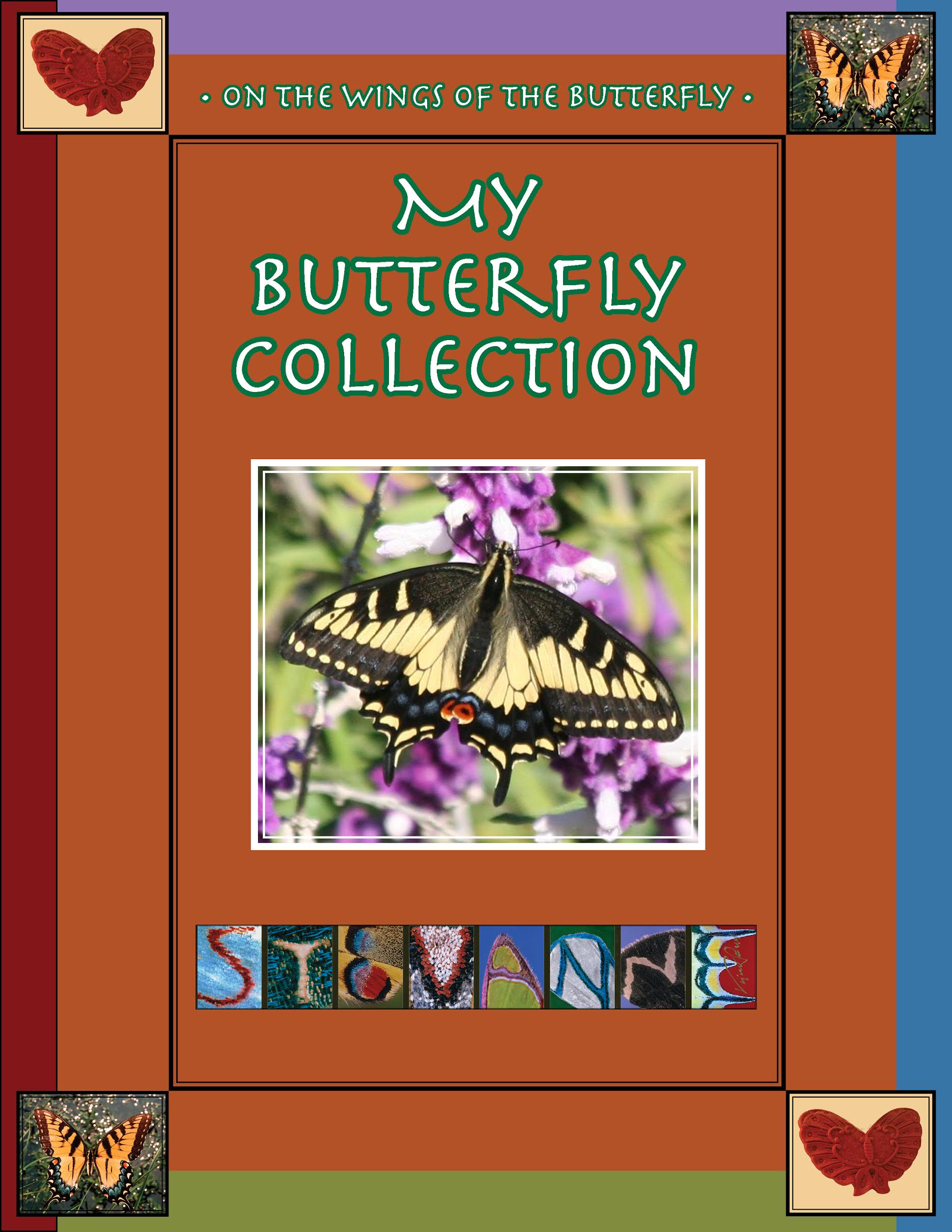
    The largest words on the cover of this book are My Butterfly Collection, which might cause readers to expect a book about an old-fashioned collection of preserved butterfly specimens on pins. Instead, this book is a tribute to the lives and worth of butterflies, as well as a celebration of the beauty and symbolism of butterflies through history. The “butterfly collection” actually refers to the author’s extensive personal journey, which led to her assembly of all this butterfly information, and objects decorated with butterfly motifs.

    The book contains lists of endangered and threatened species, as well as many color photographs of specific butterflies, most by famous photographer Kjell B. Sandved. The interconnection of butterflies and environmental health is emphasized in a moving foreword by David Seaborg, a prominent evolutionary biologist and founder/director of the World Rainforest Fund.

    Readers are treated to explanations about how butterflies have symbolized hope, transformation, and resurrection throughout the ages. The author even describes how she went through her own personal metamorphosis to become a lighter, healthier, happier individual.

    Bright art, illustrations, and paintings decorate the pages, which are also enriched with poems and literary excerpts from a variety of authors, including the author of this book. Some pieces are inspirational and uplifting; a few are eloquent, but sad, such as a reference to a collection of butterfly art and poetry by Jewish children imprisoned in a concentration camp.

    This rich collection includes extensive lists of organizations, gardens, and butterfly books for adults and children, field guides, butterfly garden books, and websites that the butterfly devotee can use to find more information. The biographies of the many experts who contributed to this book are listed in the back pages, along with a list of butterfly species around the world that may go extinct; a sobering reminder that butterflies are an indicator species of the health of our planet, and the fate of these magnificent “flowers on wings” is up to us.
    My Butterfly Collection: On the Wings of a Butterfly by Stevanne Auerbach, is a fascinating compendium of all things butterfly that educates and illuminates to its readers that “The health of the planet rests on the wings of the butterfly.”

  • PUGET SOUND WHALES FOR SALE: The FIGHT to END ORCA HUNTING by Sandra Pollard

    PUGET SOUND WHALES FOR SALE: The FIGHT to END ORCA HUNTING by Sandra Pollard

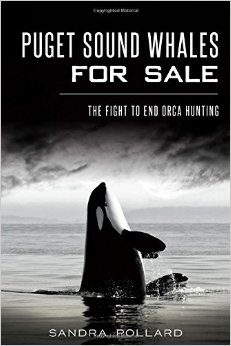
    This is the history of two parallel and competing movements involving the beautiful Puget Sound orcas. One is the orcas-as-commodities commercial movement to capture the killer whales and sell them to marine parks all over the world, where they are kept in small pens and trained to perform for public amusement. The other is the growing appreciation of both scientists and the general public for orcas as intelligent, sensitive, family-oriented wild creatures deserving of protection.

    Packed with poignant details, such as a description of captive orcas in Seattle and Vancouver, B.C. talking to each other via a phone call, and reports of newly captured orcas crying so loudly and mournfully that one man said his cat tried to hide under a chair to get away from the heart-rending sound are accounted for in this expose of these cruel practices for the sake of entertainment. The brutality is painful to read about—when the first captures took place, the hunters used harpoons and wire nets to catch the orcas. Later, explosives were thrown into the water to chase the whales into a net. Needless to say, many orcas died during the capture process, and most who survived to be sold into captivity in small pens didn’t live long.

    But as the attendance and profitability of marine entertainment parks exploded, so did the protest movement to stop the brutal practice of capturing whales. Government agencies clashed, with the NOAA Office of Protected Resources enacting the Marine Mammal Protection Act and establishing rules to protect the orcas, while the National Marine Fisheries Service granted “economic hardship” exemptions to SeaWorld Inc. to capture even more whales. Scientists and commercial entities argued over the number of killer whales in existence. Soon it evolved into a media blitz and a court battle, with the state of Washington against the Feds from Washington, D.C. and SeaWorld to stop the practice of capturing orcas.

    Fortunately, the conservationists prevailed and today the orcas of Puget Sound swim free, their number sadly decimated after a decade of captures and killings, and now their small population threatened by human over-fishing and pollution.

    As Pollard points out, killer whales in other locations such as Iceland still face the danger of capture, and orcas are still penned up in amusement parks and forced to perform for entertainment.

    When are wild animals a resource to be harvested for profit? And when do they deserve to be protected from harm? When does capture of a species become kidnapping, training become torture, and captivity become imprisonment? When does the death of a wild animal at the hands of a human become murder? Readers will find themselves pondering these questions as they explore the history presented in this meticulously researched book.

  • FAREWELL to a QUEEN by Don Douglass

    FAREWELL to a QUEEN by Don Douglass

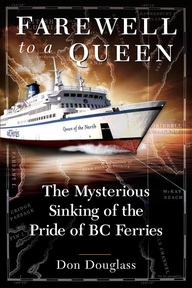
    The sinking of the Queen of the North, a British Columbia ferry, in a remote area of the Inside Passage in 2006, was a commercial, financial, and political blow for the Canadian Government, an ecological disaster for the pristine area in which the boat sank, a personal catastrophe for passengers who lost their vehicles and possessions, and a fatal tragedy for the two passengers who lost their lives.

    The documented events reveal a disturbing lack of crew discipline and accountability, as well as a troubling inadequacy of timely response from Canadian authorities. Only the two crew members on the bridge that night know exactly what happened, and they’re clearly not telling the truth.

    The heroes of this true story are the rescuers from the tiny First Nations fishing village of Hartley Bay who transported and took care of the shocked and freezing travelers.

    This book is a fascinating study of the events before and after the ship collided with an island, followed by an astute analysis of the probable causes for the reason the navigator failed to make a routine course change. The author includes a variety of supporting documents, including photos, a radio log transcript, charts, and a detailed description of the trial that finally took place seven years after the sinking. The author of Farewell to a Queen dares to ask himself, “What really happened aboard the Queen that fateful night.”

    Don Douglass is well qualified to write about this lamentable event and the courageous rescuers who put their own lives at risk to save the Queen’s crew and passengers. Douglass himself has navigated over 100,000 miles at sea, and is an author of guidebooks and charts for the Pacific Northwest. He and his wife, Réanne Hemingway-Douglass, have plied these waters for decades. They have documented and navigated the British Columbia coastal waters and have taught others to do so.

    Douglass doesn’t shy away from asking the hard questions about what might have caused the flagship of the B.C. Ferries fleet to run aground and sink into the deep depths taking two lives with it and putting more in harm’s way.   He returns repeatedly to the fact that the two crew members on the bridge were former lovers. Some may find his account “politically incorrect” or a touch vitriolic. Nonetheless, ferry passengers may find themselves warily eyeing their boat crews and keeping life preservers close at hand after reading this well written and documented account of a modern disaster at sea.

    “When it got near the end, it rose up until the bow was vertical, absolutely pointing straight at the sky,” Captain Henthorne, the Queen’s captain, remembered. “Then, it just went straight down, straight as an arrow, disappeared, gone.”  [fusion_builder_container hundred_percent=”yes” overflow=”visible”][fusion_builder_row][fusion_builder_column type=”1_1″ background_position=”left top” background_color=”” border_size=”” border_color=”” border_style=”solid” spacing=”yes” background_image=”” background_repeat=”no-repeat” padding=”” margin_top=”0px” margin_bottom=”0px” class=”” id=”” animation_type=”” animation_speed=”0.3″ animation_direction=”left” hide_on_mobile=”no” center_content=”no” min_height=”none”][CBC News, B.C.]

     On March 22, 2006, The Queen of the North sank into the depths of Wright Sound, 70 nautical miles south of Prince Rupert, B.C.


     [/fusion_builder_column][/fusion_builder_row][/fusion_builder_container]

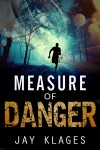
  • An Editorial Review of “Measure of Danger” by Jay Klages

    An Editorial Review of “Measure of Danger” by Jay Klages

    This techno-thriller pitches “The Chapter,” a high-tech, well-organized, and ruthless para-military organization, against a former intelligence officer with a behavioral disorder that makes him an unpredictable anomaly to all sides.

    In Measure of Danger by Jay Klages, The Chapter has infiltrated every level of government, and their financier, a drug cartel, has upped the ante and their demands. The United States is in imminent danger, but no one knows from whom or from what, and the clock is ticking.

    Kade Sims feels he has been unfairly dumped from his former position in Army Intelligence because of out-of-control behavior due to a condition called hypomania. He’s bored, out of shape, and stuck working part-time at Home Depot instead of at the Pentagon. So when the FBI knocks on his door of his Virginia apartment and asks him to go undercover in Oregon to infiltrate a mysterious quasi-militia group called The Chapter, he’s eager to go to work for his country again.

    His training goes well, but on his initial scouting mission into The Chapter’s territory, the plan goes awry when his Jeep hurtles off a muddy mountain road. Kade wakes up strapped to a bed in The Chapter’s compound. He is now inside The Chapter sooner and with a lot less control than he or the FBI planned. To make matters worse, his brutal guards know not only who he is, but where his beloved sister goes to school. When they can’t break him, they decide to use his skills to their advantage, confident they can control him at every step with a computer chip they implanted into his head.

    But Kade’s hypomania proves to be a benefit when it gives him resistance to The Chapter’s hi-tech mind-control methods. He finds creative ways to communicate with the FBI, his roommate, and family, and the game is on as each side seeks to control the situation.

    But there are more than two players in the deadly game. The Chapter is hiding under the banner of an agricultural biotech company called AgriteX, whose most popular crop is bio-engineered marijuana. A drug cartel is its biggest client. However, the cartel believes that AgriteX has violated their contract to supply supercharged marijuana seeds, and the AgriteX leaders are now on the cartel’s hit list.

    The Chapter is dangerous both to its recruits and to the American government along with just about anyone they come into contact with.  As Kade becomes more involved in the shadowy organization, his contacts with outside parties and his resistance to being controlled make The Chapter’s leader suspicious of his loyalty. Will he survive his assignment with mind and body intact? As the suspense builds to a fiery nationwide conclusion with all weapons drawn, thriller readers will be glued to the pages to find out what happens next as the plot twists and spins with unrelenting action and surprise as the pieces and clues come together.

    Measure of Danger, Jay Klages’ debut novel is a page-turning techno-thriller written by a former military intelligence officer and a West Point graduate. Klages experience and expertise is revealed with his believable dialog, details, and operative descriptions. The work features military trained Kade Sims, and his accountant sidekick, Alex Pace; we can’t wait to read what other dangerous puzzles this unlikely dynamic duo will be called on to solve.

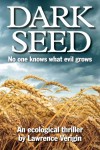
  • An Editorial Review of “Dark Seed” by Lawrence Verigin

    An Editorial Review of “Dark Seed” by Lawrence Verigin

    Genetic engineering, murder, corporate-conglomerate profiteering, Interpol, and a plot to control humanity make Dark Seed, by Lawrence Verigin, a suspenseful thriller novel.

    When jaded journalist Nick Barnes learns that Dr. Carl Elles has contacted him to say that Barnes’ recent article about the positive contributions of Naintosa Corporation is all wrong, Barnes feels compelled to educate the scientist about information laundering—the strategic planting of false information in the media so the planting organization can quote the media later for their own benefit. “It makes total sense,” Dr. Elles replies. “Naintosa employs that strategy on a regular basis.” Nick was about to explain to the scientist why he needed to check Dr. Elles’ information, when the scientist soon proves to Nick  that the journalist is the lazy dupe who just published Naintosa’s propaganda in a complimentary article.

    Nick Barnes is a likeable, self-deprecating, and disillusioned investigative reporter who has been burned before. He now seems incapable of personally investigating much of the information that falls into his lap, preferring to play it safe. However, the time is 2000, so computerized data and communication systems were not as widely available as they are today.

    Nick agrees to help Dr. Elles write an exposé about the actual results and implications of Naintosa’s genetic engineering projects. Then Elles is murdered and suspicious events cause Nick to realize that both he and Dr. Elles’ daughter Morgan are next on the hit list. They team up and run for their lives.

    Through the data in Dr. Elles’ notebooks and clues revealed through meditations and dreams, they discover terrifying links between corporations that produce genetically engineered foods, agricultural chemicals, and pharmaceuticals. The implications are so wide-ranging and so frightening that soon Nick and Morgan find they can no longer trust anyone. And they become more and more convinced that they cannot event trust the food that they eat.

    The author’s personal knowledge of Seattle and Maui, as well as the city of Vancouver, and other places in British Columbia, Canada, shine through with the vivid and detailed descriptions of these locales as the characters race through them. Morgan and other secondary characters are not fleshed out in great detail, but their roles serve to advance the plot efficiently. Verigin deftly includes enough scientific information to ground this “Lab Lit” novel while keeping the reader entertained and in suspense.

    Dark Seed: No One Knows What Evil Grows, is a strong debut novel by Lawrence Verigin that adeptly tackles the pertinent and socially relevant topic of GMO’s with tight writing and fast-paced action. This thriller’s premise of international corporations controlling the food supply and sacrificing human health for the sake of profits is so plausible that it is horrifying. Readers will find themselves rapidly turning the pages to see what happens next in this disturbing “OMG this could really happen”  novel.

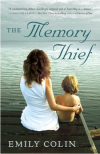
  • An Editorial Review of “The Memory Thief” by Emily Colin

    An Editorial Review of “The Memory Thief” by Emily Colin

    What if your life was all about the quest for adventure and danger in climbing the highest mountains, and then your passion killed you? That’s the question faced by Aidan James, who dies in an avalanche on Mount McKinley after promising his family he would come back from Alaska.

    What if the love of your life was a thrill seeker, and you begged him not to go this time because of a sense of foreboding, and he went anyway? And then was lost forever under tons of ice and snow. Maddie, Aidan’s wife, faces conflicting feelings of anger and grief and loss.

    In this eloquent first novel, each character has a personal avalanche of emotions to cope with. J.C., Aidan’s best friend and fellow climber, is racked by grief and survivor’s guilt, but as he strives to comfort Maddie, he also struggles with the secret that he has always loved and wanted her for his own.

    Even four-year-old Gabriel James has secrets he doesn’t know how to handle. His daddy visits him at night but says he cannot stay. He leaves behind a puddle of icy water that Gabe cannot explain to his mother.

    The fatal accident on the mountain even affects Nicholas Sullivan, a stranger who lives on the other side of the country. After a motorcycle accident, Nicholas awakes with no memories of his own life. Instead, his injured brain is filled with visions of fresh snow blowing down his neck, cold fingers wrapped around an ice axe, and a nearly unbearable longing for a mysterious woman and a tiny boy Nicholas has never met.

    Aidan James kept his promise to come back. He just didn’t expect to do it like this. And now everyone, including himself, must find a way to deal with his death, and find a way to move on with their lives. The Memory Thief is a beautifully written story, with evocative descriptions of a love for nature and adventure, a deep appreciation of friends and family, and heart-breaking expressions of regret and grief and lust and joy. This book is a haunting ghost story, but above all, it’s a memorable tale of how, even after a terrible tragedy, love lives on.

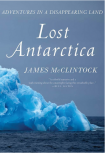
  • An Editorial Review of “Lost Antarctica” by James McClintock.

    An Editorial Review of “Lost Antarctica” by James McClintock.

    Lost Antarctica: Adventures in a Disappearing Land opens up an amazing world for readers, especially beneath the sea surface. You’ll meet bright orange “sea butterflies,” which can change sex from male to female, and read how scientists filmed soft corals actually walking from one place to another.

    Many readers will know that scientists from around the world come to Antarctica to study its unique environment, but we don’t often get to read about how they do that science and what the results mean. This engaging book delivers all that.

    The unique creatures that live in Antarctic waters have already been found to produce compounds that could fight cancer, AIDS, and influenza. Their body chemistry shows promise for new antibiotics. But if change continues at the current rate, all these species may be gone before we have a chance to understand them.

    How can a continent of more than 5.4 million square miles be “lost?” How could it disappear? Global warming is the answer. Antarctica is more than ice, so the land itself will never completely vanish, but the southernmost environment as we know it is already changing fast, and in ways that have drastic implications for the future of all life on earth. McClintock uses interesting descriptions and down-to-earth language to explain the situation for non-scientists.

    Take krill, for example—tiny crustaceans that form the majority of zooplankton near the bottom of the food chain. Juvenile krill feed on algae that grow on the underside of pack ice. With less and less pack ice each year, there are fewer and fewer krill. So what, you might be thinking—why should I care about krill? What eats krill? Bigger crustaceans, jellyfish, anemones, penguins, fish, seals, you name it. Even the largest animal on earth—the blue whale—depend on this food source.

    You’ll find out how more carbon dioxide in the atmosphere means more acidic ocean water, and how more acidic water means all shelled creatures are in danger of extinction.

    But this book includes more than just the results of experiments and their associated dire predictions. McClintock gives us a peek into the lives of the researchers. You’ll learn about living on board research ships and the fear and frustration of being tossed about in ferocious katabatic winds. McClintock describes how researchers camp out on ice shelves and challenge 1000-pound leopard seals for diving rights. The book details an invasion of king crabs and provides an explanation of “seal finger,” an injury that can be fatal. There’s even a warning of how the Norwegian delicacy, lutefisk, can permanently damage sterling silver (and possibly your insides).

    Professional scientists may want to know more about the various tests and methodology McClintock describes, so the author has thoughtfully included a Notes section, as well as a good Index. Unless you’re already familiar with the layout of Antarctica, you’ll be frustrated by the lack of a map in this book. Find or print out your own so you can follow along as McClintock describes the fascinating geography and the challenges of working in this rapidly vanishing environment.