Author: N. Davis, Ph.D.

  • The WAY of HARMONY: ANCIENT WISDOM for MODERN TIMES

    The WAY of HARMONY: ANCIENT WISDOM for MODERN TIMES

    The Yi Jing, the most ancient of the Chinese classics, is both a book of philosophy and an intuitive divination tool. Its timely wisdom maps the world of change through its sixty-four Hexagrams, each representing a distinct message and point of view. Chinese culture pays deep homage to The Yi Jing as a source of the highest truth. It has many benefits and is especially useful as an intuitive approach for delivering wisdom and understanding. The Yi Jing is also called The I Ching or The Book Of Changes.

    The author makes no claims that his version is either complete or authoritative. Rather the text offers a “sincere attempt to faithfully express the Spirit of the Yi Jing themes.” The Oracle works through the Hexagram, a message in six parts. This is achieved by casting three coins, each with a heads and tails side (or a Yang and Yin side, the two complimentary forces that guide the universe). The seeker throws the three coins at the same time to determine each line of the six line reading.

    Hexagram readings are both simple and practical. They offer specific advice for balance, harmony, and creative action. They run the gamut from advising seekers that the moment is right for powerfully moving ahead, as in “The Creative” (Hexagram 1), to advising on how to deal intelligently with a time of “Conflict” (Hexagram 6). An essential principle found in The Yi Jing is that all human affairs follow a cycle of growth and decay.

    The philosophical voice of Confucius resonates through these pages, adding the message of  “universal benevolence” to the original texts. That Confucian goal is not merely to gratify the self, but rather to create a society where humanity can be harmoniously connected to self, family, community, King, and Heaven. Like many versions of The Yi Jing this one offers some Chinese-style illustrations of the adage “as above, so below” which is a way of describing how earthly nature reflects and compliments cosmic Heavenly influence.

    A brief illustration may show how The Yi Jing speaks to us.

    A recent family crisis led me to seek a Yi Jing Oracle reading for guidance. My first impulse was to move swiftly with little reflection and make rapid changes, such as evicting one of my family members and placing another in care. The Oracle advised me that such a course of action would not work. I received “Restraint” for the first Hexagram and a second Hexagram, “Discipline”, which further clarified the situation. A few weeks later I recognized how appropriate the advice was that the Oracle had given me.  Impulsive action would have destroyed significant relationships, possibly forever. While unresolved, the way has been left open for deeper bonding and mutual understanding among all the conflicting parties.

    The Way of Harmony is clearly and elegantly written while providing a lucid, highly intelligible, and sensitive account of the three thousand-year-old masterpiece The Yi Jing and introducing readers to its spiritual counterpart The Dao De Jing.

    Readers are invited to take the time to explore their own capacity for intuitive wisdom by using The Way Of Harmony as a guide. It is a way to quiet your mind and encourage feelings of deep harmony.

    My advice is to make a cup of tea, take some time to relax, and read The Way Of Harmony, a modern text that draws on ancient wisdom, making it accessible and practical in these hectic and over stimulating times.

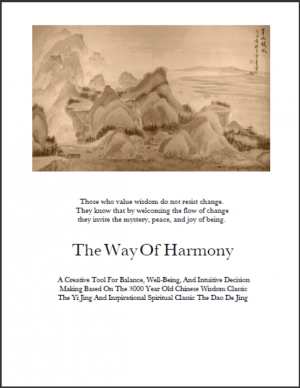
    Note: The Way Of Harmony is available in three versions: as a print book with color illustrations, as a print book with B&W illustrations, and as an ebook with color illustrations where the e-book format display allows for color. There are only three illustrations, each distributed several times through the book. These original creations are meant to evoke a peaceful mood that compliments the Yi Jing experience. We are told that the illustration on the cover of the color books, a misty mountain painted in the traditional Daoist style, was inspired by a famous centuries old handscroll and interpreted by a classical brush and ink artist living in China. It also appears within all the book’s versions.
  • PATHWAYS to HOPE by Harish Malhotra, M.D.

    PATHWAYS to HOPE by Harish Malhotra, M.D.

    Pathways to Hope is a wealth of practical advice and  positive messages presented in an easy to digest manner. It is a slightly more analytic approach to metaphor as a healing technique than Dr. Harish Malhotra’s earlier book, Metaphors of Healing. However, Pathways is still an accessible and powerful tool to help those with personal difficulties on a self-help basis, and yet comprehensive enough to be a guide to those professionals who want to add new methods and techniques to their patient communication skills.

    Dr. Malhotra proposes 23 essential pathways, all with playful titles, ranging from “Go on with Your Best Face,” “Leave Nothing Unturned” to “Change the Storm into a Breeze.” As the titles imply, the author employs ordinary experience to deal with extraordinary issues that afflict humans.  Again, Dr. Malhotra offers a simple, but brilliant, idea: Use the healing language of metaphor as a therapeutic strategy and a curative approach for daily life. What do these pathways of hope offer therapists and patients?

    He advises, that first, therapists should not depend on a single approach to solving problems, such as depending exclusively on standard psychotherapy or behavioral techniques. Dr. Malhotra believes in adjusting the style to fit the person, regardless of the type of therapy. For example:  If a patient has hallucinations that tell him to cut himself, his behavior is unlikely to change by telling him to look at the origins of the behavior.  He offers that instead of taking the “origin’s route” that the therapist shifting his patient’s attention to what voice the patient is actually listening to, and then guide the patient to determine  whether that voice is using  good judgment. This pathway may enable the patient to “deny the voice that is only loud thoughts” in his mind.

    Second, Dr. Malhotra advises us to highlight the positives—thought, word and deed—so that we may “put different highlights in our life book.”  How can one counsel a lonely patient, one who seeks but has no hope of meeting people?  The author shows that by connecting to the social media, hundreds of different opportunities present themselves. We strike up friendships through slight measures: small talk, shaking hands, smiling and just paying attention to a person.  A simple recipe: Grow a social network by taking small positive steps whenever and wherever you can.

    Whether you are a therapist, patient or truth seeker, what can be learned from this book?  We can summarize some major markers. Pathway l, “Go with Your Best Face,” emphasizes that we focus on our strengths, not our weaknesses. Pathway 8, “Search for the Silver Lining,” encourages the reader to pay attention to the joys of living rather than the fear of dying. Pathway 11, “Make Yourself a Happy Person,” clarifies that we all have choices, and that “happiness is an inside job.” One more illustration of metaphor, Pathway 12, “Leave Nothing Unturned,” focuses on good habits that inspire positive attitudes and healthy lifestyles—“neither of which require a copyright.”  Ordinary people can live extraordinary lives by considering new pathways, by hearing new stories, by learning by metaphor.

    Pathways of Hope and Metaphors of Healing are not theoretical psychotherapy books. As Dr. Malhotra makes clear, these are lighthearted stories to provide innovative insights and language to enhance our everyday lives. He seeks to empower readers with his decades of experience in helping people transform their lives and improve difficult situations in their daily lives.

    As with Metaphors of Healing, this is not a book to be read in one sitting or all at once. It is one that the reader will find herself/himself picking up again and again taking in a chapter or a metaphor to ponder and, perhaps, adapt. It will become a gentle companion that guides and inspires. One will find, on reflection and on rereading, that these simple stories contain deep insight and wisdom. Clinicians and those seeking to increase their understanding of themselves and their fellow humans would benefit immensely from reading Dr. Malhotra’s gentle, healing stories.

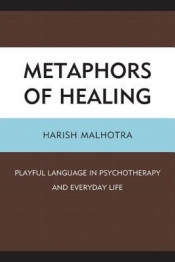
  • Metaphors of Healing by Dr. Harish Malhotra

    Metaphors of Healing by Dr. Harish Malhotra

    One rarely sees a self-help book from a practicing psychotherapist that offers more humor and appeal to the common denominator in all of us than this collection of brief stories: Metaphors of Healing : Playful Language in Psychotherapy and Everyday Life. Dr. Malhotra offers a simple, but brilliant, idea: Use the healing language of metaphor as a therapeutic strategy and a curative approach for daily life.

    Metaphors of Healing organizes metaphors by themes, including “The Daily Grind,” “Dating,” “Being a Better and Happier You,” and “Addiction,” among the 14 chapter titles. For instance, try reading “Is the Left Lane Too Fast?” as a metaphor for slowing down, easing the professional load, and getting reacquainted with our family. Its appeal is in the simplicity of applying the idea toward easing anxiety and cutting back on the “daily grind” most of us know too well. In addition, we gain a visceral sense of how the self-imposed pressure to succeed contributes to everyday unease and unnecessary fears.

    Another feature of Metaphors is how easily one remembers a story, but forgets most of the high-minded advice of a therapist. If the story fits (and most of these have the superb quality of fitting very well) a client can leave his therapy session with an entirely new way of dealing with his or her issue. For instance, he says, “A dead-end road is not the same as a dead end journey.” We can always find another route more effective than the lost cause we thought was our destiny.

    Malhotra’s training in both psychotherapy and behavioral approaches offered flexibility for initially coping with his patients’ various maladies. Shifting to metaphor when confronting dis-ease, he discovered, incorporated an even broader spectrum: healing words from unexpected sources. Who knew a figure of speech could have such transformative powers?

    Malhotra aims to move people beyond their negativity, beyond their holding on to old problems, and even beyond their expectations to achieve a lifestyle free of judgment and criticism. I found his ideas on marriage as mindfulness exercises very significant—he speaks of empathy as the path to marital happiness: “Walking in the moccasins of one’s spouse” contributes to compassion and forgiveness, opening the door to an enduring love.

    The author is not a Pollyanna, an everything-is-beautiful-if only-you employ-a-metaphor to your life issues. Change requires commitment and persistence. We all seek successful relationships, whether we are talking about a difficult boss, an annoying neighbor next-door or our beloved spouse. Malhotra stresses how precious any relationship can be when it is working, even when it is very challenging. The healing power of any relationship blooms only under certain conditions, however: practicing the difficult virtues of restraint and diligence.

    This is not a book to be read in one sitting or all at once. It is one that the reader will find herself/himself picking up again and again taking in a chapter or a metaphor to ponder and, perhaps, adapt. It will become, more or less, a gentle companion that guides and inspires. One will find, on reflection and on rereading, that these simple stories contain deep insight and wisdom. Clinicians and those seeking to increase their understanding of themselves and their fellow humans would benefit immensely from reading Metaphors of Healing.

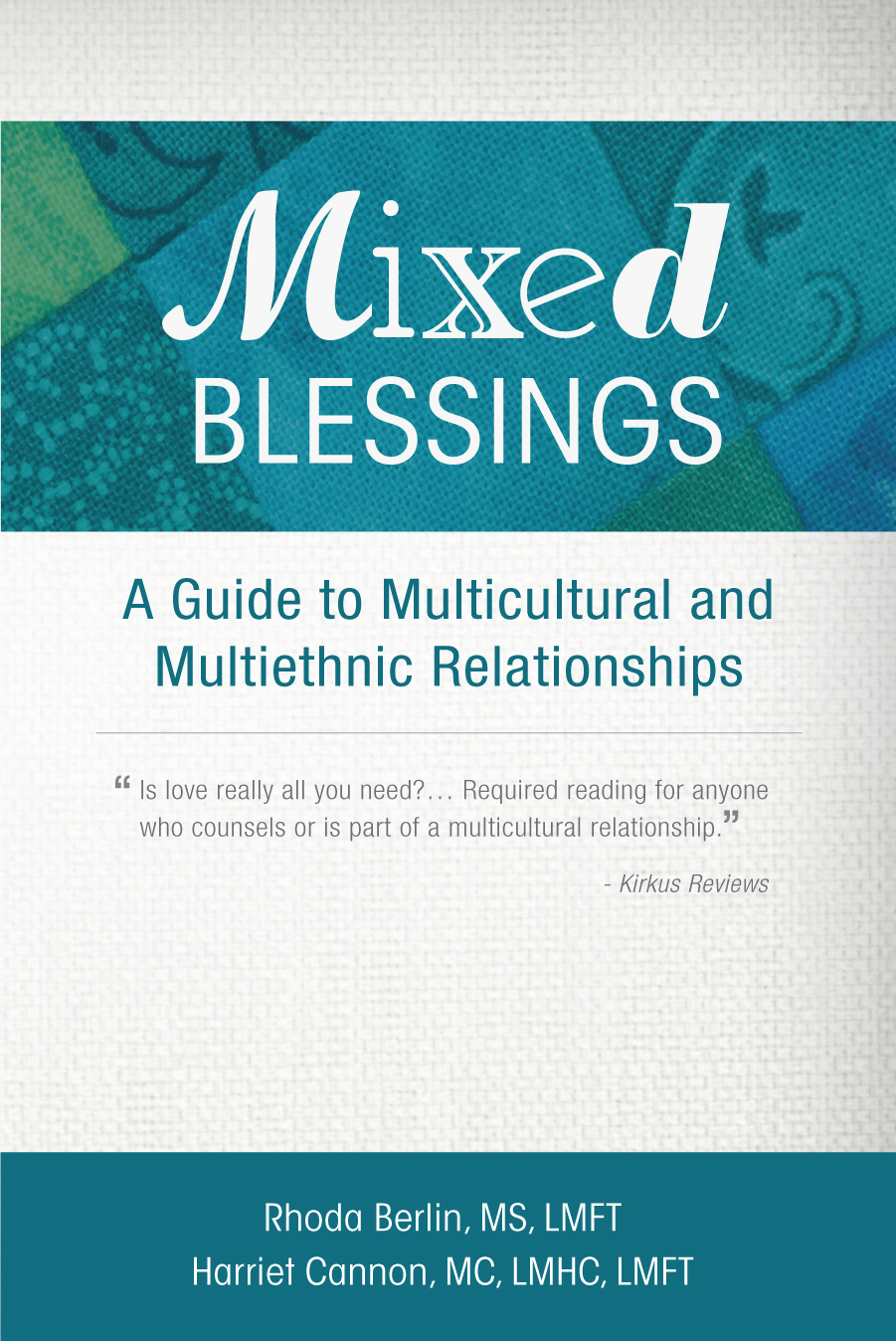
  • An Editorial Review of “Mixed Blessings” by Harriet Cannon and Rhoda Berlin

    An Editorial Review of “Mixed Blessings” by Harriet Cannon and Rhoda Berlin

    What genuinely makes a difference in a couple’s ability and willingness to nurture and maintain their relationship? Rhoda Berlin and Harriet Cannon, both highly insightful psychotherapists, address this significant question through a series of fictional case studies of multicultural and multiethnic couples.

    Each couple’s story demonstrates a crucial concept, such as ethnocentrism, the belief that one’s own culture is always right; cultural universal, an element, pattern or institution that is common in some form to all human cultures, such as age-related roles; and acculturation, adapting to the patterns or customs of a new culture.

    Other impediments to relationship harmony that are illustrated by the couples’ case studies include: cultural loss, the experience of moving out of one’s culture, social class or ethnic enclave resulting in a sense of estrangement; subculture, membership in an in-group within the majority culture, such as the military or a sorority; cultural grieving, the inability to overcome the loss from migrating to another country or marrying into a different type of family culture; cultural identity, the culture we identify with and feel as a “second skin;” and code switching, the ability to move fluently from one language and cultural context to another.

    Children accomplish cultural shifts most easily, code switching from their family’s way of life to a new language or social mores within months. Middle-aged people tend to resist change, hanging on to their traditional life-ways. Older persons may never make a successful shift out of their traditional culture, religion or social class.

    Particularly revealing is the notion that people socialized in an individualistic culture, such as America, Canada, the British Isles, Australia, New Zealand or Western Europe, have a demonstrably different social context for relating than people growing up in a collectivist type society. For instance, the extended family remains a major concern for persons growing up in such areas as rural China, Asia, Eastern Europe or India.

    Rather than cherishing an improved career or making lifestyle improvements through geographic changes, as in individualistic cultures, extended family-oriented persons are unwilling to sacrifice traditional values of support, loyalty and social approval. For example, a partially acculturated wife who grew up with the expectation that she must cater to her culturally grieving mother’s unceasing demands will find her more successfully adapted husband very unsympathetic to such arrangements.

    Multicultural and multiethnic couples get especially hung-up in the shift from early to later stages of their relationship, such as when they encounter the extended family. Let’s highlight one case. William, an American, had an uncle who served in World War II and had returned from that war profoundly impacted by years of internment in a Japanese prison camp. William’s implicit family rule of “never buy Japanese” proved to be a serious drawback for his new companion, Eve, a Japanese-American woman, who had suffered the indignities of living as a child in an American prison camp simply because she was Japanese. Eve experienced “hidden trauma” as she confronted the family’s prejudice and discrimination, contributing to her withdrawal, but William insisted they work out their difficulties. Through counseling, Eve and William developed a “big picture” of their situation, encouraging the extended family to leave their ethnocentrism behind. Now, family members even buy Japanese cars!

    Social class differences can be nearly as disruptive as ethnic or racial distinctions. Take the situation of an Indian couple, one from a Brahmin family and the other from a middle class background. The authors portray how cultural differences in their parents’ cooking, gift giving, household décor or child rearing practices can readily upset a couple’s harmony.

    Mixed Blessings is a fascinating and educational guide to understanding and healing couples’ relationships under pressure from ethnic, geographic, racial, social class and other cultural disparities. Not only do the authors provide incredibly lucid portraits of couples’ differences that make a difference, but they also indicate steps couples can take to minimize or eradicate apparent diversities.

    I strongly recommend this book for its courageous leap forward to elucidate the “hidden culture” that separates and divides loving families and especially for the authors’ substantial skills in showing us the various ways of healing the breaches.

    Travelers, educators and students going abroad, along with business people who want a better understanding of how to recognize and bridge cultural gaps would also benefit from reading Mixed Blessings.  

  • An Editorial Review of “Waking Up Dying: Caregiving When There is No Tomorrow” by Robert A. Duke

    An Editorial Review of “Waking Up Dying: Caregiving When There is No Tomorrow” by Robert A. Duke

    An intensely personal and compelling narrative, Waking Up Dying offers an insider’s perspective of the passage through cancer beginning with Duke’s wife’s diagnosis of stage IV glioblastoma brain cancertypically a fatal condition.

    Duke found the entire caregiving experience an agonizing, non-stop emotional rollercoaster: unbelievably frustrating, emotionally searing and increasingly chaotic.

    The author’s story of his dedicated and loving role as caregiver entails four phases of this tortuous journey: the couple’s daily coping with the disease; the author’s struggle through the health care system; the emotional reality of caregiving his dying wife; and the carefully documented material put forward as a basis for reforming the care system.

    Duke took on the mantle of caregiver for his wife, Shearlean, with no practical experience, no history of what it is like to take care of a loved one with an acute health condition, or little knowledge of what was involved or to be expected from the U.S. healthcare system, nor from him as her advocate and caregiver.  Nevertheless, Duke immediately committed to her treatment and care. His goal appeared simple:

    She would remain at home throughout the course of her illness and would die at home in her own bed with me beside her when it was time.

    But life in the cancer ward was never about simple. While Shearlean confronted a regimen of powerful medications, facing the effects of radiation and chemotherapy, and piecing together a quality of life, Duke had his own challenges. Over an 18-month period, Duke chronicles his caregiver’s routine:  managing medications, diet, medical bills, schedules, and fights with a never-ending bureaucracy that undermined his every effort to facilitate care. The physical, psychological and financial burdens that he shares with his readers are beyond comprehension.

    Help and encouragement from friends and hired help weren’t all the support the couple needed. Shearlean suffered the effects of aphasia, affecting the brain’s language center, seriously affecting her academic livelihood as a journalist and teacher.  She believed that working with a speech therapist could help repair the damage of cancer and surgery, including a serious loss of skills in reading, writing, speaking, typing and listening.

    There was nothing that the speech therapist could do for her. Her recommendation was only that Shearlean stay out of groups, where language would be more difficult to manage, even for a highly educated person. Over the course of her disease, Shearlean’s language abilities remained, allowing her to continue teaching, although speaking intelligibly was highly dependent on her overall emotional condition and physical strength.

    The author summarizes their life together with terminal cancer. He deemed it…

    A death sentence—[fusion_builder_container hundred_percent=”yes” overflow=”visible”][fusion_builder_row][fusion_builder_column type=”1_1″ background_position=”left top” background_color=”” border_size=”” border_color=”” border_style=”solid” spacing=”yes” background_image=”” background_repeat=”no-repeat” padding=”” margin_top=”0px” margin_bottom=”0px” class=”” id=”” animation_type=”” animation_speed=”0.3″ animation_direction=”left” hide_on_mobile=”no” center_content=”no” min_height=”none”][which] should have obliterated any semblance of normal life. There were days when this was true, like when Shearlean had great pain, but mostly it wasn’t. A balm to our souls was how ordinary life remained… although things were hard, confusing and frustrating; we were also okay in many respects.

     The health care system was another, even more horrendous story, characterized by “bad medicine and underwhelming care” was what Duke said he experienced. Physicians could be inaccessible, indifferent and/or negligent; prescription snafus commonplace occurrences; medication lists impossible to decipher. And, he found insurance companies to be arrogant corporate entities, with a single goal: the bottom line of profit, regardless of patient need. Assertive caregivers felt that they were not welcome, even actively rebuffed, from participating in their loved one’s care or for advocating for their patients’ rights, Duke posits.

    When pursuing essential help, Duke stated that he was often dismissed by doctors and nurses alike: “We have other patients.”  How unbelievably heartless and inhumane.

    Duke is adamant about  how medical personnel should interact with cancer patients:

    “Reception and administration should be limited, efficient, personal, knowledgeable and considerate. They should never preempt the patient’s tranquility, equilibrium, peace of mind or personhood.”

    The author could have written a simpler book, just the story of the final months of his 40-year love affair with Shearlean, his intelligent, accomplished wife. Instead, he took on far more: the intimacy of caregiving and the battle to understand and document why the system was failing him and his loved one.

    Waking Up Dying is a blockbuster; a hit between the eyes. Duke challenges the reader to take those tortuous steps he has—feel his sorrow, elation and pain, walk his walk through the everyday rituals of care, and talk the talk of his analysis of much-needed system reform.

    As a doctor of sociology, a professional caregiver consultant, educator and researcher of caregivers and their patients, I know of no other book on caregiving that details the precise obstacles that caregivers may encounter and must contend with because of a disorganized, broken system. This book is a must-read for caregivers. Be prepared for a mind-blowing, ultimately, illuminating and educational experience.[/fusion_builder_column][/fusion_builder_row][/fusion_builder_container]