Author: M. McWithey

  • DECODING the BUTTERFLY PROMISE: Regaining Our Sacred Power by Gail Siler, PhD. — a spiritual journey

    DECODING the BUTTERFLY PROMISE: Regaining Our Sacred Power by Gail Siler, PhD. — a spiritual journey

    People who feel a pull to go beyond what Dr. Siler calls “Normalville” will find treasures in this book. Devotees of Carlos Castenados will find this work particularly interesting. Followers of different paths can find gems to enjoy. I admire the author for sharing her extraordinary life with us.

    During intense seeking and searching for two decades during her unique spiritual journey, Dr. Siler strives to trust the process and not just the results. She feels a knowing pulsing within her and a compulsion to deliver a message, but before she can pass along the information, she feels that she must increase her spiritual energy. Fear and self-doubt block her, swinging her between the positive and the negative. Her supernatural mentors help her forge ahead through periods of deep devastation by easing her journey with intermittent gifts of joy, augmented by physical clues beyond coincidence—clues holding deep meaning for the Dr. Siler.

    The author includes a handy road-map to help navigate the book that is divided into four parts. Siler reminds us that this is not a work of fiction, but is an account of her personal experiences. She also warns her readers that at times they may be confused or find that the information meanders and wanders. However, she advises to keep reading as that was her intent so that the information she presents “will percolate” and will make sense as the readers’ minds awaken to flashes of insight.

    Dr. Siler tells us that her guides (spiritual and in the flesh) withhold enlightenment from her until she re-energizes her spiritual maturity and is ready to receive their wisdom. Clarity might come to readers like clarity came to the author, at the end of a stage in their spiritual journeys.

    Dr. Siler believes the time is at hand for the feminine energy, the right brain creative side in both men and women, to reach its fullness. She states that the attitude of inequality that lingers in some men and women must cease. And moreover, unequal treatment in the world at large must stop.

    Decoding the Butterfly Promise: Regaining Our Sacred Power by Gail Siler, PhD (an international consultant and social scientist) invites us to witness her unique spiritual journey. Our journeys are destined to take humankind from the negative to the positive—the power of love is the lesson that Dr. Siler imparts to her readers. Overall, this work will raise questions and open doors to different perspectives, and the satisfying ending promises more to come in the next of Dr. Siler’s series The Godmother Chronicles. 

  • BLIND FAITH: THE GAUNTLET RUNNER BOOK VI by S. Thomas Bailey, a powerful historical fiction novel

    BLIND FAITH: THE GAUNTLET RUNNER BOOK VI by S. Thomas Bailey, a powerful historical fiction novel

    Blind Faith: The Gauntlet Runner Book VI by S. Thomas Bailey is the latest in his award-winning series. This historical novel does well in carrying its readers through a part of the French and Indian War in 1759. We gain powerful insights, feeling the emotional swings and hazards faced by the characters. The author, a brilliant historian, weaves characters amidst historical facts, giving readers a view of the war’s colonist trackers and focuses on their leader, Jacob Murray––his tenacious endurance––and his dilemmas.

    The side story of his wife Maggie establishes her as a pioneering heroine. Their deep characterization inspires admiration when we consider the many folks who came before us––to settle North America. The underlying current of love gives us hope as we traverse through the agony of war and the challenges of the wild.

    Reader interest is captured on the first page. After the latest demoralizing battle defeat, Jacob’s compassion and disgust rises when he sees the pathos caused by inept British Officers. Jacob agonizes over his dilemma–stay and fight–or desert his men, including his son, to try to find his beloved wife, presumably lost to the north while searching for their child.

    Commissioned by the British Army, Jacob, and his fellow colonists operate as trackers gathering vital information for the British. He’s not a military man, but a settler who must fight in a British war. He leads his men using wisdom and strength but obeys commanding officers because he must. The secondary characters weave into the story either to support Jacob and Maggie or to be their foes––all characters have their own unique journey.

    The author truly resurrects the history of this war, making it alive and vivid. Readers are gripped within the reality of the fight. We feel the honor, courage, fear, horror, despair, and hope.

    Readers slog with Jacob and his men through the wilderness. Utilizing body language and dialogue, the author shows emotion and moves the story ahead. We feel their fatigue. We witness the unrelenting threat of attacks from the French and native warriors.

    In addition to battling human enemies, the men withstand rugged overgrown terrain and impassable waterways. They must obey officers of doubtful ability and endure the prejudice of the British against the lowly colonists. We see Jacob’s genius when he and his men work feverishly to prepare for the brutality of an advancing Canadian winter.

    Maggie engages readers in her own chapters. She forges through the wilderness amidst hostile Indians, searching for her two-year-old son.  Knowing she must shoot and kill to survive, Maggie pushes forward––on foot and in stolen canoes––against overwhelming odds. When hope waxes thin and she’s a captive of her circumstances, she ignores her suspicions and must trust others.

    We experience her vivid trials (similar to Jacob’s) in the wild tangled forests leading along the St. Lawrence River. She must reach Quebec City. We navigate the trails, get stuck in the waterways, and feel the impact of weather. We sympathize with her exhaustion and isolation. We can hear her smacking the swarms of mosquitoes and black flies.

    Jacob and Maggie can only groan inwardly, wondering about the fate of each other. Readers expect opposing forces during this mid-seventeen hundred French and Indian War. But a unique formidable foe arises––a traitor obsessed with revenge. He morphs within his growing depravity, turning into a deadly enemy spreading havoc and death.

    When we read the last words of the story, we are pointed to the next book in the series; we are left hanging in the midst of a crisis. So close, but not quite done. This reviewer is willing to wait for the next book for the outcome.

    Blind Faith by S. Thomas Bailey is an outstanding historical novel in its accuracy, craft, and ability to resurrect dynamic characters who are struggling to live another day.

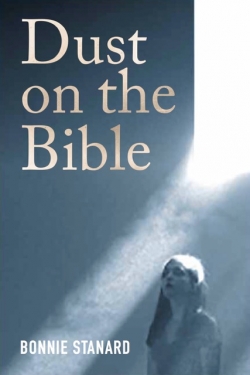
  • DUST ON THE BIBLE by Bonnie Stanard, a moving coming-of-age story

    DUST ON THE BIBLE by Bonnie Stanard, a moving coming-of-age story

    A poignant tale from start to finish, Dust on the Bible by Bonnie Stanard is a vivid and emotionally captivating story about the strife of a family living in rural South Carolina in 1944.

    Lily, a twelve-year-old farm girl, wraps readers around her heart. While struggling to understand the mysteries of death, God, family, and school bullies, she endures poverty and agonizes over her missing father. Lily is hungry for knowledge, but a sixth grade bully turns school attendance into misery. Lily is an easy target; she is quiet, poor, and wears homemade feed sack dresses. This is Lily’s story, one year of her life when she transitions from childhood innocence to the edge of her awakening.

    Readers first see Lily on a cold, October morning, while she warms her backside in front of the cook stove. Stanard does a superb job in crafting imagery that evokes the senses; readers can see the small kitchen and feel the morning chill. The author’s descriptive words and phrases are fresh and easy to relish as readers follow Lily through the seasons, from bitter winter to scorching summer.  

    Lily’s consummate yearning to know what happened to her father moves the plot steadily forward. No one will talk to her about him, but she keeps asking. And every time she does, it causes trouble. Lily is bright, curious, and needs answers. When family members do reply to her questions, they keep comments short and simple; they shirk her questions to try to shield her from something they believe that she doesn’t need to know. But, this creates even more questions and adds fuel to her active imagination. Nonetheless, their answers paint character sketches of each person in the story.

    Grandpa owns the one-thousand-acre cotton farm that he runs without the help of a tractor. He and Grandma have opened their home for four of their five adult children, including Lily’s mother and Lily herself. The overcrowded home is without indoor plumbing, cold on frosty winter mornings, and oppressing with stifling heat in the summer. They all share the endless chores and the long days of hard-scrabble living for a meager living.

    Stanard creates a family with a non-nonsense way of life, but the family also carries a deep abiding love for each other; no matter what. Even when Lily’s youngest uncle, Archie, goes overseas, despite the family’s subdued fear, their love for him shines through in their reaction to the letters he writes to them.

    Stanard has created a strong protagonist in Lily—one  in whom we can feel the relentlessness and restlessness of youth as shown in one of my favorite lines in her work.

    “She daydreamed of sleeping late as she wanted to. Of swimming in Ma George’s pond. Of catching lightening bugs and building forts. Of shooting the .22 rifle.  Most of all she wanted Grandpa to teach her to change gears so she could drive the pickup.”

    A few paragraphs later, Lily’s reality ensues.

    “Don’t matter whether she wants to. Lily’s old enough to know what work means,” said Florence. [fusion_builder_container hundred_percent=”yes” overflow=”visible”][fusion_builder_row][fusion_builder_column type=”1_1″ background_position=”left top” background_color=”” border_size=”” border_color=”” border_style=”solid” spacing=”yes” background_image=”” background_repeat=”no-repeat” padding=”” margin_top=”0px” margin_bottom=”0px” class=”” id=”” animation_type=”” animation_speed=”0.3″ animation_direction=”left” hide_on_mobile=”no” center_content=”no” min_height=”none”][Lily’s mother replied to Grandpa when he told Florence that maybe it was too hot for the twelve-year-old Lily to work in the summer afternoons.]

    Stanard’s writing deftly shapes the narrative and the setting. Her pitch perfect dialogue conveys Lily’s “tween” age while conveying the social strata of her world. Readers are pulled into her thoughts, her reactions, and the family dialogue––walking through her world, seeing it through her eyes, and feeling it through her heart. Lily is a brave individual seeking to find her own place in the world while enduring difficult times on many fronts.

    Dust on the Bible is a moving novel with an honest perspective of what it was like for some who grew up in poverty in the South during the Second World War. The coming-of-age story of Lily is candidly related, drawing on all the senses. Lily’s story and her world will linger with readers long after they’ve finished reading the final pages.

     [/fusion_builder_column][/fusion_builder_row][/fusion_builder_container]

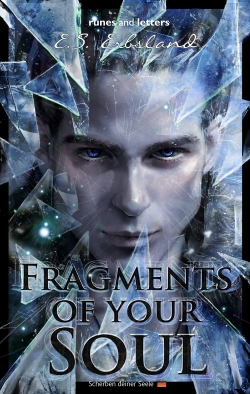
  • FRAGMENTS OF YOUR SOUL by E.S Erbsland, a thought-provoking fantasy novel

    FRAGMENTS OF YOUR SOUL by E.S Erbsland, a thought-provoking fantasy novel

    Shape-shifters, runes, and mystical creatures all collide to create an engaging story in E.S. Erbsland’s fantasy novel Fragments of your Soul. Lovers of the fantasy genre and anything relating to magic will not be disappointed by this compelling plot-line.

    The tale begins by showing the protagonist, Arvid, a woman who is almost thirty, feeling trapped by a mundane life. Her desire is granted to her when she falls through a portal into an alternate dimension. The utter weirdness of her new dwelling is dangerous and repugnant. Grieving for her mother, she longs for all that is familiar. She burns with livid anger at the “gods” who created these portals, but claim they don’t know how to un-create them … or send someone back.

    Instead of showing the demanded reverence for these gods, she shows contempt and fury. To her, the concept that the gods are good and deserve obedience is utterly false. The story reveals fragments of one powerful male character’s soul little by little as he interacts with Arvid. She has something he needs to accomplish his goal. Is he good? Will he help her? Or is he ruled by a devious heart?

    Readers watch magic powers develop within some characters, and learn about runes, the written language of this world––and runes which are tools used to create magic. We meet gods, humans, demons, cave worms, dwarves, giants, and shape-shifters. Immersed in this new foreign world, the reader experiences Arvid’s adventures eliciting fear, loss, pain, horror, anger, guilt, and love.

    The Shadow World designed in the novel creates vivid pictures of a place totally foreign to readers, but one that our imagination accepts. Nonetheless, readers will be drawn in by how realistic the world is. Each word engages the five senses and racks up an emotional response that creates an unbreakable connection to the protagonist. Readers will wonder if they could endure Arvid’s tragedy, and they will hope that she will pull through.

    Arvid doesn’t give up on her quest to return home, but at times she comes close to defeat. Readers will cringe when they measure her courage against their own. While she navigates through ordeals, reader empathy grows for her exhaustion in the fight, for the bitter cold, and for her loneliness. Arvid’s goals and motivations are clear, driving her through tremendous hardships. The characters interacting with Arvid let us know who she is and how she thinks.

    Readers can also expect to be enthralled by the carefully crafted plot. Unexpected conflict boils and simmers throughout the novel and seduces readers into turning the next page. Many settings and characters exist in the story, but they are so well introduced that the reader maintains a vivid picture and remembers them when referenced again. The multiple types of beings and their interactions reveal how the Shadow World functions.

    Erbsland has crafted a thought-provoking novel that will engross readers of fantasy and beyond. This reviewer looks forward to continuing reading this riveting story in the second novel of the Mirror Worlds series.
    Reviewer’s Note: This book is recommended for readers over seventeen due to some brief sexual content.

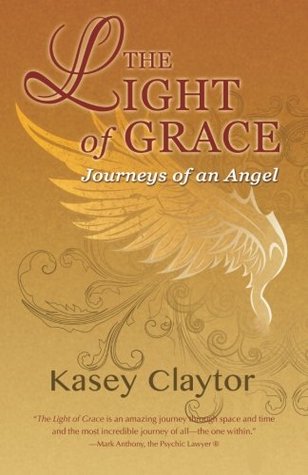
  • The LIGHT of GRACE: Journeys of an Angel by Kasey Claytor – an epic spiritual journey

    The LIGHT of GRACE: Journeys of an Angel by Kasey Claytor – an epic spiritual journey

    “The Light of Grace” by Kasey Claytor begins at the end of Grace’s final material/physical life on earth. She transcends into her angelic form and following a life review, Sophia, her former guardian angel, introduces Grace to the new charges she is to guide.

    During her new role as guard and guide for people assigned to her, Grace continues to evolve. Her charges each live during vastly different time periods on earth. Mumbie, a woman, lives in primitive earth times. Garth, a Christian male, lives in the middle ages. Arnina lives in the technological age of the twenty-first century. Alistair lives in the twenty-ninth century, described as the salubrious Light Age.

    In a surprising twist, the omnipotent narrator introduces himself by writing “And of course there is me. I am not a physical being, but I have been…”. The story teller describes the lives of each of these characters, from birth through life’s experiences until death, including their relationships and sufferings amidst supernatural guidance from Grace. To provide each character with visible and palpable loyalty and unconditional love, a canine spirit takes a physical form and stays by each one’s side.

    Edifying dissertations give readers a smorgasbord of spiritual precepts combining multiple teachings and explanations from both Biblical and Eastern sages. Readers who enjoy the writings of Deepak Chopra or Wayne Dyer will find Grace’s metaphysical journey enlightening as it spans thousands of years both into the past and into the future.

    The characters’ universal life situations trigger recognition of universal truths as they struggle to deal with war, death, love, hate, loss, drug use, jealousy, lust for power, success, failure, self- incrimination, torment, deep love, compassion, peace, and joy. Sufferings are portrayed as necessary stepping stones for the evolution of souls with the spiritual guidance of angels whose main tools are unconditional love and the absence of judgment, trusting that everything is what it must be.

    You may want to gather with others to explore and discuss your observations as you accompany Grace and her special emissary, Aelfraed, on Grace’s spiritual journey crossing planes of existence and enduring trials and tribulations revealed through each character’s telling. The characters’ lives are vividly portrayed via the settings, lifestyles, and beliefs of the eras in which they live.

    The Light of Grace: Journeys of an Angel by Kasey Claytor will make an excellent selection for book clubs interested in reading and discussing works that are spiritually and metaphysically oriented. It also will be a compelling read for anyone seeking answers to the mysteries of life, death, and what lies beyond.


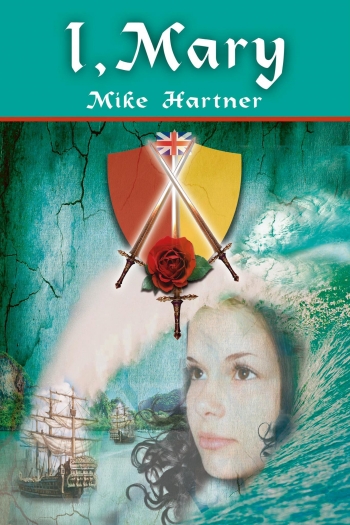
  • I, Mary: Book 3 of the Crofter Family Saga  by Mike Hartner, an historical fiction middle grade book

    I, Mary: Book 3 of the Crofter Family Saga by Mike Hartner, an historical fiction middle grade book

    Heartwarming and inspirational, Mike Hartner’s novel I, Mary is a beautifully-written middle grade children’s novel that captures a young girl’s dreams of becoming a sailor. A fantastic read for children and their families who enjoy fiction set to the background of sailing and historical times. If your middle grade reader loves The Little House on the Prairie series by Laura Ingalls Wilder, then she will love reading I, Mary by Mike Hartner, the third book in the Eternity Crofter Family Saga series.

    The tale takes a reader into a turbulent time in England’s history, when Oliver Cromwell usurps power from the monarchy and plunged England into a civil war. Readers are introduced to the protagonist Mary as a toddler aboard one of her father’s ships. She shows an innate love and connection with the sea. At age eleven, she pleads with her father to allow her to become a sailor. A caring man, he yields. He urges one of his captains to take her on, even though she is still a young girl. Her superior intelligence, reliability, and hard work earns the respect of sailors and their captains who, along with the readers, watch Mary learn and excel in seamanship.

    Mary is a unique, strong, and kind girl existing during a time in history when females were considered by many to be chattel without rights. Readers admire her from the start as they watch her navigate through calm waters and stormy seas. She is a praiseworthy character for her courage and the way she helped or touched so many other characters .

    When the first person narrator changes, a line of three stars above the passage marks the switch. Intimate content is limited to hand holding and kissing, but the growing love story carries emotional impact throughout. The dialogue, though, is still written using some of the authentic dialect of Highland Scotland, such as lass, laddie, and bairn. Hartner’s novel is also an easy, smooth read for children and to read aloud to children.

    Children can also get a history lesson as well, or be inspired to learn more Highland Scotland and clan life. In the author’s note to his readers, Mike Hartner says, “My goal is to provide an enjoyable reading experience and not a historical map.” But admits he’d be pleased if a youngster got motivated to check the book’s historical accuracy regarding the British Crown Hierarchy, the ‘Rump’ parliament, the Great Plague, and the Great Fire in London, all of which are mentioned in the story.

    This reviewer rarely cries during the emotional hits in a story, but Hartner’s ending stirred powerful feelings and brought forth tears. Readers will resonate with Mary from start to finish over the poignancy of her life. An inspiring read that pulls at your heartstrings, I Mary is a brilliant novel that sets the dreams of a young girl to the historical backdrop of a time that was most difficult for women. 

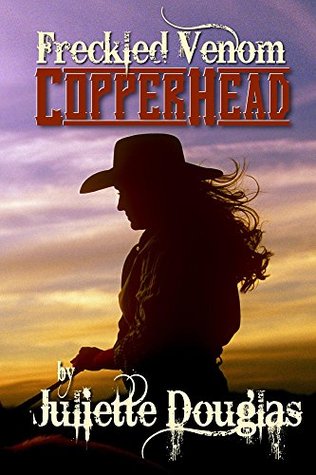
  • FRECKLED VENOM COPPERHEAD by Juilette Douglas — Best Debut Western

    FRECKLED VENOM COPPERHEAD by Juilette Douglas — Best Debut Western

    Straddling a big, gray horse, a young boy rides into White River, a small isolated town with few people. A town he fled years before. He is alone and sick.  Multiple questions percolate, but the first one is, “How can he carry on?” Readers who seek historical western adventures, will find Freckled Venom by Juliette Douglas a  satisfying read to be enjoyed by all ages of readers, youngsters or seasoned.

    Juliette Douglas writes with a unique Western voice, full of quirky phrases that establish character, humor, emotional content, and moves the story briskly along. The story is set in 1878, and the narrative revolves around the opposing goals of the town marshal and the obsessed bounty hunter. Its supporting characters are enjoyable, although some lean toward stereotypes, but this old-time Western presents an engaging hero and heroine.

    Tension and conflicts are layered and contain some violence. The Marshal Rawley and the venomous woman Lacy suffer as they’re jammed together against vile weather: rain, wind, cold and snow, while hunting three brutal socio-pathic brothers. While the villains provide gripping conflict and suspense, an underlying theme through the story is Lacy’s irreparable childhood damage.

    Rawley tries to break through her emotional barricade, but is returned with Lacy’s biting reactions. However, such interactions define these characters as they grow; both of them learning while searching for a way to deal with their dilemma. Two plots climax at the end of the dual hunts: the hunt for the murdering scum brothers and the hunt for a resolution to Lacy’s pain.

    As the narrative deepens, internal and external dialogue represents character reflections, and drives home. In almost every conversation with Lacy, Rawley uses a nickname, partly with affection, but also to taunt her, and the nickname becomes tiresome to Lacy and maybe to the reader also. However, the payoff for reading past these bumps is thoroughly enjoying a story that makes the Old West come alive.

    Douglas writes the physical senses organically; readers see, hear, touch, and smell everything in the setting, know the season, feel the weather, and can taste the dust.  Freckled Venom, Douglas’ debut novel, brings the Old West to life with vivid settings, believable adventures, and suspenseful plotting. She weaves together danger, Lacy and Rawley’s growth, their longing for intimacy, and induces reader empathy for Lacy and Rawley right to the end. Readers wanting to know more can look forward to Douglas’s sequel, Freckled Venom: Copperhead Strikes.


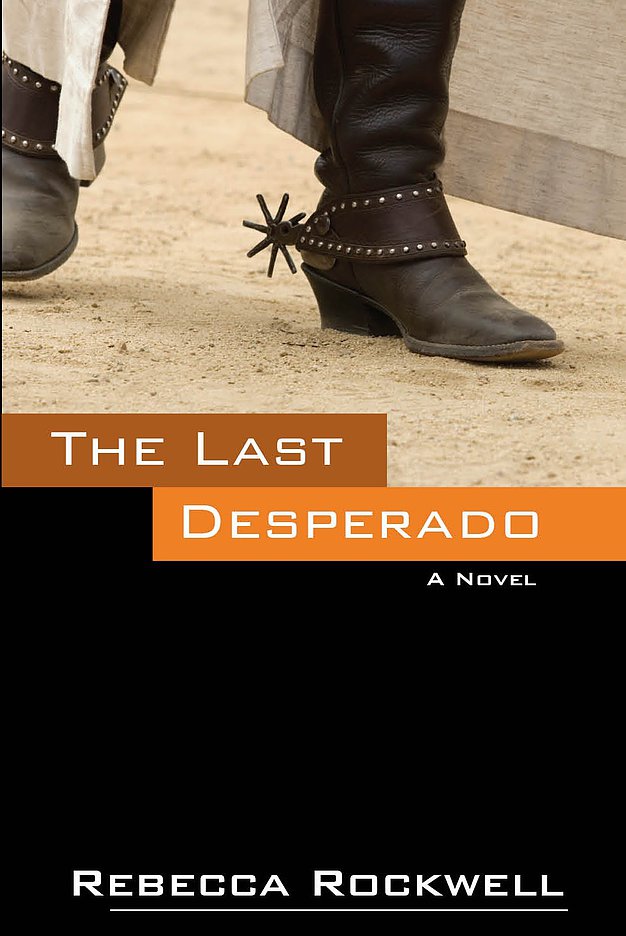
  • THE LAST DESPERADO by Rebecca Rockwell –a tale of the last days of the Wild West

    THE LAST DESPERADO by Rebecca Rockwell –a tale of the last days of the Wild West

    His fame spreads with every train hold-up, bank robbery, horse theft, and whatever else he must do to survive. “The Last Desperado” by Rebecca Rockwell lassos the readers and keeps them on the ride into the last days of the Wild West in Kansas and Oklahoma Territories––a superb tale told in Bill Doolin’s perspective of how he became a notorious outlaw creating the legend of the “Wild Bunch” gang.

    The story begins when Bill ensures his widowed mother will get by before he leaves home and becomes a cowboy. A good son and a guy who cares. The intervention of railroads mercilessly cuts away swaths of land and usurps the need for cattle drives not leaving much opportunity for a young man in the West. Doolin’s boredom and anger mounts and he slides over time into the leadership of “The Wild Bunch” gang, drawing cowboy buddies and others he meets along the trail, into the gang with him. Foreshadowing, treachery, and betrayal keeps the tension mounting.

    Rockwell immerses readers in the life, loves, and deep friendships of Doolin, while they walk in his shoes, feel the rainstorms soaking through his clothes, understand his fears, and share in his love for his wife and child. She lets readers feel rides in the heat, the rainstorms and the crouch, hunkered down in the cramped dirt dugouts hiding from the “Lawdogs.” Instead of labelling him an “evil dude” we admire him, maybe wishing we could know a man like him, and we understand, and many forgive, when he is cornered and commits violence. Our hope grows along with Doolin’s when he finally yearns to change.

    The dialogue remains true to the time and place in history, their speech revealing who they are and their lifestyles. The words, like a time machine, take us back to the years surrounding 1892. The reader gets to know the characters by how and what they speak, and can feel the settings through the conversations.

    An excerpt and the set up: Bill Doolin gazes, eyes full of love, upon his wife Edith, and at his baby son in his arms. He feels the weight and the warmth and smells his son for the first time.

    He thinks, “I didn’t think I had enough room in me for all those feelings.”

    Rockwell brings this man and those he loves, along with a new perspective of the gang’s bad boys, vividly to life. Her readers will get to know them and care about them–a mark of a truly great novel. “The Last Desperado” is highly recommended for those who love westerns and top drawer historical fiction.

    “The Last Desperado” by Rebecca Rockwell is First Place Laramie Award Winner for Western Fiction.

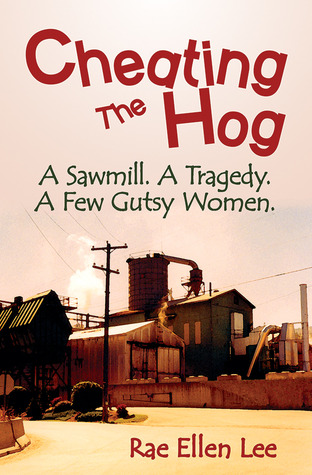
  • CHEATING THE HOG: A Sawmill. A Tragedy. A Few Gutsy Women by Rae Ellen Lee

    CHEATING THE HOG: A Sawmill. A Tragedy. A Few Gutsy Women by Rae Ellen Lee

    When her bell-ringing employment for the Christmas season ends, Echo Spangler tackles a higher paying job demanding heavy physical labor—one at the local saw mill that is known for paying above minimum wage, but is perilous to one’s limbs.

    Male bosses and a few male co-workers conspire to force her to quit, adding to the daily “business as usual” danger. But she needs this job to pay her bills, and she’s determined not to let the jerks get the best of her. Rae Ellen Lee’s novel Cheating the Hog  is full of snappy writing that conveys the groaning of Echo’s muscles, while also showing her bravado and joy of simple pleasures against her taunting male co-workers.

    Echo presents a gutsy hard crust to her bosses and the men lording over her in the sawmill, but reveals her big heart to three female co-workers, her mother, and old friends. Danger ramps up beyond the job when she tries to help the women escape domestic violence.

    Readers will be engrossed in Lee’s lively narrative style; learning along the way about the workings of the sawmill machinery the fatal chaos it may bring if things go wrong. Lee also brings us to life outside the mill. Echo’s homelife includes her gun-toting mother, but Echo still carries the hopeful sparks of romance in her heart; even if she has to deal with prissy women and thick-skulled men.

    This engaging story shows the life of gutsy women on the sharp edge of poverty–with no extra education­­ and none of the advantages of a relatively carefree upbringing. The author immerses the reader into Echo’s daily life and demonstrate how such women experience the hardships relentlessly tumbling their way, enduring a male-dominated work culture, and living through its dangers. The book’s overarching theme encompasses underprivileged women who work hard, laugh hard, love hard, fight hard, and never give up. They forgive when they can, all the while struggling to show courage against odds most readers hope they will never face.

    People busy with their own lives don’t often give much thought to the hard and dirty jobs millions of men and women do every day. The author shows how (and why) many working folks muster the ability to face danger, fear, and death daily on the job. When readers turn the last page, they’ll be glad that they read the entertaining and enlightening Cheating the Hog engagingly written by the talented Rae Ellen Lee.