Author: M. Corvid

  • COUNTENANCE by Joy Ross Davis – Ghosts, Paranormal, Urban Fantasy

    COUNTENANCE by Joy Ross Davis – Ghosts, Paranormal, Urban Fantasy

    Nealy Monaghan’s Aunt Sylvie is an author of several cookbooks with a large fan following – and some very different kinds of recipes in Joy Ross Davis’ Countenance.

    Lately, life has taken some terrifying turns, but Nealy remembers that as a young girl, she had been happiest at The Playhouse Inn, an unusual B&B nestled in Tennessee and run by her famous aunt, Sylvie Wolcott.

    When the worst happens, it’s that happiness she turns to for comfort, trust, and guidance. Right now, Nealy needs to grieve. She needs to rest. Which may be hard to do since Aunt Sylvie has a delicious secret ingredient she slips into every recipe. Something’s going on in that big kitchen – something more than good eats – and it’s up to Nealy to figure it out.

    Benton, the handsome all-around groundskeeper, and LuLu, the very talented Irish wolfhound, keep Nealy company as she works to understand the Inn, its history, and just what her future holds—as well as her past. The revealing answers surprise both her and everyone around her, as the truth really will set them free.

    Davis does a solid job of presenting some details with a “bang!” and yet engaging the reader with short chapters and a sense of mystery. Her writing style makes it very easy to lose oneself in the read. In other words, this book is hard to put down.

    Davis also excels at sensory details. When Nealy is cold, for example, the iciness is easy to feel. When Sylvie cooks, her dishes are described with a mouth-watering appeal. Natural and unnatural elements come into focus with equal appeal, until the reader can feel the warmth of a polished piece of wood, or hear the music of wind chimes.

    In almost gothic fashion, the steep cliff by the inn lends a sense of real danger, while the old building itself has problems all its own. Davis pays attention to detail and description, adding nuance and atmosphere to her settings in place and time.

    Countenance will engage the reader with an unexpected melding of the senses. Religious and philosophical ideas are brought forth in epic battles of Good versus Evil in the most unexpected places –  even in Aunt Sylvie’s sunny kitchen!


  • OLYMPUS NIGHTS ON THE SQUARE, Book 2 of the JULIANA SERIES by Vanda Writer – LGBT Coming of Age, Post WWII New York City

    OLYMPUS NIGHTS ON THE SQUARE, Book 2 of the JULIANA SERIES by Vanda Writer – LGBT Coming of Age, Post WWII New York City

    Alice Huffman is an interesting young woman. She likes to go by the name of Al, likes to wear tuxedoes when she’s allowed to and has a burning desire to run a nightclub in NYC where beautiful men and women can mix, mingle, sing, and dance in whatever way they please.  World War II has just ended. People should be ready to celebrate!

    But Al has other burning desires as well, some she’s not quite ready to talk about. After all, she tells herself, having these kinds of feelings for one gorgeous woman doesn’t really make her one of those sexual perverts other people are talking about, or does it?  Luckily, she has close friends, more like family, to help her deal with these questions during the tumultuous decade following the war. With them by her side, Al becomes the woman she was meant to be.

    The extended title, or subtitle, LGBT Life in the Early Post War Years 1945-1955 is really the best description of this work. The novel begins immediately after the war and is chock full of specific details that may not have made it into the history books. In just one example, if a man like Al’s friend Max, was discovered to be homosexual while serving in the army, he was given a “blue discharge,” a piece of paper that would limit his employment possibilities for life.

    We learn that freedoms for women, more public during the war, are severely curtailed as the men returning from overseas expect the home life they remember. In this tale, husbands exert control over their wives and women like Al are immediately suspected of “perversion” if they choose not to marry. It’s a tense time, growing more violent across the decade as McCarthyism and fear of communists in a Cold War with the Soviets becomes interwoven with the public campaign against all homosexuals, men and women alike. Every manner of insult is thrown at them. Al and Max understand they could lose everything they’ve worked for should either of them be discovered.

    It’s against this historic backdrop that Vanda develops her characters. In this second book of the Juliana series, the singer figures prominently, but in many ways, it’s Al cast as her young, secret, confused lover and eventual career director, who steals the floor show. The tension between Al and Juliana’s legal husband, Richard, is tragic and powerful and continues to grow throughout the work. Al herself is growing in every chapter, and changes from a terrified girl with an impossible dream, to a businesswoman who has earned the grudging respect of many powerful men.

    In this way, Olympus Nights can be seen as a Lesbian coming-of-age story with all the recognizable dangers present in the past that a more modern audience can still feel. Yet, even though the story really is centered on the women, the men in Al’s life also have important roles to play. We’re treated to historical glimpses of stars, such as Walter Winchell, Liberace, and Mayor O’Dwyer; and squirm with Max, Al’s mentor and ally, and Marty, a former soldier and aspiring actor, as they struggle to be their true selves. In every chapter, Vanda highlights the political climate of the times and brings forth a wealth of information describing the anti-Gay, anti-People of Color, anti-Communist, anti-Jew, and anti-Woman policies in New York City and America, during that decade.

    It isn’t hard to make the connections Vanda wants the reader to see, that these intolerant policies are making a resurgence years later, and that they have an ugly history of repression and violence effecting real people. Her creation of characters we care about, struggling to be themselves against every threat, every unjust law, attempts to remove the stigma of “other” and “pervert” and every other horrible name homosexual individuals have been forced to live under.

    5 Star Best Book Chanticleer Reviews round silver sticker

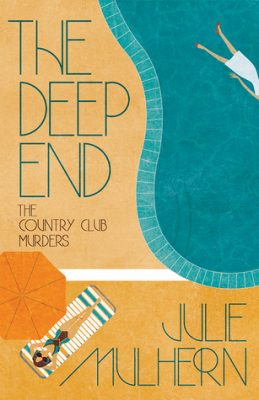
  • The DEEP END by Julie Mulhern – Woman Sleuth, Thriller/Suspense, Cozy Mystery

    The DEEP END by Julie Mulhern – Woman Sleuth, Thriller/Suspense, Cozy Mystery

    It’s 1974 and Ellie Walford Russell is doing fine, except for the fact that her husband is missing and his girlfriend is dead.

    Ellison Walford Russell is a married housewife and artist living in Kansas City during the early summer of 1974. Following her desire to paint has left her in the midst of an unpleasant marriage, held together for the sake of her young teen daughter, Gracie. Ellison was raised in the upper fringe of society, where expensive designer clothing and tennis games at the club are the usual topics of discussion, the place where her domineering mother Frances and her estranged husband Henry would like her to stay. But when something happens to one of the least-liked women in town, even Ellison’s passion for art won’t be able to protect her from the dark and swirling clouds of gossip and intrigue.

    Julie Mulhern’s book is a well-handled whodunit cozy mystery that thoroughly entertains. The main character, Ellison, or “Ellie,” sees colors and patterns and as an artist describes things using a rich and vivid vocabulary. It’s 1974, a time period when many wives struggled to be independent of their husbands and some husbands, like Ellie’s, didn’t like the change. Mulhern does a great job in setting an accurate sense of the historic period, complete with references to drinking a specific diet soda, discussing Watergate at cocktail parties, and women who might wear purple Muumuu dresses. But the era doesn’t become the centerpiece. Rather, it’s more like important background discussion, never distracting from the plot at hand but reminding readers of the changes for women during that time period, changes mirrored in Ellie’s personal growth. Ellie’s mother, Frances, and young daughter, Gracie, serve as other fine and subtle examples of society’s shift across a single generation.

    The men in Mulhern’s work also have an interesting time. Ellie’s husband, unable to accept her growing artistic skills and independence, turns his controlling impulses into ones of humiliation and infidelity. Is it any wonder that Ellie’s world begins to spin out of control when her husband’s mistress is murdered and he is nowhere to be found? It seems everyone has something to say and advice to give, as more and more things go wrong.

    Two men, in particular, are at odds each certain they know what Ellie should be doing. One is an old friend, a lawyer, a handsome man her mother would like to see her date. His name is Hunter Tafft, a tall and distinguished fellow who is a member of the same club. The other is a police detective, Officer A. Smith, with deep brown eyes and deeper convictions, a man who makes her blush when she’d least like to. Using this trio of characters, Mulhern sets Ellie not only in the middle between two strong-minded men but between two levels of society and two levels of the law. The tension is fruitful.

    Overall, The Deep End is a book that will engage the reader in every chapter as they seek to solve the many crimes, both present and implied. Ellie Russell is a colorful person in more ways than one, and the other characters are more than a background to her, adding depth to the story in unusual ways.

    Funny, compassionate and endearing “The Deep End” is a well-crafted cozy, with just a touch of the exotic life, murder and mayhem, and the Bundt cake brigade to hook readers into devouring the rest of Julie Mulhern’s series, The Country Club Murders.

    5 Star Best Book Chanticleer Reviews round silver sticker


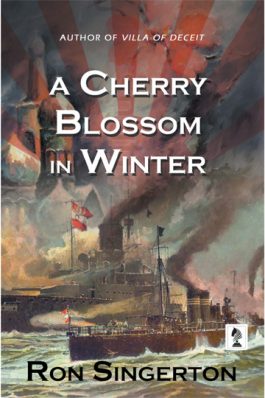
  • A CHERRY BLOSSOM in WINTER by Ron Singerton – Historical Fiction, Literary, War/Military, Romance

    A CHERRY BLOSSOM in WINTER by Ron Singerton – Historical Fiction, Literary, War/Military, Romance

    The story behind any war is a difficult one to tell. A Cherry Blossom in Winter by Ron Singerton takes us into not just one, but two, cultures at the turn of the last century in an attempt to show us both sides of a decisive naval conflict that would shape both countries and people for years to come.

    Alexei Brusilov is a young man destined for a talented future. He is bright and courageous, lightning-quick with a saber, and longs to join the Russian Naval Academy at the turn of the 20th century.  Like his father before him and many nobles of the Russian court of Tsar Nicholas II, Alexei sees his path as a military one, full of honor and discipline. Trouble always begins at home, however, as Alexei’s best friend becomes involved with Marxist revolutionaries ready to overthrow the Tsarist regime. Luckily, elements beyond his youthful control are in motion and before he can be caught for treason, Alexei will find himself in another world, another culture, and called upon to use all of his wits for the sake of love.

    Ron Singerton’s book, A Cherry Blossom in Winter, is a blending of historical and romantic fiction as we follow the young Russian Alexei to Japan and his first true test of manhood. He is there to accompany his father, Count Brusilov, a man of violent temper who disdains all things Japanese. But politics are politics, and all hints are pointing to a coming war between their two countries. It could be strategically important for young naval officers to understand Japanese in the near future, but Alexei’s goals are of a more personal nature. Readers will struggle with him as he attempts to make friends and learn the language, absorbed by the beauty and culture he sees. High Society, Religion, and Honor will all have different definitions by the time Alexei unexpectedly returns home.

    Yet the Moscow court and the Tsar have not been idle. A violent peasant revolution seems closer to reality all the time, as Alexei enters the Academy on the cusp of a family crisis. Everything seems to be on the verge of great, though not necessarily peaceful, change as the young man, now a brave naval cadet, attempts to finish school.

    In this way, Singerton’s book does a great job in presenting this pre-war time as one of both personal and national conflict.  History buffs need only go to the official record to discover the facts, the dates, and the battle locations of the Russo-Japanese war, but A Cherry Blossom in Winter works hard to make it a visceral experience. By pulling in the geopolitics of the beginning of the last century, along with developments such as the introduction of Marxist ideology, the near-collapse of Russian court nobility, anti-Jewish pogroms, the mistreatment of Russian peasants, and widespread anti-Asian sentiment, the overall effect is a slow-build to the climatic and brutal naval battle. Singerton’s use of the actual historic names for places, battle ships, and generals on both sides of the conflict also help the reader to feel right in the middle of that dangerous time. And yet the wartime reality is carefully balanced with not just one, but several love stories. Passion, whether for love or war, is keenly portrayed.

    Complex in its historical scope and list of characters, A Cherry Blossom in Winter is more successful in understanding men at war than the background love stories. This book won’t be for every romance reader as the plot points issue from exceptionally visceral entanglements – however, history buffs and those who love wartime epics will devour the read. Reminiscent of Puccini’s Madame Butterfly, readers will journey through an emotional landscape as dangerous as the raging battles themselves.

    5 Star Best Book Chanticleer Reviews round silver sticker

  • The ANGEL KILLER: Book Two of the Watcher Saga by Lisa Voisin – Young Adult/Urban Fantasy/Horror

    The ANGEL KILLER: Book Two of the Watcher Saga by Lisa Voisin – Young Adult/Urban Fantasy/Horror

    High school is a little more complicated for Mia and her unusual boyfriend, Michael Fountaine. Miraculously recovered from a coma only a few months earlier, Michael has many secrets that only Mia truly understands. But love and understanding aren’t always enough to stay sane when the world outside is changing before their eyes.

    These two never know when a day might include demons from the darkest pit, minions of despair, or hellhounds looking for a fresh kill. A battle of supernatural dimension is coming ever closer to the heart of their hometown of Seattle, and Mia will soon have her burgeoning power put to the ultimate test. If only she could believe in it more and trust in the strength of angels! Current and past struggles are interwoven for both of them when a powerful nemesis returns wielding a sword like no other. It’s unique, it has a name, and it’s lethal.

    In book two of author Lisa Voisin’s The Watcher Saga, Mia and Michael reunite when Raguel returns with vengeance on his mind.  With special abilities of her own, Mia is able to see Michael for what he really is and to aid in his battles while keeping his identity secret even from her best friends, and it isn’t easy! If only she could concentrate on more normal things, like Fiona and Dean, and enjoy the school’s wrestling matches. But her destiny is more complicated than that, and she knows it. She also knows that her love for Michael is worth anything to her, just as it has always been across the many lifetimes she is just now beginning to remember.

    In The Angel Killer, certain details are prominent. Actual Seattle locations make strategic appearances, like the Smith Tower and the Underground, and the weather as described will be familiar to any Western Washingtonian. Voisin’s proper names, as well, are made to fit the character and mood. Each Angel, for example, has a name that ends with a similar sound, whether it’s Arielle, Turiel, Damiel, or Michael. These are beautiful beings with beautiful names.

    Another character in Voisin’s book, Mia’s good friend Fatima, is described as a person with visions and her name is equally evocative, reminiscent of the little children of Fatima, a popular Catholic story. But it is with Fatima and her twin brother, Farouk, that Voisin veers from her narrative of Angels and Demons to one of more Middle Eastern content when Fatima is unwittingly possessed by a Djinn, and only the Angel Michael can help. The author’s attempt to meld these two very different descriptions of embodied evil may be unsuccessful for some readers expecting a more strictly Christian storyline, and yet, as early as page one it is Fatima’s gift of a Hamsa necklace that buzzes a warning for Mia when unseen Demons are near.

    Overall, The Angel Killer: Book Two in the Watcher Saga is full of colorful Seattle locations and symbolic characters in this addition to Voisin’s continuing saga of Good vs. Evil. If you’ve already met Mia and Michael, or are just making their acquaintance for the first time, you’ll want to know how this battle ends.

  • The Other La Bohème by Yorker Keith – Contemporary, Literary, Opera

    The Other La Bohème by Yorker Keith – Contemporary, Literary, Opera

    Life is as complicated as an opera performance in Yorker Keith’s new literary work, The Other La Bohème. The setting is modern-day Manhattan, complete with a café that showcases singing wait staff and doubles as an art gallery, studio apartments full of painters and poets, and surprise performances are sung in Italian.

    The Dolci Quattro, a group of four friends intent on making it in the challenging world of professional opera, is determined to stage a different version of this well-known work, doing everything they can to support each other when motivation is hardest to find. Luckily for them, wealthy patrons and loving family are always closer than they imagine.

    Keith takes his novel into the realm of opera itself in many ways. The most obvious how the book is formatted – and the reader will notice this quickly, with each chapter heading listed as a “scene” and the book itself divided into “Acts.” And like any good opening scene, we meet the major characters immediately.

    Four singers have been friends since college days and have dubbed themselves The Dolci Quattro, the sweet four. It’s through their singing, often in Italian and always translated, that readers who have no familiarity with this art form will be able to see its enduring legacy and relevance to modern life. Whatever personal situation arises, at least one of the four has an aria to help express the emotion.

    By Keith using this technique opera, itself, takes center stage. Dialogue often swirls around what it means to sing or be a singer, becoming technical at times, yet exploring the emotional and physical demands of the profession, while descriptive passages can encompass many of the main characters at once, mimicking the most enlightening program notes.

    Similarly, the main story line of The Dolci Quattro’s attempt to successfully stage a lesser version of the most famous opera performed in America, Puccini’s La Bohème, by performing the work of the same name composed by the lesser known Leoncavallo, echoes their frustrations as individual vocal artists. They are starting from near obscurity, each working in poverty–what was once referred to as Bohemia– but with passionate and undeniable talent.

    Their gamble of performing a nearly unknown variation of the opera mirrors the often-difficult choices and explanations each character faces about their futures and their professional careers. Like many an opera production as well, the reader is asked to accept life for the Dolci Quattro in all of its most broad and painted strokes.

    Tragedies are short-lived, triumphs universal, offering us all a glimpse into the unique world of lead singers and understudies and what it takes to make it to the top in a competitive field.  In the repeated refrain of The Dolci Quattro, Keith’s work urges all of us to “Sing On!”

    5 Star Best Book Chanticleer Reviews round silver sticker

  • Sidetracked in Silver City by Jacquie Rogers – Humorous Western

    Sidetracked in Silver City by Jacquie Rogers – Humorous Western

    Stuffed with memorable characters, including a mule named Pickles and a donkey named Sassy, our heroine Honey Beaulieu navigates the difficult path of being a female bounty hunter in the Western territories, circa mid-1879.

    As one might expect, all kinds of men get in Honey’s way, but it isn’t just Pickles who can show a stubborn streak. Jacquie Rogers’ newest release, Sidetracked in Silver City, is as full of humor and colorful western dialogue as any saddle bruising, gun-toting tale could be.

    The story begins in crisis and with a familiar sense of frustration, as Honey Beaulieu, intent on leaving town as soon as possible and catching her next bounty, is confronted with problem after problem rooting her in place. Rogers is talented in keeping the dialogue moving, even as Honey is often lost in her own thoughts or speaking to a ghost that only she can see, named Roscoe who hangs out with a with a three-legged ghost horse named Luther, naturally.

    Honey’s big heart is on every page as she strives to make enough money to buy a future for herself and others. Talking to her animal companions as if they are humans isn’t all that peculiar for Honey – especially when a racing mule, a bonnet-wearing donkey, a surprise goat, and more than one horse all seem to understand. And while carrying multiple guns and knowing darn well how to shoot them builds the tough outer layer the world sees when they look upon Honey, her aim is to never have to use them. It takes her big, handsome admirer, Sam Lancaster, to see that soft inside of her soul.

    From Silver City to Fry Pan Gulch, Honey wrestles with being in the right place at the right time, whether it’s missing the morning train or being there in time to hold her sister’s hand when she gives birth. For anyone who has ever fought the clock and lost the battle, Honey’s exasperation is palpable. We want her to “get her man” no matter what it takes, and Rogers is quite good at building the dramatic tension with the many characters that both complicate Honey’s plans and endear us to her in this wild, wild west she calls home.

    5 Star Best Book Chanticleer Reviews round silver sticker

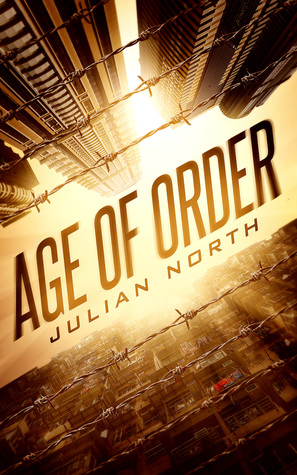
  • Age of Order by Julian North – YA Dystopian SciFi

    Age of Order by Julian North – YA Dystopian SciFi

    In the not too distant future, one girl races to save the ones she loves in Julian North’s Age of Order.

    Daniela Machado, a young Latina from Bronx City, is smart and successfully athletic – especially on the track – but she has more than a few secrets.  She’s learned to be very protective of herself and those she cares about, her blood, in an environment where others frequently die. Aba, her grandmother, and her older brother Mateo, along with her sister of choice, Kortilla, are the only ones she fully trusts.

    Daniela knows something must be behind the sudden offer she receives to attend a very prestigious and selective school in another part of the Five Cities, and she’s reluctant to accept. Attending the new school and leaving Kortilla behind, however, may be the only chance Daniela has to save Mateo’s life.

    In this school environment, North skillfully weaves in multiple references to other dystopian works frequently taught in high school. The reader will be reminded of Orwell, Huxley, and William Golding, as Daniela reads them for class. Something else becomes abundantly clear: Daniela and most of her classmates don’t get along.

    It’s more than just a question of money and social standing, though. It’s genetics.

    Set in the near future of the United States, the action is often thrilling, complete with high-tech rivalries, partisan politics, chase scenes, and class conflicts. While most of the major characters are teens, North’s insights into their thoughts and feelings can apply to any age, lending an ageless quality to this otherwise clear morality tale. Their conflicts, confusions, and pain are more than any child should have to encounter. But in this world, those lucky enough to survive must grow-up quickly.

    Daniela finds her one solace in running, and she fights her way onto the school track team. No one, not even the school star, can easily beat her when she runs. Daniela, it becomes apparent, has a gift which, after being honed throughout childhood, is now formidable.

    It’s on the track when she feels completely free, even when the competition seems unfairly rigged against her. North does a fine job of writing these athletic scenes and the reader will feel their feet pounding and gasping for breath as Daniela runs against others – and her hidden past.

    As that past comes into conflict with what she is experiencing at school, Daniela and her allies (the other misfits at school) begin to see the true shape of the reality around them. Only through courage and steely resolve will they be able to do what must be done to prevent the genocide those in power have already begun. It’s up to Daniela to find her true self, when she needs it most, to save the people she loves.

    Age of Order is powerfully charged with rich characters and a dynamic storyline. One of the BEST new YA books we’ve reviewed!

  • Lost Secrets of Master Musicians: A Window Into Genius by David Jacobson – Non-Fiction

    Lost Secrets of Master Musicians: A Window Into Genius by David Jacobson – Non-Fiction

    Told with assurance and passion, a tale of one man’s lifelong journey to connect with his own musical and artistic aesthetic unwinds across decades and touches upon the techniques of some of the best known musicians of modern times. Classically trained musicians and amateurs alike will find the techniques discussed in Lost Secrets of Master Musicians thought-provoking.

    In a chronological and easy-to-follow fashion, Mr. Jacobson begins by providing background for his insight into the existence of these lost secrets, describing his own introduction into musical study and detailing his experiences with various well-known mentors, eventually culminating with his study at the prestigious Curtis Institute while still a young teen.

    While not every classically trained musician or music educator will agree with his conclusions, Mr. Jacobson has the undeniable pedigree and real life experience to discuss the techniques of fine playing, specifically of the violin, and successful music pedagogy within his genre.

    Lost Secrets of Master Musicians attempts to answer the promise of its title. Any musician who has spent time studying the twentieth century masters: Jascha Heifetz, Nathan Milstein, and David Oistrakh, Vladimir Horowitz, and Glenn Gould will find their interest piqued by the re-discovery of playing techniques that Mr. Jacobson puts forth in his insightful and revealing, and yet, what some musicians may consider controversial, treatise.  

    As a performer, Mr. Jacobson begs the musician and the reader to recognize what has been lost and how it can be recovered. The included photographs of proper position when playing the violin aid in the many points covering body symmetry, tone in playing, and what is referred to as “mind/body flow.”

    Individual chapters are devoted to an instrument’s intrinsic value apart from the player, the role of authority in the face of the conductor or mentor, and the composer’s role in the modern repertoire. Each are examined through the lens of Mr. Jacobson’s new approach before the approach itself is compared to that of the well-known and controversial Suzuki Method, as well as Galamian instruction, a method of violin pedagogy found at both Juilliard and the Curtis Institute.  

    Mr. Jacobson’s unique idea, what he has termed the “bel canto instrumental technique,” eschews the idea of individual musical talent in favor of exploring – and challenging – how music itself is approached and taught from the most basic level of instruction to the pinnacle of performance.  

    A Curtis Institute graduate, Mr. Jacobson also holds a Master of Music Performance degree from Boston University and is the founder and director of the San Francisco Institute of Music.