
Author: Lacey M

  • LILA AND THE DANDELION by Sheryl Hershey, a children’s book about self-worth and valuing others

    Chock full of brightly colored illustrations and positive messages, Lila and the Dandelion is a captivating story for young children about making friends and how we don’t have to be perfect to be a good friend or to be happy.

    Lila is a cheerful young girl who “listens with her heart and speaks with hands” – Lila is deaf. However, even though she can’t hear, one day while she was “listening” to the flowers sing, she senses that she hears a little flower crying. She walks up to a Dandelion flower and signs with her hands to the crying flower, “Why are you crying, little flower?”

    The flower cries because the gardener called the Dandelion a “weed.” This made the Dandelion feel useless and lonely.  But, Lila shares with her new friend that just because someone says you don’t belong or calls you bad names doesn’t mean it’s true.

    Lila’s character is an optimistic role model for children. Her deafness doesn’t hold her back from experiencing life in her own way, and it doesn’t stop her from having a smile her face. She inspires the Dandelion to feel appreciated  despite the hurtful words of the gardener. This children’s book teaches its young readers the powerful message of loving yourself no matter what anyone says, and how it is empowering to take that strength and use it to help others in a gentle manner.

    The story also encompasses how we can help make the world a better place by being kind and thoughtful of others. Lila shows young readers that everyone can be beautiful when they are compassionate and accepting of everyone. Lila and the Dandelion is an excellent book for parents to read to their children, and it comes with questions at the end of the book to start a conversation about the concepts self-worth and seeing worthiness in others.  

    Filled with warm, sweet characters and an optimistic outlook, Sheryl Hershey’s children’s book Lila and the Dandelion helps children explore the important message of self-acceptance along with acceptance of others–even if they are different.   
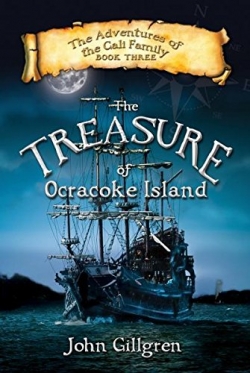
  • THE TREASURE OF OCRACOKE ISLAND by John Gillgren, third book in the Adventure of Cali Family Series

    THE TREASURE OF OCRACOKE ISLAND by John Gillgren, third book in the Adventure of Cali Family Series

    What could be more engaging for children and their families than a featured villain who impersonates the infamous pirate Blackbeard? Gillgren’s third book The Treasure of Ocracoke Island in The Adventures of the Cali Family series brings back old villains, introduces new plot twists, and puts more at stake to find lost treasure.

    It is the early 1700s, and Blackbeard prides himself on wreaking havoc, while also being an intelligent ladies’ man. However, his reign ends when a British ship invades, leading to his beheading at Ocracoke Bay; his treasure’s location is supposedly lost at sea. The year 1942 sails in, depicting the Russian ship Saratov being sunk by two torpedoes, which concealed a footlocker of gold that was going to pay the United States for war supplies.

    The reader is brought back to present day with the Cali family, who are forced to search for the lost treasure of Ocracoke Island. When the women in Carmine’s family are kidnapped by a sinister man resembling Blackbeard, him, Snail, Tommy Osawa, and NCIS Special Agent Moki Loo Tsing must battle against time to save their loved ones.

    Gillgren creates a stunning cast of villains that engage with the Cali family. The Blackbeard offender is both shocking and silly as he uses his faux accent to intimidate the women he kidnaps. Gillgren also brings back the dastardly villain Mr. Chang, who is determined to have his revenge on the Cali family for cheating him of money and opium. It becomes apparent as the novel progresses that Mr. Chang wants more than just wealth.

    This series continues to craft daring heroes and heroines. The women in the Cali family show resistance and strength against Blackbeard’s threat; emulating a sort of Charlie’s Angels attitude against a wannabe pirate with a ridiculous costume. Gillgren also continues to develop characters from his previous books, particularly in regards to Snail. Snail is a youth who shows great maturity when the kidnapping situation becomes intense, and he inspires the older men of the family to follow suit. Such characters are a great inspiration to how families come together in times of adversity.

    The novel contained enough tension and suspense to sink Blackbeard’s ship Adventure. The story contains multiple perspectives of different characters, leaving the reader with many cliff-hangers when the point of view shifted. Each character introduced new waves of anticipation.

    Gillgren’s children’s series The Adventures of the Cali Family offers another treasure travel story that pushes mystery, family, and adventure into new depths of fun.

    This reviewer highly recommends this book for children and their families who are interested in historical stories about adventure and family. Oh, and an ending that twists the tides of a plot.

  • THE TREASURE OF CHING SHIH by John Gillgren, a children’s adventure novel

    THE TREASURE OF CHING SHIH by John Gillgren, a children’s adventure novel

    Gillgren continues to bring excellent children’s fiction as he combines elements of history, romance, and adventure into a new type of treasure hunt. His second book The Treasure of Ching Shih in The Adventures of the Cali Family series induces new waves of excitement and mystery.

    The Cali Family can’t resist the opportunity to go diving in Honolulu, Hawaii for another treasure hunt experience. After all, who could resist diving for stolen loot left behind by the notorious, female Chinese pirate Ching Shih?

    The reader sails into the year 1844 as Gillgren describes that dark, ruthless nature of Ching Shih. While female pirates existed throughout history, she proved herself unstoppable as she took command of her deceased husband’s 1,800 ships and led over 80,000 men. Her thieving knew no bounds as she robbed jewels and opium. However, before the treasure could safely transition to Hawaii, a natural disaster seized the land, and the treasure was lost at sea.

    Fast forwarding hundreds of years later, Mr. Chang visits the Cali family in California to ask for their help in finding Ching Shih’s missing treasure. Their treasure hunt journey is anything but easy. The Cali family deals with villains that have the ruthlessness of Ching Shih herself, and no characters are who they appear to be. In spite of the chaos, the family proves that courage can overcome obstacles, and that hardships can’t break the bonds of friendship and love.

    Gillgren continues to excel as he blends the realms of history and fiction. Ching Shih’s backstory is carefully woven into the plot, and has a huge impact on the story’s happenings.

    What sets this action adventure book apart is its brilliant characters. Carmine continues to be a protective, strong father for his family, and ends up being a great inspiration to his son, Snail, whose bravery allows him to escape when his family is kidnapped. Carmine also doesn’t hesitate to show love to his wife or children, which also inspires Snail to grow a soft heart for Teri, a beautiful Chinese girl connected to the dastardly events of the novel. Mr. Chang also makes a fantastic villain, but the reader can still laugh when Carmine insults him.

    Gillgren offers a fun, suspenseful, yet heartfelt read that will engage children and adults in the intriguing wonders of treasure hunting and sea exploration. Highly recommended for readers of any age who enjoy high sea adventures and a fun read. This is the second book in John Gillgren’s The Adventure of the Cali Family series. This reviewer is looking forward to reading and reviewing the third book: The Treasure of Ocracoke Island.

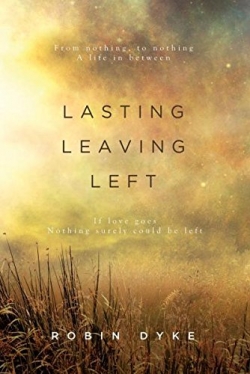
  • LASTING, LEAVING, LEFT by Robin Dyke, a poetry collection

    LASTING, LEAVING, LEFT by Robin Dyke, a poetry collection

    Every experience is a brush stroke on our life’s canvas. When our life ends, the artwork is completed; what will we leave behind for the world to see? Robin Dyke’s collection of poetry Lasting, Leaving, Left penetrates the deeper questions of what it means to live: Will I make a lasting impression on the world? How has the world made a lasting impression on me?

    Dyke’s works are the perfect balance of poetic eloquence with modern language. Lasting, Leaving, Left will engage and inspire poets and non-poets who seek to reflect and question their lives.

    Dyke’s book is organized into three sections: Lasting, Leaving, and Left. The first section, Lasting, groups together poetry focused on memories or concepts that have emotionally influenced each poem’s speaker. Such ideas ranged from recollections of a deceased grandfather, to the relationship between war and humanity.  

    The next section, Leaving, discusses the different stages people go through in their lives. One of the most unique poems I found in this section described a person playing a pinball game. The individual goes through several strategies to win the game, but once it is over, a new game begins. As time passes, we constantly leave one moment to enter another.

    The last section of the book, Left, introduces the notion of what people have left behind when they are gone. The final poems of this collection leave the reader to question him or herself about how they live their lives. With every poem, the speaker is thoughtful and gently pushes the reader to contemplate such profound questions.

    While the poetry incorporated numerous literary devices, the level of diction is perfect for readers who are not die-hard poetry lovers. Dyke’s poems are inviting to read, but they still leave the audience with wonder and opportunity to reflect upon their own life experiences.

    Nonetheless, poetry fanatics will appreciate the simple, yet thought-provoking ideas Dyke presents. Pretentious vocabulary would only overshadow the rich and naked moments of life that his poetry illustrates.

    Lasting, Leaving, Left allows individuals to find themselves reflected in poetry and use it as a lens to look into their own way of living. Readers can relate to the moments when they have endured losing a loved one, felt true love, or wondered where their life is going. Poetry is intended to connect us with the different facets of humanity. It is a vital form of expression that brings awareness to our intellectual and emotional selves.

    Dyke calls himself an “imagined dream caster” and that “poetry is a new expression of his work as a consultant and educator.” The final notes by Dyke point out that with the three Ls of this book, there is one final L to consider: Living. Through every leg of life’s journey, we need to embrace each moment to the fullest.

    Dyke’s poetry offered me a different perspective of living; life is a fluid cycle that is beautiful in the pain and pleasure it brings. Lasting, Leaving, Left is a poetically pristine read for individuals searching for another viewpoint on how they live their lives, with a dash of alliteration and rhyme.