Author: Lisa Souza

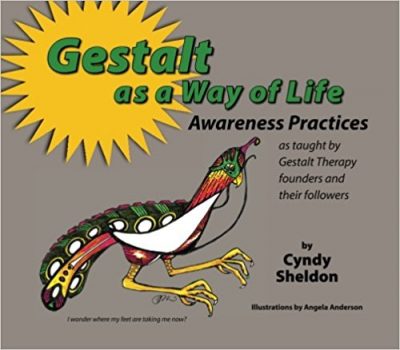
  • GESTALT as a WAY of LIFE: Awareness Practices as Taught by Gestalt Therapy Founders and Their Followers by Cyndy Sheldon – Gestalt, Self-Help, Psychotherapy, TA & NLP

    GESTALT as a WAY of LIFE: Awareness Practices as Taught by Gestalt Therapy Founders and Their Followers by Cyndy Sheldon – Gestalt, Self-Help, Psychotherapy, TA & NLP

    Word of warning: I’m a bit of a self-help junkie, so Cyndy Sheldon’s Gestalt as a Way of Life is right up my alley. As one of the movement’s founders, Ms. Sheldon provides a valuable and instantly useable advice in this approachable introduction to Gestalt Therapy.

    The word Gestalt derives from the German word for “form.”  The group’s antecedents intended to create a holistic way of attending to human potential by, in Sheldon’s words, “… attending to the whole human being, including the physical, emotional, mental and intuitive or spiritual aspects.”

    The book came out of a series of seminars that the writer had been offering beginning in 2007 in the Pacific Northwest. It became clear to her that recording the information and making it available to a wider audience would allow not increase exposure to the ideas, but would allow people to refer back to sections of value as needed.

    Ms. Sheldon’s time spent among the Navajo Tribe, over ten years, clearly impacted the work. The overlap between Buddhist teachings, Navajo spiritualism, and Gestalt practices make an intriguing mix. The varying influences appear to really ground the suggested exercises or “experiments” as the author refers to them. Those experiments are intended to help the reader fully realize the benefits of the program as if one had attended the seminars as a participant. It’s in the experiments where the book shines, offering real-world practices the reader can revisit.

    The book is broken up into six sections with letter identifiers A through F: Awareness, Growing Up, Get Out of Your Head, Authenticity, The Magic and Sacred in Gestalt, and Final Thoughts. I found the section on Authenticity (D) particularly apropos. As the reigning Queen of Conflict Avoidance (Ask my friends! Okay you can ask absolutely anyone who has ever met me!), the exercises intended to assist with becoming more direct in interactions with other people target my style of using nearly any tactic to prevent trouble from brewing – even if it leaves me furious, frustrated, angry and resentful. The sample experiment below helped me recognize some of my favorite dodging language, used when trying to avoid hurt feelings at the cost of being clear:

    EXPERIMENTS (p. 83)

    1. Watch people in restaurants, in parks, wherever you can hear them, and listen for their qualifiers.
    2. Listen for your own. Exaggerate using qualifiers with good friends—see if they notice. Then experiment with not using them.
    3. What other ways do you use to be indirect? Exaggerate these, which will help you become more aware of doing this…
    4. Now be direct and clear without judging.

    That last instruction alone proved so valuable. Being clear without indulging in a knee-jerk urge to start a self-shame-athon (at my deplorable display of selfishness) helped increase my awareness of the automatic pilot way my mind works when trying to avoid hurting others’ feelings.

    Like most books of the genre, you benefit to the extent you are willing to engage in the suggested experiments. Gestalt as a Way of Life delivers on two levels: it provides a fine introduction to the Gestalt movement and a gentle method for applying it in your life.
    5 Stars! Best Book Chanticleer Book Reviews


  • The ART of ENCHANTMENT by M.A. Clarke Scott – Contemporary Women’s Fiction, Heartwarming Romance

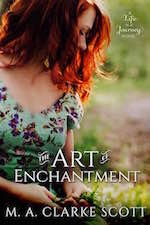
    The ART of ENCHANTMENT by M.A. Clarke Scott – Contemporary Women’s Fiction, Heartwarming Romance

    Are you ready to be whisked away to a romantic Italian villa? Seduced by a brilliant – and sexy – architect? Not doctoral candidate Clio Sinclair McBeal. The red-haired beauty is nose down, struggling valiantly to complete her Ph.D. thesis and has no time for a social life – even with a gorgeous Italian lover. But here’s the great news, she finally has a topic for her dissertation, one that will give her project momentum: passion, ecstasy, bliss as portrayed in religious art of the Italian Renaissance.

    Armed with a fresh idea and an adorable Fiat 500, Clio zips down a provincial Italian road anticipating meeting with her thesis adviser to share the updates. Instead, she finds herself in a roll-over accident that leaves her sans car, stuck in the mud and in need of assistance. Readers will swoon at who comes to her rescue, the dashing Guillermo Gabriel d’Aldobrandin. Clio recovers fast but can she resist his charms? How will she be able to handle this interesting and oh-so-handsome man in her life at the same time she’s attempting to complete her thesis? And holy cow – are her parents in town?

    M.A. Clarke Scott’s The Art of Enchantment starts at a low simmer but rises to a body-searing burn as Clio and Guillermo find themselves pushed together repeatedly by both fate and the desire to save Guillermo’s family villa. Clio, however, must also cope with her own family legacy, one of academic excellence. Satisfying her dominating parents seems to be an uphill battle, however. And to complicate the situation, Guillermo mistakes her intense desire to meet with her thesis adviser as evidence of a deep love of scholarship.

    Clarke Scott delivers fine, white-hot love scenes along with the opportunity to pick up some random Italian swear words that are fun to say, like stronzo! Aside from sex and swearing, Clarke Scott uses archetypes to woo her audience: the destructive rock star, the sexy, bold Italian, the shy, studious American attempting to please her parents. And these archetypes work well in this story, giving readers much of what they come looking for in romantic fiction.

    M.A. Clarke Scott is an artist with words and paint. She writes women’s fiction as well as steampunk and science fiction, screenplays, novels, and essays. White walls, blank canvases and the empty page are all invitations for her to fill them with her exceptional creations.

    A well-paced escape for those hungering for art, history and a hot ride with a handsome Italian hero.

    5 Star Best Book Chanticleer Reviews round silver sticker

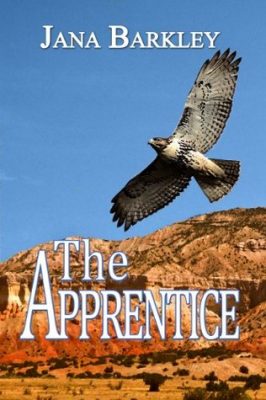
  • The APPRENTICE by Jana Barkley – Contemporary Women’s Literature, Falconry, Cancer

    The APPRENTICE by Jana Barkley – Contemporary Women’s Literature, Falconry, Cancer

    Forty-three-year-old Sam’s secure life is unraveling. It’s not just that her marriage ended two years ago, or that her job leaves her exhausted, or even that her son has essentially become a food-and-laundry-services-only visitor. It’s the combination of a cryptic phone call from her doctor’s office and the crushing claws of an improperly imprinted raptor that spin Sam down an entirely new adventure as an apprentice in the art of falconry.

    Since an apprentice needs a sponsor, Sam considers friendly Mary Kate or knowledgeable Mike, but unfortunately neither is close enough geographically for it to work. Instead, they suggest the best choice is clearly the mysterious (bordering on surly) Hank Gerard. He has experience raising and flying a wide variety of birds. So with gentle prodding, she and Hank become sponsor and apprentice, and Samantha’s life changes forever. She’s no longer a lonely, harried corporate marketing executive. She’s a falconer in training.

    Unfortunately, she’s a would-be falconer fighting a terminal cancer diagnosis. Sam tries valiantly to keep up with this physically demanding new hobby, but both the disease and the chemotherapy intended to cure it put a strain on her efforts. Readers may find it improbable that someone going through cancer treatment will feel up to full tilt running through a field a few days after chemo. Some patients will, of course, but some won’t. It might pull some readers out of the story if they have had a rough experience themselves or know someone who has.

    Sam’s challenges of learning the art of falconry progress alongside her chemo treatments, and the growing tension between her and her sponsor:  “The next step is a psychological one, too, and probably the biggest. He has to jump from his perch and come toward you in order to get his meal, now. In other words, he’s jumping toward the big scary thing—you.” (p. 119)

    It comes as no surprise that the author is an expert instructor at West Coast Falconry. The company is based in Northern California and offers classes, instruction and public education in the 5000-year-old sport.

    The Apprentice transports the reader to a raw, natural world, one with fields of sweet smelling sage, soaring hawks and diving falcons. The language and beauty of falconry is woven expertly into the narrative, providing the reader a glimpse into a rarified world while providing believable, relatable characters.