Author: kbrown

  • Top Snippets Overheard at the Winter Conferences by Kiffer Brown

    Top Snippets Overheard at the Winter Conferences by Kiffer Brown

    I am always jotting down little snippets of interesting information that I come across while attending writing conferences.  Friends and colleagues often ask me when I return home did I learn any interesting tidbits that I could share. And I do. This last time, my friend and fellow WWP & Upstart Crows board member, Amanda Hagarty suggested that I should share my take-aways with the Chanticleer Community in a post. So, here we are! 

    I truly wish that I could give specific attribution to each snippet, but please know that this collection comes from Cevin Bryerman (CB), publisher of Publisher’s Weekly, Shari Stauch of Where Writers Win, Porter Anderson of Porter Anderson Media, Claire McKinney, NYC book publicist; and best selling authors: Robert Dugoni, Mike Lawson, Joanna Penn; along with assorted literary agents and publishers. As anyone who has attended a writers conference knows, it isn’t easy trying to stay on top of all the great information garnered.

    So, without further ado, here are some of the “soundbites” that I picked up and would like to share with you, the Chanticleer Community.

    Overheard Snippets

    These snippets are not listed in order of importance or in any order for that matter.

    • “The mass paperback has gone the way of E-book.”
    • Eighty-percent of the readers of Young Adult novels are older adults (who are definitely not young adults).”
    • “Audio is a new format that is gaining popularity with older and younger audiences.”
    • “Remember that in the Digital Age of Publishing, an author’s back list never disappears.”
    • “One-off books are a hard sale. Series are what book sellers want.”
    • Deconstruct what was popular to predict what will be popular in upcoming trends. Look for the core elements.
    • “Take a trending trope and add it to your genre.”
    • “What is considered to be doing ‘extremely well’ in Amazon sales for Indie self-published authors? The top 100 Amazon books sell 5,000 to 10,000 books a month for six months straight. Top ten sub-categories have the potential to bump up to the top 100 to top 1,000 best-selling titles.”
    • Build Your Platform, Build Your Author Career.”
    • “The first thing I do when considering an author is to check out his author platform. Does he have website? Does he have an online presence? Does he participate in social media? If not, I usually pass.”
    • “All roads should lead to an author’s website.”
    • “Each and every reader counts!”
    • “Book reviews are the foundation of every author’s promotional platform.”
    • “Eighty percent of the U.S. population say that they do not ‘read.’ Reading is associated with reading boring school texts. Authors must find a way that their books appeal to people’s interests and hobbies, and never forget that “publishing for the trade” is about entertainment.”
    • “Dialogue is considered the white space on the page.”
    • “Dialogue is action. Action is dialogue.”
    • “Only put in back-story info when the reader needs it and only what is specifically needed at that time.”
    • “The first and last sentences in a chapter are the most important.” 
    • “Publishers Weekly receives more than 50,000 books a year to review–only about fifteen percent are reviewed.” 
    • “The only thing certain in today’s publishing world is continuing change.” CB
    • “Understand who your reader is.” CB
    • Act quickly. Stay relevant with your communications and promotions.” CB

    These snippets were overheard at the PubSense Summit in Charleston, S.C. and the Left Coast Crime Conference in Portland, Oregon that took place in March 2015.

    I invite you to attend the Chanticleer Authors Conference that will take place late September at the Hotel Bellwether located on Bellingham Bay, Wash. Find out more info here. New speakers and sessions along with more information will be added weekly!


    Up-to-date practical, effective marketing and promotional skills for today’s golden age of publishing are Kiffer Brown’s forte.

    Kiffer BrownHoned business experience and an  entrepreneurial spirit, along with a true understanding “that nothing happens until something is sold”  is what Kiffer Brown brings to the table. Kiffer presents at numerous writers conferences and publishing conventions. She is a media scout for executive film producers, literary agents, and publishing houses. She searches for today’s sparkling gems that will become tomorrow’s best sellers. She truly loves what she does and her passion shows.

    She has presented at Writer’s Digest National Conferences in NYC, RWA National Conferences, Emerald City Writers Conferences, PubSense Summits, PNWA conferences, and others. She is the founder and president of Chanticleer Book Reviews and International Writing Competitions, L.L.C. and the publisher of Chanticleer Reviews. She is active in her community’s local writing as organizations and is currently serving as the president of Whatcom Writers and Publishers,  a board member and co-founder of the Upstart Crows Writers Association, an is active in the Salish Sea Writers Consortium. She is the organizer of the Chanticleer Authors Conference, which focuses on the business and marketing side of being an author in today’s world of publishing. You may reach her at KBrown@ChanticleerReviews.com


  • Creating Shared Content to Engage Readers and Build a Fan Base

    Creating Shared Content to Engage Readers and Build a Fan Base

    Welcome to Chanticleer Reviews Part Three of a Four Part Series on How to Market Your Books in Today’s Publishing World with Leadership Communication Skills  

    Writing craft is the key to being an author, but engaging people is the key to building a readership and a fan base.

    As an author, lead the way to creating the digital paths that will help people discover your books. And today, that means communicating via the Internet. 

    shutterstock_81564196

    Author Leadership Communication has Four Cornerstones

    1. Creating an Author Identity & Branding
    2. Establishing Author Credibility and Competence
    3. Creating Shared Content
    4. Committing to Action and Making a Plan (forthcoming)

    We have discussed the first two cornerstones: 1) Creating Author Identity and Branding, and 2) Establishing Credibility and Competence as an Author. Links are above.

    Part 3. Creating Shared Content

    Authors must engage with their readers to maintain TOMA (Top of Mind Association) with them or another author definitely will.

    Authors can share the experiences of their works (novel) with their readers with the following Interverse platforms:

    • Blog posts, website
    • Facebook
    • Twitter, Pinterest, Instagram, Reddit, KBoards, Wattpad

      Find the social media platform that appeals to your target audience of readers

    • Google+ Community posts & G+ Pages & G+ postings


    [fusion_builder_container hundred_percent=”yes” overflow=”visible”][fusion_builder_row][fusion_builder_column type=”1_1″ background_position=”left top” background_color=”” border_size=”” border_color=”” border_style=”solid” spacing=”yes” background_image=”” background_repeat=”no-repeat” padding=”” margin_top=”0px” margin_bottom=”0px” class=”” id=”” animation_type=”” animation_speed=”0.3″ animation_direction=”left” hide_on_mobile=”no” center_content=”no” min_height=”none”]

    Engaging Readers
    Keeping Engaged with Readers

     What Types of Content should Authors Create to Keep Readers Engaged?

    •  Photos & Visual Graphics
      • Inspiration for the novel: Do not underestimate how interesting it is to readers to have a sneak peek into what inspired you to create a work. Was it an historical source, an experience, a landscape, a person, a piece of clothing? Are there photos or graphics that communicate these ideas. One of my favorite authors, Joannah Miley, has a Pinterest Board with photographs of clothing and accessories that the goddesses in her novel, The Immortal Game, wear. Her readers love it! When Joannah launches her second in the series, her readers will be ready to read it because she has kept them engaged!
    • Tweet out (about one in ten tweets) intriguing passages of your book with a Bitly.link to your website – not Amazon! This is about building and maintaining reader relationships–not selling your book.
    • Create posts about how you write:
      • Do you write first thing in the morning? Late at night?
      • Can you only write in coffee shops?
      • Does your cat sit on your lap? Your dog by your side?
      • Are you a pantzer or an outliner?
      • Did you research a particular area or geography?
      • What kind of music do you listen to while you write?
      • Be sure to put this kind of information in a context to make it an emotional, personal connection, but not too much personal information–only the information that moves your author branding forward.
    • Are you thinking of your next work? If so, let your the people who connect with you in the Interverse know. Better yet, ask your followers what their thoughts are about specifics of your work.
    • Make your posts relevant and meaningful according to what is appropriate for the social media platform.
    • Tag others in your social media posts if the post is flattering, fun, or inspirational.
    • What activities do your characters engage in: cooking, photography, selling real estate, making pottery, tattoo artistry, working in a coffee shop? Seek out social media communities who can relate to your characters’ traits, occupations, and hobbies.
    • Reference other authors who write in your genre. Readers are always searching for other authors to read while their favs are in between book launches (which is why you need to maintain your connection with them). Authors, even NY Times best selling authors are more apt to give your book a quote or a blurb when they see that the request is coming from a strong social media connection and not just out of the blue.
    • Make sure that your followers know that it is okay with you that share your content, create links, and tag you in social media and blog posts. Better yet, thank them profusely when they do and then reciprocate when possible.
    • Acknowledge who inspires you, where you learned a particular writing craft skill, personal relationships that have impacted your own life, public figures whom you admire, and other authors and their works that have inspired you. This type of leadership communication will help you build trustworthiness with potential readers whom you may never meet in person, so you must show and share strong credentials along with what motivates you to write.

    Most Importantly > START THE CONVERSATION

    Be the first one to make the move to say ‘Hi!’ Make the “friend request,” follow on Twitter, circle on Google+. Remember that the Interverse is one big cocktail party. You don’t want to be the wallflower, nor the gal wearing the lampshade, nor the obnoxious relative selling whatever. What you do want is to make new connections and expand your network of potential readers.

    Please do not be the bore who dominates and hijacks social media conversations. You can be selective about which posts to interact with, but do stay on topic. 

    Be sure to reciprocate by LIKING, COMMENTING, RE-TWEETING, INTERACTING, and SHARING with potential readers.

    Communication is a two-way street. You can’t expect people (readers) to interact with you in social media if you don’t interact with them–that is unless you are a celebrity with hundreds of thousands of fans.

    Help Readers Find Your BookAs an author, lead the way to creating the digital paths that will help people discover your books. And today, that means communicating via the Internet. 

    Be courageous in creating the digital pathways that will lead your targeted audience of readers to your books. Let your passion for writing and storytelling shine! Then allow evidence of your competence and credibility of being an outstanding author encourage engagement. The evidence should come from others: editorial reviews, notable authors, experts in the field/genre, writing award competitions, and quotes from readers. Be sure to post on your website, in your social media posts, and on the platforms where you books are sell. Make sure that your accolades give credit, attribution, and links  to their sources.

    INFORM, INVOLVE, ENGAGE

    As an author, lead the way to creating the communication paths that will help people discover your books.


    My next post in this Leadership Communication Series will be about Committing to Action by Developing a Communication Strategy to Engage Readers.


    Up-to-date practical, effective marketing and promotional skills are Kiffer Brown’s forte.

    Kiffer Brown, CBRHoned business experience and an  entrepreneurial spirit, along with a true understanding “that nothing happens until something is sold”  is what Kiffer Brown brings to the table. Kiffer presents at numerous writers conferences and publishing conventions. She is a media scout for executive film producers, literary agents, and publishing houses. She searches for today’s sparkling gems that will become tomorrow’s best sellers. She truly loves what she does and her passion shows.

    She has presented at Writer’s Digest National Conferences in NYC, RWA National Conferences, Emerald City Writers Conferences, PubSense Summits, PNWA conferences, and others. She is the founder and president of Chanticleer Book Reviews and International Writing Competitions, L.L.C. and the publisher of Chanticleer Reviews. She is the organizer of the Chanticleer Authors Conference, which focuses on the business and marketing side of being an author in today’s world of publishing. You reach her at KBrown@ChanticleerReviews.com

    [/fusion_builder_column][/fusion_builder_row][/fusion_builder_container]

  • HOW to INCREASE BOOKS SALES: Tips from Joanna Penn

    HOW to INCREASE BOOKS SALES: Tips from Joanna Penn

    PubSense SummitI had the pleasure and the good fortune to attend the PubSense 2015 Summit in Charleston, South Carolina. Attending the sessions and presentations was like drinking in information from a publishing fire hose!

    Information was emanating from some of the brightest stars in today’s publishing world: Stars like Joanna Penn. 

    Joanna Penn is a  New York Times and USA Today bestselling author, voted one

    [fusion_builder_container hundred_percent=”yes” overflow=”visible”][fusion_builder_row][fusion_builder_column type=”1_1″ background_position=”left top” background_color=”” border_size=”” border_color=”” border_style=”solid” spacing=”yes” background_image=”” background_repeat=”no-repeat” padding=”” margin_top=”0px” margin_bottom=”0px” class=”” id=”” animation_type=”” animation_speed=”0.3″ animation_direction=”left” hide_on_mobile=”no” center_content=”no” min_height=”none”]

    Joanna Penn, The Creative Penn
    Joanna Penn
    Photo credit: Mim Saxl, Oxford photographer

    of The Guardian UK Top 100 Creative Professionals. Also voted one of the Top 10 Blogs for Writers and one of the Top 10 Blogs for Self-Publishers.

    The following is my blog post recap of the highlights of Joanna’s keynote luncheon presentation at the PubSense Summit. Please keep in mind that I was taking notes as fast as I could at her dynamic presentation.

    Joanna Penn opened with this concept:

    Create Value from Ideas > Create Once, Sell Forever

    “Create assets that put income in your pocket for years to come.” JP

    JP: THINK SCALE-ABLE, THINK COPYRIGHT 

    She reminds us to remember the life of an author’s works is her lifetime plus 70 years thus making an author’s intellectual property a potentially valuable part of his/her estate. This is the length of time granted by the U.S. Copyright law.

    Create works and then make your back list work for you for years to come.

    KB’s Note: Remember that in today’s digital age of the Interverse that an author’s back list never disappears.

    JP: Authors need to THINK INCOME STREAMS

    Increase Book Sales by Reaching More Customers

    Joanna’s Action Items:

           Reach different customers by exploiting all formats

    1. Kobo, Smashwords, Apple, Amazon, Nook, Google Play, OutBound Words….
    2. Audio> ACX
    3. Printed Books
    4. Plus subsidiary rights
      1. Country markets
      2. Territories
    5. Always be on the lookout for new avenues of distribution and publishing
    6. Reach different customers by language > Start in English, then expand to German,  then Spanish, and so on.

    KB: Remember that all the little streams of income flow into a river of revenue.

    JP: Authors need to THINK GLOBALLY

    Joanna’s Action Items:

        Reach customers globally by using multiple retailers

    1. Kobo platform is available in 65 countries
    2. iBooks are available in 51 countries
    3. Amazon Kindle is available in 171 countries
      1. Use print-on-demand for global reach with print books
    4. Be on the lookout for new retail platforms and distributors

    JP: Authors need to THINK about the  MOBILE and DIGITAL  MARKETS

    “Between 2013 and 2017, mobile phone penetration will rise from 61.1 percent to 69.4% of the global populationeMarketeer

    KB: Notes, Background Information, and Definitions:

    Demographic shift into cities and smaller living spaces with trends towards less stuff is predicted. The rise of the “digital native” means more digital purchases and more digital products.

    “Digital Native” is one who was born after smart phones, the Internet, Social Media, and the advent digital publishing. The Digital Native is totally comfortable with digital technology and tends to absorb new technology tools and applications with the ease of one how one learns one’s native language. A digital immigrant is one who is exposed to digital technology later in life.

    Aging population is a big potential market for digital e-books and audio books. It will do nothing but increase.

    JP:  Apple Carplay and Google Auto will be adopted and come standard by mainstream car manufacturers before 2017.

    KB:  Notes, Background Information, and Definitions:

    • Reading and Writing is now Listening and Dictating.
    • Podcasts and Audio books will be instantly available to automobile drivers, mobile smart phones, and tablets.

    Joanna’s Action Items:

    1. Make sure your website is mobile optimized with responsive design and your books can be purchased via mobile devices.
    2. Consider offering your works in audio format to reach a larger audience.
    3. Begin podcasting for marketing. Start immediately including pod-casting into your outbound marketing strategy to take advantage of this major shift.

    JP: AUTHORS NEED TO THINK AHEAD

    The Virtual Reality Market is expected to grow to $407 million dollars and reach more than 25 million users by 2018. Report by Markets and Markets.

    “Expect the transformation of online environment to an immersive virtual reality for shopping, gaming, education, community building, and books.”  Joanna Penn

    JP: Background Information (paraphrased by KB)

    For example: Most of the population of Africa had basically no technology at all available to them, but they quickly and fully embraced cell phone technology because it demanded a reduced amount of infrastructure as compared to the old land-lines technology and was more affordable. This shift in technology opens up an entire new market to authors because books are no longer dependent upon brick and mortar stores and transportation highways for potential new readers to access their digital books.

    Joanna Penn’s Bottom Line to Authors:

    CREATORS of CONTENT will be at the TOP of this HUGE Economic and Societal Shift.

    Authors who embrace the digital age will be poised to increase the income potential.

    To wrap up:  Create Value from Ideas > Create Once, Sell Forever in as many formats and platforms as possible!

    Thank you, Joanna Penn, for sharing your marketing and publishing experiences with us. 

    This is the first post in Kiffer Brown’s Takeaways from the PubSense Summit 2015. I do hope that you find these tidbits tantalizing and informative.

    Kiffer Brown

    Closing remarks from Kiffer Brown:

    I would advise authors to visit The Creative Penn website for more valuable information and resources from Joanna Penn, author, entrepreneur, and professional speaker.


    For more information on how to increase book sales, build an effective author platform, and the business side of writing, please consider attending the Chanticleer Authors Conference in September that will be held in the Bellingham, Wash. of the great Pacific Northwest.[/fusion_builder_column][/fusion_builder_row][/fusion_builder_container]

  • BY the SWORD: SPOILS of OLYMPUS by Christian Kachel

    BY the SWORD: SPOILS of OLYMPUS by Christian Kachel

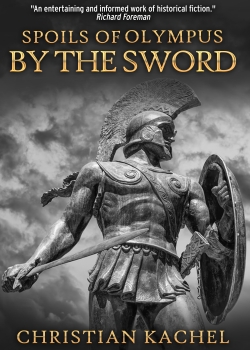
    By the Sword is an atmospheric and character driven coming-of-age story that takes place in the years immediately following the untimely death of Alexander the Great. The news of his death traveled quickly throughout the land. He was born to the King of Macedon and was tutored as a noble and later by Aristotle. When he died, his kingdom was one of the largest the ancient world had known—more than 2 million square miles. His unexpected death left a vacuum of power and chaos. Civil wars and power grabs from Alexander’s generals tore this great empire apart. This is when Kachel’s enthralling Hellenic military epic begins.

    Andrikos grew up during Alexander’s rule. Now everything has changed. The story begins in his village when he is an errant adolescent more interested in his next drink or round of sex. He is in no hurry to have the responsibilities of an adult. Kachel illustrates the ages-old influence that peers may have on young men and how they can affect them and their actions—changing their lives forever—for better or for worse. Young Andrikos hangs out with the wrong crowd and is swept up in their illicit behaviors and actions. He finds that he must flee his family and his home to save himself from an unintentional crime—forever changing him and his life.

    Andrikos has no real plans for his life. Suddenly he finds that the only option he has is to join the armies of Alexander to escape his past. However, he was unprepared for the brutal conditioning and the heartlessness of the recruiters whose job it is to ferret out the weak from the strong. Kachel vividly portrays these horrific and brutal experiences through the eyes and heart of Andrikos as he undergoes the physical and mental conditioning that is forced upon him and his fellow recruits. There is no turning back. The only way out is death or fight to live another day.

    Kachel captures what could happen when trained killers are left to their own devices and their own greed and bloodlust without guidance and a chain of command in this satisfying read. He also brings forward the importance of having a mentor can be to the young and inexperienced. Vettias is a confident and self-reliant warrior with a complicated background in gathering intelligence. He recognizes potential in Andrikos and takes on the mantle of becoming his mentor and teacher. Under Vettias’ guidance, Andrikos develops and matures into more than a foot soldier as he learns of honor and integrity, of treachery and deceit, and of friendship and loyalty.

    By the Sword is a well-researched military historical epic where Christian Kachel, the author, portrays the effect that chaotic, warring times have on women and children, on the weak and infirmed, and the men who are caught up in the violent and ruthless swells of battles, and then the heartrending aftermath that follows even on the heels of victory.

    One cannot help but think of the millions of young people who are going through their own coming of age throes in the heat of battles and skirmishes that are taking place at this very moment. Kachel, who has served three tours of duty in Afghanistan and Iraq, writes with compelling adroitness about what Andrikos experiences as he makes his journey from an oblivious youth to a young man whose eyes have been opened to the cruelty of war but still manages to maintain his empathy for his fellow man and holds on to his humanity.

    Be warned that Kachel does not whitewash the horrors of war, nor the rape and brutish treatment of women and children, nor the screams of pain and the blank eyes of starvation in the telling of his epic.

    Christian Kachel’s By the Sword is a fine debut novel that explores the little known, but fascinating, age of post-Alexandrian Greece. Its intriguing interwoven storylines of a young man’s coming of age, of alliances and espionage, and of harrowing battles scenes will be sure to captivate readers and keep them turning the pages even as they wince and grimace with Kachel’s no-holds- barred descriptions in this well-researched historical narrative. We look forward to reading more from Kachel about what awaits Andrikos in his next adventure.

    Historical Fiction: Military, Classical Age
    Targeted Audience: New Adult, military history buffs, Classical Studies

  • CAPE HORN: ONE MAN’S DREAM, ONE WOMAN’S NIGHTMARE by Réanne Hemingway-Douglass

    CAPE HORN: ONE MAN’S DREAM, ONE WOMAN’S NIGHTMARE by Réanne Hemingway-Douglass

    In Cape Horn: One Man’s Dream, One Woman’s Nightmare, Réanne Hemingway-Douglass vividly recreates a sailing voyage in which she and her husband Don set out to round Cape Horn. As the reader discovers, they never quite got there. Meanwhile, Hemingway-Douglass shares the heady magic of starlit nights and breathtaking dawns, grueling and toilsome days, emotions ranging from joy to absolute terror, and a determination not to give up hope when all seems lost.

    Situated on the southernmost tip of South America, Cape Horn is surrounded by some of the most treacherous waters on the planet due to its gigantic waves, lurking icebergs, strong currents, and high winds.  The Panama Canal was built at huge expense as a way to avoid Cape Horn. To this day, the Horn is a dangerous challenge for even the most experienced yachtsmen.  The author’s husband, Don, had dreamed all his life of rounding the Horn. Réanne Hemingway-Douglass knew this when she married him, and dutifully agreed to accompany him as crew.

    Five hundred miles northwest of Cape Horn, the Douglass’s 42 foot sailboat, Le Dauphin Amical, was pitchpoled by a monster rogue wave (more than 80 to 100 feet high) in a Force 11 storm. Hemingway-Douglass and her husband spent the next 42 days struggling to reach safety aboard their crippled vessel. Surviving each day was a miracle, a true adventure in living.

    In recounting their story, the author broaches the love-hate relationship of a ship’s captain and its crew. Captains are solitary humans driven by their own goals, agendas, and methods. The captain is the one who must make the hard decisions—no matter how difficult, dangerous, or demanding they are for the crew.

    Don Douglass, captain of the Le Dauphin, was no exception. Fortunately, he was also highly competent, extremely driven, and unrelenting—all characteristics required for survival in dangerous situations.

    A novice sailor, Hemingway-Douglass discovered that Don’s role of captain superseded his role as her husband and lover—for better or for worse.  I know of no other nautical book that accurately and honestly portrays this transformation.  It is a forthright perspective about life onboard that all sailors, captains and crews, should acknowledge before setting sail together.

    The author passionately captures and vividly describes her months at sea with her husband, her captain, in this page-turner true adventure that tested their endurance and their marriage. Highly recommended.

  • 99 cents SALE on MRS. KAPLAN and the MATZOH BALL of DEATH

    Mrs.KaplanMRS. KAPLAN and the MATZOH BALL of DEATH by award-winning author Mark Reutlinger is on sale for 99 cents on Amazon March 27 – April 9th.

    A cozy mystery is a rollicking adventure through a mystery at the Home for Jewish Seniors. “Deliciously funny” series published by Random House.

    “Mrs. Kaplan and the Matzoh Ball of Death” is a Finalist in the 2014 M&M Awards. Congratulations to Mark Reutlinger! 

  • LOVE and THE ARTS, a Blog-post from Kiffer Brown

    LOVE and THE ARTS, a Blog-post from Kiffer Brown

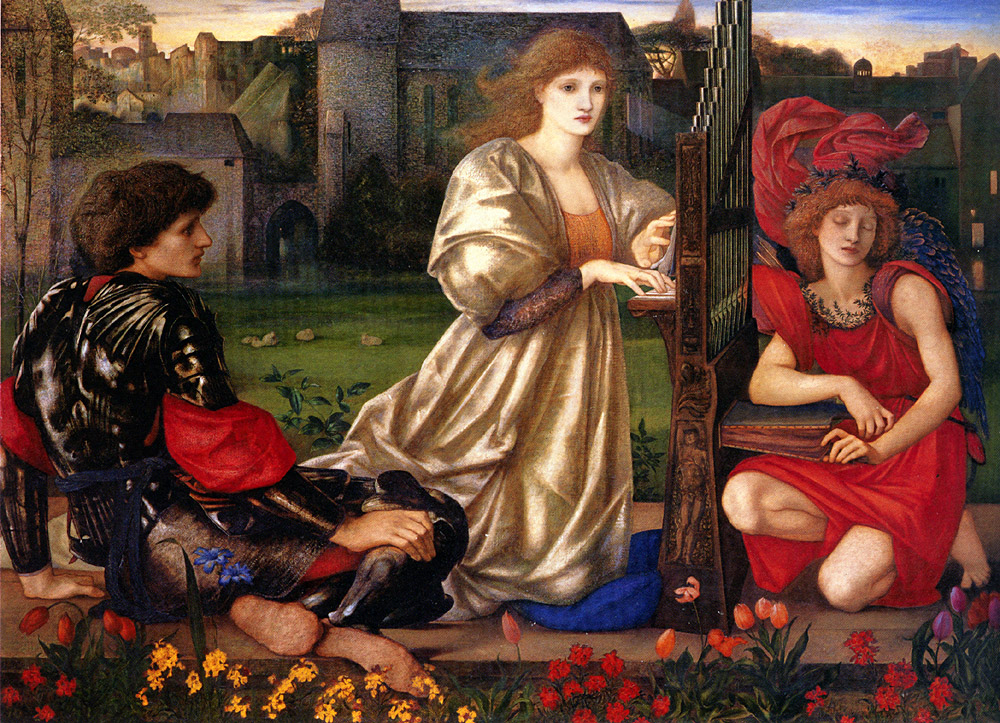
    Edward_Burne-Jones_Le_Chant_d_Amour_(Song_of_Love) (1)The Love Song by Sir Edward Burne-Jones portrays each of the three young people alone with their thoughts and dreams, but gathered together, as the sheep are in the distance, for comfort and support.

    Sir Burne-Jones was forty years-old when he painted this, perhaps remembering the daydreaming times and wistfulness of his youth.

    Sir Burne-Jones was mentored and influenced by Dante Gabriel Rossetti. Rossetti was one of Pre-Raphaelite Brotherhood founders who, in 1848, sought to create works of art that conjured a realm of heightened emotions, aspirations, and visual splendor that would elevate a modern society beset by change.1 

    These are apt words for today’s hyper-charged digital age.

    Sir Burne-Jones own words asserted, “Only this is true, that beauty is very beautiful, and softens, and comforts, and inspires, and rouses, and lifts up, and never fails.”  And this sentiment  is where the Pre-Ralphaelite movement artists of poets, novelists, painters, music composers, and craftsmen found connection and inspiration for their collaborations and works. 2


    The Dante Gabriel Rossetti Influence

    We have chosen Dante Gabriel Rossetti’s work to symbolize several of our writing competitions logos. We feel that the sentiment expressed by the Pre-Raphaelite movement exemplifies what inspires many authors to pick up their  proverbial pens to express their emotions and their observations of the visceral dynamics of living.

    Dante Gabriel Rossetti: artist, poet, and scholar of Italian Medieval art

    Dante Rossetti images

    Imagine nineteen-year-old Dante Rossetti looking at himself in a mirror as he is drawing his self-portrait in 1847.

    As a young man, Rossetti was known to be confident, articulate, and charming as he was zealous, emotional, and irresponsible.  His contemporaries called this a “poetic nature,” which drove him to combine the “human with the divine” in his art. His  self-portrait captures these many traits. 1


    We felt this portrait of  Rossetti would be perfect to represent Chanticleer’s novel competition for young adult fiction as it deftly embodies the flashing range of emotions that young people from any era have experienced, and probably will continue to experience in the future, as they encounter the crossroads of adulthood.

    Jane Burden Morris: muse, artist’s model, wife, and paramour

    The Chatelaine Awards

    Twenty years later Rossetti painted Jane Morris in a “Blue Silk Dress” in 1868. She was twenty-nine.

    He sublimely captures the many nuances of romance, love, and longing. Did a lover give her the flower tucked into her sash? What is she wistfully looking up from reading? What is on the other side of the drapery? Where did the flowers in the vase come from? Did she cut them or are they from a different suitor? As  many find with Rossetti’s work, there are endless possibilities for story ideas when viewing his art.

    Rossetti was a scholar of Medieval Art and Letters, along with pursuing knowledge of Arthurian Legend. He was profoundly influenced by his namesake, Dante Alighieri, and the English poet John Keats.

    Rossetti’s portrayal of Jane Burden Morris in the “Blue Silk Dress” (to me) is an ethereal image of women–a perfect image for the Chatelaine Awards for Women’s Fiction and Romantic Fiction.

    An Arthurian Legend Comes True in the Victorian Era?

    Jane Burden (Morris),  known as the Pre-Raphaelite ideal of beauty, came from an impoverished background, her father a stable-hand and her mother an illiterate domestic servant. Rossetti and Burne-Jones were struck by her beauty when they saw her when she and her sister attended a play in Oxford in 1857.  The artists asked her to model for them. She was eighteen and destined for a life as a domestic servant. The rest is history in this fairy-tale-come-true story–essentially Arthurian legend come to life.

    [fusion_builder_container hundred_percent=”yes” overflow=”visible”][fusion_builder_row][fusion_builder_column type=”1_1″ background_position=”left top” background_color=”” border_size=”” border_color=”” border_style=”solid” spacing=”yes” background_image=”” background_repeat=”no-repeat” padding=”” margin_top=”0px” margin_bottom=”0px” class=”” id=”” animation_type=”” animation_speed=”0.3″ animation_direction=”left” hide_on_mobile=”no” center_content=”no” min_height=”none”]

    Jane Morris as Guinevere
    “Guinevere” by William Morris. Artist’s model is Jane Burden, 18)


    Morris fell in love with Jane when she was modeling for his “Guinevere” painting and he asked her to marry him.  After they were engaged, she was privately educated to become a suitable wife for a gentleman of high society standing such as he was. They married on April 26, 1859; she was twenty, Morris was twenty-five.

    Apparently, she was quite intelligent, as she quickly took to her lessons and became fluent in French and Italian, became an accomplished pianist, and was known for her refined manners and eloquent  speech.

    Jane Burden Morris is considered to be the woman who inspired Bernard Shaw’s Pygmalion, more currently known as My Fair Lady of Audrey Hepburn fame. 1


    After her marriage to William Morris, she continued to model for Rossetti, which is another story unto itself. Jane Morris is said to have “consumed and obsessed him (Rossetti) in paint, poetry, and life.”4

    Was Morris Rossetti’s King Arthur? Was Rossetti Morris’s Lancelot? And Jane, was she Morris’s Guinevere?  Does life imitate art? 

    Love and the Arts during the Victorian Era in England

    If you ever get the opportunity to view the works of the Pre-Raphaelites, I urge you to do so! I have had the pleasure of viewing them at the Metropolitan Museum of Art in New York City and at a touring exhibit at the Rijkesmuseum in Amsterdam.  An interesting note is that the Rijkesmuseum titled the Pre-Raphaelite exhibit unabashedly as “Wives and Stunners.”  The artists and their wives must have been the subject of many a gossip column in the newspapers and scandal broadsheets as well as inspiration for the contemporary authors of that era: Oscar Wilde, Charles Dickens, the Brontë sisters,  Alfred Tennyson, Rudyard Kipling, and other notables.

    The Pre-Raphaelite art movement is one that has resonated with me since I was teenage girl. And now that I am a woman of a “certain age,” I find that it still does, increasingly so–especially now that I have come to know more about the artists and their muses.


     Background Information:
    • Sir Edward Burne-Jones, 1833–1898.
    • Dante Gabriel Rossetti, 1828-1882.
    • Jane Burden Morris, 1839-1914.
    • William Morris, 1834-1896.
    Citing and Acknowledgments
    1. Wikipedia Commons. 
    2. Metropolitan Museum of Art
    3. All art images via Wikipedia Commons. 
    4. Pamela Todd, "Pre-Raphaelites at Home," New York (2001).

    [/fusion_builder_column][/fusion_builder_row][/fusion_builder_container]

  • Engaging Readers and Building a Fanbase Using Leadership Communication, Part 2

    Engaging Readers and Building a Fanbase Using Leadership Communication, Part 2

    Writing Craft may be the key to writing a great story, but engaging people is the key to building a readership and a fan base.

    Engaging Readers and Building a FanbasePart 2. Establishing Competence and Credibility as an Author in Today’s Digital World of Publishing: Engaging Readers and Building a Fan-base using Leadership Communication Skills


    Recap of Part 1. Creating Identity and then Communicating It

    Authors must take the leadership role in communicating with potential readers. Authors are also responsible for maintaining and nurturing the author/reader relationship. If they do not, then other authors who do will gain ‘mindshare’ of those readers.

    By leading the communication about you and your work, you will have a distinct advantage of the hundreds of thousands of authors who do not.  And with a million plus books hitting the market this year alone, every advantage helps to position your work a notch higher.

    As an author, lead the way to creating the digital paths that will help people discover your books. Today, that means communicating via the Internet. 

    We listed the four cornerstones of Leadership Communication in the previous article as:

    1) Creating Identity

    2) Establishing Credibility and Competence

    3) Creating Shared Content

    4) Committing to Action

    We also defined the Interverse as a global network that is overlaid on the Internet. The Interverse is where the virtual digital universe intersects with reality. To have an Internet presence means you must have a website that communicates your brand, your identity, as an author.

    Part 2:  Establishing Credibility and Competence

    Engaging Readers and Building a Fan-baseAuthors must recognize the need for strong credentials to demonstrate competence to potential readers, book buyers, librarians, and media professionals.

    Authors must be empathetic to readers. Why should they read your book? What will drive their decision? Where can they discover it/find it? How can you as the author gain their confidence and trust? When do readers decide what to read? Who are your readers/your audience?

    Authors need to answer these questions honestly for themselves and then begin establishing credibility, credence, and competence with their potential readers.

    Establishing Competence

    Make sure that your work is the best that it can be. Believe in your work by putting together the best team of editors, proof readers, beta readers, press formatting editors (digital and/or print), cover designers, and publishing professionals that you can to produce your book. First impressions do count as do second, third, and so on. Readers are savvy.

    Then acknowledge the team of talent that worked on making your work the best it can be in your work’s preface. Your team then has a stake in your work and they will, in all probability, broadcast your work because it broadcasts their work.

    Let the world of readers know that you did your very best for them—that you acknowledge them and that you are showing respect for them. Publishing your work as a professionally as you can conveys respect for Readers.

    Results: Book buyers for bookstores and libraries are wary about buying books from Indie authors and small presses because of quality issues they have had to deal with previously. Their selections determine their next pay raise or even keeping on the payroll. Help them do their job by making it easy for them to see that your work is of a professional level and that it reflects the time-honored traditions of publishing that their readers have come to expect and demand.

    A Reader will be more willing to tell others of your work if it reflects well on her.

     Ask Readers for their feedback & insights—not just reviews—and then reward them for their time and effort whether or not the information was positive or negative. Ask them for this information on a one- on-one basis through your website and social media messaging. (Of course, never feed the Internet trolls.)

    Results: Readers will make a connection with you and your work. Connections lead to more introductions to other readers. This is how fan bases are created. Also, you gain valuable reader perspectives about your work.

    Establish Credibility

    Highlight Quotes, Reviews, and Support from Others to Gain Credibility

    Why are reviews important?

    Book ReviewsReviews add weight to your credibility. Reviews allow for comparison and judgment thereby engaging potential readers in the mental process of decision making and discussion points. Your promotional efforts are not dissipating into the ether, but are actually getting noticed by potential readers and publishing professionals.

    • Reviews distinguish your work from the millions of other books that are in the market place.
    • Reviews support your author platform and add evidence that your work is validated by readers.
    • Reviews allow for discourse about your work.
    • Editorial reviews make available the language for readers to discuss your work and to use in their reviews. Authors have told us is that Editorial reviews give their readers the language and vocabulary to discuss their works. Editorial reviews also help to set the tone of reader interaction.
    • Reviews are critical to your work’s success in today’s digital age of publishing. Readers may never actually see your printed book, but your reviews will be easily available to read on the Internet.
    • Reviews crystallize what your book is about from its reader’s viewpoint.
    • Reviews connect your readers through a commonality and promote discussion.
    • Reviews give authors something to post, blog, and chat about with their works that someone else has said. Authors can easily re-tweet, share, like, and comment on their Editorial Reviews without sounding “self-promoting.”

    Book Reviews are consistently one of the most powerful tools available to authors.

    As much as you love your book and your family and friends think that it awesome, readers want to know what others think of your work to make their decisions. There are several types of reviews and reviewers:

    • peer reviews by other authors
    • editorial reviews by professional reviewers in the publishing industry
    • manuscript overviews – pre-publication editorial reviews
    • consumer reviews by individual readers
    • reviews by family and friends (cheerleader reviews)

    An author requires the first four to make a professional impression on potential readers because each type of review has its own targeted audience and its own aim. And since there are many shades of gray, authors will benefit from having reviews from all categories.

    For more information on reviews, please read “What is an Editorial Review? And How is It Different from just a Review?”

    Use Quotes from:

    • Editorial Reviews
    • Other authors who write in your genre and have read your book
    • Those who have inspired you
    • Writing competition awards (be sure to link to competition’s official listing of award winners)
      • Post and display digital badges from writing contests and affiliations
    • Notable personalities in fields related to book. For example, if your work is about a murder mystery that takes place in Provence, France, could you ask for quotes from a notable chef, or artist, or business owner from the area who has read your work. OR if your work is a medical thriller, try to get a quote from a medical examiner. Be creative!

    All of the above increases your sphere of potential readers and adds value to your work and your author brand. Most importantly, quotes from others supporting your work will help you win the hearts and minds of your readers.

    Let your passion and creativity show to engage readers! Make it easy for your readers to help you create your fanbase and for them to become evangelists about your work.

    INFORM, INVOLVE, ENGAGE

    As an author, lead the way to creating the communication paths that will help people discover your books.


    My next post will be about:  Creating Shared Content in Today’s Digital World.

    Kiffer Brown, CBRKiffer Brown discovers today’s best books with reviews and writing contests at Chanticleer Book Reviews, L.L.C., which she founded in 2010.  She is also a media scout and trend-spotter for executive film producers (with film options to her credit), literary agents, and publishing houses. She searches for today’s sparkling gems that will become tomorrow’s best sellers. She truly loves what she does and her passion shows. 


    Kiffer helps authors develop methods that engage readers and expand their fan-bases. She has presented at Writers Digest NYC, RWA National, PNWA, PubSense Summit, and other conferences, where she focuses on the business of being an author. She invites you to attend the Chanticleer Authors Conference and Awards Gala held Sept. 27, 28, & 29 in Bellingham, Wash.  www.ChantiReviews.com 


  • A CUP of HEMLOCK by Clyde Curley

    A CUP of HEMLOCK by Clyde Curley

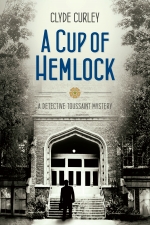
    A cold-hearted and brutal murder of a beloved Portland, Oregon high school teacher has seasoned Detective Matthew Toussaint and his young assistant partner, Detective Missy Owens, digging deep to uncover any clues that will help track down the violent and desperate murderer before more lives are endangered.

    The murder investigation opens up old wounds and exposes weaknesses with the sanctioned guardians of our youth—the government overseers of their education and along with their parents. The detectives find themselves coming face-to-face with incomprehensible, and sometimes dangerous, behaviors from  personalities that transcend socio-economic class norms—for better or for worse.

    Clyde Curley’s intriguing and captivating Detective Toussaint Mysteries explore and expose the undercurrents in today’s society by bringing the daunting issues to our very doorsteps. If you are seeking a slash-and-gore thriller or steamy sex scenes, you will not find them in this refreshing and   thought-provoking police procedural. Classic mystery fans will be more than pleased with the series’ cast of characters (including the quirky City of Portland), along with enjoying its complex storyline, and the enthralling denouements.

    A Cup of Hemlock is an engrossing read that deliciously builds suspense on several levels until it is a full-blown page-turner. However, readers will find themselves slowing down as to not miss any of the subtext and rich undertones that permeate the work.

    Curley’s complex and engaging central characters add to the mystery’s nuance and drama making this reviewer eagerly anticipating the third novel in this thoroughly addictive series. Detective Toussaint and his bookseller brother, Parker, are characters that you would want to have a beer or cup of coffee with and discuss philosophy, or the latest basketball game, or maybe just the events of the day.

    A Cup of Hemlock is an intriguing classic murder mystery that is a perfect companion for those who want to hunker down with a great read that will linger long after the last page is read. It is the second novel in the Detective Toussaint Mystery series that is based in the Pacific Northwest.

    Clyde Curley’s prodigious novels —yes they come in at more than 500 Classic-Detectivepages, but you will be wishing it was longer—are page turners that tackle and explore the big ethical and societal issues of today.  Curley’s deft use of murder mysteries to microscopically explore society’s ethical issues is nothing short of brilliant. Highly recommended.


  • Engaging Readers and Building a Fanbase Using Leadership Communication Skills

    Engaging Readers and Building a Fanbase Using Leadership Communication Skills

    Writing craft is the key to being an author, but engaging people is the key to building a readership and a fan base.

    Some authors forget that content alone will not sell their books. They have little interest in engaging with people to find readers. They want to write. Period. Others don’t feel comfortable about engaging with others or feel  conflicted about promoting their work. Unfortunately for them, selling books is not about writing books.

    If you want people to read and buy your book, you must introduce yourself and your work to them. People want to know about you as an author, about your writing style and the content that you create. They need information to ascertain if they are interested in investing their time, money, brain-space, and “emotional investment” into your work. Basic book marketing is much like writing a newspaper article. People want to know:  who, what, when, where, why, and how–easily and quickly when deciding on whether or not to buy a book.

    Fortunately, today’s internet technology makes informing the potential readers about your work easier and less costly than ever before.

    The Internet levels the playing field for all authors: self-published, indie-published, hybrid-published, and the traditionally published.

    LEADERSHIP COMMUNICATION for AUTHORS

    As an author it is up to you to reach out and say “hello” to potential readers and introduce yourself and your work. Authors must take the leadership role in communicating with potential readers  and are responsible for maintaining and nurturing the author/reader relationship. This is called Leadership Communication in marketing speak. By leading the communication with readers about you and your work, you will have an advantage over the hundreds of thousands of other authors who do not. And with a million plus books hitting the market this year alone, every advantage helps to position your work a notch higher in the publishing world.

    As an author, lead the way to creating the digital paths that will help people discover your books. And today, that means communicating via the Internet. 

    What is the Interverse?


    Internet of Things
    The Interverse is a global network that is overlaid on the Internet. It is continuously evolving and connecting in ways that we can’t imagine or predict. It is where websites (identities), social media posts, instant messaging, apps, voice communication, blogging, chat rooms, buying and selling, and other ways of communicating via the “Net” interconnect and take place.  It is where the virtual digital universe  intersects with reality.

    To do business on the Internet (read: sell books individually or through orders), you must exist in the Interverse, which means you must have a digital identity–a website that communicates and broadcasts your identity digitally. Even if you only sell print copies, orders are placed via the Internet in the Interverse.


    Leadership Communication has Four Cornerstones:a black laptop computer with a red megaphone

    1) Creating Identity & Branding

    2) Establishing Credibility and Competence

    3) Creating Shared Content

    4) Committing to Action

    Welcome to Chanticleer Reviews 4-Part Series on How to Market Your Books in Today’s Digital World with Leadership Communication Skills  

    Part 1. Discussion About  the Principle Marketing Concept  of Creating Identity

    Identity in the business and  publishing world is another name for  branding. Creating Identity in today’s business world means to have an Internet presence. To have an Internet presence means you must have a website that communicates your brand, your identity, as an author.

     If you, as an author, do not have a website, then you as an author do not exist in the Interverse.

    And that statement is not a typo.

    Creating Identity and Branding for Authors

    Identity is a brand. A brand is a warranty. A warranty is a promise, an assurance. It allows people to know what they should expect in a transaction. It allays fear of committing to a transaction or an agreement or an emotional investment. Branding helps you to distinguish yourself from the other millions of authors and associate yourself and your works with authors and books within a particular niche of publishing.

    Effective author branding leads to increased book sales.

    Make sure that your author’s website exudes your branding, your identity. The first thing that any bookseller, agent, librarian, publisher, or media professional will do before investing any amount of time or money into your book is to visit your website. It is of the upmost importance that your website makes a professional and consistent impression that communicates your brand, your identity. Your “author branding” should reflect your work in the best possible ways that are compelling to your book(s)’ target market.

    Your brand should come across vividly on or with your:

    • author name or pen name
    • website
    • social media platforms (Facebook, Pinterest, Twitter, Reddit, etc.)
    • book covers
    • marketing materials
    • author persona at book signings, conferences, conventions, panel discussions
    • blogposts
    • social media posts
    • business cards & book marks
    • visual content
    • typography and layout of books
    • advertising venues and tactics

    Consistency, constancy, and authenticity are what will add value to your branding efforts.

    How to Determine What Your Author Identity/Brand Is?

    The brand should focus on your writing, your books. Answering these questions will help you to focus on what your branding should be:

    What is the overriding theme to your works? What is your passion that comes through in your writing? What makes your work compelling? What are the values that you are trying to convey with your writing? What is the “mood” of your works? What sort of emotions do your works generate in readers? What is the most unique quality about your writing? What makes your writing stand apart from others? What is the ‘voice’ of your books?

    Who Are Your Readers? And How Do You Attract Them?milkyway galaxy

    • How will your branding add to your readers’ experience?
    • Can you identify your readers?
    • Can your readers identify with your book? What is the touchstone? (a huge argument for taking time for social media)
    • Why does your book resonate with its readers?

    Building Audience with Branding

    Your branding should help you build audience. Your branded website is your calling card in the Interverse. It is the home-base for all aspects of your business as an author. It is the touchstone of all your marketing and promotional efforts as an author.

    How will readers, who you will probably never meet in person, decide to read your book? How will you communicate across the Interverse to compel them to take a chance on your book? To invest their time reading your books? To forge a virtual connection with you as an author? To be able to “connect” with you and your work?

    Don’t feel overwhelmed. It is good to remember that websites and digital collateral (your digital footprint in the Interverse i.e. website, social postings, blogposts, etc.) are dynamic, changing entities. You can add, subtract, adjust, pivot, and enhance your Interverse presence. You can add new websites for new books and  new pen names. Nothing is carved in stone.

    Websites and Branding

    Your website should quickly answer the following in a visually and contextually  appealing manner for your targeted readers by utilizing the journalistic method of:  who, what, when, where, why, and how.

    The average length of time that you have to make an impression on a website visitor is about 5 to 10 seconds. It is in this amount of time that a website visitor will decide whether to close the browser window to your website or stay and “visit.”

    Website Basics for Author Branding:

    • websites should load quickly (visitors no longer wait for websites to load)
    • websites should be visually interesting and compelling with a LOT of pertinent photos, graphics, and images
    • websites should always have blog posts with fresh new content for SEO crawlers–even if it is just a paragraph or a blurb at least once a week
    • websites should supply pertinent information as to Who, What, Where, When, Why, and How

    WHO — Who You  Are as an Author? Who Are Your Favorite Authors? Do You Have  Hobbies? What Are Your Interests & Pet Peeves, Your Idiosyncrasies?

    WHAT — What Do You Write? What Inspires You? What Do You Like to Read?

    WHEN–When Can They Expect: your next installment, your next book, your next signing, your next blogpost, etc.?

    WHERE — Where Do You Write? Do you write while  on the bus, at a local café, in the garden, do you do your best work while traveling, or under pressure with NaNoWriMo ?  Where do you get your inspiration?

    WHY— Why Do You Write? Why are you inspired to write?

    HOW–How Do You Write? Are you fueled by lattes, morning runs,  chocolate, or traveling? Are you a  pantzer or planner? Remember to most readers, authors are intriguing beings with magical skills of creating characters, worlds, and stories.

    Notice the order of the questions is in the order of importance. Readers can then choose to drill down for more information or “turn the page” for the rest of the story. Your objective is to keep them captivated and interested.

    Answering these questions will facilitate interaction with potential readers, and convert readers to fans. Fans amplify your marketing and promotional efforts. Fans are evangelists for your books! Then the Interverse will then amplify these actions and grow your audience and readership organically. Growing your audience increases your book sales. 

    My next post will be about:  Establishing Competence and Credibility as an Author in Today’s Digital World.

    Up-to-date practical, effective marketing and promotional skills are Kiffer Brown’s forte.

    Kiffer Brown, CBRHoned business experience and an  entrepreneurial spirit, along with a true understanding “that nothing happens until something is sold”  is what Kiffer Brown brings to the table. Kiffer presents at numerous writers conferences and publishing conventions. She is a media scout for executive film producers, literary agents, and publishing houses. She searches for today’s sparkling gems that will become tomorrow’s best sellers. She truly loves what she does and her passion shows.
    She has presented at Writer’s Digest National Conferences in NYC, RWA National Conferences, Emerald City Writers Conferences, PubSense Summits, PNWA conferences, and others. She is the founder and president of Chanticleer Book Reviews and International Writing Competitions, L.L.C. and the publisher of Chanticleer Reviews. She is the organizer of the Chanticleer Authors Conference.