Author: kbrown

  • BOOKSELLER CONFIDENTIAL — What Are Booksellers Seeking to Buy for Stocking Their Shelves?

    BOOKSELLER CONFIDENTIAL — What Are Booksellers Seeking to Buy for Stocking Their Shelves?

    While Chanticleer Reviews was exhibiting books vetted by our reviewers and writing competitions at several Independent Bookseller Association Trade Shows this September, I was able to observe (a marketing habit of mine) professional book buyers in action. Their traits  were consistent with what they were seeking to fill their shelves. Also, I was able to ask the book buyers what they were looking for in particular to make their buying decisions.

    [fusion_builder_container hundred_percent=”yes” overflow=”visible”][fusion_builder_row][fusion_builder_column type=”1_1″ background_position=”left top” background_color=”” border_size=”” border_color=”” border_style=”solid” spacing=”yes” background_image=”” background_repeat=”no-repeat” padding=”” margin_top=”0px” margin_bottom=”0px” class=”” id=”” animation_type=”” animation_speed=”0.3″ animation_direction=”left” hide_on_mobile=”no” center_content=”no” min_height=”none”]

    p1550287
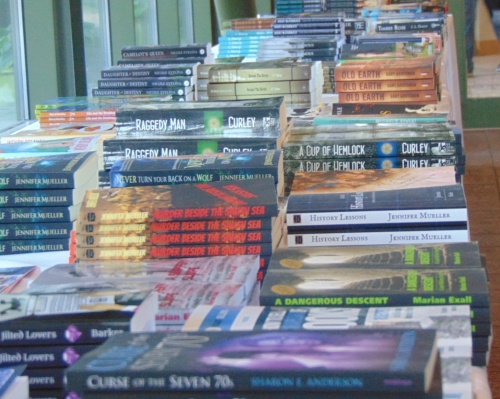
    A Sea of Books


    Book buyers  “walk the show” rather quickly as they scan for covers that pique their interest enough to stop and inquire. Book covers had, maybe, two or three seconds to catch a book buyers attention.

    They do this because this is how most readers (aka customers) shop for books in their bookstores. Most independent book stores carry approximately seven thousand books. Inventory must be refreshed constantly to keep the core clientele coming back and to attract new clients.

    [/fusion_builder_column][fusion_builder_column type=”1_1″ background_position=”left top” background_color=”” border_size=”” border_color=”” border_style=”solid” spacing=”yes” background_image=”” background_repeat=”no-repeat” padding=”” margin_top=”0px” margin_bottom=”0px” class=”” id=”” animation_type=”” animation_speed=”0.3″ animation_direction=”left” hide_on_mobile=”no” center_content=”no” min_height=”none”]

    p1550180
    Book Buyers with Sell Sheets


    TOP TEN OBSERVATIONS of the Independent Booksellers Association Trade Shows (so far)

    1. The book store buyers were there to discover “new finds” for their patrons—not just the New York Times bestselling books. Many said their patrons shop with them to discover new authors.
    2. They want to know what the author is doing to push sales on all fronts (websites, p-o-s, social media, etc.)
    3. Book buyers want to know if the author is reaching out specifically to her targeted audience.
    4. Are authors promoting their books in social media platforms that are targeted for their genres?
    5. Do authors supply point-of-sale promotions (shelf-talkers, shiny award stickers)?
    6. Is the book an award winner? Are there shiny stickers to attract the eyes of the readers? (Yes, I am repeating the bit about shiny stickers.)
    7. Does the cover list review blurbs and endorsements?
    8. Stores are becoming more event oriented. Is the author willing to do an event at book stores (not just a reading)? Events add value to a title and author brand.
    9. Booksellers LOVE series! They love series and the promise of works to come.
    10. Booksellers can tell the quality of a printed book in a heartbeat and at thirty paces.
      • It is an unspoken tenet that Booksellers do NOT want books printed by CreateSpace/Amazon — primarily because they are not available through the usual distribution channels.
      • Booksellers do NOT want books from certain vanity presses and/or  author services known to be disreputable because of terrible past experiences. Everyone in the business of book selling knows about this unspoken list of disreputable publishing houses.

    [/fusion_builder_column][fusion_builder_column type=”1_1″ background_position=”left top” background_color=”” border_size=”” border_color=”” border_style=”solid” spacing=”yes” background_image=”” background_repeat=”no-repeat” padding=”” margin_top=”0px” margin_bottom=”0px” class=”” id=”” animation_type=”” animation_speed=”0.3″ animation_direction=”left” hide_on_mobile=”no” center_content=”no” min_height=”none”]

    p1550341
    This Cover Sells Itself

    The NITTY GRITTY

    • Booksellers do not care if a book is traditionally published, Indie published, or small press published. They care if the book will sell itself as it sits on the shelf–will the cover reach out to the targeted audience and pique interest? Booksellers want to know what the author/publisher is doing and will do to create book buzz.
    • Booksellers do want to offer independently published books that have been vetted, but unless the authors are  local community members, they want the books to come through the typical distribution channels.

    [/fusion_builder_column][fusion_builder_column type=”1_1″ background_position=”left top” background_color=”” border_size=”” border_color=”” border_style=”solid” spacing=”yes” background_image=”” background_repeat=”no-repeat” padding=”” margin_top=”0px” margin_bottom=”0px” class=”” id=”” animation_type=”” animation_speed=”0.3″ animation_direction=”left” hide_on_mobile=”no” center_content=”no” min_height=”none”]

    p1550190
    Book Buyers Asking Questions about Carrying Indie Books while another book buyer is reading the back cover of one of the books in the Chanticleer Collection.


    However, they do care about:

    • Covers — covers must be compelling, perfect, targeted, and sell the book by itself while sitting on a shelf. The cover must convey:  Genre, Sub-genre, time period, mood (humorous, scary, romantic, light reading, intense, etc.), age appropriateness, targeted audience, tone, and the TITLE! The cover must convey ALL of this information in seconds.
    • Professional Reviews (Editorial Reviews)
    • Professional Editing
    • Professional Formatting, Typography, and Graphic Design and Layout
    • Availablility through traditional distribution channels (Baker Taylor, Ingram Spark, etc.)
    • Conventional credit terms that are available through the distributor.
    • Are the books returnable to the distributor?
    • A minimum of 40 percent discount off retail price
    • Ease and reliability of re-ordering from a stable supplier/distributor/publisher in to restock a bestselling book quickly

    [/fusion_builder_column][fusion_builder_column type=”1_1″ background_position=”left top” background_color=”” border_size=”” border_color=”” border_style=”solid” spacing=”yes” background_image=”” background_repeat=”no-repeat” padding=”” margin_top=”0px” margin_bottom=”0px” class=”” id=”” animation_type=”” animation_speed=”0.3″ animation_direction=”left” hide_on_mobile=”no” center_content=”no” min_height=”none”]

    p1550307
    Simon & Schuster Book Covers

    What Independent Booksellers do care about is meeting their sales goals so that they can continue as a going-concern (staying open and in business). To do this, they must keep their clientele coming back by offering unique books and great “discoveries,” hosting events, and providing excellent service. 

    GOOD NEWS!

    At each show, I met NEW INDIE bookstore owners who have just opened their stores in the past six months or were opening in November for the upcoming holiday season. All the bookstore  owners told me that they were bringing in approximately $75,000 to $100,000 (in wholesale dollars) of books to initially stock their shelves.

    [/fusion_builder_column][fusion_builder_column type=”1_1″ background_position=”left top” background_color=”” border_size=”” border_color=”” border_style=”solid” spacing=”yes” background_image=”” background_repeat=”no-repeat” padding=”” margin_top=”0px” margin_bottom=”0px” class=”” id=”” animation_type=”” animation_speed=”0.3″ animation_direction=”left” hide_on_mobile=”no” center_content=”no” min_height=”none”]

    p1550203
    Book Buyers Inquiring about Author Events

    Independent Booksellers do care about the quality of the books (content, cover, editing, formatting, and design) that they stock because the books reflect the quality of the bookstore.

    AND, one more time, booksellers care the most about the cover (front, back, spine, dust jacket) which sells the book by attracting the targeted audience, acting as a point-of-sale promotion, and getting the book in the reader’s hands.

    NEVER underestimate the power of the cover–especially for first time authors. The cover of the first book will sell it, and then is the content that will sell the second book.

    [/fusion_builder_column][fusion_builder_column type=”1_1″ background_position=”left top” background_color=”” border_size=”” border_color=”” border_style=”solid” spacing=”yes” background_image=”” background_repeat=”no-repeat” padding=”” margin_top=”0px” margin_bottom=”0px” class=”” id=”” animation_type=”” animation_speed=”0.3″ animation_direction=”left” hide_on_mobile=”no” center_content=”no” min_height=”none”]

    p1550302
    Denver MPIBA Show – Book Buyers Cruising the Show


    Kiffer’s TOP OBSERVATIONS

    • Either the cover attracted the bookseller to pick it up and check it out, OR the book did not exist — books with less than stellar covers seemed as if they were invisible or just did not exist.
    • The cover must convey the genre, sub-genre, tone, mood, and be compelling to its targeted market in a glance.
    • There must not be any question from the cover as to whether or not the book is  a mystery, sci-fi, thriller, romance, etc. If there is any question as to its targeted readership—it is a pass to the book buyer.

    In Closing

    I am proud to say that the booksellers were impressed that the Chanticleer Reviews team members staffing the booth knew so much about the books that we were exhibiting and the authors.  They found the author sheets given to them to take back to their offices very professional for Indie authors. They also were pleased to know that the titles were available in our printed and online catalogs, and that each and every book we were representing was vetted by us—Chanticleer Reviews—either with a top Chanticleer review that they could read and/or that the books were award winners in the Chanticleer International Writing  Competitions.

    [/fusion_builder_column][fusion_builder_column type=”1_1″ background_position=”left top” background_color=”” border_size=”” border_color=”” border_style=”solid” spacing=”yes” background_image=”” background_repeat=”no-repeat” padding=”” margin_top=”0px” margin_bottom=”0px” class=”” id=”” animation_type=”” animation_speed=”0.3″ animation_direction=”left” hide_on_mobile=”no” center_content=”no” min_height=”none”]

    p1550230
    Kiffer Brown Hand-selling the Chanticleer Reviews Collection

    Only books that received a four or five star Chanticleer Review and/or have been awarded a First in Category Award in the Chanticleer Reviews Writing Competitions are eligible for exhibition at the Chanticleer Reviews trade show booths for Booksellers and Librarians.  If your book has received a coveted four or five star review from Chanticleer or was Short-Listed in the Chanticleer International  Book Awards, it will be eligible to participate in Chanticleer’s exclusive trade show representation service.

    Here is a comment from the owner of Village Books (one of the top five independent bookstores in the U.S.), Paul Hanson:

    Kiffer, your Bookseller Confidential article is SPOT ON. Thank you for spreading good and accurate information!”  Best, Paul Hanson, Village Books

    Thank you, Paul!


    Another Note from Kiffer Brown: a tip of the hat to one of my favorite authors:  Anthony Bourdain and his best-selling book, Kitchen Confidential. 

    [/fusion_builder_column][/fusion_builder_row][/fusion_builder_container]

  • YISHAR KOACH: FORWARD with STRENGTH – the Story of Shoah Survivor Ferdinand Fragner by Susan Lynn Sloan

    YISHAR KOACH: FORWARD with STRENGTH – the Story of Shoah Survivor Ferdinand Fragner by Susan Lynn Sloan

    Did you know that only one percent of all Jewish children in World War II Europe survived the war?

    Yishar Koach: Forward with Strength shares the account of a man who was entrusted with inspiring some of these precious few orphans to find strength and hope after experiencing tremendous loss. At Aglasterhausen, a United Nations school for WWII orphans, Fred Fragner took on the mantle of principal and teacher at the school—a daunting responsibility for most, but not for Fragner—a fighter of the Nazi regime who was shot, captured, and interrogated by the Gestapo and then imprisoned for five years in Buchenwald Concentration Camp.

    The life of this most remarkable man of integrity and altruism was the inspiration for Susan Sloan to write Fragner’s biography—a five year project that she undertook with great passion after being introduced to him at a café in Bellingham, Washington. Sloan researched transcripts of lectures and speeches made by Fragner, she refers to newspaper clippings and documents about him, listened to audio and video tapes, and interviewed many who knew him as mentor, coach, friend, family member, and teacher. Most importantly, Sloan had access to Fragner’s own scrapbook about Aglasterhausen that vividly tells how “the children gave him his life back” as he tried to help restore theirs.

    The author took on this project with the hope that it will inspire others “to understand the importance of persevering even in the midst of the most daunting challenges.” Yishar Koach: Forward with Strength is a most timely and much needed reminder for today’s unstable times when there are the most people, worldwide, who have been forcibly displaced since WWII. (The United Nations reports 60 million people are currently displaced as refugees from brutal acts of war, political coups, and religious intolerance.)

    Sloan’s illuminating biography captures Fragner’s lifelong altruism and strength so that it may continue to shine for future generations to come and act as a guidepost and a cautionary tale for today’s challenges.

    ~~~~~

    A timely and thoughtful work that documents and honors Fred Fragner whose unconditional love, respect of others, and perseverance in the face of insurmountable odds still inspires and heals.  Yishar Koach: Forward with Strength, authored by Susan Sloan, is an illuminating biography of this amazing man who made a difference to so many people throughout his life. Sloan’s biography captures Fragner’s lifelong altruism and strength so that it may continue to shine for future generations to come and provides a guidepost for today’s challenges.

  • New Issue of Chanticleer Reviews Magazine — FALL 2016

    New Issue of Chanticleer Reviews Magazine — FALL 2016

    We are excited to present the latest issue of the Chanticleer Reviews e-magazine!

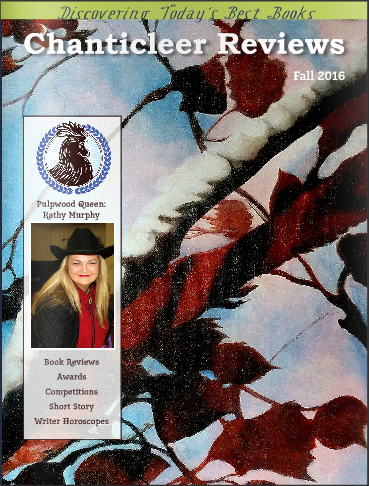
    Chanticleer Reviews Fall 2016 IssueThis issue features an exclusive interview with Kathy L. Murphy, the Queen of the Pulpwood Queens Book Club. Find out more about her 650 book club chapters in this article, written by Sean Dwyer, on page 7.

    What is your WRITER Horoscope? Check out page 38 to see what the stars have in line for your writing life.

    As a special treat for the cold Autumn days ahead, we have included a heartwarming short story by Sean Dwyer, The Mystery of the Little Match Girl.

    And, we are always excited to spotlight our Chanticleer Award Winners.

    The majority of the magazine is dedicated to our reviews, including some great new book discoveries from Historical Fiction to Children’s Books to Westerns to Cozy Mysteries and chilling Thrillers. Not to mention some reviews of Chic-lit, Science Fiction, and Self-Improvement. And, with Halloween right around the corner, we had to include reviews of top Paranormal reads!

    We want to thank award-winning author and artist, Nancy Canyon, for allowing us to feature her artwork on the cover, “Pink Adler.”

    Hint: You can always find saving discount codes in every issue! 

    [fusion_builder_container hundred_percent=”yes” overflow=”visible”][fusion_builder_row][fusion_builder_column type=”1_1″ background_position=”left top” background_color=”” border_size=”” border_color=”” border_style=”solid” spacing=”yes” background_image=”” background_repeat=”no-repeat” padding=”” margin_top=”0px” margin_bottom=”0px” class=”” id=”” animation_type=”” animation_speed=”0.3″ animation_direction=”left” hide_on_mobile=”no” center_content=”no” min_height=”none”]

    Screen Shot 2016-09-15 at 3.46.18 PM
    Click “Follow Publisher: chantireviews“!

    Enjoy this latest issue of Chanticleer Reviews magazine and be sure to subscribe, by finding the “Follow Publisher: chantireviews” just below the bottom left corner of the magazine. We also appreciate “hearts” and shares!

    Special Offer: Those who subscribe now will receive a free paid one year subscription when we take the magazine from an e-zine to a print magazine.

    We hope you enjoy reading this new issue of the Chanticleer Reviews Magazine. Don’t delay! Subscribe today!


     [/fusion_builder_column][/fusion_builder_row][/fusion_builder_container]
  • Third in the Seven Must-Haves for Authors series by Kiffer Brown

    Third in the Seven Must-Haves for Authors series by Kiffer Brown

    dreamstime_m_51247787What is the cornerstone of any successful author’s promotional platform? 

    Unlocking the Secrets of Successful Publishing!

    I was asked by Orna Ross of Alliance of Independent Authors to share what I consider to be the “Seven Must-Haves for Independent Authors” at  UPublishU event that was held at the Book Expo of America 2016 held in Chicago. Of course, I agreed!

    However, the Seven Must-Haves are applicable for all authors whether they are self-published, small press published, traditionally published, or hybrid published. Today, I am addressing the second of the Seven Must-Haves for Authors. 

    What is the cornerstone of any author platform? Editorial Book Reviews

    Why? Why is it that the big traditional publishing houses have staff and contractors whose main job responsibility is to secure editorial book reviews for their upcoming releases? 

    First a PDQ lesson about the different types of reviews (and, yes, books should have all four):

    • Editorial Reviews by professional reviewers in the publishing industry (required by librarians before purchase)
    • Peer Reviews by peer authors or same genre authors who further up the top-selling list
    • Consumer Reviews by individual consumers (readers)
    • Manuscript Overviews: these are pre-editing, pre-publication evaluations

    Why are Editorial Reviews Important to Traditional Publishers?

    • Editorial Reviews are needed for pre-launch sales, bookseller tradeshows, sales catalogs, distributor catalogs, sell sheets, and to create marketing collateral.
    • Editorial Reviews establish credibility and competence in the publishing marketplace.
    • Editorial Reviews help set the tone for reader interaction.
    • Editorial Reviews give readers the language and vocabulary to write consumers reviews, thereby, increasing the number of consumer reviews a book receives.
    • Editorial Reviews distinguish your work from the millions of other books that are vying for the reader’s attention and help to crystallize what your book is about (book discovery tools).
    • Editorial Reviews support your author platform by adding evidence that your work has been evaluated and validated by publishing industry professionals.
    • Editorial Reviews are critical to your book’s success in today’s digital age of publishing. Many potential readers may never see your book in print at a book store, but your reviews will be easily available on the internet, add credibility to your books in a digital environment.
    • Editorial reviews connect readers and promote discussion on social media, forums, and book clubs.
    • Editorial Reviews give authors and their publicists something to post, blog, and chat about with their works that a publishing professional has said about a work. Authors can easily re-tweet, share, like, and comment on their Editorial Reviews without sounding “self-promoting.”

    Editorial Book Reviews are consistently one of the most powerful tools available to traditional publishers for promoting their books–making them one of the most powerful tools available to Indie authors for the promotion of their books.

    Authors must recognize the need for strong credentials to demonstrate competence to potential readers, book buyers, librarians, and media professionals.To address the question that comes up the most and to clear the air, I ‘d like to answer this question:

    What about “paid” editorial reviews? Are they “wrong?” 

    Chanticleer Reviews is sent Advanced Reader Copies (ARCs) on a regular basis from the Big 5 traditional publishing companies for us to consider to review for “free.” We are sent the ARCs of future releases six months to a year ahead of the scheduled title launches.

    Let me confirm that these big traditional publishing companies never “pay” for editorial reviews and will, most likely, admonish those authors and publishing houses who do pay for editorial reviews.

    However, I am here to set the record straight. All editorial/professional reviews are paid for–one way or the other. Most indie authors and publishers could not afford to pay Chanticleer Reviews what the traditional big publishers pay us in-kind with promotion and publicity.

    Chanticleer at BEA ChicagoWhoa! That’s right. It is just that the big guys don’t pay us in cash or Paypal. They pay us in-kind with advertising, promotional considerations, press releases, having Chanticleer Reviews name appear on covers of thousands and thousands of books, helping us build relationships with the all important book distributors, and helping us (Chanticleer Reviews) to earn prestige among the traditional publishing houses. How much would we have to pay for this type of priceless promotion? I can’t even think about the number of zeros that would follow the dollar sign. Conversely, how much would we have to charge authors and smaller publishers who do not have staff and contractors to run the p/r machine to match the type of compensation that the big guys offer with each ARC that we receive from them in the mail or from Net Galley?

    That being said, editorial reviews must come from objective, trusted, and unbiased professional editors and reviewers. 

    Chanticleer Book Reviews was established in 2010 when independent authors were still treated unfavorably by many in the book industry, including editorial review companies. Chanticleer was founded on the principle that all authors deserve an equal chance at success. Today, indie authors are finally winning the respect they deserve and Chanticleer remains the young upstart, championing the new, the innovative, and the leading-edge of the book industry.

    “Chanticleer Reviews has quickly risen to the ranks of the premier, respected trade reviews in the industry. Their opinion is highly valued by independent and traditional publishers alike. They have been a wonderful resource for me as an unknown, indie author trying to obtain recognition for my work.” Michael Hurley, author of The Prodigal, The Vineyard, The Passage, and others.

    What do editorial book reviewers look for when evaluating a book?

    • Is the story compelling?
    • Professionalism of editing and formatting
    • Characterization
    • Pacing
    • Continuity of story-line
    • Intriguing opening
    • Satisfying ending (not necessarily “happy”)
    • Uniqueness of story
    • Writing craft
    • Plotting craft
    • Other genre specific criteria

    At Chanticleer Book Reviews, if your work is not well-received, our editors will write a “evaluation” that addresses the major issues and problems found so that the writer may work on improving the quality of the work in question. 

    We do not publish “negative” reviews, but we do give constructive feedback to those who submit their works for an editorial review.

    Positive reviews generate content for:

    • Social Media Posts
    • Point of Sale Marketing Materials
    • Shelf Talkers
    • Press Releases
    • Author Platforms and Websites
    • Meta-data
    • Blogging
    • Interviews
    • Book Discovery
    • Distribution Reviews
    • Increasing Book Sales

    Chanticleer Book Reviews are for the serious author ready for professionally reviewed, unbiased, objective assessments of their work.  

    Does your book to have this “big 5” advantage?

    IF not, submit your work today for the Chanticleer Editorial Review package!

    For more information about the editorial review process at Chanticleer Reviews, please click here.

    To find out how to submit your book for a Chanticleer Editorial Review, please click here.

    SPECIAL DISCOUNT OFFER for Chanticleer Reviews e-news subscribers: 

    And, as a special for those who have read all the way to the end of this article, please accept this discount code for a $50 discount off from the standard $345 rate which includes a two-year digital promotion campaign from date of review posting to the Chanticleer Reviews website.

    $50 Discount Code:  $50CRDISCBEST

    #1 Must Have:

    What is the traditional publishing tool that authors can implement to propel their writing careers to new levels and to earn an income from selling their books?  Click here to read the post: #1 Must-Have 

    #2 Must Have:

    What is the single most important publishing tool for first-time authors? Click here to find out

    Kiffer-Brown-CBR-132x150.jpgAs always, please do not hesitate to contact us with any questions, concerns, or suggestions at KBrown@ChantiReviews.com

    Best, Kiffer Brown

    Inform, Involve, Engage! 

  • Quotes for MEMORIAL DAY and Suggested Books that remember the sacrifices of those who served their country – Kiffer Brown

    Quotes for MEMORIAL DAY and Suggested Books that remember the sacrifices of those who served their country – Kiffer Brown

    Quotes for Memorial Day

    “Guard against the impostures of pretended patriotism.” — President George Washington

    “With malice toward none; with charity for all; with firmness in the right, as God gives us to see the right, let us strive on to finish the work we are in; to bind up the nation’s wounds; to care for him who shall have borne the battle, an d for his widow, and his orphan—to do all which may achieve and cherish a just, and a lasting peace, among ourselves, and with all nations.”— President Abraham Lincoln 1865

    “Here is your country. Cherish these natural wonders, cherish the natural resources, cherish the history and romance as a sacred heritage, for your children and your children’s children. Do not let selfish men or greedy interests skin your country of its beauty, its riches or its romance.” — President Theodore Roosevelt

    “Patriotism means to stand by the country. It does not mean to stand by the president or any other public official.” –President Theodore Roosevelt

    “In the truest sense, freedom cannot be bestowed; it must be achieved.” — President Franklin D. Roosevelt

    “Those who have long enjoyed such privileges as we enjoy forget in time that men have died to win them.” —President Franklin D. Roosevelt

     “Let every nation know, whether it wishes us well or ill, that we shall pay any price, bear any burden, meet any hardship, support any friend, oppose any foe to assure the survival and the success of liberty.” — President John F. Kennedy

    Memorial Day is a federal holiday in the United States in remembrance of the people who died while serving in the country’s armed forces. It is observed the last Monday of May.

    Originally, there were two different holidays celebrated by the North and the South to honor their Civil War dead in 1868. After World War One, the two holidays were combined to honor all Americans who died while in the military service.

    Veterans Day, which honors all U.S. veterans, is celebrated annually on November 11th–the day that WWI officially ended. V-E Day (Victory in Europe), May 8th, 1945 is the date United States and Great Britain celebrated defeating the Nazi war machine.

    We at Chanticleer Reviews are honored to present four excellent reads that exemplify the honor and courage of the men and women who serve in the U.S. military. For information about each book, please click on the link provided. 

    NON-FICTION

    NO TOUGHER DUTY, NO GREATER HONOR  by GySgt L. Christian Bussler

    GySgt. Bussler served three tours of duty in Iraq in 2003. The last tour (2005 -2006) proves to be the most challenging when Bussler narrowly escapes an IED blast with his life and sent home with injuries. The year proved challenging not just for Bussler, but for his whole team and it leaves each one of them forever changed. After recovery, Bussler then served as a Mortuary Affairs officer.

    Though now retired from the Marines, GySgt L. Christian Bussler is still active in the veteran community and acts as a mentor for other veterans. A truly magnificent and heartfelt memoir, No Tougher Duty, No Greater Honor is a must-read for every American.

    Journey Book Awards, 1st Place award-winner.

    MERRY CHRISTMAS AND A HAPPY PTSD  by Christopher Oelerich (non-fiction)

    “I went away to war one person and came back another, and in my wildest dreams would never have chosen to be the one who came back.” – Christopher Oelerich

    For those who suffer from PTSD, understanding that they are not alone and that they can help themselves is a huge step toward embracing a recovery program. Oelerich, as one who has experienced combat and traumatic events, wrote this book as a “How To” guide for combat soldiers, like himself, who suffer from PTSD.

    Christopher Oelerich relates his own personal history, beginning from when he was drafted into the military during the Vietnam War, and continuing through his return to civilian life and his own rocky road to recovery.

    GENERAL in COMMAND – The Life of Major General John B. Anderson by Michael M. Van Ness

     A remarkable biography chronicling the adventures of a farm boy born in 1891 who rose high rank in the US military and served with distinction in two world wars as a combatant, officer, and sage observer. He served in the Mexican War, WWI, the Civilian Conservation Corps in the Great Depression, and WWII. 

    HILLBILLIES to HEROES: Journey from the Black Hills of Tennessee to the Battlefields of World War II – The Memoir of James Quinton Kelley by S.L. Kelley.  

    A farm boy from the hills of Coker Creek, Tennessee to driving tanks across France and into Germany as part of an initiative that ultimately saw the end of Hitler’s Third Reich. A heartfelt recollection of the sacrifices of America’s soldiers in WWII.

    FICTION

    None of Us the Same by Jeffrey K. Walker 

    Love. Honor. Friendship. Exactly what we need from a historical fiction novel, at exactly the right time. WWI. 


    WAIT FOR ME

    Wait For Me by Janet K. Shawgo  –World War II  (historical fiction)

    The often-unknown role of women in wartime as travel nurses and pilots, as well as the use of herbs for natural healing, adds interesting and relative historical content to the story. The WASP pilots and their active role in the war effort was particularly fascinating reflecting Shawgo’s vigilance with her medical and military history research. 

    After the prologue shows Pearl Harbor on December 7, 1941, establishing the World War II setting, the story begins on September 23, 1940 in New York.

    Readers may find it interesting that Shawgo, along with being an award winning novelist, is also a travel nurse who goes where and when she is needed for national disasters.


    LIfe on Base: Quantico Cave review

    Life On Base:  Quantico Cave by Tom and Nancy Wise  (contemporary fiction)

    A riveting portrayal of the lives of children whose parents serve in the armed forces. Being a teenager is hard enough, but adding the constant uprooting and moving from base to base adds its own unique challenges as well as rewards.

    The story focuses around young Stephen, a “military brat”—a term that these children use to distinguish themselves from their civilian counterparts. Stephen finds himself uprooted once again from his most recent home in California and moved across the country to Quantico Bay, Virginia. His father is a Marine and relocating often has become a part of Stephen’s life. However, becoming accustomed to something is not the same as liking it.

    “Patriotism is supporting your country all the time, and your government when it deserves it.“
    Mark Twain

    “How important it is for us to recognize and celebrate our heroes and she-roes!” – Maya Angelou

    “A hero is someone who has given his or her life to something bigger than oneself.” —Joseph Campbell

    MemorialDay

    Remembering those who have served and made the ultimate sacrifice….

    As my father who passed in 1981 from 100% service-connected disabilities (a Marine Corps lifer with WWII, Korean War, and Vietnam conflict in his military service) repeated,  

    “May we never forget freedom isn’t free.”Unknown

    [/fusion_builder_column][/fusion_builder_row][/fusion_builder_container]
  • What is the Single Most Important Publishing Tool for Indie Authors?

    What is the Single Most Important Publishing Tool for Indie Authors?

    The 2nd Must-Have for Independent Authors:

    What is the single most important publishing tool for first-time authors?

    IMG_20160513_115410I was asked by Orna Ross of Alliance of Independent Authors to share what I consider to be the “Seven Must-Haves for Independent Authors” at  UPublishU event that was held at the Book Expo of America 2016 held in Chicago. Of course, I agreed!

    However, the Seven Must-Haves are applicable for all authors whether they are self-published, small press published, traditionally published, or hybrid published. Today, I am addressing the second of the Seven Must-Haves for Authors. 

    What could be almost or maybe more important than the content of a book? THE COVER!

    Now don’t get me wrong—content is KING/QUEEN. However, when it comes to selling books, especially for Indie published authors, it is the cover that will rule.

    Why is the cover the most important publishing tool for first-time authors? 

    The cover is what makes a reader who has never heard of you or read your other works pick up your book, or click on the link, or choose your book’s digital thumbprint on Amazon’s  Customers Who Bought This Item Also Bought carousel of book covers.

    Book covers are so important that major booksellers demand having the final decision in the cover designs of books that they decide to carry so that the covers will appeal to their particular customer demographics.

    Key Concepts in Book Cover Design (digital and print)

    1. Genre placement – the cover should immediately (less than 3 seconds) convey the genre of the book. Is it an intense suspense/thriller novel? or Historical Fiction? Or How-To?
    2. Category within genre – is it Regency Romance? or Contemporary Women’s Fiction with Southern elements?
    3. Does the color scheme work with the genre?
    4. Do the design elements convey an idea of what the story is about?
    5. Is the cover appealing to the readership that you are targeting?
    6. Is it dated? Covers can and should be refreshed and tweaked at least every five years.
    7. Covers should work whether they are enlarged to be 50 feet tall to hang from scaffolding at tradeshows or whether they are reduced to the size of a thumbnail. Keep in mind that cover design may be slightly different for digital and for print. Slightly.
    8. A book cover is its must important piece of retail real estate. Every inch should be considered for maximum visual and emotional impact.
    9. Make sure that the entire book’s “packaging” (typography, formatting, fonts, and layout) is co-cohesive and that all of the elements are complementary to each other.
    10. Color—use color to convey emotion, time period, genre, theme, etc.

    IMG_20160512_161055

    Key Elements in Book Cover Design (digital and print)

    1. Many authors/publishers overlook the spine of their books as a prime selling tool. Since most first time authors’ books will be shelved spine-out instead of front cover out, it is very important to make the spine of your books as appealing as possible to your targeted audience. I recommend that first time authors start the design process from the spine and then move forward to front cover and then the back cover.
    2. Each design element should convey the story within.
    3. Typography is part of the cover design and should not be an afterthought. It should enhance the design image of the book and be legible. Resist using the latest curly cues fonts or “urban decay” fonts UNLESS they are easily readable. Do not ever use more than three fonts. If you use one font with a “serif” then you should use a complementary font without a serif.
      1. Here is an example of a font with serifs (extra flourish): Georgian
      2. Here is an example of a font that is sans serif.
    4. Note – interior copy (the story) should always be printed (digitally or print) with a serif font for ease of readability.
      1. Here is a link to a Huffington Post  on  Type Fonts: A Totally Definitive Ranking of Fonts
      2. A post by Joel Friedlander about picking fonts for self-published books. 

    Here is a great link to examples of fonts for book covers that will inspire you.

    My advice to authors is to begin thinking of your cover concept long before you type The END to your manuscript.

    Here are some before and after covers for your consideration. What do you think:

    The Great Symmetry by James R WellsThe Great Symmetry by James Wells before cover

    Now ask yourself:

    What is the genre of this book? 

    What is the story about? Is it fiction or non-fiction? 

    Are you compelled to find out more about what is inside? 


    great symmetry james wells

    The Great Symmetry by James Wells after cover

    In less than three seconds, a potential reader can see:

    That this is a science fiction novel and the story is action based — the spaceship looks like it is fleeing something and heading into a dangerous place that must be less scary than what it is escaping from.

    The primary color is “tech-blue.”  Notice how much more pleasing the alignment of the title is and what a difference the typography makes–all caps with a more techie type font. I like how the author’s name and and the book title work together to make a singular visual impression.


    Now you pick, which is the before and which cover is the after for The Only Witness by Pamela Beason

    TheOnlyWitness_updated200tallOnlyWitnessCvr-New-copy-e1426269259568.jpg


    Another example

    virtues-of-war-image1.jpg
    virtues-of-war-e14221387917351.jpg


    Here are some photos of book spines to drive the point home about their importance and the 3 second rule of thumb.

    BOOK SPINES MATTER!

    BOOK SPINES MATTER!       Legacy-Cover-w-Spine


       How will your book standout? How to Increase Book Sales in Book Stores


    More exceptional cover designs:

    The Girl and the Clock WOrk Cat - Nikki McCormackNotice  that the reader can immediately tell that this is a steampunk young adult novel that takes place in London,  with a young adult female protagonist and a cat. All of this information is conveyed by the cover design.

    There's Something About MartyCozy mystery readers who like a humorous edge  to their stories can tell immediately that this book may be of interest to them.

    The Treasure of Ching Shih by John GillgrenNo mistaking that this is a children’s book about sea adventures and pirates!


    Farewell to a QUeen

     Yep, I read this book to find out what happened to the Queen of the North!

      Your cover should incorporate your author brand along with some 3rd party P/R.

    STRAIGHT-INTO-DARKNESS-front Award


    Notice how tastefully that this author differentiates himself from the other millions of authors with his designation of being an award winning author.


    Higher Ground by McKendree Long You are probably starting to get the concept….of just how much information a cover is able to convey. Help readers discover your books by using your book’s cover real estate as effectively as possible. Make every little detail work for you. Imagine that your cover is a commercial for your book and make each everyone on those three seconds that you have to hook the potential reader into picking up your book instead of someone else’s or to click on your digital cover instead of someone else’s.

    Covers can sell readers on your first work, but it is the content that will make them come back for book two and three….


    It is the COVER that will sell your books at industry trade shows when book buying professionals pick up your books’ Sell Sheets.  Make your books standout and get noticed. Start working on the cover concept almost as soon as you start working on the story concept. Use it start finding Beta readers, on your website, with your author platform to start lining up book signings for your book launch, and planning promotional materials BEFORE your launch date. Keep in mind hour your cover will influence your marketing materials and web promotions.

    Remember that it doesn’t matter how much time and money that you spend on getting your book in front of potential readers. If the cover isn’t  engaging to the reader, the reader will not pick it up to look at the inside or read the back cover blurb, or click on the image to for more information and all of your time, money, and effort will be for naught.

    Covers should convey an emotion first. The cover should have a visual impact that grabs the potential reader and makes him/her want to know more about what is inside. The cover must be enticing! 

    milkyway-galaxy.jpg

    This is the second blogpost in the Seven Must-Haves for Author series.

    The first article addresses:

    What is the traditional publishing tool that authors can implement to propel their writing careers to new levels and to earn an income from selling their books? Click here to read. 

    The third article in the series asks: What is the corner stone of any author platform?

    Stay tuned! – Kiffer Brown, Head Hen at Chanticleer Book Reviews


  • Top Ten Takeaways from Book Expo of America 2016 by Kiffer Brown

    Top Ten Takeaways from Book Expo of America 2016 by Kiffer Brown

    IMG_20160513_115454Top Ten Takeaways from 2016 Book Expo of America – Chicago

    The Number One publishing industry event in North America and one of the biggest in the world. BEA is the largest gathering of booksellers, librarians, retailers, publishers, rights, licensing, and book industry professionals in North America.

    BEA gave me a press pass that allowed me a carte blanche to walk the show, take in presentations and sessions, attend special events, view the latest products, and meet with exhibitors.

    Here are the ten takeaways that I gathered from overhearing buzz, listening to experts sharing the latest information, and seeing the latest trends at BEA 2016.

    Drum-roll please! 

    The Top Ten Takeaways from BEA 2016

    1. Never ever forget that books for “the trade” (books available to the general public – digital or print) must entertain–even if their purpose is to educate.IMG_20160512_161055
    2. Covers RULE — every spot of a cover whether digital or print is highly valued real estate because it is the number one influencing tool to induce a potential reader to pick-up a book or click on a digital book for more information.
    3. Book buyers for libraries, as a rule, wait to decide on whether or not they will  purchase a book until they can “hold it in their hands” along with requiring that the book has been editorially reviewed (not consumer reviewed). If authors/publishers want to reach librarian book buyers, it behooves them to have their books at the ALA conventions.IMG_20160513_143314 (1)
    4. E-books as a percentage of US wholesale trade market sales are more than 25% of all sales in 2013, 2014, & 2015.  Source: AAP
    5. Readers are “flipping like otters” between e-books and print books.
    6. The publishing market is going global because of E-books. Forty percent of Smashwords/iBooks sales are global. Retail digital platforms (Amazon, Kobo, iBooks, Smashwords, etc.) are global.
    7. Generation Z, X, & Millennials now use YouTube as their Google Search. Keep this in mind when creating channels of book discovery pathways.
    8. Publishers want/need series–not one-offs (single titles)– because that is what bookstores want and, ultimately, what readers want. IMG_20160513_173524
    9. Gen Z, Y, and X want authenticity in engagement. They do not want to be sold to on social media platforms. Gen Z communicates in images — think emoticons.
    10. The nut to crack is to get people to read and buy books rather participate in other kinds of entertainment (gaming, movies, watching TV, etc .) that are competing for their time rather than worrying about Indie vs Traditional publishing.  See Item 1.

    Next year, BEA 2017 will be held in back in New York City and Kiffer Brown of Chanticleer Reviews plans on being there to bring the Chanticleer Community of Authors the latest in publishing news.

    Be sure to check out Kiffer Brown’s marketing blog-post series that she presented at BEA 2016, The Seven Must-Haves for Authors.


  • The Seven Must-Haves for Authors – Unlocking the Secrets of Successful Publishing Series by Kiffer Brown

    The Seven Must-Haves for Authors – Unlocking the Secrets of Successful Publishing Series by Kiffer Brown

    I was asked by Orna Ross of Alliance of Independent Authors to share what I consider to be the “Seven Must-Haves for Independent Authors” at  UPublishU event that was held at the Book Expo of America 2016 held in Chicago. Of course, I agreed!

    However, the Seven Must-Haves are applicable for all authors whether they are self-published, small press published, traditionally published, or hybrid published. I formed the talk based on the following questions:

    What are the Seven Must-Haves?

    1. What is the traditional publishing tool that authors can implement to propel their writing careers to new levels and to earn an income from selling their books?
    2. What is the single most important publishing tool for first-time authors?
    3. What is the cornerstone of any author platform?
    4.  What should every author know about communicating and marketing in the Digital Age?
    5. How can an author set her books apart from the millions of titles that launch each year?
    6. How can an author expand readership?
    7. What should continue to grow and never disappear in today’s new era of publishing?

    Each of one these questions will be answered in the Seven Must-Haves blog-post series.

    1. What is the traditional publishing tool that authors can implement to propel their writing careers to new levels and to earn income from their books?

    Have you ever wondered how best-selling authors can churn out a book or two each year? 

    How they can continue to hit “home-runs” with each new title? 

    They use the tried and true tools that have built the publishing industry. Authors will benefit from taking the best tried and true methods of traditional publishing and combining them with today’s best publishing practices.

    One of the best tools that traditional publishing houses and literary agents make available to their authors is the power of a manuscript overview. Most best-selling authors have great editing and feedback from agents and senior editors from the very beginning of a work. This feedback comes in very early in a work’s process and allows for the author to publish more works and not as an afterthought.

    The Editing Process (when one is working with a literary agent and/or publishing house) goes like this:

    The author works on a rough draft – the early drafts of a novel. He creates the theme, the characters, the setting, the tone, the story, the plot lines, the dialog style, and selects the genre and has an audience in mind (YA or mystery fans, fantasy or Science Fiction readers, etc.). After the author creates the story with a beginning, middle, and end, he then sends this early unedited draft of the story to his editor or agent to read and to get feedback.

    Authors who work within this editing system then begin scratching out the next inklings of story ideas, or they will resume working on other drafts that are further down the editing schedule, while waiting for feedback about the manuscript overview from their agent/editor. Once the feedback (manuscript overview) is received, then the author decides what to incorporate and which suggestions to implement in the next drafts. He then reworks the draft while another work’s manuscript is being over-viewed or is in a separate stage of editing. Some authors who write within this system will have two or three works “in play.”  Also, some authors write in different genres while as the works are in different stages of the editing process.

    Have you ever wished that someone would give you objective feedback about your manuscript? Or that someone would give you the feedback that will take your work from good to great?  

    What is a Manuscript Overview: It is an objective evaluation of a story idea that is fully formed with a beginning, middle, and end, but still in an early draft stage. The MO comes before LINE EDITING and COPY EDITING.

    What is the process:  The entire manuscript is read and evaluated by a top editor for the following:

    • Does the work have a compelling story?
    • Is there more than one story in the manuscript? It is quite common for a manuscript to have two, three, or more storylines.
    • Are the characters engaging? Interesting?
    • Are there too many characters? See above.
    • Are the characters pathetic, sympathetic, or empathetic?
    • Is there inconsistent character development?
    • Are there plot holes? Smoking guns?
    • Does the story wander?
    • Is there “head hopping” or unplanned POV changes?
    • Does it take to long too engage the reader?
    • Does the story stay within its world construct?
    • Does it follow the “laws” of the setting?
    • Does the story sag in the middle?
    • Is the ending satisfying?
    • Does the beginning intrigue?
    • Is the dialog appropriate?
    • Is there too much backstory? Too many details?
    • Does the scenery and setting work with the story?
    • and so forth
    • Or is it spot on and ready for a Line Edit?

    The editor then writes a brief and honest evaluation of the work that addresses the above questions.

    If you do not have an agent or editor, you can still get this type of brutally honest feedback with a manuscript overview from Chanticleer Reviews.

    Remember, that a manuscript overview is NOT a Line Edit or a Copy Edit. It consists of broad sweeping strokes of feedback for the author to consider for the next round of drafts. Incorporating line-editing suggestions can typically shorten a manuscript by at least twenty percent, thereby paying for itself with the savings on copyediting.

    The editor then sends his comments, suggestions, and concerns about the work back to the author in a manuscript overview. It is up to the author to take these recommendations and decide whether or not to incorporate them in the next draft of the manuscript.

    Many of the authors who have used Chanticleer’s Manuscript Overview service have found that their writing was greatly improved and have discovered that the feedback has enabled them to be able to take their next works to a higher level.

    I’m incredibly appreciative of the many positive and helpful things the reviewer had to say in the manuscript overview. The feedback is terrific and more comprehensive than any other I’ve received… Many thanks, again! Brian L.

    All of her suggestions were right and I hope to make them to the best of my ability. It’s like taking a powerful and quick course in advanced writing. Please thank her for me….Working with someone of her caliber would take my writing to another level. – L.V.

     Please thank the editor  for her insightful and pinpoint comments as to how I can make the book better. They were very good and I’ve already incorporated many into the manuscript. –D.S.

    When the author decides that the story is ready (and the lit agent and/or publisher agrees), she may send it off for another manuscript overview with either the same editor or get a second opinion. Or the author may decide that the work is ready for a Line Edit.

    Line Editing is defined as a thorough and focused reading of the manuscript  on a line-by-line basis with suggestions, comments, and remarks noted for the author to consider. For more information about what line-editing encompasses, please visit our Editing Guide.  

    After the author incorporates the line edits, the work then moves to a Copy Edit.

    Copy Editing is a very technical read of a work for flaws in grammar, punctuation, syntax; consistency in spelling, numerals, hyphenation, etc.; flagging any inconsistencies that have made it past the Copy Edit such as eye color, name spelling, location, timing from point A to point B; and tracks any internal inconsistencies in the story (conflicting abilities or inabilities, location inconsistencies), etc.

    After Copy Editing, the work then goes to Final Proofing.

    The manuscript then goes back to the author for final approval to begin the publishing formatting for digital and print.

    To circle back around to the first question:

    What is the traditional publishing tool that authors can implement to propel their writing careers to new levels and to earn income from their books?

    This is how: Each time a work goes back to an editor for evaluation and editing takes time. During these interludes, the author continues to write new works or continues to work on other manuscripts that are further down the editing chain.

    Fundamentally, the manuscript overview allow authors to WRITE and CREATE rather than rework and reword a story idea again and again while trying to get it “right.” The honest feedback gives the author an advantage of the traditional publishing houses where authors continuously get feedback and are under contract to produce. Manuscript overviews allow the author to spend creative time developing stories, characters, unique language, and new plot twists rather than trying to dissect their own works. They also allow for the author to gain fresh perspective.

    The manuscript overview saves the author time and energy, and if the author is self-published, then money in editing fees.

    Each stage of editing brings an entirely new set of fresh eyes and fresh perspective to a work. Imagine the kind of polish that will bring to your work.

    Put the power of traditional publishing’s collaborative expertise behind your work. Begin with a manuscript overview. Our clients, who have taken advantage of the Chanticleer Reviews Manuscript Overview service, swear that they will never go back to writing another novel without first having a manuscript overview conducted on early on.

    How much is the fee for this powerful editing tool?

    $425 for 2,000+  word overview/evaluation from one of Chanticleer’s senior editors for a work under 110,000 words.

    Get objective, honest, and brutal feedback from one of Chanticleer’s top editors who edit for New York Times and Amazon best-selling authors.

    Order your manuscript’s overview today! 

    *If you publish with a hybrid or cooperative publishing house, we can work with their Style Sheets. We work with many authors who publish in a variety of ways, but want honest and objective feedback regarding their manuscripts before they submit them.


  • One Author’s Creative Approach to Book Signings

    One Author’s Creative Approach to Book Signings

    To compete in the current book market, where millions of  books are published each year, you have to find interesting new ways to get your books in front of potential readers.

    [fusion_builder_container hundred_percent=”yes” overflow=”visible”][fusion_builder_row][fusion_builder_column type=”1_1″ background_position=”left top” background_color=”” border_size=”” border_color=”” border_style=”solid” spacing=”yes” background_image=”” background_repeat=”no-repeat” padding=”” margin_top=”0px” margin_bottom=”0px” class=”” id=”” animation_type=”” animation_speed=”0.3″ animation_direction=”left” hide_on_mobile=”no” center_content=”no” min_height=”none”]

    book signing opportunities
    Same old same old

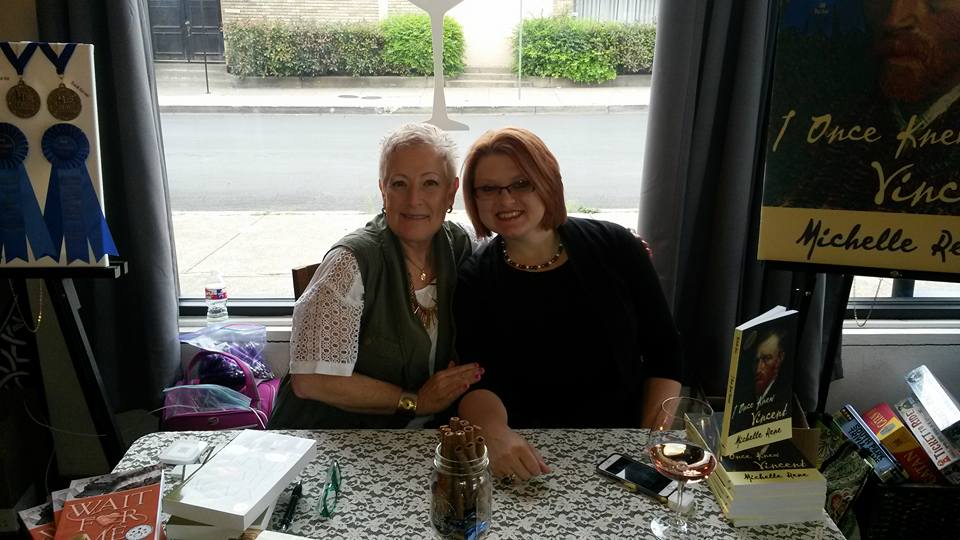
    Today, Janet Shawgo, award winning author of the Look for Me series, shares her experience with setting up book signings at wine bars—and how the right creative approach can help spread the word about your books.

    Also, as an added advantage, your books will have more focused attention from potential readers. It is a great one-two promotional punch!

    Setting Up Book Signings in Unique Places Other than Bookstores

    12924511_1181270135225159_5230181094765279286_nBookstore managers don’t always return calls or emails, dates may not be available, or dates may be reserved six months in advance.

    But who says that you can only hold book signings in a bookstores?  

    If you can get the okay to set up a table with books, you can have a book signing wherever that may be. (Like a wine bar.) I know of one very successful western fiction author who has his best signings (read as sells more books) in grocery stores!

    Another author whose romance novels have a natural healer as a protagonist holds some of her most successful signings in food co-ops and natural supplement stores. Yet another author holds her signings at outdoor equipment stores for her eco-mystery series.

    The possibilities are endless. 

    The Point is to Engage Readers – Janet says:

    These days, you need to find something unique to get your books to new readers. But getting yourself in front of readers can be frightening. I get it! Making your book signing into an event where you can have more interaction than just signing books helps ease the awkwardness.”

    “Think of what fits with the theme or genre of your book. If you have a cozy mystery about food, find a local restaurant. If you write romance, a little wining and dining might go a long way.”

    12998493_1187296194622553_2292896810247946110_nJanet Shawgo shares info about her Wine Bar Book Signings

    “In April, another Dallas-area author, Michelle Renee, and I are hosting a book signing at a wine bar in the Bishop Arts district. We contacted the owner to ask if we could set up a table and sell our books on a slow weeknight. In return, we will purchase a few bottles of wine (white, red, and rose). We’ll hand out tickets to people, which entitles them to a glass on us.”

    “I’ve had huge success with signings at wine bars. At another signing, I sold a good number of books, people enjoyed the glass of wine, and the wine bar had one of its best nights and welcomed me back to hold another signing.”

    How to Make the Most of Your Book Signing – More Info from Janet Shawgo, award winning author of the WAIT FOR ME series

    “To make sure people get to your book signing, be sure to spread the word! We’re on social media, sharing information about our wine bar book signing, but we’re also telling people at work, as well as family and friends. Don’t be afraid to ask the place that is hosting you to post on social media about the event, too. Targeted Facebook ads to locals might also help spread the word.”

    “At the signing itself, we have a signup sheet for our newsletters to capture emails, and we also choose two or three people from it for door prizes at the end of the evening.”

    1262515_10153217559070403_1589138071_o“Be sure that your table is appealing and inviting. Readers love free items, so we have pens, bookmarks, candy, magnets, and key chains. Items that have information about our books on them keep us in readers’ minds.”


    Thank you, Janet Shawgo, for the sharing your great idea with other Chanticleer authors!

    Kiffer Brown asks: Where do your books’ targeted readers hang out? 

    • kitchen stores?
    • gardening centers?
    • yarn shops?
    • trivia nights at pubs?
    • comic book stores?
    • boat supply stores?
    • pet stores?
    • coffee shops?
    • outdoor recreation suppliers?

    310715_270645636302227_1489383886_n

    The possibilities are endless!

    Expand your readership—make your list of author/book signing opportunities today! 

    Click on the links to read Chanticleer’s reviews of Janet Shawgo’s award winning books: Look For Me, Wait For Me, and  Find Me Again

     [/fusion_builder_column][/fusion_builder_row][/fusion_builder_container]

  • Largest Book Club in the World Selects Chanticleer Award Winner for 2016 Book Reading List

    Largest Book Club in the World Selects Chanticleer Award Winner for 2016 Book Reading List

    BREAKING NEWS! This just in!

    Kiffer Brown here reporting from the 16th Anniversary Weekend Author Extravaganza in Nacogdoches, Texas, home of the Pulpwood Queens and Timber Guys Book Club — the largest book club in the world’s annual weekend gathering!

    Pulpwood QueensThe Pulpwood Queens Book Club was founded by Kathy (Patrick) Murphy sixteen years. Dreamworks Entertainment has announced plans to make a movie based on Murhpy’s life, and her book The Pulpwood Queens’ Tiara-Wearing, Book-Sharing Guide to Life along with the development of her international book club that has grown to 600-plus devoted chapters. 

    The Pulpwood Queens’ Book Club has be written about in the Oxford American Magazine, The Magazine of Good Southern Writing, and along with Oprah Winfrey’s OXYGEN NETWORK feature, to The Oprah Winfrey Show, to kicking off Diane Sawyer and Charlie Gipson’s READ THIS Book Club on Good Morning America, and has been featured in The Los Angeles Times, Time Magazine, Newsweek, and The Wall Street Journal to name a few.

    I met Kathy Murphy (formerly Patrick) at a conference last April and we had instant rapport, so we stayed in touch. Of course, I just had to attend the “Once Upon a Time in 2016,” Girlfriend Weekend that is being held right now (Jan. 14 – 17, 2016) in Nacogdoches, Texas.

    The authors of the 2016 selections are in attendance for panel discussions, author signings, and meeting their readers. The GREAT BIG BALL of HAIR costume themed ball “Once Upon a Time” will be held this evening and the Timber Guy of the Year and the Ball Queen will be announced at this time.

    But, most importantly, the 2016 Pulpwood Queen Book Club Selections will be officially announced at the gathering of authors and readers!

    Kathy L. Murphy, the founder of the book club, selects all the books with great care and deliberation from stacks and stacks of books (fiction and non-fiction) that she, herself, has read. She lists selections for each month in five categories:

    1. Main Selection of the Month
    2. Backlist Book: This Is a book she feels did not receive the attention it so deserves and should not be missed.
    3. Bonus Books selection is for voracious readers (like Kathy)
    4. Pinecones: Young Adult & Teen Selections
    5. Splinters: Children’s Selections

    Selections have been made for January through September 2016, so far! Selections for October, November, and December 2016 have not yet been made.

    And now we are honored and excited to announce: DRUM ROLL, please! 

    The Pulpwood Queens and Timber Guys just selected Chanticleer Reviews Grand Prize award winner J. L. Oakley’s latest book Timber Rose for their 2016 Book Club Selections for the month of February! 

    J. L. Oakley was awarded the Chanticleer Grand Prize for Tree Soldier for Best Book 2012. The manuscript for Timber Rose was awarded a  CHAUCER Historical Fiction Novel Competition 2014 First Place Award for Women’s Fiction.  The Chanticleer Review of Timber Rose is coming soon!

    timber-rose-v2-for-kindleWe are excited for Janet Oakley and her Timber Rose novel that is set in 1907 in the great timber forests of the Pacific Northwest and features timber roses, women who hike and climb mountains in skirts breaking rules and barriers.

    Congratulations to J. L. Oakley for her historical fiction novel, Timber Rose, being selected for the reading list of the largest book club in the world! Now this is something to CROW about!


    PULPWOOD QUEEN herself to attend and present at the Chanticleer Authors Conference 2016!

    [fusion_builder_container hundred_percent=”yes” overflow=”visible”][fusion_builder_row][fusion_builder_column type=”1_1″ background_position=”left top” background_color=”” border_size=”” border_color=”” border_style=”solid” spacing=”yes” background_image=”” background_repeat=”no-repeat” padding=”” margin_top=”0px” margin_bottom=”0px” class=”” id=”” animation_type=”” animation_speed=”0.3″ animation_direction=”left” hide_on_mobile=”no” center_content=”no” min_height=”none”]

    photo by Stephanie Chance
    photo by Stephanie Chance

    We are honored and excited that Kathy L. Murphy will be a keynote speaker at the Chanticleer Authors Conference 2016 that will take place on April 29, 30, and May 1, 2016. She will be present at the Chanticleer Awards Ceremony on Saturday evening and will be “Queen of the Books By the Bay Book Fair” on Sunday, May 1st, 2016.

    You can  read more information about CAC16 here! Don’t delay, seating is limited.


    cac16-150x1502.png

    This is Kiffer Brown, founder of Chanticleer Reviews, signing off from The Girlfriend Weekend in Nacogdoches, Texas. [/fusion_builder_column][/fusion_builder_row][/fusion_builder_container]