Congratulations to the First Place Category Winners and the Grand Prize winner of the OZMA Book Awards for FANTASY Fiction, a division of the 2019 CIBAs
Chanticleer International Book Awards celebrates the best books featuring magic, the supernatural, imaginary worlds, fantastical creatures, legendary beasts, mythical beings, or inventions of fancy that author imaginations dream up without a basis in science as we know it. Epic Fantasy, High Fantasy, Sword and Sorcery, Dragons, Unicorns, Steampunk, Diesel-punk, Gaslight Fantasy—we love them all.
The 2019 OZMA BOOK Awards First Place Category Winners and the OZMA Grand Prize winner were announced at rhe Virtual Chanticleer Authors Conference that was broadcast via ZOOM webinar the week of Sept 8 -13, 2020 from the Hotel Bellwether in Bellingham, Wash.
J.I. Rogers, the CYGNUS Grand Prize Award Winner for her novel the KORPES AGENDA, announced the 2019 OZMA Award Winners.
OZMA Awards The Search for the Best Fantasy Fiction
This is the OFFICIAL 2019 LIST of the OZMA BOOK AWARDS First Place Category Winners and the OZMA Grand Prize Winner. Congratulations to all!
Elana A. Mugdan – Dragon Blood
Michelle Rene – Manufactured Witches
Noah Lemelson – The Sightless City
KC Cowan & Sara Cole –The Hunt for Winter
Susannah Dawn –Search for the Armor of God
Dan Zangari & Robert Zangari –A Prince’s Errand
Tim Westover – The Winter Sisters: A Novel
The OZMA BOOK AWARDS 2019 Grand Prize Winner is:
Manufactured Witches by Michelle Rene
The Grand Prize Winner of the 2018 OZMA Book Awards, Dragon Speaker by Elana Mugdan
A Note to ALL the WINNERS: The coveted CIBA Blue Ribbons will be mailed out starting in October. We will contact you with an email to verify your mailing address and other items. We thank you for your patience and understanding.
LEARN FROM THE BEST!
If you have any questions, please email info@ChantiReviews.com == we will try our best to reply in 3 or 4 business days.
The best fiction touches the deep layers in us. A writer achieves this affect by embedding dozens of techniques into his story. The process is artful, and, I’m to report, often sly. In fact, fiction writers employ the sort of sleight-of-hand used by a magician; he distracts with patter; whispers so that we lean in to hear his low, confiding tone; surprises us when we least expect to be surprised, produces flourishes that awe with their boldness. And somehow he makes it look easy, although we know that it has taken years for him to master.
But of course, writing fiction is not easy or merely a matter of employing tricks.
Fiction writing means applying craft and artifice, and, like a conjurer’s lightening-speed maneuvers, it can be learned. You’ll look beyond the magician’s charming grin and focus on his ever-moving fingers, on the devices tucked up his sleeves, and then peer into his bag of gadgets. You start by mastering a few card tricks and then move on to a more difficult step: disassembling the magician’s contraptions, applying them to your understanding, and finally adding them to your stories.
Explore
Let’s begin with this understanding: Stories explore how interesting people act while dealing with significant problems at an important time in their lives.
Stories explore human vulnerabilities and strengths and are usually focused on a character’s goals and dilemmas.
Photo by @alessandroerbetta
Stories inquire into why people act, react, struggle and change as they do.
Stories are shaped from techniques that make the narrative lifelike and involved, complicated, and tense. And these fundamentals saturate the story with meaning which result in a deep, multi-layered world.
It seems that there are as many types of fiction configured into novels, novellas, and short stories, as there are stars in a shimmering summer sky. There are comedies, tragedies, happily-ever-after stories, horror stories, historical re-creations, fantasies, young adult stories and novels that roller-coaster along with pathos, black humor, and grim portrayals of humanity. Some novels track the affairs of the heart; others track a murderer to his hideout or a monster to his lair. Fiction can be of a serious or literary bent or can be as fluffy as cotton candy. Short stories come in all sizes, and novels weigh in at a mere 60,000 words or ramble on to 200,000 words, while most lie in between.
So the first choice of a would-be fiction writer is to choose the type and scope of the story (short, novella, novel, series, or epic?); then comes the reality of crafting it. That’s when a word-slinger-to-be discovers that creating a compelling narrative is complex and difficult. Or, that the idea for a story that seemed so dazzling and original when he first imagined it becomes flat and predictable when translated onto the page.
Adding to this reality, beginning writers are often daunted by rules and advice about how fiction is constructed. I’ve noticed that writers tackle fiction in several ways. Some writers simply ignore advice, preferring to wing it or write guided by instinct and intuition, claiming that guideline are a straight jacket to plotting and creativity. Then there are writers who take the opposite path and slavishly read every book written on the topic, outline obsessively, and work with archetypes and mythic structure. The writers in the second group often spend five, six, ten years on a manuscript, revising it so many times that it bears little resemblance to their original concept. Perhaps the healthiest approach to writing fiction lies somewhere in between.
He may be on to something…
You see, it’s impossible to write fiction without understanding its underpinnings such as conflict, scene structure, and character development. Without this understanding , you might write two or three or four hundred pages, but you won’t end up with a story; instead you’ll produce a lot of words on a lot of pages or a haphazard pile of scenes loosely clustered around characters who never quite
come to life.
A story of any length can never be haphazard or based on predictable characters. Readers want to be haunted by characters and specific scenes that linger in their memory. They want to carry their story within and as they go about daily activities. They want to be transported to another time and place. Let’s begin adding to our understanding, so that you too can create a haunting story.
Ingredients for Success
Writing fiction means you’ll be entering another realm because fiction writing requires an intense immersion into your character’s lives and your story world. And because a novel is the sum of many parts, you learn how these parts work together, then once mastered, you can add the delicate layers of techniques that are covered in these chapters.
It’s difficult to find the perfect analogy for writing fiction, but you can compare it to another kind of artistry—an elaborate meal prepared with precision by a master chef. Every element of the meal will entice, from the aromas to the presentation to the last savored morsel. There will be an array of flavors, textures, and colors all meant to beguile and satisfy, a constellation of delights. The same with works of music or art that resonant.
While a magician’s tricks happen at lighting speed and thus are difficult to discern, you can witness a chef at work, a composer hammering out her next piece, or an artist trying to capture the light or test for the perfect brushstroke, and learn from their practiced approach. For purpose of illustration, we will use the chef! You can take note of the ingredients he works with—extra-virgin olive oil and aged balsamic vinegar, fresh oregano, the finely minced garlic or ginger. You can witness how he sears the flank steak to seal in flavors and deglazes the pan to create a sauce. If you suspect that his seemingly effortless approach took years to acquire, you’d be right. But luckily, his recipe can be followed and his techniques emulated.
When it comes to fiction, think of these elements as your ingredients, not formulas. Remember, too, that cooking is a physical activity and requires forethought and analysis, as does fiction writing. When you cook a dish such as paella, you use a whole list of ingredients, but if you don’t add the correct ingredients at the correct time and fail to allow the ingredients to simmer until the flavors have melded, the dish will fail. Or, if you omit a crucial ingredient like saffron, it won’t taste authentic. Similarly, ingredients in fiction are the raw materials that combine to create a finished product, but they don’t necessarily create an involving story.
Good stories come from the vibrancy of your characters, along with the subtler aspects found between the lines. – Jessica Page Morrell
LEARN FROM THE BEST at VCAC 20!
Jessica will teach Master Writing Classes for Intermediate to Advanced Writers at VCAC20!
Jessica Page Morrell
Jessica Page Morrell is a top-tier developmental editor for books and screenplays. Her articles have appeared in Writer’s Digest and The Writer magazines. She is known for explaining the hows and whys of what makes for excellent writing and for sharing very clear examples that examine the technical aspects of writing that emphases layering and subtext. Her books on writing craft are considered “a must have” for any serious writer’s toolkit.
Jessica will teachMaster Craft Writing Classesat theChanticleer Authors Conference VIRTUAL Conference that will be held from Tuesday, Sept 8 – Sunday, Sept. 13, 2020. She will present sessions and Master Classes on September 17, & 18, 2020 in conjunction with the virtual conference. She and Kiffer will also host a fun kaffeeklatch for Word Nerds at VCAC20.
Did you know that Chanticleer offers editorial services?We do and have been doing so since 2011.
And that our professional editors are top-notch and are experts in theChicago Manual of Style.They have and are working for the top publishing houses (TOR, Macmillan, Thomas Mercer, Penguin Random House, etc.) and award-winning independent presses. If you would like more information, we invite you to email Kiffer or Sharon at KBrown@ChantiReviews.com or SAnderson@ChantiReviews.com.
We work with a small number of exclusive clients who want to collaborate with our team of top-editors on an on-going basis. Contact us today!
Writer’s Toolbox
Thank you for reading this Chanticleer Writer’s Toolbox encore edition article.
We encourage you to stay in contact with each other and with us during this stint of practicing physical distancing to prevent the spread of COVID-19 — especially at this time of re-opening.
Let us know how you are doing, what is going on where you live, how are you progressing on your writing projects.
I invite each of you to join us atThe Roost– a private online Chanticleer Community for writers and authors and publishing professionals. You are welcome to email me for more info also.
We are active onFacebook,Twitter, and Instagram. You can find us by using our social media handle @ChantiReviews
Minimize physical contact! Maximize social connecting!
Be well. Stay safe. Keep writing! Keep Creating! Kiffer
I once taught a workshop when a writer proudly announced that he’d written an entire novel where none of the characters had names. It’s a story I never want to read. All plants, animals, objects, places and people have names that identify them.
Naming people and things in fiction has a practical purpose because it appeals to the reader’s logic, imagination, and memory. We name characters to differentiate them, to suggest their age, social standing and personality, to make them solid and distinctive, and signal readers that the story person is worth noting.
Jessica Page Morrell
Since the reader will encounter your characters’ names again and again, bestow names with care, and add subtle layers of meaning to a story via their names. Generally, the more complicated your character, the more distinct his or her name should be, (think Ebenezer Scrooge or Hannibal Lector) keeping in mind that names, like characters evoke a response in readers.
Toolbox Tip:
All fiction writes need to collect names in a writer’s notebook or story bible, starting with the standard methods of gathering names by perusing phone books, obituaries, and baby name books.
Be especially careful with a villain’s name, and don’t choose a name that works against type. You wouldn’t select a name for an arch villain that suggests a softie, nor would you give a good guy a name that has dark connotation.
Kiffer’s Note: Although, one of my favorite Firefly characters is named Jayne. He is a bad-ass, no-neck, muscular guy who named his favorite weapon in his arsenal Vera. No one would dare make fun of his name to his face and live to tell about it. Also he wore (proudly) an absurd orange knit cap with ear flaps, that his mother made for him. And speaking of names, the ship he served on was named Serenity. Life was anything but serene on Serenity.
Jayne’s favorite hatJayne was good to have on your side in a fight.
If your story has a true villain, his name should reflect menace, coldness, and/or strength. You might consider using hard consonants and sounds to suggest menace or other characteristics. For example in Stephen King’sThe Dark Half, a writer’s villainous alter ego is named George Stark. Then there is Tolkien’s Gollum and Ian Fleming’s Auric Goldfinger. Conversely, good guys will have names that suggest goodness, or perhaps strength, such as Tolkein’s characters Frodo, Sam, Merry, and Pippin.
The best names reflect the genre and suggest the character’s traits such as Voldemort in the Harry Potter series. On the other hand, the head master is Albus Dumbledore. Albus is from the Latin wordalba, white, and his last name is Old English for bumblebee. So the headmaster’s name suggests honor and a hard-working nature. Sirius Black is Harry’s godfather. His first name is the dog star, appropriate for a wizard who can transform into a black dog.
George R.R. Martin’s fantasy seriesA Song of Ice and Fireis replete with terrific and memorable names: Mance Rayder, Tywin Lannister, Walder Frey and Jon Snow. In fact, the series has such a crowded cast it comes with an appendix cataloging names. One royal family is also named Stark. The family is from a kingdom of the north, Winterfell and the Starks are tough and cunning and hardened, with a lower hall filled with the bones of their ancestors.
It often works best to give tough, plain spoken, or unsentimental types, equally unsentimental names. Thus, your straight-shooting, beer-loving cop likely wouldn’t be named Julian or Florian, (no offense to the Julians and Florians of the world) but instead might be Jake or Jesse or Max. An alpha type needs an alpha-sounding name as does James (Jamie) Fraser in Diana Gabaldon’sOutlanderseries. Of course this works for women too as shown in Ma Joad ofThe Grapes of Wrath. Many writers use names that are suggestive such as Romeo suggesting romance, Holly Golightly suggesting a light hearted nature, and Scarlett O’Hara a beautiful flirt.
In Dean Koontz’sForever Oddhe gets the names just right and the villainess is called Datura which reflects her kinkiness, coldness, and cruelty. However, Koontz cleverly has chosen a name with layers of meaning, something fiction writers are always striving for. Datura is a flowering plant that is also called Devil’s Trumpets and Angel’s Trumpet. The Datura species, which has beautiful trumpet-like flowers exudes a narcotic-like scent, especially at night and is considered a sacred visionary plant. Datura plants have been used in many regions and by many cultures for medicinal and spiritual reasons, especially by shamans who use it for its clairvoyant powers. It is also interesting to note that all the Datura species contain potent alkoids which when taken in sufficient quantity have the power to kill.
Of course, like all parts of fiction sometimes writers go awry when naming characters. One problem is that they take this technique too far. Examples are naming a macho private eye Rod Magnum or Sam Blaster or naming a seductress Jezebel Flower.
Choose a character name that is age-appropriate and don’t make the mistake of choosing a name that is popularnowfor an adult character but wasn’t popular at the time of the character’s birth. To research the etymology and history of first names go towww.behindthename.com. If you’re writing historical fiction, it’s crucial that your names are historically accurate. Thus you wouldn’t name a 16thcentury character Tiffany or Shawna. But Geoffrey, Humphrey, and Giles have an authentic ring as do Eleanor, Phillipa, and Thomasina. And while Hester Prynne works for moniker of the scarlet woman of seventeenth century, her name wouldn’t work for a contemporary woman.
Kiffer’s Note: In The Twilight series by Stephanie Meyer, naming characters had its own special conundrums. The characters exist in contemporary U.S.A. but may be from the 1918 such as Edward Cullen or Carlisle Cullen who was born in the 1640s. Meyer wanted the names to appropriate for the time period when they were born and that would not seem weird in contemporary America. Cullen is the name that Carlisle gave his Olympic coven.
Edward Cullen, born 1901Carlisle Cullen, born 1640
What to avoid in naming
Another problem is featuring a story with too many names that sound alike—Jana, Jen, Jed, and Janine. Or names that rhyme like Ted and Ned. Or names that share the same vowels sounds like Sean and Dawn. So you want your cast names to have contrast and variety. Other problems are naming a character after a real person as in William Washington Clinton, Prime Minister of the Federated Territories.
Avoid also cutesy spellings or the alphabet soup syndrome most often found in science fiction or fantasy where the reader is left wondering how to pronounce oddball names like Aarghe or Zyyxr or T’muhra. You might try combining two contemporary names or twisting a contemporary name to change it somewhat, or use mythological names or simply ones that are easy to pronounce like Bilbo Baggins fromLord of the Rings.
Other TIPS:
Avoid androgynous names (unless that is part of your story)
Do pair unusual first names with simpler last names (Clark Bartholomew)
Or simple last names with complex first names (Reginald Clark)
Don’t use a name where the last letter of the first name is the first letter of the last name (Thomas Sinclair)
The more populated the story, the more the names should differ. (GOT examples – Jon Snow, Daeneys, Arya Stark, Cersei Lannister, Tormund Giantsbane…)
Avoid pairing characters with obvious names such as a bad guy named Damon or Rafe and a sweet heroine named Angela.
Names are a terrific way to anchor a story with authenticity as Mario Puzo did inThe Godfatherwith the Sicilian immigrant Don Vito Corleone and his sons, the tough quick-tempered one is Santino, Frederico is the weaker son, and Michael, the good son. Well, at least he starts out the story as the good son. Then there was Lucca Brazi who ended up sleeping with the fishes and Johnny Fontane, the singer whose name suggests the era.
It’s also helpful to know how your character feels about his name. Many people don’t like their names, don’t believe their names suit them, or shorten or change their names—James is called Jim, Margaret shorten end to Meg, Jerome to Jerry. And that in itself can lend sub-context to your story.
TITLES — that is an entirely different subject… Just imagine if the Twilight Saga kept its working title Forks. So stay tuned. If you haven’t subscribed, we invite you to do so!
Keep writing, keep dreaming, have heart. Jessica
Keep creating magic! Kiffer
HANDY LINKS to Other Chanticleer Writers Toolbox blog-posts on Character Names and Language in Fiction.
Jessica Page Morrell is a top-tier developmental editor for books and screenplays. Her articles have appeared in Writer’s Digest and The Writer magazines. She is known for explaining the hows and whys of what makes for excellent writing and for sharing very clear examples that examine the technical aspects of writing that emphases layering and subtext. Her books on writing craft are considered “a must have” for any serious writer’s toolkit.
Jessica will teach theMaster Craft Writing Classesat theChanticleer Authors Conference VIRTUAL Conference that will be held from Tuesday, Sept 8 – Sunday, Sept. 13, 2020. She will present sessions and Master Classes during the conference. She and Kiffer will also host a fun kaffeeklatch for Word Nerds at CAC20.
Did you know that Chanticleer offers editorial services?We do and have been doing so since 2011.
And that our professional editors are top-notch and are experts in theChicago Manual of Style.They have and are working for the top publishing houses (TOR, Macmillan, Thomas Mercer, Penguin Random House, etc.) and award-winning independent presses. If you would like more information, we invite you to email Kiffer or Sharon at KBrown@ChantiReviews.com or SAnderson@ChantiReviews.com.
We work with a small number of exclusive clients who want to collaborate with our team of top-editors on an on-going basis. Contact us today!
Writer’s Toolbox
Thank you for reading this Chanticleer Writer’s Toolbox article.
We encourage you to stay in contact with each other and with us during this stint of practicing physical distancing to prevent the spread of COVID-19 — especially at this time of re-opening.
Let us know how you are doing, what is going on where you live, how are you progressing on your writing projects.
I invite each of you to join us atThe Roost– a private online Chanticleer Community for writers and authors and publishing professionals. You are welcome to email me for more info also.
We are active onFacebook,Twitter, and Instagram. You can find us by using our social media handle @ChantiReviews
Minimize physical contact! Maximize social connecting!
“Guard against the impostures of pretended patriotism.” — President George Washington
Joint Colors of the USA Armed Forces
“With malice toward none; with charity for all; with firmness in the right, as God gives us to see the right, let us strive on to finish the work we are in; to bind up the nation’s wounds; to care for him who shall have borne the battle, and for his widow, and his orphan—to do all which may achieve and cherish a just, and a lasting peace, among ourselves, and with all nations.”— President Abraham Lincoln 1865
“In the truest sense, freedom cannot be bestowed; it must be achieved.” — President Franklin D. Roosevelt
“Those who have long enjoyed such privileges as we enjoy forget in time that men have died to win them.” —President Franklin D. Roosevelt
“Let every nation know, whether it wishes us well or ill, that we shall pay any price, bear any burden, meet any hardship, support any friend, oppose any foe to assure the survival and the success of liberty.” — President John F. Kennedy
“Our nation owes a debt to its fallen heroes that we can never fully repay. But we can honor their sacrifice, and we must.” –President Barack Obama
Memorial Day is a federal holiday in the United States in remembrance of the people who died while serving in the country’s armed forces. It is observed the last Monday of May.
Originally, there were two different holidays celebrated by the North and the South to honor their Civil War dead in 1868. After World War One, the two holidays were combined to honor all Americans who died while in the military service.
Veterans Day, which honors all U.S. veterans, is celebrated annually on November 11th–the day that WWI officially ended. V-E Day (Victory in Europe), May 8th, 1945 is the date United States and Great Britain celebrated defeating the Nazi war machine.
We at Chanticleer Reviews are honored to present four excellent reads that exemplify the honor and courage of the men and women who serve in the U.S. military. For information about each book, please click on the link provided.
GySgt. Bussler served three tours of duty in Iraq in 2003. The last tour (2005 -2006) proves to be the most challenging when Bussler narrowly escapes an IED blast with his life and sent home with injuries. The year proved challenging not just for Bussler, but for his whole team and it leaves each one of them forever changed. After recovery, Bussler then served as a Mortuary Affairs officer.
Though now retired from the Marines, GySgt L. Christian Bussler is still active in the veteran community and acts as a mentor for other veterans. A truly magnificent and heartfelt memoir, No Tougher Duty, No Greater Honor is a must-read for every American.
“I went away to war one person and came back another, and in my wildest dreams would never have chosen to be the one who came back.” – Christopher Oelerich
For those who suffer from PTSD, understanding that they are not alone and that they can help themselves is a huge step toward embracing a recovery program. Oelerich, as one who has experienced combat and traumatic events, wrote this book as a “How To” guide for combat soldiers, like himself, who suffer from PTSD.
Christopher Oelerich relates his own personal history, beginning from when he was drafted into the military during the Vietnam War, and continuing through his return to civilian life and his own rocky road to recovery.
A remarkable biography chronicling the adventures of a farm boy born in 1891 who rose high rank in the US military and served with distinction in two world wars as a combatant, officer, and sage observer. He served in the Mexican War, WWI, the Civilian Conservation Corps in the Great Depression, and WWII.
A farm boy from the hills of Coker Creek, Tennessee to driving tanks across France and into Germany as part of an initiative that ultimately saw the end of Hitler’s Third Reich. A heartfelt recollection of the sacrifices of America’s soldiers in WWII.
Love. Honor. Friendship. Exactly what we need from a historical fiction novel, at exactly the right time. WWI.
Diedre, the tough but emotionally scarred nurse, Jack, who left “bits” of him on the battlefield, Will, with his invisible yet no-less devastating wounds—these are a few of the complex yet wholly identifiable characters who become alive through this novel’s pages. These are no simplistic people. Their humanness, their frailties confronted by the awfulness of the war, gives the book its special heart.
The often-unknown role of women in wartime as travel nurses and pilots, as well as the use of herbs for natural healing, adds interesting and relative historical content to the story. The WASP pilots and their active role in the war effort was particularly fascinating reflecting Shawgo’s vigilance with her medical and military history research.
After the prologue shows Pearl Harbor on December 7, 1941, establishing the World War II setting, the story begins on September 23, 1940 in New York.
Readers may find it interesting that Shawgo, along with being an award winning novelist, is also a travel nurse who goes where and when she is needed for national disasters.
A riveting portrayal of the lives of children whose parents serve in the armed forces. Being a teenager is hard enough, but adding the constant uprooting and moving from base to base adds its own unique challenges as well as rewards.
The story focuses around young Stephen, a “military brat”—a term that these children use to distinguish themselves from their civilian counterparts. Stephen finds himself uprooted once again from his most recent home in California and moved across the country to Quantico Bay, Virginia. His father is a Marine and relocating often has become a part of Stephen’s life. However, becoming accustomed to something is not the same as liking it.
Quotes from some of our favorite notable authors:
“Patriotism is supporting your country all the time, and your government when it deserves it.“–Mark Twain
“How important it is for us to recognize and celebrate our heroes and she-roes!” – Maya Angelou
“A hero is someone who has given his or her life to something bigger than oneself.” —Joseph Campbell
Remembering those who have served and made the ultimate sacrifice….
My first cousin, Billy Wayne Flynn, at West Point Academy. He was killed in Vietnam January 23, 1967.
As my father who passed in 1981 from 100% service-connected disabilities (a Marine Corps lifer with tours of duty in WWII, Korean War, and Vietnam conflict in his military service) repeated more times than I can remember. With each passing year, I know that this statement is true.
“May we never forget freedom isn’t free.” —Unknown
My older brother, Tony, my father, and me. My mother is taking the photo. Both Tony and my father are/were 100% disabled Veterans.
Tips to Selling More Books Online – Part 4 by Kiffer Brown
And that is with just one hashtag…Make your social media posts work harder for you!
The POWER of the HASHTAG
Hashtags will make your social media posts work harder for you! They will amplify your posts. Hashtags will help new readers discover your books and help you discover new readers. – Kiffer Brown
Definition of Hashtag: A hashtag, introduced by the number sign, or hash symbol, #, is a type of metadata tag used on social networks such as Twitter and other micro-blogging services (i.e. Instagram, Facebook, Pinterest). It lets users apply dynamic, user-generated tagging that helps other users easily find messages with a specific theme or content. In other words:
Hashtags enhance your exposure to people who do not follow you. If you are just staring out building your social media platforms, #hashtags will help you increase your Followers — even if you only have one person following you. If you are already participating in social media, hashtags will enlarge your following!
Hashtags are your hardworking friends (you know the ones who will help you move or watch your kid in a pinch) in social media.
Hashtags help to gather different social media conversations about the same topic.
It makes the same topic easier to find and search throughout a social media platform.
Imagine being able to type in a word in your post that will allow other people on the platform to search the topic and, thereby, discover your post. Hashtags ( # ) will work for you in your posts on Facebook, Instagram, and Twitter.
Hashtags help to boost your social media posts beyond your own followers. It will help you find crossover markets for your books. Do some research to find out the hashtags that resonate with your targeted readers. For example if your work’s protagonist is an adult with autism, you may want to try #adultautism.
Or if your work centers around a protagonist who is a birdwatcher (example: Border Songs by Jim Lynch), you may want to have your social media posts use #birdwatchers or #PNW or #PNWBirds if the plot is centered in the Pacific Northwest Or if the work is science fiction but will appeal to computer geeks use #cyberpunk and #SciFiCyberpunk.
Hashtags need time to percolate. It will take some time to be able to drill down to discover the best niche hashtags to reach out to your audience. You must use the hashtags over a long time to start percolating throughout the Internet and to allow potential new followers time to find you via #hashtag. Be patient. Be consistent.
Promoting on social media is a lot like brushing your teeth. You can’t just do it on Sundays or set aside a couple of days a month to do it. Your social media posts must be consistent and almost daily. You don’t have to spend a lot of time doing it— much like brushing your teeth, but consistency and long-term maintenance are the keys. Some people I know set a tea timer or kitchen timer to keep themselves from going down the social media rabbit hole. Fifteen minutes twice a day is better than a whole Sunday spent posting. Also, remember that social media levels the playing field against the big boys. It is mostly free (except for your time) and still a bargain as compared to the old Yellow Page ads or magazine ads.
A TWO-WAY STREET –– If you want others interact with you on social media, you must LIKE, COMMENT, and SHARE other peoples’ posts. Nuff said. Social Media is the world’s largest cocktail party—make the most of your networking time! Following a hashtag is just like following a friend.
A friendly reminder: The same goes with REVIEWS. If you want more consumer reviews, you will need to post more consumer reviews of others’ works. It is well-known by publishers that Editorial Reviews generate more Consumer Reviews (reader reviews).
Find Readers by Association with Top Authors in Your Genre by Discovering their hashtags and key words. Determine two or three best-selling authors’ works whose works you would like to have your books shelved next to in a bookstore. Then follow the author on social media (and interact), read and leave consumer reviews wherever you purchase books, and subscribe to his/her blogs and emails. Again, a long time strategy, but when you are ready to for a “peer review” and/or ask for an author quote, you will have increased your chances. Discover their hashtags to discover new readers.
#Hashtags can help you enlarge your reader base. Meanwhile, you can state that “If you are a fan of MISS BIG AUTHOR’s works, perhaps take a look at my works while you wait for the next one in the series to come out… ” A word of caution, make sure that your book is well edited and the best that it can be. Why? Because a few of Miss Big Author’s fans will take you up on your proposition. And if Miss Big Author likes your work, you may just get an endorsement blurb for your cover. Be ready for when Luck meets Opportunity and Preparation.
Back to #Hashtags
#Hashtags continue to work for you long after you have posted (percolation). The social media platforms’ crawlers continuously search for them and try to connect the people who use them.
Here are some hashtags that READERS use: #amreading
#amreadingfantasy or #amreadingYA or #amreadingthrillers #summerreading #tbr (to be read)
Here are some hashtags that writers and authors use:
#amwriting (1,045,508 viewers at the time of this article). #novel (383,783 viewers at the time of this article) #author (1,448,021 viewers at the time of this article)
Hashtags on Instagram
If you only want to use #hashtags on INSTAGRAM, then use the following format: #instawritingcommunity #instawritersofinstagram #instaamwriting
On Instagram the hashtag #books is banned. So, you must drill down instead of using the obvious. But #instafantasybooks is legal.
One study shows that Instagram posts with a least one hashtag generate on average 12.65 percent more engagement.
The Jøssing Affair by Janet Oakley won the Goethe Book Awards Grand Prize. The award-winning novel is about the Nazi occupation of Norway and the Norwegian Resistance Fighters in WWII. There is also love, betrayal, espionage, and bravery.
You can capitalize a couple of letters – for example: #JossingAffairBookLaunch #WWIINorway #NorwayOccupation #NorwaySuspenseNovels
Do not use ! or ? or ‘ or any punctuation in your hashtags besides the hashtag (#)
Banned Hashtags
Also, if you use a banned hashtag, your posts and account could be flagged and then “shadowbanned” which means that your posts will not percolate throughout Instagram.
Some banned hashtags are innocent as #happythanksgiving or #besties (banned because of overuse and spamming) to the egregious posts that you could imagine would go with these hashtags: #milf #lingerie #nasty #xxx #selfharm.
Hashtags may be used on any social media, and are typically found within a post in an #organic fashion, or at the end of the post like an index word. Twitter is a platform where the hashtag is so endemic that it often becomes like punctuation, performing its function while remaining nearly invisible to readers, as long as it’s not overdone.
Using a hashtag as part of a sentence is understood and accepted on Twitter, probably due to the character limit. But on Google+ and Facebook the hashtags are used less and can be intrusive in the middle of sentences. When in doubt on Facebook and Google+, add your hashtags to the end of your post, even on a separate ending line.
If your hashtags sticks out like a sore thumb, it may communicate “this is spam”, especially on some platforms, and that may create a negative reaction to the post.
Hashtag Advice
Use 3 – 6 hashtags. Start with a popular standard then drill down. For example, @ChristineKatSmith used #catnap #tabbycat #happyhour #landotter (a boater’s term for a cat) #friday #shelterinplace Christine is the co-Captain of the David B, a small ship that offers adventure cruises to Alaska and the award-winning author of More Faster Backwards, Rebuilding David B.
In the above Instagram post, she used the following hashtags @ mvdavidb
#glaciers #dawesglacier #alasks #alaskacruise #cruisealternative #tracyarmfordsterrorwilderness #photographyworkshop #travel #explore #adventure #wilderness #wildplaces #tidewaterglacier #boattour #yachtcharter #alaskayachtcharter #smallshipcruise #mvdavidb
The post looked like this:
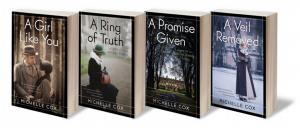
Now to see how one of our favorite authors uses hashtags – Michelle Cox at @michellecoxwrites Michelle’s A Promise Given won the Chanticleer Mystery and Mayhem Grand Prize along many other awards.
Notice how she uses little known hashtags all the way to a broader net with #DowntonAbbey #Chicago #MissFisherMurderMysteries and then associates her brand (#HenriettaAndInspectorHowardSeries) with the other hashtags such as #mustread #booktofilm and so forth.
This in an introductory blog post to hashtags. Remember that following a hashtag is like searching for someone or something. Just type your hashtag into the Search text field on the social media platform that you are posting on.
Give it a try! Try it! You’ll like it! – Kiffer
Chanticleer Reviews social media handle is @ChantiReviews The hashtags we commonly use are: #CIBAs #ChanticleerFamily #ChanticleerRReads and the CIBA Divisions such as #CYGNUSAwards @MandMAwards and so forth.
HANDY LINKS – Chanticleer Reviews Tool Box Series
Click on these links to blog posts on the Chanticleer website for more information on how to increase online book sales:
Thank you for reading this Chanticleer Writer’s Toolbox post on Marketing and Book Promotion to Increase Online Book Sales.
Stay tuned for our next post on the How to Increase Online Book Sales series.
Also, we will continue to post the 2019 CIBA Finalists, so please stay tuned.
And, we will have new writing craft posts from top editors coming your way to keep you writing and editing during these unprecedented times.
We encourage you to stay in contact with each other and with us during this stint of practicing physical distancing to prevent the spread of COVID-19.
Let us know how you are doing, what is going on where you live, how are you progressing on your writing projects.
I invite each of you to join us atThe Roost– a private online Chanticleer Community for writers and authors and publishing professionals. You are welcome to email me for more info also.
We are active onFacebook,Twitter, and Instagram. You can find us by using our social media handle @ChantiReviews
Minimize physical contact! Maximize social connecting!
Hindenburg Systems is holding a LIVE ZOOM WEBINAR with a Q & A Session just for Chanticleerians!
LEARN FROM THE BEST! – Hindenburg Systems
Creating a podcast with a smart phone! Anywhere!
Their webinars are always solidly booked. I should know because I have tried to login on several webinars only to see that it was filled to capacity on ZOOM. So, I asked if they would be so kind as to teach this class just for Chanticleer Reviews subscribers. And Hindenburg Systems said YES!
The WEBINAR is FREE, but you must register to get the ZOOM link and password.
You must RSVP to me ASAP at KBrown@ChantiReviews.com
I will then email to you the ZOOM Meeting Room ID and Link.
Don’t Delay! Reserve Your Spot Today!
There is limited capacity for this LIVE ZOOM WEBINAR!
TOPIC: HOW TO MAKE and EDIT a PODCAST
Date: Thursday, May 14, 2020
Time Zones: 11:30 am (Los Angeles) 1:30 pm (Chicago) 2:30 pm (New York) 7:30 pm (London) 8:30 pm (Copenhagen)
The Podcast Webinar will be held at 11:25 a.m. to 1:25 p.m. Pacific Coast Time, Thursday, May 14.
Length of Time: One hour plus LIVE Q & A
Description: This 1-hour Hindenburg Journalist PRO live training will cover:
RECORDING
Yourself
Yourself and a co-host on location
Yourself and an interviewee Online
Post-production SOUND
Working with EQ (equalizer)
Noise reduction
Post-production EDITING
Removing the Unwanted
Grabbing Soundbites
Add Music and Sound
PUBLISHING
Upload the final podcast to a Podcast Host
Who? What? Where? and How?
Q and A Session 15 – 20 minutes of open Q&A at the end
What you will need to view the LIVE ZOOM WEBINAR?
a laptop, desk computer, or a smart phone. Again, this is a FREE WEBINAR.
But you do need to email me to receive the link.
LEARN FROM THE BEST
This webinar will be taught by Nick Dunkerley, Creative Director and Founder of Hindenburg Systems, from Copenhagen, Denmark. He is also a Radio Journalist for the Danish National Broadcasting Corporation (16 years of experience in public radio broadcasting) and a Sound Engineer.
If you would like, after viewing the LIVE webinar, then Hindenburg will email to you the video of the webinar–just for those who logged in LIVE! If you are like me, it will take a couple of times to absorb the technical bits. Having a video to watch again will be helpful!
And Hindenburg Systems provides more in-depth tutorials for FREE if you want to dive in deeper.
Hindenburg Systems PRO is used by Stanford, Berkeley, Duke, Penn State, Harvard universities along University of Iceland, Whitman College and others. HS is also the system of choice for U of Copenhagen, Danish School of Journalism, UMEA of Sweden, London School of Economics, etc.
Chris Mottes, CEO, teaching a session at Harvard Universty.
Hindenburg Systems PRO is also the choice for Doctors without Borders, Greenpeace, and many other organizations that depend on podcasts in remote areas to get their messages out.
Build your podcast on one of the most trusted platforms on the planet—Hindenburg Systems
RESERVE YOUR SPOT TODAY for the HOW TO CREATE and EDIT a PODCAST by emailing Kiffer at KBrown@ChantiReviews.com
We encourage you to stay in contact with each other and with us during this stint of practicing physical distancing to prevent the spread of COVID-19.
Let us know how you are doing, what is going on where you live, how are you progressing on your writing projects.
I invite each of you to join us atThe Roost– a private online Chanticleer Community for writers and authors and publishing professionals.
We are active onFacebook,Twitter, and Instagram. You can find us by using our social media handle @ChantiReviews
Minimize physical contact! Maximize social connecting!
Tips to Selling More Books Online from Kiffer Brown
Part Three
Keep on Writing! You need a back list of books to in order to do real promotion efforts such as using BookBub or Book Funnel where you give away (or for 99 cents) the first in a series to get readers hooked into your series and your works. These platforms do a lot of marketing and have subscribers that do email blasts promoting books that they accept along with an active web presence along with professional search engine algorithms (Google, Bing, Firefox, etc.).
Published a short story or novella to give away on Bookbub or Book Funnel– a prequel perhaps to get readers hooked. Robert Dugoni did this with The Academy that comes in at 44 pages. This is a great way to hook readers into your character. Or Hugh Howey’s Wool that came in at 12,000 words (60 pages). Make sure that the cover is strong and compelling.
Yet another short story that launched an author’s career is The Witcher, a short story by Polish author Andrzegj Sapkowski in the late 1980s. Fast forward to 2020 to see his works turned into the The Witcher TV series on Netflix. The company said the series with its 76 million households was the most watched television series on Netflix. I will not even go into Fire in the Hole short story series by Elmore Leonard launching the Justified TV series.
Geralt of Rivia – The Witcher
Ann Charles, USA Today Bestselling author, supplements her five (at my last count) novel series with short stories. Some are seasonal (winter holidays, Halloween, summer reads). Ann says that it is a great way to hook new readers.
Ann Charles with her famous violet boots!
ALL social media posts, Tweets (Oh how I despise clicking on a tweet to just ending up on an Amazon selling page!– How rude!) guest blog-posts, emails, ads, marketing materials should direct readers to your website –NOT to the Amazon page where your book is for sell. Or let me put it this way: Your Website is Your Internet Business Portal. Amazon is not.
Meanwhile, get your books out on as many platforms as possible and create links on your website to each selling platform. Give your readers a choice of where to purchase your work.
Bookchain.ca— securely sell ebooks directly from your website and receive the largest amount of royalties possible. Funded by Canada Media.
PublishDrive – E-book, audio, print books. To reach global markets and the Asian markets. REMEMBER that there are more Asians who speak English than North Americans or United Kingdom people who speak English. PublishDrive is based out of Budapest, Hungary. They have a great relationship with CCP’s (China) Amazon equivalent. They also coordinate with Amazon and GooglePlay. They have worked out many of the bugs that they had early on.
LuLu.com – retail distribution to 40,000 retailers, schools, and libraries. Based in North Carolina. They restructured and reorganized. May 19, 2019 LULU sent out a press release stating that they have paid out more than $100 million US dollars in royalties to authors.
Ingram – based in Nashville, TN Ingram Content Group has the publishing industry’s largest active book inventory and Ingram is the world’s largest wholesale distributor of books.
Scribd – Online subscription base — the Netflix of ebooks and audio-books
Google Play – Billions of Users ( Don’t overlook this market)
Amazon – Kindle (nuff said)
KOBO – ebooks and audiobooks to reach markets outside of North America such as Europe, Japan, — based in Japan and Canada.
Barnes & Noble
Smashwords.com – one of the first platforms for selling self-published books – 2008
Payhip.com – based in London, U.K. integrates blogs, ebooks, merchandise
Books.Apple.com
Audible.com for audio books
tolino – mytolino.com – German based with Global Reach. PublishDrive lists Tolino as one of their selling platforms that they coordinate with.
The exception to this is if your book is participating in Amazon’s KDP Select program. This program grants Amazon exclusivity to the books that are enrolled in it.
Interesting to Note: Beyond being the world’s preferred common language, English is also an Asian language in both a demographic and an official sense. Asia has approximately 800 million English speakers, which in effect means it has far more English speakers than the entire Anglosphere. ABC News Australia
Make sure that each one of your selling platforms’ book pages’ information is current and compelling to read.
Pay attention to BISAC codes, meta-data, tagging, and other digital information describes your work on the Internet. Each code does matter! Link below.
The COVER! Again — the cover must compel your targeted reader to click on it in less than three seconds. Make sure it is powerful! And BookBub is ALL ABOUT the COVER. If you want to get considered for their program, make sure that your cover is in tip-top form. Good enough will not do.
WEBSITE Housekeeping
Make sure that all the platforms where your books are for sale have working links.
Below is a copy and paste of how award-winning author of fantasy fiction, Susan Faw, does this:
Or international bestselling author J.D. Barker’s website’s
2. Have you updated your website with your latest awards, book blurbs, reviews, honors, and accolades and happenings?
3. Are you keeping your website current with what you are working on—your work in progress? Your own contests events and the winners? Your book club appearances? Your ZOOM events? Your working links to your social media pages? IS your SUBSCRIBE to AUTHOR’S NEWSLETTER easy to use or does it ask for to much (I run into this all the time–then I pass on subscribing).
4. Have you included and listed where and when you have been interviewed, blogged? podcasted? ZOOM chats/rooms? Facebook events?
5. Do you have a section that allows your readers to become acquainted with you? Do you like board games? Do you paint? Do you grow lavender? Do paint action figures? Do you love to bake? Are you a photography buff? Does your photo and your bio description reinforce your author branding?
KIFFER’s advice: Remember that you can sell a short story or novella for 99 cents or a full-fledged novel for 99 cents.
Think about what kind of backstory that is in your novels that you could turn into a short story to use as another prong of your marketing and promotion strategy. Potential readers may be more apt to spend time reading a short story to try out a new author than committing to a novel...just something to thing about. Click here to read more on Short Stores and having an author career.
Thank you for reading this Chanticleer Writer’s Toolbox post on Marketing and Book Promotion to Increase Online Book Sales.
Part 4 in the How to Increase Online Book Sales series will address Hashtags and Social Media.
Also, we will continue to post the 2019 CIBA Finalists, so please stay tuned.
And, we will have new writing craft posts from top editors coming your way to keep you writing and editing during these unprecedented times.
We encourage you to stay in contact with each other and with us during this stint of practicing physical distancing to prevent the spread of COVID-19.
Let us know how you are doing, what is going on where you live, how are you progressing on your writing projects.
I invite each of you to join us atThe Roost– a private online Chanticleer Community for writers and authors and publishing professionals. You are welcome to email me for more info also.
We are active onFacebook,Twitter, and Instagram. You can find us by using our social media handle @ChantiReviews
Minimize physical contact! Maximize social connecting!
How to Increase Online Book Sales – Part 2 by Kiffer Brown
I receive several emails a week from authors wanting to know if there is one thing that they can do to increase book sales. Many confess that they despise spending time that they could be writing on “marketing tasks” and abhor the idea of “wasting time” on social media.
The Attack of Social Media – sometimes I feel this way…
I get it. I truly do.
However, as with any product, your books must have a marketing and promotional strategy if you are going to increase sales. Participating in social media is a must in just about any product marketing strategy.
J.D. Barker, master of suspense and international best-selling thriller author and whose books are under contract for TV series and movies, reminded us at the Chanticleer Authors Conference,
“Books are products—products to be sold.” – J.D. Barker
If you want to make a living as an author, never forget those simple words from J.D.
At CAC 19, J.D. shared with us his very structured plan that he developed for launching his first novel. We hope to have him back soon.
JD Barker presented at CAC19
A successful marketing and promotion plan is part data driven, part art, and part luck. And you know the old saying that, “Luck is Opportunity meeting Preparation and Planning.” Your job is to write the best work possible, promote it like an expert guerrilla marketeer, and, of course, build your brand as an author. Easy Peasy. Well, no. But if you do, and one day the stars align, and those days do happen, you will be ready. And remember your plan doesn’t have to be perfect. Every little bit helps and builds.
The main thing is to get started as another one of my favorite authors says.
Whatever you can do or dream you can, begin it. Boldness has genius, power, and magic in it. ~Goethe
Your brand and book marketing strategy should be a multi-pronged approach that is consistent and plans for at least three years into the future. You can always pivot if needed.
Remember that Budweiser, Pringle Potato Chips, Heinz ketchup, Reese’s Peanut Butter Cups, and others pay the $5.6 million dollars for a 30-second ad in the 2020 Superbowl just to keep their brands in your Top-of-Mind associations.
Your marketing and promotion strategy is to keep your brand (author name) and products (books) promoted with magazine articles, interviews, blog posts, social media posts, old-school marketing materials, graphics and visual images, etc. on a consistent basis with a few “major event promotions” throughout the year for content and P/R generation.
Keep that $5.6 million dollars per 30-seconds in mind the next time you think that you are wasting time promoting your brand and your work on social media. And like the Superbowl ads, your social media posts must be compelling to stand out in a crowded field.
Whether or not you are aiming to go the traditional publishing route or self-publish, building your brand and book promotion strategy is key to have a successful writing career. Having a brand and marketing strategy will open many more possibilities and doors for you.
Here is an all-too-familiar scenario that I have heard again and again from literary agents (mostly when we are having drinks together in the evening after book expos or trade shows):
The conversation from the lit agent (no pun intended) generally goes something like this:
I just read this compelling manuscript. I thought that it might have potential (as in commercial potential because that is what pays the bills). So, I got online to see what kind of digital footprint the author has. Crickets. The website’s last blog post was eighteen months ago. I clicked on the Facebook page–no fan-base or street team. Twitter was just re-posting of posts that have nothing to do with other authors in her genre or of interest to potential readers…and Instagram was the same. So, I guess I will have to give this manuscript a pass. It seems to me that the author just isn’t serious about having a writing career and I don’t have the time to get her social media platform up to speed while shopping the manuscript.
As opposed to this rare excited version of a lit agent discovering the magical gem of great writing and serious promotional efforts that I did have the opportunity to hear (and drink a celebratory glass of champagne with):
Oh my god! I just read this compelling manuscript. I thought that it might have potential. So, I got online and JACKPOT! This author is doing everything right to reach her target market. Her marketing strategy will make it so much more easier for me to sell the book to _______ (insert publisher here). She has a lively website that is current and up-to-date. I saw a lot of consistent activity on her author Facebook page. Her Instagram posts are subtlety promotional. Perfect! And I see that she has a calendar full of scheduled events. It is so rare to find this combination of talent and business sense.
Now I understand that some of you will say, “Au contraire, mon ami! If I self-publish, I will be the bane of literary agents. Lit agents will not touch self-published authors.” I hear you mumble to yourself.
As for the disbelievers who think that self-publishing makes you untouchable to literary agents, I will use J.D. Barker as one of the tried and true examples of disproving that is old advice from before 2010. What a difference a decade makes.
J.D. Barker successfully published his debut novel as an indie and sold enough copies to land on the radar of the traditional publishers in a BIG way including seven-figure advances, two feature films, and a television series.
For now, please bear with me as I go off-topic for a bit… for those who are familiar with me, you probably have come to expect this wandering around bit on my part.
SHORTS – (a prelude to Part Two — How to Increase Online Sales)
Even if you are planning on going the traditional publishing route and not self-publishing, you will have to create a social media platform and a brand. Remember the book and the film Julie and Julia by Julie Powell. She is an inspiration to bloggers everywhere. Her book was basically a compilation of her blog posts.
Julie Powell–inspiring bloggers everywhere!
Hugh Howey self-published the science fiction blockbuster short story Wool – and Simon and Schuster picked up his omnibus of short stories. Howey is now sailing around in the South Pacific on his custom yacht as I write this. (I did have a chance to meet him several times before he embarked– he is a really nice guy.) Of course, everyone thinks that Howey was an overnight success. It only took him ten years of writing consistently for one short story to take off and create a fandom for all of his works.
Hugh Howey, author of WOOL
Andy Weir self-published his debut novel, The Martian. He said “I was writing all sorts of stories. I had three different serials going, and random short stories that I would post. I just kind of wrote whatever I wanted, and ‘The Martian’ was just one of the serials, but it was the one that the readers clearly liked the best, and so that helped encourage me to write it more than the others,” Weir told Recode.
It took Weir a long time to get his writing career off the ground. He even took several years of as software programmer to work on his writing, but then had to go back to programming until The Martian took root and agents were contacting him about publishing deals and movie deals.
As Jerry Macquire said, “Show me the money.” In the publishing industry that equates to copies sold and your author brand.
CIBA SHORTS
We became so excited about Short Stories from writing this blog post that we decided to finally offer a CIBA Book Awards division. We have received many requests for an awards program for just for short stories, novelettes, and novella. So without further ado… The CIBA Shorts!
Michelle Cox, a Mystery & Mayhem Grand Prize Winner, shares her strategy for promoting her well-received Henrietta and Inspector Howard mystery novel series.
Michelle says, “I spend five to seven hours a day doing marketing and PR—anything from writing the blog or the newsletter or articles or interviews, taping podcasts, setting up events, answering email, attending to social media, etc. It’s really a full-time job, though, sadly, the actual writing, the part I love, is the part I get to spend the least on.”
Award-winning mystery author, Michelle Cox
Michelle continues:
All marketing is pretty elusive, isn’t it? It’s a constant process of throwing things at the wall and seeing what sticks. It’s also important to remember that what works for one person, might not work for everyone. It’s not an exact science. If it were, we’d all be rich!
But, in general, here are some good marketing tips that I have found to work:
Try to figure out where your readers are. Most of my readers, for example, are on Facebook, so that’s where I spend most of my social media time.
Think of yourself as a brand and try to match your posts accordingly. I post things about myself or the book or writing, but mostly old recipes, period drama news, or old stories from the past (which constitute my blog).
Also, I’m very careful never to post anything religious or political. This is a business, and the more you see yourself that way and follow basic business protocols, the more successful you’ll be.
Try to build your newsletter list by offering a freebie (such as free story, writing tips, a webinar, a prequel). Personally, I do it by running contests with really big prize packages. I make sure to state that the contest winner will be picked only from my newsletter subscribers. I pay a designer to create a beautiful graphic of the prizes, post it on Facebook, and then boost the post. Not only does this get me a lot of new subscribers (sometimes up to 1,000!), but it exposes the series to new readers as well!
Build your network.Join online author groups (I am part of a fabulous private FB group organized by my publisher, She Writes Press. We all share ideas, marketing tips, and offer support and advice, especially to the newer authors just coming on board. It’s a collective wealth of information.) or real-world groups in your area. Don’t be jealous of the success of others, but help each other as much as possible. As my publisher, Brooke Warner has said, “There’s room for everyone at the table.”
Show up at other authors events, write reviews, help promote whenever possible. Go to conferences to meet not just readers, but other authors who can potentially help you. Remember that you are a business, and you need to do work within your community to begin standing out.
You can discover more Book Marketing and Promotion Gems by reading Sharon E. Anderson’s 10 Question Interviews blog posts series that can be found on the Chanticleer Reviews website.
The latest interview is with the CYGNUS Grand Prize winner, J.I. Rogers. Rogers discusses her marketing tips and her Patreon marketing strategy. Click here to read.
Please stay tuned for Part Three of How to Increase Online Book Sales by Kiffer Brown
HANDY LINKS – Chanticleer Reviews Tool Box Series
Below are links to blog posts on the Chanticleer website that have more information on the above points:
Thank you for reading this Chanticleer Writer’s Toolbox post on Marketing and Book Promotion to Increase Online Book Sales.
We do a post (SOON) about book selling and distribution platforms – increasing your target market globally.
Also, we will continue to post the 2019 CIBA Finalists, so please stay tuned.
And, we will have new writing craft posts from top editors coming your way to keep you writing and editing during these unprecedented times.
We encourage you to stay in contact with each other and with us during this stint of practicing physical distancing to prevent the spread of COVID-19.
Let us know how you are doing, what is going on where you live, how are you progressing on your writing projects.
I invite each of you to join us atThe Roost– a private online Chanticleer Community for writers and authors and publishing professionals. You are welcome to email me for more info also.
We are active onFacebook,Twitter, and Instagram. You can find us by using our social media handle @ChantiReviews
Minimize physical contact! Maximize social connecting!
As many of you know, we announce the coveted First Place Category Winners and Division Grand Prize Winners of the Chanticleer International Book Awards on the Saturday evening of the annual Chanticleer Authors Conference (CAC). CAC hosts the CIBA banquet and ceremony at the luxurious Hotel Bellwether, located on Bellingham Bay, Washington state. Attendees hail from around the globe and across North America.
CAC20 was scheduled to happen the weekend of April 17-19, 2020 with the Master Classes scheduled for Thursday, April 16.
Because of the COVID-19 pandemic, CAC20 has been rescheduled to September 4 – 6, 2020 with Master Classes to be held on Thursday, September 3. The CIBA Banquet and Ceremony is scheduled for Saturday, September 5, 2020.
Alas, now with the highest spikes in new COVID-19 confirmed cases, we have decided to go VIRTUAL with ZOOM
NEW DATES: Tuesday, Sept. 8th daily through Sunday, Sept. 13th, 2020.
This post was updated on July 14, 2020. Kiffer Brown
We rescheduled the conference on March 11, 2020 and notified registered attendees by email. We then announced the postponement on the Chanticleer website, social media, and with a direct email blast.
If you have ever attended a CIBA banquet and ceremony, then you know already just what a special evening of celebration it is. Many of you are looking forward to this evening and want to experience the anticipation that the gala affair brings to the Chanticleer Writing Community.
CIBA Grand Prize Winners
We have received many emails and messages requesting that we wait to announce the CIBA winners until the planned September gala evening on scheduled for Saturday, Sept. . We have also received a few emails requesting that we announce the winners closer to the originally scheduled event. DATES HAVE BEEN CHANGED as of July 9, 2020. The conference and ceremonies will be held VIRTUALLY due to the recent high spike levels in the new confirmed cases of the coronavirus. New DATES are: Tuesday, Sept. 8th daily through Sunday, Sept. 13th, 2020.
This is what we decided to do:
All CIBA Semi-Finalists are recognized at CAC and at the CIBA banquet and awards ceremony. This year we have added to their recognition by promoting the Semi-Finalists in the Spring Issue of the Chanticleer Reviews magazine that will feature international bestselling thriller author Robert Dugoni and Dr. Janice S. Ellis, Journey Grand Prize Winner and Civil Rights Journalist. (Available for purchase in print and digital on Wed. April 20th) – visit this page on the website for more info if you have not already subscribed.) We will also recognize any 2019 Semi-Finalists in attendance at CAC20 in September at the CIBA banquet and ceremony.
Read the New Information Below about the 2019 and 2020 CIBAs!
The 2019 CIBAs received an unprecedented number of entries making this book awards program even more competitive. More entries along with more competitive works makes the final rounds of judging even more demanding. The judges have requested a new level of achievement to be added to the rounds to acknowledge the entries that they deemed should receive a high level of recognition.
New Information: We decided that this was the time to incorporate the new level – The FINALISTS – as requested by the CIBA judges. This new level will be incorporated into the 2019 CIBAs Levels of Achievement. (See the info-graphic below.)
The 2019 CIBA Finalists for each division will be announced over the next few weeks. The CIBA First Place Category Winners, Division Grand Prize Winners, and Overall Grand Prize Winner will be determined from the CIBA Finalists and announced from n September 5, 2020 at the CIBA Banquet and Ceremony scheduled for Sept. 5, 2020 during CAC20. DATES HAVE BEEN CHANGED as of July 9, 2020. The conference and ceremonies will be held VIRTUALLY due to the recent high spike levels in the new confirmed cases of the coronavirus. New DATES are: Tuesday, Sept. 8th daily through Sunday, Sept. 13th, 2020.
Each CIBA Division will have its own digital badge and badges for print! Links to badges will be available in the FINALISTS official notification email. An example of the badge is below for the CYGNUS Book Awards division.
New Information: The NewDeadline Dates for Submissions into the 2020 CIBA Divisions have been changed to give the judges more time to work through the entries and allow more time for tabulation. We hope that this will give the 2020 CIBA participants more time to consider attending the awards banquet and ceremony. (CAC21 is scheduled for April 16-18, 2021)
New Information: New CIBA Divisions have been added!
New Division for Fiction: The Mark Twain Book Awards for Satire and Allegory Fiction.
New BOOK AWARDS for FICTION BOOK SERIES: As requested, the CIBAs now included the Fiction Series Book Awards.
And Three New Non-Fiction Divisions have been added for the 2020 CIBAs. Be sure to visit the web page with the new divisions.
We are accepting entries into the 2020 CIBAs! Don’t Delay! Enter Today!
So without further ado, we are honored to announce the next round in the 2019 Chanticleer International Book Awards – The CIBA FINALISTS!
Below is an info-graphic of the CIBAs Levels of Achievement
There are 17 divisions in the 2019 CIBAs. We will announce each division’s FINALISTS during the next few weeks starting this weekend – April 18, 2020.
Be sure to stay tuned for the 2019 FINALISTS Announcements!
A note from Kiffer and Sharon
It seems to us that everyone is and has been overwhelmed with the general scrambling around to try to batten down the hatches for the storm named COVID-19 while trying to make sense of what is happening on different fronts, taking care of loved ones, along with trying to procure supplies for self-isolation. Many of us are working remotely, some of us have to home school children, and if you are like me you find yourself cooking and cleaning up more than e-v-e-r. Sheltering-in-place takes a lot of energy and focus, wouldn’t you agree?
We thank you for patience and understanding during these unprecedented times. It is much appreciated by Sharon and me and the entire Chanticleer Team of Editors, Reviewers, CIBA Judges, Contributors, Graphic Designers, Student Interns, Admin Assistants, and Andy – the wizard who heads up all of the “under the hood technology.”
We encourage you to stay in contact with each other and with us during this stint of practicing physical distancing to prevent the spread of COVID-19.
Let us know how you are doing, what is going on where you live, how are you progressing on your writing projects.
I invite each of you to join us atThe Roost– a private online Chanticleer Community for writers and authors and publishing professionals.
We are active onFacebook,Twitter, and Instagram. You can find us by using our social media handle @ChantiReviews
Minimize physical contact! Maximize social connecting!
No. 1 What to Do If You Think Your E-Book Sales Should be Higher than They Are
(Scroll down for more helpful tips, tools, and links).
If you think that you have all of your selling platform pages in order and updated with the reviews, meta-data, tags, BISAC codes, etc. and your sales are still lackluster, you may want to consider “re-merchandising” your book. This is what the big book publishers do when sales goals are not being met—they re-merchandise.
Here is an example of one of my favorite top selling authors best-selling books and its cover transformations:
Notice all the different changes that Random House incorporated… color, mood, characters, details… and there were several other renditions in between until RH apparently got the right mix to appeal to the novel’s targeted market.
This is just how important a book cover is to increasing sales online and in print.
Especially, if your book has been out for awhile, it may be time for a new look. It is time to refresh!
REFRESH and RE-MERCHANDISE with a new cover. To repeat myself, a compelling cover is the most effective way to increase sales other than word-of-mouth. A compelling cover can help to create the coveted word-of-mouth buzz.
Why is the cover the most important publishing tool for self-published and Indie authors?
The cover is what makes a reader who has never heard of you or read your other works pick up your book, or click on the link, or choose your book’s digital thumbprint on Amazon’s Customers Who Bought This Item Also Boughtcarousel of book covers.
How to Make Your Book Discover-able to Potential Readers
Book covers are so important that major booksellers (Walmart, yes, Walmart is a major bookseller including ebooks and audio-books) demand having the final decision in the cover designs of books that they decide to carry so that the covers will appeal to their particular customer demographics.
In this 3 to 5 seconds, your cover must communicate quickly and effectively the following 5 Elements:
The Genre(Historic? Thriller? SciFi? Romance? Cozy Mystery? Literary? etc.)
The Primary Targeted Age Group(Adult for the Trade? Guys? (think Tom Clancy) or Gals? (think Rebecca Wells), General Audience? Young Adult? Middle-Grade? Clean reads market? (think Jan Karon) etc.)
Place or Cultural Reference(India? New York? Africa? Outer Space? California? Paris? Russia? Japan? etc.)
An effective book cover will convey all of this information (or enough of it) to capture a potential reader’s attention in less than 5 seconds—three seconds really. It will garner enough interest to have the potential reader to pick it up or click on the link to find out more.
If it does not convey the 5 elements in less than three -to-five seconds, your book is probably invisible to potential readers. And yes, that is a publishing industry’s insider’s term.
Invisible books rarely sell.
Effective covers sell the first book. The content between the covers sells the second book. And you can quote me on that.
Drilling Down on Key Concepts in Book Cover Design (digital and print)
Genre placement – the cover should immediately (less than 3 seconds) convey the genre of the book. Is it an intense suspense/thriller novel? or Historical Fiction? Or How-To?
Category within genre – is it Regency Romance? or Contemporary Women’s Fiction with Southern elements?
Does the color scheme work with the genre?
Do the design elements convey an idea of what the story is about?
Is the cover appealing to the readership that you are targeting?
Is it dated? Covers can and should be refreshed and tweaked at least every two years.
Covers should work whether they are enlarged to be 50 feet tall to hang from scaffolding at tradeshows or whether they are reduced to the size of a thumbnail. Keep in mind that cover design may be slightly different for digital and for print. Slightly.
A book cover is its must important piece of retail real estate. Every inch should be considered for maximum visual and emotional impact–even if it is digital!
Make sure that the entire book’s “packaging” (typography, formatting, fonts, and layout) is co-cohesive and that all of the elements are complementary to each other.
Color—use color to convey emotion, time period, genre, theme, etc.
Remember that it doesn’t matter how much time and money that you spend on getting your book in front of potential readers. If the cover isn’t engaging to the reader, the reader will not pick it up to look at the inside or read the back cover blurb, or click on the image for more information, or read your wonderful synopsis and reviews. All of your time, money, and effort will be for naught if your cover’s real estate is not working for you.
Covers should convey an emotion first. The cover should have a visual impact that grabs the potential reader and makes him/her want to know more about what is inside. The cover must be enticing!
For more information and examples, I invite you to visit this post devoted to cover design:
When was the last time that you checked out your Amazon, Kobo, B&N, Bookchain, Smashwords, PublishDrive, etc. page(s)?
2) Visit your Selling Platform Pages and Tidy Them and Add Some New Interest!
Most importantly, do you have thelatest coverof your title uploaded?
I see this all the time, the author sends me her latest cover (because as you know, I am all about the cover!) but then for some reason fails to upload the dazzling new cover to the title’s selling pages on the different platforms.
Update your selling pages with the latest tweaks to thetitle’s description.Is the description as compelling as it can possibly be?Amp it up!
Make sure that every word of your book’s introduction/marketing blurb (that first paragraph that comes after the title and to the right of the cover) is effective—especially the first ten introductory words.These first ten words are “crawled” by the online sales platform’s search engine whenever a reader does “a search.” If it is a series or you are planning to make the work a series, then be sure to conclude the book’s marketing blurb with this information.
Have you listed the title’s latestawards and kudosnear the end of the description to seal the deal?
Have you updated the reviews in theEditorial Reviewssection? Add new ones and author blurbs (recommendations) in the Editorial Reviews section.
Sixty-one percent of customers read Editorial Reviews before making an online purchase (Harvard Business Review)
Editorial/Trade Reviews set the tone for Customer Reviews – which is (from what I hear) quantity is more important that than quality (number of stars). 100 customer reviews tend to be the magical number.
The Editorial Reviews section is where blurbs of reviews from Chanticleer, Kirkus, Publisher’s Weekly should be posted. Make sure that these are updated, moved around, added to, and refreshed.
Or to that matter, do you have anything in the Editorial Reviews section? If not, you are missing someSEO goodness.
If your books are available in other languages besides English, list the languages in this section.
Is it time to liven up yourauthor bio?Does it reflect the latest YOU? Does it make the reader want to meet you (like at your next book event?) as someone who he/she would enjoy meeting at a cocktail party?
Make sure that yourphoto resonates with readers’ expectations. A great example of this isDiana Gabaldon’sAmazon photo; it is one of her standing in front of the Stonehenge monument with a timeless black shawl wrapped around her. The Stonehenge background hints at the historical/fantastical nature of her works and the opening of her series.
Take a close look at yourAuthor Central photo.If it doesn’t move your author brand forward, take a look through your photographs for one that does. It doesn’t have to be a photo taken by a professional photographer. It does have to have a layering effect and convey your author branding/personality. If you have a photograph that does convey elements of your author branding and is taken by a professional photographer, then that is even better. Here is an example of a professionally taken author photograph that exudes the author’s branding as a post-apocalyptic fiction writer. Notice that the setting and outfit exude the dystopian aspects of hisDeserted Lands series:
In your Author Information section, listany other published worksthat are related to this particular selling page–especially if you have series or multiple titles in the related genre.
While you are on the title’s selling pages, double-check that all thedifferent formatsthat your title is available on in any given platform are available and ready for sale!
Print? e-pub? combo — purchase a print book and receive the digital e-pub version for a discount or for free? (Amazon used to call this package “matchstick” )
Make sure that thelinks to purchase books from your websiteworkand do not go off into cyberspace.
Test your“Look Inside”feature on Amazon and make sure that it works and that it isn’t just opening to the Table of Contents or the front matter of the book.
Double-check yourpricingon each selling platform that the title is available for sale on.Really.
OVERALL
Make sure that your information is up-to-date, fresh and relevant!
Like a well-written book plot, make sure that eachpiece of information on your title’s selling platform moves your book and author brandingforward and into the hands and minds of eager book buyers.
My next posts will be on SOCIAL MEDIA and PROMOTION TIPS for Selling Books ONLINE and New Selling Platforms. So stay tuned…
Our next Editorial Post will be on HOW to DEEPEN PLOTS
We encourage you to stay in contact with each other and with us during this stint of practicing physical distancing to prevent the spread of COVID-19.
Let us know how you are doing, what is going on where you live, how are you progressing on your writing projects.
I invite each of you to join us atThe Roost– a private online Chanticleer Community for writers and authors and publishing professionals. You are welcome to email me for more info also.
We are active onFacebook,Twitter, and Instagram. You can find us by using our social media handle @ChantiReviews
Minimize physical contact! Maximize social connecting!

 Winners and the Grand Prize winner of the OZMA Book Awards for FANTASY Fiction, a division of the 2019 CIBAs
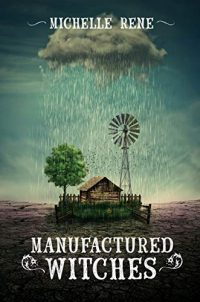
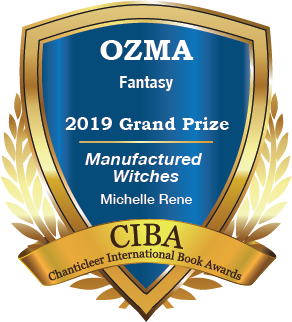
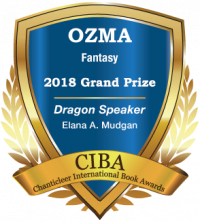



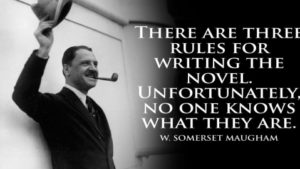



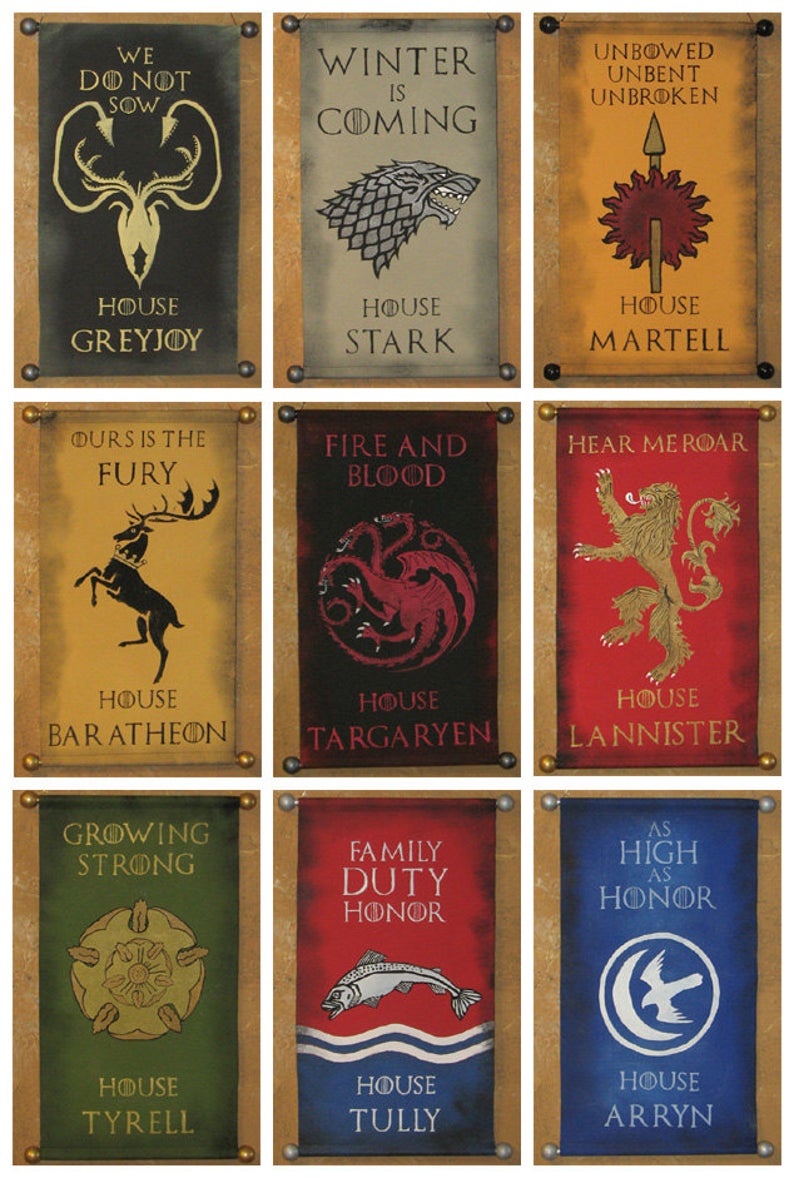

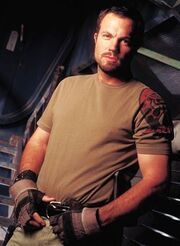



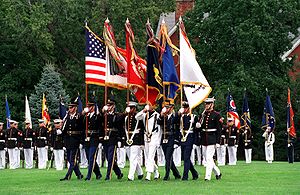
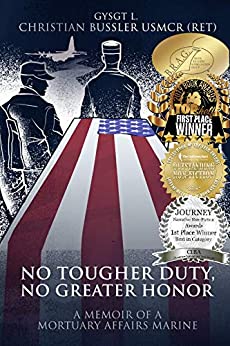 NO TOUGHER DUTY, NO GREATER HONOR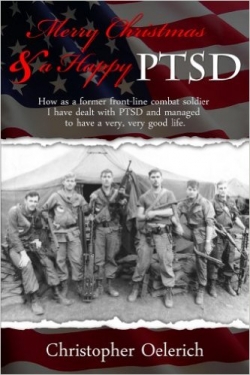
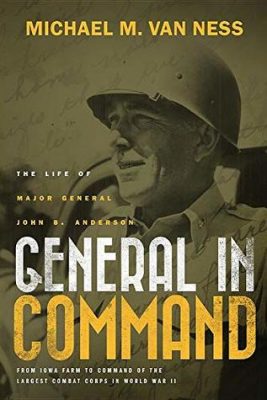
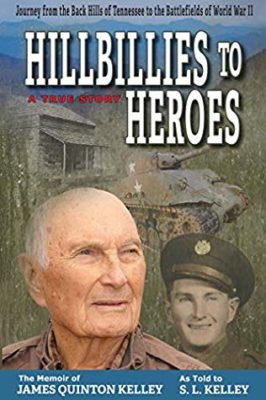
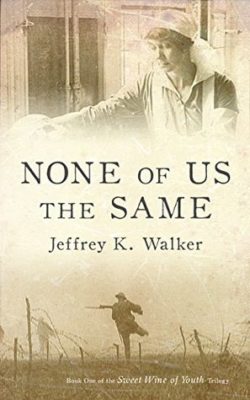








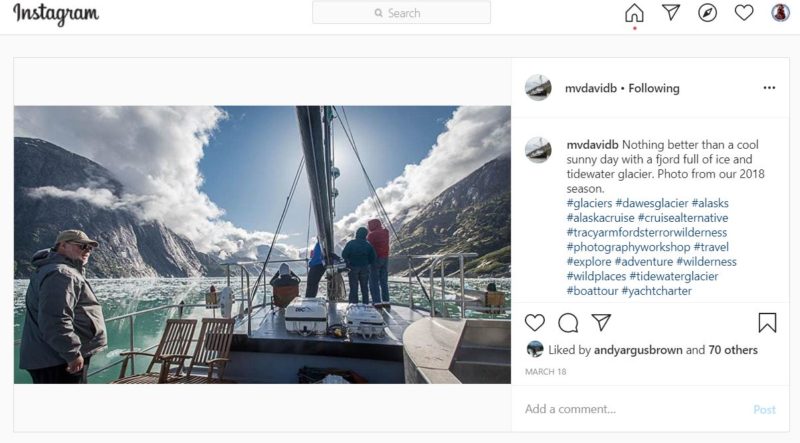
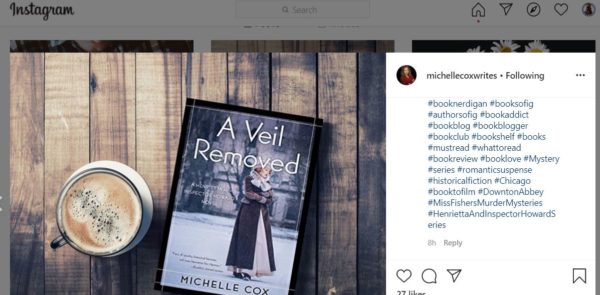



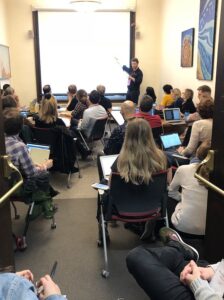

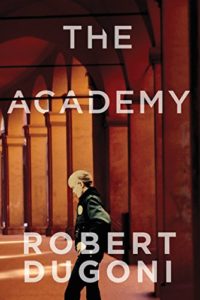


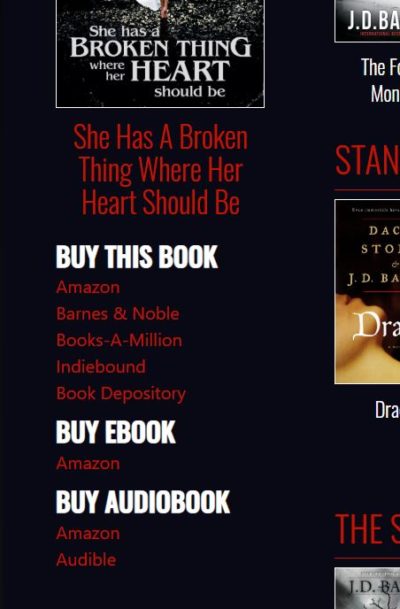




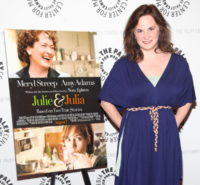

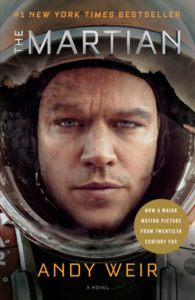

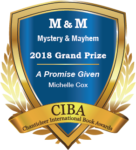 Michelle Cox,