Author: J O’Reilly

  • BROKEN PLACES by Rachel Thompson, a Memoir of Abuse by Rachel Thompson – Child Abuse, Women’s Poetry, Sexual Abuse, Self-Help

    BROKEN PLACES by Rachel Thompson, a Memoir of Abuse by Rachel Thompson – Child Abuse, Women’s Poetry, Sexual Abuse, Self-Help

    While the incidence* of childhood sexual abuse continues to grow, thankfully there are survivors like Rachel Thompson who have conquered the horror.

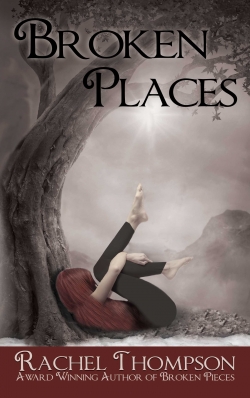
    In Broken Places: A Memoir of Abuse, Thompson conveys the facts and feelings of being an 11-year-old at the hands of a trusted neighbor who turns out to be a pedophile. The book dutifully begins with a “Trigger Warning,” notifying abuse survivors that the subject matter could be painfully harsh.

    Through poems, prose, and reflective pieces written with candor and literary charm, she shares how she coped: retreating to her room surrounding herself with books and music, and feeding her already introverted personality. She rarely went out except to earn good grades or do chores. “Because if I did, I faced the glaring, accusatory stares of his wife and children—as if I were the one who committed such ghastly crimes.” Later, she drank, got high, and considered suicide.

    Not until her thirties, depressed, anxious, and following the birth of a daughter, Thompson sought therapy for the first time after a doctor’s visit left her with a PTSD diagnosis and a prescription for an anti-depressant. Therapy was “life-changing,” leading her to the realization that she, not her abuser, was in the driver’s seat of her recovery. “I love, I breathe, I work, I write, I live. What happened does not stop me.”

    Today, in her fifties, she is an advocate for sexual abuse survivors and runs the Twitter chat #SexAbuseChat. She owns a social media and book marketing company and previously wrote the essay collection Broken Pieces, A Walk In The Snark and the more humorous The Mancode: Exposed.

    A talented writer with a journalism degree, Thompson adeptly plays with point of view employing both first person singular (“I”) to convey her experiences, and first person plural (“We”), perhaps to denote a kinship among survivors: “We are no longer whole—we are bits of cells made up of dread, and fear, and shame. We speak in terms that separate us from ourselves because even now, all these many years later, we don’t want to own what happened.”

    Also, she sneaks in literary gems, like alliteration: “The bad thing takes your brain hostage, fills it with the detritus of denial, becomes dead leaves waiting for the deep scratch of the rake.”

    The only weakness of Broken Places is its arrangement, as it seems like a random assortment rather than an intentioned story. Perhaps this organization, or lack thereof, speaks to the uncertainty Thompson faced during a time in her life that was more about second-guessing and doubting rather than chasing butterflies and riding bikes like little girls that age should be doing.

    Most importantly, the book is recommended reading for adults, college students, and youngsters alike as it serves as the impetus for a much-needed culture shift—telling children that it’s okay to report abuse and for grown-ups to hear them.

    Broken Places: A Memoir of Abuse by Rachel Thompson won 1st Place in the CIBAs 2017 JOURNEY Awards for Memoir. 

    *1 in 5 girls and 1 in 20 boys is a victim of child sexual abuse, according to the National Center for Victims of Crime.

     

  • THE COMPASSIONATE CONSPIRACY by Dr. Phil Johnson, a practical guide to connect the world

    THE COMPASSIONATE CONSPIRACY by Dr. Phil Johnson, a practical guide to connect the world

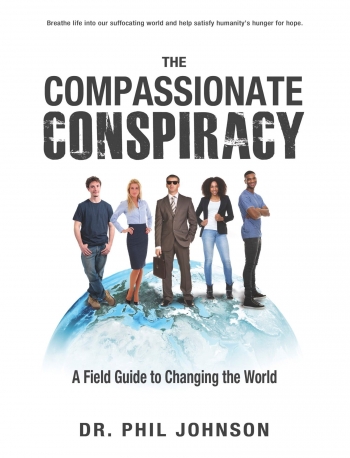
    With all of the texting, tweeting, and tapping we do on our smartphones, it’s easy to get distracted from life’s true meaning. Thankfully, to help us find our way, Dr. Phil Johnson has published, The Compassionate Conspiracy: A Field Guide to Changing the World – an inspirational guide to a purposeful existence.

    A lovely mix of his personal stories, along with well-known song lyrics, quotes, and research on world poverty and hunger, the book helps us answer the age-old question: “Why am I here?” Dr. Johnson also includes writing exercises and quizzes for reflection.

    The impetus for the book came from childhood. With a “calm wisdom” and realist world view, Dr. Johnson’s mother, who coordinated a food pantry for families in need, would spin a globe and pose, “Philip, where shall we go today?” As he took “voyages” around the world to places like Bolivia, Brazil, and Greenland, Philip soon realized he was most fascinated by Africa. Eventually in 2005, he traveled with his wife to Kenya where he contracted malaria and typhoid fever. Fortunately, he was quickly cured, but witnessing thousands of Africans suffering from famine and illness, he asked: “What can I do to make a difference?”

    The Compassionate Conspiracy is his answer to helping us all discover our passions and develop a personal plan to help those less fortunate. Dr. Johnson crafted this practical guide to connect the world. Did you know that the Latin origin of “conspiracy” is conspirare, which means “to breathe together.” He wanted to write a book so people could help others by “learning to breathe together for the common good, to breathe life into a suffocating world.”

    In the Conclusion, he states: “My singular purpose in writing The Compassionate Conspiracy is to spark a movement to achieve that compelling vision. At the beginning of the twenty-first century, I believe we have the wealth, the wisdom, and the will to breathe hope into the global family.”

    With more than 40 years working with corporations like Ford and IBM and with nonprofits like the United Way and the Juvenile Diabetes Research Foundation, Dr. Johnson is no stranger to helping people around the world. On top of that, he is an ordained minister and practicing pastor at the New Day Community Church in Grand Rapids, Michigan. Dr. Johnson participated in major international events, including the United Nations World Peace Conference in Israel in 1999.

    You will see the book is organized into four parts: 1) Our World is in Critical Condition, 2) The Compassionate Conspiracy, 3) the Compassionate Conspirators, 4)  and A Guide to Becoming a Compassionate Conspirator.

    The foreword, aptly written by Dr. Nido Qubein, a motivational speaker, author, and chairman of the Great Harvest Bread Co., starts us off:

    “Remember, life is about choices. Decide here and now that you want to make the world a better place, and build a plan that will take you there!”

    Qubein is also President of High Point University in North Carolina. It would be difficult to put the book down at this point.

    As the author of six previous books, Dr. Johnson is familiar with writing and publishing,  so be sure to get The Compassionate Conspiracy on your bookshelf too.

    Dr. Johnson’s other titles include: Time-Out! Restoring Your Passion for Life, Love and Work (Stoddart, 1992); Celebrating the Seasons with Children (Pilgrim Press, 1984); More Celebrating the Seasons with Children (Pilgrim Press, 1985); And More Celebrating the Seasons with Children (Pilgrim Press, 1986); Goodbye Mom, Goodbye (Welch Publishing, 1987); and The Great Canadian Alphabet Book (Hounslow Press, 1981).

  • LIVE LIFE WITH EASE by Dr. Harish Malhotra, a practical self-help guide on self-healing

    LIVE LIFE WITH EASE by Dr. Harish Malhotra, a practical self-help guide on self-healing

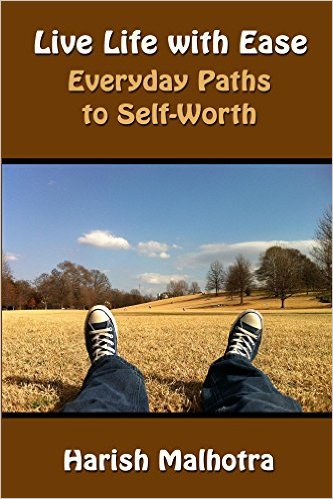
    Readers of Dr. Harish Malhotra’s two previous books (Metaphors of Healing: Playful Language in Psychotherapy and Everyday Life and Pathways to Hope: Innovative Insights for Therapists and Patients) are in for a treat as his third title continues us on the healing path paved with entertaining metaphors. New readers too will enjoy holding Dr. Malhotra’s hand through life’s ups and downs as he takes us on a journey with 55 stories in Live Life with Ease: Everyday Paths to Self-Worth, each tale replete with his amusing touch.

    In chapters like, “Settle Into Your Ideal Lifestyle,” “Pain, Pain, Go Away,” “Overthrowing Fear,” and “The Weight of Eating,” Dr. Malhotra tackles universal themes in a lighthearted, yet practical way. By weaving these humorous metaphors, he blesses us with the way he sees life as we confront fear, worry, addiction, lack of self-worth, sleeplessness, and unhealthy eating.

    Take for example, the chapter “Infatuation,” where Dr. Malhotra advises us to employ the “Sleep on it/24-hour rule.” He compares decision-making to buying a new house – one that seems to boast a gorgeous skyline but is located on a dangerous street. “Let your excitement simmer down before making decisions. Reason may replace infatuation,” he counsels.

    In one of the more playful stories, Dr. Malhotra poses to the reader: “Are you like a fart or a flower?” Despite the silliness, he raises a sincere dilemma: why would we surround ourselves with people who are “toxic” and “seething with resentment,”  rather than those who are “fragrant” with a “pleasant demeanor and gracious words.” Point well taken, Dr. Malhotra, with a nod to our olfactory.

    We have to assume that Dr. Malhotra, a board certified psychiatrist in private practice in Summit, NJ, pulls from his more than 40 years in a white lab coat as many of the sketches include (imaginary?) dialogue between doctor and patient. “Don’t fight the smoke with a sword of worry,” he says to a patient who is anxious about the future.

    Throughout the book’s 304 pages (or 364 pages via e-reader), we feel like he is our own personal guru and we are a better person for it.

    In one of my favorites, “Dating, Inc.” he likens relationships to “Hair Softener or Chewing Gum.” Holding on too tight is like getting chewing gum balled up in your partner’s hair,” he says. “Some hair has to be cut off to get rid of the gum… Some problems in relationships stem from too much contact.”

    Perhaps the book, which makes a delightful gift for a college graduate or a loved one needing inspiration, can best be enjoyed as a bedside reader, referring nightly to the index to locate specific passages in times of stress: “Reframing Problems,” “Risk Taking,” “Welcoming Attitude,” and “Unlearning Habits.”

    For further inspiration, you can see Dr. Malhotra on his YouTube channel, “Helpful Hints for Hangups,” where he acts out the rousing metaphors with members of his family.