Author: J O’Reilly

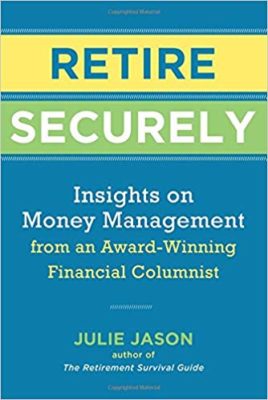
  • RETIRE SECURELY: Insights on Money Management from an Award-Winning Financial Columnist by Julie Jason – Personal Financial Management, Retirement Planning, Budgeting & Money Management

    RETIRE SECURELY: Insights on Money Management from an Award-Winning Financial Columnist by Julie Jason – Personal Financial Management, Retirement Planning, Budgeting & Money Management

    If you’re wondering what the difference is between a Roth IRA and a traditional IRA, then you’ll want to pick up Julie Jason’s Retire Securely: Insights on Money Management from an Award-Winning Financial Columnist. You will be treated to a crash course on financial terms like these and get inside information on saving and investing thanks to scores of conversations she’s had with her readers over the years.

    Plenty of titles on financial planning and investing exist on bookstore shelves, but what makes Jason’s compilation different is that hers is culled from more than 1,000 columns she has written over the years for the Connecticut newspapers, Greenwich Time and the Stamford Advocate. In 2013, King Features syndicated her “Retirement Planning and Investment” column, where she explores topics like 401(k) investing, choosing a financial adviser and how to determine if sending your kid to college is a good value. Jason, who worked as a Wall Street lawyer, money manager, and investment counselor, really knows her stuff: whether it’s unraveling the complicated world of market trends or explaining estate planning, her columns are worth reading and applying to your financial life. Her column has recently moved from King Features to Andrews McMeel Syndicate [Chanticleer Reviews was notified about this change on April 3, 2020].

    “Through my dialogue with readers, I want to share a message of both promise and watchfulness,” she writes in the Introduction. With an easy to follow and conversational tone, Jason invites readers to get financially literate–understanding how to read a mutual fund prospectus, for example. (A prospectus is not literature that you read from start to finish. Instead, it’s designed to protect you, so read it like a warning label on a medicine bottle, she advises.)

    Recognizing that some investors are overwhelmed by financial jargon and the pressure to keep up with the Joneses, she assures her readers that attaining financial security is “a work in progress,” with room for improvement. “I’ve interacted with hundreds of people who wrote to or visited with me to discuss their challenges, concerns, and questions,” she says.

    Our culture’s most significant challenge today, she says, seems to be the pressure Millennials face as they swim in debt. On top of it, Jason points out, this younger generation is in the dark about financial matters. So much so that in 2013, President Obama helped create the President’s Advisory Council on Financial Capability for Young Americans*, designed to educate young people on how to “successfully handle their personal and household finances as they grow into adulthood.”

    Citing statistics, Jason tells us at least half of 18-to 24-year-old adults stated they would have benefited from a high school course on managing their money. Unfortunately, financial literacy isn’t a mandatory class, so the on us falls on parents to approach kids early with guidelines for saving and even borrowing money.

    Because the book idea came from dialogue she had with readers via her column, many of the issues have to do with feeling secure in retirement, as evidenced in chapters like, “It’s Never Too Early for Retirement Planning” and “Understanding the Relationship Between Your W-2 and Your 401(k).”

    We all could take a cue on how to improve our financial know-how, and a number of the columns are especially useful for parents and their children to review at various stages of their financial planning life cycles.

    Lastly, if you’re wondering how republished articles, some from a decade ago, could be relevant today, Jason has taken the time to update some of the columns to keep pace with changes in the market.

    Retire Securely: Insights on Money Management from an Award-Winning Financial Columnist by Julie Jason won First in Category in the CIBAs 2018 I&I Awards for Instructive Non-Fiction.

     

    *The Council officially ended on January 29, 2013: https://www.treasury.gov/resource-center/financial-education/Documents/PACFCYA%20Final%20Report%20June%202015.pdf
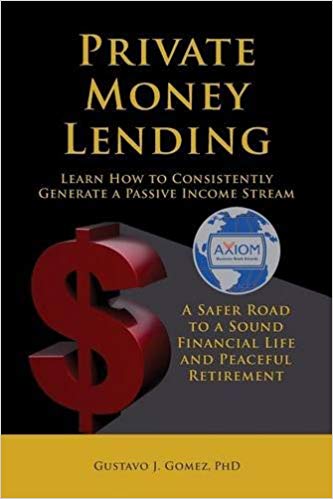

     

  • PRIVATE MONEY LENDING: How to Consistently Generate a Passive Income Stream by Gustavo J. Gomez, Ph.D. – Budgeting & Money Management, Analysis & Strategy, Personal Finance

    PRIVATE MONEY LENDING: How to Consistently Generate a Passive Income Stream by Gustavo J. Gomez, Ph.D. – Budgeting & Money Management, Analysis & Strategy, Personal Finance

    Are you in retirement, or close to it, wondering how you’re going to make ends meet pulling from your portfolio? Well, you’re not alone if you’re staying up at night thinking about how low-interest rates are killing your investments.

    In a practical and easy to read format, Gomez explains to investors the particulars of a little known, yet potentially lucrative investment technique that can handle the ups and downs of the stock market. Unlike stocks, the underlying security of private money lending is a tangible asset – brick and mortar, so there is another layer of protection for you, the investor.

    But what is Private Money Lending? According to Gomez, it refers to a private individual or organization that lends money. Typically, when you’re looking for financing, you would go to a bank. With private funds, on the other hand, you’re going to an individual or organization that specializes in this type of lending. The upside of private money lending is that it’s less regulated, which means less red tape. The icing on the cake, he says, is that these investments have consistently generated 9 to 12 percent returns* – not bad considering stock market investments have averaged closer to 7 percent, and with much more fluctuations. We can’t forget the economic crash of 2008 when many stock market investments plummeted close to 40 percent.

    In a nutshell, amid the 2008 economic crash, the Federal Reserve lowered interest rates to help boost the US economy, the author explains in fluid and well-organized chapters. The general thinking was to reduce interest rates to encourage people to borrow money, who then would go on to buy more products – all good for the American economy. However, those same low-interest rates translated to less growth for those in retirement. Private money lending offers an alternative strategy that could generate a “predictable, safe, and consistent income stream that this low-interest rate environment does not currently permit,” Gomez says.

    No investment comes without risk, Gomez reminds his readers, so his bottom line advice for investors: do your homework (start with this book), find out who is offering the loan, and check they have a good track record.

    Even though the content derives from Gomez’s doctoral research and dissertation conducted at Florida Christian University in Orlando, it’s not academic in style. In fact, you will find it conversational and accessible, with a thorough glossary of terms (e.g., origination fee, negative amortization, and Private Mortgage Insurance) and recommended reading to further your knowledge.

    Whether you’re in your golden years relaxing on a sandy beach or fast approaching retirement, you will want to read Gustavo Gomez’s Private Money Lending: Learn How to Consistently Generate a Passive Income Stream.

    *as of the book’s publishing (2015)


    Private Money Lending Learn How to Consistently Generate a Passive Income Stream won First Place in the 2017 CIBAs for Instruction & Insight!

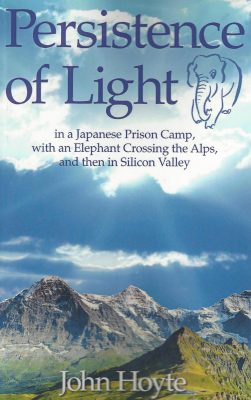
  • PERSISTENCE of LIGHT: in a JAPANESE PRISON CAMP, with an ELEPHANT CROSSING the ALPS, and then in SILICON VALLEY by John Hoyte – Memoir, Travel Adventure, Transformation/Inspiration

    PERSISTENCE of LIGHT: in a JAPANESE PRISON CAMP, with an ELEPHANT CROSSING the ALPS, and then in SILICON VALLEY by John Hoyte – Memoir, Travel Adventure, Transformation/Inspiration

    Reading John Hoyte’s memoir, Persistence of Light, is like sitting around a campfire absorbing stories of adventure, loss, and love – and feeling better for it. With journalistic precision, Hoyte shares both the facts and the emotional impact of his fascinating travels, doing so void of self-pity for his suffering and without self-aggrandizement for his vast achievements.
    Born in 1932 to medical missionary parents (his father, Stanley, was British; his mother, Grace, American), Hoyte enjoyed a vibrant childhood taking nature walks and playing with his five siblings. A pivotal moment came at 8 years old when his parents were summoned to a missionary hospital, 1300 miles away in Lanchow. Hoyte and his siblings ended up in a Japanese internment camp without either parent.

    Despite weeks with little to no food, wearing tattered clothing and walking barefoot (shoes were a commodity), he mustered the energy and the interest to write, sketch and draw – ultimately finding mystery and hope in a world besieged by authoritarian forces. His intense curiosity that percolated as a child, along with his faith in God, leads him on the many adventures he depicts in this thoughtful and exciting memoir.

    The second part of the title “…in a Japanese Prison Camp, with an Elephant Crossing the Alps, and then in Silicon Valley,” encapsulates just a few highlights of the author’s escapades – the most memorable of which was his 1959 trek across the French Alps with an elephant. Fascinated with history, he and college friends from Cambridge embraced the goal of trying to reenact Hannibal’s legendary crossing of the Alps that occurred in 218 BC (in case you don’t know: Hannibal trekked with an army and 37 war elephants en route to attack Rome more than two thousand years ago).

    In Hoyte’s case, they successfully guided Jumbo, a female Asian elephant provided by a zoo in Turin, Italy, from France over the Col du Mont Cenis. Life magazine, which sponsored the trek, published a considerable photo spread of Jumbo and parts of the trek in its Aug. 17, 1959 edition. To this day, Hoyte rounds up his kids and lifelong friend Richard Jolly (who accompanied Hoyte and wrote the book’s Preface) every few years for a reunion hike in the French Alps to celebrate that fateful crossing.

    This exciting, adventuresome spirit lives in Hoyte’s suspenseful storytelling. We learn of other notable moments like when he knew Eric Liddell, the Scottish Olympic runner, who tragically died while at Weihsien, the same internment camp as Hoyte (Liddell’s life is depicted in the 1981 movie, “Chariots of Fire”). Later, at the age of 27, Hoyte landed a contestant role on the American game show, “To Tell the Truth,” and in the mid-1960s, after leaving a corporate job at Hewlett-Packard, he took the leap to start his own company Spectrex in Palo Alto, Calif. Through all of his travels, Hoyte embraces light and color which lends a cheery quality to the book. Each chapter begins with a reference to Isaac Newton’s seven colors of the rainbow. For example, Chapter 4, An Alpine Journey, starts with green, evoking the natural beauty of the Alps.

    In addition to writing, Hoyte enjoys painting, sketching, and drawing and lives in Bellingham, Wash. with his wife, Luci Shaw, a poet. While he dedicates the book to his grandchildren, its universal appeal is for anyone who overcomes adversity – or may need to overcome adversity – and dreams about adventure in faraway lands.

    Highly recommended.


    “When Gandalf said to Frodo, ‘All we have to decide is what to do with the time that is given us.” (J.R.R. Tolkien), surely John Hoyte was listening. Starting early and without choice, he and his siblings are interned in a Japanese prison camp, afterwards, he follows along Hannibal’s elephant trail over the French Alps. .” – Chanticleer Reviews

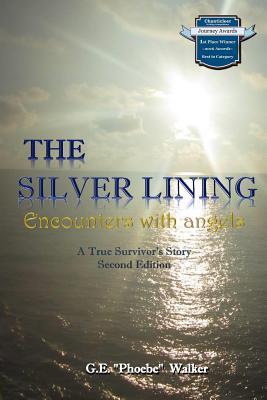
  • FROM LIBERTY to MAGNOLIA: In SEARCH of the AMERICAN DREAM by Janice Ellis, Ph.D. – Memoir, Descrimination & Racism, Women

    FROM LIBERTY to MAGNOLIA: In SEARCH of the AMERICAN DREAM by Janice Ellis, Ph.D. – Memoir, Descrimination & Racism, Women

    From Liberty to Magnolia: In Search of the American Dream, a timely and important book, won GRAND PRIZE in the 2018 CIBAs in the JOURNEY division for Memoir.


    Journey Awards Grand Prize Badge for From Liberty to Magnolia: in Search of the American DreamAs a black woman on a cotton farm in Mississippi in the 1960s, Janice Ellis could have resigned herself to a life full of status quo: never speaking up for herself, never speaking out against injustice or racism. Instead, she never let unsettling times define her or hold her back, even as a witness to some of the ugliest racial violence this country has seen. In her candid and thought-provoking memoir, From Liberty to Magnolia: In Search of the American Dream, Ellis vividly depicts her life in the South during the height of the Civil Rights and Women’s Rights movements.

    Through fluid and skillful writing, Ellis recounts the battles she encountered due to her skin color or due to her gender: an abusive husband, discouragement to further her education, sexual and racial discrimination in the workplace, a lack of support from friends and family when she runs for election. Despite these mounting obstacles, she goes on to earn her Ph.D., lands leadership roles and furthers her career, and even runs for mayor in a major US city. Her faith in God and her unwavering belief that the American Dream should be accessible and attainable to everyone are what lead her.

    The story is hopeful and inspirational, yet there are painful passages for both writer to recount and reader to absorb. One such incident occurs on a Saturday afternoon in Mississippi when two little white boys spit at her parents as they exited a store. Most hurtful about the event for Ellis was seeing her parents flee to their car for safety; for blacks lived in fear as racial violence was targeted and prevalent during the 60s. Of course, there was the added fear of being female. While she lived fully aware of the color of her skin, she often wondered which came first: her race or her gender.

    Ellis is fascinated with the writings of both CBS Newsman Eric Sevareid and political commentator Walter Lippmann, and in Chapter 6, she dives in deep explaining the theories of Lippmann in particular. But she also shares the pivotal moment in her career, and in her life, when she meets Sevareid at his home for an interview. Ellis has gone on to become a political and social commentator and is a prolific columnist to this day, writing about race and gender. Her premise is that race is a modern construct and that we all belong to the human race.

    Interestingly, the title of the book comes from the names of two surrounding towns where she grew up. Liberty and Magnolia are stand-in metaphors for freedom and the American Dream, something that seems unattainable to a portion of the American population.

    Despite her struggles, she believes the country has come a long way in racial and gender relations. Her overarching message is to stay true to oneself and continue to follow your heart, no matter how unpopular or uncomfortable your choices.

    Anyone facing adversity will be moved by this tenacious woman’s account, which serves as a historical record amid one of the most tumultuous yet empowering eras in American history. Complete with a discussion guide in the Appendix, the book can serve as a text for a college course or a community book club exploring themes of race and gender.

    Certainly, From Liberty to Magnolia: In Search of the American Dream is a timely and important book. Highly recommended.


  • The SILVER LINING: ENCOUNTERS WITH ANGELS by Phoebe Walker – Memoir

    The SILVER LINING: ENCOUNTERS WITH ANGELS by Phoebe Walker – Memoir

    Imagine a crisp autumn afternoon, taking a walk with a favorite companion on a country lane. You share stories about life’s ups and downs; you both laugh and cry. When you get to your destination, you give each other a goodbye hug and part separate ways with a smile, feeling a sense of strength in your friendship.

    Meandering through the pages of Phoebe Walker’s, The Silver Lining Encounters with Angels, is like a walk down this country lane, leaving us with warmth and hope.

    Admittedly, Walker’s book is a tough read – a story rife with abuse, her parent’s divorce at a young age, a suicide attempt, battling Multiple Sclerosis (MS) and other health concerns, and a near-death experience. It’s a lot to handle, for both the author and reader, but Walker makes the story accessible and down to earth with her conversational tone. Flipping through the pages is like a fireside chat.

    In one early and instrumental memory, Walker recalls how she was introduced to God. In 1989, her friend Christi said, “speaking to Jesus was just like talking to your best friend.” Accepting Christi’s advice, Walker became convinced that certain people in her life were placed there by God as “silver linings.” “God provides the crutches,” Walker says in her memoir.

    And so it went in Walker’s life, assigning silver linings to people who helped during dark days, including her loving husband Chip. The memoir is engaging and heartfelt, a recommended read for anyone wishing optimism and hope amid adversity.

    Not only do we learn that Walker survived incredibly tough times, but also she thrived, earning a college degree, having children, and living a full life, later without vision due to MS.

    A theme of revelation is what led her to write and share her story. She says: “By allowing myself to become fully exposed, I’m confident that not only will I continue on my journey of healing, but that it will offer hope, peace, and perhaps even direction to others. That makes sharing my story fully worth [it].” Today, she maintains a website displaying her art and ways she helps others through a life coaching business.

    While Walker’s book takes us on an emotional rollercoaster, even to the edge of despair, she holds our hand with thoughtfulness and humor. She avoids lecturing and being preachy by staying in her own story, ultimately showing how her deep faith has healed her during life’s challenges.

    5 Star Best Book Chanticleer Reviews round silver sticker


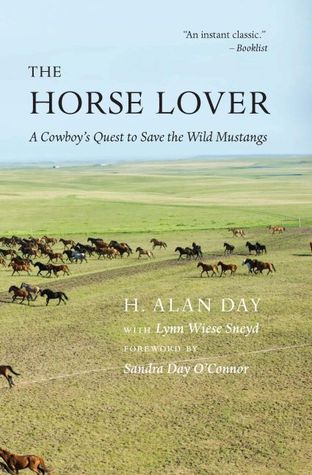
  • The Horse Lover: A Cowboy’s Quest to Save the Wild Mustangs by H. Alan Day with Lynn Wiese Sneyd – Non-Fiction/Memoir

    The Horse Lover: A Cowboy’s Quest to Save the Wild Mustangs by H. Alan Day with Lynn Wiese Sneyd – Non-Fiction/Memoir

    Thousands of wild mustangs now have a sanctuary to call home thanks to one man: H. Alan Day. This is his story.

    Perhaps you’ve heard of a horse whisperer: a person who gently and patiently communicates with an animal. Multiply that by 1,500 and you have H. Alan Day, a cattle rancher from the southwest turned horse herder who takes on what would seem to be an unimaginably huge project.

    The Horse Lover: A Cowboy’s Quest to Save the Wild Mustangs, is Day’s story of Mustang Meadows Ranch in the Sand Hills of South Dakota, the first government-sponsored wild horse sanctuary established in the United States.

    In beautifully vivid prose, Day transports us to the prairie, as in this passage: “The sun highlighted the horses, now twelve hundred strong, creating a canvas of golds, bronzes, beiges, blacks, and deep browns that stretched out before me.”

    Day’s youth played a critical role in his success and interest with horses as he grew up on a 200,000-acre cattle ranch straddling the high deserts of southern Arizona and New Mexico. After college, he returned to manage Lazy B, the family ranch, for the next 40 years. Later, he (hesitantly) purchased 35,000 acres in South Dakota and dedicated it as a horse preserve for 1,500 wild mustangs. Relying on a herd medication program he used at Lazy B, he trained the group of mustangs, those considered unadoptable, to follow a lead horse from the wild through the gates and into the horse meadow.

    However, it wasn’t always easy. Initially, Day scoffed at the idea. “Come on, wild horses? I was a cattle rancher…”

    Thanks to a heartfelt and informative introduction by his sister, Sandra Day O’Connor (the first female US Supreme Court Justice who retired in 2008 after 25 years on the bench), we learn that wild mustangs, formerly running free, breeding and multiplying, were being captured, sold, or destroyed. The Bureau of Land Management (BLM) took care of many of them; however, the remainder was considered unadoptable.

    Day remained stalwart facing dangers, frustrations, and heartbreak and had to deal with government red tape. Through his eloquent and moving story, he shows us the resolve and passion required for undertaking South Dakota ranching.

    It’s no surprise Horse Lover is well written and poignant; in 2002, Day partnered with his sister to co-author the family memoir, “Lazy B: Growing Up on a Cattle Ranch in the American Southwest,” which went on to become a New York Times bestseller.

    Horse lovers will not want to miss this book – and witness the magic of thousands of horses running wild. The rest of us will marvel at what Day was able to accomplish in this story of loyalty and hope.

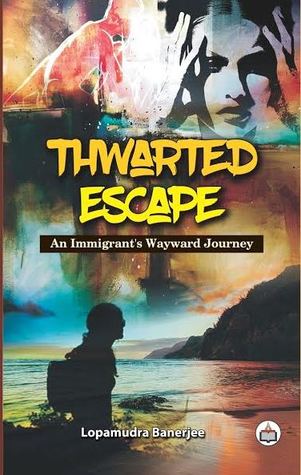
  • THWARTED ESCAPE: An Immigrant’s Wayward Journey by Lopamudra Banerjee – a stirring narrative

    THWARTED ESCAPE: An Immigrant’s Wayward Journey by Lopamudra Banerjee – a stirring narrative

    In her book, “The Art of Memoir,” Mary Karr recalls hearing novelist Don DeLillo once say that a fiction writer starts with meaning and then manufactures events to represent it, whereas a memoirist starts with events, then devises meaning from them.

    Lopamudra Banerjee does just that in her memoir “Thwarted Escape: An Immigrant’s Wayward Journey.” She takes us through a journey of achievements and sorrows while using words to make meaning of her spirituality, her femininity and her literary identity.

    Broken down into four volumes, the book is a collection of essays and articles, many of which were previously published in print, online anthologies and literary journals.

    Depending on which chapter you’re reading, you could say Banerjee is a memoirist, a creative writer, an essayist or a journalist. But no matter what label you choose for her writing, you will see Banerjee has major writing talent – the culmination of a passion that was borne at an early age when she considered words her playmates.

    “I have been in love with these moments of restlessness and release as these clusters have formed a pattern called words. I watched this written world of prose and verse, as with my hands, my body, I absorbed these nuances of creation,” she writes.

    Through the pages, Banerjee transitions from a small town girl in India who makes her way to the United States. She has traveled to many places throughout the US and in one chapter where she derives the book’s title, “Thwarted Escape,” she talks about her departure to Omaha, Nebraska, as in this stirring passage: “I am an ordinary, commonplace refugee in North America, and like many others of my ilk, have embedded myself in a family, far flung from what is called ‘original home.’ Like many others, I am striving to gain the status of the coveted Non-resident Indian, a legitimate work permit to survive in a distant land while my heart continues to ache with the desire to be rocked in the bosom of my mother and to revisit the havens of my childhood.”

    With the power of narrative in her life, Banerjee lives with the secret ambition to “get published” and to let the world read her stories. Thankfully, she has fulfilled her dream of compiling such a book and sharing with us her engaging and well-written stories of grief, death in her family, motherhood, and femininity.

    In a particularly moving section of the book, Banerjee introduces us to Taslima Nasrin, a Bangladeshi novelist and poet who has lived in exile since 1994 amid death threats for her outspoken feminist views and criticism of Islam. With admiration for Nasrin’s voice, Banerjee includes newspaper clippings (scans from the original print versions) of Nasrin and explains some of the abuse and hardship the activist has endured. As a graduate student of English literature, Banerjee harnesses Nasrin’s power and draws parallels to other literary greats.

    “I realize how [fusion_builder_container hundred_percent=”yes” overflow=”visible”][fusion_builder_row][fusion_builder_column type=”1_1″ background_position=”left top” background_color=”” border_size=”” border_color=”” border_style=”solid” spacing=”yes” background_image=”” background_repeat=”no-repeat” padding=”” margin_top=”0px” margin_bottom=”0px” class=”” id=”” animation_type=”” animation_speed=”0.3″ animation_direction=”left” hide_on_mobile=”no” center_content=”no” min_height=”none”][Virginia] Woolf, how Taslima [Nasrin], how Sylvia Plath, trapped and tangled in a women’s bodies, have suffered the heat and passion of their literary selves…”

    Banerjee ends the book with letters she wrote to her family and other people while she was pregnant and during other periods in her life. We readers are grateful Banerjee has found the courage and energy to publish all of these personal stories that are so moving, eloquently written, and significant in both her life and the lives of women.[/fusion_builder_column][/fusion_builder_row][/fusion_builder_container]

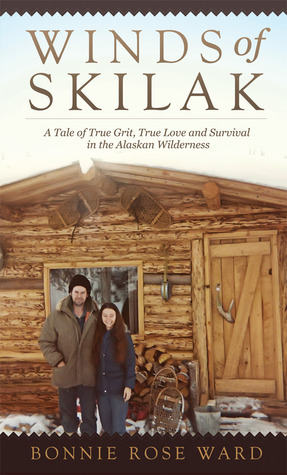
  • WINDS of SKILAK: A Tale of True Grit, True Love and Survival in the Alaskan Wilderness by Bonnie Rose Ward

    WINDS of SKILAK: A Tale of True Grit, True Love and Survival in the Alaskan Wilderness by Bonnie Rose Ward

    In this day and age of omnipresent cell phones and electronics, is it not the quintessential dream to quit one’s day job to seek the peace and quiet of the last frontier and live off the land?

    It wasn’t necessarily Bonnie Rose Ward’s dream, but her husband Sam’s to move to Alaska for a pure existence. However, her deep love and admiration for her mate led her to check out library books on how to live in the wilderness and finally make the difficult decision to leave their home in Ohio for a tiny island on Skilak Lake on the Kenai Peninsula of Alaska.

    In her beautifully written memoir, Winds of Skilak: A Tale of True Grit, True Love and Survival in the Alaskan Wilderness, Bonnie invites us into a routine that began in 1980 when she was 25 and Sam, 36. It’s an engaging and inspiring story ripe for anyone who has merely dreamed of a new life or for those similarly courageous enough to take the leap to remote living.

    Through Bonnie’s intimate excerpts, we learn how the couple, and their friend Bob who tags along, lived on Caribou Island in self-built cabins without running water, electricity or a phone. They deal with isolation and sub-freezing temperatures along with making new wildlife friends like a milk goat named Esther. Bonnie steps out of her comfort zone and learns how to shoot a .375 Holland & Holland Magnum.

    If you are wondering what a grocery list would look like for such an adventure, you’re not alone. The following passage is labeled a ‘Popular Highlight’ in the Kindle edition:

    We bought what we figured to be a year’s supply of dry goods,” Bonnie writes. “These staples included two hundred pounds of flour, a hundred-pound burlap bag of pinto beans, fifty pounds of sugar, thirty pounds of cornmeal, fifty pounds of rice, twenty pounds of noodles, several gallons of cooking oil, honey, powdered milk, salt, pepper, spices, baking powder, yeast, tea, several cases of three-pound cans of coffee, and powdered creamer. Anything else we needed must come from the land—must be what we could hunt, fish or grow.”

    In one episode amid their remote homestead, we learn what most likely influenced the book’s title of “true grit” and “true love,” both of which were prerequisites for the trio to survive the ensuing frost. A devastating logging accident puts Sam in the hospital and sidelines him as he accepts a painful recuperation. Meantime, the misfortune tests Bonnie’s faith in God (and in Sam), as she tells us with heartbreaking honesty:

    A brisk cold wind greeted us as we stepped out of the doctor’s office that day— a stark reminder that summers are short in Alaska,” she writes. “We had forty dollars left. It was all the money we had in the world, with nothing else coming. It couldn’t get worse. We were broke and living in a pup tent with winter on the way.”

    Fortunately, with the determination that got them out there in the first place, the couple sees the sun shine again. Through astute observations and crisp writing, Bonnie takes us on their 15-year wilderness journey treating us along the way to the Alaskan landscapes:

    After that first day, the clouds vanished from the mountains, and all remnants of foul weather fled from a sun-drenched sky. Skilak Lake calmed and grew at peace with itself. I stood at the water’s edge struck by the pristine beauty all around me. The color of the lake changed like a giant mood ring from a milky green to a brilliant peacock blue.”

    According to Bonnie’s website, which she maintains to promote the book, the couple has since moved to West Virginia to live a self-sufficient lifestyle on a farm where they enjoy raising goats and chickens and gardening and canning vegetables. Despite their exodus to the lower 48 to live closer to family and friends, Skilak Lake will always be in their hearts as it “has left its imprint deep within us and no matter where we go or what we do, neither time nor distance will ever change that.”

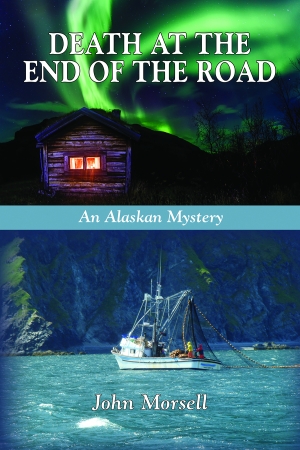
  • DEATH at the END of the ROAD by John Morsell – an Alaskan murder mystery

    DEATH at the END of the ROAD by John Morsell – an Alaskan murder mystery

    If you enjoy being transported to the last frontier, and want to be taken for a dramatic plot ride on a boat called the Otterly Ridiculous, with DEA agents, a character named The Mole, and a couple of dead bodies, then you’re in for a treat with John Morsell’s novel “Death at the End of the Road.” A semi-retired biologist and environmental consultant, Morsell draws from his more than 30 years working and living in Alaska to craft this engaging and well-written piece of mystery fiction.

    As the story goes, Charlie Skyler, a boat-dwelling eco-tour guide and some of his unusual comrades, get tangled up in an adventure that involves murder, an eccentric drug lord, psychopathic assassins, and mysterious government agents. What makes the book even more compelling and appropriate, is that it’s set in Homer, Alaska, population 5,000, a small town known as a docking station for artists, fishermen, and ex-hippies.

    Often tagged “quirky,” Homer also has been referred to as “the end of the road” due to its geographical location on the Kenai Peninsula about a 220-mile drive south of Anchorage. And perhaps you know Homer from hometown notables like singer Jewel or writer Tom Bodett (it’s his voice in the ads for Motel 6). See? It’s quirky.

    With a knack for storytelling, first-time author Morsell is especially adept with dialogue, one of the most challenging aspects of fiction. Rather than revealing his characters through straight narrative, Morsell resorts to lively banter, in this case between two federal agents, one of whom is cranky, and an easy-going caretaker:

    “Do you mind if we look around?” [Agent Milford] Beverly asked.      “Actually, we have a search warrant, so it doesn’t matter whether you mind or not,” Agent March interjected.
    “Help yourselves. You can spend the whole winter here if you want,” Don [the caretaker] said as he handed Beverly a ring of keys and winked lasciviously.

    In some instances, Morsell shows further literary talent by employing alliteration (“The Lieutenant signaled the spooked soldiers…”). Also, he uses metaphor to disguise what could otherwise be construed as explicit language, as in this episode between two characters, one of whom has consumed a bit of herb:

    “Frank was not at all interested in the details of Brett’s horrible night. After colorfully suggesting that Brett perform[s] various anatomically impossible acts, he told Brett to make himself permanently scarce by leaving the state or possibly the country, implying that if either he or the authorities caught him he would likely not be long for this world.”

    Originally from Wisconsin, Morsell has taken a circuitous (read: quirky) route to fiction himself. In the mid-1970s, he moved to Alaska to work as a Field Environmental Specialist for the company building the Trans-Alaska oil pipeline and ended up staying for 30 years. He eventually formed his own small consulting company researching fish and aquatic habitats and went on to travel extensively throughout all regions of Alaska. Today, he lives in Washington state with his wife.

    “The characters are loosely based on actual people and events,” Morsell said in an interview on The Whatcom Wordsmith podcast. Further inspiration came in the form of Seldovia, another Alaskan city with its natural beauty, as in this passage halfway through the novel:

    “…Facing north toward the mouth of Seldovia Bay, Kate could see across Cook Inlet to the other side, where two volcanic peaks were visible, sunlight glinting off their snowy slopes. Artistic wisps of remnant fog completed the picture. A sea otter floated off the bow in casual nonchalance. A dozen gulls squabbled over a piece of food.”

    A delightful suspense with splashes of humor, and some romance, “Death at the End of the Road” is a book you won’t want to miss, especially if you yearn to live vicariously through characters of nontraditional lifestyles and appreciate the natural scenery of one of the most beautiful places in the US.

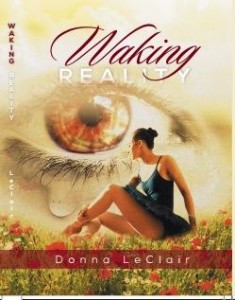
  • WAKING REALITY by Donna LeClair, a courageous memoir about surviving abuse

    WAKING REALITY by Donna LeClair, a courageous memoir about surviving abuse

    Writing a memoir is more than merely putting facts down on paper and regurgitating the gory details of our painful past. We’ve all had heartbreak and joy, but the glue must be in the story. As American author Susan Shapiro (“Five Men Who Broke My Heart”) puts it, “A novel that is merely autobiographical is a great disappointment, but a memoir that reads like a novel is a great surprise.”

    Donna LeClair does the genre justice in Waking Reality, her page-turning memoir. It will make you appreciate full disclosure honesty rather than disparage over a writer evincing her suffering, which occurred mainly at the hands of men, including her father. This memoir is for anyone willing to go along for the ride with a writer who exposes her life’s nooks and crannies, some uplifting, and many horrifyingly unreal.

    Through engaging and well-written prose, LeClair relates the 1963 murder trial known as State of Ohio v. Bill Bush, a police sergeant who murdered three members of one family. Bush happened to be her uncle and the family he tore apart, hers. Due to the circumstances of the trial, LeClair and her sisters were in protective custody. Imprisoned at ten years old in her own home, she was forced to crawl so she “would not be within visual range of a shooter.” She stopped watching TV because the glowing screen alerted potential intruders when the family was home.

    Amid the horror, LeClair introduces the word “hologram” 27 times (I counted), evoking themes of truth, light, and above all, faith, as in this passage early in the book: “Lurking behind these seasoned holograms are withering spirits who weep in unfathomable chateaux, scrutinizing the tumbling of their gingerbread thoughts. None of our lives’ fantasies or any of our hearts’ desires can put crumbling pieces back together, but if you secure the courage to journey inward, the key to your happiness reflects there.”

    She doesn’t just tell us the story of her childhood fear, she sings it, using these fairytale-like passages: “I know angels carried me home that day because I was too young to make the journey unaccompanied, and hell is too far of a gallop for legs groomed not for devil’s track. Wings of godliness cloaked my thought’s defiance of belief and knowing; the communion of virtue and endurance heralded a sanctuary of nudities unbeknownst to my virgin eyes.”

    To some, the fantasy interludes may be a distraction; others will see the distorted sense of reality her child self endured. “Mirror, mirror of the truth, I beg of you, show no more. Why do I have to look inside? It would be easier to hide… Hide, if you wish, but there is no escape to all those things buried deep inside.”

    LeClair apparently honed her literary acumen in high school, but not by attending class and taking notes. Detecting a deep sadness in her student, LeClair’s English teacher excused her as long as she produced a short story or poem by the end of the day.

    Waking Reality is recommended reading for anyone looking for an engrossing account of a woman’s courageous story growing up in the 1960s. You will want to see that she emerges through the dark tunnel of abuse; LeClair has two children and three grandchildren and does lectures around the country.