Author: J. Parry

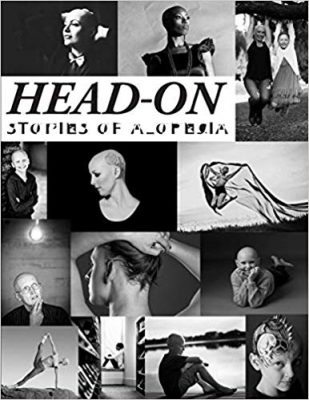
  • HEAD ON – Stories of Alopecia by Deeann Callis Graham – Self-Esteem, Success Self-Help, Dermatology

    HEAD ON – Stories of Alopecia by Deeann Callis Graham – Self-Esteem, Success Self-Help, Dermatology

    Instruction & Instight Blue and Gold 1st Place BadgeMore than 10 years ago, when Deeann Callis Graham went through a second bout of alopecia areata (AA), the first was when she was seven years old, she wondered where she could find pictures and read stories of people who were also losing their hair. She wanted to embrace positive messages amid a society that equates baldness with cancer and sickness. Yearning to relate to people who looked like her, she started writing her own story and soon she had connected with others with alopecia wanting to tell their stories.

    Head-On: Stories of Alopecia, featuring 75 narratives from people of all ages and walks of life with alopecia. Graham’s purpose is to educate and shed light on the illness that affects 6.8 million people in the US, according to the National Alopecia Areata Foundation (NAAF), and help change the world’s attitudes toward hair, beauty, and self-worth.

    In the book, Graham makes it clear that alopecia areata is not cancer, and that hair loss is not any easier for men and boys than it is for girls and women. Alopecia areata is an autoimmune condition where the body gets confused and attacks the hair follicles, which causes hair to fall out. A more severe form is alopecia totalis, where all of the hair on the head falls out. Alopecia universalis, which is less common, is hair loss on the entire body including the head, eyelashes, eyebrows, legs, toes, etc.

    To produce the 216-page book, which features black-and-white portraits and short narratives from each participant, Graham talked to more than 500 people to compile the stories and conduct research. At the end, she includes interviews with Jeff Woytovich, founder of the nonprofit Children’s Alopecia Project (CAP), and Andy Turpen, who started Mondo Baldo to highlight positive messages around baldness.

    Most impressive are the narratives of hope, rebirth and renewed confidence after years of stares, pranks, and bullying in school and misinformed comments, rudeness, and more stares as adults. Being a child with alopecia can be particularly devastating, as the many contributors wrote, being called “freak” or “hairless cat” on the schoolyard. Sophia said she missed going to her junior prom; and Tanya recalls that as a youngster, she felt “ugly and vulnerable.”

    Most of the contributors talk about the countless hours they spent in front of the mirror creatively trying to hide their bald patches with their existing hair. Making the decision to wear a wig in public was a major turning point and a show of independence yet it also came with its own potential failures. Sarah, from California, had a pivotal moment during middle school when a classmate pulled her wig off her head. Sarah was “completely shocked,” but after that incident, she decided to tattoo her eyebrows and leave the wig at home when she entered high school. “I’m just so tired of hiding,” she writes.

    While some of the stories are heartbreaking, they are also uplifting, showing how each person rose from the ashes to use their alopecia for good either for their own self exploration or to help the world understand the illness.

    Steph, a high school swimmer, says when the team gathers for pictures at meets, she proudly displays her bald head. “It’s as if I’m announcing, ‘Here I am. Bald, beautiful, and not sick!’”

    Joyce, who has had alopecia for more than 50 years, had hair loss from age 12 to 24. Her hair fully returned and remained for almost 30 years. “I believed I was cured,” Joyce writes, however there is no known cure at this time although there are treatments. Later, when her son’s hair started falling out, hers did again too and she said she felt relieved she was done with the cycle.

    Not only is Head-On a lovely display for the coffee table, it serves as a resource for parents of children with alopecia and anyone who would like to learn more. Graham has included Alopecia 101 with facts and, at the end, a Resources page listing organizations based in the US, the UK, Australia, and Canada.


    Head On: Stories of Alopecia won First Place in the CIBA 2017 Instruction & Insight Awards for Non-Fiction.




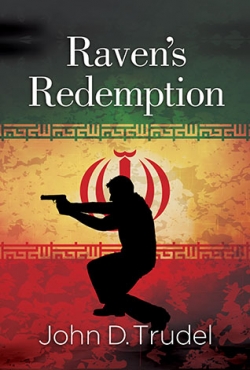
  • RAVEN’S REDEMPTION by John Trudel — a cybertech paranormal thriller

    RAVEN’S REDEMPTION by John Trudel — a cybertech paranormal thriller

    Raven’s Redemption begins where Raven’s Run left off: Josie is recovering in a hospital in Oregon, and Raven, recuperating at a coastal estate in rugged Northern California. He feels responsible for putting her life in jeopardy. Josie is a sensitive paranormal who can do ‘remote viewings’ – but viewings involving violence, remote or otherwise, weaken her to the point of death.

    Raven is an undercover operative who tries to protect her. He receives his next mission from Goldfarb, his boss: Josie’s untraceable extraction from the medical facility. What none of them know is that sinister forces are at work to make sure Josie never gets out alive.

    Her services are desperately needed again, and this mission cannot fail: she is a non-expendable government asset. It’s a simple grab-the-girl and run – or should be – but when animal activists become involved, chaos reigns, and not everyone makes it out intact.

    The story shifts to another hospital – this time the President of the United States is hospitalized in a secret facility after being irreparably poisoned. After a brief period of rest and recuperation for Josie and Raven, Josie is tasked to work her viewings around the condition of the president. While in her viewing state, she encounters a dark force so powerful and evil she cannot penetrate it – and is afraid it would swallow her very life force if she got too close.

    Should the president die, this force, aptly named “The Abyss”, will be unleashed on the world, and with no stopping it. Unfortunately, all envisioned paths to the future lead to his death!

    Goldfarb’s team is able to use Josie’s information to track down those who want the president dead, but the real problem is knowing who is directing their actions, and why. Some familiar villains appear in this book – we get to be entertained with Vogel’s thick German accent and lack of empathy – and some new ones, who seem familiar enough that we might have read about them in the newspaper or seen a report on television.

    In between the heart-stopping, rag-tag, under-funded operations to rescue damsels and flush out the bad guys, Trudel gives us past examples of breaches of security in history to make plausible actions taken in his story. He relates the legend of General Blackjack Pershing’s pig-blood solution to jihad, though the historical authenticity of this event has been challenged where criticism of Islam is politically incorrect.  Occurring over a century ago, the incident – which has been neither proven nor disproved – provides a richer backdrop to the actions of an unanticipated (and unwitting) ally during a chilling nighttime raid.

    In light of recent terrorist events that leave us wondering “how could this have happened?” Trudel offers up examples of enemies hiding in plain sight, of churches that aren’t the peaceful sanctuaries one might expect, and of plans for evil that are much better funded than their defensive counterparts.

    Raven’s character is becoming less rogue. He is listening more to Josie rather than acting brashly every time. She desperately wants out of the business they’re in – “one more mission and we’ll retire” – how many times have you heard that one? This reader doesn’t remotely foresee a true retirement happening any time soon!

    Those who read Raven’s Run will be satisfied with this riveting sequel, but those who are new to Trudel’s work will enjoy it on its own if they are a fan of political intrigue, firearms technology – both new and old, espionage and a bit of other-worldliness to make this a true paranormal thriller.


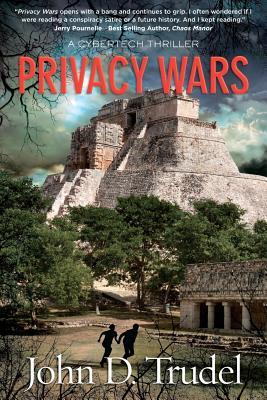
  • PRIVACY WARS by John D. Trudel – a cyber-tech thriller

    PRIVACY WARS by John D. Trudel – a cyber-tech thriller

    “You have zero privacy anyway. Get over it.”  Scott McNealy, CEO, Sun Microsystems, January 1999

    Thrust into a conference room with trigger-happy guards, Privacy Wars opens with negotiations taking place between a software company and one of its clients. The tension is high as this particular client demands special concessions for its privacy software that Cybertech refuses to offer. Fans of Trudel’s work will recognize Cybertech and John Giles from his book Soft Target.

    Set in the not-so-distant future, through a series of “astronomical deficits and a dark period of crony capitalism, corruption, socialism, and frequent national embarrassments,” America has lost its strength as a world power, and Asia has taken its place. Desperate for a solution, the U.S. president enters into secret agreements with Japan for a loan, deals which suggest treasonous behavior and abuses of authority. The biggest casualty will be Cybertech, whose software creates problems for those who think no information should be private.

    Cybertech realizes that it is being targeted through a series of bogus lawsuits and violation claims, crippling its ability to function. When “Iron John,” Giles’ son, Will, now CEO of Cybertech, realizes the attacks might be personal, he goes into hiding and heads for the hills, leaving everything behind, with minimal resources for surviving in the woods. Will is confronted by a mysterious woman who gives him instructions to ensure his survival, and he has little choice but to trust her.

    The attacks on Cybertech escalate from bureaucratic tyranny to an all-out physical war. An organization called the Peace Enforcers, which operates as though they are above any law, conducts acts of war on US soil with no provocation. In conjunction with a martial-arts trained killer named Tanaka, who enjoys torturing and killing, Cybertech staff find themselves at the Peace Enforcer’s mercy, and Will, who has no defensive training, insists on returning to the corporate offices to try to help his staff.

    The consequences of this action are a major turning point in the story: our hero finds himself assisted by ancient technologies of advanced civilizations, the Viracocha, who go back to the building of the pyramids. Fortunately for us, Trudel includes well-researched explanations into the theories after the end of the story: what might appear to be fantasy and science fiction may have some real-world credence.

    The dogged romantic pursuit of Will by his protector, Becky, who is described in favorable dimensions, complete with advanced degrees and connections in high places, adds a sense of intimacy to the story. Trudel has a mastery of using media’s humorous mis-reportings (as he puts them) that  create unintentional heroes. Each section of the book starts with a real attributed quote pertaining to the story line, some going back to ancient times, and others that are there for Trudel to remind the reader of America’s constitutional roots.

    Privacy Wars by John D. Trudel, explores and confronts the issues that are involved with absolute privacy in software, corporations and government from several perspectives with the need to balance personal privacy and corporate privacy with the need for national defense. Trudel is known for his catch phrase “Thrillers are fiction…until it happens.” And he knows how to write a thriller!

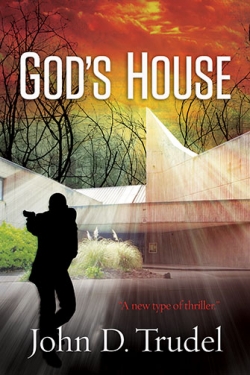
  • GOD’S HOUSE by John Trudel, an international thriller

    GOD’S HOUSE by John Trudel, an international thriller

    Jack Donner can’t get a break. He blames himself for the deaths of those he was close to, and even one he was hired to protect. While bringing the body home from the Middle East, he gets detained in the United States by low level agents over a missing stamp in his passport. Worse yet, he has to use his real identity this time. While his CIA connections eventually get him out of hot water, his troubles are only beginning.

    The body Jack brings home belongs to a man who had the technology that could change the world’s power balance forever. A system that produces efficient, clean energy, but could also be used as a weapon of mass destruction. The company behind it, Enertech, was attacked in Lagos where it lost most of its staff.

    A young, attractive widow, Anne, is left with the assets, but she wasn’t involved with operations. She has no idea what her husband was working on. Jack planned on retiring, but is talked into staying on as a private citizen commissioned to recover Enertech’s technology along with trying to keep Anne safe during the process.

    Anne and her late husband, Bob, were members and supporters of a local mega-church called The Sanctuary, run by a charismatic woman, Liz, with ties to nefarious foreigners. Liz speaks at the United Nations, visits the Dalai Lama frequently, and spreads the gospel of wealth, non-violence, and world peace.

    Anne turns to Liz and a few close friends for emotional support during this difficult time. She also turns over everything she knows about the company to Jack. This leaves him with a lot of data and few answers, and puts him under the scrutiny of watchful eyes at The Sanctuary.

    Things are not right around Anne’s empty estate. Jack needs help to keep her and himself safe, but there are never quite enough resources at his employer’s disposal to do so. While trained in firearms, he’s not a huge fan of them. He’s more of a technologist than a soldier.

    Enertech faces bankruptcy. The pressure to sell to a foreign investor is on, starting a race against time. Problem is, Jack can’t find the answers needed to unlock the key to the technology. One clue keeps him going: a message from Bob to his late wife that is hidden in some kind of cipher, tucked away in the pages of a cheesy novel.

    Anne and Jack start developing their own story, though Jack has reservations about getting romantically involved. Everyone he cares about ends up dead. He’s seen too much bloodshed to risk another loss. He about earns a frequent-user pass to the ER trying to protect Anne, and now he has to keep both her and her only close relative out of danger in Brazil.

    Will Jack be able to come through for Anne and Enertech? The stakes are high in both cases.

    Those Anne trusts raise doubts about Jack. He has doubts about himself, recalling many episodes revealing the horrors of non-staged, real life gunfire and bloodshed, losing friends in wartime.

    One of the character’s German accent reads so spot-on you almost hear it. Those who follow events in the Middle East will resonate with John’s novels. His novels seem more fact than fiction; they lend credence to Trudel’s tagline: “Thrillers are fiction until it happens.”

     This fast-paced thriller will have you turning pages quickly to piece together puzzles with surprising twists. You would never know that John Trudel’s God’s House is his debut novel. It reads like it was written by a seasoned author.


  • THE WATCHER by Lisa Voisin

    THE WATCHER by Lisa Voisin

    Mia Crawford is a vibrant, outgoing high school student in West Seattle with a close circle of friends. She shares most things in her life with them, but not the strange occurrences that keep her guessing her own sanity: cloudy dog-like creatures with menacing red eyes that chase her, voices cloaked in static, flickering lights, and even real people no one else sees. Mia’s family isn’t around much – Mom works a lot, her dad has a different life out of state, and her brother is away at college. She feels everything with deep intensity, as the smallest events trigger emotional responses landing on both ends of the spectrum.

    Two new boys arrive at her high school this year: the first is mysterious Michael, who experienced death after an accident but came back. He is beautiful, strong, and seems to show an interest in Mia, always showing up at just the right time. She quickly develops strong affections for him, but he does not reciprocate her feelings. Instead, he pushes her away, disappointing and confounding her, giving rise to her insecurities.

    Damiel, the other new boy, shows up dashing and debonair on his vintage motorcycle. All the girls swoon under his attention, and he pursues Mia persistently. Michael warns her to stay away from him, and she really doesn’t like Damiel. However, she is inexplicably drawn to him, in spite of being in love with Michael.

    Mia loves the study of ancient civilizations and literature. She lives out her painful crush through a classroom reading of Shakespeare’s Hamlet. Sometimes she has visions of another world, seeing at times a meadow, a loom, and large birds circling in a fight to the death. She also knows she has some kind of connection with Michael, and that he and Damiel have a history. But nothing could prepare her for knowing the truth of that history, and her role in it.

    Things become heated when Michael and Damiel confront each other in an other-worldly fight over Mia. When she finally discovers the truth, it sends her on a soul-searching journey of love and redemption, and into a supernatural battle of good and evil, involving angels and demons.

    Voisin transports us visually into Mia’s world with rich details, from places as mundane as a wall locker in a school corridor, to a thrilling winged flight high above the city. We ache with Mia for Michael’s touch when he is near, and feel Michael’s pain for resisting.

    The mundanity of high school life and petty spats gives way to an other-worldly realm with life and death significance. Mia and Michael have a tragic past that occurred before recorded history, resulting in Mia’s early death and Michael’s fall from his fold into hell and guilt-ridden remorse. Only Mia’s strength can save them in this lifetime; is she up to the task?

    The author draws from principles of many different sources, from the Bible and the Quran to Tarot cards, giving none any greater importance than the others, and without judgment.  The Watcher will keep you guessing, and feeling, and leave you with great hope.

     The Watcher by Lisa Voisin was awarded the Grand Prize Award for Paranormal Novels, a division of Chanticleer Reviews Novel Competitions.

  • WORST OF ALL EVILS by Janet McClintock

    WORST OF ALL EVILS by Janet McClintock

    After an economic collapse, the US Constitution is set aside; civil rights are a thing of the past. A driver can get pulled over just for being out late. Even unpaid parking tickets can warrant harassment and a stint in a holding cell.

    This is not the America that Joan Bowman fought for in Iraq; she swore an oath to uphold the constitution. An underground group, The Constitutional Defense Legion (CDL) has formed to do just that, through any means possible. They have adopted John Stark’s motto, “Live Free or Die” which always elicits “death is not the worst of all evils” as a response.

    Joan meets a CDL recruiter at the gym, and decides that by joining their forces, she can help overthrow the current tyrannical government. Her reasoning followed the quote from Edmond Burke: ‘The only thing necessary for the triumph of evil is for good men to do nothing.’

    Joan’s life gets turned upside-down when the CDL decides to make her home into a ‘base of operations’ and moves two other CDL members into it. She learns that asking questions isn’t the best way to get answers; everything is on a ‘need to know’ basis.

    Joan is a martial arts enthusiast, putting her fighting skills to good use when some of the CDL’s missions go sideways. Disobeying orders, she uses her own decision-making skills to rescue her colleagues.

    She can charm the keys off an unsuspecting suitor while gathering intelligence undercover, with no one questioning her motives. But as Joan starts to rise through the ranks, she starts to question the legion’s direction and becomes wary of the stone-cold, heartless personalities in the inner circle, witnessing unnecessary use of force.

    Duncan, who is grooming Joan for his own position, “is” the Legion, and lives for the Legion. He suffers from PTSD from a jungle ambush where he was the sole survivor. His best friend, Kearney, resents Joan and makes no effort to hide it, making her life as miserable as he can. Duncan works closely with Joan but is respectful and distant. Joan is told to be watchful of Duncan, and is unsure, for a while, why everyone is so afraid of him.

    Duncan realizes Joan might be the key to unlocking his personal demons, but their budding romance keeps getting interrupted. It was refreshing to see a relationship develop without the cliché “he noticed her curves” or similar sentiment that finds its way into so many stories where a man and woman are forced to work together and then form a connection. Instead, Joan starts to notice Duncan’s physique after a very long time, but knows she can’t trust him as much as she’d like to.  After all, he admitted he would have killed her if she hadn’t turned over her house to the CDL.

    Just because a person is paranoid it doesn’t mean there isn’t someone actually following him.” Over time, Joan becomes paranoid from being undercover for so long. Joan knows that no one can get out of the CDL alive and she has few options left.  The CDL’s motto, that “there are evils worse than death” begins to haunt her.

     Worst of All Evils is a harrowing look into how a terrorist organization might function, how individuals can get trapped in a situation that spirals out of their control, beyond their ability to leave. McClintock doesn’t spare us torture, violence, or even the after-effects of drinking too much. However, the fight sequences and chase scenes are entertaining and fun to visualize.

    This thriller will have you on the edge of your seat wondering what is going to happen next. I can easily see Worst of All Evils as a TV series because of the Joan character, a “relatively unnoticeable brunette,”  who surprises us at every turn with her skills of observation, quick thinking, as well as with her flaws and mistakes. If you enjoy raw dialogue, fast action, and risk taking (powered by PTSD), you’ll love Worst of All Evils by Janet McClintock.


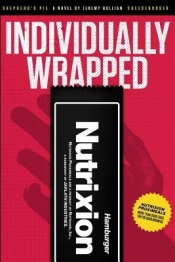
  • INDIVIDUALLY WRAPPED by Jeremy Bullian

    INDIVIDUALLY WRAPPED by Jeremy Bullian

    Individually Wrapped tells us the bizarre tale of Sam Gregory’s descent over the condensed course of a couple of days. Set in a 21st century futuristic city, technology has permeated every aspect of the city dwellers’ lives. In some ways things are more efficient: cars drive themselves, doors open on voice command, money is exchanged via thumbprints. None of the technologies presented are far-fetched; many exist today.

    However, technology hasn’t made the city easier or safer to live in; traffic problems, vagrants, theft, and serial killers still abound. Workweeks include Saturday; workdays are commonly 10 hours. Sam has integrated his car’s computer system – dubbed Susan – into his home environment to simplify things. Only problem is, Susan is developing her own personality.

    Sam has been given the opportunity to pitch to an important client, Nutrixion, for the ad agency he’s worked at for eight years. Sam won an award for a campaign for a paid toilet system, but hasn’t done much since, and is suffering burnout. His former partner is now his boss: a lumbering, balding, donut- and pornography-indulging man who is growing weary of his subordinate’s slacking. If Sam can’t step up his game, he’s in danger of losing his job, and he knows it. But everything in the universe seems to conspire against his being able to get the job done, and he’s running low on excuses.

    Sam, and his story, is a vehicle for questioning the big-picture elements of life as we know it: Can we achieve a utopian society? How much control can we really gain over our lives, and is perceived control better than none? Are we just bits and pieces in a bigger machine controlled by a greater force? What liberties are we willing to give up in order to be free from mundane tasks and duties? What happens when what we created starts creating?

    Is technology our salvation? Ian, Sam’s coworker, thinks so, and uses it not only for work but for entertainment. He drags Sam out for a night at a club, where the patrons enjoy virtual realities of their own creation, although the alcohol is very real. By now Sam is stuttering intermittently, has headaches and numbness on one side, but doesn’t seem to take any of it as a serious problem; just side effects from a minor car accident and sleeping wrong. He still joins in the fun, and decides to become his spy-movie hero, Victor Nil. The near-comic events of the night continue his downward spiral, although he gains insight into his high-security account, setting off in him a course to take down the product, its parent company, and his agency.

    Sam sees himself as a hero, not unlike Victor Nil, but doesn’t give his plan a lot of due diligence, or pay much attention to his cautioning subconscious, with which at this point he is having out-loud conversations. He is also becoming paranoid, encouraged in part by the culture of his workplace. Self-delusion is an interesting state of mind, because everyone can see it except yourself, as it propels you ever deeper into oblivion, where not even technology can save you.

    An average guy with a college degree, Sam’s search for meaning and significance collide with his need for privacy, intimacy, and revenge, sometimes helped but more so hindered by technology. Individually Wrapped is a cautionary tale about the pitfalls of computers taking over in a modern world, showing how humans might not benefit from its intruding tendrils as much as technology proponents had intended in their quest for a utopian society.

    2013-SomersetIndividually Wrapped  by Jeremy Bullianwas awarded the Grand Prize in the Somerset Awards for Literary and Contemporary Fiction, a division of Chanticleer Reviews International Writing Competitions.
  • SOFT TARGET by John Trudel

    SOFT TARGET by John Trudel

    In this action-packed, rocket-paced, pistol-smart thriller, Soft Target is a harrowing journey involving high level U.S. government and military officials, the NSA, CIA, and FBI, Islamic terrorists, SEALS, NGOs and unexpected allies. Set aside any notions of how conspiracy theories begin: you’ll have a few of your own after reading Trudel’s heart-pumping tale of bio-weaponry, kidnapping, espionage and treason.

    We are first introduced to Mike, a Marine General who suffered great personal losses but an overall victory in Yemen years earlier. The incursion left him in a wheelchair for a time, but he remained useful to the administration. The story is set in an era of a more conservative government.

    President Hale suspects a leak from within his own congress–maybe from someone frequenting the ‘bubble’ for private exchanges. He assigns Mike the task of finding the source of the leak, which is putting an NSA project of high importance at risk. Mike is also tasked to protect the project’s manager, Gerry Patton. Both she and the project, headed by her father, have suffered under governmental bureaus that would just as soon see it, and her, disappear.

    Mike is escorting Gerry from her home when the real action begins, suddenly and shockingly. Although no war is declared, a war is on: it is one that can only be won via intelligence and communication. Not that tanks, fighter planes, helicopters, and guns (some of which are described in detail) don’t play a prominent role in Trudel’s  thriller.

    The Pacific Northwest sets the scene for a carefully planned infiltration of jihadists, picking on Oregon for its lax security and, what some consider, screwball laws protecting minorities from criminal investigation. Gerry’s father is in danger, and little can be done about it. Loopholes and “catch-22s” keep hands tied and responsibilities shifted until hard evidence can allow any action against the suspects.

    Soft Target does not hold back when it comes to exposing bureaucratic nonsense, mountains of red tape and petty frustrations that slow progress in a time-sensitive situation, but are also not limited to the US. No one really trusts each other when they first meet, especially when they are representing different branches of government. Bonds made long ago are still strong, and respect does develop between teams forced to work together. It’s safer not to trust anyone or share any information not absolutely necessary. Gerry and Mike test each other time and again, breaking down solid ramparts in order to work as a team. Even the reader is left out of some intel—sometimes we are in the bubble with the President, and sometimes we are waiting in the wings. But, Mr. Trudel does not leave us in the lurch forever.

    The story is driven mostly by dialogue, some of which delves deep into ancient history, exploring the first uses of intentional bio-weaponry, and thoughts about what really wins wars. The reader needs to pay close attention to detail to follow along in some of the more intense situations, as these details can be easily overshadowed by the whiz-bang actions of a high-consequence military action unfolding in present time.

    The relationships developed in the story are believable, the key players changing both for better and for worse. I grew to appreciate the “short, ugly woman” [fusion_builder_container hundred_percent=”yes” overflow=”visible”][fusion_builder_row][fusion_builder_column type=”1_1″ background_position=”left top” background_color=”” border_size=”” border_color=”” border_style=”solid” spacing=”yes” background_image=”” background_repeat=”no-repeat” padding=”” margin_top=”0px” margin_bottom=”0px” class=”” id=”” animation_type=”” animation_speed=”0.3″ animation_direction=”left” hide_on_mobile=”no” center_content=”no” min_height=”none”][sic] with the abrasive personality and hard-as-nails façade. I was rooting for Mike to be the superhero: kill all the bad guys and run off into the sunset with Gerry, but this is not a predictable story with a predictable ending.

    Soft Target will challenge your beliefs as to what you hear in the news, how events are spun, how perceptions are managed, and even what is moral and ethical when it comes to protecting and defending our country—no matter where on the political spectrum you find yourself.

    Trudel’s Soft Target is a captivating and entertaining cyber-thriller that takes place in a future U.S.A.[/fusion_builder_column][/fusion_builder_row][/fusion_builder_container]

  • “THE BOREALIS GENOME” by Thomas P. Wise and Nancy Wise

    “THE BOREALIS GENOME” by Thomas P. Wise and Nancy Wise

    When technology, genetics, biology, and the quest for eternal life combine, what could possibly go wrong? Quite a bit, it turns out. The Borealis Genome begins as a smooth, ambling tale told through the eyes of some of its characters in vivid detail. Scenes are intricately painted in warm, pacifying colors. However, these scenes are juxtaposed with psychological disconcerting subject matter along with some gruesome and disturbing events. With each turn of the page of this YA/New Adult thriller, the ticking clock speeds up.

    Brutally violent murders are plaguing Philadelphia, perpetrated in zombie-like fashion, mostly by adolescents. We relive a young boy’s torture by two of his own family members before he’s left in a pool to drown.  We see the world through the eyes of an observant 12-year-old boy, Tommy, trying to be tough enough to withstand the rough ‘play’ of the boys he is hanging with. We, the readers, wonder if he’ll meet a similar fate.

    If you listen to the news reports, all these deadly incidents are isolated: There is no zombie-virus; there are no zombies. Meanwhile, Tim has cause to think otherwise. The pursuit of some connection to the seemingly random killings across the Northeast becomes his obsession, involving his fiancée and his best friend via cryptic text messages and secret meetings. Will they find something to link these events together? And if they do, will they be able to do anything about it?

    Dr. Denat is the director of computing sciences at a facility researching cures for Alzheimer’s disease and he is Tommy’s father. Dr. Denat is the mastermind behind an artificially intelligent program that can restore memory function by transplanting those memories to a new “host.” In this way, the company, named Environmental Consciousness Ltd. (E.C.), can sell the means of extending one’s life through an engineered person made from your own DNA and memories, albeit edited – think Eternal Sunshine of the Spotless Mind – but even better. It’s similar in concept to Being John Malkovich – except that you have your own “John Malkovich” after you die.

    Tommy goes happily along with his dad to work, as he has before, and we can see his pride in his father as they enter the research facility. We see the center through Tommy’s twelve-year-old perspective as he fluctuates between being awed by the glass and architecture and his father’s position and then becoming bored when he is reminded by his father to sit quietly while in his office.

    The ancient Mr. Oldham, the owner of the company drops by and invites Tommy to view one of his experiments. Tommy obediently follows him to his lab where he views Dr. Oldham’s experiment, at first, with resignation, then curiosity, and then disgust. Dr. Oldham is pleased with Tommy’s inquisitiveness and patience. Tommy is sweetly naive, but intimidated in the research center’s sterile and laboratory surroundings. However, apprehensive begins to set in as he begins to comprehend what he was just shown by the ancient Dr. Oldham.

    We wish Tommy would have more apprehension—much, much, more.

    From here the story takes off at breakneck speed as we learn about the Dr. Oldham’s secretly intended purpose for the research. And he believes Tommy might just be the missing element that he has been searching for to achieve his own personal goals for his research.

    The reader is given glimpses of E.C.’s rosy marketing efforts to potential elderly clientele Jurassic Park-style – from a moving tram behind a protective barrier. What they don’t see is that sometimes biology throws in a monkey wrench by mutating its viruses, computer programs always have bugs, and human error, and other unpredictable elements come into play. E.C.’s artificially intelligent program, like HAL, becomes a self-protective force corrupted by the uploaded consciousness of many minds. Tim’s friends end up fighting not only for their own lives, but for the future of humanity.

    The Borealis Genome takes on a unique perspective of the zombie vs. humans’ tale. For it is a tale of the ancient quest for eternal life, but one using the latest in high-tech, state-of-the-art scientific research that creates its own type of Black Death.

    Tom and Nancy Wise’s children contributed to the book’s storyline; they provided the clever cover art and, undoubtedly, to the text messaging most adults would find undecipherable but adds credence to the story to YA and New Adult readers. Adults who also enjoy a good zombie story with a twist (that’s a little gory, but also intellectual) will enjoy this YA thriller. It might, just might infect your own thoughts and memories more than you might realize….

     The Borealis Genome won  the Grand Prize Award in the Dante Rossetti Writing Competition for YA and New Adult Fiction, a division of Chanticleer Blue Ribbon International Writing Competitions.

  • An Editorial Review of “Raven’s Run” by John D. Trudel

    An Editorial Review of “Raven’s Run” by John D. Trudel

    A covert CIA mission gone sideways, a harrowing post-WWI transatlantic flight, and a research facility with “remote viewing” capabilities: three seemingly separate stories woven across time and locations bring us to the brink of an attack that would annihilate North America in this entertaining and suspenseful novel titled Raven’s Run.

    John D. Trudel researched actual historical archives to tell the escapades of his uncle, George O. Noville, a Navy officer who made historical flights, explored Antarctica, became an oil executive, and eventually settled in Mexico to retire. It is through his voice that the reader ‘hears’ the story of forgotten U.S. history.

    Josie is a gentle soul with an incredible psychic ability (as well as a penchant for marijuana and going braless). All she has to do is have physical contact with an item to see its history, location, and actions occurring around it. The government, needless to say, sees her as a valuable asset and has her working in secrecy. Her viewings have sometimes left her comatose – she is especially sensitive to violence, and sees her own future in a mental institution if she doesn’t change the path she’s on.

    Wayne, who has been given the boot from the CIA, is given a second chance along with a new identity as Raven. He is tasked to protect Josie. While on his failed yet explosive mission in Iran, Raven had uncovered a diary belonging to Noville, with the title “Operation High Jump,” a major Antarctic expedition that occurred right after World War II.

    All evidence from the mission was destroyed, but the significance of the notebook is unclear. Josie is tasked with viewing the events surrounding the notebook, but the vastness of the great white ice continent makes finding any worthwhile data a huge challenge. While her talents are great, they are not unlimited.

    Meanwhile, Islamic extremists are racing toward a mission of their own in Antarctica, allowing nothing to stop their quest to rid the world of the “Great Satan” and infidels. With ties to oil executives, high level U.S. government officials, and a nuclear-powered icebreaking vessel, not much can stop them, not even one of their own. The suspense builds at a breakneck pace.

    Josie and Raven form an unlikely bond, breaking down the walls that he has had to build around himself out of necessity. Raven gains Josie’s trust, and she his. They start envisioning their own future together, but first they must complete this last, dangerous mission: solving the mysteries surrounding Noville, his death, and his diary. Will their love give them the strength to survive the ordeal, or add to their vulnerability?

    Mechanical techies will enjoy Raven’s Run’s detailing of weaponry and engine mechanics on airplanes and ships, in both military and private use. Trudel challenges some widely held positions on climate change, Islam, the JFK assassination, Vietnam, international incidents occurring between WWII and today.

    While this reviewer didn’t do any fact checking, Trudel offers a “Factoids and Fantasies” section to help the reader sort through historical fact and what is inspired in this work.  A post on Trudel’s blog sums it up nicely: “There is a lot of truth in fiction these days, and we live in interesting times.”

    Reviewer’s Note:  All in all, I give Raven’s Run five stars. The ending is awesome! I tried not to give too much away in the review because the unfolding and braiding of events adds to the reader’s pleasure of discovery. This reviewer is looking forward to reading Trudel’s sequel, Raven’s Redemption which will be out in 2015.