

BASIC MAXIMS for CREATING COMPELLING CONTENT
With 25 years in the film production world, I worked with scripts as the blueprints. I am now focusing on books, but story is story is story.
 The same guidelines I used in Hollywood, apply in publishing.
How can you stand out in a sea of new releases- scripts or books- estimated to be 2 million each year?
How can you entice readers to find your book, pick it up and read it?
Whether you are published by the Big 5, hybrid houses, indie imprints or by self, start with these basic maxims for creating compelling content to increase your odds of being discovered:
Start with a bold, big idea/a high concept– something bold, a twist, an irony. Imagine its own movie poster. Are you asking a profound question, setting forth a new reality, diving deep into the human psyche, setting up a comedic situation, writing a biography – know your hook and build from there.
Write the log line <33 words. Your story reduced to its essential core. Try out versions with friends/colleagues to test if they get the true meaning of your book. Once it has been vetted, memorize it. Practice in the mirror so when someone asks you about your book… voila! without hesitation, you have this compact, crafted and compelling logline. Then, put the logline in a prominent position in your writing space. As you are writing, the logline acts as the guardrails to keep your stream of consciousness on track. All satellite storylines revolve around that core statement.
Walk in the skin of your main character. Before writing your book, imagine your character in different scenarios and challenging dilemmas that are outside the projected book’s storyline. Just observe how he/she reacts to trauma, betrayal, falling in love, danger, as it informs how your lead character thinks and acts in the world. Crawl inside his/her skin.
Oftentimes, writers observe a character as if from across the room and paint the characters from the outside. Instead, start on the inside until you really know your protagonist- and antagonist too. These imaginings create an unspoken backstory and uniquely color the voice and reactions of your lead, thereby making him/her memorable and distinct. Characters are why people turn pages, so intrigue your readers with a rich and nuanced characters.
Front load your story with intrigue, conflict, tension, wonder, the oh-my-goodness. Don’t hold back on the first paragraph or the first chapter. Today’s world is accustomed to videos under 5 seconds and interactions less than 140 characters. The story needs to hook the reader from the first sentence. To that point, no prologues or backstories to start your book off. Jump on the train that is leaving the station. Backstories that are necessary to drive the story forward can be worked in later, but only if they are relevant and essential to knowing the character today.
Create a GREAT Cover. Yes, we do judge a book by its cover. Humans are judging machines and first impressions run deepest. Not that we are superficial all the time…but we definitely are when browsing bookstores and online titles. Covers project the books’ genre, emotion, energy and attract different types of readers. Successful covers are provocative: ironic, funny, intriguing, emotional, brash, curious, colorful- whatever emotions are congruent to your book. You are writers, not graphic artists. Your cover needs outside help. I see far too many times, authors are worn out and at wallet’s end when they get to the cover expense, but it is your most valuable sales force.
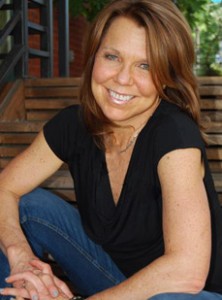 At the upcoming CAC 17, I have a spicy session on how to make a great Story Cocktail- the ingredients to shake, stir and add a twist to light up your story and ultimately, your book sales. Hope to see you there! – Diane
Diane is the Creative Director at Chanticleer Reviews & Media.
Diane Sillan Isaacs brings more than two decades of experience in film and television industries as an executive film producer, president of production for Don Johnson Productions at Universal and Paramount pictures, president of development and production for Green Moon Productions where she produced films for Antonio Banderas and Emma Thompson.
Diane is also the executive creative director of Luna Design NYC. She and Kiffer Brown co-founded SillanPaceBrown Publishing + Production + Agency, LLC.

 Our Guest Post today is written by Diane Sillan Isaacs. Diane brings more than two decades of experience in film and television industries as an executive film producer, president of production for Don Johnson Productions at Universal and Paramount pictures, president of development and production for Green Moon Productions where she produced films for Antonio Banderas and Emma Thompson.
