Tools of the Authors’ and Screenwriters’ Trade: Continuity and Story Bibles
Building a story bible is much like building a house. I know as I am currently going through the very stressful and time-consuming process of having a house built. I’ve found myself agonizing over the rooms (do we really need a formal living room?), the hinges of the windows (9 choices of style, 7 choices of color), the light switches and outlets (how many and where do they go?), and many, many more things I had never even thought about (my favorite being how many caissons should be drilled for the foundation).

When I’m not overseeing the house, I’m creating story bibles for authors who write series. I’ve been doing this for a variety of authors in multiple genres. Both endeavors require a tight organization of details, an insight into what the finished product should look like and how it all started.
The major thread that runs through both of my projects is continuity.
The Importance of Continuity
Continuity is one of the most under-rated yet, far-reaching aspects of writing a series. It’s the one that is easily glossed over and forgotten in the mad dash to get words on the paper or the screen. It takes a backseat to the development of the world, the characters, the story arcs, and the action. And yet, it is one of the things readers remember most when reading a book. Continuity in a series includes everything from the attributes of the characters to the placement of buildings in the world. It covers the timeline and storylines from book to book, along with the rules of the world. Like building a house, an author needs to include the correct nuts and bolts as needed to plan the best possible design of the world she is creating. And, yes, even pantzers need to do this at some point before typing The End.
Nuts and Bolts to Include
Readers thrive on details. They crave information on the setting, the characters, buildings, outdoor spaces and more. These elements create a living, breathing world for the reader to experience. A few basic elements are standard when writing characters–a name, their age and physical characteristics for example. More details will appear over the course of the series i.e. family relationships and a love of animals. An author will also add details to enrich the storyline, a childhood anecdote for example.

The same goes with the development of the world. Tell the reader what the buildings or outdoor spaces look like, where they are located, and what they are used for. Description provides the reader with more color and more ways of imagining the setting. Remember to take your buildings beyond the four walls. Give them not only structure, but dress them up a bit. When building a house, more happens than naming the rooms. We create a home by filling the rooms with furniture, artwork, blinds on the windows, and paint on the walls. Do the same with the buildings and spaces in your story world. Bring your world to life.
Not having ambiance or a sense of place in a work is called “the white room syndrome.” White room syndrome is what our editors note that can be a major weakness found in manuscript evaluations. There is little or no immersion for readers in a “white room” and this will cause the dreaded lost of interest in a work. ~Kiffer Brown
Organizing the Nuts and Bolts
Organizing the myriad of details of a story world is a necessary evil. Continuity demands this. Writing a series is stressful enough without struggling to recall details from previous books or spending hours searching for that one fact that was mentioned in book 2 (or maybe book 3, or maybe only existed in your thoughts and wasn’t actually mentioned on the page.) Too many authors rely on memory or scraps of notes here and there to keep them on the straight and narrow. Finding a system that works is an important tool in an author’s box of tricks. A story bible is one such tool.
Creating a Story Bible -not just for Scifi writers
If you want to pitch your book for a TV series or film or gaming, you will need to create a story bible. Screenwriters depend on it and so should serious authors. The story bible holds all of the tiny pieces of information such as cultural phrases, potential plotting ideas, dialogue, emotions, memories, does the character like dry wines or takes her bourbon neat, coffee black or macchiatos only, and a myriad of other ideas or details. And then there or the locations, timelines, character details, …
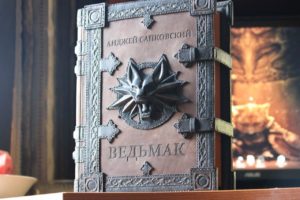
Creating a story bible requires attention to detail and a lot of patience. The minutiae of a story world can be quite tricky to record. Choosing a structure for the bible that will work best for the author is crucial. Many find various word and writing programs to work best. All information regarding the characters, spaces, timelines, rules of the world, and what makes your story world unique should be listed and arranged in a manner easy to access. Without a good system, continuity across books will suffer, the reader will flounder and the author will inevitably hear about it in letters and reviews.
It is important for each writer to find a system that works for her/him per project. One size definitely does not fit all.
Specifics on what to include in your story bible along with different systems will be discussed at the 2020 Chanticleer Authors Conference in Diane Garland’s session Your Story World: Beyond Eye Color and the Weather. And we will interview Diane for an OnWord Talks podcast soon!
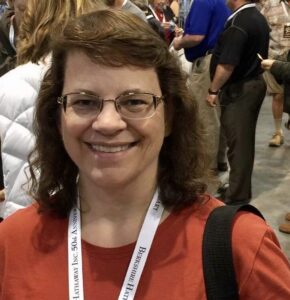 Learn from the BEST!
Diane is always on the go! We invite you to visit the YOUR WORLDKEEPER website at https://yourworldkeeper.com/
Diane Garland will teach several sessions on planning book series, world building, and creating story-bibles at CAC20 in Bellingham, Wash.
Her clients include USA Today Bestselling Author Ann Charles, Winner of four Will Rogers Gold Medallions and the Laramie Award, Jacquie Rogers, NY Times and USA Today bestselling author Sharon Hamilton, USA Today bestselling author Leslie Langtry among others.
Diane will help you create and write your series efficiently by maintaining continuity and fluidity. Diane, with her crackerjack proficiency in tracking details, locations, timelines, characters, and more will allow you, the author, to spend your time being creative, and not on tracking details that give works their all-important story construct.” – Kiffer Brown, publishing consultant and CEO of Chanticleer Reviews
Did you know that Chanticleer offers editorial services? We do and have been doing so since 2011.
And that our professionals (like Diane) are top-notch and our editors are experts in the Chicago Manual of Style. They have and are working for the top publishing houses (TOR, McMillan, Thomas Mercer, Penguin Random House, etc.). If you would like more information, we invite you to email Kiffer or Sharon at KBrown@ChantiReviews.com or SAnderson@ChantiReviews.com.
Click here to learn more about Chanticleer Editorial Services.
A great way to get started is with our manuscript evaluation service. Here are some handy links about this tried and true service:
https://www.chantireviews.com/manuscript-reviews/
We work with a small number of exclusive clients who want to collaborate with our team of top-editors on an on-going basis. Contact us today! BookEditor@ChantiReviews.com

Thank you for reading this Chanticleer Writer’s Toolbox article.