Author: D Beaumier

  • Search and Destroy, Cull and Extract, and Other Editorial Tactics for Your Work in Progress — A Chanticleer Toolbox Primer Article by David Beaumier & Kiffer Brown

    Search and Destroy, Cull and Extract, and Other Editorial Tactics for Your Work in Progress — A Chanticleer Toolbox Primer Article by David Beaumier & Kiffer Brown

    Now that you’ve completed your beautiful manuscript and have made several draft revisions, you are ready for the next move.

    You know, the one that comes before starting the editing process.

    A writer before having a manuscript overview terrified about what comes next for their work-in-progress. Don’t let this happen to you.

    Now for some Real-Life Ruthless Editorial Terms:

      • Reconciliation or Go Separate Ways
      • Search and Destroy (SAD)
      • Cull and Extract
      • Wrench Out Passive Voice – Mistakes Were Made
      • Clichés, Platitudes, and Banalities – Oh NO!
      • Kill Your Darlings – Stephen King
      • Are You Listening to How You Sound?

        Are You Listening to How Your Work-in-Progress Sounds? Really?

      Continue reading to the end of this post if you would like more information about these scary but necessary editing tactics.
      Some writers like to put their draft into a drawer for six weeks or so to allow themselves fresh eyes before endeavoring on one more draft revision as Stephen King recommends in his On Writing: A Memoir of Craft.

      Here at Chanticleer, we see basically two camps that writers fall into.

      • Writers who rework every sentence before moving on to the next sentence trying to reach perfection. If this is you, (And you know who you are.) then we advise you to click on this link to read an article by the multiple award-winning author, Michelle Rene.

      OR

      • Writers who bang out work and then think they are ready to publish with perhaps just a quick once over for typos. (And you know who you are.) Just upload to Amazon and you are done. Au contraire, mon ami!, as Q from Star Trek notoriety might say.
      Q from the Star Trek Next Generation Deja Q episode – Of course, the excerpt is on YouTube.

      Is this conundrum the same as the age-old question of writing style: Are you a plotter or pantzer?

      No, it isn’t. Writing styles are deeply personal. What we are discussing here is the editing process for novels.

      So, what’s a writer to do?

      Emulate what has worked successfully for traditional publishing houses.

      After your draft, but before you begin the editing process, have a manuscript overview (MOV) – an evaluation performed on your work by a professional editor. If you are with a literary agent, or if you work with a traditional publisher or acquisitions editor, this is the time to turn it over to them for their feedback.

      We hear you, “Well, if I had a literary agent or was working working with a traditional publishing house, I wouldn’t need to read this article.”

      If you don’t have any of these professionals on your team, then consider using a professional manuscript evaluation service such as Chanticleer’s. A manuscript evaluation will save you time and money and it will give you feedback about your work’s pacing, plotline, characters, atmosphere, P-O-V structure, dialog, and if you have a compelling story—one that will keep your targeted reader engaged.

      Here at Chanticleer Reviews, we come across many published works that skipped over this vital step. The work might have been copy-edited and proofed before clicking the publish button, but the story just isn’t compelling, or it has a saggy middle, or the characters are flat, or dialog stilted, or there is no “voice.” It is almost impossible for the author to “see” these issues because the story lives in the author’s head. The authors’ who receive this feedback generally exclaim to us, “But I’ve paid to have it edited. There are no typos.”

      No typos, does not a story make. However, authors and writers can create story magic. But it is difficult to get the story out of the writer’s mind and into words that communicate the “mind-film” that many authors see. This is where having an unbiased reading of your work with feedback will make your work shine. kb

      Others know there are choices they made at the end of the book that will require changes earlier in the book (maybe it started in 3rd person and the moved to 1st person). Whatever your process is, this article will help your work shine!

      The Editor – going over the ms with an MOV.

      1. Reconciliation or Go Separate Ways

      Getting Ready to Polish Now that Your Work-in-Progress has had a MOV

      There’s no universal way to use writing tools. As always, remember these are recommendations that have worked well for many of our authors, though it’s okay if they don’t work for you.

      Consider the Following for when you receive your manuscript’s MOV

      First off, give yourself time after reviewing notes from your MOV editor/agent/publisher. After receiving feedback try the following:

      • Consider recommended changes from your second pair of fresh eyes. It is good to keep in mind, that each one of the readers who decide to read your published book will be reading it with fresh eyes also.
      • Address issues. The editor will have made suggestions where needed. Deal with the biggest issues first.
      • Save a clean draft of your copy where the suggested changes don’t stand out. (Of course, you’ll want to save one where they do stand out as well, just in case.)
      • Wait two weeks.
      • Revisit the work. Ask yourself if anything stands out as odd or a change in voice.

      And, yes, sometimes, we do receive a ms that is ready to move on to either a line-edit or a copy-edit. It does happen. If this is the case, won’t you breathe easier knowing that it is ready to invest editing and shining.

      Rarely will suggestions from professional readers and editors let you down–just see the difference yourself!

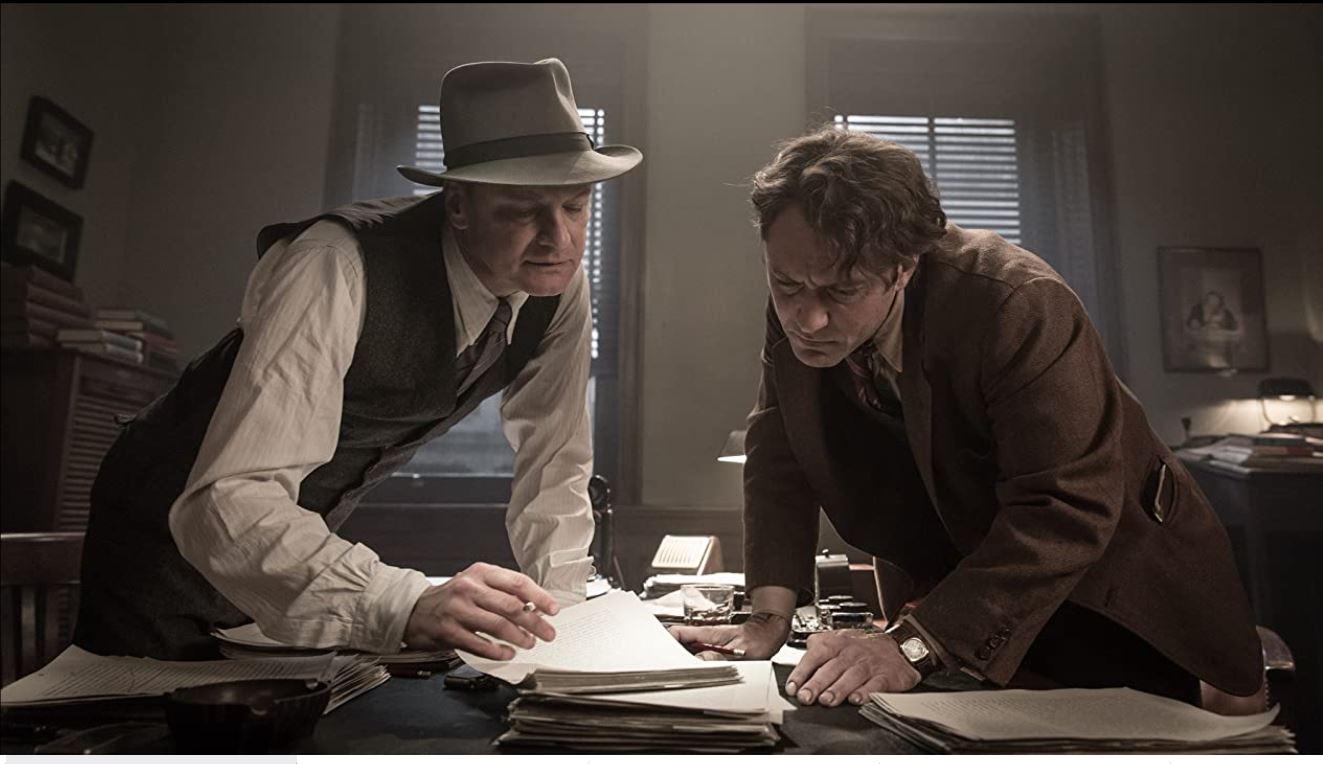
      The Editor film is based on award-winning book Max Perkins: Editor of Genius by A. Scott Berg. “Max Perkins discovered Ernest Hemingway and F. Scott Fitzgerald. But he never met anyone like Thomas Wolfe.” The film’s tagline.  Yes, even great authors such as these benefited from working with an editor.

      When you are satisfied that you have a compelling story—the work has had a manuscript overview and then you have reconciled the w-i-p with the advice given, it is  now the time to begin the Self- Editing Process! (Do the following before line editing or copy editing.)

      2. Search and Destroy (SAD)

      When we’re inspired by outside work, we love to tell you about it. The best line editing tools we know about come from Brenda Miller and Susan Paola’s book on creative nonfiction Tell It Slant, which features clear and direct steps to make your writing stronger.
      Tell it Slant, Third Edition — Brenda Miller
      First, identify all your “to be” verbs. If you can think of a comfortable, easy replacement, use it. Obviously, not all of them need to go (just glance through this article and you’ll see plenty), but a “to be” verb, while almost always the easiest choice, is not always the best choice.
      For example, here’s a piece of the short story Medusa by David Beaumier. First, with “to be” verbs shown in bold:

      She isn’t happy about it, but she had been encouraged to join Visitation to help people, not because it was personally comfortable for her. So she is sent into decontamination, followed by the sound of a seal behind her as the hermetic vacuum in front of her is opened. Her hair is only a little fluffed up by the experience, and is easily coiffed back into place after the blast of ionization that would be deadly to any foreign compounds in the air.

      Medusa
      Sometimes fluffier hair can be dangerous.

      And now revised without the repetitive verb choice:

      She doesn’t like it, but she joined the Visitation to help people, not for her own personal comfort. So into the decontamination room she goes, followed by the locking of one hermetic seal behind her and a second one in front. Her hair only needs to be patted down a little bit after the blast of ionization that should kill any foreign compounds in the air.

      3. CULL and EXTRACT

      Second, find your adverbs and adjectives. These can be the condiments and spice of your piece that really give it life, but too much mayonnaise is never a good thing, so look at each of them and see if there’s a weak verb or noun that’s being propped up by them.

      An arm holding food that it is impossible to identify due to the large amount of mayonnaise that is surely getting on the person's hand.
      Hopefully someone has a napkin

      Consider your proportion here, too. In one YA urban fantasy dredged up from the out of print pile was this unforgettable villainous dialogue spoken to the protagonist: “‘I’ll kill your whole family,’ he hissed maliciously.” While the intent is clearly to be evil, we can also see that the author didn’t trust the reader to understand that the villain wasn’t very nice.

      An adorable little girl dressed as a vampire devil
      Yes, evilly gnashing malignant teeth angrily with malintent

      4. Wrench Out Passive Voice

      The last suggestion from Miller and Paola is to look for passive voice, often indicated using “have” or “had.” A favorite trick for finding passive voice is to see if you can add “by zombies” to the end of the sentence. Like the previous rules, knowing why we use active and passive voice is important. Active voice tells us who does what to whom. Passive voice tells us what actions are done to whom, but not necessarily who did them.

      Looking to get more weasel words? Check out this article here by Jessica Morrell on decluttering your sentences.

      For a great example on passive voice, see this video below.  (It is non-partisan, we promise.) 


      5. CLICHES, PLATITUDES, and BANALITIES — Oh NO!

      Taking Advice from the Best: Jessica Morrell – Top-Tiered Developmental Editor

      Jessica Page Morrell
      Jessica Page Morrell

      Those who attended VCAC21 will know, Jessica Morrell is one of our favorite contributors. In her two workshops, Jessica goes deeper discussing the idea of “junk” words for writers. Maybe you’ve avoided all the pitfalls so far, but do you notice your characters do a lot of the following?

      Jessica’s advice on eliminating junk words can be found on the link below:

      https://www.chantireviews.com/2019/05/18/decluttering-sentences-by-eliminating-junk-words-from-jessica-morrells-editors-desk-writing-toolbox-series/

      • Shrug
      • Wrinkle their nose in disgust
      • Widen their eyes in surprise
      • Nod
      • Smile
      • Any other sort of repetitive description that doesn’t really subvert the reader’s expectations?

      What would you say your own junk words are?

      Jessica even provided a long list of words to give an idea of what hints that writing might not be as strong as we hope.

      Definitely, absolutely, particularly, actually, decidedly, quite, very, totally, mostly, dearly, ideally

      Notice how all of those are also adverbs? Keep an eye on your work!

      6. KILL YOUR DARLINGS and TOO MUCH EXPOSITION – TMIF

      Show vs Tell

      Showing and telling goes well with the debate about active and passive voice. In my mind, there is almost no writing rule more contentious or less understood than the rule that writers should always show rather than tell. Dialogue is often the heart of showing, but be careful! Occasionally dialogue can sneak in as a form of telling when it’s being used to explain something the characters probably already know for the sake of the reader. 

      Another video on the potential pitfalls of too much exposition and when dialogue tells too much. TMIF.

      We dare you to see just how long you last watching Too Much Exposition. (Kiffer lasted about 30 seconds)

      Go ahead, give it a try. We double dare you.


      So how should we define Show and Tell? Well, Showing is an example of narrative scene—something happens in real time! Meanwhile, Telling is an example of narrative description where there’s either a moment of summary or interiority, something that probably isn’t happening in real time. Like passive and active voice, there’s a time and a place for each.

      Consider the structure of your work. Has there been quite a bit of showing happening as characters flit from scene to scene? Even in a thriller, the reader will need a moment to rest, to have the narrator examine the main character’s interiority and explain a little bit of the backstory or the connection the hero makes just before solving the mystery.

      The moment where everything clicks into place often isn’t a show, but a tell, directly informing the reader that the most important discovery of the book has been made. That lets it happen fast rather than laboring to show each and every scene.

      We are quite proud of the articles on our website and to be a leading resource for writers, and you might also like some of what these websites say about writing craft:

      6. Are You Listening to How You Sound?

      Listening: The Most Powerful Tool

      The last secret here is one of the most useful things we’ve heard of for any writer or editor, and that is read your work aloud. You can ask a friend or loved one to do this for you, or you can find a screen reader that will take you through your story, but words always sound different when they’re vocal vibrations rather than fixed to a page. 

      A microphone that looks to be a blue yeti brand
      Recording yourself can also let you play back your story and, no you do not  need a fancy microphone like this.

      Reading aloud, especially for dialogue, can help you better understand your tone, and it helps you find where words may have been repeated more than necessary. Sometimes, especially if writing a play, it can help to highlight the piece with different colors based on whose speaking. If there’s an emotion that should be conveyed in the story, assign colors to each emotion and highlight lines with how they should land. Then, while reading it aloud, you can check to make sure that the assigned tones fit.

      Jessica Page Morrell has an excellent article on Glissando And Wordcraft you can read here.

      If you’re looking for voice recording software beyond Voice Memos on your phone, consider the following programs:

      In Conclusion, Remember that the Work is Always Yours 

      In the end, remember that you are the author of your work, which means you get final say. Peer review is excellent, and, as said above, it can be helpful to practice accepting all feedback and then reading your work after you’ve given it some space. 

      Remember, the earliest time we recommend submitting your work to one of our Twenty-Three divisions for the Chanticleer International Book Awards here or for a much sought after Editorial Review here is once you’ve reached the proofreading stage of your manuscript. Again, that’s the earliest we recommend sending your work in.

      For further reading on what we’ve said in the past at Chanticleer, check out parts one and two of articles written by Jessica Page Morrell here and here, plus a bulleted list of tips she put together here.

      Looking to demystify even more of the editing terminology? Learn about it here from Kiffer Brown herself.


      Chanticleer Editorial Services – when you are ready
      Did you know that Chanticleer offers editorial services? We do and have been doing so since 2011.

      Tools of the Editing Trade

      Our professional editors are top-notch and are experts in the Chicago Manual of Style. They have and are working for the top publishing houses (TOR, McMillian, Thomas Mercer, Penguin Random House, Simon Schuster, etc.).

      If you would like more information, we invite you to email Kiffer or Sharon at KBrown@ChantiReviews.com or SAnderson@ChantiReviews.com for more information, testimonials, and fees.

      We work with a small number of exclusive clients who want to collaborate with our team of top-editors on an on-going basis. Contact us today!

      Chanticleer Editorial Services also offers writing craft sessions and masterclasses. Sign up to find out where, when, and how sessions being held.

      A great way to get started is with our manuscript evaluation service. Here are some handy links about this tried and true service: https://www.chantireviews.com/manuscript-reviews/

      And we do editorial consultations. for $75.  https://www.chantireviews.com/services/Editorial-Services-p85337185

      Writer’s Toolbox

      Thank you for reading this Chanticleer Writer’s Toolbox article.

      Writers Toolbox Helpful Links: 

      First Draft in Thirty Days? No Tricks! Award-Winning Author Michelle Rene Shares How She Does It!

      Part One WRITING FICTION GUIDELINES — by Jessica Page Morrell

      An Editor’s Checklist for Manuscript Evaluations of Fiction by Jessica Page Morrell | Jump Start Your Novel – Brainstorming Tips for NaNoWriMo Season from the Editor’s Desk of Jessica Morrell

      15 Self-Editing Tips from the Editor’s Desk of Jessica Morrell

      GLISSANDO and WORDCRAFT from Jessica Morrell

      “The Strange World of Editing and the Beasts Who Inhabit It” by Kiffer Brown

      The traditional publishing tool that indie authors can use to propel their writing careers to new levels?  https://www.chantireviews.com/2016/05/15/the-seven-must-haves-for-authors-unlocking-the-secrets-of-successful-publishing-series-by-kiffer-brown/
    • Happy Fourth of July from Chanticleer | A Closer  Look & Recommended Reads

      Happy Fourth of July from Chanticleer | A Closer Look & Recommended Reads

      Celebrating the 4th of July – Independence Day in the U.S.A.

      In July 1776 the United States declared Independence from England. As more than politics heat up, it can be difficult to talk about our Independence Day in a complex and nuanced way.

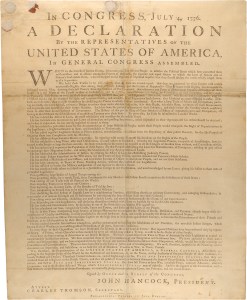
      John Dunlap printed copies of the Declaration of Independence in his Philadelphia shop on the night of July 4, 1776. (National Archives Identifier 301682)

      Click here for the National Archives Link that will give you a closer look at this historic event.

      Since US Independence was declared, the path to voting rights for all has been a long one getting from there to here, and there’s still more work to be done. You can read an abridged history of the journey of voting rights for women and people of color here, with special attention paid to the 19th Amendment.

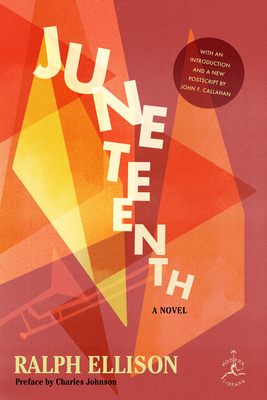
      Of course, we also have Juneteenth, which was celebrated as a federal holiday for the first time this year. The holiday celebrates a June 19, 1865 proclamation that freed enslaved peoples in Texas. Texas then, in 1979, became the first state to recognize Juneteenth as an official holiday. You can learn more about Juneteenth here.

      You can also read Ralph Ellison’s posthumously released novel by the same name.

      Clearly, the US Independence Day has a deep, rich history that still lives on and evolves today. The traditions to celebrate the Fourth of July also continue to change and grow with the world. Here in the Pacific Northwest, as we recover from a heatwave that saw record temperatures in areas without infrastructure like air conditioning to manage it, people are reconsidering fireworks that might contribute to an early fire season—a fifth season that no one is happy about. This doesn’t mean that vaccinated people can’t gather safely now, just that we rethink the best ways to maximize our celebration while being mindful of our community responsibilities.

      Here in Bellingham, Wash., there will be a free fireworks display that will be launched from a barge in the middle of our beautiful Bellingham Bay in honor of Independence Day. The fireworks should be visible from multiple viewpoints. Because Bellingham’s sunset is 9:15 p.m. and our twilight continues to 9:57 p.m., the fireworks will start at 10:15 p.m. PST.

      It is also a time to remember those who serve and have served to preserve our nation’s independence and democracy.

      We invite you to  visit Chanticleer’s most recent Memorial Day post and Veteran’s Day post. 


      To that end, we want to recognize some of the wonderful titles that have come up that made us think differently about climate and the environment. We hope you enjoy them as much as we did!

      Great Reads from Chanticleer Reviews

      Fishy Mysteries and More

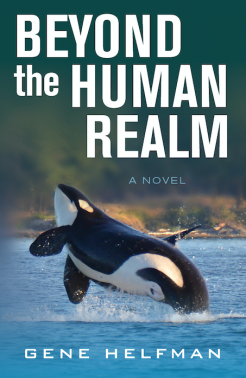
      BEYOND the HUMAN REALM
      By Gene Helfman

      Author Gene Helfman, noted academic expert on aquatic biodiversity, delivers a fictional tale about an orphaned orca (killer whale) named Sam and the humans who seek to change his life in Beyond the Human Realm.

      The book opens from Sam’s viewpoint. On display for humans, whom he calls “split-tails” or “logriders,” Sam relies on the humans now for food in his too-small habitat. In exchange, he must perform tricks such as carrying balls and leaping about, actions he performs reluctantly if at all. There’s one split-tail that he likes, though, a female who speaks to him gently. Sam allows her to ride on his back as one of his tricks. When a female companion arrives in his habitat Sam falls in love and the pair produces a baby. All seems blissful until the split-tails take his baby, and his partner dies of grief. Continue Reading here…

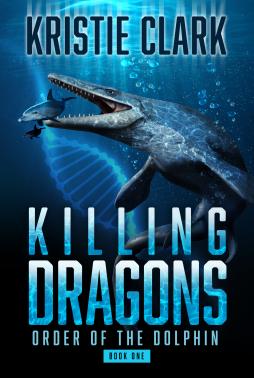
      KILLING DRAGONS: Order of the Dolphin, Book One
      By Kristie Clark

      Killing Dragons Order of the Dolphin Book 1 cover

      A search for the truth behind Lusca, the legendary sea dragon, leads to areas far more menacing than a mere myth in Kristie Clark’s Killing Dragons: Order of the Dolphin.

      Eva Paz is a doctorate-level marine biologist at the Roatan Institute for Marine Sciences (RIMS), performing research on whistle-signature spectrograms. Even though Eva believes she’s close to a breakthrough in dolphin-human communication, her statistics may not be enough to keep the grant she needs to continue her work and support her employment at RIMS. Her connection with a petite Atlantic bottlenose dolphin named Taffy, an animal trained by the Navy, and Taffy’s mate, Finn, go back thirteen years during a horrific time in Eva’s life. Continue Reading here…

      KOBEE MANATEE® – Climate Change and the Great Blue Hole Hazard
      By Robert Scott Thayer

      Kobee Manatee Climate Change and the Great Blue Hole Hazard book cover image

      Author Robert Scott Thayer and illustrator Lauren Gallegos bring to life another beautifully told tale in the fourth book in the series, Kobee Manatee® – Climate Change and the Great Blue Hole Hazard.

      In the engaging and increasingly popular Kobee Manatee® children’s book series, the lovable sea cow and friends are off to help Cousin Quinn clean up the plastic that’s littering the ocean area around her new underwater eating establishment. The 500-mile journey across the water turns into an enlightening adventure, as these characters face unexpected challenges and dilemmas, many brought on by the harmful effects of climate change and ocean pollution. Continue Reading here…

      Climate Fiction and Thrillers

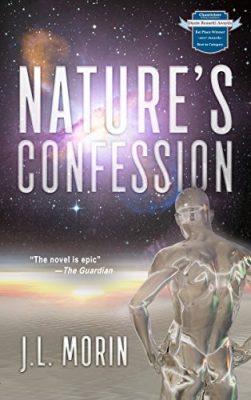
      NATURE’S CONFESSION
      By JL Morin
      Dante Rossetti First Place Winner

      In a dystopian near-future where nobody is safe, the world is ruled by a ruthless capitalist. Humankind’s last hope may be a fourteen-year-old named Boy. Part sci-fi, part diverse love story, Nature’s Confession by J.L. Morin is an ecological coming of age novel that spans the universe.

      The story opens with Boy, so-called because he hasn’t reached an age where he will be named yet for security reasons, managing to survive in the dystopian world he calls home. On next year’s earth, humanity is essentially enslaved by a worldwide corporate government, not for the people or by the people; but, one that operates to ensure its citizens are brainwashed, downtrodden, and too exhausted to be able to offer any sort of resistance. When Boy stays after school one day, he meets a man who turns out to be his long-time idol—Tyree. Tyree is a member of the resistance and recruits Boy to help him and their cause, believing that Boy may be their last hope. Continue Reading here…

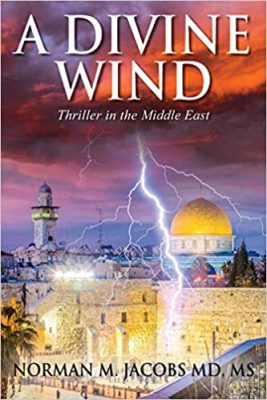
      A DIVINE WIND
      By Norman M. Jacobs MD, MS

      A Divine Wind Book Cover

      A Divine Wind by Norman M. Jacobs MD, MS is a technothriller that will keep readers glued in their seats until the last page is read.

      Working in secret, one government experiments with technology that allows them complete control over the weather. If the user guides the technology with a heavy hand, the weather will strike like a weapon; likewise, if those at the control wield compassion, calm weather that nourishes the land will result. Calculated strategies could deploy storms against one’s foes. Of course, any intentions to channel the weather for good may produce scattered, unintended, and deadly consequences. There’s an old saying, “An ill wind may blow nobody any good.” However, a divine wind may unite people if they don’t kill one another first. Continue Reading here…

      OVER
      By Sean P. Curley

      Over is a sci-fi novel of big ideas: the scourge on the future by today’s environmental negligence, the effects of biological warfare, even the development of a faster-than-light warp drive that opens the door to a future among the stars.

      In this dystopian future, humankind must grapple with the repercussions from a technological advancement that essentially imparts immortality: immortality to a very few. Less than 30,000 of the world’s inhabitants, the privileged class, Overs, and the resentment of the billions of people who don’t fit into that category, aptly named, Unders. Continue Reading here…

      This Independence Day, we wish you the following:

      May your family and loved ones be close and happy. May we share in the benefits of a community that cares for and loves each other.

      Happy Fourth of July from Sharon & Kiffer & David and the whole Chanticleer Team!


      And Remember! You can join the Chanticleer Family Anytime!

      Sign up for our Newsletter here! Join our online community, The Roost, here for discounts and special offers!

      Keep an eye out for new information about our 10th Anniversary Conference, CAC2022! More information will be posted here, and until then you’ll be able to see what we did in the past.

      VCAC 21  featured Bestselling Crime Author Cathy Ace, J.D. Barker – Master of Suspense, C.C. Humphreys – Historical Fiction with a twist,  Jessica Morrell – Top-tiered Developmental Editor,  and more!

      Check out our Editorial Services here and our Manuscript Overviews here, OR, if your work is already polished to a fine shine, it’s time to submit to our Editorial Reviews here and our Chanticleer International Book Awards (CIBAs) here!

    • Memorial Day 2021– Remembering our History and Honoring Those Who Died in Service by Kiffer Brown & David Beaumier

      Memorial Day 2021– Remembering our History and Honoring Those Who Died in Service by Kiffer Brown & David Beaumier

      Memorial Day is a federal holiday in the USA to honor and remember those who died in service to our nation. The date of the holiday changes but it always falls on the last Monday of May.

      The United States has three official days to honor those who serve or have served in the Armed Forces.

      1. Memorial Day, a federal holiday, is observed the last Monday in May, honors those who have lost their lives in action in service to our nation.
      2. Veterans Day, a federal holiday, that is observed every year on November 11th to honor all those who have served in the Armed Forces.
      3. Armed Forces Day is a celebration day that honors all active and former personnel across the six branches of the United States military. It is celebrated on the third Saturday of every May. This year’s (2021) was on May 15.

      [Note from Kiffer Brown: As a military brat, I want to pass on the importance of understanding the difference of these three very important days are to military personnel and to their families and loved ones. Thank you]

      National Moment of Remembrance

      On Memorial Day, remember that there is a National Moment of Remembrance. To honor the moment, pause for one minute at 3 p.m. at your local time, and remember those who have died in service to this nation.

      Second Lieutenant Billy Wayne Flynn was killed in action, Vietnam, January 23, 1967. He was 24 years old. (He gave to me my first book of poetry before he left for Vietnam. I still have it. Kiffer Brown)

      History of Memorial Day

      All of us at Chanticleer have family who have served, and that makes holidays like Memorial Day important to us. We ask you to take time out of your day to remember the veterans in your life and those who have died in active service on this day of reflection.

      A Green sketch of Robert Gerard Beaumier Sr. Shared herfor Memorial Day with the family's permission
      Robert Gerard Beaumier Sr. who served in WWII

      My father would often tell the story of how his grandfather, Robert, was in France during World War II. At one point a dog came and wouldn’t stop barking at his unit, no matter how much they told it to go away. Finally, Robert said “Va t’en!” and immediately the dog ran off. Everyone was suitably impressed that the dog spoke French!

      Memorial Day Started in the Wake of the Civil War

      Memorial Day began to be celebrated when the United States was split in two during the Civil War, as the Confederate States seceded from the United States in order to continue to preserve the institution of enslaving people.

      The Civil War ended on May 5, 1868, and three years later Major General John Logan formalized that Decoration Day (the original name of Memorial Day) should be on May 30 (now May 31) , chosen probably because that’s when most flowers would bloom across most of the country.


      Black and white photo of John Logan
      John Logan went on to become a senator for Illinois

      The Civil War remains the bloodiest conflict in terms of US life, with 620,000-750,000 dying throughout its four years. You can see the VA’s (Veteran Affairs) full list of statistics here, and it shows just how long the US has been at war for 245 years we have been a country. After the first World War, Memorial Day officially became more in recognition of all veterans who died serving the US. You can read more about the history of Memorial Day here.

      For a long time, people have recognized and honored those who died in war. There’s a record of Pericles (429 B.C.), a statesman in Athens stating:

      A sculpture of Pericles in front of a red background

      Not only are they commemorated by columns and inscriptions, but there dwells also an unwritten memorial of them, graven not on stone but in the hearts of men. ~ Pericles of Athens

      Quotes from some of our favorite notable authors:

      “Patriotism is supporting your country all the time, and your government when it deserves it.“–Mark Twain

      “How important it is for us to recognize and celebrate our heroes and she-roes!” – Maya Angelou

      “A hero is someone who has given his or her life to something bigger than oneself.” —Joseph Campbell

      Remembering those who have served and made the ultimate sacrifice….


      Without further ado, the following are recent reviews of books with a military theme that we highly recommend!

      The Stories of Veterans and about Those Who Died in Action Matter

      We review and award several books each year that have to do with military service. Oftentimes, with Fiction, those books appear in our Somerset, Chatelaine, Laramie and Global Thriller Awards, and in Non-Fiction they appear in our Journey Awards. We also plan to launch a new Non-Fiction division this year that specifically honors and recognizes work with military themes.

      NO TOUGHER DUTY, NO GREATER HONOR
      By GySgt L. Christian Bussler
      First Place Winner in Journey Awards

      From a family with a long history of military service dating back to the civil war, GySgt L. Christian Bussler brings to life his experience as a Mortuary Affairs marine and sheds light on a duty that few ever talk about. He is called to duty for his first of three tours in Iraq in February of 2003 after spending many years training as a reservist.

      This fear becomes reality when he narrowly escapes an IED blast with his life. Afterward, Bussler wrestles with the guilt of going back home injured, leaving his team behind to fight without him. The final and longest section of No Tougher Duty, No Greater Honor mirrors the length of the final and longest tour from 2005-2006. This tour especially proves to be the most challenging for not just Bussler, but his whole team, and it leaves them all forever changed.

      Continue Reading…

      AWAY at WAR: A CIVIL WAR STORY of the FAMILY LEFT BEHIND
      By Nick K. Adams
      First Place Winner in Laramie Awards

      In 1861, like so many other American men, David Brainard Griffen took leave of his family and enlisted in the army, volunteering as a soldier for the Union. Also like so many other American men, he hoped he’d be home in a few months, that this Civil War would soon be over, and he’d be reunited with his wife, Minerva, his daughters, Alice, seven-years-old, Ida May, five-years-old, and his infant son, Edgar Lincoln. To minimize the pain of separation from his family, he wrote them letters from the field of battle, more than 100 accounts of what he was doing and witnessing as a 2nd Minnesota Volunteer. While the book is one of historic fiction, the letters are genuine, and the characters are based on actual people. The author of this fine account, Nick K. Adams, is the great-great-grandson of Corporal David Brainard Griffen.

      Continue Reading…

      A CROWDED HEART
      By Andrea McKenzie Raine

      Willis Hancocks survives fighting in Western Europe during World War II but faces continuing battles of the mind at war’s end in Andrea McKenzie Raine’s poignant study of the plight of the former soldier in her historical novel, A Crowded Heart.

      Willis decides to remain in London rather than return to his native Canada where his parents and sister live near Vancouver. Eager to put the war behind him, he marries Ellie, an intelligent young woman who has studied art at Cambridge University. Her affluent parents approve of Willis, and her father offers to finance his new son-in-law’s study of law at Cambridge. The newlyweds’ future could not look rosier.

      Continue Reading…

      The SEARCH (ACROSS the GREAT DIVIDE, Book II)
      By Michael L. Ross

      The Search (Across the Great Divide: Book II)by Michael L. Ross brings to life the history and events of the Westward Expansion in a post-Civil War US. In this sequel to The Clouds of War (Book I), we once again follow Will Crump, now a young Confederate Veteran, a POW survivor, and a sufferer from what must be PTSD. With the war over, nightmares and tension with the family disrupt his life and plans to marry his pre-war sweetheart. He wants to get away from civilization, build a little cabin in the mountains, and live in peace. 

      Will strikes out on his horse Dusty and soon picks up a stray dog he names Lightening. Both animals play essential roles in Will’s survival throughout his journey, and readers will worry for and root for them as much as for Will as they face the wild west head-on. 

      Continue Reading…

      The Ack Ack Girl book cover

      The ACK-ACK GIRL (Love and War #1)
      By Chris Karlsen

      Chris Karlsen’s new work, The Ack-Ack Girl, is the first in her World War II series, Love and War, and serves up plenty of story on both sides of that equation in its portrayal of Ava Armstrong, the “Ack-Ack” girl of the title. And what a story it is!

      Bombs are dropping on London in the heat and fire of the infamous Blitz. Shells are falling, as are the buildings that surround them, while fires spring up in the wake of the bombs that never seem to end. But when they finally stop, Ava and her friends are determined to get their loved ones somewhere safe and to find a way to serve up some revenge on the Germans.

      Continue Reading…

      CHASING DEMONS
      By John Hansen

      First Place Winner in Laramie Awards

      In the first several pages of Chasing Demons, a novel of the Old West not long after the American Civil War, the following happens to U.S. Army Private Gus O’Grady: he kills two Apache Indians, saves the lives of a troop of U.S. soldiers, kills two more Indians, kills a bad guy, winds up being mistaken for a man who may have robbed a bank of $20,000 in gold, and gets arrested for possibly being the man who raped a lass in an Arizona town populated by Mormons, and meets a woman he thinks is far too good for him. Oh yes, and he deserts the Army after 13 years.

      That’s just for openers.

      Continue Reading…


      Have a great story about veterans and war history?

      When you’re ready, did you know that Chanticleer offers editorial services? We do and have been doing so since 2011.

      Our professional editors are top-notch and are experts in the Chicago Manual of Style. They have and are working for the top publishing houses (TOR, McMillian, Thomas Mercer, Penguin Random House, Simon Schuster, etc.).

      If you would like more information, we invite you to email Kiffer or Sharon at KBrown@ChantiReviews.com or SAnderson@ChantiReviews.com for more information, testimonials, and fees.

      We work with a small number of exclusive clients who want to collaborate with our team of top-editors on an on-going basis. Contact us today!

      Chanticleer Editorial Services also offers writing craft sessions and masterclasses. Sign up to find out where, when, and how sessions being held.

      A great way to get started is with our manuscript evaluation service, with more information available here.

      And we do editorial consultations for $75. Learn more here.  

      If you’re confident in your book, consider submitting it for a Editorial Book Review here or to one of our Chanticleer International Awards here.

      Also remember! We’re hosting our 2020 CIBA Ceremonies for First Place Category and Grand Prize Winners June 5th at the Hotel Bellwether in Beautiful Bellingham, Wash. Attending the June 5, 2021 VIRTUAL Ceremonies for the 2020 CIBAs is Free. However,  registration is required. We will have the link posted on our website after the Finalists are announced.

      Thank you to veterans everywhere!

    • Celebrating Cinco de Mayo — Chicanx Books and the Rich History of Mexican American Literature

      Celebrating Cinco de Mayo — Chicanx Books and the Rich History of Mexican American Literature

      Cinco de Mayo is coming up soon, dear readers, and we are happy to celebrate with our neighbors to the south, but how much do you really know about Cinco de Mayo?

      Mexican Independence Day?

      The Mexican Flag: Three Vertical Stripes of Green, White, and Red with an eagle eating a snake on a cactus in the center.

      While many in the US believe May 5 to be Mexico’s Independence Day, it’s actually September 16th—starting in 1810, over 50 years before 1862 when Cinco de Mayo was commemorated.

      Why the confusion?

      Many Mexican immigrants in the United States brought Cinco de Mayo with them as a way to celebrate their culture, and it hit the mainstream when US companies decided to capitalize specifically on boozy drinks associated with Mexico like margaritas. As is often the case in US history, emphasizing a culture just to drink didn’t always land well with actual Mexican Americans (see our article on St Patrick’s Day covering a similar issue here). The holiday is a much bigger deal here than in Mexico. Dia de la Independence or Anniversario de la Independence, September 16, Dia de la Independence or Anniversario de la Independence, September 16, commemorates Mexico’s independence from Spain and is the most important patriotic statutory holiday.


      So What is Cinco de Mayo?

      Cinco de Mayo is the anniversary of the Battle of Puebla against the French troops serving under Napoleon III. The victory there has long stood as a symbol of Mexican resistance to domination, and is still widely celebrated in that city and region, though not so much throughout the rest of The United States of Mexico.

      Buildings in Puebla de Zaaragoza at twilight where Cinco de Mayo is celebrated
      Puebla de Zaaragoza

      If you happen to be in Puebla de Zaaragoza during Cinco de Mayo, you can visit the original battlefield, museums, hear speeches, and even see re-enactments of the historic conflict!

      Informative Links:

      Mexican American or Chicanx Literature

      The word Chicano is often used to refer to someone who is Mexican American, though it can also be heavily connotated as a political identity. Chicano is a catchall word with the masculine ending “o” while Chicana refers specifically to women who identify as Mexican American. The terms Chicanx or Chicane are often used as gender neutral terms, though the ending “x” does not naturally occur in Spanish and is considered an anglicization of the language. Any writer worth their salt knows they have to explain why they choose to use which version of Chicano/a/x/e rather than typing out the endless slash marks, and as an academic in the US who speaks Spanish, but whose native language is English, I am most comfortable with Chicanx.

      Chicanx literature often stands out with strong themes near and dear to the author’s heart, as well as pushing the edge of literary excellence through a rich tradition of reading and writing that goes back further than the English language tradition.

      Here are some examples:

       An Archeway with a Bell reaching up toward the sky and the words "So Far from God"

      • Borderlands/La Frontera by Gloria Anzuldúa is a marvelous book of theory, non-fiction, and poetry, blended together in a way that stands up for the power of community and connection, while examining the open wound on the border.
      • Their Dogs Came With Them by Helena Maria Viramontes is a brilliant story of being young in East Los Angeles when the highway system is destroying barrios. The book takes a hard look at identity through a brilliant postmodern lens.
      • Forgetting the Alamo, or Blood Memory by Emma Pérez follows the dramatic journey and transformation of a Mexican American through the Old West.
      • So Far From God by Ana Castillo tells the story about a family of women and their many struggles in a small border town. Heaven and Hell lurk in the background as one mother and her daughters work to carve out a place where they fit in the world.

      15 Books by Mexican, Mexican-American, and Chicanx Authors to Add to Your Reading List

      Related Books From Chanticleer

      These are books that are related to Spanish language or Mexico from Chanticleer:

      A Quest for Tears
      by Seán Dwyer

      A Quest for Tears by Seán Dwyer is a captivating memoir written four years after the author suffered a Traumatic Brain Injury (TBI) as the result of a rear-end car collision.

      While such casualties often foster long-term, unpredictable damage and seem a medical mystery, here Dwyer’s goal is to share his unique roadmap of struggles and experiences, while also advocating for fellow TBI survivors.

      At age fifty-four, Dwyer was a college educator, fluent in Spanish, and a creative writer who had authored two novels and a work of nonfiction. A prolific songwriter, he was also blessed with an excellent memory, supportive of the talent of colleagues, and was always able to display his emotions easily. But in the aftermath of his January 29, 2015 accident, life changed.

      Continue Reading here…

      Make No Bones About It
      By Ann Charles

      Ann Charles has another true winner on her hands as she reunites the intrepid band of archeologists led by Angélica García for the second installment of her crackerjack series A Dig Site Mystery. From the very first sentence, Make No Bones About It is an entertaining thrill ride of the first order.

      Top-notch archaeologist, Angélica García, admits that after her divorce she “suffered from trust issues—as having no faith in her own ability to judge character.” She leaves her university teaching job for a change of pace and heads to Mexico where she is hired by the National Institute of Anthropology and History to clean up and prepare derelict dig sites (ruins) for the current tourism boon— archaeo-tourism.

      Continue Reading here…

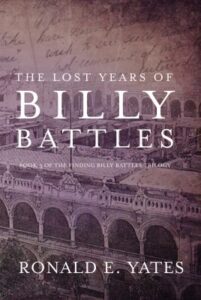
      The Lost Years of Billy Bates
      By Ronald E. Yates

      For those not familiar with the series, Yates presents his books as works of “faction,” a story “based in part on fact” but also “augmented by narrative fiction.” The protagonist, William Fitzroy Raglan Battles, born in Kansas in 1860, lives a full 100 years and takes part in some of the most significant events of his time. He encounters key figures of the day (Bat Masterson Wyatt Earp, President Wilson, Francisco “Pancho” Villa, among others), gives us their backstories, and quietly appraises them.

      Yates, a journalist with a keen eye for nuance and subtlety, has created a protagonist with superb critical thinking skills. William, a journalist, and occasional soldier examines people and transactions from every angle. Just as at ease in a Kansas saloon as he is at the captain’s table on a grand ocean liner on the Pacific, Billy Battles is also ruthlessly honest about his shortcomings and feels tremendous guilt when he acts impulsively or inadvertently causes harm to others. Yates has crafted a fully human character who is easy to admire, perhaps because he is admirably cognizant of his own flaws.

      Continue Reading here…

      Do You Have an Amazing Chicanx Book or are you a Chicanx Author?

      Submit it today for an Award or an Editorial Review!

      Also remember! We’re hosting our 2020 CIBA Ceremonies for First Place Category and Grand Prize Winners June 5th at the Hotel Bellwether in Beautiful Bellingham, Wash. Attending the June 5, 2021 VIRTUAL Ceremonies for the 2020 CIBAs is Free. However,  registration is required. We will have the link posted on our website after the Finalists are announced.

    • AIOSEO – More than Alphabet Soup – Getting the MOST TRAFFIC out of your Website — A Chanticleer Writer’s Toolbox Article

      AIOSEO – More than Alphabet Soup – Getting the MOST TRAFFIC out of your Website — A Chanticleer Writer’s Toolbox Article

      Demystifying AIOSEO

      AIOSEO (All In One Search Engine Optimization) is a profoundly popular tool for marketing. Now you don’t have to respond to the daily emails offering you the First Page of Google, and you can instead feel confident you are doing the best you can.

      Disclaimer:

      One important thing to consider is that this article is written in early 2021. If the date is considerably later, then it is out of date.

      Technology grows and changes rapidly, and we must always rise to meet it. This article won’t look too deeply at categories and tags, because those should just be already listed on your website. If you’re interested in learning more about tags, click here for our article, by Kiffer Brown on using hashtags, which follow a similar rule.

      KEY TIP: Always click save when working on anything, especially after adding images. Don’t count on the program to autosave things for your website. Save your draft work early and often.

      AIOSEO – More than Alphabet Soup – All In One Search Engine Optimization — will help you drive more traffic to your website.

      More Web Traffic = More Book Sales

      We will be using WordPress as our example, and you can see our initial AIOSEO score on a new article below:

      A list of WordPress Options with an AIOSEO score of 0/100

      If you pay a web service, like WordPress, for your website, they should have a help system that you should be able to email if you have additional questions to address. Let’s dive in!

      We know what AIOSEO Stands for. What Does it Do?

      The AIOSEO looks at how search engines will read your website. Yup, they are reading your website to try and guess how the website will be read by humans. A human programmed a search engine to try to read a website like a human in order to determine if the website will be easy for actual humans to read. If that feels circular to you, you are not alone.

      A black and silver laptop
      We all have a lot of time in front of computers in our future

      Here are things that help your website seem more readable:

      • Headings every few paragraphs
      • A Post Title of 60 Characters or slightly fewer.
      • Meta Description of 160 Characters or fewer
      • A Focus Keyphrase that appears everywhere
      • Less than 10% of the piece should be in passive voice
      • No more than 25% of sentences should be over 20 words
      • Paragraphs should be no more than 120 words
      • Images and Videos should be included
      • External and Internal Links should be included

      Wow! That’s a lot! When do we know that we’ve done enough?

      Sites like WordPress give you your AIOSEO score to see. The score is out of 100, and most website score between 60-80, so that’s a good place to aim. Obviously some of these won’t be reasonable for your website to accommodate depending on the material you promote.

      For example, as a website with a lot of reviews, we have more passive voice in our reviews. Why? We don’t want to give away who is responsible for the action in the book! Passive voice avoids answer who is responsible for an action, and allows us to provide excellent, spoiler-free reviews.

      Let’s break down some of those bullet points together.

      Why AIOSEO is important

      Headings

      See the word “Headings” immediately above this sentence? That’s a heading! Usually websites offer the opportunity to choose between Paragraphs, Headings, and Quote Text. A heading lets your reader know you are moving to a new subject. They are an excellent way to signal a change in subject, and lets the reader find the information they want to locate right away.

      Within a section, you can use multiple headings, usually in the form of “Heading 1” “Heading 2” and so on to create subheadings within a section. You can see what our Heading dropdown menu on WordPress looks like below.

      A Drop down menu with style options

      From here, we’ll move to looking at the keyphrase and title.

      Focus Keyphrase is essential for AIOSEO

      This is the main idea of your post. For this post you are reading our keyphrase is AIOSEO. You want it to be ubiquitous throughout your post. This is where it should show up:

      • Title
      • Post Title
      • Meta Description
      • The First Paragraph
      • Tags
      • Alternative Text
      A box for the Focus Key phrase
      This is how the Focus Key phrase appears for us

      Remember, these will appear differently to everyone based on a number of factors that we can’t predict, so take your time looking for them or Google what you’re looking for and the name of the website you’re using.

      Post Title

      Post Title with Snippet Preview

      See how above the “Post Title” is a “Snippet Preview” to see how your post will appear in a web search? That’s a great way to really see what it looks like. And in the bottom right corner you can see that it only uses 38 out of the 60 recommended characters.

      Don’t worry, we didn’t forget about Alternative Text, it just needs a little more explanation than a quick screenshot.

      Alternative Text adds a couple AIOSEO points

      An alt text box in an image editor

      Generally, if you click “edit” on an image, one of the categories that pops up will be alternative text or “ALT text.” ALT text is what a screen reader will read out when it comes across an image on your webpage. This helps anyone who has issues seeing the webpage or even people who can see the webpage fine and simply prefer to have text read to them. Simple and direct is usually best with ALT text.

      Internal and External Links add a few AIOSEO points

      Internal links are simply links that go to somewhere else within your website. External Links go somewhere outside your website. We always recommend making sure your Links “Open a New Tab” rather than navigating away from the website you are on.

      A checkbox marked next to "Open Link in New tab"
      That top box is the ticket!

      Opening to a new tab fulfills both your readers need to not lose their place in what they’re reading, and it fulfills your need to keep them on your website!

      Thinking of screen readers again, remember to make it clear what is and isn’t a link, by stating exactly what the link leads to, and then hyperlinking it.

      Hyperlink Recommendations

      Which link do you find more appealing to look at?

      https://www.chantireviews.com/chanticleer-conference/

      OR

      Click Here to Learn about the Chanticleer Authors Conference!

      Probably the second one. Now imagine you are using a screen reader. Would you rather have a computer voice attempt to read that full URL to you (h t t p: w w w…), or would you rather a direct description of where the link will go followed by the words “Click Here”?

      Most people recommend the hyperlink as opposed to the full URL. If you really want to use a full URL, you can always consider using a custom tiny URL by going to the Tiny URL creation website here.

      One Last Note: #Hashtags

      Everyone loves the Hashtag, or as we like to call it, the octothorpe. When using Hashtags, we recommend capitalizing every individual word. For example #chanticleerauthorsconference would be #ChanticleerAuthorsConference or for Twitter #CAC21 #SeriousAuthors

      Octothorpe aka Hashtag aka pound symbol has 8 points

      The capitalization won’t make much of a difference to the computer that analyzes your work, but it will make a huge difference in terms of whether your hashtags will actually be accessible and readable by a large audience.

      So How Did We Do?

      We looked at this post a couple of times before posting. Here’s how our score looked.

      Here is a look at our AIOSO score throughout the writing of this article:

      • Text and Title Only: 58
      • After Adding Headings: 68
      • Adjusting Post Title and Meta Description to appropriate word count: 79
      • Adding AIOSEO as the Focus Keyphrase: 89
      • Adding an image with the alt text AIOSEO: 90

      When we finish with adding our links, the score raises to 95! Tightening up language as suggested by the AIOSEO brings us all the way to 96!

      Update from 10/24/24: We’re now at 98!

      The increase in score is likely due to us always purchasing the latest p0ssible services to promote our authors.

      Before you hit publish on your site, check out the AIOSEO score.

      A list of WordPress Options with an AIOSEO score of 96/100
      Remember, between 60-80 is considered pretty good!


      Good luck, and happy posting!

      If you are interested in participating in a Hands On AIOSEO Workshop, please send us an email to Chanticleer@ChantiReviews.com

      Writer’s Toolbox

      Thank you for reading this Chanticleer Writer’s Toolbox article.

      Writers Toolbox Helpful Links: 

      HOW HASHTAGS can INCREASE ONLINE BOOK SALES by Kiffer Brown

      The 2021 Virtual Chanticleer Authors Conference

      The Tiny URL website

    • April Fools’ Day — Humor, Satire, and Reading Recommendations | A Chanticleer Toolbox Article

      April Fools’ Day — Humor, Satire, and Reading Recommendations | A Chanticleer Toolbox Article

      April Fools’ Day is this week! Will you be a prankster or end up with egg on your face?

      An April Fools' Day Jester

      A surprisingly old tradition, historians trace the April Fools’ Day Celebration to the change in the calendar after the Council of Trent in 1563, moving the start of the New Year to January and beginning to celebrate Spring in late March rather than at the beginning of April. Those who were slow to adapt and celebrated the wrong holidays at the wrong time were knows as April Fools. For those of you who love a deep dive, you can read more here.

      Of course, there have been other traditions of dressing up in costumes and pranking people, but the real question we want to look at is what’s funny in writing?

      Humor Writing

       FREE Girl Hipster in Bright Clothes Laughing and Smiling

      At first blush, Chanticleer only has The Mark Twain Award that appears to cater to humor writing, but we all know that humor is key for almost any story. What better way to keep the reader engaged than those laugh out loud moments?

      Interested in learning more about the Mark Twain Awards? Click here for more information and here to submit!

      We can think of a few common times of humor in writing:

      • Satire (obviously)
      • Dark Humor
      • Situational Humor
      • Self-Deprecating Humor

      Let’s go deeper!

      Satire

      One of the big keys to Satire is to always punch up. Making fun of people who are already having a tough time often leaves a bad taste in the reader’s mouth.

      One classic example of Satire is George Orwell’s Animal Farm which critiques the fascist re-envisioning of Communism by Joseph Stalin through the lens of barnyard animals. This is a darkly told satire with the intention of speaking truth to power.

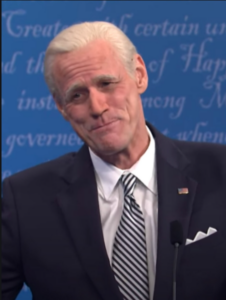
      For lighter Satire, you can always look at Saturday Night Live and see their most recent jokes about whoever holds political power in the US.

      Jim Carrey as Joe Biden from SNL

      Satire often ends up with someone adopting a role they don’t actually believe to expose parts of that belief that don’t hold up well, such as Jonathan Swift’s “A Modest Proposal.”

      Dark Humor

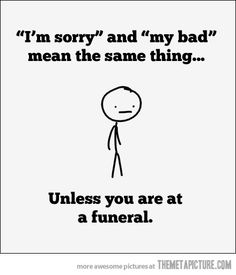
      Also known as Gallows Humor, Dark Humor looks at terrible situations and finds the irony in them.

      A stick figure saying "I'm Sorry" and "my Bad" mean the same thing...Unless you are at a funeral

      This often pops up when someone says “Well, at least it can’t get any worse!”

      Situational Humor

      This happens when the character’s position in a scene happens to be very funny. For example, in Who Mourns for Morn from Star Trek: Deep Space 9, the Ferengi bartender Quark is harangued by 4 different thieves, all looking for a cut of the estate of Quark’s best customer (now deceased). At one point, all four of them, not knowing the others are there, arrive in Quark’s quarters where he hides each of them from the previous until he has a full house!

      Quark at the center of attention with 4 phaser pistols pointed at his head
      Quark at the center of attention with 4 phaser pistols pointed at his head

      Self-Deprecating Humor

      This often can be seen in Non-Fiction work. Self-Deprecation can make people feel less intimidating and put the reader at ease with a speaker. Possibly one of the best examples of this comes from the prologue of a 1910 Calculus Textbook.

      Considering how many fools can calculate, it is surprising that it should be thought either a difficult or a tedious task for any other fool to learn how to master the same tricks. Some calculus-tricks are quite easy. Some are enormously difficult. The fools who write the textbooks of advanced mathematics—and they are mostly clever fools—seldom take the trouble to show you how easy the easy calculations are. On the contrary, they seem to desire to impress you with their tremendous cleverness by going about it in the most difficult way. Being myself a remarkably stupid fellow, I have had to unteach myself the difficulties, and now beg to present to my fellow fools the parts that are not hard. Master these thoroughly, and the rest will follow. What one fool can do, another can.

      Be careful though! A little Self-Deprecating Humor is a lovely introduction, but too much will quickly tire a reader out.

      Final Tips:

      Be Personal:

      You know what’s funny in your own life. Start there with retelling those stories to see how it works out.

      Subvert expectations:

      We’ve all seen cliches, and those have their place in all stories, but think about times when a scene did not go the way you expected. One great example is in The Last Jedi when Rey returns Luke’s lightsaber and he immediately tosses it.

      Rey offers Luke the Lightsaber
      Such hope immediately dashed

      Rule of Three

      This is one of the big places to subvert expectations. You offer two regular, expected ideas, and then follow it up with a third option that surprises

      Ex: “What are you up to today? Work? Day off? World domination?”

      Obviously, there’s often a little more time between the appearances.

      For more information on charging up your writing, consider this article on Rhythm and Cadence and Beats by Margie Lawson. 

      Chanticleer Book Reviews to make you laugh and cry

      INSYNNIUM by Tim Cole

      Grand Prize Winner for the Cygnus Awards

      The dramatic premise explored in a new novel, Insynnium, is a wild, immersive leap into a world-changing (but fictional) drug. In other hands, what could be a dystopian thriller goes one step further in author Tim Cole’s capable hands. He focuses on the humans who first discover and use the drug and weaves his story with a devilish charm.

      This is somewhat Bill Murray/“Groundhog Day” territory, a film exploring one man’s reliving a day in his life over and over until he learned new behaviors, new skills and came out of it a better man. Unlike “Groundhog,” Max McVista takes multiple doses of the drug against all advice, then somehow expands time itself in what he calls an “AUE” or “Alternative Universe Experience,” enabling him to spend months and sometimes years becoming or experiencing whatever he wishes. When returning real-time, he’s only missed a day or two. (For E=MC squared fans, it’s basically reverse engineering of Einsteinian physics.)

      Continue Reading Here

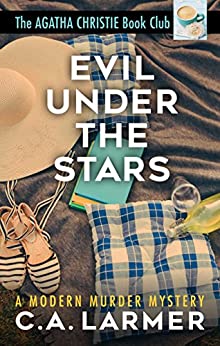
      EVIL UNDER the STARS by C.A. Larmer

      First Place Winner for the Mystery & Mayhem Awards

      Who commits a murder in a crowd of a hundred people relaxing in a park, and how did the Agatha Christie Book Club miss the entire thing from only a few feet away? In the trendy Sydney suburb of Balmain, Kat Mumford, social media interior design star, has been murdered during the inaugural Cinema Under the Stars. Her distraught husband, Eliot, is clearly the prime suspect, but at the time of Kat’s strangulation, he is nowhere near her. In fact, no one was sitting near Kat, and the crowd seems to have been so absorbed by the movie, Agatha Christie’s Evil Under Sun, that no one saw a thing out of the ordinary. 

      When Alicia Finlay and her book club realize the murder occurred right under their noses, there is no way they can just let the police handle it. When Alicia’s boyfriend, Detective Inspector Liam Jackson, actually calls her for information, she and her club decide to do a little investigating of their own. Despite being told to butt out, Alicia, Lynette, Claire, Missy, and Perry go undercover to find the killer, but the twists, in this case, will lead them down a strange path to find a crafty killer. The club must sift through the suspects: a smarmy barman, a detestable reverend, a pregnant domestic abuse victim, a mystery mustached man, a dead junky, and a hipster hubby. With few clues but many dead ends, the club will meet their most challenging mystery yet!

      Continue Reading Here

      ELEPHANTS IN MY ROOM by Christie Nicholls

      A bitingly funny collection of life-stories from Christie Nicholls – stand-up comedian, actor, and writer – made all the more piquant by her repeated insistence that she has no short-term memory. Fortunately for us, her long-term reminiscences more than make up the deficit.

      Nicholls has divided the book into four parts. In the first, “A Broad Abroad,” she recalls her experiences of traveling to far-flung places, beginning with a summer in Belém, Brazil as a child. She and her brother, for some reason nicknamed Beluga, slept in hammocks and played in a swimming pool, but much of her cherished time involved a German Shepherd named Ferdinand, from whom she learned dog talk. Raucous family bowling in Bologna, Italy, is contrasted with attendance at a staid English wedding. At a later period, Nicholls and her mother went to Sweden, where the budding comic tried her hand at stand-up in newly acquired Swedish, leading to an amusing mix-up of jargon.

      Continue Reading Here


      Chanticleer Editorial Services – when you are ready

      Did you know that Chanticleer offers editorial services? We do and have been doing so since 2011.

      Tools of the Editing Trade

      Our professional editors are top-notch and are experts in the Chicago Manual of Style. They have and are working for the top publishing houses (TOR, McMillian, Thomas Mercer, Penguin Random House, Simon Schuster, etc.).

      If you would like more information, we invite you to email Kiffer or Sharon at KBrown@ChantiReviews.com or SAnderson@ChantiReviews.com for more information, testimonials, and fees.

      We work with a small number of exclusive clients who want to collaborate with our team of top-editors on an on-going basis. Contact us today!

      Chanticleer Editorial Services also offers writing craft sessions and masterclasses. Sign up to find out where, when, and how sessions being held.

      A great way to get started is with our manuscript evaluation service. Here are some handy links about this tried and true service: https://www.chantireviews.com/manuscript-reviews/

      And we do editorial consultations. for $75.  https://www.chantireviews.com/services/Editorial-Services-p85337185

      Writer’s Toolbox

      Thank you for reading this Chanticleer Writer’s Toolbox article.

      Writers Toolbox Helpful Links: 

      Submit to the Mark Twain Awards

      The full list and calendar of all our CIBAs

      The Mark Twain Spotlight

      Rhythm and Cadence and Beats, Oh Yes! by Margie Lawson

      The traditional publishing tool that indie authors can use to propel their writing careers to new levels?  https://www.chantireviews.com/2016/05/15/the-seven-must-haves-for-authors-unlocking-the-secrets-of-successful-publishing-series-by-kiffer-brown/
       

      You made it to the end! Enjoy this extraordinary report from the BBC on Spaghetti Trees:

    • Character Development, Dialogue, and Beats, a Chanticleer Writers Toolbox Article by David Beaumier

      Character Development, Dialogue, and Beats, a Chanticleer Writers Toolbox Article by David Beaumier

      Understanding What Makes Good Character Development

      Character Development is a tricky matter. In this article we’ll go through the basics of setting up what your character does and how you describe them, coupled with the idea of beats in dialogue.

      A character sketch model covered in paint
      Artists all over use character models!

      Consider the following excerpt from a recent work in progress from a friend of Chanticleer:

      In the guest room we have spider plants that have often refused to die in the past. They grow everywhere and propagate like mad, their white and green spear-like leaves overflowing any pot we put them into. We keep them trimmed back carefully, letting them give us plenty of fresh oxygen while at the same time making sure our space isn’t entirely overrun.

      This description comes in the middle of getting something for another character, and there are 4 paragraphs of plant and room descriptions. Four! That’s too much narrative description that adds little to the story and does nothing to build tension. Now look at the revision of all those paragraphs:

      I head out to the kitchen. I don’t see Mom, but this is the week we’re supposed to water the plants, so I fill up our yellow watering pail with a comically long spout that aids in watering closer to the base on the plants. The red and green leafed crotons in the kitchen next to the sink are first, then the fishtail palm in the bathroom that always wants more water despite the wetness of its location, the spider plants in the office, my kalanchoe was watered last week, and then I finish with the lemon tree. The lemon trees petals are almost all gone, which means we’ll have meyer lemons soon, but any sweet smell it had recently is gone.

      Red and Green Succulent Plant

      Now, in addition to understanding that the character is looking for their mother. The plants appear in a flash, coupled with the action of being watered, and we end on the lemon tree, which promises something good, but right now seems rather lackluster, which mirrors the mood of the overall scene. This quick summary helps the story move from prolonged description that will make the reader’s eyes glaze over, and instead moves us from one point to the next.

      Interested more in secondary characters? Learn more about them from the one and only Jessica Morrell here. For more that focuses on general background characters, try this article from Skip Ferderber here.

      So when do we put in a little summary for the character?

      Renni Browne and Dave King say the following in their book Self-Editing for Fiction Writers:

      If your characters actually act the way your summaries say they will, the summaries aren’t needed. If they don’t, the summaries are misleading. Either way, your fiction is likely to be more much effective without the character summary

      In terms of time progression in a story summary is a way of storytelling where a little is described to cover a large period of time. It helps to have it balanced with scenes where action and time are equivalent, or moments of interiority where a lot happens in almost always a slow point in the narrative. However you choose to do it, make sure there’s a good balance in terms of time in your work, and that scene is often the driving force.

      A balance scale holding two question marks.

      Looking for tips to streamline your dialogue? Make it more potent with tips from Jessica Morrell here.

      Unobtrusive ways to develop Character

      • Learn their history so that when you write them it will come out intuitively
      • Show how other characters react to them directly.
      • Show how the world interacts with them as they move through it.

      That’s well and good, but how do you measure your character development? Well, we’re glad you asked:

      • How much time do you spend describing characters?
      • Are you telling us characteristics that will show up later in dialogue and action?
      • How much of the character’s history have you explored with the reader? Does the reader need all of that information, or does the story read well without it? If so, when do they need to know it

      Dialogue Mechanics

      A famous author once called dialogue the purest form of scene.

      Dialogue bubble, Photo booth props free printables

      Obviously there are moments where this is wrong, such as when the dialogue is done as a form of telling.

      “Hi Joe, I haven’t seen you since the divorce with June after you came back from the war!”

      A person answering the phone in a friendly manner
      You may remember plays where it starts out with someone answering the phone and setting up the plot by responding to the person on the other end.

      However, the idea of telling that sneaks its way most prominently into dialogue mechanics is the dialogue tag, often accompanied by an adverb. Consider Newgate Callander of The New York Times Book Review take on the wildly successful Bourne Ultimatum series:

      Mr. Ludlum has other peculiarities. For example, he hates the “he said” locution and avoids it as much as possible. Characters in “The Bourne Ultimatum” seldom “say” anything. Instead, they cry, interject, interrupt, muse, state, counter, conclude, mumble, whisper (Mr. Ludlum is great on whispers), intone, roar, exclaim, fume, explode, mutter. There is one especially unforgettable tautology “‘I repeat,’ repeated Alex.’

      The book may sell in the millions, but it’s still junk.

      Let’s take it further and look at even more examples of redundant or overemphasized dialogue tags:

      • “I’ll kill your whole family,” he hissed maliciously.
      • “You can’t be serious,” she said in astonishment.
      • “Give it to me,” she demanded
      • “Here it is,” he offered.
      • “Is it loaded?” she inquired?

      These all share one thing—they fear the use of “said.” Sure, sometimes a word other than “said” will help break things up for variety’s sake, but “said” is almost always proper and good to use.

      “Said” is essentially a punctuation mark for readers. It serves the purpose of helping them track who said what in a dialogue.

      See what Peter Greene says about realistic dialogue in his interview here.

      Adverbs: Friend or Foe

      2016-2017 Psychic Yes Or No Oracle - Get Accurate Answers
      To be or not to be

      Adverbs are the enemy much of the time in dialogue. There is almost always a better word to use. Putting in a prop like the dreaded -ly will make your dialogue seem weak, even if it isn’t.

      The only real exception to the rule is with the dialogue tag “said” because it’s so ubiquitous that it can allow for some extra description on occasion. Remember, the dialogue will often do the work of setting the tone for you.

      Gabriel García Márquez would eliminate all adverbs from his writing, choosing instead to use the word in another form.

      For example, instead of “he said softly” I would write “he said, his voice soft”

      A few general tips:

      • Pronoun substitutions are fine
      • Renaming the character can be wonky. Dave, Mr. Winchester, The Sheriff, the officer, the lawman, CHOOSE!
      • New speaker/new action means a new paragraph!
      • Ending with a dialogue tag uses a comma. Ending with an action uses a period. Ex: “Hey there,” he said. vs “Hey there.” He scratched his chin.
      • This indicates interruption: “Now wait just—”
      • This indicates trailing off: “Now wait just a second…”

      Again, consider how you measure these things.

      • Check your dialogue for explanations. Consider bringing a highlighter for this job.
      • Cut the explanations and reread your dialogue. If it reads worse, you may need to rewrite your dialogue.
      • Mark every adverb related to dialogue. How many of them are based on adjectives describing emotion? Which ones can you cut?

      Woman student highlighting with text marker in document

      Beats in Character Development

      Let’s pause here to talk a little bit about beats and figure out how to us them to balance out dialogue. Again, using an example from Self-Editing:

      “But didn’t you promise…” Jessie said.

      “I did nothing of the sort,’ Tyrone said.

      “Now, look, you two—” Dudley said.

      You stay out of this,” Tryon said.

      VS.

      “But didn’t you promise…” Jessie said.

      “I did nothing of the sort,’ Tyrone said.

      Dudley stepped between them and held up his hands. “Now, look, you two—”

      Tyrone spun on him. “You stay out of this.”

      Just like the saids, there can be too many beats, so be careful how you balance it.

      Think about white space in a sketch for a painting. All the lines that make up the body of the work are the dialogue of your piece–it gives the plot, characters, and conflict a structure to work within. The beats are the color the fill it in, showing the reader a complete picture of what’s taking place. As you write, ask yourself if you’re better at overwriting and then trimming back or underwriting and fleshing out. Play to your strengths for your first draft, and then come back ready to adjust for any areas you know you’ll be weak.

      Glass Painting : 10 Steps (with Pictures) - Instructables

      The beats tie your dialogue together. Map them by marking the descriptions you have interspersed within your dialogue.

      Make your beats sing by seeing what Margie Lawson has to say about rhythm and cadence here.


      Chanticleer Editorial Services – when you are ready

      Did you know that Chanticleer offers editorial services? We do and have been doing so since 2011.

      Tools of the Editing Trade

      Our professional editors are top-notch and are experts in the Chicago Manual of Style. They have and are working for the top publishing houses (TOR, McMillian, Thomas Mercer, Penguin Random House, Simon Schuster, etc.).

      If you would like more information, we invite you to email Kiffer or Sharon at KBrown@ChantiReviews.com or SAnderson@ChantiReviews.com for more information, testimonials, and fees.

      We work with a small number of exclusive clients who want to collaborate with our team of top-editors on an on-going basis. Contact us today!

      Chanticleer Editorial Services also offers writing craft sessions and masterclasses. Sign up to find out where, when, and how sessions being held.

      A great way to get started is with our manuscript evaluation service. Here are some handy links about this tried and true service: https://www.chantireviews.com/manuscript-reviews/

      And we do editorial consultations. for $75.  https://www.chantireviews.com/services/Editorial-Services-p85337185

      Writer’s Toolbox

      Thank you for reading this Chanticleer Writer’s Toolbox article.

      Writers Toolbox Helpful Links: 

      Supporting Cast – Taking Risks with Your Secondary Characters – From the Editor’s Desk of Jessica Morrell

      Putting More Character into Your Characters – by Skip Ferderber

      How He Increased Book Sales, Writes Realistic Dialogue, and Structures His Writing — Award-winning Author Peter Greene Shares His Tips and Tools

      TIPS for POTENT DIALOGUE by Jessica Morrell

      Rhythm and Cadence and Beats, Oh Yes! by Margie Lawson

      The traditional publishing tool that indie authors can use to propel their writing careers to new levels?  https://www.chantireviews.com/2016/05/15/the-seven-must-haves-for-authors-unlocking-the-secrets-of-successful-publishing-series-by-kiffer-brown/

    • HAPPY St. PATRICK’s DAY from CHANTICLEER! Visiting those Irish Stories We Love!

      HAPPY St. PATRICK’s DAY from CHANTICLEER! Visiting those Irish Stories We Love!

      Happy St. Patrick’s Day my dear Chanticleerians! We love all the myriad topics that this holiday brings to mind, Irish History, Mystery, Magic, Romance, and maybe a little beer!

      A few fun facts about the holiday:

      St Patrick’s is held on the traditional Day of Death, not St. Patrick’s Birthday

      Singing happy birthday to St. Patrick is a great idea, but the actual date of his birth is unknown?

      St Patrick's modern green color layered over blue
      Interestingly enough, the color associated with St. Patrick used to be blue!

      Why all the beer?

      St. Patrick’s Day is often seen as a religious tradition, but a holiday in the middle of Lent can be a little prohibitive in terms of how it’s celebrated. So, the Church would actually lift the restriction on alcohol consumption and meat for the day, so bring on the green beer and Rueben sandwiches!

      Three beer glasses at different shades of green

      Why the clover?

      The supposed history of the shamrock is that St. Patrick used the three leaves of the clover to explain the Holy Trinity when he preached.

      Closer to Home

      The US hosts the largest St Patrick’s Day Parade in the World in New York City, though of course that is postponed due to the pandemic. Oddly though, St. Patrick’s Day is only recognized as an official holiday in Suffolk County, Massachusetts, despite people all around the country choosing to celebrate it. However, we have declared March Irish Heritage Month since 1991.

      It’s not easy being Green

      Kermit the Frog

      Maybe skip the leprechaun outfits—no one likes to be a stereotype. Many Irish people, when they first migrated to the US during the potato famine of 1845-49, faced discrimination like most new arrivals here do to this day. They fought for both cultural and religious acceptance.

      And Now!

      Some of our favorite books we like to curl up with before the weather truly transitions to Spring.

      Historical Fiction

      To submit to one of our Historical Fiction Awards see the Chaucer Awards (pre-1750s Historical Fiction) here, the Goethe Awards (post-1750s Historical Fiction) here, and the Laramie Awards for Western Fiction here.

      I’ll TAKE YOU HOME KATHLEEN by J.P. Kenna
      Grand Prize Winner in the Goethe Awards

      I'll Take You Home Kathleen by J.P. Kenna

      The 1800s was the age of expansion in the United States, and railroads played a major part in the efforts to move Americans and industry to the Western shores. By the 1860s, this great country, the American experiment as it was called, became engulfed in a brother versus brother bloody Civil War. As the century drew to a close in the late 1880s and early 1890s, America was still reeling from the emotional and economic damage the war had caused. J.P. Kenna uses this struggle as the backdrop for his book I’ll Take You Home Kathleen, the second in his series titled Beyond the Divide.

      Kenna’s novel captures the years 1882 to 1898 with its focal point being the Irish immigrants who were seeking to escape famine, lack of land reform along with desiring religious freedom, came to America seeking a better life and more opportunity. The first wave of immigrants were seeking escape from one of the grimmest periods in Irish history–the Great Famine from 1845 to 1852. Author Kenna follows this hard-working group of immigrants who helped lead America into a post-Civil War, industrial, and economic boom that some have called the Second Industrial Revolution.

      Continue Reading here

      SHAME the DEVIL by Donna Scott
      First Place Winner in the Chaucer Awards

      Colin and Roddy Blackburne are sent into indentured servitude in England in 1643 with their father. Gavan Blackburne supported the divine right of King Charles I. Still, after the tragic death of his wife that both Colin and Roddy witnessed, he relinquishes his efforts to protect the remainder of his family.

      The Blackburnes become stable hands at Appleton Hall, where the viscount’s daughter Emma quickly catches the eye of young Colin. Emma is curious about the young Scots in the stable and drags along Alston, the son of Lord Stillingfleet. The four children start a friendship that intertwines their lives forever.

      Continue Reading here

      FENIAN’S TRACE by Sean P. Mahoney
      First Place Winner in the Goethe Awards

      Rory McCabe and Conor O’Neill are hard-working 12-year-olds, whose exploits and progress are narrated by the namesake of Clancy’s Pub who’s taken a liking to them. At times, he rewards the boys’ efforts with tales of their shared Irish heritage, its heroes and its glories. The boys have very different personalities, as Clancy discerns from their reactions to his lore. Rory is outraged as he hears of Ireland’s treatment by the British, while Conor accepts the information more quietly, studiously.

      The two boys will soon meet a beautiful girl, Maria, the daughter of a well-to-do neighbor secretly aligned with a revolutionary resistance movement. Both will fall in love, but of the two, Rory will be the more open about his interest, while Conor will hold back, respectful but clearly smitten.

      Continue Reading here

      Mystery and Thrillers

      To submit to one of our Mystery or Thriller Fiction Awards see the Mystery & Mayhem Awards here, the Clue Awards here, and the Global Thriller Awards here.

      EVIL UNDER the STARS: The Agatha Christie Book Club (Book 3) by C.A. Larmer
      First Place Winner in the Mystery & Mayhem Awards

      Who commits a murder in a crowd of a hundred people relaxing in a park, and how did the Agatha Christie Book Club miss the entire thing from only a few feet away? In the trendy Sydney suburb of Balmain, Kat Mumford, social media interior design star, has been murdered during the inaugural Cinema Under the Stars. Her distraught husband, Eliot, is clearly the prime suspect, but at the time of Kat’s strangulation, he is nowhere near her. In fact, no one was sitting near Kat, and the crowd seems to have been so absorbed by the movie, Agatha Christie’s Evil Under Sun, that no one saw a thing out of the ordinary.

      Continue Reading here

      LEGACY of LIES by Janet K. Shawgo

      The question is not if history will catch up with you but instead, when will it attack with a vengeance. Characters with a Legacy of Lies discover they can run, but they can’t hide from past actions. When Caren Johnson sees her family and life literally explode in flames, her uncertain future falls into the hands of a mysterious Irishman. His name is Declan Malone, and he claims he’s been sent by her brother to save her from assassins determined to kill her too. How can that be when her brother’s death was reported ten years ago? Declan’s reasons for a hasty departure from Ireland appear suspect and put a target on his back too.

      Continue Reading here

      Romance

      To submit to one of our Romance or Contemporary Fiction Awards see the Chatelaine Awards here and the Somerset Awards here.

      The PARTICULAR APPEAL of GILLIAN PUGSLEY by Susan Örnbratt
      First Place Winner in the Chatelaine Awards

      Irish-born Gillian McAllister knew she was meant for bigger things than a quiet life among her large extended family. Leaving home at seventeen against her protective father’s wishes, Gillian is looking for adventure – and that’s exactly what she finds. She was a nanny for a maharaja, a caretaker for WWII internees, and a nurse on the Isle of Man before finally becoming a wife, mother, and grandmother in London, Canada, where she spent the majority of her eighty-nine years.

      However, with only weeks to live after being stricken by cancer, she knows her time with her beloved granddaughter and namesake is truly precious. Before she goes, she wants to pass on the poems that capture her long, adventurous life to the junior Gilly in hopes the girl will use the poems to write about her adventure – her hidden love story.

      Continue Reading here

      BLAME it on the BET (Whiskey Sisters, Book 1) by L.E. Rico
      First Place Winner in the Chatelaine Awards

      Twenty-six-year-old Hennessy O’Halloran should have it all. She should be enjoying her overpriced apartment in St. Paul, Minnesota, her successful legal career, and her “friends with benefits” neighbor, but in the month since her father’s sudden death, all of those things have become unimportant.

      She thought she and her sisters had some time to figure out what to do with Jack’s legacy, an Irish pub he and their deceased mother built from scratch. Still, when they discover a substantial loan agreement secreted away in Jack’s belongings, they realize they only have six weeks to come up with over $100,000, money he borrowed against the business to help finance various expenses on his daughters’ behalves. She finds herself back home in Mayhem, Minnesota, living above the pub and trying desperately to find the funds to save the business.

      Continue Reading here

      Choileach, Chanticleer’s Irish cousin, wishes you this:  

      May your heart be light and happy, may your smile be big and wide, and may your pockets always have a coin or two inside!

      Happy St. Patrick’s Day from Sharon & Kiffer & David and the whole Chanticleer Team!

      And Remember! You can join the Chanticleer Family Anytime!

      Sign up for our Newsletter here! Join our online community, The Roost, here for discounts and special offers!

      Join us at our (Virtual) Chanticleer Authors Conference April 21-25, 2021. Read more about our headliners and workshops for that here!

      VCAC 21  will feature Bestselling Crime Author Cathy Ace, J.D. Barker – Master of Suspense, C.C. Humphreys – Historical Fiction with a twist,  Jessica Morrell – Top-tiered Developmental Editor,  and more!

      Check out our Editorial Services here and our Manuscript Overviews here, OR, if your work is already polished to a fine shine, it’s time to submit to our Editorial Reviews here and our Chanticleer International Book Awards (CIBAs) here!

    • Understanding Story Structure — A Chanticleer Toolbox Primer Article by David Beaumier

      Understanding Story Structure — A Chanticleer Toolbox Primer Article by David Beaumier

      Start with the Heart 

      Henry Cavill responds to 'Enola Holmes' copyright lawsuit
      Henry Cavill stealing our hearts as Sherlock in the movie Enola Holmes. He definitely stole Kiffer’s.

      When we look at writing craft, it can help to start general and then move on to specifics. Start with questions to help orient yourself toward how you will edit the work:

      • What do you see as the genre?
      • What is the climax?
      • How do you imagine the story’s structure?
      • What is the heart of the story?

      The heart of the story can be more generally understood as theme, but it really boils down to where does the blood flow in the veins of the writing. I make sure that is always in my mind when editing for an author, and I recommend it for any writer who is working on a piece.

      Write down the heart of your story somewhere you can always look at it—on a sticky note near your writing area, at the bottom of the document you’re working in, anywhere you can see it. Having the heart of the piece as an easy reference point lets us keep an eye on the destination as we write or edit toward the end.

      The Evolving Nature of Structure 

      Get ready for book recommendations! In terms of structure, David recommends Jane Alison’s Meander, Spiral, Explode, which sets the bar for how we can reimagine the shape of our books. Most stories won’t tell their author what their structure is supposed to look like until they are nearly finished. 

      Meander, Spiral, Explode: Design and Pattern in Narrative by Jane Alis – Catapult

      Most of the time when we think of the structure of a story, we think of the Aristotelian spear. But story structure can look like anything! A spiral, a flower, a canoe, an inverted spear. Of course, there’s nothing wrong if your story structure does fall into this classic description, but keep in mind that doesn’t mean we close ourselves off to all other structures.  

      A Writer's Cheatsheet to Plot and Structure
      Aristotelian Spear story structure

       Alison takes the idea of seeing the structure literally, recommending that writers draw out the shape of the story. To do this, she recommends visualizing summary like this “__” a scene like this “–” and a still spot (interiority or a moment where the narrator pauses and explains events) as “·”. This is the example of the structure she sees when blocking out a section of Vikram Chandra’s “Shakti”

      __ __ __ __ — — — · —   

      You can see the pattern beginning to form, four moments of summary, followed by three scenes, a still spot, and then finishing with a scene. What do your own stories look like?

       Again, usually this structure becomes visible as the story reaches completion, allowing the author to see the images and metaphors that really shape it.  

       Narration in Four Parts 

      A Stranger's Journey

      The next section here owes much to David Mura’s Book A Stranger’s Journey. At the start of his chapter “Four Questions Concerning the Narrator” Mura simply asks: 

      1. Who is the narrator?
      2. Whom is the narrator telling her story to?
      3. Where is the narrator telling the story?
      4. Why is the narrator telling the story?

      These simple questions open up most stories in wonderful ways that surprise and delight their authors. It changes the idea of the narrator just being the main character in their present (if so, is the narration in present first person, and does the reader only get information the main character knows?). Or perhaps the narrator is you, the author; remember you are a living, breathing, ever changing being, while your narrator becomes fixed in time the moment you put down your pen and stop the editing process. Understanding this allows the writer to slow down and understand the perspective of narration in their story.  

      Why did Drax say, “Why is Gamora”? - Quora
      From Avengers: Infinity War

      Let’s look at a short story attributed to Ernest Hemingway to better understand these questions of narrator. The story is as follows:

      For sale: baby shoes, never worn

      • Who is the narrator? We could say a newspaper or even the person who wrote the advertisement, possibly the parent of this child. We could also say that Hemingway is telling the story since he was asked to write a six word story.
      • Who is the narrator speaking to? Anyone who might want to buy baby shoes. If Hemingway is the narrator, then it’s also with the secondary desire to make the reader sad since the tragedy implied by baby shoes that have never been worn weighs heavily on us.
      • Where is the narrator telling the story? In the newspaper? A sign in a window?
      • Why is the narrator telling the story? Hard question. Maybe honestly just to sell the baby shoes. Maybe to find closure and remove the last reminders of their loss. Maybe in the hopes that someone will reach out.

      In examining the narrator and understanding the relationship the narrator has with the reader, we create work with richer tone, voice, and a better understanding of what information needs to be shared.  

      All in Good Measure 

      Amazon.com: Self-Editing for Fiction Writers, Second Edition: How to Edit Yourself Into Print (9780060545697): Browne, Renni, King, Dave: Books

      The next book recommendation is Renni Browne and Dave King’s Self-Editing for Fiction Writers. While many of their chapters are excellent, their fourth one, “Proportion” stands out among many craft books as a unique topic. The quickest way to say this is to simply ask the writer to say what they mean to say, and then move on without spending too much time repeating the point. Often, this repetition breaks the sense of proportion needed for the story, leaving the weakest repeat to carry the weight of the scene in which it appears.

      An example of this would be if the sunset was described as two Polaroids being jammed together to make the sky and land, and then describing again how the rocky cliffs were at odds with the soft clouds of sunset. Remember, choose which one seems stronger and cut the weaker one. 

      Most craft books touch on this as the idea of trusting the reader. Write the best story you can imagine writing, and then, after showing it to readers, you’ll understand if the way you wrote it made sense or not. Taking too much time to belabor your point will make it seem overwrought and overwritten to the point that the reader might lose interest (something I always fear when writing about proportion).  

       All Together

      So, the key parts of craft I’m looking at here are: Heart, Structure, Narration, and Proportion. Of course, there are the traditional ones that we hear about everywhere:

      • Dialogue
      • Character
      • Plot
      • Voice
      • Beat
      • The ever present struggle between show and tell.

      Of course it’s important to have a good grasp of the basics, you can’t have the four elements above without them! But understanding how you’ll put it all together in the end is what makes a work really sing.


      When we finish our first draft our work suddenly transforms into a behemoth that’s impossible to approach. We’ll give you some great advice here, though if you’re at the point where you’ve done all this the next step is to find some extra eyes for your work. For an unbiased evaluation  that will help you better understand what works and what needs to be improved in your book, check out our Manuscript Overviews editorial service here. Remember Kiffer’s advice to have a manuscript assessment prior to beginning line editing or copy editing. A manuscript overview/evaluation will save you time, money, and will improve your work-in-progress.

      The CIBAs – Discovering Today’s Best Books and Authors

      If you’ve read through this and think “I’ve done all this, and I’m ready for the next step!” Congratulations! We would recommend putting some positive attention on your book at this point. You can enter it in a Chanticleer International Book Award Contest here or submit it for a professional Editorial Review here. And remember, it never hurts to do both.

      Looking for more story structure? You can find many articles here from a search of our site. 


      Chanticleer Editorial Services – when you are ready

      Did you know that Chanticleer offers editorial services? We do and have been doing so since 2011.

      Tools of the Editing Trade

      Our professional editors are top-notch and are experts in the Chicago Manual of Style. They have and are working for the top publishing houses (TOR, McMillian, Thomas Mercer, Penguin Random House, Simon Schuster, etc.).

      If you would like more information, we invite you to email Kiffer or Sharon at KBrown@ChantiReviews.com or SAnderson@ChantiReviews.com for more information, testimonials, and fees.

      We work with a small number of exclusive clients who want to collaborate with our team of top-editors on an on-going basis. Contact us today!

      Chanticleer Editorial Services also offers writing craft sessions and masterclasses. Sign up to find out where, when, and how sessions being held.

      A great way to get started is with our manuscript evaluation service. Here are some handy links about this tried and true service: https://www.chantireviews.com/manuscript-reviews/
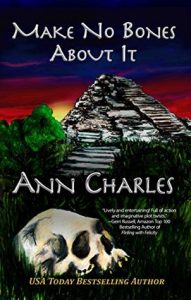
      And we do editorial consultations. for $75.  https://www.chantireviews.com/services/Editorial-Services-p85337185

      Writer’s Toolbox

      Thank you for reading this Chanticleer Writer’s Toolbox article.

      The traditional publishing tool that indie authors can use to propel their writing careers to new levels?  https://www.chantireviews.com/2016/05/15/the-seven-must-haves-for-authors-unlocking-the-secrets-of-successful-publishing-series-by-kiffer-brown/