Author: chanti

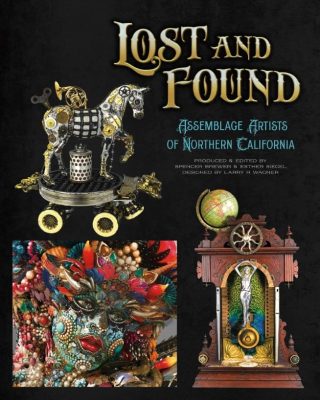
  • LOST And FOUND: Assemblage Artists of Northern California by Spencer Brewer & Esther Siegel – Artist Collection, Art History, Photographs

    LOST And FOUND: Assemblage Artists of Northern California by Spencer Brewer & Esther Siegel – Artist Collection, Art History, Photographs


    Spencer Brewer and Esther Siegel’s Lost and Found brings simple items into an extraordinary new context. This inspiring book is a gallery of enticing photographs, featuring the creative sculptural designs of eight highly accomplished Northern California assemblage artists.

    If ever there was a group of individuals who colored outside the lines, they are undoubtedly represented here. Their assemblages range from the subtle to the shocking, inferring messages serious, poignant, humorous, and whimsical.

    Each artist discusses their work along with their own creative inspiration. They repurpose objects to create a new form, whether to illuminate an imaginary idea, tell a story, or make a forceful statement. Piqued by the castoffs of everyday life, these three-dimensional assemblage pieces are comprised of objects ranging from the likes of jewelry and feathers to kitchen utensils, vintage toys, musical instrument parts, or even skeletal bones.

    Each of these pieces is unique and provocative, both in terms of the artist’s approach and in the medium used.

    Some, like Spencer Brewer and Sean O’Donnell, have a background and/or fascination with musical instruments. Brewer’s “Toot Suite” incorporates bells from 19 wind instruments and honors the patriotic music of John Phillip Sousa. There’s humor in O’Donnell’s “Pistol Whipped” featuring a 1950s cap gun with an electric beater blade extending from the barrel.

    Self-described “later in life” artist Esther Siegel shows, within her narrative, that she is “actually painting a picture with objects.” Clearly a fan of renowned Mexican artist Frida Kahlo, Siegel often weaves images of the artist into her work. A climbing monkey image is undoubtedly a nod to Kahlo’s pet, Fulang Chang.

    A rich combination of work that resonates and work that contrasts pulls the reader inexorably forward through this anthology.

    Artist Hans Bruhner considers himself a hunter/gatherer, assembling pieces that reveal the essence of an animal within salvaged wood. Such creations appear as both real and imaginary creatures.  In stark contrast, Larry Fuente makes strong social commentary with his assemblage constructed entirely of implements intended for killing. Diane Hoffman’s work often links nature and the industrial, and balances light and dark. She personifies inanimate objects, such as in her piece “She Rode in on an Elephant”, in which an oil can serves as the pachyderm’s head.

    Often blending materials like paper, plastic, and wax, “late bloomer” Cat Kaufman, who began her art career at 42, seeks to evoke an emotional response from viewers. In her sculpture “Music For A Rainy Day,” she shows the quiet comfort to be found in wax-infused teabags, wood, string, and violin parts. And from the mind of Monty Monty, cold construction hand-tools create a variety of assemblages as in “Old Road Blues Bike,” a motorcycle crafted from a sax, bells, tires, rims, and gears, or “Running Rooster”, comprised of utensils like forks, spoons, a can opener, and a Swiss-army knife.

    With over 200 pages, fine arts photographer Larry R. Wagner exquisitely captures the eight artists’ work. Wagner’s images keeps clear focus on individual sculptures, showing the detailed nuances that shape and highlight each construction’s imaginative power.

    Lost and Found is a wondrous portrait of collective creativity.

    For those who appreciate art in all its glorious forms, and those who want to understand the visual mindset of artists who embrace the potential in three dimensions, this book will not disappoint. Fans of art history will appreciate a brief, yet knowledgeable section on the development of assemblage arts from their beginnings in the 1900s to the present day. Lost and Found shows the power of art to enrich our lives and nurture the possibilities of future creative work.


    5 Star Best Book Chanticleer Reviews round silver sticker

  • The Ropes Around Research for the Accurate Writer — Chanticleer Toolbox Article by David Beaumier

    The Ropes Around Research for the Accurate Writer — Chanticleer Toolbox Article by David Beaumier

    When you start researching a project? Where do you begin? What should you include?

    Doing research for your stories isn’t just for creative Non-Fiction, though we do have 7 Non-Fiction Book Awards ready to discover new books year round. The other categories that we think benefit most from research are the Lab Lit section of our Global Thriller Awards here, hard SciFi as seen in our Cygnus Awards here, and of course our pre-1750s Chaucer Awards here, and post-1750s Goethe Awards here, both in historical fiction.  

    Speaking of our Chanticleer International Book Awards, remember that the 2023 CIBAs will be announced at our 12th Anniversary Conference on April 18-21, 2024! Seating is limited, so register today!

    A Black woman in a white lab coat doing research with vials and beakers

    In this article, we’ll look through different types of research, including interviews, ethnographies, and place-based research. You can learn more from Carol M. Cram’s article here on tapping experts for your book.

    1. Interview for Research

    This is a simple and reliable option to learn more about the subject at hand. For example, one of our favorite ChanticleeriansJanet Oakley (interviewed here), is no stranger to tracking down people to talk to in order to complete her novels. In writing her book, The Jøssing Affair (read the review here) set in occupied Norway during WWII, Oakley interviewed people who lived through the occupation to better understand what they went through.  

    In giving an interview, you often want to start out with the easier questions, warming your subject up and giving them a chance to relax into the easy rhythm of responding. This gives you a chance to form a connection with a real person that might even last beyond the interview, and it lets you warm up to more difficult questions. 

    2. Ethnography for Research

    Binoculars In Hand From The Bushes Stock Photo - Download Image Now - iStock

    Ethnography refers to observing people from the outside to better understand how they work. If you’re writing a police procedural (as one might for the Clue Awards) and want to capture the atmosphere in a police station, you might ask to sit in one for a while and take notes.

    In conducting good ethnographic research, you want to record the day of the week, the time, and a basic standard for how you take notes. If it’s quiet, how do you interpret the quiet and why? Is it the end of the day when people are ready to go off shift or has something bad happened that’s set a pall over the precinct? How do those quiets look different to you?  

    You’ll record the day of the week and the time because places look different at different times. There’s a Friday feel, even at places that work through the weekend, and any obstetrician will tell you the difference between a normal workday and a full moon. 

    3. Place-Based Research

    This is similar to ethnography except you are going and spending time in the location where your work takes place – whether Non-Fiction or Fiction. You can bet that Janet Oakley also went to Norway to better understand what living there would be like and see what changes have taken place since WWII. Plus, it’s always easier to find people to interview in the country that you’re writing about.  

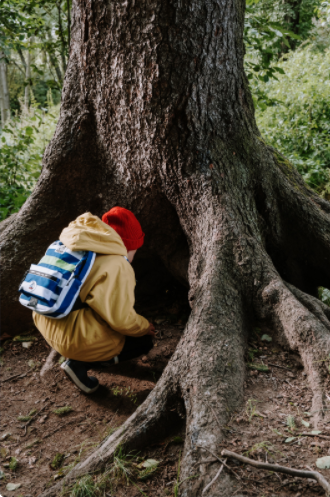
    Someone conducting research at the base of a tree
    Fantasy writers travel to new lands through portals in trees.

    The question to ask here is how does the setting become a character for you in a way that will let your reader believe that the place is real. And remember, just because it is real or what you’re describing really happened a certain way, that doesn’t mean the way you’ve described it is believable to the reader. Having the extra experience of actually lived or visited the place that you’re writing about adds that extra touch of veracity.  

    4. Research Map

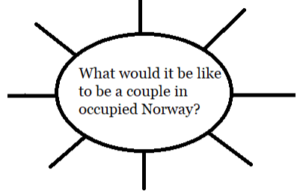
    As you embark on your research you can begin your research map. We recommend starting with your central question. Oakley’s question for The Jøssing Affair was “What would it be like to be a couple in occupied Norway?” 

    Beginning of a web brainstorm

    From this point she can begins to expand into other interests as she goes through the story. As you start your research map, you might end up finding out that your central question, while great for generating research, might not end up being the focus of the story. Be open, let the ideas take you where they need to go in the story.  

    5. Find a Second Pair of Eyes


     Once you’ve put everything together it’s easy to be so close to your work that you can’t be objective about it in a regular novel, but once you start using research it can fall into many pitfalls. Maybe your historical novel starts to sound too much like a travelogue, or your lab lit begins to like a textbook instead of a thriller. Inviting someone from outside your area of the specialized novel is a great way to find out how your readers will react to your text.

    We always recommend a Manuscript Overview that does a deep dive into the general strokes of your book followed by our Editorial Services to move step by step through your book and really make it sing.

    No matter where you are in your story, you should be proud of the work you have put in so far! Research is difficult, and we know you’re on your way to great things!


    Writer’s Toolbox

    Thank you for reading this Chanticleer Writer Toolbox article.

    Writer Toolbox Helpful Links: 

    TAPPING the EXPERTS – Researching for Your Works in Progress by Carol M. Cram

    10 QUESTION INTERVIEW WITH MULTI-AWARD WINNING AUTHOR JANET OAKLEY

    An Editorial Book Review of The Jøssing Affair by J.L. Oakley

    The traditional publishing tool that indie authors can use to propel their writing careers to new levels?  https://test.chantireviews.com/2016/05/15/the-seven-must-haves-for-authors-unlocking-the-secrets-of-successful-publishing-series-by-kiffer-brown/

    Got a great book?

    The 2023 CIBAs are open now!

    Blue button that says Enter a Writing Contest

    View all awards and upcoming deadlines here. Over 30,000 in Cash and Prizes are given away annually!

    When you’re ready, did you know that Chanticleer offers editorial services? We do and have been doing so since 2011.

    Our professional editors are top-notch and are experts in the Chicago Manual of Style. They have and are working for the top publishing houses (TOR, McMillian, Thomas Mercer, Penguin Random House, Simon Schuster, etc.).

    If you would like more information, we invite you to email Kiffer or Sharon at KBrown@ChantiReviews.com or SAnderson@ChantiReviews.com for more information, testimonials, and fees.

    We work with a small number of exclusive clients who want to collaborate with our team of top-editors on an on-going basis. Contact us today!

    Chanticleer Editorial Services also offers writing craft sessions and masterclasses. Sign up to find out where, when, and how sessions being held.

    A great way to get started is with our manuscript evaluation service, with more information available here.

    And we do editorial consultations for $75. Learn more here.  

    If you’re confident in your book, consider submitting it for a Editorial Book Review here or to one of our Chanticleer International Awards here.


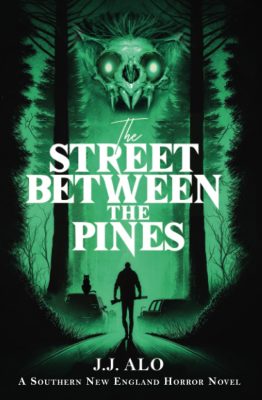
  • THE STREET BETWEEN The PINES by J.J. Alo – Psychological Thriller, Paranormal, Horror

    THE STREET BETWEEN The PINES by J.J. Alo – Psychological Thriller, Paranormal, Horror


    Something strange and terrible stirs in Frank Cavanaugh’s basement, in J.J. Alo’s psychological-thriller, The Street Between the Pines.

    The giant hole at the bottom of Frank’s house wasn’t there before. Something so very ugly and dangerous is down there. Something with bright, glowing eyes. Adrenalin pumps through Frank’s aging body as he scrambles for the exit. Behind him, a low gurgling growl.

    In suburban Connecticut, Iraqi war veteran Curtis is still fighting to surviving on multiple fronts. Curtis struggles with severe PTSD, visions of the war that continually overwhelm him. Now, after being released from jail after a manslaughter conviction, having caused a fatal auto accident, he struggles to put his life together. All the while, he navigates a shaky relationship with his wife Amy, and a complex connection to his autistic son Wes.

    If that weren’t enough, Curtis’s house will soon be condemned for an unspecified government project being built on a nearby piece of land.

    These elements whip together into a story that is rich in detail even as it delivers punch after horrific punch. We feel Curtis’ remorse for the accident that cost the life of a young woman, and the weight of being an ex-convict who must cling to a job that keeps him away from his family for weeks at a time. He shows the texture of life in his suburban community as it once was, but strange events are eating away at this social fabric. From unexplained deaths to hordes of cats seemingly guided along the streets by a group intelligence, this once safe and secure life is melting away.

    Curtis accidentally finds out more than he should have about the clandestine government laboratory that threatens him and his neighbors with its eminent domain authority. Is it a scientific facility researching how the natural world—animals, insects, fish, even the creation of new species—might provide mankind with groundbreaking medicines and technologies? Or is it a place of terrible experimentation, perhaps even the source of the killings, the unknown thing capable of ripping people to pieces as if they were cellophane?

    Can Curtis even trust his own eyes? His traumatic visions invade his nights and his days, leaving him unable to distinguish between what is or isn’t real.

    Do not expect to solve all the mysteries of this book until the last line of the last page. And no cheating! This novel will scratch readers’ horror itch like the writing of H.P. Lovecraft or modern-day master Stephen King. If you want a non-stop, spine-tingling thriller, the kind that keeps you up late at night jumping at every unknown noise in your home, then The Street Between the Pines will deliver in spades.


    5 Stars! Best Book Chanticleer Book Reviews


  • CHANTICLEER 10 QUESTION AUTHOR INTERVIEW SERIES WITH MEREDITH WARGO – Award-winning author, Animal Rescue, 10 Question Author Series, Best Book

    CHANTICLEER 10 QUESTION AUTHOR INTERVIEW SERIES WITH MEREDITH WARGO – Award-winning author, Animal Rescue, 10 Question Author Series, Best Book

    CHANTICLEER 10 QUESTION AUTHOR INTERVIEW SERIES
    with Meredith Wargo
     

    Hearten Grand Prize to Meredith WargoMeredith Wargo, multi-award-winning author is smart – and exceptionally passionate about animals, especially those in need of rescue. In fact, Meredith sent the book into our Hearten Awards, and DAWGS: A True Story of Lost Animals and the Kids Who Rescued Them  took home GRAND PRIZE in 2021!

    Chanti: Tell us a little about yourself: How did you start writing?

    Wargo: When I was first learning how to write, I used to copy Dr. Seuss’ books verbatim. From there, I started penning my own stories, always using colored construction paper and crayons as my medium. I would add little drawings to illustrate the story and staple my “book” down the long edge of the paper. My drawings were never that good, so I think that influenced my decision to focus on writing at an early age! But when I started college I chose music as my degree because I had taken piano lessons for ten years. After one semester of practicing in a tiny cubbyhole in the basement of the school’s music hall for hours every day while my roommates were out living life as normal college freshmen, I changed my major to journalism, realizing I’m happiest when I’m writing.

    Chanti: That’s wonderful! I’m glad you discovered your happy place early on. What a life changing decision. Besides, you can always play the piano, right? Let’s chat about your writing. Describe your work.  And, what led you to write in this category?

    Wargo: Most of my professional career involved writing, editing, and marketing for a variety of industries, including the legal, architectural, and engineering markets. Working in a corporate structure helped me understand and appreciate how to work under deadlines. I also learned how to interview people and to distill their information to find the hidden gems. But I always had a desire to use my writing for things I felt passionate about. The famous cliché is to write about what you know and love, so I started freelancing on the side and writing about animals. I’ve had more than 60 articles published in a variety of animal-related magazines. Several of my articles have won Maxwell Awards from the Dog Writers Association of America, which is the most recognized professional writing association devoted to dogs.

    Chanti: Congratulations on your wins! What an honor it must be to be so awarded for doing what you love to do. What do you do when you’re not writing? Tell us a little about your hobbies.

    Wargo: Growing up I was a tomboy, which has spilled over into my adult life. I love being outdoors and experiencing all that Mother Nature has to offer. Hiking, cross-country skiing and playing tennis are some of my favorite activities. I am a native Texan but currently live in southern Utah, which is the perfect place for my love of nature. Since moving here, my husband and I have challenged ourselves to try new things. We’ve taken rappelling lessons, which is both exhilarating and terrifying at the same time! Learning to trust a piece of rope to get you safely down a steep cliff changes your perspective on things rather quickly.

    Chanti: I bet! Trust issues are probably worked out rather quickly. Where do you find your inspiration?

    Wargo: I have always been an animal advocate and I love helping the underdog (or cat) through animal rescue. From growing up with the family dogs to taking horseback riding lessons as a teenager, many of my happiest memories are those that include a four-legged creature. We can learn so much from the animals in our lives and I enjoy promoting the heroic efforts of animal rescue groups and shelters or sharing news about the latest advances in animal health and wellness.
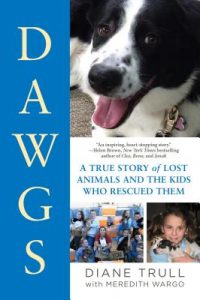
    Cover of DAWGS

    From the moment I first learned about Diane Trull and her fourth-grade students starting an animal sanctuary in the Texas Panhandle, I knew I wanted to write a book about their amazing journey. Too often, kids are criticized as being lazy or indifferent. I was so impressed with these students’ resilience and dedication that I wanted to shine a light on their efforts. I hope DAWGS inspires readers to realize that they can make a difference in whatever they feel passionate about. The human spirit can achieve great things and every small and not-so-random act can make a huge difference. It doesn’t matter your age or your size when you’re doing something you believe in. There are heroes among us everywhere and every day.

    Chanti: So true. Thank you for that inspiration! I love how a bunch of fourth graders and their teacher have made such a huge difference in their community.  As we move on, it’s important to work on your craft. What do you do to grow your chops?

    Wargo: I believe that writing is a muscle that needs to be constantly developed so I enter my work in various writing contests and competitions on a regular basis. I usually gain great feedback as a result, and I think it’s just a good way to continue honing my skills. And because the publishing world is constantly changing, I try and take advantage of online courses that help me stay abreast of the latest. Technology has made tapping into these resources so easy there’s really no excuse for [not] taking advantage of them. I have also attended numerous writer’s conferences around the country, which have always been beneficial from hearing professionals speak on the craft to meeting other authors.

    Chanti: I’m so glad you entered your work into Chanticleer’s CIBAs! Just look what happened – a Grand Prize! What craft books have helped you the most?

    Wargo: Over the years, I have read a lot of books that have helped me in my writing, including The Artist’s Way by Julia Cameron, Bird by Bird by Anne Lamont and Stephen King’s On Writing. I’ve also read several books on how to become a successful freelance writer. Additionally, I’ve subscribed to many magazines such as Writer’s Digest, Poets & Writers, and The Writer.

    Chanti: What advice would you give budding writers?

    Wargo: I think being a writer means different things to different people. Regardless if you have aspirations to become a New York Times’ Bestselling Author or you’re simply writing to document your family history or penning your memoir, perseverance is key. Many people think that sitting down to write a book is easy but, like any other profession or career, you get out of it what you put into it. I once read that there are no new stories to write but because everybody’s perspective is slightly different then the possibilities are limitless. At the end of the day, you have to feel good about what you’ve written, no matter what others may think or say. I also think it’s imperative to read a lot, especially books that are in the genre in which you are interested in writing. Go where your passion lies.

    Chanti: That’s great advice. Who’s the perfect reader for your book?

    Wargo: I think one of the great things about DAWGS is that it appeals to a variety of readers. Those involved in education can use the book as a teaching moment to help students realize they have the potential to make a difference, no matter their age. Animal lovers will also relate to the book because it reinforces that animal shelters and rescue groups rely on the generosity of caring individuals and that every small and not-so-random act can make a huge difference to homeless animals as they wait for their forever homes. Because DAWGS is a book about hope and compassion, I think its message is timeless.

    Chanti: Do you ever experience writers block? What do you do to overcome it?

    Wargo: There seems to be an ongoing debate regarding writer’s block and if it’s real. I am here to tell you that it does exist! On days when my creative juices just aren’t flowing, I don’t force it. I walk away from the computer and focus on other things for a while, trying to engage a different area of my brain. But I have noticed that when I get in the habit of sitting down to write every day, writer’s block doesn’t happen as often. That’s not to say that what I write is always good or that I’m happy with the output but for me, just showing up on a regular basis seems to help.

    Chanti: What is the most important thing a reader can do for an author?

    Wargo: Readers are the lifeblood for any author and there are several things readers can do to help promote their favorite authors from adding the book to their Goodreads’ shelf to blogging about their favorite new read. But probably the most important thing is to simply write a review—even if it’s just a few sentences—and posting it to online bookstores and on social media sites. Book reviews influence buying decisions, plain and simple. And when readers are genuinely excited about something they’ve read, a book review is worth its weight in gold.

    Chanti: Well said. And now, a new question…. What’s your favorite dessert?

    Wargo: I am a chocoholic and proud of it! It doesn’t matter what shape or form it comes in; chocolate makes the world a better place.

    Chanti: I agree!

    Now, dear readers, if you would like to know more about Meredith Wargo and the books she’s written, follow this link: https://meredithwargo.com/ and remember to write those reviews!

     

  • The 2023 Long List JOURNEY Book Awards for Overcoming Adversity in Narrative Non-Fiction

    The 2023 Long List JOURNEY Book Awards for Overcoming Adversity in Narrative Non-Fiction

    Journey Narrative Non-Fiction CIBA BadgeThe Journey Book Awards recognize emerging new talent and outstanding works in the genre of Overcoming Adversity in Narrative Non-Fiction and Memoir. The Journey Book Awards is a genre division of Chanticleer International Book Awards and Novel Competitions (CIBAs).
    Chanticleer International Book Awards is looking for the best books featuring true stories about adventures, life events, unique experiences, travel, personal journeys, global enlightenment, and more. We will put books about true and inspiring stories to the test and choose the best among them. See our full list of Non-Fiction Divisions here

    These titles have moved forward in the judging rounds from all 2023 Journey Non-Fiction entries to the 2022 Journey Book Awards LONG LIST. Entries below are now in competition for 2023 Journey Short List. The Short Listers will compete for the Semi-Finalist positions. Finalists will be selected from the Semi-Finalists. All FINALISTS will be announced and recognized at the Chanticleer Authors Conference (CAC24).

    The First Place Category Winners, along with the CIBA Division Grand Prize winners, will be selected from the 25 CIBA divisions’ Finalists.

    We will announce the 1st Place Category winners and Grand Prize Division Winners at the CIBAs Banquet and Ceremony on Saturday, April 20th, 2024 at the luxurious Hotel Bellwether in Bellingham, Wash. sponsored by the 2024 Chanticleer Authors Conference

    These titles are in the running for the SHORT LIST of the 2023 Journey Book Awards novel competition for Overcoming Adversity in Non-Fiction!

    Join us in celebrating the Long List authors and their works in the 2023 CIBAs.

    • Maria C. Palmer and Ruthie Robbins – On the Rocks
    • Frederick Douglass Reynolds – Saint Bloodbath
    • Stephen Watts – Searching for Charles: The Untold Legacy of an Immigrant’s American Adventure
    • Qin Sun Stubis – Once Our Lives
    • Rebecca Olmstead – Loved So Much It Hurts: Purpose in the Pain
    • Tina Davidson – Let Your Heart Be Broken, Life and Music of a Classical Composer
    • Hollie Stuart – I Can See for Miles
    • Trevor Greene – March Forth: The Inspiring True Story Of A Canadian Soldier’s Journey Of Love, Hope and Survival
    • Cory Mortensen – The Buddha and the Bee
    • Kyle Campbell – Beyond Belief: How Living with a Brain Stem Tumor brought Faith and Purpose to Life
    • Cathryn Vogeley – I Need To Tell You
    • Lori Lee Peters – God, the Mafia, My Dad and Me
    • Cort Casady – Not Your Father’s America
    • Francesca Miracola – I Got It From Here
    • Patricia Angeles – Midpoint: A Memoir
    • Francesca Grossman – Not Weakness: Navigating the Culture of Chronic Pain
    • Sara Alvarado – Dreaming In Spanish: An Unexpected Love Story in Puerto Vallarta
    • Joel Harris – Searching for Steve
    • Leslie Ferguson – When I Was Her Daughter
    • Kathy Sechrist – Success Is The Best Revenge
    • Antonia Deignan – Underwater Daughter: A Memoir of Survival and Healing
    • Phyllis Dyson – Among Silent Echoes: A Memoir of Trauma and Resilience
    • Andrew Saltarelli – Leaving Home
    • Nanette J. Davis Ph.D. – Raging Currents: Mental Illness and Family
    • Aurita Maldonado – The Zen of Dancing in the Rain: Becoming One with the Storm
    • Barbara Wolf Terao – Reconfigured: A Memoir
    • Trisha T Pritiin – The Hanford Plaintiffs: Voices From the Fight for Atomic Justice
    • T.C. Fuller – Painting Over Rust: Stories From a 20-Year Odyssey in the FBI
    • Sarah Martin – Dear Psychosis
    • Julie Morrison – Barbed: A Memoir
    • Jarie Bolander – Ride or Die: Loving Through Tragedy, A Husband’s Memoir
    • Mikky Eagle – Transcending to Power – the Freya Files : A Survivor’s Memoir Uncovering the Aftermath of Child Sexual-Abuse
    • Erika Shepard – Trans-Formations From Field Boots to Sensible Heels
    • Karen DeBonis – Growth: A Mother, Her Son, and the Brain Tumor They Survived
    • Mike Nixon – Life Travel And The People In Between

    Good luck to all as your works move on to the next rounds of judging.

    PROMOTING OUR AUTHORS! 

    This post has been posted on the Chanticleer Facebook Page. We try to tag all authors listed here in the FB post. However, for FB to allow us to tag an author, that author must LIKE our page and Follow Chanticleer Reviews.

    Please click here to visit our page to LIKE, COMMENT, and SHARE on Facebook.

    Additionally, we also post on Twitter. Chanticleer Twitter’s handle is @ChantiReviews

    Or click here to go directly to Chanticleer’s Twitter feed.

    Good luck to all as your works move on to the next rounds of judging.


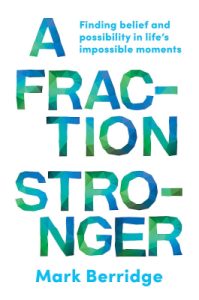
    The Grand Prize Winner for the CIBA 2022 JOURNEY Awards is:

    A Fraction Stronger 

    by Mark Berridge 

    A Fraction Stronger Cover

    PROMOTING OUR AUTHORS! 

    The 2023 JOURNEY Book Awards winners will be announced at CAC24 on April 20, 2024. Save the date for CAC24, scheduled April 18-21, 2024, our 12 year Conference Anniversary!

    April 18-21, 2024! Register Today!

    Seating is Limited. The esteemed WRITER Magazine (founded in 1887)  has repeatedly recognized the Chanticleer Authors Conference as one of the best conferences to attend and participate in for North America.

    Join us for our 12th annual conference and discover why!

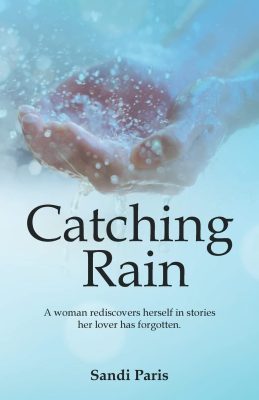
  • CATCHING RAIN: A Woman Rediscovers Herself in Stories Her Lover has Forgotten by Sandi Paris – Memoirs, Surviving Loss, Dementia

    CATCHING RAIN: A Woman Rediscovers Herself in Stories Her Lover has Forgotten by Sandi Paris – Memoirs, Surviving Loss, Dementia


    Sandi Paris’s Catching Rain is a remarkable tribute to life and all that it brings.

    The opening sentence of the first chapter, “My lover has left me” introduces the anguished voice of the author who feels abandoned when her beloved husband forgets her secrets.  This powerful memoir weaves provocative and inspiring memories of the past through stages of her husband’s rare dementia. Paris uses humor and occasional rage to fuel her journey through the catastrophe of his illness, while readers are invited to laugh through tears.

    A diagnosis of FTD (Frontotemporal Deterioration) shatters the beautiful life Sandi Paris and her husband Randy Brown created. Having an explanation of why his brilliant mind and athletic, 6’3” body are faltering at such a young age does not prepare them for the devastation to come. Careers end and dreams of the future crumble while bank accounts are drained. The spectacular wildlife garden they developed together is still young when it becomes clear that their community cannot meet the growing challenges of FTD.  As Randy’s bizarre behaviors increase, Paris desperately seeks the care her devoted life partner is denied. Once that care is secured, she must fight to maintain it.

     The vivid memories that weave through Catching Rain are told in the style of epistolary writings to the author’s spouse when he no longer remembers how she became the woman he loved. Readers are immersed in both past and present when vignettes rise during poignant or outrageous present-day experiences with dementia. Retelling her stories infuses the author with love and determination.

    This consciously focused literary composition exposes gaps in the safety net of dementia care and end-of-life choices. It also reflects on broader societal issues that continue to be relevant today. By revisiting the values shared with her husband, Paris resurrects the deep intimacy and trust their relationship took root in. The heart wrenching story of her disabled son’s birth reminds her to stand and speak for Randy when he loses his voice. Revisiting experiences of religious intolerance prepares her to protect him from people who attempt to override his personal values and wishes.

    By retelling horrifying generational experiences of misogyny and patriarchy, Paris is reminded how Randy himself made changes that gave her hope.  Describing his anguish over the brutal murder of their gay friends, brings focus to the ongoing need to ensure  social and racial justice for everyone, including our LBGTQ communities. Catching Rain promotes change by infusing personal experiences with broader social advocacy.

    Sandi Paris and others like her are relentless in their pursuit of respectfully compassionate care for those facing devastating conditions like FTD. Catching Rain will resonate and impart wisdom and grit to readers who feel alone with their own struggles through end-of-life care and decision making. It also serves as a resource for caregivers and loved ones by providing detailed descriptions of Randy’s disease progression along with suggestions for financial survival and creative management of dementia behaviors or administrative mishaps.

    What begins as a head-on confrontation with FTD dementia eventually surrenders to the inevitable. Acceptance brings a measure of peace at the end of Randy’s life. These intensely intimate stories are intended to honor both tragic and joyful moments.  Readers are encouraged to get uncomfortable and accept unexpected burdens.  Paris challenges us to climb the damn mountain!

    Sandi Paris lights a light with Catching Rain that illuminates her journey of love in action. It is highly recommended!

    Catching Rain by Sandi Paris won First Place in the 2022 CIBA Journey Awards for Overcoming Adversity Non-Fiction.


    5 Star Best Book Chanticleer Reviews round silver sticker

  • THE LAST LAIRD of SAPELO by T. M. Brown – Biographical Fiction, U.S. Civil War, Military History

    THE LAST LAIRD of SAPELO by T. M. Brown – Biographical Fiction, U.S. Civil War, Military History


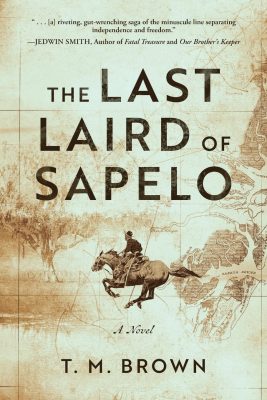
    The Last Laird of Sapelo, by T. M. Brown, is the story of one man’s tragic death in pursuit of justice, as his way of life, too, dies in the flames of a war that he had tried his damnedest to avert.

    Sapelo is one of the barrier islands off the coast of Georgia. As this story opens, the War Between the States has just begun, and the Confederacy plans to use those islands as a bulwark against the Union gunboats that assuredly will extend their blockade of Savannah all the way down the coast. If the blockade succeeds, then the South’s cotton, the fuel of its economic engine, will languish in Southern warehouses instead of sailing to buyers and allies across the sea.

    Colonel Randolph Spalding, the last laird of the title, committed to the war despite arguing vehemently against it. Now an officer in charge of building a garrison on his own land, he’s caught between military duty, and personal responsibility.

    As the Laird of Sapelo, Spalding is duty-bound to protect his family and his property, including more than three hundred enslaved people. .

    The Spaldings consider themselves ‘enlightened’ slaveholders, giving their slaves more time and ‘freedom’ to work for themselves and have leisure, as well as sturdy houses and decent food. Their neighbors call them fools. The Confederate soldiers see the slaves as their rightful prey.

    His military duty is to keep those soldiers in line. His personal duty is to keep his people safe. When those lines get crossed, he moves Heaven and Earth to make it right. Even if those lengths will cost him his own life.

    This fictionalized biography illuminates a little-known, but pivotal, part of the U.S. Civil War: the defense of the Confederate coastline as it happened on the ground, in tiny communities.

    Spalding draws readers into his own story, telling it through letters and diary entries over the first year of that terrible war. His first-person perspective on those early months, at a point when hopes were high but organization was lacking, foretells the inevitable cost of this fight. The Civil War will exact a bloody cost no matter who triumphs on the battlefield.

    Despite the deplorable cause for which he fights, Spalding’s internal conflicts, filled with intense emotion, make him a riveting character. He faces the scant triumphs and ultimate tragedies of a man who fights to preserve his world, only for it to disintegrate in his grasp.

    The Last Laird of Sapelo will fascinate readers interested in the unsung facets of the U.S. Civil War, those looking for a nuanced approach to the origins of the conflict, and anyone interested in the details of military organization – or lack thereof – in 19th-century warfare.

    The Last Laird of Sapelo comes out August 15, 2023, and is available for pre-order now wherever books are sold!

    5 Stars! Best Book Chanticleer Book Reviews

  • 10 QUESTION AUTHOR INTERVIEW with Jennifer Kincheloe – Award-Winning Author,

    10 QUESTION AUTHOR INTERVIEW with Jennifer Kincheloe – Award-Winning Author,

    CHANTICLEER 10 AUTHOR INTERVIEW SERIES
    with award-winning author, Jennifer Kincheloe

    M&M Blue and Gold 1st Place Badge Image


    Jennifer Kincheloe won First Place in our Mystery & Mayhem Awards a few years back, but we still remember her contagious smile and her fabulous book, The Secret Life of Anna Blanc. Let’s get into it!

    Chanti: Tell us a little about yourself: How did you start writing?

    Kincheloe: I used to be a research scientist/mother of two. (Actually, I still am) About ten years ago, bemused by the boastful Christmas letters I would get every year in the mail (this was before Facebook), I decided to write a humorous, sort of spoofy Christmas letter. I spent hours on it. And when people read it, they laughed. That’s when I discovered I loved writing.

    Chanti: When did you realize you that you were an author?

    Kincheloe: After I wrote my Christmas letter, I decided to write a screenplay because, in my naïve mind, they were shorter than novels and therefore easier. I had just recovered from an illness and wasn’t working, so I had time to spend on it. When I started writing, I couldn’t stop. It made me high. I wrote all the time. I barely stopped to eat. I would wake up in the middle of the night and write. I took my laptop everywhere. (I still do). When I stopped to consider this, I decided I must be a writer.

    And, by the way, my screenplay was terrible.

    Chanti: I love that feeling when you’re in it deep and words just flow. What a high! What do you do when you’re not writing? Tells us a little about your hobbies.

    Kincheloe: I like kickboxing and hiking. I love theater. I go to the Metropolitan Opera’s film series. I spend time with my family and pets.

    Chanti: It sounds like you have a well-balanced life. Good for you! How do you come up with your ideas for a story?

    Kincheloe: Newspaper articles. I usually base my mysteries on real crimes. The little details in the book, the world-building, typically come from historical sources. For example, I read in a wealthy woman’s diary about how her family had employed a man from China at the turn of the 20th century. He would fill his mouth with water and spit it out in a fine spray onto the clothes he was ironing. That went right into The Woman in the Camphor Trunk.

    Chanti: How do you approach your writing day?

    Kincheloe: I write on my lunch break, nights and weekend. I usually write every day, even if it’s just a paragraph.

    Chanti: Smart. Put something on paper – it doesn’t matter how much. It’s about the habit. I like that. What craft books have helped you the most?

    Kincheloe: I loved Stephen King’s book On Writing. Story by Robert McKee. Bird by Bird by Anne Lamott.

    Chanti: What business books about writing have helped you the most?

    Kincheloe: If I were to look at writing as a business, I would despair. Even the traditional publishing market is flooded and very few authors make a living. What helps me is having an engaging and profitable life apart from writing. This allows me to write for the joy of it. Most authors I know who make a living are a dozen or more books into their career. Some of our finest, most decorated authors do not make a living.

    Chanti: What are you working on now? What can we look forward to seeing next from you?

    Kincheloe: I’m working on the fourth book in the Anna Blanc Mystery series. It deals with mysterious fraternal orders and horrible death.

    Chanti: How exciting! What is the most important thing a reader can do for an author?

    Kincheloe: Email the author and tell them you loved the book and why. Recommend a book to a friend. Give books as presents. Leave reviews on Goodreads, Amazon, library webpages, wherever. Go to their book signing and say hi.

    Chanti: Do you ever experience writers block? What do you do to overcome it?

    Kincheloe: Yes. I overcome it by putting on my big girl panties. In the words of Gail Carriger, “Sandwich makers don’t get to have sandwich block.” I’m a writer. Thus, I write when I don’t feel like it. If I’m burned out, I spend time in nature. A fine book on creative blocks is The Artist’s Way by Julia Cameron.

    M&M 1st Place Gold Foil book sticker image

  • The CYGNUS 2023 CIBAs Long List for Science Fiction

    The CYGNUS 2023 CIBAs Long List for Science Fiction

    Cygnus Award for Science Fiction

    The Cygnus Book Awards recognize emerging new talent and outstanding works in the genre of Science Fiction, Steampunk, Alternative History, and Speculative Fiction. The Cygnus Awards is a genre division of Chanticleer International Book Awards and Novel Competitions (The CIBAs).

    Chanticleer International Book Awards is looking for the best books featuring space, time travel, life on other planets, parallel universes, alternate reality, and all the science, technology, major social or environmental changes of the future that author imaginations can dream up for the CYGNUS Book Awards division. Hard Science Fiction, Soft Science Fiction, Apocalyptic Fiction, Cyberpunk, Time Travel, Genetic Modification, Aliens, Super Humans, Interplanetary Travel, Climate-Fiction, and Settlers on the Galactic Frontier, Dystopian, our judges from across North America and the U.K. will put them to the test and choose the best among them.

    These titles have moved forward in the first look rounds from all 2023 CYGNUS Science Fiction entries to the 2023 Cygnus Book Awards LONG LIST. These entries are now in competition for the 2023 Cygnus Short List. The Short Listers will compete for the Semi-Finalists positions. FINALISTS will be chosen from the Semi-Finalists and recognized at the Chanticleer Authors Conference, CAC24.

    We will announce the 1st Place Category winners and Grand Prize Division Winners at the CIBAs Banquet and Ceremony on Saturday, April 20th, 2024 at the luxurious Hotel Bellwether in Bellingham, Wash. sponsored by the 2024 Chanticleer Authors Conference

    These titles are in the running for the SHORT LIST of the 2023 Cygnus Book Awards novel competition for Science Fiction!

    Join us in cheering on the following authors and their works!

    • S.W. Lawrence, MD – Climate Dragon
    • Andrew P. Blaber – Fallow
    • Diana Fedorak – Children of Alpheios
    • Lou Dischler – The Rising
    • Sue C Dugan – Walk-ins Welcome
    • E.T. Gunnarsson – Abandon Us
    • E.T. Gunnarsson – Remember Us
    • Arnie Benn – The Intrepid: Dawn Of The Interstellar Age
    • Jonny Thompson – Ash and Sun
    • J.L. Birchwood – The Southron Deception
    • Alexandra Almeida – Unanimity
    • S.G. Blaise – Proud Pada
    • Tamar Anolic – The Fledgling’s Inferno
    • Diane Lilli – The Last Invention
    • William X. Adams – Polters
    • N. John Williams – In the Shadow of Humanity: A Novel
    • Julia Tvardovskaya – Identifiable
    • Gareth Worthington – Dark Dweller
    • J.D. Clason – Salvation
    • K.M. Messina – Gemja – The Message
    • Lucia Dolan – Power Surge
    • R. R. Corvi – The Brangus Rebellion
    • Amber Kirkpatrick – Unleashed
    • Michael Simon – Extinction
    • J. Wint – The Prism Effect
    • Timothy S. Johnston – The Shadow of War
    • Howard Berk and Peter Berk – TimeLock
    • Jeanne Hull Godfroy – Midgard
    • Jamie Eubanks – Hall of Skulls
    • Rob Brownell – Invention Is a Mother
    • Dylan McFadyen – Oblivion’s Cloak
    • Donald Firesmith – Hell Holes: A Slave’s Revenge
    • Stu Jones – The Zone: A Cyberpunk Thriller
    • John Blossom – The Last Football Player
    • Nikki Kallio – Finding the Bones: Stories & A Novella
    • Sarena Straus – ReInception
    • Sean O’Connor – Blood Ever After
    • Tyler Drinkard – Isolated Domain
    • Melissa Gowdy Baldwin – The Marriage Wars: Book One

    Good luck to all as your works move on to the next rounds of judging.

    PROMOTING OUR AUTHORS! 

    This post has been posted on the Chanticleer Facebook Page. We try to tag all authors listed here in the FB post. However, for FB to allow us to tag an author, that author must LIKE our page and Follow Chanticleer Reviews. FB rules — not ours.

    Please click here to visit our pageto LIKE, COMMENT, and SHARE on Facebook.

    Additionally, we also post on Twitter. Chanticleer Twitter’s handle is @ChantiReviews

    Or click hereto go directly to Chanticleer’s Twitter feed.

    Congratulations once more to the 2022 Cygnus Grand Prize Winner

    The Last Lumenian

    By S. G. Blaise

    Click here to see the full list of 2022 CYGNUS Book Award Winners for Science Fiction.

    We are now accepting submissions into the 2024 CYGNUS  Book Awards for Science Fiction.

    Please click here for more information.

    Winners will be announced at the 2023 CIBA Awards Ceremony that is sponsored by the 2024 Chanticleer Authors Conference.

    April 18 – 21, 2024! Register Today!

    Seating is Limited. The esteemed WRITER Magazine (founded in 1887)  has repeatedly recognized the Chanticleer Authors Conference as one of the best conferences to attend and participate in for North America.

    Join us for our 12th annual conference and discover why!

  • COMMUNITY 215 by Dr. M.K. Black – Sci-fi, Dystopian, Romance

    COMMUNITY 215 by Dr. M.K. Black – Sci-fi, Dystopian, Romance


    Dr. M.K. Black’s Community 215 is a fast-paced, sci-fi/dystopian novel about a world that was torn apart, and the people struggling to survive it together.

    Black gives us two teen protagonists, Rhea and Brooks, whom we grow to love. She creates a world both believable and terrifying. As our heroes collide with life inside and outside of the community, their world leaves readers wondering who the two can possibly trust.

    Rhea once tried to climb the wall to get out of their community when she was a little girl. But her father, the leader of the community, caught her and has since that day drilled obedience to the rules into her head. However, she takes the risk of disobedience again at eleven years old, when she catches someone climbing the wall into the community. He begs for her help. She’s caught again and disciplined for trying to protect Brooks, a boy who seeks refuge from the Outcasts who live outside the wall.

    Black masterfully develops Rhea’s community, and the people within it.

    Though Rhea’s is only one such community of hundreds, Brooks is a reject of them all. Having lived outside of any community, he is considered a dangerous Outcast. He tries to convince Rhea that another world exists beyond the walls, a world where people are free and make their own decisions. But Rhea’s education, and the painful brand she received for saving Brooks, have taught her that only obedience and total honesty to her community will keep her alive.

    Over several years, Brooks and Rhea grow close. The testing time is upon them, ready to determine the paths of their lives. Rhea hopes that, like her father, she will become the next leader. And, though she has never heard the word ‘love’, she wants the tests to show that her mate will be Brooks.

    Brooks, however, knew that it was love “at first sight” when he laid eyes on Rhea, as children. He could have opened the gates and let in the leader of his Outcast tribe of warriors right then, but he waited, taking the time to train Rhea in hand-to-hand combat, preparing her to survive the attack.

    Brooks thinks only of Rhea and her well-being, and of their future together outside of the walls of the community.

    Will Rhea believe him when he finally tells her that the communities are actually prisons to keep people docile at the mercy of the leaders? Their survival in this dangerous world is threatened by Rhea’s struggle to discover what is true. Whom should she believe, Brooks, or her father, the only leader she’s ever known?

    Black’s enthralling plot will keep readers turning page after page. The ending of this story seems a bit abrupt, but Black could very well be setting us up for a follow-up book in what would be a dynamite series.


    Chanticleer Book Reviews 4 star silver foil book sticker