The Gertrude Warner Book Awards recognize emerging new talent and outstanding works in Middle Grade Fiction. The Gertrude Warner Book Awards is a division of the Chanticleer International Book Awards (The CIBAs).
Chanticleer International Book Awards is looking for the best books featuring Contemporary Middle Grade, SFF & Paranormal Middle Grade, Mystery Middle Grade, Historical Middle Grade, Adventure Middle Grade, and Graphic Novels. We will put them to the test and choose the best among them. For Young Adult Fiction see ourDante Rossetti Awards hereand for Children’s Literature see ourLittle Peeps Awards here.
These titles have moved forward in the judging rounds from all 2023 Gertrude Warner Middle Grade Fiction entries to the 2023 Gertrude Warner Book Awards LONG LIST. Entries below are now in competition for the 2023 Gertrude Warner Shortlist. The Short Listers will compete for the FINALIST positions. Finalists will be selected from the Short List. All FINALISTS will be announced and recognized at the Chanticleer Authors Conference (CAC24).
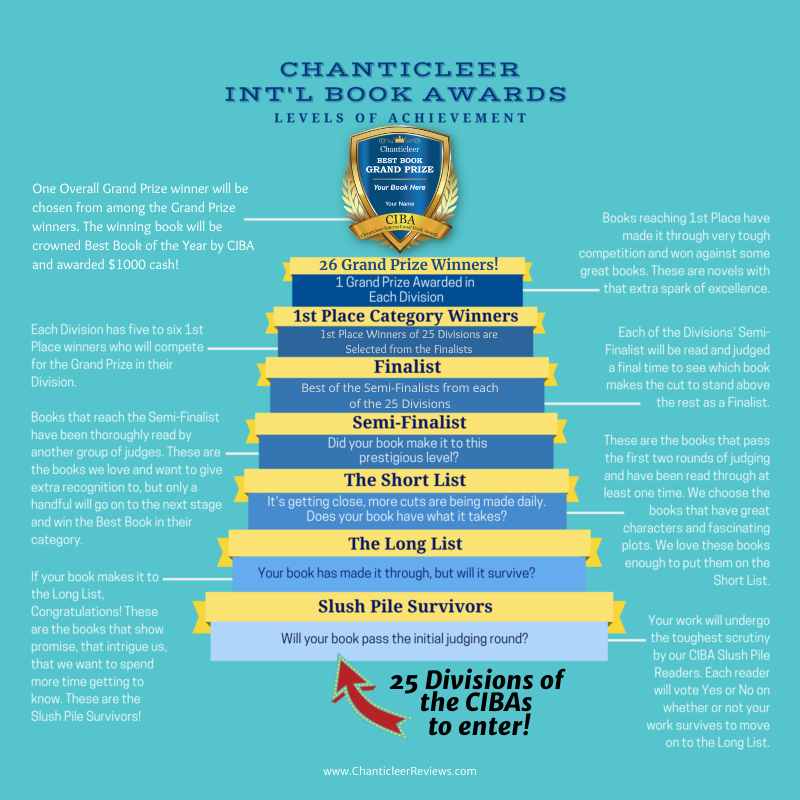
The First Place Category Winners, along with the CIBA Division Grand Prize winners, will be selected from the 25 CIBA divisions’ Finalists.
We will announce the 1st Place Category winners and Grand Prize Division Winners at the CIBAs Banquet and Ceremony on Saturday, April 20st, 2024 at the luxurious Hotel Bellwether in Bellingham, Wash. sponsored by the 2024Chanticleer Authors Conference.
These titles are in the running for the SHORT LIST of the 2023 Gertrude Warner Book Awards novel competition for Middle Grade Fiction!
Join us in cheering on the following authors and their works in the 2023 CIBAs.
The 2023 Gertrude Warner Book Awards Long List
Tomás Pérez-Zafón – Trotter and the Twins: The Magic of Imagination
Sue C Dugan – SOS
Carrie Sword – The Gospel of the Reindeer
Gregory Saur – Drowning Hate
Jenna L. Campbell – Camp Silversand and the Lost Heart of the Lake
Gabriel Bietz – The Adventures of Arya and Krishna Betta Fish
Alex Paul – The Amarrat Invasion
Hans Ness – Rolo the Pet Earthling
Jason Colpitts – Corrine and the Secret Mountain Colony
Marsha Tufft – The Sea Turtle Spy Project: Putney Hicks Inventor Adventures? Book 4
Chris Norbury – Little Mountain, Big Trouble
V Knox – Snow Behind the Door
Zane Re-Bloom – The Magic of Moon & Herbs
Malinda Andrews – Awaken
Marsha Klopmeier Tufft – The Buoyancy Project: Putney Hicks Inventor Adventures, Book 2
Peter Serko – Hattie’s War
Andrew Dolberg and Rob Long – The Great Weather Diviner: The Untold Origin of Punxsutawney Phil
Vincent M. Miceli – The Last Triceracorn, Book One
J.T. Tenera – Erift’s Journeys: The Dark Messengers
Liese Sherwood-Fabre – Wilhelmina Quigley: Magic School Dropout
Mel Sobolewski – Second Chances Moonlight Mile Ranch
Eileen Hobbs – Under the Golden Rain Tree
Caryn Rivadeneira – Frankinschool (Book 1): Monster Match
Elizabeth R. Jensen – Fire & Wolves: A Tale of Etria
David Swindell – The Wonderful Friendship
Maxine Rose Schur – The Word Dancer
Kevin Dunn – Vicious is My Middle Name
Nikita Kapoor – Pack of the Lost – The Uninviting Forest
J.T. Tenera – Erift’s Journeys: Secrets of The Sealed Forest
Paisley Summer – The Butterfly Nebulae
Sheri Graubert – Molly Shipton, Secret Actress
Rae Marsh – Love, Maggie-Chronicles of 3rd Grade
David Nos – Kordan The Wizard
Barbara Gold – Operation Save PawPrints, an Izzy Rose Green Mystery
Ryan OBrien – Adventures Through the Magic Portal
Susan Diamond Riley – The Sea Witch’s Revenge: A Delta & Jax Mystery
Rae Knightly – EXOSTAR (The Lost Space Treasure Series, Book 1)
Alisse Lee Goldenberg & Joseph Goldenberg – Lucky At Bat
Mark Cheverton – Facing the Beast Within
Lynne Howard – Dylan Dover: Into The Vortex
L.T. Caton – Find Me In Time: Meeting Columbus
Cintia Alfonso Fior – Moraline
Rae St. Clair Bridgman – The Kingdom of Trolls
Ben Gartner – One Giant Leap
Good luck to all as your works move on to the next rounds of judging.
PROMOTING OUR AUTHORS!
This post has been posted on the Chanticleer Facebook Page. We try to tag all authors listed here in the FB post. However, for FB to allow us to tag an author, that author must LIKE our page and Follow Chanticleer Reviews.
Additionally, we also post on Twitter. Chanticleer Twitter’s handle is @ChantiReviews
Orclick hereto go directly to Chanticleer’s Twitter feed.
Good luck to all as your works move on to the next rounds of judging.
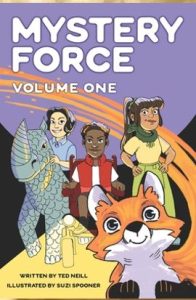
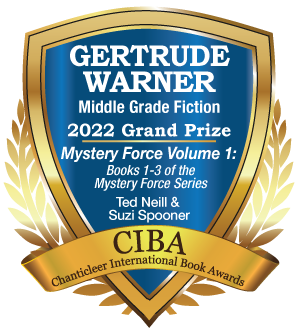
The Grand Prize Winner for the CIBA 2022 GERTRUDE WARNER Awards is:
MYSTERY FORCE, Volume 1
by Ted Neill and Suzi Spooner
The 2023 GERTRUDE WARNER Book Awards winners will be announced at CAC24 on April 20, 2024. Save the date for CAC24, scheduled April 18-21, 2024, our 12-year Conference Anniversary!
Submissions for the 2023GERTRUDE WARNER Book Awards are open until the end of August.Enter here!
Seating is Limited. The esteemed WRITER Magazine (founded in 1887) has repeatedly recognized the Chanticleer Authors Conference as one of the best conferences to attend and participate in for North America.
The Clue Awards for Suspense/Thriller novels has a new category!
Chanticleer International Book Awards is seeking the best books featuring suspense, thrilling adventure, detective work, private eye, police procedural, and crime-solving, we will put them to the test to discover the best! (For lighter-hearted Mystery and Classic Cozy Mysteries please check out our Mystery & Mayhem Awards, and for High Stakes Suspense Novels please check out our Global Thriller Awards).
Introducing the True Crime Category
The Clue Awards is delighted to welcome in a Non-Fiction black sheep into its fold with the True Crime / Investigations Category. While it would be tricky to fit this into our general Non-Fiction Awards, we took inspiration from bookstores everywhere that frequently put the True Crime section next to the rest of the excellent mysteries.
Book Riot did a great article on the differences between True Crime and Thrillers, saying
True crime aficionados liked the deep dive into the psychology of it all. Jack El-Hai, a true crime writer who recently published The Lost Brothers, wrote, “I’m only an occasional reader of murder mysteries. Many fictional works about murder are about finding out who did it, and the narrative concludes with that discovery or with catching the perpetrator. I’m more interested in why they did it and the aftermath for everyone affected by the crime.”
The readers they interviewed ranged from only wanting to read one or the other to loving both for different reasons. Do you have any of your own preferences?
Of course, this wouldn’t be a Chanticleer article if we didn’t have some excellent books for you to read!
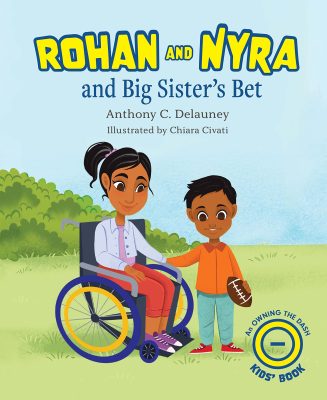
Continuing his series of important financial lessons told through fun stories, Anthony C. Delauney teaches readers about greed and gambling in Rohan and Nyra and Big Sister’s Bet.
Rohan eagerly waits for his big sister to return home from school for the weekend. Nyra brings home a challenge for Rohan in the form of a game. For every catch of the ball, Rohan will earn one dollar, but if he drops the ball at any point, he will lose it all. Rohan has tons of fun catching the ball over and over, thinking of all the things he will be able to buy with each added dollar. Will Rohan decide to keep the game going even when he becomes tired, or will he stop while he is ahead? Read Rohan and Nyra and Big Sister’s Bet to find out!
The lesson at the heart of the story is an important one, for children and adults alike. It’s easy to get caught up in the excitement of taking risks.
Rohan and Nyra and Big Sister’s Bet highlights the importance of thinking through your decisions. Of course, one must sometimes take risks, but should do so thoughtfully.
With illustrator Chiara Civati’s whimsical artwork and Deluaney’s simple yet attention-grabbing rhyming, Rohan and Nyra and Big Sister’s Bet is a children’s book not to miss! Check out the other books in the series: Dash and Nikki and the Jellybean Game and Lilly and May Learn Why Mom and Dad Work.
We recently reorganized our Book Awards program at the request of our readers to keep a more even balance for reading and to lighten the load during the holiday season. As we settle into this new schedule, we’re hearing great feedback from authors regarding the best times for them to submit their work. This depends on conferences and workshops (many of which are genre specific) where they can regularly receive feedback and writing retreats that allow them to finish their manuscripts. Thank you to everyone who reaches out and makes our Awards a success every year!
You now have until the end of September to submit to the Dante Rossetti Book Awards for Young Adult Fiction.
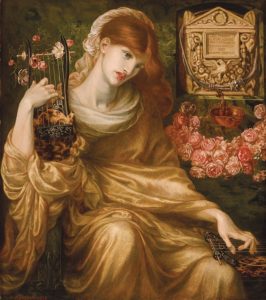
The Dante Rossetti Awards are named for the young British painter and poet Dante Gabriel Rossetti, seen on our badge for the Rossetti Awards in a self-portrait.
La Viuda Romana by Dante Rossetti
Chanticleer chose Dante Rossetti as the namesake of our young adult fiction awards, because of Rossetti’s strong connection to works of beauty and emotions as swift as the changing seasons. Both aspects embody what it means to be young. We feel that the sentiment expressed by the Pre-Raphaelite movement exemplifies what inspires many authors to pick up their proverbial pens to express their emotions and their observations of the visceral dynamics of living.
In the spirit of Young Adult Literature, we’d like to celebrate some of our favorite YA reads by Chanticleer Authors in the last year.
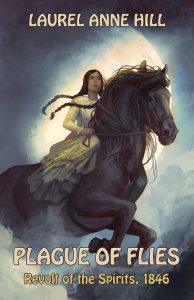
PLAGUE Of FLIES: Revolt of the Spirits, 1846
By Laurel Anne Hill Ozma Grand Prize Winner Dante Rossetti First Place Winner
Sixteen-year-old Catalina Delgado’s hopes of marrying her love are troubled by strange, unnatural dangers, in Laurel Anne Hill’s novel, Plague of Flies.
Like every dutiful daughter in 1846, Catalina worries about her reputation. However, she must also gain the approval of Ángelo Ortega’s family. Unfortunately, when three strangers ride onto her family’s small ranch in Alta California, she knows that more than her dreams are at risk. Alta California has just been invaded by the men of the Bear Flag, and Catalina fears what will become of her homeland now that it has been claimed by the Yankees. The nearby ranch owned by the valiant General Vallejo has been raided, owners and their servants terrorized and held captive. Plus Bear Flaggers have murdered additional friends of Catalina’s family on a beach.
In connection with the recent killings, the three strangers are harbingers of a dire prophecy repeated to Catalina by a dying vaquero. Catalina is destined to be carried off by a spirit man riding a black Andalusian stallion. She will be tasked to do the bidding of Coyote, a trickster spirit who is trying to stop the advancement of the Bear Flaggers. Catalina grapples with her uncertainty and disbelief, but she desperately wants to save her family. When Spirit Man appears to her, she must ask herself how far she is willing to go to keep her loved ones alive.
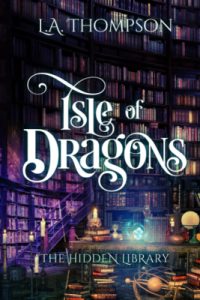
THE HIDDEN LIBRARY: Book 2 of the Isle of Dragons Series
By L.A. Thompson
Isle of Dragons: The Hidden Library by L.A. Thompson is a breathtaking race to seize the reins of destiny and find a magical library that was once the subject of stories and lore. Jade and Kaylen, once friends, oppose each other in search of this hidden library and its world-changing secrets.
Demoted and dejected, Kaylen reels from her valiant but failed attempt to bring back the final item that King Jarrod needs to fulfill a prophecy. The iconic stone remains out of reach. Kaylen is summoned for an audience with the king. A glimmer of hope for the future flickers, but the king demands an even more ambitious mission of her. He will restore her rank and honors if she finds for him the mysterious hidden library that can open a gateway between worlds. It’s a deadly challenge that will once again pit her against an old friend.
Jade summons all her strength and courage with others who stand against the king who has made her family suffer. When she and Kaylen clash, sparks will ignite as hot as a dragon’s roar.
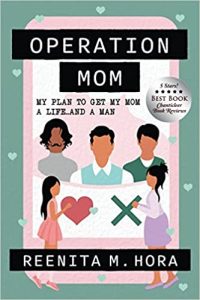
OPERATION MOM: My Plan to Get My Mom a Life and a Man
By Reenita Malhotra Hora Chatelaine Grand Prize Winner Dante Rossetti First Place Winner
Master storyteller Reenita Malhotra Hora’s YA romance Operation Mom: My Plan to Get My Mom a Life and a Man takes us on a charming journey through the life of one teen, Ila Isham.
Hora introduces Ila and her best friend Deepali, two boy-crazy teens on a summer quest. Readers will fall in love with the smart, sassy, angst-filled, rebellious Ila. A typical teenage girl, Ila lives in Mumbai with her mom and Sakkubai, their house manager. Ila’s mother calls her obsessed, but that seems unfair. Is she obsessed just because her every waking minute is spent thinking of Ali Zafar, famous pop icon, singer, and heartthrob? Or is she obsessed with fellow classmate Dev?
No, Ila couldn’t be taken with Dev because he’s one of three young men that her best friend Deepali is juggling in her summer experiment of exploring her “feminine mystique.” This turn of phrase becomes just one of many opportunities for Hora’s humor to shine as Ila remarks, “That’s a book by Gloria Steinem . . . no Betty Friedan.” Deepali’s response? “Yaar. Don’t be so literal.” The delightful balance between Ila’s book smarts versus Deepali’s street smarts carries us through Hora’s expertly crafted story.
TARO: The Legendary Boy Hero of Japan By Blue Spruell, illustrated by Miya Outlaw Dante Rossetti Grand Prize Winner
Adventure, classic tales, fantasy, and exciting action combine in TARO: Legendary Boy Hero of Japan, a well-poised debut novel by award-winning author Blue Spruell.
In the turbulent final decades of the sixteenth century, feudal Japan reeled in mayhem as the central hereditary dictatorship collapsed, and tyrannical powers fought to control the empire. TARO: The Legendary Boy Hero of Japan is the story of how one man revolutionized a nation by taking its reigns and forging a new destiny through his depths of compassion and determination.
The story begins with Taro as a young boy. As an heir to the Takeda family, Taro enjoyed reading, much to his father’s disapproval, as he wanted him to follow in his footsteps as a skilled Samurai. Tragedy changes Taro’s presumed destiny when his parents are murdered in a fierce power struggle, leaving him an orphan. Shortly after, a witch saves him from drowning and begins Taro’s new life of adventure, introducing him to a world of mythical creatures. On this new journey, Taro discovers shocking secrets about his lineage, and with them, his ultimate purpose in medieval Japan.
FROM BRICK and DARKNESS
By J. L. Sullivan Ozma First Place Winner
Dreams become a reality for a high schooler who gets more than he bargains for when he unwittingly releases a demon in J. L. Sullivan’s urban fantasy novel, From Brick and Darkness.
Fifteen-year-old Baxter (Bax) Allen encounters a creepy homeless-looking man at his apartment complex with purple eyes. The stranger, who asks for Greg, Bax’s estranged father, hands him a ring affixed with a purple stone. The man says that the costume jewelry is valuable, although Bax has difficulty believing his claim.
At school the next day, as he shares his weird experience with his best friend, Jason, Bax accidentally rubs the ring, the stone emits a hypnotic glow, and a small monkey-like creature appears, saying, “How can it serve?” Once Bax and Jason realize that the ring summoned a genie (or Janni, as the creature says), the two plan to investigate this strange phenomenon further at Bax’s house. One thing leads to the next, and before the boys know what’s going on, Ashley, Bax’s neighbor catches a glimpse of Janni. She joins the boys and is sworn to secrecy about this enchanted creature.
Thank you to everyone who has entered the CIBAs, and a special thanks to those who keep reading alive for the Young Adults in the world! Good books for young people matter!
The winners of the Dante Rossetti Awards will be announced during the 2024 Chanticleer Authors Conference. First-place winners receive the coveted Chanticleer Blue Ribbon, and the Grand Prize laureate commands the spotlight, epitomizing the exceptional YA Fiction genre talent.
The Chaucer Book Awards recognizes the best of the best in Historical Fiction featuring the Pre-1750s Historical Fiction, including pre-history, ancient history, Classical, world history (non-western culture), Dark Ages and Medieval Europe, Renaissance, Elizabethan, Tudor, and 1600s.
Named for Geoffrey Chaucer who wrote The Canterbury Tales, The Chaucer Awards is the first Historical Fiction division created at Chanticleer, pre-dating the Goethe Awards for Late Historical Fiction and the Hemingway Awards for 20th c. Wartime Fiction. After receiving an overwhelming amount of entries into the 2016 Chaucer Book Awards, the judges requested that the CIBAs divide the historical fiction division.
The Canterbury Tales is considered one of the greatest works in the English language, and is in large part responsible for the strong Germanic influence (the top competing work of literature, Pearl, was much more heavily influence by French, but it wasn’t as popular and we don’t even have records of the author’s name). It was among the first non-secular books written in Middle English to be printed.
A woodcut from William Caxton’s second edition 0f the Canterbury Tales printed in 1483
Our favorite Rooster, Chanticleer himself comes from the Prior’s Tale, written by Chaucer!
“For crowing there was not his equal in all the land. His voice was merrier than the merry organ that plays in church, and his crowing from his resting place was more trustworthy than a clock. His comb was redder than fine coral and turreted like a castle wall, his bill was black and shone like a jet, and his legs and toes were like azure. His nails were whiter than the lily and his feathers were like burnished gold.” – Chaucer
Some interesting tidbits about Geoffrey Chaucer
Born c. 1342/43 probably in London. He died on October 25, 1400
His father was an important London vintner
His family’s finances were derived from wine and leather
Chaucer spoke Middle English and was fluent in French, Latin, and Italian
He guided diplomatic missions across the continent of Europe for ten years where he discovered the works of Dante, Petrarch, and Boccaccio whose The Decameron had a profound influence on Chaucer’s later works
He married well as his wife received an annuity from the queen consort of Edward III
His remains are interred in the Westminster Abbey
As our deadline draws near, don’t miss this opportunity to earn the distinction your historical fiction deserves! Enter today!
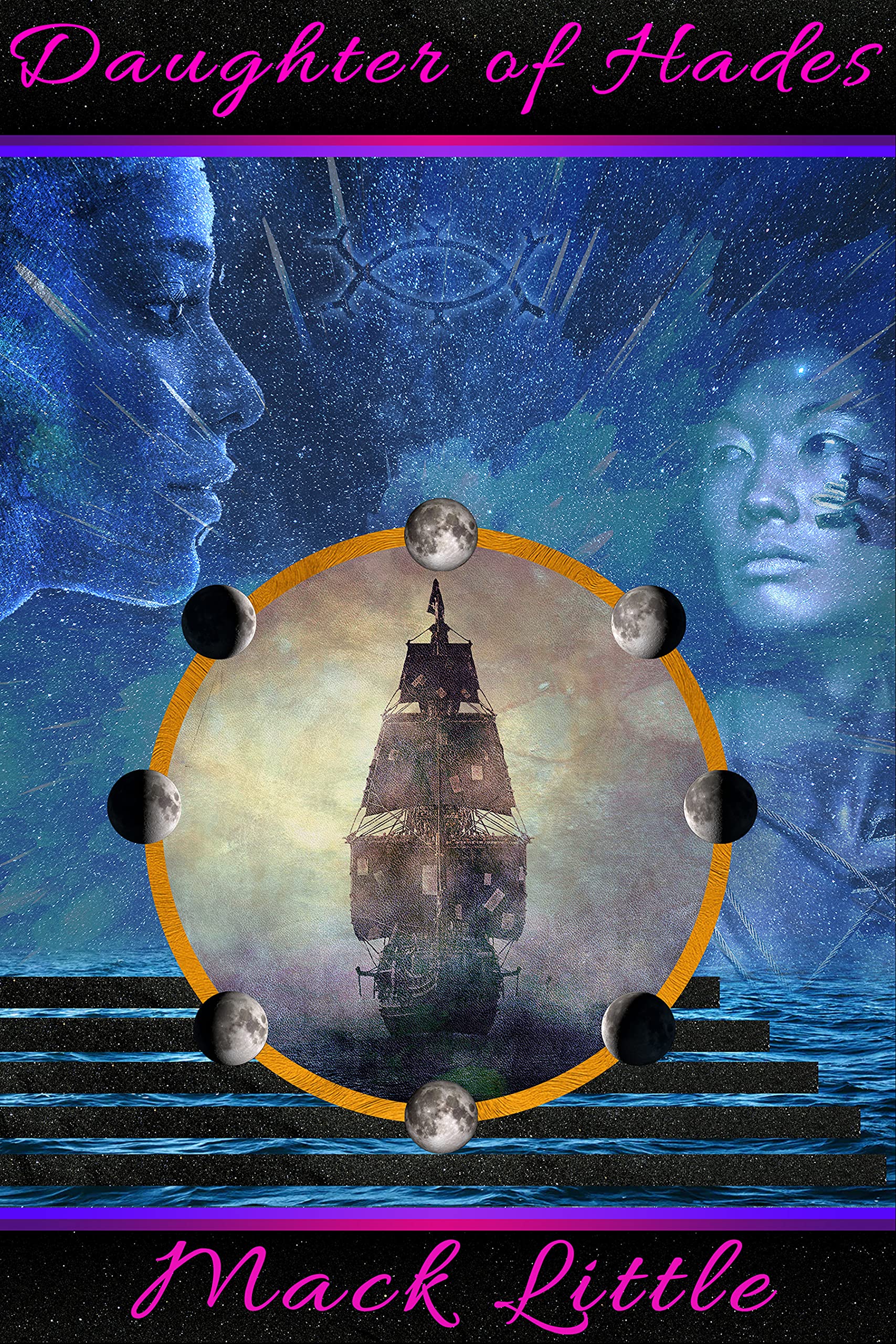
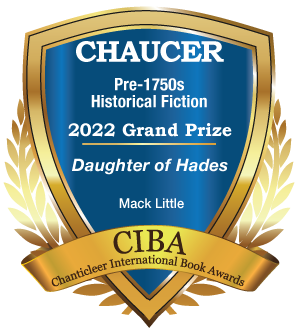
The Grand Prize Winner for the CIBA 2022 CHAUCER Awards is:
The Chaucer Awards, as a Division of the CIBAs, promotes authors at every step of the way. Each time a book advances we promote it
Posting it on our high traffic website
Highlighting it across our social media
Sending it directly to our audience in a newsletter blast
Beginning at the Short List we start offering digital badges and promotional stickers to all entrants. We love promoting our authors and can’t wait to see who moves up in the lists for this prestigious award!
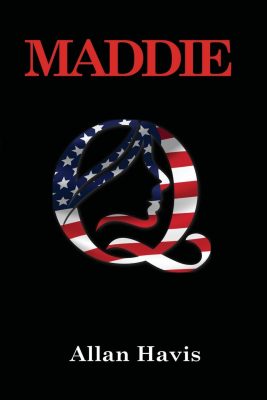
Maddie Q by Allan Havis illustrates one woman’s transformative journey through a web of dangerous beliefs.
The personality of conservative Maddie Crawford takes center stage as she finds an epiphany in the stormy aftermath of the January 6th Capitol riot. Existing beliefs collide, casting her into a churning sea of contradictory feelings. The author entwines her internal struggle of belief and identity with the contentious QAnon theory. Set against the backdrop of the COVID-19 Pandemic, this fusion gives rise to a storyline that harmoniously links personal introspection with societal upheaval.
The backdrop of the “Stop the Steal” march and the chaotic events of January 6th propel Maddie into disillusionment. Conspiracy theories and extremist beliefs entice her away from reality, radicalizing her. Maddie becomes convinced that only drastic measures can confront what she perceives as a corrupt establishment, exemplified by her attempt to kidnap a school trustee in the name of her skewed sense of justice.
Pushed to the brink of despair, she wrestles with the solitude that her beliefs brought her and even contemplates ending her own life. The question lingers as Maddie navigates her never-ending search for meaning: will she be able to conquer the engulfing darkness of past demons and find the way to illumination?
Havis investigates the complex interplay between personal challenges and the search for larger significance.
Many of the characters must form undying resilience. Hortense, Maddie’s aunt, faces challenges that go beyond her physical ailments. She dreams vividly of existential concerns and mortality, proving her desire for enlightenment and life beyond the material world. Parallel to these two women’s struggles is Maddie’s sister Heather, a transgender woman who contributes to the story’s exploration of gender dynamics. The author aims to highlight the underlying thread that connects these characters – their defiance, reflection, and search for meaning.
Maddie Q shifts between different moments in time and points of view, enabling readers to grasp the internal and external battles that lead to each character’s beliefs.
This story delves into the complexity of political extremism and the individuals who are caught in its wake. Family dynamics, especially between Maddie and her aunt Hortense, underscore the intergenerational sharing and changing of values. Exploration into politics and conspiracy theories highlights the sheer power of extremist beliefs to control individual thought, paired with the tremendous reach of such views in the digital era. Readers are encouraged to challenge their perspectives and to look for common ground in the rich tapestry of varied ideologies.
Maddie Q navigates a plethora of beliefs and their immutable impacts on the psyche, emphasizing the human desire for understanding even under the heaviest convictions.
You’ve finished your first work in progress, and written those fateful words: THE END. Then, like a good writer, you revise it, one, two, seven, eight times! You’ve spent well over a year with the work, and you’re either ready to begin querying or you’ve decided that you don’t want to deal with the gatekeepers in the publishing industry. Whichever describes you, your book is ready to see the world!
The many hats worn by authors
Or is it?
Here are some questions (but certainly not all) to ask yourself before you publish your work:
Have you asked a professional to look your work over?
Have you considered how you’re going to format the interior?
What are you going to do for cover design?
What medium do you want to publish in? Physical, ebook, audio?
What company do you want to use to publish your work?
How will you market your book?
It’s too much!
If that feels overwhelming, there’s a reasonable explanation. Publishing is a business, and a different person is often paid to help answer each of these questions in a traditional publishing environment. Self-Published Authors frequently serve as their own project manager, meaning they are the head editor, publisher, marketer, and designer for their book. Don’t be afraid to set ambitious goals, and also remember to be gentle with yourself as this process takes serious time.
We’re going to make two basic assumptions going forward: 1. You want an ISBN, and 2. You’re doing this because you have the budget to do so.
Now, let’s start with the first bullet point on the list.
Having a Professional Review Your Book
The Overview
One of the biggest issues we come across with books is that there’s no story. The writing is crisp, clean, even gorgeous, but the most that can be said for the novel is it’s well-written. The plot does not compel and the characters do not drive. In the words of Anne Lamott:
“Any plot you impose on your characters will be onomatopoetic: PLOT.”
For those reasons, we recommend having a Manuscript Overview first, whether you receive that from us or from someone else. Professionals who understand the writing industry and work with publishers are uniquely situated to give you feedback on whether or not you have a story that people will want to read and buy.
Kiffer Brown with an overview presentation
A good Manuscript Overview will examine the following:
Compelling nature of story
Dialogue
Character development
Does the scenery and setting work with the story
Backstory issues
Professionalism of editing & formatting
Continuity of storyline
Plotting and plot-hole issues
Writing craft
This stage comes before line and copyediting, as you still have plenty of work to do in bringing the work up to being the best it can be. You can read more about our suggestions surrounding Manuscript Overviews here.
Line Editing, Copy Editing, and Proof Reading
While we have all the general information about this on our Editorial Services page, those thoughts and definitions are worth repeating here. Our Editorial Coordinator can discuss with you about whether or not your work needs more development before moving onto the next stage in editing.
Line Edit
If your story still has developmental issues (dialogue, plotting, character development, etc.), your work would benefit from a Line Edit. Line Editing is a line-by-line edit to make sure that each sentence pushes the story forward and creates just the right amount of pacing and tension. Each and every word should count!
Line Edit Review is a final check that all issues and concerns have been addressed by the author and that new problems have not been created in the reworking of the manuscript.
Copy Edit
WorldKeeper Diane Garland always has excellent suggestions to track your story
We highly suggest that you have a Style Sheet Guide created that is the basis of your story-bible. A Style Sheet Guide will ensure that your characters’ names, place names, conventions (examples are: Happy Christmas instead of Merry Christmas or blond or blonde or using kilometers instead of miles), jargon, pet names, time frame, and more — the attention to detail that will set your work apart from the fray.
After reworking the manuscript and addressing the editor’s suggestions, then the work should be ready for a Copy Edit with an editor with fresh eyes.
Copyediting is a mechanical edit. It focuses on grammar, punctuation, spelling, typos, continuity errors, and timeline errors.
If a Style Sheet has been generated, then the manuscript will be edited using it to ensure consistency.
Proof Read
A proof read with a third set of fresh eyes is the final reading to catch the inevitable typos and glitches.
If a Style Sheet was generated prior to the copy edit, then it will be used in the final proofing of the work.
Proofing comes before formatting. Formatting is determined by the publishing platform.
As we get into the nitty gritty details of proof reading, that’s a good time to examine the often forgotten question of formatting.
Professional Touch
Call in the pros!
Many authors rightly find themselves wrapped up in the joys and beauty of their work. This devotion to writing is what makes them so good at what they do, and it is important to have an outside, less biased perspective to help you along. Often a key part of a story or character exists only in the author’s mind, and somehow it never found its way onto the page. Hiring extra eyes really can make the difference when it comes to your book being excellent as opposed to just another of the millions of published titles a year.
That’s all the time we have for this article. We’ve covered the importance of having professional eyes on your book. In a future article we’ll look at:
Interior Format
Cover Design
Mediums of Publishing
Self-Publishing Companies
Marketing
Stay tuned!
Thank you for joining us for this Writer’s Toolbox Article!
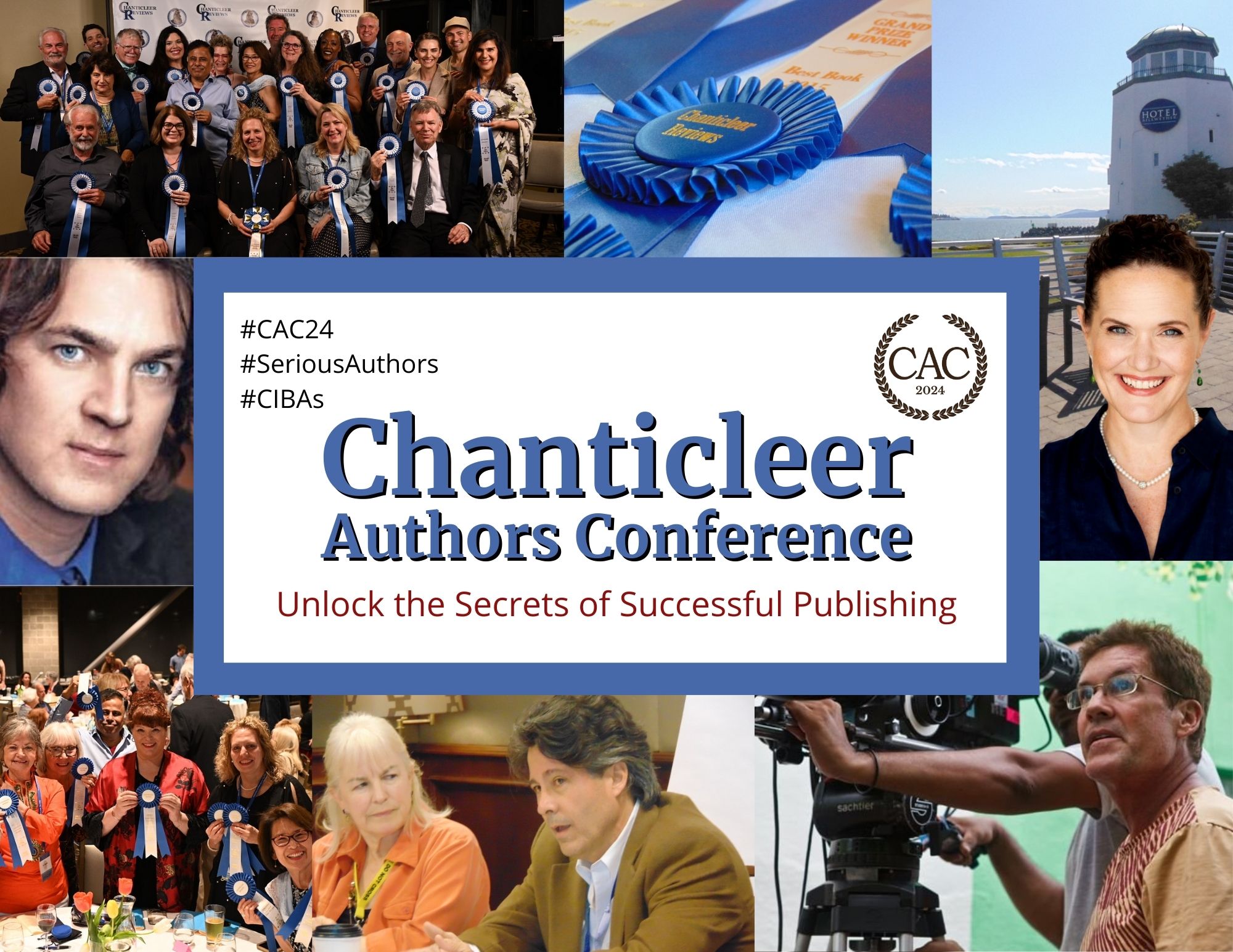
Our 12th Anniversary Chanticleer Authors Conference (CAC24) will be April 18-21, 2024, where our 2023 CIBA winners will be announced. Space is limited and seats are already filling up, so sign up today! CAC24 and the CIBA Ceremonies will be hosted in Beautiful Bellingham, Wash. Sign up and see the latest updates here!
When you’re ready,did you know that Chanticleer offers editorial services?We do and have been doing so since 2011.
Our professional editors are top-notch and are experts in the Chicago Manual of Style. They have and are working for the top publishing houses (TOR, McMillian, Thomas Mercer, Penguin Random House, Simon Schuster, etc.).
If you would like more information, we invite you to email Kiffer or David at KBrown@ChantiReviews.com or DBeaumier@ChantiReviews.com for more information, testimonials, and fees.
We work with a small number of exclusive clients who want to collaborate with our team of top-editors on an on-going basis.Contact us today!
Chanticleer Editorial Services also offers writing craft sessions and masterclasses. Sign up to find out where, when, and how sessions being held.
A great way to get started is with our manuscript evaluation service, with more information availablehere.
And we do editorial consultations for $75. Learn morehere.
If you’re confident in your book, consider submitting it for a Editorial Book Reviewhereor to one of our Chanticleer International Awardshere.
Writer’s Toolbox
Thank you for reading this Chanticleer Writer Resolutions article.
I learned a very long time ago in business school that “nothing happens until someone sells something.” [Henry Ford]
Selling is meant to create a chain reaction.
Pitching is the act of trying to sell something.
Selling (pitching) your book(s) is part of being a professional writer.
Pitching your book should put another spin on your book’s marketing flywheel to gain momentum for your book sales. The flywheel strategy creates a cyclical business pattern of success.
The idea is that a flywheel takes a lot of effort at the start, but once it gets spinning, it continues to quickly gain momentum and spin faster. This is similar to the snowball effect, where a snowball gets pushed down a hill as it progressively gets bigger and bigger until it is nearly impossible to stop before it reaches the bottom of the hill. The difference is that a flywheel never has to stop.
Amazon has a very intentional flywheel strategy. And, yes, it was written by Jeff Bezos on a paper napkin in 2001.
ATTRACT. ENGAGE. DELIGHT/ENTERTAIN
Elegantly simple.
The FLYWHEEL SUMMARY
The flywheel effect occurs when small wins (acquiring readers one at a time) accumulate over time, creating momentum that keeps your business growing (increasing your readership).
The concept is based on mechanical flywheels that power rowing machines and other devices.
Achieving the flywheel effect requires removing friction and applying force. In business terms, that means creating a self-serve purchase flow and applying “forces” to make the wheel spin faster, e.g., SEO, Meta-Data, and nurture campaigns.
A flywheel go-to-market model is well suited for selling books — easily replicated products such as books, e-pubs, audio-books, games, etc.
Flywheels attract and engage customers 24 hours a day – they’re literally working while you sleep. See SEO above.
Stay tuned for future posts on FLYWHEELS and how to create yours.
A Tiny Bit of Publishing History
We will circle back around to pitching. Please bear with me.
Amazon shifted the book-selling business by selling print books on July 16, 1995 and is now considered having the world’s largest collection of books. The first books were sold out of Jeff Bezos rented home’s garage. Remember that Bezos drew Amazon’s flywheel on a napkin in 2001. The rest is history.
E-books have been around since late 1990s, but it wasn’t until Amazon released the Kindle book reader in 2007 that e-books (digital books) caught the general public’s attention and dollars.
Selling books online – digital books requires a very different approach – one that sells directly to the reader and works to make the work discoverable by potential readers/purchasers.
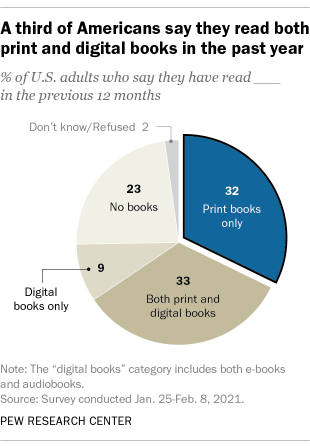
The Pew Research Center states that as of April 4, 2012 that only one-fifth (21%) of Americans have read an e-book.
As of now, 30% of Americans have read an e-book. This number has remained consistent since 2019 according to PEW Research.
The typical American reads five books a year (median – symmetric distribution) while the average (mean – includes outliers) is about 14 books per year per person.
Most Americans only have eight hours of free time per week. This is the window when reading a book (e-book or print book) for pleasure/leisure would take place. People could watch TV, play video games, play pickleball, golf, swim, etc. instead of reading during these rare free hours. Hence, this is why audio-books sales are increasing! Busy people can listen to books while they commute, knit, wash laundry, load the dishwasher, or rake the autumn leaves.
The point is “what is in your bag to sell?” If you are self-published, are your works available on a wide variety of platforms to reach your readers?
Audiobooks Hands-Free Reading
Now to circle back to PITCHING!
Whether or not you are pitching your work to a literary agent, a publishing acquisitions editor, bookstore staff, or, most importantly, a potential reader, you will need to know how to pitch your works.
Your literary agent will need to know how to pitch your book to publishers. They do not get paid until your book is under contract (and purchased).
The publishing house (you or a traditional publishing house) will pitch your books to “the trade” – booksellers, libraries, online selling platforms, and other brick & mortar outlets.
Most writers first exposure to pitching to agents is at writing conferences that offer “Pitch Blocks” or “Pitch Slams” where the conference host is paid (again, not the literary agent) a fee for hosting a session with a roster of agents who will listen to pitches. PNWA and Writer’s Digest offer these for a fee per block (WD $179 PNWA $100 per block). Pitch time is anywhere from five minutes to eight minutes per attendee and are on a strict time schedule with one pitch being delivered after another. There are different schools of thought of whether pitch sessions are helpful or not in obtaining a literary agent, but that is another topic.
How to Pitch at Conference Pitch Sessions
While it is normal to feel nervous when you are pitching your works, it behooves you to remember that:
You paid for this pitch session.
The clock is ticking.
There are many others pitching to the same agent.
Agents only want pitches on completed manuscripts or polished non-fiction book proposals.
Do your homework ahead of –make sure that you are pitching to an agent who is representing your genre. Visit their websites to see other books that they are representing.
First, most agents are forgiving of nervousness. It happens a lot and all that anxiousness will not help your pitch to stand out. Don’t spend your time apologizing for being nervous or explaining why you are not prepared. Doing so is wasting precious time. Rambling does not make a good impression. You want them to have your pitch echoing in their brains.
Come prepared. Over prepare. Have a prepared, polished pitch. Write it on a note card. Carry the card with you. Memorize your pitch. Read off from it if you need to. Believe me, the agent will appreciate this more than you hearing you hemming and hawing and umming.
“Or is your name Sir ‘Um’?” Knight’s Tale
They also do NOT want to hear about your ‘dreams and passions’ about writing. Everyone that is pitching to them is passionate about their writing. Agents are about salability. They have mortgages to pay, food to by, and their own dreams of vacations and income from discovering that next break-out Hunger Games. See “nothing happens until someone sells something” above.
Keep your pitch short. Have questions to ask the agent-your conduit to the world of publishing-about if there was something that appealed to them. What did not appeal to them or what was missing. Try to let the agent guide the feedback. This is your chance to get professional feedback, to listen and learn.
Also, keep in mind that agents are also seeking to represent writers who are open to feedback and pleasant to work with along with understanding the process of the publishing industry (that it takes time and effort).
Remember to bring your business card with your website and contact information. Say hello. Introduce yourself. Give your pitch early on so that the agent will have time to give you feedback on it. Ask questions instead of “explaining” your manuscript to the agent so that she will give you feedback.
When your session is over (Some are as short as three minutes. Eight minutes is considered to be a long session.). Thank them for their time and leave. The next person to pitch is waiting to take your spot.
If the agent does have interest, be sure to have your synopsis ready (printed) with your contact information in case she asks for it.
Less than 1 percent of writers at a pitch session will gain representation. It is about the same as cold querying (another post is coming on that — stay tuned). So, keep on writing, editing, refining. The main objective is for the agent at the pitch sessions to think that you are open and understand the business and marketing side of being a writer.
Most agents also understand that it’s a busy world and will allow simultaneous submissions. If they don’t, they might not be a good general fit for most writers.
Chanticleer Authors Conferences do not offer “pitch sessions.” However, we do offer sessions on developing pitches. We do have opportunities to make excellent connections with film agents, directors, publishing house acquisitions, literary agencies, and other professional connections in the content industry such as Maggie Marr, Legal (Film and Book Representation) and Scott Steindorff, President of Stone Village Film Productions
Mariners pitching prospect Bryce Miller gets his first start of spring — against team he grew up watching | The Seattle Times
What is a PITCH and/or LOGLINE?
Your story reduced to less than 33 descriptive words. EACH. WORD. COUNTS.
Brand your story with a compact package of words that will astonish and entertain. It’s a craft of its own! Continue to refine and refine your pitch to a concise sound bite.
A PITCH is NOT
A meandering description about the story
The opening scene
Side stories
Character names
Flash forwards
Psychological thinking
Don’t confuse platitudes for story – avoid them!
Get your ‘self’ (looking at you Writer) out of the way of your story
Never give away the ending
A PITCH consists of the following:
Identifying the main character (protagonist) using descriptive words — tonality – leverage your language/voice
Describe the world that character lives in (Fantasy? Dystopian? Barbie Land? Future? Stone Age? Future in a galaxy far away?
What sets the story in motion — the inciting event
The goal of the protagonist — central conflict — choice — action
What stands in the protagonist way – what is the conflict or who is antagonist?
The best loglines have a sense of irony. (There’s the conflict again!)
Answer all of the above in 33 words or less. Perfect words. Use active and visual language. This is where you should show off your word craft abilities.
How are loglines/pitches different than taglines? Pitches are descriptive. Taglines are provocative and are used for marketing. Don’t confuse the two.
Here is a classic example of a logline/pitch and tagline:
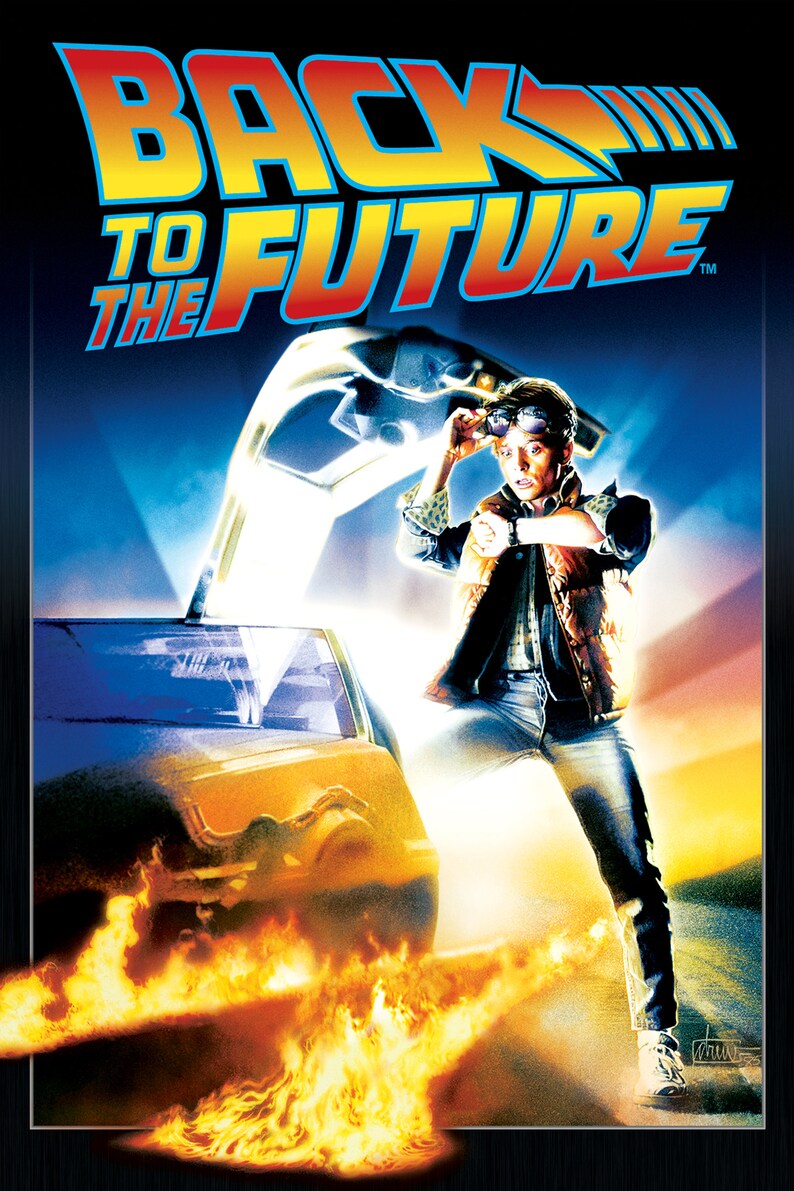
Back to the Future:
Logline: “A young man is transported to the past, where he must reunite his parents before he and his future cease to exist.”
Tagline: 17-year-old Marty McFly got home early last night—30 years early. (Notice that this tagline gives the tonality and targets the market for the work/film.)
In closing: The whole idea of pitching is to entice an extremely busy person to making time to read your work!
Next step: write a 50 word summary of your story. Bring it on your stationary along with your pitch on a notecard to your pitch session. Just in case! I’d even work on a tagline to give a visual!
An effective, evocative, compelling logline/pitch can propel your writing career forward and open doors and lead to conversations with industry professionals.
Having escaped unjust imprisonment at the Fort Grant facility for juveniles, Curtis Jefferson is on the run, in Merging Paths, the third installment of Vince Bailey’s gripping, paranormal, Curtis Jefferson Series.
With only a small jug of water and the clothes on his back, Curtis has to cross the Sonoran Desert and find a way back to his mother and grandmother in Jacobs Well. But his trip is plagued by more than thirst, hunger, and fear of animals. A racist sheriff’s deputy, Myron Aycock, is hellbent on finding Curtis not only for the acclaim such an arrest will give him but also for vengeance against the beating he received at the hands of the aspiring boxer.
Trapped and desperate, Curtis is rescued by a mysterious figure and taken to Isabel and Ray Cienfuegos. After hearing Curtis’s unsettling stories about Fort Grant, the two understand that they have all been fighting the same evil forces – under the control of the sadistic Ezra. In a final confrontation, Isabel faces off against the wicked spirit, but just as they believe their problems are over, a new threat arises under the guise of friendship, and Isabel makes a life-changing decision that will mark her forever.
Intuition plays a huge role throughout the series, becoming vital to the central characters in this final book.
Throughout his harrowing experiences at Fort Grant, Curtis has relied upon his innate sixth sense to warn him of impending doom. A gift passed from his mother, this awareness has guided him to carefully choose his friends. Through this sense, he trusts Isabel and Ray, even seeming to know parts of their story before they tell it. He accepts Isabel’s questionable actions because his instincts tell him they were her only choice.
Isabel shares this remarkable perception. In fact, Isabel trusts her intuition so far as to commit acts most would consider insane. While Curtis’s near-clairvoyance is a guide, Isabel’s is a force. This sense helps Isabel to understand the evil of Ezra and tells her how to rid herself of him forever. But her intuition pushes her to one final act of destruction as well – the murder of a former confidante – a choice that will haunt her for the rest of her life.
Isabel and Curtis aren’t the only characters with an advanced awareness of evil. Father Frank Cullen, a priest to whom Isabel goes for confession, shares the gift. He has always doubted Curtis’s guilt, and when his not-so-chance meeting with Isabel brings him back into Curtis’s life, he uses his sense to help bring Curtis home.
But he could never have accomplished the deed without the intervention of Natchez Mendoza, a former judge and the son of the man Ezra was in life.
Natchez is, perhaps, the most “knowing” of the quartet. Natchez first appeared in book one, where he recognized the evil in twelve-year-old Harvey Huish. He also first met Curtis in book one, under extremely unusual circumstances, so when they meet again some eighty years later, Natchez knows Curtis’s story intimately and helps to release him from Fort Grant’s grasp.
Justice becomes central to the final struggles of these characters.
Will Farnsworth is a silent, but important example of this need for justice. Having died via decapitation in a car wreck during book one, Will has served as a knight errant since, responsible for the rescue of both Ray and Curtis. As a lawyer for the corrupt Huish family, he hated his job and his clients and longed to be free of both, but it was only in death that he could become the very thing he tried to be in life, the good guy riding in to save the day.
However, Isabel’s pursuit of justice is more complicated.
Her quest to rid the world of Ezra’s evil is commendable and noble, but her later conflict with Freddie Hightower approaches the slippery slope of vengeance. Freddie’s betrayal angers Isabel to the point of no return. She deems him unforgivable and takes matters into her own hands, perverting justice. Other characters like Sergeant Joe Garcia, Constable Frankie Quintana, Deputy Myron Aycock, and Sheriff Pete Alvarado represent the legal side of justice, both good and bad. Natchez Mendoza, white cane and all, straddles the line between legal and supernatural, determined to keep Curtis safe for his own contribution to justice for his massacred tribe.
Embark on an enchanting voyage through the realms of Middle Grade Fiction with the Gertrude Warner Book Awards. These awards transcend genres, uniting tales that ignite youthful imaginations with captivating exploits. Whether whisked away to far-off lands, unraveling mysteries, or forging friendships, these stories cocoon young readers in a world of adventure. Every story invites exploration and engagement, fostering a love for reading that lasts a lifetime. The Gertrude Warner Awards celebrate authors who craft stories that spark curiosity, empathy, and the joy of discovery.
Inspire your inner child with the Grand Prize Winners of the Gertrude Warner Awards!
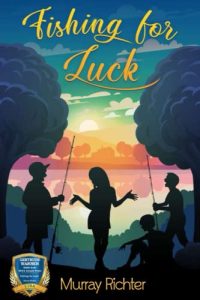
Fishing For Luck By Murray Richter
During the pre-internet era of 1980, Kevin and his friends just want to enjoy a good fishing adventure, but troubles from the past come back to complicate their carefree boyhood in Murray Richter’s novel, Fishing for Luck.
As the group prepares their fishing raft for its maiden voyage, Kevin tries to solve these problems himself before anyone else knows of them, but no matter what he tries, the situation only gets worse. His parents seem on the verge of a divorce, his mentor struggles to find his long-lost love, and his sister just wants her bike back already. As Kevin takes on more and more responsibility to avoid what seem to be inevitable consequences, will he be able to see that this is all too much for one kid to handle and ask those he trusts for help?
Fishing For Luck is a wild ride of pre-teen hijinks reminiscent of the golden age of coming-of-age comedies and sitcoms we all know and love. Our young main character gets into a situation where everything goes wrong, and scrambles to fix it before anyone notices. Kevin’s predicament becomes engrossing with an extra dose of danger.
In this first installment from the new Kassy O’Roarke Pet Detective Series, award-winning author Kelly Oliver delivers a fun and engaging kid-friendly literary experience. Here is a story intended for middle-graders, Cub Reporter proves a quality blend of adventure and mystery involving a smart, inquisitive 12-year old with aspirations of becoming a spy.
As a reporter for her school paper, Kassy’s hoping to nab a front-page scoop and win the honorable Thompson Award for Journalism. Unfortunately, help from her pesky, but the well-intentioned younger brother, sets in motion a roller coaster of calamities she never expected. From animal-nappings and a mixed-bag of clues to car chases and rescues from entrapment, ultimately the constant reinforcement from family, friends, and a menagerie of furry companions bring positive lessons to the forefront of this likable tale.
Amidst popular classics like Emil and the Detectives and the resurgence of the Nancy Drew mysteries, Oliver has hit the mark with this bright and entertaining series opener. Though geared toward a younger audience, readers of all ages can look forward to more investigative capers on the horizon featuring the creative escapades of Kassy and company. Highly recommended!
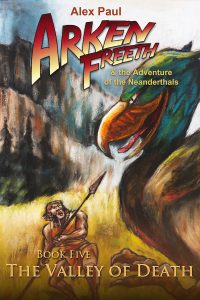
The Valley of Death – Arken Freeth series book 5 By Alex Paul
The Valley of Death, Book Five in the Arken Freeth Middle-Grade series, continues the story of a heroic young man in a land before time.
The book is the latest chapter in the swashbuckling saga of Arken Freeth, a hero who will eventually become the central figure of his era, 11,000 years before the Roman era, as powerful and wise as Alexander the Great would be to his time. The many readers of the award-winning series know his adventures as a teenager in the land of the Neanderthals, or Nanders as they are called, along with his royal friend Asher, heir to the throne of Tolaria, and the young woman Talya. They know his Nander blood brother Ord, the evil pirate Yolanta, king of the Tookans, and the vile Gart whose life he saves despite their difficulties.
These familiar figures return in the latest thrilling installment. A war between the leading factions of the time, the Amarrats, the Lanthians, and the Tolarians is on the brink. The central prize that all desire: ownership of the necklace of Tol, which possesses enormous powers such as foretelling the future to those who own it. The quest to own the necklace is such that war is being threatened by the Amarrats against the Lanthians in order to possess it. Arken, who placed the necklace in the hands of the Nanders, is now the one person who can successfully stop the bloodshed by retrieving the necklace.
Now that you’re set on your next reads, what are you waiting for? The only way to join this amazing list of Gertrude Warner Winners is to submit today!
Those who submit and advance will have the chance to win the Overall Grand Prize of the CIBAs and $1000!
Don’t miss your chance to light up the minds of young readers everywhere. Send us your Middle Grade Reader stories by the end of August for the chance to be recognized and celebrated for your amazing work!
And remember! Our 12th Anniversary Chanticleer Authors Conference (CAC24) will be April 18-21, 2024, where our 2023 CIBA winners will be announced. Space is limited and seats are already filling up. Sign up and see the latest updates here!
























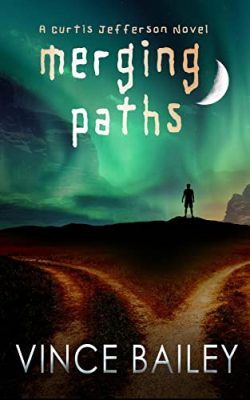
 Having escaped unjust imprisonment at the Fort Grant facility for juveniles, Curtis Jefferson is on the run, in Merging Paths, the third installment of Vince Bailey’s gripping, paranormal, Curtis Jefferson Series.