James Crowley isn’t your average, run-of-the-mill cowboy. Nor is Cold as Hell, by Rhett C. Bruno and Jaime Castle, your typical gunslinging western.
Although he’s got all the right characteristics – tough exterior, snarky personality, and commitment issues – Crowley is much more than he appears. Resurrected to immortality straight from death’s “sickly sweet aroma,” Crowley is duty-bound as a Hand of God to serve the White Throne in its shadow war against demonic presences called the nephilim unleashed by freezing hell.
But it’s not all ‘good guys versus bad guys’. As Crowley learns, “good choices don’t always mean doing right or wrong things. Especially when it comes to serving a Master like [the White Throne].” Forced to be the middle man between God and the Devil, Crowley has to decide for himself how to care for the people around him and bring true justice to fruition. Forced to be the middleman between God and the Devil, Crowley has to make his own choices about how to care for the people around him and bring justice to fruition.
Jam-packed with simmering romance, evil yetis, reckless bar fights, and other outlaw shenanigans, Cold as Hell will warm readers’ hearts as it freezes them to their seats with anticipation.
When a band of demonic hell creatures begins robbing a chain of banks owned by resident millionaire Dufaux and devastating towns full of innocent civilians in their wake, Crowley teams up with his trusty mare Timperina, nagging angel handler Shar, and dim-witted yet dependable Deputy Dale to hunt down the vile nephilim and help those in need. Along the way, he runs into old acquaintances such as the beautiful, revenge-driven Rosa and his worst enemy and murderer, Ace.
In the end, it’s up to Crowley to get to the bottom of the mystery and wreak revenge on the monsters – both hellish and human.
Despite his icy attitude, Crowley captures readers with his personal values to defend the oppressed and the defenseless. His unique ability to relive the last moments of the recently killed urges him to resist violence whenever possible, making him an empathetic renegade and, at times, more human than the real human characters.
As Crowley uncovers layers of obscured atrocities during his quest, he sympathizes with the brutality and injustice of colonization, racism, enslavement, sexual violence, and much more, elevating this feel-good read to the status of a social commentary.
Castle’s and Bruno’s strange, action-packed supernatural western leaves nothing to be desired. Steeped in witty sarcasm, the easy-to-follow prose is immersive and thrilling. Gritty, colorful, and at times deeply moving, the first installment of the fantasy-western Black Badge series envelops readers in the cowboy blues and horrors of the otherworldly.
The Hearten Book Awards recognize emerging new talent and outstanding works in the genre of Uplifting & Inspiring Non-Fiction and Memoir. The Hearten Book Awards is a genre division of Chanticleer International Book Awards and Novel Competitions (CIBAs).
Chanticleer International Book Awards is looking for the best books featuring true stories about adventures, life events, unique experiences, travel, personal journeys, global enlightenment, and more. We will put books about true and inspiring stories to the test and choose the best among them. See our full list of Non-Fiction Divisions here.
These titles have moved forward in the judging rounds from all 2023 Hearten Non-Fiction Long List to the 2023 Hearten Book Awards SHORT LIST. Entries below are now in competition for 2023 Hearten Semi-Finalists. Finalists will be selected from the Semi-Finalists. All FINALISTS will be announced and recognized at the Chanticleer Authors Conference (CAC24).
The First Place Category Winners, along with the CIBA Division Grand Prize winners, will be selected from the 25 CIBA divisions’ Finalists.
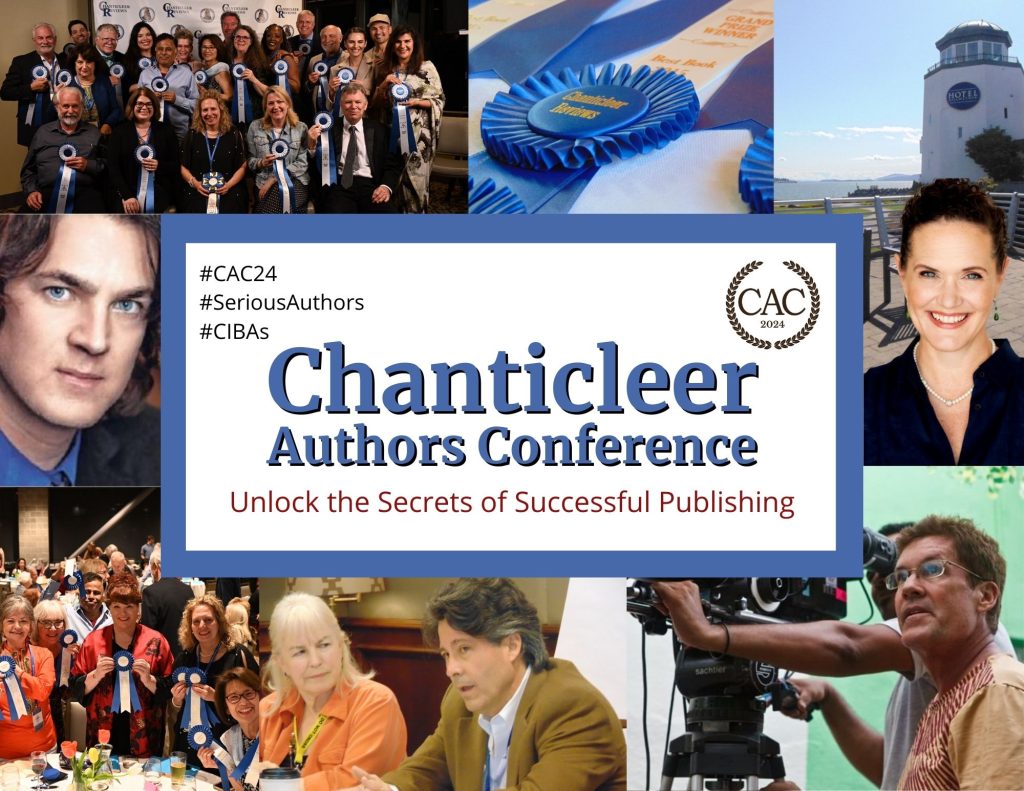
We will announce the 1st Place Category winners and Grand Prize Division Winners at the CIBAs Banquet and Ceremony on Saturday, April 20th, 2024 at the Four Points by Sheraton in beautiful Bellingham, Wash. sponsored by the 2024Chanticleer Authors Conference.
These titles are in the running for the Semi-Finalists of the 2023 Hearten Book Awards novel competition for Uplifting and Inspirational Non-Fiction!
Join us in cheering on the following Short List authors and their works in the 2023 CIBAs.
Lynne M. Kolze – Please Write: Finding Joy and Meaning in the Soulful Art of Handwritten Letters
Anna Casamento Arrigo – Patience Insanity & Wisdom
Lisa Niver – Brave-ish, One Breakup, Six Continents and Feeling Fearless After Fifty
Syril Levin Kline – Inspiring Legacy: David and Carmen Kreeger’s Journey to Philanthropy
Lally Pia – The Fortune Teller’s Prophecy: A Memoir of an Unlikely Doctor
Alexander V. Girman & Cynthia J Girman – A Voice from Heaven: From Earthly Struggles to Thriving in the Afterlife
Duncan McLauren – Owning Your Destiny
Julie Morrison – Barbed: A Memoir
Alex Bisset – The Destination Birth
Shanita Liu – Dear Durga: A Mom’s Guide to Activate Courage and Emerge Victorious
Trudy Wells-Meyer – Some Things Are Simply Meant to Be
Maria C. Palmer and Ruthie Robbins – On the Rocks
Tony Jeton Selimi – The Unfakeable Code®
Tony Jeton Selimi – A Path to Excellence
Art Berman – Art in the Middle Ages: A Memoir of Midlife Renaissance
Nove Meyers – Running Away From the Circus
Patrick M. Garry – The Power of Gratitude: Charting a Path Toward a Joyous and Faith-Filled Life
Nove Meyers – Running Away From the Circus
Kate Hudson-Hall – Anxiety Hacks: Proven Techniques, Tools and Tips to Calmness
Hollie Stuart – I Can See For Miles
Cory Mortensen – The Buddha and the Bee
Julie Scolnik – Paris Blue
Cort Casady – Not Your Father’s America
Joel Harris – Searching for Steve
Steven Greenebaum – An Afternoon’s Dictation: Inclusive Revelation for the 21st Century
Dian Seidel – Kindergarten at 60: A Memoir of Teaching in Thailand
Aurita Maldonado – The Zen of Dancing in the Rain: Becoming One with the Storm
Grant Harper Reid – The Apocalypto Kid Goes to College
Nanette J. Davis Ph.D. – Raging Currents: Mental Illness and Family
Catherine DeMonte – Beep! Beep! Get Out of My Way!: Seven Tools for Powerful Creation and Living Your Unstoppable Life
Dr. Kelly Rabenstein – Psychological Secrets for Emotional Success (It’s All About Love)
PROMOTING OUR AUTHORS!
This post has been posted on the Chanticleer Facebook Page. We try to tag all authors listed here in the FB post. However, for FB to allow us to tag an author, that author must LIKE our page and Follow Chanticleer Reviews. FB rules — not ours.
We are now accepting submissions into the 2023 Hearten Book Awards for Uplifting and Inspiring Non-Fiction & Memoir. The 2023 CIBA winners will be announced at CAC24.
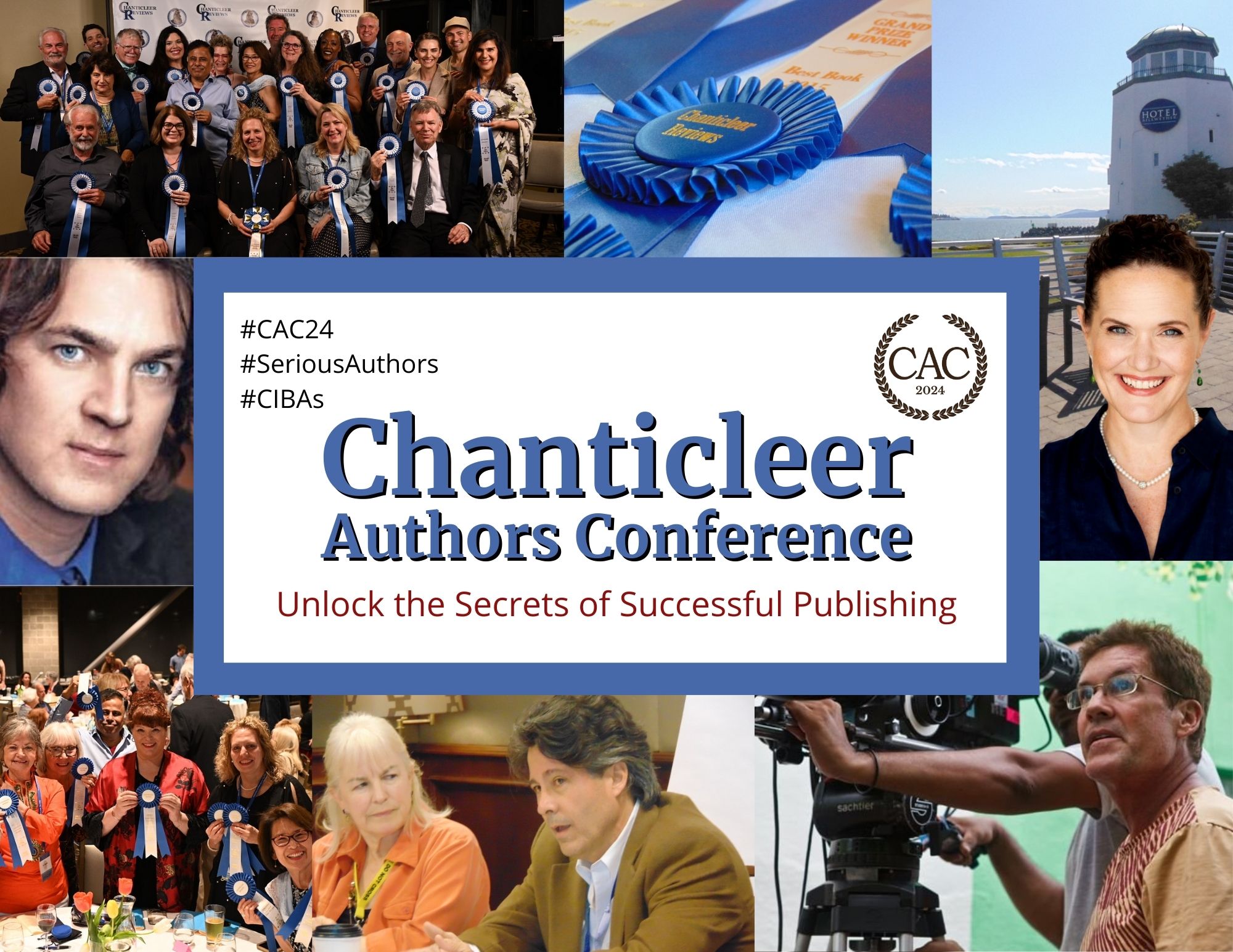
Featuring authors like D.D. Black, book doctor Christine Fairchild, and Mark Berridge, our twelfth annual conference is shaping up to be excellent! You won’t want to miss out on the best tips around the business of being an author!
Seating is Limited. The esteemed WRITER Magazine (founded in 1887) has repeatedly recognized the Chanticleer Authors Conference as one of the best conferences to attend and participate in for North America.
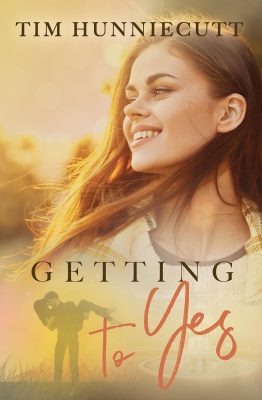
As a freshman at Florida State University, Chris should be enjoying the usual 1970s “free spirit” college experiences, a little studying and a lot of partying. In Tim Hunniecutt’s Getting to Yes, Chris dreams of being a poet. His way with words, boy-next-door looks, and an athletic runner’s body means he has no trouble attracting one girl after another. However, Chris wants more than just a fling.
He’s looking for a relationship, a girl who loves him, but the girls he meets don’t seem to want forever. Most of them only want a good time or have boyfriends back home. After a series of failed romances, Chris finds himself depressed, realizing part of the problem lies in the emotional chasm he’s carved within himself after his parents’ disastrous marriage.
Chris’s emotional roadblock began when he caught his mother naked in the arms of a man who was not his father.
He never told anyone, including his father, about the affair, and his parents went on for a while pretending their relationship wasn’t falling apart. Their loveless marriage created in Chris a fear of expressing his own emotions. In his adolescent mind, not revealing the weakness of loving too strongly became normalized. When his father finally broke down and cried to Chris about his mother’s lack of love, Chris’s derision of feelings became cemented in his psyche. Girls were simply pretty distractions. Ironically, the maturity he likely developed because of this situation makes him easy to talk to, and girls flock to him.
It isn’t until he meets Deb, a girl in his class with a terrible home life, that he begins to realize a need within himself to find more than just physical attraction. Though Deb is unattainable, she awakens an “overwhelming hunger” within him, which he sates by dating as many girls as possible in his first year at FSU. He thinks he finds what he’s missing in Colleen, his first girlfriend.
His first attempts at physical love end in failure. When he finally finds physical fulfillment with a girl, he falls immediately in love with her.
Colleen seems perfect for him, but when he discovers she has a boyfriend, he doesn’t try to fight for her. He won’t acknowledge his strong feelings, and he allows her to slip away. Chris vows never to allow his inability to open up get in his way again, and when he returns home at the end of his freshman year, he meets Chloe.
It’s love at first sight–at least for Chris. He falls quickly, offering his heartfelt “I love you” early in their relationship, but Chloe comes with her own issues. Her abusive father left a need for male approval that she seeks in the arms of the wrong boys, and she repeatedly finds herself in loveless relationships in which she is used and tossed aside.
Chris’s pain is palpable in the novel, and his uncertainty is heart-wrenching, creating a strong theme of trust– the kind of trust that comes with allowing oneself to love and knowing the other person will return that love. When Chloe finally allows herself to express aloud to Chris what he desperately needs to hear, she gives herself permission to feel this trust.
Tim Hunniecutt’s Getting to Yes is a tale of a young man searching for his first real love and finding that what he learned from his parents does not have to be his fate. This book is recommended for anyone who wants to explore the complexities of early love though a young man’s perspective as he struggles to overcome the damage of his own parents’ marriage.
The Nellie Bly Book Awards recognize emerging new talent and outstanding works in the genre of Long Form Journalistic and Investigative Non-Fiction and Memoir. The Nellie Bly Book Awards is a genre division of Chanticleer International Book Awards (CIBAs).
Chanticleer International Book Awards is looking for the best books featuring Social Science, Data Driven Reporting, Equality and Justice, Ethics, Human Rights, and Activists Groups. We will put books about true and inspiring stories to the test and choose the best among them. See our full list of Non-Fiction Divisions here.
These titles have moved forward in the judging rounds from all 2023 Nellie Bly Non-Fiction entries to the 2023 Nellie Bly Book Awards SHORT LIST. Entries below are now in competition for 2023 Nellie Bly Finalists. All FINALISTS will be announced and recognized at the Chanticleer Authors Conference (CAC24).
The First Place Category Winners, along with the CIBA Division Grand Prize winners, will be selected from the 25 CIBA divisions’ Finalists.
We will announce the 1st Place Category winners and Grand Prize Division Winners at the CIBAs Banquet and Ceremony on Saturday, April 20th, 2024 at the Four Points by Sheraton in Beautiful Bellingham, Wash. sponsored by the 2024 Chanticleer Authors Conference.
These titles are in the running for the FINALISTS position of the 2023 Nellie Bly Book Awards for Journalistic Non-Fiction!
Join us in cheering on the following authors and their works in the 2023 CIBAs.
Meghan Elizabeth Kallman & Josephine Ferorelli – The Conceivable Future: Planning Families and Taking Action in the Age of Climate Change
Steven W. Thrasher – The Viral Underclass: The Human Toll When Inequality and Disease Collide
Tessa Floreano – Italians in the Pacific Northwest
Jonathan Geoffrey Dean – Salt & Light; The Complete Jesus
Paul Kix – You Have to Be Prepared to Die Before You Can Begin to Live: Ten Weeks in Birmingham That Changed America
Paul Pringle – Bad City: Peril and Power in the City of Angels
Roland Lazenby – Magic: The Life of Earvin “Magic” Johnson
Christopher Burns – Networks Rising: Thinking Together in a Flatter World
Maria C. Palmer and Ruthie Robbins – On the Rocks
Nicholas Chittick – A Prisoner’s Fight: The Pandemic as Seen From Inside the Illinois Department of Corrections
Johnson Nganga Mbugua – Martyrdom Christian, Kenya Chapter 1498 CE to 2020 CE Portuguese, Mau Mau, Al-shabaab-Related and other Martyrs also Biblical and Early Christian Martyrdom
Lyndsie Bourgon – Tree Thieves: Crime and Survival in North America’s Woods
Stephen Watts – Searching for Charles: The Untold Legacy of an Immigrant’s American Adventure
Qin Sun Stubis – Once Our Lives
Trisha T. Pritikin – The Hanford Plaintiffs: Voices from the Fight for Atomic Justice
Nanette J. Davis Ph.D. – Raging Currents: Mental Illness and Family
PROMOTING OUR AUTHORS!
This post has been posted on the Chanticleer Facebook Page. We try to tag all authors listed here in the FB post. We try to tag all authors listed here in the FB post. However, for FB to allow us to tag an author, that author must LIKE our page and Follow Chanticleer Reviews. FB rules — not ours.
We are now accepting submissions into the 2024 Nellie Bly Book Awards for Overcoming Adversity in Non-Fiction & Memoir. The 2024 CIBA winners will be announced at CAC 2025. Please click here for more information.
Seating is Limited. The esteemed WRITER Magazine (founded in 1887) has repeatedly recognized the Chanticleer Authors Conference as one of the best conferences to attend and participate in for North America.
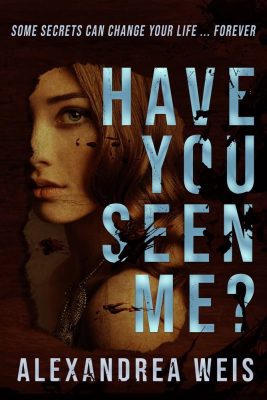
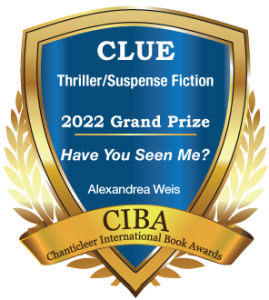
In Alexandrea Weis’s YA mystery thriller, Have You Seen Me? something is wrong at Louisiana’s Waverly School. Deadly wrong.
This private educational institute for the state’s wealthiest has an unsettling record of young women disappearing. Three, from decades ago, were never found. In the last few years, a girl by the name of Margaret vanished, and now her sister Lindsey has followed suit. Despite numerous investigations, no clues have surfaced. Moreover, the steely head of the school, Sara Probst, uses intimidation and fear to keep the school operating at any cost.
Were these disappearances just high-spirited women who left on their own accord, or was there something more sinister at play? And now, after Lindsey’s disappearance, it seems a serial killer has returned after all these years.
Into this morass steps Aubrey LeRoux, a recent Waverly graduate, hired by Sara to teach history.
The job offer is both temporary and precarious. Sara makes it clear that Aubrey must conduct herself in the precise manner that Sara dictates, using the same unsettling intimidating methods Aubrey experienced as a student.
Aubrey feels the impact of the school’s issues. As a scholarship attendee and a young Black woman, she understands fully the dynamic at Waverly. Harassment was part of her life there, often instigated by Margaret. When Margaret went missing, Aubrey was even briefly interrogated as a possible suspect.
With Lindsey having recently disappeared, Aubrey finds herself experiencing many of the same feelings she had as a student. But now, she’s in a position to deal with it all: Sara, the disappearing women, and now, her students.
What she doesn’t know is that Lindsey had gathered a crew of six misfits, creating a circle of friends who are devastated by her disappearance. They discover Aubrey’s problems with Margaret when they were both students, and so develop a devious plan.
These students will pretend to like Aubrey as a teacher, but meanwhile use every trick at their disposal to prove that Aubrey is connected to the fate of both missing sisters.
They conspire to push Aubrey into helping them become investigators into Lindsey’s disappearance, hoping to force Aubrey into making a misstep, dropping clues as to her knowledge of the disappearances.
Their investigation takes them to parts of the school grounds rarely frequented: founded on a Confederate-era plantation which was itself built upon burial grounds for a Native American tribe. Their unauthorized excursions draw Sara Probst’s wrath on Aubrey but also strengthen Aubrey’s resolve to discover the fate of the missing students.
When it appears their investigation is in full swing, a serial killer begins targeting Lindsey’s student crew, one by one.
Despite Aubrey’s desperate efforts to keep them safe, even with the help of a hunky local sheriff, it’s clear that no one can be fully protected, not when each of them thinks they can solve the mystery of Lindsay’s vanishing on their own. Each of the students is found murdered, with clues that make it clear that this is the work of a serial killer. But who would want them dead? And why?
Have You Seen Me? is a taut, well-written novel, a page-turner with enough plot twists and turns to keep the story moving on multiple fronts. Aubrey’s ethnicity is woven seamlessly into her character and the history that defines her relationship with Waverly. Overall, an immensely enjoyable read.
The HARVEY CHUTE Book Awards recognize emerging talent and outstanding works in the genre of Business and Enterprise Non-Fiction. The Harvey Chute Book Awards is a genre division of the Chanticleer International Book Awards (The CIBAs).
Chanticleer International Book Awards is looking for the best books featuring motivational, strategy, technology guides, social media, finance, investing & money, communications, marketing, business, and economics. We will put these books to the test and choose the best among them. See our full list of Non-Fiction Divisions here.
These titles have moved forward in the judging rounds from all 2023 Harvey Chute Non-Fiction entries to the 2023 Harvey Chute Book Awards SHORT LIST. The Short Listers will compete for the Finalist positions. Finalists will be selected from the Short List. All FINALISTS will be announced and recognized at the Chanticleer Authors Conference (CAC24).
The First Place Category Winners, along with the CIBA Division Grand Prize winners, will be selected from the 25 CIBA division Finalists.
We will announce the 1st Place Category winners and Grand Prize Division Winners at the CIBAs Banquet and Ceremony on Saturday, April 20th, 2024 in Bellingham, Wash. sponsored by the 2024 Chanticleer Authors Conference.
These titles are in the running for the Finalists Level of Achievement for the 2023 Harvey Chute Book Awards novel competition for Business, Finance, and Enterprise Non-Fiction!
Join us in cheering on the following authors and their works in the 2023 CIBAs.
Kaden Kashner – The ChatGPT Business Playbook: AI-Driven Strategies and Formulas for Business Success
Dorine Rivers, PhD, PMP – Brain to Bank: How to Get Your Idea Out of Your Head and Cash In
Dr Pietro Emanuele Garbelli – The Doctor’s Voice: Empowering Solutions to Physicians’ Frustrations, Burnout and Healthcare Inefficiencies
Sara Connell – Thought Leader Academy
Nuria Corbi – The Home Boss Toolkit: Branding Success for Self-Publishers
Neha Saini – SQL Quest: A Journey Through Data
Matthew J. Louis – Hiring Veterans
I. Almeida – Introduction to LLMs for Business Leaders: Responsible AI Strategy Beyond Fear and Hype
Vince Burruano – A Daily Dose of Sales Wisdom: Practical Advice for Sales Professionals and Leaders to Excel
Annie Yang – The 5-Day Job Search: Proven Strategies to Answering Tough Interview Questions & Getting Multiple Job Offers
Christopher R. Manske – Outsmart the Money Magicians: Maximize Your Net Worth by Seeing Through the MostPowerful Illusions Performed by Wall Street and the IRS
Karen Stein – Be Your Own Leadership Coach (Self Coaching Strategies to Lead Your Way)
Chris Duffey – Decoding the Metaverse: Expand Your Business Using Web3
Arunkumar Krishnakumar & Theodora Lau – The Metaverse Economy: How Finance Professionals Can Make Sense of Web3
Nancy Harhut – Using Behavioral Science in Marketing: Drive Customer Action and Loyalty by Prompting Instinctive Responses
Purna Virji – High-Impact Content Marketing: Strategies to Make Your Content Intentional, Engaging and Effective
Peter J. de Silva – Taking Stock: 10 Life and Leadership Principles From My Seat at the Table
PROMOTING OUR AUTHORS!
This post has been posted on the Chanticleer Facebook Page. We try to tag all authors listed here in the FB post. However, for FB to allow us to tag an author, that author must LIKE our page and Follow Chanticleer Reviews. FB rules — not ours.
We are now accepting submissions into the 2024 Harvey Chute Book Awards for Business & Finance. The 2024 CIBA winners will be announced at CAC 2025. Please click here for more information.
Seating is Limited. The esteemed WRITER Magazine (founded in 1887) has repeatedly recognized the Chanticleer Authors Conference as one of the best conferences to attend and participate in for North America.
The Military & Front Lines Book Awards recognize emerging new talent and outstanding works in the genre of Narrative Non-Fiction and Memoir exploring the lives of those who serve their country and others. The Military & Front Lines Service Book Awards is a genre division of Chanticleer International Book Awards and Novel Competitions (CIBAs).
Chanticleer International Book Awards is looking for the best books featuring true stories about adventures, life events, unique experiences, travel, personal journeys, global enlightenment, and more. We will put books about true and inspiring stories to the test and choose the best among them. See our full list of Non-Fiction Divisions here.
These titles have moved forward in the judging rounds from all 2023 Military & Front Line Non-Fiction entries to the 2023 Military and Front Line Book Awards SHORT LIST. The Short Listers will compete for the Finalist positions.Finalists will be selected from the Short List. All FINALISTS will be announced and recognized at the Chanticleer Authors Conference (CAC24).
The First Place Category Winners, along with the CIBA Division Grand Prize winners, will be selected from the 25 CIBA divisions’ Finalists.
We will announce the 1st Place Category winners and Grand Prize Division Winners at the CIBAs Banquet and Ceremony on Saturday, April 20th, 2024 at the Four Points by Sheraton in Beautiful Bellingham, Wash. sponsored by the 2024 Chanticleer Authors Conference.
These titles are in the running for the FINALISTS of the 2023 Military & Front Lines Book Awards for Narrative Non-Fiction.
Please join us in cheering on the following authors and their works in the 2023 CIBAs.
Daniel L Pinion – Chop That Sh*t Up! Leadership and Life Lessons Learned While in the Military
David Huntley – The B-17 Tomahawk Warrior: A WWII Final Honor
Pietro Emanuele Garbelli – The Doctor’s Voice – Empowering Solutions to Physicians’ Frustrations, Burnout and Healthcare Inefficiencies
Matthew J. Louis – Hiring Veterans
Benjamin Sledge – Where Cowards Go to Die
Elizabeth Auld – Ma Chère Maman–Mon Cher Enfant: The Letters of Lucien and Louise Durosoir, 1914-1919
Eric M. Liddick – All the Memories That Remain: War, Alzheimer’s, and the Search for a Way Home
Adam Ankrum – Halloween Horror True E.R. Terror
Suzanne M Elshult & Guy Mansfield – A Dog’s Devotion: True Adventures of a K9 Search and Rescue Team
Trevor Greene – March Forth: The Inspiring True Story Of A Canadian Soldier’s Journey Of Love, Hope and Survival
John Thomas Hoffman – The Saigon Guns
Aurita Maldonado – The Zen of Dancing in the Rain: Becoming One with the Storm
T.C. Fuller – Painting Over Rust: Stories From a 20-Year Odyssey in the FBI
JoAnna Rakowski – Chasing the Daylight: One Woman’s Journey to Becoming a U.S. Army Intelligence Officer
PROMOTING OUR AUTHORS!
This post has been posted on the Chanticleer Facebook Page. We try to tag all authors listed here in the FB post. However, for FB to allow us to tag an author, that author must LIKE our page and Follow Chanticleer Reviews. FB rules — not ours.
We are now accepting submissions into the 2024 Military & Front Line Book Awards. The 2024 CIBA winners will be announced at CAC 2025. Please click here for more information.
Seating is Limited. The esteemed WRITER Magazine (founded in 1887) has repeatedly recognized the Chanticleer Authors Conference as one of the best conferences to attend and participate in for North America.
Chanti: Tell us a little about yourself: How did you start writing?
Michael Cooper: That’s kind of a long story, but I’ll try to keep it under 1,000 words…
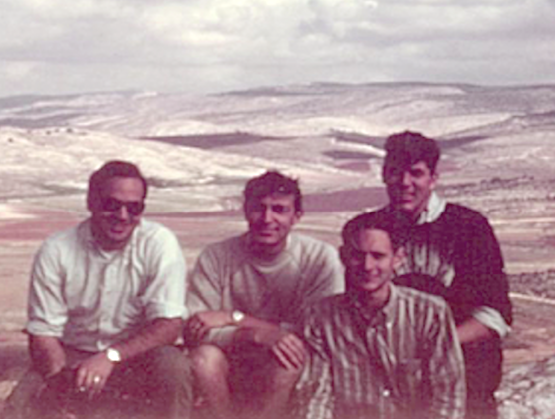
Having been active in Zionist youth groups throughout my formative years, I emigrated to Israel after graduating high school in 1966. Studying in Jerusalem for the first three years, I attended and graduated from Tel Aviv University Medical School. Then, after living, studying, and working in Israel for a total of eleven years, I returned to the US to specialize in pediatrics and pediatric cardiology.
Michael’s first arrival in Israel (center)
After working for about fifteen years as a pediatric cardiologist in a large multi-specialty medical care consortium, I found myself disenchanted with some worsening aspects of the approach to patient-centered care. While I wasn’t personally affected by these negative changes since, as a sub-specialist, I had demanded and received the opportunity to design my own practice, however, this wasn’t the case for my primary care colleagues. So, I decided to advocate for them. I began tilting against administrative windmills in the form of impassioned letters, but found that I wasn’t getting anywhere. Though I did enjoy the catharsis of writing those letters!
Tel Aviv University Medical School
So, I decided to just enjoy my pediatric cardiology practice, and to redirect my letter-writing to another area of my interest—the Middle East. At this point (the early 1990s) under the leadership of Israeli Prime Minister Yitzhak Rabin, there was finally a real peace process in the form of the Oslo Accords. But to my dismay, there was a good deal of angry push-back to Rabin’s efforts—both in Israel and here in the US. In this environment, I regularly published letters, opinion pieces and essays in support of Rabin’s peace efforts. Needless to say, I received more than a few angry responses.
Israeli prime minister Yitzhak Rabin (left), American president Bill Clinton (middle), and Palestinian political leader Yasser Arafat (right) at the White House in 1993
And as the peace process moved forward, the resistance to it increased. In the Middle East this resistance came from a seemingly bizarre and unholy alliance: on one extreme, ultra-nationalistic Jewish settlers, and on the other extreme, militant Palestinians such as Hamas—strange bedfellows in their vehement opposition to the peace-making efforts. And this angry resistance spilled over—into Israel, into the Jewish Diaspora, into the Arab street, and into the Arab Diaspora.
In Israel, this resistance reached a fever pitch in 1995 prior to parliamentary elections. Rabin’s efforts were not only rejected by Netanyahu and his right-wing allies, but Rabin was personally vilified as a crypto-Nazi and a traitor to Israel. The risk of his assassination, as assessed by Israeli security services, was high. And, indeed, after a huge pro-Oslo/pro-Rabin demonstration in Tel Aviv on November 4, 1995, Rabin was killed by a right-wing Israeli zealot with two shots to the back.
The shock to the Israel public and the world-wide Jewish community was profound. And after Rabin’s death, and with the ascension of a right-wing Israeli government under Netanyahu, the peace process grew dormant and eventually, died.
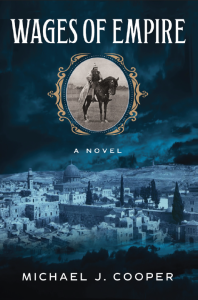
For catharsis, I initially turned from writing letters and op-ed pieces to writing historical fiction set in the Holy Land at pivotal points of history. This was also my way of trying to insinuate a message of coexistence and peace into a vehicle that, unlike my previous writing, might succeed in changing a few hearts and minds. I began with historical fiction set in British Mandatory Palestine in 1948—Foxes in the Vineyard. This was followed by The Rabbi’s Knight, set in the Holy Land at the twilight of the First Crusade in 1290. Lastly and soon-to-be-released, is Wages of Empire, largely set in Ottoman Palestine at the beginning of WWI.
Michael J. Cooper examining an infant
Beginning in 2007, I also turned to volunteer work for a US-based NGO (non-governmental organization) offering pediatric specialty services to children within the Palestinian Authority. In doing about two missions per year since then, I’ve attempted to be part of the solution as a pediatric cardiologist for children with limited or no access to care.
As of this writing, recent events in Israel/Palestine would suggest that things have only grown worse. But I won’t be deterred. I will continue to write, work, speak, and advocate for reconciliation and peace. And, in the words of Forest Gump, “That’s all I have to say about that.”
And it only took 684 words.
Chanti: When did you realize you that you were an author?
Cooper: In December of 2011—the first time I held my first published book in my hands. I had dedicated the book to my big sister, Adrienne. She had fallen ill a few months before, and I was gratified to have been able to share that moment with her before she died.
Chanti: Talk about genre. What genre best describes your work? And, what led you to write in this genre?
Cooper: I write in the genre of historical fiction with added elements of mystery, action-adventure, mysticism, and a dash of romance. Having lived in Israel during my formative years (between the ages of 17 to 28), I had fallen in love with the immediacy of history that waited for you around every corner. The historical events and, indeed the historical characters also provided the scaffolding of a story that was, at once, very old, and still being written. As I researched and wrote all three books, I was pleasantly shocked by fascinating elements of hidden history, unsolved mysteries, and unbelievably engaging and bizarre characters that practically wrote themselves into the books.
Chanti: Do you find yourself following the rules or do you like to make up your own rules?
Cooper: As mentioned above, the advantage of writing historical fiction is the scaffolding, or to switch metaphors, the loom of the historical timeline you’re working with. As the historical characters move within the fabric of that framework, it’s great fun to weave the fictional characters into the pattern, creating a wonderful tapestry.
As to rules, I would paraphrase a line from the 1974 movie, Blazing Saddles (replacing the word ‘badges’ with rules), “Rules? We don’t need no stinking rules!” (a version of that line appeared in the 1948 film, The Treasure of the Sierra Madre, and before that in a 1927 novel of the same name).
Another and more sophisticated way of expressing the same idea is to quote the great Somerset Maugham, who famously said, “There are three rules for writing a novel. Unfortunately, no one knows what they are.”
Somerset Maugham
Chanti: What do you do when you’re not writing? Tell us a little about your hobbies.
Cooper: Having already gone on and on about my work as a pediatric cardiologist for forty years, I would note that I’ve enjoyed running for the past 45 years, though I now do it considerably less often and am considerably slower. I used to play and perform folk music on guitar, banjo, and mandolin, though when I began writing about thirty years ago, I gradually redirected my creative energies away from music. Now that I’m retired, and when I’m not writing, traveling for research, and puttering around the house, I’m hoping to increase my volunteer work in Palestine.
Michael J. Cooper running in a marathon
Chanti: How do you come up with your ideas for a story?
Cooper: As noted above, the storylines arise organically from the historical timeline and from the different historical characters—creating a portrait that is enhanced by the fictional characters who allow for additional surprises, plot twists, betrayals, loves and alliances. As the book progresses, it’s a pleasure for me to watch the weave tighten as the different storylines are drawn together. I hope it’s also a pleasure for the reader.
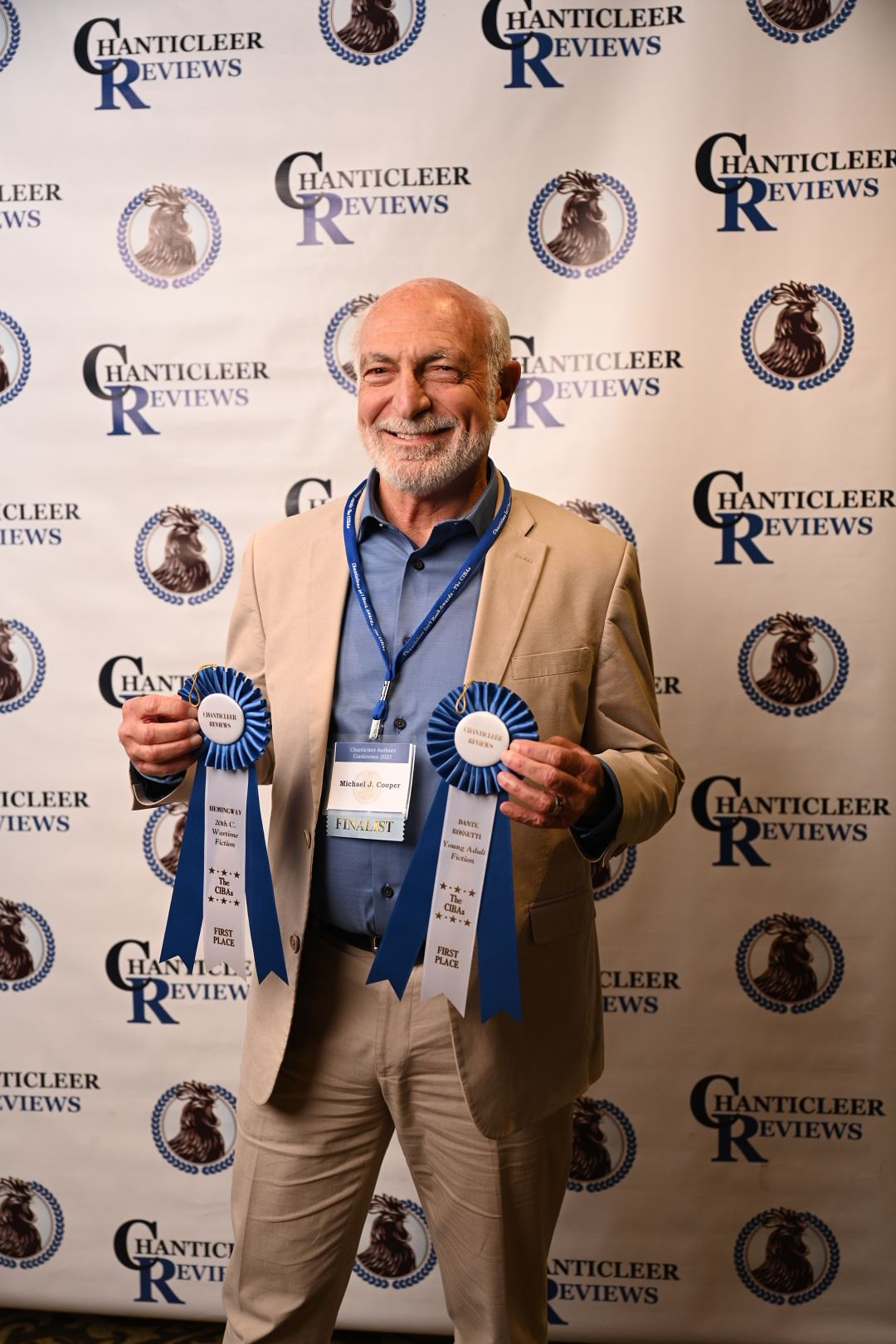
Michael J. Cooper with his two First Place Ribbons before one is upgraded to a Grand Prize!
Chanti: How structured are you in your writing work?
Cooper: Not at all. When I was working full-time, I’d get up early to write or do some research for an hour or so. Then while commuting to work (sometimes up to an hour or more), I’d ruminate about what I’d written or read, and made mental notes about plot twists, opportunities for conflict to build tension, or the need for a particular fictional character to do something unexpected. Once at work, I’d scribble these ideas down during gaps in my workday. After work, (and after the kids’ homework, and once they were asleep), I’d write drafts from the ideas that had germinated during the day. Then I’d print out drafts, bring them with me to work or have them with me on family outings, and during quiet stretches of time, and using a #2 pencil with a functioning eraser, I’d read the draft aloud and edit. At work, that might happen during a lunch break while sitting outside (weather permitting). During family outings, the settings for writing and editing were more varied, ranging from video arcades, amusement parks, ski trips, RV trips, etc. Now that I’m retired and the kids are (generally) on their own, I have vast stretches of time to research and write, but again, without any rigid structure.
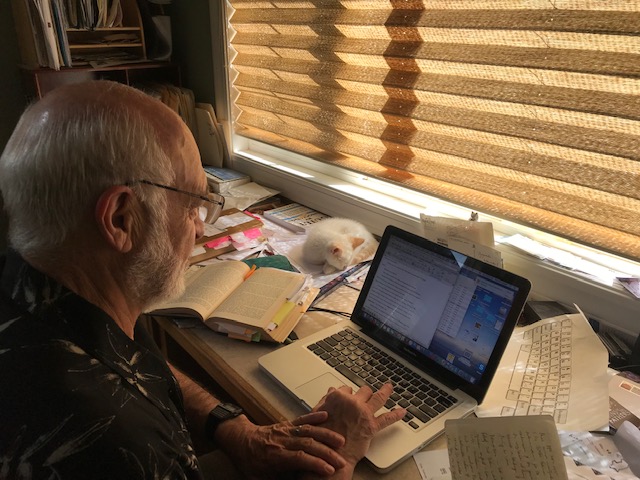
An early writing session with the kitten looking on
Chanti: How does being an author affect your involvement in your community?
Cooper: During my years as a practicing pediatric cardiologist, I felt that I had a certain degree of “street cred” in my community. And by that, I refer to the quality of being “worthy of respect.” As an author, I feel a certain enhancement of my “cred,” insofar as those who used to vehemently disagree with me about the Israel/Palestine question, now seem more willing to acknowledge an alternative narrative of coexistence and peace instead of confrontation and endless strife.
Chanti: What are you working on now? What can we look forward to seeing next from you?
Cooper: That’s easy. I’m putting the finishing touches on the next book in the “Empire Series,” Crossroads of Empire, which immediately follows Wages of Empire. I’m determined to see it published in 2024. And after that will come the next in the series, End of Empire. At that point, I’ll probably leave it as a trilogy. Or not.
Note from Chanti: Crossroads of Empire is in the 2023 CIBAs!
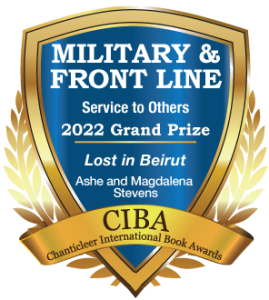
Cooper won the Grand Prize in the Dante Rossetti Awards for YA Fiction
Chanti: Who’s the perfect reader for your book?
Cooper: Wages of Empire will appeal to a wide swathe of readers beginning with those WWI aficionados who enjoy a thrilling novel of historical mystery with elements of romance and international intrigue. Readers of all ages and particularly young readers will enjoy the classic hero story of a young man coming of age at a pivotal moment in history and risking everything to play a role in the unfolding of history. Likewise, readers coming from diverse backgrounds will appreciate the cross-cultural and universal appeal. And in this turbulent time in the Middle East, readers concerned about the prospects for peace in that troubled part of the world will appreciate an informative and historical narrative of coexistence.
As it happens, Wages of Empire is a novel about war in a time of war—holding up a mirror that reflects on the current paroxysms of violence in the Middle East, and asking the question: What does that history have to do with the present?
In a word?
Everything.
Michael Cooper writes historical fiction set in the Middle East;Foxes in the Vineyard, set in 1948 Jerusalem won the 2011 Indie Publishing Contest grand prize andThe Rabbi’s Knight, set in the Holy Land in 1290 was a finalist for the 2014 Chaucer Award for historical fiction. Coming in December of 2023,Wages of Empireset at the start of WW1 won the CIBA 2022 Hemingway first prize for wartime historical fiction and the grand prize for young adult fiction.
A native of Berkeley, California, Cooper emigrated to Israel in 1966, studying and working there for the next decade; he lived in Jerusalem during the last year the city was divided between Israel and Jordan and graduated from Tel Aviv University Medical School. Now a pediatric cardiologist in Northern California, he travels to the region twice a year on volunteer missions for Palestinian children who lack access to care.http://michaeljcooper.net/Michael Cooper’sWages of Empirelaunches DECEMBER 2023.
Let’s get to know Laurel Anne Hill a little better. Read on!
Chanti: Tell us a little about yourself, how did you start writing?
Hill: Born in 1943, I started writing stories before I could read. My older sister would write down the words I told her to, inside a paper tablet. I’d fill in the blank places with pictures I’d cut out of comics or magazines. My first published short story—Nancy Saves the Day—appeared in the children’s section of a major San Francisco newspaper when I was eleven years old. For this I received the payment of two dollars, enough money to see eight double features at my local movie theater if I hadn’t decided to spend the money on something else.
My craft may have been questionable, but I’d become a published author.
My publications as an adult include three award-winning novels, over thirty short stories, many short nonfiction pieces, and one scientific paper.
Chanti: Some of those awards are from Chanticleer! Let’s talk about genre. What genre best describes your work? And, what led you to write in this genre?
Hill: I mostly write speculative fiction: science fiction, fantasy, steampunk and horror. My warped brain has loved to create that sort of stuff since the third grade, when my parents took me to the theater to see Bela Lugosi’s “Dracula.” During the many years I worked professionally in the field of environmental health and safety, I even described my on-the-job writing assignments as “science facts, written in response to governmental fantasy, in order to avoid regulatory horror.” My novels and many of my short stories feature young adult protagonists.
Chanti: Do you find yourself following the rules or do you like to make up your own rules?
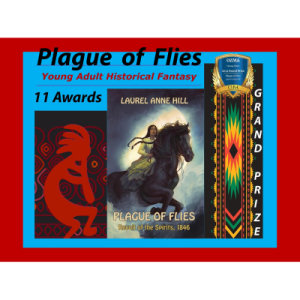
Hill: I like to follow what I call “standard good writing practices,” the information I’ve learned (and continue to glean) from writing mentors and experts in the field. I stray from these rules when the story I’m writing demands me to deviate. For example, in Plague of Flies: Revolt of the Spirits, 1846, my protagonist, Catalina Delgado, narrated in first person present tense. One-third through the first draft, I realized I needed a second point-of-view character to provide information only an antagonist could. Two first person point-of-view characters would have confused readers. I opted for a hybrid point-of-view, like I’d experimented with in my second novel, The Engine Woman’s Light. This approach of one first person and one third person narrator solved my problem.
Chanti: What do you do when you’re not writing? Tell us a little about yourself and your hobbies.
Hill: When I was growing up, my family was poor, and my dad was an alcoholic. Three generations resided in a two-bedroom, one-toilet rented flat in San Francisco. I wanted to attend college, but realized I’d have to earn the money to do so. I entered every essay contest open to public high school students in the city and won enough money to pay for four years of college tuition and books at San Francisco State College. In 1967, I graduated with a degree in the biological sciences. In 1978, four years after I’d left my psychologically abusive first husband for a far better man, I earned my Master of Science degree at California Polytechnic State University.
In my twenties, I loved to skin and SCUBA dive, and ride a surf mat down miles of California’s white-water river rapids. I also experimented with oil paints and underwater photography. By my early thirties, I still did skin and SCUBA periodically, painting and underwater photography, but I’d married a widower with two teenage sons and one preteen, and joyfully accepted my family responsibilities. Immediately, I expanded my cooking repertoire. All those wonderful guys loved to eat.
Back then, I worked at San Francisco General Hospital as a nuclear medicine technologist. My husband owned a cabin in the Sierra foothills, and we would spend at least one weekend a month there. Our daughter was born when I was thirty-five years old. I didn’t start writing as an adult until my early fifties. By then, our daughter was a teen, the three “boys,” long-since grown, and our cabin sold.
Aside from our annual family fishing trip, my “hiking” became mostly limited to traversing the 53-acre site where I worked in environmental health and safety. When I retired in 2008, I joined my husband on his daily walks up-and-down-the hills where we resided—up to three miles daily. Now, as a widow, my physical therapist has assigned me exercises in response to the three major falls I had a couple years ago. My “hobby” has become enjoying my amazing family and learning a path to improved health. I also serve as secretary of my high school alumni association and a member of my local Methodist church.
Chanti: That’s incredible! Paying for university by writing essays? Amazing! Thank you for sharing some of your history. How do you come up with your ideas for a story?
Hill: Since my childhood, characters (often armed with their own adventurous tales) have popped into my dreams and conscious thoughts. Up until the second or third grade, they were like imaginary friends, except I understood they weren’t real people. After that, some of them gradually morphed into a cast of characters for possible future stories. Throughout the past thirty years, characters have moved into my mind with their own stories to tell as the need arose. I’ve often said that a main character has to feel real in my head before I can make him/her/they “real” on the page. Once characters and I start communicating inside my brain, my ideas flow.
Chanti: How do you approach your writing day?
Hill: Before I retired from my job as an environmental health and safety specialist at a pharmaceutical research and development site, my writing time was early in the morning, after dinner, and/or as weekends allowed. Once retired, I wrote at the table while my beloved husband sipped coffee and read the morning paper or while he watched the evening news. I would write in-between my household, family and other obligations. After my husband passed away six years ago, my “approach to my writing day” has consisted of consulting my kitchen calendar in the morning, then deciding the best time to grab my laptop, open it and start working.
Chanti: What areas in your writing are you most confident in? What advice would you give someone who is struggling in that area?
Hill: I’ve had over thirty of my short stories published since 1995, served as the editor-in-chief for three anthology collections, and assisted in the editing of several others. I’ve also judged a number of short story contests. I love the short story as a writing medium, but caution new writers to consider the following advice before creating one: The short story is not a very, very short novel. Remember to avoid the temptation to use subplots and multiple point-of-view characters. Read a lot of short stories in your preferred genre. Reading the classics is great, but read plenty of contemporary pieces to see what’s getting published today.
Chanti: That’s great advice! What craft books have helped you the most?
Hill: You might laugh, but I vote for Writing in General, and the Short Story in Particular by L. Rust Hills, first published, I believe, in the late 1970s. I read a lot of classical literature years prior to my first attempt to write a short story as an adult. Despite my Craft of Fiction class in college, I never understood that the difference between a short story and a novel involved a lot more than length. Nor did I comprehend the ways in which the modern novel had evolved in the twentieth century. The diagrams in Orson Scott Card’s Characters and Viewpoint(1988) helped me visualize the differences between the various point-of-view options writers have. Recently, I discovered a website blog by David G. Brown that explains what I’ve been learning at conferences about point-of-view for the past ten years. [Go to: https://darlingaxe.com/blogs/news/history-of-pov.]
Chanti: Thank you for that information. Give us your best marketing tips, what’s worked to sell more books, gain notoriety, and expand your literary footprint.
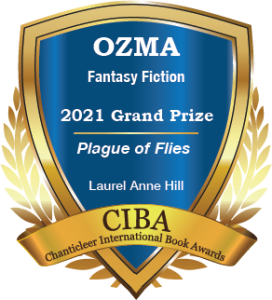
Hill: I’m active in the California Writers Club and participate in their “Writers Helping Writers” outreach programs. I’ve been a program participant at many science fiction/fantasy “cons” internationally for fifteen years. I’ve run Amazon book promos, with up to 3,000 book sales (and Amazon best seller status in particular categories) over the promotional period. My most recent novel, Plague of Flies: Revolt of the Spirits, 1846, has won seventeen awards and a number of excellent professional reviews. My previous novel, The Engine Woman’s Light, won thirteen awards and received a Kirkus Star. Yet my overall book sales are not particularly impressive. At age eighty, I’m still not sure what the heck works at all, let alone the best. With luck, maybe I’ll figure it out by the time I hit ninety.
Chanti: You figure it out and let us know, okay? What are you working on now? What can we look forward to seeing next from you?
Hill: I’m writing a steampunk fantasy set in Mexico and California in the nineteenth century. Working title: Saints of Fire. In this novel, the mass murder of family members forces a Mexican woman and her two daughters to flee into hiding from the unidentified perpetrators. The spirit of her now-deceased husband seeks to identify the persons responsible for the disaster, but death has stolen most of his memory. He finds he can only communicate with his fifteen-year-old daughter. Gradually, he and his daughter start to realize he might have played a role in the horrific event.
Chanti: That actually sent chills up and down my arms! Do you ever experience writers block? What do you do to overcome it?
Hill: I have never been blocked from writing words. Writing the best words, however, can pose a challenge. Sometimes, I’ll stare at the screen, pour another cup of coffee and keep mulling over possibilities until the answer materializes in my gray matter. Other times, I’ll move to a different part of my manuscript and work there. Eventually, I’ll find my words in all the places I need them to be.
Chanti: What excites you most about writing?
Hill: The ability to combine words, ideas and art to create a piece unique to me—a dynamic adventure with authentic, engaging characters. I’m excited by the possibility of touching another human heart and changing that organ’s owner in some small yet positive way.
Chanti: What is the most important thing a reader can do for an author?
Hill: Some might say to read the author’s latest book and give it a good review on Amazon. Then recommend that book to other readers. Some might say to read multiple books by the same author. Those are both important. Yet I really hope at least a few of my readers will allow my words to touch their hearts—to encourage them to modify their thoughts and lives in a positive manner, if only in some small way.
Set in a world where magical talking creatures are a normal part of society, the Mystery Force series by Ted Neill is a must-read for any animal-loving kid.
Book One, Mystery Force, Assemble!, begins with warehouses of previously unheard-of magical creatures being discovered and freed. Out of fear, these new creatures continue to hide, and a group of curious kids – Rasheed, Jonathan, and Jojo – decide to get to the bottom of the mystery!
In book two, The Case of the Stolen Horn, Rasheed, Jonathan, and Jojo are on the case after their unicorn drama teacher, Mr. Twinkles, is attacked, with their pegasus geometry teacher Ms. Weymont being arrested for the crime. The Mystery Force kids are determined to clear Ms. Weymont’s name by finding the real culprit.
Book three, Blazing Blizzards, confronts the Mystery Force gang with an unusual May blizzard. They waste no time in investigating the cause, trying to save their town and a newly discovered magical creature from the forces behind the terrible weather.
All three adventures contain exciting twists and turns, but also important lessons to learn.
In the Mystery Force world, well-known magical creatures have come out of hiding and live among people. When lesser-known creatures are discovered, the more popular creatures think themselves better. Rasheed, Jonathan, and Jojo think otherwise and do all they can to help the more obscure magical creatures; even though they haven’t heard of them before, these new creatures deserve love and acceptance.
Many characters have a disability of some kind, and the wonderful representation of the Mystery Force series goes a step beyond to include less visible disabilities. This inclusivity will resonate with those who deal with similar struggles, and reflects the need for more stories like this one.
Overall, Mystery Force: Volume One, is a fun and fast-paced collection of stories about helping others in danger.
In each tale, there are great examples of deductive reasoning for children that will strengthen their own critical thinking and problem-solving skills. Additionally, Rasheed, Jonathan, and Jojo’s determination will encourage readers to look out for others and stand up for what they think is right.
This is just the beginning of Rasheed, Jonathan, and Jojo’s adventures! A series not to miss, and much more to come!

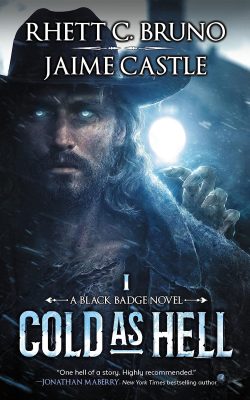
 James Crowley isn’t your average, run-of-the-mill cowboy. Nor is Cold as Hell, by Rhett C. Bruno and Jaime Castle, your typical gunslinging western.
 The Hearten Book Awards recognize emerging new talent and outstanding works in the genre of Uplifting & Inspiring Non-Fiction and Memoir. The Hearten Book Awards is a genre division of Chanticleer International Book Awards and Novel Competitions (CIBAs).
 In Alexandrea Weis’s YA mystery thriller, Have You Seen Me? something is wrong at Louisiana’s Waverly School. Deadly wrong.
 The HARVEY CHUTE Book Awards recognize emerging talent and outstanding works in the genre of Business and Enterprise Non-Fiction. The Harvey Chute Book Awards is a genre division of the Chanticleer International Book Awards (The CIBAs).












 10 Question Author Interview Series with Laurel Anne Hill, Award-Winning Author
 Chanti: You figure it out and let us know, okay? What are you working on now? What can we look forward to seeing next from you?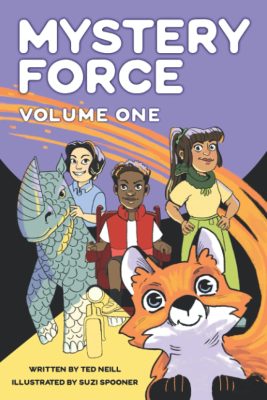
 Set in a world where magical talking creatures are a normal part of society, the Mystery Force series by Ted Neill is a must-read for any animal-loving kid.