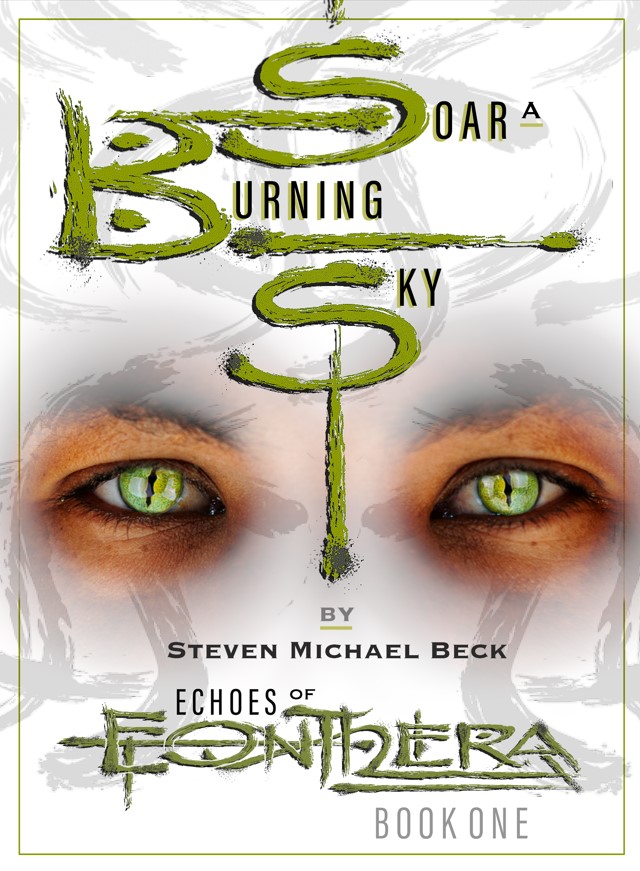
Soar a Burning Sky won the 2022 OZMA Grand Prize Award for Fantasy Fiction!
with Award-Winning Author, Steven Michael Beck
Steven Michael Beck was the OZMA Grand Prize Winner for Fantasy Fiction at the 2022 CIBAs, hosted by the 2023 Chanticleer Authors Conference. His book, Soar A Burning Sky looks at a world linked to Earth’s, and both planets are in danger due to the harsh realities of Earth’s drastic climate change.
He is also an award winning commercial director and Visual Effects art director on films like Indiana Jones and the Last Crusade, The Abyss, and The Hunt for Red October.
We were so glad to meet Steven and Vicki back in 2023 and are delighted to present this interview.
Chanticleer: To begin with, tell us a little about yourself! How did you start writing?
Beck: Writing has always been part of the creative process for me. As a filmmaker, treatments and screenplays were, and are the preemptive language of my craft. Being able to convey characters, camera movement, narrative arcs complete evocative moments, could only be done by putting words to the page. Given I’d always had the practice, longform wasn’t much of stretch—or so I thought.
Chanticleer: Film and writing always seem to have huge overlap. We run into that a lot with Book to Screen interest at the Conference. When did you realize that, in addition to being a director, you were also an author?
Beck: Here’s the odd answer… I don’t want to be a writer. I have a story to tell, and I want to get it out before I’m no longer able to write anymore. Which isn’t the same thing as wanting to be a writer. What I’d love to be is a relieved human being, thankful we finally got a handle on climate change. I see my contribution to that resolution as being the writer on this one story.
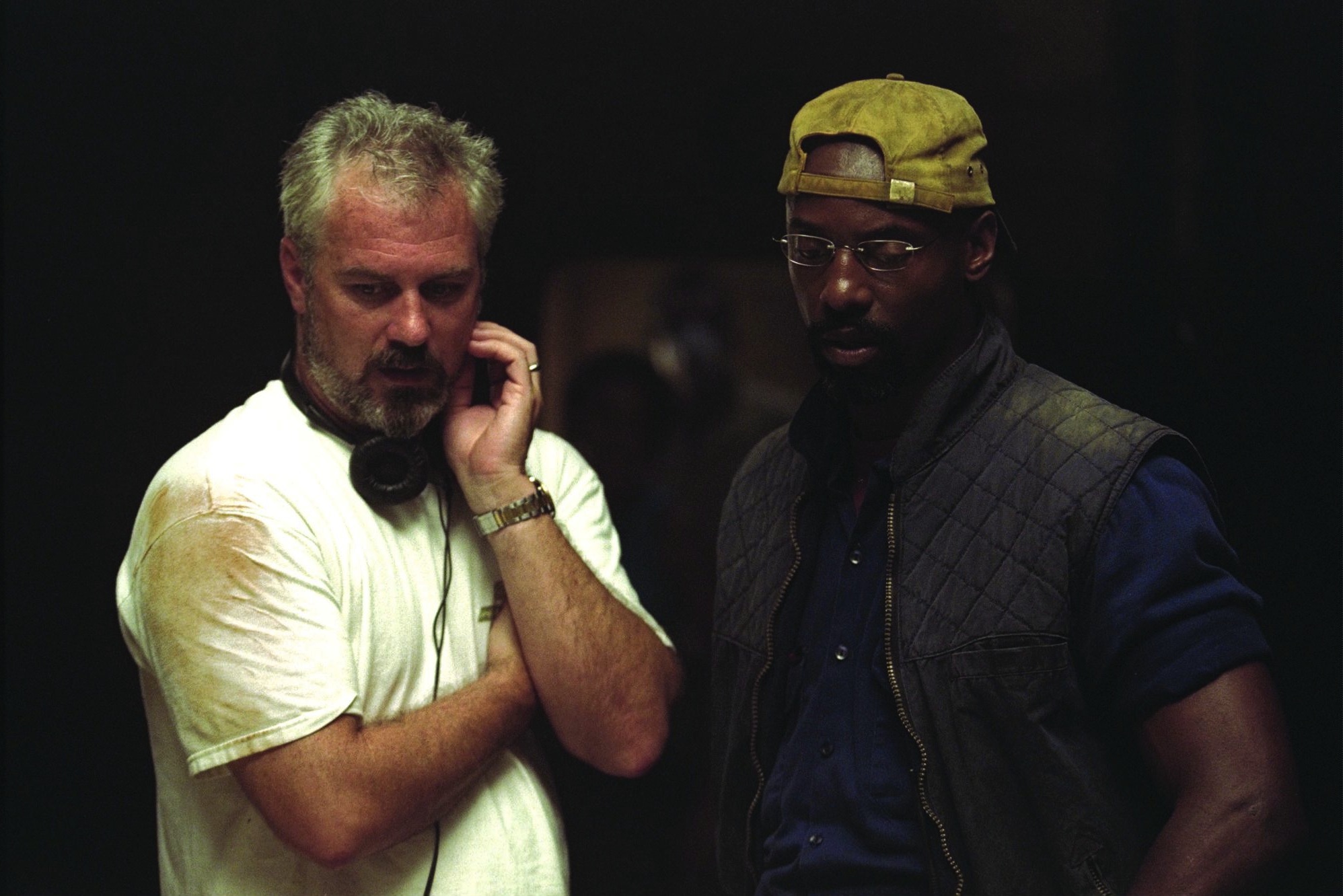
Steven Michael Beck directing Isaiah Washington on the set of the Ghost Ship.
Chanticleer: The issues of climate change are serious, and we’re glad to see the shift in fiction to address this too. Would you say that’s the genre you focus on here?
Beck: My genre is eco-dystopian fantasy. Solving climate change, or at least putting a dent in it is an eco-dystopian fantasy. The only ones capable to do this are those destined to inherit it. Thus, I’m trying to speak to them directly.
Chanticleer: Tell us a little about your writing process. Where do you land on things like idea generation, writing, and writing rules?
Beck: Lol. Rules? There are rules? In coming up with ideas for a story, I imagine a scene, and then let it go. Before it hits the presses, I indent, and re-edit it several times in over in order to get it right. I imagine. It informs. We then edit together.
For the writing day, I write in the mornings until I’m starved. Then I break for lunch, and then edit in the afternoon. Can’t write at night, lest I take it to bed.
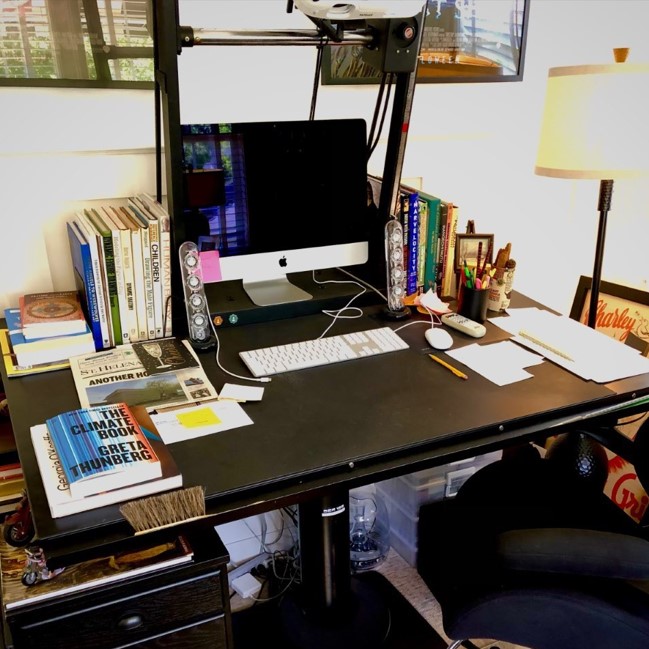
Where the writing magic happens!
Chanticleer: It sounds like you’re a fairly intuitive writer. When you’re not writing what are you up to?
Beck: I’m the type of person who’s constantly curious about the creative process. That said, I have a rather inflatable muse. She takes me everywhere; film, design, sculpture, writing, construction, architectural design… Wherever she goes, I follow.
Chanticleer: An inflatable muse? Oh, I hope there’s a picture that explains that! Thinking about the support of muses, what are areas in your writing that you are most confident in? What advice would you offer to writers struggling in that area?
Steven Michael Beck wrestles with his next scene as the Muse looms over him.
Beck: I’m most confident in writing dialogue. Again, I believe that’s due to all the years writing screenplays. Regarding advice… Listen to the conversations around you as you develop original voice. One informs the other.
Chanticleer: How would you say being an author affects your involvement in community?
Beck: It sorely keeps me from it. Writing is a monk’s existence—if you’re going to be good. Which means, you sequester yourself away for hours at a time, day after day, months on end. Sure, you could spend the remaining hours at some bar, Bokowski-ing it, but that’s not community.
Chanticleer: That’s unfortunate that it feels like being an author and participating in community are at odds with each other. Do you feel like there’s a way you can promote and improve literacy in your community still?
Beck: I’m a columnist in our local paper as well as being a local author. One feeds the other when it comes to community dialogue.
Chanticleer: That is so true. Thinking of people reading your column, who would you say is the perfect reader for your book?
Beck: Anyone ages 12-54 who’s concerned their world won’t be here someday. Hopefully I can convince them my work is fantasy.
Chanticleer: So often fantasy and reality intersect, which is one of the great joys of writing. As a final question, what excites you most about writing?
Beck: The sense of discovery. You never expect to find what you do when you write. It’s magical, frustrating, shocking, and complex, all at once. Which is odd when you’re writing a cookbook.
Steven and Vicky Beck at Chanticleer Authors Conference
Chanticleer: Indeed! Thank you so much for making the time for this interview!
You can sign up for the Napa Valley Register and read Beck’s column here.
Steven Michael Beck spent the last 30 years pursuing the art of storytelling through advertising, film, and television. Specializing in visual effects-oriented concepts (and their often-unique storylines), his direction has constantly reflected infatuation with animation—the notion that any object or idea either contained ‘life’, or could be conjured into such (needless to say, he had an imaginative childhood). These projects and life lessons have been nothing if not steppingstones, leading him to see the potential of a new type of storytelling through combinations of sculpture, photography, text, and found object.
Edged in Purple by John W. Feist welcomes readers to a place outside of time and space, a liminal space where characters of myth wait to return to their fated stories.
The Fold is a beautiful land, a near-utopia shepherded– literally– by Thetis and Peleus of Greek mythology. They raise the heroine of Shakespeare’s The Winter’s Tale, Perdita, after her father had accused her mother of betraying him with another, the whole sad story a product of his own paranoia.
Perdita’s story is proceeding as it was written. She has already met Florizel, the man who should be the hero of her romance– when her story is intersected by another. Just as The Winter’s Tale features royal courts, doomed relationships, mistaken identities, and family murder, so too does an ancient Greek drama: the Oresteia of Aeschylus, the story of Agamemnon after the Trojan War.
Orestes, the hero of that ancient tale, joins Perdita in the fold, pulling both of them from the paved road of fate.
They fall in love. Florizel goes mad with jealousy and proves that she’s MUCH better off with Orestes– as he pursues the lovers out of The Fold and into a reality that none of them are quite prepared for.
The reality they wake up in is that of the late 19th century, among the ruling class of the teetering Austro-Hungarian Empire of the Habsburgs, not far from Archduke Franz Ferdinand’s date with destiny.
Edged in Purple begins as a whimsical combination of fantasy and mythology.
Characters such as Orestes and Perdita’s adopted mother Thetis mingle with characters from the classics of literature– not just Perdita herself but nearly all of the personae from The Winter’s Tale. Peleus implies that characters from countless other stories have passed through The Fold on their way to their own endings, whether happy or not.
This setting offers a wealth of possibilities for stories to mingle and morph, which Edged in Purple explores to excellent effect.
It turns two familiar stories into one brand new adventure, transforming The Winter’s Tale into the kind of love vs. power romantic triangle that defines such stories as The Princess Bride, with Orestes, Perdita, and Florizel taking the roles of Wesley, Buttercup and Prince Humperdinck, respectively.
However, the curtain of fantasy is pulled back and the characters must inhabit the bodies of very real historical figures. And yet still, they seek to control their own fates.
After all, they managed it once, back in The Fold.
But as fantasy transforms into historical fiction, their lives become fixed to moments in time. And as Orestes– now Franz Ferdinand– learns, the wheels of history can’t be steered as easily as a story.
The two very disparate parts of Edged in Purple are equally compelling, and while that switch from fantasy fairy tale utopia to oncoming historical tragedy could send some readers for a spin, those interested in the blending of genres will be enthralled by this mirrored tale.
For readers who do make the leap, Franz Ferdinand and Sophia’s impossible happy ever after is both compelling and heartbreaking. Recommended for readers who enjoy portal fantasy, historical fiction, and tragic romance.
Fatherhood has changed dramatically over the last century. Once limited to being a hands-off leader of the family, fathers have become a loving, supportive, involved parent that we turn to for help, advice, and sometimes the keys to the car. This Father’s Day, June 16th, we celebrate all the amazing fathers and father figures in our lives!
The Evolving Role of Fatherhood
Let’s look back at the fathers of yesterday to celebrate the great dads we have today!
Fathers from Colonial Times to the Civil War
Traditionally, fathers in the US were stoic figures who taught their boys to work and found suitable husbands for their daughters. While showing the love they had for their children at home was discouraged, soldiers from the Civil War expressed their true feelings toward their children through letters from the battlefield.
Fathers of the Progressive Age
The industrialization of the nation freed up a father’s time to spend with their children, but World War I and II forced many fathers to leave their families to fight overseas. During the turbulent times of the Great Depression that followed gender roles became more flexible, allowing fathers more time with their children while their wives worked outside the home to support their families.
Fathers After WWII
Parenting went under the microscope after WWII, with many studies focused on parental roles and their affects on children. Results found that fathers of this time participated more in the lives and development of their children than ever before, but traditional parenting stereotypes were still in place.
60’s Fathers
Cultural and political shifts impacted fatherhood tremendously in the post-WWII baby boom, but the Vietnam War stymied the movement to further expand a father’s role in the family. Time away from their families and undiagnosed PTSD issues kept many fathers from fully participating in family life.
Fatherhood by 1999
Fathers evolved rapidly in the 1980s and 1990s. Economic stability gave fathers more time to spend at home and participate in their children’s lives in new ways, setting up new expectations for their children and encouraging them to chase their dreams. Harsh discipline was traded in for guidance and encouragement to do better.
Fatherhood in the 21st Century
The gender equality movement of the 21st century has allowed fathers to push aside the old concepts of being a sole provider and disciplinarian in favor of becoming an equal co-parent alongside their significant other. Today’s dads are now involved in all activities of the home, from child rearing to grocery shopping, allowing them to be more confident, emotionally available, and playful with their children.
And then there is Vatertag in Germany
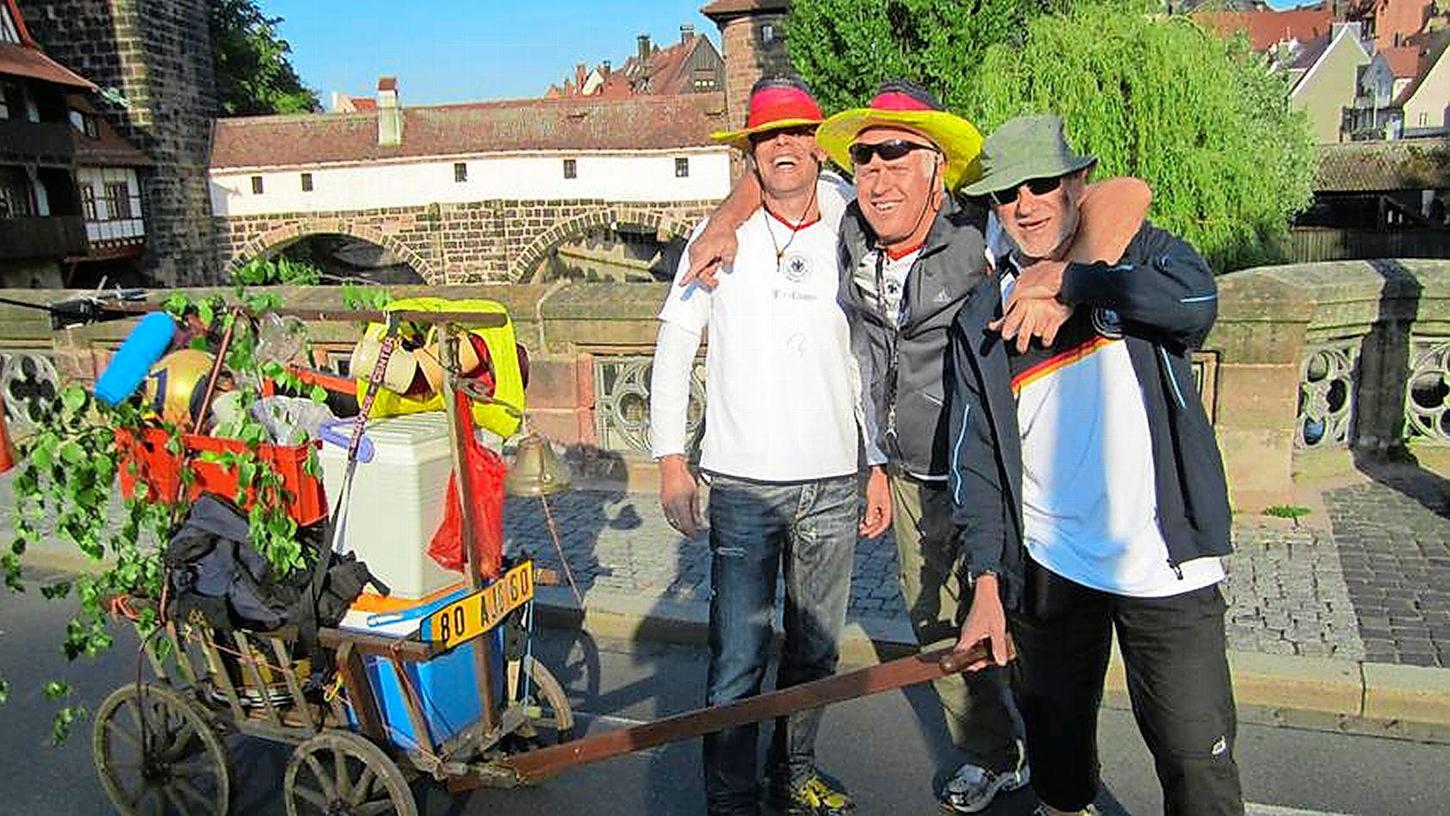
In Germany, Father’s Day always takes place 39 days after Easter Sunday which makes it happen on a Thursday. Father’s Day is also the same date as Ascension Day. Vatertag is also known as Mannertag in the east part of Germany.
Participants go for walks and treks with handcarts, wagons, wheelbarrows, bicycle trailers, and other modes of transporting beer, grills, pretzels, snacks, portable speakers, etc. Also, it is tradition to decorate the carts with birch branches. The story is that in the old days, men would take to the fields for a fruitful harvest. In true German tradition, after the prayers, celebrating with beer, mead, and ale would commence.
Hats off to all the great fathers out there on Father’s Day!
Chanticleer Celebrates Father’s Day with Inspiring, Fun, and Compelling Stories about Fatherhood!
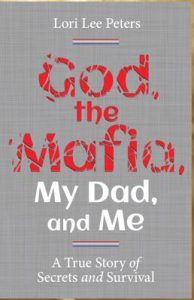
God, the Mafia, My Dad, and Me by Lori Lee Peters begins in the voice of a child, compelling not just for its narrative honestly, but for the fact that it might not be reliable. As the book opens, we learn that this narrator firmly believes she will be killed.
Readers can easily see through the childlike hyperbole, but that doesn’t detract from the intrigue. How did a kid come to such an extreme conclusion? Is there any seed of truth to it? These questions will hook readers from the start.
Author Peters set out to write a book about her dad. God, the Mafia, My Dad, and Me tells the true story of her father, and his fascinating work helping the FBI tackle Mafia activity in Lodi, California. Yet in the end, this is a memoir in which the compelling lead character – young Lori – overshadows her father in many ways.
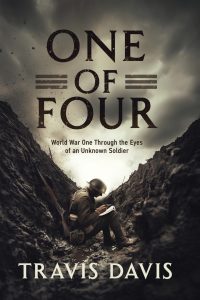
Based on real people and events in 1918 France, One of Four by Travis Davis begins with a young French girl, Camille, who stumbles upon a diary lying next to an unknown American soldier. He was killed among his comrades in a German ambush near the banks of the Aire River, as he tried to protect his fellow soldiers. When Camille comes of age, she leaves her hometown to seek a better life in Paris. There, she is killed after joining a German resistance group. But before her death, she tucked the soldier’s diary in her Bible and hid it in a local bookstore.
Decades later, a man by the name of Walter travels to France with his son, Alex, to whom he’d become estranged after the painful divorce from Alex’s mother. He hopes this will be a journey of healing and exploration and that their time together will revive their shaky relationship. While there, Alex purchases the Bible left by Camille many years ago. By reading the hidden diary entries of the soldier together, Alex and Walter’s relationships takes an unexpected turn.
Robert Smalls’ life should have been one for the history books.
Smalls was born a slave in Beaufort, South Carolina, in 1839. When the first shots of the Civil War were fired upon Fort Sumter, Smalls was an experienced helmsman aboard a small cargo ship plying the coastal waters of South Carolina and the neighboring states. Once the war broke out, he found himself working to support a cause that kept him, his wife, and their children locked in chattel slavery.
But in a daring escapade that fell somewhere between a raid and a rescue, Smalls planned, with the help of his fellow crew members (also slaves) aboard the CSS Planter, to abscond with the ship, its cargo of munitions taken from Fort Sumter, and bring their families. The plan was to sail the ship as though its white officers were still on board, pretending to be carrying out their orders—at least until the ship was out of the reach of Fort Sumter’s guns.
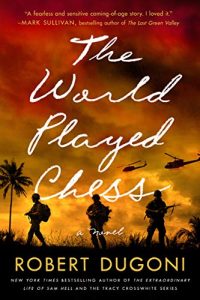
Robert Dugoni’s novel,The World Played Chessexamines the demands of society and family, through the dawning adulthood of three different men in three different eras.
Vincent Bianco, a Southern California lawyer raises his teenage daughter and high-school-senior son. He unexpectedly receives the Vietnam journal of William Goodman, with whom he had worked construction in 1979. Goodman scribbled the journal in pencil during desperate breaks in his service in Vietnam. This record describes Goodman’s harsh initiation and horrifying acclimatization to the war.
Mirroring the Marine’s rapid maturation in the jungles of southeast Asia, Bianco recalls his own privileged coming of age. He compares it with his son Beau’s coming of age in present-day 2016 and 2017.
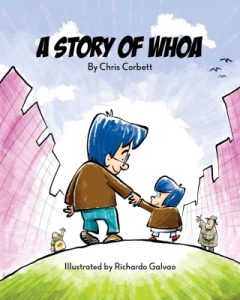
In A Story of Whoa, Chris Corbett shows one way that parents can explain the often loud and frightening problems of the world to children, and how anyone can make a difference.
Whoa watches the news every night with his father, where tragedy, injustice, and cruelty so often take center stage. Seeing these terrible things happening on TV, Whoa decides the time has come to step up. With his father’s support, he learns every martial art he can, ready to do battle with the toughest challenges in the world!
With patience and encouragement for Whoa’s many KERPOWS!!!, his father helps him discover that fighting injustice often goes beyond physical strength.
We would like to wish all fathers, fathers-to-be, stand-in fathers, and those who possess the fathering instinct, a very Happy Father’s Day!
Thank you for joining us in celebrating the Fathers in our life!
Do you have a book with fathers that deserves to be discovered? You can always submit your book for an Editorial Review with Chanticleer!
Chanticleer Editorial Review Packages are optimized to maximize your digital footprint. Reviews are one of the most powerful tools available to authors to help sell and market their books. Find out what all the buzz is about here.
Have an Award Winner?
Submitting toBook Awards is a great way to get your book discovered! Anytime you advance in the Chanticleer Int’l Book Awards, your name and book are promoted right here on our website, through our newsletter, and across social media. One of the best ways to engage in long tail marketing!
Thank you again to the authors who wrote these wonderful books, and to fathers and father figures around the world! You are so loved and appreciated!
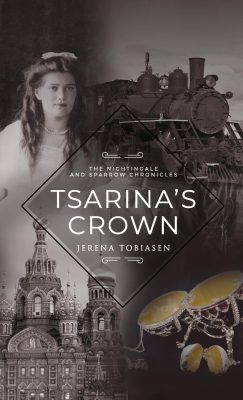
Jerena Tobiasen delivers a sharp, first-rate novel in Tsarina’s Crown, first installment in TheNightingale and Sparrow Chronicles, capturing a precise panorama of Russian politics and British espionage during a delicate period in time.
The year is 1915 and Simon Temple, a young naval officer aboard the RMS Guardian— a British Royal Navy Ship— patrols the North Sea for questionable communications and marine activity. Months later, he is entrusted by the British crown to serve as a liaison on a covert mission in Petrograd, Russia. Simon is careful not to blow his cover as a young aristocrat while he is thrust into the world of international politics, the ruthless Russian Revolution, and becomes caught right in the middle of two powerful royal families.
The mission turns out to be longer than Simon anticipated, and his life quickly becomes threatened as he tries to navigate a dangerous political labyrinth, all the while hoping to unearth the spy information that his King requires of him. But as the precarious wheel of mayhem and chaos churns in Russia, Simon’s only way to survive is to escape, realizing that his wit and intelligence might not save him from the tense political atmosphere. Things become even more complicated when he is joined by two other people who hope to flee.
Told with verve and heart, the plot offers a raw and intimate portrait of events and activities bookended by the First World War.
The tension and suspense are palpable in every chapter as Simon wrestles his way out of one dangerous situation after another.
Tobiasen’s lucid writing and adept storytelling capture the culture and intricate details during one of the biggest social and political upheavals of the twentieth century. She takes us behind palace walls of both Britain and Russia, offering readers a globetrotting experience as we glimpse into the intrigues of the aristocracy amid controversy and fiery protests.
The author does a remarkable job balancing vocabulary and syntax appropriate for this period while using modern language to make her text easily graspable. The meticulous research done before writing this novel is salient in her story and keeps the chronology accurate, a worthy indication of an author in command of her genre.
Love becomes a central theme in the story, giving weight to the characters’ emotions and connections.
An element of romance sparks between Simon and Mary, allowing characters to maneuver not just external conflicts but inner ones as well, pushing them to grow as people. Simon Temple is a character to cheer on, with admirable boldness and determination. The supporting characters are memorable and well-wrought too, adeptly playing their role in moving the story forward.
Tsarina’s Crown: The Nightingale and Sparrow Chronicles is a striking start to a promising series, and one of the best espionage stories in modern historical fiction.
Radical Betrayal by Anders W. Edwardsson explores American Exceptionalism and its echoes in today’s US politics and society. It offers a perspective on the nuances of the ideology and calls for its reworking towards a more united nation.
Donald Trump’s unexpected win shocked a major segment of the USA populace in 2016, raising a big question about a complete neophyte’s victory. For some, he was a messiah to renew America’s standing. For others, he was a candidate with an unconventional campaign of blunt, rabble-rousing talk, who surprisingly took over the electoral term.
What emerged as more remarkable is that, despite not winning the popular vote, the electoral college votes secured the 2016 US president his win. It added to the debate surrounding the election and highlighted the existing political divides in the states. Radical Betrayal examines why the 2016 election played out as it did, opening with its discussion of American Exceptionalism.
American Exceptionalism is the belief in the unique global leadership of the USA. This book follows the evolution of this ideology, starting from the blend of the nation’s founding ideals of Enlightenment and Religion. It covers various historical periods and traces the idea’s development over several presidencies. This discourse presents the basis for the thesis, paving the way to answer the controversial win of the 2016 election.
Radical Betrayal covers a labyrinth of movements like isolationism and interventionism in the 19th and 20th centuries, as well as the rhetoric of political leaders from George Washington and Theodore Roosevelt to Ronald Reagan and Donald Trump.
What becomes clear is years-long tactic of harnessing American Exceptionalism to gain public support and justify policies. Not only this, the history highlights differences in how this strategy was approached, and its continued influence on shaping political takes and public views today.
The work creates an inclusive argument for why Trump’s slogan “Make America Great Again” resonated with many people. To establish its position, Radical Betrayal works through the many political and cultural changes in American history that have created the appeal of this slogan. Different visions of Exceptionalism across history—inclusive and exclusive, active and passive—contribute to the debate on polarizing politics. They showcase a bridge between those conforming to two forms of this ideology—the more conservative form, and the broader, less focused version.
This book invites readers to help shape the future discourse around American Exceptionalism and its influence on the US.
Pointing to Trump’s presidency and the clear divisions in American identity during the era, Radical Betrayal suggests reassessing the power of Exceptionalism in shaping these national identities. It stresses the need to bridge historical ideals and modern realities toward a unified America. This journey to understand American Exceptionalism illuminates a potential for inclusivity in the nation’s rich tapestry of communities, races, and heritages.
An analytical approach with an encouraging and didactic tone shapes the pages of this book. Idealistic and inspiring, it opens the opportunity for further enrichment with discussions on potential obstacles in the journey to political refinement and growth.
The piece propels one toward reinterpretation and rejuvenation of American ideals, unity, and progress—the essence of American Exceptionalism itself.
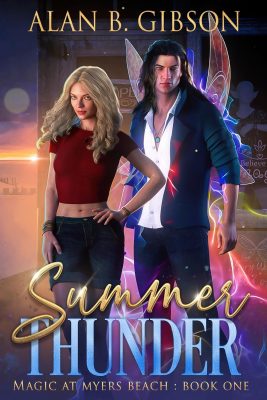
Lily struggles to keep her business, her son, and her home. But in Summer Thunder, first book of the Magic at Myers Beach series by Alan B. Gibson, Lily’s luck begins to turn as she connects with the enigmatic beach king Theos.
With the help of her friend and fellow business owner Greta “the Witch,” Lily tries to revitalize her fairy-themed decoration and figurine store. Her divorce from her abusive ex-husband Kelly is pending, and she must present a calm and reliable home to ensure full custody of her son Jamie. But when her kindly landlord, Ms. Coffey, passes away, she’s confronted with two options: lose her prime business location and upstairs apartment, or somehow make enough money to buy the building herself.
Enter Theos, a kitesurfing champion with adoring fans. He shows true appreciation for Lily’s fairy figurines, bringing her many more sales. But more importantly, Theos becomes deeply interested in Lily herself. Their romance begins on rocky footing, as Theos has a strange air about him and seems to vanish whenever a storm comes into town. But when he begins modelling for a new fairy figurine– aptly named Theos, the King– the two are drawn inevitably closer.
Though she succeeds at turns, Lily confronts ever-growing problems, testing her determination.
She must keep Kelly from influencing her son and jeopardizing Lily’s chance at a happy family. And as Theos becomes a more serious figure in her life, Lily will have to decide how much of a leap of faith she’s willing to take–who she’ll end up becoming.
Meanwhile, the town of Myers Beach is facing change of its own.
This story keeps a tongue-in-cheek attitude as it tackles real-world issues. Powerful national banks sweep up local institutions, bullies wield the term ‘fairy’ against boys like Jamie who don’t follow their standards of masculinity, and the lives of people like Lily risk being seriously upended for the sake of someone else’s real-estate investments. While Summer Thunder keeps a lighter tone, it doesn’t shy away from serious topics.
The two perspectives, Lily and Theos, create an engaging balance of information for the reader.
While Lily tries to shape her own life, Theos shoulders an even more dire burden–the lives of his people. As crown prince of a true fairy kingdom, Theos deals with the aftermath of their most vital resource–fairy dust–being poisoned. He must find a new source of its core components, but thankfully, he’s already noticed a few in Myers Beach.
He works to set up a home for sick fairies around the town, while courting Lily and debating when–and how–to reveal his true nature. Often, readers will see the disconnect in Theos and Lily’s understanding of the world. Neither fully knows the other, especially as Theos presents such a larger-than-life persona, giving space for conflict to grow between them. Will they be able to overcome their differences, and truly connect as themselves?
This story shines with a charming setting and lively cast of characters.
Gibson’s descriptions place readers in the cool spray of kitesurfing and the quaint boardwalk of Myers Beach. Lily lives in a town of friendships and rivalries, with vibrant and unique characters to flesh out the story around her. While the prose sometimes explains more than it should, and dramatic threads don’t always have enough time spent building tension, the characters are driven and will pull readers easily into their schemes.
For those interested in urban fantasy, beach-side romance, and the adventures of plucky local fairies, Summer Thunder will be a strong opening to the Magic at Myers Beach series.
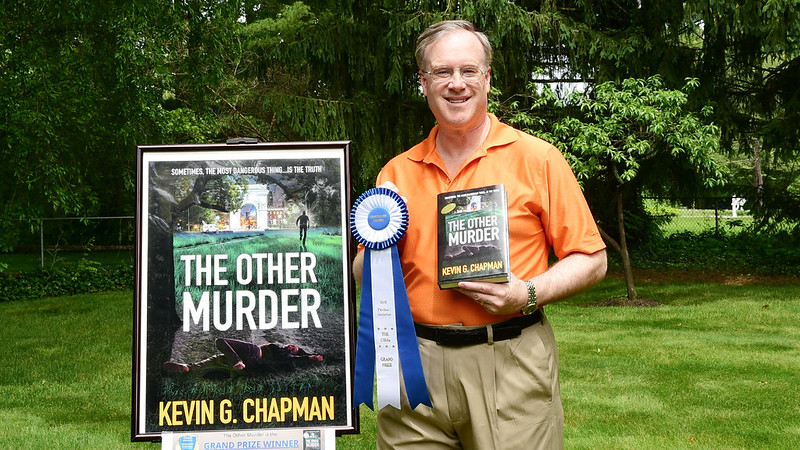
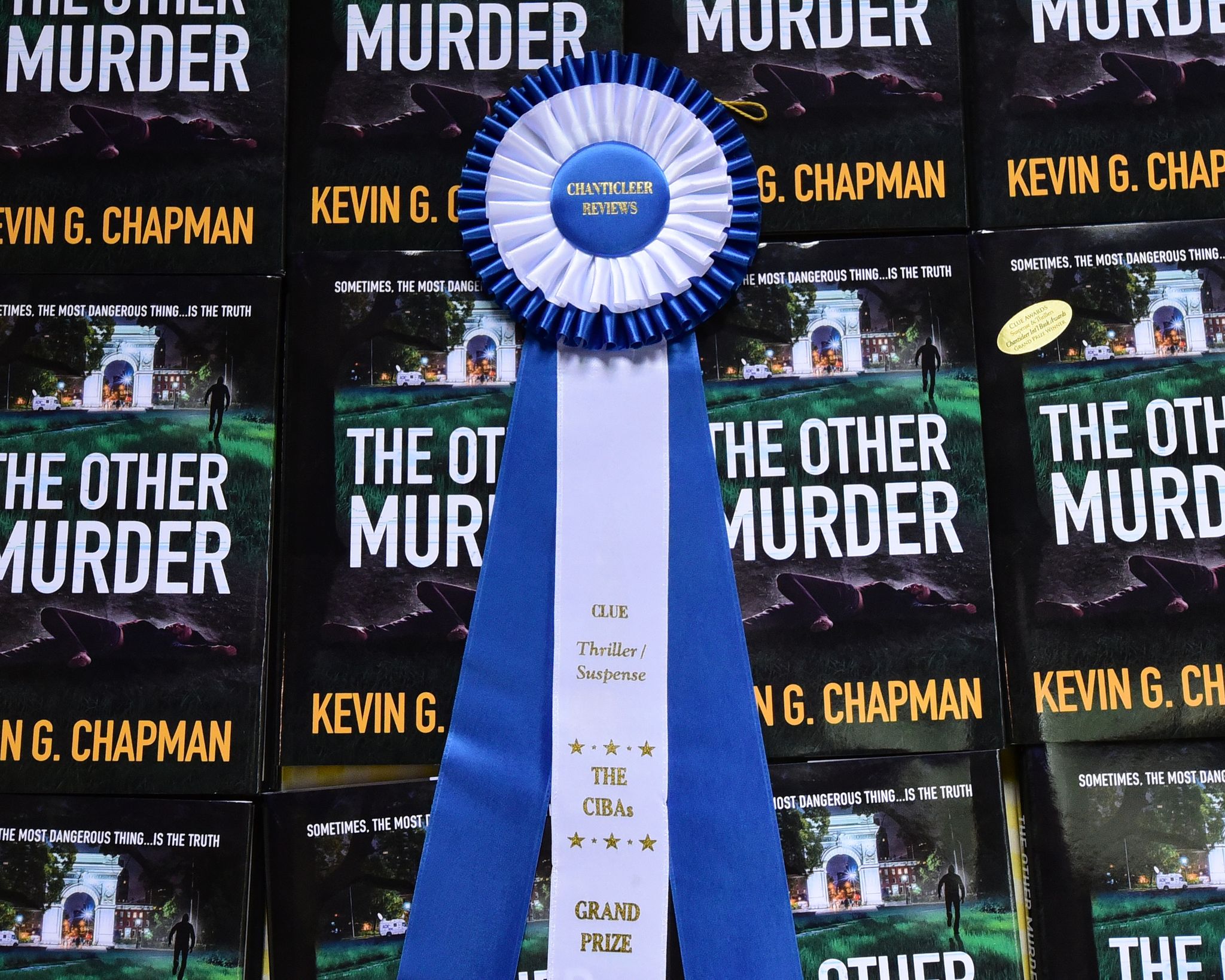
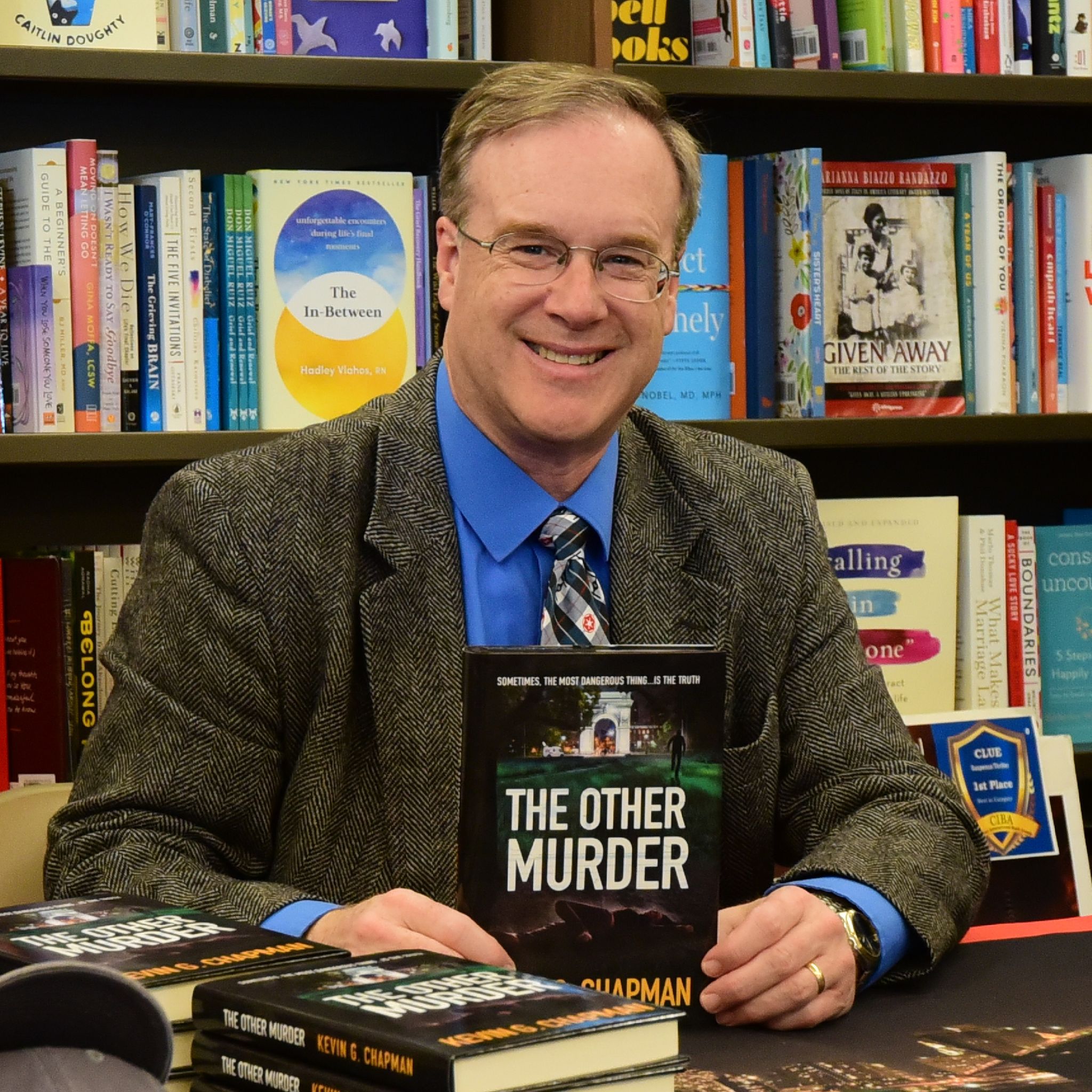
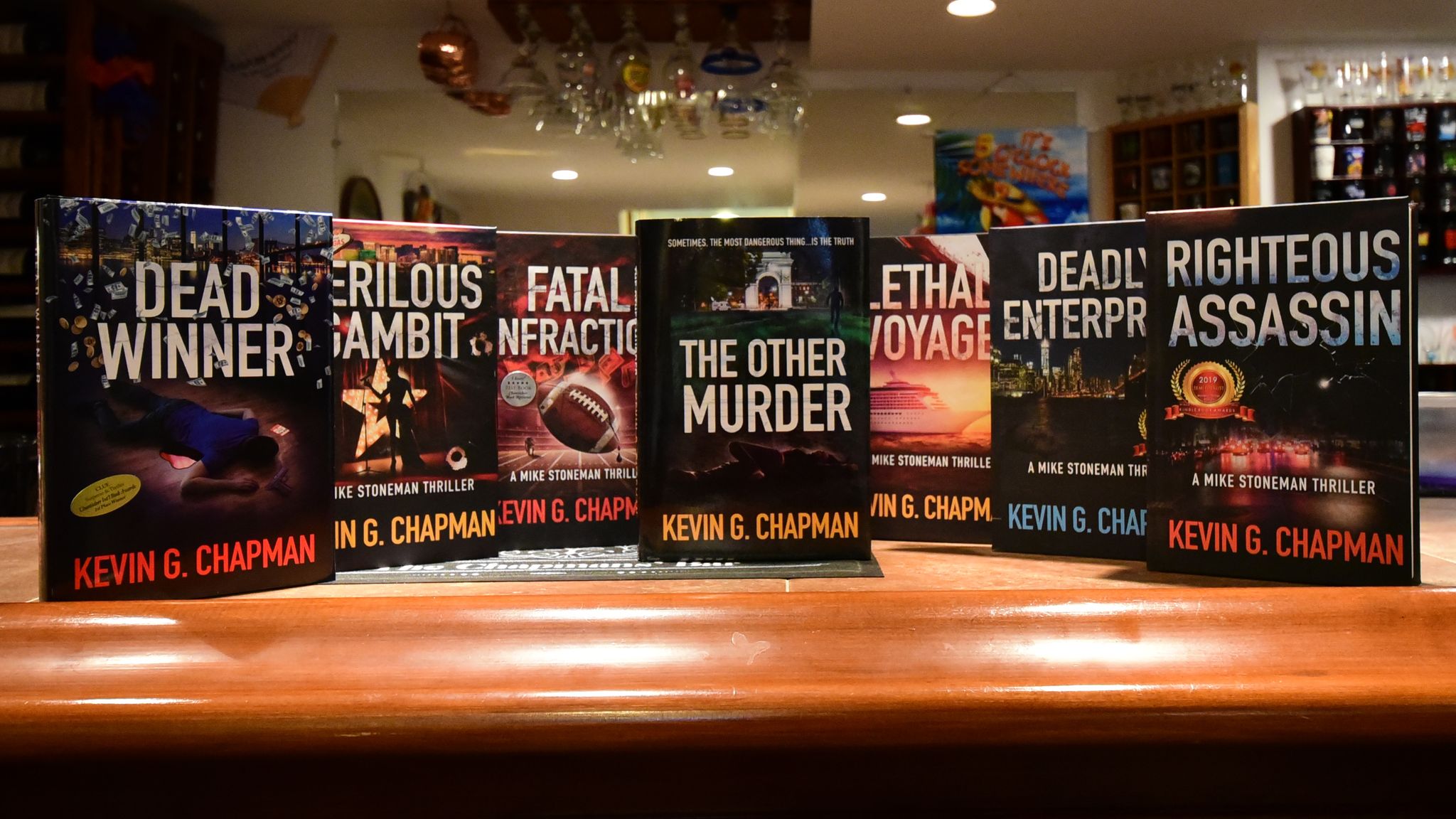
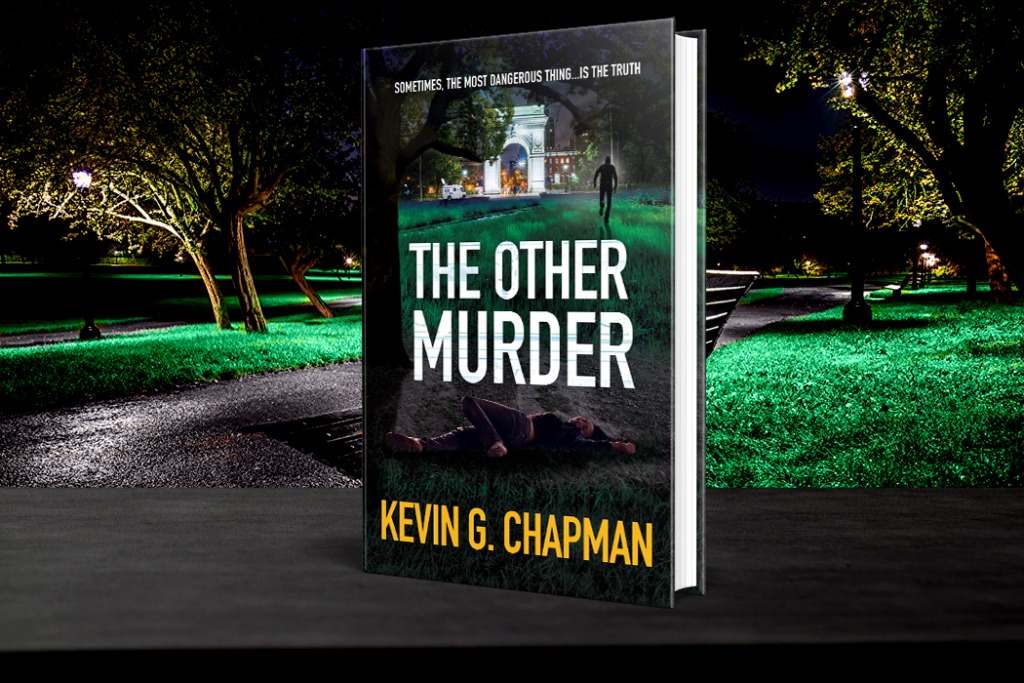
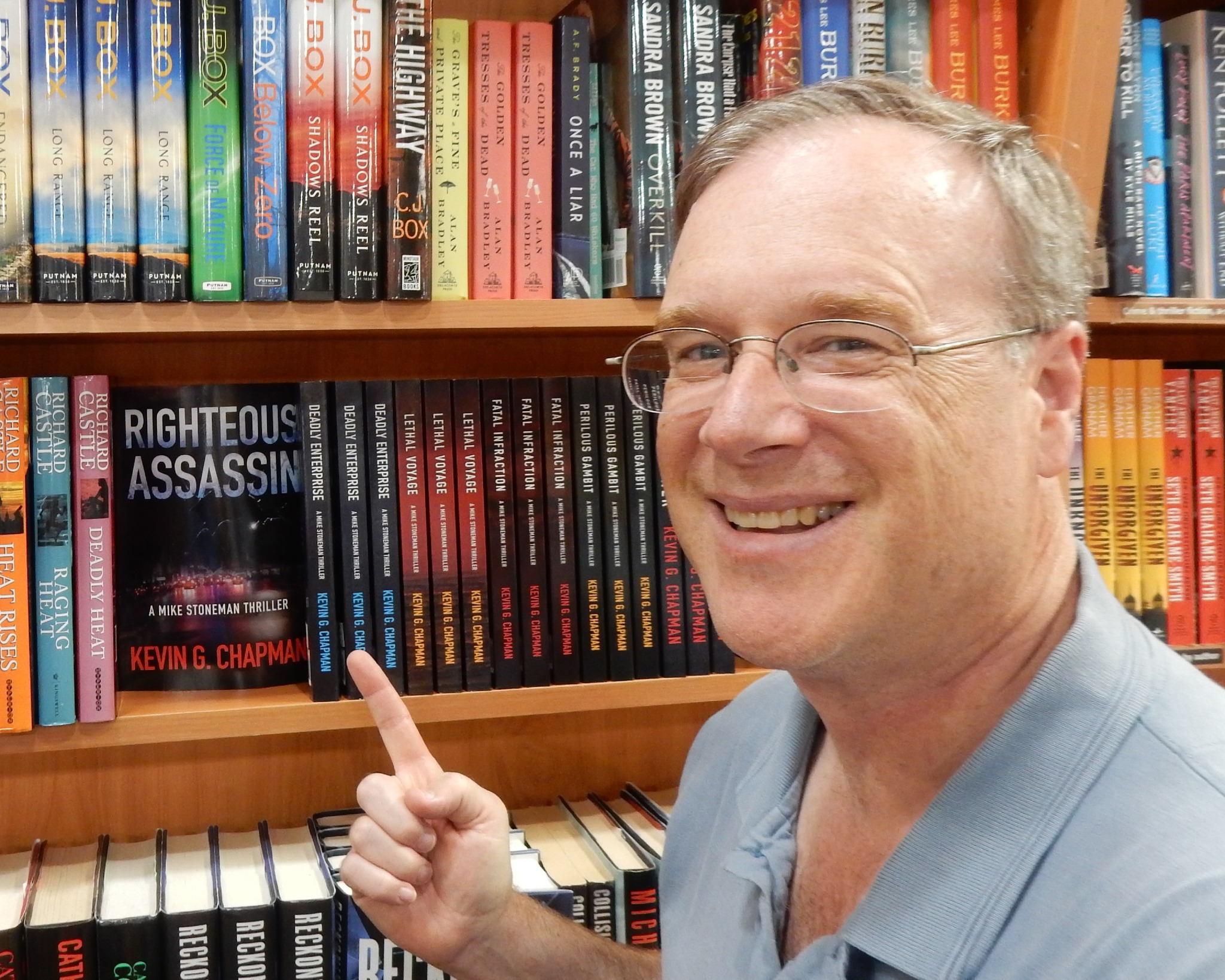
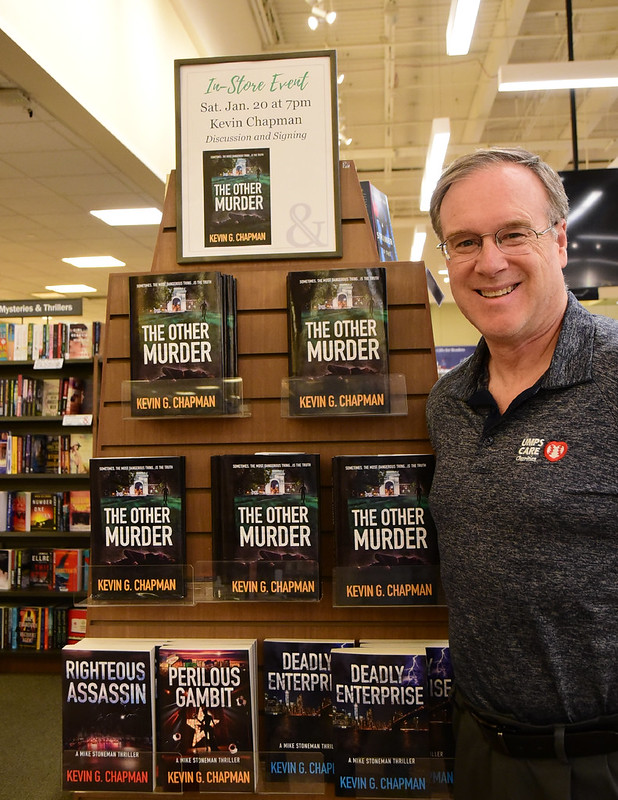
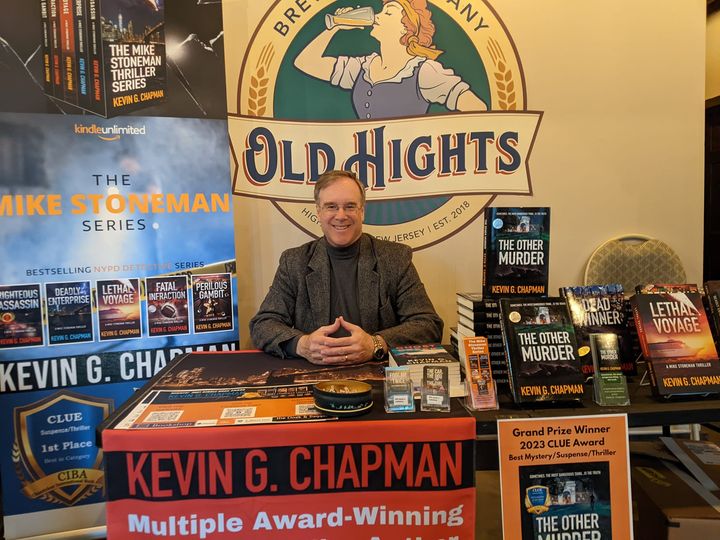
That’s a lot of ground and a lot of books! The Other Murder was the first place category winner in the suspense/thriller category, and was awarded the Grand Prize as the Best Book among all the CLUE entries.
Kevin sat down with the Chanticleer Book Review to talk about his writing and his new novel, Double Takedown, coming out this fall!
Chanti: Thank you so much for joining us Kevin! Tell us a little about yourself and how you started writing?
Chapman: Normally I’m explaining to my lawyer colleagues that the unusual thing about me is that I’m a mystery writer on the side. For mystery readers, you might be interested to know that I’ve been an in-house attorney for a major media company for the past 29 years. I’m a labor lawyer and former chairperson of the Labor & Employment Law section of the Association of Corporate Counsel. The L&E section consists of over 7000 in-house lawyers. I led the ACC section and oversaw our educational programs and publications. I even wrote an article for the ACC magazine on a radical plan for improving how companies run their employee evaluation programs! Yeah, I’m a law nerd (and proud of it).
Chanti: We all are nerds about something! How did you develop the idea for your current novel, The Other Murder, (Winner of the CLUE Award Grand Prize this year) and what inspired you to explore the intersection of media and law enforcement?
Chapman: Because I’m a lawyer who works for a media company and writes crime thrillers, the most significant elements of my professional life all come together in The Other Murder. The story sprang from my non-original observation that pretty, affluent white girls who are missing or killed tend to dominate the news cycles. We often hear statistics about the number of murders and violent crimes in a particular city. We seldom (if ever) see significant media coverage given to a minority victim who isn’t rich and famous.
This phenomenon could be called “unconscious bias,” but is likely more a conscious choice by producers and media executives focused on getting the biggest ratings. Particularly in broadcast news, including 24-hour cable news networks, getting eyes on your story is the most important thing. The story that can be made sensationalistic and involves a victim that will garner sympathy and is relatable is the story you feature. That’s good economics, but leads to a slanted presentation of the world. I wanted to make this murder mystery a story that gets inside that culture and lets readers see all sides of the story as it unfolds.
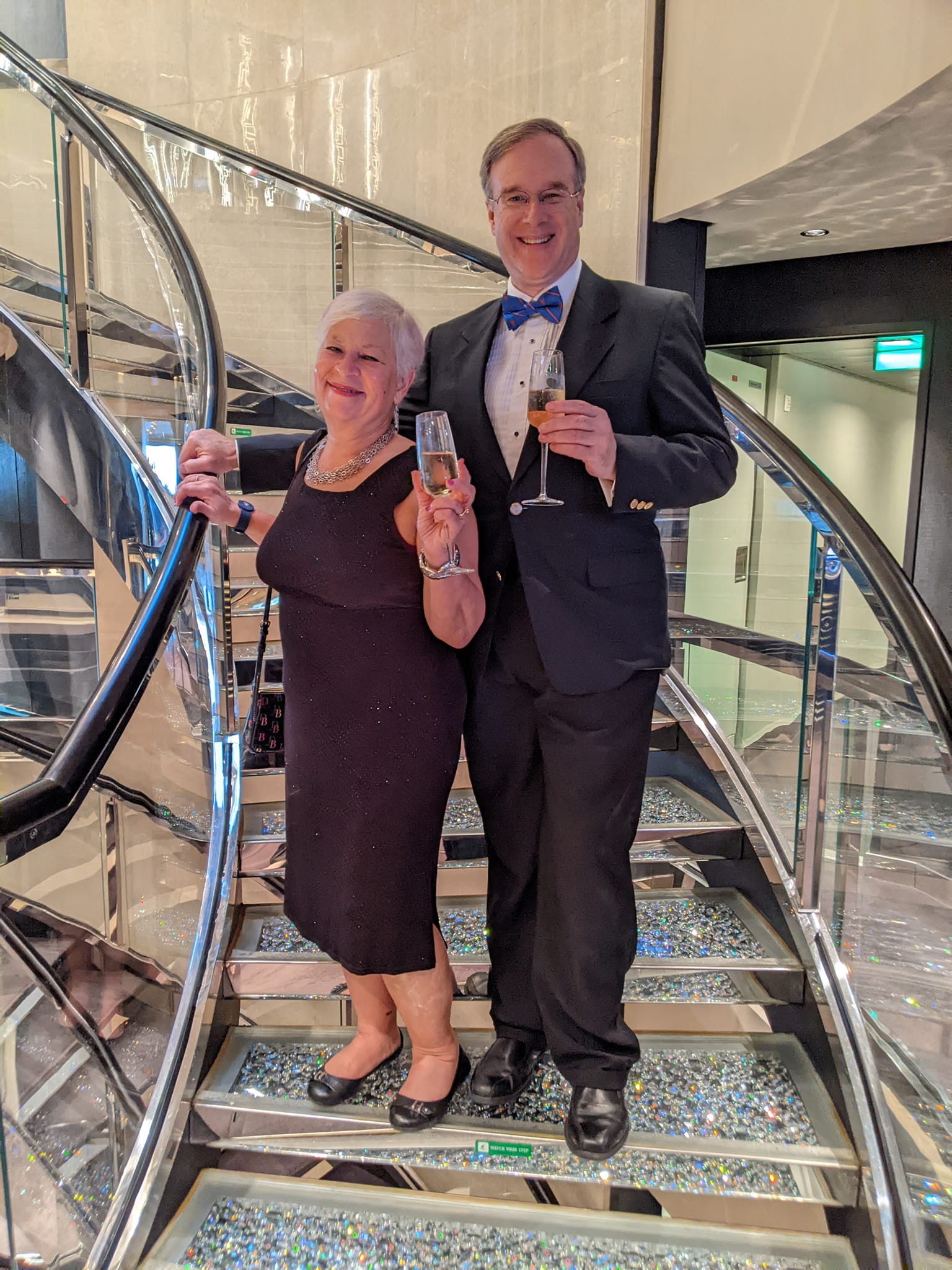
Kevin and Sharon Chapman
Chanti: The story of The Other Murder involves two journalists and two homicide detectives. How did you approach developing these characters, and what challenges did you face in creating complex relationships between them while navigating the intricacies of the murder mystery?
Chapman: The real “leads” of this story are the two journalists. Each of them has positive and negative attributes and each makes choices that are both selfish and noble – the two being not mutually exclusive. I wanted my cable news producer to be understood in the context of her job, her bosses, and her ambitions. I wanted the print journalist to be understood as someone who could have a “better” job, but who has a calling both to journalism and to his community. Their interactions disclose their similarities and differences as well as the nature of the business in which they work. And, of course, it’s a murder story so there must be cops. Here, the cops don’t have all the information and need the help of the journalists.
The two partners have their own problems, including a recent incident that set them at odds. Through their eyes, the reader learns things the journalists don’t know and sees the way the media coverage affects the police investigation. Making the characters the focus of the story lets me tell the mystery story through interesting eyes.
I have always loved the mysteries of Sara Paretsky, whose characters are the heart and soul of her books. In the Mike Stoneman Thriller series, I had a fixed set of main characters be my narrators. They, and their minor-character companions, gave me a universe of backstories to weave into the mysteries. This stand-alone story has brand new characters for my readers to relate to and care about.
My goal, like Ms. Paretsky, is to make my readers as interested in the stories of the players as they are about the underlying “main” plot. The plot needs to hold them together, but the characters need to behave in a way that is both realistic and interesting.
Chanti: Many of your stories feature important social issues, woven into your murder mystery plots. Why do you do that, and what message do you hope readers will take away from this aspect of the story in The Other Murder?
Chapman: I always want my books to be entertaining, but I also want to make my readers think about issues that exist in the world and which often influence the stories I’m telling. Jason Dickson, Mike Stoneman’s partner, is a Black detective. He (and Mike) encounter racism inside and outside the NYPD and those issues play naturally into my plots. I try to let my readers make up their own minds about things, but also confront them with situations they need to think about.
In Fatal Infraction, for example (Mike Stoneman #4), the Black quarterback of a New York pro football team is murdered. The racially charged environment of pro football and the reaction of the community to a murder that may have been racially motivated is a big part of the plot.
In The Other Murder, the main plot involves subtle racism that permeates the media and, to some extent, the police and the city officials, who are driven by publicity (positive or negative) and public perception. When the media tells the public that a situation is a horrible tragedy and an example of a huge problem that needs to be fixed, crowds gather, memorials are created, politicians and activists make speeches. This causes the media feed on itself as it amplifies the story.
Government officials like the mayor and the police commissioner react by prioritizing that crime and devoting resources to solving it. Catching that killer matters because everyone is watching. In this story, the second murder involves a Latino boy with a history of gang membership. It garners no media attention and generates minimal police interest until cops discover that Javier Estrada’s murder may be connected to the white girl, Angelica Monroe. The immediately reported story is that Angelica was an innocent victim of urban gun violence. She becomes a saint. Javier Estrada is ignored.
Meanwhile, the two detectives on the cases are a white man and a Hispanic woman. Mariana is the only character involved in the police investigation who cares about Javier’s story. Similarly, only Paulo Richardson, the local newspaper reporter, cares about Javier’s portrayal in the press. Paulo wants to make people see the truth about Javier. Mariana wants her colleagues to see that the white girl isn’t always the victim and the Latino boy is not always the criminal. The investigation also lays bare the recent rift between Mariana and her partner, Dru Cook, arising from an incident of police brutality. Was that incident racially motivated? Dru didn’t think so. Mariana saw it differently.
In the end, once the reader has all the facts (or, at least all the different versions of the facts), the question of who is a little bit racist and where motives and biases get mixed together makes things a lot less clear cut. My hope is that the reader not only enjoys the story and cares about the characters, but that the tale makes them think a little bit about their own perceptions.
Chanti: The Other Murder challenges readers to guess what happened. How do you craft the tension in a narrative, and what techniques did you employ to keep readers engaged in solving your mystery?
Chapman: Each book has its own requirements. In Dead Winner, my stand-alone romantic mystery from 2022, the protagonist was entranced by a woman who induced him to both protect her and help her recover her lost lottery ticket. The suspense was what would happen and who was really pulling the strings. In the Mike Stoneman books, typically the mystery is who the killer is and whether/how Mike and Jason will catch them.
In The Other Murder, the mystery is what really happened. In the first draft of the story, chapter one gave the reader a view into all the events that happened leading up to and including the murders of Angelica and Javier. I realized after the first draft was done that letting the reader know what happened and then following the investigations by the police and the journalists with that knowledge was not fully satisfying as a mystery. The story was: “how are they going to figure it out?” rather than “what happened?”
So, I went back and deleted most of that first chapter and re-wrote the story so that the journalists and the police (along with the reader) are piecing together the facts, without knowing for sure who is giving them good information, which of their assumptions are correct, and what information they are missing. This allows the reader to guess where the characters have it right, and what might be wrong. Even at the end, nobody (including the reader) can be 100% sure they know the whole truth.
Chanti: The novel highlights the danger of the truth. Can you elaborate on the significance of this theme and how it plays into the challenges faced by the characters, particularly Hannah and Paulo, as they uncover disturbing facts?
Chapman: The tag line of the book was one of the first things I wrote after outlining the basic story. “Sometimes, the most dangerous thing…is the truth.” It is a common observation that humans are significantly influenced by what is called in psychology “recency bias.” Your strongest memories and emotions are attached to the things that happened most recently. It is also true in media that the first story is the one that gets imprinted in people’s memories, particularly if it sparks strong emotions. When asked whether one of two things is true, the one you heard first is the one you are more likely to believe.
One of the core messages of The Other Murder is that people need to be careful about believing the first narrative they hear. But the reality is that, once a set of facts is in your head, it is hard to push it out. This is especially true when the original narrative reinforces your personal views and political objectives. Telling people who are emotionally, financially, and politically invested in one version of a story that the story they heard and want to believe is really a false narrative – is a dangerous thing to do.
In the media world, once you have established your narrative and “hooked” your audience, it’s hard to switch gears and retain your viewers if you suddenly try to tell them that what you had been telling them is false and that there’s a new truth they should switch to. They are likely to switch – to a different news source that will reinforce their belief in the original story. That is part of the challenge facing Paulo and Hannah.
Chanti: That is so interesting! Do you find you often learn things from writing your books?
Chapman: I’m always doing research to make sure that I’m getting the facts right in my stories, which can lead me to strange places. Like into the on-board morgue on a cruise ship (of course they have one!) or into the intricacies of how the NFL players’ association collective bargaining agreement treats the bonus money paid to a player who later dies. It’s fun to figure it out, but I almost always need volunteer consultants to help me and keep me honest.
For The Other Murder, I researched the operation of a cable news network and consulted with a few experts in order to get the details and the terminology correct. I knew the print journalist world already, but merging them together with the police procedural story was a challenge and was fun for me.
In my next book, I’ve been consulting with a pharmacist friend about drug interactions and how a murderer might use easily available drugs to induce a fatal reaction if you know what other drugs your victim is already taking. Cool stuff!
Chanti: Are there any secrets in your books that only a few people will find?
Chapman: Oh, yes! Leaving Easter Eggs that will amuse a few readers who get the joke or the reference is great fun. Even if it’s only my wife and I who laugh. Sometimes it’s a name, a location, or a line of dialogue.
In The Other Murder, there are several references to things from my last book (Dead Winner). There is a location where key events happened in the last book, and an object that found its way from that book into this one. There are also references to characters from the Mike Stoneman books.
In the next book, there will be references to the two detectives from The Other Murder, who work in the same homicide division as Mike and Jason. I was even able to put a reference in Mike Stoneman #3 to a character who would be the murder victim in book #4. That’s so much fun.
Chanti: With that in mind, who is the perfect reader for your book?
Chapman: Lovers of murder mysteries, police procedurals, and romantic suspense will like my books. But what’s more important to me is that my readers be thinkers. If you don’t want anything in your books that raises difficult social/political issues and doesn’t make you examine your own biases and attitudes, then my books may not be for you. I don’t mind if you don’t agree with my characters, and I won’t be offended if you decide you didn’t like my subplots, but I want readers who accept a challenge. I also love readers who like to be surprised and who think they can figure out any mystery. Think you can figure out what happened? I dare you!
Kevin G. Chapman recording his audiobook
Chanti: It’s always a joy to try and figure out the next step as a reader. And speaking of which, what are you working on now? What can we look forward to seeing next from you?
Chapman: I’m currently in the final editing stage of the next book in my Mike Stoneman thriller series, titled Double Takedown. I left off with Mike, Jason, and the other characters from the series in Las Vegas in January of 2020. I decided that I did not want to write those characters living through the COVID-19 pandemic (interviewing witnesses while wearing masks, etc.). So I wrote two stand-alone books that are not set in any particular year, including The Other Murder. Now, I’m picking up Mike and Jason in the fall of 2023 as they are preparing for a trial stemming from a murder from May of 2022 and investigating a new murder from September of 2023. This story includes a character who is a social media “influencer” and explores what happens when the police develop “tunnel vision” during an investigation. Look for Double Takedown this fall.
Kevin Chapman writes award-winning suspense/thriller/crime fiction. His books, including The Other Murder,are now available on Amazon in both hardcover and print, and as an ebook on Kindle via Amazon.com at https://www.amazon.com/dp/B0CJN6W5NJ.
Paperbacks and hardcovers of all his books are also available through select independent bookstores and via Bookshop.org, which supports local bookstores. The audiobook version is available via CHIRP, iTunes, Googleplay, Roku, Nook (Barnes & Noble), LIBRO.FM (which also supports independent bookstores) and on Audible.
Readers can contact Kevin Chapman, see all his content, and download two free short stories and a free novella at www.KevinGChapman.com.
The fight against tyranny grips readers and obsesses authors to this day.
“Soldiers, Sailors and Airmen of the Allied Expeditionary Force!
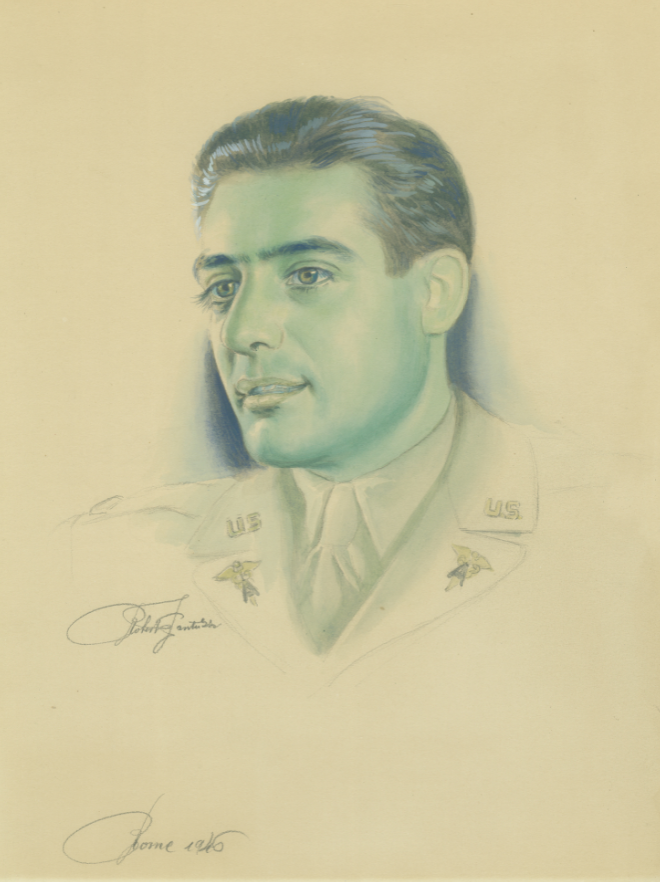
You are about to embark upon the Great Crusade, toward which we have striven these many months. The eyes of the world are upon you. The hopes and prayers of liberty-loving people everywhere march with you. In company with our brave Allies and brothers-in-arms on other Fronts, you will bring about the destrruction of the German war machine, the elimination of Nazi tyranny over the oppressed peoples of Europe, and security for ourselves in a free world.” — Order of the Day from Supreme Headquarters Allied Expeditionary Force given before the Invasion of Normandy
Chanticleer’s Personal Connection to WWII
At Chanticleer we often take particular care to honor veterans and those who serve.
Kiffer’s father retired after 36 years of service in the Unites States Merchant Marines & Marine Corps where he served in the WWII, Korean War, and the Vietnam War. He died in 1981 from one hundred percent service related injuries.
From left to right we have Kiffer’s brother Tony, her father, and Kiffer herself in Hawaii during the territory days. Her mother, Antha May, is taking the photo
David’s grandfather also served during WWII, stationed in France as a first generation Quebecois transplant in the United States
Robert Gerard Beaumier Sr. who served in WWII
My father would often tell the story of how his grandfather, Robert, was in France during World War II. At one point a dog came and wouldn’t stop barking at his unit, no matter how much they told it to go away. Finally, Robert said “Va t’en!” and immediately the dog ran off. Everyone was suitably impressed that the dog spoke French! — David
The National World War II Museum in New Orleans has an excellent summary of the lead up and importance of D-Day which we recommend you read here.
Most chilling perhaps is the closing of their thoughts that emphasize how important the landing on Normandy was:
The Normandy invasion was one of great turning points of twentieth-century history. An immense army was placed in Nazi-occupied Europe, never to be dislodged. Germany was threatened that same month by a tremendous Soviet invasion from the east that would reach the gates of Berlin by the following April. The way to appreciate D-Day’s importance is to contemplate what would have happened if it had failed. Another landing would not have been possible for at least a year. This would have given Hitler time to strengthen the Atlantic Wall, harass England with the newly developed V-1 flying bombs and V-2 rockets, continue to develop jet aircraft and other so-called “miracle weapons,” and finish off his killing campaign against ethnic and sexual undesirables.
It is our pleasure to share these wonderful WWII books with you from authors who have written about this time.
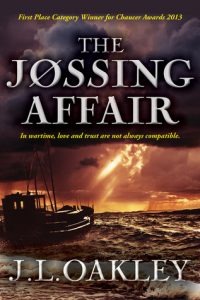
The JøSSING AFFAIR
By J. L. Oakley
At a time when true identities are carefully protected and information can get you killed, heroes emerge to fight the evils of Nazi-occupied Norway in J.L. Oakley’s highly suspenseful and beautifully penned historical fiction novel, The Jøssing Affair.
In a quiet Norwegian fishing village during the Nazi occupation, risk lurks everywhere. Most residents are patriotic members of the resistance, “jøssings,” but there are “quislings,” too. Those who collaborate with the Germans and tout the Nazi propaganda of Nordic brotherhood between the nations. Mistaking the two is a matter of life and death.
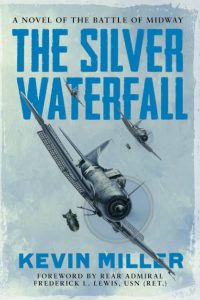
THE SILVER WATERFALL: A Novel of the Battle of Midway
By Kevin Miller
In The Silver Waterfall, author retired U.S. Navy Captain Kevin Miller reveals the intricate and deadly turns of the Battle of Midway, a combat shaped by transforming warfare, and one that would in turn shape the rest of WWII’s Pacific Theater.
After their surprise attack on Pearl Harbor, the Japanese Navy seeks to draw American aircraft carriers into an ambush, to secure Japanese power over the Pacific. In a time of great upheaval for warfare technology, aircraft carriers dominated both sea and sky. So, to destroy the USS Enterprise, Yorktown, and Hornet, Chūichi Nagumo— commander of the Japanese First Air Fleet— brings to bear his own four carriers, HIJMS Akagi, Hiryū, Kaga, and Soryu.
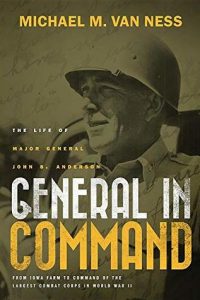
GENERAL in COMMAND – The Life of Major General John B. Anderson
By Michael M. Van Ness
Michael M. Van Ness, the grandson of “the general in command,” has created a remarkable biography chronicling the adventures of a farm boy who rose high rank in the US military and served with distinction in two world wars as a combatant, officer, and sage observer.
Born in 1891, John Benjamin Anderson must have had considerable intelligence as well as patriotism and grit, since he was accepted at West Point Military Academy at age 19, an honor conferred on only 130 applicants per year—and finished in the top third of his class. He would soon serve under General Pershing in the Mexican War, giving him the experience of combat and coincidentally, his first ride in an automobile. That deployment earned him inclusion in Pershing’s ranks in World War I. It was then his diaries began, and though he protested humorously that “I hate to write,” these personal recollections give readers an up-close picture of the devastation of warfare.
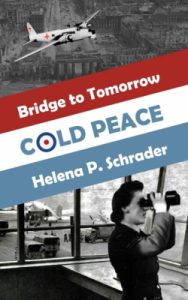
COLD PEACE: A Novel of the Berlin Airlift, Part 1
By Helena P. Schrader
Amidst the ruins of Post-WWII, Berlin struggles to rebuild from the ashes, torn apart and facing down the promise of another bloody dictator. A myriad cast, all shaped by that same war, become entwined with the broken city as its hour of need approaches.
Just as Germany is divided between the Americans, British, French, and Soviets, Berlin has been cut into pieces. But the balance of the occupation powers tips eastward as the Soviet Zone surrounds the city, giving them control of all ways into and out of Berlin – save for the air. The occupation currency is worthless thanks to Soviet over-printing, leaving Berlin on a barter system of cigarettes and black-market trading. In order for Germany to recover, the Western Allies plan to introduce a new currency, even if it angers the Soviet bear.
A young boy in Norway makes a discovery while playing with his dog, opening the mystery of EO-N by Dave Mason, a detective story spanning multiple decades and both sides of the Atlantic, a deep dive into the horrors of Nazi Germany, and a heartfelt love story.
A small metal fragment leads to the discovery of a downed WWII twin-engine Mosquito fighter-bomber hidden in snow and glacial ice for nearly 75 years. The crash site yields an initial set of clues, one of which finds its way across the world to Alison Wiley, a biotech CEO in Seattle. Having recently lost her mother, and, a few years earlier, her brother in Afghanistan, she finds her days full of despair, but the discovery makes a distant connection to her long-lost grandfather, and she flies to Norway. There, she meets Scott Wilcox, a Canadian researcher assigned to investigate the discovery after his government learned that the crashed aircraft belonged to the Royal Canadian Air Force. Their attraction is both intellectual and emotional, but the quest to uncover the plane’s mysteries and the fate of Alison’s grandfather place any romance to the side.
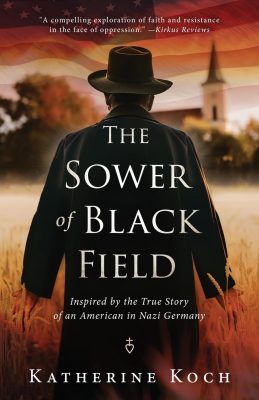
In The Sower of Black Field, Katherine Koch’s historical fiction novel, Father Viktor Koch— a 67-year-old Catholic priest— presides over a monastery in a small German village, as the Nazi regime sweeps through the country.
The time is April, 1941. Fr. Viktor’s order, the U.S.-based Passionists, built the monastery eight years prior, providing employment for most of the villagers and remaining a symbol of their faith.
DEAR BOB: Bob Hope’s Wartime Correspondence with the G.I.s of World War II
By Martha Bolton with Linda Hope
During World War II, Bob Hope traveled almost ceaselessly to outposts large and small, entertaining US troops – and inspiring them; Martha Bolton brings the extent of this work to light in Dear Bob.
Writer Martha Bolton worked with and for comedian Bob Hope. Now, with Hope’s daughter Linda, she has gathered and organized the letters written to Bob by the soldiers he helped.
Hope, English born, and born to entertain, once said he could not retire and go fishing because “Fish don’t applaud.” Among his sizzling lines – and there are hundreds recorded here – he told one audience that he’d gotten a wonderful welcome when he arrived at their camp: “I received a 10-gun salute… They told me on the operating table.”
Eighty Years later, and the sacrifices made in WWII still matter and the fight for a more just world continues. Thank you to everyone who has submitted books to us and been a part of our own journey and learning.
One of seven of the Non-Fiction Divisions for the Chanticleer International Book Awards (CIBAs) is the Journey Awards. This division deals with some of the most difficult experiences people are challenged with. The Journey Book Awards was the first non-fiction division of the CIBAs. As we received a considerable number of submissions that were uplifting and inspiring as well as those that focused on overcoming adversities, we decided to offer two divisions of narrative non-fiction. To be able to recognize these fully, we split off the more heartwarming works into the Hearten Awards, while continuing to recognize and discover works that give accounts of immense challenges and personal stories of the power resiliency and overcoming adversity (some of which should come with trigger warnings) in the Journey Book Awards.
Chanticleer is looking to discover exceptional Non-Fiction dealing with Overcoming Adversity, Dysfunctional Families, Societal Issues of Race and Class, Personal Journeys, and Experiences relating to PTSD, Drug Addiction, Sexual Abuse, and Childhood Trauma. If you have a Non-Fiction Book with different themes, you can see our full list of Non-Fiction Awards here. Truth matters now, more than ever!
Check out these exceptional reads and experiences from previous Journey Grand Prize Winners
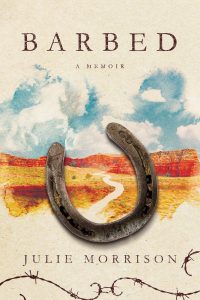
Barbed By Julie Morrison
Julie Morrison saddles up to take us for a ride through the harsh dry mountains of northern Arizona and beyond in her memoir, Barbed.
Readers visit the ranch where Julie’s parents try to keep the family legacy alive. Julie reveals a cowboy’s world where she meets walls instead of doors but never gives up.
Barbed opens with Morrison living in the rainy Seattle area with her husband. But the lure of a cowboy’s life on the range – working cattle and riding horseback – beckons them both. Julie needs salvation like this for her marriage, now distant and cold.
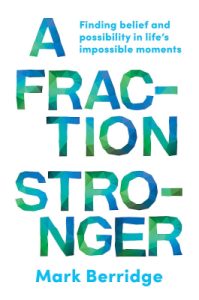
Author and businessman Mark Berridge, through the lived experience of himself and others after traumatic injuries, gained a wide understanding of overcoming disaster, and how to rehabilitate not only one’s body but mind and spirit as well. In sharing his wisdom, A Fraction Stronger is a must-read for anyone facing physical, emotional, or mental barriers.
On March 10, 2019, Berridge, due to embark on a work-related flight from his Australian home to the US later that day, went on a bike ride with some buddies. He lost control of the bike over a piece of slippery road patch work, he wrecked falling into an open culvert, striking his head; conscious, but unable to move his feet and legs. The left side of his helmet was crushed, his spinal cord injured, and numerous bone broke. Hospitals would become his world as he dealt with spinal injuries and the long road to rehabilitation – relearning how to sit, stand, and walk.
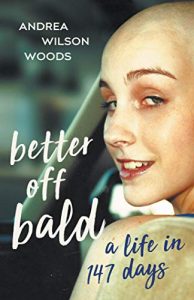
There exists a bond between sisters, and often that bond becomes a connection so strong that time cannot erase the love and the longing for the other. Andrea Wilson Woods defines such a bond in Better Off Bald: A Life in 147 Days.
Woods details the choreographed life she lives with her sister Adrienne, who has been diagnosed with cancer. Together they begin their dance, pirouetting around IV ports and long lists of medications. Sisters in life, love, and an all-out war against liver cancer.
Woods retells her story with compassion and a rational eye for detail while embracing all the deep emotions that ravage her as she records every one of the 147 days after the initial diagnosis.
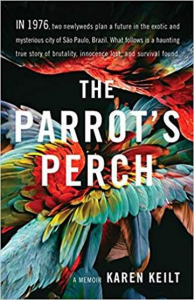
The Parrot’s Perch — A Memoir of Torture and Corruption in Brazil By Karen Keilt
Karen Keilt led a life of privilege, a life that most of us only dream of, but she turns the dream upside down in her memoir The Parrot’s Perch: A Memoir of Torture and Corruption in Brazil, where she exposes the seamy underside of that life and the corrupt government under which she lived. Keilt takes us from her childhood filled with the horses she loved, to her marriage to a man she adored, to the fatal incident that destroyed the world she knew.
The memoir moves between New York and Sao Paulo as Keilt sets the stage for an incident that occurs shortly after her marriage. Keilt places no blame, but tells her story with an objective eye, while expressing the confusion she held of her experiences: the kidnapping, torture, rape, and interrogation by the police for “…forty-five days of hell. Three million, eight hundred and eighty-eight seconds.”
Karen Keilt presents a memoir that is tough and unapologetic. She sandwiches her story within an interview at the UN, which is smart because some of the events are so intense and violent, they call for a breathing space where readers can decompress.
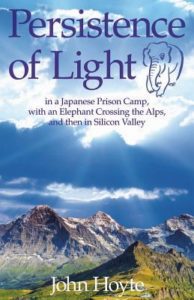
Reading John Hoyte’s memoir, Persistence of Light, is like sitting around a campfire absorbing stories of adventure, loss, and love – and feeling better for it. With journalistic precision, Hoyte shares both the facts and the emotional impact of his fascinating travels, doing so void of self-pity for his suffering and without self-aggrandizement for his vast achievements.
Born in 1932 to medical missionary parents (his father, Stanley, was British; his mother, Grace, American), Hoyte enjoyed a vibrant childhood taking nature walks and playing with his five siblings. A pivotal moment came at 8 years old when his parents were summoned to a missionary hospital, 1300 miles away in Lanchow. Hoyte and his siblings ended up in a Japanese internment camp without either parent.
Despite weeks with little to no food, wearing tattered clothing and walking barefoot (shoes were a commodity), he mustered the energy and the interest to write, sketch and draw – ultimately finding mystery and hope in a world besieged by authoritarian forces. His intense curiosity that percolated as a child, along with his faith in God, leads him on the many adventures he depicts in this thoughtful and exciting memoir.
Thank you for celebrating our Journey Hall of Fame Winners with us!
Remember to add your next reads to your StoryGraph or Goodreads account! Now that you’re set on your next five reads, what are you waiting for? The only way to join this amazing list of Journey Winners is to submit today!
Those who submit and advance will have the chance to win the Overall Grand Prize of the CIBAs and $1000!
Are you a Chanticleer Author who has some good news to share? Let us know! We’re always looking for a reason to crow about Chanticleerians! Here are some recent achievements from our authors:
One of our favorite Writing Communities meets annually at the Chanticleer Authors Conference!
How to Form a Writing Community
No matter where you are in the writing journey, it’s never too late to join a Writing Community or form a Critique Group. We’ve talked to people who have ran book groups at our own local Village Books, those who ran the Skagit Valley Writers League, and those who have gone through graduate-level writing classes to bring you the best tips and tricks for your community needs.
Writing Communities and Critique Groups are often a wonderful and necessary step on the journey to becoming a professional author, not just someone scribbling into the void.
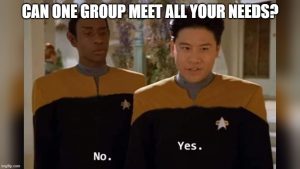
So my Writing Community will fulfill all of my authorly needs?
Commander Tuvok and Ensign Kim of the USS Voyager. Kim is usually wrong.
Probably not. Just like one person can’t fulfill all our needs for friendship, writing communities are diverse and can include your local bookstore to the writing group you found online during quarantine. It isn’t just one thing, but here we’ll talk about how to build one if you notice your needs aren’t getting met as well as they could be.
First, we’ll focus on where to begin, then we’ll dive into actually running a critique group.
Starting your Group
Pick who you want to be in your Writing Community
When putting together a group it can be important to consider both experience and demographic. If you’re hoping to publish by the end of the year, it’s important to work with like-minded people as opposed to writers who are just discovering their voice. Of course, even a writer who is still working through their craft may be an excellent reader, so don’t be afraid to take a chance on someone!
Likewise, while it’s helpful to have a variety of readers, ask yourself who the audience for your book is. Lee Child’s The Killing Floor has a pretty different audience from The City of Glass by Cassandra Clare. The best feedback will come from the people who would be interested in grabbing your work at the bookstore.
If you’re looking for more on connecting with readers, and less on connecting with other writers, check out this article on reader engagement from Kiffer Brown here.
Decisions in a Critique Group
There are plenty of ways to run a writing group, but knowing if it’s open or closed and whether people come prepared to give feedback or if they’re expected to give feedback in the moment is key
For a critique group though, startby asking if it’s going to be a closed or an open group. Even with an open group, it helps to recruit people to join it initially, so you set the tone and hopefully create something that will really serve your needs.
For an open group, you’ll have the great pleasure of extraordinary writers coming into your sphere, though on the other hand, you will also find writers whose work needs desperate help beyond what you can give to the work just being plain offensive. Despite that, the rewards of working in an open group are innumerable, as are the connections that will help expand your circle of influence.
In a closed group you don’t have the same level of variety in the people you work with, but the consistency can make up for that. Of course, if the people you invite in end up feeling hurt, this can negatively affect friendships that have been brought into the group.
Regardless of who you have in a group, it’s worth remembering that writing is a sensitive art, and it does well to treat people kindly, even when giving direct feedback.
When is Feedback done?
Whether or not you choose to do an open or closed group, you also need to pick whether or not work will be read in advanced so feedback can be ready to present at group. The other natural option is that the author will present their work at the group and receive feedback immediately after.
I ran a group for 7 years that sent work in advance, and I found the extra time to comment and think about a book really helped! That said, the maximum word count suggestions and number of members we had meant we critiqued approximately 40,000 words a month! That’s a lot of novels!
In contrast, Janet Oakley, a Chanticleer Overall Grand Prize Winner, is still in a group where the author reads the work aloud and then receives feedback in the moment. That group saves a lot of time and effort by keeping the focus on just what can be shared in the time that they meet. Both have great merits! – David
Regardless of the choice you make, writers will be able to get a huge benefit from however feedback is delivered!
Community is something we make at Chanticleer
Here at Chanticleer we have our usual (or unusual) suspects in terms of people who live near us and are guaranteed to show up at our local events ready to cheer us on.
To facilitate this, we’ve created The Roost, a private online community for serious authors looking for support. Not only does The Roost offer steep discounts on many Chanticleer services, there are weekly write ins, monthly workshops, author promotion projects, NaNoWriMo support, and of course pictures of our beloved pets (always a must).
If you’re interested in joining the Roost, please reach out to AuthorOutreach@ChantiReviews.com
One of Kiffer’s adorable kitty cats
The Roost is a social community where authors can share their expertise and knowledge with fellow writers who take the craft and business of being an author seriously. Make posts and share photos just like any other social media, but better since the community is intentionally curated for writers!
Thank you for joining us for this Writer Toolbox Article
There is so much to learn and do with Chanticleer!
From our Book Award Program that has Discovered the Best Books since the early 2010s to our Editorial Book Reviews recognizing and promoting indie and traditional authors, Chanticleer knows your books are worth the effort to market professionally!
When you’re ready,did you know that Chanticleer offers editorial services?We do and have been doing so since 2011.
Our professional editors are top-notch and are experts in the Chicago Manual of Style. They have and are working for the top publishing houses (TOR, McMillian, Thomas Mercer, Penguin Random House, Simon Schuster, etc.).
If you would like more information, we invite you to email us at info@ChantiReviews.com for more information, testimonials, and fees.
We work with a small number of exclusive clients who want to collaborate with our team of top-editors on an on-going basis.Contact us today!
Chanticleer Editorial Services also offers writing craft sessions and masterclasses. Sign up to find out where, when, and how sessions being held.
A great way to get started is with our manuscript evaluation service, with more information availablehere.
And we do editorial consultations for $75. Learn morehere.

 Steven Michael Beck was the OZMA Grand Prize Winner for Fantasy Fiction at the 2022 CIBAs, hosted by the 2023 Chanticleer Authors Conference. His book, Soar A Burning Sky looks at a world linked to Earth’s, and both planets are in danger due to the harsh realities of Earth’s drastic climate change.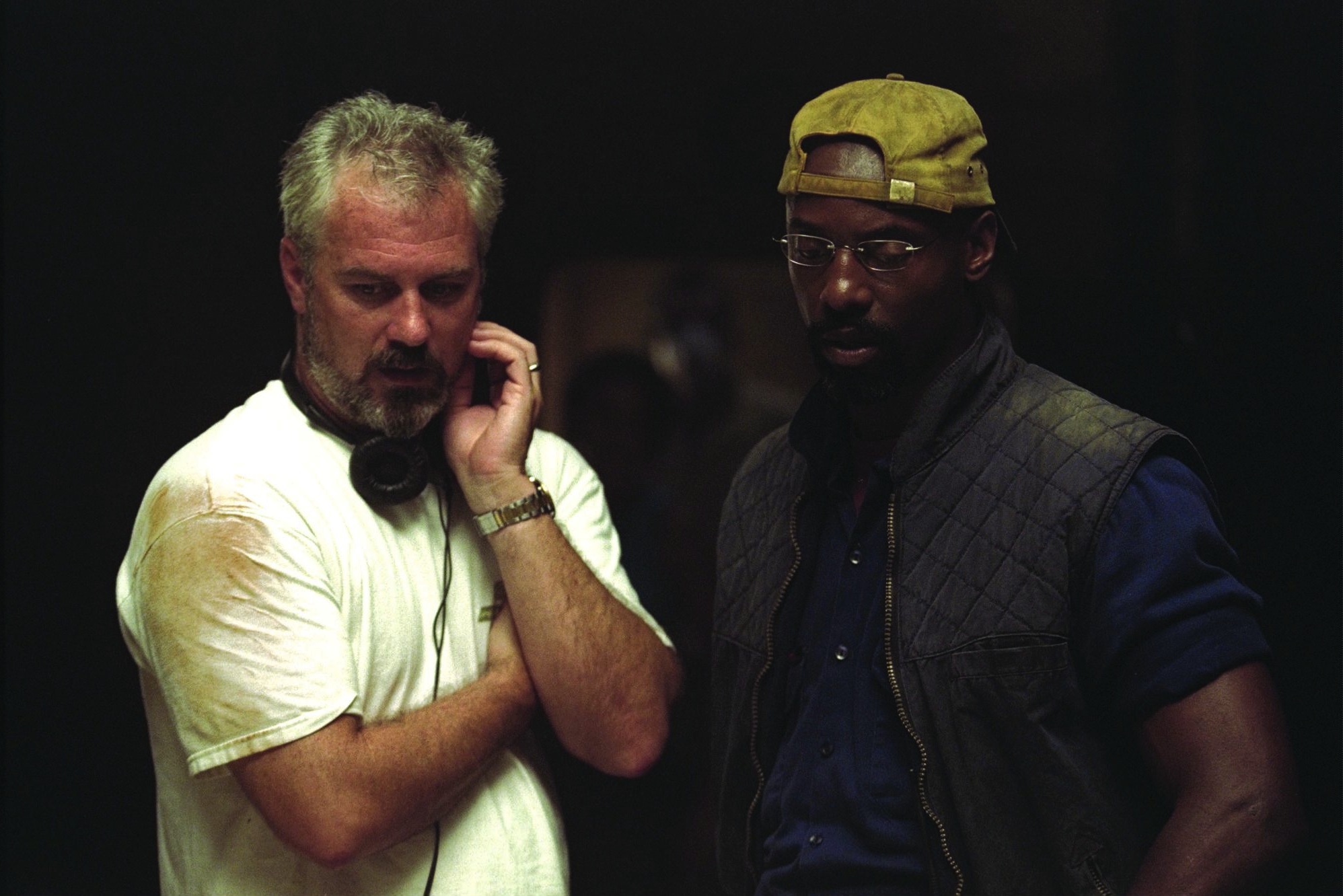



 Steven Michael Beck spent the last 30 years pursuing the art of storytelling through advertising, film, and television. Specializing in visual effects-oriented concepts (and their often-unique storylines), his direction has constantly reflected infatuation with animation—the notion that any object or idea either contained ‘life’, or could be conjured into such (needless to say, he had an imaginative childhood). These projects and life lessons have been nothing if not steppingstones, leading him to see the potential of a new type of storytelling through combinations of sculpture, photography, text, and found object.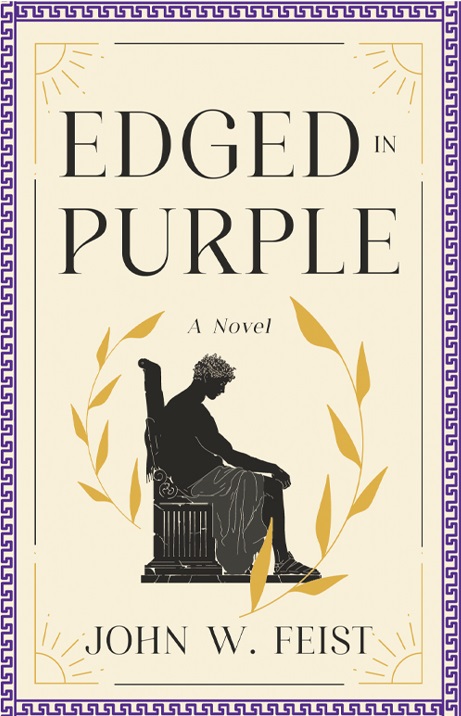
 Edged in Purple by John W. Feist welcomes readers to a place outside of time and space, a liminal space where characters of myth wait to return to their fated stories.








 Jerena Tobiasen delivers a sharp, first-rate novel in Tsarina’s Crown, first installment in The Nightingale and Sparrow Chronicles, capturing a precise panorama of Russian politics and British espionage during a delicate period in time.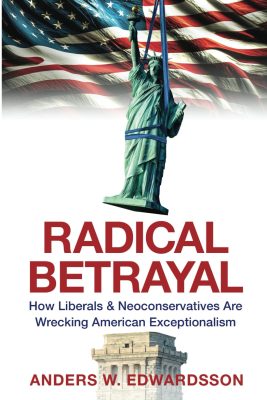

 From the 2023 Clue Division Grand Prize Winner for Suspense/Thriller for his book The Other Murder, we have a brand new Chanticleer Author Interview!