Author: chanti

  • The 2024 Goethe Spotlight! What happens when you’re on the edge?

    The 2024 Goethe Spotlight! What happens when you’re on the edge?

     The Goethe Awards are here!

    and we want your Historical Fiction!

    Submissions Deadline for the 2024 Goethe Book Awards for Post-1750s Historical Fiction is July 31st! 

    Named after Johann Wolfgang Von Goethe (1749-1832), Considered one of the most influential writers in the German Language, The Goethe Award covers Historical Fiction from the Time Period of His lifetime and afterwards, 1750-20th Century.

    Why do we like Johann Wolfgang von Goethe so very much? It’s simple! He’s the guy who wrapped up everything we believe in with this simple sentence:

    “Whatever you can do or dream, you can begin it. Boldness has genius, power, and magic in it.” – Goethe

    In his lifetime, he saw the beginning of the Industrial Revolution in 1750 through Mary Shelley’s publishing of Frankenstein in 1818 – and everything in between! Check out the list of what happened during those nearly seventy decades at the end of this post – you will be A-MAZED!

    The tiers of achievement for the CIBAs
    The CIBAs Levels of Achievements. Books are promoted each time they advance!

    The Categories in the Goethe Awards are:

    • Regency, Edwardian, Georgian
    • Turn of the Century
    • 20th Century
    • World/International History Post 1750s
    • U.S. History
    • 1830s – 1900s Victorian Era

    As you may have noticed, some of the Goethe Awards categories extend even a little beyond our chosen Time Period. Lets take a look!

    The Georgian Era and Regency covers the reigns of four King Georges of Great Britain.

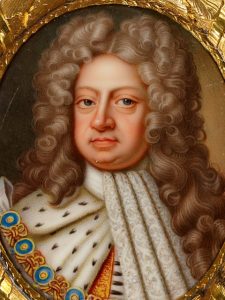
    A very handsome King George I

    While the period starts in 1714 when the German King George I began his Reign, we don’t get into the 1750s until George III began his reign in 1760. You may have seen a version of his early reign in the recent Netflix show and Bridgerton spinoff Queen Charlotte, or as a character in the award-winning Broadway musical Hamilton.

    Corey Mylchreest as Young King George in Bridgerton.

    George IVs reign is more often called the Regency, as he was acting as Prince Regent from 1811 until his father’s death in 1820, and he continued as king until his own death in 1830.

    At which point we get to the Victorian and Edwardian eras. Queen Victoria took the throne in 1832 until her death in 1901, and the Edwardian covers her sons reign in the early 1900s until WW1.

    This award division covers time periods anywhere from the American Revolution, the Industrial Revolution beginning in the late 1700s, and can go all the way to the Dust Bowl of the 1930s. American, European and The Rest of the World are all covered. (See the list of 27 Events that Happened During Goethe’s Lifetime at the end of this post.)

    Note: While the Goethe Awards categories have some leeway, the question we often return to when discussing with authors who have work on the edge of this time period is “does it mostly take place here?” and “does it fit with the feel and style of Late Historical genres?”

    There are three other historical divisions in addition to the Goethe Awards:

    Post 1750s Historical Fiction Award
    And the Goethe Awards close in July! Don’t miss your chance to submit today!

    Now for a bit more on Goethe himself.

    Theater Director of Frankfurt for decades, Playwright, Scientist, Novelist, Politician and more. One of his best works is a posthumously published play named Faust.

    Faust is a German legend based on a real man, Renaissance alchemist and astrologer Johann Georg Faust. Supposedly selling his soul to the Devil for power and knowledge, his is a story that has been told many times over. As plays by Goethe, Christopher Marlowe (Although some believe Marlowe’s was actually written by his friend William Shakespeare), and Gertrude Stein.

    The legend of Faust continues today as a short story by Washington Irving, in Oscar Wilde’s The Picture of Dorian Grey, one of Terry Pratchett’s Discworld novels, and an inspiration behind Queen’s hit song, Bohemian Rhapsody.

    Goethe’s own works inspired many things, musical pieces from Beethoven (who rather admired Goethe), Schubert and Liszt, and multiple films, including one by Nosferatu director FW Murnau.

    Goethe in general was a fascinating person. Meeting some of the most famous people of his time, Like a meeting with Napoleon in 1808 where Napoleon revealed one of his favorite books to be Goethe’s Sorrows of Young Werther. And even though he rather disliked the Romanticism movement, Romantic artists and writers are the people he influenced the most.

    Fast Forward to more Modern Times: The Grand Prize Winner of the 2023 Goethe Award!

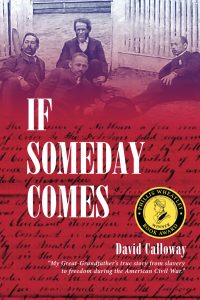
    If Someday Comes
    By David Calloway

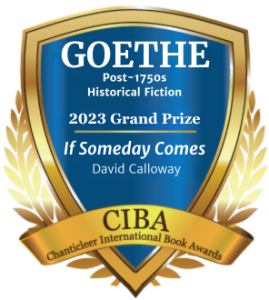
    blue and gold badge recognizing If Someday Comes by David Calloway for winning the 2023 Goethe Grand Prize

    While a full review is forthcoming, here’s what early readers are saying:

    A book you need right now. Sentence structure, character, and scene development are fully unpacked here. Excellent pacing with a great inclusion of the facts around the civil war, slavery, and presidential figures. The reading is driven forward by the story coupled with the simple rich historical depth.

    Visit the Author’s Website today to learn more and buy it here on Amazon!

    Got a great read? Submit to the CIBAs today!

    Blue button that says Enter a Writing Contest
    Submit to the Goethe Awards here!

    Some events that occurred during  Goethe’s lifetime:

    1750 – The Industrial Revolution began in England
    1756 – Wolfgang Amadeus Mozart was born in Salzburg Austria
    1761 – The problem of calculating longitude while at sea  was solved by John Harrison
    1765 – James Watts perfects the steam engine
    1770 – Ludwig van Beethoven was born in Bonn, Germany
    1774 – Goethe’s romantic novel, The Sorrows of Young Werther, propels him into European fame
    1774 – Goethe’s play Gotz von Berlichingen, a definitive work of Sturm und Drang premiers in Berlin
    1776 –  America’s 13 Colonies declare independence from England. Battles ensue.
    1776 – Adam Smith publishes the Wealth of Nations (the foundation of the modern theory of economics)
    1776 –  The Boulton and Watt steam engines were put to use ushering in the Industrial Revolution
    1783 – The Hot Air Balloon was invented by the Montgolfier brothers in France.
    1786 – Le Nozze di Figaro by Mozart premiered in Vienna
    1789 – George Washington is elected the first president of the United States of America
    1780 – Antoine Lavoisier discovers the Law of Conservation of Mass
    1789 – The French Revolution started in Bastille
    1791 – Thomas Paine publishesThe Rights of Man
    1792 – Napoleon begins his march to conquer Europe
    1799 – Rosetta Stone discovered in Egypt
    1802 – Beethoven created and performed The Moonlight Sonata
    1802 – A child’s workday is limited to twelve hours per day by the British parliament when they pass their first Factory Act
    1804 – Napoleon has himself proclaimed Emperor of France
    1808 – Atomic Theory paper published by John Dalton
    1811 –  Italian chemist Amedeo Avogadro publishes a hypothesis, about the number of molecules in gases, that becomes known as Avogadro’s Law
    1811 – Jane Austen’s Sense and Sensibility was published anonymously. It was critically well-received.
    1814 – Steam-driven printing press was invented which allowed newspapers to become more common
    1818 – Mary Shelley publishes Frankenstein
    1832 – Goethe’s Faust, Parts 1 & 2 are published posthumously (March 22, 1832)

    Resources 

    *Britannica Encyclopedia 

    ** Oxford Reference

    ***New Yorker Magazine

  • What Catches the Eye: Description Techniques in Different POVs from Scott Taylor

    What Catches the Eye: Description Techniques in Different POVs from Scott Taylor

    Your story’s point of view affects one thing above all else — description.

    Simply put, Point of View (POV) determines through what eyes we see, what ears we hear, what skin we feel, what nose we… well, you get it.

    Can you discover the Point of View?

    Readers tend to get invested in description that makes them think— about the characters, the setting, what will happen next. Different POVs have different limitations in what you can show, and how you can show it. But so too do they have particular strengths. So, how can we work with our chosen POV to make mentally-engaging prose?

    Let’s take a look at a few descriptive techniques that flourish within and illuminate the strengths of different POVs: First person, Third Person Limited, Third Person Omniscient, and Second Person.

    First Person — the Motivated Storyteller

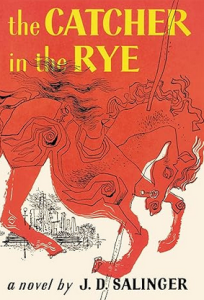
    The Catcher in the Rye by J.D. Salinger has a cover that features a carousel horse

    In this novel, Holden Caulfield takes him time revealing what’s bothering him. Slowly, his painful teenage life unfolds itself before the reader. He’s an untrustworthy narrator, so be careful with what you believe.

    There’s a special kind of intimacy in First Person. A vulnerability on both our parts. You’re the audience of a storyteller— me! And because it’s my story, surely I’m most qualified to decide on which details are important, right?

    Every smell on the wind, little shifting of another person’s posture, texture beneath my fingertips, it’s here because I want it to shape my tale. This is not the objective world, but a carefully-cut slice of it steeped in my thoughts. So, you should be able to put together my motivations and even beliefs based on how I describe my rival’s wine-stained manor, with its air of mismatched perfumes no doubt imported from some overworked farmland on the Rouge Isles, and fine fat jewels resting so brazenly in his family’s recently-designed crest.

    First Person and Third Person Limited — the Revealing Vision

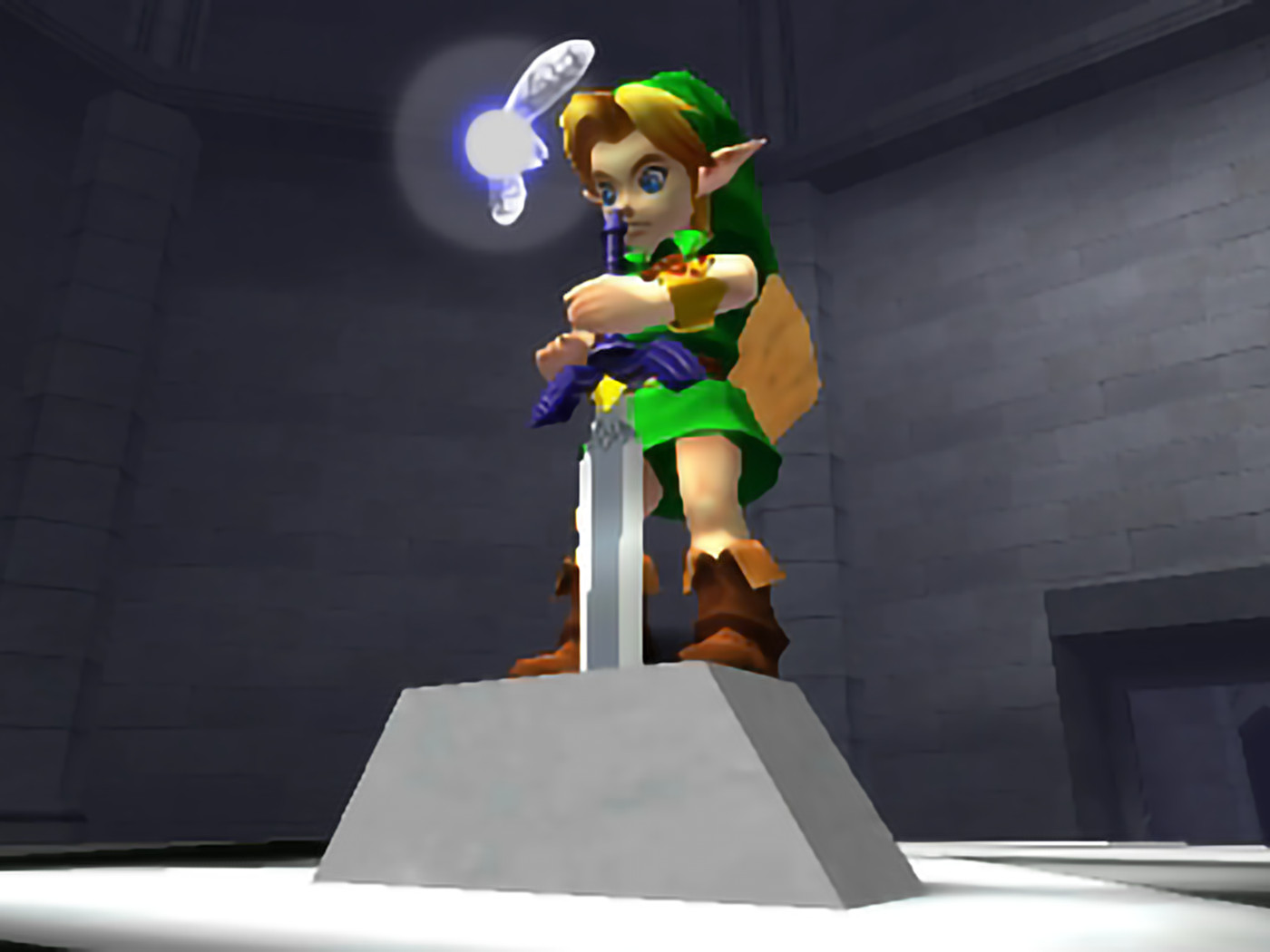
    Many videogames, like The Legend of Zelda – pictured above – use a literal Third Person Point of View that lets you follow directly behind your character as you play, but the camera always only sees your avatar.

    These two POVs share much in common, sometimes being nearly identical except for the pronouns. And while these narrators can be intentional with their descriptions (even unreliable), sometimes the details in the prose can reveal more about them than they would ever choose to tell.

    What sensory information the POV character notices will say something about who they are, how they feel, and even their connections to other characters. Fear might draw their eyes to the heavy doors, the arched roof with its fingers of shadow scratching at the beams, the way the thick walls seem to snuff all sound to a breathless mumble. A former musician, finished with their old craft, might walk down a long tunnel with their footsteps bouncing through the air in soft, irrepressible vibrato rhythm. Someone who spends all day cooped up in an office might bask in the cardinal feathers of a sunset — or fail to notice them at all, as the asphalt presses a growing soreness up through their back.

    Third Person Limited — the Reframed Importance

    Harry Potter is a classic example of third person limited. Everything happens from Harry’s perspective and is colored by his opinion, but sometimes the reader has a chance to catch view of something beyond what Harry sees.

    One way that Limited often varies from First is in its use of multiple perspectives. Not all Limited books have these, of course, but those that do can employ a powerful means of recontextualization.

    How does one character experience a setting, event, or interaction as opposed to how the next character does? Do they see each other differently than they each see themselves? Can they plant a question in the reader’s mind?

    A ‘sweet smile and warm handshake’ from the mountain guide might show Francis to be merely trusting in her own perspective, but that same guide’s ‘wolfish grin and cloying grip’ from Gabriel’s perspective would reframe Francis’s trust to actually be naiveté. Or, perhaps Gabriel has some paranoia eating away at him. Guess you’ll have to keep reading to find out.

    Third Person Omniscient — the Two-Faced Medium

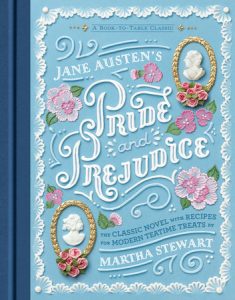
    Blue Pride and Prejudice Cover

    In Pride and Prejudice the narrator moves easily from person to person, showing you what everyone feels and thinks. You know what Mr. Darcy’s opinion is when it’s important, and you know what Elizabeth Bennett’s opinion is almost all the time.

    Finally, the objective truth of things. Where First Person is a personal storyteller, this narrator is like that of a Greek play, come to reveal all the narrative’s most interesting corners — no matter how well hidden.

    Omniscient prose has a powerful ability to indulge in two opposed modes.

    On the one hand, the narrator can use their voice to match information and detail to the sincere experience of the characters, keeping readers close. A spacefaring diplomat might walk down a quiet observation deck, cool glass soothing the tension out of his fingers, an endless crowd of stars looking on in support of his mission of peace with a strange alien species. But elsewhere, deep in the space station, a bomb ticks down.

    This contrast of perspective can radically alter the tone of descriptions, even so much as to invert them completely — a slow, contemplative walk becomes dreadful, every detail the narrator lingers on meaning a few more ticking seconds.

    Second Person — What do You Have to Do with It?


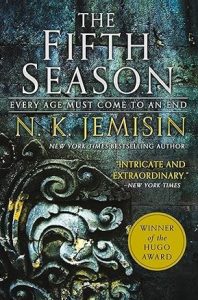
    The Hugo Award winning start to the Broken Earth Trilogy has one third of the story told in the second person. The story follows a “you” named Essun who goes on a journey to save her daughter.

    Second Person is more commonly used in instructional or how-to guides. “You should then add peanut butter” would be an example. This is an uncommon point of view in prose writing as it can invite the reader to identify with someone who shares very little in common with them. That sharing of identities can disconcert the reader, but it can also make them more receptive to even more creative styles of storytelling.

    Locating the reader in Second Person gives them a chance to experience and imagine a world totally outside of their own realm of understanding.

    These techniques are useful beyond POV

    Unreliable narrators don’t have to speak in first person, and dramatic irony can easily be used with multiple limited POVs. These are guidelines, not rules. But, when you’re working through your writing — editing a passage or trying to tease out exactly how to paint a mental picture — consider how you can use the inherent abilities of your chosen perspective to get the sparks flying in your readers’ minds.


    Thank you for joining us for this Writer Toolbox Article

    A red toolbox with the words "What's in your toolbox

    There is so much to learn and do with Chanticleer!

    From our Book Award Program that has Discovered the Best Books since the early 2010s to our Editorial Book Reviews recognizing and promoting indie and traditional authors, Chanticleer knows your books are worth the effort to market professionally!

    When you’re ready, did you know that Chanticleer offers editorial services? We do and have been doing so since 2011.

    Our professional editors are top-notch and are experts in the Chicago Manual of Style. They have and are working for the top publishing houses (TOR, McMillian, Thomas Mercer, Penguin Random House, Simon Schuster, etc.).

    If you would like more information, we invite you to email us at info@ChantiReviews.com for more information, testimonials, and fees.

    We work with a small number of exclusive clients who want to collaborate with our team of top-editors on an on-going basis. Contact us today!

    Chanticleer Editorial Services also offers writing craft sessions and masterclasses. Sign up to find out where, when, and how sessions being held.

    A great way to get started is with our manuscript evaluation service, with more information available here.

    And we do editorial consultations for $75. Learn more here.  

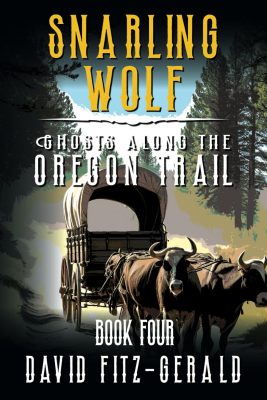
  • SNARLING WOLF: Ghosts Along the Oregon Trail Book 4 by David Fitz-Gerald – Historical Fiction, American West, Mystical

    SNARLING WOLF: Ghosts Along the Oregon Trail Book 4 by David Fitz-Gerald – Historical Fiction, American West, Mystical


    In Snarling Wolf, David Fitz-Gerald’s fourth installment of an adventurous migration to Oregon, wagon wheels sidewind along and through the serpentine Snake River.

    It’s summertime, hot and dangerous on the cross-country trails. Wild animals, and the titular Snarling Wolf, ominously share the wilderness with a caravan of travelers. The group has become accustomed to their daily routines, but their remote destination seems almost mystical, moving always farther away, taunting and driving them toward madness.

    Widowed Dorcas Moon is determined to do anything it takes for her beloved children to survive and thrive in a new life in a new land. But this difficult trip takes its toll on her family in surprising ways, and will leave them forever changed.

    Dorcas Moon deeply fears an animal attack on their unprepared people.

    As a native tribal member whose name loosely translates to Snarling Wolf follows their caravan, Dorcas even begins to suspect that he is a true two-legged wolf. Dorcas learns that, in truth, Snarling Wolf is a gentle and philosophical man, and cannot help but be drawn to him. But that doesn’t stop her worrying about the attraction between him and her daughter Rose, a vulnerable girl who believes she sees and aids the dead.

    Rose confesses a shocking action to her mother, which has Dorcas concerned if her daughter is telling the truth or going mad. Barely a teen, Rose and this young man Snarling Wolf proclaim they are destined to be together, convinced of this inevitability by the paranormal insights of guiding spirits.

    Dorcas has much to learn from Snarling Wolf. And the young couple have much to learn about life, promises, and the inevitability of fate.

    The slow-moving wagon train slithers along the Snake River, sometimes moving away only to meet it again miles ahead. There is no escaping the river’s coils—eventually they will have to plunge their wagons through this deep, treacherous water to reach the other side and, if they make it, onto the promise of the west.

    From the experience of the trail so far, Dorcas knows she can’t predict what’s going to happen next, leaving a tangible danger in the air. The ever-present threat of thieves hides all along the route, including the vicious Viper who is planning and biding his time to hit when he feels the wagons are most vulnerable.

    All Dorcas’s children are growing up in this wild adventure, and Dorcas is often surprised at how they each do so. Her two sons have had to step up after the loss of their dad, and the increased responsibilities bring both rewards and tribulations. Nightmares from the trail even visit Dorcas’s youngest daughter, no longer a babe in arms. One foot in front of the other, they face each day head on.

    As they trudge forward, Dorcas continues to wish for a new love, yet instinctively she hesitates to embrace affection with dear Agapito. She vows she must remain a single, independent woman.

    How will destiny propel this family and their fellow travelers through the wild country in the heat of the summer, and what will they find on the other side?

    Author David Fitz-Gerald skillfully continues an epic, historic tale about the people of the 1850 American West. He illustrates their dreams, sacrifices, fears, joys, persistence, and love against an exciting and suspenseful backdrop. Readers will revel in raw emotion shared with the vivid and diverse characters. They’re moving slow, and despite the heat of today, winter’s coming fast. Unknown secrets lay in wait, revealed by Snarling Wolf in the miles still ahead.


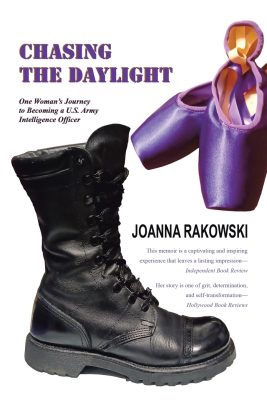
  • CHASING The DAYLIGHT: One Woman’s Journey to Becoming a U.S. Army Intelligence Officer by Joanna Rakowski – Memoir, Life in the Military, Inspirational

    CHASING The DAYLIGHT: One Woman’s Journey to Becoming a U.S. Army Intelligence Officer by Joanna Rakowski – Memoir, Life in the Military, Inspirational


    Blue and Gold Badge Recognizing Chasing the Daylight by JoAnna Rakowski for Winning the 2023 Military and Front Line Grand PrizeChasing The Daylight by Joanna Rakowski is a revealing memoir that captures the rigor, intensity, and ferocity of military training in a salient style.
    Ever wondered what it takes to become a soldier in one of the most powerful armies in the world?

    Joanna Rakowski was born in Poland and grew up practicing dance from a young age, eventually becoming a professional classical ballet dancer and teacher. Upon her migration to the US in 1995 and the painful fallout with her friend and mentor, Chris, Joanna knew she needed to make a drastic change in her life. Her great awakening came when she decided to transform from a fragile and sensitive ballerina into a steadfast U.S. Army soldier, a goal that many close to her doubted she could accomplish.

    With arresting insights, the text builds from Rakowski’s striking introduction as it describes her first day of enlistment, which was filled with uncertainties.

    Despite having so many questions in her mind, she knew one thing for sure; that she had made the first step onto an important new journey. She would prove to everyone who doubted her that the common notion of fragility in artists did not actually have to be equal to an artist’s character and physical strength.

    Her accessible account details the intricacies of military training such as living in the platoon barracks, practicing new drills— both primitive and hi-tech— classroom learning, and army values, among many more. Rakowski even goes further to describe the demeanor of drill sergeants and army commanders, debunking some of the myths that surround these personalities.

    She does not shy away from mentioning the obstacles that come along with military drills, like training under the sweltering heat, extreme physical exhaustion, injuries, and sleepless nights.

    This will undoubtedly make one understand the significance that soldiers see in their purpose, to endure such difficulty.

    Despite the mental and physical challenges that she face in her four-year span in military training, Joanna would become a U.S. Military Intelligence Officer, demonstrating true resilience and fortitude.

    Chasing The Daylight is a majestic piece of writing.

    The narrative comes alive through Rakowski’s voice, which reveals her unfettered and unique collection of thoughts, allowing readers to draw from the well of her experiences, emotions, reflections, and attitude.

    Ample flashbacks along the pages give us a sneak peek into Rakowski’s life in Poland, as do the fine art photographs peppered across, indicating the credibility of the story herein.

    Rakowski affirms, “Life is a continuous cycle, full of glorious moments of light and moments of darkness. You never know where a new passion for life will come from. Then you become that passion that defines your existence. You become someone new and as you grow with love and within it; Eventually, you find your daylight”. Through these impactful words, she encourages her audience to keep chasing their dreams, no matter how insurmountable they may seem.

    Bold and eye-opening, Chasing The Daylight contains fresh information on basic training for those considering enlisting in the U.S. Army and for any citizen interested in finding out what it takes to mold an army recruit into a competent U.S. soldier.

    Chasing the Daylight by Joanna Rakowski won Grand Prize in the 2023 CIBA Military and Front Line Awards for Service to Others Non-Fiction.


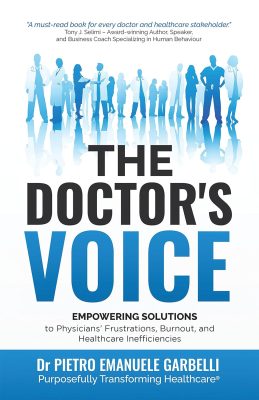
  • THE DOCTOR’S VOICE by Dr. Pietro Emanuele Garbelli – Modern Healthcare, Professional Development, Advocacy

    THE DOCTOR’S VOICE by Dr. Pietro Emanuele Garbelli – Modern Healthcare, Professional Development, Advocacy


    Dr. Pietro Emanuele Garbelli speaks out on serious professional issues faced by modern healthcare workers, in The Doctor’s Voice.

    Doctors deal with overwhelming stress, leading to burnout, illness, many of them leaving the profession, and even a higher-than-average rate of suicide. The Covid19 pandemic both heightened and helped illuminate some of the causes of this stress, prompting author Garbelli to write this book as a set of advice for his colleagues and as advocacy for broader changes in hospitals and other healthcare systems.

    Garbelli highlights a common disconnect in communication—administrators and higher-ups telling doctors what to do while those doctors don’t have much opportunity to bring up the problems they encounter day-to-day.

    Planning made without doctor input leads to a near-constant state of crisis and under-staffing. Restrictions on what treatments a doctor is allowed to authorize—while sometimes established for patient protection—lead to consistent delays and create an atmosphere of mistrust. Corporate command structures obfuscate who even makes these significant decisions.

    Doctors take on major risk, without enough authority to justify it, nor enough protection to ease the stress of it. All the while, they deal with equally stressed colleagues, superiors who don’t always listen to their proposals, and countless little inefficiencies in a system often more interested in money than effective care.

    The Doctor’s Voice offers valuable advice, from the individual to the organization.

    Garbelli returns frequently to the idea of communication. How important it is to develop one’s own communication skills to be heard by those with power, as well as how damaging a one-way, top-to-bottom system is to an organization as a whole.

    He proposes the use of modern data technology to make it easy for doctors to record and share stumbling blocks they encounter. Discussing information systems as they are now, he points out the needless frustration of dealing with myriad incompatible programs to access something as vital as a patient’s medical records.

    Serving as a starting point for further discussion, The Doctor’s Voice stays true to its name—laying out problems that doctors, and healthcare workers in general, often suffer in silence.

    The author writes about these issues clearly and concisely, making the information easily graspable even by laymen. While directed primarily at other doctors, this book is a valuable read for anyone working—or even just interested—in healthcare, as it makes obvious how sorely change is needed.

    Garbelli maintains a broad scope, focused on showing how universal these frustrations are within his profession. The Doctor’s Voice ultimately encourages doctors to free themselves from restrictive senses of professionalism and speak openly about the stressors that need to be fixed.

    Impactful as advocacy for changing a broken system, and important as a frank discussion about the mental toll on individuals, The Doctor’s Voice sheds light on issues that will only become more important as time goes on.

    The Doctor’s Voice by Dr. Pietro Emanuele Garbelli won First Place in the 2023 CIBA Harvey Chute Awards for Business & Finance.


  • Let’s Hear It For the Red, White, and Blue! – Chanticleer Celebrates Independence Day 2024

    Let’s Hear It For the Red, White, and Blue! – Chanticleer Celebrates Independence Day 2024

    Fireworks, family gatherings, parades, and summer fun!

    It’s time to celebrate the Fourth of July!


    Fourth of July, Independence Day, fireworks, family, kids on dad's shoulders, american flag

    Independence Day is arguably our most flashy, exciting holiday, but was it always like that?

    As history records it, YES! Our Fourth of July traditions date back to the very day the Declaration of Independence was signed in 1776! We’ve traveled back in time through the words of historians to see how our forefathers laid the groundwork for our most cherished Independence Day traditions!

    Declaration of Independence, gavel, legal, red white and blue, flag, stars and stripes

    Reading the Words of Our Forefathers

    Independence Day offers a moment of reflection on the inspired words of our forefathers. A reading of the Declaration of Independence is part of many Fourth of July celebrations, as well as speeches that continue  the tradition of public discourse within a democracy–a right Americans have protected ever since the day the Declaration of Independence was signed.

    Picnic, Fourth of July, Independence Day, flags, laughing, family

    Barbecues and Picnics

    Celebrating Independence Day by enjoying treasured family dishes with friends began on the same day the Declaration of Independence was signed!

    According to historians, after a grueling day of debate on July 4, 1776 John Adams and his wife celebrated the country’s new independence with a meal of turtle soup, poached salmon with egg sauce, green peas, boiled potatoes, and a dessert of Indian pudding or apple Pandowdy. Today, the dishes are different–with hamburgers, watermelon, and ice cream being favorites–but the sentiment of the celebration remains the same.

    Sack races, grass, trees, kids, blue shirts, canvas bags

    Fun and Games in the Great Outdoors

    Our forefathers spent most of their day outside, so it’s no surprise they were often found relaxing under a tree as their children played games, such as tag, sack races, hide-and-seek, and hopscotch. These games are still played on July 4th today, along with organized activities like parades, marathons, drag races, car shows, and extreme eating competitions. Many Americans will also be spending their day at lakes, beaches, and parks as they wait for a fireworks show to begin.

    Fireworks, water, night, lights, lake, bay, sea

    “The Rocket’s Red Glare”

    In 1776, future-President John Adams wrote a letter to his wife, Abigail, detailing how he thought Americans should celebrate the country’s declared independence from England. He wrote the day should be filled with “pomp & parade, with shews (shows), games, sports, bonfires, bells and illuminations from one end of this continent to the other from this time forward forever more (sic).” His words were heard by many, resulting in the first July 4th fireworks display in Philadelphia the very next year. Today, Americans spent $2.7 billion dollars on fireworks!

    Chanticleer’s Fourth of July is celebrated in Bellingham, Wash. The day’s events include a celebration at Zuanich Point Park and the Squalicum Boathouse, with a fireworks show over Bellingham Bay. Events begin at 2pm, and, with sunset around 9:15pm, the fireworks show will begin at 10:30pm!

    You can learn more about this and other Whatcom County Events here.


    Celebrate America and the people who created this great country with these amazing authors!

    TOM SAWYER RETURNS

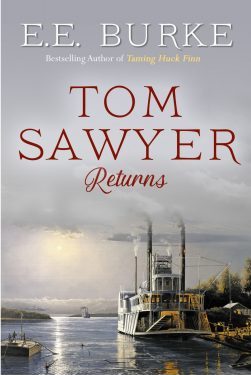
    Tom Sawyer Returns Book Cover

    Tom Sawyer Returns is the second book in The New Adventures series by author E.E. Burke.

    Readers join a now grown up and far more independent Becky Thatcher as she maneuvers her complicated life in Civil War era Mississippi. Tom has long since left, and Becky is engaged to Union Captain Alfred Temple, who offers her all the safety and security she needs in such uncertain times. But does she love him? Actually love him?

    Continue Reading here…

    COLIN AND THE LEGEND OF THE WEEPING WILLOW

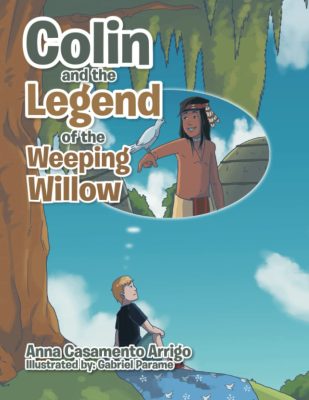
    Colin and the Legend of the Weeping Willow Cover

    In Colin and the Legend of the Weeping Willow by Anna Casamento-Arrigo, curious Colin learns a Native American legend about the Weeping Willow from one of his favorite people, his grandmother.

    Across the years, people have shared their cultural legends and tales. Often these stories are told to explain phenomena in the natural world, and are passed down by elders through oral traditions.

    In this story, Colin visits his grandparents to join in fun activities like baking cupcakes and playing catch.  During the cupcake making, he shares with his grandma that he has been learning about Native American legends, and she takes the opportunity to tell him another Native story.

    Continue Reading here…

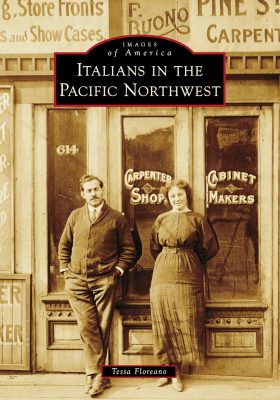
    ITALIANS IN THE PACIFIC NORTHWEST

    Italians in the Pacific Northwest Cover

    Tessa Floreano’s Italians in the Pacific Northwest is an inviting pictorial narrative featuring both ordinary and extraordinary individuals of Italian heritage who helped to create and develop Washington, Oregon, and Idaho.

    Concentrating on the decades from 1880 to 1950, Floreano begins by referencing the earliest Italian explorers of the Pacific Northwest Territory, then quickly moves to the efforts of those who sought a better life through hard work and new opportunities on American shores.

    Continue Reading here…

    WISHES, SINS AND THE WISSAHICKON CREEK
    CIBA First Place Winner in the Somerset Division
    Wishes Sins and the Wissahickon Creek

    Wishes, Sins, and the Wissahickon Creek by PJ Devlin emulates the lives of fictional characters brimming with hope and promise yet living a truthful life of existence in the gorgeous setting of Pennsylvania’s Wissahickon Creek.

    The book encompasses ten short stories making it a complete work of fiction. Devlin creates characters which are rich in both experience and struggle. Not only do they live in a real world created by Devlin, but her characters, a mix of children and adults, both struggle with daily, real-world issues most Americans deal with. The stories are all relatable in this sense, which makes the text come alive, page after page.

    Continue Reading here…

    AMERICA’S FORGOTTEN SUFFRAGISTS

    America's Forgotten Suffragists Cover

    Comprehensive in its own right, America’s Forgotten Suffragists by Nicole Evelina is an essential addition to the canon of women’s suffrage and first-wave feminism.

    Equal parts local history of women’s right to vote in the nineteenth century and biography of Virginia and Francis Minor, America’s Forgotten Suffragists illuminates the story of a wife-and-husband feminist duo who were the first to fight for women’s suffrage at the Supreme Court level.

    Continue Reading here…


    US Flag in the wind

    This Independence Day, we wish you the following:

    May your family and loved ones be close and happy. May we share in the benefits of a community that cares for and loves each other.

    Happy Fourth of July from Sharon, Kiffer, David, Dena, Scott, Anya, Andy, and the whole Chanticleer Team!

    Thank you for being part of the Chanticleer Family! 

    Happy Fourth of July, Chanticleer, friends, red, white, blue, red white and blue, banner, stars, fireworks

    You can always submit your book for an Editorial Review with Chanticleer!

    Chanticleer Editorial Review Packages are optimized to maximize your digital footprint. Reviews are one of the most powerful tools available to authors to help sell and market their books. Find out what all the buzz is about here.

    Have an Award Winner?

    The tiers of achievement for the CIBAs

    Submitting toBook Awards is a great way to get your book discovered! Anytime you advance in the Chanticleer Int’l Book Awards, your name and book are promoted right here on our website, through our newsletter, and across social media. One of the best ways to engage in long tail marketing!

    To stay up to date with exciting news about our conference, your next great read, or contest deadlines, sign up for our Newsletterhere!

    Your book deserves to be discovered!

  • NUTSHELL REGATTA by Jonna Laster – Picture Books, Children’s Adventure Books, Imagination & Wonder

    NUTSHELL REGATTA by Jonna Laster – Picture Books, Children’s Adventure Books, Imagination & Wonder


    Little Peeps 1st Place Best in Category Blue and Gold Badge ImageIn Nutshell Regatta by Jonna Laster, the narrator’s grandmother reveals adventures in nature that could easily be missed without her watchful eye.

    With her wise guidance, clouds turn into campers, dandelions hold moon yokes, leaves sing, and a broken branch takes on the form of a fox. Most importantly, twigs and pebbles become sailors who embark on a grand regatta in their nutshell sloops and sailboats.

    Three ships come to the forefront of the story. Two of them sink, their twig sailors swimming safely to a nearby lily pad, while one continues on. Its passengers Burt the pebble and Betula the birch twig encounter what appears to be disaster, but when they fall over a waterfall, the grandmother guides the narrator to listen close. When they hear a faint “yipeeeeee” from the bottom of the waterfall, it’s clear that all has turned out well.

    The narrator takes more ownership over the fantasy in the end, wondering aloud to their grandmother about where Burt and Betula might end up—downstream or even all the way to sea. The grandmother doesn’t miss a beat, suggesting the twig and pebble passengers might send a postcard. And indeed, the final illustration of the book is just that—a postcard from Burt and Betula!

    From beginning to end, Nutshell Regatta is an imaginative poem.

    Laster takes mundane aspects of nature—like twigs, pebbles, and common flowers—and turns them into lyrical images and dramatic adventures sure to captivate any child or child-like heart. The tension of Burt and Betula falling over the waterfall is just the right touch of stress, with a valuable resolution.

    Laster could have resolved the story with the grandmother or narrator scooping the nutshells out of the water to save them. Instead, she takes a different and more developmentally helpful direction: the little sloops fall down the waterfall, and the grandmother coaches the child on creating a happy outcome for the event (the passengers going on a new adventure). This resolution could help guide anxious children to find positive meanings in change and transition.

    The illustrations are wholesome and sweet, with little twig people peeking out of each picture even before they are introduced into the story.

    The images serve the story immensely by bringing to life the cheerful adventurers in all shapes and sizes.

    Regardless of what children take away on a conscious level, they will be delighted by the fantastical lens through which we see Burt and Betula’s adventures.

    But for discerning young readers, Laster’s direct message is that “there are passengers everywhere,” if only you might look for them.

    Children will surely come away from Nutshell Regatta inspired to make twig people and shell boats of their own the next time they find themselves in nature.

    Nutshell Regatta by Jonna Laster won First Place in the 2023 CIBA Little Peeps Awards for Early Readers and Children’s Books.


    Little Peeps 1st Place Gold Foil Sticker

  • The Colorful History of the Rainbow Flag; Celebrating Pride Month and LGBTQ+ Writers with Chanticleer

    The Colorful History of the Rainbow Flag; Celebrating Pride Month and LGBTQ+ Writers with Chanticleer

    Pride Month is back, and it’s time to celebrate the beautiful diversity of the people of the LGBTQ+ community!

    Pride Week Gay Pride Harvey Milk Lesbian Trans Bi Sexual

    Over the last few decades, the LGBTQ+ community has made significant progress in legitimizing their cultural significance in the literary world. A 2022 report from NPD BookScan shows that print book sales of U.S. LGBTQ+ fiction are continuing to surge in the adult, children’s, and YA categories, and in 2021, sales reached 5 million units, more than double than in 2020!

    There is no question that representation of the LGBTQ+ community is a vital asset to the writing community, and we want to celebrate their contributions by examining one of their most notable symbols; the rainbow flag!

    First Gay Pride flag
    The original 1978 Pride Flag as designed by Gilbert Baker.

    The LGBTQ+ Rainbow Flag

    In 1978, gay rights activist Harvey Milk asked Gilbert Baker, an openly gay artist and a drag queen, to design a symbol of pride for the gay community to promote their cause and have a unifying symbol for the many diverse cultures that are part of the LGBTQ+ community.

    When asked later in an interview, Baker said, “Our job as gay people was to come out, to be visible, to live in the truth, as I say, to get out of the lie. A flag really fit that mission, because that’s a way of proclaiming your visibility or saying, ‘This is who I am!’” Viewing rainbows as natural flags found in the sky, he adopted eight colors for the stripes, with each color representing a specific aspect of gay life; pink for sex, red for life, orange for healing, yellow for sunlight, green for nature, turquoise for art, indigo for harmony, and violet for spirit.

    LGBTQ+ Pride Flag Rainbow Flag
    The most recent version of the Intersex Equality Rights pride flag, as designed by Valentine Vecchietti.

    Intersex-Inclusive Progress Pride Flag

    After a number of redesigns, a new flag was commissioned in 2021 to fully represent the growing diversity of the LGBTQ+ community. Called the Intersex-Inclusive Progress Pride Flag, it was created by Valentino Vecchietti of the UK’s Intersex Equality Rights organization and is now universally recognized as the flag that represents the larger LGBTQ+ community.

    The new flag was designed to represent the many groups of people fighting for inclusivity within their community, incorporating the original colors of the pride flag and adding six more colors. Along with the original six colors, it now sports a chevron with colors to represent the marginalized LGBTQ+ communities of color, HIV/AIDS patients, and trans and non-binary persons. A purple circle on a yellow background is representative of the belief that all people, regardless of sexual orientation, are unbroken, whole, and have the right to make decisions about their own bodies.


    The evolution of the LGBTQ+ rainbow flag is a visual record of the gay pride movement as well as the community’s growing diversity and its goal of inclusivity. We salute all those who fight for the rights of the LGBTQ+ community and wish them a great Pride Week as they celebrate the advances they’ve made in being seen!


    The LGBTQ+ writing community is thriving in 2024, and Chanticleer is proud of the many great authors we get to work with throughout the year! 

    We invite you to take a look at the work of just a few of the amazing authors we’ve worked with and their writing that touches on the LGBTQ+ community!

    ABOMINATION CHILD
    By Erika Shepard

    Abomination Child Cover

    Abomination Child is a coming-of-age novel, a piece of historical fiction, and a lesson to us all. Erika Shepard tells the story of Brianna, a young girl growing up in Missouri during the 1960s, struggling to be accepted.

    Within her community, Brianna is seen on the outside as a boy, and everyone knows her as Brian. She confides in her older sister Liz, who supports her and helps her face a world that doesn’t understand. Spanning many years, Abomination Child follows Brianna’s journey of survival, hoping that one day she’ll be able to live freely as herself.

    Brianna’s – known then as Brian – troubles start after his father learns that he dressed in girl’s clothes at a school Halloween dance. Deeply conservative and religious, Brian’s father hits him for what he believes is an abominable perversion caused by the Devil. For Brian, it’s as simple as knowing he is really a girl, a girl named Brianna.

    Continue Reading here…

    SHE HAD BEEN A TOMBOY
    By 

    She Had Been a Tomboy Cover

    She Had Been a Tomboy: Raising a Transgender Child, a Mother’s Journey by Sandra Bowman is a deeply revealing memoir about a protective mother who watches her sensitive child grow into someone who is familiar, yet new.

    This moving narrative tells the story of her two children: how they were born and how they grew. She Had Been a Tomboy hops from one period of the children’s lives to another, showing how the elder child matures and how the female within slowly blooms into being, little by little revealing herself.

    But the long journey to realization and understanding of self was not easy, nor was it gentle.

    Continue Reading here…

    THE MOONSTONE GIRLS
    By Brooke Skipstone

    Moonstone Girls Book Cover Image

    In The Moonstone Girls, award-winning author Brooke Skipstone unravels a story about seventeen-year-old Tracy Franks. Tracy has a secret that in 1968 could have deadly consequences. You see, Tracy is gay.

    In her hometown of San Antonio, Tracy is forced to hide behind the “girl next door” facade, never allowing her true identity to emerge. Her only confidante is her brother, Spencer. He understands her turmoil exactly because Spencer is also gay.

    Neither teenager feels free to talk about their true feelings with their family, especially their father, Art. Art constantly scolds his son for his feminine behavior, his desire to become a pianist instead of joining the military. Though he also shows his displeasure with Tracy, she, unlike her brother, fights back, but only in the privacy of their home.

    Continue Reading here…

    WALTZING A TWO-STEP
    By Dan Juday

    Waltzing A Two-Step Book cover image

    Dan Juday’s memoir Waltzing A Two-Step is a humble and compassionate look at his formative years.

    Born a few years after the second world war, Dan experiences a peaceful and happy childhood in rural Indiana, moving frequently before the family settles on a rural area of land named Springwood in Clinton County, Indiana. The Juday family were devout Catholics and enrolled Dan and his siblings in Catholic schools until the family moved to Springwood. Public school became the only option for the siblings. There Dan does his best to fit in but his status as a minority Catholic in a mostly Protestant community in the 1950s brings its own challenges.

    For Dan, his struggles don’t stop there.

    Continue Reading here…

    UNANIMITY: Spiral Worlds Book 1
    By Alexandra Almeida

    Alexandra Almeida probes the philosophical and ethical depths of wealth, technology, pop culture, and religion in a world ravaged by global warming through her sci-fi adventure,Unanimity: Spiral Worlds #1.

    Readers will delight in the gradual reveal of both the technology within the story and the dramatic history between many of those involved with the creation and evolution of that technology.

    Tom, a screenwriter, works with Harry, the genius inventor of the world’s most popular AI (artificial intelligence) app, to create a simulation that will nudge people toward acting morally.

    Continue Reading here…

    UNSIGHTLY BULGES (A Trailer Park Princess Cozy Mystery, Book 2)
    By Kim Hunt Harris 

    Salem Grimes has a lot of goals – lose more weight than her friend Trisha, find a dress for the upcoming date she doesn’t really want to go on, and keep her dog, Stump, from throwing up on the kitchen floor. Unfortunately, solving a murder (again) isn’t on her to-do list, but Salem is thrown into another mystery completely against her will when she sees a body in a Sonic dumpster.

    When her BFF Viv, an 80-ish firecracker of a woman with a penchant for expensive shoes, hears about it, she can’t wait to get started cracking the case. After all, she and Viv have already solved one mystery, and Viv is convinced their unofficial PI firm, Discreet Investigations, can find the murderer. But the ladies quickly realize they have their work cut out for them when the victim is identified as CJ Hardin, golden boy physician and local Hope for Homes organizer who recently “came out” in a very public way and stirred up a huge controversy in Lubbock, Texas.

    Controversy and theories swirl since CJ was thought to have run off days earlier with the $200K in funds from a recent Hope for Homes fundraising effort. When the murder is labeled a hate crime, Salem, Viv, and their newest partner Dale find themselves in some scary situations, including an altercation with Rambo the fighting rooster. Between being laughed at by one hot police detective she’s had crushed on since fourth grade, fighting her urge to drink herself “cool” in order to keep from throat-punching Dale, Salem has to find a killer before the community implodes.

    Continue Reading here…

    Pride week LGBTQ+ ally

    We would like to wish all the people of the LGBTQ+ community, and those who love and care for them, a very Happy Pride Week! 


    Thank you for joining us in celebrating the people of the LGBTQ+ community!

    Do you have a LGBTQ+ themed book that deserves to be discovered? You can always submit your book for an Editorial Review with Chanticleer!

    Chanticleer Editorial Review Packages are optimized to maximize your digital footprint. Reviews are one of the most powerful tools available to authors to help sell and market their books. Find out what all the buzz is about here.

    Have an Award Winner?

    The tiers of achievement for the CIBAs

    Submitting to Book Awards is a great way to get your book discovered! Anytime you advance in the Chanticleer Int’l Book Awards, your name and book are promoted right here on our website, through our newsletter, and across social media. One of the best ways to engage in long tail marketing!

    Thank you again to the authors who wrote these wonderful books, and to the LGTBQ+ people around the world! You are so loved and appreciated!

  • Honoring Linda Quinby Lambert, Seán Dwyer, and David Beaumier – Recipients of the Village Books Literary Citizenship Award 2024

    Honoring Linda Quinby Lambert, Seán Dwyer, and David Beaumier – Recipients of the Village Books Literary Citizenship Award 2024

    Announcing the Recipients of the 2024 Village Books Literary Citizenship Award!

    The 2024 Village Books Literary Citizenship Award honoring Linda Quinby Lambert, Seán Dwyer, and David Beaumier

    The annual Literary Citizenship Award with the first recipients being recognized on Thursday, July 11, 2024 at Village Books, Fairhaven Village, Bellingham, Wash.

    Recipients of this award are of diverse backgrounds and professions, but each have demonstrated a commitment to engage with the literary community with the intent of giving as much, if not more so, than they receive. This can take many different forms such as giving back to the literary community in a meaningful way, making yourself available to other writers as time allows to provide your knowledge and expertise, championing other people’s successes, and involving yourself in the local literary landscape of independent bookstores, libraries, and writing organizations.

    Village Books, our local independent bookstore (and Chanticleer Authors Conference Book Room Manager) was founded in June 1980 and is a pillar of the pacific northwest writing community.

    Village Books Literary Citizenship Award Ceremony
    will take place on
    Thursday, July 11, 2024 at six o’clock in the evening
    at Village Books, Bellingham

    All Are Welcome

    “Our literary world is a social ecosystem that relies on others: readers, writers, editors, reviewers, publishers, booksellers, and so on. The writing and publishing world is one made of relationships. Writing itself may be a somewhat solitary activity, but once the story or poem is ‘done’ we rely on others to read, share, and publish our work. Yet there are so many levels of participation from others in this community.” ~ Lori May, author of The Write Crowd: Literary Citizenship & The Writing Life

    We invite you to join us to honor this year’s Literary Citizenship Award Ceremony recognizing the following three recipients.

    Linda Quinby Lambert

    Throughout both her personal and professional life, Linda has combined her passions for research and creative writing.

    Linda is known for her roles as Library Director for both Whatcom Community College and La Conner Swinomish Library, though it’s her master’s degree in journalism that explains her curious nature to all who know her. An ardent friend to readers and writers, you’ll find Linda present at many book events, and she can always be relied upon to offer insightful questions. She is an active member of Red Wheelbarrow Writers, two book clubs, two critique groups, and you’ll find her work in anthologies including Whatcom Writes annual publications, the Salish Current, I Sing the Salmon Home, and co-editor of 52 Women of Whatcom. Linda helped found both Whatcom Reads and the Chuckanut Writers Conference, community institutions that bring readers and writers together.

    Seán Dwyer

    Seán Dwyer writes nonfiction and fiction, both novels and stories.

    He’s a Spanish professor in the Modern and Classical Languages & Literatures department at Western Washington University, speaks four other languages fluently, and is a songwriter. In 2015, a publisher was waiting for his debut novel manuscript when, in a matter of seconds, Seán’s teaching and writing careers were put on hold. Rear-ended at 50 mph while stopped at a crosswalk, Seán suffered two concussions in two seconds. His memoir, A Quest for Tears, chronicles his recovery from the brain injury that left him unable to read or write for more than a few minutes at a time. Before and since, he’s generously given so much to his community of writers through The Red Wheelbarrow Writers Group, as the president of Whatcom Writers and Publishers, regular contribution to anthologies, and as the ever-supportive host of Village Books’ Open Mics. He has branched out into boutique publishing, and the authors in his list have won multiple awards. Wherever you find him, you’ll experience firsthand his generous spirit.

    David Beaumier at the Chanticleer Authors Conference

    David always holds true to his first love of Argentine tango, but when he’s not dancing, he writes.

    The dance metaphor also holds true in his literary life as it’s a dance of relationships and cooperation. His work has appeared in EWU’s Inroads, WWU’s Suffix, Whatcom Writes, and HamLit but it’s his work with his fellow writers that seems to truly fuel him. He’s worked as the assistant publishing director at Village Books and is the current project manager for The Writers Corner Anthologies, which grew out of his many years as the skillful facilitator of the VB Writes Fiction Writing Group. David helps writers find their voices as an editor and coach and serving as the Communications and Marketing Manager for Chanticleer Book Reviews. He’s a tireless supporter of writers, wherever they are on their journey, and the most frequent question he asks is, “How can I help?”

    We’re extra excited to celebrate Chanticleer’s own David Beaumier! David has been with Chanticleer for almost four years, not counting his time interning with us a decade ago. Seán Dwyer is also a usual suspect you can find at Chanticleer events, including our annual authors conference. We’re proud to support such amazing community members! Congratulations again to all recipients!


    Village Books’ Literary Citizenship Award celebrates and thanks these three talented and dedicated community builders, community mentors, and community defenders.

    They have each demonstrated, in their own unique way, the virtues that embody a Good Literary Citizen. For this, Village Books is awarding $1000 to each of them and hereby induct them into the Village Books Literary Citizen Hall of Fame which will be on permanent display in Village Books, Fairhaven.

  • GECKOS In The GARDEN by Ruth Amanda – Picture Books, Children’s Animal Stories, Learning to Count

    GECKOS In The GARDEN by Ruth Amanda – Picture Books, Children’s Animal Stories, Learning to Count


    Little Peeps 1st Place Best in Category Blue and Gold Badge ImageGeckos in the Garden by Ruth Amanda is a children’s counting book that takes readers through a delightful, rhythmic, aesthetically pleasing romp past a series of hidden geckos.

    Amanda starts out with just one gecko in the garden. Every page after, one more is added amongst myriad natural details such as flowers, a snail, a palm tree, garden taps, rocks, a mango tree, leaves, a gate, a bird’s nest, a pond, and more.

    Amanda demonstrates a natural sense of narrative arc even within a counting book—readers will feel the climax of the adventure when they arrive at the ninth gecko and read the line, “I spot one—two—no, six—no, more! Nine!” The escalation of the words’ momentum makes the ninth and tenth geckos more dramatic. Furthermore, the clever dénouement includes the narrator realizing the geckos might watch them just as much as they watch the geckos, and this is written alongside an adorable picture of a gecko looking in the window of the narrator’s home.

    The rhyme and rhythm of the story are extremely satisfying and feel natural, making the book effective at engaging children learning to count.

    The counting practice is not just in the words of the story, but in a scavenger hunt for each of the geckos in the illustrations. When a gecko is hidden in a challenging spot, hints like “I bet I’d find more geckos/If I hunted in the hedge” are integrated into the story. This is sure to create a game out of counting that will please children and adults alike. The images are beautiful and clear at the same time—perfect for ease in counting as well as maintaining interest.

    Pristine formatting helps the excellent writing style and lovely images to shine.

    The font serves the rhythm of the story, with bold words to guide readers toward the correct emphasis in the line. The images are balanced around the words in such a way that the pleasing layout draws the eye in the correct direction down the page. And finally, the consistent placement and slight tilt to the number on each page (“One!” and “Two!” etc.) creates a predictable and comforting routine for young readers to follow, even making it possible for them to anticipate the number that’s coming next.

    Geckos in the Garden is the perfect book for a child learning to count through playful means. Amanda makes it easy for an adult reader to read with a satisfying beat because of the balanced arrangement of words. Any child will surely be inspired to count geckos or other creatures like them upon sight even when the book’s covers have been closed for the day.

    Geckos in the Garden by Ruth Amanda won First Place in the 2023 CIBA Little Peeps Awards for Early Readers and Children’s Books.


    Little Peeps 1st Place Gold Foil Sticker