A Song That Never Ends, the first volume of a two part series by Mark A. Gibson, opens a dramatic fictional saga of the Hamilton family from the late 1930s Depression era, to 1967 and the Vietnam conflict. Here against the backdrop of a South Carolina tobacco farm, we come to witness a family in turmoil.
The calm and reserved Walter Hamilton and his rebellious, impulsive wife Maggie strive to build a life and raise a family. But the couple is tested by a series of misfortunes—miscarriages and stillbirths, and Walter’s enlistment during WWII leaving him with guilt-induced PTSD as he deals with the memory of fallen comrades.
At the center of this heartfelt story is James, the middle child, who at the tender age of eight is forced from his home due to a horrific accident and sent to live with a widower uncle.
James proves to be an extremely intelligent and talented youngster who longs for a connection to his family. In the meantime, he learns from his gracious uncle to deal with dire situations and unexpected circumstances in life, as well as the importance of having a charitable heart. Under the tutelage of this kind, caring, and nurturing man, the story begins to evolve into a coming-of-age tale.
Clearly a character driven work, author Gibson aptly weaves themes of love, loss, and resilience throughout.
Though James is unjustly relocated it ultimately proves a positive experience, spending time away from his own dysfunctional family including a depressed mother who drowns her sorrows in vitriol, a ne’er do well, self-centered brother, and a father wrapped up in his own laments. We see how the twists of life shape the character and emotions of these engaging individuals.
While the story prologue opens in 1967, the narrative quickly moves to the 1930s and subsequently keeps a steady pace as chapters move the action ahead in chronological order.
Gibson carefully places the story within its historical context by showcasing details of each passing era. Here readers will witness the struggles to provide and survive during an economic depression, and the feelings of family separation and a husband’s need to serve in WWII. Years later we see a son follow suit and get shipped off to fight an unfavorable conflict in the jungles of Vietnam. In another instance, when enthusiastic teens rebuild an old roadster, Gibson provides a solid history of stock car racing and its roots with the bragging rights of bootleggers.
Gibson keeps his audience invested up until the final moments when the closing page notes “To Be Continued…” It’s the perfect set-up for the second volume to continue with the Hamilton family saga. Whatever Gibson has in store for his readers is sure to be another well-crafted experience rich in both character and detail.
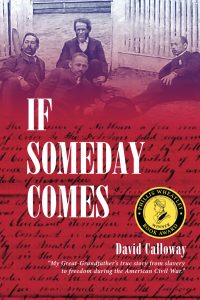
The Goethe Book Awards recognize emerging new talent and outstanding works in the genre of Late Historical (Post 1750s) Fiction. The Grand Prize Winner, David Calloway’s book, If Someday Comes will be promoted for years to come in our annual Hall of Fame article, as well as be featured on the Goethe contest page year ’round!
The best part about being a Chanticleer Int’l Book Award Winner is the love and attention you get all year ‘round!
The Spoon is historical fiction based on the personal anecdotes of survivors of what we now know as the 1956 Hungarian Revolution. At the heart of The Spoon is the true story of two people incongruously brought together during the maelstrom of this historic event; a story that is embodied in one small heirloom and remembered and shared through the generations when the family gathers each year for Christmas.
From Chanticleer:
Lisa Voelker’s historical fiction novel, The Spoon, takes us back to the 1950s in Hungary during the daring student uprising, and attempted revolution,. The author weaves historical facts with fiction in the form of family lore that has been handed down for generations.
We follow scores of people whose lives intersected during this uprising of 1956. The revolution was, at its inception, a time of joyous upheaval, but in less than two weeks became one of devastating dissolution. People fled Hungary by the thousands, but not before giving the Soviet Union a taste of their discontent.
Voelker introduces Rebeka, a member of the Varga family with old ties to the bourgeoisie, who lived a life of privilege on a farm. She is contrasted by Peter, a member of the Turea family who attends Budapest Technical University, where students began demonstrating against the Hungarian Government that was under Soviet control.
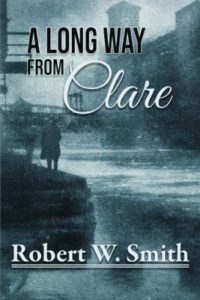
Conor Dolan, a young Irishman, travels to Chicago in 1903 to visit his older brother; instead, he finds a mystery. His journey sparks a quest to peel away secrets and rediscover a dead sibling he idolized but never really knew as he strives to learn the true meaning of brotherhood.
His search reveals an Irish Republican plot to assassinate a visiting British royal. In the process, he is drawn into an alliance with two women: a mesmerizing Jewish widow and a struggling young Irishwoman. Each teaches Conor existential truths of life and love in her own way.
But the brother he finds may not be the brother he remembers. A Long Way from Clare is a story of Chicago’s early twentieth century immigrants and one man’s struggle with both bigotry and justice in an unforgiving city where no good deed goes unpunished.
From Chanticleer:
Twenty-four-year-old Conor Dolan had intended to surprise his older brother and catch up after years apart. However, what he finds when he arrives in Chicago will spark a harrowing mystery, in A Long Way from Clare by Robert W. Smith.
Kevin, a beat cop in twentieth-century Chicago’s worst neighborhood, was found six weeks before Conor’s visit, in what the police have dubbed a suicide. However, Conor has his doubts. Each time he asks people about Kevin, he is met with resistance and denial. When Conor speaks with Detective Flynn, the man assigned to Kevin’s case, his suspicions become certainties. Flynn’s bizarre behavior, the minimal effort on the police’s part to investigate, and the men following Conor at every turn convince him to stay in Chicago rather than return to his home in Springfield.
Conor’s determination to find answers to Kevin’s death lead him in a dangerous dance with darkness amidst the shadows of Chicago’s underworld.
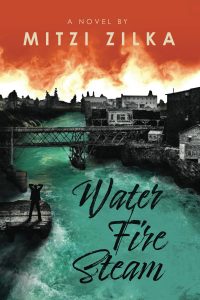
The year is 1884. Rolla Alan Jones, an ambitious dreamer fresh out of an East Coast engineering school, is commissioned to design and build the first water system in Spokane Falls, Washington, a booming town of twenty-thousand. He is everyone’s golden boy for five years until the city burns down on August 4, 1889. The once-celebrated engineer is scapegoated for the catastrophe alleging his system yielded inadequate water pressure. Asked to resign, betrayed by his friends, shunned by the community, and abandoned by his pregnant wife and three-year-old son, Rolla must find the strength to reinvent himself or return to New York as an abject failure. Based on a true story, Water Fire Steam is a story of forgiveness and redemption for anyone who has ever had to claw their way back from an unwarranted accusation.
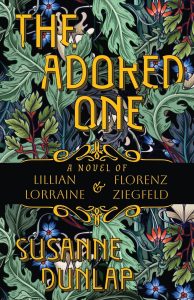
Lillian Lorraine was a naive 15-year-old chorine on Broadway when she attracted the notice of the notorious 41-year-old Florenz Ziegfeld. Accustomed to getting what he wanted, Ziegfeld took Lillian under his wing and into his arms, giving her coveted numbers in the Ziegfeld Follies and taking control of her career. But Lillian’s rebellious spirit chafed against him, refusing to play according to his rules, and nearly destroying her own career in the process. The Adored One follows her through rise and fall after rise and fall as she comes of age in a world where her youthful beauty was an asset-and a liability.
From Chanticleer:
Step into the glittering world of fame and betrayal in Susanne Dunlap’s The Adored One. At just four years old, Leleanne de Jacques, aka Lillian Lorraine, began her acting career. After fleeing an abusive husband in San Francisco, Mary Anne, Lillian’s mother, moves to Philadelphia, seeing her daughter’s talent as their potential meal ticket.
Soon after arriving in Philadelphia and changing her daughter’s name, Mary Anne relocates them both again to New York, where she puts Lillian in front of artists who see her potential for print ads. Lillian soon meets Fred McKay, her first talent agent, and she begins performing in Lee Shubert productions.
When Florenz Ziegfeld sees Lillian onstage, he knows he must have her, both in his productions and his bed. At only sixteen, Lillian signs with Broadway’s biggest producer. She begins to spiral soon after. Drinking and partying become a staple in Lillian’s life, and she is soon keeping more secrets than her young heart can handle. Florenz’s obsession, Mary Anne’s domineering, and Lillian’s own need for approval lead her down a dangerous and lonely path. Losing every friend she ever makes as well as a part of herself, Lillian wonders if the prize of fame is really worth the cost.
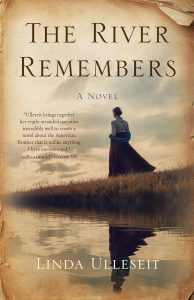
Samantha Lockwood, Day Sets, and Harriet Robinson come to Fort Snelling from very different backgrounds. It’s 1835 and the world is changing, fast, and they are all struggling to keep up. After she refuses another suitor he’s chosen for her, Samantha’s father banishes her to live in the territory with her brother. He, too, tries to take over her marriage plans—but she is determined to find her own husband, even when her choices go awry.
Day Sets demands that her white husband create a school to educate their daughter, supporting her father’s belief that his people must learn the ways of the white man in order to ensure the tribe’s future. Until events prove her father wrong. Harriet’s life in the territory is more like that of a free person than anywhere she’s lived. She even falls in love with Dred Scott and dreams of a life with him. But they are both enslaved, and she keeps being reminded of how little control she has over her own fate. As their cultures collide, each of these three women must find a way to direct her own future and leave a legacy for her children.
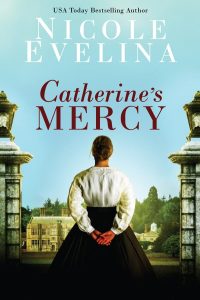
Based on a true story, Catherine’s Mercy brings to life Irish reformer and Sisters of Mercy founder Catherine McAuley.
In 1824, Catherine, a Catholic spinster of 44, unexpectantly inherits millions. However, she doesn’t use it to climb the social ladder or snare a husband; she uses it to fulfill a lifelong dream of building a refuge for the poor and sick of Dublin, Ireland. That an unmarried woman would dare propose such a thing is so scandalous, even her own brother calls it “Kitty’s Folly.” Society turns against her. The Church tries to take over. Catherine must defend her choices or lose not only her inheritance, but her reputation and life’s calling.
One of the first women who seeks Catherine’s help is Margaret, a maid in the house of Lord Montague, the loudest of Catherine’s detractors. Daring to protect herself from his advances and rebel against his maxim of total obedience, Margaret is forced to flee for her life. She desperately approaches Catherine for help, setting off a series of events that haunt Catherine all her days and prompt a rule that holds today, in the real-life Sisters of Mercy.
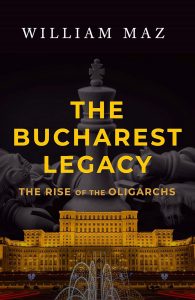
William Maz – The Bucharest Legacy: The Rise of the Oligarchs
The CIA is rocked to its core when a KGB defector divulges that there is a KGB mole inside the Agency. They learn that the mole’s handler is a KGB agent known as Boris. CIA analyst Bill Hefflin recognizes that name—Boris is the code name of Hefflin’s longtime KGB asset. If the defector is correct, Hefflin realizes Boris must be a triple agent, and his supposed mole has been passing false intel to Hefflin and the CIA. What’s more, this makes Hefflin the prime suspect as the KGB mole inside the Agency.
Hefflin is given a chance to prove his innocence by returning to his city of birth, Bucharest, Romania, to find Boris and track down the identity of the mole. It’s been three years since the bloody revolution, and what he finds is a cauldron of spies, crooked politicians, and a country controlled by the underground and the new oligarchs, all of whom want to find Boris. But Hefflin has a secret that no one else knows—Boris has been dead for over a year.
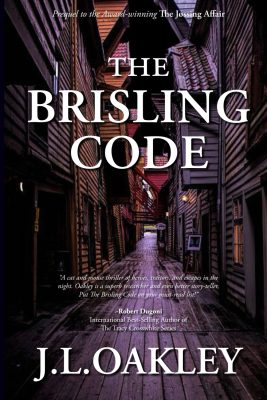
In The Brisling Code, a fast-paced first installment of her historical thriller series, Oakley weaves a brilliant portrayal of the perils met by the Norwegian Resistance during WWII.
Layered perspectives—from resistance workers, traitors, and even an SS Officer—create a rich world through which readers can understand the sacrifices that were made to free our world from the tyranny of Nazi Germany.
Immersed in volatile Nazi-occupied Bergen, Norway, fearless young intelligence agent Tore Haugland and his team of organizers work tirelessly to protect the essential work of the Norwegian resistance.
Haugland’s task is to uncover the plans for the expansion of the German Uboat base with inside help at a shipyard. Also charged in unveiling the meaning behind a mysterious message sent by his murdered predecessor, Haugland navigates the treacherous waters of Norway—a mere haunting of the beautiful city it once was before Nazi occupation. Readers can “almost taste the danger” as our hero moves from one treacherous predicament to the next. Haugland’s mission risks not only his own life, but the lives of every friend and connection he makes.
The Brisling Code is a multi-faceted novel, interspersing the harsh and secretive political climate of Nazi occupation with the deaf community’s resistance work in Norway and a 1919 Norwegian program called the Wienerbarnkomitten, in which Norwegian families took in and raised German children whose families were impacted by WWI.
These overlapping communities create a heart of tenderness and relational love at the center of the novel, despite the violence and treachery that constantly threatens to break through.
For example, seemingly cold-hearted SS officer Hans Becker—on the hunt to capture Haugland and responsible for torturing and murdering many resistance workers— experiences a deep tenderness for his Norwegian foster mother, admitting that “She is my mamma. Not of my blood, but my heart.” As a result, he is forced to reconsider the motives behind his actions and stand up for her well-being, risking both his position as an officer and his life.
The Brisling Code is filled with these small, deeply sensitivity moments that bring characters to life.
People show warmth in a freezing world with actions like a cup of hot coffee, an embrace, and a smile of welcome. Despite the constant threat of violent death, life goes on in Norway, creating a web of intricate characters whose lives are rich with hopes, fears, and longings. Similarly, characters often reveal their true selves under their heavily-curated exteriors through actions and allegiances. These complicated moments and relationships refuse cut-and-dry judgements, allowing readers to find humanity in unexpected places.
Undercurrents of political tension in The Brisling Code create a rich historical context that puts readers in the shoes of Norwegians in their occupied homeland.
With descriptions of everyday life, readers soon understand the paranoia and surveillance in Norway— the constant fear of separation and harm among families and friends.
An expertly researched and executed novel, The Brisling Code invites readers to see that unexpected tender moments can always be found, opening up the possibilities for resistance in the face of violence.
This year we celebrate the 125th anniversary of the birth of one of America’s most important authors, Ernest Hemingway.
Born on July 21, 1899 in Oak Park, Illinois, the influential American literary icon changed the style of novel writing by creating prose that was straightforward and concise, while not sacrificing the emotional impact and lyrical prose. Hemingway wrote about important and timely topics, such as war and the bloody sport of bullfighting, in an accessible way without losing the underlying meaning or sacrificing the emotional reaction he strove to activate in his readers. For this reason, he continues to be celebrated today. In honor of his 125th birthday, I’ll connect three of his most famous stories with the real-life events that influenced his writing.
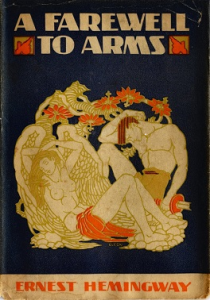
A Farewell to Arms – Exploring the Heart of A Young Man in Love and War
After graduating high school, Hemingway became a reporter for the Kansas City Star in Missouri, and the following year he volunteered as an ambulance driver for the Red Cross in Italy duringWorld War I. He was wounded by mortar fire and spent months recuperating under the care of an English nurse, Agnes von Kurowsky, with whom he fell in love and had affair. She was an older woman who eventually broke Hemingway’s heart when she ended the relationship after he returned to the United States.
In A Farewell to Arms, Hemingway’s fictional character Lt. Frederic Henry falls in love with Catherine Barkley, and their relationship explores the emotional, physical, and spiritual connection Hemingway and van Kurowsky shared during the tumult of World War I.
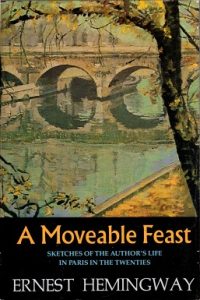
A Moveable Feast – A Writer’s Life in 1920s Paris
Ernest Hemingway chronicled his early years as a strugglingjournalist and writer in Paris during the 1920s in A Moveable Feast. The work mentions Paris’s legendary bars, cafes, and hotels of the era, and gives insight into his relationships with other notable cultural figures of the “Lost Generation,” such as Sylvia Beach, Aleister Crowley, F. Scott Fitzgerald, Ezra Pound, and Gertrude Stein.
One scene in the book offers a moment of reflection for every writer. His first wife, Hadley Richardson, mistakenly throws out the only copy of a book he’d been working on. It’s a heartbreaking scene, but one that adds to the poignancy of the story.
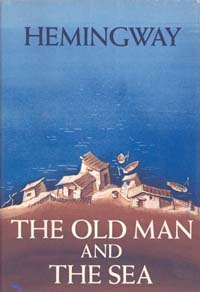
The Old Man and the Sea – The Death of the Writer’s Soul
After a period of frustrating writers block, Hemingway published what would become his last significant work in 1952. “The Old Man and the Sea,” a novella about an aging fisherman in pursuit of a marlin off the coast of Cuba explores how perseverance and dignity are the “weapons” used to battle through a person’s struggles in life and the theme acts as an allegory of the writer’s own struggles to preserve his art in the face of the fame and attention.
Hemingway struggled to produce a major literary work for more than a decade before the “The Old Man and the Sea” debuted, and despite some critics proclaiming it didn’t hold up next to his earlier works, the book was awarded the Pulitzer Prize in 1953 and won the Nobel Prize for literature in 1954.
We will always remember Hemingway
Oftentimes, Ernest Hemingway’s life is told as a series of amazing adventures, mental and physical suffering, lost loves, and a sad and unfortunate ending. Many would say his life was tragic, but that life provided a deep well of stories that propelled Hemingway to produce some of the most important literature in the American cannon. With the skill of a surgeon, Hemingway relied on lessons gained as a reporter to deliver emotionally impactful storytelling in a clear and concise way that many writers continue to turn to for inspiration and learning.
Happy 125th birthday, Ernest Hemingway!
Interested in exploring the times Hemingway experienced through the storytelling of today’s authors? We encourage you to dig into stories written by Chanticleer’s authors who bring to life the early days of the Twentieth Century with the following books.
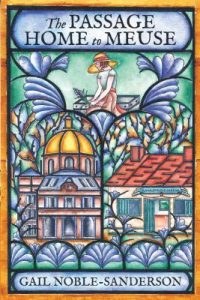
Passage Home to Meuse By Gail Noble-Sanderson First Prize Winner in the Chatelaine CIBA Division
It’s 1923 and character Marie Durant Chagall is now 27 years old as she tells about her life-altering events inThe Passage Home to Meuse,thanks to author Gayle Noble-Sanderson. This is the second historical novel in the Meuse Trilogy. The world around Marie is still reeling from the devastation of World War I. She and the other characters in the book are learning how to continue living, and perhaps more importantly, wishing to find joy once again in life.
Marie is at home in France, seeking peace within, as well as for those around her. She looks for ways to help others who are in need, and her nursing skills come in handy to help this farming community. Nearby she’s found a sense of belonging with the Sisters at the Chapel, and her friendships continue with Henri and others.
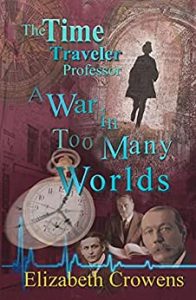
A War in Too Many Worlds By Elizabeth Crowens
Grand Prize Winner in the Cygnus CIBA Division
Musician-turned-time-traveler John Patrick Scott adds spy and saboteur to his resume while undercover in Germany in the final months of World War I, in A War in Too Many Worlds, the third installment of Elizabeth Crowen’s thrilling sci-fi series, The Time Traveler Professor.
Meanwhile, Scott’s once and future collaborator in psychic experiments, Sir Arthur Conan Doyle, is back in Britain sharing real time-travel adventures with the inventor of the fictional time machine, H.G. Wells.
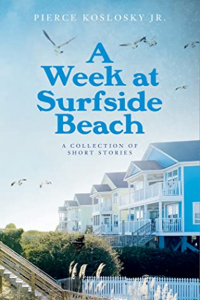
A Week at Surfside Beach By Pierce Koslosky Jr.
Grand Prize Winner in the Shorts CIBA Division
Vacationers from all walks of life converge on Portofino II-317C, South Carolina, a quaint blue beach house, in Pierce Koslosky Jr.’s short story collection, A Week at Surfside Beach.
From May 30th-December 26th each group of people comes to stay one week at a time, to forget their cares of the big city, to work, to celebrate, or to simply get away. Surfside Beach has much to show them, including temperamental weather.
The small town itself offers a charming supermarket where fishing supplies, whoopie pies, and local southern favorites can be found. The Christmas vacationers, the final of the thirteen beach house renters, struggle to find a tree in time; a real tree simply wouldn’t allow enough space for the family to sleep, and the fake tree would cost too much. But they find arts and crafts supplies in town, to fashion a paper Christmas tree during a day of rainy weather.
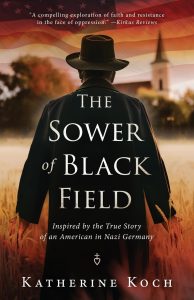
In The Sower of Black Field, Katherine Koch’s historical fiction novel, Father Viktor Koch— a 67-year-old Catholic priest— presides over a monastery in a small German village, as the Nazi regime sweeps through the country.
The time is April, 1941. Fr. Viktor’s order, the U.S.-based Passionists, built the monastery eight years prior, providing employment for most of the villagers and remaining a symbol of their faith.
Fr. Viktor has lived in Europe for over 20 years, but balances his love of Germany, its land, its mysticism, with his American roots. He will need all his personal and religious resources over the next four years as the Nazis take hold in the village and, later, the Americans come to “de-Nazify” the town and hold its people responsible for the horrors of the Holocaust.
Thank you for joining us in celebrating America’s literary icon, Ernest Hemingway!
Do you have a book that deserves to be discovered? You can always submit your book for an Editorial Review with Chanticleer!Chanticleer Editorial Review Packages are optimized to maximize your digital footprint. Reviews are one of the most powerful tools available to authors to help sell and market their books. Find out what all the buzz is about here.
Is your book an Award Winner?
Submitting to Book Awards is a great way to get your book discovered! Anytime you advance in the Chanticleer Int’l Book Awards, your name and book are promoted right here on our website, through our newsletter, and across social media. One of the best ways to engage in long tail marketing!
The Ozma and Goethe Awards both close at the end of July! Don’t let your History become a Fantasy!
The Ozma Award for Fantasy Fiction and The Goethe Award for Post-1750 Historical Fiction close submissions on JULY 31st.
You can’t win if you don’t submit!
Submit to the CIBAs Today!
Only 10 days left to submit your books to the prestigious CIBAs and embark on an extraordinary journey to success. With over $30,000 in prizes awarded annually, now is the time to make your mark!
The Ozma Awards for Fantasy and The Goethe Awards for Late Historical Fiction are still open until JULY 31st!
Congratulations to the Winners of the 2023 Ozma Awards!
Lilla Glass – The Unseen
Charles Allen – The Order of the Red God
Jaime Castle & Andy Peloquin – Black Talon
Jonathan Uffelman – Book of Leprechauns: The Lore Gatherers
PJ Devlin – The Chamber
And a huge round of applause to this years Overall Grand Prize, and Division Grand Prize for OZMA
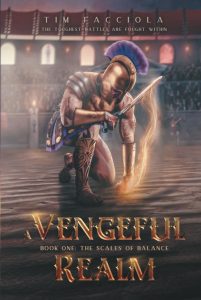
A Vengeful Realm by Tim Facciola!
Congratulations to the Winners of the 2023 Goethe Awards!
William Maz – Bucharest Legacy: The Rise of the Oligarchs
And a huge round of applause to this years 2023 Goethe Grand Prize Winner- If Someday Comes by David Calloway
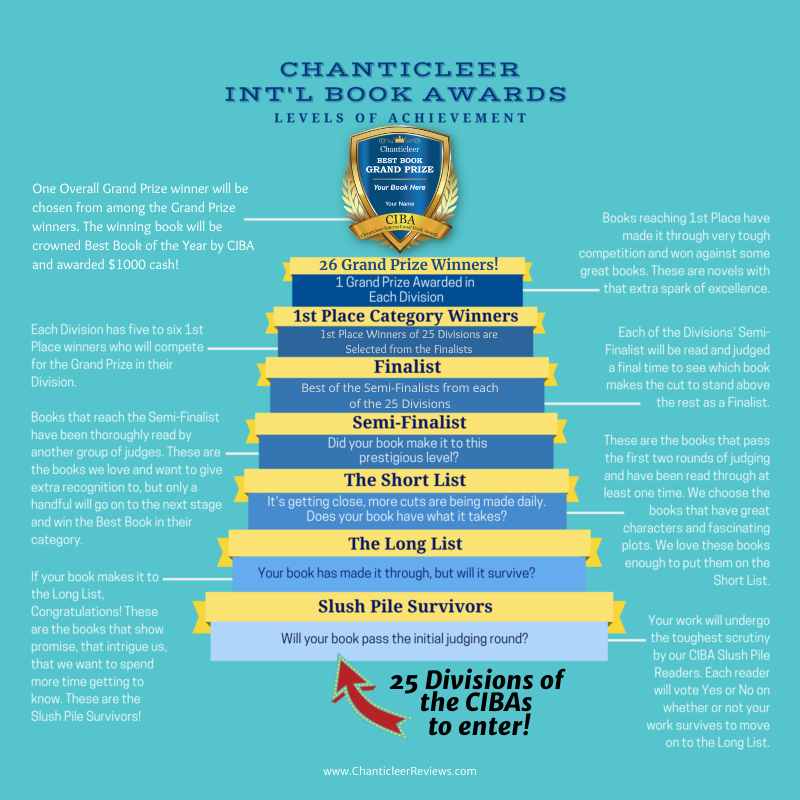
The CIBAs offer more than just recognition — they provide a ladder to success with a range of achievement tiers and expert long tail marketing strategies. From the highly anticipated Long List to the prestigious Overall Grand Prize Winner, the CIBA lists energize both authors and readers, maximizing your digital footprint and expanding your fan base.
We are always eager to support the Best Books through the CIBAs. Join the ranks of celebrated authors who have already taken this critical step in their publishing.
Your book deserves to be discovered, celebrated, and shared with the world. Don’t miss the chance to showcase your talent and gain valuable exposure at the Chanticleer Authors Conference (April 3-6, 2025) where Winners from all 25 Book Award Divisions will be announced and honored.
In a world hungry for good books, your story deserves to be heard. Submit now and leave a lasting impression.
In YIMBY! Yes In My Back Yard!, Sheryl Recinos presents a simple yet powerful story that speaks to the heart of human kindness and the need to help our fellow man.
Most people are familiar with the term NIMBY, the acronym for “Not In My Back Yard”, referencing opposition to the construction of something perceived as undesirable in one’s neighborhood. But this passionate and heart-warming children’s book offers a positive transformation to the word.
Alongside quality illustrations by Amanda Ravensdale, this story explores the concept that people everywhere, both young and old, need our help.
Whether a homeless man in the park accepting food or a warm coat in winter, an elder woman getting help from a teen to climb the stairs, or an adult and child being welcomed by a family offering shelter, each scene emphasizes that “everyone needs a place to live sleep and stay safe.”
In another instance we see a father and his children admire their work after they transform a small structure into a freshly painted safe haven for someone. To show just how far reaching the homeless problem is, one image depicts a Native American looking out over the vast western landscape dotted with mountain ranges and roaming bovine.
Ravensdale’s illustrations are brightly colored, with fine detail and texture.
From the close perspective of a doe-eyed girl sipping a warming drink, to the mixed gathering of community members, all pictures reflect the story’s core sentiment.
In this engaging work, Recinos also includes suggestions for helping those who need housing in our own communities.
Consider food and clothing drives, sack lunch programs, and letters to legislators voicing concerns about the homeless. Further interaction includes questions posed to the reader about additional help they might offer. Several organizations are listed to further the cause of ending homelessness, including havens for both the young and old, as well as programs for homeless veterans.
The final page depicts colorful drawings and bios of the author and illustrator.
Recinos’s own experience with homelessness as a teenager is clearly reflected in her choice of subject matter. Ravensdale was born into a multicultural family and was influenced by an artist father. Growing up in countries around the world gave her a vast exposure to a variety of people.
With the Supreme Court’s recent debate regarding ticketing the homeless, YIMBY couldn’t come at a more pressing time. Though written for children, the book’s message offers a thought-provoking and compelling experience to be shared by young and old alike.
Fantasy isn’t just elves and magic. There is so many possibilities for a Fantasy Tale and we love that!
Let’s Dive into the Categories!
Magic, Heroes and Villains is classic High Fantasy like Lord of The Rings.
Coming of age is Fantasy typically looks at someone coming into their own, like Egwene al’Vere in The Wheel of Time, but it can also be aimed at a younger audience. For YA Fantasy see Dante Rossetti and for Middle Grade Fantasy check out the Gertrude Warner Awards!
Steampunk and Dieselpunk are a type of Alternative history and Counterculture, Steampunk being Victorian era sci-fi or fantasy, or both, with an emphasis on steam powered or gaslight technology and historical fashions.
Dieselpunk is a similar category but more like an industrial Art Deco, Film Noir aspects with aesthetics of the World Wars and Early Cold War. The video game series Bioshock, or Bladerunner could be seen as examples of Dieselpunk . There are quite a few different types of ‘punk’. Cyberpunk is one of the more well known, using 1980s futuristic aesthetics.
Historical Fantasy is similar to the previous, but with less of the Science Fiction elements. History with magic instead of History with weird tech.
Modern and Urban Fantasy is exactly what it sounds like. Jim Butcher’s The Dresden Files is a good example. Fantasy, but realistic. Magical Realism stands on its own, and can be found as a Category in the Somerset Awards!
Last, but not least is Myths and Legends and Fairy Tales. Classic Fantasy elements, Fairies, King Arthur, folktale type stories.
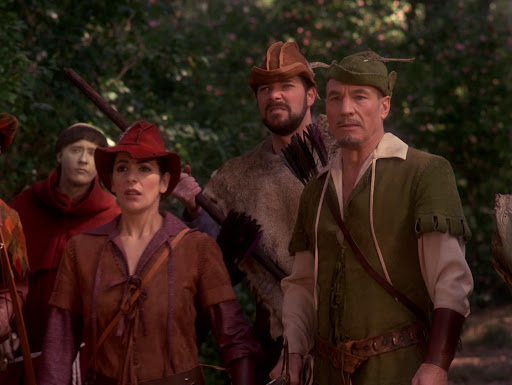
Fantasy can even have many crossovers with Science Fiction! The cast of Star Trek: Next Generation shows just the same thing.
Looking for your next Fantasy Read? Check out some of these incredible books we’ve reviewed!
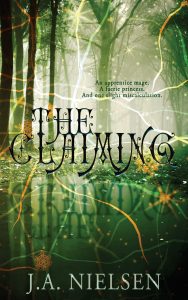
THE CLAIMING: Fractured Kingdoms Book 1 By J.A. Nielsen
The illegitimate son of a human king accidentally binds himself to a Fae princess in J.A. Nielsen’s YA adventure, The Claiming. As war bears down on the kingdom of Telridge, can the two of them break the spell in time?
Lord Ferrous, ruler of Telridge, smells conflict coming for his people. Even so, he denies a mysterious request from the king of the Winter Fae, and sets his sons to prepare their land for war. His eldest, Prince Dirk, gathers his knights and begins to evacuate the common people to the protection of Telridge castle. His younger son Spense, born out of wedlock to the castle’s head cook, uses his finicky magic to Claim a bridge over a powerful river. If he succeeds, the passing will be barred to their enemies. But he fails to realize that the powerful living force he encounters isn’t the bridge at all.
Dewy, crown princess of the Summer Fae, is Claimed instead of the bridge. Her aunt, Lady Radiant, must exile her from their lands. While Dewy’s careless spirit chafed under Radiant’s authority, she grieves for her lost home.
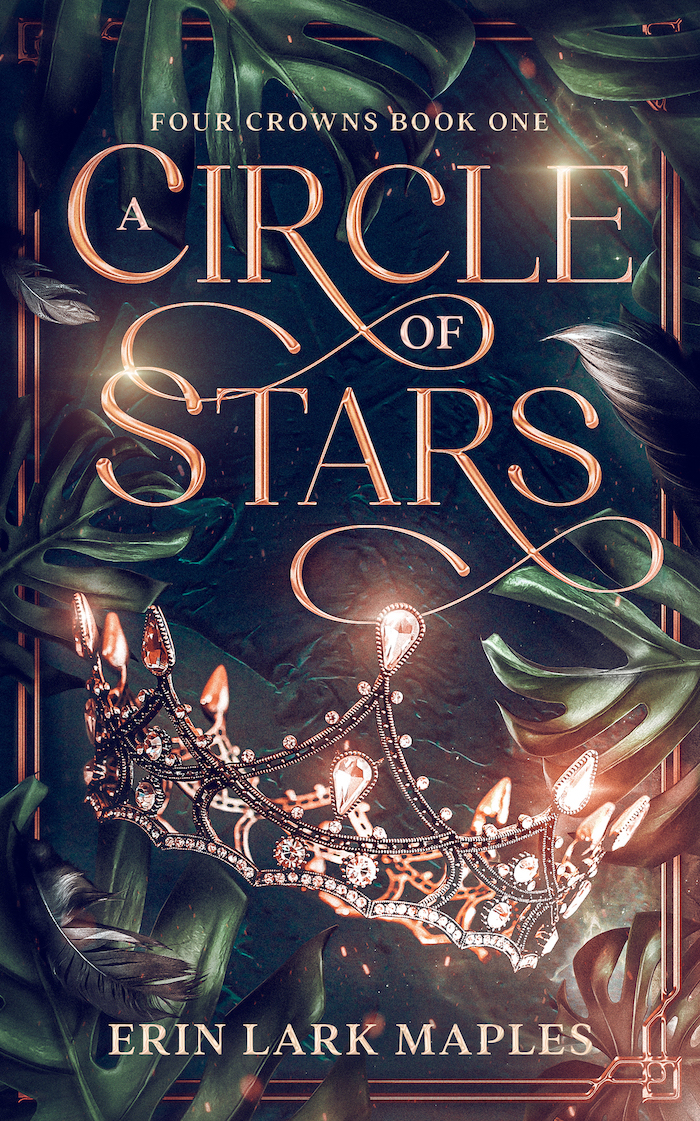
A CIRCLE Of STARS: Four Crowns Series Book 1 By Erin Lark Maples
If you’re looking for a beach read with supernatural intrigue, A Circle of Stars by Erin Lark Maples will draw you in from page one. Ember “EJ” James, a newly-arrived stranger in the strange land of Prescott, AZ, immediately begins navigating unfamiliar territory, both physically and metaphysically.
Forty-something EJ doesn’t know it yet, but when she agreed to take over her deceased uncle Hollis’s shop in Prescott, she stumbled into a world of magical realism. The plant shop, as it turns out, is more than just that—it hides secret access to other realms, which supernatural beings will go to great lengths to access. Much like the plants in the shop, this tale is dark, tangled, and intriguing beyond belief.
Anyone else may have felt helpless. But EJ remains upbeat, charmingly self-deprecating, and resourceful to the end. There’s a great joy in seeing how she works through her new surroundings, unfazed by (almost) everything they throw her way.
SUMMER THUNDER: Magic at Myers Beach Book 1 By Alan B. Gibson
Lily struggles to keep her business, her son, and her home. But in Summer Thunder, first book of the Magic at Myers Beach series by Alan B. Gibson, Lily’s luck begins to turn as she connects with the enigmatic beach king Theos.
With the help of her friend and fellow business owner Greta “the Witch,” Lily tries to revitalize her fairy-themed decoration and figurine store. Her divorce from her abusive ex-husband Kelly is pending, and she must present a calm and reliable home to ensure full custody of her son Jamie. But when her kindly landlord, Ms. Coffey, passes away, she’s confronted with two options: lose her prime business location and upstairs apartment, or somehow make enough money to buy the building herself.
Enter Theos, a kitesurfing champion with adoring fans. He shows true appreciation for Lily’s fairy figurines, bringing her many more sales. But more importantly, Theos becomes deeply interested in Lily herself. Their romance begins on rocky footing, as Theos has a strange air about him and seems to vanish whenever a storm comes into town. But when he begins modelling for a new fairy figurine – aptly named Theos, the King – the two are drawn inevitably closer.
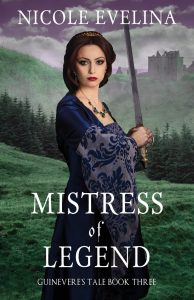
MISTRESS Of LEGEND: Guinevere’s Tale Book 3 By Nicole Evelina
In Mistress of Legend, the enticing finale of Nicole Evelina’s Guinevere’s Tale trilogy, matters are life-and-death by the second sentence, pulling readers deep into Guinevere’s fate in this retelling of Arthurian legend.
We come upon heroine Guinevere in the midst of an ill-fated romance with Lancelot. It’s far from her first troubled entanglement, but the stakes rise as she’s severely injured and faces even more threats, pursued by possible enemies. The novel’s beginning is woven with backstory, which adds suspense to the drama unfolding in Guinevere’s present. This summarizing might be slow for readers familiar with the series, but makes the story accessible for those who haven’t picked up the first two books.
Many more characters appear, waving the web of intrigue Guinevere finds herself caught in.
Evelina builds this setting through well-researched cultural details, like the holidays and rites of Guinevere’s pagan world, and the symbolism and ideology of the Christianity that threatens to blot her world out.
Plus, check out our 2023 Overall Grand Prize Winner, A Vengeful Realm by Tim Facciola!
A roaring start with a queen planning her husband’s execution while full of regret for what must be done. Magic is forbidden, knights and gladiators are doing their best to make their way through a complex political world, and the prince is just trying to keep his family safe. Excellent for anyone who loves Brandon Sanderson!
Thank you to everyone who submitted to the 2023 Ozma Awards! We can’t believe that the whole adventure starts again when the Ozma Awards close on July 31st, 2024.
This is the journey from beginning to end for the CIBAs Levels of Achievement is so worthwhile! Every list you make means more promotion for you and your work as each list is posted right here on our website, on our social media, and also out in our newsletter! Your book deserves to be discovered.
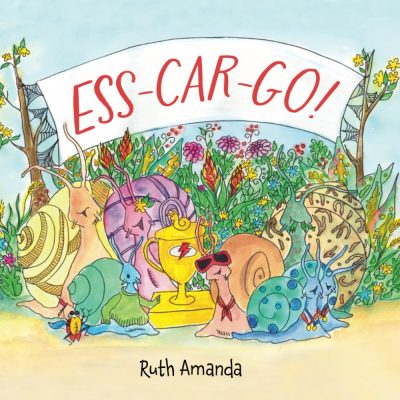
With their park damp from the rain, seven snails line up for their next thrilling race in Ruth Amanda’s Ess-Car-Go!
Frogs, bugs, birds, and even a curious cat come to cheer on the famous snail racers, from the stylish Sterling to the easily-distracted Sherlock. And as each one runs into their own kind of trouble; this trophy could go to anybody!
All the racers are easy to root for, with their mishaps fitting the natural oblivious image of snails.
Written in an energetic two-piece rhyming scheme, this story builds excitement all the way to the end.
Each snail is introduced with a cute, memorable design and a few accompanying rhymes to show their prowess and personality, getting readers as engaged in the race as all the critters in the park. Their distinctive colors keep the race clear, while helping to show there are many kinds of snails in the world—and sometimes even in just one stretch of grass.
The rhymes cleverly fit in some vocabulary words like “hydroplane”, and the back of the book even includes a list of fascinating snail facts, teaching kids and adults alike more about these strange garden creatures.
Whimsical watercolor illustrations absolutely fill Ess-Car-Go! with detail.
There’s always more to draw the eye across the page, from colorful plants to the menagerie of adorable critters—each with their own kind of visual charm.
Along with that dedication to detail, the illustrations play with funny animal visual gags. They indulge in the wonderful silliness of a frog doctor, birds and insects trying to help their favorite racer, and of course the shell-spraining speeds that these snails achieve—all while maintaining a real sense of suspense as the finish line approaches.
Travel Writing beckons us to leap into the unknown!
Travel writing tells us to buy that plane ticket, jump on that train, or gas up the car to chase after the dream of earning a living writing about the many incredible places you find when you step outside your front door. But all dreams require a little forethought.
The Annual Kite Festival in Rockaway Beach, OR is an exciting spectacle of high-flying kites, handled by masterful kite operators. -Dena
Here are our top tips for how to hit it out of the park with travel writing and make your journey compelling!
Getting the Story
1. Find the Story
Just like it is with all writing meant to sell, writers must stay abreast of trends to ensure their work is marketable.
Online and print travel magazines are a good place to start. Day trips are always a hot topic, and you can follow local and regional periodicals to stay up to date on what’s new in your area. A general periodical focused on travel will provide you with a wider view of interesting places to explore.
Travel associations and travel and tourism offices are a treasure chest for travel writers! Their representatives work hard to steer you in directions that are timely, interesting, and full of possibilities for a great article. Cultivating these relationships will reward you with insider information, guided press tours, and future writing opportunities.
Remember to reach out to your Circle of Influence, too! Reaching out to your traveling friends and associates to find the places they are most interested in will also give you valuable insight. Where do they want to go? How will they spend their time when they get there? What questions do they have that you can find the answers for? The answers to these questions will be a catalyst for a compelling article that reaches the right readers.
Finally, you’ll want to consider your own interests when looking for your next travel story. Think about what you enjoy when you travel, and contact those groups directly to find out what is new and exciting so you can help promote it for them. If the relationship goes well, they may come to know you as a dependable writer and eventually reach out to you with story ideas!
One of the most delicious burgers in the Pacific Northwest is found at Mock Crest Tavern in North Portland, OR. Juicy and flavorful! – Dena
2. Research
Good research will help you find an interesting angle for your article and lead you to those bits of lesser known information that will elevate your article above the others focusing on the same topic.
Gather the information given to you by the tourism associations and other groups, then do a little research on your own to find interesting details to give your story a unique spin. For example, if you are writing about the best hiking boots to wear on extreme hikes, find out who the designers are and what makes them experts in hiking footwear. By doing this you’ll be telling readers of your articles you are an authority on travel topics they are interested in.
Beautiful glass art fills Robert Adamson’s Island Art Glass Studio on Whidbey Island, WA. I visited while on a press tour for the Whidbey Island Arts Council and found the many colors mesmerizing. And watching his artists work in their glass blowing shop was a special treat! – Dena
3. Get the Inside Scoop
People love hearing from the locals, and locals love telling people about places and events they love near their home.
Adding quotes from people who are involved in events or owners of restaurants, hotels, or activities will provide depth, color, and validity to your article. Convey their enthusiasm for their events/activities and let the reader feel it through compelling writing.
Not only will you be creating a great article with quotes, readers will be given an insider’s view into the experience as they learn the basic information that will enable them to book their next big adventure! Get out your old journalism notes to get the “who, what, why, where, and when” information to fill in your article and up the value of the content, then find one or two quotes that will add interest to your article, and be sure to cite the person if required.
Tillamook, OR’s annual “Pig and Ford” races have been a fan favorite since 1923. Drivers must stop in the middle of the race to catch a pig and take him for a ride. It’s a wild and thrilling event! – Dena
4. A Personal Perspective
It’s time to put yourself into the writing!
What was your experience like? Seek out those special moments that really connected with you and tell them as if you were talking to a friend who is about to visit the same place. Use your five senses to infuse your article with compelling, sentient writing the reader can connect with and feel confident they understand what you’ve experienced. Keep in mind, you want to be honest in your writing, and keep negativity out if you want to be invited back for future writing gigs.
I ran across the street band playing at Portland, OR’s Skidmore Fountain. Their music made me think of Appalachian music from the past. – Dena
Travel writing is an exciting adventure, both on the road and on the page! Starting off right with these tips in mind will help you get the story, write an interesting article, and get noticed by the people who need good writers to get the word out to support their local tourism. Whether you travel across the world or down the block, you’ll find endless amounts of inspiration for your travel writing adventure.
Interested in travel writing? Here are just a few great authors writing about their adventures!
In Cassandra Overby’s encyclopedic guide Explore Europe On Foot, readers are taken through a step-by-step process of dreaming, planning, and hopefully soon experiencing memorable, slow travel ventures of a lifetime. Whether it’s choosing a route and destination, deciding what to pack, finding appropriate accommodations and food options, or dealing with inevitable challenges, Overby supplies a world of information in this colossal foot travelers’ bible.
Square Up: 50,000 Miles in Search of a Way Home By Lisa Dailey
Although she and her husband had planned to take their family on a ’round-the-world adventure, she didn’t expect their plans to come together on the heels of grief, after losing seven family members in five years. Square Up shows us that travel not only helps us understand and appreciate other cultures, but invites us to find compassion and wisdom, heal from our losses, and discover our capacity for forgiveness, as well as joy.
Thank you for joining us for this Writer Toolbox Article
There is so much to learn and do with Chanticleer!
From our Book Award Program that has Discovered the Best Books since the early 2010s to our Editorial Book Reviews recognizing and promoting indie and traditional authors, Chanticleer knows your books are worth the effort to market professionally!
The traditional publishing tool that indie authors can use to propel their writing careers to new levels? Check it out here!
Do you have a book about travel that deserves to be discovered? You can always submit your book for an Editorial Review with Chanticleer!
Chanticleer Editorial Review Packages are optimized to maximize your digital footprint. Reviews are one of the most powerful tools available to authors to help sell and market their books. Find out what all the buzz is abouthere.
You can see our full list of Non-FictionBook Awardsis a great way to get your book discovered!
Anytime you advance in the Chanticleer Int’l Book Awards, your name and book are promoted right here on our website, through our newsletter, and across social media. One of the best ways to engage in long tail marketing!
Now pack your bags, grab your laptop, and get exploring, writing, and creating great stories!
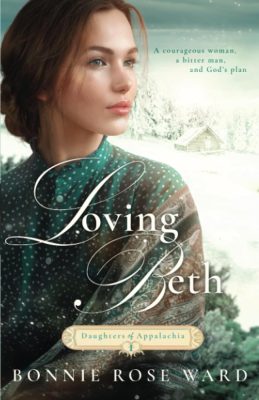
In Loving Beth, a Christian historical romance by Bonnie Rose Ward, a young woman finds herself in dire straits when her widowed mother dies unexpectedly.
Beth’s father had taken out loans to improve their property, but he was killed in the Civil War, leaving his wife and daughter to struggle to keep up with the payments. Now, Beth is alone without any means to keep her home—finding and taking in two young, abandoned children certainly doesn’t help. But even amidst her troubles, Beth’s thoughts keep going back to the mysterious and handsome stranger who found and brought home the body of her mother.
Life is not easy in her tiny settlement in West Virginia, and young, pretty Beth finds that it is not about to get any easier. The new banker holds a grudge toward her for having rejected his advances, and the man’s snobbish wife is determined to make Beth’s life even more miserable. The loans that Beth and her mother worked to pay each month are suddenly due in full— but the banker’s unwanted and ugly advances are foiled with the appearance of the mysterious stranger.
Ward effectively describes the harsh day-to-day work Beth must do to keep her farm afloat.
She reminds us in no uncertain terms that, yes, deciding which rooster to butcher and process is an integral part of the process to simply put dinner on the table.
Beth McCullough’s world is clear and well-characterized. The writing pays close attention to its setting, with different characters speaking in regional accents, providing the characters with a natural feeling to their speech.
Loving Beth is a heartwarming historical romance.
Author Bonnie Rose Ward describes a time and place long ago, portraying the struggle for women who are left behind in the aftermath of a devastating war, relying on their faith and friends to carry them forward, while finding love in an unexpected place.

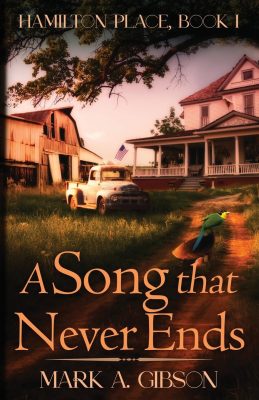
 A Song That Never Ends, the first volume of a two part series by Mark A. Gibson, opens a dramatic fictional saga of the Hamilton family from the late 1930s Depression era, to 1967 and the Vietnam conflict. Here against the backdrop of a South Carolina tobacco farm, we come to witness a family in turmoil.
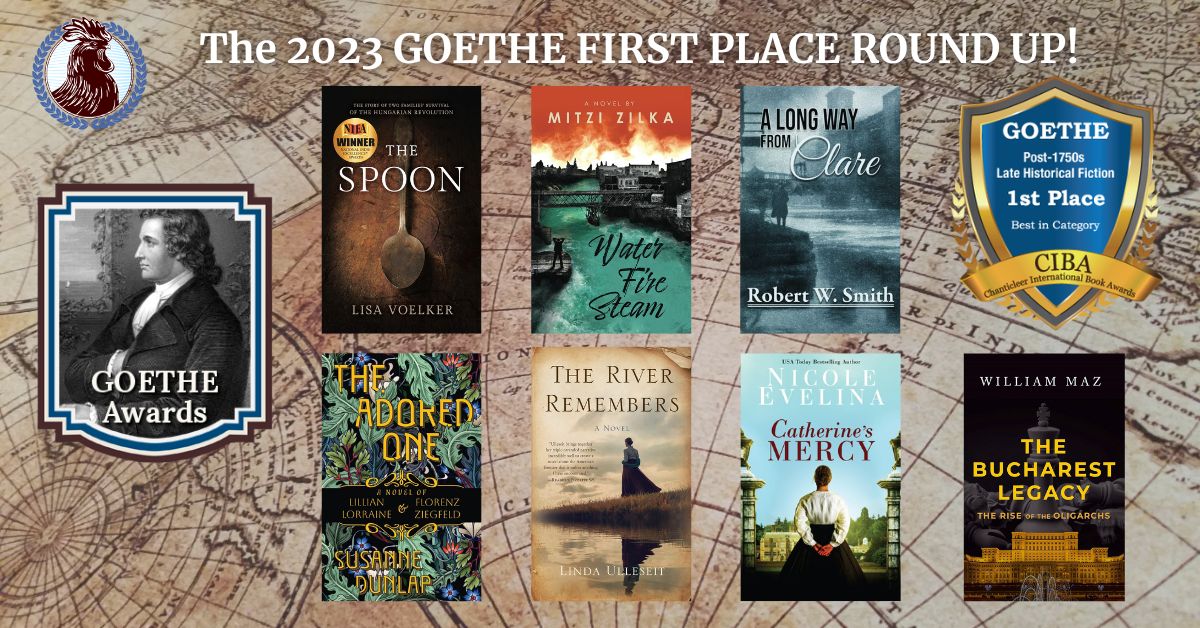
 The Goethe Book Awards recognize emerging new talent and outstanding works in the genre of Late Historical (Post 1750s) Fiction. The Grand Prize Winner, David Calloway’s book, If Someday Comes will be promoted for years to come in our annual Hall of Fame article, as well as be featured on the Goethe contest page year ’round!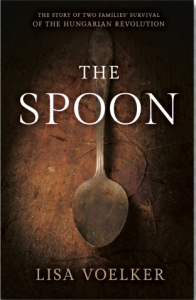


 In The Brisling Code, a fast-paced first installment of her historical thriller series, Oakley weaves a brilliant portrayal of the perils met by the Norwegian Resistance during WWII.























 In Loving Beth, a Christian historical romance by Bonnie Rose Ward, a young woman finds herself in dire straits when her widowed mother dies unexpectedly.