Author: chanti

  • The 2024 Goethe Book Awards Short List for Late Historical Fiction

    The 2024 Goethe Book Awards Short List for Late Historical Fiction

    Post 1750s Historical Fiction AwardThe Goethe Book Awards recognize emerging new talent and outstanding works in the genre of Post 1750 Historical Fiction. The Goethe Awards is a genre division of Chanticleer International Book Awards and Novel Competitions (The CIBAs).

    Chanticleer International Book Awards is looking for the best books featuring Victorian, Georgian, Regency, International History, 20th Century, and all the possible historical topics that an authors imagination can dream up for the Goethe Book Awards division. Our judges from across North America and the U.K. will put them to the test and choose the best among them.

    These titles have moved forward from the 2024 Goethe Late Historical Fiction LONG LIST to the 2024 Goethe Book Awards SHORT LIST. These entries are now in competition for the 2024 Goethe Semi-Finalists. FINALISTS will be chosen from the Semi-Finalists and recognized at the Chanticleer Authors Conference, CAC25.

    We will announce the 1st Place Category winners and Grand Prize Division Winners at the CIBAs Banquet and Ceremony on Saturday, April 5th, 2025 in beautiful Bellingham, WA sponsored by the 2025 Chanticleer Authors Conference

    A Wreath with the words "CAC 2025" on it to celebrate the Chanticleer Author's Conference!

    These titles are in the running for the SEMI-FINALISTS of the 2024 Goethe Book Awards novel competition for Late Historical Fiction!

    Join us in cheering on the following authors and their works!

    • Tessa Floreano – Murder & Matrimony in the Castello
    • Janis Robinson Daly – The Path Beneath Her Feet
    • Kim Gottlieb-Walker – Lenswoman in Love
    • Jeanne Gehret – Secrets to the Wind
    • Donna Russo – Vincent’s Women: The Untold Story of the Loves of Vincent van Gogh
    • William Robert Reeves – The In-House Politician
    • Louis Trubiano – What Once Was Promised
    • Katherine Koch – The Sower of Black Field: Inspired by the True Story of an American in Nazi Germany
    • Sandra Wagner-Wright – Sea Tigers & Merchants: A New American Generation
    • Gail Noble-Sanderson – A Cup of Revenge
    • J.R. Holland – Vigilante Love Song
    • Susan Higginbotham – The Queen of the Platform: A Novel of Women’s Rights Activist Ernestine Rose
    • Brook Allen – West of Santillane
    • James Conroyd Martin – Napoleon’s Shadow Wife: A Novel of Countess Marie Walewska
    • Sean James – The Vengeful Kind
    • Georgina Hogue – Cloud Cap
    • Linda Ulleseit – Innocents at Home
    • Florence Reiss Kraut – Street Corner Dreams, A Novel
    • Paula Butterfield – Missing Mr. Moonlight
    • Reenita M. Hora – Vermilion Harvest – Playtime at the Bagh
    • Carolyn Summer Quinn – Until the Stars Align
    • Leo Daughtry – Talmadge Farm
    • Jeza Belle – Blood Rouge
    • John David Graham – Running As Fast As I Can
    • R. W. Meek – The Dream Collector, Book II “Sabrine & Vincent van Gogh”
    • Annette Gagliardi – Ponderosa Pines: Days of the – Deadwood Forest Fire
    • Sherry V. Ostroff – The Wall at the Sugar Factory
    • Alina Rubin – A Girl with a Knife
    • Alina Rubin – Abigail’s Song
    • M. B. Zucker – The Middle Generation: A Novel of John Quincy Adams and the Monroe Doctrine
    • Heather Miller – Yellow Bird’s Song
    • João Cerqueira – Perestroika
    • Adrienne Stevenson – Mirrors & Smoke
    • Gail Ward Olmsted – Katharine’s Remarkable Road Trip
    • C.M. Huddleston – Esther
    • Karen Lynne Klink – At What Cost, Silence? Book 1 of The Texian Trilogy
    • Diane Byington – Louise and Vincent
    • Jerry Madden – Steel Valley: Coming of Age in the Ohio Valley in the 1960s

    Good luck to all as your works move on to the next rounds of judging.

    PROMOTING OUR AUTHORS! 

    This post has been posted on the Chanticleer Facebook Page. We try to tag all authors listed here in the Facebook post. However, it is easier for us to tag authors when they have Liked and Followed us on Facebook.

    Please click here to visit our page to LIKE, COMMENT, and SHARE on Facebook.

    We will also be promoting this list in our Newsletter, which you can sign up for here!

    Congratulations once more to the 2023 Goethe Grand Prize Winner

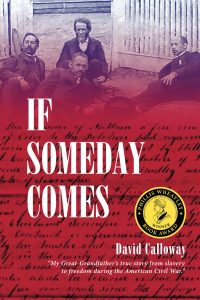
    If Someday Comes

    By David Calloway

    If Someday Comes Cover

    blue and gold badge recognizing If Someday Comes by David Calloway for winning the 2023 Goethe Grand Prize

    Click here to see the full list of 2023 GOETHE Book Award Winners for Late Historical Fiction.

    We are now accepting submissions into the 2025 Goethe Book Awards for Late Historical Fiction.

    Please click here for more information.

    Winners will be announced at the 2024 CIBA Awards Ceremony that is sponsored by the 2025 Chanticleer Authors Conference.

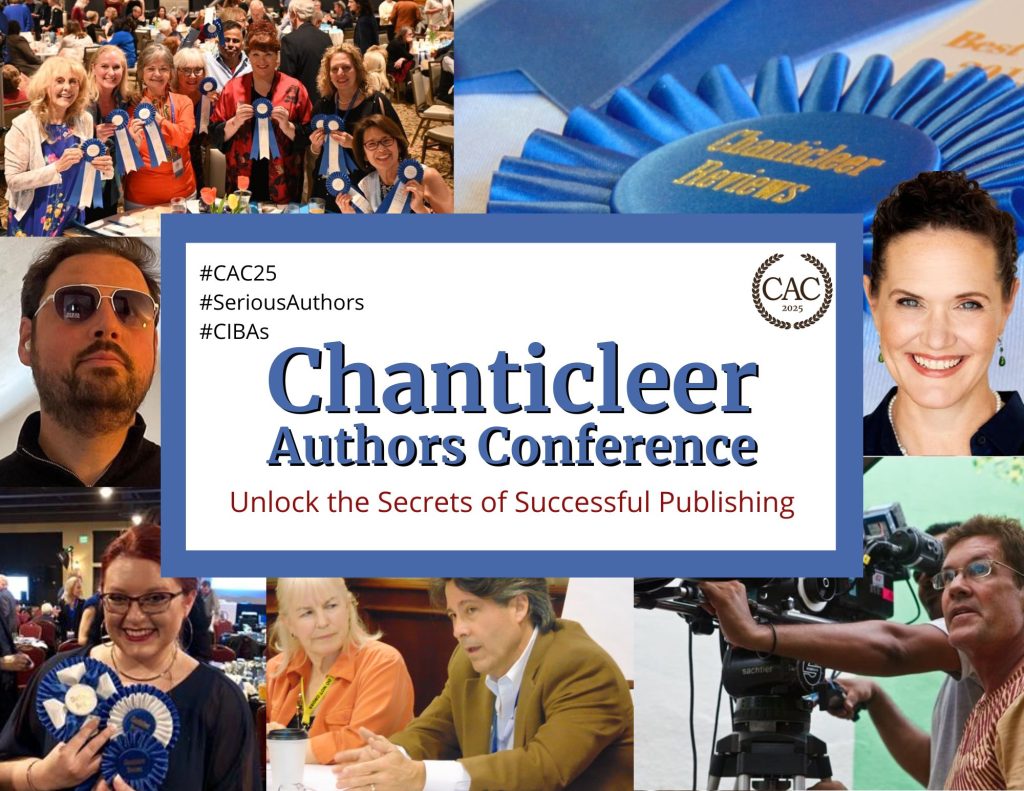
    April 3 – 6, 2025! Save the Date for Registration!

    Seating is Limited. The esteemed WRITER Magazine (founded in 1887)  has repeatedly recognized the Chanticleer Authors Conference as one of the best conferences to attend and participate in for North America.

    Join us for our annual conference as we enter our second decade and discover why!


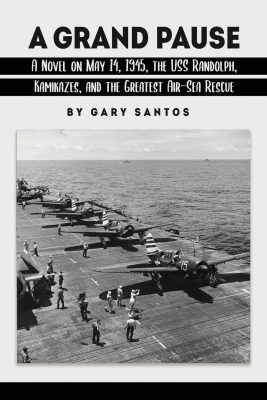
  • A GRAND PAUSE: A Novel on May 14, 1945, the USS Randolph, Kamikazes, and the Greatest Air-Sea Rescue by Gary Santos – Historical Fiction, WWII Pacific Theater, WWII Naval Aviation

    A GRAND PAUSE: A Novel on May 14, 1945, the USS Randolph, Kamikazes, and the Greatest Air-Sea Rescue by Gary Santos – Historical Fiction, WWII Pacific Theater, WWII Naval Aviation

    In A Grand Pause: A Novel on May 14, 1945, the USS Randolph, Kamikazes, and the Greatest Air-Sea Rescue by Gary Santos, readers board the US Naval aircraft carrier alongside its crewmen as World War II’s Pacific Theater reaches a critical point.  

    This compelling novel opens with a startling description of the US Navy caught in the bloodiest and longest battle in its history. Through a wide cast of characters, from sailors to pilots, officers to the deck crew, everyone plays a vital role in keeping the USS Randolph running amidst the most heated naval combat of World War II.

    Santos writes every moment of these nightmarish battles with intensity and authenticity.

    Rich details provide a visceral experience for the reader as they feel, see, and breathe each nuance of the desperate fight to stop the kamikazes from reaching their targets. These kamikaze attacks move so quickly readers will need to catch their breath. To feel as if an attack is truly happening while turning the pages is a testament to Santos’s talent. His entwining of fact with fiction is seamless.

    With meticulous detail, Santos describes the moment when Ensign John Morris and his gunner Cletis Phegley are shot down.

    Readers share the stomach-dropping terror of a descent to an unknown fate. When the USS Randolph sets a plan in motion to rescue the men before the Japanese can get to them, their heart-pounding, desperate hope becomes inescapable.

    With a lifetime working in aviation, Santos is deft at explaining the intricacies of what the pilots, flight crew, and officers experienced. As the actual son of one of the crew members in this historical event, he delivers its emotional reality with lasting impact.

    A Grand Pause is a must-read that will grab the attention of any historical or wartime reader who wants to be truly submerged in a heart-stopping, passionate military story. Gary Santos brings the past into the present!


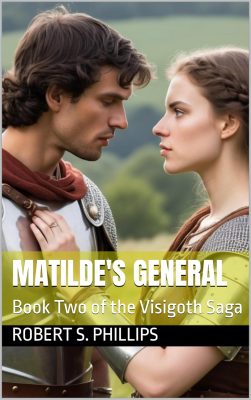
  • MATILDE’S GENERAL: The Visigoth Saga Book 2 by Robert S. Phillips – Historical Fiction, Ancient Rome, Visigoths

    MATILDE’S GENERAL: The Visigoth Saga Book 2 by Robert S. Phillips – Historical Fiction, Ancient Rome, Visigoths

    Matilde’s General, the second book in The Visigoth Saga by Robert S. Phillips, follows young Matilde, daughter to the Visigoth Elodia and the Roman Caius, as she takes part in the looming fall of the Roman Empire.

    Showing the same will and cunning exhibited by her mother in Elodia’s Knife, Matilde spends her youth training to fight. She transforms from an 11-year-old bravado into someone stronger, wiser, and ultimately respected by men in power.

    Matilde’s General thrusts readers right into battle – and the action keeps blazing throughout this ancient history.

    Her stepbrother Alaric, and his fightersprized by the Roman Emperor Theodisiusare hired to fight in a civil war. Matilde follows behind in secret. When she is discovered, Matilde is grudgingly allowed to help her mother with the medical cart. But nothing has prepared her for the bloody conflict ahead.

    Used as arrow fodder, half the Goth fighters are slaughtered, with most of those still alive badly wounded. Compartmentalizing her grief and horror, Matilde helps treat the injured, whose numbers are multiplied when a ferocious storm follows the battle.

    As the ragged remainder, including a wounded Alaric, return home, Matilde asks, “Our songs and stories are full of heroic deeds. Why don’t they tell the truth? That war is horrible, and young men die?” Elodia tells her that men are born to fight and protect uswomen to be mothersbut Matilde thinks otherwise.

    She listens carefully and begins to debate military philosophy with first Alaric, and eventually, all men in her sphere.

    Although Rome viewed all non-Romans as barbaric, the Goths held themselves as civilized. All peoples plundered and burned other villages, but the Goths only took what they needed. Matilde’s family experiences this firsthand on their return home to Storgosia. The Huns have destroyed all but the old Roman fortress.

    Matilde and Alaric agree that their people can’t remain there. Together, they hatch a plan.

    Emperor Theodosius has died, leaving his kingdom split between his two mentally weak sons. The pact between the Goths and the emperor is now nullified. Alaric determines to forge a new one, not only codifying him as magister militum, but also giving his people lands within the Roman empire.

    Matilde refines Alaric’s speech to the Goths and is credited by one of the leaders as “wise beyond her years.” It won’t be the only time. In fact, many of the women far outweigh the men in perceptiveness and prudence. This echoes the point that Elodia made to her daughter.

    The Goths under chieftain Alaric journey to Constantinople to propose their new pact. Now recognized as a thoughtful advisor by her people, Matilde attends in the guise of a server but whispers counsel in Alaric’s ear. The negotiations last a month, and ultimately, Emperor Arcadius grants Alaric the region of Thessalia, but no military title.

    When Arcadius reneges on part of the pact, a battle breaks out, but the top Roman generals Stilicho and Gainas choose not to escalate.

    General Gainas takes note of Matilde. Before the Romans return to Constantinople, they demand two hostages as “guarantors of Alaric’s good behavior.” With Gainas’s growing respect for and attraction to Matilde, it’s no surprise that she is chosen.

    Robert Phillips imbues Rome with life and color, exciting readers with the ancient city just as it fascinates Matilde herself.

    The market stalls are filled with silks, jewelry, and other riches. Matilde joins on weapons drills, astonishing the young men. She watches gladiatorial games and chariot races, realizing that above all, Rome is defined by the constant presence of bloodsport, violence, and death.

    But for all its jubilant chaos, Rome is controlled by careful intrigue and political machinations. Matilde has to quickly grasp the tenuous flow of power.

    She is taken prisoner as a spy, but soon released back to an ever-more adoring Gainas, who acts on her suggestion to remove the chief minister and take his place. However, Arcadius feels threats closing in on him and starts having generals killed, so Gainas departs with an envoy to recruit more fighters.

    Befriended by a general’s wife, Matilde confesses: “Gainas is destined to be the Stilicho of the East […] though he doesn’t know it. He needs a woman to help him fulfill his purpose. I am that woman […] Gainas and I would become the rulersthe effective rulersof half the world.”

    For once, Matilde’s instincts fail her.

    On their return to Rome, unrest escalates, and the empire’s slow demise is reflected in Matilde’s personal life. Now very pregnant, she loses the empress’s friendship. Gainas is obsessed with military action, and he no longer takes her counsel. She realizes that, faced with turmoil, “Gainas was too proud to take suggestions from a little girl.”

    With few people she can rely on, Matilde will have to survive this collapsing city.

    Historical fiction rarely looks into the so-called barbarian tribes who helped bring about the fall of the Roman Empire. The Visigoth Saga illuminates this fascinating and important part of the ancient world.

    Phillips bolsters this story with intriguing, authentic details about battle maneuvers, political plotting, and life in general circa 400 CE. Each chapter is introduced with the words of an actual ancient historian. Within this historical veracity, Matilde’s General is made intimate by its intelligent women who love, and understand, their flawed men.

    Readers can look forward to Matilde’s story reaching its epic conclusion in book 3 of The Visigoth Saga: Matilde’s Empress.

  • The 2024 Ozma Finalists for Fantasy Fiction!

    The 2024 Ozma Finalists for Fantasy Fiction!

    Ozma AwardsThe Ozma Book Awards recognize emerging new talent and outstanding works in the genre of Magic, Steampunk and Fantasy Fiction. The Ozma Awards is a genre division of Chanticleer International Book Awards and Novel Competitions (The CIBAs).

    Chanticleer International Book Awards discovers the best books in the Ozma Awards featuring magic, the supernatural, imaginary worlds, fantastical creatures, legendary beasts, mythical beings, or inventions of fancy that author imaginations dream up without a basis in science as we know it. Epic Fantasy, High Fantasy, Sword and Sorcery, Dragons, Unicorns, Steampunk, Dieselpunk, Gaslight Fantasy, Urban Fantasy, or other out-of-this-world fiction. Our judges from across North America and the U.K. will put them to the test and choose the best among them.

    These titles have moved forward  from the 2024 OZMA Book Awards SEMI-FINALISTS to the FINALISTS. FINALISTS will be recognized at the Chanticleer Authors Conference, CAC25.

    We will announce the 1st Place Category winners and Grand Prize Division Winners at the CIBAs Banquet and Ceremony on Saturday, April 5th, 2025 in beautiful Bellingham, WA at the Bellingham Yacht Club sponsored by the 2025 Chanticleer Authors Conference

    A Wreath with the words "CAC 2025" on it to celebrate the Chanticleer Author's Conference!

    These titles are in the running for the FIRST PLACE AND GRAND PRIZE WINNERS of the 2024 Ozma Book Awards novel competition for Fantasy Fiction!

    Join us in cheering on the following authors and their works!

    • K.N. Salustro – A Whisper from the Edge of the World
    • Roxana Arama – The Exiled Queen: A Roman Era Historical Fantasy
    • Curt Locklear – Treasure and Murder In Ireland
    • Shami Stovall – Time-Marked Warlock
    • Rhett C. Bruno and Jaime Castle – An Unexpected Hero
    • Glen Dahlgren – The Realm of Gods
    • Kolton Fitz-Gerald – Leon Sharp: The Scourge of Night
    • J.A. Nielsen – The Winter Heir (Fractured Kingdoms, Book 2)
    • Susan Wands – High Priestess and Empress, Book Two, Arcana Oracle Series
    • R. M. Krogman – Liberation
    • James Malone – The Song of Theodore-Return to Rainbow Gardens
    • Ross Hightower & Deb Heim – Desulti
    • Erin Lark Maples – A Circle of Stars
    • Evette Davis – The Others
    • Ryan Schuette – A Seat for the Rabble
    • Rae St. Clair Bridgman – Fish & Sphinx
    • Rae St. Clair Bridgman – The Serpent’s Spell
    • S.G. Blaise – Proud Pada
    • Prue Batten – The Red Thread
    • S.G. Blaise – Meddling Mages
    • T.E. MacArthur – A Place of Fog and Murder
    • Shami Stovall – Academy Arcanist
    • J.A. Nielsen – The Claiming (Fractured Kingdoms, Book 1)

    Good luck to all as your works move on to the next rounds of judging.

    PROMOTING OUR AUTHORS! 

    This post has been posted on the Chanticleer Facebook Page. We try to tag all authors listed here in the Facebook post. However, it is easier for us to tag authors when they have Liked and Followed us on Facebook.

    Please click here to visit our page to LIKE, COMMENT, and SHARE on Facebook.

    We will also be promoting this list in our Newsletter, which you can sign up for here!

    Congratulations once more to the 2023 Ozma Grand Prize Winner and Overall Grand Prize Winner

    A Vengeful Realm

    By Tim Facciola

    Blue and Gold Badge Recognizing A Vengeful Realm: Scales of Balance Book 1 by Tim Facciola for Winning the 2023 Overall Grand Prize Award

    Click here to see the full list of 2023 OZMA Book Award Winners for Fantasy Fiction.

    We are now accepting submissions into the 2025 OZMA Book Awards for Fantasy Fiction.

    Please click here for more information.

    Winners will be announced at the 2024 CIBA Awards Ceremony that is sponsored by the 2025 Chanticleer Authors Conference.

    April 3 – 6, 2025! Save the Date for Registration!

    Seating is Limited. The esteemed WRITER Magazine (founded in 1887)  has repeatedly recognized the Chanticleer Authors Conference as one of the best conferences to attend and participate in for North America.

    Join us for our annual conference as we enter our second decade and discover why!

  • Mastering the Four Styles of Narrative Writing, a Chanticleer Toolbox Article from Dena Weigel and David Beaumier

    Mastering the Four Styles of Narrative Writing, a Chanticleer Toolbox Article from Dena Weigel and David Beaumier

    Narrative writing is one of the most powerful ways to tell stories.

    chalkboard, message, white, black, wood

    Giving your story a voice that readers connect with creates a world for them to become a part of as the story unfolds. Whether you’re crafting a novel, penning a memoir, or writing a short story, telling it as narrative will bring readers closer to your characters.

    What is Narrative Writing?

    This can be thought of simply as any type of writing that follows a plot and story bounded by time. It may be easiest to think of Narrative writing in terms of what it isn’t, which is prescriptive writing. Prescriptive writing is how-to, sometimes self-help, and cookbooks – anything that tells you how to do something rather than relating a sequence of events. Narrative writing, each with its own unique approach and purpose, are effective tools for crafting an interesting, compelling story. Understanding the purpose of the different types of narrative writing can help you fine-tune your storytelling skills and choose the right type to propel your story’s plot along.

    In this post, we’ll break down four types of narrative writing, explore its key characteristics, and offer tips on how to each type effectively in your writing. Whether you’re a seasoned writer or just starting out, mastering these different approaches will deepen your ability to captivate your readers and communicate your ideas with clarity and impact.

    Robinson Crusoe, book cover

    1. Linear Narrative.

    A linear narrative presents events in the order they happen, taking the reader on a straightforward journey through time. This structure can be found in personal essays, autobiographies, and novels where clarity and progression are paramount. Robinson Crusoe by Daniel Defoe serves as a solid example as readers follow Crusoe’s daily life and struggles chronologically, experiencing his survival and growth in real time.

    Why choose linear storytelling?

    Linear narratives are perfect for stories where clarity and immersion are key. They allow readers to step into the protagonist’s shoes and experience events as they happen, fostering a sense of immediacy and intimacy. For authors, this structure helps maintain a steady pace and ensures that every event naturally builds upon the last, making it easier to keep the narrative focused and cohesive. Linear storytelling is probably the most common type of narrative, which makes it particularly effective for readers.


    2. Non-linear Narrative.

    Non-linear narratives present events out of chronological order, using flashbacks, flash-forwards, and shifts in perspective. This structure allows readers to piece together the story like a puzzle, often uncovering thematic connections and emotional truths along the way. These stories, which we’re about to talk about, are often rife with spoilers. A stunning example of this storytelling style is N.K. Jeminsin’s The Fifth Season, which intertwines timelines and perspectives to reveal more about that world than a linear viewpoint could and culminates in a groundbreaking twist that will drive readers to turn the pages again and again. The fragmented structure mirrors the fractured realities of the story’s characters, creating an emotionally resonant and intellectually stimulating story for readers.

    Why choose Non-Linear Storytelling?

    Authors can be drawn to non-linear narratives for the opportunity to build suspense, deliver surprises, and exploring intricate themes without being hampered by a strict timelines. For readers, this style can draw them in as they actively work to piece together the narrative. It invites them to experience the story on multiple levels, often increasing the joy of not only reading the book, but re-reading it. Other great examples of non-linear narratives in media are the TV show Lost and the movie Pulp Fiction.

    3. Quest Narrative.

    A quest narrative centers on a protagonist who embarks on a journey to achieve a specific goal. This structure can be see in Frank Baum’s The Wizard of Oz, where Dorothy travels through strange lands, faces challenges, and learns valuagle lessons, all in pursuit of returning home to Kansas. As her journey unfolds, she makes friends, finds mentors, and confronts her fears, all leading to a story of transformation.

    Why choose Quest Storytelling?

    Similar to linear narratives in many ways a quest narrative could be considered our first “subset” of narrative style. However, quest storytelling, like the romance genre, has a few key points that must be touched upon. The protagonist must overcome external obstacles and internal struggles to achieve their goal, and at the end they must have gone through a transformation. Quests fit best for stories where growth is a central theme. Readers connect deeply with quest narratives because of the way they mirror universal experiences of striving, learning, and triumphing against all odds. This timeless framework excels at emotional resonance and a satisfying payoff.

    4. Viewpoint Narrative.

    Viewpoint narratives delve into the lives and perspectives of multiple characters, offering a kaleidoscopic view of the story. George R.R. Martin’s A Game of Thrones shines as an example of this structure, with each chapter revealing events and motives from the point of view of difference characters. This multifaceted approach allows for a deeper view of plot that reveals layers of intrigue as the readers are able to see what happens through a diverse variety of lenses.

    Why choose Viewpoint Storytelling?

    Viewpoint narratives create rich, multifaceted worlds where the reader can explore the depth of multiple characters and storylines. For authors, this structure adds a layer of complexity to their tales as the shifting perspectives can unveil hidden truths, add suspense, and explore contrasting ideologies. Readers are drawn into the intricacy of the narrative, finding their loyalties and perceptions constantly tested, making for an immersive and dynamic storytelling experience.

    Why Narrative Style Matters

    quill, candle, arm

    First off, this is hardly a comprehensive list of narrative styles, just examples of some of the ones most commonly seen today. There’s plenty of overlap as well between these, as you could have a non-linear, quest focused story with multiple viewpoints.

    Each narrative structure—linear, non-linear, quest, or viewpoint—shapes the way readers connect with your story. By experimenting with different styles, you can tailor your storytelling to match the themes and emotions you want to evoke.

    As an exercise, we recommend trying to write the same scene following different styles. Including quest adds a fun element of tone to explore as you go through it! If you don’t have a story, you can try rewriting parts from our own David Beaumier’s short story Medusa, which  you can read here.

    A promotional image for the incredible Everything Everywhere All At Once movie featuring Michelle Yeoh
    Think of the exercises like balancing the universes in Everything Everywhere All At Once
    • Linear Narrative: Your story may already be like this, but if not, remember to focus in on moving from one point to another, and exploring what it would mean for a non-linear story to come out in order.
    • Non-Linear Narrative: Here the question is what comes first and what comes last? Does it need to overlap in different ways (possibly with multiple perspectives) to make this story work? Thinking of Medusa would we need to see Melody’s interrogation from her perspective first and then have a flashback to the attack with her brother?
    • Quest Narrative: Thinking of a classic story like The Hobbit, what is the call to action for this story? What is the external and internal adversity faced by the main character, and then how do they transform by the end? Medusa would need to be expanded to do that, but Allison could be well on her way to creating a home and safe place for people with strange and unusual powers where they won’t be harmed by the mysterious Visitation.
    • Viewpoint Narrative: What does everyone in the scene think? If way your story is written only has one character is there an object that could have a viewpoint? Is someone listening in? Or is there another scene that can be added from the point of view of the person who the characters are talking about?

    Understanding these narrative techniques will help maximize your creativity and craft stories that captivate, surprise, and stay with your readers long after “The End.”


    Chanticleer Editorial Services – We’re ready when you are ready!

    Did you know that Chanticleer offers editorial services?

    We do and have been doing so since 2011!

    Tools of the Editing Trade

    Our professional editors are top-notch and are experts in the Chicago Manual of Style. They have and are working for the top publishing houses (TOR, McMillian, Thomas Mercer, Penguin Random House, Simon Schuster, etc.).

    For more information, please reach out to us at info@ChantiReviews.com.

    We work with a small number of exclusive clients who want to collaborate with our team of top-editors on an on-going basis. Contact us today!

    Chanticleer Editorial Services also offers writing craft sessions and masterclasses. Sign up to find out where, when, and how sessions being held.

    A great way to get started is with our manuscript evaluation service: https://test.chantireviews.com/manuscript-reviews/

  • The 2024 JOURNEY Awards Finalists for Overcoming Adversity in Narrative Non-Fiction

    The 2024 JOURNEY Awards Finalists for Overcoming Adversity in Narrative Non-Fiction

    Journey Narrative Non-Fiction CIBA BadgeThe Journey Book Awards recognize emerging new talent and outstanding works in the genre of Overcoming Adversity in Narrative Non-Fiction and Memoir. The Journey Book Awards is a genre division of Chanticleer International Book Awards and Novel Competitions (CIBAs).
    Chanticleer International Book Awards is looking for the best books featuring true stories about adventures, life events, unique experiences, travel, personal journeys, global enlightenment, and more. We will put books about true and inspiring stories to the test and choose the best among them. See our full list of Non-Fiction Divisions here

    These titles have moved forward in the judging rounds from the 2024 Journey Non-Fiction SEMI-FINALISTS. All FINALISTS will be announced and recognized at the Chanticleer Authors Conference (CAC25).

    The First Place Category Winners, along with the CIBA Division Grand Prize winners, will be selected from the 25 CIBA divisions’ Finalists.

    We will announce the 1st Place Category winners and Grand Prize Division Winners at the CIBAs Banquet and Ceremony on Saturday, April 5th, 2025 in beautiful Bellingham, WA at the Four Points by Sheraton sponsored by the 2025 Chanticleer Authors Conference

    A Wreath with the words "CAC 2025" on it to celebrate the Chanticleer Author's Conference!


    These titles are in the running for the FIRST PLACE and GRAND PRIZE WINNERS of the 2024 Journey Book Awards novel competition for Overcoming Adversity in Non-Fiction!

    Join us in celebrating the Finalist authors and their works in the 2024 CIBAs.

    • Lynne Spriggs O’Connor – Elk Love: A Montana Memoir
    • Tamra McAnally Bolton – His 100th Year
    • Kirsten Throneberry – Guided: Lost Love, Hidden Realms, and the Open Road
    • Irena Smith – The Golden Ticket: A Life in College Admissions Essays
    • Jennifer Gasner – My Unexpected Life: Finding Balance Beyond My Diagnosis
    • Kathryn Caraway – Unfollow Me
    • Karen Elizabeth Lee – The Village That Betrayed its Children
    • Anne Gately – Sunburnt – A memoir of sun, surf and skin cancer
    • Rachael Siddoway and Sonja Wasden – An Impossible Life: A True Story of Hope and Mental Illness
    • Ernestine Whitman – Countermelodies: A Memoir in Sonata Form
    • Jacqueline Acho – Cancer Culture: Fixing the Landscape by Infusing Empathy
    • Ginelle Testa – Make a Home Out of You
    • E. Adrienne Wilson – I’d Rather Be Dead Than Deaf: A Young Woman’s Journey with Liver Cancer
    • Lindsey Henke – When Skies Are Gray
    • Heidi Beierle – Heidi Across America – One Woman’s Journey on a Bicycle through the Heartland
    • Claudia Marseille – But You Look So Normal: Lost and Found in a Hearing World
    • Mary Jumbelic, M.D. – Here, Where Death Delights
    • Tracy Mayo – Childless Mother: A Search for Son and Self
    • Marsha Jacobson – The Wrong Calamity
    • David Vass – Liar, Alleged

    Blue and Gold Badge for the finalists of the Journey non-fiction awards

    PROMOTING OUR AUTHORS! 

    This post has been posted on the Chanticleer Facebook Page. We try to tag all authors listed here in the Facebook post. However, it is easier for us to tag authors when they have Liked and Followed us on Facebook.

    Please click here to visit our page to LIKE, COMMENT, and SHARE on Facebook.

    We will also be promoting this list in our Newsletter, which you can sign up for here!

    Good luck to all as your works move on to the next rounds of judging.

    The Grand Prize Winner for the CIBA 2023 JOURNEY Awards is:

    Barbed: A Memoir

    By Julie Morrison

    Journey Awards for Overcoming Adversity in Narrative Non-Fiction Grand Prize Badge for Barbed by Julie Morrison

    See the full list of 2023 First Place Journey Winners here!

    We are now accepting submissions into the 2025 Journey Book Awards for Overcoming Adversity in Narrative Non-Fiction.

    Please click here for more information.

    Winners will be announced at the 2024 CIBA Awards Ceremony that is sponsored by the 2025 Chanticleer Authors Conference.

    April 3 – 6, 2025! Save the Date for Registration!

    Seating is Limited. The esteemed WRITER Magazine (founded in 1887)  has repeatedly recognized the Chanticleer Authors Conference as one of the best conferences to attend and participate in for North America.

    Join us for our annual conference as we enter our second decade and discover why!