We are excited and honored to officially announce the Grand Prize Winner and the First Place Category Winners for the 2017 Gertrude Warner Book Awards for Middle-Grade Readers Novels at the fifth annual Chanticleer Authors Conference and Chanticleer Book Awards Ceremony. This year’s ceremony and banquet were held on Saturday, April 21st, 2018 at the Hotel Bellwether by beautiful Bellingham Bay, Wash.
We want to thank all of those who entered and participated in the 2017 Gertrude Warner Book Awards for Middle-Grade Readers, a division of the Chanticleer International Book Awards.
When we receive the digital photographs from the Official CAC18 photographer, we will post them here and on the complete announcement that will list all the genres and the Overall Grand Prize Winner for the 2017 Chanticleer International Book Awards. Please check back!
Click here for the link to the2017 Gertrude Warner Shortlisters!An email will go out within three weeks to all Shortlisters with links to digital badges and how to order Shortlister stickers. Congratulations to the 2017 Gertrude Warner SHORTLISTERS!
Susan Faw, the author of the 2016 Dante Rossetti Grand Prize Winner, Seer of Souls, announced the First Place Award Winners and the Grand Prize Winner for the 2017 Gertrude Warner Book Awards at the Chanticleer Awards Banquet and Ceremony.
Congratulations to the First Place Category Winners of the 2017 Gertrude Warner Book Awards for Middle-Grade Books.
An email will go out to all First Place Category Winners and Grand Prize Winners with more information, the timing of awarded reviews, links to digital badges, and more by May 21st, 2018 (four weeks after the awards ceremony). Please look for it.
2017 Gertrude Warner Book Awards for Middle-Grade Readers First in Category Winners are:
The Supernatural Pet Sitter by Diane Moat
Bryce Bumps His Head by Robert D. Calkins
Brainwashed: The Crime Travelers Series by Paul Aertker
The Queen and Knights of Nor by Rebekah Stelzer/R.L.Stelzer
Lucky Rocks by Murray Richter
Flowerantha by Bek Castro
The Strange Case of Mr. Beets by A Pharmacist on a Yak (Anand Vora)
And now for the 2017 Gertrude Warner Grand Prize Book Award Winner for Middle-Grade Fiction:
We are excited and honored to officially announce the Grand Prize Winner and the First Place Category Winners for the 2017 M&M Book Awards for Novels at the fifth annual Chanticleer Authors Conference and Chanticleer Book Awards Ceremony. This year’s ceremony and banquet were held on Saturday, April 21st, 2018 at the Hotel Bellwether by beautiful Bellingham Bay, Wash.
We want to thank all of those who entered and participated in the 2017 M&M Book Awards for Mystery Novels, a division of the Chanticleer International Book Awards.
When we receive the digital photographs from the Official CAC18 photographer, we will post them here and on the complete announcement that will list all the genres and the Overall Grand Prize Winner for the 2017 Chanticleer International Book Awards. Please check back!
Click here for the link to the 2017 M&M Shortlisters! An email will go out within three weeks to all Shortlisters with links to digital badges and how to order Shortlister stickers.
Congratulations to the 2017 M&M SHORTLISTERS!
Pamela Beason,the author of the 2012 M&M Grand Prize Winner, The Only Witness: A Neema Mystery, announced the First Place Award Winners and the Grand Prize Winner for the 2017 M&M Book Awards at the Chanticleer Awards Banquet and Ceremony.
Congratulations to the First Place Category Winners of the 2017 M&M Book Awards for Mystery Novels.
An email will go out to all First Place Category Winners and Grand Prize Winners with more information, the timing of awarded reviews, links to digital badges, and more by May 21st, 2018 (four weeks after the awards ceremony). Please look for it.
2017 M&M Book Awards for Mystery Novels First in Category Winners
A Ring of Truth by Michelle Cox
Cut by Amy S. Peele
Suppose by D. J. Adamson
Coronado’s Trail: An Arizona Borderlands Mystery by Carl and Jane Bock
Deadly Proof: A Victorian San Francisco Mystery by M. Louisa Locke
Fairfield’s Auction by Betty Jean Craige
Unsightly Bulges, A Trailer Park Princess Cozy Mystery by Kim Hunt Harris
And now for the 2017 M&M Grand Prize Book Award Winner for Mystery Novels:
We are excited and honored to officially announce the Grand Prize Winner and the First Place Category Winners for the 2017 JOURNEY Book Awards for Narrative Non-fiction Books at the fifth annual Chanticleer Authors Conference and Chanticleer Book Awards Ceremony. This year’s ceremony and banquet were held on Saturday, April 21st, 2018 at the Hotel Bellwether by beautiful Bellingham Bay, Wash.
We want to thank all of those who entered and participated in the 2017 Journey Book Awards for Narrative Non-fiction, a division of the Chanticleer International Book Awards.
When we receive the digital photographs from the Official CAC18 photographer, we will post them here and on the complete announcement that will list all the genres and the Overall Grand Prize Winner for the 2017 Chanticleer International Book Awards. Please check back!
Click here for the link to the 2017 Journey Shortlisters! An email will go out within three weeks to all Shortlisters with links to digital badges and how to order Shortlister stickers.
Christine Smith,the author of the 2014 JOURNEY Grand Prize Winner, More Faster, Backwards: Rebuilding David B, announced the First Place Award Winners and the Grand Prize Winner for the 2017 Journey Book Awards at the Chanticleer Awards Banquet and Ceremony.
Congratulations to the First Place Category Winners of the 2017 Journey Book Awards for Narrative Non-fiction.
An email will go out to all First Place Category Winners and Grand Prize Winners with more information, the timing of awarded reviews, links to digital badges, and more by May 21st, 2018 (four weeks after the awards ceremony). Please look for it.
2017 Journey Book Awards for Narrative Non- Fiction First in Category Winners
Broken Places by Rachel Thompson
Getting to Heaven by Going Through Hell by Dr. Scot Hodkiewicz
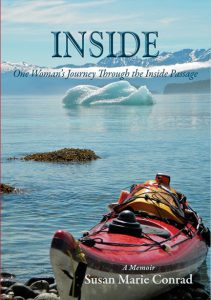
Inside: One Woman’s Journey Through the Inside Passage by Susan M. Conrad
Immunity by Donna LeClair
Refractionby Bruce Rettig
Fishing With Hyenas by Theresa Mathews
And now for the 2017 JOURNEY Grand Prize Book Award Winner for Narrative Non-Fiction:
Inside: One Woman’s Journey Through the Inside Passage
We are excited and honored to officially announce the Grand Prize Winner and the First Place Category Winners for the 2017 CYGNUS Book Awards for Science Fiction Novels at the fifth annual Chanticleer Authors Conference and the sixth annual Chanticleer Book Awards Ceremony. This year’s ceremony and banquet were held on Saturday, April 21st, 2018 at the Hotel Bellwether by beautiful Bellingham Bay, Wash.
We want to thank all of those who entered and participated in the 2017 Cygnus Book Awards for Science Fiction, a division of the Chanticleer International Book Awards.
When we receive the digital photographs from the Official CAC18 photographer, we will post them here and on the complete announcement that will list all the genres and the Overall Grand Prize Winner for the 2017 Chanticleer International Book Awards. Please check back!
Click here for the link to the 2017 Cygnus Shortlisters! An email will go out within three weeks to all Shortlisters with links to digital badges and how to order Shortlister stickers.
James Wells, the author of the 2015 Cygnus Grand Prize Winner, The Great Symmetry, announced the First Place Award Winners and the Grand Prize Winner for the 2017 CYGNUS Book Awards at the Chanticleer Awards Banquet and Ceremony.
Congratulations to the First Place Category Winners of the 2017 Cygnus Book Awards for Science Fiction.
An email will go out to all First Place Category Winners and Grand Prize Winners with more information, the timing of awarded reviews, links to digital badges, and more by May 21st, 2018 (four weeks after the awards ceremony). Please look for it.
2017 Cygnus Book Awards for Science Fiction First in Category Winners
First Command by Michael Simon
The Last Detective by Brian Cohn
Oort Rising by Magnus Victor
The Future’s Dark Past by John Yarrow
Breaching The Parallel by MW Anderson
Strain of Resistance by Michelle Bryan
Honorable Mentions:
Children of the New World by Alexander Weinstein (a short story collection)
The Power of Three: The Novel of a Whale, a Woman, and an Alien Child by Cathy Parker
And now for the 2017 CYGNUS Grand Prize Book Award Winner for Science Fiction:
Here is the second half of a two-part series onHow to Write a Synopsis. The first part deals with synopsis development and the second part will discuss the mechanics of a synopsis.
Every sentence matters and pushes your story forward.
Typically a synopsis completes a sales package that includes your first three chapters and sometimes a letter of introduction. Since at times editors read the synopsis first, it must be comprehensive, comprehensible, and compelling, forcing them to then peruse your chapters. Hopefully, your synopsis will be read not only by an agent and editor but if it passes muster, the marketing and art department will read it too. A synopsis will also be used in the publishing house meetings where decisions are made about what titles will be published in an upcoming season.
SYNOPSIS CHECKLIST
A synopsis is written in the same order as the novel and is written in the style and tone of the manuscript—a witty, fast-paced novel requires a witty, fast-paced synopsis. If the story is literary, your synopsis will be more serious, but keep in mind that your dazzling prose goes into the manuscript, not the synopsis. Don’t leave major questions unanswered such as who killed the victim, as well as how Malcolm solves his internal conflict, and how the subplot was resolved after he lost his job when he was arrested. A synopsis keeps the reader’s interest, but it’s not a tease and is not written with cliffhangers and such devices. It’s particularly important to demonstrate that your ending provides a satisfying conclusion to the plot and ties up loose ends.
A synopsis demonstrates that your characters are in jeopardy and what is at stake and why this matters. It introduces your main characters and their conflicts and agendas. It is not a list of characters or character sketches, and it usually does not describe physical attributes of characters, although the main characters are given some sort of tag. For example, you might want to refer to a character as the leading citizen in a small Southern town, or a respected doctor or frustrated novelist. Antagonists are always introduced, but secondary characters are mentioned only if they are involved with the protagonist’s inner or outer conflict. A synopsis is also written with a careful attention to flow—ideas follow each other logically and one paragraph leads to the next. This means that transitions will be important in connecting the dots.
Is or Does Your Synopsis Questions:
Is it reflective of a thoughtful writer at work?
Is it reflective of the mood and tone of the manuscript submitted?
Does it portray an enthralling story?
Does it highlight a gripping main conflict?
Does it highlight the intriguing motivations of the main players?
Does it lead the reader logically from inciting incident to end with:
major plot points along the way?
turning points along the way?
Does it provide a satisfying conclusion to the plot and ties up loose ends?
Does it connect the dots and progress logically?
Mechanics
Write the synopsis in the present tense
The first time you introduce a character, type his or her name in ALL CAPS
The synopsis should be written in the same order as the novel
The synopsis should be written in the same style, tone, and pace of the manuscript
HEADER PAGE should be single-line spaced
On the first page in the upper-right hand corner write Synopsis
The next line should state the type of Genre
The next line should state the Word Count
The left-hand margin first line should state your name followed by your contact information (digital, voice, and delivery address)
Do not number your first page
TITLE PAGE
Don’t number your first page, but scroll down to about one-third of the page and center your title in ALL CAPS. Then leave four lines after the title and begin with your hook.
BODY of MANUSCRIPT FORMATTING
Use 1-inch margins
Do not justify the right margin
After the first page use a header (or slug line) on the upper left-hand corner that looks like this: MORRELL/DOOMED FOR DEATH/Synopsis
The page number goes on the same line as the header
Do not use fancy fonts
Remember that you are summarizing, not copying
Begin a new paragraph if you are introducing a new scene or plot twist
You may want to note one or two short dialogue exchanges to illustrate a point
Rule of thumb for spacing: over two-pages, double-spaced is preferred; if it’s one or two pages, single space
LENGTH
Since most agents and editors are notoriously pressed for time and read so much for their jobs, the five-page synopsis is appreciated by most. However, in the past, the wisdom about length went like this: one double-spaced page of synopsis for each 10,000 manuscript words. If you wrote an 80,000-word manuscript you’d write an 8-page synopsis.
Finally, here’s a checklist that you might want to use to verify that you’ve covered all these points:
Have you printed it out and then edited it for spelling, grammar and punctuation mistakes?
Does the opening paragraph contain a hook that raises a question and forces the reader to keep reading?
Does the synopsis prove that the story is based around a single, dramatic question?
Have you shown the protagonist taking charge of events, making choices and decisions, but also stumbling and dealing with internal conflict?
Have you introduced your main characters and defined their conflicts, desires, and motivations? Are the protagonist’s dominant traits demonstrated?
Have you covered the major scenes and plot points?
Are reversals, twists, and surprises depicted?
Is the setting and timeframe of the story clear?
Does the synopsis include the places in the story where the protagonist changes? If your characters are changing, are you briefly explaining why?
Have you shown the protagonist’s darkest moment that comes near the end of the story? Does he or she hit bottom or is there a moment of truth? Are emotional or internal changes evident during this dark moment?
Is the ending revealed and does it clarify how the main conflicts are resolved? Have you briefly explain what the protagonist has won or lost?
Resources: Jack and Glenda Neff and Don Prues, authors of Formatting & Submitting Your Manuscript, suggest double spacing.
LINKS and other INFO
Instructional and Insightful Books by Jessica Page Morrell to add to your Writer’s Toolkit.Click here.
Here is the first half of a two-part series on How to Write a Synopsis. The first part deals with synopsis development and the second part will discuss the mechanics of a synopsis.
Part 1 of Jessica Page Morrell’s Writer’s Toolkit series on How to Write a Synopsis
I’ve got a book in progress now, but I’m planning to write several nonfiction projects, so I’ll be crafting proposals to sell these projects. Now, I’d rather yank out my fingernails one by one or undergo a series of root canals than write a proposal—there’s just something about them that fills me with dread and the worst case of procrastination this side of the Rockies. I know proposals are a top-drawer tool in my toolbox of writing skills, but I still loathe writing them. And I’ve heard this same sort of dread about writing a synopsis from fiction writers, so if you’re fortunate enough to be finishing a novel, here are some ideas for this next crucial step.
First, if you’re not fond of writing a synopsis, this doesn’t strike me as abnormal. After all, you’re summarizing about 400 pages into the briefest possible form while introducing the major players and situation and somehow leaving no questions unanswered, while not disclosing everything that happens in the story. A synopsis is part bare bones of your story (however, not too bare), part pitch, and part illustration of your writing style. And every sentence matters and must push the story forward.
Typically a synopsis completes a sales package that includes your first three chapters and sometimes a letter of introduction. Since at times editors read the synopsis first, it must be comprehensive, comprehensible, and compelling, forcing them to then peruse your chapters. Hopefully, your synopsis will be read not only by an agent and editor but if it passes muster, the marketing and art department will read it too. A synopsis will also be used in the publishing house meetings where decisions are made about what titles will be published in an upcoming season. In your synopsis, these professionals want to see a thoughtful writer at work—one who has crafted an enthralling story, with a gripping main conflict and intriguing motivations in the main players. They also want to understand how the story moves logically from the inciting incident in the opening chapters to the end, with major plot points and turning points along the way.
These days there seems to me no grand consensus on the ideal length of a synopsis. If you’ve written a saga, chances are you might weigh in at 10 pages or more and if you’ve written a fairly simple tale, you might get away with a one-page shortie. Since most agents and editors are notoriously pressed for time and read so much for their jobs, the five-page synopsis is appreciated by most. However, in the past, the wisdom about length went like this: one double-spaced page of synopsis for each 10,000 manuscript words. If you wrote an 80,000-word manuscript you’d write an 8-page synopsis.
If you’re new to the task of synopsis writing you might want to read the back cover copy of your favorite paperback novels and the inside jacket of hardcover novels. Notice how enticing the copy is and how the story question is revealed. Notice also the verbs and the level of specific detail. Then make a list of all the major characters and events that you need to include in your synopsis.
Start your synopsis with a hook—such as in:
When JAMES MALCOLM, an insurance adjustor, awoke in a strange basement wearing women’s clothing, he knows it won’t be an ordinary day, but could scarcely have imagined that the clothes he wore belonged to MELINDA DAVIS who had been recently murdered. Wrongly suspected of her murder, Malcolm is forced to discover who murdered Davis and why and why he was fingered for the crime.
Write in the present tense and the first time you introduce a character, type his or her name in all caps. A synopsis is written in the same order as the novel and is written in the style and tone of the manuscript—a witty, fast-paced novel requires a witty, fast-paced synopsis. If the story is literary, your synopsis will be more serious, but keep in mind that your dazzling prose goes into the manuscript, not the synopsis.
Don’t leave major questions unanswered such as who killed the victim, as well as how Malcolm solves his internal conflict, and how the subplot was resolved after he lost his job when he was arrested. A synopsis keeps the reader’s interest, but it’s not a tease and is not written with cliffhangers and such devices. It’s particularly important to demonstrate that your ending provides a satisfying conclusion to the plot and ties up loose ends.
A synopsis demonstrates that your characters are in jeopardy and what is at stake and why this matters. It introduces your main characters and their conflicts and agendas. It is not a list of characters or character sketches, and it usually does not describe physical attributes of characters, although the main characters are given some sort of tag. For example, you might want to refer to a character as the leading citizen in a small Southern town, or a respected doctor or frustrated novelist. Antagonists are always introduced, but secondary characters are mentioned only if they are involved with the protagonist’s inner or outer conflict. A synopsis is also written with a careful attention to flow—ideas follow each other logically and one paragraph leads to the next. This means that transitions will be important in connecting the dots.
The Part 2 will discuss the mechanics and formatting of a synopsis and her handy checklist (by Jessica Page Morrell).
LINKS
Instructional and Insightful Books by Jessica Page Morrell to add to your Writer’s Toolkit. Click here.
What’s more fun than Neanderthals? How about Neanderthals on the high seas? Now that we have your attention…
Author Alex Paul delivers a highly imaginative, middle-grade epic fantasy adventure-packed story with everything you could ever ask for to have a rip-roaring good time.
SeaJourney (Book One) opens with an ancient archive stating that the Arken Freeth, lived 11,000 years prior, before the great flood. It follows that Arken’s world is inhabited by saber-toothed tigers and other monstrous beasts – and populated by both humans and Neanderthals.
It’s Arken’s fourteenth birthday and he’s looking forward to graduating from school and going on a sea journey with his classmates. All he needs to do is balance a huge rock on a small point. That sounds easy enough, right? Well, he fails.
The only way he can redeem himself is to combat Gart, a very large, bully of a boy who happens to hate him. Arken wins the skirmish – and more of Gart’s wrath in the process. However, both boys will board the Sea Nymph with their classmates to serve their country, Lanth. It turns out that the people of Tolaria (allies of the Lanths) are under attack. Yolanta, King of Tookan, is even now traveling with pirates to hunt down Tolarian Princess Sharmane and steal her magic necklace. The Sea Nymph is readying for war.
Arken meets a girl named Talya, a freckle-faced scout-in-training, who warns Arken that Gart plans to kill him. And when word reaches the Sea Nymph that Princess Sharmane’s vessel has been attacked, Arken, who has proved his worth leads the charge against the enemy ship. Somewhere in the middle of all that is happening aboard the Sea Nymph, there’s a Neanderthal who is gearing up to join in the fun.
With three other Arken Freeth volumes in production, SeaJourney introduces readers to a worthy hero and reveals some of his secrets and hidden powers. The book is well suited for tweens who identify with the underdog who overcomes hardships and ultimately triumphs. Also, our heroine is not based on her looks so much as her energetic attitude.
With fast-escalating action on every page, a likable, capable hero, plenty of mystery and an abrupt ending, readers will be lining up for more. Arken Freeth and the Adventure of the Neanderthals, SeaJourney #1 is sure to please those who crave fantastical adventures with pirates, underdogs, prehistoric beasts, and Neanderthals!
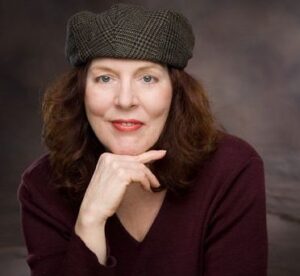
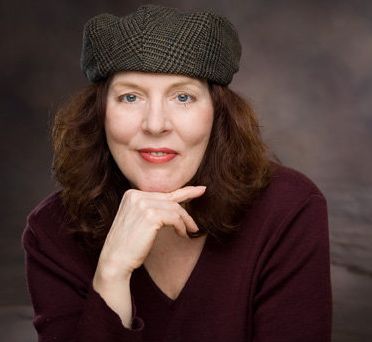
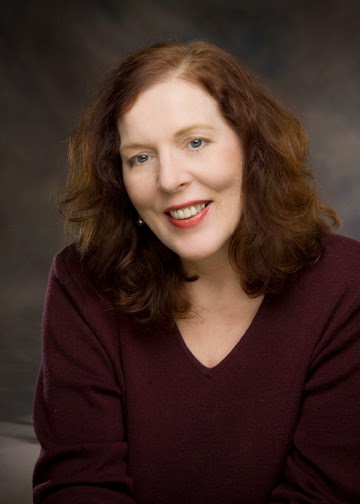
Jessica Page Morrell, Developmental Editor for Books and Screenplays
Jessica Page Morrell is a top-tier developmental editor for books and screenplays. Her articles have appeared in Writer’s Digest and The Writer magazines. She is known for explaining the hows and whys of what makes for excellent writing and for sharing very clear examples that examine the technical aspects of writing that emphases layering and subtext. Her books on writing craft are considered “a must have” for any serious writer’s toolkit.
She is sharing her handy Writing Craft Checklist with us because we all can use reminders. We advise that you make sure that your manuscripts do not have any of the following issues prior to submitting them to agents and acquisition editors. If you are too close to a work to evaluate it, you may want to consider having an objective and unbiased manuscript overview to catch these issues.
Editors and agents are word people, most were English majors in college and have a great love and respect for the written word. They will notice your level of craft within the first sentences, so your efforts must be polished, vivid and exceptional.
Your manuscript lives or dies on your opening sentences and each word must be perfect, precise, and weighted with meaning.
Editors notice and are turned off by passive voice and wimpy verbs.
Editors notice when the viewpoint jumps or shifts within a scene.
Editors notice too much telling (reporting or summary) and not enough showing in all types of writing including essays and memoir.
Editors notice when emotions are announced instead of dramatized.
Editors notice frequent use of names in dialogue. Generally, leave out names.
An editor notices sloppy punctuation such as the excess use of exclamation points, quote marks around inner thoughts, improper use of semicolons and ellipsis.
Editors notice protagonists who are not proactive, heroic in some way, and bigger than life.
Editors notice characters with a limited emotional range and expression.
Editors notice large and small inaccuracies and inconsistencies—when the character has blue eyes on page 23 and green eyes on page 57; when a character drives an old, beat-up, pick-up truck that is inexplicably equipped with airbags; when an animal, plant, or species of any sort is misnamed or shows up in the wrong region of the country.
Editors notice when technical details don’t ring true—such as in a mystery when police don’t follow standard arrest procedure; when a yacht sinks from a single bullet hole; or explosive materials are used haphazardly.
Editors notice vague descriptions (plant instead of ivy, tree instead of oak) and generalities instead of details that bring the reader into a specific time and place.
Editors notice when writers don’t write for all the senses, especially leaving out smells.
Editors notice small confusions such as misusing it’s and its, that and which, affect and effect, compliment and complement, lay and lie.
Editors notice overly long paragraphs and a general lack of white space. Generally, paragraphs are five or six sentences long and as taught in grade school introduce a topic, develop a topic, then conclude or lead on to the next paragraph.
Editors notice a lack of transitions—the words and phrases that announce a change in mood or emotion, time, and place so the reader can easily follow. They also know excess transitions as when you follow your characters across every room and along every sidewalk.
Editors notice excess modifiers, purple prose, and too much description. The best writing is lean and economical and every word in every sentence has a job to do.
Editors notice a voice that is flat, inappropriate, or boring. Voice, whether it is the writer’s voice in an essay or the viewpoint character or narrator in fiction, must breathe life into the piece and hint at the person behind the words.
CAC18 Writing Craft Sessions and Workshops presented by Jessica Page Morrell to take your writing craft to the next level. #SeriousAuthors
Click hereto read more in-depth descriptions of the sessions.
Learning from the Greats – Sunday Master Morning Writing Craft Class – Intermediate to Advanced Levels
The Anchor Scenes of Fiction – Sunday Afternoon Master Writing Class – Fiction, Film
How High Concept Really Works – Regular Session – Friday Regular Session – Fiction, Film
Subtext: The Quiet River Beneath the Story – 1.5 hours Regular Session on Saturday – Writing Craft
KaffeeKlatch Session – What’s in a Title? – Book Promotion Tools & Tips
Each year we offer writing craft sessions from the best editors and authors in the publishing industry.
This year we are excited to announce that we have Jessica Page Morrell as the teacher of the Master Writing Craft Sessions.
Jessica understands both sides of the editorial desk–as a highly-sought after developmental editor and an author. Her work also appears in multiple anthologies and The Writer and Writer’s Digest magazines. She is known for explaining the hows and whys of what makes for excellent writing and for sharing very clear examples that examine the technical aspects of writing that emphases layering and subtext. Her books on writing craft are considered “a must have” for any serious writer’s toolkit.
CAC18 Writing Craft Sessions and Workshops presented by Jessica Page Morrell
If you are not registered for CAC18, you may register for only the Master Classes taught by Ms. Morrell by clicking here.
Learning from the Greats – Sunday Morning Writing Craft Master Class 9:30 – 12:30, April 22, 2018
Although writers can feel inundated by all the writing advice available in our current times; dissecting, reflecting, and even emulating great writers can be a powerful tool. It’s especially helpful to study the best in the genre you write in. This workshop teaches writers how to deconstruct and analyze elements of craft. It will demonstrate how to study the balance of narrative and dialogue; how POV shifts in an ensemble cast; how figurative and descriptive language are used in varying kinds of scenes; how pace and action are entwined; the benefits of first and third-person viewpoint, and the subtle variations of each. In this workshop, we’ll discuss the techniques used by a variety of authors including Alice Munro, Raymond Carver, Ernest Hemingway, Elmore Leonard, Marilyn Robinson, Ray Bradbury, Anne Patchett, and others. We’ll also cover work habits, language, and sentence potency, and we’ll synthesize the best commandments on writing from the best and brightest.
The Anchor Scenes of Fiction – Sunday Afternoon Writing Craft Master Class 1:30 – 4:30, April 22, 2018
The task of a novelist or screenwriter is to tell a story so riveting that it will hold a reader’s attention for hundreds of pages or a viewer’s attention for several hours in a theater. This requires an intimate knowledge of your characters and thorough understanding of plot, the sequence of events that take readers from beginning to end. Your structure will reveal the protagonist’s struggles to solve problems and achieve goals. This, in turn, brings emotions to life and explains the importance of what a character is trying to achieve and what stands in his way.
These events won’t hang together without a compelling structure that underlies the whole—the essential scenes that every story needs to create drive, tension, conflict, climax, and resolution. We’ll illustrate and come to understand the anchor scenes needed in fiction and film: Inciting Incident, First Plot Point, and Mid-point Reversal, Point of No Return, Darknight of the Soul, Climax, and Resolution. We’ll discuss how the protagonist stars in these scenes, how they’re emotionally-charged, build the plot, and illustrate character growth.
Subtext: The Quiet River Beneath the Story – 1.5 hours Regular Session
For most writers subtext is the most elusive of all writing techniques. However, life is often lived between the lines, and scenes often simmer with the unspoken beneath dialogue and action. In this workshop, subtext will be explained with examples from various genres. We’ll also discuss nonverbal communication and how to render it onto the page and how to hint at lies and secrets in scenes so that dialogue scenes are enhanced. We’ll cover how metaphor and visual clues create subtext. Mostly we’ll investigate all the ways to insert subtext—the unspoken, innuendo, gestures, pauses, misdirection, colors, clothing, setting details—in other words, the nuanced moments that are not directly represented.
KaffeeKlatch Session – an informal session where we discuss Q & A – Simple Steps to Solve Story Problems. Ballroom Saturday, (9 – 9:50)
Click here for more information about the 2018 Chanticleer Authors Conference
We are excited to announce the Instructional and Insightful Non-Fiction Book Awards 2017 Shortlisters. The I&I’s Books Awards focus on guides, how-to, self-help, and instructional non-narrative non-fiction works. The I&I Book Awards is a division of the Chanticleer International Book Awards and Writing Competitions.
Congratulations to the Official 2017 Instruction and Insight Non-Fiction Book Awards Shortlisters!
Nicole Evelina – The Once and Future Queen: Guinevere in Arthurian Legend
Mark Devro – Forever in Bloom
Andrés T. Tapia – The Inclusion Paradox: The Obama Era and the Transformation of Global Diversity
Robert Rodriquez, Ph.D. & Andrés T. Tapia – Auténtico: The Definitive Guide to Latino Career Success
Gustavo J. Gomez, Ph.D. – Private Money Lending: Learn How to Consistently Generate a Passive Income Stream
Christopher Zoukis – Federal Prison Handbook: The Definitive Guide To Surviving The Federal Bureau Of Prisons
P.J. Frick – Pizza With Jesus (No Black Olives)
Fiza Pathan – CLASSICS: Why and how we can encourage children to read them
Kelly Tan Peterson – Keto East: Cooking Asian Cuisine Ketogenically
Deeann Callis Graham –Head-On, Stories of Alopecia
Barbara McNally – Wounded Warrior, Wounded Wife
Good luck to all the I&I Book Awards Short List as they compete for the First Place Category Positions. First Place Category Positions will be announced on Saturday, April 21st, 2018 at the annual Chanticleer International Book Awards ceremony.
More than $30,000 dollars in cash and prizes are awarded to Chanticleer International Blue Ribbon Awards Winners annually.
We are now accepting entries into the 2018 I&I Book Awards for Non-Fiction. The deadline is December, 31st, 2018.Please clickherefor more information:

 We are excited and honored to officially announce the Grand Prize Winner and the First Place Category Winners for the 2017 Gertrude Warner Book Awards for Middle-Grade Readers Novels at the fifth annual Chanticleer Authors Conference and Chanticleer Book Awards Ceremony. This year’s ceremony and banquet were held on Saturday, April 21st, 2018 at the Hotel Bellwether by beautiful Bellingham Bay, Wash.
 We are excited and honored to officially announce the Grand Prize Winner and the First Place Category Winners for the 2017 M&M Book Awards for Novels at the fifth annual Chanticleer Authors Conference and Chanticleer Book Awards Ceremony. This year’s ceremony and banquet were held on Saturday, April 21st, 2018 at the Hotel Bellwether by beautiful Bellingham Bay, Wash.
 We are excited and honored to officially announce the Grand Prize Winner and the First Place Category Winners for the 2017 CYGNUS Book Awards for Science Fiction Novels at the fifth annual Chanticleer Authors Conference and the sixth annual Chanticleer Book Awards Ceremony. This year’s ceremony and banquet were held on Saturday, April 21st, 2018 at the Hotel Bellwether by beautiful Bellingham Bay, Wash.

 part deals with synopsis development and the second part will discuss the mechanics of a synopsis.

 What’s more fun than Neanderthals? How about Neanderthals on the high seas? Now that we have your attention…



 We are excited to announce the Instructional and Insightful Non-Fiction Book Awards 2017 Shortlisters. The I&I’s Books Awards focus on guides, how-to, self-help, and instructional non-narrative non-fiction works. The I&I Book Awards is a division of the Chanticleer International Book Awards and Writing Competitions.