We are excited and honored to officially announce the Grand Prize Winner and the First Place Category Winners for the 2017 GOETHE Book Awards for Post-1750s Historical Fiction Novels at the fifth annual Chanticleer Authors Conference and Chanticleer Book Awards Ceremony. This year’s ceremony and banquet were held on Saturday, April 21st, 2018 at the Hotel Bellwether by beautiful Bellingham Bay, Wash.
We want to thank all of those who entered and participated in the 2017 GOETHE Book Awards, a division of the Chanticleer International Book Awards.
When we receive the digital photographs from the Official CAC18 photographer, we will post them here and on the complete announcement that will list all the genres and the Overall Grand Prize Winner for the 2017 Chanticleer International Book Awards. Please check back!
Gregory Erich Phillips,the author of the 2014 Overall Grand Prize Winner, Love of Finished Years, announced the First Place Award Winners and the Grand Prize Winner for the 2017 GOETHE Book Awards at the Chanticleer Awards Banquet and Ceremony.
Congratulations to the First Place Category Winners of the 2017 GOETHE Book Awards.
An email will go out to all First Place Category Winners and Grand Prize Winners with more information, the timing of awarded reviews, links to digital badges, and more by May 21st, 2018 (four weeks after the awards ceremony). Please look for it.
2017 GOETHE Book Awards First in Category Winners for post-1750s Historical Fiction Novels are:
A Cherry Blossom in Winter by Ron Singerton
The Boy Who Danced With Rabbits by J.R. Collins
Full Circle: A Refugee’s Taleby Joe Vitovec
Fenian’s Traceby Sean P. Mahoney
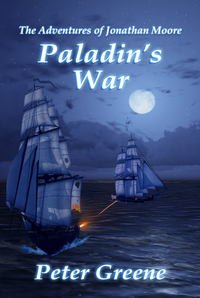
Paladin’s Warby Peter Greene
The Shape of the Atmosphere by Jessica Dainty
And now for the 2017 GOETHE Grand Prize Book Awards Winner for Post-1750s Historical Fictional Novels is:
We are excited and honored to officially announce the Grand Prize Winner and the First Place Category Winners for the 2017 CHAUCER Book Awards for Pre-1750 Historical Fiction Novels at the fifth annual Chanticleer Authors Conference and Chanticleer Book Awards Ceremony. This year’s ceremony and banquet were held on Saturday, April 21st, 2018 at the Hotel Bellwether by beautiful Bellingham Bay, Wash.
We want to thank all of those who entered and participated in the 2017 Chaucer Book Awards, a division of the Chanticleer International Book Awards.
When we receive the digital photographs from the Official CAC18 photographer, we will post them here and on the complete announcement that will list all the genres and the Overall Grand Prize Winner for the 2017 Chanticleer International Book Awards. Please check back!
Click here for the link to the 2017 CHAUCER Shortlisters! An email will go out within three weeks to all Shortlisters with links to digital badges and how to order Shortlister stickers.
Congratulations to the 2017 CHAUCER SHORTLISTERS!
Janet Oakley,the author of the 2016 GOETHE Grand Prize Winner, The JØSSING AFFAIR, announced the First Place Award Winners and the Grand Prize Winner for the 2017 Chaucer Book Awards at the Chanticleer Awards Banquet and Ceremony.
Congratulations to the First Place Category Winners of the 2017 CHAUCER Book Awards.
An email will go out to all First Place Category Winners and Grand Prize Winners with more information, the timing of awarded reviews, links to digital badges, and more by May 21st, 2018 (four weeks after the awards ceremony). Please look for it.
2017 CHAUCER Book Awards First in Category Winners for pre-1750s Historical Fiction Novels are:
The Serpent and the Eagle by Edward Rickford
Slave to Fortune by DJ Munro
The Traitor’s Noose by Catherine A Wilson and Catherine T Wilson
Feast of Sorrow: A Novel of Ancient Rome by Crystal King
Call to Juno: A Tale of Ancient Rome by Elisabeth Storrs
The Chatelaine of Montaillou by Susan E Kaberry
Guillaume: Book Two of The Triptych Chronicle by Prue Batten
And now for the 2017 CHAUCER Grand Prize Book Award Winner for pre-1750 Historical Fiction Novels:
We are excited and honored to officially announce the Grand Prize Winner and the First Place Category Winners for the 2017 Dante Rossetti Book Awards for Young Adult Fiction at the fifth annual Chanticleer Authors Conference and Chanticleer Book Awards Ceremony. This year’s ceremony and banquet were held on Saturday, April 21st, 2018 at the Hotel Bellwether by beautiful Bellingham Bay, Wash.
We want to thank all of those who entered and participated in the 2017 Dante Rossetti Book Awards for Young Adult Novels, a division of the Chanticleer International Book Awards.
When we receive the digital photographs from the Official CAC18 photographer, we will post them here and on the complete announcement that will list all the genres and the Overall Grand Prize Winner for the 2017 Chanticleer International Book Awards. Please check back!
Congratulations to the 2017 Dante Rossetti SHORTLISTERS!
Alexander Ferguson,Producer for Dawn’s Light Productions, announced the First Place Award Winners and the Grand Prize Winner for the 2017 Dante Rossetti Book Awards at the Chanticleer Awards Banquet and Ceremony.
Congratulations to the First Place Category Winners of the 2017 Dante Rossetti Book Awards for YA Novels.
An email will go out to all First Place Category Winners and Grand Prize Winners with more information, the timing of awarded reviews, links to digital badges, and more by May 21st, 2018 (four weeks after the awards ceremony). Please look for it.
Announcing the 2017 Dante Rossetti Book Awards for Young Adult Novels First in Category Winners:
Nature’s Confession by JL Morin
Slave to Fortune by DJ Munro
Cryptic Spaces: Dark Edge Rising by Deen Ferrell
Track Two on Repeat by Rebekah N. Bryan
Becoming Jonika by PJ Devlin
Soul Sanctuary by Susan Faw
And now for the 2017 Dante Rossetti Grand Prize Book Award Winner for Young Adult Novels:
We are excited and honored to officially announce the Grand Prize Winner and the First Place Category Winners for the 2017 Gertrude Warner Book Awards for Middle-Grade Readers Novels at the fifth annual Chanticleer Authors Conference and Chanticleer Book Awards Ceremony. This year’s ceremony and banquet were held on Saturday, April 21st, 2018 at the Hotel Bellwether by beautiful Bellingham Bay, Wash.
We want to thank all of those who entered and participated in the 2017 Gertrude Warner Book Awards for Middle-Grade Readers, a division of the Chanticleer International Book Awards.
When we receive the digital photographs from the Official CAC18 photographer, we will post them here and on the complete announcement that will list all the genres and the Overall Grand Prize Winner for the 2017 Chanticleer International Book Awards. Please check back!
Click here for the link to the2017 Gertrude Warner Shortlisters!An email will go out within three weeks to all Shortlisters with links to digital badges and how to order Shortlister stickers. Congratulations to the 2017 Gertrude Warner SHORTLISTERS!
Susan Faw, the author of the 2016 Dante Rossetti Grand Prize Winner, Seer of Souls, announced the First Place Award Winners and the Grand Prize Winner for the 2017 Gertrude Warner Book Awards at the Chanticleer Awards Banquet and Ceremony.
Congratulations to the First Place Category Winners of the 2017 Gertrude Warner Book Awards for Middle-Grade Books.
An email will go out to all First Place Category Winners and Grand Prize Winners with more information, the timing of awarded reviews, links to digital badges, and more by May 21st, 2018 (four weeks after the awards ceremony). Please look for it.
2017 Gertrude Warner Book Awards for Middle-Grade Readers First in Category Winners are:
The Supernatural Pet Sitter by Diane Moat
Bryce Bumps His Head by Robert D. Calkins
Brainwashed: The Crime Travelers Series by Paul Aertker
The Queen and Knights of Nor by Rebekah Stelzer/R.L.Stelzer
Lucky Rocks by Murray Richter
Flowerantha by Bek Castro
The Strange Case of Mr. Beets by A Pharmacist on a Yak (Anand Vora)
And now for the 2017 Gertrude Warner Grand Prize Book Award Winner for Middle-Grade Fiction:
We are excited and honored to officially announce the Grand Prize Winner and the First Place Category Winners for the 2017 M&M Book Awards for Novels at the fifth annual Chanticleer Authors Conference and Chanticleer Book Awards Ceremony. This year’s ceremony and banquet were held on Saturday, April 21st, 2018 at the Hotel Bellwether by beautiful Bellingham Bay, Wash.
We want to thank all of those who entered and participated in the 2017 M&M Book Awards for Mystery Novels, a division of the Chanticleer International Book Awards.
When we receive the digital photographs from the Official CAC18 photographer, we will post them here and on the complete announcement that will list all the genres and the Overall Grand Prize Winner for the 2017 Chanticleer International Book Awards. Please check back!
Click here for the link to the 2017 M&M Shortlisters! An email will go out within three weeks to all Shortlisters with links to digital badges and how to order Shortlister stickers.
Congratulations to the 2017 M&M SHORTLISTERS!
Pamela Beason,the author of the 2012 M&M Grand Prize Winner, The Only Witness: A Neema Mystery, announced the First Place Award Winners and the Grand Prize Winner for the 2017 M&M Book Awards at the Chanticleer Awards Banquet and Ceremony.
Congratulations to the First Place Category Winners of the 2017 M&M Book Awards for Mystery Novels.
An email will go out to all First Place Category Winners and Grand Prize Winners with more information, the timing of awarded reviews, links to digital badges, and more by May 21st, 2018 (four weeks after the awards ceremony). Please look for it.
2017 M&M Book Awards for Mystery Novels First in Category Winners
A Ring of Truth by Michelle Cox
Cut by Amy S. Peele
Suppose by D. J. Adamson
Coronado’s Trail: An Arizona Borderlands Mystery by Carl and Jane Bock
Deadly Proof: A Victorian San Francisco Mystery by M. Louisa Locke
Fairfield’s Auction by Betty Jean Craige
Unsightly Bulges, A Trailer Park Princess Cozy Mystery by Kim Hunt Harris
And now for the 2017 M&M Grand Prize Book Award Winner for Mystery Novels:
We are excited and honored to officially announce the Grand Prize Winner and the First Place Category Winners for the 2017 JOURNEY Book Awards for Narrative Non-fiction Books at the fifth annual Chanticleer Authors Conference and Chanticleer Book Awards Ceremony. This year’s ceremony and banquet were held on Saturday, April 21st, 2018 at the Hotel Bellwether by beautiful Bellingham Bay, Wash.
We want to thank all of those who entered and participated in the 2017 Journey Book Awards for Narrative Non-fiction, a division of the Chanticleer International Book Awards.
When we receive the digital photographs from the Official CAC18 photographer, we will post them here and on the complete announcement that will list all the genres and the Overall Grand Prize Winner for the 2017 Chanticleer International Book Awards. Please check back!
Click here for the link to the 2017 Journey Shortlisters! An email will go out within three weeks to all Shortlisters with links to digital badges and how to order Shortlister stickers.
Christine Smith,the author of the 2014 JOURNEY Grand Prize Winner, More Faster, Backwards: Rebuilding David B, announced the First Place Award Winners and the Grand Prize Winner for the 2017 Journey Book Awards at the Chanticleer Awards Banquet and Ceremony.
Congratulations to the First Place Category Winners of the 2017 Journey Book Awards for Narrative Non-fiction.
An email will go out to all First Place Category Winners and Grand Prize Winners with more information, the timing of awarded reviews, links to digital badges, and more by May 21st, 2018 (four weeks after the awards ceremony). Please look for it.
2017 Journey Book Awards for Narrative Non- Fiction First in Category Winners
Broken Places by Rachel Thompson
Getting to Heaven by Going Through Hell by Dr. Scot Hodkiewicz
Inside: One Woman’s Journey Through the Inside Passage by Susan M. Conrad
Immunity by Donna LeClair
Refractionby Bruce Rettig
Fishing With Hyenas by Theresa Mathews
And now for the 2017 JOURNEY Grand Prize Book Award Winner for Narrative Non-Fiction:
Inside: One Woman’s Journey Through the Inside Passage
We are excited and honored to officially announce the Grand Prize Winner and the First Place Category Winners for the 2017 CYGNUS Book Awards for Science Fiction Novels at the fifth annual Chanticleer Authors Conference and the sixth annual Chanticleer Book Awards Ceremony. This year’s ceremony and banquet were held on Saturday, April 21st, 2018 at the Hotel Bellwether by beautiful Bellingham Bay, Wash.
We want to thank all of those who entered and participated in the 2017 Cygnus Book Awards for Science Fiction, a division of the Chanticleer International Book Awards.
When we receive the digital photographs from the Official CAC18 photographer, we will post them here and on the complete announcement that will list all the genres and the Overall Grand Prize Winner for the 2017 Chanticleer International Book Awards. Please check back!
Click here for the link to the 2017 Cygnus Shortlisters! An email will go out within three weeks to all Shortlisters with links to digital badges and how to order Shortlister stickers.
James Wells, the author of the 2015 Cygnus Grand Prize Winner, The Great Symmetry, announced the First Place Award Winners and the Grand Prize Winner for the 2017 CYGNUS Book Awards at the Chanticleer Awards Banquet and Ceremony.
Congratulations to the First Place Category Winners of the 2017 Cygnus Book Awards for Science Fiction.
An email will go out to all First Place Category Winners and Grand Prize Winners with more information, the timing of awarded reviews, links to digital badges, and more by May 21st, 2018 (four weeks after the awards ceremony). Please look for it.
2017 Cygnus Book Awards for Science Fiction First in Category Winners
First Command by Michael Simon
The Last Detective by Brian Cohn
Oort Rising by Magnus Victor
The Future’s Dark Past by John Yarrow
Breaching The Parallel by MW Anderson
Strain of Resistance by Michelle Bryan
Honorable Mentions:
Children of the New World by Alexander Weinstein (a short story collection)
The Power of Three: The Novel of a Whale, a Woman, and an Alien Child by Cathy Parker
And now for the 2017 CYGNUS Grand Prize Book Award Winner for Science Fiction:
Here is the second half of a two-part series onHow to Write a Synopsis. The first part deals with synopsis development and the second part will discuss the mechanics of a synopsis.
Every sentence matters and pushes your story forward.
Typically a synopsis completes a sales package that includes your first three chapters and sometimes a letter of introduction. Since at times editors read the synopsis first, it must be comprehensive, comprehensible, and compelling, forcing them to then peruse your chapters. Hopefully, your synopsis will be read not only by an agent and editor but if it passes muster, the marketing and art department will read it too. A synopsis will also be used in the publishing house meetings where decisions are made about what titles will be published in an upcoming season.
SYNOPSIS CHECKLIST
A synopsis is written in the same order as the novel and is written in the style and tone of the manuscript—a witty, fast-paced novel requires a witty, fast-paced synopsis. If the story is literary, your synopsis will be more serious, but keep in mind that your dazzling prose goes into the manuscript, not the synopsis. Don’t leave major questions unanswered such as who killed the victim, as well as how Malcolm solves his internal conflict, and how the subplot was resolved after he lost his job when he was arrested. A synopsis keeps the reader’s interest, but it’s not a tease and is not written with cliffhangers and such devices. It’s particularly important to demonstrate that your ending provides a satisfying conclusion to the plot and ties up loose ends.
A synopsis demonstrates that your characters are in jeopardy and what is at stake and why this matters. It introduces your main characters and their conflicts and agendas. It is not a list of characters or character sketches, and it usually does not describe physical attributes of characters, although the main characters are given some sort of tag. For example, you might want to refer to a character as the leading citizen in a small Southern town, or a respected doctor or frustrated novelist. Antagonists are always introduced, but secondary characters are mentioned only if they are involved with the protagonist’s inner or outer conflict. A synopsis is also written with a careful attention to flow—ideas follow each other logically and one paragraph leads to the next. This means that transitions will be important in connecting the dots.
Is or Does Your Synopsis Questions:
Is it reflective of a thoughtful writer at work?
Is it reflective of the mood and tone of the manuscript submitted?
Does it portray an enthralling story?
Does it highlight a gripping main conflict?
Does it highlight the intriguing motivations of the main players?
Does it lead the reader logically from inciting incident to end with:
major plot points along the way?
turning points along the way?
Does it provide a satisfying conclusion to the plot and ties up loose ends?
Does it connect the dots and progress logically?
Mechanics
Write the synopsis in the present tense
The first time you introduce a character, type his or her name in ALL CAPS
The synopsis should be written in the same order as the novel
The synopsis should be written in the same style, tone, and pace of the manuscript
HEADER PAGE should be single-line spaced
On the first page in the upper-right hand corner write Synopsis
The next line should state the type of Genre
The next line should state the Word Count
The left-hand margin first line should state your name followed by your contact information (digital, voice, and delivery address)
Do not number your first page
TITLE PAGE
Don’t number your first page, but scroll down to about one-third of the page and center your title in ALL CAPS. Then leave four lines after the title and begin with your hook.
BODY of MANUSCRIPT FORMATTING
Use 1-inch margins
Do not justify the right margin
After the first page use a header (or slug line) on the upper left-hand corner that looks like this: MORRELL/DOOMED FOR DEATH/Synopsis
The page number goes on the same line as the header
Do not use fancy fonts
Remember that you are summarizing, not copying
Begin a new paragraph if you are introducing a new scene or plot twist
You may want to note one or two short dialogue exchanges to illustrate a point
Rule of thumb for spacing: over two-pages, double-spaced is preferred; if it’s one or two pages, single space
LENGTH
Since most agents and editors are notoriously pressed for time and read so much for their jobs, the five-page synopsis is appreciated by most. However, in the past, the wisdom about length went like this: one double-spaced page of synopsis for each 10,000 manuscript words. If you wrote an 80,000-word manuscript you’d write an 8-page synopsis.
Finally, here’s a checklist that you might want to use to verify that you’ve covered all these points:
Have you printed it out and then edited it for spelling, grammar and punctuation mistakes?
Does the opening paragraph contain a hook that raises a question and forces the reader to keep reading?
Does the synopsis prove that the story is based around a single, dramatic question?
Have you shown the protagonist taking charge of events, making choices and decisions, but also stumbling and dealing with internal conflict?
Have you introduced your main characters and defined their conflicts, desires, and motivations? Are the protagonist’s dominant traits demonstrated?
Have you covered the major scenes and plot points?
Are reversals, twists, and surprises depicted?
Is the setting and timeframe of the story clear?
Does the synopsis include the places in the story where the protagonist changes? If your characters are changing, are you briefly explaining why?
Have you shown the protagonist’s darkest moment that comes near the end of the story? Does he or she hit bottom or is there a moment of truth? Are emotional or internal changes evident during this dark moment?
Is the ending revealed and does it clarify how the main conflicts are resolved? Have you briefly explain what the protagonist has won or lost?
Resources: Jack and Glenda Neff and Don Prues, authors of Formatting & Submitting Your Manuscript, suggest double spacing.
LINKS and other INFO
Instructional and Insightful Books by Jessica Page Morrell to add to your Writer’s Toolkit.Click here.
Here is the first half of a two-part series on How to Write a Synopsis. The first part deals with synopsis development and the second part will discuss the mechanics of a synopsis.
Part 1 of Jessica Page Morrell’s Writer’s Toolkit series on How to Write a Synopsis
I’ve got a book in progress now, but I’m planning to write several nonfiction projects, so I’ll be crafting proposals to sell these projects. Now, I’d rather yank out my fingernails one by one or undergo a series of root canals than write a proposal—there’s just something about them that fills me with dread and the worst case of procrastination this side of the Rockies. I know proposals are a top-drawer tool in my toolbox of writing skills, but I still loathe writing them. And I’ve heard this same sort of dread about writing a synopsis from fiction writers, so if you’re fortunate enough to be finishing a novel, here are some ideas for this next crucial step.
First, if you’re not fond of writing a synopsis, this doesn’t strike me as abnormal. After all, you’re summarizing about 400 pages into the briefest possible form while introducing the major players and situation and somehow leaving no questions unanswered, while not disclosing everything that happens in the story. A synopsis is part bare bones of your story (however, not too bare), part pitch, and part illustration of your writing style. And every sentence matters and must push the story forward.
Typically a synopsis completes a sales package that includes your first three chapters and sometimes a letter of introduction. Since at times editors read the synopsis first, it must be comprehensive, comprehensible, and compelling, forcing them to then peruse your chapters. Hopefully, your synopsis will be read not only by an agent and editor but if it passes muster, the marketing and art department will read it too. A synopsis will also be used in the publishing house meetings where decisions are made about what titles will be published in an upcoming season. In your synopsis, these professionals want to see a thoughtful writer at work—one who has crafted an enthralling story, with a gripping main conflict and intriguing motivations in the main players. They also want to understand how the story moves logically from the inciting incident in the opening chapters to the end, with major plot points and turning points along the way.
These days there seems to me no grand consensus on the ideal length of a synopsis. If you’ve written a saga, chances are you might weigh in at 10 pages or more and if you’ve written a fairly simple tale, you might get away with a one-page shortie. Since most agents and editors are notoriously pressed for time and read so much for their jobs, the five-page synopsis is appreciated by most. However, in the past, the wisdom about length went like this: one double-spaced page of synopsis for each 10,000 manuscript words. If you wrote an 80,000-word manuscript you’d write an 8-page synopsis.
If you’re new to the task of synopsis writing you might want to read the back cover copy of your favorite paperback novels and the inside jacket of hardcover novels. Notice how enticing the copy is and how the story question is revealed. Notice also the verbs and the level of specific detail. Then make a list of all the major characters and events that you need to include in your synopsis.
Start your synopsis with a hook—such as in:
When JAMES MALCOLM, an insurance adjustor, awoke in a strange basement wearing women’s clothing, he knows it won’t be an ordinary day, but could scarcely have imagined that the clothes he wore belonged to MELINDA DAVIS who had been recently murdered. Wrongly suspected of her murder, Malcolm is forced to discover who murdered Davis and why and why he was fingered for the crime.
Write in the present tense and the first time you introduce a character, type his or her name in all caps. A synopsis is written in the same order as the novel and is written in the style and tone of the manuscript—a witty, fast-paced novel requires a witty, fast-paced synopsis. If the story is literary, your synopsis will be more serious, but keep in mind that your dazzling prose goes into the manuscript, not the synopsis.
Don’t leave major questions unanswered such as who killed the victim, as well as how Malcolm solves his internal conflict, and how the subplot was resolved after he lost his job when he was arrested. A synopsis keeps the reader’s interest, but it’s not a tease and is not written with cliffhangers and such devices. It’s particularly important to demonstrate that your ending provides a satisfying conclusion to the plot and ties up loose ends.
A synopsis demonstrates that your characters are in jeopardy and what is at stake and why this matters. It introduces your main characters and their conflicts and agendas. It is not a list of characters or character sketches, and it usually does not describe physical attributes of characters, although the main characters are given some sort of tag. For example, you might want to refer to a character as the leading citizen in a small Southern town, or a respected doctor or frustrated novelist. Antagonists are always introduced, but secondary characters are mentioned only if they are involved with the protagonist’s inner or outer conflict. A synopsis is also written with a careful attention to flow—ideas follow each other logically and one paragraph leads to the next. This means that transitions will be important in connecting the dots.
The Part 2 will discuss the mechanics and formatting of a synopsis and her handy checklist (by Jessica Page Morrell).
LINKS
Instructional and Insightful Books by Jessica Page Morrell to add to your Writer’s Toolkit. Click here.
What’s more fun than Neanderthals? How about Neanderthals on the high seas? Now that we have your attention…
Author Alex Paul delivers a highly imaginative, middle-grade epic fantasy adventure-packed story with everything you could ever ask for to have a rip-roaring good time.
SeaJourney (Book One) opens with an ancient archive stating that the Arken Freeth, lived 11,000 years prior, before the great flood. It follows that Arken’s world is inhabited by saber-toothed tigers and other monstrous beasts – and populated by both humans and Neanderthals.
It’s Arken’s fourteenth birthday and he’s looking forward to graduating from school and going on a sea journey with his classmates. All he needs to do is balance a huge rock on a small point. That sounds easy enough, right? Well, he fails.
The only way he can redeem himself is to combat Gart, a very large, bully of a boy who happens to hate him. Arken wins the skirmish – and more of Gart’s wrath in the process. However, both boys will board the Sea Nymph with their classmates to serve their country, Lanth. It turns out that the people of Tolaria (allies of the Lanths) are under attack. Yolanta, King of Tookan, is even now traveling with pirates to hunt down Tolarian Princess Sharmane and steal her magic necklace. The Sea Nymph is readying for war.
Arken meets a girl named Talya, a freckle-faced scout-in-training, who warns Arken that Gart plans to kill him. And when word reaches the Sea Nymph that Princess Sharmane’s vessel has been attacked, Arken, who has proved his worth leads the charge against the enemy ship. Somewhere in the middle of all that is happening aboard the Sea Nymph, there’s a Neanderthal who is gearing up to join in the fun.
With three other Arken Freeth volumes in production, SeaJourney introduces readers to a worthy hero and reveals some of his secrets and hidden powers. The book is well suited for tweens who identify with the underdog who overcomes hardships and ultimately triumphs. Also, our heroine is not based on her looks so much as her energetic attitude.
With fast-escalating action on every page, a likable, capable hero, plenty of mystery and an abrupt ending, readers will be lining up for more. Arken Freeth and the Adventure of the Neanderthals, SeaJourney #1 is sure to please those who crave fantastical adventures with pirates, underdogs, prehistoric beasts, and Neanderthals!