Book Reviews are tools every author can use – wisely!
TYPES OF REVIEWS
Generally speaking, there are four types of reviews you will encounter. Here they are:
Trade/Editorial Reviews – These reviews are written by professionals in the publishing industry – quality matters here.
Peer Reviews – Done by other authors or professional peers
Manuscript Overviews – The professional writer’s first step in the editing process.
Consumer Reviews – These are written by readers – quantity is what counts here search engine operations and algorithms.
Editorial Book Reviews
Each type of review serves a specific purpose, and each type resonates with different kinds of book buyers and serves different purposes.
Editorial Reviews
Editorial Reviews aka Professional Trade Reviews provide useful information for publishing professionals for preparing for book launches.
Post Launch: Traditional Publishers and Book Publicists also know that editorial reviews set the tone for consumer reviews.
Publishing Professionals know that editorial reviews give readers (and consumers) the language and terms to discuss books, thereby, making it easier for readers and fans to write reviews. Because more reviews generate more book buzz and trust me, book buzz is what you want, you will want to make it extremely easy for readers (aka book consumers) to leave a review.
Make sure that blurbs of your book’s editorial reviews are listed in the Editorial Reviews section of your book’s Amazon page. Blurbs from Editorial Reviews are also handy to have when uploading your book’s information in the ISBN forms and in the information upload page of your book on digital platforms. Review blurbs also help Indie bookstores to determine if your book would sell in their stores.
PEER REVIEWS
Peer reviews have run into some problems lately. While it’s tempting to trade review for review with your author friends, be careful where you post them. Some large retailers have caught onto the review-for-review and have subsequently pulled reviews they suspect come from other authors. I’m not saying you shouldn’t review your friends’ books – you should! In fact, you need to be fostering those relationships with other authors. But don’t be surprised if your reviews are pulled from the giant’s webpage. So, when you seek reviews, don’t just seek peer reviews only. Go for a mix!
And remember to get peer reviews, you must give peer reviews. Make it part of your marketing checklist to read your peer writers’ books and then review them. Remember the reviews do not have to be long — 25 -to- 50 words for a consumer review will work and will be just as effective as a 250 -to- 500-word review. Quantity is what counts here.
One hundred consumer reviews are what we hear it takes to get on Amazon’s radar for SEO and algorithms.
A final word of advice regarding consumer reviews: If you do receive an unfavorable review or even a scathing review (it happens to even the most successful authors), do not react or respond especially if they fall into the “troll” category. Never interact with a “troll” — just don’t. No good will come from it. As hard as it may be to do, focus on the positive reviews. If writing craft issues (changing POV, grammatical errors, typos, etc..) are mentioned in the review, address the issues and correct them. In today’s digital world, there is no reason not to.
MANUSCRIPT OVERVIEWS
Manuscript Overviews is dollar for dollar, one of the best writing tools you can utilize. Traditionally published authors receive great editing and feedback from agents and senior editors on early drafts, a benefit that most self-publishing authors never receive. When feedback comes early in a work’s progress it allows the author to not only create a more polished final product but also publish more works and build their backlist.
When working with an agent or publishers, the author works on a rough draft – the early drafts of a novel. He creates the theme, the characters, the setting, the tone, the story, the plot lines, the dialog style, and selects the genre and has an audience in mind (YA or mystery fans, fantasy or Science Fiction readers, etc.). After the author creates the story with a beginning, middle, and end, she then sends this early unedited draft of the story to his editor or agent to read and to get feedback.
Editing a Manuscript
This is exactly what a Chanticleer Manuscript Overview is: An objective evaluation of a story idea that is fully formed with a beginning, middle, and end, but still in an early draft stage. The Manuscript Overview comes before LINE EDITING and COPY EDITING.
CONSUMER REVIEWS
Consumer Reviews are awesome. Don’t we all like to hear what total strangers think of our work? I mean, cringe-worthy as these types of reviews can be, they are important. How do you get them? That’s an interesting question. My statistics show that for every 100 queries you send out to review your book, you may get 8-10 actual reviews in return. I’m talking about sending your books out to bloggers, reviewers and the like. But those reviews do drive the Average-Joe reviews. The more you get of one, the likely you will increase the other. This is where your mailing list comes in handy – a topic for another blog… sorry.
Now that we’ve got the four types of reviews covered, what do you do with
a review once you have it?
After getting your reviews, make sure you are using them effectively. By that, I mean, use them everywhere! Post them on your websites and your book covers. Splatter them all over your social media! Share them with your friends – use snippets of them in your marketing collateral. Use them as a way to introduce your book to your local libraries and brick and mortar stores.
Let’s break it down.
Online retailers (Amazon, Kobo, Apple) have specific places for you to insert editorial review blurbs. Many brick-and-mortar stores will place shelf-talkers with trade review excerpts near your displayed books.
Have a REVIEWS page on your website where you place quotes – or entire reviews. Insert links to the original reviews and always give attribution!
The book cover is the place for trade/editorial and peer review blurbs. (It’s a cover – don’t cram an entire review on there!) Choose the top or bottom of your front cover to place awards, book stickers – some piece of information that draws the book reader to your book. Put the review blurbs on the back cover or if you have a lot of meaningful blurbs, you can use the first couple of pages of your book to place these. Again, don’t overwhelm the reader with the entire review. Be selective. It will pay off.
What’s so different about a Chanticleer Editorial Review?
You may have known I was going to talk about Chanticleer Reviews, right? I mean, that’s what we do…
Here’s the deal, a Chanticleer Editorial Review is professional, unbiased, and fair. We don’t compare cozies to thrillers. We compare the work, put it to the test, and write the review. We always send our authors a “Not for Publication – Awaiting Comments from Author/Publisher” copy. This way the author and publisher can read the review and approve it or kindly ask us to not publish. It’s your choice. Simply put, we are not in the business to embarrass anyone – only help. We love to help authors. It’s what we do.
And one more thing… if you’re in need of a review and you would like to order a Chanticleer Review, here is our special offer for July. I repeat this offer is good until July 31, 2018 – midnight. Here’s what to do:
Share this article THREE TIMES on three different social media sites
Take a screenshot of your shares and post those in the comment section of this article with the phrase “I would like a $50 discount on my next Chanticleer Editorial Review!”
OR tag us using @ChantiReviews on Twitter and Facebook or Instagram!
We will message you with your discount coupon code.
Please join us in congratulating and (reading) these top works in this classic American genre—the Western.
Chanticleer Book Reviews is looking for the best books featuring cowboys, the wild west, pioneering, civil war, early North American History, and the Contemporary West! Submit your works today and we will put them to the test and choose the best among them in the LARAMIE BOOK AWARDS, a division of the Chanticleer International Book Awards (CIBA).
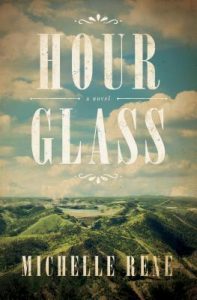
Michelle Rene’s HOUR GLASS took home the Laramie Grand Prize Ribbon for 2017 and the OVERALL Grand Prize Ribbon for the Chanticleer Int’l Book Awards
CIBA Overall Grand Prize Winner and Laramie Grand Prize, Michelle ReneClick on the cover for the Amazon link.
Click on the Hour Glass book to order from Amazon
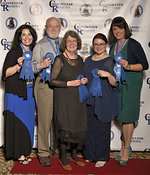
LARAMIE BOOK AWARD WINNERS for 2017, a division of the CIBA.
LARAMIE BOOK AWARDS Winners T.K. Conklin, Nick K Adams, J.L. Oakley, Michelle Rene, Kiki Watkins
The 2017 books have all won a Chanticleer Book Reviews package!
The Hour Glassby Michelle Rene ***LARAMIE GRAND PRIZE WINNER*** and OVERALL BEST BOOK Chanticleer Reviews
Away at War: A Civil War Story of the Family Left Behind by Nick K. Adams
Threads of Passion by T.K. Conklin
Desertion by Michael Aloysius O’Reilly
Death in the Black Patch by Bruce Wilson
Jacquie Roger’s HOT WORK IN FRY PAN GULCH: Honey Beaulieu Man Hunter Series took home the 2016 Laramie Grand Prize. Click on the cover for the Amazon link:
Laramie Grand Prize – JACQUIE ROGERS
First Place Category Winners for 2016 are:
Click on the hyperlinks to read their Chanticleer awarded reviews
The Laramie Grand Prize Winner for 2015 was WIDOW: Flats Junction Series by Sara Dahmen (Originally titled Doctor Kinney’s Housekeeper)
Sara Dahmen awarded Laramie Grand Prize for DR. KINNEY’S HOUSEKEEPER — now WIDOW 1881 (Book One of the Flats Junction Series)WIDOW: Flats Junction, Book One – Click on the cover for the link to Amazon
Women’s Historical:Sara Dahman – Doctor Kinney’s HouseKeeper ***Grand Prize Winner*** (Retitled: WIDOW 1881 – Book One of the Flats Junction series)
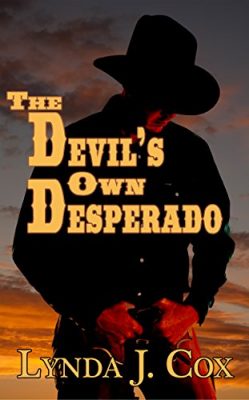
Can a gunfighter ever truly hang up his guns and settle down in one place? When Colt Evans is wounded in a fight, he flees – as far away as he can get – searching for a place to heal. What he finds has the potential to change his life forever and make him yearn to settle down. But, will his past stay behind him?
Injured and on the run, Colt Evans stumbles upon a remote homestead owned and operated by Amelia McCollister and her two siblings. The orphaned siblings have strong feelings about gunfighters as their parents were shot to death by outlaws several years earlier. Due to this sad fact, when the well-known gunfighter arrives at the homestead, Amelia is reluctant to open her home to the man.
Despite this, she follow her nature to heal rather than harm the wounded Colt against the warnings of the doctor and Marshall of the town. As she nurses Colt back to health, Amelia’s strong misgivings about this stranger seem to disappear. Colt finds that the longer he is with Amelia, he doesn’t want to leave. However, he knows that someone will eventually come looking for him. He does not want to stay and bring trouble to Amelia and her siblings; however, the longer he remains on the homestead, the stronger his feeling for Amelia grow.
As Colt had feared, his enemies find him. The danger is just too severe for Amelia and her brothers, so Colt leaves. However, once a gunfighter, always a gunfighter – at least in reputation. When Colt is ambushed and left for dead, the only thing that keeps him alive is his last drive to find Amelia, the love of his life.
Lynda J. Cox has crafted an enjoyable novel of the Old West. Nelson’s writing is engaging and flawless as she weaves the needs and desires of her two main characters against the brutal reality of the 1880’s into the story. This is a classic romance set-up, and it works to the readers’ delight. The book presents a well-balanced mix of romance and gritty 1887 Wild West action. This combination makes for one page-turning Western epic.
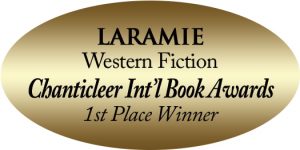
The Devil’s Own Desperado by Lynda J. Cox won First Place in the 2015 LARAMIE Awards!
The Cygnus Book Awards recognize emerging new talent and outstanding works in the genre of Science Fiction, Steampunk, Alternative History, and Speculative Fiction. The Cygnus Awards is a genre division of Chanticleer International Book Awards and Novel Competitions (CIBA).
These titles have moved forward in the judging rounds from Long Listers (Slush Pile Survivors) to the 2018 Cygnus Book Awards SHORT LIST. These entries are now in competition for the limited 2018 Cygnus Semi-Finalists from which the First Place Category Positions will be chosen. The Cygnus Book Awards Semi-Finalists and First Place Positions along with the CYGNUS Grand Prize Award Winner will be announced at the Awards Gala on Saturday, April 27th, 2019.
Deadline for 2018 CYGNUS Book Awards submissions was April 30, 2018. We are now accepting entries into the 2019 CYGNUS Awards.
Chanticleer Book Reviews is looking for the best books featuring space, time travel, life on other planets, parallel universes, alternate reality, and all the science, technology, major social or environmental changes of the future that author imaginations can dream up. Hard Science Fiction, Soft Science Fiction, Apocalyptic Fiction, Cyberpunk, Time Travel, Genetic Modification, Aliens, Super Humans, Interplanetary Travel, and Settlers on the Galactic Frontier, Dystopian, we will put them to the test and choose the best among them.
These titles are in the running for the top 2018 CYGNUS Book Awards novel competition for Science Fiction positions! Good Luck to All!
Matthew D. Hunt – Solar Reboot
Sarah Katz – Apex Five
Paul A. Vasey – Trinity’s Legacy
Catori Sarmiento – The Fortune Follies
Stu Jones & Gareth Worthington – It Takes Death to Reach a Star
Tessa McFionn – To Discover a Divine
Isadora Deese – Right of Capture
Jim Cronin – Recusant
Lou Dischler – Meet Me Under the Comet
Richard Mann – Zeus 25 – Jory and Zenobia
Justine Avery – The One Apart: A Novel
Phillip R. Onagan – Within The Gambit
Ryan London – Pillars of the Mortal Monarchies
Pamela LePage – Virtuous Souls
Denise Lammi – Lucid World
Mark Daniel Seiler – River’s Child
M. Black – Electric Gardens
Samuel Winburn – Ten Directions
Rhett C Bruno – Titan’s Wrath
Daniel Zadow – Pigeon
KB Shaw – From the Shadows
J. I. Rogers – The Korpes File
ElizabethCrowens – Silent Meridian, Book 1
Elizabeth Crowens – A Pocketful of Lodestones, Book 2
Alexander Edlund – Keelic and the Pathfinders of Midgarth
Ted Neill– The Selah Branch
Gareth Worthington – Children of the Fifth Sun
Congratulations to these authors for their works moving up from the 2018 CYGNUS Long List to the Short List. These novels will now compete for the (Semi-Finalists) Positions!
The CYGNUS Short Listers will compete for the SemiFinalists positions that will compete for the CYGNUS First-In-Category Positions. First Place Category Award winners will automatically be entered into the CYGNUS GRAND PRIZE AWARD competition. The CBR Grand Prize Genre Winners will compete for the CIBA Overall Grand Prize for Best Book and its $1,000 purse.
John Yarrow, CYGNUS Grand Prize Award Winner for The FUTURE’S DARK PAST (2017)James R. Wells Awarded the Cygnus Grand Prize for THE GREAT SYMMETRY (2015)
All Short Listers will receive high visibility along with special badges to wear during the Chanticleer Authors Conference and Awards Gala.
Congratulations to the Short Listers in this fiercely competitive contest!
Good Luck to each of you as your work competes in the 2018 CYGNUS International Book Awards.
The CYGNUS Grand Prize Winner and the Five First Place Category Position award winners will be announced at theApril 28th, 2019 Chanticleer Book Awards Annual Awards Gala,which takes place at the Chanticleer Authors Conference that will be held in Bellingham, Wash.
Bennett Coles CYGNUS Grand Prize for VIRTUES of WAR (2013)
We are now accepting submissions into the 2019 CYGNUS Awards writing competition. The deadline for submissions into the 2019 CYGNUS Book Awards is April 30th, 2019. Please click here for more information.
As always, please do not hesitate to contact us with any questions, concerns, or suggestions at Info@ChantiReviews.com.
The Gertrude Warner Book Awards recognize emerging new talent and outstanding works in the genre of Middle-Grade Readers. The Gertrude Warner Book Awards is a genre division of Chanticleer International Book Awards (CIBAwards) and Novel Competitions.
Chanticleer Book Reviews is looking for the best Chapter Books and Middle-Grade Readers featuring stories of all shapes and sizes written to an audience between the ages of about eight to twelve. Science Fiction, Fantasy, Mystery, Paranormal, Historical, Adventure we will put them to the test and choose the best Middle-Grade Books among them.
These titles are in the running for the SHORT LIST of the 2018 GERTRUDE WARNER Book Awards writing competition for Middle-Young Adult Fiction Novels!
Alexander Edlund – Keelic and the Pathfinders of Midgarth
Rebekah Stelzer – Susa’s Story
M. P. Follin – Dakota Joy and the Traveling Stones
Joanna Cook – The Life of Bonnie Dickens
Victoria Adler – Emma and Mia
Ginger Heller – The Boy Who Rode the Tiger
Beth Cahn – Duncan Dogood: The Journey of the Would-Be Hero
Cheryl Carpinello – Guinevere: At the Dawn of Legend
Jules Luther – The Portals of Peril
James Sulzer – The Card People
T. L. Frances – The Bird Queen’s Book
Vezna Maria Gottwald – Blue-Green Corduroy
Verity Byrne – Charmers and the Blood Red Candy
Patricia M Ahern – Pondlife: Blue Moon Eclipse
Patrick Thornton – Stepping Up
Elizabeth Doyle Carey – Junior Lifeguards: The Test
Kay M. Bates – The Adventures of Rug Bug: The Revolution
Diane Rios – Bridge of the Gods
P.H.C. Marchesi – Shelby & Shauna Kitt and the Dimensional Holes
Gloria Two-Feathers – Tallulah’s Flying Adventure
Pamela Hartley – The Final Rue of Naveena Bleu
Aric Cushing – Vampire Boy
These titles have moved forward in the judging rounds from SLUSH pile to the 2018 Gertrude Warner ti Book Awards LONG LIST (aka the Slush Pile Survivors). We incorporate the Long List when the judges request an additional round of judging to accommodate the number and/or quality of entries received.
These entries are now in competition for the 2018 Gertrude Warner SHORT LIST. Short Listers will compete for the Semi-Finalists positions. Semi-Finalists will compete for the coveted First Place Category Winners of the 2018 Gertrude Warner Book Awards in the final rounds of judging. The First Place Category winners will automatically be entered into the 2018 GERTRUDE WARNER GRAND PRIZE AWARD competition.
The 16 CBR Grand Prize Genre Winners will compete for the CBR Overall Grand Prize for Best Book and its $1,000 purse. First Place Category and Grand Prize Awards will be announced and recognized at the Chanticleer Awards Banquet and Ceremony on Saturday, April 27th, 2019, Bellingham, Washington.
#CIBAwards
All Short Listers will receive high visibility along with special badges to wear during the Chanticleer Authors Conference and Awards Gala.
Grand Prize Ribbons!
Good Luck to each of you as your works compete for the Gertrude Warner Book Awards Short List.
Bek Castro, Paul Aerkter, Murray Richter
The Gertrude Warner Grand Prize Winner and the First Place Category Position award winners will be announced at theApril 27th, 2019 Chanticleer Book Awards Annual Awards Gala,which takes place at the Chanticleer Authors Conference that will be held in Bellingham, Wash.
We are now accepting submissions into the 2019 Gertrude Warner Book Awards writing competition. The deadline for submissions is May 30th, 2019. Please click here for more information.
As always, please do not hesitate to contact us with any questions, concerns, or suggestions at Info@ChantiReviews.com.
A few years back, above the sparkling Pacific, the prolific and talented Chelsea Cain talked to writers about what she’d learned from writing bestsellers. One piece of her advice always stuck with me: Write the bare bones version of the scene first using mostly dialogue, and then move on and in the second draft flesh out the scenes with description and action.
In other words, an early draft might look more like a screenplay than a novel.
Fiction and memoir writers need to be omnivorous–searching out classics and bestsellers, prizewinners and Goodreads favorites–reading widely, and analyzing with an eye for structure and arcs. And they need to analyze movies and read screenplays for storytelling techniques. All screenplays reveal the underlying acts and key events and there’s a lot to be learned from what screenwriters leave out.
…there is a lot to learn from what screenwriters leave out.
Below I’ve pasted the opening or set up in the thrillerAir Force Onewritten by Andrew Marlow. If you write action or thriller novels, what did this story teach you? For example, notice how the protagonist has alotto lose. Air Force One is hijacked while the presidentand the first family are on board. Smart writers insert sky-high stakes by using vulnerable characters and complicated motives. In the opening, the president makes comments about not bargaining with terrorists. And the first two acts set up a deadly showdown and the memorable dialogue “Get off my plane.”
(I listed two screen writing resources at the end of this post – JPM)
Tip for Writing Action Scenes: READ SCREENPLAYS!
Here is the excellent sample from top screenplay writer, Andrew Marlow, the opening from Air Force One.
Like most action films,Air Force One begins without prelude:
Air Force One

                   Andrew Marlow

FADE IN:
INT. C-130 HERCULES TURBO-PROP - NIGHT

Eighteen combat-ready special forces, wearing
assault black, jump packs and combat gear,stare down
the deep end of a greasy ramp into the night sky.
Village lights flicker 19,000 feet below.

The STRIKE FORCE LEADER signals to his team.

Without a moment's hesitation, they dive into the
darkness and plummet toward earth.

EXT. MANSION - NIGHT

A military GUARD, old Soviet-style uniform,rounds
the corner of the large estate toting an AK-47.

A red laser dot appears briefly on his forehead and
after a beat, the red dot seems to bleed.The Guard
collapses dead.Two other GUARDS are dispatched with
single, silenced shots.

A Strike Team member at a junction box awaits a signal.

Through infra-red binoculars the strike Force Leader
watches his assault troops as they take positions.

                    STRIKE FORCE LEADER
            (into headset/in Russian) (Russian)
                         GO!

On the estate - as the power goes out.The team on the
mansion's front porch pops the door and pours in.

INT. MANSION - NIGHT

FOLLOWING - the FIVE TEAM MEMBERS as they rush a
stairway in phalanx formation. They nearly knock
over an old lady, who in turn lets out a blood
curdling scream.

UPSTAIRS CORRIDOR -

The team kicks open a door.  Rushes into the room.

INT. BEDROOM -

Assault weapons pointed at the bed. The soldiers
yank back bedsheets to reveal IVAN STRAVANAVITCH, a
middle-aged man and his half-naked 18-year-old
concubine.

                     SOLDIER
                   (in Russian)
                  Get up, now!  Up!

The soldiers pull Stravanavitch to his feet and haul
him out of the room.

FOLLOWING -  As they push down the hallway.

MANSION SECURITY GUARDS rally with haphazard gunfire.

Out come the strike force's flash-bang grenades.
Exploding everywhere, disorienting Stravanavitch's
men.

EXT. FIELD - NIGHT

Signal flares burn as a helicopter descends on the
position. The Strike Team evacuates across the field
and forces a struggling Stravanavitch into the low-
hovering copter.

The commandos swiftly board the craft as a handful of
Stravanavitch's guards break into the clearing.They
open fire.

And the mounted machine guns on the helicopter
return.

One of the Strike Team members takes a bullet to the
neck. He's pulled by his comrades into the chopper as
it lifts into the sky, its guns spitting lead...

               STRIKE FORCE LEADER (V.0.)

              Archangel, this is Restitution.

              Archangel, this is Restitution.The
              package is wrapped.
              Over.

                   VOICE (V.0. RADIO)
              Roger, Restitution.  We are standing
              by for delivery.

                  FADE TO BLACK
The SOUNDS of a dinner banquet.
Forks clanking against plates and
the din of a hundred conversations,
broken by...

The DING, DING, DING of a SPOON tapping against a wine glass.
SUPER TITLE:   "MOSCOW - THREE WEEKS LATER
FADE IN:

INT. BANQUET ROOM - NIGHT

Hundreds of men and women in formal evening wear sit
at round banquet tables. A HUSH falls over the guests
as the DINGING continues.  All attention turns to the
front table.

A rotund, silver haired-man in his late sixties
rises and sidles past U.S.and Russian flags up to the podium
microphone.  He is STOLI PETROV, President of Russia.

                          PETROV
                       (in Russian)
          Thank you for joining us this evening.

          Petrov's harsh Russian issues through the
          room.  But over it we hear a young woman's
          voice translating.

                     TRANSLATOR (V.0.)
          Tonight we are honored to have with
          us a man of remarkable courage, who,
          despite strong international
          criticism...

AT THE FRONT TABLE -

A translator's words ring in the earpiece of a
handsome man in his mid-forties.  Worry lines crease
his forehead and the touch of gray at his temples
attest to three very difficult years in office.

This man is JAMES MARSHALL, and he is the PRESIDENT of the
UNITED STATES OF AMERICA.  He busily makes last
minute changes to his speech.

                      TRANSLATOR
                    (V.0. earpiece)
           Has chosen to join our fight against
           tyranny in forging a new world
           community.  Ladies and gentlemen, I
           give you the President of the United
           States of America...

           Mr. President.

Thunderous applause as Marshall rises and approaches
the podium.

At the back of the room, DOHERTY, a senior policy
adviser whispers to the President's Chief of Staff
ED SHEPHERD...

                           DOHERTY
             Maybe we should consider running him
             for re-election instead of the U.S.
The applause dies as Marshall begins to speak.

                         MARSHALL
               (in Russian with subtitles)
             Good evening and thank you.  First I
             would ask you to join me in a moment
             of silence for the victims of the
             Turkmenistan massacres.

The room remains silent a few beats.  Most guests
respectfully bow their heads.

Marshall begins again, but this time in English. The young
woman translates simultaneously for the Russian audience.

                      MARSHALL
          As you know, three weeks ago American
          Special Forces, in cooperation with
          the Russian Republican Army, secured
          the arrest of Turkmenistan's self-
          proclaimed dictator, General Ivan
          Stravanavitch, whose brutal sadistic
          reign had given new meaning to the
          word horror.  I am proud to say our
          operation was a success.

Applause from the audience.  Marshall turns the page
on his speech.

                      MARSHALL
          And now, yesterday's biggest threat
          to world peace... today awaits trial
          for crimes against humanity.

During the applause, Marshall pulls a page from the
speech, folds it and slides it into his pocket.  He
removes his glasses and looks out into the crowd.
His tone becomes more personal.

He's not reciting the speech anymore.

                        MARSHALL
           What we did here was important.  We
           finally pulled our heads out of the
           sand, we finally stood up to the
           brutality and said "We've had enough.
           Every time we ignore these atrocities--
           the rapes, the death squads, the
           genocides- every time we negotiate
           with these, these thugs to keep them
           out of gig country and away from gig
           families, every time we do this
           we legitimize terror.

           Terror is not a legitimate system of
           government.  And to those who commit the
           atrocities I say, we will no longer
           tolerate, we will no longer negotiate, and we will no longer
           be afraid.  It's your turn to be afraid.

Applause rolls through the crowd.

EXT. MOSCOW INTERNATIONAL AIRPORT - NIGHT

Sprawling terminals spread out to runways like
tentacles.

ON THE TARMAC -

Bathed in floodlights, perched majestically on the
runway, dwarfing nearby commuter and military jets,
stands...

                        AIR FORCE ONE
         The President's own Boeing 747-200,
         dubbed "the flying White House".
         The distinctive royal blue stripe
         over a thin gold line tapers to a
         tail adorned with the American flag
         and the Presidential Seal Secret
         Service agents and Marines stand
         guard at the aircraft's perimeter.

A RUSSIAN NEWS VAN emerges from the darkness and
pulls to a stop by a Secret Service barricade.

         SPECIAL AGENT GIBBS greets the Russian news
         team that emerges.

                          GIBBS
          Gentlemen, welcome to Air Force One.

          Please present your equipment to Special
          Walters for inspection.

 The news team's segment producer, a crusty old
 Russian named KORSHUNOV raises his big bushy eyebrows.

                     KORSHUNOV
           We've already been inspected.

                     GIBBS
          Sir, this plane carries the President
                         of the United States.

         Though we wish to extend your press service
         every courtesy, you will comply with our
         security measures to the letter.

                          KORSHUNOV
         Of course.  I'm sorry.

Korshunov and the FIVE MEMBERS of his news crew
present their video cameras, sound equipment and
supplies to Special Agent WALTERS for inspection.
Secret Service DOGS sniff through the baggage.

                            GIBBS
            Please place your thumbs on the ID
            pad.

Korshunov puts his thumb on the ID pad of a portable
computer.

The computer matches up his thumbprint with his
dossier and photograph. "CLEARED" flashes on the
computer screen.


INT. HALLWAY - NIGHT

The President, walking with his entourage.

                      SHEPHERD
           CBS said they'll
           give us four minutes.  They thought
           the Russian was a nice touch.

                      MARSHALL
           I always wondered if my freshman
           Russian class would come in handy.

                      DOHERTY
           Sir, you threw out page two.

                      MARSHALL
           Goddamn right I did.  I asked for a
           tough-as-nails speech and you gave
           me diplomatic bullshit.  What's the
           point in having a speech if I have
           to ad-lib?

                       DOHERTY
           It was a good ad-lib, sir.

                       MARSHALL
           Thanks.  Wrote it last night.

The President exits the building and enters his
limousine.

EXT. TARMAC - AIR FORCE ONE - NIGHT

Walters hands the bags back to the Russians.

                   WALTERS
          Equipment checks out.

A striking woman in her early thirties descends Air
Force One's stairway.  MARIA MITCHELL.

                        GIBBS
          Gentlemen, this is Maria Mitchell.

          Press Relations for the Presidential Flight Office.  She'll
          take you from here.

                      KORSHUNOV
          Ms.  Mitchell.  So nice to finally
          meet you in person.

                    MITCHELL
          The President and I were delighted
          that we could accommodate you.  Now
          if you're all cleared?
                   (Gibbs nods)
          You can follow me then.

They ascend into the belly of Air Force One.

                    MITCHELL
          I'll be giving
          you a brief tour, then during the
          flight, two members of your crew
          will be allowed out of the press
          area at a time for filming.  You
          will have exactly ten minutes with
          the President and twenty with the
Screenplay Resources from Jessica Page Morrell:
You can find thousands of screenplays online to read.
Here’s a goodresourcefor screenplays: SIMPLYSCRIPTS.com where you can read the scripts from 3 Kings, The Fifth Element, An American Werewolf in Paris, and more!
And here is a screenwriting informational website titled Go Into the Story
Jessica Page Morrellis a top-tier developmental editor and a contributor to Writer’s Digest magazine, and she teaches Master Writing Craft Classes at the Chanticleer Authors Conference that is held annually.
Jessica Page Morrell
Jessica understands both sides of the editorial desk–as a highly-sought after content development editor and an author. Her work also appears in multiple anthologies and The Writer and Writer’s Digest magazines. She is known for explaining the hows and whys of what makes for excellent writing and for sharing very clear examples that examines the technical aspects of writing that emphases layering and subtext. Her books on writing craft are considered “a must have” for any serious writer’s toolkit. For links for her writing craft books, please click on her above.
Chanticleer ReviewsandOnWord Talkswill interview Jessica for more of her writing tips and advice. Stay tuned! ~Chanticleer
We are planning a writing craft workshop soon that will be taught by Jessica.
The M&M Book Awards recognize emerging new talent and outstanding works in the genre of Cozy, Classic, & Not-So-Cozy Mystery Novels. The M&M Book Awards is a genre division of Chanticleer International Book Awards (CIBA) and Novel Competitions.
Chanticleer Book Reviews is looking for the best books featuring “mystery and mayhem”, amateur sleuthing, light suspense, travel mystery, classic mystery, British cozy, hobby sleuths, senior sleuths, or historical mystery, perhaps with a touch of romance or humor, we will put them to the test and choose the best among them. (For suspense, thriller, detective, crime fiction see our Clue Book Awards).
The 411
These titles have moved forward in the judging rounds from SLUSH pile to the 2018 M&M Book Awards LONG LIST (aka the Slush Pile Survivors). We incorporate the Long List when the judges request an additional round of judging to accommodate the number and/or quality of entries received. These entries are now in competition for the 2018 M&M SHORT LIST. Short Listers will compete for the Semi-Finalists positions. Semi-Finalists will compete for the coveted First Place Category Winners of the 2018 M&M Book Awards in the final rounds of judging. The First Place Category winners will automatically be entered into the M&M GRAND PRIZE AWARD competition. The 16 CBR Grand Prize Genre Winners will compete for the CBR Overall Grand Prize for Best Book and its $1,000 purse. First Place Category and Grand Prize Awards will be announced and recognized at the Chanticleer Awards Banquet and Ceremony on Saturday, April 27th, 2019, Bellingham, Washington.
These titles are in the running for the SHORT LIST of the 2018 M&M Book Awards novel competition for Cozy, Classic, and Not-So-Cozy Mystery Novels!
Michelle Cox – A Promise Given
Kate Vale – Only You
Mary Adler – Shadowed by Death: An Oliver Wright WW2 Mystery Novel
B.L. Smith – Bert Mintenko and the Minor Misdemeanors
Charlotte Stuart – Why Me?
Nick Korolev – Flashback
Becky Clark – Fiction Can Be Murder
Alan Chaput – Savannah Sleuth
Elizabeth Crowens – Dear Mr. Hitchcock
Christine Evelyn Volker – Venetian Blood: Murder in a Sensuous City
C. C. Harrison – Death by G-String, a Coyote Canyon Ladies Ukulele Club Mystery
Susan Lynn Solomon – Dead Again
Mark W Stoub – The Fifth Trumpet: Fire in the Blood
Traci Andrighetti – Campari Crimson
Dawn Meredith – Letters From the Dead
Chief John J. Mandeville – Old Dark and Dangerous
Bonnie C. Monte – The Sleeping Lady
C.A. Larmer – Do Not Go Gentle
Anna Castle – Moriarty Brings Down the House
C.A. Larmer – Evil Under The Stars: The Agatha Christie Book Club 3
James Musgrave – Chinawoman’s Chance
James Scott Byrnside – Prisoners of the Past
Nancy J. Cohen – Hair Brained
Stone Winkler – Blood on a Blue Moon: A Sheaffer Blue Mystery
Roger Newman – What Becomes
Julie Chase – Cat Got Your Secrets
Lori Robbins – Lesson Plan for Murder
Lo Monaco – Lethal Relations
Linda Hughes – Secrets of the Asylum
Donna Huston Murray – For Better or Worse
Anna Castle – Moriarty Takes His Medicine
Carl and Jane Bock – Death Rattle
Deborah Rich – Under the Radar
Kelly Oliver – FOX: A Jessica James Mystery
Susan Lynn Solomon – Dead Again
All Short Listers and SemiFinalists will receive high visibility along with special badges to wear during the Chanticleer Authors Conference and Awards Gala.
Grand Prize Ribbons!
Good Luck to each of you as your works compete for the
M&M Awards Short List.
The M&M Grand Prize Winner and the First Place Category Position award winners will be announced at theApril 27th, 2019 Chanticleer Book Awards Annual Awards Gala,which takes place at the Chanticleer Authors Conference that will be held in Bellingham, Wash.
We are now accepting submissions into the 2019 M&M Awards writing competition. The deadline for submissions is April 30th, 2019. Please click here for more information.
As always, please do not hesitate to contact us with any questions, concerns, or suggestions at Info@ChantiReviews.com.
Author Susan Faw is the perfect example of what I mean by #SeriousAuthor. She not only writes amazing YA Fantasy, she also approaches her writing as an occupation.
She’s serious. She plans. She kills it. Every time.
Please read, respond, and share this 10 Questions Interview with author, Susan Faw.
Chanticleer: Tell us a little about yourself: How did you start writing?
Faw: Back in 2014, the company that I had been working for since 1994 announced that it was merging with another company from the U.S. I knew that it was the death knell for my position within the company and that it wouldn’t be a matter of ‘if’ but ‘when.’ I grabbed a bottle of wine, went out to my deck, cried for a couple of hours while I polished it off, then went inside and sat down at my computer and started to write Seer of Souls. My prediction came true on May 1st of 2017 when I was let go due to a “work slowdown.” It was a nice way of saying I was over 50 and no longer wanted within the organization.
Chanticleer: That’s fascinating. I often wonder about how stress has the power to alter our perception of the world around us – even how we define ourselves. And sometimes what it draws out of us in that altered state. When did you realize that you were an author?
Faw: I think it started to feel real when Seer of Souls was picked up by Booktrope (now defunct). They gave me my start and dragged this new author through the process of taking a raw manuscript to finished, published product. Unfortunately, they closed their doors three months after my first book went live, and so I had to start all over again, learning the Indie way of doing things.
Chanitcleer: Seer of Souls did well in our 2016 Dante Rossetti Awards. Talk about genre. What genre best describes your work?
Faw: I am a fantasy author, first and foremost. I cut my teeth on the great fantasy authors of the century and have always loved to be transported to unique worlds. I think the subgenre of dystopian fiction, which I see to be a hybrid of science fiction and fantasy, was birthed due to this need to know the answers to what if the worst case scenario happens.
Chanticleer: What led you to write in this genre?
Faw: I adore it. Despite what most people think, fantasy is about people, more so than even the romance genre. Fantasy explores the human condition through a portal of strange new worlds and if well written, challenges our beliefs about structures or ‘norms’ that we must accept in modern society. It allows us to talk about taboo subjects in a safe environment, because of it is “just fantasy.” I read a lot of fantasy and science fiction. When you immerse yourself in a genre, you learn the tropes, the norms, what works within the genre and what has been already done. By reading you absorb a culture that you can then build on. I couldn’t write romance. I don’t understand the genre.
Chanticleer: Good insights. Are you a rule-follower or do you like to make up your own rules?
Faw: I follow the rules for the most part, but I find that when I try to be formulaic about the rules, it shuts down my creativity. I become bored with the project, so a certain level of spontaneity is important for me.
Chanticleer: Yeah, sometimes the best way to silence the muse is to unleash the editor in the middle of the creative process. Something, I’m sure, we all do from time to time. How do you come up with your ideas for a story?
Faw: I like to do a day or two of random reading online. I check out the weird and the wonderful posts that litter the Internet and start taking notes of strange occurrences or weird events. Ghost stories or reports are a great source of inspiration. Paranormal activity can lead to all kinds of magical concepts.
Chanticleer: Those nachos look good… How structured are you in your writing work? How do you approach your writing day?
Faw: Now that is a work in progress. I recently moved and am still settling into my writing routine here. In the past I would write whenever I could squeeze the time in, but now that I am writing full time I have found my discipline to have weakened. Ideally, I like to treat my writing day like a work day, work 8-5 at my computer. I find that keeping a routine is the most productive. Beyond that, I like to write in the mornings and do the business side of things in the afternoon, such as marketing or production activities.
Chanticleer: I believe you will settle into your routine in no time. Can you give us a few of your favorite authors and describe how they influence your work?
Faw: JK Rowling, Robert Jordan, Erika Johnannsen, Terry Goodkind, Brent Weeks – all are fantasy authors and I love rereading their works because of the depth of their writing. The world building is amazing and the character development is so real, you would swear their characters breathed.
Chanticleer: I love authors who can create worlds and characters like that. Do you use craft and/or business books? Which ones have helped you the most?
Faw: When it comes to editing, I put every book I write through this preliminary edit, to sift it for the chaff – The Word-Loss Diet by Rayne Hall. It is a small book stuffed with the most common, juvenile writing mistakes. I also reference The First Five Pages by Noah Lukeman and Writing The Breakout Novel by Donald Maass. I need to give a shout out to indie author Chris Fox and his advice in Six-Figure Author – Using Data to Sell Books and Write To Market – Deliver A Book That Sells. That last book is not what you think but involves understanding your audience and discovering subjects within your niche that will resonate with your audience, within your genre.
Chanticleer: That’s an awesome list. Thanks! Give us your best marketing tips, what’s worked to sell more books, gain notoriety, and expand your literary footprint.
Faw: Marketing is every author’s Achilles heel. Whether you publish the traditional route or are self -published author, like me, we all need to market. The reasons for this are varied, but in the end, it all boils down to the same two facts:
No one will take as much interest in your career as you will. You are your own best advocate.
Over the last three to four years, I have worked hard to learn the best practices when it comes to advancing and expanding your author footprint. No one answer works for everyone but there are some essentials that you must have in place.
Firstly, you MUST have a kick-ass(ets) cover. Everyone judges by appearance, if they have eyes to see. A poor cover is a stumbling block. When someone is browsing for a book to buy, your cover needs to stop them dead. It should compel them to read your blurb, to check out the ‘look inside’. If you cover cannot grab their eyes, then you book will not grab their wallet. Spend the money on this, if you are an indie. If you are a traditional author, make this a serious discussion with your publisher.
Secondly, take the time to LEARN about Facebook ads, and Amazon (AMS) ads and how they work. As a traditional author, you might not be able to run Amazon ads, but you certainly can with Facebook ads. A small, effective and can make a huge difference in daily sales.
Thirdly, work hard to build a mailing list dedicated to your author brand. There is no better way to market than to a dedicated list of fans waiting to snap up every book you write. There are ways to introduce your work to new people, usually in the form of some sort of giveaway. It can be a short story related to your series or some deleted chapters, or original sketches/artwork that you have drawn. Work on building that audience who is hungry for your next book. The other reason why this is important is that it is a marketing activity that is totally within your control. Regardless of what happens with other advertising platforms, your list is yours. That direct contact with your customer is essential. An excellent coach for in this area is Bryan Cohen of the “Sell More Books Show” podcast.
Lastly, take the time to get to know other authors in the book industry. The collective wisdom of these smart people can help you avoid some costly mistakes and alert you to new possibilities as they crop up. Whether traditional or indie, be humble enough to learn from others who may be farther along the path than you, or doing something smart.
Chanticleer: Susan, thank you for spending time with us today. You are a powerful and positive force in the universe and we absolutely adore you!
Susan’s second novel, Soul Sanctuary, took home the 1st Place in the 2017 Dante Rossetti Awards! Check out her website and her other books, social media accounts. As you can see, she’s got it going on!
The Journey Book Awards recognize emerging new talent and outstanding works in the genre of Narrative Non-Fiction and Memoir. The Journey Book Awards is a genre division of Chanticleer International Book Awards and Novel Competitions (CIBAwards).
These titles have moved forward in the judging rounds from SLUSH pile to the 2018 Journey Book Awards LONG LIST (aka the Slush Pile Survivors). We incorporate the Long List when the judges request an additional round of judging to accommodate the number and/or quality of entries received. These entries are now in competition for the 2018 Journey Semi-Finalists List known as the SHORT LIST. Short Listers will compete for the limited First Place Category Winners of the 2018 Journey Book Awards in the last rounds of judging and will be announced at the Awards Banquet and Ceremony on Saturday, April 27th, 2019.
Chanticleer Book Reviews is looking for the best books featuring true stories about adventures, life events, unique experiences, travel, personal journeys, global enlightenment, and more. We will put books about true and inspiring stories to the test and choose the best among them.
These titles are in the running for the SHORT LIST of the 2018 JOURNEY Book Awards novel competition for Non-fiction Fiction and Memoir!
Joy Ross Davis – Mother Can You Hear Me?
Cheryl Aguiar – Great Horned Owlets Rescue: Where There’s a Will, There’s a Way…
Sean Dwyer – A Quest for Tears: Overcoming a Traumatic Brain Injury
Philip Muls – Mind on Fire: A Case of Successful Addiction Recovery
H. Alan Day with Lynn Wiese Sneyd – Cowboy Up! Life Lessons from Lazy B
Andrew Jurkowski and Lisa Wright – Between The Swastika and the Bear: A Polish Memoir 1925 – 1948
Reanne Hemingway-Douglass – Baidarka Diaries: Voyages and Explorations: British Columbia andAlaska, 1992 – 2003
Donna LeClair – Waking Reality – Overcoming the Heartache of Abuse
Janice S. Ellis – From Liberty to Magnolia: In Search of the American Dream
Julie Morrison – Barbed
Kayce Stevens Hughlett – SoulStroller: experiencing the weight, whispers, & wings of the world
Liberty Elias Miller – The Heart of the Runaway
Jody Rae – Criminy Sakes Alive: And Other Generational Curses
Karen A. Anderson – The Amazing Afterlife of Animals; Messages and Signs From Our Pets on the Other Side
Kevin Howard – The Evolution of a Man
Abby Wilton – Machiavellian Bluff
Jeff O’Driscoll, MD – Not Yet
Dr. Rick Scarnati – Soul Explosion 2nd Edition
R. Scott Decker – Recounting the Anthrax Attacks: Terror, the Amerithrax Task Force, and the Evolution of Forensics in the FBI
Ellen Krohne – We Lost Her
GySgt L Christian Bussler – No Tougher Duty, No Greater Honor – a memoir of a Mortuary Affairs Marine
Terry Milos – North of Familiar: A Woman’s Story of Homesteading and Adventure in the Canadian Wilderness
Nick Delmedico – Biography
Carolyn Porter – Marcel’s Letters: A Font and the Search for One Man’s Fate
Dennis M. Clausen – Goodbye to Main Street
Russell Vann – Ghetto Bastard, A Memoir
Diane Pomerantz – Lost in the Reflecting Pool: a memoir
Rebecca Brockway – Miss Matched at Midlife: Dating Episodes of a Middle-Aged Woman
Austin M Hopkins – The Loose Ends Became Knots
Janis Couvreux – Sail Cowabunga! A Family’s Ten Years at Sea
Katrina Shawver – HENRY: A Polish Swimmer’s True Story of Friendship from Auschwitz to America
Carol Folbre, Ph.D. – Edge of Abundance: Asian Sketchbook
Donna LeClair – IMMUNITY: Entitlement of Wealthy Political Notables
Lou McKee – Klee Wyck Journal
Cheryl Hughes Musick – The Day the Musick Died
The JOURNEY Long Listers will compete for the 2018 JOURNEY Short List. Short Listers will then compete for the First Place Category positions. The First Place Category winners will automatically be entered into the JOURNEY GRAND PRIZE AWARD competition. The CBR Grand Prize Genre Winners will compete for the CBR Overall Grand Prize for Best Book and its $1,000 purse.
All Short Listers will receive high visibility along with special badges to wear during the Chanticleer Authors Conference and Awards Gala.
As always, please do not hesitate to contact us with any questions, concerns, or suggestions at Info@ChantiReviews.com.
Grand Prize Ribbons!
Good Luck to each of you as your works compete for the JOURNEY Awards Short List.
The JOURNEY Grand Prize Winner and the Five First Place Category Position award winners will be announced at theApril 27th, 2019 Chanticleer Book Awards Annual Awards Gala,which takes place at the Chanticleer Authors Conference that will be held in Bellingham, Wash.
We are now accepting submissions into the 2019 JOURNEY Awards writing competition. The deadline for submissions is April 30th, 2019. Please click here for more information.
Action is eloquence. William Shakespeare, Coriolanus
There are a few techniques it seems like I’m always passing on to my clients: amp up your verbs; use language and details to create more tension, and force scenes to rise. By ‘rise’ I mean writers need to thrust the drama level to a crisis, a confrontation, an explosion. Because in most scenes you’re aiming for the worst outcome.
Components of an Action Scene
Characters
The main players in the scene with their key traits visible & engaged. Secondary characters need a reason for being.
Setting
The time, place and context in which the scene takes place. The setting is not just a backdrop; stage action scenes for maximum wattage.
Scene Driver:
The inciting event/change/stimulus/threat.
The event/stimulus/threat that starts the action rolling in the scene (action can be precipitated before the scene begins)
Internal response
External response
How the main characters react emotionally to actions, threat, choice. How the main characters react physically–dialogue, movement, escape confrontation, fisticuffs. Typically there is a second driver (event or response)that starts the action.
Goal
What the main character decides to do as a reaction to the inciting event or threat.
Consequence
How the main character struggles to accomplish the goal.
Resolution
How the scene goal turns out–win, lose, draw, escape, disaster.
Three words to write by—cause and effect.
Action scenes are high stakes.
The action needs to build to a full boil crisis.
Whenever possible structure action scenes with a midpoint which is also a reversal.
Use all your tools to create a character’s emotional responses including, subtext, posture, facial expressions, gestures, mannerisms, eye movements, and voice quality. Voice includes pitch, the rate of speech (does the character talk fast when nervous?), and intonation.
As you write, imagine you’re holding a camera catching the action blow-by-blow.
With intense action, use short sentences to pick up the pace. Action scenes usually have a minimal amount of description unless it contributes to the scene. The scent of blood. The sound of a gun cocking, or the creak of a floorboard. This is not the place for describing the scenery or the characters.
Action scenes feature choppy and incomplete sentences. Such as, “What was that noise?” “What the . . .”
If the setting is complex and the action intricate, sketch out a map. Place coins or placeholders to mark your players, define the sight lines, scene’s boundaries (how far can a character reach?), and how long it might take to walk, run (or sneak) from point A to point B.
If the action is complicated, ask friends or family members to act it out so you can verify the sequence and reactions.
Read your dialogue out loud.
Use simple past tense verbs such as “kicked” or “punched” rather than those pesky ‘ing’ participles such as “kicking” or “punching.”
Your protagonist has skills, strengths, and weaknesses youcan exploit and showcase. Foreshadow those traits throughout the story so when the reader reaches the action scene, he is expecting complications and credibility.
Scenes are never random events—they all need a logical connection to the storyline and to create ramifications.
Pay special attention to endings—they need weight, potency, and to reveal consequences.
Pacing is key but should be controlled by the scenes that come before and after. These will typically be slower to set up and react to the fight/conflict.
When writing fight scenes or violence, pack these scenes with anemotional punch too.
Read screenplays to digest the moment-to-moment breakdowns.
When you watch films study the reaction shots.
Some emotions in an action scene will be brief or fleeting.
When a gunshot is fired nobody has time to think. However, thebody’schemistry shifts to handle lethal threats, allowing the brain to process far more information in a shorter period of time.
Keep in mind that action scenes happen at several levels and much of the fight needs to be about internal changes, the inner world of the protagonist.
During revisions fine tune character’s emotional reactions so they’re unique, fresh, and individual. This aspect of revision can be difficult, but it is crucial.
Make certain you can justify carnage and bloodshed.
Don’t bog down the sequence with too much technical description. Show who has the upper hand, rack up the tension to the nines and tap into the motivations of the character readers root for. And if someone gets punched or shot or knocked to the ground, readers should feel it too.
Utilize all the senses and never rely solely on the physical description.
The next article from Jessica Page Morrell will include an example of screenplay action from Air Force One by Andrew Marlowe.
Jessica Page Morrellis a top-tier developmental editor and a contributor to Writer’s Digest magazine, and she teaches Master Writing Craft Classes at the Chanticleer Authors Conference that is held annually.
Jessica Page Morrell
Jessica understands both sides of the editorial desk–as a highly-sought after content development editor and an author. Her work also appears in multiple anthologies and The Writer and Writer’s Digest magazines. She is known for explaining the hows and whys of what makes for excellent writing and for sharing very clear examples that examines the technical aspects of writing that emphases layering and subtext. Her books on writing craft are considered “a must have” for any serious writer’s toolkit. For links for her writing craft books, please click on her above.
Chanticleer ReviewsandOnWord Talkswill interview Jessica for more of her writing tips and advice. Stay tuned! ~Chanticleer
We are planning a writing craft workshop soon that will be taught by Jessica.[/fusion_text][/fusion_builder_column][/fusion_builder_row][/fusion_builder_container]




 Chanticleer Book Reviews is looking for the best books featuring cowboys, the wild west, pioneering, civil war, early North American History, and the Contemporary West! Submit your works today and we will put them to the test and choose the best among them in the LARAMIE BOOK AWARDS, a division of the Chanticleer International Book Awards (CIBA).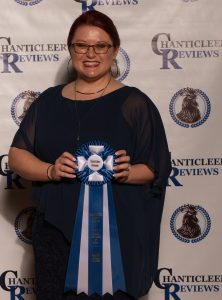
 Jacquie Roger’s HOT WORK IN FRY PAN GULCH: Honey Beaulieu Man Hunter Series took home the 2016 Laramie Grand Prize. Click on the cover for the Amazon link:


 The Cygnus Book Awards recognize emerging new talent and outstanding works in the genre of Science Fiction, Steampunk, Alternative History, and Speculative Fiction. The Cygnus Awards is a genre division of Chanticleer International Book Awards and Novel Competitions (CIBA).







 The M&M Book Awards recognize emerging new talent and outstanding works in the genre of Cozy, Classic, & Not-So-Cozy Mystery Novels. The M&M Book Awards is a genre division of Chanticleer International Book Awards (CIBA) and Novel Competitions.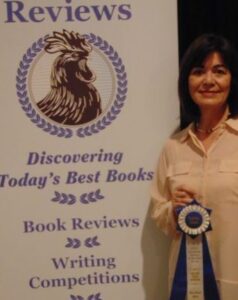

 Author Susan Faw is the perfect example of what I mean by #SeriousAuthor. She not only writes amazing YA Fantasy, she also approaches her writing as an occupation.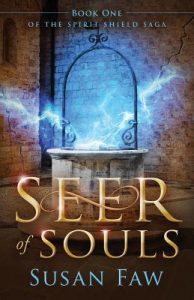
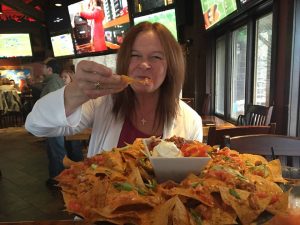 Faw: I like to do a day or two of random reading online. I check out the weird and the wonderful posts that litter the Internet and start taking notes of strange occurrences or weird events. Ghost stories or reports are a great source of inspiration. Paranormal activity can lead to all kinds of magical concepts.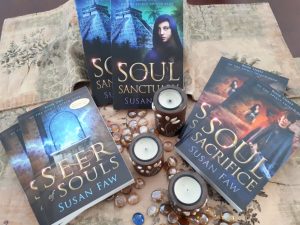

 The Journey Book Awards recognize emerging new talent and outstanding works in the genre of Narrative Non-Fiction and Memoir. The Journey Book Awards is a genre division of Chanticleer International Book Awards and Novel Competitions (CIBAwards).