The Gertrude Warner Book Awards recognize emerging new talent and outstanding works in the genre of Middle-Grade Readers. The Gertrude Warner Book Awards is a genre division of Chanticleer International Book Awards (#CIBAs) and Novel Competitions.
Chanticleer Book Reviews is looking for the best Chapter Books and Middle-Grade Readers featuring stories of all shapes and sizes written to an audience between the ages of about eight to twelve. Science Fiction, Fantasy, Mystery, Paranormal, Historical, Adventure we will put them to the test and choose the best Middle-Grade Books among them.
These titles have made it to the SHORT LIST of the 2018 GERTRUDE WARNER Book Awards writing competition for Middle-Young Adult Fiction Novels!
Congratulations to the 2018 GERTRUDE WARNER SHORT LISTERS! You will receive an email shortly with links to digital badges and contest book stickers.
K.B. Shaw – From the Shadows
Alexander Edlund – Keelic and the Pathfinders of Midgarth
Rebekah Stelzer – Susa’s Story
M. P. Follin – Dakota Joy and the Traveling Stones
Joanna Cook – The Life of Bonnie Dickens
Victoria Adler – Emma and Mia
Cheryl Carpinello – Guinevere: At the Dawn of Legend
Jules Luther – The Portals of Peril
James Sulzer – The Card People
T. L. Frances – The Bird Queen’s Book
Patricia M Ahern – Pondlife: Blue Moon Eclipse
Patrick Thornton – Stepping Up
Elizabeth Doyle Carey – Junior Lifeguards: The Test
Kay M. Bates – The Adventures of Rug Bug: The Revolution
Diane Rios – Bridge of the Gods
P.H.C. Marchesi – Shelby & Shauna Kitt and the Dimensional Holes
Gloria Two-Feathers – Tallulah’s Flying Adventure
Aric Cushing – Vampire Boy
These titles have moved forward in the judging rounds from the LONG LIST to the 2018 Gertrude Warner Book Awards SHORT LIST. These SHORTLISTERS are now in competition for the 2018 Gertrude Warner limited Semi-Finalists Positions. The judges will choose from the Semi-Finalists the coveted First Place Category Winners of the 2018 Gertrude Warner Book Awards in the final rounds of judging. The First Place Category winners will automatically be entered into the 2018 GERTRUDE WARNER GRAND PRIZE AWARD competition. The First Place Category Winners will be announced at the #CIBA awards ceremony on Saturday, April 27, 2019.
The 16 CBR Grand Prize Genre Winners will compete for the CBR Overall Grand Prize for Best Book and its $1,000 purse. First Place Category and Grand Prize Awards will be announced and recognized at the Chanticleer Awards Banquet and Ceremony on Saturday, April 27th, 2019, Bellingham, Washington.
#CIBAwards
All Short Listers and Semi-Finalists will receive high visibility along with special badges to wear during the Chanticleer Authors Conference and Awards Gala.
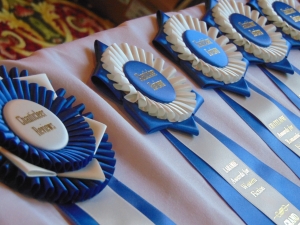
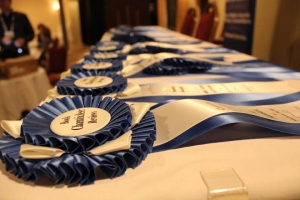
Grand Prize Ribbons!
Good Luck to each of you as your works compete for the Gertrude Warner Book Awards Short List.
Gertrude Warner Book Award Winners
The Gertrude Warner Grand Prize Winner and the First Place Category Position award winners will be announced at theApril 27th, 2019 Chanticleer Book Awards Annual Awards Gala,which takes place at the Chanticleer Authors Conference that will be held in Bellingham, Wash.
We are now accepting submissions into the 2019 Gertrude Warner Book Awards writing competition. The deadline for submissions is May 30th, 2019. Please click here for more information.
As always, please do not hesitate to contact us with any questions, concerns, or suggestions at Info@ChantiReviews.com.
Tension is part curiosity, part unease, part dread or anticipation. It’s linked to every aspect of stories, found on every page, and creates a vivid fictional world that seethes with trouble and obstacles to overcome. Tension prickles readers’ nerves and makes them fret and worry.
Tension, along with suspense, jabs at the reader’s senses with haunting questions and shifting circumstances that must be unraveled.
“Tension is a crucial ingredient that compels readers to keep turning the pages.” – Jessica P. Morrell
Tension is a force field in fiction, or any type of storytelling, that is created on a word-by-word basis that is underlying the story in every scene. Tension is also used to create mood and tone. Mood and tone are important aspects of storytelling often not given their due.
You see, great fiction is designed to cause a reader’s emotions to jangle and his mood to go up and down with every turn of the page. Unlike real life where people usually avoid conflict and misery, in fiction, the best parts of the stories are where the characters are in the worst trouble. Readers love to suffer along with characters, because they’re removed from these miseries, perhaps because they’re escaping their own miseries while comfortable in their homes or airplane seats as characters battle doubts and demons in a fictional world. Tension sometimes helps readers (and listeners) to experience catharsis.
Jessica advises writers to pay particular attention to the words they use to increase tension and impact. These are her tips on how and what to look for when you are wanting to write a page-turner and who would not want to do this?
• Recognize that you’re constantly making choices when you write. Know when you want your words to emphasize an aspect, resonate, slow down, or speed up your story.
• Vary your word choices and respect ‘word territory’—that is, don’t repeat words and phrases, especially those in close proximity, especially with unusual words.
• Vary sentence lengths because they can be numbing when repeated.
• Write tight. Short sentences generally increase tension. Every word in every sentence needs a job. If it doesn’t have a job, fire it.
• Use hard consonant sounds to increase tension. Examples are cowgirl, geek, gimme, trigger, castrate, succor, cackle.
• Use sibilance or a hissing sound to disturb readers and suggest unpleasantness. Examples are: sinister, shyster, sizzle, simper, slice, buzz.
• Insert punchy, muscular verbs whenever they serve your purpose: roil, blurt, thunder, sting, crash, grovel, conjure, hobble, jacked, leer, muzzle.
Most of the time dialogue should be zingy, taut, and to the point.
• Place the most emphatic words at the end of a sentence or paragraph: The door closed with a resounding click, confirming that I was trapped.
“All stories begin with word choice; and word choices will either doom it or set your story apart.” – Jessica P. Morrell
Jessica’s HANDY LIST OF 1,130 words to print out and use for your writing toolbox.
Click here for Jessica’s List of 1,130 words that could add more tension to your story and boost your writing vocabulary.
Jessica Page Morrell
Jessica Page Morrell is a top-tier developmental editor and a contributor to Writer’s Digest magazine, and she teaches Master Writing Craft Classes at the Chanticleer Authors Conference that is held annually along with teaching at Chanticleer writing workshops.
Jessica understands both sides of the editorial desk–as a highly-sought after content development editor and an author. Her work also appears in multiple anthologies and The Writer and Writer’s Digest magazines. She is known for explaining the hows and whys of what makes for excellent writing and for sharing very clear examples that examines the technical aspects of writing that emphases layering and subtext. Her books on writing craft are considered “a must have” for any serious writer’s toolkit. For links for her writing craft books, please click on her name above.
Chanticleer Reviews and OnWord Talks will interview Jessica for more of her writing tips and advice. Stay tuned! ~ Chanticleer
Chanticleer Book Reviews is seeking today’s best books featuring romantic themes and adventures of the heart, historical love affairs, perhaps a little steamy romance, we will put them to the test and choose the best among them.
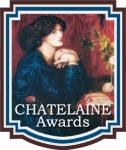
A little information about the Chatelaine Book Awards icon:
We feel that Dante Gabriel Rossetti’s Pre-Raphaelite painting of Jane Morris (muse and wife of William Morris) in a Blue Silk Dress captures the many moods of the Chatelaine division of the Chanticleer International Book Awards. Jane Morris (nee Jane Burden—little is known about her childhood but that it was poor and deprived) was known for her keen intelligence. William Morris fell in love with her when she sat for him as a model. She was privately tutored to become a gentleman’s wife upon their engagement. It is said that she was the inspiration for George Bernard Shaw’s character Eliza Dolittle of My Fair Lady fame. The Blue Silk Dress was painted in 1868 by Rossetti and it currently resides in the Society for Antiquaries of London. She was 29 when Rossetti painted it. Rossetti and Jane Morris became closely attached until his death in 1882. To read more about the fascinating Jane Morris, click on this Wikipedia page.
Please join us in congratulating and reading these top works in this diverse range of all reads Chatelaine: Romance, Chick-Lit, Women’s Fiction, Inspirational, Suspenseful, and, of course, Steamy and Sensual.
Leigh Grant’s MASK OF DREAMS took home the Chatelaine Grand Prize Ribbon for 2017. Congratulations!
Mask of Dreams is a love story, enhanced by the literature of the Renaissance, in particular, Petrarch. This carefully researched historical fiction takes time to develop; Caterina and Rade have their own stories until the letter stitches them together. A tale of sacrifice and honor, violence and fear of conquest, the plight of women in a patriarchal society, immigration and outsiders, Mask of Dreams has resonance in today’s world. And occasionally, even a sense of humor.
Join us in wishing Leigh Grant the very best luck in her publishing adventure! Leigh submitted her unpublished manuscript to the 2017 Chatelaine Book Awards competition.
Leigh Grant has this to say about winning the Chatelaine Grand Prize Book Award for 2017, “I wanted to let you know that the award got me something that I had really wanted: an agent. She is talking (insert top traditional publishing house here), I should be so lucky…Chanticleer’s contest has been a very good thing for me. Best, Leigh Grant“
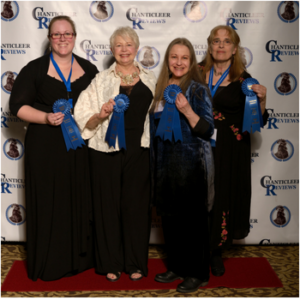
CHATELAINE BOOK AWARD WINNERS for 2017, a division of the CIBA.
Cheri Champagne, Gail Noble-Sanderson, Elizabeth Crowens, Eileen Charbonneau
The 2017 books have all won a Chanticleer Book Reviews package!
Magic of the Pentacle by Diane Wylie
Dear Mr. Hitchcock by Elizabeth Crowens
Watch Over Me by Eileen Charbonneau
Mask of Dreams by Leigh Grant ***CHATELAINE 2017 GRAND PRIZE WINNER***
Insiders’ Tip: Other genre divisions of the Chanticleer International Book Awards have romance categories as well. Multiple submissions of the same work to a variety of CIBA writing competitions divisions are accepted.
The M&M Book Awards recognize emerging new talent and outstanding works in the genre of Mystery & Mayhem Fiction. The M&M Awards is a genre division of Chanticleer International Book Awards and Novel Competitions CIBA).
These titles have moved forward in the judging rounds from Long Listers (Slush Pile Survivors) to the 2018 M&M Book Awards SHORT LIST. These entries are now in competition for the limited 2018 M&M Semi-Finalists from which the First Place Category Positions will be chosen. The M&M Book Awards Semi-Finalists and First Place Positions along with the M&M Grand Prize Award Winner will be announced at the Awards Gala on Saturday, April 27th, 2019.
The M&M Book Awards competition discovers today’s best books featuring “mystery and mayhem,” amateur sleuthing, light suspense, travel mystery, classic mystery, British cozy, hobby sleuths, senior sleuths, or historical mystery, perhaps with a touch of romance or humor, we will put them to the test and choose the best among them. (For suspense, thriller, detective, crime fiction see our Clue Awards)
These titles are in the running for the next round – the SEMI-Finalist positions for the 2018 M&M Book Awards novel competition for Mystery & Mayhem Fiction! Good Luck to All!
B.L. Smith – Bert Mintenko and the Minor Misdemeanors
Mary Adler – Shadowed by Death: An Oliver Wright WW2 Mystery Novel
Charlotte Stuart – Why Me?
Becky Clark – Fiction Can Be Murder
Alan Chaput – Savannah Sleuth
Christine Evelyn Volker – Venetian Blood: Murder in a Sensuous City
Susan Lynn Solomon – Dead Again
Michelle Cox – A Promise Given
Chief John J. Mandeville – Old Dark and Dangerous
Traci Andrighetti – Campari Crimson
Mark WStoub – The Fifth Trumpet: Fire in the Blood
M. Louisa Locke – Pilfered Promises: A Victorian San Francisco Mystery
C.A. Larmer – Do Not Go Gentle
C.A. Larmer – Evil Under The Stars: The Agatha Christie Book Club 3
James Musgrave – Chinawoman’s Chance
James Scott Byrnside – Prisoners of the Past
Kate Vale – Only You
Nancy J. Cohen – Hair Brained
Carl and Jane Bock–Death Rattle
C. C. Harrison – Death by G-String, a Coyote Canyon Ladies Ukulele Club Mystery
Stone Winkler – Blood on a Blue Moon: A Sheaffer Blue Mystery
Julie Chase – Cat Got Your Secrets
Lo Monaco – Lethal Relations
Donna Huston Murray – For Better or Worse
Anna Castle – Moriarty Takes His Medicine
Carl and Jane Bock – Death Rattle
Deborah Rich – Under the Radar
Kelly Oliver – FOX: A Jessica James Mystery
Susan Lynn Solomon – Dead Again
Congratulations to these authors for their works moving up from the 2018 M&M Long List to the Short List. These novels will now compete for the (Semi-Finalists) Positions!
The M&M Short Listers will compete for the SemiFinalists positions that will compete for the M&M First-In-Category Positions. First Place Category Award winners will automatically be entered into the M&M GRAND PRIZE AWARD competition. The CBR Grand Prize Genre Winners will compete for the CIBA Overall Grand Prize for Best Book and its $1,000 purse.
Good Luck to each of you as your work competes in the 2018 Mystery & Mayhem International Book Awards.
The M&M Grand Prize Winner and the Five First Place Category Position award winners will be announced at theApril 28th, 2019 Chanticleer Book Awards Annual Awards Gala,which takes place at the Chanticleer Authors Conference that will be held in Bellingham, Wash.
We are now accepting submissions into the 2019 M&M Book Awards writing competition. The deadline for submissions into the 2019 M&M Book Awards is April 30th, 2019. Please click here for more information.
As always, please do not hesitate to contact us with any questions, concerns, or suggestions at Info@ChantiReviews.com.
The Dante Rossetti Book Awards recognize emerging new talent and outstanding works in the genre of Young Adult. The Dante Rossetti Book Awards is a genre division of Chanticleer International Book Awards (#CIBA).
Rossetti Book Awards is looking for the new best books featuring stories of all shapes and sizes written to an audience between the ages of about twelve to eighteen. Science Fiction, Fantasy, Dystopian, Mystery, Paranormal, Historical, Romance, and Literary.
Information about the #CIBA Long Lists and Short Lists
These titles have moved forward in the judging rounds from SLUSH pile to the 2018 Rossetti Book Awards LONG LIST (aka the Slush Pile Survivors). We incorporate the Long List when the judges request an additional round of judging to accommodate the number and/or quality of entries received. These entries are now in competition for the 2018 ROSSETTI SHORT LIST. Short Listers will compete for the Semi-Finalists positions. Semi-Finalists will compete for the coveted First Place Category Winners of the 2018 Rossetti Book Awards in the final rounds of judging. The First Place Category winners will automatically be entered into the Dante Rossetti GRAND PRIZE AWARD competition. The 16 CBR Grand Prize Genre Divisions Winners will compete for the CBR Overall Grand Prize for Best Book and its $1,000 purse. First Place Category and Grand Prize Awards will be announced and recognized at the Chanticleer Awards Banquet and Ceremony on Saturday, April 27th, 2019, Bellingham, Washington.
These titles are in the running for the SHORT LIST of the 2018 ROSSETTI Book Awards novel competition for Young Adult Fiction.
2018 Dante Rossetti Book Awards for Young Adult Fiction – The LONG LIST
Andrea R. Smith – Ensnared
Janeen Swart – The Hidden Truth
JoAnna Rowe – Flowers & Fire
Olivia Bernard – The Balance and the Blade
Averil Drummond – Gloam
Jennifer Healey – Speak American
Alexander Edlund– Keelic and the Pathfinders
KB Shaw –From the Shadows
Dan Morales –The Scouts of St. Michael Operation Archangel
Carmela A. Martino – Playing by Heart
Robert Wright Jr – Unwanted
David L. Carter – From the Edge of the World
Gina Detwiler – Forlorn
Cheryl G. Bostrom – Climb, Run, Drown
Alex Paul – Tookan Attack
Annaliese Plowright – Bleeding Hearts
D.C. Carlisle – Surviving Eros: The Paradox of Jayne Le Faye
Susan Miura – Healer
Lynn Yvonne Moon – Whispers
Leslea Wahl – An Unexpected Role
Anne Sweazy-Kulju – Grog Wars, Dos
Tiffany Brooks – Reality Gold
C.A. Gray – Uncanny Valley
Molly Lazer – Owl Eyes: A Fairy Tale
Luke Jacket – Stuck-up Scumbags of the Eighth Grade
Tom Edwards – The Honourable Catherine
Andrea and William Vaughan – 2nd Gen
Denise Lammi – Lucid World
Mara Gan – Joined
P. L. Hamilton – League of Potioneers
Jacinta Jade – Change of Chaos
Chuck Vance – Sneaking Out
Andrea Murray – Something New
Andrea Murray – White Knight
Susan Faw – Soul Sacrifice
Sarah Mendivel – Sam’s Theory
Christy Nicholas – The Enchanted Swans
Jennifer Alsever – Ember Burning: Trinity Forest Book 1
All Short Listers and SemiFinalists will receive high visibility along with special badges to wear during the Chanticleer Authors Conference and Awards Gala.
Good Luck to each of you as your works compete for the Dante Rossetti Book Awards Short List.
To view the 2017 Rossetti Book Awards winners, please click here.
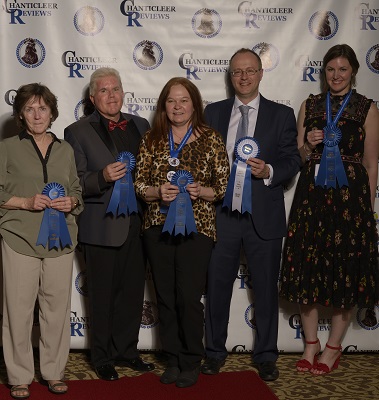
PJ Devlin, Deen Ferrell, Susan Faw, DJ Munro, Rebekah N. Bryan, 2017 Dante Rossetti Book Award Winners
The Dante Rossetti Grand Prize Winner and the First Place Category Position award winners will be announced at theApril 27th, 2019 Chanticleer Book Awards Annual Awards Gala,which takes place at the Chanticleer Authors Conference that will be held in Bellingham, Wash.
We are now accepting submissions into the 2019 Dante Rossetti Book Awards writing competition. The deadline for submissions is May 30th, 2019. Please click here for more information.
As always, please do not hesitate to contact us with any questions, concerns, or suggestions at Info@ChantiReviews.com.
The Journey Book Awards recognize emerging new talent and outstanding works in the genre of Narrative Non-Fiction and Memoir. The Journey Book Awards is a genre division of Chanticleer International Book Awards and Novel Competitions (CIBA).
These titles have moved forward in the judging rounds from the Long List to the 2018 Journey Book Awards SHORT LIST (aka the Slush Pile Survivors). We incorporate the Long List when the judges request an additional round of judging to accommodate the number and/or quality of entries received. These entries are now in competition for the 2018 Journey Semi-Finalists List. First Place Category winners and the Journey Grand Prize winners will be selected from the Semi-Finalists and the winners will be announced at the Awards Banquet and Ceremony on Saturday, April 27th, 2019.
Chanticleer International Book Awards is looking for the best books featuring true stories about adventures, life events, unique experiences, travel, personal journeys, global enlightenment, and more. We will put books about true and inspiring stories to the test and choose the best among them.
These titles are in the running for the 2018 JOURNEY Book Awards Semi-finalists list for the Narrative Non-fiction Fiction and Memoir CIBA Awards. Good Luck to all of the CIBA Journey Short Listers 2018!
Joy Ross Davis – Mother Can You Hear Me?
Sean Dwyer – A Quest for Tears: Overcoming a Traumatic Brain Injury
Philip Muls – Mind on Fire: A Case of Successful Addiction Recovery
H. Alan Day with Lynn Wiese Sneyd – Cowboy Up! Life Lessons from Lazy B
Andrew Jurkowski and Lisa Wright – Between The Swastika and the Bear: A Polish Memoir 1925 – 1948
Janice S. Ellis – From Liberty to Magnolia: In Search of the American Dream
Kayce Stevens Hughlett – SoulStroller: experiencing the weight, whispers, & wings of the world
Liberty Elias Miller – The Heart of the Runaway
Karen A. Anderson – The Amazing Afterlife of Animals; Messages and Signs From Our Pets on the Other Side
Jeff O’Driscoll, MD – Not Yet
Julie Morrison – Barbed
GySgt L Christian Bussler – No Tougher Duty, No Greater Honor – a memoir of a Mortuary Affairs Marine
Terry Milos – North of Familiar: A Woman’s Story of Homesteading and Adventure in the Canadian Wilderness
Janis Couvreux –Sail Cowabunga! A Family’s Ten Years at Sea
Dennis M. Clausen – Goodbye to Main Street
Russell Vann – Ghetto Bastard, A Memoir
Dr. Rick Scarnati – God’s Light
Rebecca Brockway – Miss Matched at Midlife: Dating Episodes of a Middle-Aged Woman
Austin M Hopkins – The Loose Ends Became Knots
Katrina Shawver – HENRY: A Polish Swimmer’s True Story of Friendship from Auschwitz to America
Lou McKee – Klee wyck Journal
Donna LeClair – IMMUNITY: Entitlement of Wealthy Political Notables
Cheryl Hughes Musick – The Day the Musick Died
Cheryl Aguiar – Great Horned Owlets Rescue: Where There’s a Will, There’s a Way…
Journey Book Awards for Narrative Non-Fiction 2018 Judging Rounds
Slush Pile (all entries)
Long List (Slush Pile Survivors)
Short List (Stickers and Digital Badges available (Website and e-newsletter notifications. Please LIKE and Follow Chanticleer Book Reviews to be tagged in social media).
Semi-Finalists (notified by email) Selected from Short List.
First Place Category Positions (announced at the CIBA ceremony in April, 27th 2019. (Selected from Semi-Finalists). Ribbon packages, stickers, digital badges awarded.
Journey Book Awards Grand Prize winner (selected from First Place Category Positions). Ribbon packages, stickers, digital badges awarded.
CIBA Grand Prize Winner
CIBA Grand Prize Winner (selected from the 16 CIBA divisions grand prize winners). $1,000 cash prize, CIBA ribbon packages, stickers, digital badges awarded.
All Short Listers will receive high visibility along with special badges to wear during the Chanticleer Authors Conference and Awards Gala.
Susan Marie Conrad, 2017 JOURNEY GRAND PRIZE WINNERJourney Book Award Winners
Good Luck to each of you as your works compete for the JOURNEY Book Awards Semi-Finalists positions.
The JOURNEY Grand Prize Winner and the Five First Place Category Position award winners will be announced at theApril 27th, 2019 Chanticleer Book Awards Annual Awards Gala,which takes place at the Chanticleer Authors Conference that will be held in Bellingham, Wash.
We are now accepting submissions into the 2019 JOURNEY Awards writing competition. The deadline for submissions is April 30th, 2019. Please click here for more information.
As always, please do not hesitate to contact us with any questions, concerns, or suggestions at Info@ChantiReviews.com.
Once you decide to embark on the adventure of self-publishing, take some time to clearly articulate your purpose and vision. Is your writing a hobby or are you wanting to commit to something broader? Remember, this is your experience and you can craft it in any way that feels just right for you.
If you decide to pursue going the distance, it is important that you accept the fact that there is a learning curve to self-publishing and to give yourself permission to feel occasionally overwhelmed and sometimes scrambled. Below are action steps and informational links to help us ink up our hands, Self-Publishers, and take on the task.
Establish a Budget:
Some authors publish their work on a shoe-string budget doing their own editing, acquiring public domain images or designing their own cover designs, setting up their own files for printing, etc. Others choose to spend more and hire a content and/or copy editor, professional cover artist, typesetting, etc. Depending on your piggy bank and your vision, you may spend anywhere from a few hundred to thousands of dollars.
Acquire Your ISBN(s) – INTERNATIONAL STANDARD BOOK NUMBER(s):
An ISBN is the most important identifier you can possibly give your book – that will assist book buyers worldwide to search and find your novel. The number (along with its barcode) will link to essential information, sales tracking, catalogs for bookstores, libraries, and online sellers. Each version of your book will need its own ISBN – in addition, if you are involved in a major rewrite, or you’ve just gotten your rights back from your publisher, you will need to acquire a new ISBN for your book. Take a deep breath, it’s not that difficult.
Unless you are absolutely sure this will be your only book and you will never, ever revise it, I suggest buying multiple numbers. It is both convenient and economical to purchase ISBNs ( as a bundle (www.bowker.com ). There are providers out there who will offer to sell you ISBN numbers, but Bowker is the official source for the United States and worldwide, and well, why wouldn’t you go to the source?
Work with a Skilled Editor:
Some self-publishing authors choose to work with friends, family or other authors who serve as their editor. People often assume that editing is only about correct punctuation and spelling. That is a myth sometimes used to rationalize why we don’t need to spend money on a “professional” editor. If you can jiggle some more coins from your publishing piggy bank, I believe it is of utmost importance to place your manuscript in well-seasoned, competent editorial hands. Nothing says “poor quality” and “I don’t believe my work is relevant” louder than a poorly edited book. Network with other authors who have established successful relationships with their editors and secure recommendations.
Chanticleer Aside: Do you know that Chanticleer Reviews has a host of Industry-tested, skilled editors just ready and willing to work with you? Well, we do! We cover all aspects of editing from Manuscript Overviews, Proofreading, LineEditing, and Copyediting. Simply contact us for details, at: Editor@ChantiReviews.com
Cover Art:
What captures our attention when we are buying books? The cover! Good covers are the first point of a sale. How many times have we read a book and as the story unfolds we go back, again and again, to look at the cover? Good cover art reflects the story. Again, network with your author friends and contacts to explore options. My sister, artist Kathleen Noble, (www.watercolorwonderpaintings.com) does the cover art for my books. Unless the artist is your sister or a talented, generous friend, working with a cover artist can cost more or less $300 – $600 to purchasing licenses for photography and artwork that can range in the thousands of dollars.
Kiffer Brown says (along with many queried independent booksellers) that your book’s cover is the number one tool to selling your book. The content between the cover will sell your next book.
Here are some helpful links to explore for book covers:
SelfPubBookCovers This site walks you through their predesigned templates. You choose your picture array, your font, any quote you want on the cover. Once you settle on a design, the site promises the uploaded images that make up your design are yours and yours alone.
99Designs Simply put, upload what you are looking for (your genre, character, setting) and in a few days, you will be able to choose from 99 designs for your cover. This site allows voting, so that is an interesting way to find out which cover resonates best with your potential readers.
Fiverr On the go since 2010, Fiverr is a site that offers competitive designs from an array of artists for a reasonable price.
Choose Your Typesetter, Printer, & Distributor:
There are many venues to choose from in getting these steps accomplished. I suggest working with a book production professional to layout your book. Most of us do not have the skills to do the nitty-gritty needed to execute a book’s final exterior, interior design, cover layout, typesetting, and formatting. Once you have the final files then you can then upload them to book-selling platforms. If you want Indie Booksellers to sell your books in their brick-and-mortar stores, then you should consider uploading your books to IngramSpark (www.ingramspark.com) for print-on-demand and e-book publishing. Distribution is through Lightning Source, www.ingramcontent.com. CreateSpace is another on-demand publishing service that is owned by Amazon (www.createspace.com). There are many options which you can view on the web. *You may wish t0 utilize artists and designers on 99 Designs and Fiverr to accomplish the typesetting for print and ebook.
Copyright, Library of Congress:
A very informative site is www.loc.gov. Don’t let the amount of information overwhelm you. Just take your time and peruse as you learn. You can call their helpline and very kind people will assist you.
Protect your work by registering your work at the Writers Guild of America (WGA) Here is why you should: “…The registration process places preventative measures against plagiarism or unauthorized use of an author’s material. While someone else may have the same storyline or idea in his or her material, your evidence lies in your presentation of your work. Registering your work does not disallow others from having a similar storyline or theme. Rather, registering your work would potentially discourage others from using your work without your permission.”
Business License & Dept. of Revenue:
I formed an LLC (Limited Liability Company), Noble Press, and submit quarterly tax reports. I have yet to pay a penny. Guess you know what that means! But now that my books have been out there a few years and selling, I am beginning to make money after expenses. Not much and I certainly won’t quit my day job, but enough to say “Yahoo!” These are a few helpful links: www.sba.gov, and www.irs.gov. There are many sites online offering to take your money to set up your business. I strongly urge you to do this yourself as it is important as a self-publisher and business owner to be educated on every aspect of setting-up, running and maintaining your self-publishing business. Remember, the business is a separate entity from your writing. I find writing much more enjoyable but the business aspect is a necessity for meeting my goals and is proving rewarding in itself. Be patient with yourself as you learn, asking many questions.
Final Thoughts:
In conjunction with finishing your final edits, allow four to six months to complete all the business pieces. I say, again, that it is important to be organized and to track where you are in each step of every process. In addition to my online and hard files, I keep a writing and publishing journal and make dated notes all along the journey. It has helped me time and time again to look back and see when what occurred as well as my thoughts.
Make a weekly and monthly schedule. For instance, two mornings a week tend to the business aspects, and three days a week focus on your editing and writing. You will change it up along the way as you figure out what works best for you but, if you can begin in an organized, systematic fashion, you will feel productive and not stymied by too much to do and losing your way. Well, you may still lose your way from time to time but you will never be lost! You will have a vision, a well thought out plan, and be ready to go! Next month we will discuss marketing and promotion.
Remember, “Keep falling in love with the potential of what you are doing!”
Gail Noble-Sanderson is the author of two works of historical fiction, both of which are self-published under her own Noble Press. The Lavender House in Meuse is an emotional, intriguing, and sensitive account of the crises of World War I and one woman’s journey towards recovery and growth.
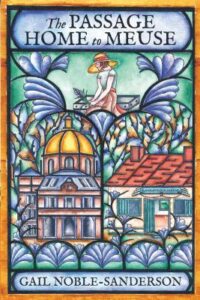
Her second novel, The Passage Home to Meuse won 1st Place in the 2017 Chatelaine Awards, the Chanticleer International Book Awards (CIBA) for romantic fiction.
Both books are available through Amazon and Village Books.
The Goethe Book Awards recognize emerging new talent and outstanding works in the genre of Late Historical Fiction set after the 1750s. The Goethe Book Awards is a genre division of Chanticleer International Book Awards (#CIBA).
Chanticleer Book Reviews is looking for the best books featuring Late Period Historical Fiction. Regency, Victorian,18th Century, 19th Century, 20th Century, World and other wars, history of non-western cultures, set after the 1750s, we will put them to the test and choose the best among them. (Looking for Chaucer Pre-1750 Book Awards or Laramie Western/Pioneer/Civil War Book Awards, just click on the links.)
Information about the #CIBA Long Lists and Short Lists
These titles have moved forward in the judging rounds from SLUSH pile to the 2018 GOETHE Book Awards LONG LIST (aka the Slush Pile Survivors). We incorporate the Long List when the judges request an additional round of judging to accommodate the number and/or quality of entries received. These entries are now in competition for the 2018 GOETHE SHORT LIST. Short Listers will compete for the Semi-Finalists positions. Semi-Finalists will compete for the coveted First Place Category Winners of the 2018 GOETHE Book Awards in the final rounds of judging. The First Place Category winners will automatically be entered into the Goethe GRAND PRIZE AWARD competition. The 16 CBR Grand Prize Genre Winners will compete for the CBR Overall Grand Prize for Best Book and its $1,000 purse. First Place Category and Grand Prize Awards will be announced and recognized at the Chanticleer Awards Banquet and Ceremony on Saturday, April 27th, 2019, Bellingham, Washington.
These titles are in the running for the SHORT LIST of the 2018 GOETHE Book Awards novel competition for post-1750s Post Historical Novels.
Peter Curtis – Cafe Budapest
Michelle Cox – A Promise Given
Bruce Joel Brittain – Brother Daniel’s Good News Revival
Patricia Suprenant – Behind the Scarlet Letter
Patricia Suprenant – Journey to the Isle of Devils
Harold Coyle – No Small Thing, A Novel of the American Revolution
John Hansen – Unfortunate Words
Trevor D’Silva – Fateful Decisions
K. M. Sandrick – The Pear Tree
John Thomas Everett – No Slave To Reason
Tom Edwards – Jane Sinclair
Jackie Jobe Haines – Little Mill on Beaver Creek
Ruth Hull Chatlien – Blood Moon: A Captive’s Tale
Richard Alan – American Journeys: From Ireland to the Pacific Northwest (1854-1900) Book 2
Richard Alan – A Female Doctor in the Civil War
J.P. Kenna – Allurement Westward
Jocelyn Cullity – Amah & the Silk-Winged Pigeons
J.L. Oakley – Mist-chi-mas: A Novel of Captivity
Ellen Notbohm – The River by Starlight
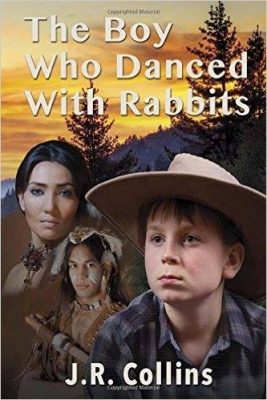
J. R. Collins – Living Where the Rabbits Dance
Josanna Thompson – A Maiden’s Honor
Carol M. Cram – The Muse of Fire
Noelle Clark – Stone of Heaven and Earth
Rosalind Spitzer – Anna’s Home
Neal Katz – Scandalous, The Victoria Woodhull Saga, Volume II: Fame, Infamy, and Paradise Lost
Rita Dragonette – The Fourteenth of September
Sharon Hart-Green – Come Back for Me: A Novel
Meredith Pechta – The Prejudice That Divides Us
Jeffrey K. Walker – Truly Are the Free
Jeffrey K. Walker – None of Us the Same
Ronald E. Yates – The Lost Years of Billy Battles (Book 3, Finding Billy Battles Trilogy)
J. Victor Tomaszek – The Tatra Eagle
Pat Wahler – I am Mrs. Jesse James
R. S. Rowland – Portrait of a Bitter Spy
Kit Sergeant – 355: The Women of Washington’s Spy Ring
All Short Listers and SemiFinalists will receive high visibility along with special badges to wear during the Chanticleer Authors Conference and Awards Gala.
Good Luck to each of you as your works compete for the GOETHE Awards Short List.
2017 Goethe Book Awards Winners Joe Vitovic & Peter Greene Grand Prize
To view the 2017 Goethe Book Awards winners, please click here.
The Goethe Grand Prize Winner and the First Place Category Position award winners will be announced at theApril 27th, 2019 Chanticleer Book Awards Annual Awards Gala,which takes place at the Chanticleer Authors Conference that will be held in Bellingham, Wash.
We are now accepting submissions into the 2019 GOETHE Book Awards writing competition. The deadline for submissions is June 30th, 2019. Please click here for more information.
As always, please do not hesitate to contact us with any questions, concerns, or suggestions at Info@ChantiReviews.com.
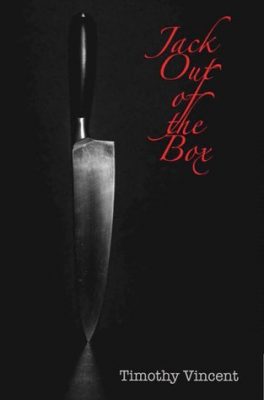
LongPost captain Benjamin Lasak has been making deliveries for over 100 years, an unheard-of feat for his fellow postmen. During his time in pre-programmed space travel on the Pelagius, he usually enjoys the solitude, his outdated paper books, and the cryo-sleep, which keeps him looking twenty years old, but when Lasak wants to distract Mic, his floating game console, from her imminent win at their favorite game, he decides to ignore LongPost protocol and follow the suspicious appearance on his screen.
Suddenly, Lasak finds himself stranded on a planet both familiar and unique. His first contact is with a sadistic alien known on Earth as Jack the Ripper, whom Lasak inadvertently releases from his prison vault. Lasak and Mic must join forces with Michael Carlin, Jack’s original imprisoner, to recapture Jack before he can destroy this world or worse, return to Earth.
Jack Out of the Box is an “Alice in Wonderland” journey down the rabbit hole, a marriage between steampunk, paranormal, dark fantasy, and alternate reality. Jack’s world is a mixture of the old and the new, where Victorian lamplighters and high-tech control panels existent in the same plane. From a village stuck in nineteenth-century England to Elysian Fields where Mother Nature becomes corporeal, every corner presents a new, intriguing environment.
However, the planet entrapping Ben’s ship isn’t all fun and games. It is, in part, a dark prison world, where Jack once reeked more havoc than he ever did on Earth, holding and breeding his human victims. The graphic descriptions of his previous violence darken the beauty of the landscape and its mostly rural residents. At times, the description of violence is disturbing, especially when juxtaposed against the idyllic.
This complex novel includes both metaphorical and concrete imagery in Jack’s world, including representations of Heaven and Hell, demons, and even Lilith. Jack introduces himself as Bell, but he doesn’t “ring true,” and later the reader will see the destruction of the pristine countryside by Jack’s animalistic creations, a fitting metaphor of man’s destruction of the beauty in the world.
Mic’s existential journey to awareness is the real story of the novel. Created by an MIT professor, she is more than just an unbeatable gamer sidekick. The fate-like, “accidental” purchase of Mic seems like a play on destiny, and when she is given her forbidden awareness, Mic steps into that metaphorical area where she begins to question her existence. The exploration of Mic’s consciousness is short-lived but is indeed an interesting discussion; perhaps, it will continue into the sequel.
Dark fantasy and paranormal/alternate reality lovers alike will enjoy the unusual world that Timothy Vincent offers in Jack Out of the Box. It’s a journey from which the reader may never wish to return.
Recommended.
“Timothy Vincent’s out of this world dark fantasy/thriller, Jack Out of the Box takes readers on a fantastically frightening voyage where choices matter – and one wrong choice releases dark and violent chaos back into the world.” – Chanticleer Reviews
I first met Joe Collins at CAC18 this last April. He’s a tall, quiet man who carries himself with a certain nuance, a particular look in his eyes that lets a person know he’s looking for fun. He writes from the heart and although he won 1st Place in the Goethe Awards for 2017, his book could have done just as well in the Laramie Awards.
I am honored that Joe took the time to participate in our 10 Questions Interview Series. He has a lot to say and I hope you enjoy this piece as much as I do.
Let me introduce you to J.R. (Joe) Collins:
Chanticleer: Tell us a little about yourself: How did you start writing?
Collins: I was raised in the Southern Appalachian town of Blairsville, GA. Our whole county had a population of around eight thousand at the time of my birth, 1962. I spent my growing up years helping my father farm beef cattle and attending the local school for my education. I went to church as a kid. Learned a deep respect for a love that would sacrifice itself for me. I believe I was considered normal by the local folks. You knew everybody in my confined, little world, and their business, too, whether you wanted to know it or not. News traveled fast because of how the telephone worked. Most all the homes were on a “party line,” if you had a telephone at all. You knew folks’ business because you could listen in on your neighbor’s phone conversations over that “party line.” The older generation was judgmental to a point. That mattered to families. You didn’t want folks thinking bad of you or yours.
My trail after high school began by following the same path many of the kids from my area walked. College, job, then family. I couldn’t stay on that trail long, though. I discovered competitive golf after a couple years in college and turned pro after obtaining an Associate degree. Spent many years beatin’ that little ball trying to catch a break while working at different golf courses here, there, and yonder. I loved it. Did okay for a small-town, mountain-born boy. I got no regrets. Won a few good tournaments. Maybe I should’ve been a caddie?
Met my wife at the ripe old age of thirty-five. We have two kids, Alex and Emma, they’re twins. Fortunately, we all get along for the most part with little tension outside of normal weekly stress. We like the outdoors but have regrettably had little time over the years to enjoy vacationing there because of work and the crash of the economy. I do regret that.
I started writing because I wanted to tell a story. A story of my heritage to some degree. A story to enlighten those who read it about a frontier that came and went with little recognition outside a state of confusion about the grave mis-justice done to the native Cherokee. I won’t claim all that is in (or will be in) my books as actual, but I can guarantee you they are based on fact in my imagination. I love that about writing. I’ve always enjoyed a good “yarn” be it a ghost story that will haunt my nights, a mystery that challenges my intuition or an adventure that will take me to someplace I may never see. Introduce me to people I would never meet otherwise. It is a true blessing when I learn someone has enjoyed my work. Somebody give me a hug!
Chanticleer: We do love you, Joe! When did you realize you that you were an author?
Collins: That’s an easy one. It’s when I heard my name called out for First in Category at the Chanticleer Awards Gala. I for sure knew I belonged behind the scenes writing when I broke protocol and absent-mindedly went for the ribbon Kiffer was holding without shaking Gregory’s hand first. “What a stupid I am” — I feel terrible about that. I hope he understood. Accepting that ribbon was extra special to me. That’s the moment I knew I could actually think of myself as a writer. Thank you guys soooo much!
Chanticleer: Those of us who have won awards know what it’s like to be in that is-this-really-happening? moment. I’m sure Gregory Erich Phillips knows exactly what that’s like! What genre best describes your work?
Collins: Historical Fiction for sure. I love learning about history that is based in the lives of those who actually lived it. I respect heritage, so I enjoy creating stories combining the two. Those aspects wound together give me great pleasure when I write. My publisher told me early on in the publishing of my first book, “Write from your heart when you write, Joe. Don’t force it if it doesn’t fit.” I follow that. I want my reader to enjoy their trip back in time to a place they will never see outside of my book, and to be comfortable with the journey. I want them to experience the surroundings of each scene like they are actually standing there watching in person. To taste the smells, feel the air, hear the sounds and to comprehend the emotion I want them to feel. I love taking them back as they read. I’ve heard it said that history repeats itself. I believe history stays with us if we as authors write it, understand it, feel it; then our readers can believe and be transported. I want folks to escape to a world I completely understand. All they need do is be willing to go inside my mind for a while. It’s not such a bad place, really.
Chanticleer: That’s wonderful, Joe. Can you tell us a little more about it?
Collins: I grew up in a part of the Southern Appalachian that holds a rich history of ancestral heritage for those who were founded there. I basically grew up an only child as my siblings are much older than me. Being the only child on a big cattle farm surrounded by mountains and forest is heaven for a boy of my put together. My imagination had unlimited boundaries. I hunted constant when game was in season. I fished when hunting wasn’t allowed or whenever I got a hankerin’ for some fresh, juicy cold-water trout. One stream I would fish regular produced a lot of Brown Trout, another produced more Rainbow Trout. Just depended on which flavor I had a taste for as to where I’d go try and catch fish. Those days are gone. The fish have lost their flavor. The creeks and rivers now polluted with housing and folks. What a shame.
We got little in the way of television reception where I lived growing up, so entertainment had to be something other than watching TV. On some evenings after we’d worked hard on the farm all day, Dad would take Momma and me and we’d go visit the old-timers at their original family homes where they were born, then raised their own kids, and still lived in then. Some were family, others not so much. I loved goin’ with my dad and doing that. Sittin’ out on the porch rocking in a chair made right there in the work shed of whatever elder we were visiting. I’d rock and listen to their tales while they smoked or chewed tobacco. Spitting dark, brown burley tobacco juice out between their fingers while thinking on thoughts about the tale they were spinning. You had to watch where they spit that stuff because it would splatter in all directions when it landed. Get all over your feet and ankles if you were in too close. I heard stories from the days of old that sank into my soul. Are they in my book? Some, maybe. Remnants, mostly. The ideas? – for sure.
Of course, where I grew up was rich in Indian ancestral heritage as well. As a kid, I hunted the plowed bottoms up and down the river Notla whenever I got the chance hoping to find Indian made artifacts. After a good rain was the best time. We found some unbelievable things, too. Seriously, you wouldn’t believe a body could make such as we found on occasion from just the natural resources right where whatever it was you found was laying. I could live like settlers did back in those days. I can relate. I guess that’s why I like historical fiction so much. It takes me back to a time in my life where I had no worries. We all need a little of that from time-to-time. I miss it. #GroupHug.
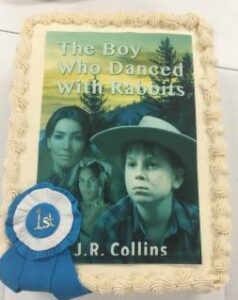
Joe received this beautiful cake from his work family. #GroupHugJoe showing off his beautiful cake! Sure looks good!
Chanticleer: Do you find yourself following the rules or do you like to make up your own rules?
Collins: I don’t like rules. I trust myself and my judgment more than I do most folks who make the rules. Politicians and government folk are prime examples of rule makers who care little for the common folk — ask the Native American. Being a person of faith, and knowing what lies ahead, I get confused as to why we have locks? Or why we hire our own to protect us from ourselves? I prefer a time when folks looked after them and theirs. In writing, I follow that same train of thought. Conversation can be lawless!
Chanticleer: You’re giving us a lot to think on, Joe. Thank you! How do you take all of these memories, all of these stories, and come up with a full-length novel?
Collins: If I can live it in my mind, I can make it into a story. I try to pull everyday occurrences and mix those with any corresponding relative history that I know about. That concoction has to settle in my center for me to know it’s something I can focus on. But, the difficulty comes when I try to pinpoint the objective of why I want to write about that particular subject. It has to satisfy my soul. If it ain’t there, it ain’t to write. But, God.
Chanticleer: How structured are you in your writing work?
Collins: Aghhhhhhhhhh! Hahahahahahaha! STRUCTURED? Don’t even know what that means. I write when I can feel the words going on to the paper (screen). I need to work on this area of my “authorshipness” profile. Hahahaha! I love you guys! I know y’all are structured. I saw it first hand in Bellingham back in April.
Chanticleer: [Don’t you just love this guy? #GroupHug]How do you approach your writing day?
Collins: That all depends on where I am in the writing process of the particular thing that I am writing. For a novel, I can spend a lot of time with story content and character development or I can work on the comfort of the read if I’m well enough along. The priority status of either of those two aspects will designate the attempts I will make for any particular day. Stories have to flow to achieve [the desired] effect. A story written poorly does not catch the imagination of the reader even though the topic is of interest. I prioritize where I believe a reader would want to be in the progression of what is taking place at a certain point in the story. Then, of course, you sit down to write and it all comes crashing down. No reason just crashes. Your mind shuts off. That’s when you reach for something other than your pencil (laptop) . . . like bourbon. No more writing that day. Sometimes intention to write and creative juices are way too far apart for my simple mind. I try to plan and prioritize, but it doesn’t always go the way I want. On those kinds of days, we all need a hug.
Chanticleer: [#Group Hug] What are you working on now? What can we look forward to seeing next from you?
Collins: Right now, I’m finishing the final book in the trilogy I call, “Home from Choestoe”, that I’ve been working on for the last few years. Originally, I’d planned on four books but I’m ready to move on. I want to start something else. Being raised in the Southern Appalachian Mountains offers many different opportunities to write about interesting topics. I haven’t fully decided on what my fourth book will be about as of yet, but it will come to me before long. I have some ideas, but nothing has settled with me that would spur me on to write a novel.
Chanticleer: What is the most important thing a reader can do for an author?
Collins: Enjoy what we write, then tell others so they can hopefully enjoy it as well. Give us reviews that we can share. Selling books is important, sure, but most all good stories have an underlying point of concern. If a reader finds that and is moved by it, then that is all we can hope for as authors. That, to me, is the most important consideration for what we do. Is the reader touched by what we write? Do they feel, then understand what we are saying? Let’s hope they get it because that’s why we do what we do. It sure ain’t for the money.
Love you guys! Take care, and God Bless . . . Joe
We certainly love you back, Joe! Thank you for spending some time with us today.
If you liked this interview with author J.R. Collins, please leave a comment below. We love being connected to our amazing author community, don’t you?

 The Gertrude Warner Book Awards recognize emerging new talent and outstanding works in the genre of Middle-Grade Readers. The Gertrude Warner Book Awards is a genre division of Chanticleer International Book Awards (#CIBAs) and Novel Competitions.






 M.A. Clarke Scott’s



 The M&M Book Awards recognize emerging new talent and outstanding works in the genre of Mystery & Mayhem Fiction. The M&M Awards is a genre division of Chanticleer International Book Awards and Novel Competitions CIBA).
 The Journey Book Awards recognize emerging new talent and outstanding works in the genre of Narrative Non-Fiction and Memoir. The Journey Book Awards is a genre division of Chanticleer International Book Awards and Novel Competitions (CIBA).



 time and time again to look back and see when what occurred as well as my thoughts.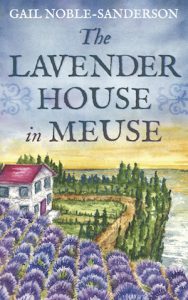
 The Goethe Book Awards recognize emerging new talent and outstanding works in the genre of Late Historical Fiction set after the 1750s. The Goethe Book Awards is a genre division of Chanticleer International Book Awards (#CIBA).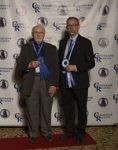
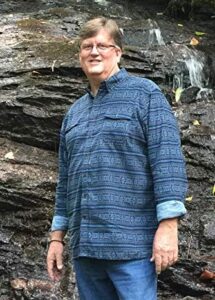 I first met Joe Collins at CAC18 this last April. He’s a tall, quiet man who carries himself with a certain nuance, a particular look in his eyes that lets a person know he’s looking for fun. He writes from the heart and although he won 1st Place in the Goethe Awards for 2017, his book could have done just as well in the Laramie Awards.