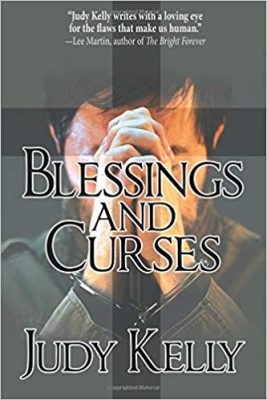
Olivia Douglass has completed her college coursework in religious education and is set to graduate. Her adoptive parents and sister and will be on hand for the occasion along with her steady beau, Claude. But she harbors a painful secret: contrary to their expectations, she has decided not to go on to become a priest, even though she has been preparing to do so for several years.
Since childhood, it seems, Olivia has felt a curse upon her, some wickedness that follows her, making her unworthy of a religious profession. That feeling has returned at this crucial juncture to cast a shadow over her plans. Understanding, but unsure she should give up her plans, Olivia’s parish priest sends her on an errand of mercy – to pray with Leon, a man on death row with only two weeks to live.
Assisted by fellow church member Wesley Johns, meeting the prisoner proves far more difficult than Olivia had imagined. She persists, though, and tries to access the spiritual nature of this hate-filled man who kidnapped and slaughtered numerous women and children. As Olivia gets to know Leon better, she simultaneously forms a friendship with Wesley, and they discover that they have a link, Wesley shares in the curse that envelops her—and like her, longs for a way out.
At the same time, her parents’ reaction to Olivia meeting and praying with Leon is odd and rather disturbing. On top of that, her sister begins to reveal signs of her own cursed and tormented life. Finally, Olivia will confront her ghosts, and theirs, in a brave and daring move.
Author Judy Kelly writes with skill and intelligence, building her plot step by step so that even when the reader begins to think that the outcome is inevitable, a twist crops up to turn the tale in yet a new direction. Visits to the prison have a knowledgeable feel, and the character of Leon is vividly depicted as he at first crudely and violently rejects Olivia’s help, then gradually comes to accept and welcome her, and finally accedes to her spiritual support on the next to last day of his life.
Kelly draws her characters with depth, from the twisted psychology of a serial killer to Olivia’s growing tenderness toward Wesley, and with it, the revelations prodding her about Claude’s dark side.
Blessings and Curses combines themes of romantic love, family ties, religious aspirations and coming of age with a slowly unfolding, at times terrifying glimpse of genuine evil.
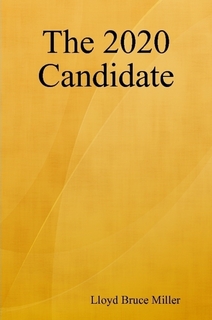
There are so many hopefuls gearing up for the United States 2020 election, what’s one more?
Meet Lloyd Bruce Miller, 75-year-old who wants your vote. Or not. You see, Mr. Miller is a complicated man. Crazy, some may say – and why not, for he calls himself ‘crazy’ several times throughout his bid for the presidency.
In all actuality, it is uncertain whether or not Mr. Miller is indeed throwing his hat into the ring for 2020. He realizes he’s a “nobody” but goes on to comment that if “Trump could win, I don’t see why I, or anyone for that matter, couldn’t be a valid candidate.” By the way, Mr. Bruce did make a run for mayor of New York City back in 2009, he even registered, but Michael Bloomberg stole the election from underneath him. It’s as simple as that.
Reading through his 10,962-word bid for the 2020 Presidency (this is, the point of fact, what Mr. Miller’s book is all about), we begin to wonder who this man is. Where did he come from? He helps us out on page 24 by stating that “…(he) doesn’t really want to be president. (He’s) a fictional character in a story or novel.” We should all think of him in this way.
And yet, he has these thoughts… “I am a lunatic of some sort, a screwball in a novel. My name is Harold. That’s enough for you to know, at least for now.” He goes on to say, “The man who wrote something called ‘Utopia’, Thomas Moore I believe, must have been also a little crazy, like me.” Further along, he gives himself the title, “Harold the madman.”
From my perspective, there is nothing unusual for a politician to be a ‘madman.’ Most politicians have to be a little off in order to open themselves up to ridicule and public display. That being said, should you wish to cast your vote for Harold the Madman in 2020, you should know what he stands for, what his policies are, and how he approaches things.
Here’s a head’s up, Harold the Madman is not ‘politically correct’ in any fashion. Reading through his bid, here is what I’ve discovered:
Criminal Justice System. Criminals should be treated with respect and reasoned with. Therefore, no prison terms in years; prison terms should be measured by if the individual has had a real change.
Bullies have a right to bully. It’s a matter of protecting their Freedom of Speech. Victims of the so-called bullying should “toughen up.” (I warned you…) But, even so this is the age of “Jordan Petersen” and his penchant for political incorrectness that attracts both support and criticism.
#Metoo. It is, according to Harold the Madman, wrong for a woman to ruin a man’s career simply because he touched her. It’s up to women to tell men what behavior is right or wrong. He arrives at this because “100 French actresses came forward opposed to the Me, too, movement*.” Also, according to HtM, “women and men play sexually with each other.” He is also from the “Mad Men” era, much like that uncle we all have and care for but disagree with at Thanksgiving dinner. Perhaps Harold the Madman isn’t a misnomer after all, but perchance a lingering after effect?
Freedom of speech is the foundation of a free society; therefore, people have the right to talk about wanting to kill themselves, wanting to kill other people, etc. Because the only way to help these people is to talk to them and reason with them. HtM is opposed to the Suicide Hotline, and they are monitored by the government, and the government is more interested in collecting information about you to aid in your arrest**.
Foreign policy. Because HtM doesn’t have a lot of experience with foreign policy, he is going to leave it in the hands of the military. He believes in compromise and Manifest Destiny. This allows for the policy he proposes next: Because we cannot fit “the entire population of the whole world into the area of the current United States… you are welcome to join us, but now, your land is our land, part of the United States under the jurisdiction of our federal government.” At first, HtM will focus on friendly democracies like “… Mexico, Canada, Israel, South Korea, Taiwan, Japan, France, Germany…” and extend the invitation to become part of the United States. Undoubtedly, HtM will find support for his foreign policy platform as I did see a red truck the other day with “I LOVE WALLS” painted across both sides of it.
“Compromise is actually the force which enabled the human race to survive over the centuries. Without compromise, no nation could even be formed or last a day. Compromise, more than anything else, is the basis of human society.” This is when HtM starts to make some sense and I found myself nodding my head in agreement—just when I was shaking my head in confoundedness on some of his other platforms.
While it is true that there certainly is much in his proposition to scratch your head about and ponder over, the true beauty of The 2020 Candidate is the freedom by which its author can express his opinions. That, after all, is the American Way.
And then in his closing remarks, he recommends that we all need to talk to each other and get to know each other on an individual basis. Because there are so many variations of us communication is key—if not the most important agenda of his bid.
In closing, if you choose to read Harold the Madman’s bid for the presidency, please read it through to the end. It’s not so “mad” after all…
All things considered, Lloyd Bruce Miller, a.k.a. Harold the Madman, is a unique character and perhaps someone with whom one might like to sit down for a conversation and a pint at Samwise Gamgee’s Old Gaffer’s table at the Green Dragon.
**This is not our view at Chanticleer Reviews. Suicide Hotline is a vital service in our society, one we could scarcely do without. So if you are thinking of doing something dangerous to yourself or someone else, we strongly encourage you to reach out to this service at: https://suicidepreventionlifeline.org/ or call them at 800-273-8255
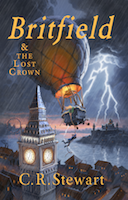
Tom and Sarah are best friends who reside in a dilapidated English orphanage housed in a 16th-century castle. Only this castle isn’t the kind that inspires romance or chivalry; Weatherly orphanage is run like a maximum-security prison where children are forced to work, creating goods that are sold in the local village.
Many orphans have tried to get beyond Weatherly’s gates and have failed. Mr. Speckle, a scurrilous caretaker, prowls the grounds, keeping constant surveillance, ensuring the children are working and staying in their place. But Tom is a daring lad, often going on “raids” to steal books from the private library of Weatherly’s owners for his friends to read. Mr. and Mrs. Grievous, a dreadful pair who frown upon any sort of learning, run the orphanage.
One day, Tom and Sarah resolve to get out of Weatherly – forever. Ahead of them, the path is long, twisting, and dangerous, filled with a whirlwind tour through the English countryside. Here, author Stewart sharpens his focus and showcases the beauty and mystery of Great Britain. Readers will discover the places that are dear to the author’s heart as Tom and Sarah travel far and wide, including places such as the Midlands, Canterbury, Windsor Castle London and many more. But trouble is always nipping at Tom and Sarah’s heels, and when the renowned Detective Gowerstone takes up the case, the pair are nearly captured. They only escape by commandeering a hot-air balloon!
As we follow them on their clandestine route, we begin to learn more about who Tom might be—and why some highly placed operatives would like to see him eliminated altogether. It all goes back 150 years to the disappearance of the mysterious Britfield dynasty and the ascendancy of Queen Victoria, leaving one to wonder, Did the wrong person get the crown?
Britfield and the Lost Crown delivers as a detailed and intriguing first-in-series read that is sure to capture the attention of the middle grade and young adult crowd and those who love the Y/A action and adventure genre. Readers journey through the English cities and countryside beautifully rendered in the narrative. The book also includes maps and intelligent background information about the setting and history with access to online illustrations and commentaries on castles, villages, and towns where our heroes visit. Overall, Britfield weaves plot, texture, storytelling, and fascinating characters into a winning combination and enriching experience for adventure fans.
The best fiction touches the deep layers in us. A writer achieves this effect by embedding dozens of techniques into his or her story. – Jessica Page Morrell
Dramatic Question
Compelling fiction is based on a single, powerful question that must be answered by the story climax. This question will be dramatized chiefly via action in a series of events or scenes. If you are writing a romance, the question always involves whether the couple will resolve their differences and declare their love. In a mystery the dramatic question might be will Detective Smith find the serial killer in time to prevent another senseless death? InThe Old Man and Sea, the dramatic question is will Santiago catch the big fish and thus restore his pride and reputation?
An Intimate, Simmering World
An intimate world isn’t created by merely piling on details. It means your story world has the resonance of childhood memories, the vividness of a dream, and the power of a movie. It’s filled in with shadows and corners and dogs and ice cubes and the sounds and smells of a dryer humming on wash day and a car blaring past, rap music shaking the windows. These details lend it authority, potency, and a palpable physical existence.
An intimate story takes us to a specific place and coaxes us to remain there. An intimate story is lifelike and feels as real and complicated as the world the reader inhabits. When he finishes the final pages and leaves the story world, he should feel the satisfaction of the ending, but also a huge sense of loss. Like a friend has moved to another town just when the friendship had reached a level of closeness and trust.
Characters Built from Dominant Traits
Create main characters with dominant and unforgettable traits as a foundation of personality. These traits will be showcased in the story events, will help him achieve or fail at goals, and will make the story person consistent. For example, Sherlock Holmes’ dominant traits are that he is analytical, Bohemian, opinionated and intelligent. These traits are showcased in every story he appears in along with secondary and contrasting traits. When the character first appears in the first scene, he arrives in the story with his dominant traits intact.
Emotional Needs
Protagonists and the main characters are people with baggage and emotional needs stemming from their pasts. These needs, coupled with motivation cause characters to act as they do. For example, inSilence of the LambsClarisse Starling is propelled by childhood traumas to both succeed and heal the wounds caused by the death of her father.
Significance
The storyline focuses on the most significant events in the protagonist’s life.
Motivation Entwined with Backstory
Motivation, the why?of fiction, is at the heart of every scene, fueling your character’s desires and driving him to accomplish goals. It provides a solid foundation for the often complicated reasons for your character’s behaviors choices, actions, and blunders. Motivating factors provide trajectories for character development, as a character’s past inevitably intersects with his present. Your character’s motivations must be in sync with his core personality traits and realistically linked to goals so that readers can take on these goals as their own.
Desire
Desire is the lifeblood of fictional characters. Not only do your characters want something, but they also want something badly. Santiago, inThe Old Man and the Sea desperately wants to restore his reputation and also wants his friendship and partnership with the boy to resume. And in the lonely hours when he is far out at sea, desperately struggling to hang on to the fish and fighting off sharks, we see his fierce desire acted out and the price he pays for it.
You can bestow on your character flaming red hair, an endearing, crooked grin and a penchant for chocolate and noir movies, but if she doesn’t want something badly, she’s merely a prop in your story, not a driving force. But if she wants to win the Miss Florida contest, take over her boss’ job, or become the first female shortstop for the Atlanta Braves, then you’ve got a character who will make things happen and a story that will be propelled by desire.
Threat
Fiction is based on a series of threatening changes inflicted on the protagonist. In many stories, these threats force him or her to change or act in ways he or she needs to change or act. Often too, what the protagonist fears most is what is showcased in a novel or short story. It can be fear of losing his family, job, or health with this dreaded outcome providing interest, action, and conflict.
Causality
Events in fiction are never random or unconnected. They are always linked by causality with one event causing more events later in the story, which in turn causes complications, which cause more events, which cause bad decisions, etc.
Inner Conflict
A fictional character doesn’t arrive at easy decisions or choices. Instead, he is burdened by difficult or impossible choices, particularly moral choices, that often make him doubt himself and question his actions. Inner conflict works in tandem with outer conflict—an physical obstacle, villain or antagonist–to make the story more involving, dramatic, and events more meaningful.
Complications A story builds and deepens by adding complications, twists, reversals, and surprises that add tension and forward motion. Plots don’t follow a straight path, instead, there are zigzags, dead ends, and sidetracks. Complications create obstacles and conflict, cause decisions to be made, paths to be chosen.
Midpoint Reversal
The middle of a novel comprises more than half its length. At about the midpoint of most novels, a dramatic reversal occurs. The hunter becomes the hunted; a second murder occurs proving the detective has been wrong in his suspicions; a former lover arrives in town to complicate a budding romance. This reversal keeps the middle from bogging down and becoming predictable and also breathes new life and often a new direction into the story.
Satisfying Ending
every story needs an ending that satisfies the reader while concluding the plot. The final scenes, when the tensions are red hot and the character has reached a point of no return, must deliver drama, emotion, yet a logical conclusion. This is not to suggest that every plot ends with a shoot-out or physical confrontation because some endings are quieter, more thoughtful. Some endings are ambivalent, some a dramatic or a violent clash of wills. But there is always a sense that all the forces that have been operating in your story world have finally come to a head and the protagonist’s world is forever changed.
The end is just the beginning…
A Note from the Editor: A satisfying ending is one of the top, if not the top, reasons why books go viral and what will make your reader want to read your next work. Make sure that the you put as much effort in to a satisfying ending as you do into your opening hook—if not more. Kiffer Brown
Jessica Morrell is a top-tier developmental editor and a contributor to Writer’s Digest magazine, and she teaches Master Writing Craft Classes at the Chanticleer Authors Conference that is held annually along with teaching at Chanticleer writing workshops.
Workshops and Sessions Jessica will teach at the 2019 Chanticleer Authors Conference:
Immersive Fiction: Writing Fiction so Readers Land Amid Your Story and Don’t Want to Leave. Ever.
We live in a clattering, distracting world that pulls at readers’ attention and senses. To compete your fiction needs be immersive, as in an alternate reality that your reader can enter into. Thus your readers are experiencing it, not simply reading it. An immersive story is an intimate, sensory story. It takes place in a world that a reader can see, smell, feel, and hear and it’s based on characters readers come to know and care deeply about. With the opening pages, readers are swept into a world that is so resoundingly real and intricately constructed that they leave their ordinary lives to venture forth and live daily along with the characters.
Immersive Fiction Part 1: Atmospherics
Readers want to feel as if they’re part of a story world interacting with viewpoint characters. Fictional worlds that are immersive are nuanced, intricate, and alive with significant details. We’ll sort through what makes details significant and necessary. Plan to delve into atmosphere and tone, often under-appreciated techniques in a writer’s toolbox, yet they can be so effective to heighten suspense, create reality, and underline emotions and key moments. We’ll highlight how to use weather, lighting, interiors, unsafe places, and what I call “surround sound.” Finally, we’ll also discuss the key elements needed of world build in realistic genre fiction such as historical, sci-fi, and fantasy, and to make your stories memorable and immersive.
Immersive Fiction Part 2: Your Sometimes Heart-breaking, Sometimes Messed-up, Sometimes Heroic Fictional Cast
For many writers, the most fun of creating a story is fleshing out characters who battle, grow, and plop into heaps of trouble. Because readers need relatable, yet irksome, yet potent story people to follow and fret over. Their flaws and mistakes drive us crazy, their choices and moral dilemmas worry us sick, their triumphs feel as sweet as our own.
Characters first need to be intriguing and readers need to meet them at a pivotal, irreversible moment. From there they’ll tread where we dare not, fall in love with losers and sometimes winners, and take on monsters when we’d be cowering. But still characters, including secondary characters, need a vivid essence and need to be bigger than life. And by story’s end they need to grow, also called an arc. This workshop will delve into the more intricate aspects of character building and creating arcs, the art of creating characters who will live in the reader’s heart and memory.
Immersive Fiction Part 3: Stakes and Motivations
One major reason that people ‘buy into’ storytelling of all types is that there are serious stakes involved. Readers need to feel as if they also have a stake in the story. Stakes create tension, but most of all dread in a story because a character’s happiness, perhaps even his life, depends on them. The stakes might mean saving a vulnerable child snatched by a creepy predator, or saving the galaxy, or defeating Voldemort and his Deatheater.
Motivations are the reason characters attempt any action in a story. You’ll learn that motivations are deeply felt, drive a story, and will require a character’s chief personality traits to fulfill. We’ll discuss how motivations reveal backstory and a character’s inner world, create goals, and will exact a cost as the story progresses. We’ll discuss a variety of stakes, motivations, and goals so that you’ll learn clear examples of how all are entwined with plot and character.
Betsy Graziani Fasbinder speaks at writers’ conferences all over the country and coached writers for their book launches, agent pitches, media interviews and book promotions. She is known for “demystifying” public speaking for them and showed them how to gain the confidence needed to talk with passion about their books and their ideas. Teaching fellow writers, offering them practical skills, inspiration, and a way to playfully overcome stage-fright is a passion of hers.
She has been a public speaking trainer speaking skills for more than twenty years with Fortune 500 companies, with non-profit organization leaders, along with artists and authors.
Betsy will teach these sessions at CAC19:
From Page to Stage: Inspiration, Tools, and Public Speaking Tips for Writers
Memoir Writing Craft
FROM PAGE to STAGE:
Manage and often overcome their fears of public speaking
Launch their books, projects, and businesses with a confident, authentic voice
Discuss their passions with authenticity and impact
Use a simple storytelling structure to design their content efficiently, and tailored to their goals and specific audiences
Engage listeners by creating memorable content and meaningful connection to listeners
Prepare to participate on panels, in media interviews, and other “conversational” presentations
Adapt their content for workshops or conference talks
Speak comfortably in virtual environments: conference calls, video, audio presentations, and podcasts
Handle challenging questions and strong opposition from listeners by defending their position without getting defensive
Master the use of visuals like PowerPoint or whiteboards to enhance their message, rather than compete with it
Learn to value being “present” over being “perfect” so that authentic connections are made with listeners
Memoir Writing Craft:
Whether working with a memoirist facing a troubling memory or a fiction writer experiencing the loud voice of the “inner critic”, Betsy offers structure and support techniques to writers in overcoming the obstacles of fear and doubt as they write.
STATUS of the Judging Rounds for all Sixteen Divisions of the 2018 Chanticleer International Book Awards – the 2018 CIBAs – Official Notification to the CIBA 2018 Semi-Finalists
We have just completed the final sweep of all of the 2018 Chanticleer Int’l Book Awards submissions. All of the divisions have announced the authors and titles that have moved forward to the SEMI-FINALIST positions.
We always check for stragglers, the inevitable stray, and late ratings coming in from judges (they do this as a labor of love for books and authors), and other anomalies that are just the nature of tracking the thousands of entries that we receive despite our state of the art integrated software program for tracking, DRM, and interaction with the judges.
The works that made it to the 2018 SEMI-FINALIST are currently in the final rounds of judging to discover which ones will move forward to the limited First Place Categories and the coveted grand prize position for each division. The Overall Grand Prize for Best Book will be determined from the 16 divisions’ grand prize winners.
Here are the links to the 2018 Chanticleer International Book Awards SEMI-FINALISTS for All 16 Divisions. The CIBA ceremony and banquet will take place on Saturday evening of the 2019 Chanticleer Authors Conference that will take place April 25 – 28, 2019 in Bellingham, Wash.
These are the OFFICIAL and FINAL LISTINGS for the 2018 CIBAs SEMI-FINALISTS. The next notification will announce the First Place Category Winners and the Grand Prize Winners and will go out on April 30, 2019.
Each of the Semi-Finalists has been notified individual by email from the president of Chanticleer Reviews, Kathryn “Kiffer” Brown at KBrown@ChantiReviews.com We will send the second and final round of email notifications to the 2018 Semi-Finalists starting on Monday, March 25, 2019.
The email includes links to Semi-Finalists Digital Badges, Semi-Finalists Book Stickers, a discount code for CAC19, and other information along with a significant discount code for CAC19 registration packets.
The Master Classes taught by J.D. Barker and Jessica Morrell will take place on Thursday, April 25, 2019. Registration is required.
The Books By the Bay Book Room will be managed by Village Books and will be open to the general public on Saturday and Sunday. Sunday will be the Book Fair day with author signings.
The 2018 CIBA Banquet and Ceremony will take place on the evening of April 27, 2019. For more information, please visit the latest web post for the latest information, status, and updates about timing, photo opportunities, etc. Registration is required to attend the CAC19 and the CIBA Banquet and Awards Ceremony* and tickets are required for admittance.
Good luck to all of the 2018 CIBA Semi-Finalists as their works compete in the final rounds of judging.
Each of the authors whose works made it into the CIBA Semi-Finalists should be very proud! Congratulations! You definitely have something to crow about!
*And, finally, you do not have to be present at the conference or the awards ceremony to win, but it sure is a lot more fun!
Btw, the Submissions Deadline for the 2019 CYGNUS, JOURNEY, and M&M Book Awards is April 30, 2019! Don’t delay. Enter today!
STATUS of the Judging Rounds for all Sixteen Divisions of the 2018 Chanticleer International Book Awards – the 2018 CIBAs
We have just completed the final sweep of all of the 2018 Chanticleer Int’l Book Awards submissions. All of the divisions have announced the authors and titles that have moved forward to the SEMI-FINALIST positions.
We always check for stragglers, the inevitable stray, and late ratings coming in from judges (they do this as a labor of love for books and authors), and other anomalies that are just the nature of tracking the thousands of entries that we receive despite our state of the art integrated software program for tracking, DRM, and interaction with the judges.
To see the Official CIBA SEMI-FINALISTS post for each division, please click on the link at the end of this posting.
The works that made it to the 2018 SEMI-FINALIST are currently in the final rounds of judging to discover which ones will move forward to the limited First Place Categories and the coveted grand prize position for each division. The Overall Grand Prize for Best Book will be determined from the 16 divisions’ grand prize winners.
Frequently Asked Questions
When will the 2018 CIBA 1st Place Award Winners and the Grand Prize winners be announced?
The 2018 CIBA First Place Award Winners and the Grand Prize Winners for Divisions along with the Overall Grand Prize will be announced on Saturday, April 27, 2019, at the Chanticleer Authors Conference (CAC) and CIBA Banquet and Ceremony at the Hotel Bellwether’s Ballroom, Bellingham, Wash. The official announcements will be posted on the website by Tuesday, April 30th, midnight PST.
The CIBA Awards Ceremony will kick off with the cocktail hour starting at 6 o’clock. The bar and the photography area will open at half-past five o’clock.
Some people have their own cheering section.
Jesikah Sundin when her book, LEGACY, was announced the Dante Rossetti Grand Prize Award Winner for Young Adult Fiction
Photography Opportunities
Dwayne Rogge is the professional photographer who will be on hand to take photos before, during, and after the CIBA ceremony. All digital photographs taken by Dwayne at the CIBA ceremony will be made available at no charge after the event. An email will be mailed out to all conference attendees with access codes and the website where the photos will be made available before May 8th. There will be a “step and repeat” backdrop sign that will be used for the award winners photos and group shots.
We advise all SemiFinalists to have their photos taken prior to the ceremony during the cocktail hour.
Janet Shawgo overjoyed with her Chatelaine Book Awards Grand Prize! We love this photo!
What to Wear?
We have seen quite the range of dress from black-tie and formal wear, suits, cocktail attire, and since we do live in the Pacific Northwest, very casual attire. Please keep in mind that CIBA ceremony will have some awesome photo opportunities. And there will be a lot of Tweeting, Instagramming, and Facebook postings going on throughout the evening.
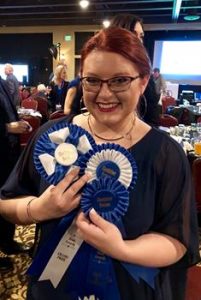
CIBA Overall Grand Prize Winner and Laramie Grand Prize Winner Michelle Rene
Timing
The ceremony begins at seven o’clock in the evening with recognition of all the Semi-Finalists who are in attendance with dinner immediately following. Past award winners will announce this year’s First Place Award Winners for each division after recognizing the respective Semi-Finalists in each division. Representatives from the CIBA sponsors will award their prize packages to the winners. Presenters and Keynote speakers will also take part in the ceremony.
The Banquet
The distinguished Hotel Bellwether’s Executive Chef Peter Birk will bring his Pacific Northwest classically based preparations with a modern twist to the CIBA banquet table. A buffet service is employed to accommodate the many food preferences of such an eclectic gathering of authors from around the globe.
No-Host Bar
A no-host bar will be available in the Hotel Bellwether’s ballroom that will offer quite a range of wines, PNW beers, cocktails, and soft drinks.
Ceremony Program
All attendees to the 2018 CIBA ceremony and awards banquet will receive a souvenir ceremony program listing all the Semi-Finalists, Sponsors, and Presenters. Many attendees use this guide to mark the winners, get autographs and contact information from those they have met at CAC.
Post Ceremony
The Book Room at the CIBA Banquet and Ceremony will be open shortly after the ceremony for book purchases.
After Party Gathering
By ten o’clock in the evening, most attendees will head over to the Fireplace Lounge at the Hotel Bellwether and the party continues on there.
PRIZES – Yes, there will be Blue Ribbons and Prizes and some author will take home a $1,000 check for Overall Best Book!
You know you want one!
Exciting News for the 2018 Chanticleer International Book Awards winners! Publish Drive will award these prizes to the Award Winners!
1 Overall Grand Prize for Best Book – One-year free subscription option ($1,200 USD)
16 Division Grand Prize winners – a $240 USD gift certificate for the PublishDrive Subscription
1st Place Category Division Winners – A metadata health-check consultation ($100 USD/each)
All Semi-Finalists in attendance – one-month free use of our services- A code will be given to you when you pick up your registration packet at CAC19.
The total for the Prize Package from PublishDrive is valued at more than $40,000 USD. Whoa! Thanks, PublishDrive!
AND NOW FOR THE LINK to the 2018 CIBA SEMI-FINALISTS. Good luck to all in the final judging rounds. If your work made it to the SemiFinalists position, it is a WINNER! – No matter what.
Paula taught courses about women artists for twenty years before turning to write about them. La Luministe, her debut novel, earned the Best Historical Fiction Chanticleer Award. Paula lives with her husband and daughter in Portland and on the Oregon coast.
Chanticleer: What genre best describes your work? And, what led you to write in this genre?
La Luministe, 2015 Chaucer First Place Winner for Historical Fiction!
Butterfield: I write historical fiction, specifically about women artists. For many years, I taught classes that I developed about women artists. As we raced through history, from the Middle Ages to the 21st century, I often thought, someone could write an entire mini-series about this woman! I wished we could slow down and really delve into the lives of artists. More hist-fic books about these women are coming out now—including Lady in Ermine, A Light of Her Own, The Age of Light—and I’m wallowing in them! But all I have to do is leaf through one of my books about women artists to realize how many more stories remain to be written…
Chanti: That’s exciting!Perhaps you will write a mini-series about women in art…Do you find yourself following the rules or do you like to make up your own rules?
Butterfield: I find that you have to pick and choose which rules to follow. Outlining, I have come to believe after years of resistance, is a must. But that outline can take many forms, and you can expect to change it as you go. While a writer shouldn’t lean on adverbs, isn’t it a little crazy to spend time searching your manuscript for one or two errant adverbs?
Chanti: Good point – outlines do need to be flexible in order to be relevant. And, yes, I certainly agree with your assessment of adverbs! What do you do when you’re not writing? Tells us a little about your hobbies.
Butterfield: I’m a film aficionado (see question 10). This last year, I loved Leave No Trace, Roma, If Beale Street Could Talk, First Reformed, and black klansman. Of course, I LOVE costume dramas like Black Panther or The Favourite, where I can see what life was like in a different place and time. Costume and production designers deserve more credit!
Chanti: Yes, costume and production designers make the movie, in my humble opinion! Back to writing…How structured are you in your writing work?
Butterfield: Not structured enough! On a perfect writing day, I’ll wake up with ideas and immediately get to work before my inner-critic wakes up. This is more likely to happen when I have thought about something specific I need to work on, right before I go to sleep. After a couple of hours, I’ll stop to have breakfast, exercise, and shower. Later, I’ll go back and look at what I’ve written that morning, which usually gets me going, either editing or continuing on for a couple of more hours in the afternoon. Social media, emails, reviews, and other commitments get squeezed in throughout the day.
Chanti: That sounds fairly structured to me! I’ve heard many authors and educators say they begin work before their inner critic wakes up. Tricky! So, tell us, what areas in your writing are you most confident in? What advice would you give someone who is struggling in that area?
Butterfield: I’m told that descriptions are my strength. I have a degree from the University of Southern California School of Cinema, and I started out writing screenplays. As a visual person, I just write the movie I see in my mind’s eye. I recommend looking, then looking some more. Keep looking, and you’ll notice details that eluded you at first glance. Then describe that picture in words.
Chanti: That’s great advice. Tell us, which craft books have helped you the most?
Butterfield: Anne Lamott’s Bird by Bird is wonderful, and I also like Stephen King’s On Writing. What kick-started my writing after a years-long hiatus was participating in a small group that read Julia Cameron’s The Artist’s Way. It’s a 12-week program that helps you put art into the center of your life. From scribbling artist’s pages (three pages of free writing each morning) to going on artist dates (doing something that inspires you creatively each week), each member of my group—fiction writer, poet, and painter—benefited from the process.
Chanti: I’m working through The Artist’s Way. This book has a companion workbook that is most beneficial. What are you working on now? What can we look forward to seeing next from you?
Butterfield: With me, it’s always going to be historical fiction about women artists. Artists are considered to be outliers, which makes them interesting to start with. But to be a woman artist, throughout most of history, has been considered doubly radical, so their stories are fascinating. My WIP is about two American artists who are positioned as rivals. I don’t like to talk about my current projects, because it saps some of the energy that’s buzzing around in my brain. So that’s all I can say right now.
Chanti: What is the most important thing a reader can do for an author?
Butterfield: Reviews are needed and appreciated, but another very easy, helpful thing a reader can do is request that his or her library purchase a book (if it’s not already in stock). On my library’s website, this entails clicking “Using the Library” on the menu bar, then clicking “Suggest a Purchase” from the drop-down menu. There, you just fill in the title and author of the book. You’d be surprised how receptive libraries are to this input.
Chanti: That’s really smart. Most of us only focus on reviews. But there is power in the library system. Do you ever experience writer’s block? What do you do to overcome it?
Berthe Morisot, Figure of a Woman (Before the Theater), PD-US
Butterfield: I suspect that writers of historical fiction may encounter writer’s block less frequently than do writers of other genres because we can always do more research. This can range from gaining a broad overview of the Franco-Prussian war to seeking more details about the sleeve length or embellishments that would have been popular on a gown Berthe wore to the opera in 1868. New information, especially unexpected tidbits, get me back to the keyboard right away. Sometimes, one detail can change the arc of a subplot or of a minor character.
Chanti: What excites you most about writing?
Butterfield: I find out about women in art! Berthe Morisot was a fist in a velvet glove. In the 19th century Paris, an haute-bourgeois woman was expected to be discreet to the point of near-invisibility. But Berthe, forbidden to enter L’École des Beaux-Arts, started the Impressionist movement that broke open the walls of the art establishment. And, unable to marry the love of her life, Édouard Manet, she married his brother. While she epitomized femininity and decorum, Morisot was a quiet revolutionary.
Chanti: Paula, thank you for spending time with us today. It has truly been a pleasure and an honor. We cannot wait to see what’s next!
You know what to do! Please check out Paula Butterfield’s work – and remember to recommend her books to your local library.
According to the Census Bureau, in 2011 one-third of the United States claimed some sort of Irish heritage. But on St. Patrick’s Day, March 17th, that number shoots up to 100%.
After all, who couldn’t use a wee bit o’ luck of the Irish in their lives?
Growing up here in the United States, we would be in danger of getting pinched by our peers at school if we weren’t wearing green (I’m sure this practice would get children booted from school nowadays…). We would also eat corned beef, potatoes, and cabbage for supper and maybe watch a parade on television. Far from being a national holiday, as it is in Ireland, we would do the best we could at claiming our (supposed) 1/32nd piece of Irish blood.
I must say, the holiday became much more interesting when I was in college…
St. Patrick’s Day conjures images of leprechauns, pots of gold, rainbows, shamrocks, beer, and men in Aran sweaters with charming accents.
So, before you don your green, dig into your colcannon and corned beef, and show your love for all things Irish, we would like to offer our “pot of gold” in the form of our favorite reads that inspire us and captivate our imaginations.
Enjoy Our Selections for St. Patrick’s Day Best Reads!
Romancing the Magic!
– Love stories steeped in contemporary Ireland.
The Hopeful Romantic by Susan Colleen Browneis an old-fashioned love story that takes place in contemporary Ireland; it rings true about rediscovering happiness in what you already have, and to never lose hope
Mother LoveGrainne knows exactly what her perfect man is like, the only problem is, her perfect man is getting married. Set in the Irish village of Ballydara, “Mother Love” is a story of family drama, Irish humor, and healing.
S.A. Hunter‘s Elanraich: The Vowis a high fantasy with a female heroine and women warriors set within a unique story construct where not all is good nor evil.
Paul E. Vaughn’s Dragon Ascendants is about a boy comes of age when he learns his true heritage in a magical, mountainous land of dwarves, elves, men, and dragons is threatened by a powerfully malevolent force.
Allan Batchelder cooks it up with Steel Blood & Fire, one of our favorite reads that may or may not have dragons within… but you won’t be sorry you picked it up!
Silver Kings and Sons of Bitches by Michael D. McGranahan is a rough an tumble story taken from historical source materials surrounding the California Gold Rush… all with an Irishman complementing the cast of characters.
Tiffany Brooks‘ s Reality Gold is a Y/A novel where a girl tries to make good in a Reality television show where contestants try to find the buried treasure. Of course, they get way more than they reckoned for when the stakes are raised and the dangers are real.
There are no Snakes in Ireland – except the ones in these mysteries!
Kaylin McFarren is one of our favorite authors and she has the Irish in her. Please forgive us for the generalization, but like most of her kin, Kaylin can tell a story!
InThe Gentleman Poet, Kathryn Johnson poses an intriguing question: did Shakespeare personally experience a shipwreck before he wroteThe Tempest? Find out!
J.P. Kenna‘s I’ll Take You Home Kathleenis a gripping tome of historical fiction that follows two Irish families who immigrated to the U.S. after Ireland’s Great Famine. A well-researched and well-told story of the social, economic, and political currents of the late 1800s.
UPDATE: Dragon Speaker WON GRAND PRIZE in the CIBA 2018 OZMA Awards for Fantasy Fiction!
You may have heard of her. Elana Mugdan, author, director, channeler of all things fabulous – and most recently, the winner in Vitamin Water’s Challenge! What you may not know, Elana is also a Chanticleer-ian! We love her work as much as we love her. And we thought you might like a chance to get to know her a little more, as well. Click here to follow the link from the Today Show – Alana explaining how the Vitamin Water Challenge works.
Please enjoy and share our 10 Question Author Interview!
Chanticleer: Tell us a little about yourself: How did you start writing?
Mugdan: I started writing at a very young age. I always had a wild imagination, and there was always a story to tell. Some of my earliest – and fondest – memories are of me dictating epic fantasy adventures to my father, and him typing them out on the old family computer in the basement (while he was supposed to be doing his own work, no less). I actually wrote my first “novel” when I was just five years old. It was a story about a girl and a dragon going on a quest . . . two decades later, the story hasn’t changed. At least I’m consistent!
Chanti: That’s pretty sweet! I bet your family is very proud of you. When did you realize you that you were an author?
Mugdan: Surprisingly, it took me a long time to realize writing was my preferred method of storytelling. I floated through a number of artistic fields when I was younger, including the film industry. I focused my energy on production and worked myself to the bone for years before I realized that every time I stepped foot on someone else’s set, I was really living someone else’s dream. This wasn’t what made my heart beat – I had my own stories to tell. So I redirected my attention to my novels, and that’s when the series really took off. I’m so glad I had that moment of clarity and realized that I wanted to focus on what I truly love, which is writing.
Chanti: What led you to write in this genre?
“Learn the rules like a pro, so you can break them like an artist.” Pablo Picasso
Mugdan: Fantasy. All day, every day. I’ve loved fantasy, magic, and dragons for as long as I can remember. During my formative reading years, all my favorite series were meaty epic fantasy tales. I actually got into the Wheel of Time series even before I discovered Lord of the Rings, and that shaped my style both as a reader and a writer. There’s something beautiful about diving headlong into another world, getting lost there, going on adventures there. Those are the stories I love, and those are the stories I want to tell.
Chanti: Do you find yourself following the rules or do you like to make up your own rules?
Mugdan: I’ve never been one for rules. Picasso said it best: “Learn the rules like a pro, so you can break them like an artist.” Rules exist for good reason, but it’s an artist’s job to think outside the box. If you try too hard to conform to others’ ideas of what your work should be, then you stifle your creativity and your truth. There will always be people who tell you your book is too long, or your vocabulary is too advanced for your readers, or your characters should change for the sake of marketability, or something similarly silly. Some of the best and most magical stories were ones that broke traditional boundaries, and I believe you shouldn’t be afraid to tell your tale the way it deserves to be told.
Chanti: That’s really good advice. How does being an author affect your involvement in your community?
Mugdan: It has given me a great opportunity to get out and meet new people, not only in my immediate community but across the country. I’ve made so many connections by reading excerpts from my books at local open mic nights, giving presentations at schools, and hosting events at indie bookstores and libraries. Just this past December I was lucky enough to have a stand at my town’s Winter Festival, which was an incredible experience. They invited me to read an excerpt on stage, and I met so many bright, inquisitive young readers who spoke to me about my work. I think I made a good impression on them because I actually sold out of books while there!
Chanti: Congratulations! Give us your best marketing tips, what’s worked to sell more books, gain notoriety, and expand your literary footprint.
Mugdan: I wouldn’t call myself a marketing guru by any stretch of the imagination, but I’ve learned a lot on my journey. I think the most important thing an author can do to gain notoriety is to network. Don’t be afraid to contact your local bookstore or library to see if they want to co-host an event with you – chances are they’ll be thrilled! By putting yourself out there, you get to meet new readers and allies. Try things that are beyond your comfort zone, like offering to speak about writing or publishing at a nearby school.
You can connect to young audience members this way, and inspire them to keep reading, writing, and dreaming. If you build your foundation brick by brick, one person at a time, soon you’ll start to see the fruits of your labor.
Of course, once you make these connections, you’ll need to stay in touch! Don’t discount the power of a strong, active social media presence – if people like your work, they want to know what you’re up to. Make sure you have a clean, presentable, informative website and a monthly newsletter to keep your audience up-to-date.
Chanti: I like what you’re saying. Many of us are self-described introverts. It is a challenge to get ourselves out there. But once we do, it’s so easy to let that slide. Thank you for reminding us that followup is key – and newsletters do make a difference! What are you working on now? What can we look forward to seeing next from you?
Mugdan: I’m currently putting the finishing touches on Dragon Child, Book II of The Shadow War Saga, so it’s ready for its release on May 21st of this year. Now that it’s so close to being done, I’ve also set my sights on completing the final round of edits for Book III, Dragon Blood, which will be out in February 2020. And of course, once that’s done I’ll be starting a major round of revisions on Book IV, Dragon War (slated for a tentative release date of April 2021).
While I’m not writing and editing, I’m organizing my ongoing book tour for my debut novel, Dragon Speaker. So far I’ve held events in Pennsylvania, Vermont, Kansas, Maryland, and my home state of New York. I have a number of events coming up, and I’m hoping that I can continue to gain momentum over the coming months and turn it into a trans-continental adventure!
This is what we had to say about Dragon Speaker “High fantasy that hits all the marks.” Read the review in its entirety here.
Dragon Child, Elana’s newest book due out in May has already been reviewed and ready for pre-orders. Here’s a wee glimpse “Mugdan hooks readers and does not let them go! Fantasy brilliantly told, will delight readers in the second book of The Shadow War Saga.” Read the review right here.
Chanti: Who’s the perfect reader for your book?
Mugdan: I’d recommend my series for anyone who likes epic fantasy and dragons, obviously; but beyond that, anyone who enjoys strong, spirited, and oftentimes deeply flawed characters. One of the things that irks me about traditional fantasy stories is that we see all these beautiful, perfect heroes who effortlessly triumph over their evil foes because they are so Brave and Good. To me, that doesn’t make a relatable – or interesting – character. Our flaws make us interesting, and the way we overcome our flaws is what makes a great story. Many of my characters struggle with self-image, fear, even their own morality. During the course of the series, we see them grow and we see their worldview change as they learn about acceptance, self-love, and forgiveness. These are books for people who love fantasy, but who are tired of the usual fantasy tropes we so often encounter.
Chanti: And that’s exactly why your books are so highly rated! What is the most important thing a reader can do for an author?
Mugdan: The most important thing? Buy our books! Show your support for artists and their art. The second most important thing? Rate and review! Seriously, you don’t know how much of a difference it makes. Even if it’s a short review, just a couple sentences about what you liked (or didn’t like), it helps us in terms of visibility and credibility. Reviews can be the deciding factor when a reader is deciding to take a chance on a new book. Let the world know what you thought, so you can help others discover something wonderful which they otherwise might never have found!
Chanti: Well said! What excites you most about writing?
Mudgan: I love losing myself in my own little world. In writing, you are limited only by your imagination. You can create the most beautiful places and go on the adventures you’ve always wanted to take. If reading is a personal experience, writing is even more so – you pour your heart into your work, and you discover answers to questions you weren’t even aware you’d asked. When things come together and everything in your story finally falls into place, when you finish an action-packed or emotional chapter, or when you unearth a great truth in your writing, then there’s this brilliant moment of clarity. You’re filled with a sense of achievement that you have created something unique and magnificent. And that’s a feeling worth living for.
Chanti: Elana, it’s been a pleasure. Thank you for sharing your journey and wisdom with us!
Now it’s our turn. Do you like what you’ve read? Would you like to follow Elana Mugdan and see how she completes her Vitamin Water Challenge? Or where she’ll be next in her book tour? Please follow these link and sign up for her newsletter.