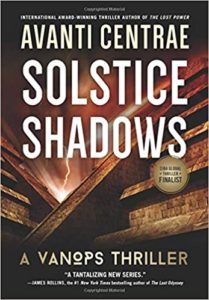
Congratulations to the First Place Category Winners and the Grand Prize Winner of the DANTE ROSSETTI Book Awards for Young Adult Fiction, a division of the CIBAs
The CIBAs Search for the Best Young Adult Fiction
Chanticleer Book Reviews is celebrating the best books featuring stories of all shapes and sizes written to an audience between the ages of about twelve to eighteen. Science Fiction, Fantasy, Dystopian, Mystery, Paranormal, Historical, Romance, and Literary. We love them all.
The 2019 DANTE ROSSETTI BOOK Awards First Place Category Winners and the DANTE ROSSETTI Grand Prize winner were announced at the Virtual Chanticleer Authors Conference that was broadcast via ZOOM webinar the week of Sept 8 -13, 2020 from the Hotel Bellwether in Bellingham, Wash.
Pamela Beason, author of The ONLY WITNESS, (a previous Overall CIBA Grand Prize Winner), announced the DANTE ROSSETTI Book Award Winners.
This is the OFFICIAL 2019 LIST of the DANTE ROSSETTI BOOK AWARDS First Place Category Winners and the DANTE ROSSETTI Grand Prize Winner.
Congratulations to All!
Michelle Rene –Manufactured Witches
Nancy Thorne –Victorian Town
Susan Brown –Twelve
Sandra L Rostirolla –Cecilia
David Patneaude –Fast Backward
John Middleton–Dillion & The Curse of Arminius
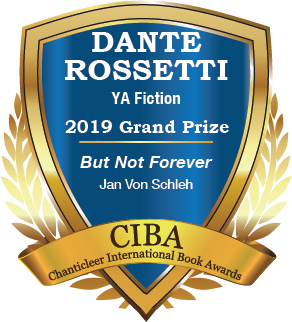
Jan Von Schleh – But Not Forever
The Dante Rossetti Book Awards
2019 Grand Prize Winner is:
But Not Forever by Jan Von Schleh
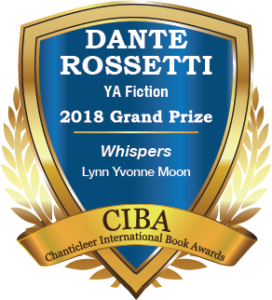
This is the badge for the Grand Prize Winner of the 2018 DANTE ROSSETTI —
Whispersby Lynn Yvonne Moon
We are accepting submissions into the2021 Dante Rossetti Book Awardsuntil June 30, 2021.
The 2020 Dante Rossetti Book Awards winners will be announced at CAC 21 on April 17, 2021.
A Note to ALL the WINNERS: The coveted CIBA Blue Ribbons will be mailed out starting in October. We will contact you with an email to verify your mailing address and other items. We thank you for your patience and understanding.
If you have any questions, please email info@ChantiReviews.com == we will try our best to reply in 3 or 4 business days.
Congratulations to the First Place Category Winners and the Grand Prize Winner of the PARANORMAL Book Awards for SUPERNATURAL Fiction, a division of the 2019 CIBAs
The Search for the Best Supernatural Fiction
Chanticleer International Book Awards celebrates the best books featuring magic, the supernatural , weird otherworldly stories, super humans , magical beings & supernatural entities, vampires & werewolves, angels & demons, fairies & mythological beings, magical systems and elements. We love them all.
The 2019 PARANORMAL BOOK Awards First Place Category Winners and the PARANORMAL Grand Prize winner were announced at the Virtual Chanticleer Authors Conference that was broadcast via ZOOM webinar the week of Sept 8 -13, 2020 from the Hotel Bellwether in Bellingham, Wash.
Chris Leibig, author of ALMOST MORTAL, (a Paranormal Grand Prize Winner), announced the PARANORMAL Award Winners.
This is the OFFICIAL 2019 LIST of the PARANORMAL BOOK AWARDS First Place Category Winners and the PARANORMAL Grand Prize Winner.
Congratulations to all!
Ryan J. Lyons – Drums and Dragons
Linda Watkins – The Tao of the Viper
Kaylin McFarren – High Flying
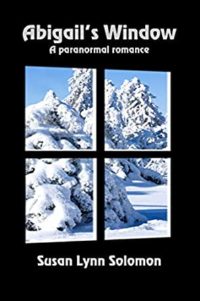
Susan Lynn Solomon – Abigail’s Window
Palmer Pickering – Moon Deeds
Jack Cullen – Runes of Steel
Joy Ross Davis – The Witch of Blacklion
D. J. Adamson – At The Edge of No Return
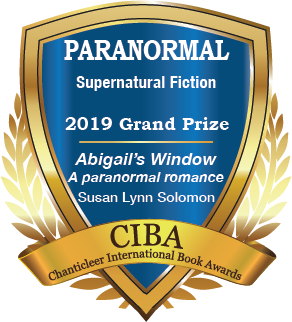
The Paranormal Book Awards 2019 Grand Prize Winner is:
Abigail’s Window by Susan Lynn Solomon
This is the badge for the Grand Prize Winner of the 2018 Paranormal Book Awards, The Madwoman of Preacher’s Cove by Joy Ross Davis
A Note to ALL the WINNERS: The coveted CIBA Blue Ribbons will be mailed out starting in October. We will contact you with an email to verify your mailing address and other items. We thank you for your patience and understanding.
If you have any questions, please email info@ChantiReviews.com == we will try our best to reply in 3 or 4 business days.
Congratulations to the First Place Category Winners and the Grand Prize winner of the CYGNUS Book Awards for all forms of Science Fiction, a division of the 2019 CIBAs
Chanticleer International Book Book Awards celebrates the best books featuring space, time travel, life on other planets, parallel universes, alternate reality, and all the science, technology, major social or environmental changes of the future that author imaginations can dream up. Hard sci-fi, soft sci-fi, apocalyptic, cyberpunk, time travel, genetic modification, aliens, super-humans, Interplanetary travel, dystopian, and settlers on the Galactic Frontier.
The 2019 CYGNUS BOOK Awards First Place Category Winners and the CYGNUS Grand Prize Winner were announced on Tuesday, September 8, 2020 at the Virtual Chanticleer Authors Conference that was broadcast on the VCAC20 ZOOM webinar.
Elana Mugdan, the OZMA Grand Prize Winner for Fantasy Fiction for her novel, Dragon Speaker, announced the 2019 CYGNUS Award Winners.
It is our privilege and profound honor to announce the 1st in Category winners of the 2019 CYGNUS Awards, a division of the 2019 CIBAs.
This is the OFFICIAL 2019 LIST of the CYGNUS BOOK AWARDS First Place Category Winners and the CYGNUS Grand Prize Winner. Congratulations to all!
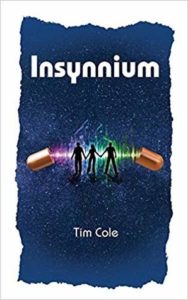
Alternate History / Time Travel: Tim Cole – Insynnium
Apocalyptic/Dystopian: J. I. Rogers – The Korpes Agenda
Hard Science Fiction: Jacques St-Malo – Cognition
Space Opera: Shami Stovall – Star Marque Rising
Soft Sci-Fi/Young Adult – Rey Clark – Titan Code Series: Dawn of Genesis
Speculative Fiction: Paul Werner – Mustang Bettie
Science Fiction: Robert M. Kerns –It Ain’t Over…
Honorable Mentions:
Andrew Lucas McIlroy – Earthling
William X. Adams – Intelligent Things
Sandra J. Jackson – Playing in the Rain
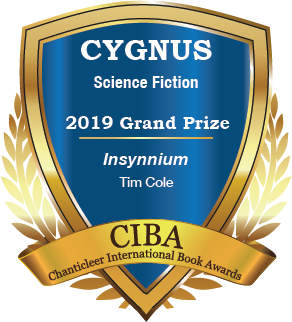
The Grand Prize Winner for the Chanticleer International Book Awards, 2019 CYGNUS Division is
Tim Cole
Insynnium
The CYGNUS Grand Prize Badge is customized for the 2019 Award Winner.
A Note to ALL the WINNERS: The coveted CIBA Blue Ribbons will be mailed out starting in October. We will contact you with an email to verify your mailing address and other items. We thank you for your patience and understanding.
We’ve long said that we are leaders in digital and technology. This is who we are! Now, because of our new living situation, i.e. COVID19, digital platforms and marketing tips are even more important to creating and sustaining our author platforms and building our readership.
What we need is strategy – and a bit of know-how to make our efforts pay off. We all want to sell books. We all want to be writing and connecting with our audiences. While thinking about this today, Kiffer and I thought we would revisit one of our most helpful posts about Book Marketing. Michelle Cox’s, Hot Marketing Tips are Shared in the 10 Question Author Interview with MICHELLE COX – Author Interviews, Marketing, Craft of Writing. Here’s an author who knows what she’s talking about.
Michelle Cox is one of the panelists on A Multi-prong Approach to Book Marketing with Paul Hanson of Village Books, Michelle Cox – Historical Fiction, J.I. Rogers – Science Fiction, and Tina Sloan, contemporary thriller author and actress that is scheduled for Sunday, Sept 13, 2020 at VCAC.
After reading this post, you feel you would like some new information, I would like to invite you to our VCAC starting next week, September 8 – 13, 2020, where experts, like bestselling authors Robert Dugoni, J.D. Barker, top film producer Scott Steindorff, author /actor Chris Humphreys, Amy Stapleton and Wayne Richard from CHATABLES, and Paul Cutsinger from ALEXA, Anita Michalski and Jonathan Hurley from Hindenburg Systems – and so many, many more experts (click here to see a complete list of our Headliners, Presenters, and Faculty) who will go into depth about book marketing in today’s new world. We even have Tana Hope to show us how to take care of yourself. We all need that, right?
Here’s your official invitation to VCAC20: click here.
And now, back to Michelle Cox…
Mystery & Mayhem Book Awards Grand Prize winner Michelle Cox graciously shares her writing life and knowledge with us along with some hot marketing tips and tools! Read on!
“When I finally decided to try writing, the creativity within me, that divine essence, finally found its true home. I’m happiest when I’m creating, and I hope I can keep writing for a long time.” – Michelle Cox
Michelle Cox, award-winning author, at work in her writing lair
Chanticleer: Thanks for coming by, Michelle. Tell us what genre best describes your work? And, what led you to write in this genre?
Cox: Well, that’s a great question! I usually at least place as a semi-finalist in three different categories at the Chanticleer awards, for example, so that should be a pretty good indication.
My series is set during the 1930s in Chicago, so that qualifies it to be historical fiction, but it’s also mystery and romance. I guess “romantic-suspense” would be the best way to describe the series, but without the bare-chested guys on the cover.
They always say to write what you would want to read, and this is it! I set the series set in my favorite era; added a little bit of mystery, a little bit of romance; flavored it with the haves- and the have-nots of the era, as well as a touch of the English aristocracy; and then stocked it with lots of characters and subplots weaving in and out . . . sheer heaven!
Chanticleer: And that’s why we love you and your books! What do you do when you’re not writing? Tells us a little about your hobbies.
Cox: I no longer have any! I used to have hobbies before writing took over my life. If I do have a few minutes here and there, I still love to garden and bake, but my real love, however, is board games. I’m a fanatic and have become a sort of a collector now.
Playing games with Michelle Cox! Did the butler do it?
Chanti: That sounds like a lot of fun! So, how do you approach your writing day?
Cox: As soon as my kids get on the bus at 6:50 am, I make my second cup of coffee and sit down at my desk. I’m not allowed to do any social media, though I do always do a quick email check to see, you know, if I won the Pulitzer or something (it’s always no), and then I start working on whatever manuscript I’m currently on. My brain is its crispest early in the morning, so I have to use that time for the work that takes the most concentration. There’s something to be said about productivity when you know you only have a limited time to write. There’s no room for writer’s block or procrastination. When you know you only have so much time, you have a way of just sitting down and doing it.
When I reach whatever my writing goal is for that day, I spend the next five to seven hours (until the kids come home) doing marketing and PR—anything from writing the blog or the newsletter or articles or interviews, taping podcasts, setting up events, answering email, attending to social media, etc. It’s really a full-time job, though, sadly, the actual writing, the part I love, is the part I get to spend the least on.
Chanti: Marketing pays off, right? Name five of your favorite authors and describe how they influence your work.
Cox: My series is known for the plethora of rich characters scattered throughout and the big saga-like plots. I was definitely influenced in this by my early favorites: Louisa May Alcott, Catherine Cookson, and Charles Dickens. My other two favorites would be Anthony Trollope and Jane Austin for their subtlety in character and their overall ability to use language so beautifully.
Chanti: I cannot argue with your choices. These are delicious authors – and novels!
I know you gave us a snapshot of your work-day earlier, but could you give us your best marketing tips, what’s worked to sell more books, gain notoriety, and expand your literary footprint.
Cox: Wow! That’s a great question, but so hard to answer. All marketing is pretty elusive, isn’t it? It’s a constant process of throwing things at the wall and seeing what sticks. It’s also important to remember that what works for one person, might not work for everyone. It’s not an exact science. If it were, we’d all be rich!
But, in general, here are some good marketing tips that I have found to work:
Try to figure out where your readers are. Most of my readers, for example, are on Facebook, so that’s where I spend most of my social media time.
Think of yourself as a brand and try to match your posts accordingly. I post things about myself or the book or writing, but mostly old recipes, period drama news, or old stories from the past (which constitute my blog). Also, I’m very careful never to post anything religious or political. This is a business, and the more you see yourself that way and follow basic business protocols, the more successful you’ll be.
Try to build your newsletter list by offering a freebie (such as free story, writing tips, a webinar, a prequel). Personally, I do it by running contests with really big prize packages. I make sure to state that the contest winner will be picked only from my newsletter subscribers. I pay a designer to create a beautiful graphic of the prizes, post it on FB, and then boost the post. Not only does this get me a lot of new subscribers (sometimes thousands), but it exposes the series to new readers as well!
Build your network. Join online author groups (I am part of a fabulous private FB group organized by my publisher, She Writes Press. We all share ideas, marketing tips, and offer support and advice, especially to the newer authors just coming on board. It’s a collective wealth of information.) or real-world groups in your area. Don’t be jealous of the success of others, but help each other as much as possible. As my publisher, Brooke Warner has said, “There’s room for everyone at the table.”
Show up at other authors events, write reviews, help promote whenever possible. Go to conferences to meet not just readers, but other authors who can potentially help you. Remember that you are a business, and you need to do work within your community to begin standing out.
For example, my publisher and I overprinted Book 2 of my series, so, as per my contract, when the first year of publication had passed, I was faced with having to pay a storage fee for these extra books (a couple of thousand), have them shipped to my garage, or have them destroyed. I decided, instead, to send them to libraries and conference organizers. It was a lot of work and expense, but it got my book into the hands of hundreds, if not thousands, of potential readers, and hopefully, they’ll come back for more and buy the rest of the series. You have to be willing to take risks.
Also in this category would be to try to get a Bookbub deal, which, as we all know is really tough. Again, for Book 2 of the series, we submitted four times, trying to get a deal with the book being priced at .99 cents. I finally decided to offer it for free, and we cleverly put a buy link to book 3 at the end of Book 2. Bookbub then offered me a deal, and I had over 55,000 downloads in one day! Hopefully, a lot of those people will go on to buy Book 3 at full price.
Lastly, if the first book of your series is free, either permanently or occasionally, you can join Book Funnel, in which you “bundle” your book with others of a similar genre with each author promoting the bundle to their social network, which exposes your series to a whole new crop of readers. Readers are able to download your free book in exchange for their email address. So not only are you getting readers hooked on your series (hopefully!), but you’re building your subscriber/newsletter list.
Chanti: You could teach a Master Class on this at CAC20! Let’s chat about this later.
Chanti: What are you working on now? What can we look forward to seeing next from you?
Cox: Book 5 of the series is currently in production and scheduled to be released in Spring 2020. I said I was going to take a break from the series after that, but I admit, I’ve already started sketching out Book 6 – I can’t help it!
But what’s really exciting is a new stand-alone novel, The Love You Take, that I wrote, also based partially on a true story and set in Chicago in the 1930s. It’s a really fabulous book if I do say so, about a “backward” girl who has to go and live at a home for “bad girls” after she unwittingly becomes pregnant. I’m currently querying agents for it.
Chanti: Sounds intriguing. Please keep us updated. Who’s the perfect reader for your book?
Cox: Though some men enjoy my books, the primary audience is women. Anyone who loves Downton Abbey;Upstairs, Downstairs;Miss Fisher’s Murder Mysteries, the old black and white films, like The Thin Man . . . basically any period drama or old movie . . . will love my series. I can’t tell you how many people have written to me to tell me that the series is so visual, that reading it was like watching a movie. It’s delightful escapism; people tell me all the time they feel like they’ve been transported back in time after reading them.
Chanti: I know that’s why we read your books #delightful! What is the most important thing a reader can do for an author?
Cox: Tell a friend! Research shows that the number one thing that influences people to buy books is word-of-mouth. If you like a book, recommend it to friends or your book club. The second best thing is to write a review! People seem wary of doing this, telling me that they’re nervous about what to write.
“Nonsense!” I say.
A review can be one sentence: “This was a great book; I enjoyed it!”
There. Done.
You don’t have to go into a lengthy reworking of the synopsis (why do people do this?) or delve into symbolism or themes or whatever. Just give your one-sentence opinion!
Chanti: I’ve been telling my non-writing friends this for years… Do you ever experience writer’s block? What do you do to overcome it?
Cox: Not really! I have a lot of story ideas in my head, and thus I usually have the opposite problem. This is where outlining can really help. If you have a pretty weighty outline sketched out, then when you sit down to write each day, you pretty much already know what you’re supposed to write that day. Likewise, I enjoy taking an evening walk (or I try to, anyway!), during which I think about tomorrow’s chapter and what needs to go into it. Sometimes I even voice record if I have a really good idea or some strands of dialog. There’s something about walking—moving the legs back and forth, back and forth—that seems to stimulate something in the brain. They say that Dickens used to walk the streets of London for hours in the wee hours of the night. Now I know why!
Chanti: Time to reflect and let your mind wander. Movement really does help with this. What excites you most about writing?
Cox: Creating something out of nothing. I’ve always been a really creative person. Looking back, I see now that I’ve always been striving to create, and for a long time it took on many different forms. As a kid, I was always trying to illustrate Louisa May Alcott’s books or write little fan fiction stories based on Jo March. As I got older, it took the form of gardening and decorating the house, and then baking and then creating elaborate kids’ birthday party invitations! When I finally decided to try writing (long story), the creativity within me, that divine essence, finally found its true home. I’m happiest when I’m creating, and I hope I can keep writing for a long time.
Chanti: We hope you do, too, Michelle. What a fabulous interview! Thank you for sharing your story with us.
Speaking of sharing, if you like what you’ve read, please “like, comment, and share!” Sharing is caring, baby!
The CIBA Grand Prize Winners
Michelle Cox is a multi-award-winning author who recently spent some time with us at CAC19. This year was particularly special because Michelle won the CIBA 2018 Grand Prize for Mystery & Mayhem Awards!
and took 1st Place in the Chatelaine Awards for Romantic Fiction – both awards are in honor of her book, A Promise Given. We will probably never stop celebrating this – it’s just too much fun!
To find out what Michelle’s up to next, Find and Follow her here:
Sessions will be recorded and available later viewing through VIMEO exclusively to all registered participants.
Only one session will be presented at a time so YOU select which ones you want to see LIVE and which ones you will want to view later via VIMEO or revisit the session. Master Classes and Workshops will be held the following week starting on Wednesday, Sept 16, 2020.
Virtual Author Events: How To Pivot from LIVE to VIRTUAL for Book Launches, Book Clubs, and Book Eventswith Janet Oakley, Sean Dwyer, & Gail Noble Sanderson
Book to Film Panel Discussionwith Scott Steindorff, Robert Dugoni, and J.D. Barker. Moderator is Chris Leibig
It Takes a Village to Make a Film – Authors, Actors, Screenwriters, Producers, & Directorsa Discussion with Tina Sloan, Scott Steindorff, & Kaylin McFarren, and Talk to Crows Production Company
The Critical Role Authors Play in Fostering a Better Society –Janice S. Ellis, Ph.D.
Exploration of New and Revolutionary Ways of Storytelling including Delving into Immersive, Mixed Reality, and Digital Art –Scott Steindorff
How to Have 1,048 Readers Requesting Your Book in the 1st Day of a 100 Book Giveaway –Kaylin McFarren shares her Goodreads and Amazon Secrets to increasing book sales.
Writing and Selling Children’s Books – Children’s Book Authors Share Their Tips & Tools – Denise Ditto Satterfield, Barbara Jean Hicks, M.J. Evans,
Voice Driven Technology and the Future of Publishing – Paul Cutsinger
Why Amazon Alexa Should Be Telling Your Story – 3 Sessions– Amy Stapleton and Wayne Richard
How to Create a Sustainable and Compelling Series – Panel : Diane Garland, Wendy Delaney, Pamela Beason, J.D. Barker
5 Reasons Why You Should Publish Your Epubs on Bookchain –Simon-Pierre Marion
Your Story World: Beyond Eye Color and the Weather – Diane Garland
Don’t be Left OUT and OFF the Airwaves – Intro to Podcasting with Hindenburg Systems’ expert Anita Michalski
Historical Fiction–Chris Humphreys will examine how to both fictionalize real characters and realize fictional ones.
Just Call Out My Name – Collaborating with Other Authors –Janet Shawgo & Sean Dwyer
Writers: Improve Your Productivity and Your Health by Correcting Posture with Tana Hope
5 Reasons Why You Should Publish Your Epubs on Bookchain –Simon-Pierre Marion
Sessions Start in just 7 Days! Tuesday, Sept. 8, 2020!
The 2019 CIBA Awards First Place Awards Winners will be announced every day (Tuesday – Saturday, Sept 8 -12, 2020) starting at 5 p.m. PST at the CIBA Virtual Ceremonies. All 2019 CIBA Finalists will be recognized during VCAC!
The 2019 CIBA Grand Prize Division Winners and the Overall Grand Prize for Best Book will be announced and recognized on Sunday, Sept 13, 2020 starting at 5: 30 p.m. PST ceremony.
All announcements are LIVE and we will have a Virtual Celebration Party after each day!
Have your favorite bubbly ready to cheer on your favorite authors! LIVE and INTERACTIVE!
Suffragists parade down Fifth Avenue, 1917. Advocates march in October 1917, displaying placards containing the signatures of more than one million New York women demanding the vote. The New York Times Photo Archives.
On August 18, 1920, the Nineteenth Amendment to the United States of America Constitution was ratified and signed into law on the 26th that same month.
We are celebrating the 100th anniversary of the Nineteenth Amendment’s adoption into the U.S. Constitution: the amendment that guarantees citizens the right to vote regardless of their gender, and the victory of the American Suffrage Movement. It took more than seventy years of protesting, picketing, and struggles for women to gain the civil right to vote in US elections. And many more decades passed before other disenfranchised groups were systematically denied the right to vote.
The Nineteenth Amendment was the capstone of that fight, but it took over seventy years to achieve it.
And still, the vote was not granted to Black women and men. That right came about much later than most people realize, June 6, 1965, when President Lyndon Johnson signed the Voting Rights Act, which outlawed the discriminatory voting practices that some Southern states adopted after the Civil War.
During this election season, we call all Chanticleerians to Vote Your Conscious and to not let anything get in your way!
Women’s suffrage was not just a long fight, but one taken on by many pivotal figures. But the story of the suffrage movement is best told by remembering many of its impactful suffragists, such as Alice Stone Blackwell, Elizabeth Cady Stanton, Matilda Joslyn Gage, Ida B. Wells, Mary Church Terrel, and Josephine St. Pierre Ruffin.
Suffragists were physically attacked by mobs of angry men and boys while police looked the other way. They’d been roughly arrested; been held in fetid, cold, vermin-infested cells; been shackled to the wall; and endured abuse and even torture in jail. When they went on hunger strikes, they were force-fed, tubes rammed up their noses. The Christian Science Monitor.
Elizabeth Cady Stanton, c. 1880
Elizabeth Cady Stanton was one of the women who first crystallized the Suffrage Movement, having helped organize the Seneca Falls Convention. Her unique background was pivotal in formulating the first demand for women’s suffrage in 1848.
As the movement grew and drew public attention, Stanton proved herself to be a skilled orator and writer, working closely with Susan B. Anthony throughout the years; Stanton actually wrote some of the speeches that Anthony delivered, and– along with Anthony– was one of the founders of the National Woman Suffrage Association. Stanton wrote for a more equitable future in more than voting; in addition to the question of suffrage, she championed a broader view of women’s freedoms, supporting labor rights, property rights, and the right to divorce. She saw that women should have the chance to lead their own lives, taking part in all aspects of society equally to men.
Movements don’t just happen, they come alive when a group of people decides to take action against injustice, and even small beginnings can lead to sweeping change.
Elizabeth Cady Stanton came from a privileged background and used her position and means to propel her views. Her father was a prominent attorney, Congressman, and a judge. He also was a slave owner. Elizabeth was exposed to the study of law and the government mechanisms that govern by her father. She was particularly against how religion was used to justify the oppression of women. She penned The Woman’s Bible to tackle misogynistic traditions rooted in religious dogma after being sent to a seminary at the age of sixteen.
She became an adamant abolitionist to end the practice of slavery in the United States in 1839 at the age of 24. Many historians believe that the Abolitionist Movement to End Slavery experiences and lessons were essential to pave the way for the Women’s Suffrage Movement.
Stanton wasn’t the only suffragist who saw the reality of sexist injustice throughout her society, and one of her contemporaries joined her in drawing attention to these wrongs. Matilda Joslyn Gage was considered a radical in her time, having fought against traditionalist views as Stanton had. Matilda was on the revising and editing committee for Elizabeth’s highly controversial The Woman’s Bible.
Matilda Electa Joslyn March 24, 1826
This right to vote was a battle, fought and won 100 years ago by women we will never know, but by what they have written, what others have written about them, and what they have done for all of us.
Alice Stone Blackwell
One of the women who played a significant role in uniting these two groups was Alice Stone Blackwell. She was in a position to do so because of her connection to the AWSA: her mother was Lucy Stone. Along with Alice’s father, Henry Browne Blackwell, they were some of the primary organizers of the group. As Alice Stone Blackwell grew up, she worked with her parents on their paper, the Woman’s Journal, and eventually ran the paper. Once the AWSA and NWSA had merged, Blackwell served as the NAWSA’s recording secretary.
While the centennial celebrates the federal adoption of women’s suffrage, we shouldn’t forget the smaller victories and works that punctuated the movement’s length, those who spoke out against injustice in many forms, while seeking the vote. One such woman was Ida B. Wells, who played an active role in the suffrage movement of Chicago. The city had given partial suffrage to women. Wells, along with a fellow suffragist Belle Squire, started the Alpha Suffrage Club to advance women’s suffrage further and educate women on civic involvement.
Wells & Squire marching in 1913
The club especially supported African American candidates for the city’s elections, working to break down multiple unjust barriers in politics. Wells participated in one of the NAWSA’s best-remembered marches, set in Washington D.C. the day before the inauguration of President Woodrow Wilson. At the beginning of the rally, she was told to walk at the back, but she refused. Ida B. Wells marched with her sister suffragists from Illinois at the front. The power of social change comes from unified work between many people, and Wells refused the idea that she, as a suffragist, could be divided from anyone else.
Along with women like Wells and Ruffin, Mary Church Terrel was an advocate for racial equality. She was entwined with gender equality, which shows throughout her work with the NAWSA, where she frequently met with Susan B. Anthony and Elizabeth Cady Stanton. She insisted that the movement fight for the rights of black women alongside those of white women, and spoke highly of the suffragists who fought for everyone oppressed by the political and social systems of the time. She spoke at NAWSA meetings, delivered speeches, and called for the suffragists to remember all of the women whose vote they worked so hard to gain.
Ida B. Wells
Let’s not allow their work to be forgotten – and let us never give up our full Rights as U.S. Citizens to carry out this all-too-important privilege.
Despite the NAWSA’s issues with racism, some black women did act within that organization, such as Mary Church Terrel, who was an advocate for racial equality entwined with gender equality, which shows throughout her work with the NAWSA, where she frequently met with Susan B. Anthony and Elizabeth Cady Stanton. Mary insisted that the movement fight for the rights of black women alongside those of white women, and spoke highly of the suffragists who fought for everyone oppressed by the political and social systems of the time. She spoke at NAWSA meetings, delivered speeches, and called for the suffragists to remember all of the women whose vote they worked so hard to gain.
Mary Church Terrel September 23, 1863
Women’s suffrage had a complex relationship with black civil rights in large part thanks to the period of history in which the suffrage movement began: the Seneca Falls Convention took place in 1848, seventeen years prior to the abolition of slavery. This meant that the women’s rights movement was progressing and focusing at the same time that black people across were achieving freedom and directing themselves in a country that, while changing dramatically, still marginalized them.
Harriet Tubman’s work is an example of how black women fought on both fronts; she’s a figure best remembered for her work as a liberator, freeing slaves prior to and during the civil war, but she took part in the suffrage movement as well. During the time of the NAWSA, she traveled to meetings and demonstrations to give speeches, telling of her experiences fighting for freedom and facing down oppressive and dangerous power structures during the time of slavery, and how important the struggle for freedom is. She bridged her advocacy for equality into the fight for the vote, and during this time, Ruffin’s The Woman’s Era wrote a profile on Tubman, as the country’s attention was once again drawn to her fight.
Harriet Tubman after the Civil War
All of these histories show that the suffrage movement’s victory– the adoption of the nineteenth amendment– was the result of disparate people, dedicated and idealistic people coming together and fighting hard for their rights. They gave time, energy, and passion to a movement that would, eventually, provide them with the right to participate in the democracy of their country. The fact that the suffrage movement stayed strong for 70 years united its two significant organizations, tackled legislation at both the national and local levels, is a testament to the people who refused to give up, and whose worked– together– to win the fight.
It’s been a century since women won the right to vote, and more than 170 years since the American suffrage movement started in earnest. This movement has a lot it can teach us: the value of working together, across the country, to bring about change; the importance of remembering that there is always more than one fight for progress and rights, that we should listen to the voices of everybody who’s been pushed down and denied their rights and opportunities; and, of course, that even in the face of a power structure that calls rebellion and the fight for equal freedoms’ radical’, that fight is a good one, and worth taking on.
At the Seneca Falls Convention, the call for women’s suffrage rang out in America, whereas before it had been considered a fringe idea, or even impossible. The fight was long, but after seventy-two years, the suffragists made what was ‘radical’ a reality.
So, in the spirit that the right to vote is something that all people deserve, and should never have been restricted to any one group over another, let’s celebrate the centennial of a victory that brought America one step closer to the ideals of equality, freedom, and the rights of all. The power of the vote has shaped America’s history. We must all understand the importance of voting, and today we recognize those who fought for our rights. We are thankful for those brave suffragettes, for it is their struggle that has given us the right to participate in our democracy regardless of gender.
It required three generations of fearless activists over a span of more than seven decades working in more than 900 state, local, and national campaigns to finally win the vote for American women. And that active verb – win – is important: Women were not given the vote; they were not granted the vote. As one commentator so aptly describes it: “They took it.” Christian Science Monitor
Links to articles and sources are listed at the end of this blog post.
We want to thank Scott Taylor, our newest member of the Chanticleer Team, for his research for the blog post in this collaborative effort of honoring and remembering the women who struggled and worked for ratifying the 19th Amendment on August 18, 1920.
We thought you might enjoy viewing some of our very favorite books about Suffrage and Strong Women we admire:
Love of Finished Years is one of Kiffer’s favorite novels as it tackles workers rights, women’s suffrage, the looming shadow of World War One, the plight of immigrants, and the horrors of wars from the trenches. Phillips reminds us that love, light, and perseverance can help us find a way to overcome almost any obstacle. Love of Finished Years won the Chanticleer Overall Grand Prize for Best Book while it was still in manuscript form.
This pivotal work serves as an historical record which serves as a historical record amid one of the most tumultuous yet empowering eras in American history. Complete with a discussion guide in the Appendix, the book can serve as a text for a college course or a community book club exploring themes of race and gender.
Janice’s overarching message is to stay true to oneself and continue to follow your heart, no matter how unpopular or uncomfortable your choices. From Liberty to Magnolia was awarded the Journey Book Awards Grand Prize.
A story based on the mysterious, mystical Victoria Woodhull, a free-thinking woman well ahead of her time with a rags to riches story. Woodhull was the first woman to run for president of the United States, at a time when, with the full support of the law, most American men did not even regard their mothers, wives and daughters as citizens. She was also the first woman to own a brokerage firm on Wall Street. Nicole Evelina brings Victoria Woodhull vividly to life in this award winning novel.
Chanticleer Non-fiction Award-winning Books — just click on the link to read our reviews.
Announcement and Recognition of the Chanticleer International Book Awards Winners will take place at the 2019 CIBA Ceremonies as hosted by the Virtual Chanticleer Authors Conference. #VCAC20
Thursday, Friday, and Sunday September 17 & 18, and 20, 2020
The 2019 CIBA Ceremonies
All 2019 CIBA Finalists will be recognized at the daily CIBA ceremonies that will announce 3 or 4 of the seventeen CIBA Divisions each day on Tuesday – Saturday at 5:00 p.m. PST.
The First Place Category Awards Winners whose works have advanced from the premier Finalists Level of Achievement will be announced the daily ceremonies.
The 2019 Grand Prize Winners for all 17 Divisions of the CIBAs plus the Overall Best Book will be announced on Sunday, September 13, 2020. The Sunday CIBA Ceremony will begin at 5:30 p.m. PST.
The CIBA Ceremonies will be ZOOMed Live and recorded at the Hotel Bellwether, Bellingham, Wash.
The CIBA Ceremony Schedule of Announcements is at the end of this post along with a downloadable WORD Doc file that may be printed for your convenience.
The Links to the 2019 CIBA Finalists –
This will be the LAST ANNOUNCEMENT BEFORE THE 2019 CIBA CEREMONIES that will take place at VCAC 20.
We have tried to email each author/publisher whose works have advanced to the Premier FINALISTS LEVEL in the 2019 Chanticleer Int’l Book Awards – at least twice. This is final notification before the 2019 CIBA Ceremonies.
In a future Los Angeles, a terrorist group called the Stay Ready Soldiers (SRS) has declared war on seemingly everyone. The city is on the verge of martial law, with political and corporate corruption everywhere in a city all but collapsed. Anti-establishment groups roam L.A. with advanced weaponry virtually matching the powers of the federal government. People in endless numbers, both good guys and bad guys, are blown to bits throughout the novel with the blood and violence found in the most-venal video games. Yet, themes of systemic injustice come to bear in the experiences and emotions of the central cast of characters while facing daunting opposition to their cause.
In a country described by the media in the book as being on the verge of collapse, with issues including unemployment, crime, healthcare, education, immigration, and climate change quickly eroding, viewers are asked to decide whether the SRS is either a force of freedom fighters or domestic terrorists. Which are they? You get a chance to choose as the book opens with a bloody attack on a police unit by two SRS soldiers, Geronimo and Kali, who are as close as a love interest as any two people in the book.
The pair must keep their wits (and guns) about them to cross the dilapidated streets of a neglected stretch of L.A., meeting with allies in the fight for justice and change. They face hired killers and the U.S. government’s agents, as well as crises of faith and the threat of a conspiracy that could overturn their very mission.
A Night in Babylon is full of larger-than-life action scenes in which bullets fly, fires burn, and explosions rock the night. From the beginning of the book, this action sets up the stakes: the Stay Ready Soldiers’ lives hang in the balance of one night, as they hunt and are hunted. The narrative flows in and out, taking the reader smoothly from tense scenes to calm and emotionally intimate ones, and back to the action yet again. There’s time to breathe with this story, but the sense of danger is never far away. The action takes surprising turns within the various firefights, and though sometimes there isn’t enough time spent setting up details that become important later in the scene, the well-paced prose keeps the fights exciting.
The LAPD and U.S. federal agents are the distinct villains, painted as more than just cruel individuals but as part of a massive unjust system that shoves people of color down, especially in cities like Los Angeles. A Night in Babylon shows abuses of power like those that exist in the real world, and even though the action scenes are extravagant, the violence and injustice that drives the SRS are drawn from reality. The story critiques not only how authority reacts to resistance against violence with a heightening of violence, but also how authorities can exploit unstable times and places to expand their power and control over people.
Viewing this novel strictly as violence porn would be a mistake. Woven into it are dystopian themes that are now inescapably part of today’s America taken to extremes. At the same time, it does not shrink from asking questions about the nature of today’s violence. Embedded in the story are questions about the role of corporations in bed with the government. What do we really know, the book asks, about the intertwined interests of politicians and corporations? Questions like these used to be relegated to comic books and/or the Internet’s dark side. With credible news reports on similar issues in today’s headlines in newspapers and on T.V., it is undoubtedly fair games for novels such as this one to take these discussions into literature and let readers decide their relevance.
What is A Night in Babylon ultimately trying to say? Is it entertainment, a political tract, or a warning? The cynicism expressed in this relatively short novel is too blatant to ignore, but it does not seem to cut to the left or the right. In that sense, it is a Rorschach test for readers to determine its point of view. Whichever way readers respond, it’s a book that is hard to ignore.
Elements of successful fiction layer and fold back in on each other to create resonance, nuance, subtext, and undercurrents of great storytelling. – Kiffer Brown
In this enlightening and instructional blog post by top-tiered editor and one of Chanticleer’s exceptional Master Writing Craft teachers, Jessica Morrell, will expand on the following components of exceptional fiction.
Elements of Successful Fiction
The Dramatic Question
An Intimate Simmering World
Characters Built from Dominant Traits
Emotional Needs
Significance
Motivation Entwined with Backstory
Desire
Threat
Causality
Inner Conflict
Midpoint Reversal
Satisfying Ending
Dramatic Question
Compelling fiction is based on a single, powerful question that must be answered by the story climax. This question will be dramatized chiefly via action in a series of events or scenes. If you are writing a romance, the question always involves whether the couple will resolve their differences and declare their love. In a mystery the dramatic question might be will Detective Smith find the serial killer in time to prevent another senseless death? InThe Old Man and Sea, the dramatic question is will Santiago catch the big fish and thus restore his pride and reputation?
An Intimate, Simmering World
An intimate world isn’t created by merely piling on details. It means your story world has the resonance of childhood memories, the vividness of a dream, and the power of a movie. It’s filled in with shadows and corners and dogs and ice cubes and the sounds and smells of a dryer humming on wash day and a car blaring past, rock and roll music shaking the windows. Details lend your story authority, potency, and a palpable physical existence.
Downton Abbey by Julian Fellowes — definitely an “intimate simmering world”
An intimate story takes us to a specific place and coaxes us to remain there. An intimate story is lifelike and feels as real and complicated as the world the reader inhabits. When a reader finishes the final pages and leaves the story world, the reader should feel the satisfaction of the ending, but also a huge sense of loss. Much like a friend has moved to another town just when the friendship had reached a level of closeness and trust.
Characters Built from Dominant Traits
Create main characters with dominant and unforgettable traits as a foundation of personality. These traits will be showcased in the story events, will help him achieve or fail at goals, and will make the story person consistent. For example, Sherlock Holmes’ dominant traits are that he is analytical, Bohemian, opinionated, and intelligent. These traits are showcased in every story he appears in along with secondary and contrasting traits. When the character first appears in the first scene, the character should arrive in the story with dominant traits intact.
Sherlock Holmes and Jim Moriaty – enduring characters since 1892.
Emotional Needs
Protagonists and the main characters are people with baggage and emotional needs stemming from their pasts. These needs, coupled with motivation, cause characters to act as they do. For example, inSilence of the LambsClarisse Starling is propelled by childhood traumas to both succeed and heal the wounds caused by the death of her father.
The EXPANSE by James S.A. Corey went from a Sci-Fi book series to one of Amazon’s top video series. One reason is that the characters have some major emotional baggage.
Significance
The storyline focuses on the most significant events in the protagonist’s life.
Kiffer’s Note: As we were taught in journalism school, this is the “So what?” that our professors would continuously ask us. What were, are, and will be the significant events? Your story will show the “why and how.” Make your readers care. Make your readers interested and keep them caring.
Crazy Rich Asians by Kevin Kwan – 3 Perspectives Cubed makes for a complex story.
Motivation Entwined with Backstory
Motivation, the why?of fiction, is at the heart of every scene, fueling your character’s desires and driving him to accomplish goals. It provides a solid foundation for the often complicated reasons for your character’s behaviors choices, actions, and blunders. Motivating factors provide trajectories for character development, as a character’s past inevitably intersects with his present. Your character’s motivations must be in sync with his core personality traits and realistically linked to goals so that readers can take on these goals as their own.
See The Expanse SciFi series above. It said to be the current Game of Thrones of TV series streaming.
Names convey emotional baggage and foreshadowing
Desire
Desire is the lifeblood of fictional characters. Not only do your characters want something, but they also want something badly. Santiago, inThe Old Man and the Sea desperately wants to restore his reputation and also wants his friendship and partnership with the boy to resume. And in the lonely hours when he is far out at sea, desperately struggling to hang on to the fish and fighting off sharks, we see his fierce desire acted out and the price he pays for it.
The classic A League of Their Own – to be rebooted on Amazon 2021
You can bestow on your character flaming red hair, an endearing, crooked grin, and a penchant for chocolate and noir movies, but if she doesn’t want something badly, she’s merely a prop in your story, not a driving force. But if she wants to win the Miss Florida contest, take over her boss’ job, or become the first female shortstop for the Atlanta Braves, then you’ve got a character who will make things happen and a story that will be propelled by desire.
Threat
Fiction is based on a series of threatening changes inflicted on the protagonist. In many stories, these threats force him or her to change or act in ways he or she needs to change or act. Often too, what the protagonist fears most is what is showcased in a novel or short story. It can be fear of losing his family, job, or health with this dreaded outcome providing interest, action, and conflict.
The Martian by Andy Weir – one big ticking clock on so many different levels.
Causality
Events in fiction are never random or unconnected. They are always linked by causality with one event causing more events later in the story, which in turn causes complications, which cause more events, which cause bad decisions, etc.
Causality – the physics of writing
Inner Conflict
A fictional character doesn’t arrive at easy decisions or choices. Instead, he is burdened by difficult or impossible choices, particularly moral choices, that often make him doubt himself and question his actions. Inner conflict works in tandem with outer conflict—a physical obstacle, villain, or antagonist–to make the story more involving, dramatic, and events more meaningful.
Complications A story builds and deepens by adding complications, twists, reversals, and surprises that add tension and forward motion. Plots don’t follow a straight path, instead, there are zigzags, dead ends, and sidetracks. Complications create obstacles and conflict, cause decisions to be made, paths to be chosen.
12 Years A Slave – based on the memoir of Solomon Northrup, published in 1854
Midpoint Reversal
The middle of a novel comprises more than half its length. At about the midpoint of most novels, a dramatic reversal occurs. The hunter becomes the hunted; a second murder occurs proving the detective has been wrong in his suspicions; a former lover arrives in town to complicate a budding romance. This reversal keeps the middle from bogging down and becoming predictable and also breathes new life and often a new direction into the story.
Mid-point Reversal of Bride and Prejudice, an adaptation of Jane Austen’s Pride and Prejudice. Published in 1813, it is still relevant.
Satisfying Ending
Every story needs an ending that satisfies the reader while concluding the plot. The final scenes, when the tensions are red hot and the character has reached a point of no return, must deliver drama, emotion, yet a logical conclusion. This is not to suggest that every plot ends with a shoot-out or physical confrontation because some endings are quieter, more thoughtful. Some endings are ambivalent, some a dramatic or a violent clash of wills. But there is always a sense that all the forces that have been operating in your story world have finally come to a head and the protagonist’s world is forever changed.
Below is a scene from The Martian that heralds that maybe—just maybe—our protagonist may make it home—alive. It is a fun and creatively acted scene. What a scene stealer! – Kiffer Brown
A reversal of fortune in The Martian by Andy Weir
The end is just the beginning…
A Note from the Editor: A satisfying ending is one of the top, if not the top, reasons why books go viral and what will make your reader want to read your next work. Make sure that the you put as much effort in to a satisfying ending as you do into your opening hook. Kiffer Brown
I hope that you found the visual examples enlightening. Determining and then searching for my favorite ones was fun! – Kiffer
Jessica Page Morrell
Jessica Page Morrell is a top-tier developmental editor for books and screenplays. Her articles have appeared in Writer’s Digest and The Writer magazines. She is known for explaining the hows and whys of what makes for excellent writing and for sharing very clear examples that examine the technical aspects of writing that emphasizes layering and subtext. Her books on writing craft are considered “a must have” for any serious writer’s toolkit.
Jessica will teachMaster Craft Writing Classesat theChanticleer Authors Conference VIRTUAL Conference that will be held from Tuesday, Sept 8 – Sunday, Sept. 13, 2020. She will present sessions and Master Classes on September 17, & 18, 2020 in conjunction with the virtual conference. She and Kiffer will also host a fun kaffeeklatch for Word Nerds at VCAC20.
Did you know that Chanticleer offers editorial services?We do and have been doing so since 2011.
And that our professional editors are top-notch and are experts in theChicago Manual of Style.They have and are working for the top publishing houses (TOR, Macmillan, Thomas Mercer, Penguin Random House, etc.) and award-winning independent presses. If you would like more information, we invite you to email Kiffer or Sharon at KBrown@ChantiReviews.com or SAnderson@ChantiReviews.com.
We work with a small number of exclusive clients who want to collaborate with our team of top-editors on an on-going basis. Contact us today!
Writer’s Toolbox
Thank you for reading this Chanticleer Writer’s Toolbox encore edition article.
We encourage you to stay in contact with each other and with us during this stint of practicing physical distancing to prevent the spread of COVID-19 — especially at this time of re-opening.
Let us know how you are doing, what is going on where you live, how are you progressing on your writing projects.
I invite each of you to join us atThe Roost– a private online Chanticleer Community for writers and authors and publishing professionals. You are welcome to email me for more info also.
We are active onFacebook,Twitter, and Instagram. You can find us by using our social media handle @ChantiReviews
Minimize physical contact! Maximize social connecting!
Be well. Stay safe. Keep writing! Keep Creating! Kiffer
Chanticleer Book Reviews is seeking today’s best books featuring romantic themes and adventures of the heart, historical love affairs, perhaps a little steamy romance, we will put them to the test and choose the best among them.
Find out more about the stunning beauty that Dante Rossetti painted, Jane Morris, at the end of this blog post.
Do you have a romance novel or manuscript ready for readers?
Do you want to see how it stands up to others in its category?
Then don’t delay! The CHATELAINE Book Awards division is accepting submissions from both recently published and complete manuscripts in romance and romantic fiction. But this year we’ve moved our deadline – to keep you on your toes!
The new deadline for the Chatelaine Awards is AUGUST31, 2020!
That’s right, the last day for submissions into the 2020 Chatelaine Book Awards is August 31, 2020. So, if you love Piña Coladas – and getting caught in the rain… I mean, if you like writing about those things, and other things having to do with matters of the heart, including these:
Insiders’ Tip: Other genre divisions of the Chanticleer International Book Awards have romance categories as well. Multiple submissions of the same work to a variety of CIBA writing competitions divisions are accepted. Check out our divisions here.
Please join us in congratulating and reading these top works in this diverse range of all reads Chatelaine: Romance, Chick-Lit, Women’s Fiction, Inspirational, Suspenseful, and, of course, Steamy and Sensual in the
CHATELAINE HALL of FAME!
Jane Austen Inspired:Pulse and Prejudice by Colette Saucier
Paranormal:Crimson Flamesby Ashley Robertson
Christian Inspirational Romance: Chasing Charlieby C. M. Newman
Restorative: A Path through the Gardenby Nancy LaPonzina
Classic Bodice Ripper:To Dare the Duke of Dangerfieldby Bronwen Evans
Who will win the CHATELAINE Book Awards Blue Ribbons for 2020?
The judging rounds will commence in August! Submit your works today!
The last day for submissions into the 2020 Chatelaine Book Awards is August 31, 2020. Winners will be announced at our CAC21 conference – scheduled for April
And remember our Insiders’ Tip: Other genre divisions of the Chanticleer International Book Awards have romance categories as well. Multiple submissions of the same work to a variety of CIBA writing competitions divisions are accepted. Check it out here!
A little information about the Chatelaine Book Awards icon:
We feel that Dante Gabriel Rossetti’s Pre-Raphaelite painting of Jane Morris (muse and wife of William Morris) in aBlue Silk Dress captures the many moods of the Chatelaine division of the Chanticleer International Book Awards. Jane Morris (nee Jane Burden—little is known about her childhood but that it was poor and deprived) was known for her keen intelligence. William Morris fell in love with her when she sat for him as a model. She was privately tutored to become a gentleman’s wife upon their engagement. It is said that she was the inspiration for George Bernard Shaw’s character Eliza Dolittle of My Fair Lady fame. The Blue Silk Dress was painted in 1868 by Rossetti and it currently resides in the Society for Antiquaries of London. She was 29 when Rossetti painted it. Rossetti and Jane Morris became closely attached until his death in 1882. To read more about the fascinating Jane Morris, click on this Wikipedia page.