
 Thank you all for such hard work tonight! Very proud to have won the grand prize. You all did a wonderful job.
—Jaime Castle, co-author of The Luna Missile Crisis and Cygnus Grand Prize Winner

Thank you all for such hard work tonight! Very proud to have won the grand prize. You all did a wonderful job.
—Jaime Castle, co-author of The Luna Missile Crisis and Cygnus Grand Prize Winner
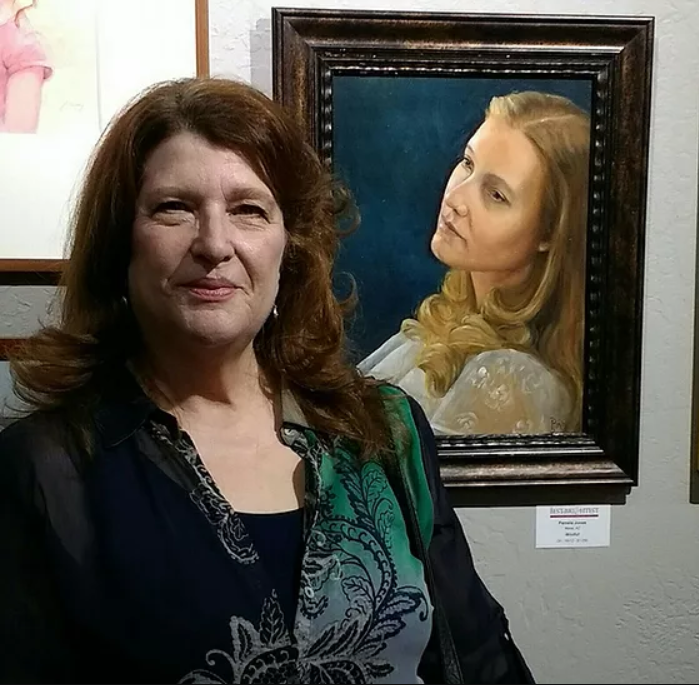
 I’m so excited to have received First Place for the Goethe Awards for 20th Century Historical Fiction for my novel For Love of Family: A Slovak Immigrant Novel
—Pamela Jonas, author of For Love of Family and Goethe First Place Winner
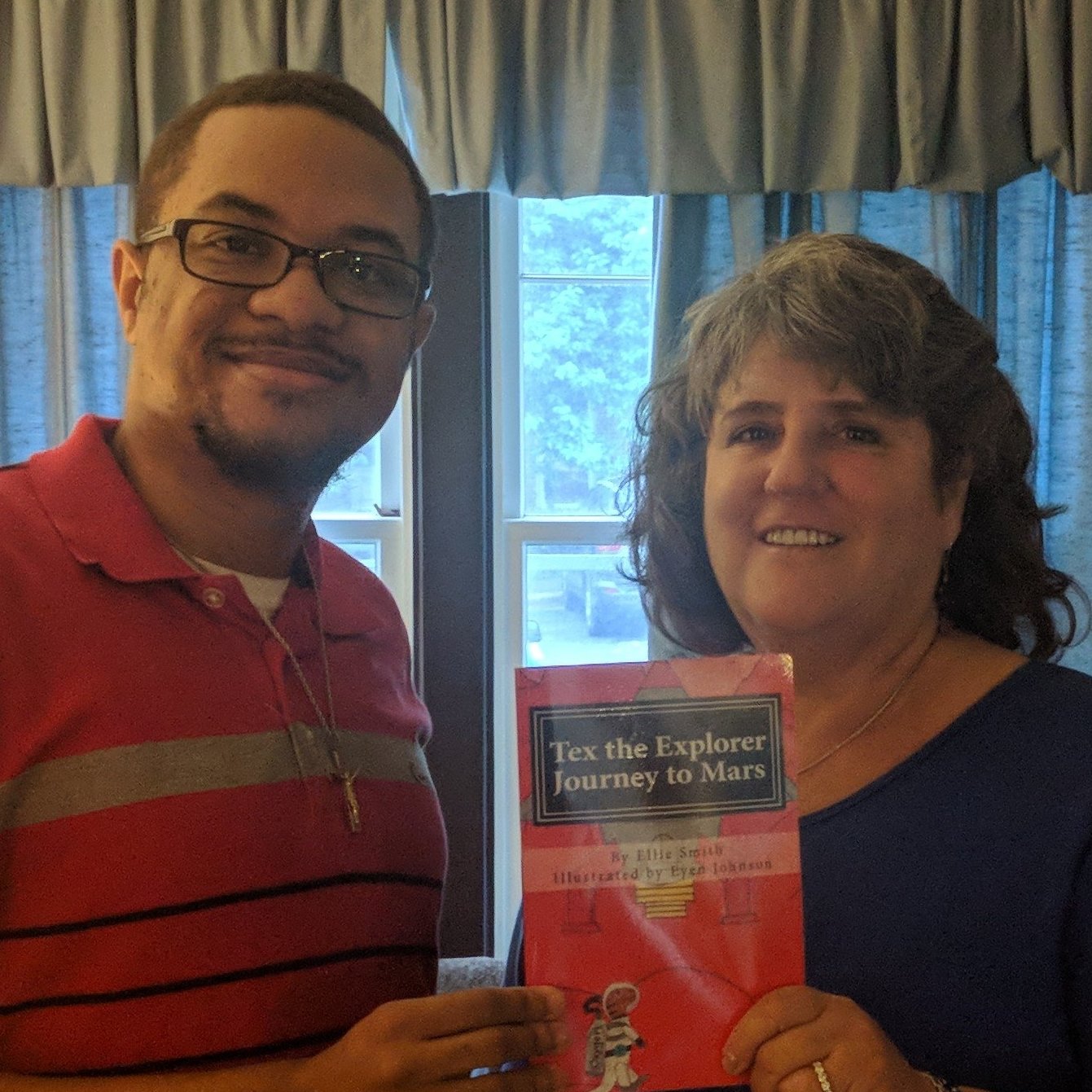
 I want to tell you how honored, and honestly overwhelmed I am, that my book Tex the Explorer Journey Through the Alphabet placed First in Category in Little Peeps! Truly, thank you!
—Ellie Smith, Author of Tex the Explorer and Little Peeps First Place Winner


I greatly appreciate everything Chanticleer does for its authors and I thoroughly enjoy the contest process. I look forward to purchasing a copy (or more) of the new Magazine and spreading the word about its release.
Thanks again and have a lovely day!
Tammy Mannersly, Author of Persuading Lucy and Chatelaine First Place Winner


Chanticleer Book Reviews is looking for the best books featuring Americana themes, First Nation stories, early North American History, cowboys & cowgirls in the Wild West, pioneering, and Civil War, and we will put them to the test and choose the best among them.
Join us in cheering on the following authors and their works!
PROMOTING OUR AUTHORS!
This post has been posted on the Chanticleer Facebook Page. We try to tag all authors listed here in the FB post. However, for FB to allow us to tag an author, that author must LIKE our page and Follow Chanticleer Reviews. FB rules — not ours.
Please click here to visit our page to LIKE, COMMENT, and SHARE on Facebook.
Additionally, we also post on Twitter. Chanticleer Twitter’s handle is @ChantiReviews
Or click here to go directly to Chanticleer’s Twitter feed.
Good luck to all as your works move on the next rounds of judging.
Click here to see the 2020 Laramie Book Award Winners for Americana Fiction.

We are now accepting submissions into the 2022 Laramie Book Awards for Americana and Western Fiction.
Please click here for more information.
For our other Historical Fiction Awards, please see the following:
Winners will be announced at the 2021 CIBA Awards Ceremony that is sponsored by the 2022 Chanticleer Authors Conference.
FLEXIBLE REGISTRATIONS ARE AVAILABLE for these challenging times.
Seating is Limited. The esteemed WRITER Magazine (founded in 1887) has repeatedly recognized the Chanticleer Authors Conference as one of the best conferences to attend and participate in for North America.
Join us for our 10th annual conference and discover why!
Featuring: International Best Selling Authors: Cathy Ace and Robert Dugoni along with A+ list film producer Scott Steindorff.

Chanticleer Book Reviews is looking for the best books featuring Mystery and Mayhem, amateur sleuthing, light suspense, travel mystery, classic mystery, British cozy, hobby sleuths, senior sleuths, or historical mystery, perhaps with a touch of romance or humor, we will put them to the test and choose the best among them. (For suspense, thriller, detective, crime fiction see our Clue Awards and for International High Stakes Thrillers and Lab Lit, see our Global Thriller Awards)
Join us in cheering on the following authors and their works!
PROMOTING OUR AUTHORS!
This post has been posted on the Chanticleer Facebook Page. We try to tag all authors listed here in the FB post. However, for FB to allow us to tag an author, that author must LIKE our page and Follow Chanticleer Reviews. FB rules — not ours.
Please click here to visit our page to LIKE, COMMENT, and SHARE on Facebook.
Additionally, we also post on Twitter. Chanticleer Twitter’s handle is @ChantiReviews
Or click here to go directly to Chanticleer’s Twitter feed.
Click here to see the 2020 M&M Book Award Winners for Cozy and Not-So-Cozy Mysteries.
We are now accepting submissions into the 2022 M&M Awards writing competition.
Please click here for more information.
Winners will be announced at the 2021 CIBA Awards Ceremony that is sponsored by the 2022 Chanticleer Authors Conference.
FLEXIBLE REGISTRATIONS ARE AVAILABLE for these challenging times.
Seating is Limited. The esteemed WRITER Magazine (founded in 1887) has repeatedly recognized the Chanticleer Authors Conference as one of the best conferences to attend and participate in for North America.
Join us for our 10th annual conference and discover why!
Featuring: International Best Selling Authors: Cathy Ace and Robert Dugoni along with A+ list film producer Scott Steindorff.
Chanticleer International Book Awards is looking for the best books featuring space, time travel, life on other planets, parallel universes, alternate reality, and all the science, technology, major social or environmental changes of the future that author imaginations can dream up for the CYGNUS Book Awards for Science Fiction.
Hard Science Fiction, Soft Science Fiction, Apocalyptic Fiction, Cyberpunk, Time Travel, Genetic Modification, Aliens, Super Humans, Interplanetary Travel, Climate Fiction (Cli-Fi), and Settlers on the Galactic Frontier, Dystopian, our judges from across North America and the U.K. will put them to the test and choose the best among them.
Join us in cheering on the following authors and their works!
Good luck to all as your works move on the next rounds of judging.
PROMOTING OUR AUTHORS!
This post has been posted on the Chanticleer Facebook Page. We try to tag all authors listed here in the FB post. However, for FB to allow us to tag an author, that author must LIKE our page and Follow Chanticleer Reviews. FB rules — not ours.
Please click here to visit our page to LIKE, COMMENT, and SHARE on Facebook.
Additionally, we also post on Twitter. Chanticleer Twitter’s handle is @ChantiReviews
Or click here to go directly to Chanticleer’s Twitter feed.
Click here to see the 2020 CYGNUS Book Award Winners for Science Fiction.
We are now accepting submissions into the 2022 CYGNUS Awards writing competition.
Please click here for more information.
Winners will be announced at the 2021 CIBA Awards Ceremony that is sponsored by the 2022 Chanticleer Authors Conference.
FLEXIBLE REGISTRATIONS ARE AVAILABLE for these challenging times.
Seating is Limited. The esteemed WRITER Magazine (founded in 1887) has repeatedly recognized the Chanticleer Authors Conference as one of the best conferences to attend and participate in for North America.
Join us for our 10th annual conference and discover why!
Featuring: International Best Selling Authors: Cathy Ace and Robert Dugoni along with A+ list film producer Scott Steindorff.

Always know the forces that shaped your main characters. And then give them inner demons to overcome, such as intense abandonment fears, or a lie they’ve been telling themselves. While many stories are fueled chiefly by external conflict, when internal conflicts are staged alongside external conflict mucking up things, the whole story gets more realistic and deeper.
Top-ranking fictional characters need to be uncomfortable most of the time. Better yet, miserable. Now, of course, your story can’t be a waterfall of tears and teeth-gnashing angst in every scene. That could lead to melodrama. But varying levels of misery should be trickling through causing tension, conflict, and uncertainty. And characters can be rattled, twitchy, discombobulated, awkward, uneasy, troubled and disturbed.
One trick to increase tension is to keep track of the number of your scenes, then track how many feature your protagonist in some kind of discomfort. Aim for high percentages. Make your protagonist worry and fear the worst.
Misery can be writ large–he loves me; he loves me not. It can happen in high-stakes battles or life and death circumstances, royal rivalries, ugly divorces, or the murder of a loved one. Your character can be lonely, unloved, and unappreciated. And whenever possible, in over his or her head.
Years ago I studied psychology and sociology in college because I was planning to go into law and I wanted to understand why people turned out the way they did. It took a few years to realize that I needed to return to my first love, stories, poetry, and all things writing. But in one sociology class an instructor mentioned it’s likely that at least one out of three people won’t like you. This insight, true or not, stuck with me.
Growing up and feeling pretty insecure much of the time, I wanted people to like me and was easily hurt when they didn’t. With age that’s diminished, but of course, it’s not fun if someone dislikes you for no good reason, or a perceived hurt that didn’t happen, or for the many reasons humans just don’t get along.
In fiction, this is magnified to create conflict, pain, and troubles. ~ Jessica Morrell
A few more tips.
Small miseries amplify larger ones. Protagonists cannot always be in top form, primed for the next challenge. Sap their strength, will, confidence, and resources thus creating more uncertainty. Shape obstacles that wear down and weaken characters.
Create insecurity–immigrants struggling to survive in their new country, business owners striving against impossible odds, a farm family trying to endure during years of drought, an unstable and volatile home life, grinding poverty that seems inescapable. Often these stories will showcase the protagonist’s main personality traits and growth.
Stir in emotional hardships. These typically come from your character’s connective tissue to his or her past. If your main characters don’t have baggage, they’re flat. Typically, your character’s fears or weaknesses will stem from trauma, failure, or a troubled or difficult past. And whatever the baggage, it must be relatable.
Create situational troubles. Coming-of-age stories generally focus on the main character’s emotional growth, typically moving into adulthood. However, growth is never easy, and the character is often forced into challenges beyond his or her maturity levels. And the lessons learned will always be hard, harsh, or scary. The Finch siblings in To Kill a Mockingbird are a good example of this.

Adult characters can be coping with bitchy, hormonal teenagers going through a bad phase, demanding, uncaring bosses, impossible deadlines, a bad news relative showing up on your protagonist’s doorstep looking for a place to crash—with a grimy, pathetic-looking toddler and an aggressive dog.
Classic plot devices can be the perfect setup for this. An example is a character moving into a new place–the new kid in school {Harry Potter and the Sorcerer’s Stone}, or the newly hired personal assistant {The Devil Wears Prada}, boss, police chief {Robert Parker’s Jesse Stone series} or sheriff.
 Offred (known as June before she was captured trying to escape into Canada) in The Handmaid’s Tale by Margaret Atwood
Women are to be silent and are not allowed to read or be taught to read or write (only the Aunts are taught but only to keep control over the handmaids.)
Even the “blue Gilead wives” are not allowed to read or write.
Same for the ‘fish out of water’ scenario–the device the Back to the Future franchise exploited as Marty McFly moves around in time. So-called ‘fishes’ don’t know the rules or standards or the pecking order in the new environment. And definitely poor Arthur Dent of The Hitchhiker’s Guide to the Galaxy by Douglas Adams.

Your story might center around a Florida native taking a district attorney job in Alaska or a small town girl moving to Paris. Your character will always have a lot to prove and master, so naturally he or she can get off on the wrong foot and things can go downhill from there.
Which is where antagonists and secondary characters come into the picture to stir up trouble. It’s pretty simple: fictional characters shouldn’t get along. In fact they should clash. Often. The mayor doesn’t trust the new sheriff, the cop who’s been with the force for ten years and wanted the chief of police job is sabotaging the new guy, and the 911 dispatcher just doesn’t care for him because he’s a dead ringer for a best-forgotten ex. Now, of course, protagonists need friends and allies, but if he or she doesn’t have frenemies and backstabbers, lying witnesses, out-for-revenge enemies, and other antagonists you’re overlooking a major source of conflict. The story will flatten and fizzle without these folks.
Can you imagine Harry Potter without Draco Malfoy? Or Lord (He Who Shall Not be Named) Voldemort

At the same time don’t overlook piling on smaller, everyday, annoying, makes-life-harder miseries. And never overlook the potency of physical hardships to boost tension: Sleepless nights or a shocking homicide case so there’s no time to sleep. Headaches, hangovers, thirst, hunger, sweltering heat waves, freezing temperatures, aching backs, old injuries acting up. Stir in claustrophobia, fear of heights, and never been comfortable in the dark. Pile it on.

Jessica Morrell is a top-tier developmental editor and a contributor to Chanticleer Reviews Media and to the Writer’s Digest magazine. She teaches Master Writing Craft Classes at the Chanticleer Authors Conference that is held annually along with teaching at Chanticleer writing workshops that are held throughout the year.
Keep writing, keep dreaming, have heart. ~ Jessica
Did you know that Chanticleer offers editorial services? We do and have been doing so since 2011.

Tools of the Editing Trade
Our professional editors are top-notch and are experts in the Chicago Manual of Style. They have and are working for the top publishing houses (TOR, McMillian, Thomas Mercer, Penguin Random House, Simon Schuster, etc.).
If you would like more information, we invite you to email Kiffer or Sharon at KBrown@ChantiReviews.com or SAnderson@ChantiReviews.com for more information, testimonials, and fees.
We work with a small number of exclusive clients who want to collaborate with our team of top-editors on an on-going basis. Contact us today!
Chanticleer Editorial Services also offers writing craft sessions and masterclasses. Sign up to find out where, when, and how sessions being held.
A great way to get started is with our manuscript evaluation service. Here are some handy links about this tried and true service: https://www.chantireviews.com/manuscript-reviews/
And we do editorial consultations. for $75. https://www.chantireviews.com/services/Editorial-Services-p85337185

Writer’s Toolbox


Walter Lippmann, considered one of the foremost journalists in the field over the last 100 years, was a mentor in absentia of Dr. Ellis in the art of advocacy journalism. During Lippmann’s 40+ year career, his columns were syndicated in over 250 newspapers nationwide and over 25 other international news and information outlets. Lippman focused on the ethical dissemination of information, especially about communities, society, and the world. A theory, which Dr. Ellis calls Real Advocacy Journalism™.
Real Advocacy Journalism™ theory pertains to foundational behavior and ethical standing for those who report on, translate, and share information with the masses. This theory identifies the tension between individualism and collectivism, the private sector and public sector, the ruling elite, and the dormant masses.
Real Advocacy Journalism™ eschews demagoguery and tribalism for a belief that reason, logic, facts, truth, and clear graphic language are the most effective instrument of public persuasion.
Three tasks every journalist must consider in the pursuit of Real Advocacy Journalism, 1—separate words and their meanings in order to disentangle complex ideas, 2.-be effective at creating a visual picture to explain the words and concepts used, and, 3.-have a good understanding of the traits and characteristics of the target audience.
Lippmann knew the impossible task of considering everything that the typical listener may utilize in their life as a filter of information. As the audience grows, the number of common words and references diminishes. The information becomes more abstract, lacking a distinct character of its own. This phenomenon leaves the general audience to interpret the message as they see fit, not necessarily equal to the original information. Age, race, gender, social standing, mood, and “his place on the board in any game of life he is playing” inform how information is understood. The journalist must set the highest goal to clarify, evaluate and draw conclusions for readers and listeners too preoccupied or too removed from the actual events to judge clearly for themselves.
Information in its most proper form may be perceived as dull and uninteresting. To gain viewers, “opinion news” sources have become increasingly personal and deliberately dramatic to stop the viewer from tuning out or turning the channel. Not having the time, energy, or understanding to draw their conclusions, the listener accepts this partial information as truth.
Ellis cites Robert O. Anthony as saying, “The secret to Lippman’s ability to reach such a wide audience lay in his expert understanding of the information, his reasonableness of temper, his complete honest and profound attachment to the principles of liberty.”
He perfected a rare ability to impose verbal order on chaos. Even when wrong, corrected, or later expanded on, the goal was not to be the only voice but to be like “the village light post.” Ellis’ book exposes the dangers of “opinion news” and how very counterproductive “celebrity journalism” truly is, as it puts profits and popularity (ratings) over actual truth.
Ellis encourages readers to research and discover the meaning of the words being used to grasp the whole picture of what any news source presents. Shaping Public Opinion: How Real Advocacy Journalism™ Should Be Practiced won Grand Prize in the 2019 CIBAs, Nellie Bly Awards for Longform Journalism.

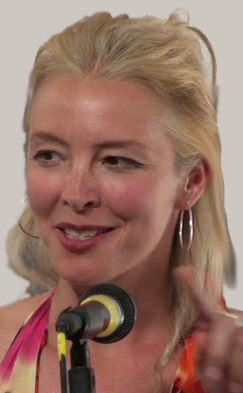
 Thank you for the first place award Kiffer, David and staff, and for all the important work you do.