The Goethe Book Awards recognize emerging new talent and outstanding works in post-1750s Historical Fiction. The Goethe Book Awards is a division of the Chanticleer International Book Awards (The CIBAs).
The Goethe Book Awards competition is named for Johann Wolfgang von Goethe who was born at the dawn of the new era of enlightenment on August 28, 1749.
Chanticleer International Book Awards is looking for the best books featuring Late Period Historical Fiction. Regency, Victorian, 18th Century, 19th Century, 20th Century, World and other wars before the 20th century, history of non-western cultures, set after the 1750s, we will put them to the test and choose the best among them. For 20th century Wartime Fiction, see our new Hemingway Awards here.
These titles have moved forward in the judging rounds from all 2021 Goethe Late Historical Fiction entries to the 2021 Goethe Book Awards LONG LIST. Entries below are now in competition for 2021 Goethe Shortlist. The Short Listers will compete for the Semi-Finalist positions. Finalists will be selected from the Semi-Finalists. All FINALISTS will be announced and recognized at the Chanticleer Authors Conference (CAC22).
The First Place Category Winners, along with the CIBA Division Grand Prize winners, will be selected from the 24 CIBA divisions’ Finalists.
We will announce the 1st Place Category winners and Grand Prize Division Winners at the CIBAs Banquet and Ceremony on Saturday, June 25th, 2022 at the luxurious Hotel Bellwether in Bellingham, Wash. sponsored by the 2022 Chanticleer Authors Conference–whether virtual, hybrid, or in-person.
These titles are in the running for the SHORT LIST of the 2021 Goethe Book Awards novel competition for Post-1750s Historical Fiction!
Join us in cheering on the following authors and their works in the 2021 CIBAs.
Sandra Vasoli – The Masterpiece Pursuit
J.G. Schwartz – The Curious Spell of Madam Genova
Andrew Schafer, M.D. – Unclean Hands
Leah Angstman – Falcon in the Dive
Margaret Rodenberg – Finding Napoleon: A Novel
Anna Bullock – The Companion
Margaret Porter – The Limits of Limelight
Pamela Nowak – Never Let Go
Michael J. Coffino – Truth Is in the House
Georgia Nicolle – Maiden Scars
Paula Butterfield – The Goddesses of Tenth Street
Adele Holmes, M.D. – Winter’s Reckoning
Tammy Pasterick – Beneath the Veil of Smoke and Ash
Ron Singerton – The Refused
Alice McVeigh – Susan: A Jane Austen Prequel
Jodi Lea Stewart – Triumph, a Novel of the Human Spirit
S. Lee Fisher – Becoming Olive W. – The Women of Campbell County: Family Saga: Book 1
Victoria Laurienzo – Toolie
Drema Drudge – Victorine
Sophia Alexander – Silk: Caroline’s Story
Lorelei Brush – Chasing the American Dream
Lee Hutch – Molly’s Song
Julie Weary – Skeleton World
Orna Ross – After the Rising & Before the Fall
Alfred Nicols – Lost Love’s Return
Glen Craney – The Cotillion Brigade: A Novel of the Civil War and the Most Famous Female Militia in American History
Bryan Ney – Absaroka War Chief
Emmett J Hall – Runaway
Jenni L. Walsh – A Betting Woman: A Novel of Madame Moustache
Dana Mack – All Things That Deserve to Perish
Pamela Hamilton – Lady Be Good
Adriana Girolami – The Zamindar’s Bride
Lori McMullen – Among the Beautiful Beasts
Mike Jordan – The Freedom Song
Florence Reiss Kraut – How to Make a Life: a novel
Kathleen Williams Renk – Vindicated: A Novel of Mary Shelley
Michelle Rene – Maud’s Circus
J. E. Dyer – Barons
Judith Berlowitz – Home So Far Away
PROMOTING OUR AUTHORS!
This post has been posted on the Chanticleer Facebook Page. We try to tag all authors listed here in the FB post. However, for FB to allow us to tag an author, that author must LIKE our page and Follow Chanticleer Reviews. FB rules — not ours.
We are now accepting submissions into the 2022 Goethe Book Awards for Post-1750s Historical Fiction. The 2022 CIBA winners will be announced at CAC 2023.
FLEXIBLE REGISTRATIONS ARE AVAILABLE for these challenging times.
Seating is Limited. The esteemed WRITER Magazine (founded in 1887) has repeatedly recognized the Chanticleer Authors Conference as one of the best conferences to attend and participate in for North America.
The Chatelaine Book Awards recognize emerging new talent and outstanding works in Romantic Fiction. The Chatelaine Book Awards is a division of the Chanticleer International Book Awards (The CIBAs).
Chanticleer International Book Awards is looking for the best new books featuring romantic themes and adventures of the heart, historical love affairs, perhaps a little steamy romance, and stories that appeal especially to fans of affairs of the heart to compete in the Chatelaine Book Awards (the CIBAs). We will put them to the test and choose the best among them.
These titles have moved forward in the judging rounds from all 2021 Chatelaine Romantic Fiction entries to the 2021 Chatelaine Book Awards LONG LIST. Entries below are now in competition for 2021 Chatelaine Shortlist. The Short Listers will compete for the Finalist positions. All FINALISTS will be announced and recognized at the Chanticleer Authors Conference (CAC22).
The First Place Category Winners, along with the CIBA Division Grand Prize winners, will be selected from the 24 CIBA divisions’ Finalists.
We will announce the 1st Place Category winners and Grand Prize Division Winners at the CIBAs Banquet and Ceremony on Saturday, June 25th, 2022 at the luxurious Hotel Bellwether in Bellingham, Wash. sponsored by the 2022 Chanticleer Authors Conference–whether virtual, hybrid, or in-person.
These titles are in the running for the SHORT LIST of the 2021 Chatelaine Book Awards novel competition for Romantic Fiction!
Join us in cheering on the following authors and their works in the 2021 CIBAs.
Jayne Castel – Highlander Deceived
Anna Gomez and Kristoffer Polaha – Moments Like This
Valerie Taylor – What’s Not Said — A Novel
Lindy Miller – Aloha With Love
Alex Sirotkin – The Long Desert Road
Evie Alexander – Highland Games
Jared Morrison – Of Dreams and Angels
M. C. Bunn – Where Your Treasure Is
A.D. Brazeau – Love Between the Lines
Chera Thompson & NF Johnson – A Time to Wander
A. L. Cleven – Running Into Mountains
Meredith Pechta – Political Theatre
Brooke Skipstone – Crystal’s House of Queers
Bobbi Groover – Inside the Grey
Pierre G. Porter – 49 So Fine
Liz Whitehurst – Messenger
Elizabeth St. Michel – Surrender the Storm
Susan Faw – Bone Dragon
Kelle Z. Riley – Read My Lips
Kana Wu – No Secrets Allowed
John W. Feist – The Color of Rain
Chris Karlsen – The Ack Ack Girl
Edie Cay – The Boxer and the Blacksmith
Emily A. Myers – The Truth About Unspeakable Things
Frannie James – The Sylvan Hotel, A Seattle Story
Deborah Swenson – Till My Last Breath, Book One in the Desert Hills Trilogy
Adriana Girolami – The Zamindar’s Bride
Phillip Vega – Searching for Sarah
Emma Lombard – Discerning Grace
F. E. Greene – In the Sweet Midwinter
HK Jacobs – Wilde Type
PROMOTING OUR AUTHORS!
This post has been posted on the Chanticleer Facebook Page. We try to tag all authors listed here in the FB post. However, for FB to allow us to tag an author, that author must LIKE our page and Follow Chanticleer Reviews. FB rules — not ours.
FLEXIBLE REGISTRATIONS ARE AVAILABLE for these challenging times.
Seating is Limited. The esteemed WRITER Magazine (founded in 1887) has repeatedly recognized the Chanticleer Authors Conference as one of the best conferences to attend and participate in for North America.
One of the most frequent questions we hear at Chanticleer is “What division should I submit my story to?” All our divisions are divided by genre and sub-genres. Some can be pretty tricky to parse. For example, is your mystery novel a Not-So-Cozy Mystery, a Thriller, or a Global Thriller?
First a breakdown on our Awards program genres, and then let’s talk about why it’s important for authors to understand their own genre.
The Chanticleer Int’l Book Awards (CIBAs)
We currently have 24 different divisions! Six of those are Non-Fiction, and the other 18 are some flavor of Fiction. You can see all of our Awards Divisions here. We’ll start with a focus more on the general sections on our website which are as follows:
Speculative Fiction
Mystery, Suspense, Thriller
Young Adult or Children’s Literature
Historical Fiction
Literary and Contemporary
Romantic Fiction
And, of course, Non-Fiction
Remember we have the Shorts and Series Awards, too, but both of those focus within these genres above. There’s a huge swath of other genres, hence each of the above categories being broken into at least three different genres, but that’s a good place to start.
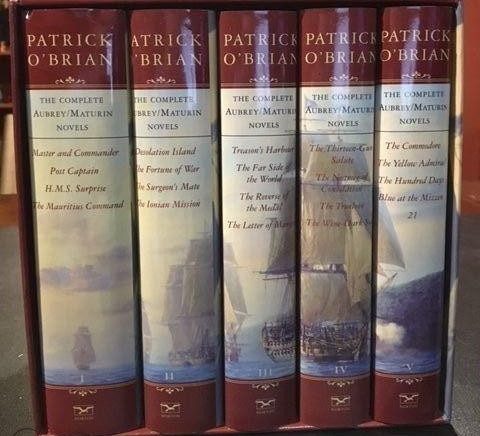
The Complete Aubrey – Maturin Novels Set – 21 complete novels – Kiffer likes how the covers create a scene. And, yes, she has read the complete series.
Patrick O’Brien’s Jack Aubrey and Stephen Maturin series crosses many genres: Historical fiction, action/adventure fiction, romance (yes, romance), military fiction, etc.
The series starts in 1800 with the Napoleonic Wars and carries through to the Battle of Waterloo in late 1815.
Some say Aubrey and Maturin are the inspiration for “inseparable fictional duos” such as Kirk and Spock of the original Star Trek TV series (79 episodes) by Gene Roddenberry, Holmes and Watson sixty stories by Arthur Conan Doyle, Joe Leaphorn and Jim Chee of the award-winning Navajo Nation mystery series by Tony Hillerman, and Walt Longmire and Henry Standing Bear of theLongmire novel series.
Understanding Genre:
When writing in general, it helps to think of your work in terms of different points of view. Often English teachers will refer to this as the Rhetorical Situation of your writing, which comes in the following parts:
Audience: Who will be reading it? This is more than people who buy your book, but also your writing group, beta readers, professional editors you pay, agents, publishing editors, bookstore employees, and then the specific people to who your book will appeal.
Medium: Quite literally what is it written on and how it is delivered. Paper, ebook, audiobook, graphic novels, hybrid.
Message: What it says
Genre: The conventions and context regarding how this information is typically presented
Purpose: The intention of the writing
Naturally, we’re going to focus on Genre here.
Take a moment and consider this question: What is Genre? It may even be worth pausing to write down your thoughts before continuing.
It’s a little more complicated than “Apples and Oranges”
In “Dukes, Deaths, and Dragons: Editing Genre Fiction” from What Editors Do, Tor Executive Editor Diana Gill Diana Gill asks the same question, and she provides her own answer:
“What is genre? Merriam-Webster defines it as ‘a category of artistic, musical, or literary composition characterized by a particular style, form, or content.’ Genres of fiction include mystery, science fiction, romance, fantasy, westerns, erotica, and horror. Genre fiction can be commercial, it can be literary—and it can be both.”
A quick internet search shows that there are typical standards for most genres when it comes to word count, which can help when plotting or editing your work. Let’s look at that genre list from before, but add in word counts:
You can read up on some more of the general rules of genre in this older, but still worthwhile blog from Ruth Harris here.
Standard word counts for different genres are important to keep in mind as knowing how long your novel is affects your storytelling!
Speculative Fiction 90,000-120,000
Mystery 70,000-90,000
Young Adult 50,000-80,000 (much shorter for Early Readers and Middle Grade)
History 100,000
Literary 100,000
Romance, 50,000 + (shorter is usually better for romance)
Non-Fiction is a little too varied to put a fine point on it. George Saunders tells his reader in A Swim in a Pond in the Rain that he received “the Cornfeld Principle” from movie producer Stuart Cornfeld, which states:
“[E]very structural unit needs to do two things: (1) be entertaining in its own right and (2) advance the story in a non-trivial way.”
George Saunders
If your story is excessively long, it may be worth it to look at entire chapters and ask yourself that question. At best, you may find out you have two books, or as we have seen here at Chanticleer, three books instead of one, but no matter what happens your story will probably be stronger for it.
A reminder from Kiffer: Remember each chapter should have its own story arc and should end in such a way that the reader can’t wait to indulge in the next chapter as the story develops its overall arc.
Each story within a series should contain a portion of the overall arc of the series.
This works for whatever genre or genre’s you are working in—even those with fractured time-lines.
What is the point of genre, or, put another way, who uses genre?
This goes back to the question of Audience when we consider a book. Remember who we said might be reading this with an eye toward genre:
Your Writing Circle
Beta Readers
Professional Editors
Agents
Publishing Editors
Bookstore employees
Distributors (the gauntlet of a successful sales strategy)
ISBN – & Cataloging
Library of Congress
Copyright
Your Readers!
While understanding the genre can help you with narrative conventions and writing decisions, writing in a genre also establishes an unspoken contract between you and the reader. If you break the contract, your readers might be a little frustrated with you. That said, common forms of genre blending can be found in Young Adult Fiction, Middle Grade Fiction, and Romance Fiction.
You might be asking why on earth you would need to even bother with a genre when all you want to do is reach your readers directly. Well, there’s a simple answer…
Marketing! Marketing! Marketing!
What will you do to help your book be discovered?
Knowing your genre not only helps you understand the conventions (like length) for what you are writing, but it also helps readers find your book. Think about when you go into a bookstore. Is there a section you automatically beeline for? Do you look to see if they’ve separated out Horror from SciFi and Fantasy instead of putting it all in Speculative Fiction? Are you a frequent peruser of the Local Author shelves? Having clear sections and genres (even more abstract ones like Local Authors) helps to orient your reader to best find your book!
Author Platform = Discoverability
In spite of how having a clear genre can help book sales, we often hear is that someone’s book defies genre, or it can only be described as the most literary fiction around, or it just doesn’t fit one of the 24 Awards divisions we offer. Well, those authors aren’t alone in that feeling.
An interesting example of this is Kazuo Ishiguro’s book The Buried Giant. Ishiguro seemed to be reluctant to call the book fantasy, and indeed you’ll find it in the general fiction section of most book stores. (The same is true for his book Klara and the Sun, which is narrated by a robot, but somehow not science fiction.) Ursula K. LeGuin, a fervent champion of genre fiction, had this to say:
“Familiar folktale and legendary ‘surface elements’ in Mr Ishiguro’s novel are too obvious to blink away, but since he is a very famous novelist, I am sure reviewers who share his prejudice will never suggest that he has polluted his authorial gravitas with the childish whims of fantasy.” (Read the full Guardian article detailing this here)
The Brilliant Ursula K. Le Guin
So What Does Genre Do?
Genre is a form of categorization that helps people sell your books. Ishiguro, as the winner of the Nobel Prize in Literature can sell work on his name alone. And using a genre isn’t so bad! Think about times that you’ve queried for your manuscripts or even when you see people pitching their work on Twitter’s #pitmad event. You see books advertised saying:
The next Harry Potter!
Jack Reacher fans have found their new series!
Friends of Tolkien fantasy will be happy here!
Perfect for Star Trek and Star Wars fans alike!
While these claims may be less original than agents and publishers would like, they get the idea of genre across, and if you’re familiar with those titles you know exactly the kinds of books being described without even reading a summary.
Then there is the advice of J.D. Barker, Master of Suspense
CROSSING GENRES and WHY YOU SHOULD DO IT!
J.D. Barker asked his attendees at his presentation at a Chanticleer Authors Conference session, “What do you write? Thrillers? Mysteries? Paranormal?”
Hands were flying up. Then he asked, “Horror?” Sharon Anderson’s hand flew up. He looked at her for a couple of seconds and said, “I guess you’ll be happy with not making much money, then.”
Say What?
He went on to explain how authors limit their audiences when they use certain words. Horror, it turns out, is one of those words. Many people read thrillers, quite a few read mystery novels, and who doesn’t like a good paranormal? But when you say “horror,” people tend to shy away. Sure, you’ll get your fans. But, as Barker adroitly pointed out, you may not get those readers who love the other genres – and would most likely love what you have to offer, too.
This is important because your horror novel may contain elements of a thriller – why wouldn’t it? Likewise, your novel probably has a storyline that needs solving. The point J.D. was making is this – don’t scare away your readers by telling them your novel is only one thing. Think carefully about your marketing and promote your work in such a way as to garner the largest appeal. (Read the full interview with J.D. in our magazine.)
JD Barker presents at CACs and VCACs.
Having a flexible genre that fits into a more popular one (consider paranormal and horror or paranormal and romance) has the potential to greatly expand your readership.
If you’re having trouble identifying your genre and need another pair of eyes on your work, you can always sign up for one of our Manuscript Overviews here.
Keep an eye out!
Did you enjoy this article? We’re planning on doing a series breaking down the ins and outs of different genres in a series of Genre Deep Dives to help you know if your work is a police procedural or a cozy mystery – or whatever else you might be writing!
Thank you for spending part of your writing day with Chanticleer Reviews!
Chanticleer Editorial Services – when you are ready
Did you know that Chanticleer offers editorial services?We do and have been doing so since 2011.
Tools of the Editing Trade
Our professional editors are top-notch and are experts in the Chicago Manual of Style. They have and are working for the top publishing houses (TOR, McMillian, Thomas Mercer, Penguin Random House, Simon Schuster, etc.).
If you would like more information, we invite you to email Kiffer or Sharon at KBrown@ChantiReviews.com or SAnderson@ChantiReviews.com for more information, testimonials, and fees.
We work with a small number of exclusive clients who want to collaborate with our team of top editors on an ongoing basis.Contact us today!
Chanticleer Editorial Services also offers writing craft sessions and masterclasses. Sign up to find out where, when, and how sessions being held.
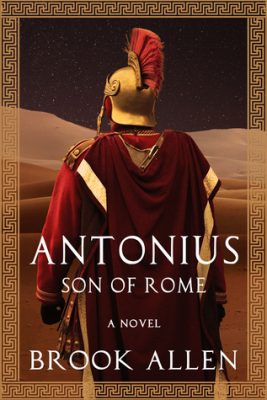
Antonius: Son of Rome by Brook Allen focuses on one of history’s most vexing and perplexing figures, Marc Antony. It is also inevitably a prism on modern American politics, with its characters behaving duplicitously, greedily, and ignobly while spinning up service to the greater good.
Historians often cite Antony as a controversial figure whose accomplishments and flaws have been noted by his enemies. Yet, he is as compelling as Richard III or Richard Nixon, with gaps in the accounts of his life that create grounds for curiosity and speculation as to how he became the pivotal figure in western history that he is. Allen weaves a wonderfully realistic and organic story of how a boy grows up desperate and bitter in a disgraced patrician family yet desperately transmutes mistake and tragedy into military achievement.
Marcus Antonius was the eldest of three male children of his namesake father, Marcus Antonius, and Julia Antonia. Of noble birth in Republican Rome, the novel begins as eleven-year-old Marcus learns of his father’s fatal illness, a man who had failed in his duty to govern overseas provinces. His actions as provincial governor – extorting gold from those he should protect, then failing to commit suicide as a Roman general should when such disgrace is discovered – angered the Senate and left his widow and orphans to bear his dishonor.
Young Antonius vows to restore honor to the family name.
He commits to instruction in military practices and interacts with a cast of relatives and characters who aid him and provide additional problems with their political intrigues. His distant cousin, Gaius Julius Caesar, gifts him with a slave who becomes trainer and friend. But young Antonius also acquiesces to baser pursuits, becoming involved, with two other young Roman men of noble birth, in a brothel and gaming club where he indulges copiously. He begins to accrue gambling debts, which lead him to desperation as his moneylender demands repayment that the family’s modest wealth cannot meet. Roman proprieties and political savagery come together as his mother remarries. A plot to rebel against the Republican order includes his new stepfather, whom Antonius has come to esteem, and one of his brothel compatriots. The plot’s failure leads to his stepfather’s death and additional contempt for his family. Even his own joy sows horror; he frees and marries a family slave, only for her to be murdered by his usurious moneylender. Despondent and concerned for the others in his family, he is convinced by his cousin, Caesar, to study abroad in Greece, where his fortunes change.
Allen makes historical Rome real.
She brings to life areas readers might be familiar with, but she also takes us into the homes and less-pleasant places in mid-first-century BC Rome. From murder dungeons to strolls along the Palatine, receiving guests at a family Domus, and the daily interactions of Roman nobles and plebians and slaves, the perspective of young Antonius provides insight to a time two millennia distant and yet of human behavior not much different. As familiar names like Cicero and Caesar and Ptolemy plot and scheme and inveigle for personal glory with the lives of people they disregard in the balance, it’s difficult not to transfer young Antonius’s learning experience into our own era where the covetousness remains pervasive. The backstabbing is only slightly less literal.
Indeed, the novel’s strength lies not in the admirable accuracy of its descriptions and accounts but in Allen’s ability to place the reader directly in the head of her hero. Perhaps it’s difficult to think of a man who drinks, fornicates, and wagers excessively as a hero – but Marcus Antonius relies on honor in most instances, including when it may be to his detriment. As readers share his journey from the Domus Antonii to Alexandria, many will come to understand his philosophy and may be swayed.
Steeped in history, but more than fiction, Antonius: Son of Rome ultimately invites readers to visit another place and time.
Allen presents a flawed but sympathetic character to an enigmatic two-dimensional historical figure that will appeal equally to those already inclined to Roman history and those who might be just as inclined to the modern singer. Antonius: Son of Rome took home 1st Place in the CIBA 2020 Chaucer Awards for Early Historical Fiction.
The Chaucer Book Awards recognize emerging new talent and outstanding works in pre-1750s Historical Fiction. The Chaucer Book Awards is a division of the Chanticleer International Book Awards (The CIBAs).
The Chaucer Book Awards competition is named for Geoffrey Chaucer the author of the legendary Canterbury Tales. The work is considered to be one of the greatest works in the English language. It was among the first non-secular books written in Middle English to be printed in 1483.
Chanticleer International Book Awards is seeking for the best books featuring Pre-1750s Historical Fiction, including pre-history, ancient history, Classical, world history (non-western culture), Dark Ages and Medieval Europe, Renaissance, Elizabethan, Tudor, 1600s, we will put them to the test and choose the best among them.
These titles have moved forward in the judging rounds from all 2021 Chaucer Early Historical Fiction entries to the 2021 Chaucer Book Awards LONG LIST. Entries below are now in competition for 2021 Chaucer Shortlist. The Short Listers will compete for the Finalist positions. All FINALISTS will be announced and recognized at the Chanticleer Authors Conference (CAC22).
The First Place Category Winners, along with the CIBA Division Grand Prize winners, will be selected from the 17 CIBA divisions’ Finalists.
We will announce the 1st Place Category winners and Grand Prize Division Winners at the CIBAs Banquet and Ceremony on Saturday, June 25th, 2022 at the luxurious Hotel Bellwether in Bellingham, Wash. sponsored by the 2022 Chanticleer Authors Conference–whether virtual, hybrid, or in-person.
These titles are in the running for the SHORT LIST of the 2021 Chaucer Book Awards novel competition for Pre-1750s Early Historical Fiction!
Join us in cheering on the following authors and their works in the 2021 CIBAs.
John A. Martino and Michael P. O’Kane – Olympia: The Birth of the Games
B.L. Smith – The Last Golden Light
Alana White – Medici Man: The Hearts of All on Fire
Griffin Brady – The Heart of a Hussar
Leah Angstman – Out Front the Following Sea
James Conroyd Martin – Too Soon the Night: A Novel of Empress Theodora(The Theodora Duology Book 2)
David Martyn – The Epistle a Story of the Early Church
Vivienne Brereton – The House of the Red Duke. Book One: A Phoenix Rising
PJ Devlin – The Chamber
Virginia Crow – The Year We Lived
David Fitz-Gerald – The Curse of Conchobar: A Prequel to the Adirondack Spirit Series
Seven Jane – The Isle of Gold
Janet Wertman – The Boy King
Wendy J. Dunn – Falling Pomegranate Seeds: All Manner of Things
Edward Rickford – The Bend of the River: Book Two in the Tenochtitlan Trilogy
Sherry V. Ostroff – Mannahatta, The Sequel
James Hutson-Wiley – The Travels of ibn Thomas
Tim Schooley – The Wool Translator
Patricia Bracewell – The Steel Beneath the Silk
Gail Meath – Countess Jacqueline
Ron Destro – The Starre, the Moone, the Sunne
Rebecca D’Harlingue – The Lines Between Us: A Novel
Amy Wolf – A Woman of the Road and Sea
Toni Kief – Saints, Strangers and Rosehip Tea
Kelly Nichols and Alyn Rockwood – Beyond the Dragonhead
PROMOTING OUR AUTHORS!
This post has been posted on the Chanticleer Facebook Page. We try to tag all authors listed here in the FB post. However, for FB to allow us to tag an author, that author must LIKE our page and Follow Chanticleer Reviews. FB rules — not ours.
We are now accepting submissions into the 2022 Chaucer Book Awards for Pre-1750s Early Historical Fiction. The 2022 CIBA winners will be announced at CAC 2023.
FLEXIBLE REGISTRATIONS ARE AVAILABLE for these challenging times.
Seating is Limited. The esteemed WRITER Magazine (founded in 1887) has repeatedly recognized the Chanticleer Authors Conference as one of the best conferences to attend and participate in for North America.
Wow. Indeed, I was humbled by such a fantastic review of my book. In fact, thought I’ve had some excellent reviews, this one surpassed them all. I thank you so much for reading and recommending my work to others. I know my editor Jenny Quinlan, will be enthralled, as well.
Author of The Shepherd’s Burden, a First Place Winner in Paranormal Awards
Your passion for storytelling and your dedication to those that tell them is second to none! Not even a global pandemic could stop you. Thank you for all that you do to promote and support independent authors, such as myself.
I can’t imagine the work that must go into getting all of these books read and judged…congratulations on you and the entire CIBA team for doing such an outstanding job.













 Antonius: Son of Rome by Brook Allen focuses on one of history’s most vexing and perplexing figures, Marc Antony. It is also inevitably a prism on modern American politics, with its characters behaving duplicitously, greedily, and ignobly while spinning up service to the greater good.

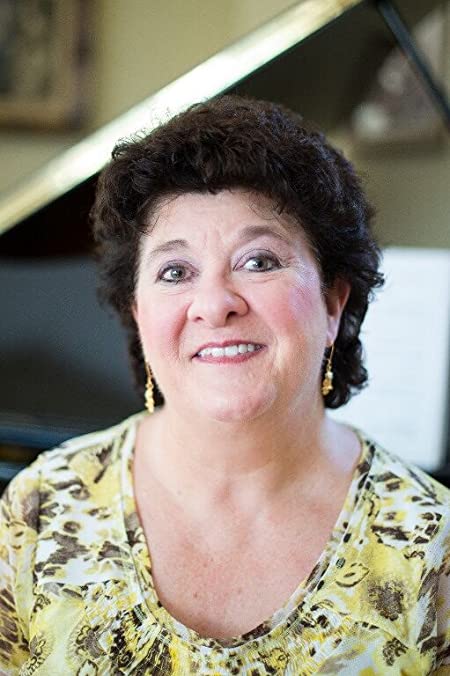
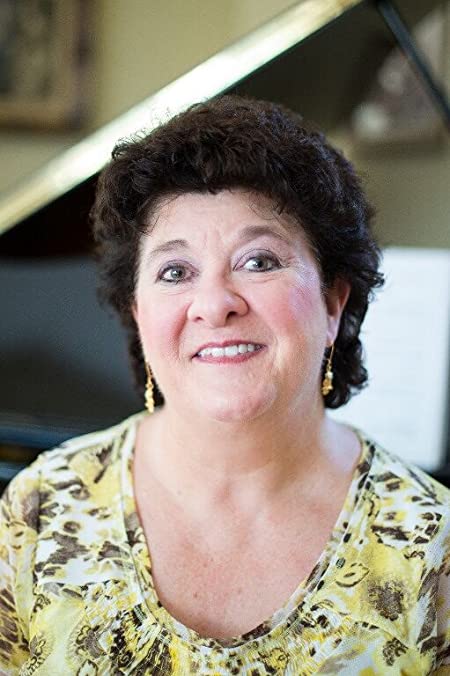 Wow. Indeed, I was humbled by such a fantastic review of my book. In fact, thought I’ve had some excellent reviews, this one surpassed them all. I thank you so much for reading and recommending my work to others. I know my editor Jenny Quinlan, will be enthralled, as well.
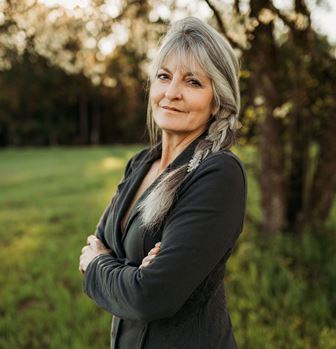
 I can’t imagine the work that must go into getting all of these books read and judged…congratulations on you and the entire CIBA team for doing such an outstanding job.