One young Black woman turns detective when she realizes her family is in jeopardy in Abena Sankofa’s debut novel, Up North.
Teenage songbird Phyllis Joiner dreamed of one day seeing the glamorous North. But when her Uncle has been apprehended for an alleged crime, her wish may be about to be granted in the most distressing manner, beginning in 1933.
Phyllis Joiner always managed to get in trouble in one form or other. But she has no idea what ‘trouble’ will look like. Nineteen-year-old Phyllis is well-known for her spirited singing and piano playing in her Pa’s joint – “Daddy Joiner’s” local Music Club in Colchester County, Louisiana. But the Joiners live in a county where black schools do not go beyond the middle grade, and white supremacy rules the land.
Problems multiply when Phyllis’ Uncle, Zachariah, has been apprehended for an alleged crime.
His accuser, the notoriously ruthless landowner Smith Owens, isn’t interested in justice, but something else entirely. He has a reputation for getting all who cross him jailed and worked to death on his land.
In a rare twist of fate for the Joiners, an African-American family in the Jim Crow South, they take their case to the court and win, but it turns out to be a Pyrrhic victory when a chilling threat letter arrives in the mail, warning them to pay $250 or “Get what’s coming to you on the Full Moon.” The tattered note is signed in none other than Smith Owens’ hand. Now even their congenial white neighbors do not want to be seen speaking to her family after they have been “marked” for retaliation by the Owens’ minions.
Phyllis’ Pa, who had already lived through voting riots when he was a boy, fears that a new riot will be around the corner if he doesn’t take appropriate action. And the situation with Phyllis’s education heading nowhere also bothers him, so Pa makes up his mind that the time has come for the Joiners and their extended families to sneak out of Colchester County. They plan to leave “by the light of the full moon” (which happens to be the end of the “death threat” letter’s grace period) to Chicago, where Ma Joiner’s sister, Ruth, lives.
The timing must coincide perfectly, especially since Pa could only procure train tickets to take them as far as St. Louis.
The family would need “agents” who could safely guide them to their destination. The Phantom Menace would be their last contact, getting them into the Black Belt of Chicago. Little do the Joiners know what harrowing adventures await them along the way, and even more once they get to Chicago. Although positive events occur, like Phyllis attending nursing school, and falling for a handsome Fairground officer, no amount of fitting in with the ways of the big city can protect her for long from her family’s hunted status.
When Smith Owens and his adult sons arrive in Chicago, he makes a deadly pact with one of the Windy City’s most terrible crime syndicates in a bid to hunt down the Joiner family for the location of a mysterious treasure he believes them to have inherited.
Now it falls to teenage Phyllis Joiner to turn sleuth, and track them down before they find her family – a goal that tosses her into the gritty reality of what it means to live “Up North” in the Windy City. It’s a reality that will force her to cast aside her lofty expectations, and become the Captain of her own fate, and her family’s protector in the process.
Enter Willard Lancaster, the Joiner family’s red-headed lawyer, a rebellious, street-smart scion attracted to any dangerous pursuit for a worthy cause. A throwback to his Abolitionist predecessor, he throws in his lot with Phyllis Joiner on her way to defend her family, only to find himself in the crosshairs of his own uncle’s wrath.
Rising author Abena Sankofa pens a fascinating story of one young Black woman’s “underground” journey from Louisiana to Chicago and ultimate sleuthing to protect her family from bounty hunters.
Sankofa provides a small but realistic cast set within the precarious years of The Great Migration. Her writing style varies from light to downright nail-biting. Phyllis (Sankofa’s heroine) performs in her father’s music clubs, faces harassment at nursing school, and falls in love – all amid several life-threatening situations.
Sankofa punctuates her fictional plot with factual information. Examples include a mix-and-match of Chicago’s expositions, maps that outline the Black Belt area of Chicago, and “patrons” (guardians, so to speak) to keep watch over Black neighbors. Even though the Black quarter of the city is a safe haven for her, at the all-Black Nursing School which she makes it into, Phyllis faces pressure from classist schoolmates. One particularly striking aspect is the generational viewpoints of Black history. Phyllis’s grandmother tells of the symbolism behind quilt making. Pa recollects sharecropping days and riots over voting rights. Both grandmother and father provide essential nuances of what Phyllis’s ancestors endured on the way to their freedom – all of which Phyllis should never forget even as she races to uncover the location of a rumored family inheritance worth millions.
Sankofa’s approach to storytelling preserves truth.
As she produces a story of perseverance and strength amid a burgeoning romance, she includes music from the gilded Jazz Age and classics that appropriately enhance her narrative. Some favorites include W. C. Handy‘s “When the Saints Go Marching In” and “St. Louis Blues,” and George and Ira Gershwin‘s “I’ve Got Rhythm,” Benny Goodman and his Orchestra‘s “Sing, Sing, Sing (With a Swing),” and Ella Fitzgerald‘s “They Can’t Take That Away from Me,” to name a few.
Up North will touch a nerve and claim a place in today’s world. In short, Abena Sankofa’s debut novel is nothing short of brilliant and a novel we can highly recommend.
**Please Note: This author is currently seeking representation. Follow the process on Sankofa’s website by clicking here.
The Clue Book Awards recognize emerging new talent and outstanding works in Suspese and Thriller Mysteries. The Clue Book Awards is a division of the Chanticleer International Book Awards (The CIBAs).
Chanticleer International Book Awards is seeking the best books featuring suspense, thrilling adventure, detective work, private eye, police procedural, and crime-solving, we will put them to the test to discover the best! (For lighter-hearted Mystery and Classic Cozy Mysteries please check out our Mystery & Mayhem Awards, and for High Stakes Suspense Novels please check out our Global Thriller Awards).
These titles have moved forward in the judging rounds from all 2021 Clue Suspense/Thriller Fiction entries to the 2021 Clue Book Awards LONG LIST. Entries below are now in competition for 2021 Clue Shortlist. The Short Listers will compete for the Semi-Finalist positions. Finalists will be selected from the Semi-Finalists. All FINALISTS will be announced and recognized at the Chanticleer Authors Conference (CAC22).
The First Place Category Winners, along with the CIBA Division Grand Prize winners, will be selected from the 24 CIBA divisions’ Finalists.
We will announce the 1st Place Category winners and Grand Prize Division Winners at the CIBAs Banquet and Ceremony on Saturday, June 25th, 2022 at the luxurious Hotel Bellwether in Bellingham, Wash. sponsored by the 2022 Chanticleer Authors Conference.
These titles are in the running for the SHORT LIST of the 2021 Clue Book Awards novel competition for Thriller/Suspense Fiction!
Join us in cheering on the following authors and their works in the 2021 CIBAs.
Tom Galvin – The Auction
Steph Mullin and Nicole Mabry – The Family Tree
Lynn Yvonne Moon – The Agency – Tablet of Destiny
Alicia Dill – Beyond Sacrifice
Tony Ollivier – The Amsterdam Deception
J. Luke Bennecke – Waterborne
AJ Thibault – Deadly Serious
Jane Rosenthal – Del Rio
Chuck Morgan – Crime Exploded, A Buck Taylor Novel
Bryn Smith – Magnus Nights: The Helios Incident
James A. Ross – Coldwater Revenge
John Stafford – Call of Vengeance Series, Book 4: A Hand of Vengeance
T.L. Bequette – Good Lookin’: A Joe Turner Mystery
Ernesto H Lee – Flawed Beauty
Justin M. Kiska – Now & Then
Amy S. Peele – Match: A Medical Murder Mystery
Leah Angstman – Falcon in the Dive
Erik Foge – We Know Your Name
Kevin G. Chapman – Fatal Infraction (Mike Stoneman Thriller #4)
Rip Converse – Callie Awakens
Jule Selbo – 10 Days, A Dee Rommel Mystery
Emily A. Myers – The Truth About Unspeakable Things
D. J. Adamson – Into The Storm
Roberta Seret – Gift of Diamonds
Susan Lynn Solomon – What’s Past is Prologue
Rhett C Bruno – The Roach
Mary Keliikoa – Denied
Lyle Howard – An Eye For An Eye
Laurie Buchanan – Indelible: A Sean McPherson Novel, Book One
Robert Honor – Bogart’s Hat
Valerie J. Brooks – Tainted Times 2
Shelley Nolden – The Vines
Chuck Morgan – Crime Conspiracy: A Buck Taylor Novel
PROMOTING OUR AUTHORS!
This post has been posted on the Chanticleer Facebook Page. We try to tag all authors listed here in the FB post. However, for FB to allow us to tag an author, that author must LIKE our page and Follow Chanticleer Reviews. FB rules — not ours.
For lighter-hearted Mystery and Classic Cozy Mysteries please check out our Mystery & Mayhem Awards, and for High Stakes Suspense Novels please check out our Global Thriller Awards
Winners will be announced at the 2021 CIBA Awards Ceremony that is sponsored by the 2022 Chanticleer Authors Conference.
FLEXIBLE REGISTRATIONS ARE AVAILABLE for these challenging times.
Seating is Limited. The esteemed WRITER Magazine (founded in 1887) has repeatedly recognized the Chanticleer Authors Conference as one of the best conferences to attend and participate in for North America.
The Global Thriller Book Awards recognize emerging new talent and outstanding works in Supernatural Fiction. The Global Thriller Book Awards is a division of the Chanticleer International Book Awards (The CIBAs).
Chanticleer Book Reviews is looking for the best books featuring suspense, thrilling stories that put the balance of world power or that will end the world as we know it. We include with Global Thrillers the Lab Lit genre. Lab Lit is when Fiction Meets Real Science and Research or stories that are based on real science and research up to a certain “what if” point.
These titles have moved forward in the judging rounds from all 2021 Global Thriller High Stakes Fiction entries to the 2021 Global Thriller Book Awards LONG LIST. Entries below are now in competition for 2021 Global Thriller Shortlist. The Short Listers will compete for the FINALIST positions. Finalists will be selected from the Short List. All FINALISTS will be announced and recognized at the Chanticleer Authors Conference (CAC22).
The First Place Category Winners, along with the CIBA Division Grand Prize winners, will be selected from the 24 CIBA divisions’ Finalists.
We will announce the 1st Place Category winners and Grand Prize Division Winners at the CIBAs Banquet and Ceremony on Saturday, June 25th, 2022 at the luxurious Hotel Bellwether in Bellingham, Wash. sponsored by the 2022 Chanticleer Authors Conference.
These titles are in the running for the SHORT LIST of the 2021 Global Thriller Book Awards novel competition for High Stakes Fiction!
Join us in cheering on the following authors and their works in the 2021 CIBAs.
Kristie Clark – Killing Dragons
Kristie Clark – Dragon Clan
Dimple Patel Desai – The Lambda Factor
Paul Mark Tag – Retribution Times Two
Timothy S. Johnston – Fatal Depth
Ron McManus – The Chameleon
Gordon Bickerstaff – Tears of Fire
John Stafford – A Hand of Vengeance
Andrew Kaplan – Blue Madagascar
Roberta Seret – Treasure Seekers
Spaulding Taylor – Last Star Standing
Norman M. Jacobs, MD, Ms – A Divine Wind
Randall Krzak – Mission: Angola (Xavier Sear Thriller Book 1)
Stu Jones & Gareth Worthington – Condition Black
Avanti Centrae – The Doomsday Medallion
E. R. Barr – Gods In The Ruins: A Vatican Archives Thriller
Richard Garis – Magenta is Missing
Joe McNeil – Confronting the Enemy
Kevin Wilde – The Rookie and the Raven
J Lawrence Matthews – One Must Tell The Bees
Stu Jones & Gareth Worthington – Condition Black
PROMOTING OUR AUTHORS!
This post has been posted on the Chanticleer Facebook Page. We try to tag all authors listed here in the FB post. However, for FB to allow us to tag an author, that author must LIKE our page and Follow Chanticleer Reviews. FB rules — not ours.
We are now accepting submissions into the 2022 Global Thriller Book Awards for High Stakes Fiction. The 2022 CIBA winners will be announced at CAC 2023.
FLEXIBLE REGISTRATIONS ARE AVAILABLE for these challenging times.
Seating is Limited. The esteemed WRITER Magazine (founded in 1887) has repeatedly recognized the Chanticleer Authors Conference as one of the best conferences to attend and participate in for North America.
You can hear the clicking of keys as you type up your next report, desperate to make tomorrow’s press.
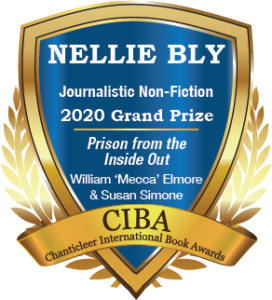
You know what’s coming. It’s the Nellie Bly Awards deadline at the end of November, and you have a book that will stop the presses! The Nellie Bly Book Awards for Investigative, Long-form Journalism, and Biographies.
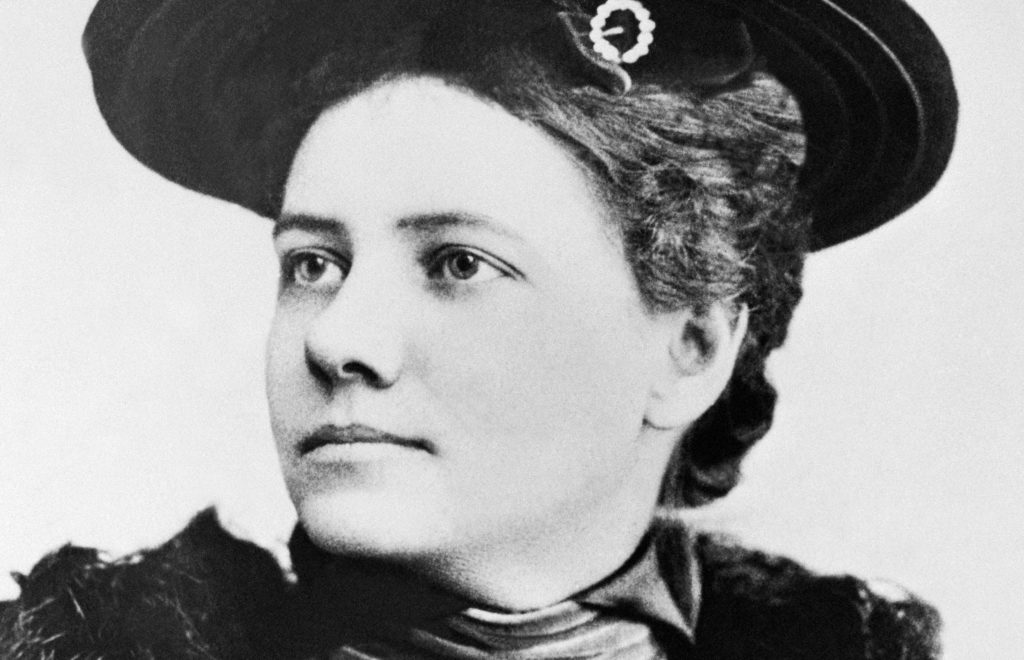
The Nellie Bly Awards are named for an American investigative journalist. Born Elizabeth Jane Cochran, Bly launched her career into the spotlight by posing as a mental patient to enter the insane asylum on Blackwell’s island. Writing her exposé on the abuses being committed there cemented her role as a leading name in investigative journalism.
Illustration of Blackwell’s Asylum
Her work had an immediate effect:
Approximately one month after her articles ran in print, many of the most glaring problems she reported had improved: better living and sanitary conditions were instituted, more nourishing meals were provided, translators were hired for the foreign born who were not necessarily mentally ill but simply could not understand their keepers, and the most abusive nurses and physicians were fired and replaced (PBS.org).
Nellie Bly – Early Life and Legacy
Before that, she began writing under the name Nellie Bly after being invited to write a regular for the Pittsburgh Dispatch. WomensHistory.org lays more of her life out here. One thing noted in several articles is that Nellie Bly chose her name from a song by Stephen Foster. You can listen to the song and see the lyrics here:
https://www.youtube.com/watch?v=fOcVjq67CsA
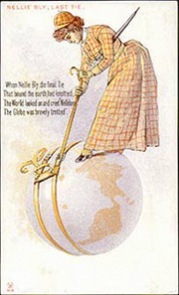
Bly “became renowned for her investigative and undercover reporting, including posing as a sweatshop worker to expose poor working conditions faced by women” (Biography.com). In addition to her excellent reporting and support for civil rights, Bly was also a bit of an adventurer. Inspired by the book Around the World in Eighty Days, her newspaper, the New York World sent her to see if she could break the fictional record. She succeeded, making the journey in only 72 days! A record that would last until 1890.
Around the World in 72 Days by Nellie Bly
Dr. Janice Ellis on The Importance of Journalism
We’ll link to the review of her book soon, but we thought we would let Janice Ellis, PhD and Nellie Bly Grand Prize winner, talk about the importance of journalism. Here’s what she has to say:
Dr. Janice Ellis
With all of the divisive and false information being communicated, the public needs Real Advocacy Journalism today more than ever. There is a growing, if not urgent, need to understand the difference between the advocacy journalism being practiced today and Real Advocacy Journalism™. More importantly, we all need to readily recognize when one or the other is at play in trying to influence public opinion, or urge a hopeful, trusting public to take a particular action.
What is the difference between advocacy journalism as it is practiced today and Real Advocacy Journalism™? Much of the advocacy journalism occurring is partisan, biased, and often blurs the lines between truth and lies, facts and fiction, and often presents fake news as real news. The purpose and objectives of this advocacy journalism constitute propaganda to gain public support for the interest and agenda of a few, a special interest group, or a small constituency rather than for the good of the majority. The public needs Real Advocacy Journalism today to put America back on the right course.
With all that in mind, let’s dive into some of the best Journalism books reviewed by Chanticleer!
SHAPING PUBLIC OPINION: How Real Advocacy Journalism™ Should be Practiced
By Janice Ellis, Ph.D.
Grand Prize in Nellie Bly Awards
Janice S. Ellis, Ph.D., introduces the journalistic theories of Walter Lippmann in her new non-fiction work,Shaping Public Opinion: How Real Advocacy Journalism™ Should be Practiced.
Walter Lippmann, considered one of the foremost journalists in the field over the last 100 years, was a mentor in absentia of Dr. Ellis in the art of advocacy journalism. During Lippmann’s 40+ year career, his columns were syndicated in over 250 newspapers nationwide and over 25 other international news and information outlets. Lippman focused on the ethical dissemination of information, especially about communities, society, and the world. A theory, which Dr. Ellis calls Real Advocacy Journalism™.
An intensely personal and compelling narrative, Waking Up Dying offers an insider’s perspective of the passage through cancer beginning with Duke’s wife’s diagnosis of stage IV glioblastoma brain cancer—typically a fatal condition.
Duke found the entire caregiving experience an agonizing, non-stop emotional rollercoaster: unbelievably frustrating, emotionally searing and increasingly chaotic.
The author’s story of his dedicated and loving role as caregiver entails four phases of this tortuous journey: the couple’sdaily copingwith the disease; the author’sstruggle through the health care system; theemotional realityof caregiving his dying wife; and thecarefully documented materialput forward as a basis for reforming the care system.
THE WINTER OLYMPICS: An Insider’s Guide to the Legends, Lore, and the Games
By Ron C. Judd
Flashbacks, gruesome accounts, victories relived, analysis, and competitors’ profiles of the Winter Olympics are revealed in Ron C. Judd’s captivating compendium titledThe Winter Olympics: An Insider’s Guide to the Legends, Lore, and the Games.
Judd doesn’t just report the scores, the times, the winners and the losers. He relays the human drama that unfolds during the Games—the glorious victories and, yes, the gut-wrenching agonies—the very stuff that becomes tomorrow’s lore and legends.
Ron C. Judd is like a Joseph Campbell of the Olympic Games. He writes of transcendent experiences, of impossible feats, and, he says, “of moments that are beyond description.” But describing these moments is exactly what he does. Judd deftly captures and vividly relates the escalation of emotions, the split-second moments that separate the winners from the losers after decades of day-in and day-out grueling training, the sweaty reality of the Olympics along with the heady glory and magic he has witnessed and experienced first-hand.
FIRE CALL! Sounding the Alarm to Save Our Vanishing Volunteers
By George DeVault
In his first job as a newspaper reporter, DeVault attended many emergencies – and firefighters were always on the scene. Gradually he discovered that the vast majority of America’s firefighters are volunteers, often leaving their regular jobs by prearrangement or rushing out from home in the middle of the night to respond to every conceivable crisis, from a simple kitchen fire to a multi-car crash to the cataclysmic events of 9-11-01.
With the encouragement of empathetic wife Melanie, also a reporter, De Vault joined the firefighting ranks as a volunteer in Emmaus, Pennsylvania, while fully immersed in his journalistic career with Rodale Inc. He answered every call, about 5,000 over a thirty year period, no matter what else was going on in his life – even on a day when Melanie was in the hospital dealing with her own emergency.
Looking to submit to our other Non-Fiction Divisions? See them all here!
When you’re ready,did you know that Chanticleer offers editorial services?We do and have been doing so since 2011.
Our professional editors are top-notch and are experts in the Chicago Manual of Style. They have and are working for the top publishing houses (TOR, McMillian, Thomas Mercer, Penguin Random House, Simon Schuster, etc.).
If you would like more information, we invite you to email Kiffer or Sharon at KBrown@ChantiReviews.com or SAnderson@ChantiReviews.com for more information, testimonials, and fees.
We work with a small number of exclusive clients who want to collaborate with our team of top-editors on an on-going basis.Contact us today!
Chanticleer Editorial Services also offers writing craft sessions and masterclasses. Sign up to find out where, when, and how sessions being held.
A great way to get started is with our manuscript evaluation service, with more information availablehere.
And we do editorial consultations for $75. Learn more here.
If you’re confident in your book, consider submitting it for a Editorial Book Reviewhereor to one of our Chanticleer International Awardshere.
And remember! Our 10th Anniversary Chanticleer Authors Conference (CAC22) will be April 7-10, 2022, where our 2021 CIBA winners will be announced. Space is limited and seats are already filling up, so sign up today! CAC22 and the CIBA Ceremonies will be hosted at the Hotel Bellwether in Beautiful Bellingham, Wash. Sign up and see the latest updates here!
CAC22 will feature Cathy Ace, Robert Dugoni, Scott Steindorff and more! We are excited!
Writer’s Toolbox
Thank you for reading this Chanticleer Spotlight article.
The Ozma Book Awards recognize emerging new talent and outstanding works in Fantasy Fiction. The Ozma Book Awards is a division of the Chanticleer International Book Awards (The CIBAs).
Chanticleer International Book Awards discovers the best books in the Ozma Awards featuring magic, the supernatural, imaginary worlds, fantastical creatures, legendary beasts, mythical beings, or inventions of fancy that author imaginations dream up without a basis in science as we know it. Epic Fantasy, High Fantasy, Sword and Sorcery, Dragons, Unicorns, Steampunk, Dieselpunk, Gaslight Fantasy, Urban Fantasy, or other out-of-this-world fiction. These books have advanced to the Long List in the 2021 CIBAs OZMA division.
These titles have moved forward in the judging rounds from all 2021 Ozma Fantasy Fiction entries to the 2021 Ozma Book Awards LONG LIST. Entries below are now in competition for 2021 Ozma Shortlist. The Short Listers will compete for the FINALIST positions. Finalists will be selected from the Short List. All FINALISTS will be announced and recognized at the Chanticleer Authors Conference (CAC22).
The First Place Category Winners, along with the CIBA Division Grand Prize winners, will be selected from the 24 CIBA divisions’ Finalists.
We will announce the 1st Place Category winners and Grand Prize Division Winners at the CIBAs Banquet and Ceremony on Saturday, June 25th, 2022 at the luxurious Hotel Bellwether in Bellingham, Wash. sponsored by the 2022 Chanticleer Authors Conference–whether virtual, hybrid, or in-person.
These titles are in the running for the SHORT LIST of the 2021 Ozma Book Awards novel competition for Fantasy Fiction!
Join us in cheering on the following authors and their works in the 2021 CIBAs.
Joseph Riddle – The Seventh Talent
Susannah Dawn – Battle for the Armor of God
Jenn Lees – The Crossing. Arlan’s Pledge Book 1
Susan Chapek – The Scarlet Mantle
Mario Chavez – The Continuous Loop
Kelly Brewer – Water Witch
P.H.C. Marchesi – Florissant
David Fitz-Gerald – Waking Up Lost
PJ Devlin – The Chamber
Laurel Anne Hill – Plague of Flies: Revolt of the Spirits, 1846
James Priest – Kirins: The Seer of Serone
Clayton Marshall Adams – The Mask
Mary K. Savarese – The Girl in the Toile Wallpaper
Allegra Pescatore – Where Shadows Lie
Anton Anderson – The Seekers: Soul Ties
KC Cowan – Asa’s Redemption
Sean March – Little Wade and Watchtower: Abigail and the Great Gang Trap
J.W. Zarek – The Devil Pulls the Strings
J.P. Hostetler – Around Curiosity’s Edge: Hidden Meridians
L. A. Thompson – Isle of Dragons
G.L. Cramb – Druid Quest: Maegics Heir, Book 1
Adron J. Smitley – Jinn
Mark A. Alvarez II – Dutybound: Light Wings Epic Vol. 1
Susan Faw – Heart of Tunise
Taylor Fenner – Monsters & Mist
S.J. Hartland – The Last Seer King
PROMOTING OUR AUTHORS!
This post has been posted on the Chanticleer Facebook Page. We try to tag all authors listed here in the FB post. However, for FB to allow us to tag an author, that author must LIKE our page and Follow Chanticleer Reviews. FB rules — not ours.
FLEXIBLE REGISTRATIONS ARE AVAILABLE for these challenging times.
Seating is Limited. The esteemed WRITER Magazine (founded in 1887) has repeatedly recognized the Chanticleer Authors Conference as one of the best conferences to attend and participate in for North America.
The Paranormal Book Awards recognize emerging new talent and outstanding works in Supernatural Fiction. The Paranormal Book Awards is a division of the Chanticleer International Book Awards (The CIBAs).
Chanticleer International Book Awards (the CIBAs) is looking for the best books Paranormal books featuring magic, the supernatural, weird otherworldly stories, superhumans (ex. Jessica Jones, Wonder Woman), magical beings & supernatural entities (ex. Harry Potter), vampires & werewolves (ex. Twilight), angels & demons, fairies & mythological beings, magical systems and elements. These books have advanced to the Long List Level of Achievement in the 2021 CIBAs.
These titles have moved forward in the judging rounds from all 2021 Paranormal Supernatural Fiction entries to the 2021 Paranormal Book Awards LONG LIST. Entries below are now in competition for 2021 Paranormal Shortlist. The Short Listers will compete for the FINALIST positions. Finalists will be selected from the Short List. All FINALISTS will be announced and recognized at the Chanticleer Authors Conference (CAC22).
The First Place Category Winners, along with the CIBA Division Grand Prize winners, will be selected from the 24 CIBA divisions’ Finalists.
We will announce the 1st Place Category winners and Grand Prize Division Winners at the CIBAs Banquet and Ceremony on Saturday, June 25th, 2022 at the luxurious Hotel Bellwether in Bellingham, Wash. sponsored by the 2022 Chanticleer Authors Conference.
These titles are in the running for the SHORT LIST of the 2021 Paranormal Book Awards novel competition for Supernatural Fiction!
Join us in cheering on the following authors and their works in the 2021 CIBAs.
Kaylin McFarren – Annihilation
Avanti Centrae – The Doomsday Medallion
Robert Herold – Moonlight Becomes You
Rebecca Kightlinger – Megge of Bury Down: The Bury Down Chronicles, Book One
Diamond Ligues – The Bird of Hermes Shall Get its Wings
Catori Sarmiento – But the Wicked Shall Perish
Elizabeth Crowens – The Time Traveler Professor – Book Three: A War in Too Many Worlds
J. W. Zarek – The Devil Pulls The Strings
K.T. Anglehart – The Wise One
AJ Thibault – Ghost Town
JP McLean – Blood Mark
J.G. Schwartz – The Curious Spell of Madam Genova
Henry Anderson – Cape Misfortune
Miki Mitayn – The Conscious Virus
John Stafford – A Hand of Vengeance
Sean March – Little Wade and Watchtower: Abigail and the Great Gang Trap
Ryan Young – The Shepherd’s Duty
Susan Lynn Solomon – What’s Past is Prologue
J.D. Belcher – The Inescapable Consequence
James G. Robertson – The Ripper
T.K. Conklin – Outlaw’s Redemption
D. J. Adamson – Into the Storm
Jim Gish – Snake Prayers
Juju – The Costly Wish
Jonathan Floyd – Lost on the Edge of Eternity
David Fitz-Gerald – The Curse of Conchobar
Nola Nash – Crescent City Sin
Nola Nash – Crescent City Moon
PROMOTING OUR AUTHORS!
This post has been posted on the Chanticleer Facebook Page. We try to tag all authors listed here in the FB post. However, for FB to allow us to tag an author, that author must LIKE our page and Follow Chanticleer Reviews. FB rules — not ours.
FLEXIBLE REGISTRATIONS ARE AVAILABLE for these challenging times.
Seating is Limited. The esteemed WRITER Magazine (founded in 1887) has repeatedly recognized the Chanticleer Authors Conference as one of the best conferences to attend and participate in for North America.
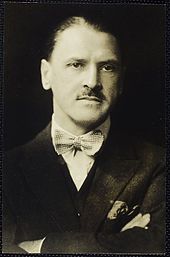
The Somerset Awards: Understanding Literary Fiction
Ah yes, literary fiction, often thought of as the highest form of writing. If only people could define exactly what it means.
Here are a few of Somerset Maugham’s work that typify literary fiction:
Of Human Bondage
The Razor’s Edge
The Moon and Sixpence
And far too many to list here.
Let’s start with some writing tips from Somerset Maugham himself.
There are three rules for writing a novel. Unfortunately, no one knows what they are.
Every production of an artist should be the expression of an adventure of his soul.
I always find it more difficult to say the things I mean than the things I don’t.
The fact that a great many people believe something is no guarantee of its truth.
To acquire the habit of reading is to construct for yourself a refuge from almost all the miseries of life.
Impropriety is the soul of wit.
When I read a book I seem to read it with my eyes only, but now and then I come across a passage, perhaps only a phrase, which has a meaning for me, and it becomes part of me.
We do not write because we want to; we write because we have to.
I write only when inspiration strikes. Fortunately it strikes every morning at nine o’clock sharp.
If you can tell stories, create characters, devise incidents, and have sincerity and passion, it doesn’t matter a damn how you write.
What a start! We still need to figure out this Literary Fiction business though. Before we dive into that, if you want to read more about Somerset Maugham, consider looking out our previous spotlight here where we discuss him at length!
To read more about the time he wrote in, click here.
So What is Literary Fiction?
The easiest way to attempt to answer this question is to start with what Literary Fiction is being defined in opposition to. Literary Fiction is not Genre Fiction.
So what’s Genre Fiction?
Genre Fiction is written for people to enjoy it generally. It often follows a formula that uses conventional storytelling. The stories are meant to entertain, are plot driven, and they usually have a happy ending. As a result, there’s almost never a question of how to market genre fiction, making it easier to sell.
So, if we take the opposite of all those and apply them to literary fiction, what do we get?
It doesn’t follow a formula
Uses unconventional storytelling
Examines what it means to be human
It can be difficult to read
Character focused (not plot)
Endings vary or can even be uncertain
LIterary Fiction isn’t an exact science
That’s a tough sell! Of course, not all of these elements need to apply
Many literary fiction books are the kinds that stay with us for years after we read them. Chances are the longtime favorite that changed your life is a literary fiction book, or at least possesses some elements of it.
Here’s some contemporary Literary Fiction you may have heard of:
The term “literary fiction” is controversial and for good reason. As more “literary” writers venture into genre fiction, the lines of distinction have blurred. Sometimes, it’s not always clear. Perhaps, it is genre fiction that’s just pushing its own boundaries.
It’s clear that Literary Fiction is a complex genre, worthy of being written and read. We’re happy to say that we’ve done our fair share here at Chanticleer! Check it out below!
HARD CIDER By Barbara Stark-Nemon Grand Prize Winner in Somerset Awards
Abbie Rose Stone is a woman determined to follow her newly discovered dream of producing her own craft hard apple cider while navigating the ups and downs of family life with her grown sons and husband.
Abbie Rose knows how to deal with adversity, and dives headfirst into this new chapter of her life with energy and passion. She describes her early adulthood years of infertility struggles and the hardscrabble way she built her young family through invasive medical procedures, a surrogate attempt, and adoption barriers.
MARTHA By Maggie St. Claire First Place Winner in Somerset Awards
In the unique and compelling voice of an aging woman teetering on the edge of financial ruin, Maggie St. Claire’sdebut novel,Martha,takes the reader from affluent residential areas of Los Angeles to its urban streets of despair, shadowing a 71-year-old, retired bank teller as she comes to grips with the challenges and adversities that threaten her existence.
This is the story of Martha Moore, many years divorced, estranged from her only child, and living a lie, as she enters her golden years. The most important things in her life, outside her pride in her desirable Hancock Park bungalow, are her book club friends. She attends their meetings dressed in her finest, projecting what she hopes is the image of a well-educated, well-to-do, Los Angeles dowager. The three wealthy women who comprise the remainder of the group are her best, perhaps only friends, and sometimes that’s a stretch.
MOURNING DOVE By Claire Fullerton First Place Winner in Somerset Awards
Camille Crossan appears to be living an idyllic life in Claire Fullerton’s poignant, evocative novel,Mourning Dove. Living in a superbly appointed mansion in “magnolia-lined and manicured” Memphis during the 1960s and 1970s, Camille’s family life shimmers with Southern charm. Her mother, Posey, usually outfitted in a Lily Pulitzer shift, Pappagallo shoes, and a signature shade of pink lipstick, is a beauty with the wryest sense of humor and steel determination.
As a young girl, Camille, known as Millie, sees how those in her mother’s social orbit are captivated by her aura, how men are easily seduced by her flirtatious charm. Society is a game played by those who know its rules, and Posey means to win. Every time. She, however, isn’t even the charismatic one in the family – that’s Finley, Millie’s older brother, who brims with intelligence, startling good looks, and messianic magnetism. A peek beneath the shiny surface of gracious Southern living, however, reveals enormous cracks in the foundation of the Crossan family. One of the first things the adult Millie tells us about her brother is that he is dead. She takes the reader back, though, to their childhood and coming of age, a tumultuous journey that both binds and separates the siblings.
Judy Keeslar Santamaria’s skillfully crafted debut novel, Jetty Cat Palace Café, takes the reader from the sophisticated urban areas of Washington state to its remote cranberry coast, accompanying professor Morgen Marín on a life-altering quest.
Like a present-day recipient of a DNA test gone wrong, when 34-year old Morgen, celebrated pianist and music professor, leaves after visiting her elderly grandmother Eleanor, her mind is spinning. Eleanor, preparing for the inevitable, shared family history, documents, and longstanding questions, which blindsided her granddaughter.
JOEL EMMANUEL By J.P. Kenna First Place Winner in Somerset and Clue Awards
Set in the Pacific Northwest in the 1970s, Joel Emmanuel by JP Kenna rewards its readers with the story of a boy coming of age and how he understands the changes around him. Kenna’s style echoes the English novels of the 19th century.
Young Joel Emmanuel Webber, named for a Wobbly executed long ago in 1915, lives with his mother, Nance Raindance, in a cabin on the Skagit River near Seattle before it was a technopolis. Their world is antiquated even for the 1970s and defined by farming, fishing, and basics like a woodburning cookstove, kerosene lamps, and candles. Joel calls his mother by her given name, doesn’t know his father, and lives an open life free of school and, even occasionally, clothing. He is sensitive and easily succumbs to tears.
When you’re ready,did you know that Chanticleer offers editorial services?We do and have been doing so since 2011.
Our professional editors are top-notch and are experts in the Chicago Manual of Style. They have and are working for the top publishing houses (TOR, McMillian, Thomas Mercer, Penguin Random House, Simon Schuster, etc.).
If you would like more information, we invite you to email Kiffer or Sharon at KBrown@ChantiReviews.com or SAnderson@ChantiReviews.com for more information, testimonials, and fees.
We work with a small number of exclusive clients who want to collaborate with our team of top-editors on an on-going basis.Contact us today!
Chanticleer Editorial Services also offers writing craft sessions and masterclasses. Sign up to find out where, when, and how sessions being held.
A great way to get started is with our manuscript evaluation service, with more information availablehere.
And we do editorial consultations for $75. Learn more here.
If you’re confident in your book, consider submitting it for a Editorial Book Reviewhereor to one of our Chanticleer International Awardshere.
And remember! Our 10th Anniversary Chanticleer Authors Conference (CAC22) will be April 7-10, 2022, where our 2021 CIBA winners will be announced. Space is limited and seats are already filling up, so sign up today! CAC22 and the CIBA Ceremonies will be hosted at the Hotel Bellwether in Beautiful Bellingham, Wash. Sign up and see the latest updates here!
Writer’s Toolbox
Thank you for reading this Chanticleer Writer’s Toolbox article.
It might seem odd, but Franz Kafka and his friends reportedly sat around at bars reading excerpts of The Metamorphosis with tears of laughter streaming down their faces.
Franz Kafka (1883-1924)
While he might not seem like a natural pairing with Mark Twain, Kafka certainly had a sense of humor. We may not quite understand his early 1900s thought process that would cause him to need to stop in the middle of reading “The Trial” due to laughing so hard (read more from The Guardian here), but we definitely can still appreciate a healthy dose of humor.
Fun Fact: Franz Kafka’s writing was known to deal with modernism, existentialism, Surrealism, and is considered a precursor to magical realism. Despite his fame, he never finished a single novel (unless you count The Metamorphosis as a short novel).
The Mark Twain Awards, named after the famous satirist, are still a fairly new division of The Chanticleer Int’l Book Awards. You can see a full write up on Mark Twain’s relationship with Bellingham, WA here.
Do you have a book that features Humor, Satire, or Allegory? Submit it here before the end of November to be entered into the 2021 Mark Twain Book Awards!
Let’s do a quick breakdown on the three main categories of Mark Twain books.
Satire: The Dangerous Tool
Probably one of the most difficult genres to write in, Satire can have trouble with rubbing people the wrong way. One of the most commonly known pieces of satire is “A Modest Proposal” by Jonathan Swift, made ubiquitous by English courses teaching it for decades. You can read the full essay here.
Jonathan Swift is best known as the author of Gulliver’s Travels. Above, Gulliver is restrained by the Lilliputians
The essence of it is that Swift proposes eating Irish children instead of feeding them, as it will save more money for England in the long run, and cause less suffering for the kiddos in the long run. This obvious, garish suggestion highlights the ways in which England may as well be eating the children in a way that both shames those who have acted poorly, and serves as a call to action to offer better care to the poor.
Satire in literature is a type of social commentary. Writers use exaggeration, irony, and other devices to poke fun of a particular leader, a social custom or tradition, or any other prevalent social figure or practice that they want to comment on and call into question.
Contemporary writers have used satire to comment on everything from capitalism (like Brett Easton Ellis’s American Psycho, which uses extreme exaggerations of consumption, concern with social status, and masculine anger and violence to skewer American capitalism) to race (Paul Beatty’s The Sellout, for example, features a young black male protagonist in Southern California who ends up before the Supreme Court for trying to reinstate slavery).
As you can see, satire is a sharp tool that must be wielded carefully to avoid cutting yourself on accident. A good rule of thumb when writing satire to always aim at those who are in power. Trying to poke fun or ridicule people who are already disadvantaged or targeted in some way will often leave a bad taste in your audience’s mouth, and that’s the fastest way to have your book closed.
Here are some classic examples of Satire:
Matt Groening – The Simpsons, Futurama
David Sedaris – Naked, Me Talk Pretty One Day
Chuck Palahniuk – Fight Club
Douglas Adams – The Hitchhiker’s Guide to the Galaxy
Kurt Vonnegut – Slaughterhouse-Five
Evelyn Waugh – Brideshead Revisited
“Get outta my sky!”
Now let’s talk allegory.
Allegory: Not Just for Kids!
When you want to talk around something or use a stand in to describe it you might try allegory.
The word “allegory” comes from the Latin “allegoria,” meaning speaking to imply something else. An allegory is a simple story that represents a larger point about society or human nature, whose different characters may represent real-life figures. Sometimes, situations in the story may echo stories from history or modern-day life, without ever explicitly stating this connection.
Allegories are similar to metaphors in that both illustrate an idea by making a comparison to something else. However, allegories are complete stories with characters, while metaphors are brief figures of speech.
Note: We are not affiliated with MasterClass in any way, we simply believe in sharing our sources, and they do great work with genre definitions.
One popular example of allegory is Aesop’s Fables. As you may know, the fables tend to follow animals as they make decisions regarding moral dilemmas, and then face the consequences – whatever those may be. Of course, those moralistic fables directed at children always run the risk of sounding paternalistic. Here are some great examples of allegory:
Allegory examples
Chaucer’s The Canterbury Tales
George Orwell – Animal Farm, 1984
Frank Baum’s – The Wonderful Wizard of Oz
Arthur Miller – The Crucible
C.S. Lewis – The Chronicles of Narnia
Finally, we have Humor.
Humor Writing
The key to humor writing is simple: it should make you laugh! There are countless different takes on what makes something funny – just try watching someone explain humor to the android Data in Star Trek.
Data experiencing laughter for the first time as a gift from the omnipotent being Q
So rather than go on too long, we’ll share our Editorial Reviews of books that make us laugh!
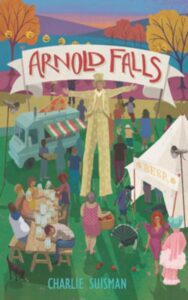
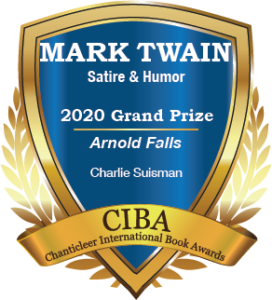
Arnold Falls By Charlie Suisman Grand Prize Winner in Mark Twain Awards
Charlie Suisman’s debut novel is a wonderful escape to a small fictional community in upstate New York. Here a melting pot of quirky residents brings Arnold Falls to life, a town with a unique history and charming inhabitants whose lives are intimately intertwined.
Settled in 1803 by the unscrupulous Hezekiah Hesper, the town for unknown reasons was named after Benedict Arnold. Adding to the oddities, the closest waterfall is twenty miles away. The area is known for sudden bursts of crab apple-size hail pelting the landscape without any scientific explanation. Hence the incentive for “Hail Pail Day,” a neighborly tradition surrounding the distribution of galvanized bucket head-coverings.
Lou Dischler delivers an intricately woven story about one well-meaning boy who tries to make sense of the crazy he’s been born into. Get ready for one belly laugh of an adventure in My Only Sunshine.
Welcome to the Louisiana low country, home of 9-year-old Charlie Boone, a kid growing up in 1962. Charlie, a most unreliable narrator, concerns himself with giant wingless wasps and biting red velvet ants. Combine his critter-concerns with the legend of the giant slugs, the story of his mother taken up by a hurricane, and the episode of the puddle he and his brother dug that grew into a pond, then turned into a lake, and we have one wildly imaginative ride well-worth taking.
A bitingly funny collection of life-stories from Christie Nicholls – stand-up comedian, actor, and writer – made all the more piquant by her repeated insistence that she has no short-term memory. Fortunately for us, her long-term reminiscences more than make up the deficit.
Nicholls has divided the book into four parts. In the first, “A Broad Abroad,” she recalls her experiences of traveling to far-flung places, beginning with a summer in Belém, Brazil as a child. She and her brother, for some reason nicknamed Beluga, slept in hammocks and played in a swimming pool, but much of her cherished time involved a German Shepherd named Ferdinand, from whom she learned dog talk. Raucous family bowling in Bologna, Italy, is contrasted with attendance at a staid English wedding. At a later period, Nicholls and her mother went to Sweden, where the budding comic tried her hand at stand-up in newly acquired Swedish, leading to an amusing mix-up of jargon.
Honey Beaulieu is going to get her man–no matter how many tries it takes. Determined to capture the elusive Boyce McNitt, Honey is off to Deadwood Gulch despite the warnings that the dangerous road is plagued by thieves and natives. But before she can pursue the $500 bounty, she needs to take care of issues at home, including finding a shop for a pregnant seamstress, sixteen-year-old Emma, a home for eight-year-old Myles Cavanaugh, his two younger sisters, and their pregnant mother. Between her do-gooding, denying her blossoming feelings for Deputy US Marshal Sam Lancaster, and a run-in with a herd of escaped pigs determined to destroy Fry Pan Gulch, Honey barely has time to get out of town before she gets trapped by winter. Once on the road, she comes face-to-face with Sean Chaney, the Badger Claw Kid, a bounty worth $400, and is intent on capturing him, as well. With a little otherworldly, albeit not entirely helpful, advice from her ghost guide Roscoe, Honey will have to take down two dangerous fugitives. But, when she runs into a fireball-throwing ghost bent on revenge, her real adventure begins.
Kiffer loves the undercurrent of a Shakespearean slant to Jacquie Rogers’ works. Sublime.
When a banged-up old bus pulls into his family’s driveway, Charlie has no idea that the rattling junker would be his ride to freedom. For years he’d been suffering under the thumb of a cold-hearted mother and a vindictive twin sister, while his father languished behind bars for tax fraud. The only family member with whom the young man held a loving bond was his grandfather, Opa Bill. Since Bill’s recent death, Charlie has been holding it together by listening to the music he and his grandfather loved. That musical thread weaves its way throughout the story as a sort of narrative jukebox.
Now Charlie’s respectable Oma Ruth has careened back into his life in a shocking new incarnation: a freewheeling hippie in kaftan and beads, unafraid to swap barbed words with her appalled daughter, nor to insist that Charlie accompany her on her road trip. He’s dead-set against it – he’d just found his dream job at a record store – and is disgusted when his mother dumps him on her mother without hesitation.
When you’re ready,did you know that Chanticleer offers editorial services?We do and have been doing so since 2011.
Our professional editors are top-notch and are experts in the Chicago Manual of Style. They have and are working for the top publishing houses (TOR, McMillian, Thomas Mercer, Penguin Random House, Simon Schuster, etc.).
If you would like more information, we invite you to email Kiffer or Sharon at KBrown@ChantiReviews.com or SAnderson@ChantiReviews.com for more information, testimonials, and fees.
We work with a small number of exclusive clients who want to collaborate with our team of top-editors on an on-going basis.Contact us today!
Chanticleer Editorial Services also offers writing craft sessions and masterclasses. Sign up to find out where, when, and how sessions being held.
A great way to get started is with our manuscript evaluation service, with more information availablehere.
And we do editorial consultations for $75. Learn morehere.
If you’re confident in your book, consider submitting it for a Editorial Book Reviewhereor to one of our Chanticleer International Awardshere.
Also remember! Our 10th Anniversary Chanticleer Authors Conference (CAC22) will be April 7-10, 2022, where our 2021 CIBA winners will be announced. Space is limited and seats are already filling up, so sign up today! CAC22 and the CIBA Ceremonies will be hosted at the Hotel Bellwether in Beautiful Bellingham, Wash. Sign up and see the latest updates here!
Featuring Cathy Ace and Robert Dugoni!
Writer’s Toolbox
Thank you for reading this Chanticleer Writer’s Toolbox article.
If you are partaking in NaNoWriMo, then you are over a third of the way done! Congratulations!
We hope that this article will provide prompting to spur you on to the finish line.
If you are on your time schedule, we hope this article will help keep you focused and spur you on!
The best fiction touches the deep layers in us. A writer achieves this effect by embedding dozens of techniques into his or her story. — Jessica P. Morrell
Dramatic Question
Compelling fiction is based on a single, powerful question that must be answered by the story climax. This question will be dramatized chiefly via action in a series of events or scenes.
This scene from Miss Fisher’s Mysteries could be powered by several Dramatic Questions
For example, if you are writing a romance, the question always involves whether the couple will resolve their differences and declare their love. Then in a mystery the dramatic question might be will Detective Smith find the serial killer in time to prevent another senseless death? In The Old Man and Sea, the dramatic question is will Santiago catch the big fish and thus restore his pride and reputation?
Consider the following:
What is the dramatic question in Harry Potter and the Sorcerer’s Stone?
What is the dramatic question in Stephanie Myers’ Twilight Saga?
Understanding the dramatic question in other writer’s work can better help you approach your novel. To make it the best we can, let’s turn to world building.
An Intimate, Simmering World
An intimate world isn’t created by merely piling on details. It means your story world has the resonance of childhood memories, the vividness of a dream, and the power of a movie. An intimate, simmering world is filled in with shadows and corners and dogs and ice cubes and the sounds and smells of a dryer humming on wash day and a car blaring past, with pop music shaking the windows. These details lend it authority, potency, and a palpable physical existence.
Diana Gabaldon’s The Outlander Series simmering details make this time-travel, fantasy, horror, science fiction extremely believable and immersive fiction.
Outlander – Diana Gabaldon’s details make for immersive fiction
An intimate story takes us to a specific place and coaxes us to remain there. An intimate story is lifelike and feels as real and complicated as the world the reader inhabits. When he finishes the final pages, and leaves the story world, he should feel the satisfaction of the ending, but also a huge sense of loss. Like a friend has moved to another town just when the friendship had reached a level of closeness and trust. — Jessica P. Morrell
Characters Built from Dominant Traits
Create main characters with dominant and unforgettable traits as a foundation of personality. These traits will be showcased in the story events, will help him achieve or fail at goals, and will make the story person consistent. For example, Sherlock Holmes’ dominant traits are that he is analytical, Bohemian, opinionated and intelligent. These traits are showcased in every story he appears in along with secondary and contrasting traits. When the character first appears in the first scene, he arrives in the story with his dominant traits intact.
Henry Cavill as the Witcher from Andrzej Sapkowski’s series of the same title
Who can forget Henry Cavil’s portrayal of Geralt of Rivia? He enters the scene as a hardened warrior with an iron code of honor. As the series progresses, he becomes softer and allows a few friends to become closer to him, taking responsibility for individuals’ happiness, not just their safety. Even as he grows, his core character elements remain unchanged. The interiority of a character is often one of those elements.
Emotional Need & Significance
The protagonists and main characters are people with baggage and emotional needs stemming from their pasts. These needs, coupled with motivation cause characters to act as they do.
For example, in Silence of the Lambs Clarisse Starling is propelled by childhood traumas to both succeed and heal the wounds caused by the death of her father. Likewise, Robert Dugoni’s Tracy Crosswhite is searching for her sister’s murderer, and Craig Johnson’s Sheriff Walt Longmire is trying to find out who killed his wife. That’s a lot of character baggage.
Motivation Entwined with Backstory
Motivation, the why? of fiction, is at the heart of every scene, fueling your character’s desires and driving him to accomplish goals. This provides a solid foundation for the often complicated reasons for your character’s behaviors choices, actions, and blunders. Motivating factors provide trajectories for character development, as a character’s past inevitably intersects with his present. Your character’s motivations must be in sync with their core personality traits and realistically linked to goals so that readers can take on these goals as their own.
Desire to drive your NaNoWriMo project
Desire is the lifeblood of fictional characters. Not only do your characters want something, but they also must want something badly. You can bestow on your character flaming red hair, an endearing, crooked grin and a penchant for chocolate and noir movies, but if she doesn’t want something badly, she’s merely a prop in your story, not a driving force. But if she wants to win the Miss Florida contest, take over her boss’ job, or become the first female shortstop for the Atlanta Braves, then you’ve got a character who will make things happen and a story that will be propelled by desire.
The Ring from Lord of the Rings is a perfect example of a symbol of desire on so many different levels.
Frodo and The Ring – LOTR by J.R.R. Tolkein
Threat
Fiction is based on a series of threatening changes inflicted on the protagonist. In many stories, these threats force him or her to change or act in ways he or she needs to change or act. Often too, what the protagonist fears most is what is showcased in a novel or short story. It can be fear of losing his family, job, or health with a dreaded outcome. Fear of losing to a threat or threats provide interest, action, and conflict.
“Fear is the Mind Killer” – Rachel Ferguson as The Lady Jessica in the 2021 Dune often repeats this litany against fear
Inner Conflict
A fictional character doesn’t arrive at easy decisions or choices. Instead, they are burdened by difficult or impossible choices, particularly moral choices, that often make them doubt and question their actions. Inner conflict works in tandem with outer conflict – a physical obstacle, villain or antagonist–to make the story more involving, dramatic, and events more meaningful.
Causality
Events in fiction are never random or unconnected. They are always linked by causality with one event causing more events later in the story, which in turn causes complications, which cause more events, which cause bad decisions, etc. Visit our blog post on The Inciting Incident to learn more!
The inciting incident of the Wizard of Oz
Complications
A story builds and deepens by adding complications, twists, reversals, and surprises that add tension and forward motion. Plots don’t follow a straight path. Instead, there are zigzags, dead ends, and sidetracks. Complications create obstacles and conflict, cause decisions to be made, paths to be chosen.
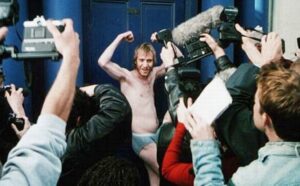
My favorite complication is one from Notting Hill when Spike is standing outside in his underwear strutting around with the paparazzi going wild for a peek at Anna Scott. How could Anna and William ever expect that complication? — Kiffer Brown
A complication from Notting Hill
Midpoint Reversal | A NaNoWriMo Must
The middle of a novel comprises more than half its length. At about the midpoint of most novels, a dramatic reversal occurs. The hunter becomes the hunted; a second murder occurs proving the detective has been wrong in his suspicions; a former lover arrives in town to complicate a budding romance. In Jessica Brody’s Save the Cat! Writes a Novel, she describes the midpoint as either the false victory or the false defeat. No matter what happens, the hero is in for a surprise! This reversal keeps the middle from bogging down and becoming predictable and also breathes new life and often a new direction into the story.
Every story needs an ending that satisfies the reader while concluding the plot. A satisfying ending does not have to be “happy” or victorious or riding off into the sunset. The final scenes, when the tensions are red hot and the character has reached a point of no return, must deliver drama, emotion, yet a logical conclusion. This is not to suggest that every plot ends with a shoot-out or physical confrontation. Some endings are quieter, more thoughtful. Some endings are ambivalent, some a dramatic or a violent clash of wills. However, there is always a sense that all the forces that have been operating in your story world have finally come to a head and the protagonist’s world is forever changed.
We are cheering you on to the NaNoWriMo Finish Line! You can do it!
Jessica Page Morrell
Keep writing, keep dreaming, have heart. Jessica
Jessica Morrell is a top-tier developmental editor and a contributor to Chanticleer Reviews Media and to the Writer’s Digest magazine. She teaches Master Writing Craft Classes at the Chanticleer Authors Conference that is held annually along with teaching at Chanticleer writing workshops that are held throughout the year.
Kiffer Brown
Keep creating magic! Kiffer
Kathryn (Kiffer) Brown is CEO and co-founder of Chanticleer Reviews and Chanticleer Int’l Book Awards (The CIBAs) thatDiscover Today’s Best Books. She founded Chanticleer Reviews in 2010 to help authors to unlock the secrets of successful publishing and to enhance book discoverability. She is also a scout for select literary agencies, publishing houses, and entertainment producers.
When you’re ready, did you know that Chanticleer offers editorial services? We do and have been doing so since 2011.
Our professional editors are top-notch and are experts in the Chicago Manual of Style. They have and are working for the top publishing houses (TOR, McMillian, Thomas Mercer, Penguin Random House, Simon Schuster, etc.).
If you would like more information, we invite you to email Kiffer or Sharon at KBrown@ChantiReviews.com or SAnderson@ChantiReviews.com for more information, testimonials, and fees.
We work with a small number of exclusive clients who want to collaborate with our team of top editors on an on-going basis. Contact us today!
Chanticleer Editorial Services also offers writing craft sessions and masterclasses. Sign up to find out where, when, and how sessions being held.
A great way to get started is with our manuscript evaluation service, with more information available here.
And we do editorial consultations for $75. Learn more here.
If you’re confident in your book, consider submitting it for a Editorial Book Review here or to one of our Chanticleer International Awards here.
Our 10th Anniversary Chanticleer Authors Conference (CAC22) will be April 7-10, 2022, where our 2021 CIBA winners will be announced. Space is limited and seats are already filling up, so sign up today! CAC22 and the CIBA Ceremonies will be hosted at the Hotel Bellwether in Beautiful Bellingham, Wash. Sign up and see the latest updates here!
Writer’s Toolbox
Thank you for reading this Chanticleer Writer’s Toolbox article.
Veterans Day: A celebration to honor America’s veterans for their patriotism, love of country, and willingness to serve and sacrifice for the common good, and to protect our democracy.
As an annual tradition here at Chanticleer Reviews on Veterans Day, we are suggesting these titles from among our reviews of authors who are Veterans.
But before we recognize these outstanding works, let us take a minute to review these statistics about those who have served our country.
Writing is known to be a “transformative therapy’ for veterans haunted by their experiences. “The Red Badge Project encourages Wounded Warriors to rediscover their personal voice and realize the value of their experiences and emotions.”
“RBP partners with Vet Centers and allows Veterans of all ages to take advantage of the Red Badge Project’s program while providing a link between veterans of multiple generations.” Here is a link to a Seattle Times article by Nicole Brodeur that was published on November 11, 2019, that is about the Red Badge Project.
Using the creative process of storytelling, Wounded Warriors begin to rebuild their individual sense of purpose and unique individuality.
For Wounded Warriors struggling to heal the invisible wounds of PTSD, Anxiety, and Depression, believing in the value of their story and finding the means to communicate it to family, friends, and community is a struggle of heroic proportions. Tom Skerritt is a founder and is part of the Red Badge Project faculty.
We here at Chanticleer Reviews have had the honor of reviewing top novels and narrative non-fiction written by outstanding authors whose stories enlighten, remind, empathize, and creates a better understanding with those who have served in the armed forces.
Read on to see excerpts from our reviews:
NO TOUGHER DUTY, NO GREATER HONOR
By GySgt L. Christian Bussler
First Place in Journey Awards
From a family with a long history of military service dating back to the civil war, GySgt L. Christian Bussler brings to life his experience as a Mortuary Affairs marine and sheds light on a duty that few ever talk about. He is called to duty for his first of three tours in Iraq in February of 2003 after spending many years training as a reservist.
This fear becomes reality when he narrowly escapes an IED blast with his life. Afterward, Bussler wrestles with the guilt of going back home injured, leaving his team behind to fight without him. The final and longest section ofNo Tougher Duty, No Greater Honormirrors the length of the final and longest tour from 2005-2006. This tour especially proves to be the most challenging for not just Bussler, but his whole team, and it leaves them all forever changed.
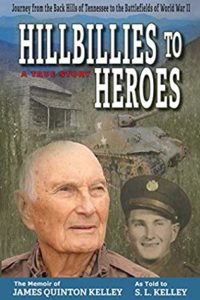
HILLBILLIES to HEROES
The Memoir of James Quinton Kelley
By S.L. Kelley
World War II veteran Quinton Kelley recounted his life story to an avid biographer – his daughter, S. L. Kelley, a documentarian and award-winning video producer.
Kelley’s tale begins in Coker Creek, Tennessee, where he was raised on an 80-acre farm, in a log cabin that he described as rough, but “brightened” with flowers. Taught to be honest and hardworking by his parents, he grew up with kerosene lamps for light, a fireplace for warmth and a wood stove for cooking. His recollections are colorful, with language that recalls his roots.
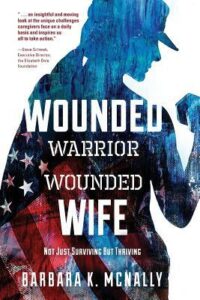
The critical issues surrounding post-traumatic stress among America’s wounded warriors is expanded here to include the challenges and concerns of military wives and families.
Barbara McNally was working as a physical therapist when she watched helplessly as a man jumped off a bridge to his death. Feeling involved in his tragedy, she learned he was a wounded veteran. The experience spurred her to find out more about PTS and its effects on those who have participated in war.
A CROWDED HEART
By Andrea McKenzie Raine Note: This is a work of Fiction
Willis Hancocks survives fighting in Western Europe during World War II but faces continuing battles of the mind at war’s end in Andrea McKenzie Raine’s poignant study of the plight of the former soldier in her historical novel,A Crowded Heart.
Willis decides to remain in London rather than return to his native Canada where his parents and sister live near Vancouver. Eager to put the war behind him, he marries Ellie, an intelligent young woman who has studied art at Cambridge University. Her affluent parents approve of Willis, and her father offers to finance his new son-in-law’s study of law at Cambridge. The newlyweds’ future could not look rosier.
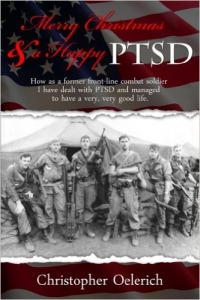
MERRY CHRISTMAS AND A HAPPY PTSD
By Christopher Oelerich
“I went away to war one person and came back another, and in my wildest dreams would never have chosen to be the one who came back.” – Christopher Oelerich
Thus begins this heartfelt discussion of Post Traumatic Stress Disorder by a military veteran who has spent his life helping others deal with the debilitating symptoms associated with the disorder. Christopher Oelerich relates his own personal history, beginning from when he was drafted into the military during the Vietnam War, and continuing through his return to civilian life and his own rocky road to recovery.
Oelerich eschews political correctness in favor of blunt talk mixed with detailed, empowering strategies that have worked for him, as well as for the military veterans and homeless he has helped over the years.
Many of my family members have served their country (many of whom have passed) and are serving their country: my father (Marine Corps, deceased), my brother (Army, with us but 100% disabled), my nephew Robert is currently serving in the Air Force, my dear Aunt Ellen (WWII nurse – she passed away recently), my cousin Billy Wayne (first 100 to die in the USA – Vietnam Conflict), and many other cousins too numerous to mention here.