The Global Thriller Book Awards recognize emerging new talent and outstanding works in High Stakes Thriller Fiction. The Global Thriller Book Awards is a division of the Chanticleer International Book Awards (The CIBAs).
Chanticleer Book Reviews is looking for the best books featuring suspense, thrilling stories that put the balance of world power or that will end the world as we know it. We include with Global Thrillers the Lab Lit genre. Lab Lit is when Fiction Meets Real Science and Research or stories that are based on real science and research up to a certain “what if” point.
For other Mystery Divisions see our Clue Awards for Suspense/Thriller Novels and our M&M Awards for Cozy-and-not-so-Cozy Novels.
The 2021 GLOBAL THRILLER Book Awards First Place Category Winners and the GLOBAL THRILLER Grand Prize Winner were announced by Peter Greene on Saturday, June 25, 2022 at the Hotel Bellwether and broadcast via ZOOM webinar.
This is the OFFICIAL 2021 LIST of the GLOBAL THRILLER BOOK AWARDS First Place Category Winners and the GLOBAL THRILLER Grand Prize Winner.
Join us in cheering on the following authors and their works in the 2021 CIBAs.
Timothy S. Johnston – Fatal Depth
J Lawrence Matthews – One Must Tell The Bees
Norman M. Jacobs, MD – A Divine Wind
Randall Krzak – Mission: Angola (Xavier Sear Thriller Book 1)
Ron McManus – The Chameleon
Andrew Kaplan – Blue Madagascar
The Grand Prize Winner for the CIBA 2021 GLOBAL THRILLER Awards is:
The Chameleon
Ron McManus
PROMOTING OUR AUTHORS!
Attn CIBA Winners: More goodies and prizes will be coming your way along with promotion in our magazine, website, and advertisements in Chanticleer Int’l Book Awards long-tail marketing strategy. Welcome to the CIBA Hall of Fame for Award Winners!
This post has been posted on the Chanticleer Facebook Page. We try to tag all authors listed here in the FB post. However, for FB to allow us to tag an author, that author must LIKE our page and Follow Chanticleer Reviews. FB rules — not ours.
Additionally, we also post on Twitter. Chanticleer Twitter’s handle is @ChantiReviews
Or click here to go directly to Chanticleer’s Twitter feed.
The 2022 GLOBAL THRILLERBook Awards winners will be announced at CAC23 on April 29, 2023. Save the date for CAC23, scheduled April 27-30, 2023, our 10 year Conference Anniversary!
Submissions for the 2022 GLOBAL THRILLERBook Awards are open until the end of October. Enter here!
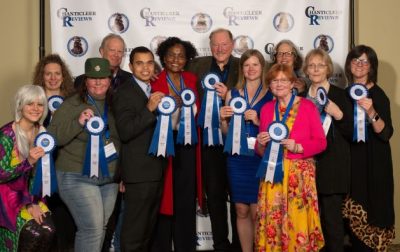
A Note to ALL the WINNERS: The coveted CIBA Blue Ribbons will be mailed out starting in August. We will contact you with an email to verify your mailing address and other items. Thank you for participating in the 2021 Chanticleer International Book Awards!
The HARVEY CHUTE Book Awards recognize emerging talent and outstanding works in the genre of Business and Enterprise Non-fiction. The Harvey Chute Book Awards is a genre division of the Chanticleer International Book Awards (The CIBAs).
Chanticleer International Book Awards is looking for the best books featuring motivational, strategy, technology guides, social media, finance, investing & money, communications, marketing, business, and economics. These books have advanced to the next judging rounds. The best will advance. Which titles will be declared as winners of the prestigious Harvey Chute Book Awards?
We will announce the 1st Place Category winners and Grand Prize Division Winners at the CIBAs Banquet and Ceremonies June 23-26th, 2022 at the luxurious Hotel Bellwether in Bellingham, Wash.–whether virtual, hybrid, or in-person. Looking for our other Non-fiction categories, then click here.
The 2021 HARVEY CHUTE Book Awards First Place Category Winners and the HARVEY CHUTE Grand Prize Winner were announced by Kiffer Brown on Saturday, June 25, 2022 at the Hotel Bellwether and broadcast via ZOOM webinar.
This is the OFFICIAL 2021 LIST of the HARVEY CHUTE BOOK AWARDS First Place Category Winners and the HARVEY CHUTE Grand Prize Winner.
Join us in celebrating the following authors and their works in the 2021 CIBAs.
Stan Bernard, MD, MBA – Brands Don’t Win: How Transcenders Change Games
Thomas Wideman – Welfare Cheese to Fine Caviar: How to Achieve Your Dreams Despite Your Upbringing
Kate Dixon – Pay Up! Unlocking Insider Secrets of Salary Negotiation
Cash Nickerson – Negotiating As a Martial Art
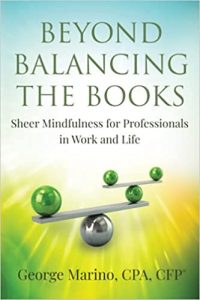
George Marino CPA – Beyond Balancing the Books: Sheer Mindfulness for Professionals in Work and Life
The Grand Prize Winner for the CIBA 2021 HARVEY CHUTE Awards is:
Beyond Balancing the Books
by George Marino
PROMOTING OUR AUTHORS!
Attn CIBA Winners: More goodies and prizes will be coming your way along with promotion in our magazine, website, and advertisements in Chanticleer Int’l Book Awards long-tail marketing strategy. Welcome to the CIBA Hall of Fame for Award Winners!
This post has been posted on the Chanticleer Facebook Page. We try to tag all authors listed here in the FB post. However, for FB to allow us to tag an author, that author must LIKE our page and Follow Chanticleer Reviews. FB rules — not ours.
Additionally, we also post on Twitter. Chanticleer Twitter’s handle is @ChantiReviews
Or click here to go directly to Chanticleer’s Twitter feed.
The 2022 HARVEY CHUTE Book Awards winners will be announced at CAC23 on April 29, 2023. Save the date for CAC23, scheduled April 27-30, 2023, our 10 year Conference Anniversary!
Submissions for the 2022 HARVEY CHUTEBook Awards are open until the end of November. Enter here!
A Note to ALL the WINNERS: The coveted CIBA Blue Ribbons will be mailed out starting in August. We will contact you with an email to verify your mailing address and other items. We thank you for participating in the 2021 Chanticleer International Book Awards!
We are thrilled to announce the 2021 Chanticleer International Book Award Winners
There are many moving parts to a prestigious book awards program such as Chanticleer’s. We thank you in advance for your patience and understanding.
Grand Prize Winners from earlier CIBAs. We haven’t received the photos yet from this year’s event from the photographer.
We will post the Official 2021 CIBA Winners at a rate of at least two per day (except for on July 4th, a national holiday in the U.S.) in the following order as they were announced at the CIBA Banquet and Awards Ceremony held In Real Life at the Hotel Bellwether, Bellingham, Wash. on Saturday, June 25th, 2022.
Reposted July 21, 2022 Three Links to the Official 2021 CIBA Announcements
I am posting the links to the 2021 CIBA presentations for Saturday, June 25th CIBA Banquet and Ceremony below.
Saturday, June25, 2022
Chanticleer International
Book Awards Banquet & Ceremony
~The 2021 CIBAs~
The Hotel Bellwether ~ Bellingham, Wash.
FIRST PLACE WINNERS – 2021 Preliminary Announcement
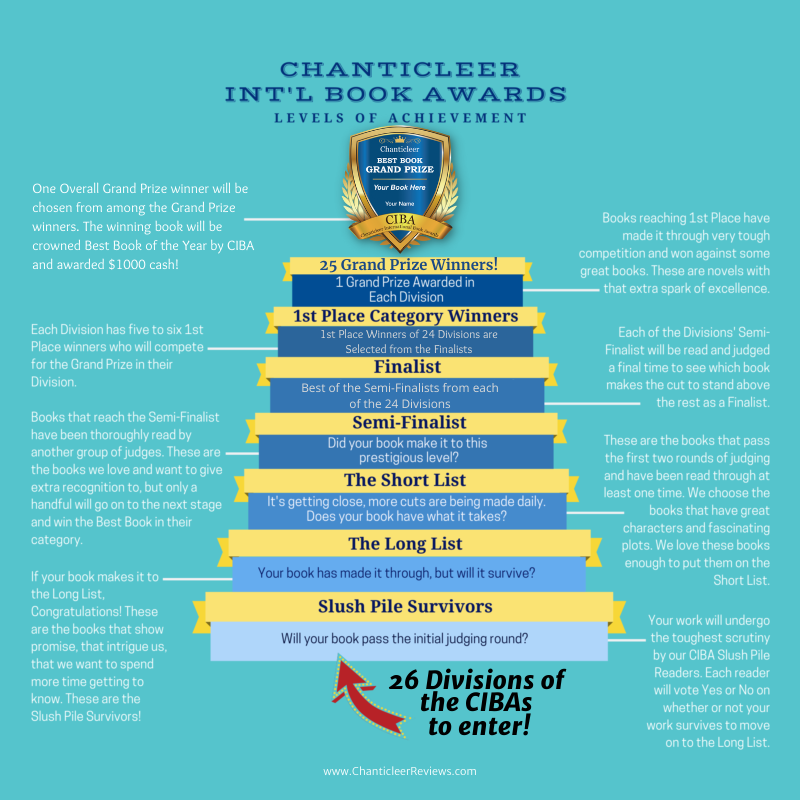
Here is the link to the slide show presentation of the 2021 CIBA First Place Award Winners. You will need to scroll through the 26 divisions (91 slides).
GRAND PRIZE WINNERS – 2021 Preliminary Announcement
Here is the link to the slide show presentation of the 2021 CIBA Grand Prize Award Winners. You will need to scroll through the 26 divisions (89 slides).
The CIBA Ceremony was available In Real Life at the Hotel Bellwether and via ZOOM for those who registered. All IRL attendees have access to the Zoomed CAC22 sessions on ZOOM.
Again, we will be posting the Official List of 2021 CIBA Winners by division at a rate of at least two divisions per day.
Congratulations to ALL of the FINALISTS, First Place Winners, and Grand Prize Division Winners!
Stay tuned for the Official 2021 CIBA Division Announcements!
Looking forward to reading your newest works for the 2022 CIBAs.
We are honored and thrilled! More info to come!
Thank you, again, for your patience and understanding. They Chanticleer Int’l Book Awards Program is a labor of love for books and the authors who write them. Kiffer
The Chaucer Book Awards recognize emerging new talent and outstanding works in pre-1750s Historical Fiction. The Chaucer Book Awards is a division of the Chanticleer International Book Awards (The CIBAs).
The Chaucer Book Awards competition is named for Geoffrey Chaucer the author of the legendary Canterbury Tales. The work is considered to be one of the greatest works in the English language. It was among the first non-secular books written in Middle English to be printed in 1483.
Chanticleer International Book Awards is seeking for the best books featuring Pre-1750s Historical Fiction, including pre-history, ancient history, Classical, world history (non-western culture), Dark Ages and Medieval Europe, Renaissance, Elizabethan, Tudor, 1600s, we will put them to the test and choose the best among them.
The other three Historical Fiction Genres are the Laramie Awards for Americana Fiction, the Goethe Awards for Late Historical Fiction, and the Hemingway Awards for 20th c. Wartime Fiction.
The 2021 CHAUCER Book Awards First Place Category Winners and the CHAUCER Grand Prize Winner were announced by Nicole Evelina on Saturday, June 25, 2022 at the Hotel Bellwether and broadcast via ZOOM webinar.
This is the OFFICIAL 2021 LIST of the CHAUCER BOOK AWARDS First Place Category Winners and the CHAUCER Grand Prize Winner.
Join us in cheering on the following authors and their works in the 2021 CIBAs.
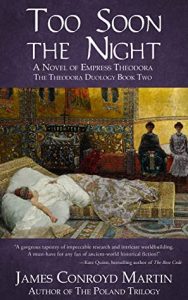
James Conroyd Martin – Too Soon the Night: A Novel of Empress Theodora (The Theodora Duology Book 2)
John A. Martino and Michael P. O’Kane – Olympia: The Birth of the Games
Janet Wertman – The Boy King
Wendy J. Dunn – Falling Pomegranate Seeds: All Manner of Things
Rebecca D’Harlingue – The Lines Between Us: A Novel
Patricia Bracewell – The Steel Beneath the Silk
James Hutson-Wiley – The Travels of ibn Thomas
The Grand Prize Winner for the CIBA 2021 CHAUCER Awards is:
Too Soon the Night
by James Conroyd Martin
PROMOTING OUR AUTHORS!
Attn CIBA Winners: More goodies and prizes will be coming your way along with promotion in our magazine, website, and advertisements in Chanticleer Int’l Book Awards long-tail marketing strategy. Welcome to the CIBA Hall of Fame for Award Winners!
This post has been posted on the Chanticleer Facebook Page. We try to tag all authors listed here in the FB post. However, for FB to allow us to tag an author, that author must LIKE our page and Follow Chanticleer Reviews. FB rules — not ours.
Additionally, we also post on Twitter. Chanticleer Twitter’s handle is @ChantiReviews
Or click here to go directly to Chanticleer’s Twitter feed.
We are now accepting submissions into the 2022 Chaucer Book Awards for Pre-1750s Early Historical Fiction. The 2022 CIBA winners will be announced at CAC 2023.
The 2022 CHAUCERBook Awards winners will be announced at CAC23 on April 29, 2023. Save the date for CAC23, scheduled April 27-30, 2023, our 10 year Conference Anniversary!
Submissions for the 2022 CHAUCERBook Awards are open until the end of July. Enter here!
A Note to ALL the WINNERS: The coveted CIBA Blue Ribbons will be mailed out starting in August. We will contact you with an email to verify your mailing address and other items. We thank you for your patience and understanding.
The Cygnus Book Awards recognize emerging new talent and outstanding works in the genre of Science Fiction, Steampunk, Alternative History, and Speculative Fiction. The Cygnus Awards is a genre division of Chanticleer International Book Awards and Novel Competitions (The CIBAs).
Chanticleer International Book Awards is looking for the best books featuring space, time travel, life on other planets, parallel universes, alternate reality, and all the science, technology, major social or environmental changes of the future that author imaginations can dream up for the CYGNUS Book Awards division. Hard Science Fiction, Soft Science Fiction, Apocalyptic Fiction, Cyberpunk, Time Travel, Genetic Modification, Aliens, Super Humans, Interplanetary Travel, Climate-Fiction, and Settlers on the Galactic Frontier, Dystopian, our judges from across North America and the U.K. will put them to the test and choose the best among them.
The 2021 CYGNUS Book Awards First Place Category Winners and the CYGNUS Grand Prize Winner were announced by Wendy Kendall on Saturday, June 25, 2022 at the Hotel Bellwether and broadcast via ZOOM webinar.
This is the OFFICIAL 2021 LIST of the CYGNUS BOOK AWARDS First Place Category Winners and the CYGNUS Grand Prize Winner.
J.W. Zarek – The Devil Pulls the Strings
Sarah Lahey – Nostalgia Is Heartless, Book Two
Akosua Sankofa – Monmouth Deep
Rhett C. Bruno – Vicarious
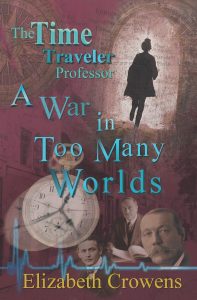
Elizabeth Crowens – A War in Too Many Worlds
Steven Seril – The Destroyer of Worlds: ‘An Answer to Every Question’
Charlene Newcomb – Echoes of the Storm
The Grand Prize Winner for the CIBA 2021 CYGNUS Awards is:
A War in Too Many Worlds
By Elizabeth Crowens
PROMOTING OUR AUTHORS!
Attn CIBA Winners! More goodies and prizes will be coming your way along with promotion in our magazine, website, and advertisements in Chanticleer Int’l Book Awards long-tail marketing strategy. Welcome to the CIBA Hall of Fame for Award Winners.
This post has been posted on the Chanticleer Facebook Page. We try to tag all authors listed here in the FB post. However, for FB to allow us to tag an author, that author must LIKE our page and Follow Chanticleer Reviews. FB rules — not ours.
Additionally, we also post on Twitter. Chanticleer Twitter’s handle is @ChantiReviews
Orclick hereto go directly to Chanticleer’s Twitter feed.
The 2022 CYGNUS Book Awards winners will be announced at CAC23 on April 29, 2023. Save the date for CAC23, scheduled April 27-30, 2023, our 10 year Conference Anniversary!
Submissions for the 2022 CYGNUS Book Awards are open until the end of June. Enter here!
A Note to ALL the WINNERS: The coveted CIBA Blue Ribbons will be mailed out starting in August. We will contact you with an email to verify your mailing address and other items. We thank you for your patience and understanding.
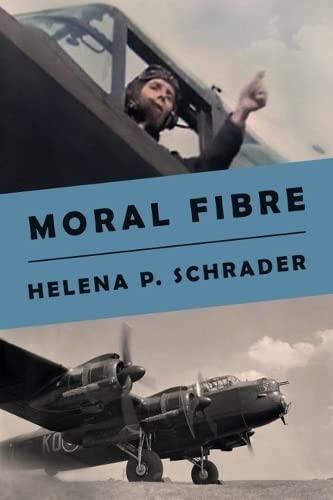
In Moral Fibre: A Bomber Pilot’s Story, Helena P. Schrader takes readers to 1943 England, where deeply held values of honor and bravery mingle with the importance of one’s place in society. It was a time and place where failures of the former could shatter the latter and change a man’s life forever.
Within this psychological landscape, the reader is led to wonder, in the case of RAF pilot Christopher “Kit” Moran, will the war break him?
With thirty-six missions under his belt and as a decorated veteran, Kit suddenly refuses to fly another mission. Although a shock to everyone who knows him, Kit has his reasons. The new assignment comes less than one day on solid ground and two hours of sleep since returning from his most recent bombing sortie over Berlin. In itself a harrowing experience, the mission ended with his best friend, the plane’s skipper, being mortally injured and ultimately dying. The RAF hierarch deems Kit LMF (Lacking Moral Fibre) – a term introduced in 1940 to address those who refused to fly without having a verifiable medical reason. He is sent to a diagnostic center and examined by a psychiatrist.
The psychiatrist understands. Kit is not insane nor lacking in moral fibre. He was simply “wiped out.”
So Kit is declared capable and fit for duty and given the opportunity to train as a pilot. This outcome was a far cry from what he, an experienced flight engineer, expected after the incident that sent his career off track.
The novel really takes off in 1944 when, after completing pilot training in South Africa, Kit returns to England for the final stages of training and ultimately a return to operations. Now he must put his experience and training into practice while sublimating his lingering self-doubt and anxiety about his own resilience. Should he fail, people will die, and his dreams will die with him.
What ensues takes the reader into the English psyche of that time, tapping the depths of human emotions, holding them up to the light, and revealing their concomitant beauty and ugliness in times of fear and crises.
Before the war is over for Kit, he finds his inner strength, finds love, and learns the true meaning of sacrifice.
Meticulously researched and skillfully written, Schrader’s Moral Fibre steps off the pages and comes to life. Her nuanced characters and authentic dialogue also provide a glimpse of Britain’s stratified class-conscious culture during the WWII era.
Schrader picks a critical period during WWII for the setting and, in so doing, educates today’s readers about the horrors of a war that was and what it takes to save a nation – and perhaps the free world.
In Moral Fibre: A Bomber Pilot’s Story, Helena P. Schrader again reaffirms George Santanya’s position, “Those who cannot remember the past are condemned to repeat it.”
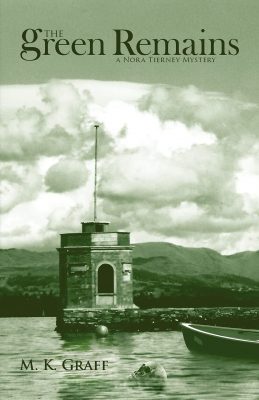
American editor and author Nora Tierney has a lot going on, from a book deal and pregnancy to stumbling on the site of a high-profile murder, in M.K. Graff’s mystery novel, The Green Remains.
After winning a contest for a three-book deal, Nora and her artist are proofreading her first novel while she is researching for the next installment. Add to this that Nora is also almost nine months pregnant with her dead boyfriend’s baby, and she should have enough to keep her busy.
As a temporary resident of Ramsey Lodge, the ancestral home of her novel’s artist Simon Ramsey, Nora enjoys the beautiful scenery of Bowness-on-Windermere, a Cumbrian village on the shore of England’s largest lake while attempting to find a name for her son. It doesn’t hurt that Simon and his sister Kate pamper her and want her to live with them at least as long as she and Simon are collaborating and by all means, until the baby is born.
However, Nora’s idyllic rest is interrupted when she stumbles upon the dead body of Keith Clarendon, the only son of prominent citizens Sommer and Antonia. When the medical examiner deems Keith’s death murder via rare poison, Detective Ian Travers, Kate’s fiancé, finds himself in the awkward position of questioning Simon’s possible involvement. However, the small community is again rocked by murder when two local drunkards are also found dead with signs of the same poison. Nora is determined to prove Simon’s innocence, but each day she draws closer to her due date and as she conducts her clandestine investigation, each clue takes her closer to the killer.
The romantic relationships in the novel present an interesting contrast.
In the first book in the series, Nora loses her fiancé, Paul, in a plane crash, but she had already “lost” him. She had allowed herself to ignore the negativity in their relationship. In hindsight, she knows she refused to see who her fiancé had truly been. When Kate suggests naming the child after Paul, the true feelings Nora had suppressed rise to the surface. She knows with certainty she could never name the child after his father. She suspects Paul himself had fallen out of love with her, but like her, couldn’t bring himself to break off their engagement.
Nora and Simon are another contrasting couple. In the previous novel, Simon saved Nora from certain death in Oxford while she investigated the accusations of murder made again her friend Val. They also shared a brief physical interlude there as well, and he is the artist for her children’s novels. Her need to clear Simon’s name is both obligatory and emotional. He and Kate have helped Nora in numerous ways, providing support and comfort. They attend birthing classes with her and give her a home at Ramsey Lodge. They paint her future son’s room and put together his crib.
Simon loves Nora and desires more than she is willing to provide.
She chooses to keep their current relationship platonic but often questions that choice. In short, Nora’s torn between her feelings for Simon and for the Oxford detective, Declan Barnes, who worked closely with her on a previous investigation.
Whenever she thinks about Declan, she experiences all of the “new-love” emotions, excitement, trepidation, and uncertainty. However, she simultaneously cannot stop the surge of jealousy she feels when Maeve, a manager at the hotel, flirts with Simon. Nora knows she has no right to these emotions but still cannot stop herself. Simon means security, a real family, while Declan represents passion and desire.
A theme many readers will find familiar is the anxiety of parenthood.
After learning of Paul’s death, Nora soon discovers she’s pregnant. She chose to keep her child and raise him on her own, a gutsy decision that she often questions. Her mind often fills with uncertainty. Nora’s mother lives in Connecticut, and her father drowned years ago when she was a teenager. She carries the burden of guilt over his death because she had turned down his invitation to join him.
The ghost of parenting haunts Nora because she wants to live up to the memory of what a wonderful parent her father truly was. She understands that saying you are going to be a good parent doesn’t really deliver the proof of actually being one. In the meantime, she must face the tragedy of Keith’s death and the grief of his loving parents. The strength of their loss, in a strange way, highlights her desire to be a loving parent.
Facing the death of her only child, Antonia mentally implodes. The loss feels monumental to Nora, and she questions her involvement in the investigation since death seems to surround her pregnancy. She sees how fragile life truly is and how having a partner makes that life more bearable, which in turn makes her wonder how she’ll ever be parent enough for her son when she can’t even choose a name or keep herself out of trouble.
2021 Chanticleer Int’l Book Awards Banquet & Ceremony
After much pivoting and then some more pivoting due to Covid’s impact, we are having (knock-on-wood, fingers-crossed, throwing salt over our left shoulders) our first In-Real-Life conference since 2019! And we are so excited!
Exciting plans for this weekend:
Master Writing Class – Film Techniques for Writing Fiction
Thursday, June 23, 1 – 4:30 p.m. Jessica Morrell presents.
How film techniques can be translated onto the page from viewpoint to mastering props and subtext. It begins with making powerful choices and identifying key moments that need emphasis, when to whisper and suggest, and when to stage and let the camera roll.
This class is being offered In Real Life and ALSO will be ZOOMED LIVE from the Hotel Bellwether’s Compass Room on June 23rd from 1 – 4:30 p.m. The recording will be available for seven days for later viewing for those who have registered for the Master Writing Class In Real Life OR Virtual.
IRL will feature two luncheons, two cocktail parties, two seated dinners, and two After Dinner Gatherings — All in the Bellwether Ballroom along with photo sessions, book fair, kaffeeklatsches, and great sessions on unlocking the secrets to successful publishing.
IRL registrations include access to the Zoom recordings for seven days.
But that’s not all!
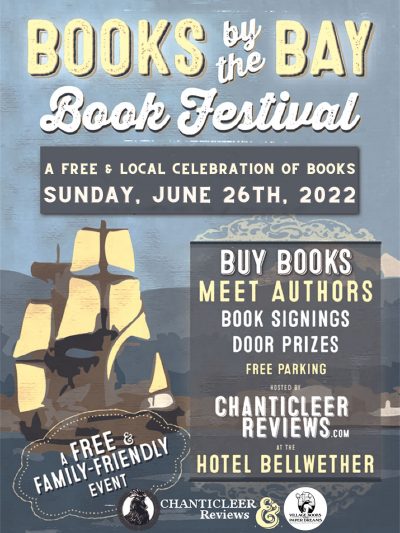
BOOKs By the BAY Book Fair – Saturday and Sunday (Sunday is open to the general public).
2021 CIBA Banquet and Ceremony on June 25, 2022
The excite builds! Who will take home the Overall Grand Prize for the Chanticleer Int’l Book Awards?
VIRTUAL CAC22
And, last but not least, VIRTUAL Registration is available for the Master Class and the CAC 22 Sessions and includes the 2021 CIBA awards ceremony. These Zoomed sessions will be available for seven days for you to view at your leisure.
Our 2020 CAC was virtual (VCAC20 held in September 2020). We were hoping that 2021 would be IRL, but alas, it was virtually held also – in two parts: a virtual conference (VCAC21) in April and the 2020 CIBA Ceremonies in June. We were at least able to have a few of our local Chanticleerians to join us at the Hotel Bellwether here in Bellingham where we broadcasted (Zoomed) the events.
Now, we are finally able to gather IRL (In Real Life). CAC22 was originally scheduled for early April, but Covid numbers ramped up (extremely so) in January and February. We decided to err on the side of prudence with moving the conference to June — the only weekend that the Hotel Bellwether had available. Pivot. Pivot. Pivot.
And, now, the weekend is upon us! Due to many requests, we are offering the conference virtually along with the IRL conference. If any of you have had to offer HYBRID events, you will know how challenging it is logistically and technology-wise. Thank goodness for Argus Brown, Kiffer’s husband and IT guy to make the virtual-hybrid-live conference take place.
The 2021 CIBA Banquet and Ceremony is sponsored and hosted by CAC22. It can be confusing, since the awards program runs a year behind the actual conference year. We are now accepting 2022 CIBA entries. The CIBA 2022 awards will be presented at CAC23. July 15th, 2022 we begin accepting 2023 entries in several divisions as submission deadlines are met. 2023 CIBAs winners will be announced at CAC24. And, so on.
We hope that you will join us!
SAVE THE DATES: CAC 23 is scheduled for April 26 – 30, 2020!
Edge: Turning Adversity into Advantage by Laura Huang is a valuable mixture of business strategy, science, and examples, all directed to help readers develop their unique skills and strengths.
Author Laura Huang takes readers through her own journey to becoming an award-winning Harvard Business School professor. Along with real-world examples of both successful entrepreneurs and up-and-coming business students, she lays out a four-part guide on how to create your personal edge.
Creating your own edge is essential to getting ahead in life no matter who someone is or where they come from. Huang herself is a child of immigrants and was one of a few female engineering students at her university. She had to navigate her own specific challenges, figuring out what worked for her and what did not.
Instead of being in business to invent or promote the next big thing, Huang is in the business world for its rich research opportunities.
In Edge: Turning Adversity into Advantage, Huang will take readers through her process: Enrich, Delight, Guide, and put in Effort, to create their special edge. Huang reiterates throughout her book that anyone can have an edge; they can use who they are and whatever adversity they have faced to their advantage in not just business, but in their everyday life.
Huang uses her research expertise to give relevant sociological, philosophical, and business contexts to each section of the book.
Edge: Turning Adversity into Advantage is not about gaming the system to get ahead in business, and Huang stresses that there is not one method to follow. She presents her research and gives examples of how to gain an edge in ways that can create new opportunities for you.
Along with all the examples and stories, this book follows its own advice to Enrich, Delight, Guide, and put in the Effort. Edge: Turning Adversity into Advantage is at the same time enlightening, engaging, and truly a wake-up call to take charge of the growth of your life.
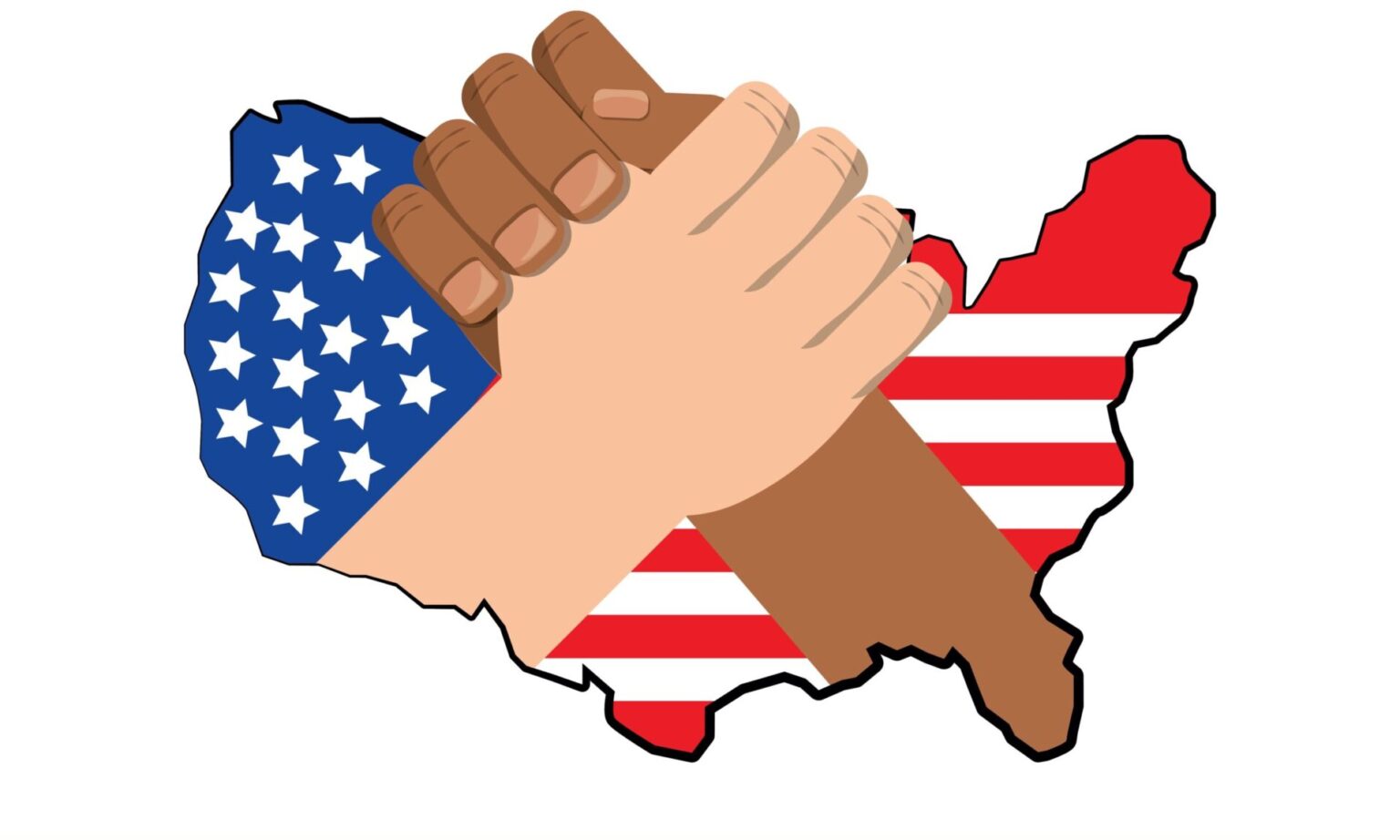
In June 2021, Congress, with a unanimous vote in the Senate and support of all but 14 Republicans in the House of Representatives, passed legislation designating June 19th as Juneteenth National Independence Day, commemorating the end of slavery for Black Americans.
But what does it really mean?
In the years to come, will it be embraced and celebrated all across America to help encourage shared experiences and achieve better understanding among Blacks and whites?
A historical context sheds some light.
Juneteenth, also known as Jubilee Day, Emancipation Day, Freedom Day, and Black Independence Day was first celebrated by freed slaves on June 19, 1866, in Texas a year after slavery had ended there. President Abraham Lincoln had signed the Emancipation Proclamation, ending slavery in January of 1863—two and half years earlier.
It wasn’t until 1980 that the holiday was officially recognized anywhere. Texas became the first state to designate Juneteenth as a state holiday. In 2002, eight other states joined Texas and Missouri followed suit in 2003. In 2008, fifteen more states.
By 2019, 47 states and the District of Columbia had finally recognized or commemorated the day in some way. Between 2020 and 2022, five states (Texas, New York, Virginia, Washington, and Illinois) made it a paid holiday for state employees.
Celebrations—in addition to parades, ethnic cuisine, street fairs, cookouts, family reunions—include programs with historical dress, reenactments, traditional songs, and readings of works by iconic Black authors.
Now that it has been designated as a national holiday, will that trend change?
Does the naming, Juneteenth National Independence Day, provide some clues?
As a nation, we celebrate July 4th as Independence Day, commemorating the day the original thirteen colonies were no longer subjects and subordinates to the monarchy of Britain, that they were indeed independent, united, and free.
Despite our differences—country of origin, ethnic or racial identity, religious affiliation, economic status—we all identify with July 4th as the day that made us one. One nation, indivisible and committed to justice and equality for all.
But, after decades and centuries of Blacks gaining their independence, their freedom, supposedly no longer subjects or subordinates of whites, the commemoration or celebration has not been commonly recognized, let alone unifying.
So, it begs the question, “What’s in a name?”
Will the newly minted Juneteenth National Independence Day be the beginning of universally recognizing that Blacks are finally and truly free to partake in all of what it means to be citizens of the United States of America?
Like July 4th represents freedom from the control and governance of a foreign country, does designating June 19th as “National Independence Day” mean that the nation is freeing itself of a horrid and oppressive aspect of its past?
Wouldn’t it be great if designating Juneteenth as a national holiday means that the nation is moving toward fully embracing a large segment of the American family that continue to suffer from the scourge of slavery and the chronic residuals of oppressive racism and discrimination.
Just as each of us holds in regard—in our own special way, for our own special reasons, patriotic and personal—the circumstances, occasions, and people our national holidays commemorate, Juneteenth National Independence Day will be no different.
We will either include it among those holidays that we embrace, recognize, remember, and value, or we will continue to go about our way doing business as usual, ignoring its significance.
There are many ways that the Juneteenth national holiday can take on meaning for those of us who are just becoming familiar or for one reason or the other have not given the meaning of the day much attention in the past.
Among them, and moving forward, we can:
commit to moving forward with open-mindedness and a willingness to learn anew about the things that we as human beings share;
make a conscious effort to get to know better Blacks that we regularly encounter in the workplace, social venues, and communities in which we live;
question why Blacks are not a part of some aspect of our lives;
read a book about Black history and culture to better understand how it fits into the American experience
attend a Black parade, street fair, a theatrical production
patronize Black businesses
have a meal in a Black restaurant
get to better know a Black neighbor, a colleague, classmate
incorporate music of Black artists in our favorite genres
visit museums of African American history and culture
examine the reasons why we may hold racial stereotypes
Doing some of these things can catch on, spread, and have lasting meaning.
On this inaugural national holiday, designating June 19th as Juneteenth National Independence Day, what does it really mean?
Each of us can take a few minutes to decide what it means and will mean to us and those within our orbit of influence.
The real questions: Will most of America pause to celebrate Juneteenth as a national holiday in the years to come—embrace it as an opportunity to better understand its importance and significance not only in terms of the history of this country, but in promoting healing and building a better future in all facets of our everyday lives?
Maybe, just maybe, we and generations after us will see Juneteenth National Independence Day, 2022 as a seminal year when America acknowledged and embraced real freedom. But this time real freedom for all.
Maybe the nation will have made another giant step in its march toward greatness.
This article was published in the Missouri Independent on June 20, 2022 under Creative Commons license. (Continue scrolling down)
Dr. Ellis gave us her permission to repost the article here and in the Chanticleer e-newsletter.
Dr. Janice Ellis
Janice Ellis has lived and worked in Missouri for more than three decades, analyzing educational, political, social and economic issues across race, ethnicity, age and socio-economic status. Her commentary has appeared in The Kansas City Star, community newspapers, on radio and now online. She is the author of two award-winning books: From Liberty to Magnolia: In Search of the American Dream (2018) and Shaping Public Opinion: How Real Advocacy Journalism™ Should be Practiced (2021). Ellis holds a Ph.D. in communication arts, and two Master of Arts degrees, one in communications arts and a second in political science, all from the University of Wisconsin.






 American editor and author Nora Tierney has a lot going on, from a book deal and pregnancy to stumbling on the site of a high-profile murder, in M.K. Graff’s mystery novel, The Green Remains.




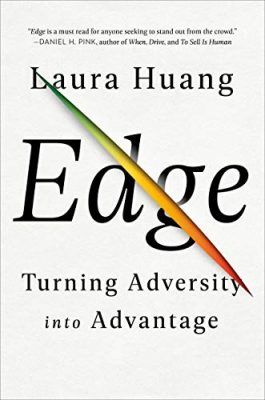
 Edge: Turning Adversity into Advantage by Laura Huang is a valuable mixture of business strategy, science, and examples, all directed to help readers develop their unique skills and strengths.