Author: chanti

  • Stuck in the Middle with You – Defining the Middle-Grade Books Genre | The Gertrude Warner Awards

    Stuck in the Middle with You – Defining the Middle-Grade Books Genre | The Gertrude Warner Awards

    Just What Makes a Middle-Grade Book Middle-Grade?

    While we aren’t actually “Stuck in the Middle” as the Stealers Wheel might say, we can always stand to learn a little more about the genres we write in.

    The Stealers Wheel: Decent band? Sure! Middle Grade Authors? Not quite…

    As many authors of literature meant for youth know, Middle Grade sits in that small spot between Children’s Literature and Young Adult – quite literally in the middle of these two genres. The target age for this work is 8-12 years old.

    We have a couple of key recommendations for creating excellent work that will hold the attention of this tenacious age group.

    The Middle Grade Basics

    Various Vials with the words Problem, Charcter, Resistance, and Conflict inside them

    There are guidelines for every genre, and, while they can bend, if you find yourself breaking them regularly, you might need to double-check if you’re actually writing in the genre that’s best for you.

    These suggestions will let people know your book fits in the Middle Grade Genre:

    • Length of 30,000-50,000 words
    • Content is clean with no profanity or sexual activity (crushes and first kisses are okay)
    • The age of the main character is close in age to the reader, about 10-14 years old
    • The story is immediate; characters may have minor interiority, but reactions to the world at large is the most important
    • The story should feature experiences that the pre-teen and tween has experienced in their own lives even if the story is fantasy (Harry Potter and the Sorcerer’s Stone or Percy Jackson and the Olympians) or real-life (Diary of a Wimpy Kid). Examples are: friendships lost and made, school experiences, family circumstances, and learning about the “wide world outside of oneself.”
    • Is it a story that the reader (even if older) can place him/her self in? Total immersion.

    There are some exceptions to these rules, especially in different genres, like Science Fiction and Fantasy, which both tend to have longer word requirements. However, following the convention of a genre doesn’t just show agents and editors that your work fits with what they can sell, it meets reader expectations.

    If you have ever tried to find clothing and or gifts for this “tween” age, you know just how hard it is and how limited the selections are. And how hard it is to find something the tween will like as this is the age when they start to develop their own tastes and preferences.

    Treat Your Readers with Respect

    No one can spot someone talking down to them better than a Middle Grade Reader. They have a foolproof radar and can tell when authors are overexplaining or, worse, condescending to them.

    A Young Person Asleep on their computer
    Don’t put your readers to sleep!

    Children ages 8-12 are smart and hungry for excellent writing! They are thoughtful, clever, and it’s worth it to tell them good stories.

    This comes to having good beta readers and a solid Manuscript Overview to ensure you have a working plot before you move onto Line Editing and then the final polishing. Respecting your Reader and their time is the golden rule of any writing.

    The Story Must Move

    Stanley Yelnats in Court in the movie Holes
    Stanley Yelnats in the movie adaptation of Holes is told he must either choose reform camp or jail for a crime he didn’t commit

    That last bullet point in the basics section says the story is immediate.

    Younger readers love action – your characters need to react and act in response to the world around them. Publisher’s Weekly quotes Scholastic associate publisher Abby McAden on the topic:

    “Middle grade is for truly independent, confident readers, whereas chapter books are all about building that confidence. Stories that often revolve around friendship and deeper exploration of themes and emotions. Kids’ abilities to articulate their inner lives develop over time and are at least somewhat built on experiences they have had or are having. There’s a frame of reference a 10-year-old has that a seven-year-old doesn’t yet. Year over year, kids become ready to look around and explore alternate experiences, and I think middle grade is a giant leap forward in that process.”

    And good authors will leap with them as those young readers dive into the larger world.

    Read from the Best

    A Pair of hands writing in a notebook with the words "Read from the Best" above

    The best way to begin and continue to excel in a genre is to read, read, read. Several attendees at the Chanticleer Authors Conference mentioned they had started reading the entire Finalist List for their Division, not just for the pure sake of pleasure, but to better understand what their peers where doing and what the competition really looked like.

    Our 2021 Gertrude Warner Grand Prize Winner for Middle Grade Readers was Murray Richter’s book Fishing For Luck.
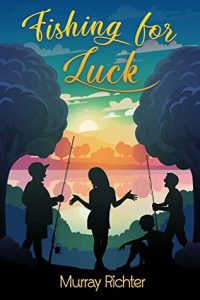
    Fishing for Luck Cover
    Read it Here!

    Kevin’s awesome life consisted of three things: fantastic fishing, hanging out with his ever-pranking friends, and having fun with the coolest mentor ever. But when the scariest piece of his past resurfaces, his world changes. Will Kevin be able to find his voice and the courage to overcome things too evil to speak of, or will he lose his friends, family, and everything else important to him?

    What Chanticleer has to say! Review is forthcoming!

    A fast-paced novel of amazing sorts! A great book for young readers that will keep your head spinning and guessing what will happen next!

    Need even more reads? See the full list of Gertrude Warner Winners here!

    Got a Great Middle Grade Read?
    The Boxcar Children from the famed series by Gertrude Warner
    Middle Grade Books
    September 30, 2022
    Enter Here

    The Gertrude Warner Awards are open through the end of September! Submit today!
  • INNER TREK: A Reluctant Pilgrim in the Himalayas by Mohan Ranga Rao – Travelogue, Personal Transformation, Spirituality

    INNER TREK: A Reluctant Pilgrim in the Himalayas by Mohan Ranga Rao – Travelogue, Personal Transformation, Spirituality


    A disinclined traveler journeys into the heartland of the revered Mount Kalash Parikarma in Tibet. Inner Trek by Mohan Ranga Rao follows a voyage that culminates in self-discovery and spiritual enlightenment.

    Mohan Ranga Rao, a retired Indian businessman, finds himself between a rock and a hard place when a ruthless Bangalore mob boss threatens him to sell his land at a throwaway price. The situation escalates when he discovers that his trusted lawyer has joined forces with the enemy. He can only turn to his wife for solace.

    With nothing for him to do about his land, Rao vows to trek around Mount Kailash, a holy Tibetan Mountain. This travel memoir traces his and his wife’s journey to the deified Himalayas, the land of Lord Shiva. Rao shares intimate details of his experience, including the spiritual transformation that he went through during his challenging high-altitude trek.

    Like a medieval troubadour, the author writes with keen precision and finesse.

    Deriving his inspiration to visit the holy mountain from his wife Mamatha, Rao is candid in spelling out the reasons why he was initially reluctant towards prayers and their healing power. In tandem, he deftly careens through the emotions he experienced upon catching sight of the mountain along with the noteworthy aspects of the journey. This swiftly culminates into a very colorful and informative insight.

    Further, Rao examines what it is about Mount Kalash that has compelled so many people to take the plunge. He studies why travelers would willingly put themselves through such risk and adversity for the pilgrimage to Tibet. He does not shy away from sharing the sacrifices that they made – financially, emotionally, or otherwise, but does it in a witty and heartening tone. The chapters are a refreshing respite from the monotony of daily routine that at times threatens to envelop us.

    Written with emotional lucidity and propped up by his relaxed aura of reporting, Rao’s eyewitness account of the arduous journey is an outstanding win.

    Buoyed with remarkable photography, each picture tells a story of its own. This makes Inner Trek: A Reluctant Pilgrim in the Himalayas a captivating read for both ardent and armchair travelers. Rao shares his indelible account and experiences in a riveting manner that pulls the reader into these mountains.

    Every line in this travelogue runs truer than any ornate prose could, creating a well-layered and tightly braided portrait. Some illustrations invite the reader to laugh, apprise, and reflect, while others spur the urge to travel. Far more than an adventure tale, Inner Trek by Mohan Ranga Rao deftly balances escapist entertainment with wisdom as it morphs into a spiritual lesson about human life and the importance of staying true to one’s faith.

    5 Stars! Best Book Chanticleer Book Reviews

  • OPERATION MOM: My Plan to Get My Mom a Life and a Man by Reenita Malhotra Hora – YA, Romance, Comedy

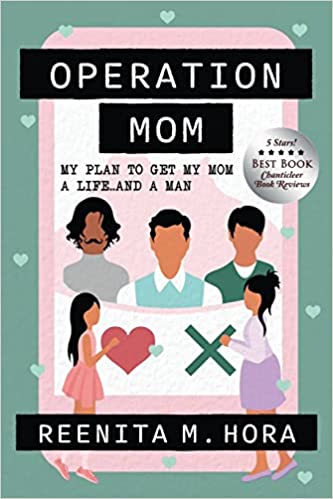
    OPERATION MOM: My Plan to Get My Mom a Life and a Man by Reenita Malhotra Hora – YA, Romance, Comedy


    The Chatelaine 2022 Grand Prize for Operation Mom by Reenita Malhotra HoraMaster storyteller Reenita Malhotra Hora’s YA romance Operation Mom: My Plan to Get My Mom a Life and a Man takes us on a charming journey through the life of one teen, Ila Isham.

    Hora introduces Ila and her best friend Deepali, two boy-crazy teens on a summer quest. Readers will fall in love with the smart, sassy, angst-filled, rebellious Ila. A typical teenage girl, Ila lives in Mumbai with her mom and Sakkubai, their house manager. Ila’s mother calls her obsessed, but that seems unfair. Is she obsessed just because her every waking minute is spent thinking of Ali Zafar, famous pop icon, singer, and heartthrob? Or is she obsessed with fellow classmate Dev?

    No, Ila couldn’t be taken with Dev because he’s one of three young men that her best friend Deepali is juggling in her summer experiment of exploring her “feminine mystique.” This turn of phrase becomes just one of many opportunities for Hora’s humor to shine as Ila remarks, “That’s a book by Gloria Steinem . . . no Betty Friedan.” Deepali’s response? “Yaar. Don’t be so literal.” The delightful balance between Ila’s book smarts versus Deepali’s street smarts carries us through Hora’s expertly crafted story.

    The two girls decide to help each other conduct their “summer experiments,” but for Ila to achieve her goal of meeting Ali Zafar, they must find a diversion to preoccupy Ila’s mom, Veena, a successful journalist, author, and intellectual.

    The way to do that, they both decide, is to introduce her to a man who will sweep her off her feet. So sayeth the boy-crazy girls, and thus begins the antics of Ila and Deepali. Ila trusts and admires her best friend’s knowledge on the subject of romance, which is her biggest mistake, and with Deepali in charge, the two find themselves in constant mix-ups and fantastic situations.

    To top it off, Dev, Deepali’s boyfriend “number three,” helps them create a dating app profile for Ila’s mom, but they give her the unlikely moniker “Venus” because no one uses their real names on these apps. When Ila begins fielding replies from prospective suitors, she finds she is out of her league—big time.

    Enter Dev to aid and assist our hero. Ila’s attraction to the “unachievable” Dev is an impetus for her attraction to Ali Zafar, a more attainable target according to Ila. But Dev’s physical presence nags on Ila. Dev is there, and Ali is not. Yet, Dev was Deepali’s, so Ila, out of loyalty to her friend, pushes him away. The more he helps her, though, the more difficult that becomes.

    Hora’s tale showcases what it is to be seventeen with a protective Punjabi mom – or any mom for that matter.

    She captures the sometimes-difficult relationship between mother and daughter, friend and friend, husband and wife, and boy and girl. Her exploration of coming of age in a world filled with imperfect people is both humorous and heartfelt, and from beginning to end, we love her for her innocence, stubbornness, and intelligence.

    This book will have you laughing out loud. It will keep you reading into the night to see what life has in store for these lovable characters who leap off the page and capture your heart and your imagination. Reenita Malhotra Hora’s novel, Operation Mom: My Plan to Get My Mom a Life and a Man, is a highly recommended and delightful five-star read.


    5 Stars! Best Book Chanticleer Book Reviews


  • Notes and Jottings about Writing from Kiffer Brown, A Chanticleer Writer’s Toolbox Post

    Notes and Jottings about Writing from Kiffer Brown, A Chanticleer Writer’s Toolbox Post

    Kiffer Brown’s Fall Cleaning Finds Writing Tips!

    Found Notes from the Home of Kiffer Brown

    We are getting ready to do some long-awaited (no thanks to Covid) and much needed remodeling on our 100-year-old-plus bungalow. A little known fact of our old home is that Edward R. Murrow’s parents lived here and Mr. Murrow visited them often. Below is a photo of Mr. Murrow visiting his parents in the house that I now live in.

    Edward R. Murrow is what is now the house of Kiffer Brown
    A photo of Edward R. Murrow visiting his parents’ house in Bellingham, Wash.

    In moving my office (read: organize boxes of notebooks, composition books, and small pieces of paper), I am compelled to go through them and decide which ones I will toss, which ones I will need to consolidate, and which of the aforementioned I will deem worthy of keeping. While I was flipping through these individual journals, I saw the following snippets of note-taking from leaders and top authors in the publishing industry.

    How many of you have these in your writing lair?

    Writing Notebooks

    Without further ado here are a few of the found gems that I found while going through a few of my notebooks:

    • Write the slow stuff fast and the fast stuff (aka action scenes) slow to increase tension. In other words, “Tell” the slow stuff and “Show” the Fast Stuff.
    • When writing you either need to advance the plot or reveal more about a character.
    • Chapters should have arcs to them and cliffhangers to keep the reader turning pages.
    • The first and last sentences of each chapter are the most important.
    • Dialogue is action. Action is dialogue (Robert Dugoni).

    • Only add backstory in on an as-needed basis. Does it advance the story? If not, don’t add it.
    • Start scenes with action. End scenes with action.

    A red toolbox holding the word SUBPLOT

    And, finally, Subplots must be woven in. They are tools for the author to:

    • Delay the main plot
    • Distract the protagonist
    • Heighten mood
    • Affect pacing
    • Add foreshadowing
    • Shows transformations
    • Ramp up the main plot


    After years of attending conferences and living and breathing the writing world, it’s a joy and a gift to come across these treasures from the best in my home office. I hope you find these jottings as helpful as I have.

    Now back to trying to beat back chaos in my office. I will do another post about the jottings and notes that I find during my re-organization.

    We’d love to hear from you and your notes and jottings!

    Keep on Writing! The world needs good books now more than ever! – Kiffer 


  • THE KISSING RABBI by Andy Becker – Small Town Fiction, Jewish Community, Contemporary Social Issues

    THE KISSING RABBI by Andy Becker – Small Town Fiction, Jewish Community, Contemporary Social Issues


    Blue and Gold Mark Twain First Place Winner Badge for Best in Category

    Based on a true story, Andy Becker’s tale The Kissing Rabbi is a smart, witty, and engaging novel that takes readers into the heart of a Jewish community in the Pacific Northwest.

    Here a young, self-serving rabbi sets a town on edge when his salacious desires and personal financial agenda are brought to light by the people he was brought there to serve.

    Rabbi Mishegas Dreidel, a young orthodox leader, arrives in the quiet town of Destiny, Oregon. His intentions seem noble as he opens up a synagogue in his basement and establishes a flock of dedicated followers.

    Over the next decade, the ever-present counselor builds friendships with his congregants, invites them to dinner, and shows concern for their spiritual well-being. With a wife and nine children to support, he encourages donations from his believers and secures a monster loan to build a beautiful house of worship. He becomes the central cog in a world that he sculpted.

    Unfortunately, this rabbi is not the wholesome spiritual leader he claims to be.

    Dreidel pushes his unwanted advances on several of the women in the community, seeking to explore his sexual proclivities under the guise that he wants to improve his own marital relationship.

    This proverbial wolf in sheep’s clothing also involves himself in several secretive monetary dealings. These reach the point where lawyers and the high Jewish court system must get involved to decide whether this narcissistic religious principal must be ousted from his position.

    Becker’s absorbing and evolving storyline is well-paced, with a central character whose unstable and remorseless responses to these accusations keep readers invested.

    With a colorful cast of characters from rabbis and congregants to attorneys, victims, and investigative reporters, we witness Dreidel’s fall from grace. Comments like “…a half-truth is still a whole lie,” and “You can’t put a black hat on a pig and call him a rabbi!” show the anger of this wronged town.

    In a nod to the recent “Me too” movement, Becker delivers a timely cautionary tale, yet infuses the story with touches of wit and humor.

    The sprinkling of Yiddish words used throughout brings cultural flavor to the narrative. The appearance of a rabbi group that goes by the moniker TUCAS, (Torah, Understanding, Compassion, Atonement, and Solidarity), an acronym reminiscent of the Hebrew word for butt (tuchas), and other humorous touches bring a balance to the dark clouds invading this suburb.

    While the accosted women, both young and old, initially sympathize with the young rabbi’s plight, his phone calls, texts, and unwanted advances force them to recognize the troubled zealot for what he truly is. These shocking revelations divide a community that ultimately hopes for truth and redemption.

    In the tradition of Jewish storytellers, Becker’s narrative voice provides a glimpse into orthodox traditions but also examines the nature of human foibles and frailty.

    Here that duality is clearly showcased in a patriarchal enclave and the man who holds power over it. Greed, hubris, and narcissism appear as the root of his evil undoing.

    Against the backdrop of a warm and welcoming environment, Becker delivers a world turned upside down by their beloved leader, and readers will see that inevitably “the kugel hits the fan!” within this thought-provoking, entertaining story.

    The Kissing Rabbi by Andy Becker won First Place in the 2021 CIBA Mark Twain Book Awards for Humor and Satire Fiction.


    5 Stars! Best Book Chanticleer Book Reviews

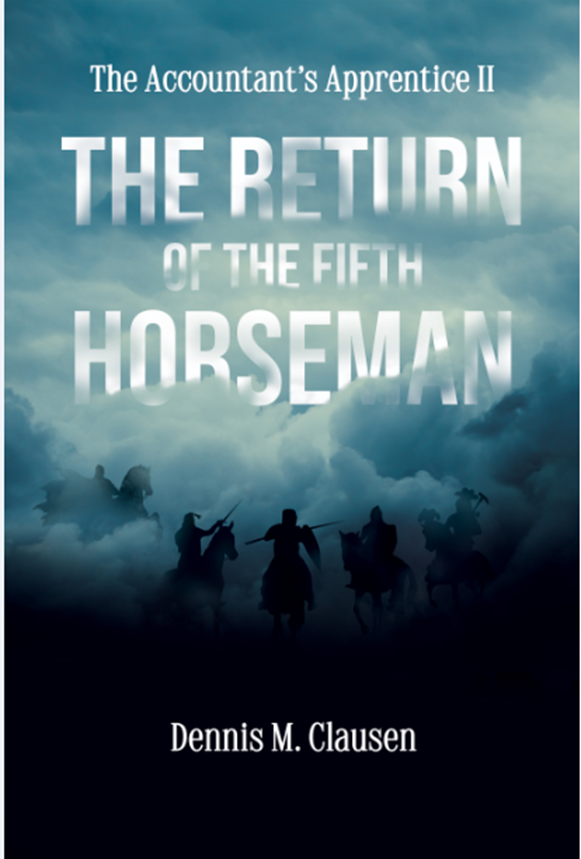
  • ACCOUNTANT’s APPRENTICE II: The Return of the Fifth Horseman by Dennis M. Clausen – Spiritual Fiction, Contemporary Social Issues, Political Fiction

    ACCOUNTANT’s APPRENTICE II: The Return of the Fifth Horseman by Dennis M. Clausen – Spiritual Fiction, Contemporary Social Issues, Political Fiction

    Justin Moore fights for the survival of his homeless Mission – and potentially the world – in Accountant’s Apprentice II by Dennis M. Clausen

    As the reader catches up with Justin in this sequel, he now directs the East Side Rescue Mission in San Diego. The mission sits far from the clean streets and tourist attractions of downtown. As a homeless shelter, East Side Rescue provides temporary beds for as many as possible, homes for a few workers – including the director himself – and as many hot meals as they can afford for their residents and regulars.

    But the tide of homelessness and the desperation that follows in its wake is rising all over the country. San Diego especially struggles, with winters and summers that people can still survive even on the streets.

    Corrupt forces array against Justin and the Mission.

    These rich and powerful people will do anything to reduce if not eliminate the struggling homeless. They see them as only interruptions to their flow of commerce and tourists.

    Even Justin doesn’t always see how truly awful the situation has become. Not until he’s called back into service by his old friend and mentor, the late “accountant” A.C. who just might be literally on the side of the angels.

    Or, has Justin’s weary, depressed and downtrodden head merely created an illusion of his old teacher?

    Justin is an unreliable narrator. Even he can’t decide whether he’s hearing A.C. giving him a mission to save the world, or whether he’s deluding himself in order to feel a bit of hope. What if he just wants an escape from everything wrong with the world?

    But Justin doesn’t even know the extent of the trouble. When he dreams that the Four Horsemen of the Apocalypse are literally barreling towards Earth, how literally should he take the vision? Neither Justin nor the reader knows for certain, but Justin, at least, has to try.

    Justin strives to save the world or at least stave off the inevitable.

    His quest will take readers on a compelling journey with roots in the allegories of Good Omens and American Gods. Along the way, they’ll find a fascinating puzzle hunt like The DaVinci Code – only with much higher stakes.

    Accountant’s Apprentice II explores everything from Renaissance art to ecological destruction. Political demagoguery and corruption frame the philosophical questions about how things got to be this way. Justin’s journey to hope and just a bit of enlightenment will keep readers guessing until the very last page – and after.

    Read our review of the first book in the series, Accountant’s Apprentice here.


    5 Star Best Book Chanticleer Reviews round silver sticker

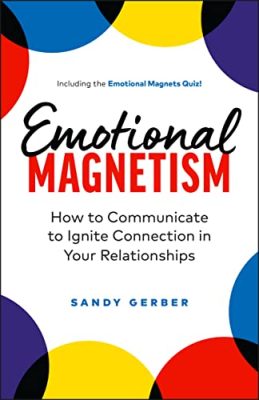
  • EMOTIONAL MAGNETISM: How to Communicate to Ignite Connection in Your Relationships by Sandy Gerber – Self Help, Communication, Life Goals

    EMOTIONAL MAGNETISM: How to Communicate to Ignite Connection in Your Relationships by Sandy Gerber – Self Help, Communication, Life Goals


    Emotional Magnetism: How to Communicate to Ignite Connection in Your Relationships is a self-help and marketing book in one—in fact, it’s a self-marketing book.

    A seasoned marketing professional, author Sandy Gerber uses common elements in marketing theory to aid those who wish to enhance their communication skills and ability to get along with people around them. It’s easy to be misunderstood or unheard, and it’s even easier to be at cross-purposes, leading to frustration and animosity. But using Gerber’s SAVE technique, understanding what we mean and what we need becomes clear.

    In this work, we learn what emotional magnetism is, and how well we can communicate when we learn how to harness it. We also learn about how emotional magnetism can be repelled when it’s not done right. But in order to use emotional magnetism, we must first learn what the emotional magnets are, using the acronym SAVE—short for safety (S), achievement (A), value (V), and experience (E)—and how they are reflected in our personalities.

    Which individual magnets reflect who we really are? What’s most important to us?

    Gerber points out that the magnets that represent us change as we change, and understanding that goes a long way to understanding ourselves and communicating with others. Say, for example, you love to travel to new and unexplored places, you want it to be worth the time and money spent, and you also want to make sure it’s as safe an experience as you can possibly make it.

    So, which one of these magnets resonates with you? Of course, if you’re more of an achievement magnet kind of person, these others may not be as important, because you may have academic or monetary goals. Then again, maybe that trip to new and unexplored places may be an achievement in itself. So with all those in mind, which magnet resounds with you the strongest?

    Let’s find out.

    Gerber explains how to identify our emotional magnets by taking an assessment quiz, allowing us to focus on our main emotional magnet. Finally, the author gives us four steps with which to activate our individual emotional magnetism.

    Gerber makes it clear that the magnets cannot “tell” you who to date; they don’t work that way. However, the magnets will allow you to get an idea of who is most likely to support your emotional needs, and vice versa. Once the reader understands the theory behind emotional magnets and starts viewing their relationships through the lens of these magnets, they may very well find that it becomes easier to “offer understanding, create rapport, and problem-solve like never before.”

    Gerber’s writing reflects her marketing background in that it is clear and crisp, and knows how to communicate.

    Emotional Magnetism is persuasive, and while the marketing concepts she brings forth are not new, she offers a novel approach to understanding them.

    “Emotional Magnetism begins and ends with communication,” author Sandy Gerber states, and by using these techniques, our communication with others and understanding of ourselves can be all the clearer.


    5 Stars! Best Book Chanticleer Book Reviews

  • BOONE and JACQUE: Cytrus Moonlight by A.G. Flitcher – Urban Fantasy, Mystery, Psychological Thriller

    BOONE and JACQUE: Cytrus Moonlight by A.G. Flitcher – Urban Fantasy, Mystery, Psychological Thriller

    A.G. Flitcher’s Cytrus Moonlight continues the Boone and Jacque series (book 4 of 4) with a thrilling journey through fear for the young characters – an exploration of psychological traumas and the uncanny manifestations in the surrealistic setting of Cytrus.

    Disasters can stir up a society’s darkest fears, spurring suspicion and ignorance. Cytrus Moonlight grows and evolves from its character’s obsessive worries. Boone, Jacque, and Shammy have moved to Cytrus and are living reasonably normal lives until an inexplicable murder disrupts their peace. Jacque’s uncle Leon is killed by poison. As the evidence of the murder case is revealed, more underlying tunnels of unrest come to light in Cytrus.

    The circumstances underlying Leon’s murder are unknown. However, Boone has a strange foreboding: he unexpectedly finds himself driving Leon’s car and feels a burning feeling on his neck. Boone begins to feel as if he is being watched – as if there are “a thousand eyes on him.”

    Soon, a psychedelic drug is loosed on the town, driving its recipients to witness their greatest fears and embrace repressed emotions.

    Mayor John Winterson invites the friends to a Christmas party, where the drug renders everyone into naked fools. The key suspect looks to be the eccentric, maniacal Dr. Button. However, the doctor’s own inexplicable death flips everything upside down.

    Jacque notices a monster while detectives are trying to locate the key to the puzzle of death and fear. He is cautioned not to ask questions that draw the wrong kind of interest. Cytrus’ many secrets, and Jacque and Boone’s tendency to attract trouble, make them susceptible to certain people – people who want to prevent them from “causing history in town to repeat itself” just as they did in their former town Saddleton.

    This story’s Magical Realism presents a farcical and satirical tone, with dark humor that never leaves the narrative’s surface.

    There is a consistent appearance of a bathos element in the YA urban fiction – a quick transition from a serious topic to dramatic dry humor. This ambiguity in the gravity of certain events implies a reflection of the traumatic brains of characters, which manifest themselves much more in a bizarre and topsy-turvy Cytrus. The combination produces an unreal atmosphere throughout the story – much like Terry Gilliam’s Brazil (1985).

    This thriller gently explores the idea of free will vs. fate.

    Boone and Shammy want to live a calm existence free of the turbulence and trauma they tend to attract, but numerous circumstances lead them along a path that looks to take them to their fate.

    Likewise, trauma remains an underlying theme throughout the story, as the novel sheds light on some of the characters’ psychological anguish. Be it Boone’s attempt to overcome past traumas, Jacque and Xantia’s explicit acknowledgment and embrace of their identities as pansexual and transgender, or Myamirah’s fear of Cytrus’ peace, the pent-up emotions spill out profoundly.

    Boone and Jacque: Cytrus Moonlight introduces some new bizarre characters while recalling some old ones from the prequel. Flitcher fills the novel with scenes and an atmosphere that is visually and auditorily stimulating, letting characters voice up their innermost thoughts and feelings. The mystery persists till the end as Cytrus’ Pandora’s Box of puzzles keeps readers guessing about the whys of many events and what awaits Boone and Jacque inside.

    The Boon and Jacque series achieved Finalist status in the OZMA Fantasy Fiction, 2021 CIBA Awards.

    Book Series Finalist sticker

    Chanticleer Book Reviews 4 star silver foil book sticker

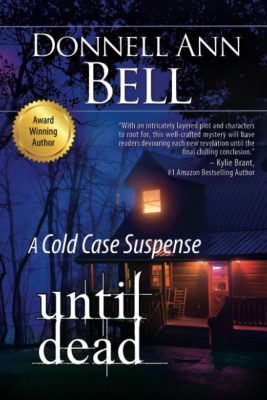
  • UNTIL DEAD: A Cold Case Suspense by Donnell Ann Bell – Murder Mystery, Suspense, Police Procedural

    UNTIL DEAD: A Cold Case Suspense by Donnell Ann Bell – Murder Mystery, Suspense, Police Procedural


    If a tree falls in the forest and no one is around to hear it, does anyone care? If the tree has connections to the rich and powerful, they just might. In Until Dead, Donnell Ann Bell suggests the many ways “elites” – those with seemingly limitless wealth and power – can manipulate the world to their wishes.

    Events that might otherwise go unnoticed take on great importance when they affect the powerful elites. With subtlety and skill, Bell reveals this as she takes the reader from an odd encounter in 2017 to an assassination attempt in Colorado two years later.

    Until Dead begins when Mark Rafferty, an up-and-comer in a general practice Denver law firm, well on his way to full equity, dies in a one-car accident at the beginning of rush hour in the fall of 2017. He leaves behind several open cases and his widow, Theresa O’Neil, an Assistant United States Attorney. Theresa has a lot of support behind her, including her boss, the Colorado U.S. Attorney, and an aunt who is a U.S. Senator.

    After Theresa survives an assassination attempt clearly set up by a knowledgeable killer, law enforcement realizes that she has a target on her back. Someone wants her dead, but who, and why?

    The Senator’s powerful connections push the issue until a multi-agency task force forms to investigate—the same multi-agency that brought the Black Pearl Killer to justice. Everett Pope, a Denver police investigator, works with agents from the FBI and ATF to bring the would-be-killer to justice and learn who hired him for the hit.

    Pride, greed, envy, and perhaps even a smattering of lust make for a tantalizing set of motives. The story is told from multiple points of view, even getting into the hit man’s head. The reader can develop rapport with these relatable, multi-dimensional characters.

    Bell’s familiarity with the city of Denver and the mountainous regions of Colorado shines in her imagery. Her knowledge of the structures and workings of U.S. government agencies is impressive, suggesting a lot of research went into this story. Until Dead is a deep dive into a complex web of government hierarchies, power brokers, cybercriminals, and cyber security combined with drones and C-4. It will keep you on the edge of your seat.

    The specificity of government structures works for and against the narrative, as the numerous acronyms attached to those government entities. But such is the nature of bureaucracies. Aside from this, the complex plot maintains its suspense, with an ending that hits like a destructive Colorado derecho.

    The second book in the Cold Case Suspense Series has launched Donnell Ann Bell into a spot as one of our favorite authors. Highly Recommended!

    5 Stars! Best Book Chanticleer Book Reviews sticker


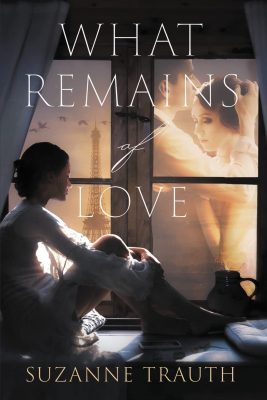
  • WHAT REMAINS of LOVE by Suzanne Trauth – Family Saga, Romance, Mystery

    WHAT REMAINS of LOVE by Suzanne Trauth – Family Saga, Romance, Mystery

    Suzanne Trauth’s What Remains of Love begins with the discovery of a family secret.

    Siblings Kate and DJ meet with their late father’s lawyer to go over the contents of their father’s will when it is revealed that a woman named Emilie had been added without their knowledge. DJ, an all-business, no-nonsense person, wants to deny the request. Kate wants to fulfill their father’s wishes even though they don’t understand the reason behind it. When they send a letter to Emilie, her daughter replies, stating Emilie has passed away and that she will not accept the money.

    Her brother’s curiosity is satisfied, but Kate can’t help but feel there is more to the story, especially given that their father withheld his experiences in the war from them both.

    Who was this mysterious woman, and why did their father have such a powerful connection to her? And why did he need to keep their relationship a secret?

    While going through her father’s things, she comes across a memoir written by Emilie during the later years of the war. Fans of historical fiction, romance, and books such as Kelly Rimmer’s The Things We Cannot Say will love Suzanne Trauth’s story of love, family, and the passage of time.

    Trauth’s novel builds on several subtle layers that beautifully blend to create a profoundly moving story.

    The most obvious of these layers is the experience of grief in many forms. After their father passes, Kate and DJ grieve differently from one another. Many times throughout the novel, grief opens opportunities to see the deeper parts of others that are usually hidden, brings family closer, and finds common ground between strangers.

    There is also the grief of things had and lost and of life’s what-ifs – that sadness of knowing the past can’t be changed and why things happened the way they did. Through the grief in this story, there is also so much love. The title of this book perfectly fits its message that no matter what happens in life, whether good or bad, love will endure through it all.

    What Remains of Love defies simple categories.

    One could say it’s a mystery, and readers will turn the pages rabidly like Kate trying to discover what happened to Emilie so long ago. This book is a historical fiction novel with a beautiful love story and a contemporary fiction about a family dealing with life after losing a loved one. Trauth expertly establishes her characters, that they soon feel like they are sitting next to you, telling you the story themselves.

    A phenomenal story of life and everlasting love, What Remains of Love will remain with readers long after the last page. Highly recommended.


    5 Stars! Best Book Chanticleer Book Reviews