During the pre-internet era of 1980, Kevin and his friends just want to enjoy a good fishing adventure, but troubles from the past come back to complicate their carefree boyhood in Murray Richter’s novel, Fishing for Luck.
As the group prepares their fishing raft for its maiden voyage, Kevin tries to solve these problems himself before anyone else knows of them, but no matter what he tries, the situation only gets worse. His parents seem on the verge of a divorce, his mentor struggles to find his long-lost love, and his sister just wants her bike back already. As Kevin takes on more and more responsibility to avoid what seem to be inevitable consequences, will he be able to see that this is all too much for one kid to handle and ask those he trusts for help?
Fishing For Luck is a wild ride of pre-teen hijinks reminiscent of the golden age of coming-of-age comedies and sitcoms we all know and love. Our young main character gets into a situation where everything goes wrong, and scrambles to fix it before anyone notices. Kevin’s predicament becomes engrossing with an extra dose of danger.
Rudy and Preech, Kevin’s friends, make a close-knit group with him that loves fishing, pranking each other, and learning from their mentor, Preech’s uncle.
Kevin cares deeply about his friends and family, and part of his desire to solve his problems on his own comes from a wish to protect them. He faces the dilemma that if he tells anyone, then the people he cares about will face harm. During the parts of the story where he’s with Rudy and Preech, but can’t share what is going on, they still manage to cheer him up because they’re great friends who understand each other.
Fishing For Luck shows that we don’t always give kids enough credit.
They are smart and can have great ingenuity, yet they may not have thought fully about the consequences of their actions. However, Kevin and his loyal gang face the problem head-on and try to find a solution.
Author Murray Richter creates a funny and creative middle-grade story that people of all ages can enjoy. Kevin is a relatable character with a big heart and strong beliefs, dealing with a spiral of misfortune. Don’t miss out on this story of kids taking on the world in Fishing For Luck.
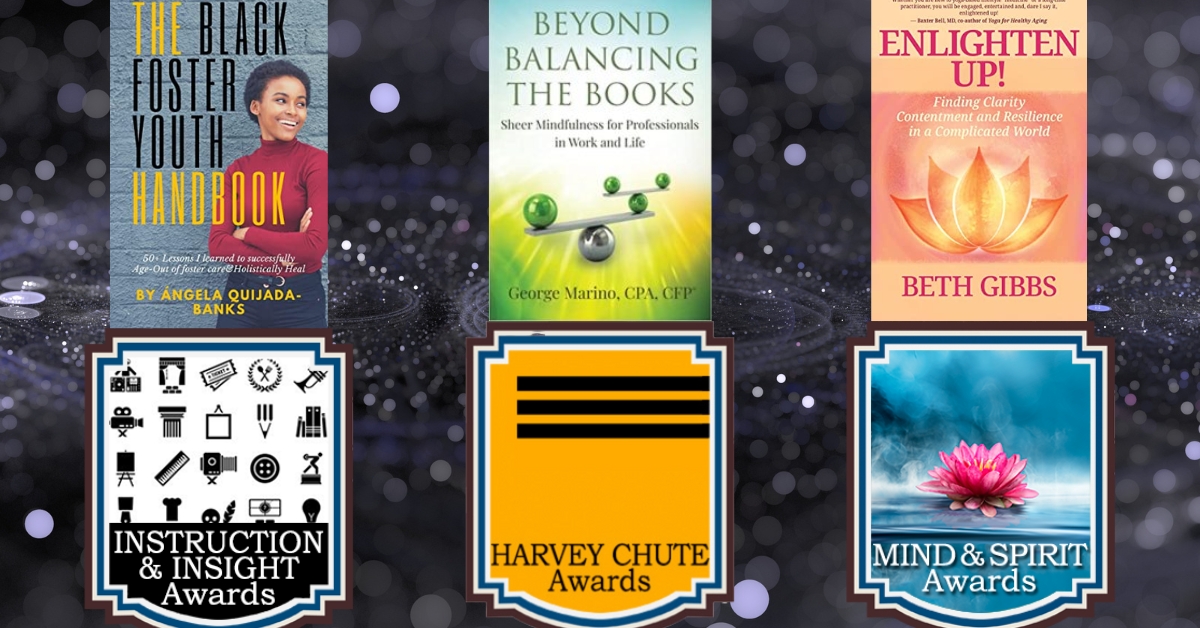
Looking at the I&I, Harvey Chute, and Mind & Spirit Awards
There are two types of Non-Fiction that we commonly see: Narrative Non-Fiction and Prescriptive Non-Fiction.
Just what is the difference between types of Non-Fiction?
Narrative often makes the most sense, but that doesn’t mean that Prescriptive Non-Fiction deserves a bad rap. Let’s look at some definitions:
Narrative Non-Fiction:
The primary focus is story. Often a beginning, middle, and end, it stands strong with most fiction stories, with the notable difference that it is, in fact, Non-Fiction. Memoir is similar, though obviously focused on one person’s first person experience of their own life.
Prescriptive Non-Fiction:
The primary focus here is conveying a message. Narrative and writing style help convey this message in the same way it conveys theme in a Narrative Non-Fiction. The person writing must be an expert in the subject. How else do you make a full book of it?
While we’re going to focus on three different genres of Prescriptive Non-Fiction, you can always read more about it through resources like this one here.
Three Genres of the CIBAs for Prescriptive Non-Fiction
While you can see our full list of Non-Fiction Genres (including the newest for Military and Front Line Books) here, we consider our I&I, Harvey Chute, and Mind & Spirit Book Award Programs to be closest to Prescriptive Non-Fiction. The main focuses for these three Awards programs are How-To, Business & Finance, and Spirituality and Mindfulness.
There’s a good deal of overlap with the other Awards as sometimes the instructional side of a workbook takes over more than the part that looks directly at financial or spiritual welfare. However, the key here is that you learn while enjoying a book. Maybe the book is framed through someone’s personal experience, their clinical experience, or told in the form of a travelogue, but no matter what it brings you through to a new understanding by the end.
What Does Prescriptive Non-Fiction Look Like?
Examples are always best in these cases. Here are some of our favorite Non-Fiction books that we’ve reviewed recently focusing on How-To, Business & Finance, and Spirituality.
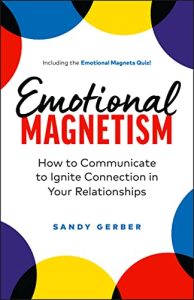
EMOTIONAL MAGNETISM: How to Communicate to Ignite Connection in Your Relationships
By Sandy Gerber
Emotional Magnetism: How to Communicate to Ignite Connection in Your Relationships is a self-help and marketing book in one—in fact, it’s a self-marketing book.
A seasoned marketing professional, author Sandy Gerber uses common elements in marketing theory to aid those who wish to enhance their communication skills and ability to get along with people around them. It’s easy to be misunderstood or unheard, and it’s even easier to be at cross-purposes, leading to frustration and animosity. But using Gerber’s SAVE technique, understanding what we mean and what we need becomes clear.
In this work, we learn what emotional magnetism is, and how well we can communicate when we learn how to harness it. We also learn about how emotional magnetism can be repelled when it’s not done right. But in order to use emotional magnetism, we must first learn what the emotional magnets are, using the acronym SAVE—short for safety (S), achievement (A), value (V), and experience (E)—and how they are reflected in our personalities.
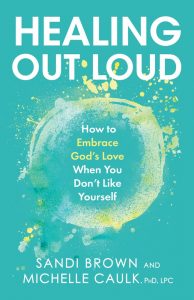
HEALING OUT LOUD: How to Embrace God’s Love When You Don’t Like Yourself
By Sandi Brown & Michelle Caulk
Two writers – friends, and former counselor and client – combine forces to create Healing Out Loud, a dynamic book aimed at understanding and overcoming the deficits that life hands us.
Sandi Brown, a radio personality with more grit than she realizes, seeks professional help. Michelle Caulk’s therapeutic methodology perfectly suits this case. The two offer examples of wishing for and finding true mental health through the development of a remarkable communicative relationship.
Each chapter of the pair’s psychological explorations begins with a memory from Sandi, accompanied by her expanded view of incidents from childhood and beyond. These ruminations are then matched by counselor Michelle’s personal grasp of Sandi’s specific dilemmas, and well-constructed guidelines for a healing process that readers can incorporate into their own lives. Sandi, grappling with low self-esteem, was traumatized as a child when her father left her mother and brother, loudly and finally, with no explanation.
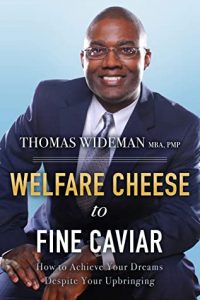
WELFARE CHEESE to FINE CAVIAR: How to Achieve Your Dreams Despite Your Upbringing
By Thomas Wideman, MBA, PMP
First Place Winner in the Harvey Chute Awards
Thomas Wideman, the author of this dynamic self-help manual, Welfare Cheese to Fine Caviar: How to Achieve Your Dreams Despite Your Upbringing, rose from poverty and dismay to a life of security and personal achievement through techniques he shares with readers who can incorporate them into their own life plans.
Wideman came from an impoverished African American family wracked by confusion, chaos, and, at times, criminality. His mother had three sons by three fathers, and he would come to know his own father only peripherally, eventually learning that the man murdered people and subsequently died in prison. The boy grew up in tough neighborhoods and ate “welfare cheese” (a block of pre-sliced heavy American cheese that supposedly melted well). Every month, making ends meet became more and more difficult. In an early chapter of this finely woven chronology, we see him taking food from trains parked along the railroad tracks and running from the authorities. In this, as in each new chapter, he speaks of confronting severe issues and finding ways to resolve them. In the case of the theft and other childhood incidents of fighting, experiencing bullies, and battling racism, he speaks of making up his mind that “my circumstances need not be my limitation.”
A math whiz, Wideman found his strengths through schoolwork, striving for A’s instead of merely accepting B’s.
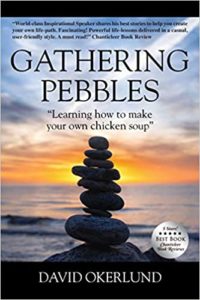
GATHERING PEBBLES: Learning How to Make Your Own Chicken Soup
By David Okerlund
Inuit of the Canadian Arctic are known for creating stone structures used as navigational points and message centers for fellow travelers. Some of these directional monuments provide a spiritual connotation meant to enrich the journey.
Gathering Pebbles is David Okerlund’s own “inukshuk” of sorts, a book filled with stories, recollections, and memorable life events that have become part of his personal road map for living. Okerlund, a world-class inspirational speaker, shares his best stories to help you create your own life-path. He shares this collection of nuggets in the interest of helping others along their chosen path and hoping to encourage their own “gathering” and sharing of valuable knowledge.
Okerlund directs his writing in a casual, user-friendly style. Each of the book’s chapters is highlighted as a pebble gathered on his winding life’s path. Titles are effectively posed as questions to help draw readers into the topic at hand. Each chapter is formatted with a variable mixture of contemplative quotes, poetry, recaptured historical moments, and personal experiences, to showcase qualities such as perseverance, retaining a sense of childhood wonderment, the importance of faith, and following your dreams.
Each of these books does an excellent job navigating their genres (and their cover designs!), making it clear who they appeal to and how they can help the reader.
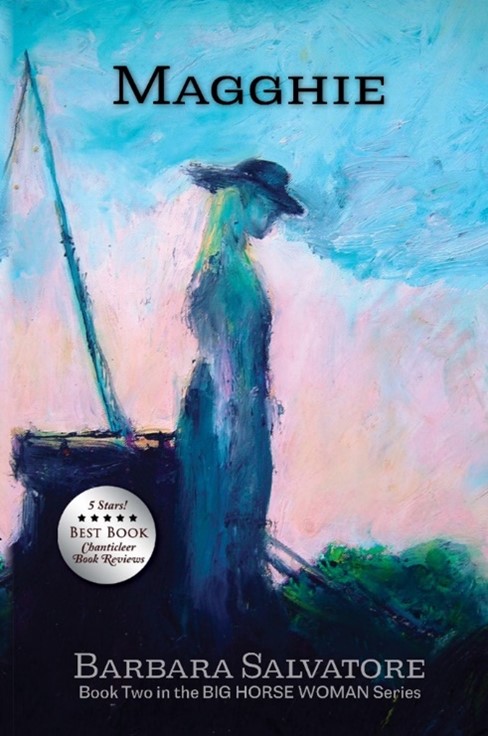
Award-winning author Barbara Salvatore brings human foibles, horse traits, and herbal lore together through a young teenage girl’s eyes in her historical fiction novel, Magghie.
Magghie Wilder has much to cope with, much to learn. She grows up as the only child of Hans and Maye, immigrants from Germany. They make a home in Pennsylvania, in the expanding United States. Hans talks too much, expounding on the simplest issues in grandiose German. He seems to have little time for listening to his curious but often distracted daughter.
But Hans does teach Magghie how to train and handle the big draft horses needed for heavy hauling and farm work. He encourages her to drive her own team and learn the habits of each one. Maye, by contrast, dreams in quiet and calm, and from her, Magghie learns by watching. Maye understands plant lore deeply and elicits in Magghie the revelation that every green growing thing can be helpful and significant.
The three live on a successful large farm in relative isolation. Neither religion nor socializing play a role in their routine.
Things change when Braun, a blacksmith, and his lanky adolescent son, Karl, appear and are kept on as help with horses and farm. Magghie learns a smattering of English from the more worldly-wise visitors. Then, the somewhat chaotic but friendly incursion of a Mormon family follows. Magghie meets the husband, children, and two wives, one of which is pregnant. Maye, recalling the sorrows of losing more than one infant, helps Dora in childbirth. Magghie will watch and come to comprehend why Maye has always seemed so self-enclosed. From the Mormons, Magghie learns something else her parents had resolved never to tell her – the existence of God and the place of religion in human lives.
Salvatore sets her scene, and the plotlines seem poised for positive outcomes. Until someone brings a life-threatening disease to the valley, creating havoc and despair.
Salvatore’s current work includes teaching and consulting in Plant Medicine and Horse Care. Since she was thirteen, she has kept a “Dream Journal” and envisions her Big Horse series as a set of four novels, with Magghie being the second book. Her own interests shine clearly through every page of her story, which she tells in a cozy mix of prose and poetry.
She has appended a lengthy section for her readers, offering further elucidation of the subject matter. This includes the history of Pennsylvania’s settlement, German language usages, extensive notations regarding the Percheron horses used on Wilder’s farm, and further facts about the Mormons’ epic cross-country pilgrimage.
Salvatore’s Magghie has definite cinematic potential. The story ends with an open invitation to the sequel, promised by the author. That’s good news!
A vivid, mystical tale of a young girl coming of age amidst her people, the Ponca, on the Great Plains, in the early 1800s. This prize-winning novel, Big Horse Woman by Barbara Salvatore, offers poetic imagery and a glimpse of the world seen through the eyes of a gentle healer and powerful seer.
Water Willow is born under a black willow tree, daughter of an enchanting songstress mother, a fearless hunter father, a “seed carrying” grandmother known for her understanding of curative plants, and a grandfather who carries the secret lore of bears. She will inherit properties of all of them. The child bears a visionary gift that will be articulated when she reaches four years of age, so clear then that the whole tribe gathers to listen: enemies are on the way, and all must flee to the yet undiscovered site of a big white sycamore tree. Once there, they find protection and nature’s abundance and can settle in their new home, Planting Creek.
As Water Willow grows, she continues to have visions, some of them too horrible to share.
She sees the inevitable slaughter of a young man who wishes to take her as his wife. Water Willow acquires the secrets of communication with animals, hones her hunting skills, and develops her knowledge for using particular plants for healing. Her name becomes Big Horse Woman when she rescues a colt drowning in a flash flood and tames him even as he grows to great size.
Maturity brings expanded inner sight, making her realize that wisdom can cause pain as well as prosperity.
Big Horse Woman’s people, now under the subtle sway of white men invading their homeland, bringing disease and discord, are less prepared to follow her wise message: “We will not grow tall corn or live long if war is what we seek.”
So Big Horse Woman will take to the wilderness with her Big Horse and her wolfish companion, Ears Up, becoming a loner and absorbing needed knowledge at each turn of her new-made path. Discovering a hidden bag of corn seed on the trail, she begins to realize they are close to their old home, and she must follow the clues as she moves on.
One remarkable feature of Salvatore’s authorship is the diligence, the undeniable effort she has made to create this story.
A lengthy segment following the tale gives a factual underpinning for the Ponca people’s history, language, and the many glowing images that infuse the narrative, a combination of prose and poetry appropriate to the magical universe inhabited in the heart of its heroine. When Water Willow brings home a scrap of beautifully decorated cloth found on the horns of a buffalo, she is unwittingly bringing smallpox to plague herself and her extended family, one of the eerie “legacies” of early white settlement of the West.
A gripping reference to a historically recorded shower of shooting stars on November 13, 1833, heralds the girl’s incarnation. Descriptions of the women’s cures drawn from their natural surroundings will be comfortably recognizable to anyone familiar with herbal remedies in the modern era. With these and other salient references, Salvatore shows her admirable devotion to her setting and her subject. Salvatore’s book is the first in what she has titled the Big Horse Series and will doubtless garner a wide readership for this work and its sequels.
November brings insight, reflection, and contemplation of the state of affairs in which we find ourselves. As the year winds down, so, too, we reflect and ponder what we have done, who we are, and who we would like to be.
It’s a perfect time to curl up with a good novel, you know, the type that grabs you and lives with you long after you put it down.
This is why we celebrate novels that are literary, satirical, and contemporary. This is why we celebrate the Chanticleer Int’l Book Awards – Somerset Literary Novels Writing Competitions.
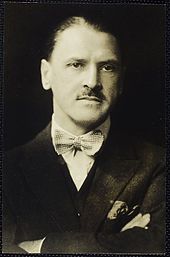
We chose William Somerset Maugham because we love his work and love what he has to say about it:
“I am a made writer. I do not write as I want to; I write as I can… I have had small power of imagination… no lyrical quality… little gift of metaphor I had an acute power of observation, and it seemed to me that I could see a great many things that other people missed.” W. Somerset Maugham
W. Somerset Maugham was a British author who wrote plays and short stories and novels. He was a dashing and daring man who did not wish to follow the other men in his family to practice law. Imagine, an individual in the Victorian Era… He was born on January 25, 1874, in Paris (at the British Embassy) and died on December 16th, 1965, in Nice, France.
During the First World War, our Somerset proved his valor by serving with the Red Cross in the ambulance corps (remember his earlier medical training) and was recruited by the British Secret Intelligence Service right before the October Revolution in 1917.
Somerset dove into medicine and was fairly good at it until he wrote his first novel,Liza of Lambeth(1897) and all bets were off. The book flew off the shelves and people were reportedly wrestling in the streets for copies to gift their loved ones. (*Creative license at work – however, you don’t know that this did not happen…) He was known to say, “I took to it (writing) as a duck takes to water.”
At the age of sixty-six, he had to flee with only a suitcase from the encroaching Nazis as they advanced across Europe. He escaped to England and then on to South Carolina, in the U.S. where he continued to work on the screenplay for Razor’s Edge. He moved to Hollywood and then eventually back to France.
Did we mention that W. Somerset Maugham was repudiated to be the highest-paid author of the 1930s?
It’s obvious why we chose Somerset to represent our Literary & Contemporary Fiction Awards!
Abbie Rose Stone is a woman determined to follow her newly discovered dream of producing her own craft hard apple cider while navigating the ups and downs of family life with her grown sons and husband.
Abbie Rose knows how to deal with adversity, and dives headfirst into this new chapter of her life with energy and passion. She describes her early adulthood years of infertility struggles and the hardscrabble way she built her young family through invasive medical procedures, a surrogate attempt, and adoption barriers.
The 2019 Somerset Award Grand Prize Winner was:
The Proprietor of Theatre Life by Donna LeClair
Still in progress, we’re excited to review Donna’s book when it comes out!
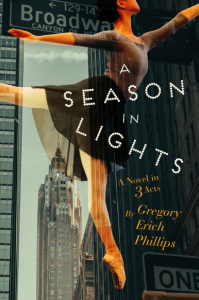
Gregory Erich Phillips’ A Season in Lights is a well-crafted, engaging exploration of creatives, each following their heart and trying to reach their dream.
Against backdrops of the 1980s AIDS crisis and the more recent COVID-19 pandemic, the story entwines the lives of a 30-something dancer and an older musician as they strive to make their artistic mark in the cultural capital of New York City.
Here in a two-fold unveiling, the story comes to life from the first-person perspective of Cammie, a starry-eyed aspiring dancer from Lancaster, PA, and the third-person reveal of Tom, a more seasoned black pianist. He longs for a classical career but is too often labeled a jazz musician. Cammie first encounters Tom in a studio dance class where he’s taken a job as the musical accompanist. Befriended by the gay dance instructor, Tom heeds the worldly advice offered about surviving in the Big Apple. “All you’ve got to do is convince people that you belong. You’ve got to tell them who you are before they tell you.”
The 2021 Somerset Award Grand Prize Winner was:
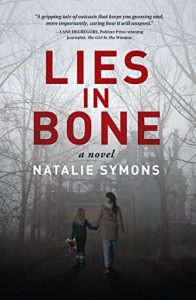
Lies in Bone Natalie Symons
A review of Lies in Bone is forthcoming. However, we know you’ll love this intricate story told with beautifully tight control. A mystery lies at the heart of this book that has the feeling of a grown-up To Kill a Mockingbird meets Serial Production’s S-Town Podcast. Highly Recommended.
Will your novel be recognized as the best of the best in the Somerset Awards for 2022? Find out!
The last day to submit your work is November 30, 2022. We invite you to join us, tell us your stories, and find out who will take home the prize at CAC23 on April 29th.
As our deadline draws near, don’t miss this opportunity to earn the distinction your literary novel deserves! Enter today!
The SOMERSET Book Awards is a division of the Chanticleer International Book Awards – the CIBAs.
The winners will be announced at the CIBA Awards Ceremony on April 29, 2023, which will take place during the 2023 Chanticleer Authors Conference. All Finalists and First Place category winners will be recognized, the First Place Winners will be whisked up on stage to receive their custom ribbon and wait to see who among them will take home the Grand Prize. It’s an exciting evening of dinner, networking, and celebrations!
First Place Winners and Grand Prize winners will each receive an awards package. Whose works will be chosen?
The excitement builds for the 2022 SOMERSET Book Awards competitions.
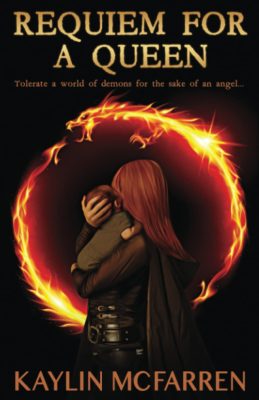
To what lengths will a person go when ultimate power is within reach? Requiem For A Queen by Kaylin McFarren explores the depths of greed that propel a daughter to defy her father, the Devil himself.
Lucinda uses evil means to pursue an equally dark end, the crown of Hell. How can this woman be stopped, and an innocent child she’s stolen away be saved? Is there anyone willing to step forward, and muster the strength to stand up against the destructive battle between the Devil and his daughter?
Samara, a hybrid between angel and demon, can only save her abducted son by stepping into that battle.
Though she feels alone and powerless, Samara is determined. She refuses to reveal her location or seek help after escaping brutal imprisonment by the Devil, who raped her. Pregnant, and now in labor, Samara secretly delivers the Devil’s son and remains in hiding. Her baby is the most precious being to her; she’ll do anything to protect him, and she celebrates him as he grows. As she finds happiness, Samara becomes interested in an intriguing, handsome being who rescued her from drowning.
That joy is torn apart the day her son disappears. Lucinda has found him and decides to eliminate the only other living heir to their father’s throne.
Samara has now lost all she loves. She cannot seek help from her own family, or the Devil will execute his threats against them. So, she begins an anguished search alone, but Lucinda is devious and cunning, keeping a step ahead of her.
Samara has a terrible decision to make. Will she return to the Devil, seeking his help to find their son? What life will that leave for them both? Or, as a half-demon herself, she could try to stoke her powers, in defense of her family. Can she find her son and win him back before he is destroyed? Or will he manage to break free on his own?
Author Kaylin McFarren has created an emotional clash of wills in this third installment of the Gehenna series.
In this book, the three fervent opponents fight to win regardless of the consequences. They utilize every weapon available, unwilling to back down, in this incredible fight to discover the true value of family devotion and personal redemption. The reader is thrust into the midst of a page-turning journey, examining the darkest crevices of the nature of evil, particularly in the Devil’s actions.
Yet, Samara is part demon, and Lucinda is the Devil’s daughter. Both women struggle with their emotions, and their choices to act on the powers available to them. McFarren artfully creates a Lucifer who struggles as well, in his case, against glimpses of sweeter desires that do not fit his devilish and demonic self. These characters do not fight only external foes, but also internal forces, creating a compelling story of good versus evil that springs from within as well as from without.
The Military & Front Lines Book Awards recognize emerging talent and outstanding works in Narrative Non-Fiction and Memoir, exploring the lives of those who serve their country and others. The Military & Front Lines Service Book Awards is a genre division of Chanticleer International Book Awards and Novel Competitions (CIBAs).
All of us at Chanticleer have family that has served. Kiffer Brown grew up as a military brat with many members of her family serving.
2nd Lt Billy Wayne Flynn, U.S. Army. West Point Graduate
Second Lieutenant Billy Wayne Flynn was killed in action, Vietnam, January 23, 1967. He was 24 years old. Billy Wayne gave to me a book of poetry from his studies at West Point before he left for Viet Nam. He was my cousin. It was my first book of poetry and has his notes. I was in fourth grade. I still have it and treasure it. – Kiffer
Robert Gerard Beaumier Sr. who served in WWII
My father would often tell the story of how his dad, Robert, was in France during World War II. At one point a dog came and wouldn’t stop barking at his unit, no matter how much they told it to go away. Finally, Robert said “Va t’en!” and immediately the dog ran off. Everyone was suitably impressed that the dog spoke French! – David
The new Division honors the following Non-Fiction Narratives:
Military and Armed Forces Service Narratives
Medical Stories focused on Nurses, Doctors, Health Care Workers, and other Essential Workers
Stories of Community Service Workers such as Firefighters and Police
CARE, Peace Corps, Red Cross, Doctors Without Borders, and other service organizations
Work in Agencies that serve their Community and Government
Families of those who serve in these Community Roles
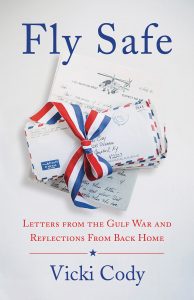
FLY SAFE: Letters from the Gulf War and Reflections from Back Home By Vicki Cody
Not many people can capture the emotions that coincide with war, but Vicki Cody joins the ranks of those who do in her wartime memoir, Fly Safe: Letters from the Gulf War and Reflections from Back Home.
This powerful memoir shows us the behind-the-scenes lives of the women, children, and families left at home while their soldiers set off for war, bringing us close to their raw vulnerability. Fly Safe fascinates as it informs readers of what one wife experiences as her commander husband leads his battalion to the middle east.
DEAR BOB: Bob Hope’s Wartime Correspondence with the G.I.s of World War II By Martha Bolton with Linda Hope
During World War II, Bob Hope traveled almost ceaselessly to outposts large and small, entertaining US troops – and inspiring them; Martha Bolton brings the extent of this work to light in Dear Bob.
Writer Martha Bolton worked with and for comedian Bob Hope. Now, with Hope’s daughter Linda, she has gathered and organized the letters written to Bob by the soldiers he helped.
The Chatelaine Book Awards recognize emerging new talent and outstanding works in Romantic Fiction. The Chatelaine Book Awards is a division of the Chanticleer International Book Awards (The CIBAs).
Chanticleer International Book Awards is looking for the best new books featuring romantic themes and adventures of the heart, historical love affairs, perhaps a little steamy romance, and stories that appeal especially to fans of affairs of the heart to compete in the Chatelaine Book Awards (the CIBAs). We will put them to the test and choose the best among them.
These titles have moved forward in the judging rounds from all 2022 Chatelaine Romantic Fiction entries to the 2022 Chatelaine Book Awards LONG LIST. Entries below are now in competition for 2022 Chatelaine Shortlist. The Short Listers will compete for the Finalist positions. All FINALISTS will be announced and recognized at the Chanticleer Authors Conference (CAC23).
The First Place Category Winners, along with the CIBA Division Grand Prize winners, will be selected from the 25 CIBA divisions’ Finalists.
We will announce the 1st Place Category winners and Grand Prize Division Winners at the CIBAs Banquet and Ceremony on Saturday, April 29th, 2023 at the luxurious Hotel Bellwether in Bellingham, Wash. sponsored by the 2023 Chanticleer Authors Conference.
These titles are in the running for the SHORT LIST of the 2022 Chatelaine Book Awards novel competition for Romantic Fiction!
Join us in cheering on the following authors and their works in the 2022 CIBAs.
Jerry Gundersheimer – Reach: A Nexus of Life and Love
Reenita Malhotra Hora – Operation Mom
Valerie Taylor – What’s Not True
Evie Alexander – Kissing Games
Tonya Ulynn Brown – The King’s Inquisitor
Anthony R. Licata – Caesar Obsessed: Passion, Conquest, and Tragedy in Gaul
Jacek Waliszewski – Air Boat
Susan K. Hamilton – Stone Heart
Carol Van Den Hende – Orchid Blooming
Linda Cardillo – A Place of Refuge
Antonia Gavrihel – Back to One
KC Cowan – The Bennets: Providence & Perception
M. I. Dugast – Ekstasis – The Return of the Sovereign Heart
Amy Schisler – The Good Wine
Josanna Thompson – A Maiden’s Journey
Wendy Rich Stetson – Hometown
D. Lieber – A Very Witchy Yuletide
Marie Jones – Those We Trust
T.K. Conklin – Outlaw’s Redemption
Debra Whiting Alexander – A River for Gemma
Suzanne Smith – Lilah’s Limit
Patricia Ann Williams – The Garret on Boulevard Voltaire
Cinda K. Swalley – The Golden Hearts Club
Emma Lombard – Grace on the Horizon
Eve M. Riley – The Refusal
S.G. Blaise – The Last Lumenian
Manmohan Sadana – Healing Strings
Gail Meath – Agustina de Aragón
Gail Hertzog – Crossing the Ford
Kelly Miller – Captive Hearts
Mary Kolles and Mary James – Cyber Nothing
Mike Owens – It Had to Be You
J Fremont – Magician of Light
E.F. Dodd – Risky Restoration
Clare Flynn – Jasmine in Paris
Alice McVeigh – Harriet: A Jane Austen Variation
Joy Ross Davis – The Hit Man’s Wife
Cheri Champagne – To Woo A Troublesome Spy
Cheri Champagne – The Charming Spy
Daniela Valenti – Sentinel 10: The Crystal Skull
Anna Casamento Arrigo – The Shadow’s Secrets
E.E. Burke – Tom Sawyer Returns
Good luck to all as your works move on to the next rounds of judging.
PROMOTING OUR AUTHORS!
This post has been posted on the Chanticleer Facebook Page. We try to tag all authors listed here in the FB post. However, for FB to allow us to tag an author, that author must LIKE our page and Follow Chanticleer Reviews.
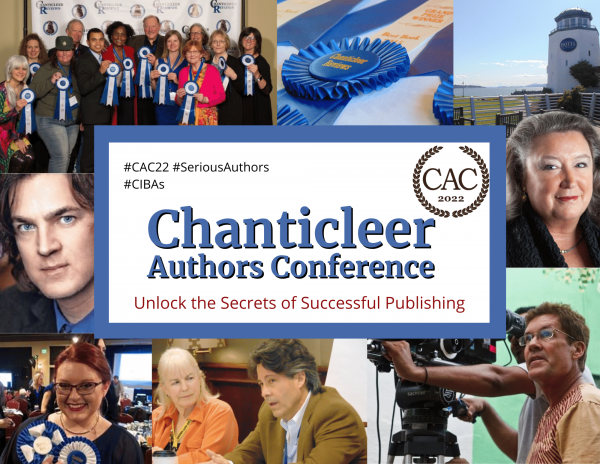
Seating is Limited. The esteemed WRITER Magazine (founded in 1887) has repeatedly recognized the Chanticleer Authors Conference as one of the best conferences to attend and participate in for North America.
Certified by Roger Wilson-Crane is a multi-award-winning comedy-drama, following one man down three sharp turns in his life trajectory.
Based on real-life events, Certified shows the narrator’s birth, marriage, and death, three of the most significant milestones in human life. The book is divided into three sections.
“One Unexpected Birth” explores his flawed string of relationships until he meets Dawn, the love of his life. However, a woman from the past makes a comeback, threatening to shatter his newly found happiness.
“One Hapless Wedding” careens about his well-planned wedding in Puglia, Italy, which is trampled by Justin Timberlake who wants the same venue. “One Bizarre Death”, on the other hand, follows the loss of the narrator’s loved one and the pain and confusion that surrounds an unexpected death. Certified is full of humor, heart, and unexpected gems that one might find in a trunk of well-lived memories.
A work of depth, this story is carefully wrought with nuance and wisdom, serving up a worthy exploration of the human imperfections in our contemporary world.
With honesty and sensitivity, Author Crane makes this chronicle of a man’s choices inviting and restorative. Even with our best efforts and good support, the myriad attachments we develop over a lifetime, to desires, expectations, people, possessions, and ideas, all keep circling back to clutter the pathway and entangle us. Crane’s novel manages to give an empathic portrait of the struggle to break free and find peace.
Backstory weaves naturally with the narrator’s present life, making the plot easy to follow and understand. Dialogue and prose are well-balanced, working together to show the emotional depth of the characters. The most striking aspect of Certified is the quality of writing, which is original, fresh, and unique. Every word counts throughout the protagonist’s thoughts, emotions, and opinions on life.
With its stellar prose, the text introduces new characters along the way who are equally fleshed out.
Certified emphasizes the impact of small, seemingly insignificant moments on its characters, showing their capacity to change people and the world around them.
It takes natural talent for an author to make a fictional narrative appear to be a real-life story. Crane offers readers this rare experience, prompting readers to see themselves in the story. Themes of hope, heartbreak, loss, love, and change flow seamlessly, leaving no cliffhangers as they propel toward the end.
Overall, this is a tightly woven and intelligent comedy-drama that, despite its length, is compelling enough to binge-read in the course of a weekend. Comedy fans will enjoy Certified by Roger Wilson-Crane along with the heartfelt lessons that it imparts.
You have an idea. Not just any idea, a big idea! We’re talking ten thousand pages, hundreds of thousands of words, the next Great Doorstop of a novel!
Consider breaking that up into a series!
It might be easier to split up the book digitally
Smaller books are more accessible, and a series keeps you in the front of your readers’ minds. With books consistently coming out, winning awards, and receiving reviews, the marketing for those happens much more naturally than having to bring out a backlist of unrelated novels. When a book takes place in a series, a reader who read an earlier book already knows they’re going like what they pick up.
Theme is the central idea of the series. Your theme informs the main character’s goal, their motivation to pursue that goal, and the threats to their success.
Your stories are grounded in the theme. A hero who saves the world from evil plans will experience different challenges than two teenage friends who love to solve small-town mysteries. The theme helps you maintain the tone of each book in the series. If one book is filled with irony and another is deadly serious, your readers will be disappointed and stop reading. That’s why your theme is important to the success of the entire series.
There’s no guaranteed formula, but you can start out by doing some serious research into great series that have already succeeded. The tools you discover will help fashion unique work for you and your voice.
Let’s Dive in!
Research and Read
All good story research starts somewhere
Everyone will tell you to be a great writer, you should be a great reader. Think about the series you want to write, and ask yourself: What authors do I admire who are doing something similar? You’re going to want to look through their books for all that we will discuss here, as well as comparing it to your own understanding of structure and what makes a good story.
Now that you have your list and a running understanding of what’s making the books work, you can take notes on what your favorite series are doing that makes them your favorite series! Your notes should cover the important events in each book, and then ask yourself what the overall point of the book was, and finally how did that book fit into the series as a whole.
With regards to character, you’ll want to examine which central characters return, and how many new characters come on the scene (these are named characters where you receive background on them and they have a non-trivial impact on your main cast).
At the end, do a comparison of themes between books and ask how they relate to other books in the series.
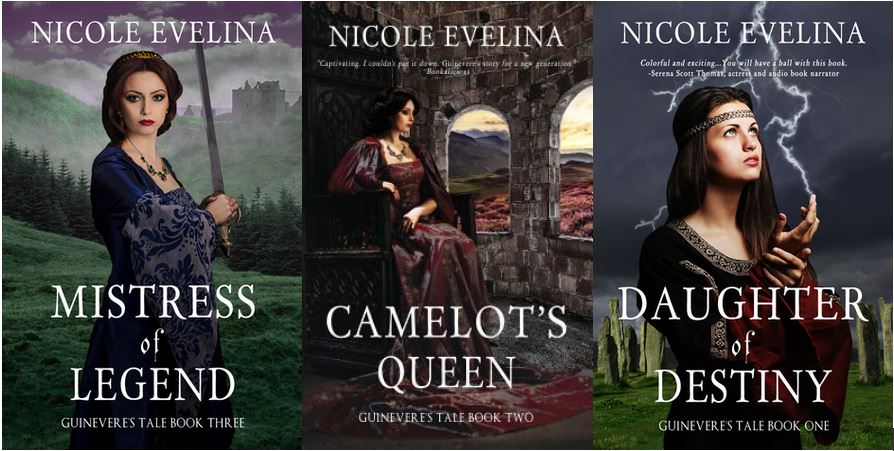
Here are some of our favorite series that also won First Place in the Series Awards! you could look through for ideas. Let us know if any of them are similar to what you want to write!

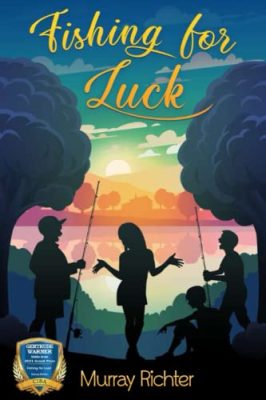
 During the pre-internet era of 1980, Kevin and his friends just want to enjoy a good fishing adventure, but troubles from the past come back to complicate their carefree boyhood in Murray Richter’s novel, Fishing for Luck.

 Award-winning author Barbara Salvatore brings human foibles, horse traits, and herbal lore together through a young teenage girl’s eyes in her historical fiction novel,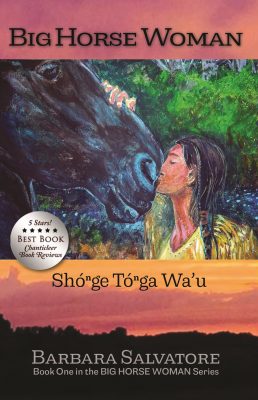








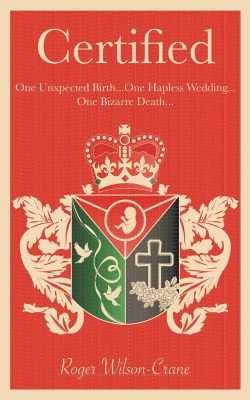
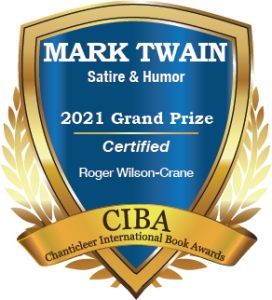 Certified by Roger Wilson-Crane is a multi-award-winning comedy-drama, following one man down three sharp turns in his life trajectory.