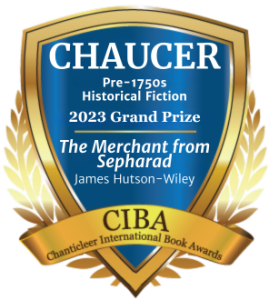
Joshua Ibn Elazar, the eager son of a Jewish merchant, travels to al-Andalus (the Iberian Peninsula under Muslim rule) to prove himself in his father’s business. But he finds an unwelcoming, degrading society waiting for him, and begins a journey of misfortune and anger in James Hutson-Wiley’s historical fiction novel, The Merchant from Sepharad.
Shortly after arriving in the city of Lishbunah, al-Andalus, Joshua is tricked out of the gold for his living expenses. Worse yet, he learns that Jews in Lishbunah suffer under oppressive laws, holding far less status than Muslim citizens. He can only find help in Lishbuna’s Jewish community, meeting Rabbi Hiyya al-Daudi and his son Yaish, who house and feed him.
They tell him that his father’s colleague, Essua, who was to help Joshua manage a shipment of flax and sugar, has been arrested. Though Essua is eventually released, Joshua fails to secure storage for his goods, as the makhzan (warehouse) he rented is given to a Muslim merchant instead. In his fury at the city’s prejudice, he sets fire to the makhzan, and is forced to flee.
Thankfully, Rabbi al-Daudi has secret connections to Alfonso Henriques, the Christian King of Portugal.
Joshua travels with Blazh, a Slav who was enslaved as a boy when his village was raided. They deliver a message of Lishbunah’s weaknesses to Alfonso, who plans to march on Lishbunah with the help of the Crucesignati (crusaders). Al-Daudi hopes that Alfonso’s conquering of the city would be better for the Jews in Lishbunah than the encroaching threat of the Almohad, a Muslim power that demands either conversion or death.
Joshua travels on to the city of Qurtuba and becomes a student of Rabbi Maimon ben Joseph. However, Joshua’s troubles have only begun. He becomes involved with Karaites, Jews who reject Rabbinical authority, and shares in their far-off dream of retaking Yerushalayim (Jerusalem). Together they leave Qurtuba, only to suffer at the hands of a band of Christian soldiers. Joshua’s fury at the world of Muslims and Christians grows with each misstep in his journey, as he watches friends be killed, loses his father’s respect, and is told over and over again to accept these pains as God’s plan.
He travels through al-Andalus, across the Mediterranean to Sicilia (Sicily) and Al-Misr (Egypt), and down the Red Sea as he tries to redeem himself in his father’s eyes. He can’t forget the cruelties he suffers, and they weigh on his shoulders. But so too does each kind act keep his spirit alive. As he sees more and more of the world, he measures his desire for retribution against the ideals of his faith.
The Merchant from Sepharad offers an in-depth, fascinating look into twelfth-century Iberia, the Mediterranean, and the Red Sea.
From Lishbuna to Qurtuba to al-Yaman, Joshua encounters the subtleties of social life amongst peoples with vastly different histories. Rather than taking a broad view of the dynamics between different cultures in al-Andalus and al-Misr, author James Hutson-Wiley fills this book with specific struggles and clashes. A helpful glossary at the end of the book explains the terms and language of this time and place.
This dedication to detail makes each new city feel unique, as they were in real life. The people speak and treat each other differently, the pains and joys are weighed out in different amounts, and the ever-turning wheels of history threaten to crush one people while enriching another. As a Jew, Joshua remains an outsider along much of his journey, giving him a fascinating view of the conflicts in his world. Readers will learn much about the power struggles of the twelfth century as they follow him from region to region.
Joshua becomes an engrossing protagonist through his struggle to succeed as a merchant – and often just to survive.
His anger drives him to make rash, but understandable, choices. Despite all of the social forces arrayed against him, he hopes to make some kind of change in the world. But when his very life is threatened, more than once, how can he hold on to his ideals and his rage at the same time?
Friends and teachers on Joshua’s journey show a more hopeful side of humanity. The kind Blazh, patient Maimon, passionate Simon, stalwart Wallo, and others help to shape Joshua’s emotional path. He comes to understand that oppression is shared amongst many people, and one of the few strengths they have is solidarity with one another. Without the generosity of others, Joshua would never have survived. But, of course, the cruelty of the world stings worst when it takes good people from him.
At the heart of the story lay Joshua’s faith, and sometimes lack thereof.
He learns from Rabbis, explores the Karaite philosophy, and tries to take solace in his beliefs. Much of his life is shaped by being a Jew, how could it not be in a place like al-Andalus? But while teachers like Maimon urge him to be patient and understanding of God’s plan, others like Simon insist that God demands them to act against their oppressors. He struggled to believe that God could want him to accept all of the pain and death he’s seen. Should he not take up his sling against the forces of Amalek?
As he learns of new people and their struggles, he considers what unity there is in faith. While his hope of taking Yerushalayim remains far out of reach, perhaps there are still some ways that he can help those who share his hardships?
The Merchant from Sepharad not only provides lessons on history, but an exploration of Jewish philosophy and scripture. Fans of historical fiction and religious history will adore this story, the third installment in the Sugar Merchant series.
The Short Story Awards recognize emerging talent and outstanding works in Collected Works such as Short Story Collections, Essay Collections, and Anthologies. The Short Story Awards is a division of the Chanticleer International Book Awards program.
The Chanticleer International Book Awards program discovers today’s best works. The Short Stories Awards discovers the Best New Shorts in Fiction and Narrative Non-Fiction. These books have advanced to the next judging rounds. We will put them to the test and choose the best among them.
These titles have moved forward in the judging rounds from the 2022 Short List to the Shorts Book Awards Finalists.All FINALISTS will be announced and recognized at the Chanticleer Authors Conference (CAC23).
The First Place Category Winners, along with the CIBA Division Grand Prize winners, will be selected from the 25 CIBA divisions’ Finalists.
We will announce the 1st Place Category winners and Grand Prize Division Winners at the CIBAs Banquet and Ceremony on Saturday, April 29th, 2023 at the luxurious Hotel Bellwether in Bellingham, Wash. sponsored by the 2022 Chanticleer Authors Conference.
NOTE: We are posting the Short Stories and Essays in a different post.
These titles are in the running for the First Place and Grand Prize Winner of the 2022 Shorts Book Awards novel competition for Collections and Novellas!
Join us in cheering on the following authors and their works in the 2022 CIBAs.
Lori Lee Peters – God, the Mafia, My Dad, and Me
Kelly Evans – Stubborn: A Greek Comedy
Susan Lehmann – Southern Lies and Homicides, Tales of Betrayal and Murder
Susannah Dawn – I Am Who I’ve Always Been: Journey Excerpts
Dale L. Roberts – Infestate
Miguel Angel Hernandez Jr. – A Colossal Injustice: A Griffin Knight Corporate Murder Mystery
Miguel Angel Hernandez Jr. – Do Nothing: A Griffin Knight Murder Mystery Thriller
Chris Bennett – Advent – A Road to the Breaking Short Story
Sara Connell – Ghost House
Don Daglow – The Last One on the Run
Barry Robbins – The Trump Diaries 2024
Linnea Tanner – Two Faces of Janus
Tessa Floreano – Slain Over Spumoni
Jacek Waliszewski – Air Boat – Love is an Adventure
W.A. Pepper – DoGoodR: A Tanto Thriller
Pat Wahler – The Christmas Keepsake
Britt Lind – A Fate Worse Than Death
Arthur Herbert – Lockdown: A Collection of Dark Tales
Mohan Ranga Rao – Geetha Essay – Domestic Work
Endy Wright – The Garden Plot Diaries
S A Melia – Aliens in Windsor
Tamar Anolic – The Lonely Spirit
Mekiya Walters – Cassandra Says
PROMOTING OUR AUTHORS!
This post has been posted on the Chanticleer Facebook Page. We try to tag all authors listed here in the FB post. However, for FB to allow us to tag an author, that author must LIKE our page and Follow Chanticleer Reviews. FB rules — not ours.
Seating is Limited. The esteemed WRITER Magazine (founded in 1887) has repeatedly recognized the Chanticleer Authors Conference as one of the best conferences to attend and participate in for North America.
The CIBA FICTION SERIES Book Awards recognize emerging new talent and outstanding works in any of our 16 Fiction Divisions where the author has written a series. The Fiction Series Book Awards is a division of Chanticleer International Book Awards and Novel Competitions (CIBAs).
Chanticleer International Book Awards (The CIBAs) is seeking for the best book series in all of its fifteen fiction divisions: Mysteries, Suspense Thrillers, Espionage/High Stakes, Young Adult, Middle-Grade Readers, Science Fiction, Fantasy, Supernatural and Paranormal, Romance, Historical Fiction. These books have advanced to the next judging rounds. We will put them to the test and choose the best among them.
These titles have moved forward in the judging rounds from the 2022 Series Book Awards Short List to the 2022 Series Book Awards Finalists. All FINALISTS will be announced and recognized at the Chanticleer Authors Conference (CAC23).
The First Place Category Winners, along with the CIBA Division Grand Prize winners, will be selected from the 25 CIBA divisions’ Finalists.
We will announce the 1st Place Category winners and Grand Prize Division Winners at the CIBAs Banquet and Ceremony on Saturday, April 29th, 2023 at the luxurious Hotel Bellwether in Bellingham, Wash. sponsored by the 2022 Chanticleer Authors Conference.
Note: We have room for 5 Category Winners. Like many divisions there are more categories in the Series Awards than there are First Place Positions, though judges will sometimes ask for more or less than five winners.
These titles are in the running for the First Place and Grand Prize Winners of the 2022 Series Book Awards novel competition for Genre Fiction!
Join us in cheering on the following authors and their works in the 2022 CIBAs.
Mysteries
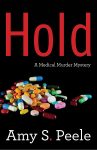
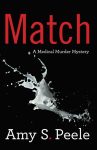
Amy S Peele – Medical Murder Mysteries
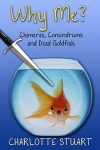
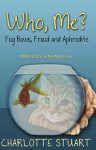
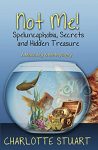
Charlotte Stuart – Macavity & Me Mysteries
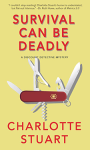
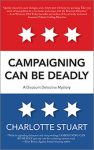
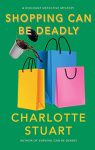
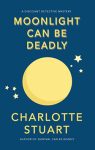
Charlotte Stuart – Discount Detective Mysteries
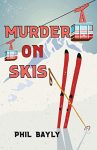
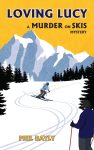
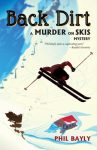
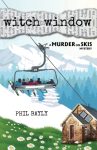
Phil Bayly – Murder on Skis
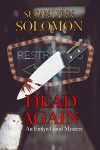
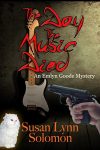
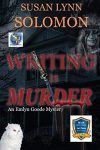
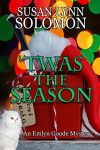
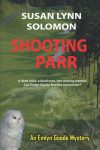
Susan Lynn Solomon – Emlyn Goode Mysteries
Historical Fiction
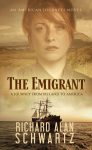
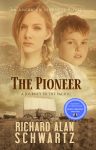
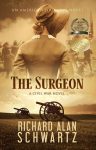
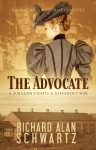
Richard Alan Schwartz – An American Journeys Novel
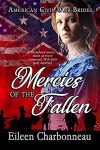
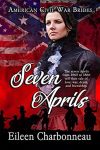
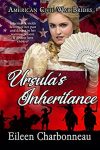
Eileen Charbonneau – American Civil War Brides
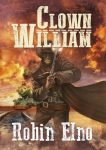
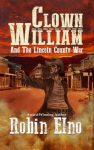
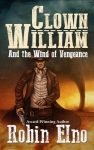
Robin Elno – The Clown William Series
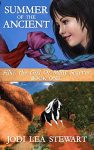
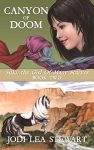
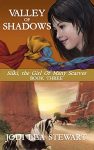
Jodi Lea Stewart – Silki, the Girl of Many Scarves for Laramie Book Awards
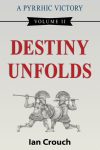
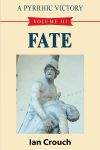
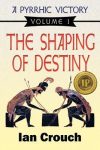
Ian Crouch – A Pyrrhic Victory
Rozsa Gaston – Anne of Brittany Series
Tamar Anolic – Triumph of a Tsar
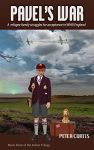
Peter Curtis – The Kohut Trilogy
Grab Bag Assorted Genres
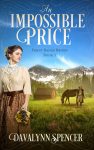
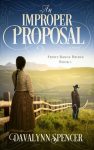
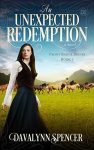
Davalynn Spencer – Front Range Brides for Romance
M.J. Evans – The Skullington Family for Children’s Literature
Vince Bailey – The Curtis Jefferson series for Paranormal
Miriam Verbeek – Songs of Si’Empra for Fantasy
Terry Birdgenaw – The Antunite Chronicles for Young Adult
PROMOTING OUR AUTHORS!
This post has been posted on the Chanticleer Facebook Page. We try to tag all authors listed here in the FB post. However, for FB to allow us to tag an author, that author must LIKE our page and Follow Chanticleer Reviews.
Seating is Limited. The esteemed WRITER Magazine (founded in 1887) has repeatedly recognized the Chanticleer Authors Conference as one of the best conferences to attend and participate in for North America.
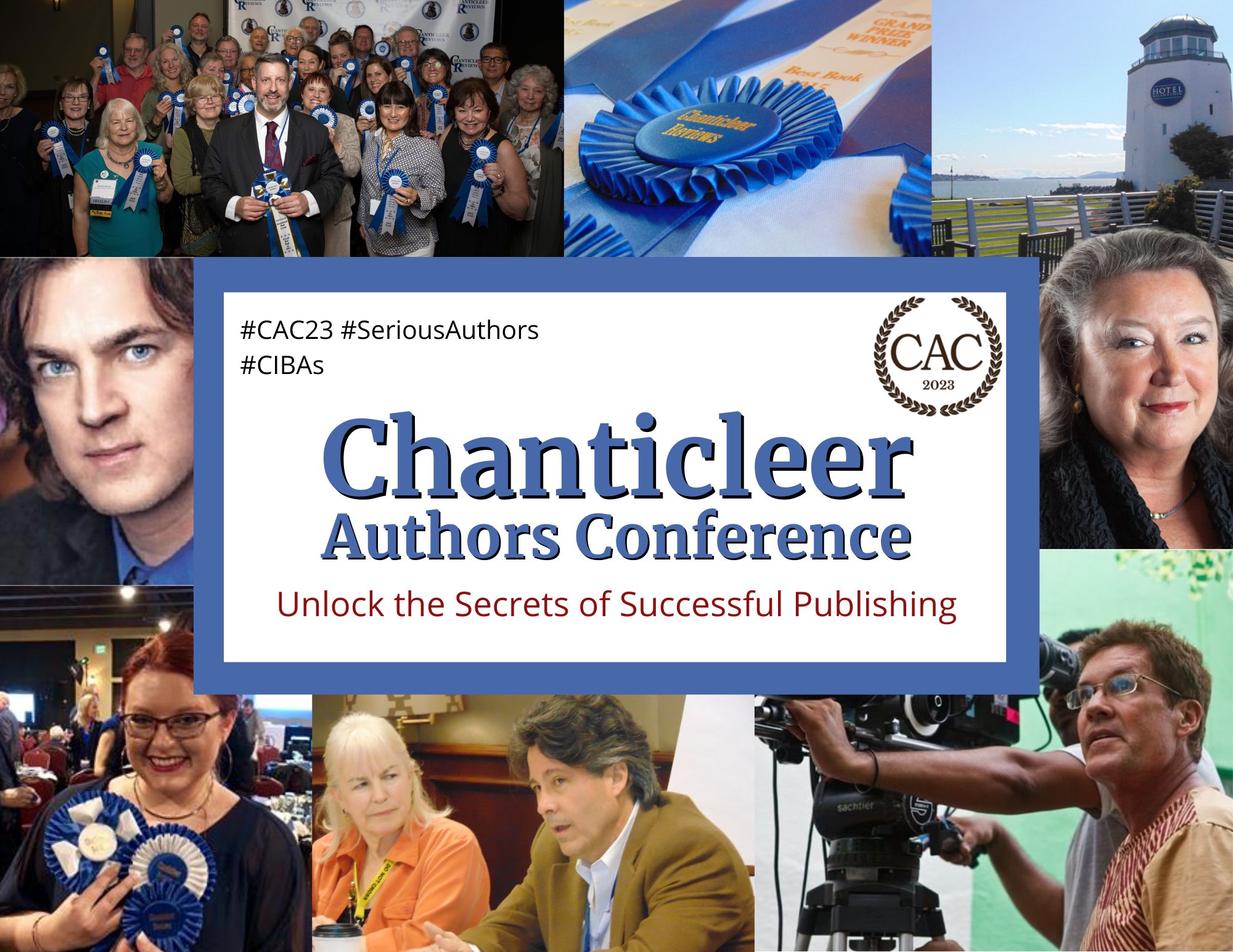
The Icing on the Cake, the Crowning Event, the Highlight of the conference is the CIBA Banquet and Awards Ceremony that is held on Saturday evening of the conference.
The CIBA Banquet and Ceremony
First, we start with a cocktail hour (five-thirty in the afternoon with a cash bar, complimentary appetizers are served at six o’clock in the evening.
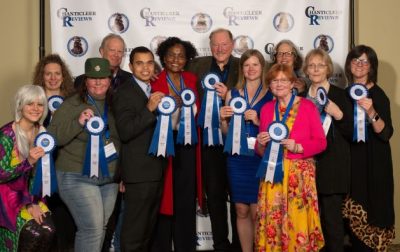
Most every one is dressed to impress – either “in brand,” posh, or “after-five” special. Of course, this is Bellingham, so there will always be those who bring out their best fleece and wool socks!
The ceremony photographer is set-up to takecomplimentaryheadshots, group photos, and, of course, photograph the ceremony announcements and presentations. After the event, he continues with division group photos, winner photos, cheering sections photos—a lot of photos—that attendees may download digitally for free!
FINALIST attendees are given a Finalist Ribbon to attach to their name badge upon registration pick-up—btw.
Also, there are many different lodging options for different budgets and needs. Click here for more info
Who will take home the coveted Chanticleer Blue Ribbons?
At seven o’clock in the evening, each attendee is handed a ceremony program with all the Finalists listed by division.
Next, we are seated for a lovely dinner catered by theHotel Bellwether.Acknowledgements, a short keynote presentation, and recognition of the Finalists in attendance during the salad course.
Then we enjoy the Northwest inspired dinner prepared by the Hotel Bellwether’s Executive Chef Marcello Mazzoleni.
After dinner, coffee and dessert (the cash bar stays open the entire time!) are served and we begin the announcements for the Division First Place Award Winners. We have a small break and photo opportunities.
Next, we announce the Division Grand Prize Winners. And, finally, the Overall GRAND PRIZE WINNER of the 2022 CIBAs!
More photos are taken!
At the end of the glorious evening, we all head to the Hotel Bellwether’s fireside bar to gather and enjoy each others company and congratulate the winners.
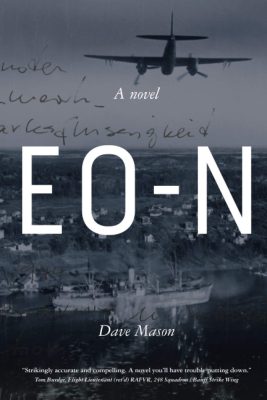
A young boy in Norway makes a discovery while playing with his dog, opening the mystery of EO-N by Dave Mason, a detective story spanning multiple decades and both sides of the Atlantic, a deep dive into the horrors of Nazi Germany, and a heartfelt love story.
A small metal fragment leads to the discovery of a downed WWII twin-engine Mosquito fighter-bomber hidden in snow and glacial ice for nearly 75 years. The crash site yields an initial set of clues, one of which finds its way across the world to Alison Wiley, a biotech CEO in Seattle. Having recently lost her mother, and, a few years earlier, her brother in Afghanistan, she finds her days full of despair, but the discovery makes a distant connection to her long-lost grandfather, and she flies to Norway. There, she meets Scott Wilcox, a Canadian researcher assigned to investigate the discovery after his government learned that the crashed aircraft belonged to the Royal Canadian Air Force. Their attraction is both intellectual and emotional, but the quest to uncover the plane’s mysteries and the fate of Alison’s grandfather place any romance to the side.
At first, the crash doesn’t appear exceptional, until certain contradictory and confusing clues emerge that make it clear that the circumstances that led to the plane’s fate were anything but simple.
EO-N’s story is complex, leading the reader from clue to revelation with a sure hand. And it takes a dark secret from the past and develops it into something that might make the world a better place.
The details are key to the novel’s success. Readers will wonder whether the facts outlined in the book are based on actual history, and while the specifics of the heinous Nazi activities at the center of the story may differ somewhat from reality, the spirit of the revelations rings true.
This novel is impeccably researched, and the characters are believable, warm, and heartbreaking. Readers won’t be able to put it down until its perfect conclusion.
The SOMERSET Book Awards recognize emerging talent and outstanding works in the genre of Literary and Contemporary Fiction. The Somerset Book Awards is a genre division of the Chanticleer International Book Awards (The CIBAs).
Chanticleer International Book Awards is looking for the best books featuring contemporary stories, literary themes, adventure, magical realism, or women and family themes. These books have advanced to the next judging rounds. We will put them to the test and choose the best among them.
These titles have moved forward in the judging rounds from all 2022 Somerset Literary and Contemporary Fiction Semi-Finalists to the 2022 Somerset Book Awards FINALISTS.Winners will be selected from the Finalists. All FINALISTS will be announced and recognized at the Chanticleer Authors Conference (CAC22).
The First Place Category Winners, along with the CIBA Division Grand Prize winners, will be selected from the 25 CIBA divisions’ Finalists.
We will announce the 1st Place Category winners and Grand Prize Division Winners at the CIBAs Banquet and Ceremony on Saturday, April 29th, 2023 at the luxurious Hotel Bellwether in Bellingham, Wash. sponsored by the 2023 Chanticleer Authors Conference.
These titles are in the running for the First Place and Grand Prize Winner of the 2022 Somerset Book Awards novel competition for Literary and Contemporary Fiction!
Join us in cheering on the following authors and their works in the 2022 CIBAs.
Conon Parks – Everything That Was
Michael Richard – Chosen’s Beautiful Heart
Linda Moore – Attribution
Datta Groover – The Reluctant Visionary
Robert Tucker – The Discontent of Mary Wenger, Paper Dolls, Book 1
Patricia Sands – The Secrets We Hide
Julia Tvardovskaya – Identifiable
Ellen Sherman – Into the Attic
Fran Hawthorne – I Meant to Tell You
Leslie Kain – Secrets In The Mirror
Patricia Averbach – Dreams of Drowning
Tom Stewart – Immortal North
Jeffrey Dale Lofton – Red Clay Suzie
John Hansen – Hired Hand
Jo Deniau – Stiff Hearts
Dianne C. Braley – The Silence in the Sound
Maggie Smith – Truth and Other Lies
Susan Lynn Solomon – Raising Kane
Lynn Byk – The Fearless Moral Inventory of Elsie Finch
Morgan Sloan – Scars and Honey
Harriet Cannon – Exiled South
Ann Marie Stewart – Out of the Water
PROMOTING OUR AUTHORS!
This post has been posted on the Chanticleer Facebook Page. We try to tag all authors listed here in the FB post. However, for FB to allow us to tag an author, that author must LIKE our page and Follow Chanticleer Reviews. FB rules — not ours.
We are now accepting submissions into the 2023 Somerset Book Awards for Literary and Contemporary Fiction. The 2023 CIBA winners will be announced at CAC 2024.
Seating is Limited. The esteemed WRITER Magazine (founded in 1887) has repeatedly recognized the Chanticleer Authors Conference as one of the best conferences to attend and participate in for North America.
The I & I Book Awards recognize emerging new talent and outstanding works in Instruction and Insight non-fiction that are self-help, how-to, guides, or explanatory. In non-fiction works, the author assumes responsibility (in good faith) for the truth, accuracy, people, places, or information presented. The I & I Book Awards is a division of the Chanticleer International Book Awards (The CIBAs).
Chanticleer International Book Awards is looking for the best Instruction and Insight books featuring How-To, Guidance, Travel Guides, Cookbooks, Self-Help, and more. We will put books about true and inspiring stories to the test and choose the best among them. See our full list of Non-Fiction Divisions here.
These titles have moved forward in the judging rounds from the 2022 I&I Non-Fiction Semi-Finalists to the 2022 I&I Book Awards Finalists. Finalists will be selected from the Semi-Finalists. All FINALISTS will be announced and recognized at the Chanticleer Authors Conference (CAC23).
The First Place Category Winners, along with the CIBA Division Grand Prize winners, will be selected from the 25 CIBA divisions’ Finalists.
We will announce the 1st Place Category winners and Grand Prize Division Winners at the CIBAs Banquet and Ceremony on Saturday, April 29th, 2023 at the luxurious Hotel Bellwether in Bellingham, Wash. sponsored by the 2023 Chanticleer Authors Conference.
These titles are in the running for the First Place and Grand Prize Winners of the 2022 I&I Book Awards novel competition for Instruction and Insight Non-Fiction!
Join us in cheering on the following authors and their works in the 2022 CIBAs.
Tana Hope – Healthy Habits for Desk Potatoes
Kenneth Nixon Jr. – Born Into Crisis
John W. Feist – Pocket Japan: a concise guidebook for business travelers to Japan
Deborah Vinall, PsyD, LMFT – Trauma Recovery Workbook for Teens
Kip and Pam Rosser – Vegetarian Tales From the Mushroom Rooms
Natalie Dale, MD – A Writer’s Guide to Medicine. Volume 2: Illness & Injury
Kerrin Margiano – Enjoy the Gift of Childhood
Simran Sadana & Meena Iyer – Ramayana Through Ikebana
Michael J. Freeman Ph.D. – Freeman Explains! The Things That Can Change That Should Be Changed
Matthew J. Louis – Mission Transition: Navigating the Opportunities and Obstacles to Your Post-Military Career
Wendela Whitcomb Marsh – Dating While Autistic: Cut Through the Social Quagmire and Find Your Person
Ellen Notbohm – Ten Things Your Student with Autism Wishes You Knew
Gustavo J. Gomez, Ph.D. – Hair Loss: Options for Restoration & Reversal 2nd Edition
Ann E Feldman – Building Communities of Trust: Creative Work for Social Change
E. Alan Fleischauer – Reconfigurement
D. Terrence Foster, MD – The Stress Book: Forty-Plus Ways to Manage Stress & Enjoy Your Life
Tracy Cram Perkins – Dementia Home Care, How to Prepare Before, During, and After
Sandy Gerber – Emotional Magnetism – How to Communicate to Ignite Connection in Your Relationships
Donna McCart Welser – Rue’s Butterfly
Jocelyn Jones – Artist: Awakening the Spirit Within
Benjamin Plumb – The Satisfied Introvert: A Memoir About Finding Safety in an Extroverted World
PROMOTING OUR AUTHORS!
This post has been posted on the Chanticleer Facebook Page. We try to tag all authors listed here in the FB post. However, for FB to allow us to tag an author, that author must LIKE our page and Follow Chanticleer Reviews. FB rules — not ours.
This post has been posted on the Chanticleer Facebook Page. We try to tag all authors listed here in the FB post.
We are now accepting submissions to the 2023 I&I Book Awards for Instruction and Insight Non-Fiction. The 2023 CIBA winners will be announced at CAC 2024.
Seating is Limited. The esteemed WRITER Magazine (founded in 1887) has repeatedly recognized the Chanticleer Authors Conference as one of the best conferences to attend and participate in for North America.
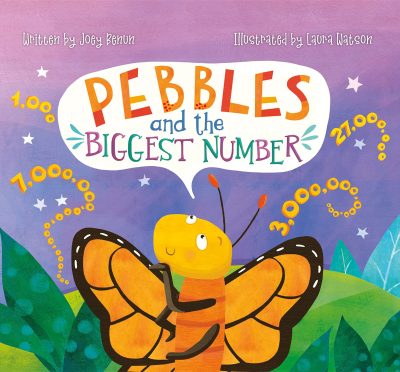
Pebbles the butterfly loves to count as much as he can in his garden. But soon enough he gets curious, and in Pebbles and the Biggest Number by Joey Benun, he embarks on a science-filled quest to find the world’s truly gigantic numbers.
While the numbers start small, they quickly grow bigger and bigger, as do the wild events that Pebbles must face. Our butterfly guide wanders from forests to deserts, and encounters earthquakes, tsunamis, and even an avalanche. Each landscape and natural disaster pushes Pebbles onward to meet new friends and find even bigger numbers.
How big can the numbers get?
You’ll find no made-up numbers in Pebbles and the Biggest Number. Everything from a quintillion to a googolplex actually exists, though it isn’t long before the numbers become nearly impossible to imagine. However, there is a handy sand chart in the back to put some numbers into immense perspective. This is the kind of book that kids will sit with for long hours and astound you with the facts they’ve learned.
The friendly creatures and beautifully rendered landscapes of Pebbles’s journey will engage young and curious minds. Complete with extra notes and definitions in the back, this book will continue to teach even after the story ends.
Pebbles and the Biggest Number is hopefully the start of a great new series explaining the world to young readers. With its wonderful descriptions and knowledge, this book comes highly recommended!
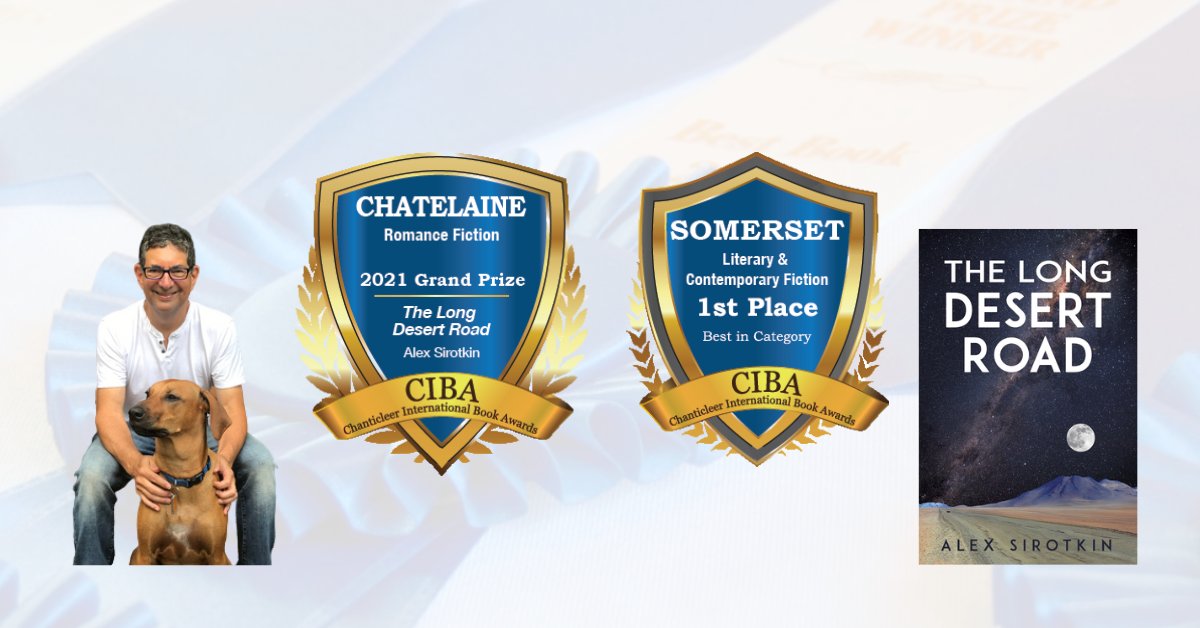
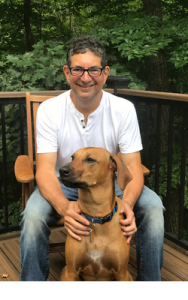
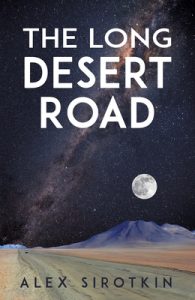
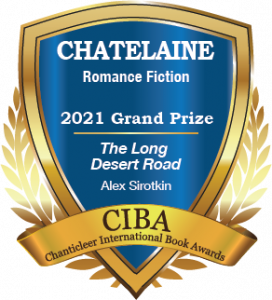
Alex Sirotkin is a kind man with intelligent humor tucked in around the edges. He saves his angst for his writing and his law practice. And, boy, does he ever deliver! The Long Desert Road earned a 5-Star rating from our reviewers and went on to take home the 2021 CHATELAINE GRAND PRIZE! (As far as his law practice, one would do well having him on your side.) We are so proud of him for his outstanding work and being a Chanticleerian. I know you will love him as much as we do. So, without further ado, let me introduce you to award-winning author, Mr. Alex Sirotkin.
Chanti: Tell us a little about yourself: How did you start writing?
Sirotkin: Sure. I’m pretty old. I didn’t start writing until 2016, so that would have made me about 60. At first, I wanted to write a screenplay. I love movies, to be honest, more than books, which maybe makes me a lousy novelist. But, but…at the same time, I find that most movies are terrible! Over the years, I’d walk out of the movie theater and say to myself “Damn, I could have written a much better story than that!” So, I promised myself to try one day. And that I did.
It didn’t take me long to realize that I didn’t know the first thing about writing a screenplay, and the apps that would assist me just seemed too complicated. I had a good idea for a story, so I wrote a book instead. My background is in law – so I can write. But it doesn’t come easily or quickly to me. Sometimes it’s painstaking. Being older, okay old, also provided the time to have many life experiences. You write what you know, and I’ve experienced a whole lot in my life, so I know a lot about which I can write. Conversely, it must be so hard for a young person in his/her twenties to be a fiction writer. For them, everything must be made up!
Finally, I had a particular experience with my daughter that served as the underpinnings for much of the story. You see, she was bipolar and addicted to heroin. I was her primary supporter, mentor, cheerleader, and disciplinarian for the ten years prior to her death from an overdose in October 2020, during the pandemic. It was the most rewarding, uplifting, stupefying, frustrating, busy, and devastating period of my life. Obviously, it ended in disaster, but I wrote the book when she was doing well, when I had a lot of hope. The novel, therefore, is uplifting. I finished the book in January 2020 or so, and she died ten months later. My book was released three months after that. It was quite surreal.
Chanti: That juxtaposition must have felt so strange. I cannot imagine. Thinking of the places you drew inspiration from, let’s talk a bit about genre. What genre best describes your work? And, what led you to write in this genre?
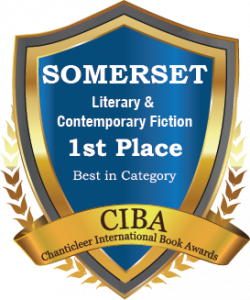
Sirotkin: I won my Grand Prize in Romantic literature. I won (the lesser) First Prize in Literary and Contemporary Fiction. To be honest, my book fits best into the latter genre. Sure, my book is a love story. But it’s not your typical sexy beach read, with scantily clad models on the front cover. In fact, some of my witty friends complained that there wasn’t enough (or any) sex in the book at all. (There was some, but I just didn’t go into the hot details.) I had certain things to say – call it a message – in my book, and those would be best said via literary fiction, which to me is a catch-all genre that is not the other more specific areas of writing. And it connotes, I suppose, a focus on the words, more so than one would expect from a who-done-it, or science fiction, although don’t tell that to Isaac Asimov, one of my favs. My book is therefore a slower more-deliberate read.
Chanti: First in Category for Literary Fiction is nothing to sniff at, my friend, given the sheer numbers of entries in that division! In terms of writing, do you find yourself following the rules or do you like to make up your own rules?
Sirotkin: Other than the law, and the Golden Rule, in writing, as in life, I’m not a big believer in hard and fast rules. In terms of writing, like any creative medium, rules might be a guide to the inexperienced novelist (like me) but ultimately one must go with his gut. I was told not to write in present tense. But I did. I was told to limit points of view, but I wrote partly in first person, and partly in third person from two POVs. I was told not to write at such a high level. In fact, someone told me that Stephen King writes at a 5th grade level. Even if I had believed this, I didn’t care. I wrote as I was trained to write, and my possible audience would hopefully appreciate the art of wordcraft, even if they had to refer to Merriam Webster from time to time. And in fact, some told me they kept a dictionary at their side while reading my book.
My best line (top of page 161) in my eyes, took me hours to perfect, yet I think it was missed by most. Talking about Hubble the scientist (who lived in the early twentieth century) my main character, Henry said “If Hubble himself had but one character flaw, it was his inability to be humble, and such was his reputation.” Get it? Lastly, I never had an outline for this novel. I pretended for a while to develop one, but I gave up and just started to write. What I had was a beginning and an end. Somehow I managed to meander my way through the desert to finally reach my intended resolution. I think I was a bit lucky to get there.
Chanti: What do you do when you’re not writing? Tells us a little about your hobbies.
Sirotkin: I certainly don’t earn a living as a novelist. I’m too poor a marketer, and I don’t write enough. So, I work in my own business. But for fun, I’ve got a lot going on. Like my main character, Henry, I always have a tune in my head. So, I whistle a lot, which annoys the heck out of my wife. And I play piano – I was trained for 9 years in classical piano, but now I just like to sound things out and improvise. I play tennis. I was really a good club player once, until age finally caught up with me. I still play, but not the man I used to be. So it goes. My wife and I hike locally with our two 90 lb. Rhodesian Ridgebacks. Finally, we love to travel, and one of our trips lay the foundation for much of my novel.
Scout Running with J
Chanti: Alex, you keep talking about age, and here we are contemporaries… I’m starting to get a bit nervous! Let’s move on – quickly. How do you come up with your ideas for a story?
Sirotkin: The ideas come from the heart. A work of literary fiction (as opposed to a detective novel, for example) has to come from within. The ideas are already there. You only must recognize them. Personally, I had difficult experiences with my daughter, a bipolar drug addict, over a ten-year period. But my story is not what you think it is. These experiences framed only a part of the story. The bigger picture for me (in terms of a novelist, and not necessarily as a dad) relates to the concept of perspective. It’s been my mind’s mantra for as long as I can recall. Whether one is talking about mental health, politics, or just getting along with one another, the key in my mind has always been a healthy perspective. The size or importance of something in relation to something else. Thinking about your problems in relation to how much worse things can be. Thinking about the positives in your life in relation to the negatives. Then grasp at the size of the Cosmos. Try to wrap your head around the enormity of the Universe. You begin to realize how each of us, and our issues, are so small. And then there’s G-d, as you know him/her/it, or some higher power, or something else, that might bind us together in a natural world. These thoughts and feelings were all there, all along while trying to deal with my daughter’s inescapable issues. The story sprang from these concepts – the hard part was putting them all together in a cohesive tail. I can’t tell you how that happened. It just did, writing with passion.
Chanti: And you did it all so beautifully. Well said, sir. Thank you for that. What areas in your writing are you most confident in? What advice would you give someone who is struggling in that area?
Sirotkin: A difficult, yet interesting question. I can’t say that there is one area in particular. But what comes to mind is doing the research. I intended the book to be a piece of fiction based as much in reality as I possibly could. The book in large part was about the Truth. I couldn’t base a book about the Truth, on something that wasn’t real. So, to understand certain areas of “reality” I needed to do a lot of research. Some of it surrounded the nature and mysteries of the Cosmos, what we understand of it, what we don’t, and what we are learning today. I’m no scientist, but I’m just smart enough perhaps to wrap my head around these issues sufficiently to convey them within a story. And the trick was to do the telling as efficiently as possible so as not to lose the reader in confusing detail. Me thinks I could have done that better, having heard from a few readers that they flipped through the science stuff. (And this is why you need a good editor, who tells you when enough is enough.) In any case, the internet is a limitless source of information. To understand how Hubble the scientist was able to determine that the Universe was expanding back in 1928 or so, I had to sift through dozens of articles, many of which were inconsistent with what I read in the others. I also found myself pouring over YouTube videos, or Google Maps of places I needed to describe in utter detail. My advice? Patience, Yoda. And don’t take anything for granted. Facts are facts, there are no alternative facts, and it may take a while to piece it all together. But you’ll get there.
Chanti:Who’s the perfect reader for your book?
Sirotkin: Let me answer this question by telling you who will likely not appreciate my novel: someone with certain expectations, someone without an open mind, someone that only likes a certain genre, and/or finally someone that wants to read a story without thinking. My book is a thinking person’s book. If you have an open mind, if you want to experience something out of the ordinary, if you want to learn about something you’ve never even heard of, then you should read my book. If you like delving into the developing personality and motivation of a character, then you will like my book. If you have a sense of humor, and are compassionate about those in dire straits, you will like my book. Most people who read it do. No writer can please everyone.
Chanti: I like how you answered that question. What excites you most about writing?
Sirotkin: I would write each chapter a hundred times. This is without exaggeration. I love to see the improvement with each pass. My first draft of a chapter would literally suck. Pardon that word. So, what excites me the most is seeing this evolution take place.
Write, write, and rewrite!
Chanti: Fascinating! Do you ever experience writers block? What do you do to overcome it?
Sirotkin: No, I would not describe it as writer’s block. On many days, I didn’t have the time to write, attending to more mundane issues, or my work. But when I sat at my keyboard, I could always write something. The question for me was the quality of that something and was it worth keeping. How much work would be required to rehabilitate it. If you’ve ever been down, or depressed (and who hasn’t) the key for me to move on from such a state is to take action. A conversation, a confrontation if needed, a long walk, whatever. Don’t sit and brood. The same with “writer’s block.”
Take action and write. Write anything. Write about something different. Write a letter. Write a silly poem. Or write another chapter but don’t worry about the quality. Just keep writing. And don’t think about it too much. Get back up on that horse. It will find its way home without you.
I watch a lot of tennis. It’s amazing how badly a pro could be playing in the first set, only to make a tremendous comeback in the second. He keeps at it, playing the game. As in writer’s block, the setback was all mental! Suddenly, he’s back at the top of his game, often without a clue as to what caused his initial lapse.
Chanti: What is the most important thing a reader can do for an author?
Sirotkin: This is an easy one. Love his book and rave about it to him and everyone else in the world. Since I won’t make any money from this experience, at least my ego should be boosted. Big time. Sorry, I’m just mostly kidding here. Seriously? The most important thing a reader can do is to give the work the attention it deserves. If it’s a slow read, like mine might be, read it slowly. Afterward, thoughtful criticism and evaluation is most appreciated, especially if I’m to write another one. And yes, if you like the book, pass it on. The most important thing for me is that people read my book and hear what I had to say.
Chanti: Okay friends, you heard it! If you love nothing more than a well-built, eloquent novel that addresses the hard issues of life with a strong sense of the human soul, look no further! Read Alex Sirotkin’s Award-Winning novel, The Long Desert Road. Be sure to contact the author and share your thoughts – send the book along to others with similar loves. Tell the World! You will be doing all of us a tremendous favor because good books simply must be read.
Find our review of The Long Desert Road by Alex Sirotkin here, and buy it from Bookshop, Amazon, or Barnes and Noble! Remember, Reader Reviews really help your favorite authors!
CHANTICLEER 10 QUESTION AUTHOR INTERVIEW SERIES
with Award Winning author, E.E. Burke
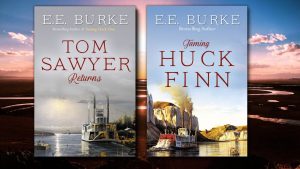
Two of my greatest honors came in succession last year when I won the Laramie Award for Tom Sawyer Returns and was featured by the Mark Twain House & Museum. Both honors were beyond my hopes and they fulfilled a dream. Leigh S. Stites w/a E.E. Burke
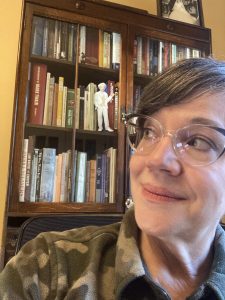
I’m excited for you to get to know award-winning author and historical maven, Leigh S. Stites aka (E.E. Burke) read on.
Chanti: Tell us a little about yourself: How did you start writing?
Stites: I’ve been an avid reader from an early age. My mother likes to tell the story of how I went to bed with books instead of my teddy bears. As a journalism major, I wrote for newspapers, and later, in public relations and advertising. Storytelling is my passion, but I didn’t start producing fiction professionally until I was nearly 50. I prefer to call it a midlife metamorphosis rather than a crisis.
Two of my greatest honors came in succession last year when I won the Laramie Award for Tom Sawyer Returns and was featured by the Mark Twain House & Museum. Both honors were beyond my hopes and they fulfilled a dream.
Chanti: Those are mighty fine honors, indeed! Congratulations! Let’s chat a bit about genre. What genre best describes your work? And, what led you to write in this genre?
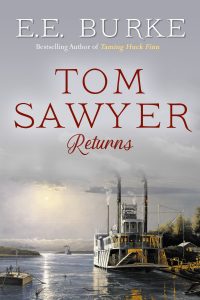
Stites: All of my novels have historical settings, primarily the American frontier. I’ve been fascinated with that period since I was in grade school. In fact, my novel Tom Sawyer Returns was born out of a burning need to know what happened to the two boys I read about when I was in seventh grade.
Huck and Tom had grown up, what professions would they have pursued? What great historical events would they get caught up in? What kind of women would they fall in love with? I envisioned a future for them as adults. It took me ten years to finish the two novels (Taming Huck Finn and Tom Sawyer Returns), but I think they represent the type the writing I do best—historical fiction with adventure, romance, and mystery. I recently released the 5th in my Steam! series, which is inspired by stories of the Katy Railroad, as it expanded across the Southwest. If you loved historical classics like James Michner’s Centennial or John Jakes’ North and South, you’ll enjoy this expansive, romantic saga.
Chanti: How do you come up with your ideas for a story?
Stites: From history mostly, and characters I read about, both fictional and real. After I came up with the idea of writing Tom and Huck as adults, I went beyond the facts in Twain’s classics for backstory. I delved into autobiographical elements from his life that inspired much of his fiction. For instance, Samuel Clemens’ adventures as a pilot shaped his love of the river and inspired Huckleberry Finn. Riverboat pilot seemed a perfect choice for Huck’s profession.
I approached Tom’s book in a slightly different way. Tom is the eternal adventurer. In a sense, he will never completely grow up. If he married, the woman he chose would have to stand toe-to-toe with him in courage and have an independent nature, or risk being left behind. Would the original Becky be right for Tom, I wondered. Could calamitous events bring forth her strengths and transform the spoiled girl into an independent woman? Do you see? This is how I come up with story ideas. I find characters, place them in historical situations, and then I ask myself, “What if…?”
Chanti: I swear, asking the “What if…” is a powerful tool in any author’s tool chest! How structured are you in your writing work?
Stites: Probably not as structured as I should be, but this is true of my entire life. As a writer, I worked for years to find a structure that works with my creative process. If there is one thing I’d advise writers, it is this: do not assume you can template someone else’s process and it will work for you in the same way. You can borrow tools, but how you apply them should serve your own unique gifts and proclivities.
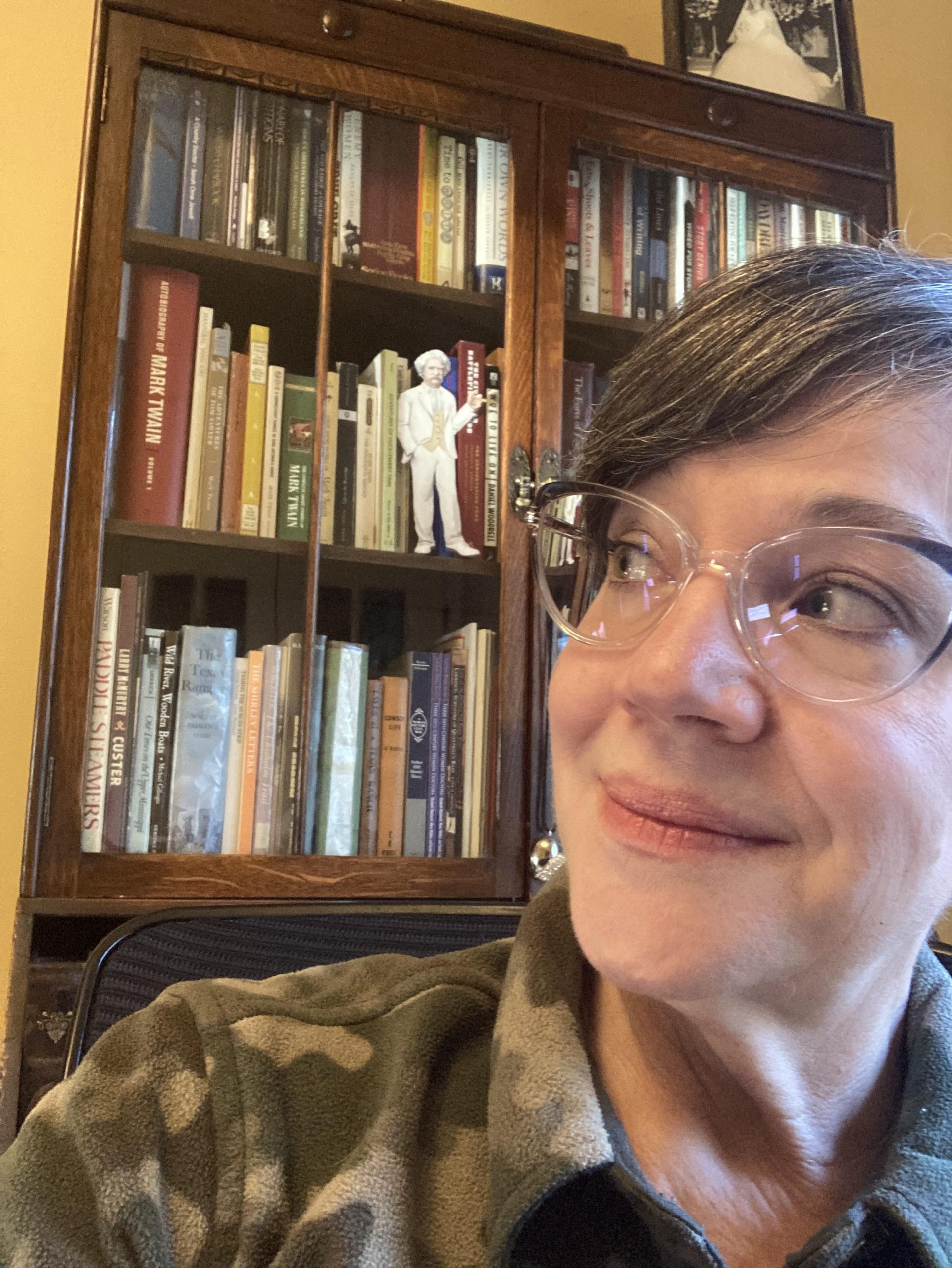
E.E. Burke & Mark Twain!
For example, all those craft books on plotting. There are too many to list, but I’ve probably read them all. For a long time, I felt stupid because I couldn’t follow their structure precisely and come out with a good book. I would veer drunkenly off the path and then experience weeks of despair, as I flayed myself for not being a bright enough pupil to get the lesson right. I finally gave up on being the best student in someone else’s structure and began to insert the most helpful parts into my own messy process. I do the same thing with recipes and drinks. I taste, test, borrow and experiment. Some efforts fail. Others are amazing.
Chanti: I think we are kindred spirits. I could never follow a pattern or a recipe to save my life. Do things turn out? Better than expected! Well, tell us, how do you approach your writing day?
Stites: With at least two cups of coffee under my belt. If I’ve had a good writing day, I end it with a cocktail 😉
Chanti: Now, that’s what I’m talking about!
Readers, did you know? Tom Sawyer Returns is a double finalist in the 2022 M&M AND the Chatelaine Awards? Congratulations – and best of luck moving forward!
CIBA Multi-Awarded Book!
Give us five of your favorite authors and describe how they influence your work.
Stites: Mark Twain—his brilliance at characterization, his portraits of American culture in the 19th century, and of course, his biting humor. Charlotte and Emily Bronte—their tortured, romantic heroes. Michael Shaara—how to weave historical facts into spellbinding fiction. Charles Fraser—creating a world that does more than serve as a setting. Jill Marie Landis—the importance of emotion and how to convey it. Mary Oliver—observing and writing about nature, poetic language. Ok, I’ll stop at seven if I must. My favorites list is much longer.
Chanti: It’s important to work on your craft. What do you do to grow your author chops?
Stites: Read books by authors whose skills far exceed my own.
Chanti: Excellent! What craft books have helped you the most?
Stites: So many I can’t list them all without exceeding your word count. Scene & Structure by Jack M. Bickham taught me how to write the critical building block for a novel—the scene. GMC: Goal, Motivation & Conflict by Debra Dixon taught me how to keep readers turning the page. The Artist’s Way by Julia Cameron inspired me to pursue my dream of becoming an author. Bird by Bird by Anne LaMott is simply a must-read. My copy of The Art of Fiction by John Gardner was passed on by one of my favorite authors. It is an absolute classic on writing fiction. Pay particular attention to the chapter: Common Errors.
Chanti: Good ones. What are you working on now? What can we look forward to seeing next from you?
Stites: At the moment, I am stretching my Mystery Muscles and working on a Noir novel set in the 1930s in Kansas City, the town that gave birth to Scarface, the Pendergast machine, and modern jazz. I’m in the research process now so it will be a while before the book is written.
Chanti: That sounds exciting! I hope we get to see it in our upcoming CIBAs. Who’s the perfect reader for your book?
Stites: Someone who is historically engaged, with a literary interest, who doesn’t mind the mushy stuff. Put another way, a multi-genre reader with a romantic soul.
Chanti: I love that… What is the most important thing a reader can do for an author?
Stites: Write an honest review. At the very least, recommend a book you like to someone else.
Chanti: That’s so important! Word travels fast these days. What excites you most about writing?
Stites: I get to play God for a few hours a day.
Chanti: There you have it, dear readers! A day in the life of a highly talented, on-fire author. If you would like to reach out and read some of these delightful books, go to her website here and follow the directions.
Join us for the Chanticleer Authors Conference held at the Hotel Bellwether, April 27 – 30, 2023. CAC23 is the proud sponsor and host of the 2022 Chanticleer Int’l Book Awards Banquet and Ceremony that will be held on Saturday evening of the conference.
The excitement builds as the 2022 CIBAs Best Book and Grand Prize Winners are determined and announced at this annual gala event!


 Joshua Ibn Elazar, the eager son of a Jewish merchant, travels to al-Andalus (the Iberian Peninsula under Muslim rule) to prove himself in his father’s business. But he finds an unwelcoming, degrading society waiting for him, and begins a journey of misfortune and anger in James Hutson-Wiley’s historical fiction novel, The Merchant from Sepharad.
 The Chanticleer International Book Awards program discovers today’s best works. The Short Stories Awards discovers the Best New Shorts in Fiction and Narrative Non-Fiction.
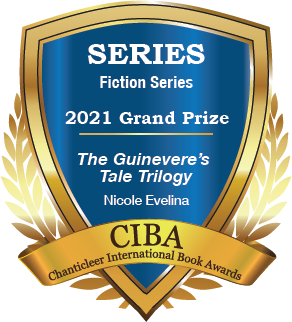
 The CIBA FICTION SERIES Book Awards recognize emerging new talent and outstanding works in any of our 16 Fiction Divisions where the author has written a series. The Fiction Series Book Awards is a division of Chanticleer International Book Awards and Novel Competitions (CIBAs).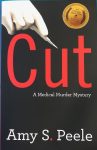





 The SOMERSET Book Awards recognize emerging talent and outstanding works in the genre of Literary and Contemporary Fiction. The Somerset Book Awards is a genre division of the Chanticleer International Book Awards (The CIBAs).
 The I & I Book Awards recognize emerging new talent and outstanding works in Instruction and Insight non-fiction that are self-help, how-to, guides, or explanatory. In non-fiction works, the author assumes responsibility (in good faith) for the truth, accuracy, people, places, or information presented. The I & I Book Awards is a division of the Chanticleer International Book Awards (The CIBAs).


 Congratulations! Let’s chat a bit about genre. What genre best describes your work? And, what led you to write in this genre?