Author: Carolyn Haley

  • ASTROLOGER’S PROOF by David John Jaegers – Metaphysical Techno-Thriller Fiction

    ASTROLOGER’S PROOF by David John Jaegers – Metaphysical Techno-Thriller Fiction

    David John Jaegers’ Astrologer’s Proof is all about the steps leading to utopia, involving both ephemeral and cosmic mechanisms, balancing on the edge of an ethical paradox.

    The science fiction/fantasy author Orson Scott Card wrote a book titled “Characters & Viewpoint” in which he posited that all novels divide broadly into four different story types: Milieu, Idea, Character, and Event. He dubbed these categories the “MICE” Quotient, and each sets up specific expectations in the reader.

    Within that framework, Astrologer’s Proof qualifies as an Idea novel. It is Book 2 of the Astro-theologian Series, a metaphysical techno-thriller trilogy in which a Big Idea is explored.

    What’s the Big Idea? Simply put, it’s the search for an empirical proof that astrology is a valid science that defines and guides human nature and destiny, dovetailing with all religions into a unified cosmic truth that can positively change the world.

    That’s a lofty promise which author David John Jaegers delivers.

    Of course, proving the premise takes serious work – and a lot of illegal maneuvers to gather the necessary data. Astrologer’s Proof thus becomes an end-justifies-the-means story, where honest, moral, well-intentioned philanthropists break laws, invade privacy, deceive their loved ones, and establish front organizations, all to gather the information they need to demonstrate they’re right—in scientific, indisputable terms.

    Some series fiction forms the continuing adventures of one or more characters. Astrologer’s Proof, conversely, is the middle segment of a grand epic covering the Big Idea. Book 1 (Astrologer’s Apprentice) establishes the situation and players; Book 2 (Astrologer’s Proof) describes the process of making the Big Idea happen, and Book 3 (A Virtual Life) will reveal the repercussions. In other words, this book is the fat juicy middle of a delicious Po-boy, worth every bit of effort to digest.

    In Astrologer’s Proof, Jaegers unfolds the Big Idea and patiently tells us how it is transformed into action. Here the author demonstrates his depth of knowledge with the material and impresses the reader with the story’s thoroughness, technical veracity, rationality, and fascinating possibilities.

    In many ways, this book is an experimental novel, with the traditional elements of storytelling over-arching the trilogy, spreading across multiple characters in the telling. Jaegers brings his skill to the forefront here and invites his audience deeper, into a complex world that he skillfully weaves.

    For sophisticated readers who yearn for a multifariously inspired scenario that stretches the psychic mind and challenges beliefs, look no further. Astrologer’s Proof is your perfect match. This is a story with exceptional intelligence and visionary quality. It cleaves to the author’s heart, and those who read the book will be affected by its positive energy.
  • GRAND THEFT DEATH: A Salty Sisters Mystery by Ann Philipp – Cozy Mystery, Women Sleuth, Suspense/Thriller

    GRAND THEFT DEATH: A Salty Sisters Mystery by Ann Philipp – Cozy Mystery, Women Sleuth, Suspense/Thriller

    Grand Theft Death is best read when you need a break from reality. Don’t read it if your two feet are firmly placed in all things serious. In fact, don’t read it if you are even thinking of going to the serious side of life. This book is as realistic as a Saturday morning cartoon – and twice the fun.

    The characters are delightfully quirky, the situation fun and surprising, and the action as snappy as popping corn. The heroine, Patty Schuster, is kind, sincere, wry, and unique, at the same time so easygoing that she can roll with the endless punches the plot throws at her and carry on with a good heart.

    Good thing, since the plot treats Patty like a punching bag.

    She starts out in jail, falsely arrested for car theft, then gets tangled up with thieves, spies, forgers, smugglers, bad cops, good cops, sleazy hoteliers, double-crossing gangsters, nosy neighbors, felonious grannies, and divorcing parents—not to mention murder of the friend in trouble she tried to help, which led to her arrest.

    Meanwhile, she’s trying to learn the antique business she inherited from her grandmother. Being a fine artist and a surfer, Patty has zero knowledge of furniture and collectibles. However, she needs income and was unhappy as a graphic artist, so she’s motivated to keep the enterprise alive despite the nuttiness going on around her.

    It’s harder to keep herself alive, given trouble she gets into. Most of it revolves around the rare, valuable Cadillac she was accused of stealing, and which keeps getting re-stolen by half the cast while the other half tries to get it back or figure out what’s going on or save each other’s skin. This gives the feel of the Keystone Cops scrambling through a Doris Day comedy, with Patty as the naive “straight man.” In the middle of it all, she meets a nice fellow who adds the possibility of romance if she can get out of the mess she’s in.

    Whichever way you take the humor, you’ll find the writing smooth and Patty’s voice appealing. It gives her credibility in a lunatic world. The novel is billed as a “Salty Sister” mystery—a name that makes sense by the end—and is first in Philipp’s Salty Sisters series. Readers whose funny bones are tickled by zany capers will be lining up for the next volume.

  • ONCE UPON A SCANDAL by Julie LeMense – Regency Romance/Historical Romance

    ONCE UPON A SCANDAL by Julie LeMense – Regency Romance/Historical Romance

    Since there’s no such thing as a perfect person, we can’t say that Julie LeMense has written a perfect Regency romance.

    Darn close, though.

    Once Upon a Scandal nails it on so many levels: plot and characters driven by the era they live in; smooth, clean writing; a fully realized heroine who’s smart, vulnerable, resourceful, flawed, compassionate, and funny; an aristocrat hero who’s believable as a man; and a fresh, twisty plot that demands pages be turned to find out what happens next.

    Because the story is a romance, we can expect a happy ending. How Jane and Benjamin are ever going to find it, however, remains a mystery until the end. Both are trapped in their roles in society and hide dangerous secrets behind their identities. Jane actually has to give up her identity and become a false person in order to escape poverty and shame. Her sacrifice, it turns out, helps save her country from a traitor—who just might be her own father.

    Operating in disguise creates a satisfying turnabout, wherein the honest woman rejected by society allures the snobs, doyennes, and chauvinists into eating out of her dishonest hand. Jane observes: “Their strict rules and codes of conduct had been instituted for one reason and one alone: to prove themselves superior. They didn’t judge a person’s suitability by intellect, achievement, or even kindness.”

    That thought forms the theme of the novel and the deceptions practiced throughout it.

    Jane’s identity switcheroo is engineered by Benjamin for his own noble yet selfish purposes, though he soon realizes he’s bitten off more than he can chew and falls crazy in love with the real Jane—jeopardizing both of their masquerades.

    The moral and behavioral strictures of society during England’s Regency period seem unbelievable to those of us reading about it generations later. But they were painfully real at the time and forced many a clandestine affair. This suppression gives plausibility to the characters’ secrets and skulduggery; and the era’s lack of technology as we know it allows them to get away with stunts that would be immediately caught, and widely broadcast, today. Thus, when modern anachronisms appear in the narrative, they draw attention to themselves. The word “feminist,” for example, used in conversation by Jane in 1813, was not actually coined until decades later. Bloopers like this in such a period-sensitive novel raise doubts about the rest in the reader’s mind.

    Fortunately, the story holds its own with romantic intrigue and close brushes with disaster. The result is a conflict parfait, with Jane and Benjamin’s impossible love at the top, overlying the contradictions and inequities of their society, which forms a harsh class division between the haves and have-nots, in a country deep at war. In this multi-layer mess, how can anyone dream that true love will conquer all?

    Jane and Benjamin give it their best shot in this classy, cork-screwy romance that turns scandal on its head.


  • Tupelo Honey by Lis Anna Langston – Y/A

    Tupelo Honey by Lis Anna Langston – Y/A

    A stick-to-the-ribs portrait of an extraordinary girl who overcomes the deck stacked against her in the deep South. Tupelo Honey is one of our favorites.

    When you read more than a hundred books per year, it’s exciting to find one that surprises you. Tupelo Honey by Lis Anna Langston is one of those, sneaking up quietly to bust expectations and leaves you thinking about the story long after closing the book.

    Part of the surprise comes from being able to read on multiple levels. On the surface, it’s a sardonic YA adventure through tough modern times. Underneath, a unique and subtle paranormal story grounded in today’s world. At the deep level, a poignant coming-of-age tale about what it’s like to be a neglected child in a twisted family, and how spirit and smarts let one avoid a doom that seems inevitable.

    Tupelo Honey is a preteen girl in Mississippi whose mother is an abusive junkie. Her father is unknown but his place is filled by a compassionate drug dealer; her grandmother can offer only love and shelter; her uncles are both crazy; her best friend is suppressed by severely religious parents. Then there’s Mooshi, her invisible pal—half human, half dog—who comforts and helps through his silent presence. Only Tupelo Honey can see him.

    She accepts his existence (and others’ disbelief) without question, just as she accepts the poverty, insecurity, and frequent illegality of her life. While she’s wise beyond her years, she’s also still a child who craves loving parents and safe routine. There are so many abnormal people in her world that she takes them as normal, so her emotional reactions are low key where more privileged and conventional people would be freaked out.

    This gives the book a sort of creepy, quiet tone from the opening page that seduces the reader onward. Tupelo Honey simply tells her story as she grows through the year that turns her life around.

    The author has mastered the art of showing versus telling, giving just enough information so the reader can figure out what’s going on without having to back up or skip forward. Nothing about Tupelo Honey’s story is familiar enough to guess what’s going to happen next, making it an understated page-turner for youth and adults.

    5 Star Best Book Chanticleer Reviews round silver sticker

  • CROSSING into the MYSTIC by D.L. Koontz – a paranormal mystery that crosses genres

    CROSSING into the MYSTIC by D.L. Koontz – a paranormal mystery that crosses genres

    Grace MacKenna has a problem – actually, she has two. At sixteen, she loses her family and is sent to live in Boston with her greedy aunt. Then she discovers she has something called “subtle vision” that allows her to see spirits. But not the spirits of her family, who have crossed fully to the other side. Grace sees the spirits trapped in limbo on Earth, who must complete their business before they can escape.

    Her first spirit confrontation occurs when she inherits Crossings, her stepfather’s house in Maryland. It is haunted by William Kavanaugh, a young man murdered during the Civil War who needs her help in solving the mystery of his death so he can move on.

    It takes her a while to figure everything out, being distracted by the maneuvers needed to occupy her new home without her guardians and understand the “subtle vision.” When she trips over Clay Baxter, a recovering young veteran just home from Afghanistan, upon moving in, more conflict comes into play. He’s “a ruffian and a gentleman all in one package”; “night to my day, truck to my Volvo, grease to my silk, bedroll to my egg-roll.” He’s also twenty and can’t approach Grace as he desires because she’s a minor (and he happens to be engaged). To make matters even more complicated, Grace thinks she’s in love with William, who becomes progressively more solid as she masters her perceptive powers.Clay worries that Grace is being pulled, dangerously, more and more into the world of the dead.

    Grace’s physical and emotional reactions to the paranormal are convincingly portrayed by the author. Koontz grounds the story in the area’s history, teaching readers about the Civil War era while riveting us with suspense—all in a Gothic undertone of ghosts and graves, shadows and groaning doors. Grace is believably mature for her age while intermittently reverting to the normal insecurities of being at the crossroads of teenager and young adult. This makes her character even more to root for. The plot-line twists and turns adding suspense, the setting is, well,vividly haunting, and the author adds a dash of wit and humor to the mix while the characters are rich and complex.

    “Crossing Into the Mystic” is the launch volume of this paranormal mystery trilogy that crosses genres (YA+) told in a bright, new-adult voice. Also, while the central story is resolved nicely enough, there is plenty to entice the reader to look forward to the next two books.

  • BELIEVE by Annaliese Darr — Magical Realism & Mysteries

    BELIEVE by Annaliese Darr — Magical Realism & Mysteries

    Spring O’Flaherty has an unusual problem. From childhood she’s been not only clairvoyant, but also able to see auras. These are not just faint, she can see them if she squints auras, but vibrant auras, dark auras, life force fading auras –a virtual kaleidoscope of energies always swirling.

    Fortunately, she comes from a loving and religious family that understands her special talents and helps her deal with them the best that they can. Her father is a preacher in the Blue Ridge mountain country of western Virginia, and often takes the family on revival trips and her mother doesn’t discount her daughter’s unique “gift.”

    Even with her family’s support, Spring has some terrifying experiences in her youth that made her suppress her powers and reject God. (“Holding the person you love as he bleeds out is enough to turn anyone into a cynic,” she tells her mom.) She walks away from the painful past and works hard to build a normal life, becoming an attorney in Atlanta where she tries to block her “gift.” Her new world disdains and disavows the mysterious, intangible forces, which suits Spring just fine.

    That is, until she meets Jed Collinsworth, a charming, handsome, and well-bred Southern gentleman who is also a top-level district attorney from a wealthy family. When her dream comes true and he asks her to marry him, she then begins to balk from fear that learning of her powers will not only repel Jed personally, but that worries that her “gift” becomes public knowledge that it might ruin his career.

    So, she seeks help from a psychologist, who takes her back to the beginning. Through revisiting her memories, she starts to integrate who she was with whom she is, while hoping to find a way to live with her gift, and trying to be honest with the man she loves without scaring him off or ruining his career.

    Annaliese Darr, the author, writes of the Appalachian culture of tent revivals, blue grass & gospel music, and beliefs in “psychic gifts” and the old ways with a deftness and clarity that juxtaposes Spring’s new life chapter in the big city. Darr’s dialogue and characters are refreshing and captivating while her heartwarming story encompasses mystery and murder.

    The novel is split between her backstory, brought out through the counseling sessions, and the front story of how she deals with Jed and her powers (“I could feel the noose of destiny tightening around my neck”). The narrative is straightforward with no ruffles and flourishes, but is written sometimes with witty and loving banter and sometimes it is written with palpable sadness that steps the reader through a complex tale and time switches without confusion. Darr balances the mystery of “what happened?” with “what happens next?” as she capably builds the suspense and tension on several fronts.

    Spring’s refusal to tell Jed her secret is frustrating to him and to her—especially because Jed is someone whom we, the readers, can believe can deal with it. However, at the point her hesitation turns implausible, we recognize the true battle Spring is fighting. Readers will find themselves rooting for Spring (and for Jed) and for the bad guys to get what they so justly deserve in this very special story that will touch your heart and pull you in.

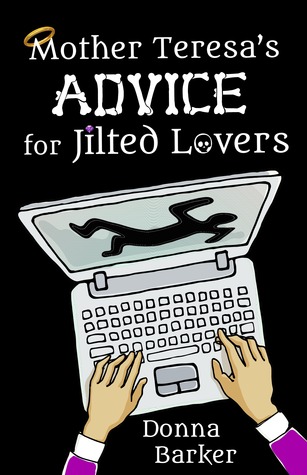
  • MOTHER TERESA’S ADVICE for JILTED LOVERS by Donna Barker — a bright and sassy mystery

    MOTHER TERESA’S ADVICE for JILTED LOVERS by Donna Barker — a bright and sassy mystery

    A surprising tale about the practical and magical powers of love and jinxes, disguised as a chick-lit mystery. How many genres can you pack into one novel? This one melds at least three, starting out as classic chick lit: bold, edgy, funny, modern, urban, all about working women’s lives and loves.

    The narrative has a bright and sassy voice that pulls the reader right in, and before you know it, the story has morphed into a supernatural/spiritual murder mystery overlying a sweet romance.

    The combo arises from the pairing of Tara Holland and her best friend for two decades, Betsy, two self-employed thirty-somethings in Vancouver. Tara is a technical and business writer with a perpetually broken heart, and Betsy is a marketing/web guru who skips like a stone across bisexual relationships. She has given up on romance, while Tara is always seeking Mr. Right. But every time she thinks she’s found him, he ends up dead through an assortment of coincidental innocent accidents. Is Tara jinxing her lovers?

    Betsy also sees a potential moneymaker in helping women stuck in bad situations escape them through Tara’s seemingly psychic abilities. Tara cooperates by adopting many of Betsy’s new-age-type practices to learn how to channel her power. But she insists that it only be used for good, rather than simply removing troublesome men from desperate women’s lives.

    After many false starts, they put together the web-based enterprise “Mother Teresa’s Advice for Jilted Lovers.” Then all sorts of strange things begin to happen, while the money rolls in as does death threats and dubious untimely demises.

    Meanwhile, Tara finally finds the man of her dreams in Glen—until he departs with no warning, leaving behind a cryptic clue. Tara recovers from a broken heart once again with Betsy’s nursing. Suddenly, Tara must question everything through a lens of darkness. Tara finds herself on the run to save her own life and soul.

    The story’s twists and turns make it impossible to guess the ending. For readers who want more, the ending leads clearly into the beginning of the next volume in this sharp new series.


  • PORTIA BENCH by Robert Boyd, a horror thriller novel

    PORTIA BENCH by Robert Boyd, a horror thriller novel

    Ill-fated Clint Matheson. He lands what looks like the stellar job of his career—managing construction of a new highway across British Columbia, in time for the Expo 86 World’s Fair in Vancouver—only to find the highway must cross Portia Bench–a tableland that is ideal for a roadway. 

    However, it is actually a graveyard. Centuries ago, a First Nations chief lost his bride there in an earthquake, and in his grief he forever cursed the land. Later, a horrible train wreck took more lives, including those of circus animals. So when Clint’s team starts surveying this cursed ground, spirits awake, and start fighting back.

    Survey teams are slaughtered when crew members suddenly go berserk. Surviving crew members see bewildering visions and hear incomprehensible noises. Clint, who learns of the legends from a contemporary chief and his daughter, plus a museum director knowledgeable about the Kootenay Central Railway, finds that maybe he shouldn’t have been so quick to dismiss the legend of the curse, especially once he starts seeing some of the visions himself.

    But Clint can’t make his bosses believe, and they refuse his begging to reroute the highway. He has to find some way to stop the spirits from going crazy and get the road built. Meanwhile, crew after crew comes to grief. Even nature conspires to set back the project, with harsh winters and mysterious wildfires.

    The story takes on a Grade-B-horror-movie flavor as the body count rises as an entire work crew is murdered. The plot of this story is about supposed progress interfering with a cursed landscape and unleashing primeval forces. Clint has to wrestle with some serious conflicting interests along with finding himself romantically distracted by Chief Edwin’s daughter, Cindy. 

    The most intriguing aspect of Portia Bench is the regional history brought to life by the author, who clearly has done his homework, and knows from experience the hardships of building roads across the high backcountry of western Canada. The central mystery of the story is: Will Clint be able to come up with a solution, or will the spirits wipe everyone out? The odds are against Clint and he must risk all to find a way.

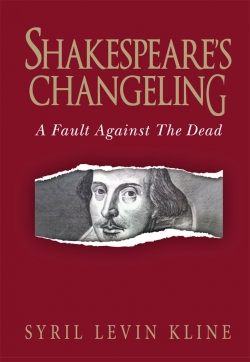
  • SHAKESPEARE’S CHANGELING by Syril Levin Kline — the Shakespeare Debate

    SHAKESPEARE’S CHANGELING by Syril Levin Kline — the Shakespeare Debate

    A debate has long existed among Shakespearean scholars about the authenticity of the playwright’s works. Author Syril Levin Kline is well versed in this subject. Kline presents a credible version of what might have happened back in the 1500s to account for the belief that someone other than William Shakespeare wrote his famous plays.

    The novel’s premise arises from a decree of the time that no aristocracy may debase themselves by being involved in commoner pursuits, such as the theater. That doesn’t work for Lord Oxford, a passionate poet and playwright, who is also passionate about Queen Elizabeth. They secretly marry and conceive an heir to the throne, which haunts them beyond their deaths. But because of their liaison in life, Queen Elizabeth allows Oxford to indulge in his art behind the mask of another’s name.

    That person is Oxford’s devoted secretary, William Shaxper—an ambitious nobody enamored with the theater, who weasels into Oxford’s graces and rises from “bucolic obscurity” to Oxford’s business partner and official impostor. The ruse lasts for decades; and even when old Shaxper is dying, he is unable to confess his role because of the constant twists and turns of the times.

    What times they were—war, plague, rebellion, court intrigues, tortures, and hangings for sins and alliances that changed with the wind. In this era, plays, which we know today as just another medium of entertainment, were used as political weapons. So the masquerade risked dangerous consequences.

    The story is told from Shaxper’s viewpoint with occasional switches to other key players. These shifts allow the plot to proceed sequentially and build suspense. The writing is adept, and the narrative is compelling.

    The novel is enriched with extracts from Shakespeare’s works and supported by meticulous research. It takes the reader back centuries to the origin of our literary culture, at the same time amusing us with human strengths and frailties that haven’t changed a whit, and presenting serious societal issues to think about.

    Shakespeare’s Changeling is Elizabethan historical fiction at its finest—intriguing, entertaining, and erudite. Kline makes a strong case for this alternative viewpoint to this lively debate.