Author: Carol Davala

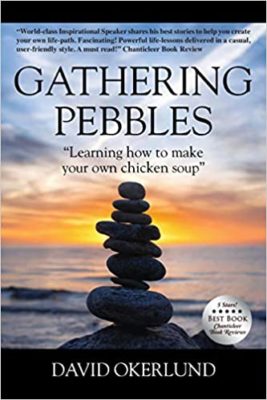
  • GATHERING PEBBLES: Learning How to Make Your Own Chicken Soup by David Okerlund – Memoir, Inspirational, Healthy Living

    GATHERING PEBBLES: Learning How to Make Your Own Chicken Soup by David Okerlund – Memoir, Inspirational, Healthy Living

    Inuit of the Canadian Arctic are known for creating stone structures used as navigational points and message centers for fellow travelers. Some of these directional monuments provide a spiritual connotation meant to enrich the journey.

    Gathering Pebbles is David Okerlund’s own “inukshuk” of sorts, a book filled with stories, recollections, and memorable life events that have become part of his personal road map for living. Okerlund, a world-class inspirational speaker, shares his best stories to help you create your own life-path. He shares this collection of nuggets in the interest of helping others along their chosen path and hoping to encourage their own “gathering” and sharing of valuable knowledge.

    Okerlund directs his writing in a casual, user-friendly style. Each of the book’s chapters is highlighted as a pebble gathered on his winding life’s path. Titles are effectively posed as questions to help draw readers into the topic at hand. Each chapter is formatted with a variable mixture of contemplative quotes, poetry, recaptured historical moments, and personal experiences, to showcase qualities such as perseverance, retaining a sense of childhood wonderment, the importance of faith, and following your dreams.

    Whether referencing the words of Pablo Picasso, Chuck Norris, Colin Powell, or Mario Andretti, Okerlund taps into thought from the world at large. From Presidents and self-help gurus to business moguls and religious leaders, the inclusion of such a broad range of sentiment represents a treasure trove of relatable wisdom. In a chapter on self-esteem and learning to be content with your present situation, even troubled starlet Marilyn Monroe’s ponderings ring true, “Wanting to be someone else is a waste of the person that you are.”

    In a similar light, included poems, primarily authored by Okerlund, often provide a whimsical complement to a chapter’s focus. Whether the narrative rhyming verse of “A Single Arrow” that emphasizes a need to stay on target to reach our goals, or the musings of “The Child Within” suggesting we retain the charms of our childlike curiosity and resilience. The messages are clear and heartfelt. “My Legacy” proves a down-to-earth embodiment of sincere gifts like smiles, laughter, dreams, and blessings.

    Okerlund weaves many of the classic and time-honored lessons amidst his storytelling.

    One narrative about efforts to avoid traffic pointedly entertains a “stop and smell the roses” philosophy. Additional directives to readers include being responsible for your actions, how to approach situations with a balanced head and heart when making decisions, and realizing that failure is often a prerequisite to success. The book has an interactive appeal with questions to ponder and simple exercises to help in assessing the likes of values, priorities, and needs vs. desires in our daily lives. A touching story about an unexpected friendship between a student with down-syndrome and a star athlete focuses on the importance of little things and how simple efforts can create positive change.

    While the core messages of this book may not be new, the shared information of Okerlund’s own deconstructed “inukshuk” proves an inspiring worthwhile effort to help others navigate life’s winding path. Such positivity is always a good thing.

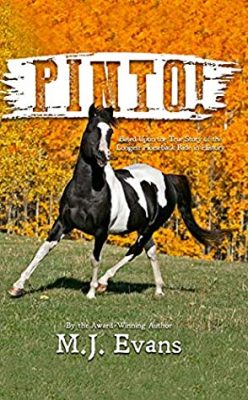
  • PINTO! Based Upon the True Story of the Longest Horseback Ride in History by M.J. Evans – Horse Showing and Training, Equestrian Sports, Middle-Grade Equestrian Fiction

    PINTO! Based Upon the True Story of the Longest Horseback Ride in History by M.J. Evans – Horse Showing and Training, Equestrian Sports, Middle-Grade Equestrian Fiction

    In the charming and heartfelt Pinto! Based Upon the True Story of the Longest Horseback Ride in History, M.J. Evans brings to life a forgotten piece of American history. Here from a unique perspective, Evans recaptures the legendary journey of the Overland Westerners, a group of four men on horseback who rode over 20,000 miles across the US, over 3 years. Their goal was to visit each of the 48 state capitols, be photographed with the governor, and ultimately reach California for the triumph of the 1915 World’s Fair Panama-Pacific Expo. Of the seventeen horses who joined the trip, whether traded, sold, or lost along the route, only one heroic equine made it the entire way.



    Pinto was that beautiful, 6-year-old black & white Morab, i.e., half Morgan/half Arabian horse. Only 15 hands high but sturdy and well-proportioned, he had always dreamed of accomplishing something great. The opportunity comes about when George Beck chooses Pinto to join his ambitious cross-country trek. Clearly, the two develop a special bond rooted in heart and determination.

    In a story that blends history, travelogue detail, equine knowledge, and adventure, this book is so special because the narrative is told from Pinto’s point of view. Whether struggling with variations of the terrain, observing human frailties – consider in the aftermath of a stolen saddle, Pinto opines, “I don’t like the evil side of men.”; performing as a show horse, or posing for photo ops; the arduous adventure keeps us invested.

    Humor and pathos play hand in hand throughout the chapters. Whether revealed in the act of a pile of manure deposited in response to a dishonest rancher’s nefarious business tactics or the harrowing lesson of a near-drowning due to improperly secured horse packs, this well-crafted storyline moves steadily forward. Throughout their odyssey, the riders sold postcards and calendars to help fund their endeavor, though often they found it difficult to pay bills or feed themselves. While hard times often had them relying on others’ generosity, pep talks and song helped buoy their spirits, and the well-being of the horses was always a priority.

    As an avid horsewoman, Evans weaves relative informative tidbits throughout this work. These range from artful descriptions of horses forming small familial bands rather than joining herds, dealing with colic’s precarious nature, and understanding the consequences of a horse’s improperly fitted tack or harness.

    Evans retrieved much of her research from the Overland Westerners’ diaries, journals, and photographic materials, housed in the Oklahoma City National Cowboy Museum, as well as historical museums in Washington State. Much of the dialogue is based on the actual writings. Choice conversations and actions serve to showcase individual personalities and the emotional sentiments of trek participants, through the likes of facing belly-high snows on a precarious trail; appreciating the comic relief and antics of a companion dog, Nip; or witnessing the rough and declining character of some who overindulge in alcohol. While certain details were created from Evans’ own imagination, such embellishments heighten the excitement and enhance the drama.

    In a nod to the classic Black Beauty story, one of her childhood favorites, Evans felt it necessary for Pinto to tell this tale. Though targeted for a middle-grade audience, history buffs and horse lovers of all ages will enjoy this rare account. The glowing result is informative, entertaining, engaging historical fiction that creatively explores a monumental horseback ride, now destined to be remembered.

    Pinto! won the CIBA 2019 First in Category Gertrude Warner Awards for Middle-Grade Fiction.


  • The KNOCK … a collection of childhood memories by Carolyn Watkins – Children’s Life Books, Childhood Memoir, Family Life

    The KNOCK … a collection of childhood memories by Carolyn Watkins – Children’s Life Books, Childhood Memoir, Family Life

    In a quiet voice filled with emotion and heartfelt detail, Carolyn Watkins’ The Knock… a collection of childhood memories realistically captures what it’s like for a child when a parent in the military is deployed at a great distance for active duty.
    From her own personal recollections as an 8-year-old girl, each vignette weaves an honest perspective of life growing up in a military family. Tapping into the tender parent/child bonds and the feelings of loneliness and anxiety that arise in being separated from loved ones, Watkins’ intentions are to help other youngsters in similar situations, and to let them know that they have a supportive network. Here she explores the importance of family coping skills to include the strengths of a parent on the homefront, the help of relatives, and the care and concern needed for a wounded parent returning from war.

    When dealing with her father’s absence, Watkins easily voices notable questions like “Would he remember me?” and “Would he be hurt?” She also recalls how her mom often hid her own emotions to remain stoic and supportive for her children. While the brave front is comforting, Watkins realized how it contributed to more concerns.

    Wisely, Watkins sheds important light on the need to be open and express emotions during trying times. The ultimate realization is that shared feelings can make the experience of handling tough situations a bit easier. Watkins also reflects on the adolescent insecurities she felt and how they seemed heightened by constant relocations. Flexibility and adjustment as part of a military family proved key.

    While this particular true-life memoir focuses on the ’60s and the war in Vietnam, the story is truly relatable to the conflict of any era. With Dad off to serve in the jungles of a foreign terrain, and Mom at home serving a dual parenting role, a visit from German Grandmother “Oma” helps solidify the cross-generational sentiments of wartime experiences. Stark recollections of visits to a hospital where Watkins saw firsthand the harsh realities of war seem a necessary component. Clearly, a time that helped Watkins gain strength in learning to accept “The Knock” at the door that symbolizes an unsettling fear of the unknown. Such moments undoubtedly helped the family come to understand the heroic efforts of those who put themselves in harm’s way in the fight for our freedom.

    Lyndsey Erickson’s soft pastel illustrations easily complement the moving words of this narrative. Whether visualized in the glory of the star-spangled flag flying against a blue-clouded sky; a family gathered around the dinner table featuring an empty chair, that speaks to both togetherness and the solemnity of dad’s absence, or an army helicopter falling from the sky, all depict indelible moments. The importance of letter exchanges, especially during a time before computers and internet communication is sweetly rendered through images of red & blue-bordered airmail envelopes. A small, yet charming note of nostalgia.

    The book’s final words include a great springboard of ideas to open up further discussion about family dynamics, challenges, and feelings of universal concern. Though intended for the 8-13-year age group, this gentle, informative memoir shares a powerful message that should be appreciated by readers both young and old.

    The Knock won First in Category in the CIBA 2019 Little Peeps Awards for Children’s Literature.


  • MY SISTER’S SUPER SKILLS by Lauren Mosback, MA, LPC, NCC – Family Health, Child Psychology, Children with Disabilities

    MY SISTER’S SUPER SKILLS by Lauren Mosback, MA, LPC, NCC – Family Health, Child Psychology, Children with Disabilities

    During these uncertain times, recent news reports have indicated that children as young as three years old can experience symptoms of anxiety and depression. Clearly, emotional upheaval is at an all-time high. Luckily, child psychologist, Lauren Mosback is here with her new book, My Sister’s Super Skills. A tale that provides a fun and entertaining kid-friendly book that offers up healthy coping tools to help manage stress and promote positive emotional development for even the youngest of sufferers.

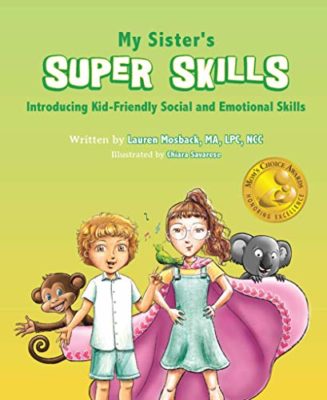
    Here, fearless big sister Lily featured in her raspberry pink cape, serves as the motivational guide for her young brother David as he struggles to understand and deal with his mixed emotions. This smart, adoring, be-spectacled heroine offers simple little tricks to help her sibling feel better. Her advice of “Name your feeling to begin the healing,” sets in motion an offering of interactive remedies that help David navigate his worrisome thoughts and gain a more positive outlook.

    Mosback creatively chooses various animal actions to connect with each newly taught coping skill. Whether doing deep breathing like a horse, repeating self-affirmations with the strength of a lion, playing like a dolphin, or relaxing and cozying up like a Koala, the imaginative suggestions are entertaining and relatable for youngsters. Further sage advice: smiling, singing, painting, and even self-hugs, all positive affirmations that encourage kids to look beyond their uncertainty and incorporate these unique strategies when they are feeling overwhelmed.

    Eye-catching illustrations by Chiara Savarese are a major component of the story and provide the perfect complement to the casual rhyming style of the narrative. Amidst the portrait of a horse with his flapping lips, and images of a bubble-headed Lily in a relaxing bath, riotous laughing chimp faces, and a P.J.-clad monkey/child dancing on a bed, the visuals bring whimsy and humor to the story and enhance a playful tone. Bright, crisp, and bold coloring lends a vibrant air to the pages.

    Initial details of a troubled David evidenced in the sad eyes and the weight of a backpack heavy on his small shoulders showcase the toll of negative emotions. As the tale unfolds, suggested behaviors put into practice ultimately reveal a happier, wide-eyed youngster learning to deal with his problems.

    As a licensed children’s counselor, Mosback has smartly tapped into relevant subject matter reflecting the tumultuous state of our daily lives. In this well-crafted, engaging story, the highlight of a caring sibling relationship, and the clever offering of ways to manage feelings like sadness, frustration, anger, or fear proves an appropriate and timely gesture. While the work is primarily intended to promote emotional health and well-being for children, the core message is clearly relevant for readers of all ages. A charming worthwhile read reminding young and old alike to “think positive thoughts” and that “tomorrow will be a fresh start.”

    My Sister’s Super Skills won First Place in the CIBA 2019 Little Peeps Awards for Children’s literature.


  • WE DID WHAT WE COULD by Nancy H. Wynen – Historical Fiction, WWII Women’s Fiction, Literary Fiction

    WE DID WHAT WE COULD by Nancy H. Wynen – Historical Fiction, WWII Women’s Fiction, Literary Fiction

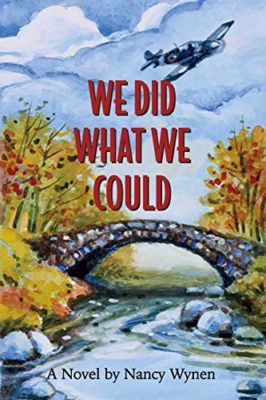
    Nancy Wynen’s We Did What We Could is a well-conceived, smart, character-driven novel set across a grand European landscape. Here a formidable trio of young women, groomed for mere social status, demonstrate their strength, endurance, and courage as they move beyond the walls of academia to experience careers. The three must also deal with relationships, family expectations, and life issues amidst the often devastating and upending climate of war.

    Lady Archer is a widow from the Great War. As Assistant Head Mistress at St. Martin’s School, she feels girls should receive solid educations and prepare for real professions. With her high level of social ties, Archer looks for “future perfect leaders” within each new graduating class, possessing ideal traits of intelligence and creativity. In May of 1936, Archer sets her sights on three such proteges whose memorable antics foretell their potential for more significant life accomplishments.

    In this three-part literary work, Wynen moves the narrative between the interconnected lives of these central characters. In the mind of their individual goals, natural-born leader Maggie Shelford obtains a job at the London Times, Agnes Fletcher heads for nursing school, and creative Ellie DeWever prepares to join the Netherlands foreign services. Ellie’s kindred spirit Gran, another select alumna of St. Martin’s, offers up smart advice to the tune of, “Be prepared, and then you can adjust to whatever happens … Improvise as you go along.”

    From royal debutante ceremonies where these three friends sneak an outsider into high society’s ranks to Agnes’ innate ability to bluff her advancement through nursing school, imagination and talent help these women forge ahead. With the continuing influence of Lady Agnes, Maggie finds herself a member of the RAF (Royal Air Force), reporting for the Union Jack, and ultimately a chief press camp officer. Events of the day fill the storyline. With Ellie the first in the group to marry and start a family, Maggie and Agnes begin to contemplate their own destinies and opportunities to find love, romance, and a “real deal” relationship.

    As expected, the backdrop of war predominates in a story playing out within a 1936-1945 timeframe. During this uncertain time, life is likened to a ballet where each step was delicate, and “losing one’s balance was costly.” Here towns are destroyed, families are forced from their homes, secrets are buried, and love and loss are intertwined. But the narrative isn’t always frayed with hardship. Wynen aptly weaves humor throughout her work that serves well to balance tension and storyline.

    When a significant twist in the plot occurs, Lady Archer’s hard work with her proteges pays off. Here Wynen cleverly brings the story full circle with the re-enactment of an ingenious prank incorporated from their school days. A detailed wrap-up highlights these characters’ futures and leaves Lady Archer hoping for post-war generations instilled with equally creative and indomitable spirits.

    For those readers drawn to stories filled with the harsh realities of a war era and the emotional triumphs and tragedies of those involved, We Did What We Could proves a lively and entertaining exploration that showcases the fine art of determination and will power during the best and worst of times.


  • OSCAR’s CHRISTMAS WISH by Veronica Fischer – Children’s Christmas Story, Children’s Books in Rhyme, Children’s Animal Stories

    OSCAR’s CHRISTMAS WISH by Veronica Fischer – Children’s Christmas Story, Children’s Books in Rhyme, Children’s Animal Stories

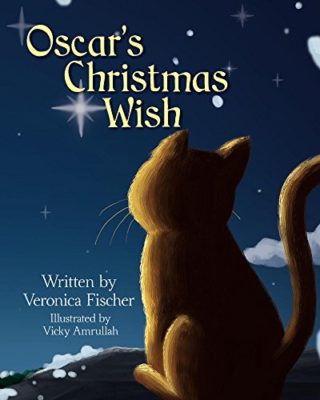
    Veronica Fischer has written a delightful holiday story for young readers with rhyming prose and colorful pictorials that highlights an important message about being yourself.

    In Oscar’s Christmas Gift, the city zoo is home to a magnificent menagerie of animals, including horned rhinos, tuxedoed penguins, roaming lions, hooting monkeys, and trumpeting elephants. The furry and feathered residents here love being visited. Among them are a family of ocelots comprised of a Momma, 5 boys, and little Mary Lou. Young Oscar is a unique individual in the world of ocelots in that, unlike the felines showcasing a traditional spotted coat, Oscar’s golden fur has no markings. Embarrassed without his “polka-dots,” Oscar fears being laughed at. While his mom and siblings offer encouragement and highlight the attributes he possesses, words like “You’re smart!” “You’re silly!” “You’re ever so funny!” are not enough to convince a disheartened Oscar.

    Since it’s Christmas time, clever Oscar decides to write a letter to Santa and ask for the spots he so desperately wants. Fearing his request won’t reach the North Pole in time, Oscar decides to take it there himself. En route, he meets up with an alligator named Mit, who desires to sing, and Carl, a panda bear in need of a comfortable place to sleep. Unfortunately, when the three new friends reach what they believe to be their intended destination, they are informed by a bullying group of penguins that they aren’t at the “real” North Pole. A dismayed Oscar runs off, only to meet with an elderly, red-suited man. While this wise Santa-like character notes Oscar’s beauty and strength and points out the perfection of his uniqueness, nonetheless, he understands Oscar’s desire to fit in with the other ocelots. Soon he offers a practical and inventive solution for Oscar’s concerns, as well as those of his traveling companions.

    Vicky Amrullah’s full-color illustrations are bold and vibrant and artfully complement the narrative. Expressions on each characters’ face truly capture the sentiments of the storyline, whether in the tearful gaze of a shy, green-eyed Oscar, dismayed because he was born without spots; the toothy grin of a wanna-be singing gator; or the heartfelt kindness of a wool-capped, bearded man who bears a remarkable resemblance to Santa.

    From the opening Oscar Wilde quote, “Be yourself. Everyone else is taken,” to the underlying story of classic children’s books like The Ugly Duckling, Fischer takes an upbeat and contemporary storyline of being yourself. She gently reminds children about the importance of individuality, ingenuity, and appreciation for what we have. In short, a Children’s book we highly recommend – and a perfect holiday read.

    Oscar’s Christmas Wish won First Place in the CIBAs 2018 Little Peeps Awards for Children’s books.

  • WHAT WONDERS DO YOU SEE… WHEN YOU DREAM? by Justine Avery – Baby & Toddler Time Books, Baby & Toddler Sense & Sensation Books, Children’s Mystery & Wonders Books

    WHAT WONDERS DO YOU SEE… WHEN YOU DREAM? by Justine Avery – Baby & Toddler Time Books, Baby & Toddler Sense & Sensation Books, Children’s Mystery & Wonders Books

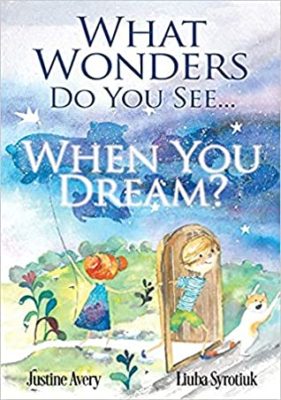
    As a calming invitation to a new bedtime ritual, What Wonders Do You See … When You Dream? is a lyrically narrated and masterfully illustrated children’s book well intended to help youngsters wind down and prepare for the magical adventure of sleep. Here the graceful style and delicate rhythm of Justine Avery’s writing comes alive with artist Liuba Syrotiuk’s dreamy watercolor visions. The beautiful collaborative effort provides inspiration for young readers to set aside their day’s excitement and drift into an imaginative landscape of shut-eye.

    Against an airy backdrop that moves from rolling green hills and the face of a smiling sleepy sun to swirling blue-mauve skies and a sprinkling of stars, the narrative follows a whimsical boy and girl getting ready for bed. They put their toys away, brush their teeth, get into their PJs, and then take a moment to stretch and relax. Ultimately, deep meditative breaths help calm their active minds in a mindful moment, and soon they can drift quietly into a blissful encounter with their dreams.

    Avery writes with a wispy hand and a soothing, creative voice. While the rhyming verses and words may diverge from the traditional, such free-form stylings are pleasantly suited to the relaxing nature of the story. Additionally, she broadens the audience’s vocabulary with fun words like “niggles” and “sniggle” that are sure to entice.

    While youngsters often struggle at bedtime with concerns about the dark or worried about monsters in the closet, Avery’s smart emphasis is on bedtime as “magical … wondrous” and “best when you’re feeling slumberous.” Here, funny bug-eyes beneath the bed and small furry mop-like creatures running about elicit a figment of charm and humor rather than fear. The story’s final question of What wonders do you see? reveals a moment for youngsters to point out images on the page, as well as igniting an opportunity for them to talk about their own personal dreams.

    Syrotiuk’s gossamer watercolors awash with gentle hues and soft-edged lines provide a perfect accompaniment to Avery’s narrative. This fresh, straightforward design ideally punctuates the soothing, balm-like feel of the story. Skillfully rendered brushwork draws readers into a dreamscape enveloped in ribbons of color. It showcases an imagined world filled with flora and fauna, floating sea life and planets, balls of yarn, and a frisky calico cat that lends its playful presence throughout the book’s pages.

    Mini watercolor portraits and bios of both the author and illustrator, along with a message about freely sharing this work, appear at the book’s end. This small detail adds a glowing touch to the book’s overall design.

    In a truly artful and harmonious combination of words and imagery, the sometimes mundane or, more often, chaotic time of getting ready for bed aptly turns into a surprise adventure. Here’s the perfect story to lull antsy youngsters into imaginative sweet slumber and help them discover some remarkable secrets when they close their eyes and dream.

    What Wonders Do You See … When You Dream? Won First Place in the CIBA 2019 Little Peeps Book Awards for Children’s Literature.


  • DARLENE by Karl Larew – Literary Saga, Mystery, Romantic Literature

    DARLENE by Karl Larew – Literary Saga, Mystery, Romantic Literature

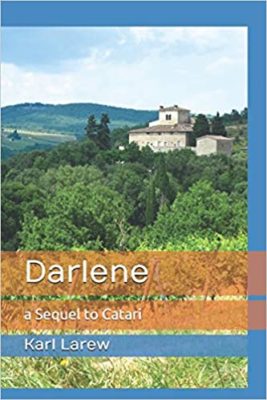
    In a propelling follow-up to Karl G. Larew’s captivating novella Catari, where love, history, and family drama become intertwined within an investigative murder mystery, the story continues in Darlene, an artfully crafted literary sequel.

    Having uncovered the mystery of Catari’s death, inquisitive BFFs and comrades Maxwell Roux and Darlene Wolfe reunite to deal with the conflict-driven wrath of Catari’s stepfather, Hugh Fontane, and her half-brother Jeffrey. They seek to gain control over the Fontano family estate, as well as Catari’s reputation. However, the historic Italian villa and burial crypt have been left in Max and Darlene’s hands, as per the wishes and dictum of Catari’s baronial grandfather’s will.

    Early on, readers learn that Max had a former relationship with Catari. Bisexual Darlene, who lives as a lesbian, was also involved with Catari. Clearly, the unique friendship delivers an interesting trio, though now with Catari’s passing, the remaining duo seems duty-bound to keep their relationship at a platonic level, because Darlene wishes to remain a committed lesbian; however, desires undoubtedly bubble beneath the surface. Initially, Larew weaves charming hand-holding and shared beds, with Darlene robed in oversized PJs, to suggest proper, old-fashioned decorum, yet the sensation of underlying lust and desire prevails.

    Catari’s family members’ intentions are brought to light via written correspondence, agitated encounters, and lively meetings that reveal the father and son desire to turn the villa and family crypt into a tourist rental site and attraction for ghost hunters. The Fontanes levy their plans with threats to expose Catari’s romance with Darlene and slander her reputation with untruths regarding risqué photos, problematic drinking, and “casting couch” insinuations.

    Larew’s sophisticated narrative style quickly draws readers into the story. He allows Max to break the fourth wall and ask the audience difficult questions about ESP, ghosts, and sex. From the straight-forward opening directive that asks, “Do you believe in precognition?” to admonishments to readers hoping to glimpse Max and Darlene’s potential sexual interludes, Larew also allows Max to go further with intimate asides. The use of these creative tropes helps create a tangible atmosphere and hook readers immediately.

    There is a certain air of old-world formality in Larew’s language and intonation that speaks directly to these central characters’ refinement. With Max’s love of music and Darlene’s career in the field, classical and operatic references are well placed throughout the story. From Caruso’s “Pour un Baiser” (For a kiss) announced as a bookend in Max’s life, to the strains of “La Bohème,” music suggests itself as a fitting landscape for the Catari, Darlene, Max three-fold drama. Indeed, such melodies offer a complimentary balm for the emotional upheaval of these characters and their situations.

    Against detailed backdrops of New York apartments, shared meals at ethnic eateries, and the sprawling estate in Italy, Max and Darlene navigate their way through the mire of tensions, threats, questions, and concerns in their effort to preserve the sanctity of the villa, and uphold the legacy of their beloved Catari.

    Darlene is clearly a provocative and arresting work that can stand freely on its own. With notable characters and well-defined interactions, the familial drama proves a delightful and compelling read. Those who want more may wish to pick up Catari, the novella that started it all.


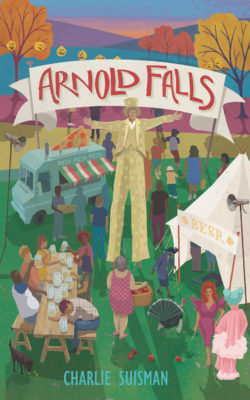
  • ARNOLD FALLS by Charlie Suisman – LGBT Humorous Fiction, Cultural, Ethnic, & Regional Humor, Rural Life Humor

    ARNOLD FALLS by Charlie Suisman – LGBT Humorous Fiction, Cultural, Ethnic, & Regional Humor, Rural Life Humor

    A blue and gold badge for the 2020 Grand Prize Winner for Mark Twain Humor and Satire Arnold Falls by Charles SuismanCharlie Suisman’s debut novel is a wonderful escape to a small fictional community in upstate New York. Here a melting pot of quirky residents brings Arnold Falls to life, a town with a unique history and charming inhabitants whose lives are intimately intertwined.

    Settled in 1803 by the unscrupulous Hezekiah Hesper, the town for unknown reasons was named after Benedict Arnold. Adding to the oddities, the closest waterfall is twenty miles away. The area is known for sudden bursts of crab apple-size hail pelting the landscape without any scientific explanation. Hence the incentive for “Hail Pail Day,” a neighborly tradition surrounding the distribution of galvanized bucket head-coverings.

    Suisman engagingly presents Jeebie Walker as the story’s primary narrator. A gay man in his early 40s, he moved north of the city in the hopes of a quieter life with his partner, Miles. Though things didn’t work out, Jeebie has settled into his fixer-upper, Queen Anne-style abode, and now seems a positive fixture in this hamlet.

    The creative narrative quickly draws us into multiple storylines. First, there’s Jenny Jagoda’s mayoral campaign against a clueless incumbent who has inadvertently shipped bomb-making supplies to a city in Romania. There’s an all-out effort to save a beloved and amorous turkey from the chopping block of a local celebrity chef looking to up her ratings. Of course, there must be a fight to thwart the construction of an environmentally destructive tire factory proposed by a shady developer. Readers will quickly realize that Arnold Falls is a kaleidoscope of hilarity, one that we may like to visit over and over.

    As a character-driven piece, Arnold Falls thrives as a friendly place filled with eccentrics, old guard, hipsters, artists, drug dealers, and reclusives. Among the eclectic menagerie a talented henna-headed pickpocket/talent agent, a knowledgeable record store owner whose legendary music and weed pairings have brought “harmonic convergence” to the community, a Motown chanteuse determined to steer her friends to newfound love, and the flatulent plagued, 93-year old daughter of a successful madam, likened to “a walking piece of history.” Suisman shines in his delivery of these characters. Here details offer a colorful array of ages, ethnicities, backgrounds, and sexual orientations, all just trying to make the best of their given circumstances and situations. Amidst snappy dialogue and genuine heartfelt conversations, members of this tight-knit community openly reveal their human foibles and frailties. Above all, there is a commonality of compassion and caring that feels authentic.

    As town residents continuously interact, whether in casual run-ins, hopeful dating, town meetings, or planned gatherings, Suisman makes it easy to get to know those finding refuge in this town. While each new scene takes on a vignette-like quality, the overall thread of human connection eases them into the continuous storyline.

    Some unexpected revelations in the latter chapters of the book brightly showcase the true depth of these individuals and their lifelong hold to the community. In this rare enclave, the story’s feel-good wrap-up proves the perfect celebratory testament to an all welcoming sanctuary filled with food, wine, music, merriment, and love. In short, a place we’d like to visit!


  • EXPLORE EUROPE on FOOT by Cassandra Overby – General Europe Travel Guide, Walking Guide, Mountain Climbing

    EXPLORE EUROPE on FOOT by Cassandra Overby – General Europe Travel Guide, Walking Guide, Mountain Climbing

    A Blue and Gold Badge that reads I & I Instructional & Insightful Non-fiction 2018 Grand Prize Explore Europe on foot cassandra overbyDue to COVID-19 sweeping across continents, travel restrictions are at an all-time high. With the general population being placed on lockdown, the need for social distancing, and hunkering down moving towards an indefinite timeframe, some much-needed armchair travel adventures couldn’t come at a better time.

    Here in Cassandra Overby’s encyclopedic guide Explore Europe On Foot, readers are taken through a step-by-step process of dreaming, planning, and hopefully soon experiencing memorable, slow travel ventures of a lifetime. Whether it’s choosing a route and destination, deciding what to pack, finding appropriate accommodations and food options, or dealing with inevitable challenges, Overby supplies a world of information in this colossal foot travelers’ bible.

    A personalized introduction draws us into Overby’s early disillusionment with travel, and what she felt was its all-too-often focus on the inauthentic global itinerary. A 2015 extended European tour with her now-husband, Mac, soon changed her mind. The trip filled with long walks and opportunities to live like locals ultimately rekindled her traveling desires and made her realize this slower, off-the-beaten-path journey mode offered a much more genuine and rewarding experience, and truly “opens the door to trail magic.” Along with the best natural beauty a region has to offer, Overby showcases such travels as an opportunity to glimpse varied cultures up close and personal. Foot travel is a chance to learn the rhythm of a region’s daily life and participate in everything from the likes of a shared meal to chores on a farm, or sing-a-longs at the local watering hole.

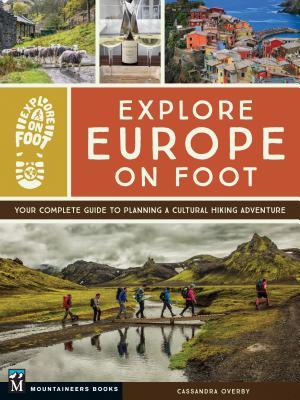
    The book includes specifics of 15 hand-picked walks from classics like the Tour du Mont Blanc in France and Italy, to lesser-known routes like King Ludwig’s Way in Germany and Portugal’s Rota Vicentina, as well as options for shorter wanderings. A planning section covers everything from travel companions and arranging transportation, to obtaining passports and plane tickets, to making reservations and buying travel insurance. Pre-trip exercises for both body and mind, along with detailed packing information offer shared knowledge for a positive travel experience. Beautiful interspersed photographs help take us around the globe. Whether the “meres” of England’s Lake District or the dunes of Eng Chebbi in the Sahara Desert, whirling dervishes in Turkey or a special message of “Joy” spelled out in stone along Scotland’s West Highland Way, all capture the heart of Overby’s enthusiasm.

    The rich narrative is woven throughout with poetic descriptives. Consider the beauty of an Icelandic trek rendered as ” … intricate designs swirled in the earth by crawling and cooling lava, brave wildflowers that don’t mind a challenge.” Even a simple Spanish proverb of “On a long journey, even a straw weighs heavy”, highlights an important message about the need for light, versatile packing. Clearly the author’s smart advice about bringing home the best souvenir from a trip coincides with the less incumbrance sentiment in suggesting travelers return to their homeland with the practical nuance of a new custom or attitude, i.e. perhaps enjoying the lingering dinners practiced in France, or realizing the importance of family as viewed in the Italian culture.

    Overby’s shared anecdotes and experiences provide a nice change-up amidst the facts and figures featured throughout the chapters, particularly if the book is read from start to finish. Readers will find the information overwhelmingly beneficial in terms of necessary specifics for trip planning. Also, the book’s easily followed design allows readers to meander through chapters and dream of where they will go when they can.

    Overby’s own foot-travel enthusiasm ignited similar passions with family and friends, and ultimately became the impetus for a new life’s calling and writing this book. In the resulting Explore Europe On Foot, this walking aficionado now serves as both guide and inspirational cheerleader to help all wannabe hikers turn their dreams into reality someday.

    Explore Europe On Foot won the CIBA 2018 GRAND PRIZE Insight & Instruction Awards and remains one of our favorites.