Author: Carrie Meehan

  • The WELL: WHAT HAPPENS WHEN the MIND RELEASES but the HEART SUSTAINS by Colleen Golden – Aging Parents, Heartwarming, Coma

    The WELL: WHAT HAPPENS WHEN the MIND RELEASES but the HEART SUSTAINS by Colleen Golden – Aging Parents, Heartwarming, Coma

    The subtitle of Colleen Golden’s lovely book, The Well, asks a searching question:  “What happens when the mind releases but the heart sustains?”  There are few greater mysteries and that’s exactly why this charming and touching novel will appeal to so many readers.

    At the outset, the central character, seventy-six-year-old Grace, has been in a coma for a few months. That doesn’t stop the feisty and funny protagonist from addressing readers, however, and taking us with her on a transcendental journey in which we’ll meet many of her family members and friends.

    While her grown children sit in her room at the nursing home and worry about her being in a seemingly vegetative state, Grace hears every word. The voices seem to be coming from deep within a well, and she sits gingerly on the edge of that well, sometimes leaning over it to eavesdrop more carefully. She reminisces about her life spent in the Midwest, musing about her dimming short-term memory, and shares vivid recollections of flappers (she herself is a great dancer), the first telephones, the excitement over indoor plumbing, radios, televisions, highways, and rockets to outer space.

    It’s a joy to spend time with Grace in this limbo dimension because she’s a thoroughly engaging storyteller and a very astute observer of the human condition. While she seldom judges, she’s quick to point out mischief, like the time one of her sisters stole a boyfriend from another sister, or when teenagers slipped into a vacant house for a romantic rendezvous. So many of Golden’s characters are familiar; they remind us of people we’ve known, people we’ve lost, and people we dearly miss.

    As time goes by, Grace realizes she can do more than just listen to people. She experiments with “dissolving” into their thoughts and discovers that she can help them solve dilemmas and find their way out of difficult and sometimes dangerous situations. She herself finds her way to her old kitchen, where she’s happiest, and starts to bake. While she used to make delicious cakes and pies, she now kneads the dough to fashion a puppy who bounds to life and becomes an adored companion. Well, if that works, why not make people? She does just that, an entire cast that includes old friends and her deceased husband who looks just as he did when he was a handsome, young man.

    Grace creates streets and buildings and before long has created an entire town which she names “Possibilities.” Not bad for an elderly woman in a coma! There are reasons, revealed carefully, for all of Grace’s creativity, as well as lessons to be learned from these paranormal sojourns. Grace has lived a long life but there are loose ends to be tied before she discovers what the next chapter holds for her.

    This material in a less gifted author’s hands might run the risk of sentimentality or frivolity, but Golden wisely has Grace contemplate the sadness of life, along with the joy. There are nocturnal activities at the nursing home that, when discovered, enrage and devastate her children.

    Everyone knows heartache and loss, and Grace has lived long enough to experience her share. In a moment that brings Emily of Our Town to mind, Grace glimpses her deceased mother, describing the scene thus:  “The sun’s brilliance silhouettes her against the horizon, and bedazzles the grass into a field of emeralds.”  Golden’s prose is imbued with a wistful nostalgia, so perfect for a book that considers the variedness of life and the questions of death.  While we don’t know all the answers, this novel helps us realize that because “love makes a good conduit,” the possibilities are, indeed, endless.

    5 Star Best Book Chanticleer Reviews round silver sticker

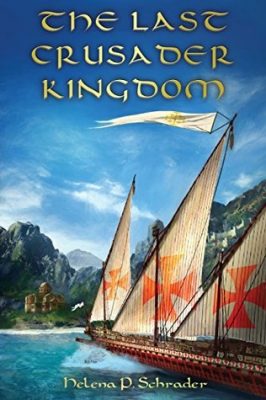
  • The LAST CRUSADER KINGDOM: DAWN of a DYNASTY in TWELFTH-CENTURY CYPRUS by Helena  P. Schrader

    The LAST CRUSADER KINGDOM: DAWN of a DYNASTY in TWELFTH-CENTURY CYPRUS by Helena P. Schrader

    In the Introduction and Acknowledgements section of her fascinating novel, The Last Crusader Kingdom: Dawn of a Dynasty in Twelfth-Century Cyprus, Helena P. Schrader notes that “. . . the historical basis for this novel is very thin,” and that the book serves as “a fictional depiction of events as I believe they could have happened.” Upon finishing the book, one concludes that only the rare reader would disagree with Schrader’s version of the historical events that comprise her narrative. Her comprehensive research and impressive scholarship are evident on every single page. This is a work of historical fiction, admittedly, but Schrader clearly was tireless in exhuming every possible detail to piece together as authentic a history of medieval Cyprus, 1193-1198, as possible.

    The establishment of a Latin Kingdom on the formerly Byzantine island of Cyprus in the late twelfth-century is as engrossing and intricate a chapter in history as possible, one that involved a plethora of cultures, religions, family dynasties, battles, treaties, and, inevitably, human greed and vanity. Schrader addresses both public and private lives and demonstrates how their intertwining shaped history. She considers all classes of society, from barons to beggars. It would be easy to get lost amongst the riveting and numerous details, but the author takes the reader by the hand and offers a guided tour to people, places, and events. The novel includes a Cast of Characters, Genealogical Charts for the Houses of Jerusalem, Lusignan, and Ibelin, as well as historical maps of Cyprus and the Outremer. Her Historical Notes underscore the depth of her research, and she also provides a glossary to orient the reader with historical and regional terms.

    Schrader matches her exhaustive research with a thoroughly captivating narrative. Her prose shimmers with elegant confidence and wit. The story traces how this strategically positioned island, formerly fraught with the greatest animosity between the inept and despised Frankish ruler, Guy de Lusignan, and the Greek Orthodox natives is pacified even after the influx of Latin immigrants.  How all this came about is as exciting and adventurous tale as anyone could imagine. Schrader pays keen attention to how power is grasped, nourished, and maintained, and her tale demonstrates the essential and timeless balance of politics, religion, economy, and public relations. Although the novel takes place in medieval times, much of it could serve as a primer for twenty-first-century global politics and diplomacy.

    One might expect the medieval world to be dominated by men, yet the author fully addresses the lives of women. Obviously siring male heirs was of importance in the twelfth century, but Schrader does not limit episodes involving female characters to pregnancy and birth. She emphasizes their role as astute advisers to their husbands and other male relations. The women understood that marriages were opportunities for strategic alliances and personal power. Queens and wives of public figures were keenly aware of the critical public relations roles they played in binding their subjects to the ruling families.

    The reader also learns a wealth of information on shipbuilding, irrigation, aqueducts, woodcarving, piracy, on and on.  The Last Crusader Kingdom is not just the story of key families ascending to power; it’s also an enlightening overview on the state of technology, the arts, and crime at the close of the twelfth century. The reader trusts Schrader’s depiction of events as accurate in large part because her meticulous research makes every scene vivid and memorable.  Schrader matches her exhaustive historical research with a thoroughly captivating narrative.  Her prose shimmers with elegant confidence and wit.

    Helena P. Schrader is an author who doesn’t just bring history to life but one who reminds us that each passing moment is also history. To understand the events reported on the front pages of today’s newspapers, there’s no greater teacher than the past. The Last Crusader Kingdom is filled with lessons we’d be foolish to neglect.

       5 Star Best Book Chanticleer Reviews round silver sticker

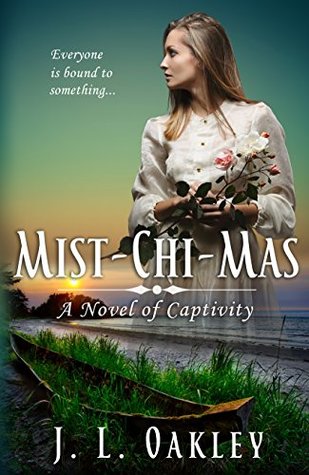
  • MIST-CHI-MAS by J.L. Oakley – Historical Fiction, Pacific Northwest, Literary

    MIST-CHI-MAS by J.L. Oakley – Historical Fiction, Pacific Northwest, Literary

    A masterful work of historical fiction that charts a deeply compelling romance set in the Pacific Northwest during the fascinating but under-reported second half of the nineteenth century. Award-winning author, Janet Oakley brings us another exceptional work from her heart, Mist-chi-mas: A Novel of Captivity.

    It is 1860 and Washington Territory is rich with a diversity of cultures. British and American military camps are posted on San Juan Island, both groups awaiting the decision of an international committee as to which country will be awarded the land. It will take more than a decade for the committee to determine what is to be the water boundary between Washington and British Columbia.

    Although a previous incident involving a shot pig almost instigated a war, at the start of the Mist-chi-mas, the two military encampments are respectful of the other’s turf and co-exist well.  There’s a bit of society in the area, ladies’ teas and picnics take place, and plenty of business dealings due to the ubiquitous presence of the Hudson Bay Company.

    In addition to the relative newcomers to the Pacific Northwest are the native peoples, a number of Indian tribes, the Haida, the Saanich, and the Songhees peoples, as well the “Kanakas,” the Hawaiians who have been here since the early nineteenth century. Attitudes toward the native peoples vary, with some being appreciative of their contributions to the shipping, trading and lime works industries, and others being condescending or outright violent towards them.

    The history of this area comes vividly to life through the romance of a widow, Jeannie Naughton, and Jonas Breed. Jeannie is the niece of the Scotsman, Archibald Campbell, a major representative of the Hudson Bay Company in the Pacific Northwest, and has arrived from England with her young son. Her reasons for beginning life anew in a foreign land are mysterious and mired in scandal.

    In contrast, everything is known about Jonas Breed, a man whose ethnic heritage and experiences reflect the geography and culture of the region. The orphan of an American trader in the South Pacific and a Welsh mother, he grew up speaking English and Hawaiian. As a youth, he was captured by the Haida and was made a “mist-chi-mas,” a slave.  After several years of servitude, he saves the life of his captor and his status changes.   He is grateful for all he has learned from the Haida, and when he asks for his freedom, it is granted. The Haida respect and trust him.

    Breed’s closest companions and friends are members of the tribal peoples, and he will prove his love and loyalty to them repeatedly. He’s as at home on land as he is on water, reads Ralph Waldo Emerson, and is certainly the most self-reliant character in the book. He may remind some of Natty Bumpo, James Fenimore Cooper’s hero in The Last of the Mohicans.

    The Americans and the British generally regard Breed with great admiration, although there are those who envy him and seek his downfall. In turn, someone threatens Jeannie with his knowledge of her hidden past. Despite this, Jeannie and Jonas find love but also tremendous danger at every turn. Jeannie comes to understand the truth of Breed’s words, “We are all mistchimas.” Some are enslaved by external forces, some by inner forces. Their relationship will prove to be as complicated and compelling as the historical events of the novel.

    J.L. Oakley deserves tremendous recognition for the clearly exhaustive and meticulous research she did in writing Mist-chi-mas. With writing so clear and vivid, Oakley brings time and place to life leaving readers captivated by her craft. She invokes the mountains and the waters with such descriptive beauty and fully creates her characters against this panoramic landscape that challenges and shapes them.

     Can love blossom between the most unlikely pair in a multi-cultural, tension-ripe environment? Author J.L. Oakley breathes life into an often forgotten part of Pacific Northwest history in her beautifully penned novel, Mist-chi-mas: A Novel of Captivity–destined to be a regional classic.

    5 Star Best Book Chanticleer Reviews round silver sticker


  • JEHOVAH: A NOVEL by James Patrick Weber – Thriller/Suspense, Police Procedural

    JEHOVAH: A NOVEL by James Patrick Weber – Thriller/Suspense, Police Procedural

    Highly suspenseful and intricately woven, James Weber’s Jehovah: A Novel, will have you guessing until the very last page.

    Austin, Texas is not just the setting of Jim Weber’s novel with vivid descriptions of the overall landscape and the individual neighborhoods, the people, the city’s crime history, the music, even the allergies people suffer from “cedar fever”; the city is more of a character. Weber does a superb job of immersing the reader in this urban environment in the early 1980s, that it’s easy to forget you’re not there.

    The protagonist, Detective Sam Cain, knows the city as well as he knows his co-workers and the family he doesn’t see often enough when heading up a murder investigation. What he doesn’t know is who is killing mobsters, drug dealers, rapists, arsonists, drunk drivers and other unsavory types who have cheated the justice system. The victims are found in prayer position, on their knees, shot in the back of the head, the name of an Old Testament figure pinned to the fronts of their shirts.

    The Old Testament figures prominently in this novel. The killer, referring to himself as Jehovah, sends typed letters filled with biblical references about unleashing his wrath on the wicked to the local newspaper. Of course, our protagonist’s surname clearly alludes to Cain, the Biblical figure who slew his brother, Abel, and readers are right to expect a mighty showdown between the killer and the detective.

    The victim count rises as Cain races to piece clues together with the help from some and problematic interference from others. A most impressive feature of the book is the convincing details regarding police procedures and the internal politics of an investigation. The sections on forensics and criminal profiling are fascinating, while Cain’s meeting with a psychic is understated but nevertheless chilling.

    There’s a large cast of minor but memorable characters, from the undercover cop who turned in his gun and chose to become a homeless person to “The Angel,” a shadowy figure of the night whose objectivity has motivated people to confide in him.

    Given the religious zealotry evidenced in Jehovah’s letters, it’s appropriate that there’s also a priest, a member of the Holy Cross order of priests, who has his own political past having spent time in South America preaching liberation theology.  As in all excellent mysteries, the concluding revelations make you reconsider everything you thought you knew. Weber leaves no loose ends, a feat considering the scope and complexity of the novel, making Jehovah a most satisfying mystery.

    5 Star Best Book Chanticleer Reviews round silver sticker

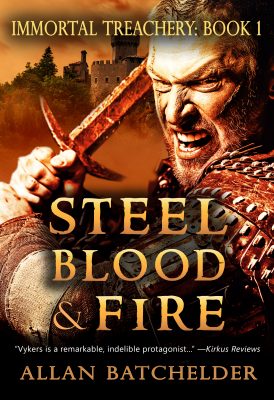
  • STEEL, BLOOD & FIRE by Allan Batchelder – Fantasy, Military, Fairy Tale

    STEEL, BLOOD & FIRE by Allan Batchelder – Fantasy, Military, Fairy Tale

    Tarmun Vykers, the central character in Allan Batchelder’s accomplished fantasy, has many epithets: “The Scourge of Empires,” “The Reaper,” “The Merciless One,” and sometimes just good old “Vykers the Vicious.” He’s very aware that he’s widely feared but not admired, and that’s just fine with him. He’s not the sentimental type.

    On the other hand, he’s darn likable. Why? Well, he’s smart, witty, and often sarcastic, but he’s also able to laugh at himself and the many predicaments that befall him. And he’s not the worst guy around.

    No, that would be Anders, better known as “The-End-Of-All-Things.” The-End is not likable.  Far from it. When one’s goal in life is taking enormous satisfaction and delight in the destruction of everyone and everything, you don’t have friends, you just have people who do your bidding because they’re terrified of you.

    Of course, a showdown between Vykers and The End is going to happen – and Batchelder has lots of fun getting us ready. In this world, the very weapons used have almost as much personality as characters who wield them. Along the way, we meet the cast, many of whom will prove invaluable to Vykers on his quest.

    And what a cast! Batchelder provides a lengthy list at the novel’s conclusion but they’re all so memorable, the reader doesn’t have to consult it often. For starters, there’s Arune, a shapeshifter who has taken up residence in Vykers’ mind where she reads his thoughts and responds with zingers of her own. Some of the most memorable scenes in the book, in fact, take place with Vykers seemingly talking to himself, but really, it’s Arune matching his wit, sentence for sentence. There is so much more to explore and fall in love with, we won’t ruin it for you here.

    If this all sounds like a lot of fun, it is. It’s easy to imagine Monty Python fans reveling over many of these scenes. This fantasy, however, has more to offer. The humor is adroitly balanced with darker chapters concerning primal fears and terrors.

    Steel, Blood & Fire will appeal to a broad group of readers. Although primarily a fantasy, the classic themes of fairy tales, myths and folklore are woven into the narrative.  Good versus evil, the gaining of self-knowledge while on a quest or a journey, transformation through enchantment – it’s all here but with a twist because Batchelder so deftly juggles ribald humor and unexpected poignancy.  He also allows the reader to view these themes through several lenses.  This is particularly true in the battle scenes, the author giving us the individual experiences of several of the male characters.  While there are fewer female characters, they are quite strong, fully realized, and residing in the forest and the castle, the folkloric motifs of the poor and the royal in play.

    The great news is the book is the first in the series Immortal Treachery. Batchelder concludes Steel, Blood & Fire on a tantalizing note and there’s clearly much more material to be mined. If it’s as fully realized as this book, the entire series is a must read.

    Fairy tales, myths, and folklore collide in Batchelder’s first book in the Immortal Treachery series, Steel, Blood & Fire, rollicking fun and seriously addictive read.


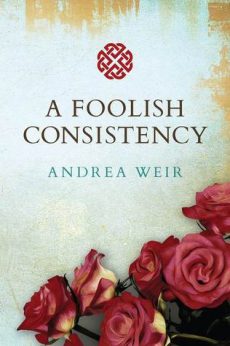
  • A FOOLISH CONSISTENCY by Andrea Weir – Women’s Literature, Family Drama, Romance

    A FOOLISH CONSISTENCY by Andrea Weir – Women’s Literature, Family Drama, Romance

    The course of true love almost never runs in a true straight-line, and this is certainly the case in Andrea Weir’s lovely romantic novel about second chances, A Foolish Consistency.

    Although Fate seems to have smiled on Dr. Will Tremaine and Callie Winwood, former sweethearts a couple of decades ago, when they meet again in an emergency room, their second chance at love is problematic. Will is a widower in Westin, a community in the East, and Callie is a divorcée in California. It’s not just the entire country that separates them, but the events of the last twenty-five years. Their attraction to each other is undeniable, however, and as feelings reawaken, they take the first steps to reconnect and build something new, something they hope will last.

    Inevitably, they have obstacles to overcome. Will’s children, Lizzy and Wiley, are thirteen and eleven, respectively, and still grieving the death of their mother, Joanna, two years earlier. Their maternal grandparents behave almost as if their mother were still alive, and they never acknowledge that Joanna suffered from mental health issues. While Lizzy reacts to her father’s new girlfriend with typical adolescent angst and anger, her grandparents completely overreact and plot to gain custody of their grandchildren. Their motives for doing so blind them to the reality of the situation and pit Will and his children against Callie and her grown children, especially her son, Ben, in his early twenties.

    Considerable depth is added to the narrative by Callie’s understanding of Lizzie’s feelings.  Having lost her own mother at an early age, Callie vividly recalls how difficult it was to accept her father’s new girlfriend who eventually became her stepmother. Although Callie loves Will deeply and wants a future with him, she also understands that Lizzy’s feelings are a priority, one that requires a great deal of patience and sensitivity. These qualities make Callie even more attractive to Will who reassures his children that his girlfriend is not seeking to take their mother’s place.

    Most scenes alternate between Callie’s first-person point of view and Will’s third-person outlook. This interchange between the female and male experiences of the romance gives the novel an intimate robustness, very appropriate for the narrative. The author handles the pacing just right, and the reader roots for the outcome one always wants in a romance. Still, the protagonists have much to learn about each other and themselves, and the author does not settle for a too easy denouement.

    Love once lost is not always easy to regain, even when the couple in question are like peas and carrots. Andrea Weir brings memorable characters, shimmering and confident prose, and realistic dialogue to her stellar contemporary romance of mid-life star-crossed lovers seeking a second chance in A Foolish Consistency.


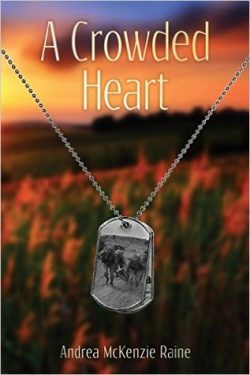
  • A CROWDED HEART by Andrea McKenzie Raine – Literary, Historical Fiction, Veteran/PTSD

    A CROWDED HEART by Andrea McKenzie Raine – Literary, Historical Fiction, Veteran/PTSD

    Willis Hancocks survives fighting in Western Europe during World War II but faces continuing battles of the mind at war’s end in Andrea McKenzie Raine’s poignant study of the plight of the former soldier in her historical novel, A Crowded Heart.

    Willis decides to remain in London rather than return to his native Canada where his parents and sister live near Vancouver. Eager to put the war behind him, he marries Ellie, an intelligent young woman who has studied art at Cambridge University. Her affluent parents approve of Willis, and her father offers to finance his new son-in-law’s study of law at Cambridge. The newlyweds’ future could not look rosier.

    This is, however, the story of a man who is haunted by the terrors of the battlefield. Life cannot proceed smoothly for someone who wakes from sleep in terror, who is plagued by survivor guilt, anxiety, and depression. Willis struggles to find his footing but repeatedly fails as he fights personal battles with alcohol, infidelity, and deception.

    Admittedly, these are poor weapons of choice to face the daily struggle of postwar life, and although he has periods of relative calm and sobriety, his sins and regrets continue to multiply. He recognizes his inadequacies as a husband and a father of two sons, one born out of wedlock to a mistress. Although Willis manages to earn his degree in law and launch a practice with his war buddy, Sam, he is never victorious at achieving inner peace.

    Raine wisely expands the narrative of the novel to reveal the wide net of war. Willis is not the only victim; the people in his life experience the after-shocks of fighting as well. Ellie is a dutiful wife but she is alone in her marriage, painting in secret because she can’t share her work with her emotionally remote, often absent husband. Willis spends years away from his family in Canada, neglecting them, and returns only when summoned after his mother’s death. He doesn’t engage with either of his sons and arranges to abandon the younger one altogether. It’s clear that the war will leave its mark on the next generation as well.

    The ending of the novel is not surprising, but it is powerful and deeply affecting. One is left thinking of all the soldiers who escape death but are nonetheless robbed of their lives. Standing beside them are loving, distraught family members and friends, people who fervently hope for a cure – some miracle that will return traumatized veterans to their former selves. Not to give up on those who have already given up on themselves is the challenge. Raine reminds us that doing so requires a full heart, indeed, a crowded heart.

    5 Star Best Book Chanticleer Reviews round silver sticker

  • GUILTY DEEDS by Scott D. Smith – Police Procedural, Mystery, Thriller

    GUILTY DEEDS by Scott D. Smith – Police Procedural, Mystery, Thriller

    What would you give if you could add to your memories – say, load your brain with pleasant, peaceful memories on top of the violent ones you live with every day? What would you do if the memories you were promised actually turn out to be those of a sadistic serial killer?

    Memories are at the heart of this fascinating detective thriller, Guilty Deeds, by Scott D. Smith. The plot involves the transplanting of memories from one person to another and the result is an intriguing set of concentric mysteries and a very good read.

    Stephanie Monroe, a young, smart and sarcastic detective working in Houston has a seemingly open and shut case when one Robert Grayson, a veteran who saw a good deal of violence in the Middle East, arrives at the police station with blood-stained hands and confesses to the murders of several women. He’s terrified he’ll kill again and begs to be incarcerated before he can do so.  Investigations don’t get much easier for a homicide detective, but Stephanie has been on the job long enough to know that life is never that simple.

    Enter Happy Memories, a company that buys and sells memories for your pleasure – and their profit. When Stephanie uncovers the fact her self-proclaimed killer is one of Happy Memories’ clients, she turns her investigation to the very affluent Dr. Lawrence Mead the owner of the company whose practices range from the unethical to the sinister. With the help of the police psychiatrist and Robert, Stephanie works to unravel this ever-deepening mystery before Robert’s sanity becomes the next victim.

    Tension is ripe throughout the well-written scenes and the dialogue is unexpectedly fun and engaging. The affectionate and quick-witted banter between Stephanie and Robert, whose attraction to one another grows as they become more deeply mired in the investigation, is solidified when they share their own sets of memories. This establishes a trust that will connect them in ways they could never have anticipated – and hooks the reader from the start.

    The conclusion leaves the reader hoping for a sequel. How fortunate, then, that there’s an epilogue that manages a perfect and surprising finish for a novel that probes the essence of the human condition. Thought provoking and entertaining, this thriller will have you second guessing yourself.

    5 Star Best Book Chanticleer Reviews round silver sticker

  • PRINCE of the BLUE CASTLES by Timothy Vincent – Crime Thriller, Suspense

    PRINCE of the BLUE CASTLES by Timothy Vincent – Crime Thriller, Suspense

    Wilson Ames will always offer you a deal of a lifetime – your lifetime, that is in Timothy Vincent’s suspense/thriller, Prince of the Blue Castles.

    Highly suspenseful and carefully penned, this is a thinking person’s novel that will grab you from the get-go. Castles come into play, but they comprise a book within this book, a small sketchbook to be precise. Our protagonist, Wilson Ames, is never without it since he never knows when he’ll feel the need to draw a castle, using an old-fashioned mechanical pencil filled with dark blue lead.

    Yes, it may seem odd that someone in Ames’ line of work carries a sketchbook rather than a gun or a high-tech electronic device to help extricate himself from dire situations. But, then, Ames is not your typical hero. A slight, quiet, fastidious man who speaks with utmost clarity and precision, his power rests in not being a James Bond type. His opponents don’t know what to make of him, and his size and demeanor cause them to underestimate him, a miscalculation that works to Ames’ advantage.

    So, what exactly does he do? As the founder and only employee of Suadela Consulting Agency, he’s a messenger who delivers the most sensitive of communications.  In doing so, he negotiates, arbitrates, and manages to persuade clients to undertake specific actions if they want to avoid disastrous consequences.

    Although he maintains a very low profile, his skills are well-known to Haines, an old college friend who hires Ames to contact various people. While negotiating with clients, Ames is unflappable. Even when being questioned by brutal, sadistic men who torture him, Ames maintains a clarity of thought and never discloses his consuming desire for the safety of his wife. The cost may be his life, but such is his devotion to her that any concern for himself is abandoned.

    Vincent provides just enough tantalizing information about Ames’ past, via flashbacks, to allow the reader to regard him in the present with escalating curiosity and admiration. When Ames is boxed in by circumstances, his values about to be compromised beyond repair, he meets a worthy opponent, Mr. Yoto, and learns that life sometimes offers options that can’t be anticipated.

    And what of the castles, described in such inviting and lovely language? Is the reader just privy to a relaxing pastime for someone whose life often takes harrowing turns? There’s more to quiet little Wilson Ames than meets the eye, and the same is true of his drawings. They clue the reader to Ames’ thoughts and plans. They are, in a sense, maps that he uses to navigate his work and his overall life. And just when the reader believes all to be resolved, a bit of dark red literally enters the picture, and all is forever changed. Overall, Ames’ opponents are foolhardy to underestimate him, and readers should not make the same mistake.

    A thinking person’s psychological thriller – twists & turns,worthy opponents, conspiracies & deceptions abound–exquisitely intriguing.

    5 Star Best Book Chanticleer Reviews round silver sticker

  • The FLYING BURGOWSKI by Gretchen Wing – YA, Social & Family Issues, Fantasy

    The FLYING BURGOWSKI by Gretchen Wing – YA, Social & Family Issues, Fantasy

    In many ways, Gretchen K. Wing’s protagonist in The Flying Burgowski, Jocelyn Burgowski (Joss, for short) is a typical teenager.  She admires and appreciates a favorite teacher, argues with her older brother, Michael (in an awkward rebellious stage), and hangs out with her friends, the popular Savannah and the sweet social misfit, Louis. She loves to relax with a good book, usually one in the Harry Potter series. The third is her favorite.

    Then there are the atypical aspects of Joss’s life.  She lives off the coast of Washington, on Dalby Island, beautiful with its tall fir trees and surrounding water, although not a mall or a MacDonald’s in sight. Her father runs the all-purpose store and shocks his children when he abruptly marries Lorraine, the seemingly stereotypical librarian.  Joss’s mother abandoned the family nine years earlier for mainland life and has struggled with alcoholism and pill addiction.

    And then there’s Joss’s very vivid dreams, dreams in which she takes flight and soars over the island.  Unlike Harry Potter, she doesn’t need a broom.  No, she flies as freely as a bird.  On her fourteenth birthday, which occurs on the summer solstice, she discovers that the dreams were preparation for the real thing.  She instinctively takes off from The Toad, a large rock on the island, and life will never be the same.  How could it?  Even if she and Michael (in trouble again for driving his father’s truck into a ditch and smoking pot) weren’t sent to the mainland to spend time with their mother, Joss’s life is forever on a new course, one that is mapped against the sky.

    To Wing’s enormous credit, the novel never loses its convincing realism despite the main character’s spending a good portion of it in the sky, her arms outstretched, her body turning as she banks left and right, her lungs filling with the scent of lilies. The author weaves these scenes seamlessly, beautifully into the narrative.  We root for Joss as she plans her flight sessions, catch our breath when she takes a rough landing, her skin scraped, and worry with her that she’ll be sighted by someone who happens to look up at the evening sky. The realism is complemented, however, by the exhilaration of these scenes. Joss is so thrilled by the experience of flight that the reader wants to take her hand and witness what she does as a human bird, to feel that rush of air swim against our skin.

    Joss’s gift for flight, of course, is mired in old and interesting secrets that involve her mother and even her new step-mother. Her aerial talent is tested when she adjusts to a new school, unkind classmates, her mother’s substance abuse relapses, and the surprising but welcome maturation of her brother. Wing’s poignant and sensitive handling of Joss’s and Michael’s time on the mainland underscores the protective power of sibling relationships in the face of parental weakness or failure. The self-growth that they experience as a result stays with them when they return to Dalby Island and resume life as they knew it, but with far greater self-awareness.

    The Flying Burgowski isn’t your typical young adult book and that’s a very good thing.  Wing infuses realistic teen life, with all its problems, with a hefty dose of magic realism, and the result is an engaging and captivating fusion.  After reading it, don’t be surprised if you find yourself looking up at the sky, ready to sight the lucky human endowed with the gift of flight.

    5 Star Best Book Chanticleer Reviews round silver sticker