
Welcome to Chicago, 1935 in the midst of the Great Depression where the beautiful and vivacious Henrietta Von Harmon, the oldest of eight children, fights to save her family and solve a crime. Her father has recently committed suicide, and her mother is bitter and fretful about making ends meet. Henrietta does all she can to help, working at a local tavern and then in a dance hall as a “taxi girl,” dancing with any man who has the price of a ticket. She’s earning a modest salary when the job ends abruptly because her boss, the formidable and acerbic Mama Leone, is murdered.
Opportunity knocks when the detective working the case, Inspector Howard, suggests that Henrietta apply for work as an usherette at a burlesque theater, The Marlowe. He needs someone on the inside to report back to him on shady activities. The pay is twice that of a taxi girl, but the job is far more dangerous. Some of the dancers and an usherette have gone missing—and all the employees are afraid of Neptune, the theater’s owner.
Because one of the missing girls is a friend’s sister, and because Henrietta wants to prove her worth to the detective, she agrees to the job. Detective Howard, a handsome but inscrutable man, is secretive about his personal life. In his mid-thirties, Henrietta fears he couldn’t possibly be interested in her the way she is interested in him, unless, of course, she could dazzle him with her amateur detective skills.
It’s a challenge given Henrietta’s naivety. She sees things at The Marlowe that make her jaw drop. The dancers perform a seductive choreography in scanty costumes, and some of the usherettes are sexually intimate with one another, though none of these scenes are graphic in nature. She learns fast, however, and presents herself as more assured than she feels. There’s a marvelous camaraderie amongst the usherettes, sweet women who look out for one another and are also trying to put two and two together about the missing girls. They caution Henrietta about “the green door,” each believing there are goings-on behind it that point a link to the disappearances. Determined to crack the mystery and impress Inspector Howard, Henrietta is willing to put herself in the most dangerous of situations.
There is so much to admire about Cox’s romantic mystery novel and even more to enjoy. Readers will feel that they’re walking the streets of Chicago in the 1930s, the author conveys the neighborhoods, the people, the sights and sounds so convincingly. She’s equally adept with her portrayal of a large family living in cramped conditions, Henrietta, a substitute mother to her youngest siblings because her own mother is often emotionally absent. Even if a mystery didn’t enfold, this would be a thoroughly satisfying novel because of the historical details and the excellent characterization of the very sympathetic main character. The embedded mystery, however, takes this book to another level, a feat of successful merging of genres.
A Girl Like You will appeal to those who relish romances, mysteries, historical fiction, and especially to those for whom all three hit the jackpot! Great news for fans of Henrietta and Inspector Howard, two more titles in the series, A Ring of Truth and A Promise Given, already grace the booksellers’ shelves.








 Imagine you’re stuck in traffic on a hot Florida Overseas Highway when you notice a group of rough-looking motorcyclists roaring down the highway between the cars. Irritating and enviable. But then, the leader of the group suddenly stops at a Cadillac and smash in the driver’s side window with his helmet. What would you do? Would you step in? Would you pretend you didn’t see it?

 When it comes to high-adventure Science Fiction, why should adults have all the fun? Alexander Edlund’s novel, Keelic and the Pathfinders of Midgarth proves that younger readers want in on the action.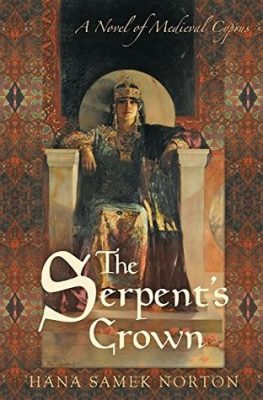
 Hana Samek Norton begins her epic and engrossing novel of historical fiction, The Serpent’s Crown; A Novel of Medieval Cyprus, with this quotation: “It sometimes happens that exploits, however, known and splendidly achieved, come, by length of time, to be less known to fame, or even forgotten among posterity.” (Itinerarum Peregrinorum et Gesta Regis Ricardi) How fortunate for readers, then, that the author brings to life a captivating chapter of history that occurred in Cyprus and Jerusalem in the early thirteenth century.
 In Amaska, residents serve Anur, the God of Justice. Amaskans, men and women, train with a rigor akin to the Spartans to be in peak physical strength and to be ever alert for the presence of danger. Yes, the Amaskans kill, but only to right a wrong as directed by the “Order.” They take no delight in carnage, but they will not stand idly by when someone is suffering an injustice. Knives are their weapon of choice. When not in combat, they identify themselves proudly with tattoos of circles on their jaws.