Author: Carrie Meehan

  • SLAVE to FORTUNE by D.J. Munro – YA Historical Fiction, Sea Adventures Fiction, Thriller & Suspense

    SLAVE to FORTUNE by D.J. Munro – YA Historical Fiction, Sea Adventures Fiction, Thriller & Suspense

    Dante Rossetti Grand Prize Badge for Slave to FortuneAt the tender age fourteen, Thomas Cheke is kidnapped in the dead of night by Barbary pirates from his home on the Isle of Wight. His widowed mother and sister are left behind, but Tom doesn’t know if they survive the surprise attack. During the next six years, his life will take more twists and turns than he could ever have imagined, and the resulting story is one of the most fascinating ever put to page.

    Tom addresses the reader directly, and this lends a heightened sense of immediacy and excitement to an already gripping tale. He is the most sympathetic of characters, one with the deck stacked against him, though he uses his innate intelligence and wits most effectively. After the initial night when he fell “into the hands of the Turk,” an event English schoolchildren had been taught to fear, Tom is imprisoned on a corsair ship bound for Algiers where he knows he will be sold as a slave.

    Keenly observant and eager to make the best of his situation, Tom helps another lad on the boat who works in the kitchen, and along the way learns much about the running of the ship, the men aboard, prisoners and crew alike, and does what he can to comfort two other children who were also kidnapped from the Isle of Wight. Why these three youngsters were targeted by the pirates is at the heart of an intricate mystery that builds throughout the book.  Meanwhile, day to day life on the boat, seen through Tom’s eyes, is fascinating, especially when the crew chases a Spanish galleon laden with silver bullion and battle ensues.

    Once in Algiers, Tom maintains his composure while his ankle is chained and manacled and he is sold to Ibrahim Ali, the Grand Treasurer of the city. Many surprises await Tom as he joins the household, including his growing admiration for his Master, a kind and erudite man who arranges for his servant’s learning Arabic and intense study of the Koran. As a trusted servant, Tom runs errands for Ibrahim in cosmopolitan Algiers, the sights and sounds of which are fully brought to life through Munro’s sumptuous and masterful prose.  Tom’s time on the corsair ship provided him with information that will prove very useful in his master’s solving a dire financial issue that involves the weakening value of coinage in Algiers.

    Key events upend his existence once more, and he finds himself on a ship headed to Malta with a new mentor in Sir Edward Hamilton, a Christian brother and knight of the Order of St. John. With his ankle chain newly removed, Tom adjusts to life as a free man and assists Edward in solving an elaborate cipher, a lengthy message coded with the suits of playing cards. This introduces a riveting subplot concerning Cardinal Richelieu and the attempted assassinations of the Duke of Mantua and the Duke of Buckingham.  Computer programmers, as well as anyone interested in code breaking, will find this section of the book enthralling. Warning the intended victims that their lives are in danger requires further travels, including a trip to Venice.

    You won’t be able to turn the pages fast enough! Do Tom and Edward prevent the assassinations? Does Tom ever set foot on English soil again? What will become of the young man, twenty years of age at the book’s conclusion, who has lived in Ottoman and Christian worlds as a slave and a free man? Adults and sophisticated young adult readers will find this book exquisitely captivating.

    Anyone who’s read and loved Robert Louis Stevenson’s historic adventure, Kidnapped, will no doubt also love Slave to Fortune. The basis of D.J. Munro’s thrilling adventure, Slave to Fortune, is purportedly based on an original memoir by Thomas Cheke, an Englishman who lived during the seventeenth century. In the Endnote, D.J. Munro shares the research he undertook to confirm the events in Tom’s memoir and notes, “I hope that I have done it justice.”  The answer, of course, is a resounding, “YES!”

    Slave to Fortune won the 2017 CIBA Grand Prize in the Dante Rossetti Awards and took First Place in the 2017 CIBA Chaucer Awards for Early Historical Fiction.
  • AWAY at WAR: A CIVIL WAR STORY of the FAMILY LEFT BEHIND by Nick K. Adams – Historical/Bibiography, Family Saga, Civil War

    AWAY at WAR: A CIVIL WAR STORY of the FAMILY LEFT BEHIND by Nick K. Adams – Historical/Bibiography, Family Saga, Civil War

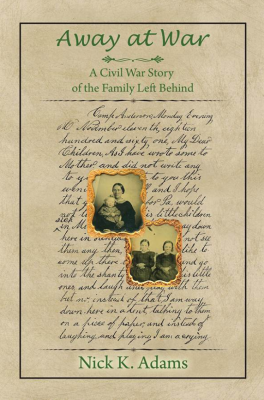
    In 1861, like so many other American men, David Brainard Griffen took leave of his family and enlisted in the army, volunteering as a soldier for the Union. Also like so many other American men, he hoped he’d be home in a few months, that this Civil War would soon be over, and he’d be reunited with his wife, Minerva, his daughters, Alice, seven-years-old, Ida May, five-years-old, and his infant son, Edgar Lincoln. To minimize the pain of separation from his family, he wrote them letters from the field of battle, more than 100 accounts of what he was doing and witnessing as a 2nd Minnesota Volunteer. While the book is one of historic fiction, the letters are genuine, and the characters are based on actual people. The author of this fine account, Nick K. Adams, is the great-great-grandson of Corporal David Brainard Griffen.

    As compelling as the Corporal’s letters are, the mainstay of this book is about those left behind on the Minnesota prairie. In the introduction, Adams notes, “I invite you, dear reader, into the lives of this family who represent the high personal cost that waging war – for whatever cause, good or evil, inevitably produces.”  In this manner, the reader spends time with a family doing the best it can while the head of the household is away.

    One feels like an invisible member of the clan while watching Minerva and her children go about their ordinary, but in many ways, extraordinary lives. Their days are made up of chores. They care for chickens and livestock, barter eggs in the nearby town of Alba for fruit, shoes, and fabric. They make candles out of beeswax and tallow and plant crops to harvest. Livestock are slaughtered. Minerva teaches her daughters to make cheese, a skill she learned during her girlhood in Vermont. They visit with family members who live in the area, enjoy spring and summer days and bundle warmly for the frigid Minnesota winters. Alice attends school and, eventually, Ida May does as well. Edgar Lincoln graduates from baby clothes to his first set of overalls.

    It’s the minutiae of life, the everyday details that build and hold this family, and every family, together. But the reminder of the Civil War is always there. Alice uses a game of checkers to explain warfare to her little sister, and the family gathers to read and reread letters from a husband and a father they miss dearly. They write to him, as well, letting him know how they are coping in his absence. And, of course, there is the added tension of not knowing how long the war will last and whether Brainard will be among the fortunate men to make it home.

    Like the best young adult novels, this book draws a universal audience.  Every reader will feel enriched reading this vivid, charming, and poignant account of farm life in the mid-19th century amidst the backdrop of the Civil War. In addition to an account of family life, one learns much about practical matters in a rural, historic setting.

    Teachers who use Laura Ingalls Wilder’s books in their curriculums will want to add Away at War: A Civil War Story of the Family Left Behind to their lesson plans. There’s a connection between the authors; Alice Griffen married Laura Ingalls Wilder’s cousin. For those interested in simply reading Brainard Griffen’s letters, Adams published them as a collection in an earlier work, My Dear Wife and Children:  Civil War Letters from a 2nd Minnesota VolunteerPut in the context in this lovely novel, however, the letters are a reminder of what was happening in these lives when pen wasn’t put to paper, when a mother and her children had to do whatever was necessary to get through the day and rest for the coming one. This book is both simple and profound, a reminder of a time and place during a tumultuous time in American history.

    Away at War: A Civil War Story of the Family Left Behind won 1st Place in the 2017 CIBA competitions for unique stories of the United States, the Laramie Awards.

    My Dear Wife and Children: Civil War Letters from a 2nd Minnesota Volunteer won Mr. Adams 1st Place in the 2016 CIBA competitions for Memoir, the Journey Awards.


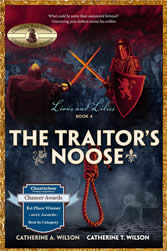
  • The TRAITOR’S NOOSE, Lions and Lilies, Book 4 by Catherine A. Wilson – Historical Fiction, Medieval, Romance

    The TRAITOR’S NOOSE, Lions and Lilies, Book 4 by Catherine A. Wilson – Historical Fiction, Medieval, Romance

    Chaucer Grand Prize Winner Badge for The TRAITOR'S NOOSE by Catherine A. WilsonFans of this widely admired and masterfully written series, Lions and Lilies, will not be disappointed with its concluding, volume, The Traitor’s Noose. The impressive scholarship, riveting dramatic scenes, and sweet romances that characterized the previous books are on full display here as well. The co-authors note, “…this is not a historic account but a ‘medieval adventure with a dash of romance, using history as its background. We have tried at all times to remain faithful and accurate to that history, but it is a fictional story.”  Nonetheless, the reader need only review the lengthy bibliography included to gain a sense of the breadth of work the authors undertook to put this magnificent story on the page.
    Set mainly in England and France during the 14th century, the main characters are Lady Cecile de Bellegarde, Catherine Marshall, and their husbands. Catherine and Cecile, twin sisters separated at birth, have forged a bond that no person or event can break. While they live in different nations, Catherine in England and Cecile in France, their lives have many parallels. They are both married to courageous but unjustly maligned knights. Simon Marshall and Gillet de Bellegarde love their wives deeply, seek to protect them at all costs, and avenge any harm or cruelty done to them. That does not mean that they will readily divulge their fears to their spouses or recount the horrifying episodes they have survived, however.

    Catherine is aware that Simon is under suspicion for murder, she knows her husband’s melancholy and reserve are caused by deeper worries. While Gillet experiences traumas on and off the battlefields from his involvement in the campaign to reclaim Brignais and rid France of routiers (mercenary soldiers.)

    The husbands have their secrets and the sisters will share their marital woes with one another via a correspondence that beautifully dovetails the major events taking place in England and France. When finally apprised of what their husbands have been facing – blackmail, extortion, incarceration, and torture – they not only stand by their spouses but play key roles in extricating them from the darkest of situations. Amongst royals and routiers, there is no end of conniving, jealousy, brutality, and treason. One must understand the game to outplay enemies, and the sisters will do whatever is necessary to have their husbands by their sides. But who is the true traitor and whose neck should be lassoed with the noose? The authors weave a rich and intricate plot, every strand shimmering with suspense and romance.

    Along the way, readers will delight in the details provided of everyday medieval life. The authors’ attention to dress, food, architecture, and language bring the late Middle Ages alive as the main characters experience opulence during the heralded era of knighthood and chivalry. (Oh, to be attired in an exquisitely embroidered gown, hair held in place by a headdress and veil! Or to be lifting a goblet of wine at a sumptuous feast held in lavish quarters in Windsor Castle or Orthez Castle!)

    The darker side of medieval life is also examined, however; details of incarceration and of torture via racks and pins in fingers will likely send shivers down readers’ spines. A fascinating section of the book deals with apothecary science, the wonders, and horrors that can be wrought with oils and herbs. Anyone with a love for all things medieval must read this book and, indeed, the entire series.

    While the ending of the novel is most satisfying, it’s also bittersweet. It’s hard to say good-bye to these captivating characters and close the book on the 14th century. How wonderful, then, to turn the page and discover that the authors have provided a sneak peek of the first volume in their second series! Stay tuned for Roar of the Lion. The adventure continues!

    Traitor’s Noose, Book 4 of the Lions and Lilies series won Grand Prize in the 2017 Chaucer Awards. 


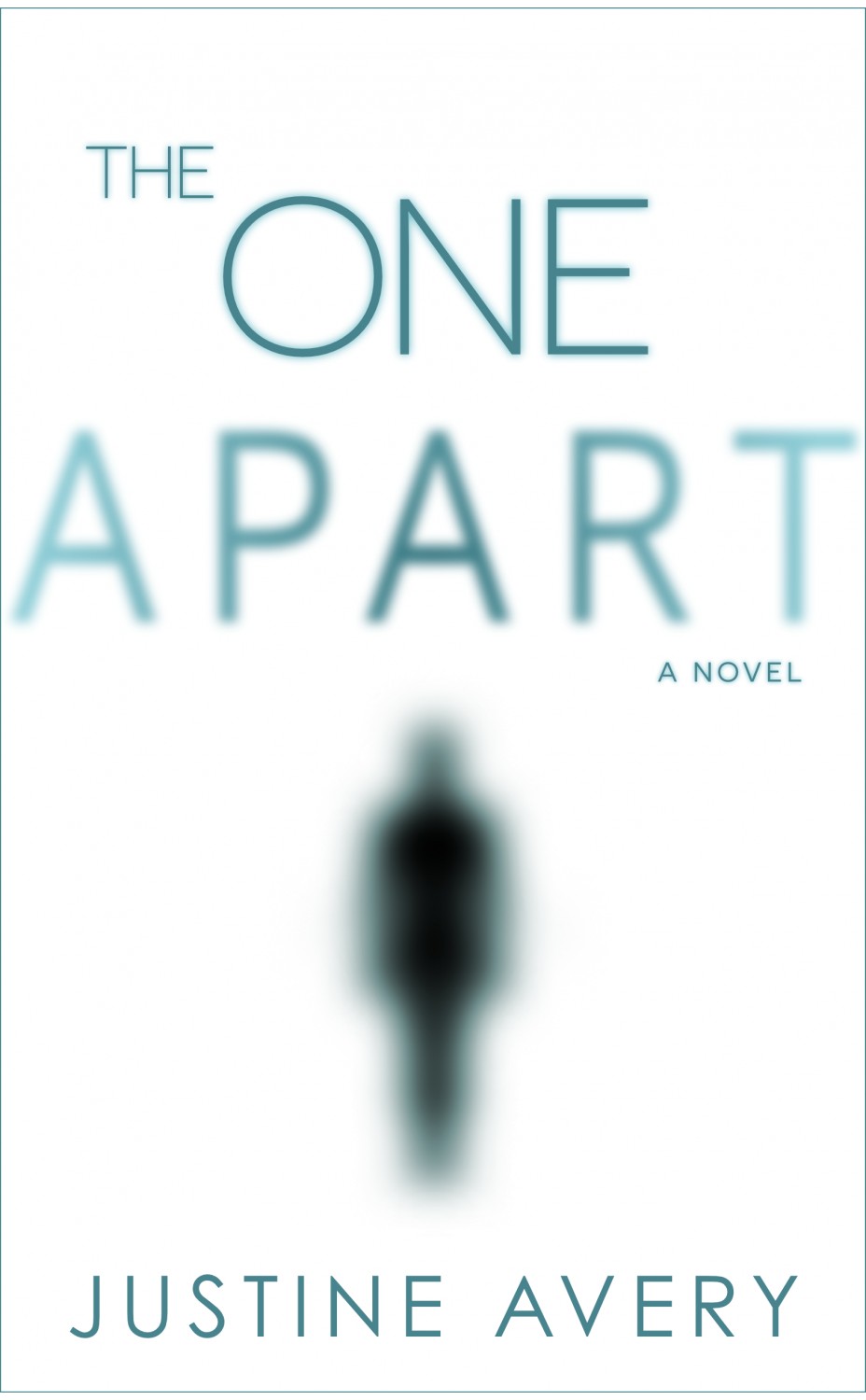
  • The ONE APART by Justine Avery – Family Saga, Fantasy, Metaphysical/Visionary

    The ONE APART by Justine Avery – Family Saga, Fantasy, Metaphysical/Visionary

    A perfect blend of realism, fantasy, and deep spirituality awaits those who open Justine Avery’s novel, The One Apart. It is what readers bring to the novel – faiths, belief systems, philosophical dilemmas – that will influence and shape their perceptions of this fascinating and compelling read. Avery’s book, like life, is full of instruction for those who want to be fully aware.

    Aware of what?

    Everything—including awareness itself.

    This is certainly the case for the main character, Aaron, a remarkable boy who lives with his mother, Sancha, and his grandmother, Maria. Although she’d planned to give Aaron up for adoption, Sancha bonds so deeply with her son at birth that she can’t fathom life without him. His grandmother realizes his uniqueness, too, as the newborn communicates with her through blinking his eyes. He makes astonishing progress through developmental milestones, walking and reading within the first months of life.

    As a toddler, he speaks with the wisdom of a timeless soul. Maria suspects that these physical and mental feats indicate that her grandson is chosen for a special purpose, but she hopes he’ll live as normal a life as possible. He’s distracted, however, by a malevolence that only he can see.  As Aaron comes of age, he strives to act normal and blend in, but his very few close friends and girlfriend notice his preoccupation, his never being fully present in this world.

    There’s a reason for Aaron’s constant distraction, for his never feeling a part of this life; he is connected to “the Apart,” the other-worldly dimension that is both removed from human existence, “corporeality,” but ever at hand. Since childhood, he has sensed that his true name is Tres and that his existence as Aaron is somewhat play-acting. His hyper-awareness alerts him to his “OnLooker,” a sort of guardian angel who’s a liaison between Aaron and the sagacious luminary beings of the Apart that consult and advise on Aaron’s tutelage.

    Much of the book involves Aaron learning, with the instruction of his OnLooker, how to fully experience awareness, to understand that every moment is this moment despite previous lives and the variety of life’s experiences. At a critical juncture in the novel, Aaron is given a choice, one that will impact his own existence dramatically but also that of all other beings. The author adroitly merges Aaron’s worldly existence and his relation to the realm of the Apart in a poignant and satisfying conclusion to the novel.

    This is a quiet book, one that allows the reader the time and space to experience life with its main characters. The stillness is at times deeply peaceful, at other times eerie and ominous. The novel illustrates the power of compassion and empathy, but also the chilling consequences when power is exercised for self-serving purposes.

    While the character of Aaron has similarities to various religious and mythic figures, the author has also imbued him with a uniqueness and a relevance to our times. This book will stay with you long after you finish it, a hallmark of excellent literature. Justine Avery’s The One Apart inspires deep contemplation of self, community, and individual and collective purpose.


    The One Apart won First Place in both
    OZMA and SOMERSET Awards in 2017!


  • RESUMED INNOCENT (A Sam Tulley Novel, Book 1) by Rene Fomby – Legal Thriller, Mystery/Suspense, Contemporary Literature

    RESUMED INNOCENT (A Sam Tulley Novel, Book 1) by Rene Fomby – Legal Thriller, Mystery/Suspense, Contemporary Literature

    Rene Fomby’s gripping novel, Resumed Innocent, is both a courtroom drama and a personal drama. In the book’s forward, Fomby tells readers that the story is “semi-autobiographical,” noting that as a criminal law attorney, he has found that “The reality of day to day criminal practice in Texas is simply too unreal to be believed.”  And, yet, he manages to convince the reader of the gruesome reality of crime scenes as well as the harsh reality of courtroom politics.  The guilty aren’t always those being held in jail cells; attorneys and judges don’t escape Fomby’s scrutiny, and the reader is made aware of just how complicated criminal law in Blair County, Texas, truly is.

    Fomby opts for a female protagonist to relay what’s just and unjust in a criminal law attorney’s daily life. Samantha Tulley, Sam for short, a widow with a small daughter, is as sharp as they come. She’s savvy enough to detect when a defendant is being railroaded or a judge is being underhanded. Her intelligence and wit, however, put her at risk for reprisals, acts of vengeance that will put her life at risk and have the reader turning pages as quickly as possible to keep up with a plot that escalates with action and suspense.

    Her clients, people accused of heinous crimes, are beyond fortunate to have Sam representing them. She defends a woman accused of plunging a knife into her former boyfriend multiple times and a man accused of murdering his wife and two small children. In one of the most riveting chapters of the book, the reader observes voir dire, jury selection, and witnesses Sam calculating who will and won’t support her client, all the while maintaining an expression that would sink her most formidable opponent at the poker table. This chapter alone would make the book a worthy read, but it’s packed with fascinating nuggets of courtroom drama throughout.

    Sam’s personal life is equally fascinating but also fraught with danger. Her deceased husband was the son of an eccentric member of the Catholic Traditionalist Movement, a group that rejects Vatican II and believes mass should be celebrated only in Latin. William Tulley didn’t approve of his son’s marriage to Sam, a Jewish woman, and is now demanding that a paternity test to be done on Sam’s young daughter. His first wife, Luke’s mother, resides in Italy and holds information that will enlighten Sam as to her father-in-law’s motives. Sam has enough enemies, in and out of the court system, to keep the reader guessing who is attempting to harm – even kill her. She has an advocate, however, in Harry, her intern who is a law student at Baylor University and whose family has had their own run-ins with Sam’s father-in-law.

    This book will certainly appeal to lawyers and law students, but also to anyone who loves a good courtroom drama. It’s also for readers drawn to strong female characters. Sam Tully is a working mother, a widow, an advocate for the wrongfully accused, and the friend you’ve always wanted.  You’ll finish this novel eager to continue her adventures in a forthcoming book.


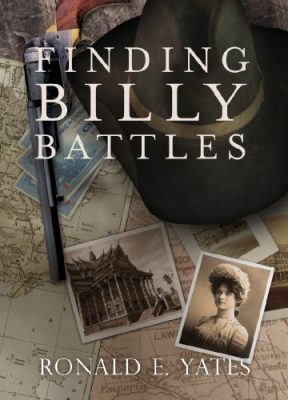
  • The LOST YEARS of BILLY BATTLES, Book 3 in the Finding Billy Battles Trilogy by Ronald E. Yates – Historical Fiction, Literary, Action/Adventure

    The LOST YEARS of BILLY BATTLES, Book 3 in the Finding Billy Battles Trilogy by Ronald E. Yates – Historical Fiction, Literary, Action/Adventure


    Congratulations to Ronald E. Yates for winning the 2018 CIBAs

    OVERALL GRAND PRIZE – BEST BOOK of the YEAR

    for The Lost Years of Billy Battles!


    Reviewer’s Note: I’ve begun few books as eagerly as I did this one. Having read the first two volumes of Ronald E. Yates’ extraordinary trilogy, Finding Billy Battles, I couldn’t wait to continue his story in the final volume, The Lost Years of Billy Battles. The third installment lived up to the exceedingly high standard set in the first two volumes. Billy Battles is as dear and fascinating a literary friend as I have ever encountered. I learned much about American and international history, and you will too if you read any or all of the books. Each is an independent work, but if read in relation to the others, the reader experiences that all too rare sense of complete transport to another world, one fully realized in these pages because the storytelling is so skillful and thoroughly captivating. Trust me; you’ll want to read all three volumes.


    Overall Grand Prize Best Book Award for The Lost Years of Billy BattlesFor those not familiar with the series, Yates presents his books as works of “faction,” a story “based in part on fact” but also “augmented by narrative fiction.” The protagonist, William Fitzroy Raglan Battles, born in Kansas in 1860, lives a full 100 years and takes part in some of the most significant events of his time. He encounters key figures of the day (Bat Masterson Wyatt Earp, President Wilson, Francisco “Pancho” Villa, among others), gives us their backstories, and quietly appraises them.
    Yates, a journalist with a keen eye for nuance and subtlety, has created a protagonist with superb critical thinking skills. William, a journalist, and occasional soldier examines people and transactions from every angle. Just as at ease in a Kansas saloon as he is at the captain’s table on a grand ocean liner on the Pacific, Billy Battles is also ruthlessly honest about his shortcomings and feels tremendous guilt when he acts impulsively or inadvertently causes harm to others. Yates has crafted a fully human character who is easy to admire, perhaps because he is admirably cognizant of his own flaws.

    This installment of the trilogy opens with William enjoying middle age in Chicago with his second wife, his beloved Katharina, a former German baroness, and his daughter, Anna Marie, now a student at Northwestern University. It is 1914 and World War I is raging in Europe. Germany, late to the spoils of colonialism, is seeking to make up for lost time with its policy of Weltpolitik that advocates for imperialist expansion.

    When William is contacted by his friend and former military associate, General Freddy Funston, who informs him that a German merchant ship is bound to Mexico to deliver arms and munitions to its dictator, General Victoriano Huerta, William and Katharina travel to Mexico and pose as tourists while trying to find out as much as possible about the shipment. They learn that in addition to weapons, the ship is carrying a fortune in gold and silver bars. Further investigations reveal that Germany hopes to convince Mexico to engage in skirmishes along the U.S. border, creating enough havoc that America will sit out the war in Europe and thus allow Germany expansionist gains there.

    Although in Mexico at the behest of the U.S. military, William and Katharina readily understand why Mexicans feel hostile to Americans; a significant portion of the Southwest used to belong to Mexico. However, President Wilson does not recognize Huerta and is all too eager to engage in big stick diplomacy when he chooses. Also, many Mexicans are desperately poor, the Campesinos working as virtual slaves on haciendas for no pay. It’s not surprising that they cheer on Venustiano Carranza, leader of the Northern opposition Constitutionalists charismatic lieutenants, the intense, intelligent Zapata who yearns to bring about land reform for the poor, and the wild but charismatic Pancho Villa who sparks outrage when his men murder 17 Texas mining engineers.

    The U.S. military decides to intervene and, once again, William is impressed into service, this time with General Pershing and the General’s aide-de-camp, George S. Patton. While the U.S. Army has the latest in weaponry and travels with motorized vehicles and untrustworthy aircraft, the new technology causes a lot of noise, making it difficult to sneak up on Villa and his light-footed army, one that’s thoroughly familiar with the terrain and beloved by the people. William’s observations and reporting on all of this for his Chicago newspaper are riveting and wryly amusing.

    Following this Mexican adventure, William barely has time to catch his breath when his past once again catches up with him. Mason Bledsoe, the son of the man William killed due to complex circumstances when he was just nineteen, abducts Katharina. With the help of his cousin, William determines his wife’s whereabouts and attempts to free her, as well as seek vengeance on those who kidnapped her. The results of his actions necessitate his leaving the country for his safety and, more importantly in his mind, the safety of his family. Over the next decades, he will spend time in the Philippines and Indochina, where he will again grapple with the blatant injustices of colonialism, aggrieved by the plight of native men working 16-hour days on French rubber plantations in intense heat, their flesh bitten and eaten by mosquitoes, oxflies, and army ants.

    While abroad, William’s personal life takes some shocking turns that motivates him to return to the U.S. in 1936. His final years in Kansas, his birthplace, are the quietest of his life. Billy often muses on all he has seen and experienced. When he meets his great-grandson, Ted Sayles, he decides to bequeath him his guns, uniforms, journals, and correspondence. In the Epilogue, Ted addresses the reader and shares his thoughts about some shocking surprises he finds amongst William’s papers. It’s a most satisfying conclusion to an extraordinary trilogy.

    At his behest, William’s grave includes the simple statement, “He did his best.” The same is undoubtedly true of the author, Ronald E. Yates. The research involved in putting William’s story on the page had to have been immense. In addition to a careful plotting of history, the details he weaves into his prose regarding fashion, food, weather, social class, and technology make this the richest account of a life imaginable.

    Ronald E. Yates won 1st Place in the SOMERSET Awards for The Improbable Journeys of Billy Battles: Book 2, Finding Billy Battles Trilogy of this extraordinary series.

    5 Stars! Best Book Chanticleer Book Reviews

  • CLEVENGER GOLD: The TRUE STORY of MURDER and UNFOUND TREASURE by Scott Elson Swapp – Old West, Crime Thriller, Treasure

    CLEVENGER GOLD: The TRUE STORY of MURDER and UNFOUND TREASURE by Scott Elson Swapp – Old West, Crime Thriller, Treasure

    Sam Clevenger is an old curmudgeon, endlessly cranky and critical of those around him.  He has liquidated his assets, his ranch and livestock, into gold bullion, worth about a million dollars by today’s figures. His “bank” is an old Dutch oven pot and no one knows the pot’s contents.

    When Clevenger’s wife, Charlotte, falls ill with tuberculosis, Sam hopes moving to Washington Territory will improve her health. Sam is mean to everyone – even Jessie, the couple’s fifteen-year-old adopted daughter. He treats her like a ranch hand, and she resents it. But everyone has their limits, and Sam realizes that moving horses and mules through the Buckskin Mountains will be very difficult, more work than he and Jessie can manage, so he hires John Johnson, a bi-racial soldier just released from the U.S. Cavalry, and a handsome young man, Frank Willson, who’s eager to work.

    The group has many adventures as they head from the Arizona Territory north. Several indigenous peoples are in the area and relations with various tribes are extremely tense. Hungry coyotes stalk the travelers and tensions rise high as the group must ferry the wagon and the animals across a tumultuous river. Despite the care the Clevenger’s take with the wagons, Charlotte has difficulty traveling over rough terrain and the biggest fear is she won’t last the trip.

    Of course, where there are young vivacious people working together, romance is bound to grow. So, it is no surprise when a flirtation begins between Frank and Jessie blooms into something more, causing Frank to become increasingly protective of her when Sam treats her with cruelty and scorn. John and Frank work well together, but, being of mixed race, John is subject to Sam’s racist language and attitudes.

    Traveling by wagon with a team of animals in the late 19th century was a huge and precarious undertaking. Each day is a quest to cover as many miles as possible and to find a safe place to sleep at night. Hunting rabbits for dinner is a gamble because the sound of gunshots could alert Indians to the campers’ presence. Readers will feel as if they’re on the journey themselves.

    Sam hides his gold in plain sight, the Dutch oven hangs from the wagon like any kitchen utensil by day, but he buries the pot each night. The scene is set for explosive confrontations, murders, cover-ups, lies, trials, jail sentences and fatal consequences. This book is as suspenseful as any thriller, more so because these events are a part of history.

    Clevenger Gold is a scintillating work of historic fiction, but as its subtitle notes, it’s also “the true story of murder and unfound treasure.”  In the book’s preface and introduction, author Scott Eldon Swapp states that the basic facts on which the narrative rests are accurate. While researching this deeply fascinating tale of a family journeying from the Arizona Territory to the Washington Territory in the 1870s with a couple of hired hands, Swapp studied county, state, territorial and national archives. He shares his methodology and research finds with the reader, and most chapter titles mark the exact location and time of specific incidents on the trip. Swapp clearly strives for the utmost accuracy in recreating this wildly dramatic episode in U.S. territorial history.

    Much of the plot takes places via dialogue and Swapp writes the verve and sass of cowboy lingo with relish. Swapp’s enthusiasm for the mystery of the buried treasure is infectious.

    Sam’s gold is still out there, waiting to be found. Swapp encourages the reader with these words, “If you have the skills and patience to seek real treasure, go get it!”

    Clevenger Gold: The True Story of Murder and Unfound Treasure by Scott Eldon Swapp won First Place in the 2016 Laramie Awards!


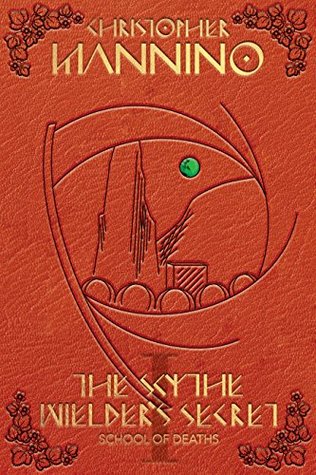
  • SCHOOL of DEATHS (The Scythe Wielder’s Secret Book 1) by Christopher Mannino – YA Fantasy, Coming of Age, Magical Worlds

    SCHOOL of DEATHS (The Scythe Wielder’s Secret Book 1) by Christopher Mannino – YA Fantasy, Coming of Age, Magical Worlds


    Christopher Mannino’s young adult fantasy novel, School of Deaths, opens with a portrayal of adolescent angst that goes waaaaay beyond “I have nothing to wear!” or “Oh, no!  I have a zit!

    Readers will immediately sympathize with the main character, Suzie Sarnio, who’s having the worst first day of eighth grade ever. For starters, she looks like death. Seriously. For mysterious reasons, she’s lost so much weight over the last three months that her bones are about to burst through her skin. Her black hair is stringy, and she peers out at the world through lifeless, gray eyes. There’s no chance of her blending into the crowd.

    Everyone wants to talk about her appearance. Her parents, her brother, her friends, her teachers, everyone comments on how terrible she looks. Just what every girl wants to hear, right? As if being thirteen wasn’t hard enough! No matter how much Suzie eats, she can’t gain weight. Of course, everyone assumes she’s anorexic.

    To top it off, she’s having nightmares in which a grim-reaper-like dude tells her, “I’ve come to take you back. You are a Death.” And then it really happens. The doorbell rings and there he is, the Grim Reaper in all his glory, and he does indeed take Suzie away.  Take a deep breath and join Suzie as she travels – not over the rainbow – but to The World of Deaths.

    Once over her bafflement of how she got there, Suzie learns about her locale at the School of Deaths. It’s a bit like Hogwarts, but she’s not learning to be a wizard. No, she’s in training to be a “Death,” one of those who reaps and transports souls that have died from the World of the Living to the World of the Dead. She doesn’t study the use of a wand but instead takes classes on how to use the iconic scythe pictured with grim reapers. It’s very difficult but Suzie is determined to wield it like a pro, to reap and transport with the best of them.

    If at the end of one year she passes the test given to all first-year Deaths, she can return home to her family, her memory of time spent in this ghostly school erased. The odds are heavily against her; most Deaths fail the test and must remain forever. To make matters super worse, Suzie is the only female in the school! The last one, Lovethar, attended more than a million years ago and the school hasn’t fully recovered from her scandalous dealings with dangerous dragons. So, Suzie has her work cut out for her.

    Students and even some faculty are cruel and go out of their way to throw shade her way. She’s no cream puff, however, and refuses to be intimidated, at least in public.  Hermione Granger herself would be impressed. After all, she had female classmates and professors while poor Suzie manages all girl-stuff entirely on her own. Fortunately, there are a few kind students who dare to befriend her and stick up for her when she’s bullied by the nastiest of the boys. Billy, Jason, and Frank help Suzie stand her ground in and out of the classroom. She and her squad become thick as thieves and join forces to discover what really happened to Lovethar.

    Their investigation will also lead them to unlock the mysteries of the school’s servants, the “Elementals,” usually referred to with the slur, ‘Mentals. The author does a bang-up job describing these fascinating beings that come in various sizes and colors, with multiple attributes of plants and animals. Suzie and the boys are awed by a plant-like woman and winged boys, a seer with black eye sockets and a man whose skin has blue stripes.

    They’re even more intrigued by the rivalrous history between the Deaths and the Elementals. It’s not surprising the Elementals revolt on the school’s campus, but it makes the foursome’s contact with them incredibly dangerous. Suzie feels tremendous compassion for them, but she can’t lose sight of her goal to get through the year, pass the test, and finally get home. That’s the plan, right? Hmmm, but if she succeeds, she’ll have to leave her friends and, well, one of them may be more than a friend. Yes, there’s a bit of romance tucked into all the suspense, and it adds a yummy complication.

    From start to finish, this book rocks! It’s a story of female empowerment, the gifts of friendship, the curse of slavery, and the mystical mysteries of great beyond. It also makes the grade nailing the ubiquitous sexism and bullying students deal with as teenagers.

    The YA audience will devour School of Deaths, as well as adults who love the genre. The prose and the plot sizzle with smarts and confidence. One finishes the book wanting more and thank goodness there is more. School of Deaths is the first volume in a series, The Scythe Wielder’s Secret.  You’ll want to travel on with Suzie to volume 2, The Sword of Deaths, and to volume 3, Daughter of Deaths.

    Christopher Mannino won 1st Place in the 2016 Chanticleer Int’l Writing Competition, in the Dante Rossetti Awards, for YA Fiction.


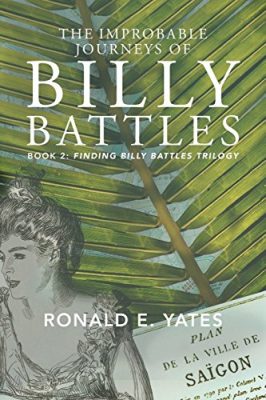
  • The IMPROBABLE JOURNEYS of BILLY BATTLES: Book 2, Finding Billy Battles Trilogy by Ronald E. Yates – Action/Adventure, Historical Fiction, War, Literary

    The IMPROBABLE JOURNEYS of BILLY BATTLES: Book 2, Finding Billy Battles Trilogy by Ronald E. Yates – Action/Adventure, Historical Fiction, War, Literary

    Blue and Gold Somerset First Place Winner Badge for Best in CategoryRonald E. Yates continues the robust adventures of a lawman, gunslinger, and journalist in The Improbable Journeys of Billy Battles, the second volume in his trilogy about the title character.

    As in the first volume of the trilogy, William “Billy” Battles addresses the reader, but Ted Sayles, Billy’s great-grandson, is the one who compiled Billy’s life story through studying his great-grandfather’s journals, letters, newspaper articles, tapes, and other materials. And what an adventurous life it is! Living a full one hundred years, William Fitzroy Raglan Battles was born in Kansas in 1860 but eventually travels the world. Readers familiar with the first volume will no doubt want to continue William’s journey with the second book which begins in 1894. The Improbable Journeys, however, can function as a stand-alone volume because Yates takes great care to bring the reader up to speed with what has already taken place.

    The opening chapters of Book 2 find William aboard the SS China, bound for French Indochina although the ship will make stops along the way. He is grieving the loss of his beloved wife and seeks to assuage that grief with travel, leaving behind his mother and young daughter, Anna Marie. However, the Pinkerton Detective Agency is hot on his trail, investigating William’s part in the deaths of members of the Bledsoe family back in Kansas.

    His future is also set in play when he meets Baroness Katharina von Schreiber, a brilliant intellectual who, despite her aristocratic German title and surname, was born and raised in Chicago. Like William, her spouse is dead but the circumstances involving Rupert’s death are suspicious, and she takes great pains to avoid questioning by the authorities. William learns that some officials believe she’s in possession of top-secret German documents that she confiscated from her husband. There’s much political intrigue, but Katharina and William delight in each other’s company, and he feels the first stirrings of romance since his wife’s death.

    William’s journeys bring him face to face with the realities of late 19th-century colonialism. As an American traveler and journalist, native peoples expect that he will sympathize with their struggles against colonial powers. After all, America set the example for the rest of the world by throwing off the chains of England more than one hundred years earlier. In the Philippines, Katharina’s brother, Manfred, supports a secret organization that seeks to overthrow colonial rule and establish independence for the nation. And while William has great admiration for the Philippine revolutionary leader, Aguinaldo, William is coaxed into military service. He fights alongside American soldiers from Colorado and Kansas – even though he knows all too well that McKinley’s “Proclamation of Benevolent Assimilation” is not truthful; the U.S. ultimately annexes the Philippines not as “friends” but as invaders and conquerors.

    These fascinating chapters are narrated with an experienced journalist’s objective and encompassing eye. Yates, also a journalist, does an exemplary job of having William note every angle of the despotic nature of colonialism and the vast and complex difficulties involved in native peoples achieving independence.

    The book is not without humor. William is witty and candid, occasionally sliding into cowboy-speak, and he knows a cast of characters, real and fictional, who provide surprising hilarity throughout the book. Bat Masterson is on hand, as is Jefferson Randolph “Soapy” Smith. We leave William anticipating more dangerous exploits, one involving Francisco Villa, better known as “Pancho Villa.”  Thank heavens this is a trilogy because it’s clear Billy Battles adventures are far from over.

    Ronald E. Yates won first place in the 2016 Chanticleer International Book Awards for Somerset, Literary category.

    5 Stars! Best Book Chanticleer Book Reviews