Author: Carrie Meehan

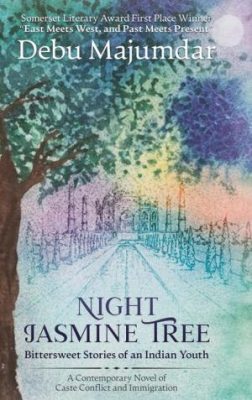
  • NIGHT JASMINE TREE by Debu Majumdar – Asian American Literature, Multi-Cultural and Interracial, Multi-Cultural Romance

    NIGHT JASMINE TREE by Debu Majumdar – Asian American Literature, Multi-Cultural and Interracial, Multi-Cultural Romance


    Somerset Blue and Gold First Place Badge


    Shankar, a recently retired professor of physics, and his wife, Durga, have left Michigan to resettle on Long Island with their son’s family in Debu Majumdar’s award-winning novel, Night Jasmine Tree.

    While the migration from the Midwest to the East Coast is a small one, considering both characters moved from India decades before, the move spurs Shankar to ponder the life he left behind and to reassess his relationship with his sisters and parents.

    In India, there are many different cultures, the main sprouting from the Hindu faith and political structure, the caste system.

    In the West, we may be familiar with this caste system, we mostly are all aware of the ‘untouchables.’ However, what we may not understand, is how rigid the caste systems truly are. Durga and Shankar are not from the same caste. Shankar is Brahmin, his wife is of a lower caste. This difference is enough for Shankar’s family to reject her outright and disown him.

    The pain he sustains by their rigid beliefs hurts him deeply, and that pain sustained years of estrangement. Now, however, a letter from his sister causes him to reassess his own role in the dissolution of his family even as he enjoys spending time with his son, daughter-in-law, and young grandchildren.

    Carefully organized, the novel is arranged into five parts with the chapters designating a time and place.

    Since the plot occurs on two continents, this framework is helpful to the reader. The author adroitly dovetails the past and present by having Shankar share stories of his own childhood with his grandchildren. And what stories they are! Sweet and funny, often involving animals, and the children are riveted by their grandfather’s tales of a childhood spent in India. Shankar was a good student but not above getting into mischief or naively causing trouble. India comes alive for the children as they hear about an encounter with a tiger, the annual celebration involving kite fights, and a haunting but hilarious ghost story. The reader turns the pages as eagerly as the children beg to hear another story.

    Consideration of Shankar’s past also involves his having grown up in a household in which the ancient traditions of Hinduism are sacred duties, and any failure to adhere to them is a moral failing.

    It is difficult for Shankar to come of age wanting to do what makes him happy but feeling tremendous fear that he won’t live up to his father’s exacting standards. Will he become a “tejya putra,” a son who is rejected by his own father? There’s no worse fate for a Brahmin male. And, yet, shouldn’t his father love him simply because children deserve love, and not because Shankar will one day perform the essential funeral rites for his parents?

    Regardless of how affectionate and attentive Shankar’s mother is toward him, he knows that she will always defer to her husband. She will let him dictate the terms of his sisters’ marriages, and she will never allow Shankar to disobey his father. The classic tension between duty and desire is artfully and affectingly rendered. All readers will be able to relate to the hold the past has on us. And like us, until Shankar resolves old animosities with his family, he’ll never indeed be free.

    The author is a master craftsman of descriptive writing, especially when contemplating natural settings.

    Debu Majumdar deepens characterization by connecting Shankar’s interior and exterior worlds. While contemplating existence through his main character’s eyes, the author gives us a work of lush and searing beauty, wondrously told with compassion, empathy, and truth. Night Jasmine Tree is a highly recommended reading for all.

    Night Jasmine Tree won 1st Place in the 2018 CIBAs in the Somerset Awards for Literary Fiction.


    Somerset Literary and Contemporary Chanticleer International Book Awards 1st Place Winner oval Gold Foil sticker

    Chanticleer Book Reviews 5 Star Best Book silver foil sticker


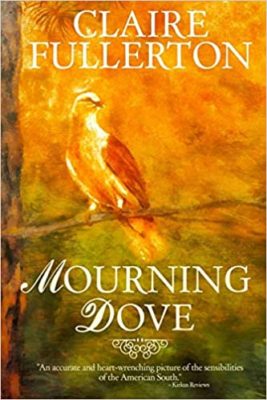
  • MOURNING DOVE by Claire Fullerton – Southern Fiction, Contemporary Literary Fiction, Saga Fiction

    MOURNING DOVE by Claire Fullerton – Southern Fiction, Contemporary Literary Fiction, Saga Fiction

    Camille Crossan appears to be living an idyllic life in Claire Fullerton’s poignant, evocative novel, Mourning Dove.  Living in a superbly appointed mansion in “magnolia-lined and manicured” Memphis during the 1960s and 1970s, Camille’s family life shimmers with Southern charm.  Her mother, Posey, usually outfitted in a Lily Pulitzer shift, Pappagallo shoes, and a signature shade of pink lipstick, is a beauty with the wryest sense of humor and steel determination.

    As a young girl, Camille, known as Millie, sees how those in her mother’s social orbit are captivated by her aura, how men are easily seduced by her flirtatious charm. Society is a game played by those who know its rules, and Posey means to win. Every time.  She, however, isn’t even the charismatic one in the family – that’s Finley, Millie’s older brother, who brims with intelligence, startling good looks, and messianic magnetism. A peek beneath the shiny surface of gracious Southern living, however, reveals enormous cracks in the foundation of the Crossan family.  One of the first things the adult Millie tells us about her brother is that he is dead.  She takes the reader back, though, to their childhood and coming of age, a tumultuous journey that both binds and separates the siblings.

    During her first decade, Millie’s family was living in Minneapolis with her tender-hearted, intellectual father who succumbed to alcoholism. Loss of money and, worse, the accompanying loss of social status, motivates Posey to uproot her children and move them to her childhood home in Memphis, a palatial mansion filled with antiques and portraits of forebears. It’s a volatile time, inside and outside the house, as centuries-old Southern traditions clash with the youth counterculture.

    Millie watches as her mother holds court during daily cocktail hours, a prospective second husband soon on the reel, and Finley, a gifted guitarist, plunges into the local music scene. But what role will she play? It’s difficult for her to see herself entirely separate from her brother for whom she has, “…a love devoid of envy, tied up in shared survival and my inability to see myself as anything more than the larger-than-life Finley’s little sister.”  Millie will grapple with her identity and question her destiny, whether she’ll be a bride in the Southern belle mode of her mother or if she’ll be the blossom that falls far from the magnolia tree. Meanwhile, Finley’s charisma both explodes and implodes in shocking and dangerous ways as he becomes revered by a group of people with no connection to the gentrified life. Like Millie, the reader is transfixed and apprehensive about where this less-traveled road will take Finley. Although the reader knows his grim fate from the outset of the book, his storyline is so engrossing that no drama is lost.

    Author, Claire Fullerton, is an enchantress with prose. The writing in this novel will cause you to stop, reread sentences, savor them, and note their architecture. Scenes sparkle as she masterfully summons moods and atmosphere. The reader can see Millie’s lovely but haunting home, and smell the rich fragrance of dogwood on a soft spring day. Fullerton has a keen ear for witty, authentic dialogue, and she deftly reveals much about personalities via conversation. It’s difficult to take leave of such a vivid, fully realized world. Fortunately for readers, Fullerton has written several books, opportunities to spend more time in her richly crafted worlds.

    Mourning Dove won First Place in the CIBA 2018 Somerset Awards for Literary Fiction.

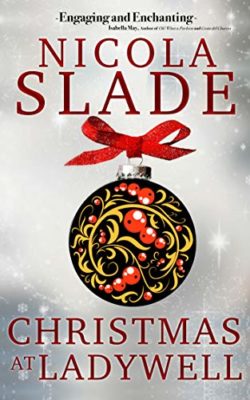
  • CHRISTMAS at LADYWELL, A Time for Secrets by Nicola Slade – Historical Mystery/Thrillers/Suspense, Two-Hour Literature & Fiction Shorts, Family Life Fiction

    CHRISTMAS at LADYWELL, A Time for Secrets by Nicola Slade – Historical Mystery/Thrillers/Suspense, Two-Hour Literature & Fiction Shorts, Family Life Fiction

    Christmastime in the English countryside, what could be cozier? Nicola Slade casts a charming spell on the reader with her novella, Christmas at Ladywell, A Time for Secrets. The main character Freya Wellman, jolly with the holiday spirit, has much to do to ready her ancient home, Ladywell, for yuletide guests. She happily juggles tasks to ready an adjoining cottage for a visit from a famous American actor and his girlfriend. Freya also cares for her small daughter, Violet, and visits with friends and an interesting assortment of townspeople. Most eagerly, she awaits the arrival of her smart and funny husband, a successful scriptwriter who’s been in America working on a film with the actor.

    It’s a busy, festive time, and the reader is more than happy to witness all this gaiety at Ladywell. Of course, that name invites inquiry, one answered by stories that are nestled like Russian dolls in this exquisite book. Freya’s ancestral home is brimming with secrets and enchantment conjured over centuries. While Freya isn’t visited by the ghosts of Christmas past, present, and future, the reader is treated to three fabulous historical tales that chart the experiences of previous inhabitants of this wondrous place of potent, healing waters, invisible flowers, and a legendary, loyal hare.

    Whether it’s 1390, 1543, 1825, or the present day, there’s a mystical sisterhood at Ladywell that bridges time, a linking of strong women who tend home and hearth and pass on the secrets of the land. The past re-emerges into the blissful bustle of Freya’s current life as she learns of a family connection with King Richard III. Is this connection tied to a future event? Will the secrets of the past travel to the future?

    With the loveliest prose and sharp humor, Slade offers the best Christmas gift for her readers with this gem of a book. Those who read her prior work, The House at Ladywell, will undoubtedly want to read Christmas at Ladywell, but this novella also works marvelously as a separate book. So, put the kettle on, get comfy by the fireplace, let the cat snuggle on your lap, and settle in for a cheerful read that befits the season!

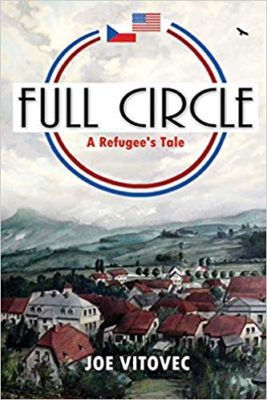
  • FULL CIRCLE: A Refugee’s Tale by Joe Vitovec – WWII Historical Fiction, Literary Fiction, European WWII Refugee Historical Fiction

    FULL CIRCLE: A Refugee’s Tale by Joe Vitovec – WWII Historical Fiction, Literary Fiction, European WWII Refugee Historical Fiction

    In the prologue of this lucid and gripping novel, Joe Vitovec notes that although Full Circle: A Refugee’s Tale is fiction, he “attempts to acquaint the reader with some of the locales and events that made this period so memorable, and leave a record for those who may one day wish to revisit the past.” He has done an extraordinary job with this literary recreation of the experiences of the “displaced persons” following World War II.
    Vitovec takes the reader on a journey that begins with a boy in 1938 in a small town in Czechoslovakia and ends some fifty years later with that boy, now a middle-aged man, returning to his childhood home. What transpires in the intervening years is the heart of this politically and emotionally complex story, one with which many will be able to relate, while others will learn from and perhaps consider the current global refugee crisis with fresh insights and compassion. It is not a tale any reader will likely forget.

    Jan Neuman is only eight when the men of his village leave for a military encampment and prepare to fight the Nazis who have invaded their lands. They never get the chance. As decreed by the Munich Conference, this area of Czechoslovakia is handed over to Hitler and made a German protectorate. The townspeople feel demoralized and live in constant terror that the Germans will arrest them for showing the slightest loyalty to their ousted leader or native culture. They endure degradations, subsisting on soup bones and potatoes, and Jan’s father, the town’s tailor, is made to sew Nazi uniforms.

    Years pass, and finally, the Allied invasion buoys their spirits and hopes. One miraculous day, there are American soldiers in town, happy to share cigarettes and peanut butter, and make friends with the locals. Jan, a teenager, views the Americans as “bordering on godlike,” as does everyone in the village. This euphoric time is short-lived, however, with the departure of the liberating soldiers and arrival of the Russians, followed by a communist coup. The communists are eager to make arrests, and the townspeople become fearful and distrustful of one another.

    As a student who works on a political newspaper, Jan is brought to the communists’ attention and will likely be arrested. When he hears of a resistance army being formed elsewhere, he stealthily leaves town with his friends. However, just as their fathers were denied the chance to fight, Jan and his friends discover that the resistance military base is in fact a refugee camp in Regensburg. Although it’s technically an American camp, it is run by Germans. He and his friends are told, “As refugees, you have no citizenship status, no rights.” Conditions are harsh, the camp overcrowded with Poles, Russians, Ukrainians, and Czechs. Morale is exceedingly low as people wait to see where they’ll be sent next. Although everyone wants to go to America, there are no fast or direct routes. Indeed, Jan’s refugee life has just begun.

    Like so many others, Jan must attempt to rebuild his life again and again. Over the next two years, he will travel from camp to camp, make an ill attempt to join the French Foreign Legion, experience a devastating low outside the sewers of Paris, fall in love, and finally sail to America where his troubles are far from over.

    Vitovec delivers a riveting story in beautiful and poignant prose, reminding us that the impact of war can be total, even for those who never set foot on a battlefield. Political losses hurt people deeply, but the loss of sense of self is endlessly tragic. Displacement is not just a geographic issue, but a psychological one. How much of our identity is built on where we are from? Who are we if we belong to no country? Imagine, if you can, owning nothing but memories, memories of a time and place, of a people who used to belong to a country and spoke its language. Imagine every identifying detail scrubbed from you, the only thing that motivates you is the instinct to stay alive. For years, the existence of the displaced boiled down to just that – a place to lay their heads at night, bread to keep their stomachs from aching, and perhaps the tiniest glimmer of hope that they were y headed somewhere that wasn’t yet another refugee camp, a place they would one day call home.

    A book for political leaders, teachers, students, and anyone with a desire to not repeat the past. It’s a book that serves to remind us of what we have and what can be taken from us at a moment’s notice.

    Full Circle, A Refugee’s Tale by Joseph Vitovec won First in Category in the CIBAs 2018 Goethe Awards for Late Historical Fiction.


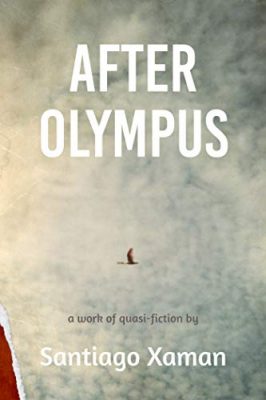
  • AFTER OLYMPUS: A Work of Quasi-Fiction by Santiago Xaman – Magic Realism, Literary Fiction, Multi-Cultural

    AFTER OLYMPUS: A Work of Quasi-Fiction by Santiago Xaman – Magic Realism, Literary Fiction, Multi-Cultural

    Reviewers note:  Consider the term, “quasi-fiction” in the subtitle of this novel by Santiago Xaman. It’s key to reading and understanding this deeply compelling and innovative work. The book begins with two definitions of quasi-fiction:  1. A narrative combining fictional characters with published facts of minor historical significance. 2. The form of realism evoked by quasi-fictional content. Having completed the book, I find I must smile at the term, “realism,” as used in the second definition.

    In this groundbreaking novel, what is real – and what isn’t – is always the heart of the matter. There are elements of reality in the fantastical, and there are elements of magic realism in the rather ordinary. After Olympus is a novel about characters who don’t just think outside the box; they are outside the box.

    Intrigued? You should be. We don’t see novels like this every day, but this one will find its way into the hands of the most discerning readers.

    After Olympus is arranged into six sections: Alpha, Beta, Gamma, Delton, Epsilon, and Omega. Yes, Greek letters, very appropriate for a work laced with mythic associations, associations that will take the reader, as the title notes. Santiago Xaman tells his story via a manuscript found on his property in California. We learn of his childhood in Guatemala in the 1950s and early 1960s, his plea to Xaman Ek, the North Star, for the power of invisibility. We meet his sister who wants to fly like the Mancho bird that nests where the rainbow ends. A fire will change the tide of Santiago’s life, eventually bringing him to the United States, where adoptive American parents raise him.

    Throughout his adult life, he will live with a Russian woman raised in the communist Soviet Union and who has burdensome secrets that will impact Santiago’s life in ordinary and extraordinary ways. One night, Santiago witnesses what he thinks is a falling star but is fuselage falling from a Soviet spacecraft. The event brings two international Stanford scientists to his door and a puzzle of a quest begins, one that will encompass the themes of schism and reconciliation, myopia and sight, and inequity and prosperity.

    Gus, a businessman with a dream to be the “Yahoo of the medical world,” will join this group that Santiago comes to refer to as “magicians.” They will accomplish things that might seem magical, but just as one must carefully observe a magician for sleight of hand, the reader should follow the words of this enigmatic narrative with complete focus.

    The magicians’ projects include designing new frameworks to analyze and make use of neuropsychological testing, intersections of social and political media, employment opportunities for young women with small children, and a gamut of concepts intended to make the world a better place through the removal of hurdles and the dissolving of problems. If technical innovation can be decapitalized and the profits realized by those most deserving of them, the economy can be reinvented. But there are villains on the scene as well and what they do to counter the magicians’ is astounding.

    The ultimate triumph of After Olympus is that it’s not just one book. It will be different books for different people. Included in it is the old and classic story of the blind men who describe an elephant in entirely different ways. What one brings to this book may influence what one thinks they’re reading. The ending alone will make readers wonder if they really know the difference between tusk and tail.

    After Olympus is a superb selection for any book group interested in a novel that is so thoroughly outside the box, so uncaged, that it’s a bit wild, in the best of ways.


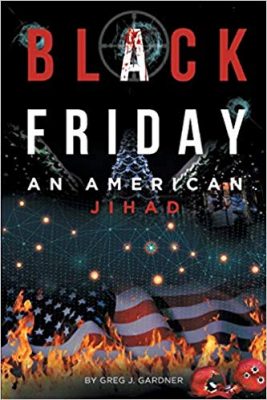
  • BLACK FRIDAY: An American Jihad by Greg J. Gardner – Thriller, Military Thriller, War

    BLACK FRIDAY: An American Jihad by Greg J. Gardner – Thriller, Military Thriller, War

    Art imitates life and life imitates art. When Greg J. Gardner was writing his highly suspenseful novel, Black Friday, An American Jihad, the mass shooting at the Walmart in El Paso had not yet occurred. Taking place on Labor Day weekend, the shooter knew the store would be filled with people taking advantage of sales on school supplies as students prepare for the first day of class. Customers and their children became targets as the store was turned into a carnage-filled scene.

    Why is this relevant? In Gardner’s book, scenes of mass violence take place in many Walmart stores in the United States on the busiest shopping day of the year, Black Friday. The killers, in this case, however, aren’t American; they’re 50 jihadists who have been training for years for a series of precisely timed and sequenced attacks that will result in the deaths of thousands and derail American life in a manner never seen before. Just when people think the attacks have stopped, they’ll begin again at other retail locations.

    This is a story with nuance. The author considers the critical questions of why and how this jihad was undertaken. He avoids fairytale extremes of good and evil and delves into the harrowing events that produced an assassin, a mastermind able to motivate a team of men to turn Black Friday into “Bloody Friday.”

    The media barely has time to digest the latest attack before the next shooting rampage occurs. Stores become war zones, but the United States has no defense in place because only the terrorists know when and where the next attack will take place. The hours roll forward, and Americans continue to be perfunctorily slaughtered. An assembly line of meticulous mass scale murder is underway.

    Chaos begets chaos. In this era of immediate reporting on social media, Facebook declares, “We cannot allow these images to propagate through our platform.” Twitter and Snapchat agree while Instagram crashes, and YouTube shuts down its servers. Walmart stores across the nation close. Vigilantes attack mosques, American gangs attack each other, and looters are on the prowl. ATM machines run out of money, and thousands of businesses close.

    The National Guard is deployed, and the President eventually declares Marshall Law. With their liberties curtailed and life essentially shut down, the only thing left for Americans to do is watch CNN, a reporter now one of the most important people in their lives. America is no longer the country its citizens recognize, and it all happened so quickly.

    This is a fast-paced, heart-pounding narrative in which we meet many characters, most only briefly. There are poignant moments of would-be heroism cut all too short but also a few genuinely bright spots in a reign of terror.

    Gardner notes in the epilogue that he, of course, hopes his book will never be a reality. Nonetheless, this is a novel that will stay with you, that you’ll think of as you’re shopping, as you’re noticing a security guard in a parking lot, and certainly as you’re watching the evening news. Once you’ve been taken to the brink and given a glimpse of what could be, the concept of safety itself is in question.


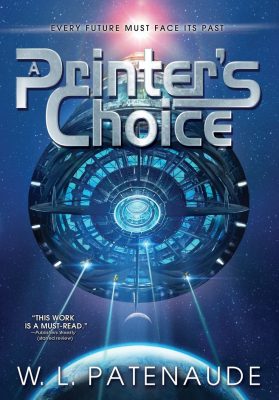
  • A PRINTER’S CHOICE by W. L. Patenaude – Sci-Fi/Cyber-Tech, Mystery, Literary

    A PRINTER’S CHOICE by W. L. Patenaude – Sci-Fi/Cyber-Tech, Mystery, Literary

    W. L. Patenaude’s suspenseful and philosophical novel, A Printer’s Choice, opens in the near future, 2088, and not all is well in the universe.

    Earth is plagued with famine, war, and violent religious extremism. Oceans have risen to deadly levels, and wildfires and storms continue unabated. The world’s resources are being strained and no recovery is in sight. In fact, things are so dire that parents can opt to have themselves euthanized in exchange for the government’s providing for their children’s health and education.

    Elsewhere in the cosmos, a murder has rocked “upside,” a conglomeration of locales in space that are being rapidly developed through a tense and volatile collaboration between engineers and builders. This murder is a first in the “New World” and the circumstances surrounding it set the stage for an investigation that will not only uncover the murderer but also will cause readers to ponder the very essence of human existence.

    Enter Father John Francis McClellan, a Roman Catholic priest in this thirties with a military background. He has been summoned by the Archbishop of Boston and the Vatican to travel to the New World to investigate the homicide. From the outset, the case presents enigmatic details. For example, the victim, Father Tanglao, a Dominican priest, had inexplicably been working as a laborer in the orbits.

    Like everyone else, Father McClellan wonders why a priest was upside where any expression of any faith is strictly prohibited. Was Father Tanglao’s murder connected to one of the engineers or a fellow builder? Could there be a connection to the murderous zealot with a messianic complex, Juan Carlos Solorzano?

    McClellan does know that Father Tanglao had dealings with a high-tech 3D printer, a machine with recesses of “Deep Intellect.”  McClellan has his own history with these sentient machines, encounters that have given him the experience necessary to delve into relations between people and devices possessing artificial intelligence.

    The printers have the ability to design their own upgrades as well as reproduce themselves. “New Athens” was built easily and rapidly by the printers and, given the disasters on Earth, there is an imminent need for worlds to be built in space as quickly as possible.

    The engineers argue that the checks and balances those in charge wish to implement will only hold progress back because they believe they can regain control over the machines down the road. The question will arise, what separates a human programmer from a mechanical one capable of critical thinking? And who “programmed” people? What transpires between McClellan and a specific machine includes a riveting and deeply thought-provoking discussion of trust and free will.

    Clearly, Patenaude is well versed in the readings of Aristotle, St. Thomas, St. Augustine, and Descartes, for starters, and likely a host of philosophers and theologians. His ability to draw upon multiple disciplines and to weave religious and philosophical allegories into characterization and plot put him at the forefront of literary thinkers. Suffice to say, this novel is profoundly deep and thought-provoking.

    While this book will appeal to sci-fi lovers and anyone game for a murder mystery in outer space, it should also spark the interest of anyone interested in grappling with theories of existence and the ultimate power of free will. A priest traveling to an entirely new world in the cosmos and finding that it’s still necessary to wrestle with the age-old questions of faith make for a powerful tale.


  • PINKY and the MAGICAL SECRET HE KEPT INSIDE by Kasey J. Claytor – Early Readers, Children’s Books, Fantasy & Magic

    PINKY and the MAGICAL SECRET HE KEPT INSIDE by Kasey J. Claytor – Early Readers, Children’s Books, Fantasy & Magic

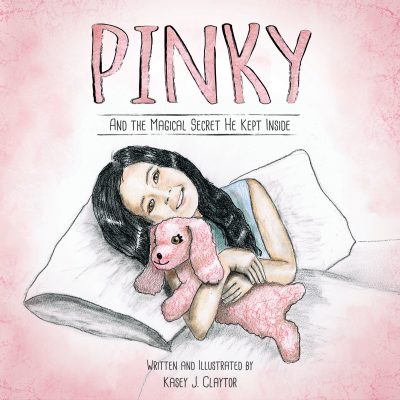
    *Reviewer’s note:  I read the book to a little girl who, upon seeing the photo, exclaimed, “The real Pinky!”  Indeed, this extraordinary story is derived from the true story of when the author was a small child. When she fell ill, her grandmother brought her a furry pink, stuffed puppy, and a story was born.

    Pinky, a stuffed toy puppy, made of pink corduroy, is given to a little girl, Francesca, after a brief visit to the hospital. She loves her stuffed friend, and the feeling is mutual. Pinky does all he can to show Francesca this after her other stuffed animals tell him of a secret award ceremony at which a prize will be given to the toy that is most loved by a child.

    One night, while Francesca is asleep, Pinky and the other toys journey to the ceremony where he is elated to win the most coveted award. A medal is sewn inside his chest in the spot where humans carry their hearts. Francesca and Pinky grow old together, and one day she decides to clean and repair the stuffed dog, inside and out. In doing so, she discovers the secret medal that has been inside her stuffed friend for decades. The discovery prompts her to recall a dream she had as a little girl in which Pinky won a medal for loving her so much. The final scene is that of an elderly Francesca snuggling with her favorite childhood toy. How sweet, then, to turn the page and view a photo of the author with a stuffed pink dog.

    Claytor’s prose is comprised of brief declarative sentences, appropriate for young children. The tale underscores the security and affection stuffed animals offer little ones, but also invites them to consider the reverse. Told from Pinky’s point of view, the stuffed dog learns that all toys “. . . are loved, but what is most important is your loving of humans.” He strives to show that affection by snuggling with Francesca, watching her as she dances around her room, and always being where she can see him.

    The illustrations are beautiful, imbued with warmth and affection. Stuffed animals smile at the reader, the backgrounds of the pages splashed in dreamy, pastel shades of pink, aqua, and yellow. Pinky looks especially huggable and, if the author chose, would be an excellent model for a stuffed animal marketed with the book. Of course, it would have to have a secret compartment that would hold a tiny medal, one that could be held by a little hand after each reading of this delightful book.


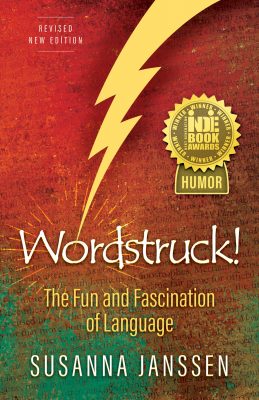
  • WORDSTRUCK! by Susanna Janssen – Pop Culture Encyclopedias, Language Humor, Phonetics & Phonics Reference

    WORDSTRUCK! by Susanna Janssen – Pop Culture Encyclopedias, Language Humor, Phonetics & Phonics Reference

    As Susanna Janssen notes in this eclectic and fabulously fun study of all things language-related, “The world of words is ever-changing, dynamic, and alive with the times as we constantly invent vocabulary to talk about new realities.” And she proves just that in this book that overflows with wit, wisdom, humor, and an infectious love of spoken and written words and phrases.

    Janssen warmly engages the reader to take an etymological adventure with her, one that has me listening for new words in conversations and scanning newspaper articles for recent additions to the English language. Her book is a potent reminder that language is not static, that at this very moment it’s evolving. Yes, it’s alive!

    Consider some of the words used in the second decade of the 21st Century:  Beatbox. Catfish. Frenemy. Geocache. Selfie-stick. Quinzhee (I confess, I had to look this one up). Could we have anticipated their advent? No, just as we can’t say with certainty what new words will enter our vocabulary with the next generation. Children will be asking Santa for gifts with names that currently elude us. The uncertainty, though, only underscores how wondrous language is as it chronicles and shapes life around the globe.

    Wordstruck! is brimming with research (check out the impressive list of sources consulted), anecdotes, charming and often hilarious footnotes that chart the author’s efforts to bring us this enthusiastic celebration of language and its evolution. For example, did you know that Homer used a total of 9,000 different words to write the Iliad and the Odyssey?  Shakespeare, centuries later, used 30,000 to write his plays, although part of the reason he was so much wordier than Homer is that the Bard birthed new words right and left and gave older words a new versatility. He did amazing things by simply adding “un” to the front of a noun. We may use words like “clean” and “unclean” without thinking today, but at one time, flipping the meaning of a word was both a novelty and an innovation.

    If you’re a grammar nerd like I am, you’ll love Janssen’s observations of people who “overcompensate” and use “I” when “me” is the correct pronoun. And is there a more beautiful definition of a preposition than “…just a handy little word that usually tells us the relationship between what precedes it and what follows it”? Words migrate with people; they morph when cultures bump up against each other via war (M’aidy! For “Aid Me” becomes Mayday!), religion (consider the Diet of Worms, eeeew!  Papal Bulls?!), and love (Do you prefer, “Will you be my valentine”? or “Will you be my little poopsie?”)  And why does the color yellow evoke different feelings in Germany than it does in the United States?  Yes, language is the vehicle for humans loving, fighting, worshipping, and feeling. Language is the thread that connects and weaves together every aspect of life.

    In the second half of the book, the author shares her story and how she first came to write the chapters as articles for a local paper. Her stint as a journalist followed a career as a professor of Spanish with a lifelong bent for all things related to the Romance languages. Her upbringing in a Catholic family of Dutch and Italian origins put her on a path to a lingual life. She would love her readers to share her joy, and she urges all to study a second language to reap countless benefits, including keeping a sharp mind as we age.

    There are just too many gems to fit into a single review of this book, and that is precisely why you must read Wordstruck! and experience its subtitle, The Fun and Fascination of Language, firsthand. Be ready to learn, to laugh, and to love language in all its complexity!


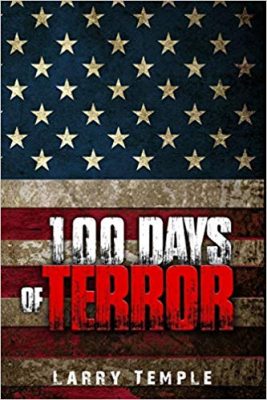
  • 100 DAYS of TERROR by Larry Temple – Terrorism/Thriller, Suspense/Thriller, Conspiracy Thriller

    100 DAYS of TERROR by Larry Temple – Terrorism/Thriller, Suspense/Thriller, Conspiracy Thriller

    The suspense in Larry Temple’s excellent, haunting, global thriller, 100 Days of Terror, begins as a seed planted in the minds of the main characters and the reader. A torched car is found in a field in New Jersey. Residents in a town in Idaho wake to find green water gushing from their faucets. A small college town in West Texas is vandalized. And, then, three trucks explode on a highway in Los Angeles, and the clues linking the explosion to the other incidents are undeniable. The FBI knows that these aren’t random acts of isolated violence but an escalating series of terrorist incidents designed to disrupt life in America. During the next few months, multiple bridges will be bombed, airports will close, many highways will be unnavigable, communities will suffer power outages, and groups of children will stop attending school. The Dow Jones Industrial Average will steadily drop and the entire nation will be wondering what and where the next attack will be. Who is wreaking this havoc on America?  To determine that answer, however, another question must be asked:  Why?

    At the heart of it all is Noah Reardon, an FBI agent in his thirties who saw plenty of violence during three years in Afghanistan with the Joint Special Operations Command. It is in America, though, where he has suffered egregious personal loss and is now getting through his days in an alcoholic haze. His boss, the gruff, no-nonsense McCullum has his reasons for not firing Reardon. Laura Spencer, Reardon’s partner, is protective of him, even while she chastises him for constantly over-sleeping and reeking of booze. Reardon has a personal connection to the events at hand; it was his stolen car that was found torched and abandoned in New Jersey. Could this have something to do with his liaison officer and close friend in Afghanistan, Abdul?  After all, it was Abdul who told him, “Anyone who attempts to contradict or interfere with America’s drive for money and power are terrorists in your mind.” But, no; this can’t have anything to do with Abdul, the man who died in an explosion, the man who saved Reardon’s life. Or can it?  Temple does an extraordinary job of keeping the reader guessing. Clues, the name of the game, are planted, but what to make of them?  A sinister series of riddles are at play.

    As a whole, the novel is a thoroughly engrossing meditation on what people can survive. The attacks aren’t leveled at the entire nation; they take place in an exact time and region of the country. Citizens will learn that they can keep going after local destructions. That doesn’t mean they emerge unscathed, however. They are forever changed by suspense-filled days, by hours wondering where and when the next attack will occur. If an explosion occurs nearby, can they relax for a moment and assume the next one won’t happen in their city, on their street? What is the true aim of terrorism?  To eliminate people or to make fear such a constant in their lives that they stop living; they exist only to run for cover when the next attack occurs. When there is no end in sight for certain yet unpredictable violence, people are trapped in a cycle of action and reaction. “Normal” is no longer part of the national vocabulary.

    The ending packs a huge wallop, a kick to the gut that will leave you gasping for breath. It causes the reader to stop and reconsider every question raised in a narrative that moves forward and back in time, giving us a composite of Reardon’s life, a mosaic of the good and the bad, the wonderful and the painful. Like the best fiction, it will leave the reader asking the question, “What would I do?”  Read this powerful thriller for yourself and see if you can supply the answer.

    5 Star Best Book Chanticleer Reviews round silver sticker