Author: Barbara Bamberger Scott

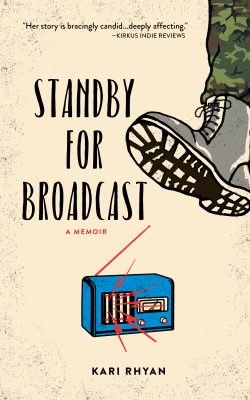
  • STANDBY for BROADCAST by Kari Rhyan – Memoir, Wartime Nursing, PTSD

    STANDBY for BROADCAST by Kari Rhyan – Memoir, Wartime Nursing, PTSD

    Childhood demons and combat wounds cause one Navy nurse to examine her life in Standby for Broadcast, a moving and turbulent memoir by Kari Rhyan.

    Rhyan served nearly twenty years in the US Navy as a nurse, her final deployment taking place in Afghanistan to a medical unit run by the British where Rhyan upheld her duties to aid others, while inwardly feeling unprotected and helpless. After witnessing the many tragedies of war, primary among them multiple amputations, she comes home scarred in mind. Her trauma becomes so obvious that she is sent to a special private unit.

    It is at this private unit, The Willows, where Rhyan is overseen by a compassionate counselor, Riza, who enjoins her to attend AA meetings. Rhyan refuses, feeling that “acceptance” is not the answer for her rational hatred of warfare. But she cannot dodge the assignment of writing a chronicle of her war experience to be read aloud to fellow patients at sessions in “The War Room.”

    Her memories of Afghanistan soon become jumbled with her childhood recollections of abuse by her addicted mother and sexual aggression by another family member, and with her current, difficult life as a gay mother. Because fellow patients were deployed as soldiers, Rhyan feels her suffering is not as authentic as theirs, but Riza continues to push her to write, to remember and describe, at the least, a single day. Finally, she is able to bleed out her agonized story of observing and treating pitifully wounded war victims, including a child, burned nearly to the bone. Ultimately, her treatment at The Willows leads her to separate from her alcoholic mother and find a new life outside the military.

    Rhyan writes with vivid emotion, leaving nothing out in her determination to make her story known and understood. Not a soldier, still she and her fellow medical personnel must find inner stores of courage and battlefield humor in order to take on the daily task of assisting young soldiers so badly torn apart that it would seem death more likely and perhaps the most desirable outcome.

    Throughout her recollections, which are liberally peppered with appropriate profanity and shocking imagery and at times exhibit a frantic desperation, Rhyan quotes great writers and philosophers on the subject of war. Through Riza’s voice, in a dramatic scene, she reminds us that warriors in ancient times were never allowed to return home because of the madness that war caused…so wars had to be continuous, to keep those who waged it occupied and out of sight. Rhyan shows us their madness close-up, with its many results, as she has seen and lived it: the nightmares, paranoia, violence, self-medication, self-hatred.

    The conclusion to Rhyan’s hard work on herself at The Willows is what seems for now like a restful, if not entirely peaceful existence, in closeness with her child and the spouse who remained faithful and understanding throughout her long ordeal.

    Rhyan’s memoir is frank, insightful, and a powerful reminder of the toil taken by those who wrestle with the fallout of the carnage of war. She also reminds us of the resiliency of the human spirit and the power of hope.

    5 Star Best Book Chanticleer Reviews round silver sticker

  • MY EXTRAORDINARY LIFE by Monica Sucha Vickers – Memoir, Inspirational

    MY EXTRAORDINARY LIFE by Monica Sucha Vickers – Memoir, Inspirational

    Monica Sucha Vickers was born in 1954, her parents’ first child. Their love for her overcame the shock they experienced when they saw that she was severely handicapped.

    Born without legs and missing her right arm, Vickers was probably a “thalidomide baby,” although her mother’s medical records are mysteriously lacking the proof of that speculation. Advised by doctors to institutionalize their tiny daughter, her parents took her home instead, and, without discussing their secret sorrows, they raised Monica with courage and without barriers.

    Her father pushed her to try new things—navigating stairs and participating in sports. Initially sent to a special needs school, she complained that she was out of place there, so she was transferred to typical schooling.

    In college she and a roommate took a long trip out west in the author’s hand-controlled auto, inspiring her to move from the Midwest of her birth with its icy winters to sunny California. She became an expert medical transcriptionist, typing twice as fast with one hand as most of her co-workers could with two. It was here she met and eventually married a construction engineer who designed a special office space for her home business. Together they happily entertained their large extended families.

    After her rather sheltered upbringing, the author gradually saw that the world can be cold and hurtful to people with handicaps; she speaks out boldly on that subject. She states that her grandmother, who taught her to bake, prepare fresh garden veggies, ride a tricycle, even sew and embroider, provided the impetus for this memoir. Her grandmother was, and still is, her hero.

    Vickers writes with a rare combination of gusto and aptly chosen phrasing, reflecting her own spirited but well-planned approach to life’s adversities, of which she has had more than her fair share. Her prose is plain and her observations frank, showing her creative talent along with the ability to objectify her experience in an unusually balanced manner.

    The book contains many photographs showing not only the extent of her disabilities, especially in early childhood, but also the means she has used to overcome them over the course of her tough but courageous life: the heavy but cosmetically sculpted artificial legs, the various wheelchairs, her hand-operated car, her athleticism as a swimmer, her unconventional but very effective typing method. Here, Vickers admonishes readers about what not to do and say to handicapped and wheelchair bound persons, which is enlightening and edifying.

    Avoiding any temptation towards bitterness, especially in the matter of the probable cause of her disabilities, Vickers has boldly included numerous honest appraisals penned by family members and friends about growing up with and knowing her. This willingness to see herself as others see her sometimes brings her back to the awareness of the adage, “People will see your disability before they see you,” a hard lesson that took her a long time to absorb.

    This is an important memoir that serves to bridge a gap between people of all shapes and sizes – no matter what their condition. An honest and courageous chronology of a life that truly deserves to be called “extraordinary.” Monica can be reached via her Facebook page or her website, which is listed at the top of this review.

    5 Star Best Book Chanticleer Reviews round silver sticker

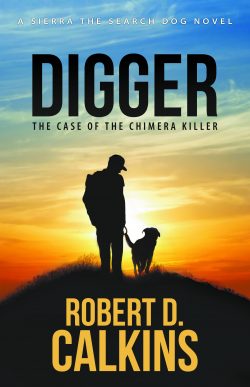
  • DIGGER: SIERRA and the CASE of the CHIMERA KILLER by Robert D. Calkins – YA, Mystery/Thriller, Crime Fiction

    DIGGER: SIERRA and the CASE of the CHIMERA KILLER by Robert D. Calkins – YA, Mystery/Thriller, Crime Fiction

    Artfully constructed with lightning pacing, Robert D. Calkins’ Digger: Sierra and the Case of the Chimera Killer is a must read for mystery/thriller fans and for animal lovers alike, especially those who know that a dog well-trained can be much more than just a pet

    Teenager Bryce Finn and his Golden Retriever Sierra share the spotlight as the novel’s human hero and canine heroine. As a determined duo doing SAR (search and rescue), they are just about the best in their Washington state region, time and again proving Sierra’s reliability and wholehearted enthusiasm for the often grisly “game” of locating decomposing corpses.

    There’s a serial killer on the loose in Kitsap County, targeting young female runaways, drug users, and prostitutes. Sheriff Elroy Patterson asks for some extra funds from the county council, above the objections of the hard-nosed conservative councilor, Garrison, who mockingly calls the supposed killer a “chimera”an imaginary monster.  The council overrides him and grants Patterson the money, and the press latches onto Garrison’s weird term so the hunt for the Chimera Killer is on.

    Tracking down the serial murderer becomes the new shared obsession of Bryce and Sierra, although one rescuer, Alan Granger, seems curiously determined to make the pair look bad but with no success. Whenever Bryce tells his pet to “find Digger” she’s all too willing to please, knowing that a ball game will be her reward.

    But Bryce has another obsession: he’s finally getting a chance to woo Katie, his first foray into young love. Katie is reciprocating by taking an active role in SAR, a romantic interest in Bryce, and developing a fondness for his amazing canine. Meanwhile, more bodies are being discovered, which as Bryce notes, is both a victory for law enforcement and the SAR team, but a sad day for the victim and family.

    Author Robert D. Calkins, himself a SAR dog handler in the very county where this multi-layered plot takes place, has set out to educate as well as entertain. He offers fascinating details of the canine/human relationship, even to the tone of voice (high-pitched and childlike) that is best used to reward one’s dog for success in locating the sought-after person or object. Anyone interested in effective dog training will find this book a manual of best practice, as numerous tips are cleverly embedded in dramatic scenarios that will keep you turning the pages.

    This book will interest YA readers through adults with its teen characters out-doing many of the grown-up pros in solving crimes. More seasoned readers will also find themselves charmed and intrigued by the subtleties of a mystery well-conceived and cinematic.

    Calkins’ earlier works centering around this subject are suitable for the middle-grade readers and includes Digger, Sierra Becomes a Search Dog, and Sierra the Search Dog Finds Fred. The author’s fourth book is Bryce Bumps His Head, a chapter book for beginning readers. Although Digger: Sierra and the Chimera Killer could be considered a flagship novel, the author tells us he is working on a sequel. Now that’s something to be excited about!

    5 Star Best Book Chanticleer Reviews round silver sticker

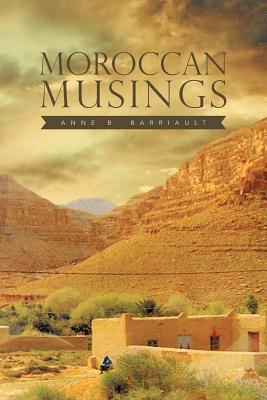
  • MOROCCAN MUSING by Anne B. Barrialut – Non-Fiction/Memoir/Travel/Morocco

    MOROCCAN MUSING by Anne B. Barrialut – Non-Fiction/Memoir/Travel/Morocco

    Anne B. Barriault fell under the spell of Morocco on a tour of Moorish ruins in Italy. She joined an organized museum group excursion called “Moroccan Discovery” and later would return on her own for an 8-day stay in Fes under the caring eye of a resident family. Morocco, she says in her rich recollections of those journeys, is “sensuous, intoxicating, spiritual, and earthbound.” Here is the memoir-travelogue of Barriault’s, a museum professional, visits Morocco, recording colorful impressions in prose with accompanying pencil sketches by illustrator Shawna Spangler.

    In the first part of this rhapsodic tribute to the country, Barriault describes the various, sometimes chaotic events of the group tour: a first glimpse of the storied mirages of the desert, camel rides in the sand dunes that magically change color, a somber visit to Chellah, the sacred ruins outside Rabat where storks and eels guard the spirits of the dead.

    A scholar as well as author and observer, Barriault explains the meaning and history of the harem, where men protect their women by isolating them, and the hajiba, the ancient laws that require women to enter the homes of their husbands and never again step outside. She examines the veil in all its significant stages through the ages and contemplates the compromises that women must make, whether Muslim or not, veiled or not. She recalls the stares of young Moroccan girls and women at her unveiled freedom, circumspect looks that may hide disapproval or envy. Boys, too, are an important part of her writing. She describes the young men hanging about in city streets and shops, sometimes selling something or simply hoping for some recognition of their open, friendly chatter and attempts to speak English and teach a few Arabic words to the gaggle of foreigners.

    In the second part of the book, she visits on her own, in Fes, where she can immerse herself ever more deeply into the Moroccan culture. Having come to the city particularly for a sacred music festival, she finds herself forgetting all about her concert tickets on an afternoon when her hosts  — an ancient patriarch and his eight grown children all living together — treat her to a homely feast. Dish after dish –salads, couscous, roasted beef, fruits and finally fresh mint tea served with the aroma of incense — are brought forth, climaxed by a gift of a bracelet made of green glass bead, “the color of Islam.”

    She constantly reminds the reader that the Moroccan people, whose history and political life she carefully details, are friendly, open and sincere, happy in the happiness of their visitors, whether tourists on a short trek through the souk (shops) or coming for a longer stay, as she did, to plumb the depths. 

    Barriault writes with verve and emotion, almost poetic at times in her wish to convey the mystical beauty of this North African Muslim civilization. Illustrations by artist Shawna Spangler provide visual souvenirs drawn from the lush, illustrative narrative. Later the reader feels Barriault’s frustration as she realizes that, owing to the continued upheaval in the region, she will not soon be able to return to the Moroccan she loves.

    5 Star Best Book Chanticleer Reviews round silver sticker

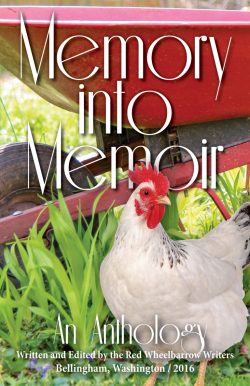
  • MEMORY into MEMOIR: An Anthology by The Red Wheelbarrow Writers – NonFiction, Memoir, Anthology

    MEMORY into MEMOIR: An Anthology by The Red Wheelbarrow Writers – NonFiction, Memoir, Anthology

    This curated anthology shows the collective creative effort that the Red Wheelbarrow Writers have dedicated to “Memory into Memoir,” each one a nugget of remembrance cloaked in the wisdom of time’s perspective and expressed in well-chosen words and memorable well-crafted story telling that will capture your heart and expand your soul.

    Below are a few samples of the superb writing in this anthology.

    The collections start with author (Beyond the Scope – Truth Turns Deadly in the Congo) and former US Embassy staffer Nancy Adair, who recounts, in “Just Say No,” being called upon to provide “community control” for a planned visit from Nancy Reagan to her post in Malaysia. Disaster follows disaster as plans fall through, the weather refuses to cooperate, and Reagan’s anticipated speech is four words long. Adair learns that far from being “one of those introverts who doesn’t like to disappoint people” as she initially imagined herself to be, she is secretly feisty, feisty enough to say “no” to the First Lady when the situation requires it.

    Blogger Sky Hedman’s “The Chosen Day” examines a distraught family trying to reconnect on a mountain picnic. The narrator, her Alzheimers-ridden mother and silently suffering sister Martha barely dodge tragedy on that outing, only to face it days later, along with an acknowledgment of fractured relationships: “The time to know Martha better had passed.”

    In “Thank You, Grace Paley,” aspiring Novelist Barbara Clarke recalls her remarkable personal meeting with the feminist icon over a late-evening cup of tea. Discouraged with her attempts at writing, she asks for and gets en-heartening advice from the famous author: “Just keep going.”

    University instructor Kate Miller’s “Elemental” is the memory of her eleven-year-old self, happily receiving a much-desired chemistry set, then balking at using it when she discovers the many vials containing poisonous substances: “What if I spilled two chemicals that weren’t supposed to mix?” Her escalating concern sparked by an active imagination causes her to stow the set away; later in life she is diagnosed with panic disorder, but still sometimes dreams of the chemistry set and its many messages.

    In “Leaving the Roman Lands,” world-wanderer Kenneth W. Meyer recreates his adventures overseas when in 1976 he and a traveling buddy agree to drive four wealthy students from Istanbul to Pakistan. In those days, foreign travel, the author states, “was like walking in space: you detached from the capsule, fed out your line, and enjoyed the spectacular view.”

    The final piece in Memory into Memoir, “The Great Moratorium,” is the fascinating story of a young woman “busting out of the beige life” at age 18, only to find herself in a highly abusive relationship. Escaping that, she later becomes a therapist for victims of domestic violence and embarks on a one-month experiment in “relationship moratorium” that stretches out to eighteen elucidating years.

    Superb writing styles blend with ease in The Red Wheelbarrow Writers’ first anthology of thirty-two non-fiction works that are a pleasure to read. Offering something for most everyone to appreciate makes this anthology a wonderful gift and a welcome addition to any writer’s library as an inspirational read. A consortium of writers has produced this engaging collection of life’s vicissitudes remembered.

    The Red Wheel Barrel Writers

    According to members Cami Ostman and Laura Kalpakian, the Red Wheelbarrow Writers in Bellingham, Washington, call themselves a “loose collective of working writers” who have “monthly Bored meetings (yes, that’s the correct spelling)” and eschew formal designation as a club or non-profit (“when we need money we pass a hat”). The writers have conspired to inspire with this array of 32 short memoirs.

    The group takes its name from a poetic work, XXII, by William Carlos Williams:

    So much depends
    upon
    a red wheelbarrow
    glazed with rain
    water
    beside the white
    chickens.

    Underscoring this theme, each memoir begins with a quotation from Williams chosen by the individual writer.

    5 Star Best Book Chanticleer Reviews round silver sticker

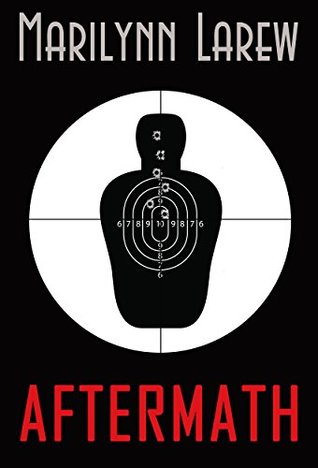
  • AFTERMATH by Marilynn Larew – Mystery Suspense/Thriller/Female Sleuth

    AFTERMATH by Marilynn Larew – Mystery Suspense/Thriller/Female Sleuth

    Mystery maven Marilynn Larew has devised a can’t-put-down thriller with a female lead who can handle everything from flying bullets, dead cats, and snakes in the jungle, with only the occasional meltdown in Aftermath.

    It’s a normal day for private investigator Annie Carter when handsome, Irish, and possibly crazy “Don’t call me Charlie” Magee shows up at her townhouse/office/home claiming someone is trying to kill him. For one thing, a body fell out of a window and landed near him. But even more convincing, someone shoots a hole through Annie’s front window just as Magee arrives on her doorstep – and not long after that, they find a dead cat on the stoop.

    But can Magee be for real? His stories are garbled, and sometimes he seems to be dodging the truth, but when she lets him move in (for his own protection) it turns out he’s a decent cook and, well, let’s say his interest in her is hard to resist.

    Meanwhile, Annie’s lawyer daughter Elizabeth is bugging her because her boyfriend wants to get married, which is against Elizabeth’s feminist principles, and for some reason, it’s all Annie’s fault. Added to this chaotic, action-crammed and often witty mix is Annie’s newest client, Vivian Rowlandson, whose husband has disappeared without a trace. A complex inheritance means the client must find her spouse or lose all financial support for her over-sized mansion and ten horses. And just as all these mysteries build, Elizabeth is kidnapped.

    Threading her way through other people’s bizarre problems is what Annie signed on for when she became a private investigator. It was the job best suited for a single parent. But now her mothering skills are questioned and her own life is in danger.

    Eventually, the hunt for Vivian’s errant husband will take Annie to the shadowy, steaming jungles of Southeast Asia where human and reptile killers lurk around every tree—and where the charming Magee will prove a stalwart bodyguard—in more ways than one.

    Practiced mystery novelist Larew (Dead in Dubai, The Spider Catchers) presents a plot that brings her expertise to the fore. With teaching and publishing credits in American and Vietnamese military history, she has also visited Hanoi and other far-flung places. Her Annie is a heroine for the mid-life generation: a gritty divorcee with a penchant for adventure and a secret passion for unruly older men. Larew sculpts Annie with just the right proportions of savoir-faire, guts, and a few moments of unabashed girly-ness.

    Sure to please Larew’s fans and attract new ones, Aftermath is a welcome addition to the female detective mystery/thriller genre steeped in exotic locales, alluring hints of romance, bullets flying, people disappearing, and just enough humor to wrap it all together for the perfect read.

    5 Star Best Book Chanticleer Reviews round silver sticker

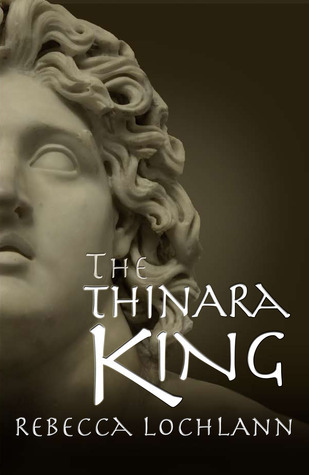
  • The Thinara King by Rebecca Lochlann – Historical Fiction/Fantasy/Mythology

    The Thinara King by Rebecca Lochlann – Historical Fiction/Fantasy/Mythology

    There’s only sorrow for Aridela, the heiress to the throne of Kapthor when she learns her heart is not hers to give freely and every decision she makes concerning her love life brings about dire consequences for her people in Rebecca Lochlann’s The Thinara King, Book 2 of The Child of the Erinyes series.

    When Aridela meets Chrysaleon, a Greek “barbarian” by the standards of her people, she falls in love. Chrysaleon, young, bold and brash, is as smitten with Aridela as she is with him, but he has been promised in marriage to her sister Iphiboë, who is bland and boring by comparison.

    The marriage is all important, though, as it will consolidate his father’s power, linking his lineage with that of the Aridela’s culture, a culture that reveres the power and station of women. Kapthor is ruled by Aridela’s mother Queen Helice and guided by the powerful female oracle Themiste.

    Aridela and Chrysaleon cannot help but consummate their forbidden love, yet as they do, a volcano erupts, devastating the island and killing many of Aridela’s relatives and friends. The volcano, seen as goddess Athene’s handiwork, is blamed on Chrysaleon, who has been identified by Themiste as the “lion” or the Thinara King, foretold in an ancient prophecy linking him to Aridela and a mysterious, unidentified bull figure. The prophecy states that this triad has the power to restore or destroy the world.

    Rebecca Lochlann skillfully immerses the reader in a semi-fictional world of ancient rites and conflicts where characters live, die, and are reborn throughout her series The Child of the Erinyes.

    The product of many years of study and fascination with the era and the mythology, The Thinara King establishes Lochlann’s connection with the novel’s setting and genre by smoothly combining many convincing elements: the handsome hero determined to win the strong-minded fair lady, the dark anti-hero plotting on the sidelines, the wise demi-goddess who keeps her own counsel and manipulates outcomes behind the scenes, the grisly battles fought at close range, and the spectacular festivals marking the passing of the years.

    Lochlann’s over-arching narrative, switching from character to character, is deftly composed, making for many surprises without deviating from the backdrop with its elaborate history-rich trappings.

    A tale of ancient kingdoms, of love promised and lost, heralded victory and hopeless defeat is the second novel in her much-acclaimed series, The Child of the Erinyes – another masterfully written historical fiction novel of Ancient Greece from Rebecca Lochlann.

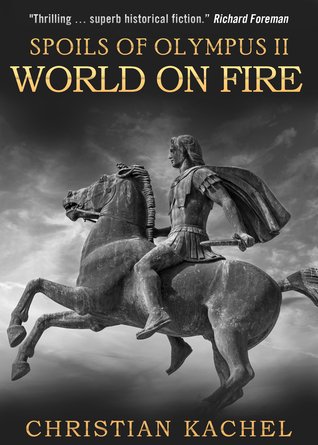
  • Spoils of Olympus II: World on Fire by Christian Kachel – Historical Fiction/War & Military/Post-Alexandrian Greece

    Spoils of Olympus II: World on Fire by Christian Kachel – Historical Fiction/War & Military/Post-Alexandrian Greece

    Spy-craft, betrayals, and bloody battles infuse this historical novel of Ancient Greece in the chaotic years following the death of Alexander the Great.

    World on Fire is the second novel in a complex historical saga narrated by Andrikos, a young man who started his fighting career on the streets of his hometown of Illandra. As a member of the underground cult, The King’s Hand, Andrikos and his traveling companion Vettias dedicate themselves to keeping Alexander’s lineage on the throne of Macedon. The pair is a study in contrasts: Vettias, the elder, is the more hardened soldier who teaches Andrikos the arts of espionage; while Andrikos maintains a youthful idealism that is sometimes at odds with the grim necessities of war.

    The lessons Andrikos learns from Vettias offer gripping scenes of surveillance, stealth, and expeditious killings. Together they must help restore Alexander’s dynasty, often posing as enemy operatives. This infiltration creates a multi-layered plot with far reaching implications on and off the battlefield.

    In addition to spy-craft and bloodletting, writer Christian Kachel makes room and time to establish Andrikos as a loyal, home-loving son whom his parents trust enough to guard Alexander’s widow Rhoxane and her young son, Alexander IV, within their household despite the obvious dangers.

    The arts of war form a central element of World on Fire, with vivid descriptions of ancient weaponry and hand-to-hand combat. To our delight, Kachel does not neglect the feminine, as he presents two powerful young women, both wise beyond their years: the teenage Queen of Macedon, Adea, who becomes a willing player in the plots against the enemies of Vettias and Andrikos; and Mara, Andrikos’ first love, to whom he made prior promises that he is now able to keep.

    By the end of ten years of travels and intrigues, Vettias and Andrikos will see the world differently and will have played their part in making positive changes.

    Kachel has staged this epic skillfully. Placing Andrikos as the narrator allows the reader to see many political and military viewpoints held by others through a young, albeit, sometimes naïve perception, and to enjoy periods of respite from war and treachery in scenes of romance, home life, and some moments of stolen passion.

    Kachel, three times deployed to fight in Afghanistan and Iraq, is a student of warfare who has chosen to concentrate his novelistic mastery on a sometimes neglected period of history—the aftermath of the death of Alexander the Great and resulting internecine struggles for dominance in the middle eastern region. Historians disagree on many details of this troubled era, giving Kachel free rein to explore possibilities clearly grounded in fact and research, but also informed by the author’s substantial imaginative gifts.

    5 Star Best Book Chanticleer Reviews round silver sticker

    “A master tactician and student of war, Christian Kachel brings history to life in The Spoils of War II: World on Fire; an engaging foray into the aftermath of Alexander the Great.” – Chanticleer Reviews

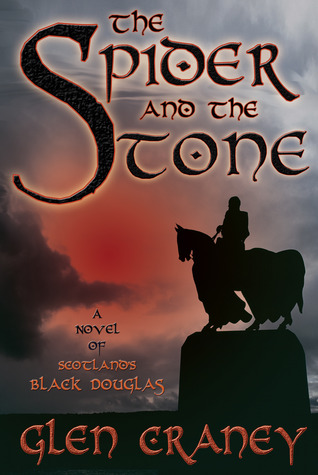
  • The Spider and the Stone: A Novel of Scotland’s Black Douglas by Glen Craney – Historical Fiction/Scottish War of Independence

    The Spider and the Stone: A Novel of Scotland’s Black Douglas by Glen Craney – Historical Fiction/Scottish War of Independence

    Steeped in the early struggles for Scottish independence, Glen Craney’s The Spider and the Stone combines fact, folklore, and imagination to recreate the life of one of the country’s most storied heroes, James Douglas.

    As a young teenager, James was confronted with the barbaric cruelty of the English occupiers. King Edward, known as Longshanks, would stop at nothing to quell Scottish rebellion—humiliating, torturing, and slaughtering innocent civilians along with Scottish combatants striving for the freedom and the right to rule themselves.

    Just as he begins to grapple with the reality of his country’s plight, he meets and falls in love with a girl named Isabelle Macduff and determines to win her, despite the fact that she is promised in marriage to a rival of the Douglas clan.

    The book opens in the middle of scenes depicting the exploits 0f William Wallace – Braveheart, followed by a heartbreaking loss to Longshanks at Falkirk, ending with the gruesome murder of Wallace.

    Cue the return of James, who is back from France where he learned the art of war from the Knights Templar and is ready to fight. He and Robert the Bruce step into the breach and continue the assault on the English invaders.This is the stuff legends are made of, and Glen Craney does an excellent job bringing the tale to life. Written in lush prose with battle’s gore informed by the historical record and a scattering of erotic scenes with the decorum appropriate to the times, Craney’s offering keeps the reader solidly immersed in the late 1300s-early 1400s. He deftly crafts the coldness of the castles and the warmth of campfires sprinkled with colloquialisms redolent of the time and place.

    Craney admits having taken some liberties with the known facts, which are few, about the Scottish Wars of Independence and the major players; he has matched Isabelle with James, for example, though others have postulated an affair between her and The Bruce.

    The book’s title references two important elements of Scottish lore: the Stone of Scone, a necessity for the crowning of monarchs and sometimes said to be the Biblical Jacob’s Pillow; and the “spider” whose industry and apparent refusal to stop spinning her web no matter what obstacles she encountered so impressed and inspired Bruce (and in this version, James also) while in captivity.

    Craney’s attention to detail in both high concepts and simple conversations, make history come alive.

    “Cinematically enthralling and historically compelling, Glen Craney’s The Spider and the Stone is a must read for lovers of James Douglas, the fight for Scottish Independence, Braveheart, or Robert the Bruce.” – Chanticleer Reviews

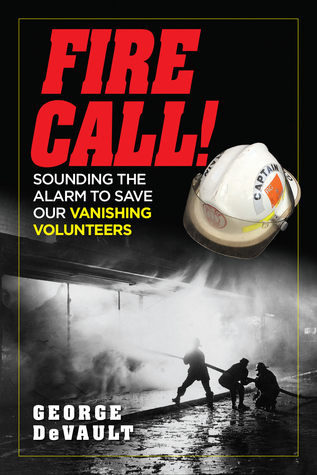
  • Fire Call! Sounding the Alarm to Save Our Vanishing Volunteers by George De Vault – Memoir/Fire Science

    Fire Call! Sounding the Alarm to Save Our Vanishing Volunteers by George De Vault – Memoir/Fire Science

    In his first job as a newspaper reporter, DeVault attended many emergencies – and firefighters were always on the scene. Gradually he discovered that the vast majority of America’s firefighters are volunteers, often leaving their regular jobs by prearrangement or rushing out from home in the middle of the night to respond to every conceivable crisis, from a simple kitchen fire to a multi-car crash to the cataclysmic events of 9-11-01.

    With the encouragement of empathetic wife Melanie, also a reporter, De Vault joined the firefighting ranks as a volunteer in Emmaus, Pennsylvania, while fully immersed in his journalistic career with Rodale Inc. He answered every call, about 5,000 over a thirty year period, no matter what else was going on in his life – even on a day when Melanie was in the hospital dealing with her own emergency.

    He describes such harrowing experiences as realizing that the blazing floor he was standing on was about to collapse, to loading corpses into body bags after the mid-air crash of two small planes, to rescuing many traumatized victims, their children, and their pets from burning homes. One of the more memorable and terrifying incidents described did not involve fire: the author was called upon to pull out a man stuck in a pond drain, battling pressure that threatened to suck him and the man he was rescuing into watery oblivion. Some events involved animals, notably the blaze in a pet store where volunteer firefighters gave mouth-to-mouth resuscitation, chest compressions, and oxygen to puppies and a chimpanzee.

    DeVault, most recently the local Fire Chief and an eco-conscious family farmer, uses this action-packed memoir to make us aware that if a fire or other disaster should strike our home or place of work, the people who rush to our rescue will almost certainly be volunteers. They will have gone through exceedingly rigorously training, including chopping a log with a 14-pound sledgehammer, carrying a fifty-pound weight 400 feet, and “wrestling a 100-pound rescue dummy out a second-floor window and down a ladder by yourself, while wearing bunker gear and an air pack.”

    Unfortunately, it has become nearly impossible to attract young people into this work that involves great personal sacrifice; many of our first responder volunteers now are over 50.  DeVault hits us with the facts: every 23 seconds, there’s a fire call somewhere in our country, or about 1.6 million calls a year. He lists at least 16 jobs that we can perform voluntarily to assist the firefighters in their valiant and valuable efforts, from grant writer to cook to performing the duties of a chaplain. Or, he suggests, “write a bigger check the next time your fire department has a fundraising drive.”

    George DeVault is a former reporter/writer who has turned his volunteering into a full-time job and now, a one-man crusade to fire up national interest in our firefighters – who they are, what they do, and why they merit our support. Readers will be thrilled, and at times chilled, by this up-close view of the sacrifice, guts, and skill displayed on an everyday basis by volunteer firefighters who perform their duties with no thought of recognition or reward. Professionally composed, fast-paced and thought-provoking, Fire Call! has already garnered the Charles A. “Chet” Henry Fire Service Advocacy Award in recognition of the book’s important message.