Author: Barbara Bamberger Scott

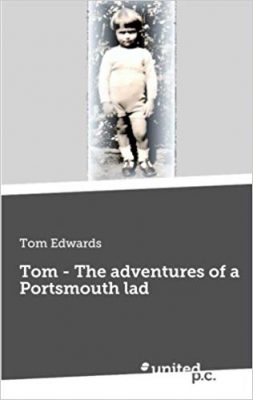
  • TOM – The ADVENTURES of a PORTSMOUTH LAD by Tom Edwards – Memoir, Action/Adventure, Coming of Age

    TOM – The ADVENTURES of a PORTSMOUTH LAD by Tom Edwards – Memoir, Action/Adventure, Coming of Age

    Tom Edwards grew up rough and never lost his yen for travel and new adventures, as shown in this wide-ranging portrait that spans numerous years and continents.

    The author depicts himself through the eyes of an omniscient observer, growing up as a sailor’s son in and around the city of Portsmouth, England during the Depression era. Many scenes of his childhood speak to the poverty in which the family, his mother, sister, and brother, lived in as they rarely saw the father/husband who was mostly away at sea.

    But the boy never realized they were poor until one Christmas when the better-off folk visited his neighborhood with boxes of fruit, cakes, and toys for the children. Vivid historical touches including everything from famous buildings, castles, and ships in the harbor are wrapped around childhood memories of the flannel vests slaked in camphor that children were forced to wear all winter, to the sports cards sold with cigarettes that children prized, saved, and fought over. Yet despite an absent father and a mother who seemed happy to have the old man gone, Tom chose the seafaring life.

    Born in 1929, Tom was accepted at Portsmouth Technical High School, and as the war was ending, he joined the Royal Navy, beginning his roving lifestyle. He was often punished in his training stint for being a daring young man, but he also managed to compete in various sports – swimming, boating, sailing, and once – but only once, boxing.

    Stationed in Ireland, he was then transferred to Malta, his first experience of a truly foreign place. That was followed by years in various countries of southern Africa and finally Australia. In those years he was married, twice, had daughters whom he loved but rarely saw as his wife kept returning to England, while he couldn’t bear the boredom of home for long.

    He mined for semi-precious gems, learned to fly gliders, played water polo, started a camera magazine, headed a rescue team, battled and won a fight against tuberculosis, worked in a dynamite factory, sailed around the world, and was shipwrecked three times, became a surveyor, a painter and ran art groups in three countries, and immigrated to Australia when independence movements in Africa began to make existence difficult for the former English colonizers.

    Edwards is known for his writing, his first book compellingly titled If I Should Die, composed after he joined an anti-terrorist unit in Rhodesia. His prose is colorful and well organized, and his interjections of significant events in the world add a stirring background – the abdication of Edward VIII, the coronation of Elizabeth II, the war and all its terrors told both by the history book and from the observant memory of a growing boy in a critical seaport city. Small details overlap the larger scheme of things, including a great deal of humor surrounding young men’s constant longing for, and occasional securing of, female companionship. He is careful to admit his flaws, such as his weaknesses as a husband, his incurable need to seek new adventures in new climes, and his now waning physical powers after a youth and manhood of grit and occasional glory.

    Edwards has made a comfortable name for himself in several spheres and here delivers a memoir that combines the larger historical picture and a plethora of nostalgia, revealing him as both gutsy and tenderhearted.

     

  • PRAIRIE SON by Dennis M. Clausen – Early 20th-Century Orphans, Family Drama, Biographies & Memoirs

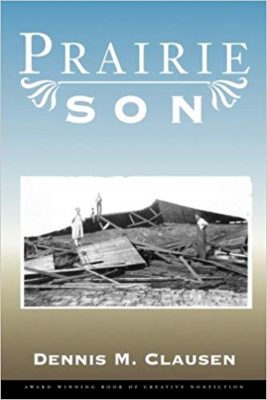
    PRAIRIE SON by Dennis M. Clausen – Early 20th-Century Orphans, Family Drama, Biographies & Memoirs

    Lloyd Augustine Clausen has but one early memory of his real mother, in which she hugs him tightly displaying a deep love for him. Everything that follows is chaos and fear. He is handed over to an orphanage and by the time he is four or five years old, Lloyd knows two things: his adoptive Pa and Ma do not love him, and his role on the farm is to shut up and do as he is told. He takes Pa’s lunch pail out to him daily and tries to stay out of Ma’s way. For her part, Ma simply ignores him unless he does even the smallest thing wrong, inciting her evil temper.

    Had it not been for the daring protection of the farm’s two dogs, Buster and Minnie, Lloyd might well have been seriously injured or even killed by his adoptive mother. For example, one day he trips and falls down, breaking some eggs. Unconcerned whether or not he is hurt, Ma attacks him with a frying pan, only to be stopped by Buster. Another time, when Pa is in town playing cards, his Ma has a mysterious visitor come to the farm. When she locks Lloyd in the cellar, a place of total darkness, Buster finds a way to get his nose into the small space and offer comfort. Buster and Minnie, in fact, behave more like parents than the ones with whom he’s stuck.

    A friendly, mostly silent farmhand stays for a while and teaches Lloyd the art of machine repair and other skills needed to tend the farm, as Pa is increasingly lackluster in that regard. When the Great Depression hits, the family is often on the verge of starvation.

    Lloyd’s bright moments come when he spends time with a fellow orphan, Delores, condemned like him to be tricked, spat on and called “bastard” by the other, un-adopted children. A wandering cowboy once offers him a ride on his horse. Gypsies make him a fishing pole. And occasionally, neighbors, seeing the boy’s plight, step in to assure that Ma and Pa treat him better.

    Despite his terrible existence, Lloyd sometimes finds inspiration in the world of nature or the random kindness of others. As Lloyd grows older, he begins to research his past and through a series of serendipitous events, begins to find the answers he seeks.

    In 1979, author Dennis Clausen learned that his father Lloyd, who had been a distant but loving figure for him, was dying of cancer. He encouraged his father to write his memoir. The old man’s words, painfully written out on a few notepads, displayed a great talent for storytelling. Those words form the basis of this luminous coming-of-age saga of sorrow upon sorrow and the will of one little boy to keep looking for a better way.

    Bleak scenes of a weeks-long blizzard, a plague quarantine, and a tornado worthy of The Wizard of Oz provide lowering drama, as if the boy’s personal woes – being socked around by Ma, belted by Pa, and almost thrashed by school children until a local bully took his side – were not severe and frustrating enough. The direct effects of the Depression and then, rumors of World War II through the tinny voice of Roosevelt on the radio, fill out the historical picture. And, happily, the book’s ending is a kind of victory for the tough, lonely fighter.

    Clausen has skillfully woven his father’s handwritten pages into a riveting story worthy of Steinbeck, a cinematic setting redolent of fundamental American community values, and a paean of hope for all orphaned children.


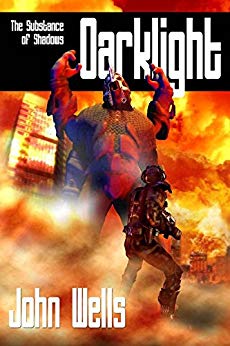
  • Darklight 1: The Substance of Shadows by John Wells – Hard SciFi, Genetic Engineering, Military SciFi

    Darklight 1: The Substance of Shadows by John Wells – Hard SciFi, Genetic Engineering, Military SciFi

    In the aftermath of the Second American Civil War, a feisty, determined genius develops a new way to explore outer space making himself and those he cares about the central target in an interplanetary war in this first-of-a-series Space Opera, Darklight 1: The Substance of Shadows by John Wells.

    Isaac “Crash” Tyson gets his nickname from refusing to give up. When faced with any problem, he just crashes on until whatever is in his way is resolved. A mathematics genius, Crash developed a new field of math, one that will open up space in such a way that earth explorers can take to the stars without any of the usual limitations. He only has to convince P-Quan, the Planetary Governor of Earth and his colleagues at the World Science Council to fund the project. They are all part of the PLAG (Planetary Government) a group of bureaucrats as crooked as they are ruthless.

    Surprisingly, P-Quan goes along with Crash’s proposal; in fact, he’s had his eyes on Crash for some time. He plans to acquire all of Crash’s test data and develop the technology for the exclusive use of the PLAG. Of course, if Crash has a problem with this, P-Quan has the power and the position to crush Crash, permanently.

    Crash is a genius all right, one who’s smart enough to be suspicious of P-Quan’s motivations. He takes on three assistants: the beautiful Lynn, in charge of operations, Nessi, the tech guy, and a hard-boiled policeman, DP, who is even more suspicious than his boss, and utterly loyal. After receiving the funding necessary, Crash gets busy and constructs the Spatial Exclusion Wave Generator (SEG) in a short time.

    The first test of the SEG successfully canceled the spatial field’s interaction with matter and energy. To put it in layman’s terms, the SEG created a Space Hole, an enormous glass-covered hole. So formidable is its power that Nessi pronounces that Shiva, the Hindu god of destruction, has been set loose. The good news: SEG works, creating the space hole Crash predicted. The bad news: before Crash can do anything more, PLAG rushes in for the kill.

    And in a distant galactic outpost, the drama on Earth is being monitored by the Cren Empire who have their own reasons for destroying Crash’s mission.

    The Substance of Shadows is a classic sci-fi of Operatic proportions, positing futuristic technologies, armaments, deep thought, and hidden dimensions. It links a home planet under threat to a small intrepid group of rebels who dare to go beyond known limits, and in doing so, realize that the universe is far more complex and dangerous than any of them could have imagined.

    At the offset, Wells paints a compelling, if bleak, scenario of a Second American Civil War predicated on some current political ideologies. The newly divided country will soon need what Crash can supply in the form of energy resources. In Crash, Wells offers an empathic leader for the Earthlings and other interstellar beings who will need guidance after the dust settles.

    Our review of Darksight II: Conflagaration can be read and enjoyed here.


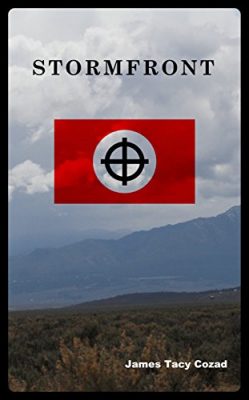
  • STORMFRONT by James Tacy Cozad – Thriller & Suspense, Mystery, Domestic Terrorism

    STORMFRONT by James Tacy Cozad – Thriller & Suspense, Mystery, Domestic Terrorism

    The billionaire and founder of Gallagher Pharmaceuticals is a bad man. His stratagem: targeted biological warfare on specific groups of people worldwide. His followers, the chosen precious few, will be immune and survive. If the plan succeeds, Gallagher will be their leader. Can this supremacist leader compel his followers to execute an evil plan of worldwide, biological murder?

    Meet a retired serviceman and current rancher Finn Dalton. After the trauma he experienced in his war-time service, all he yearns for now is a peaceful life, one where he can hunt rabbits and other game animals with his buddy and fellow veteran, Sam, and their beloved band of dogs. And maybe marry his girlfriend, Kiera Utsi. This peaceful existence is threatened one day during a hunt when Finn and Sam discover a mutilated corpse out in the New Mexican desert. Needless to say, Finn believes it to be a very suspicious death. The men alert authorities, but Finn is far from satisfied with the direction or progression of the investigation.

    Tension and danger mount when Finn and Kiera follow perilous leads down trails fraught with unbelievable risk, uncovering more and more about the murder and how it is connected with Gallagher Pharmaceuticals. Their questions always lead back to the man in charge: Gordon Gallagher. But who will believe their theories and accusations? And now someone is trying to kill them.

    The clock is ticking as to when the deadly virus will be let loose, and neither Finn nor Keira knows if they will be immune. Moreover, they’re not sure who they can confide in or join forces with. As the crisis builds, they risk fatal mistakes. Will they have to infiltrate the compound itself? Stormfront is approaching. And time is running out.

    Author, James Tacy Cozad knows the territory in which his characters live, and his descriptions of the setting vividly add to the dynamic of the fast-paced plot. His knowledge of the beautiful and dangerous scenery combined with a well-researched understanding of weaponry brings to life a character that is “James Bond-like” in scope and capabilities, making this a rather fun, if not frightening, read.

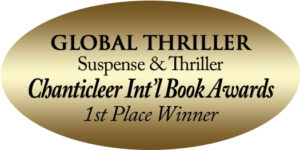
    James Tacy Cozad won 1st Place in the 2017 CIBAs for Global Thrillers category for Stormfront.

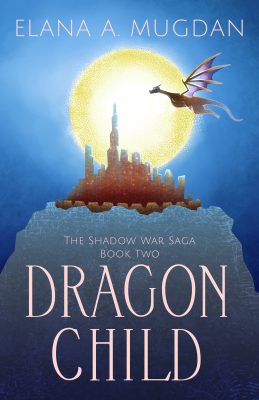
  • DRAGON CHILD, Book 2 of The Shadow War Saga by Elana A. Mugdan – Epic Fantasy, Myths & Legends, Y/A

    DRAGON CHILD, Book 2 of The Shadow War Saga by Elana A. Mugdan – Epic Fantasy, Myths & Legends, Y/A

    A young woman with more power than she realizes must confront the greatest evil in her cosmos in this richly conceived fantasy by Elana A. Mugdan.

    In Book I of The Shadow War Saga, Dragon Speaker, we met Keriya, a teenage girl who went from being “nameless” by nature of her low social status to being given a new name of high honor – Keriya Soulstar. Book II begins as she and her friends Roxanne and Fletcher and her faithful dragon Thorion are relaxing in a Galantrian infirmary. With the vile shadow demon, Necrovar, destroyed, Keriya and Thorion can play and rest while Roxanne recuperates from her injuries.

    Keriya, in fact, has never had it so good. She now has fast friends and allies, is regarded with great adoration by ordinary folk who see her as a magic-wielding warrior and has gained the respect she did not have in her early life. And to make matters even sweeter, there is a handsome young man, Max, who wants to get to know her a little more.

    Imagine the surprise when she is summoned to be tried for treason.

    Guided with telepathic messages from Thorion, Keriya answers her accusers and is acquitted, putting her archenemy General Tanthflame in the hot seat. It stands to reason, if she has told the truth, he must be the traitor. Now she must go to Noryk to meet with Lady Adelphia to testify in Tanthflame’s trial.

    The night before her departure, Keriya has a vision. In it, she meets with Necrovar and the great spirit Shivnath from whom she derived her ability to do battle with the hateful shadow beast. Her vision clearly shows that although Necrovar is weakened, he is by no means eradicated. Keriya must abandon her peaceful niche and join the struggle against this evil once again.

    Is she equal to that task? And where is her magic sword? Before her questions can be answered, Thorion is attacked and wounded, and flees, leaving no doubt where Keriya’s duty lies.

    Author and filmmaker Mugdan has devoted much of her time since adolescence to constructing this grand tale of dragons, demons and a heroine who scarcely knows or understands her own powers but acts with faith that she can conquer the dark forces besetting her world.

    Mugdan’s writing is charming and confident, revealing an expansive and delightful use of language. Also tucked neatly in this volume, Mugdan introduces Valerion of the Unknown Lands who has sworn to destroy Necrovar with a mystical spell and an enchanted sword. A possible love interest? Readers may expect to know more of him and his connection to Keriya in Book III, already planned for release.


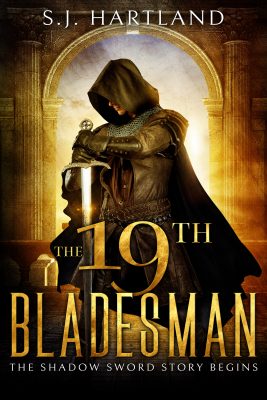
  • The 19th BLADESMAN, Book 1 of the Shadow Sword Series by S. J. Hartland – Epic Fantasy, Sword and Sorcery, Action/Adventure

    The 19th BLADESMAN, Book 1 of the Shadow Sword Series by S. J. Hartland – Epic Fantasy, Sword and Sorcery, Action/Adventure

    A dark, medieval fantasy with a hopeful message from debut author, S. J. Hartland will draw attention for its atmospheric settings, evil twists, and righteous triumphs.

    Lord Vraymorg is a seemingly ageless warrior whose duty is to train young bladesmen for their heavy task. These specially selected assassins, called bonded warriors, have the onerous responsibility of killing ghouls – and only ghouls – and always running the risk of being attacked. Being attacked by ghouls means certain death. And dying by ghoul is something everyone naturally wants to avoid. But something is different with Kaell, Vraymorg’s latest charge. In fact, the 19th bladesman carries a special destiny, one directed by the gods. Kaell is bright, defiant, and, though Vraymorg cannot bear to think of it, lovable, like a son. This fatherly love is the crux of the warrior lord’s struggle. How can he put this young man into harm’s way? For it is a death sentence to be trained as a warrior and pick up arms against the ghouls. Vraymorg doesn’t have it easy, and we get it.

    Told from multiple points of view, Hartland’s story offers strong, masculine heroes like Kaell and Vraymorg, and intriguing feminine heroes like Rozenn, whose passion is matched by her infinite knowledge of Vraymorg’s past, and Azenor, a seer bound to Kaell in death. Even Archanin, the eerie, bloodthirsty leader of the ghouls, has his say, as he urges his band to spare Kaell’s life so that he can become one of them, a fate, perhaps, worse than death. When word comes that Kaell has died, leaving only his sword, Rozenn tells Vraymorg that the sword is a mysterious instrument with magical powers, powers that may save the lost boy, if wielded by someone who cares more for him than anyone else.

    This is Hartland’s debut novel. It is a prodigious undertaking, notable for its length (more than 600 pages), and is worth the time spent, as it becomes an experience, a journey into an ancient, fabled world that beckons with echoes of Lord of the Rings and Game of Thrones. Journalist Hartland has fleshed out each of the many characters and given them their place in this complex saga – and, one imagines, in the broadening tale to come, since we are told she has a sequel in the works. She has a gift for prose, proven on nearly every page.

    At its heart, The 19th Bladesman examines the love of a father for an adoptive student/son he refuses to allow himself to care about, suspecting that the young man’s fate will be tragic and that his demise will come at his teacher’s hand. The mystery of Vraymorg’s relationship with Kaell and of Kaell’s indomitable will to please his mentor are the twin forces that buoy Hartland’s grandly conceived work and keep the constantly burgeoning plot afloat.

  • Disowned – The Red-Heeled Rebels Series Novel One by Tikiri – Women’s Adventure, Thriller/Suspense, International Crime

    Disowned – The Red-Heeled Rebels Series Novel One by Tikiri – Women’s Adventure, Thriller/Suspense, International Crime

    Spanning three continents and taking on crucial issues of child marriage and human trafficking, Disowned features a brave teen heroine struggling against international criminality with nothing but her wits and grit.

    Asha, born in Tanzania, is still a child when her parents are tragically killed while on a family safari in Kenya. Within a short period of time she is transported to Goa, India, to live with relatives she has never met. Her grandmother is an angry, culture-bound crone, her aunt and cousin living, as Asha now must, under the old woman’s seemingly heartless sway.

    Not yet knowing the language or the social manners of her new homeland, Asha wears her best red shoes to school. She is beaten by the schoolmistress and taunted by classmates until she finds her saving grace—cooking. Beginning with lessons learned as a child and kitchen lore picked up from her new family, she starts her own business selling cupcakes, gaining grudging respect from classmates.

    When her grandmother decides to sell her off to an old man who already has a wife and has no qualms about claiming his new child-bride by rape, Asha realizes she must escape — from grandmother, from Goa, and indeed from this horrible marriage.

    The road is open to a new life in Canada, but there she will find she has been sold again, this time as the virtual slave of a demented old woman whose bizarre activities soon put Asha on the run again, this time with a new friend and fellow cook named Katy. The dangers are palpable, but the girls are determined to make a new life for themselves – anywhere and by any means.

    Tikiri is an entrepreneurial, adventurous self-described “recovering nomad,” and is the author of a series of Non-Fiction books in support of ambitious young women. The Rebel Journal Workbooks touch on subjects of finding your passion and making plans to reach your goal. One senses she has either personally observed or studiously researched the settings she so vividly describes – from the African veldt to the hovels of backstreet Goa.

    Tikiri’s central character, Asha, is naïve but definitely not lacking in good sense or in empathy for the suffering she sees around her. Knowing little about men, she nonetheless intuits that her prospective husband would be a brute and her life in Goa an endless grind. She knows she’s made for better things and desires to help her ailing aunt and culturally trapped cousin if she can. Tikiri’s writing is skillful and creative; her storyline never flags. As she leads from twist to turn in the well-constructed plot, her reader’s attention will stay riveted on Asha’s continually escalating challenges. Female readers (from older teens to adults) will find kinship with the girls in the story and look forward to the next installment of Asha’s adventures.

    A tale that sounds too real for comfort at times, Disowned, is the first book in the Red-Heeled Rebels series and presents a disturbing view of powerless, exploited women and girls in third-world countries through the hopeful eyes of a determined young woman trying to beat the odds.


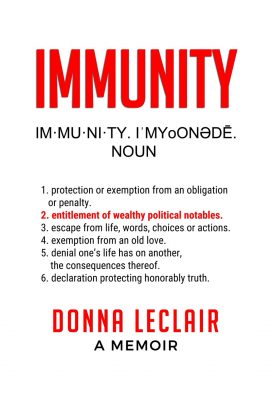
  • IMMUNITY: Entitlement of Wealthy Political Notables by Donna LeClair – Biography, White Collar Crime, Child Abuse

    IMMUNITY: Entitlement of Wealthy Political Notables by Donna LeClair – Biography, White Collar Crime, Child Abuse

    Immunity, the latest offering by award-winning author Donna LeClair, recounts one woman’s struggles to maintain her sanity during a long nightmarish sojourn among the wealthy and powerful.
    Emma, a sixty-something Midwesterner, signs on as a personal assistant to the family of David and Pauline Gram and their four children, in a far off land that Emma comes to think of as “Hollow Wood.” She is told that anything the family does is okay and strictly confidential. On Day One Emma watches as Pauline consumes an illegal substance and tosses her a few hundred-dollar bills to purchase enough pasteurized goat’s milk for Pauline’s bathing pool. When she meets Luke, the only male heir to the Gram fortune (his twin having been forcibly aborted to guarantee he’d have no competition), she sees that he is cute, chipper and totally unaware of anyone’s needs but his own. Her first car ride with David is terrifying as he drives in the emergency lane at top speed and when stopped by the highway patrol, makes it clear that he can’t be given a ticket. In the Grams’ world, it’s not so much who you know but who you own.

    Trying to control her reactions to this selfish splendor, Emma discovers aspects of life with the Grams that are even worse than she could have possibly imagined. Pauline’s vast wardrobe never includes any outfit worn more than twice. David makes connubial visits to his wife, whom he keeps looking like a teenager by paying for the magic of the surgeon’s knife, on a strict schedule. Both parents snort, smoke and sip the best addictive substances, and when Emma hears the precise nature of their drug-related activities, she fears for her own safety. A romance keeps her temporarily soothed, but Emma will soon have to choose between her caring for the family and her culpability as a witness to their many nefarious dealings.

    LeClair is a prodigious wordsmith who uses the writing craft to good effect. Whether it is a drug-induced temper flare-up, the destruction of a motel room, or a brief erotic interlude, the author weaves a rich tapestry. She has made fiction, it seems, of a painfully recalled set of reminiscences, changing the names to protect the innocent and avoid the wrath of the guilty. She examines the word “immunity” in its many guises:  protection from penalty, entitlement of the very wealthy and well-connected, exemption from “an old love,” denial of responsibility, and “declaration protecting honorably truth.”

    Through Emma’s eyes, we see all of these definitions playing out. By stepping into daily life as the Gram family understands it, Emma must make sacrifices that she may later regret. Thankfully, LeClair has ensured an ending that will give Emma the new chance she deserves and take away some of the weapons of power wielded by the Grams and their ilk.

    Immunity won First Place in the 2017 CIBAs, in the JOURNEY AWARDS for narrative nonfiction.


  • The SUGAR MERCHANT by James Hutson-Wiley – Medieval, Historical Fiction, Spy & Church

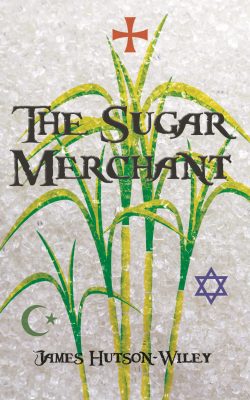
    The SUGAR MERCHANT by James Hutson-Wiley – Medieval, Historical Fiction, Spy & Church

    Narrated by a boy who grows up in a monastery and is trained to be a spy, The Sugar Merchant is set in the late 11th Century when the Great Crusades were on the verge of erupting in Europe and the Middle East.

    When Thomas is forced to flee after rebels attack his family, he is finally discovered, ragged and starving, by a giant of a man named Leofric. Taken under the wing of the monks at Eynsham Abbey, Thomas is educated while accepting the strict discipline of the Benedictine order. In his late teens, he is surprised and disappointed to learn he will not join the Order but will be employed as an agent and spy. His task will be to find, secretly copy and send back manuscripts written by Islamic scholars. These documents contain knowledge that the Catholic Church needs to maintain its control.

    Accompanied by Leofric, who taught him the arts of war based on his own checkered past as a mercenary, Thomas travels to Spain, to the city of Granada (called Gharnatah at the time). His travels will take him through the known Catholic realms and beyond, and, paradoxically, afford him the chance to meet, befriend and be aided in the abbey’s mission by good men of other faiths, both Muslim and Jew. As a cover for his work for Eynsham, he adopts a persona as a merchant of sukkar, or sugar, a commodity that will soon have excellent trading value. When a beautiful Muslim girl crosses his path, all that he has been taught will come into question as he strives to do what he believes to be right.

    James Hutson-Wiley writes about places he knows, having traveled in the Near East and Europe in his career in international finance. And he has obviously done extensive and intensive historical research to compose this multi-layered story. The plot, and Thomas’s peregrinations through it, encompasses subjects as vast and diversified as the burgeoning sugar trade to the hierarchy of the Catholic Church.

    The author paints a vivid picture of such ancient places as Lundenburh (London), Al Mariya (Almeria) and Granada. But he has also created an empathetic hero in the young Thomas who, without the burden of bias though mindful of his moral duty, is able to see beyond religious differences and choose genuine friendships with people of other beliefs.

    The Sugar Merchant combines medieval lore with adventures on land and sea, stirring romance, arcane information about daily life in Europe in with the time frame, and all-encompassing religious tolerance that has significance for today’s world.


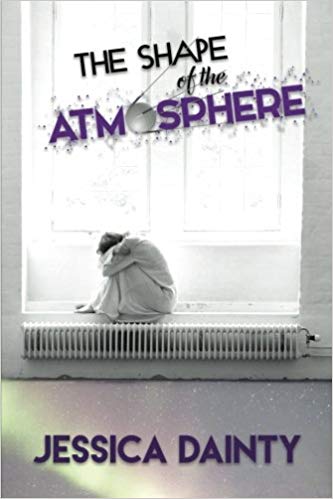
  • The SHAPE of the ATMOSPHERE by Jessica Dainty – Literary, Psychology, Women’s Fiction

    The SHAPE of the ATMOSPHERE by Jessica Dainty – Literary, Psychology, Women’s Fiction


    Jessica Dainty’s, The Shape of the Atmosphere is remarkable for its startling realism, its gritty young heroine, and its hopeful conclusion.

    When Gertie’s father and sister are killed in an accident on Gertie’s sixteenth birthday in 1957, she is left with one cherished memory: viewing the heavens with her father on the night of the world-changing Sputnik flight.

    After the funerals, Gertie wounds herself as a way of coping with her inner anguish, after which her alcohol-addicted mother commits her to an insane asylum. Such institutions were considered modern and scientifically advanced for their time, but as author Jessica Dainty frankly depicts, Gertie’s new home is a combination prison and torture chamber. The naïve but intelligent girl soon becomes acquainted with such therapies as immersion in icy cold water and electroshock (both designed to calm the inmates), as she gradually gets to know her fellow patients, the women on Ward 2.

    Gertie observes that some of her companions are not mentally ill at all: one has a speech defect that he is struggling on his own to correct, and another has Down Syndrome. Yet such people – anyone not wanted by family – are consigned to such asylums and often get lost in its labyrinthine system. Gertie slowly gains inner resolve, becomes an advocate for her rights and those of her companions, and starts an in-house newsletter that tells their stories. But when her compositions find their way outside the walls of the asylum, she is forced to take even bolder measures.

    Dainty writes this traumatizing tale as though she’d lived it, so starkly painful and remarkably poignant are her portraits of Gertie and her fellow sufferers. She portrays the doctors as caring only up to a point, mainly interested in maintaining a full house of captive mental “cases” to keep the income rolling in. One staff member is sympathetic toward Gertie, but most are cold and indifferent, strictly allowing only 3-minute bathroom breaks, a single towel at communal shower times, and almost no time spent unmonitored.

    Treatments such as electroshock (Electro Convulsive Therapy, ECT) are performed differently today for the treatment of severe depression, treatment resistant depression, severe mania, catatonia, and agitation and aggression in dementia patients (Mayo Clinic: https://www.mayoclinic.org/tests-procedures/electroconvulsive-therapy/about/pac-20393894), for example. But today, this treatment is done under general anesthesia and at reduced levels. This was not the case in the 1950s or in Dainty’s harrowing novel. ECT was conducted without any form of anesthesia and often without patient’s consent.

    Reminiscent of the less enlightened times also is the blatantly denigrating attitude shown towards people of color and other minorities. The author’s descriptions of daily life in a mental institution of the 1950s are filled with scenes of mistreatment tantamount to torture. But many readers will find the story inspiring, especially as Gertie, sustained by images of space travel, finds her own stars to aspire to and reaches out to help others. Debut novelist Dainty is a high school teacher with many points of contact with the teens she hopes to engage with this evocative coming-of-age saga.

    The Shape of Atmosphere won First Place in the 2022 Goethe Book Awards for Post-1750s Historical Fiction.