Author: Barbara Bamberger Scott

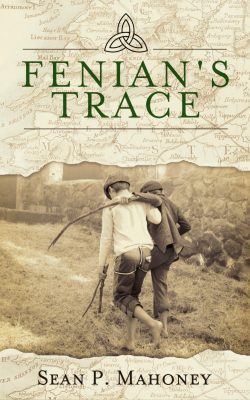
  • FENIAN’S TRACE by Sean P. Mahoney – Historical Fiction, British & Irish Literary Fiction, Irish Historical Fiction

    FENIAN’S TRACE by Sean P. Mahoney – Historical Fiction, British & Irish Literary Fiction, Irish Historical Fiction

    Rory McCabe and Conor O’Neill are hard-working 12-year-olds, whose exploits and progress are narrated by the namesake of Clancy’s Pub who’s taken a liking to them. At times, he rewards the boys’ efforts with tales of their shared Irish heritage, its heroes and its glories. The boys have very different personalities, as Clancy discerns from their reactions to his lore. Rory is outraged as he hears of Ireland’s treatment by the British, while Conor accepts the information more quietly, studiously.

    The two boys will soon meet a beautiful girl, Maria, the daughter of a well-to-do neighbor secretly aligned with a revolutionary resistance movement. Both will fall in love, but of the two, Rory will be the more open about his interest, while Conor will hold back, respectful but clearly smitten.

    When the deep divide between Ireland and its oppressors begins to heat up, the boys, older now and more independent, again respond differently. Rory wants to join in and even die, if need be, for freedom, while Conor takes a more practical path. Then circumstances force both of them to the test, to demonstrate their deepest loyalties.

    Author Sean P. Mahoney has won a prestigious Nicholl Fellowship for his screenplay version of Fenian’s Trace, which he subsequently adapted to the novelThe story focuses on the Easter Rising of 1916, when Irish patriots rose up, incensed by fighting alongside the British in World War I, while Britain continued the suppression of Irish rights. It is into this hotbed of revolutionary fervor that Rory and Conor, along with many others, are swept up.

    Mahoney peppers his narrative with atmospheric touches, including many Irish words and speech cadences (captured wonderfully in the audiobook narration of Liam Carney) along with the fabled legacy of Fenian’s Trace, a patriot’s gravesite. It is on those grounds that the boys establish their chosen fortress, with significant consequences.

    This wide-ranging panorama is a rich mix of folklore and fact, heroism during warfare, politics, and a star-crossed youthful love affair that will take on increasingly deeper meaning and, in the end, call for the ultimate sacrifice. Fenian’s Trace will appeal to readers across several genres, and as one might expect from Mahoney’s success in screenwriting, readers will delight in this colorful tale that begs for a cinematic version.

    Fenian’s Trace won 1st Place in the 2017 Goethe Awards for Historical Fiction (post-1750s).



  • GETTING TRUMP – How the Media is Hurting Itself by Chasing the Donald by Charles Davies – Political Parties, Media & Internet in Politics (Books), Elections

    GETTING TRUMP – How the Media is Hurting Itself by Chasing the Donald by Charles Davies – Political Parties, Media & Internet in Politics (Books), Elections

    Charles Davies, an African-British journalist, offers a fresh, outsider’s view of the American President and his on-going battles with mainstream media.

    Donald Trump was not a typical political candidate when he ran for the US presidency in 2015. As Davies points out, few thought he would become the nominee, and many considered his attempt to succeed in politics to be a joke. However, when Mr. Trump won the election, the media spun in disbelief. By attacking his every move publicly, the liberal press played into the President’s hands as he quickly took to social media; much to the admiration of his followers and the frustration of his foes.

    Davies observes the notable contrast between Trump and his predecessor: Obama was well-spoken and discreet but kept news sources on a strict rein; where tough-tweeting Trump is tirelessly open-mouthed in his battle with the media, pursuing an “anything goes” attitude. Yet Trump’s accomplishments while in office have often been ignored or downplayed by the newsmakers.

    All media sources have their own bias, of course, but the campaign to destroy Mr. Trump has been launched mostly from the American mainstream, liberal press. Everything Trump says in whatever forum is quickly picked apart for evidence of some “ism” – sexism, racism, and so on. Many examples are given of the President’s actions and policies and the corresponding reactive negativity expressed in the media. Though advised during his campaign to become “more presidential,” Trump persisted in being “brash and blunt.” Those who support him like him that way, and now enjoy seeing him tweeting out his feelings and talking tough to reporters in person.

    This is a fact-dense treatise with many supporting resources. Davies has clearly made an intensive study of the words and deeds of the President and the media forces that have gathered against him. Following suit, the author reveals the many ways that even an innocuous event may be misreported. When Trump moved the Martin Luther King bust in the Oval Office, for example, it was reported by a media outlet that the statue had been removed entirely.

    The most contentious, and longest-lived fake news, according to Davies, concerns the Russia probe. For several years, the Special Counsel and his team conducted their investigation with no collusion charges actually having been brought to light.

    Although Davies recognizes that Trump is known for his straight talk and his disrespect for the hypercritical mainstream media, he suggests that both sides could strive for improvement. Trump should focus on his policies and simply ignore the media, so that, “like school bullies,” they will grow discouraged and move on. The media, for its part, could straightforwardly report on those policies, demonstrating a lack of bias by giving credit where it is due, “reporting facts as fairly as possible…and providing good quality opinion, clearly labeled as such.”

    Those who read Davies’ well-researched work will learn a great deal about the current American political scene and Trump’s war with the media. And for those who take the time, will discover the ideas and opinions contained within the work stem from the author’s wide range of knowledge and acute attention to detail.


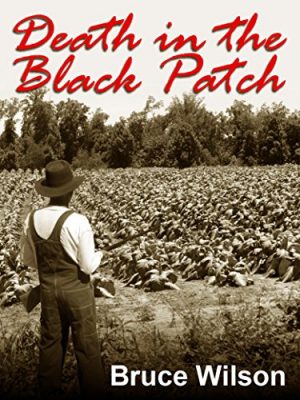
  • DEATH in the BLACK PATCH by Bruce Wilson – Historical Fiction, Tragic Plays, Family Saga

    DEATH in the BLACK PATCH by Bruce Wilson – Historical Fiction, Tragic Plays, Family Saga

    Drawing on fact, fable and inherited lore, author Bruce Wilson has created an imaginative, at times unsettling view of upheaval in southern American history and its effects on local culture, economy and family ties.

    With a large brood to care for, Wes Wilson grows tobacco in a region known as the Dark Patch, a cluster of counties in Kentucky and Tennessee. Their way of life suddenly comes under threat when the greedy reach of the newly burgeoning American Tobacco Company seeks a monopoly on the crop.

    In a powerful pushback, zealous local farmers form an Association sworn to combat ATC’s grip on their livelihood. To join the Association, or to ally with ATC, becomes Wes’s obsessive dilemma. Day by day he calls on his brother, cousin, and friends to see which way they are tending. Night by night he and his son Anthie keep vigil with firearms, lest their property becomes one of the targets of the Association, which menaces, even destroys, farms whose owners, like Wes, are still uncommitted in their loyalties. Wes’s steadfast wife Zora carries on the ceaseless round of women’s tasks, worrying and praying as she sees Wes more likely to take comfort from whiskey than from the Lord. The situation grows daily more perilous until Wes realizes that someone he believed he could trust with his secrets has turned traitor, and hell finally breaks loose.

    Author Wilson, a History Teacher by trade, has pieced his novel together from tales told by his father and a few snippets of evidence detailing his forebears’ involvement in what became known as the Black Patch Tobacco Wars of 1904-1909. Wilson’s settings and dialog are well rooted in the time and region. His ability to delve into the minds of his characters is a notable strength.

    Wes is introspective but gutsy—willing to step outside the comfort of his culture to examine all sides of the questions he faces while defending his homestead and family at any cost. Zora is the long-suffering partner who knows her husband as both a hard-drinking man with a deep well of anger and a hero who will put himself at risk to maintain his responsibilities. Their oldest boy, Anthie, is in love, and, seeking more time to pursue romance, often resents his father’s domination, while stolidly obeying him. Others add to the suspenseful plot creating depth and intrigue that will likely thrill readers.

    Wilson’s Death in the Black Patch is historical fiction at its best, melding a little- known patch of the big American picture with an exploration of one man’s willingness to fight corruption, destruction, and greed with the few weapons at his disposal—weapons that include a dogged determination to do what is right.

    Death in the Black Patch by Bruce Wilson won 1st Place in the 2017 CIBAs for American Western Fiction, the Laramie Awards.


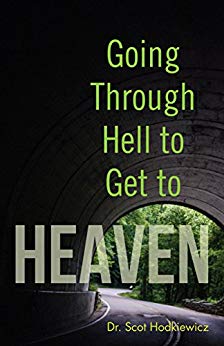
  • GOING THROUGH HELL to get to HEAVEN by Dr. Scot Hodkiewicz – Christian Personal Growth, Spiritual Growth, Christian Self-Help

    GOING THROUGH HELL to get to HEAVEN by Dr. Scot Hodkiewicz – Christian Personal Growth, Spiritual Growth, Christian Self-Help


    Scot Hodkiewicz thought he had his life planned out to the last detail, but a few seconds of horror on the highway would change everything.

    Award-winning author Hodkiewicz was a veterinarian with a beautiful wife, Mona, who participated in his practice, three children, two dogs, and a vacation cottage. They were all returning from some seasonal maintenance to that cottage one Sunday morning when a drunk driver crossed the median and rammed into their car.

    Hodkiewicz passed out almost instantly from the pain of the impact. His wife Mona was also knocked unconscious, leaving their oldest child, ten-year-old Alexa, to help the EMT team gain entry to the car. The children were miraculously the least inured; they and their mother were rushed to the nearest hospital while Scot had to be extracted with the “Jaws of Life” and air-lifted by one of the many “angels” the family encountered in this time of life-threatening peril.

    The author sustained the worst injuries from the accident, with a crushed leg that would eventually lead to dependence, for a time, on painkilling meds. As he notes: “Within a few seconds, we had gone from a normal, healthy family traveling with hundreds of other cars down the highway to a mangled mess of broken and battered bodies.” Little did they know at the time, worse was to come.

    In the ensuing weeks and months, the family became more attached to their church and spiritual practice. This link to God, in Scot’s case, almost a conversational connection, would become even more vital when they found that there was more trouble ahead.

    Their struggle with the various diagnoses, hopes, false hopes, and deceptive despair remarkably brought a new kind of shared strength. When Mona learned that the crash injuries were just the start of her struggles, she took to heart what her husband had been telling her. She began to personalize the idea that everything that happened was part of God’s plan. The accident itself, world-shattering as it was at the time, was a blessing in disguise and how God chose to reveal His true plan for them; a plan that was so much better than their own.

    Now Hodkiewicz avows that he has become more diligent in watching after sick animals and is, in general, more charitable toward his fellow humans. After their church gifted the family food until they were able to take care of their own needs, he followed their example, giving money and other assistance to those he encountered in need. Even Alexa, now in her teens, felt this impulse, involving the family in mission trips.

    Hodkiewicz writes with singular conviction and self-abnegating humor that gradually reveals his faith in God’s plans for true happiness in place of his own schemes for worldly success. His medical acumen provides the reader with a wealth of detailed information about the injuries that he and his wife sustained, and his sense of justice allows him to acknowledge that the person from whom he learned most in all this terrible trauma was the man who so carelessly drank, got behind the wheel, and nearly destroyed five lives.

    Going Through Hell to Get to Heaven is a memoir about love that moves from one person to another in the form of grace, and about a family that came to see the actions of ordinary people as angelic and divinely purposed. The ordeal and subsequent blessings that Scot and Mona have experienced can, hopefully, inspire others.

    Going Through Hell to Get to Heaven by Dr. Scot Hodkiewicz won 1st Place in the CIBA 2017 Journey Awards for Narrative Non-Fiction.


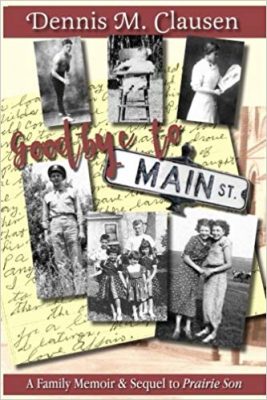
  • GOODBYE to MAIN STREET: A Family Memoir & Sequel to Prairie Son by Dennis Clausen – Memoir, Family Relationships / Saga, Multi-Generational Memoir

    Growing up in an estranged family atmosphere brings questions that beg for answers in this complex multigenerational memoir.

    Author Dennis M. Clausen recalls his early years growing up in the latter half of the last century with a detached, mostly absent father and a disabled, emotionally conflicted mother. In his tribute to small-town America, the author eloquently sketches the Minnesota village where he spent most of his youth, a place where the awnings on Main Street were opened and shut at the same time each day, and family secrets were hinted at but never discussed. Among the secrets was the enigma surrounding Clausen’s father, Lloyd, a wanderer who could never settle in one place, keep one job or stay with one woman for very long.

    There are many idyllic elements to Dennis’s upbringing. Though poor and often struggling for basic necessities, his mother and siblings got by, sometimes helped by the largesse of the community. On occasion, a visitor might sleep on the couch, and tuck nickels or dimes strategically into the sofa’s cushions, leaving Dennis and his brother, Derl, the means to go to the local movie theater. The boys also managed a paper route together.

    Reaching college age, there was no money, so Dennis stayed in his hometown at a newly created branch of the university. There he was fortunate to have as a mentor a legendary professor of American literature who recognized what the town’s librarian had noticed years before: that Dennis had great zeal for reading.

    As Clausen matured and closely observed the clan he was born into, certain flaws appeared in the pleasant but rather fuzzy picture that had been painted for him. He felt increasingly guided by hints – and finally by some handwritten memoirs from his father – to explore their shared past. In the years of Clausen’s youth, polio was a killer stalking the country and then was miraculously eliminated, but the psychological concept of “attachment disorder,” which undoubtedly afflicted Lloyd, was unheard of. In sifting through his father’s memorabilia, Clausen learned that Lloyd’s adoptive parents always regarded their charge more as free labor than loved one. In Prairie Son, Clausen has written vividly of Lloyd’s life as a mistreated orphan. The many remarkable results of that investigative work comprise the second portion of Goodbye to Main Street, complete with documentation and photographs in what can be seen as Clausen’s second vocation as the family detective.

    Clausen’s work has garnered a following among family both here and abroad who have contributed to his diligent search for his ancestry and among orphans and children of orphans who sense his empathy. There are many poignant moments in his coming-of-age account that will resonate with the experiences of an earlier generation of Americans. Perhaps this is the pull of Clausen’s memoir, the story of how one boy grew to manhood and overcame the odds, to become something other than what he was born into: from grinding poverty to successful academic.

    Now, after making numerous nostalgic visits to the old hometown and to various gravesites as part of his delving into family lore, he has come to see life as “a journey” and to respect its mysteries.

    Goodbye to Main Street won 1st Place in the CIBAs 2018 Journey Awards for Narrative Non-Fiction.

  • BLOSSOM – The WILD AMBASSADOR of TEWKSBURY by Anna Carner – Wild Animal Rescue, Memoir, Nature & Ecology

    BLOSSOM – The WILD AMBASSADOR of TEWKSBURY by Anna Carner – Wild Animal Rescue, Memoir, Nature & Ecology

    Author Anna Carner was living in a horse-friendly farming area of New Jersey in 1999, when she encountered a newborn fawn, barely breathing, near her home. The animal seemed to be communicating its need to her, and, with some experience of animal and human care, Carner set out to revive the fawn.

    She took the baby deer into her house and nursed her back to health. When she and her husband, Pino, saw the fawn curled up asleep with the family dog, the couple knew they had a new pet. Her name, Blossom, seemed suited to her sweetness and soft, gentle beauty.

    But the couple lived in an area where some people consider the deer population a problem; pests to be eliminated, hunting a necessary and enjoyable sport. As Blossom grew and began to range out with other, wilder kin, Carner realized she would have to take extreme methods to shield her from danger.

    Carner and Pino created posters with the animal’s picture and a plea not to hurt Blossom. Some neighbors were sympathetic, but others were cynical. Some even made a practice of stalking Blossom and harassing Carner. One man claimed to have the deer in captivity, demanding a ransom for her return. Carner’s efforts to protect Blossom gradually took root in the community and soon neighbors joined in; other stray deer were saved and adopted. A widespread movement was started that included the possibility of spaying by vaccination to limit the deer population without the violence of hunting.

    In writing her memoir of the years with Blossom, Carner revisits her own past and the violence she suffered as a baby at the hands of her father; injuries that required hospitalization and subsequent treatment for much of her youth. These recollections give her empathy for Blossom and other suffering creatures, and no doubt the reason she is passionate about her role as a rescuer.

    Blossom, as she so vividly describes her, was an ideal patient and pet that seemed to speak at times, and to obey commands almost like a canine. The deer’s sensitivity to her human caregivers is perhaps extraordinary or may reflect what many “wild” creatures are capable of, given a chance. The chapters are interspersed with poems by Jeanne Hamilton Troast, a fellow animal enthusiast. Through action and rich, well-crafted dialog, Carner highlights her endeavors to promote better care of all animals based on the experience she and Pino shared as they cherished their time with Blossom.

    Carner writes both for convinced animal lovers and, additionally, for those who may never have given the issues much thought, offering strong evidence of the worth of living in harmony with deer and other creatures whose perceived harmfulness has been to some extent created by our human rules and boundaries, not by their natural inclinations.

    Not just a sweet deer with a fantastic story, Blossom is the subject for the Nat’l Geographic NATURE documentary. To view a 4-minute video of Blossom’s story please click here.  Blossom was also featured in National Geographic’s Nature presentation, “The Private Life of Deer.” Please click here to see the film.


  • RAISING the BOTTOM: Making Mindful Choices in a Drinking Culture by Lisa Boucher – Alcoholism Recovery, Self-Help, Parenting & Relationships

    RAISING the BOTTOM: Making Mindful Choices in a Drinking Culture by Lisa Boucher – Alcoholism Recovery, Self-Help, Parenting & Relationships

    A mother’s wish for her daughter brought this guidebook into being; in it, author Lisa Boucher recounts her struggles and conquest of alcoholism, with specific advice for women trapped in the clutches of the disease.

    Boucher provides ample autobiographical proof of her addiction. When growing up, her mother was “drowning in booze” and many childhood memories center on her mother wrecking the car, burning the supper, or just being nonfunctional. Her father reacted by acting the tyrant, using fear tactics in hopes that he could control his wife’s drinking. By the time she was twelve, Boucher was smoking, using pot, and drinking. Her first early marriage ended in divorce.

    Most alcoholics begin slowly, perhaps drinking only on weekends, using booze as a reward, imagining the warm glow that the drink can provide and gradually spreading weekends out to include the entire week. It took Boucher years, and a dedicated, disciplined adherence to the 12 Step program, to realize that she was better off without drinking.

    Ultimately, she says, alcoholics have a thinking problem – distortion, delusion, and denial constantly crowd in, and drinking suppresses those negative feelings. Her book focuses on women with alcohol addiction, and the first story in her collection of sobriety is perhaps the most poignant: her mother’s account of her years of alcoholism and road to recovery. After a rewarding phase of sobriety and dedication to helping others, her mother began to urge Boucher to chronicle her own experiences on the path up from the bottom.

    Boucher’s work provides direct advice delivered in an accessible manner by someone who has walked the walk to recovery and is well qualified to talk the talk. She understands, for example, that some people can control their drinking, but she offers many clues as to how that perception can also be a deception. She urges a realistic approach: to quit drinking; you have to prepare yourself for the possibility of “losing friends, maybe losing your marriage, maybe losing everything.” Thus far, she has enjoyed nearly 30 years of sobriety spent in a professional and personal quest to assist other women who are carrying the burden of alcoholism. Her journey has led her to present ten stories from other women like herself, whose lives are peppered with violence, arrests, loss of jobs, partners and self-esteem, who now can proudly announce a “sobriety date” and a recovered existence.

    Boucher examines the particular problems of women in the struggle against alcoholism, though her book would have realistic outreach for men also. She writes from hard experience that will be recognizable to anyone who has flirted with or entirely fallen for the false promise of the bottle. Her book can and should be read by women in the throes of the disease as well as those who seek to counsel and assist their sisters in need.


  • The BOY WHO DANCED WITH RABBITS by J. R. Collins – U.S. Historical Fiction, Romantic Action/Adventure, Family Saga

    The BOY WHO DANCED WITH RABBITS by J. R. Collins – U.S. Historical Fiction, Romantic Action/Adventure, Family Saga

    J.R. Collins has given a voice to an ancestor, Jeb Collins, who was almost killed at birth – twice. His survival is significant for that, but also for the fact that in another part of the Georgia mountains, a Cherokee boy, Wolf, is born on the same night. The families of the two boys will meet and mix in the early days of American settlement when everyone had to struggle for survival, and such friendships were still possible.

    Jeb learns smatterings of Cherokee language, and Wolf and his kin pick up English with a sharp mountain twang from their settler neighbors. Together Jeb and Wolf explore the mystical, mountainous part of Appalachia named Cho-E-Sto-E for the prevalence of rabbits there.

    Both of the boys’ fathers remember and despise the British who killed the American rebels and betrayed the Indians who agreed to help them; and both hate all evil-doers, like the ones who kidnapped Jeb’s sister or the sneak-thieves who stole from Jeb’s family. But most of all, they will stand united against a nearby tribe that wants Wolf’s sister as a bride for their leader.

    The author grew up in the region he describes so vividly in this, his first novel, and has a sequel, the award-winning, Living Where the Rabbits Dance. The story, focusing on the boy’s view of a sometimes-dangerous world, is told in a satisfyingly recognizable dialect, using many endearing folk expressions – one of our favorites being, My heart melted like butter on a hot biscuit.

    This multilayered saga presages the time that will come when the Cherokees will be marched away on the Trail of Tears, and family connections like those depicted here will be destroyed in the name of Manifest Destiny. It is heartening to read about the few years enjoyed by such friends as Jeb and Wolf when they could roam the land together with the approval of their elders. There is a finely-honed homage paid to two religions, the Christianity of the Collins clan and the animist visionary beliefs of the Cherokees, each playing a role in Jeb’s perceptions of the world around him.

    From learning to fish to making bead bracelets from local gemstones, to seeing visions invoked by Cherokee spirits, here is a tale of a boy coming of age in a significant time and place. Collins’ book records that history, that atmosphere, with equal measures of zeal and reverence.

    The Boy Who Danced with Rabbits by J. R. Collins won First Place in the 2017 CIBAs for the Goethe Awards, Western Fiction.

  • MY CHRISTMAS ATTIC by Dennis Clausen – Heartwarming, Seasonal Literature, Family Saga

    MY CHRISTMAS ATTIC by Dennis Clausen – Heartwarming, Seasonal Literature, Family Saga

    A lonely child’s fantasy life intersects with reality in this Korean War-era tale of separation and reunion.

    At almost nine, Jake often escapes into his imagination, blotting out a couple of situations developing around him. He and his mother are hoping against hope that his father might someday return from the Korean War, and Jake cannot read. Words just seem to jumble up before his eyes, the other kids make fun of him, and worse – bullying has become routine.  These days, Jake tries every ruse to skip school until he is referred to a reading counselor who figures it out. Jake is dyslexic, as is the counselor, and this may mean he is, in fact, more intelligent than average, as well as unusually intuitive.

    Intuition begins to seep into Jake’s life as he spends time in the attic arranging the Christmas ornaments, wishing it could be “Christmas forever” for himself, and for everyone. One of the decorations is a porcelain figure of an old bearded man, Ebenezer, who holds a mysterious, unreadable scroll. Deciphering the scroll’s message will lead Jake into a world of psychic visions, ultimately leading to his conviction that his father is alive. Jake’s mother, who has built a sentiment-laden shrine to her lost love, holds on to the last shreds of hope even as her soldier husband is officially presumed dead. Together, she and Jake will learn the surprising truth.

    Author Clausen (Prairie Son) has an excellent grasp of the emotive power of the past to awaken the reader to timeless influences. In this story, the Ebenezer ornament said to be 100 years old, links old customs with a child’s search for peace and reassurance in the present. As the boy travels through time with the ancient sage, he becomes stronger, better able to face his current struggles.

    Clausen writes with authority about these two subjects, dyslexia and its effects on the mind, and “The Forgotten War” in Korea, where thousands of American soldiers remain unaccounted for to this day. He also links the earnest, childlike wishes of Jake to find solace and create solutions to the pervasive sadness of a mother mourning her husband while doing her best to support and encourage their only child.

    The novel begins and ends in a present-day framework in which we learn that Jake has incorporated his childhood adventures into an adult striving to expand the “forever Christmas” concept to a broader spectrum.

    Plausible fantasy with a clear connection to our national past composed by a practiced wordsmith, My Christmas Attic can be appreciated as a classic seasonal saga with a cinematic quality that speaks of broader possibilities.

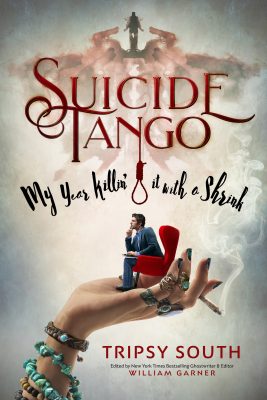
  • SUICIDE TANGO: My Year Killin’ it with a Shrink by Tripsy South – Teen Suicide, Psychology, Satire

    SUICIDE TANGO: My Year Killin’ it with a Shrink by Tripsy South – Teen Suicide, Psychology, Satire

    A novelistic look at the serious issue of teen suicide, Suicide Tango walks us through the relationship between a young woman who wants to end it all and the psychiatrist who wants to keep her alive.

    Doctor Jon Moore, a-just-okay-psychiatrist considers himself an expert on the issues surrounding teen suicide. One day a tall, beautiful girl, Tripsy South, strolls into his office without an appointment, lights a hooter (a joint) and tells him she has only a year to live. She intends to get rid of herself sometime soon. Her attitude is defiant with the overarching theme apparent: she is sick of her life.

    Exploring who South is and who she might become takes one year, 52 sessions all recorded, even the ones South sleeps through. Moore points out that going from infancy to physical adulthood in only fifteen years is a massive endeavor that some may view as cataclysmic. The notion of suicide might provide solace to someone trapped in that maelstrom, especially since, to the young, it’s hard to envision a future beyond the moment. There is much opposition expressed to over-medicating and “big pharma,” and a leaning toward a simpler, more eclectic view of mental deviation through the vexing, ever-changing personality of South.

    She is styled as an “indigo child,” more perceptive than her peers and more intelligent. These differences cause her to experience painful social alienation. At times the doctor becomes the student, and the patient becomes the teacher. South suggests, for example, that people like her need to talk to people like her – potentially suicidal peers. And by the time her therapy year has been successfully completed, Moore’s life has been upturned and needs examining.

    This is a well-written book that slaps the reader upside the head with the snark of a young woman thinking of doing the most devastating act possible. And while the Suicide Tango is classified as Satire, it must be noted that Tripsy’s longing to commit suicide and her observations about it seem intensely honest and therefore able to speak to teen readers.

    South presents a few practical ideas that may resonate with those who are at war with themselves. She is brash, unapologetic, and in-your-face in a way that demands and holds your attention, uncomfortable as that may be.

    The best observation is from the dedication page: “…for Every Beautiful Soul who struggles with personal demons and, on occasion, slays the fuck out of ‘em.” Amen, Tripsy South. A-men.