Author: Barbara Bamberger Scott

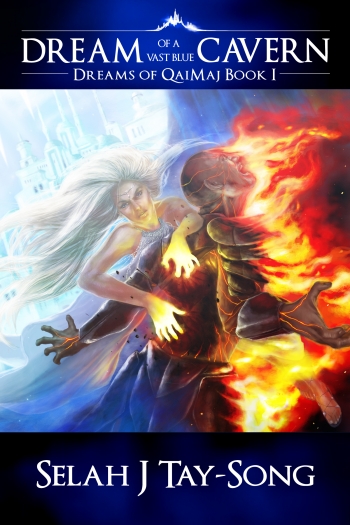
  • DREAM of a VAST BLUE CAVERN by Selah J Tay-Song – Book 1 of a new epic fantasy series

    DREAM of a VAST BLUE CAVERN by Selah J Tay-Song – Book 1 of a new epic fantasy series

    In a wondrous world where a frost-covered region is contrasted with a sultry realm of lava and fire, the forces of cold are threatened by armies of flame, and a princess must stand between them. 

    New fantasy novelist Selah J. Tay-Song has created a unique landscape where exotic beasts—hippoles, chirats, and slinks—roam the tundras and lava rivers of two opposing continents: Isklaon,  inhabited by the Icers, and Chraun, the kingdom of the Flames.

    Their territories are connected by underground tunnels, and both the Icers and the Flames derive subtle energies from the T’Jas, a kind of vibrational wave that emanates from extremes of cold and heat. Flames are protected by a layer of lava mesh on their skin, Icers by vaerce, a crackling blue glow. Humans, known as Semija, are kept as servants in this fantasy universe.

    Stasia, an Icer princess, has been having dreams, the first person of her generation to be so gifted. She is haunted by visions of the legendary blue cavern of V’lthurst (“land of dangerous beauty”), and, certain her that dreams are always prophetic, she is convinced that she can and will find it.

    But she and her sister princesses will first have to deal with Flame King Dynat, whose goal is to reduce Iskalon to a cinder. Aided by her friend and healer Larc and her guardian Glace, Stasia begins exploring the tunnel that links her icy home to Dynat’s fiery kingdom, even as he attempts to destroy her country in a horrific blaze.

    Constructed in episodes told from the many character’s viewpoints, Dream of a Vast Blue Cavern projects a seamless, mythic atmosphere.

    The author has invented imaginative fantasy names and terms that sometimes veer close to earthly language (“egla”, like “igloo”, for house), and has appended a helpful glossary and a list of Icer and Flame military ranks.  It is a difficult task to keep so many threads of plot running concurrently, but the reader will soon feel comfortably immersed, because Tay-Song is a skillful storyteller and because at its core, her story is logical and consistent.

    Tay-Song planned this book as the first in a series (Dreams of Qai Maj) with alluring mysteries at the end needing resolution.

    Dream of a Vast Blue Cavern is a stirring saga featuring an ice princess with a warm heart, at war with a cold, heartless flame king in a shimmering world of crystal frost and blazing lakes.
  • DEADLY THYME by R.L. Nolen — a British whodunit psychological thriller

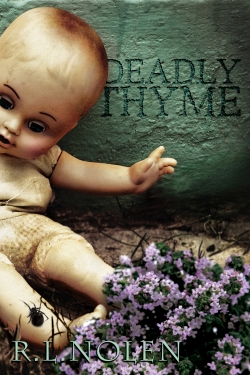
    DEADLY THYME by R.L. Nolen — a British whodunit psychological thriller

    A little girl is missing, but her mother is reluctant to talk to the police detectives who can help find her, leaving a twisted psychopath free to terrorize a Cornwall village with increasingly bloody deeds.

    Ten-year-old Annie Butler goes seashell gathering one Sunday morning and does not return. Her mother, Ruth, is fearful of reporting Annie missing to British law enforcement because of her own dark past. The fear of the possible fate of her missing daughter overrides any of Ruth’s own fears.

    Once Ruth levels with the police, she enlists the sympathy of Inspector Jon Graham, who has come to Cornwall on an entirely different assignment—to find out if corruption is the reason why the local police chief has suddenly come into a large sum of money. The search for Annie moves agonizingly slowly for her mother.

    The novel unfolds in stages, introducing Annie as a brave little soul and her mother as loving, but embattled. Ruth is convinced her own dark past has caught up with her. The locals include a steely-eyed police chief with a heart of gold and a bank account to match, and a plodding, plump but persistent cop who complains humorously about “Her Indoors” (his wife).

    Several people emerge as suspects in the kidnapping of Annie, even the aforementioned plodding policeman on whose property (a rundown trailer) visiting Inspector Jon Graham is staying in while on his assignment.

    Technology plays a vital role in the case, leading ultimately to an eerily recognizable shadow on a video. There are brief vignettes of the perpetrator, showing how deep into madness and sadism he has sunk; of Annie bravely trying to figure out how to send a secret message to her mother; and of Ruth herself, as she deals with her deepest dread.

    This is Rebecca Nolen’s second full-length mystery novel, and she writes dialogue like an old hand. She has mastered both the nuances of British English, including some rustic dialects, and the laid back American drawl of Ruth and her fresh-off-the-plane-from-Texas mother.

    The setting, a quaint West Country village in Cornwall by the swirling sea with high cliffs aplenty for falling off, is almost a character in itself.  Offering a plethora of red herrings to confuse even the most diligent mystery buff, Nolen’s engrossing complex storyline throws two budding love affairs and some exceedingly ghoulish crimes into the mix into this suspenseful whodunit.

    An intriguing British mystery with a slight Texas twang, Deadly Thyme is a psychological chiller with a myriad of plot twists, layered personalities, and at its center, one unusually clever, courageous little girl that will keep readers guessing to the very end.


  • WAKE ME UP by Justin Bog — a psychological mystery/suspense literary work

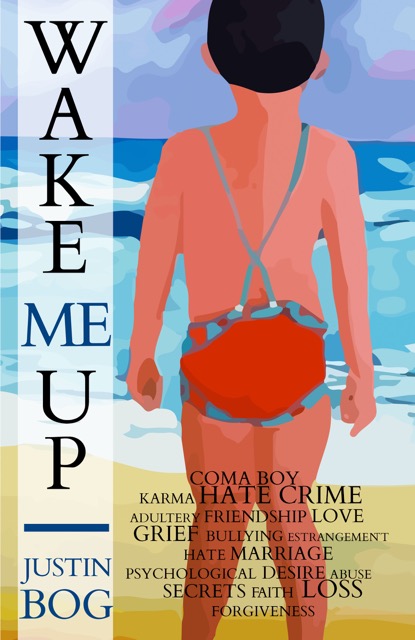
    WAKE ME UP by Justin Bog — a psychological mystery/suspense literary work

    A teenage boy lies in a coma, mentally reliving the events leading up to his attack by a gang of classmates on a random wilding spree.

    From his hospital bed, Chris Bullet suffers the aftermath of being cornered, mocked, and bludgeoned by boys who have correctly sensed his vulnerability (from their viewpoint)—he is gay, though Chris tries to hide it.  Comatose, Chris “sees” through closed eyes the hidden actions, fears, loves, and guilt of those whose lives intersect his.

    Why did Ellis, the boy Chris secretly desired, join his attackers?  Why is Geoff, Chris’ lawyer father, so depressed, and indeed, suicidal? Why does Chris’ poetess/professor mother clamp the lid so tightly on her feelings? In the middle of this triangle, is a visiting writer named Deepika who begins an affair with Geoff, is going to have his “love” child, Chris’s half-sibling. All the while, Deepika may be running away from her own fate. Somehow, Chris walks in the minds of these people and others, slowly comprehending what led to his attack. At times he accesses an alter ego, the main character in Deepika’s latest collection of short fiction—Sai, a quick-witted, openly gay newspaper reporter.

    The genius of author Justin’s Bog’s first full-length novel is that though everything Chris “knows” and recounts in his inner monologue is mysterious, maybe mystical, there is no hint of hocus-pocus, nor of the vague disjointed dream sequences one might expect from an unconscious protagonist.

    In the brief lead-up and denouement we see reality clearly: the attack and the aftermath. In between, everything that “happens” to Chris in his shut-off state is just as real and just as believable–but impossible. It would be hard to identify a literary precedent for this method of construction—Franz Kafka, perhaps, meets Lewis Carroll.

    Bog’s Wake Me Up is a mind-tickling read, combining a headline-grabbing story (defenseless boy battered to mental oblivion by brutish thugs), an over-arching theme (how do we as a society handle hate crime?), and a line-up of complex characters subtly analyzed and connected in the mind of a brilliant, hypersensitive, but comatose adolescent.

    Wake Me Up is a trip through the brain of an injured teenage boy whose supercharged perceptions expose the secret sins of those he wants to love and hopes to believe in.

  • THE RED RIBBON by Rachel B. Ledge, an 18c. British historical thriller

    THE RED RIBBON by Rachel B. Ledge, an 18c. British historical thriller

    Julia King has begun to have haunting visions of the horrific event she witnessed at the last masquerade ball of London’s 1772-1773 social season, a scene she has been trying ever since to forget—her lover, Roland de Claire, murdered her best friend Annie in cold blood.

    Julia considers herself lucky to have found someone willing to wed her after being embroiled in the dreadful courtroom drama surrounding Roland’s crime, in which she was tapped as the only eyewitness.

    Now comfortably, if not precisely happily, married to successful, socially acceptable Charles King, she roams her idyllic estate with her sister Lennie, trying to discourage the younger girl’s obvious interest in a dashing sea captain, and suppress her own romantic memories of Roland. Recurring visions of Annie’s murder, however, give Julia the discomfiting sense that all is not as it seems.

    When Lennie falls pregnant and has to leave the country in disgrace, Julia is alone with Charles, who is gradually revealed as cunning, ruthless, and utterly domineering. He claims he is the long-estranged brother of her now hung sweetheart Roland, and takes her to the de Claire estate to prove it. There, driven by her nightmares, her suspicions of his motives become so apparent that Charles has her locked in a madhouse.

    Author Ledge has constructed a stirring, twisted tale in which something unexpected occurs in almost every chapter. Some readers may find that the beginning of the story moves slowly, but they will be rewarded for their patience when the suspense builds the work into a page turner. She writes equally vividly of grand masked balls, scurvy goings-on in London’s back alleyways, and the creaking decks of a ship at sea. And she neatly ties together all the plot threads into a satisfying ending. 

    The Red Ribbon proves a satisfying romp for fans of historical fiction, with its glittering ballrooms, bloody frays, mysterious subplots, mistaken identities, and voices from the grave.

  • I ONCE KNEW VINCENT by Michelle Rene, a historical fiction novel

    I ONCE KNEW VINCENT by Michelle Rene, a historical fiction novel

    Seven-year-old Maria Hoornik already knows more about life than she should, hiding in a curtained alcove whenever her alcoholic prostitute mother, Sien, brings customers home. One day, Sien brings home a different kind of man—an unknown artist, Vincent Van Gogh.

    Vincent, longing for stability amidst his frustrations and failures, is determined to create a cock-eyed semblance of family life with Sien, who is pregnant with another man’s child, and her daughter Maria, with whom he immediately bonds, admiring her critical honesty and calling her “Little Cat.”

    The three, and then Sien’s baby Wilhelm, form a fascinating ménage in new author Michelle Rene’s speculative novel based on considerable historical fact. Rene depicts Maria as a prodigy who comprehends her mother’s self-destructive habits all too well. Rene elucidates, through Maria’s curious gaze, the made-up family’s grinding poverty, Vincent’s stubborn insistence on doing his art his way despite his lack of economic success, and the constant quarrels over money and morals.

    The child unwillingly absorbs the distress when Vincent’s arrogant parents refuse to continue supporting their son’s liaison with a known whore, forcing Sien to revert to her old ways to provide food. Maria’s maturity is underscored in troubling vignettes: she sells her hair so they can all have one Christmas dinner, sacrifices a piece of cake to make a “soup” to feed baby Wilhelm when Sien’s milk runs dry, and rushes home in a thunderstorm to try to stop Vincent from discovering that Sien is once again up to her old tricks.

    Rene has designed Maria’s story with verve, splashing colorful images across a well-planned canvas: “Silence crept into the room and pulled up a chair for a nice long visit.” She deftly conveys a child’s perception of Van Gogh’s mental miasma: “Knowing what mood he would be in became a fine art in itself. I quickly became a master of that art.” The text is satisfyingly interspersed with the artist’s actual sketches and paintings of Sien, a notably ugly woman, and Maria, a serious, self-contained little girl rocking a cradle or sitting quietly while her mother sew; a little girl who, like Vincent, clearly wishes for the security of a real family.  

    Told through the eyes of a child, I Once Knew Vincent offers an imaginative study of a tormented genius who would create some of the world’s most recognized artworks. ​ ​


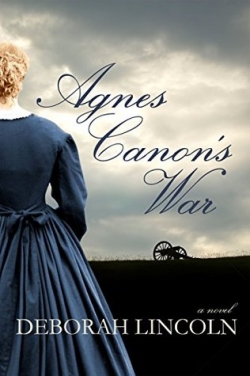
  • AGNES CANON’S WAR by Deborah Lincoln — a Civil War Novel

    AGNES CANON’S WAR by Deborah Lincoln — a Civil War Novel

    Agnes Canon is too intelligent, and too stubborn, to let others make decisions for her. No matter what the consequences, her choices will be her own.

    In this complex historical drama, schoolmarm Agnes Canon, refusing her father’s choice for a husband, leaves the safety of her Pennsylvania childhood home for the wilds of Missouri in the decade before the outbreak of the Civil War.

    On the way she meets, and eventually weds, Jabez Robinson, a medical man who has seen the wonders of the world and war at its foulest. Living in a territory with loyalties on both sides as the national conflict heats up, Jabez and Agnes, equally matched in intellect and stubbornness, abhor the Southern institution of slavery, but also despise the greed and interference of the North. Their struggles are real, and the chaos endured will pit their marriage against a dramatically changing civilization.

    ​Agnes is the pivotal character in this multi-layered story. She endures the pangs of childbirth and the deprivations of family life in a war zone. She watches as friends and neighbors go different ways in the war, and good men fight each other on the home front. She supports Jabez even as his publicly stated political ideals open them to harassment from violent, unprincipled militants.

    Deborah Lincoln, who has based this novel on the life history of her great grandparents, writes with emotional intensity about dark times in an embattled landscape.

    Unlike many Civil War sagas, this one takes no obvious sides. The focus is on Agnes—a vital, strong woman with feminist ideals, and Jabez, the only man smart and determined enough to gain her love. The romance is not overdrawn, though, and there is a complex skein of subplots providing scenes of rousing action and rich historical context.

    Agnes Canon’s War reminds us that war produces equal measures of bravery and barbarism, and those in its midst who hang on to their principles are rare and admirable. An excellent read that explores  love and societal schisms grown in the roots of cultural and political battles between the North and the South.


  • ANGELS OVER YELLOWSTONE by Elisabeth Ward – a richly drawn saga

    ANGELS OVER YELLOWSTONE by Elisabeth Ward – a richly drawn saga

    An atmospheric picture from American frontier history, Angels over Yellowstone explores larger societal issues through the lens of one small family’s experience as their lives are dramatically affected by the demands of a growing young nation.

    In the 1890s in Wyoming, the United States government has decided to fully claim lands in the Yellowstone region that were earlier designated as national parkland. The American Women’s Suffrage movement was in full swing, the Sierra Club was founded, the Boston subway being built, and the Wounded Knee Massacre had just taken place—these were just a few of the events that were shaping this young nation at this time.

    In poet/author Elisabeth Ward’s  paean to pioneer life, a young woman, Casey Potter, will be especially affected by this news, when soldiers arrive at her cabin one morning to announce that she, her trapper husband Lang, and their little girl Ginger, must move away so that the land around them can be viewed by tourists, untouched by human influence.

    The simple life they share will be sacrificed to the greater good, to national domain and the preservation of pristine nature.

    Living so remotely from civilization, barely able to think in terms of national agendas, Casey understands only that she and her family have to leave the cabin home they love, forced off the hunting grounds whose bounty has fed their family. But knowing that the soldiers will return soon to burn down their precious homestead, they acquiesce.

    Accepting their fate, the three vacate their hearth and home as they are forced to set out and start anew. However, Casey and Lang return to report their moving on to a fellow trapper. It is their return that brings about fatal consequences. Coming to terms with the loss of her home and then the loss of her husband is almost more than Casey can bear. Casey considers the notion of suicide until she finds solace in simple rituals, what she calls “service” or the simple rituals of everyday life.

    Ward’s characters are lyrically and powerfully drawn as are her evocative images of the time and place of this young nation at the turn of the new century. The author deftly juxtaposes Casey’s reluctant departure from her secure landscape with Lang’s earlier expedition when he met the girl with rust-colored hair: “…After seeing Casey McGregor’s hair he felt everything was dull.” The author interweaves poetry into the story, intensifying the emotional content. The pulse of her plot is unwaveringly strong, holding the reader to the page.

    To some, Ward’s concentration on one white family’s tribulations may seem somewhat skewed, since the biggest losers in the opening of the national parklands were undoubtedly the Native American peoples. Nevertheless, Ward’s tale underscores some larger truths about our twin American conflicting aspirations, to conquer and to conserve.

    Angels over Yellowstone combines a richly drawn saga of personal love and loss with some provoking philosophical questions about the American ethos.

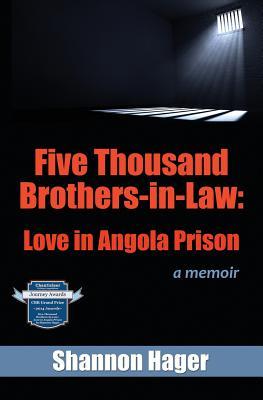
  • FIVE THOUSAND BROTHERS-IN-LAW: LOVE IN ANGOLA PRISON: A MEMOIR Shannon Hager – A rare and authentic view inside the US penal system

    FIVE THOUSAND BROTHERS-IN-LAW: LOVE IN ANGOLA PRISON: A MEMOIR Shannon Hager – A rare and authentic view inside the US penal system

    An authentic and insightful account from behind the bars at one of America’s most storied penitentiaries. Shannon Hager, who worked more than twenty years as a nurse in the deep South’s prisons and jails, shares her inside experiences.

    After her years of connecting directly with this bizarre, labyrinthine system that strips away almost every human right, she retains genuine empathy for prisoners and their families in this award-winning memoir.

    Hager’s drama began ​in 1992 ​when she arrived at the Louisiana State Penitentiary, commonly known as Angola, a name held over from plantation days, denoting the origin of slaves who toiled there. Eighteen thousand acres are surrounded on three sides by the Mississippi River. Angola has been the last stop for thousands of criminals.

    Hager had important tasks as a health care professional, such as tuberculosis testing and investigating HIV/AIDS cases within its walls. Hager ​quickly learned ​that most of the staff were hostile toward anyone trying to help prisoners​. Above all, she was told repeatedly, prisoners were not to be trusted. This led to such paradoxical policies as refusing to allow prisoners to use condoms, because they could be utilized as weapons, or for transporting drugs, even though HIV/AIDS was widespread in the prisoner population.

    ​Though she came to know many prisoners well, and not only befriended but married one, she never got over the feeling of oppression and sorrow that festered inside the prison: “Pain seeped up from the ground like morning fog.”

    When she met Big Kidd, an older ​convict who had spent more years in prison than out, she found herself falling for with this ​charming, seemingly reformed, self-styled disc jockey/preacher. She quit her job to have a relationship with him; Hager became involved with Big Kidd’s family on the outside. She began to understand what relatives and loved ones experience when they have someone near and dear to them in prison.

    Hager poignantly describes her own love story, blooming from the jagged cracks of Angola Prison, as it tries to find enough light and humanity to survive. ​Loving Big Kidd caused her to share some of his suffering:  ​little privacy, no conjugal visits, and hard choices. It is a love that dramatically breaks all rules.

    Hager’s writing style comes from the heart and reflects her gradual immersion into Big Kidd’s reality. Using the common Louisiana practice of nicknaming, she vividly describes the characters she encountered, adopting their ​accents in conversation and sometimes even writing ​in their colorful street patois.

    Discrepancies and shortcomings of the United States penal system that encompassed more than two million people are exposed by Hager in an up close and personal way. Most of the two million prisoners come from unrelenting impoverishment, turbulent environments, and have no education or skills.

    A rare, vibrant view of a complex, dangerous, and at times, inhuman subculture of contemporary society–Five Thousand Brothers-in-Law communicates a significant and compelling message about the poor and oppressed—whoever they are, no matter what their misdeeds. ​

  • 17,000 Feet: A Story of Rebirth by Fox Deatry – an adventurous PNW novel

    17,000 Feet: A Story of Rebirth by Fox Deatry – an adventurous PNW novel

    What do you do after you’ve done all you can? Jo Packwood, marine biologist at the top of her professional game, decides to climb Mt. Olympia, all 17,000 feet of it, looking for clues to her blighted childhood and facing the cold mists of her future.

    The book begins on the trail up the mountain. Jo is accompanied by Solomon, nicknamed Squibb, her long-lost uncle, the person most likely to help her reconnect spiritually with her father Papi, or Nelson, who abandoned her and her mother when she was a small child. Why?—Jo has only vague memories to rely on, most of them painting a scurrilous impression of Nelson—a decorated soldier, yes, but a reckless rake and deceiver.

    Jo has recently placed her mother, increasingly isolated by Alzheimer’s, in a nursing home, evoking guilt, as well as frustration at the lack of information about the fractured family. As they ascend, Jo and Squibb spar, share, and commiserate, while he gradually, gruffly, fills in a more human, ameliorative portrait of Nelson, who disappeared, presumed dead in an avalanche, on the very mountain they are climbing.

    Squibb is a reluctant mentor whose advice will reverberate for Jo at a critical moment: “Life isn’t a sprint, sugar pie. It’s about bases: you get to each for the grand slam homerun.” Loss of radio contact with a group of hikers up ahead, hallucinations possibly brought on by oxygen deprivation, and the horrifying discovery of a cache of frozen corpses (could Nelson’s be among them?) stymie the pair, with worse to come.

    Fox Deatry, media executive and author (American Witches: An American Witch in New York City), tells Jo’s story in flashbacks as she hikes up Mt. Olympia: her discouraging visit with her deluded mother; her mentoring moment with a female cleric; an unexpected talk with one of her father’s old war buddies; and her introduction to Solomon/Squibb who will challenge her to conquer the mountain that killed her father (“Up there, you’ll experience unexpected things”).

    Deatry’s descriptive prose shows practiced sophistication, and he conveys ordinary conversation believably. The plot is well constructed, and readers may appreciate the story’s close adherence to the classic concept of the hero’s journey: reluctance at the outset, fateful guidance, life-threatening peril, all leading, as the subtitle references, to rebirth, in a most surprising, cinematic conclusion.

    17,000 Feet, an adventure combining real time, powerful memory and lush imagination, offers a heroine in crisis coming to terms with her life’s big questions by taking courage and, finally, taking charge.


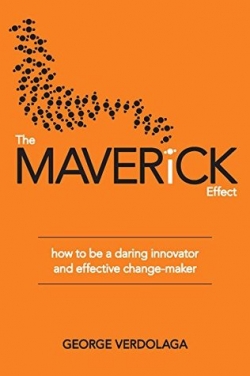
  • THE MAVERICK EFFECT by George Verdolaga,  a step-by-step motivational guide

    THE MAVERICK EFFECT by George Verdolaga, a step-by-step motivational guide

    Have you ever wondered what makes you different from others? Why you’ve always had the urge to “go against the herd”? Why the “popular” kids who snubbed you in school seem to go nowhere after graduation, while you still have an urge to accomplish something great, no matter what it takes? It may be the Maverick Effect, an intriguing theory conceived by entrepreneur and self-styled maverick George Verdolaga.  

    Verdolaga makes an important distinction between “mavericks” and “hipsters.” Hipsters look cool, revel in their popularity, but fade out fast—because they are really only followers, chasing the latest trends in fashion or tech. Mavericks are the ones who actually establish those trends.

    People with maverick personalities may have a hard time at first, driven by weird artistic and intellectual interests that set them uncomfortably apart. However, they are the real winners, Verdolaga asserts, once they realize their true potential, “finding their way over, around or under” the barriers that society has put in their path.

    The author gives many pertinent examples of the maverick effect among unusual people throughout history: Pythagoras, Caravaggio, even Jesus, were ahead of the curve, misunderstood and scorned by the conventional thinkers of their day. J. K. Rowling was a divorced single mom living on welfare when she conceptualized Harry Potter and his magical universe. Steve Jobs, Bill Gates, Steven Spielberg, all were considered nerds when they were young. People destined for maverick greatness never say, “I give up,” “It’s too hard,” or “I’m too busy.” They aren’t distracted by what the crowd wants, but rather, “fearlessly embrace challenges and become the catalysts that spearhead the new initiative for change.”

    This motivational guide is organized with business-like competence by someone who has “walked the walk”—Verdolaga left the family business his parents had built for him, choosing instead to carve out his own highly lucrative path through the corporate world.

    He offers sound, step-by-step advice for those willing to break out of their comfort zone every single day to promote their groundbreaking ideas. He sets forth, with numerous case studies and a lengthy bibliography, the skills needed to manifest the maverick effect: “overnight success” can take years, so persistence is essential, along with training in public speaking to convince others of the feasibility of one’s projects.
    Words of wisdom from a successful pacesetter, The Maverick Effect will inspire the hidden innovators among us to invent, initiate, and innovate.