Author: Barbara Bamberger Scott

  • NARADA’S CHILDREN: A Visionary Tale of Two Cities by Woody Carter – exploring universal values

    NARADA’S CHILDREN: A Visionary Tale of Two Cities by Woody Carter – exploring universal values

    A colorful fable resonates with contrasting modalities of mysticism and social action, exploring how culture and religion can separate us or bind us together.

    Narada is a traveler and a stranger when he first meets the lovely Hohete and her people in the ancient city of Ja’Usu. Given water, food, and shelter by Hohete’s family, Narada is sharply questioned by village elders who are stymied by his forthright statement that he is a representative of a deity named The Great Mystery. So they conspire to remake him as a storyteller, to reduce his power and profit from his talent for spinning yarns by selling refreshments to his audience.

    Narada hoodwinks them, though. He gathers all the people, even the despised Oromo beggars, and arranges for the poor to be given food instead of buying it. He then weaves a wondrous story of another city, Oakland, California, in the early twenty-first century; there, Arthur Renfro, a community activist, is trying to improve conditions for his fellow African Americans.

    The people of Ja’Usu are magically able to “see” the story as Narada tells it, becoming immersed in the strange ways of a civilization where women have power, and rejected groups like the Oromo may be objects of social concern, not disapprobation.

    Narada subtly constructs his parable, measuring the relative power of religion, psychiatry, and social change to improve individual lives and using Ja’Usu and Oakland as contrasting examples. In Oakland, Arthur Renfro proposes meditation as a radical method to resolve the deep inner conflict within the spirits of his people. In Ja’Usu, the tale of Arthur’s quest for equality and aid for minorities will gradually break down ancient taboos, presenting the potential of liberation for women like Hohete and for the oppressed Oromo.

    Narrative theologian and author Woody Carter has worked with organizations concerned with the welfare of African Americans like those he depicts in Narada’s Children.

    Carter’s use of language is enchanting and emotive, evoking folk memory like a tribal griot. Like his audience in the fire-lit square of Ja’Usu, readers will be lulled and lured into his tale and see, perhaps, how their own perceptions accord with “the imperishable records of celestial light” from which the Narada draws his wisdom.

    Through the interactions of people in two great cities—one ancient, one modern—Narada’s Children explores the universal value of genuine fairness and equality. Masterfully written, this uplifting and encouraging work is a spiritually transporting tale that is much needed by those of all races and creeds—especially in today’s turbulent times.
  • TOURIST TRAPPED by K. J. Klemme — a madcap international mystery

    TOURIST TRAPPED by K. J. Klemme — a madcap international mystery

    Can a spunky female attorney and her computer-geek sidekick survive the violence of paid kidnappers and cold-blooded murderers, a dangerously deranged mother and her captive children, the vicious plotting of a twisted psychopath, a traitorous fiancé, and at times the worst enemy of all—their own reluctance to let go and let love work its magic?

    Amanda Sloane, high-profile Chicago divorce lawyer, gets a panic call from her estranged father, Don, telling her that her half-sister Rebecca and her fiancé have disappeared in Cancun, Mexico. Don wants Amanda to help find her. Amanda, forced to recall how Don abandoned her and her mother, is reluctant. But even as she tries to avoid the situation, friends begin to tell her how good-hearted she is, even though she is usually seen, and often sees herself, as relationship destroyer, someone who “goes through men like Starbucks goes through coffee cups.”

    Acting on the newfound wish to do the right thing for what little family she has, she heads for Cancun, dragging her nerdy co-hort Chad Cooper along to deal with her clients at long distance, under her always strict supervision.

    Before long they’re in Mexico desperately hunting for Rebecca, despite minimal cooperation from the local police, some temptations of the lush natural surroundings, the call of a long-lost love, and a plethora of clues that, as Chad diligently and correctly points out, just don’t add up. To complicate matters, under Cancun’s romantic spell Amanda thinks she might be falling for Chad even though she has a fiancé back home who wants her help in getting him elected, and Chad has a wife he never talks about.

    Then Chad is called away to Portland where he secretly has his own person-hunt. Amanda is left battling bad guys, and being stalked by a powerful, politically motivated psychopath who wants her gone by whatever means.

    In Klemme’s deft hands, regret may be tempered by reconciliation, trust may push aside the shadows of treachery, and the seeming end of the story forms a new beginning. Tourist Trapped, designed as Part One of a trilogy, is a madcap, fast-paced international mystery that pits multi-layered villainy against inexperienced, but spirited, sleuthing with a back-beat of newly minted love.

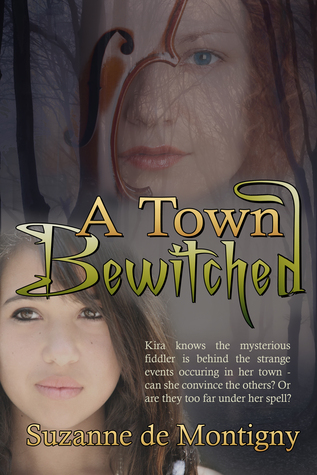
  • A TOWN BEWITCHED by Suzanne de Montigny — Middle Grade Urban Mystery

    A TOWN BEWITCHED by Suzanne de Montigny — Middle Grade Urban Mystery

    When vivacious, red-haired fiddler Kate McDonough suddenly appears in the tiny Canadian town of Hope, it brings disturbing changes for Kira Montgomery and her friends.

    Kira already has problems. She plays the classical violin, and “Kids make fun of me enough as it is because I’m a child prodigy—AKA a nerd.” The IGs (In-girls) at school also mock her best friend, Charlotte, because she is adopted, and Chinese. Kira’s beloved father died recently. He had promised to buy her a special violin, but now it’s just too expensive. And after she plays “Danny Boy” at his funeral, that tune starts haunting her.

    Now, to Kira’s disgust, everyone in Hope is enchanted by the magnetic Kate’s Celtic tunes, even Kira’s own family. Kira believes she’ s being stalked—could it be Kate? Worst of all, Hope is in turmoil because someone is killing birds and leaving ugly graffiti everywhere, even painting “Liar” on Kira’s father’s gravestone. Trying to make everything right, Kira lands in serious peril.

    Author de Montigny sets her plot in motion with action from the first page. Kira is regular enough for teen readers to identify with, yet possessed of some extra perception and grit that make her a fitting heroine. Suzanne de Montigny adds extra layering to this supernatural YA yarn with special musical details, from Beethoven to the Celtic strains produced by the mysterious Kate.

    A Town Bewitched offers a magic formula for the young adult audience: a high school full of competing cliques; a beautiful, mysterious stranger; a dark, malevolent presence; and a bold young woman who rises above her personal woes to set things right.

    ​ ​

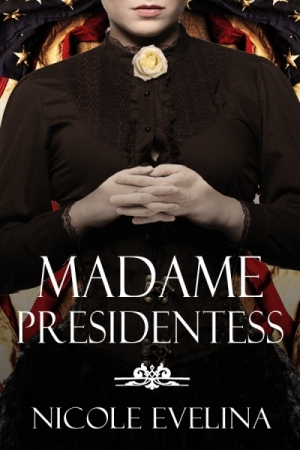
  • MADAME PRESIDENTESS by Nicole Evelina – an amazing story about a leader of the Women’s Suffrage movement

    MADAME PRESIDENTESS by Nicole Evelina – an amazing story about a leader of the Women’s Suffrage movement


    The mysterious, mystical Victoria Woodhull, a free-thinking woman well ahead of her time, is the narrator in this fictional treatment of her intriguing, at times incredible adventures.

    Woodhull was the first woman to run for president of the United States, at a time when, with the full support of the law, most American men did not even regard their mothers, wives and daughters as citizens.

    Born to a rag-tag band of “healers” whose medicines included dope and alcohol, and whose methods included blackmail and theft, Victoria was married off at the age of fifteen to a so-called doctor who beat her almost as badly as had her parents, and regularly consorted with prostitutes.

    She and her sister Tennessee, or Tennie, went from their father’s business in spiritualist scamming (though both women would later claim genuine psychic powers), to promoting supernatural healing in the brothels of New York City, to getting into the parlors and pockets of such Wall Street magnates as Cornelius Vanderbilt.

    Vanderbilt at one point had Victoria telling him what stocks to buy and sell, profiting mightily from her seemingly prescient advice, and Tennie acting as his mistress. Woodhull’s second husband, Col. James Blood, treated her far better than her first, and together they forged her rise to radical suffragette prominence.

    She touted the rights of women to vote and also to step outside the bounds of marriage as freely as men. In 1872 she mounted her famous run for the presidency, named former slave Frederick Douglass as her veep, fell afoul of the powerful preaching Beecher clan, and saw one of her most disturbing personal prophecies come true.

    Award-winning author Nicole velina has created Madame Presidentess following her earlier examination of another controversial female leader, Queen Guinevere. Victoria Woodhull’s life is a goldmine of material for any author; Evelina’s fascination with the psychic-turned-politician does not waver as she weaves together the stranger-than-fiction history of her heroine with threads of imaginative speculation.

    The extent of her research is obvious throughout, but never burdens the plot. She details this process in her Author’s Notes, and offers a short bibliography. Evelina has done an admirable juggling act, presenting Woodhull as highly intelligent and strong-minded but also capable of self-examination and self-blame.

    Madame Presidentess successfully brings a lesser-known early radical feminist vividly to life, revealing her meteoric move from rags to riches, from subservience and humiliation to personal power and admirable achievement. A highly entertaining and informative read.


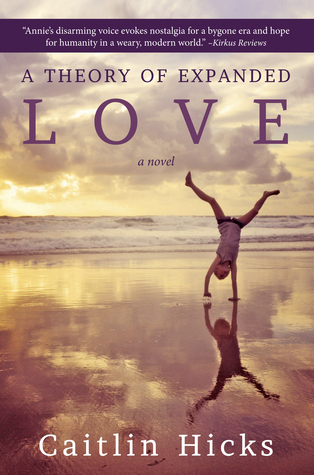
  • A THEORY OF EXPANDED LOVE by Caitlin Hicks, a bold, coming-of-age novel

    A THEORY OF EXPANDED LOVE by Caitlin Hicks, a bold, coming-of-age novel

    Confused by conflicting messages from family and church, a young girl takes big issues of life, love, and trust into her own hands.

    It is 1963, and American Catholics are stirred. First, by the death of the pope, and later, the assassination of the first Catholic president. Preteen Annie Shea, one of eleven children in a devout Catholic family, is the narrator. Because her father, a soon-to-retire Naval officer, once had a chance encounter with a priest who is now a cardinal, Annie sees her parents shamelessly promoting themselves in the community and church as friends of the possible next pope.

    As we begin to live among the Sheas, we see a passive, harried mother who suffers in secret from the early loss of a baby and a well-meaning father who is tyrannical in pursuit of prestige, trying to control his unruly brood with strict moral injunctions backed up by a belt. But his rules can’t stop Annie from wondering: why is it a sin to lie, except about the family’s supposed connection to the papacy? Why can’t she talk to someone about a family member creeping into her bedroom and feeling her up?

    Worst of all, in a religious culture where babies are so wanted and life so precious, why is her older sister consigned to a convent to “repent” and, Annie learns, have a baby that will be taken away for adoption before anyone in the family even looks at it? Annie’s sudden bold rebellion may tear the family apart—or bring it together in ways never envisioned.

    Canadian author Caitlin Hicks is a playwright and actress who has crafted this coming-of-age novel like a series of episodes in a fast-developing family television drama. Annie is a likable, gutsy girl stuck in the contrast between what she knows in her heart to be right and what she is being told by various patriarchs—dad, priest, and pope.

    Authentic, amusing, wise beyond her years, Hicks’ heroine marches forth like a modern Maid of Orleans to remind others of their true moral duty. Hicks composes with confidence and competence, deftly manipulating the modalities of the fateful events of 1963 to reveal the Sheas as a sort of “every family,” with strong bonds of caring and some notable fault lines.

    A Theory of Expanded Love is a teen’s-eye view of what happens when doctrine threatens to outweigh compassion, and how balance can be restored with a few bold moves.

  • CHASING NATHAN by Jeanette Hubbard, a humorous suspense novel

    CHASING NATHAN by Jeanette Hubbard, a humorous suspense novel

    An epic convoy of bad men, good guys, tough women, and international operatives who zigzag across the Oregon wilderness chasing a truck-load of marijuana briquettes, a million bucks in cash, and one lovable border collie in this fast-paced satire by Jeanette Hubbard.

    Claudie, independent and relationship-weary, encounters Nathan, an affable bookstore owner, when the two camp side-by-side in what should be an idyllic woodsy retreat. Sparks of mutual interest waft over grilled salmon and chilled sauterne, until a nasty character named Hammer in a clapped-out truck decides to park nearby, barely squeezing in among the boulders. He’s loud and foul-mouthed, and he abuses his border collie. 

    The next morning, Nathan and his Winnebago are gone, along with Hammer – only the broken-down truck and the nervous collie remain. Claudie, a bit miffed at Nathan’s defection and suspecting foul play, stows the mistreated canine in her car and buzzes off to find the nearest lawman. Little does she realize that she has become part of a massive dope deal gone wrong, with Nathan and his old female friend Dani, an espionage expert, in the thick of it.  

    Claudie will learn a lot about Nathan, who, it turns out, is not just the jolly bookworm he appears to be; and there’s a lot Nathan will discover about the surprisingly intrepid Claudie. She worries about Nathan as she fends off the weirdos trying to take her dog away, while Nathan thinks of her fondly even as he makes a daring escape from the violent Hammer and his evil twin Sprocket.

    Author Jeanette Hubbard introduced Claudie, a seasoned sixty-something, in her first novel, Secrets, Lies and Champagne Highs. In this rollicking sequel, Hubbard displays her knowledge of highways, weaponry, dopers, and spies. Chasing Nathan criss-crosses genres: part hippie, biker, road-tripper’s fantasy, part thriller with intellectual undertones, love interest, and liberal lacings of humor.

    Claudie appeals as a gutsy heroine with one hand on the steering wheel, the other flipping a bird at the thugs who try and fail to grab the collie. But she has her smarmy side, too, secretly admitting that despite her best defenses against a new romance, Nathan makes her feel all warm and fuzzy.

    Chasing Nathan has a non-stop plot that celebrates the back roads, the great Northwest, and two saucy seniors who can flirt, fight, and floor the accelerator as the situation demands.

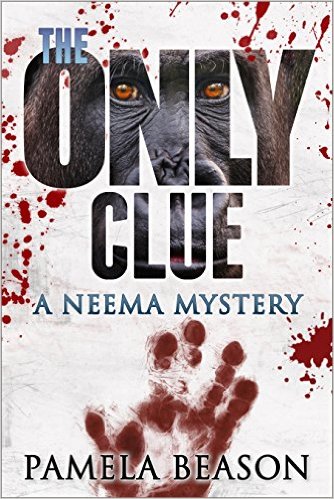
  • The ONLY CLUE — The Neema Mystery Series, Book 2 by Pamela Beason – a gorilla mystery

    The ONLY CLUE — The Neema Mystery Series, Book 2 by Pamela Beason – a gorilla mystery

    When three gorillas disappear, Dr. Grace McKenna stands to lose not only her livelihood and her professional reputation, but also three close friends, in this lively new novel by animal advocate and author Pamela Beason.

    Grace, assisted by a crew of young advocates from the Animal Rights Union,  reluctantly fulfills a request from her project funders to hold a public exhibit of Neema, a mother gorilla, her baby Kanoni, and Neema’s giant, grumpy mate, Gumu. A dedicated cop, Matt Finn, supplies the project’s security protection (and Grace’s romantic interest).

    After the public event,  the apes vanish, a huge pool of blood on the floor of the gorilla compound is “the only clue” to what might have happened. Did they escape into the wild?  Were they “liberated” by ARU operatives, or captured by exotic animal traders?

    Grace can’t believe Neema would desert her, because the two have a close kinship based on their mutual use of sign language. Matt is sure someone connected with the project freed the gorillas on principle, or stole them for cash. He focuses on Tony Zyrnek, father of Jon, Grace’s most trusted assistant. Tony just got out of prison, is charming to a fault, and has a slew of highly questionable, greedy associates.

    The project goes on lockdown, with Grace justifiably fearful of the consequences if word of the disappearance gets out. Matt and Grace are torn apart by the calamity, making it harder for both to function.

    Matt’s investigations become increasingly complicated by crimes outside the compound, but his thorough police work gradually uncovers important evidence about the fate of the missing apes. Major revelations also result from Grace’s desperate delving into the bizarre international underworld where rare animals are bred and sold for profit.

    Beason’s book, the second in her “Neema” series, will excite, enchant, and educate. Readers unaware of the innate intelligence of apes may be surprised to learn that Neema’s rather sophisticated communication abilities are based on verified fact. Beason skillfully shows us the human world through gorilla eyes.

    Both dedicated animal rights proponents and people new to the dynamics of ape/human interaction will empathize with Gumu, Neema, and Kanoni’s struggles; while fans of the “locked room mystery” genre will fix their attention on the plight of the humans and their efforts to find more clues before it’s too late.

    The Only Clue is a well-crafted mystery to inform as well as intrigue and captivate, opening an engaging realm of fictional exploration and speculation—the special bond that can happen between gorillas and people. Highly recommended.

  • GREY DAZE: a Lance Underphal Mystery by Michael Allan Scott

    GREY DAZE: a Lance Underphal Mystery by Michael Allan Scott

    Disturbed by psychic powers and whisperings from his dead wife Sonja, freelance photographer Lance Underphal finds himself caught in a web of evil.

    When Lance’s lady friend Callie asks him to investigate the disappearance of her reclusive uncle, he and Jake Jacobs, a PI and former Navy SEAL, are on it. What seems like the natural death of a lonely old man reveals itself as murder. As Jake tracks the suspects, he discovers a pattern leading to government corruption at the highest levels—drug dealing and gun running involving biker gangs and the U.S. Dept. of Alcohol, Tobacco, and Firearms.

    Lance is jailed, arrested on felony charges for Sonja’s death, all the while plagued with paranormal visions of the murderer. Hit from all sides, he suffers a heart attack.

    Sonja’s ethereal guidance and Lance’s innate toughness put him back on track, and after he and Jake deal with everything from a shyster lawyer to a drug-addicted killer to a biker gang covertly supplied weapons by the ATF, the story could be over. But further psychic insights into a cache of stolen gold and murdered souls crying for release force Lance and crew to press on.

    The third in the Lance Underphal Mystery series by Michael Allan Scott, Grey Daze dishes out action on every page. Scott clearly loves language and uses it deftly, depicting vicious battles to the death, steamy sex, and disgusting doings in a drug dealer’s den with equal zest and a refreshing absence of four-letter words.  He has created credible, multi-dimensional characters, using them as glue for his sudden scene switches and dizzying plot twists.

    Lance is an empathic anti-hero beset by middle-age aches and angst; Callie has her own sixth sense and is poised to accept a new romance; Sonja contributes unearthly messages ranging from wise, to wifely, to downright spicy; Jake is half muscle, half guts, and all heart. The circle is completed by a huge but affectionate pooch rescued from a life of crime.

    This murder mystery/thriller, based on real events (as per the author), is layered with plot twists and alarmingly vivid details, along with voices of the dead and visions of imminent peril, make Grey Daze an action-packed page turner. It is sure to please already entrenched Underphal fans and draw new ones to the fold. Highly recommended for thriller/suspense fans.


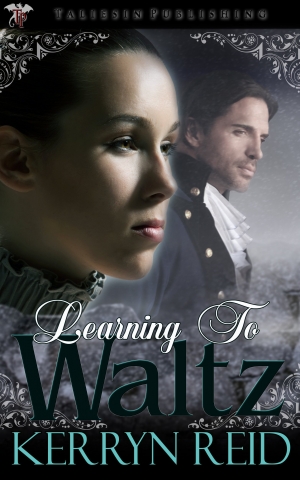
  • LEARNING TO WALTZ by Kerryn Reid, a stunning and refreshing novel in the Regency genre

    LEARNING TO WALTZ by Kerryn Reid, a stunning and refreshing novel in the Regency genre

    When aristocrat Evan Haverfield meets uncommon commoner Deborah Moore, she is in a panicked rush to find her missing son Julian. Evan finds the little boy just in time, near death from exposure, and takes an active, concerned role in his recovery. His escalating involvement with Julian parallels his fascination, perhaps obsession, with Julian’s mother, a reserved, intelligent woman who reads books and speaks with clarity and decorum despite her lowly station in life.

    Widow of a cold, fumbling small-town vicar, daughter of a brutal, profligate father, Deborah wants only Julian’s well-being. She is content to live alone, expecting only rejection and cruelty from men. She finds it difficult to smile for anyone except her son, yet Evan’s apparent interest in visiting, chatting, and offering small gifts is undeniably exciting.

    Evan insists on paying for the child’s schooling so his obvious mental gifts won’t go to waste; but his fixation remains on the dark-haired Deborah, so different from the wild-eyed, loose-mouthed flirts in his social circle. After she yields, once, to his charms, he impulsively asks her to marry him.  Their relationship changes, but not, as he’d hoped, for the better. Deborah is convinced she is no wife for quality. Evan, in a stew of anger, self-pity, and melancholy, hits the road.

    Kerryn Reid has set her engaging story in a place and time when the rich are often excessive in their habits, with prolonged house-parties often leading to debauchery, while the poor struggle for survival and find solace in alehouses and alleyways. Everyone tries to keep their place, as Deborah and Evan strive to do, against the yearnings of the heart.  It is this social tension that stokes Deborah’s refusal to become Evan’s wife—and in turn, provides the undercurrent that provokes in Evan a fear of how his parents will react to his alliance with a commoner.

    Reid’s focus is on her richly developed characters, not just costumes and carriages, though those are not lacking. She has filled her well-conceived saga with a complex and compelling cast: the arrogant well-born beauty who tries in vain to win Evan’s attention, Evan’s grizzled, philosophical “Man Friday” and his goodhearted sisters, Deborah’s earnest, if bumbling, house-helper, and little Julian, the brainy boy who loves books and horses in equal measure.

    Learning to Waltz reminds us that our forebearers also grappled with “modern” issues of abuse, angst, and aching hearts. This well-researched and beautiful Regency romance will appeal to anyone who has ever loved and (almost) lost. A stunning and refreshing novel in the Regency genre.

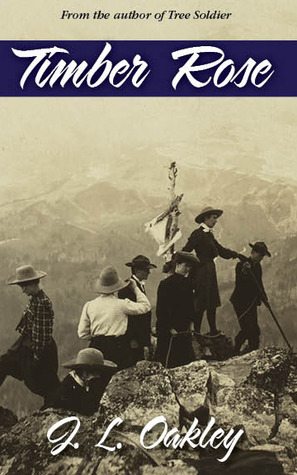
  • TIMBER ROSE by J. L. Oakley – 1900s historical fiction in the PNW

    TIMBER ROSE by J. L. Oakley – 1900s historical fiction in the PNW

    In the early 1900s, an independent young woman is forced to choose between family ties and romantic love, and face the consequences of her decision.

    Caroline Symington could live out the privileged life that her birth in a well-to-do family entitles her to, but her nascent notions of feminism take her on adventurous hikes and climbs in the northwestern mountains, where she meets a man whose grit matches her own. He gradually lures her to a far different destiny—one that she willing embraces over the path her parents have planned for her.

    Bob Alford, son of Scandinavian immigrants, is a tough logger sympathetic to the  union struggles with Caroline’s wealthy relatives. He loves hiking just like Caroline. She disguises her surname when they first meet, with near-disastrous consequences to their growing and mutual affection. ​Once the two acknowledge their feelings with total honesty, marriage is the next logical step, even though it will alienate Caroline’s family.

    Life for Caroline with her chosen mate (rather than a husband preferred by her father) will involve unexpected sacrifices. His new job as a forest -ranger will take him away from home for days at a time. Pregnancy looms as a hoped for event, while childbirth, alone in the wilderness, is a terrifying prospect.

    Luckily, there is a female soul-mate in the wings for Caroline, a fellow feminist named Cathy, and, for Bob, a mysterious and canny mountain man, Micah, who will provide rescue more than once. But before the young couple can really be free to live as they choose, they must face down the hypocritical, haughty Symington clan and prove that love can conquer both snobbery and scurrilous terror tactics.

    ​Spanning the years from 1907 to the rumors of the world war in 1916, this historical romance by award-winning author J. L. Oakley assuredly creates and sustains a magical love affair between Caroline and Bob, while successfully tackling a multitude of overarching themes: the determination of American working men to act collectively against self-seeking business titans; the will of American women to demand their autonomy despite the many subtle societal forces holding them back; and the formation of American national parks to preserve and protect nature’s beauty.

    Set at a time when the old ways were yielding to the industrial age on a number of significant fronts, Timber Rose is a timeless love story on a human scale, but one with a heart as big as the mountains of the great Pacific Northwest.