Author: Barbara Bamberger Scott

  • Love, Loss, and Awakening: (Mis)adventures on the Way Back to Joy by Dennis Freed – Non-Fiction/Memoir

    Love, Loss, and Awakening: (Mis)adventures on the Way Back to Joy by Dennis Freed – Non-Fiction/Memoir

    A heartfelt and profound account of confronting the death of a beloved spouse, Love, Loss, and Awakening combines pathos, humor, and gutsy truth from a survivor’s direct vantage point.

    When Dennis Freed married Hope, they were young. They had two sons, lived in the same house for years, and weathered many crises—until Hope contracted cancer and after several years of struggle, passed away. This is Freed’s frank, heart-rending tale of bereavement and recovery, and as such, it is also a paean to his devotion to Hope.

    As can be seen, even the names are charged with significance. Hope was a person with a positive nature who enjoyed helping others; who was determined to avoid discouragement even as her body was ravaged by disease, and who after her passing seemed able to advise and comfort her grieving spouse. But Dennis knew that in order to be truly “freed” he must, somehow, move on.

    At first, he battled with suicidal ideations, bouncing from despair and loneliness to anger–why did his wife “leave” him? Tormented by memories of Hope, he seized, perhaps prematurely, perhaps to excess, on the notion that other women could save him from his hellish grief state. This wasn’t easy for him because he’d met Hope at age 21 and married her soon after; he had to relearn the art of dating. He took on the search for women like a job. He visited dating websites, studied how to create a profile, and took pictures of himself in various poses and outfits. He had problems with his sexual apparatus and sometimes turned to a certain kind of female to relieve his aches and longings. He experimented with hair removal products to re-image himself for dating.

    Yet, as he remembered Hope, he knew what he wanted: not just a date – but a real partner. He went through all the recommended rituals: writing a letter of apology to Hope and burning it, scattering her ashes, connecting with his old memories and new aspirations through music and meditation, attending focus groups.

    In an especially poignant segment, he describes in vivid detail his wife’s one last tear. At times he even believed he had “seen” Hope, or “heard” her counseling him. But widower Freed finally realized that he had to take life as it came at him, not try to orchestrate the next moves; it was then that he found a new companion, someone he could accept and love fully, without guilt or regret.

    Freed, a developer, construction executive, and part-time university lecturer displays a remarkable gift for creating rich, emotionally tinged prose. Anyone who’s been through, or envisions ever having to go through, even a small part of what Freed experienced, will be moved because his story elicits vividly painful and, ultimately, a broad redemptive spectrum of emotions.

    Too personal to be a how-to manual, Love, Loss, and Awakening is more akin to a vivid portrayal of someone desperately stumbling in the dark desperately fumbling for a light switch, a flashlight, even a match to show the way out despair and hopelessness, and, then after a lot of bumps and scrapes, finally finding what he was seeking–happiness.


    5 Star Best Book Chanticleer Reviews round silver sticker

  • The Breast is History: An Intimate Memoir of Breast Cancer by Bronwyn Hope – Inspirational Non-Fiction

    The Breast is History: An Intimate Memoir of Breast Cancer by Bronwyn Hope – Inspirational Non-Fiction

    A realistic, up-close look at life as a cancer patient and survivor. The Breast Is History is a strong tool of hope and humor in the darkest days of any woman’s life.  

    In September 2011, Bronwyn Hope received her initial diagnosis of breast cancer; by March 2013 she had had both breasts removed, had gone through numerous chemo and radiation treatments, taken thousands of pills, and come out of it with a gritty, positive philosophy.

    When she was first diagnosed, a close friend advised her to start a blog, something very far from her mind at that moment. But, her friend reasoned, she could inspire others with her story. This was not a fanciful idea, given that Bronwyn was and is a powerhouse—an avid athlete, media maven, entrepreneur, activist, mother, and writer. She took her friend’s advice and this book is the result, a sometimes day-by-day journal of her battle with a disease she admits we often think of as a death sentence.

    Through the blog and, one suspects, because of her generally extroverted nature, Bronwyn discovered a very positive aspect of her illness: the immediate outpouring of warmth, good wishes, gifts and visits from a host of friends and family members. But as time passed, and her treatments, especially chemo, took their toll, she records many days of lonely suffering, struggling with nausea, pain in every part of her body, the loss of all body hair, and feelings of profound weakness and despair.  Yet she constantly, remarkably, tries to recoup her pre-cancer strength and endurance.

    A visit to a Catholic church and a later whirlwind trip to India provide spiritual insights. During her own cancer challenge, Bronwyn’s sister Fiona was also diagnosed with cancer. Helping Fiona through what she had already experienced became a sustaining factor for Bronwyn.

    The author does not shy away from tough issues, or from the occasional use of profanity when appropriate. She displays a secure knowledge of many complex medications and their effects and side effects. By detailing how her illness progressed, she provides a guideline for others. Her account is not without humor: she had been a large-breasted woman and had named her breasts Nicky and Paris. Nicky was the first to go, early on, and Paris about two years later. Photographs show the author with her once-straight hair, then hairless (with husband and dog getting a shave in sympathy) and then with the incongruously curly hair that grew in later.

    There will be no doubt as one reads this honest account, that Hope has walked the walk and is also very capable of talking the talk. Her wisdom, based on a long, harrowing experience, is anything but saccharine. She concludes, “I am not angry or depressed or saddened by what cancer has taken away from me. I am instead, empowered and strengthened by what it has given me: lessons that are priceless.”

    5 Star Best Book Chanticleer Reviews round silver sticker

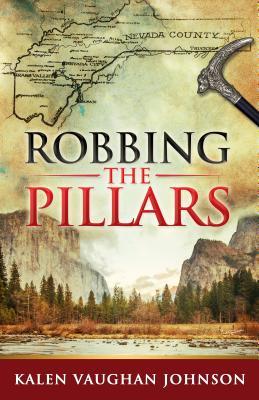
  • Robbing the Pillars by Kalen Vaughan Johnson – Historical Fiction

    Robbing the Pillars by Kalen Vaughan Johnson – Historical Fiction

    When James MacLaren flees his native Scotland, he leaves a body behind – but not his hatred of the upper class. In England, he meets and weds Emma, but will the skeletons in their shared past remain silent?

    Robbing the Pillars crosses the Atlantic and lands in Nevada City, California at the beginning of the Gold Rush, amidst the discovery of seemingly endless supplies of the precious mineral. James and Emma, now with their young daughter Charlotte, come out to California by wagon train accompanied by Emma’s best friend, Althea and her son Justin.

    Along the way and upon arrival in the region, they meet friends and ruffians including an entrepreneurial chancer with a conscience, an inveterate loser with a taste for alcohol and his eye fixed on Althea, and a Mexican who finds that MacLaren is the first white man he can trust.

    MacLaren involves himself in mining, engineering, and homesteading while Emma and Althea get a taste of town life and community activism. Their children meanwhile are growing up with a sense of true freedom that their European-born parents could never have known. In pursuit of his personal quest, Justin will come up against Althea’s past; and the beautiful, willful Charlotte and her father must learn to live with the pangs of lost love.

    Meanwhile, the territory is changing rapidly. Big men with big ideas are taking an interest in the fate of the new state and move to monopolize its resources. Into this mix, author Vaughan Johnson has expertly interwoven both fictional characters and real “empire barons” such as Leland Stanford, Collis Huntington, and Mark Hopkins into her epic tale.

    This first part of a planned series ends with the rumbling of war that splits the nation and brings about a sad parting that begs for a reunion in a later volume.

    Author Kalen Vaughan Johnson has created a large canvas; her knowledge of the region – its history, the mix of cultures, the lilt of varied accents, even the cuisine – highlights her obvious talent for creating richly detailed historical fiction. The title, for example, references an arcane aspect of mining in which, as the miners retreat from a played out vein, they risk dislodging the roof pillars as they go, endangering their lives by ferreting out every last flake of gold. Johnson depicts with equal verve and realism the lives of the rich, the wannabes, and those at the bottom struggling upward.

    A sweeping look at personal idealism and autonomy pitted against the forces of greed and manipulation, Robbing the Pillars is an emotive family saga solidly rooted in the American dream.

    5 Star Best Book Chanticleer Reviews round silver sticker


  • ISLANDS by Sara Stamey – a contemporary thriller that combines the lure of the Caribbean with gritty reality

    ISLANDS by Sara Stamey – a contemporary thriller that combines the lure of the Caribbean with gritty reality

    When anthropologist Susan Dunne goes to a Caribbean island to investigate a mysterious stone carving, she finds that it is not only the ancient past that haunts her, but a ghost from her closest family.

    Susan is drawn to the islands by a crumpled letter from her murdered brother, who before his death made a find that could lead her to academic fame. If she can locate his discovery, she may be able to prove that a petro-glyph hundreds of years old is of African origin, predating the incursion of Columbus to the Caribbean. The combination of her professional dreams and the nightmare of John’s violent killing quickly pull her into the bloody heart of the region’s notorious voodoo cult. Seeking an old, wise professor, Phillip Holte, who may know where to find the petro-glyphs, she is aided and at times thwarted by John’s grieving girlfriend Laura, and by John’s worst enemy, possibly his killer, Victor Manden.

    With Vic dogging her tracks and Laura watching from the sidelines, Susan, perilously naïve concerning the secrets of the island people, believes she is close to her goal when she finds and is befriended by Phillip. But she continually ignores the warnings of those who know better than she the danger she’s in. Almost too late she realizes that someone she has trusted is a force for savagery and suffering, pulling her into a morass of occult horror beyond her worst imagining. Before her island visit is over, Susan will have to confront the most primitive aspects of her own nature.

    Author Sara Stamey has lived some of what she has created in the fictional Islands: she is a world traveler, who, like Susan and her Caribbean companions, is an avid scuba diver. Stamey knows the region, colorfully painting the searing sunlight, the sparkling clear underwater world viewed by divers seeking buried treasure, the ubiquitous sweet and sometimes doctored rum drinks, and the tight, tense lines drawn between island “natives” (actually former slaves) and the “continentals,” the name given to the minority whites, former plantation masters now trying to cynically exploit their properties as a glitzy tourist trap.

    Mystical, romantic, intellectually and viscerally stimulating, Islands deftly depicts a woman’s encounter with deadly lies and the chance for true and lasting love.

  • JANE SINCLAIR by Tom Edwards – 1800s romantic adventure

    JANE SINCLAIR by Tom Edwards – 1800s romantic adventure

    A rich romantic adventure set in late 1800s England that is suitable for Young Adults and fans of Romantic fiction, “Jane Sinclair” touches on personal themes of success and failure interwoven with major social and economic issues of the era.

    The tale’s heroine, Jane, is the only child of a Hampshire farming couple that dote on her and offer her every opportunity for education. Clearly exceptional, the girl soaks up learning so that by the time she encounters the upper-class Charles Cholmondelay, destined for study at Oxford, she proves herself his intellectual equal while charming his heart.

    However, his father, the brutal Sir Richard, is determined his son will have nothing to do with a commoner; his threats to her family cause Jane to run away to London, where, desperate and penniless, she fortuitously winds up in the household of a kindly man named Bob. Bob will all but adopt Jane, and, impressed by her honesty and intelligence, will help to set her up in a small business and, ultimately, in the management of a garment factory. There Jane shows her considerable entrepreneurial and leadership skills, and, recalling her own humble origins, demonstrates that she is well ahead of her time in wishing for her factory workers to have basic rights and to be treated more humanely—a cause which is ahead of its time.

    Making a name for herself as the lone female in a high-level business position, Jane meets again with Charles, now graduated and ready to work as a lawyer. They plan to marry soon, but Charles decides he needs one last adventure before he settles down. He sets off to sea with friends, while Jane goes to France and to inspect and purchase a new exotic clothing line. She also develops a friendship with members of the Suffragette movement and shows herself an admirable public speaker on their behalf. When she hears that Charles and his friends have been shipwrecked, though, her idyllic world collapses and she nearly dies from despair. Charles meanwhile is the captive of ruthless pirates, and escape seems all but hopeless.

    The author of this intricately layered saga, Australian Tom Edwards, is himself an artist and adventurer; the scenes he depicts of Charles at sea doubtless come from his own experiences in the Royal Navy, sailing around the world with friends in a small boat, and living in many unusual locales.

    On nearly every page of his tightly constructed story he demonstrates the care he has taken with historical detail, down to the soap brand Jane will use, the clothing she chooses to wear and manufacture, and even the toilets, or “WCs,” she insists on providing for her workers. The dialogue and use of idiomatic phrases also show much care, as does Jane’s a brush with a real person, Mrs. Goulden, mother of the noted English suffragette Emmeline Pankhurst.

    Jane Sinclair by Tom Edwards deftly combines an entertaining and well-conceived rags-to-riches story from the female viewpoint, with a passionate tale of love lost and regained, a stirring vision of manly exploits on the high seas, and a respectful acknowledgment of the ideals of the early feminist movement.

  • ONCE in a BLUE YEAR by Michael D. Durkota

    ONCE in a BLUE YEAR by Michael D. Durkota

    Four friends fight for their country and combat their own hidden specters in this novel about underwater battles on a nuclear submarine and the struggle to live life on land.

    Dan is disaffected with the Navy and his life aboard a submarine carrying nuclear weapons where “there is nowhere to hide” – even from his friend, Trevor, who thrives on bullying him. When a freak accident releases him from duty, he becomes trapped in a different, more emotionally perilous way.

    Trevor, who often flies into inexplicable rages, wants to stay on board the sub when the Gulf War suddenly heats up as a way avoid facing Tara, a beautiful woman who loves him unreservedly.

    But Trevor doesn’t get his way when Nathan bumps him from the crew heading for the Persian Gulf. Nathan missed the birth of his first child. He has just begun to get to know him and renew his relationship with his wife Heather when he goes back to war, leaving everyone in a state of shock and surprise.

    And there’s Jags, the clown/philosopher of the quartet, who accidentally (or not) shoots himself in the foot to avoid going to the Gulf.

    Heather welcomes Dan, who had planned to live with Nathan. Dan becomes an awkward but kindly baby-sitter who watches as the abandoned wife of his good friend falls apart emotionally and needs more comfort than he is prepared to give. Trevor, forced to spend time with Tara, can no longer escape his childhood demons. Meanwhile, Jags has decided to marry a stripper. The three buddies on land are drawn even closer together as the subtleties of this multi-layered plot weave together. Nathan’s sudden return provides an unexpected opportunity for each to show his true mettle, not as warriors but as rehabilitated, redeemable people.

    The author, Michael D. Durkota, is a former submariner. In this hard-to-put-down debut novel he has crafted vivid descriptions of life inside a tin box carrying extremely dangerous cargo under the sea–from the bland meals, the surprisingly good coffee, and the sense of claustrophobia that for some is neatly balanced by a comforting sense of undeviating routine. Durkota has made each of his characters believable, each one coming to his private accommodation to the rigidly scheduled life in the Navy and the spontaneity and unpredictability of life on dry land. Too, Durkota depicts Heather and Tara as real, robust women with nearly broken hearts, trying to salvage the loves they thought were lost forever.

    Once in a Blue Year is a mesmerizing story of four friends who sometimes act like enemies and sometimes beat seemingly impossible odds to rescue their pals in a crunch.


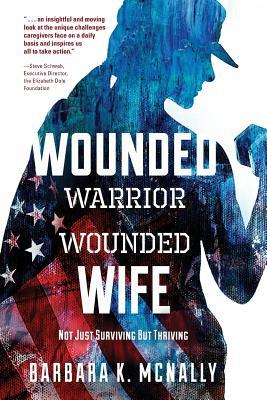
  • WOUNDED WARRIOR, WOUNDED WIFE: NOT JUST SURVIVING, BUT THRIVING – by Barbara McNally — a ground-breaking initiative

    WOUNDED WARRIOR, WOUNDED WIFE: NOT JUST SURVIVING, BUT THRIVING – by Barbara McNally — a ground-breaking initiative

    The critical issues surrounding post-traumatic stress among America’s wounded warriors is expanded here to include the challenges and concerns of military wives and families.

    Barbara McNally was working as a physical therapist when she watched helplessly as a man jumped off a bridge to his death. Feeling involved in his tragedy, she learned he was a wounded veteran. The experience spurred her to find out more about PTS and its effects on those who have participated in war.

    Gradually her attention focused on the plight of the wives of these wounded military survivors. This led to the creation of the Barbara McNally Foundation, dedicated to developing helpful strategies for those women she calls Fighters, who may never have been in the military, never been outside the US, but who struggle to bring a depressed, angry, and/or physically debilitated veteran back to a semblance of normal functioning, back to the role of parent, partner and lover.

    Her treatment plan, called SPA (Support, Purpose, Appreciation) brings these women together for a day or two of pampering—relaxation, massage, and a chance to talk with others in their same situation. For some, a SPA retreat is their first day away from the caregiver role in months or even years since their wounded partner returned.

    As women were able to vent with one another in the SPA atmosphere, their stories surfaced, some with happy endings, others still unresolved. These stories comprise much of McNally’s book, grouped in terms of the different ways that PTS can present itself: anger, coldness, and guilt are major emotional signs; in cases of physical injury, there are the pains and fears associated with prosthetic limbs, and the agonizingly slow recovery from traumatic brain injury. One wife had to deal with her husband’s increasing bouts of anger that grew into an alcohol addiction and finally into a suicide attempt. Another recounts waking up as her husband tried to strangle her, though he denied it later. Some stories highlight women’s efforts to recoup a sensual, satisfying sex life with a husband who, for physical or psychological reasons, does not feel able.

    The author says that the most important aspect of SPA is “self-care.” While the returned warrior may be offered various therapies, caregivers rarely have this choice, yet they need and indeed deserve time and attention for themselves. She also urges women to consider their options—to pursue their own careers, to leave or stay in a violent situation—objectively, without guilt.

    Along with the stories, McNally has assembled a substantial appendix offering lists of governmental, nonprofit and charitable agencies that help wounded warriors. There is also a study guide with questions relating to phases of PTS, making this book an excellent educational resource for individuals or groups. The author’s sincere wish is that the information she has gathered will be useful to the “wounded wives” and “hidden helpers” of those who have been injured mentally or physically while serving in the military.

    A ground-breaking initiative, Wounded Warrior, Wounded Wife, by Barbara McNally, offers advice and hope to those who are trying to understand and cope with war’s many aftershocks.


  • The UNEVEN ROAD: Book Two of First Light by Linda Cardillo —  a coming of age novel

    The UNEVEN ROAD: Book Two of First Light by Linda Cardillo — a coming of age novel

    Ringing with the changes from the deceptively placid 1950s to the turbulent 1960s, from the picturesque New England island of Martha’s Vineyard to the bloody jungles of Viet Nam, The Uneven Road is a sophisticated coming-of-age novel that intersects with historical events of this period.

    The second book of Linda Cardillo’s award-winning series, First Light, is written with verve and intelligence. Cardillo carefully constructs The Uneven Road with rich characterizations, diverging and interlocking plot elements, and fine attention to detail that explores family dynamics and the search for individual identity.

    This gripping saga continues when Izzy, Mae and Tobias’ seven-year-old daughter, contracts polio. Their twelve-year-old boy, Josiah, feels responsible not only for his sister’s pain, but all the troubles in his small world. Jo’s conflicted feelings escalate when he realizes that Mae’s island property, Innisfree, will be sold to pay for Izzy’s surgery. Even though he loves Izzy and wants her to walk without crutches, his parent’s cold-blooded willingness to part with Innisfree drives Jo to smash an important symbol of his past, the ceremonial Wampanoag drum bestowed on him by Tobias, and then runs away to Boston, where he stays with his Irish uncle, a policeman. Finally he enlists in the army, winding up as a medic on the killing fields of Viet Nam.

    Cardillo’s precise writing adds credibility to the vivid scenes that take place in Viet Nam where Jo struggles with the necessity to kill the enemy while charged with saving lives. Later, the author, again, deftly describes Jo’s very different experiences when he returns to the US, where he hangs out in a commune. No matter, Jo maintains his family contact mostly through Izzy, now in college on the mainland. Back on Chappy, Mae, going through her own changes, longs to see her son again. His journey home with Izzy and her friend Grace will re-connect him with his people, both Irish and Native American, and reveals to him that he and his mother are more alike than they ever thought possible.

    Captivatingly infused with often raw emotions and haunting memories of race, heritage, culture, and family dynamics, The Uneven Road, scatters its characters over time and place and draws them back together again with enduring values of family love and respect for heritage.

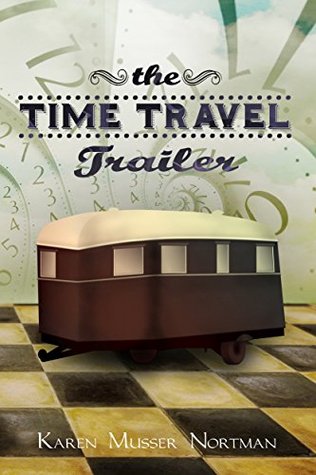
  • TIME TRAVEL TRAILER by Karen Musser Nortman – a quick fun read to take you on an armchair vacation

    TIME TRAVEL TRAILER by Karen Musser Nortman – a quick fun read to take you on an armchair vacation

    When Lynne McBrier acquires a vintage camping trailer, she can’t imagine that her camping trips will be journeys not just to new places, but to former times.

    Struggling to raise rebellious teenaged daughter Dinah after separating from her husband Kurt, Lynne buys the 1937 camper on impulse from her old friend Ben, who used it to take trips with his now deceased wife, Minnie. Dinah, who like most adolescent girls considers anything her mother wants her to do as boring, agrees reluctantly to go on one sentimental weekend camping trip before Lynne converts the trailer into an office.

    It’s pretty cozy as Lynne and Dinah settle into a local campground and tuck in for the night. But when they wake up, things around them have changed—there are no big trees, no paved roads, and the large cement bathhouse is gone, in its place, two wooden outhouses.

    They are forced to realize that, impossible as it seems, the trailer has transported them back in time; people talk to them about their fear of Russian spies, and everyone is dressed in outmoded costumes. Certain clues to the transformation allow them to reverse the process and return to 2014. They agree not to talk about their misadventure.

    But Lynne secretly takes a time trip on her own and Dinah wants to visit the past once more, having become obsessed with classic books about time travel. Each jump lands them in a different portion of the twentieth century. Lynne tries to get the truth about the trailer from Ben, but he is in hospital, raving incomprehensibly about Minnie. Then Lynne and Kurt are forced together to test the mysteries of time travel when Dinah goes missing, almost certainly carried away by the camper.

    Author Karen Musser Nortman has cleverly constructed this fantasy with many small but important particulars. Mother and daughter, whose testy relationship is realistically portrayed, visit a vintage store to get mid-century clothes and add an old-fashioned radio and other details to the camper so they’ll seem plausible to people they encounter in the 1930s, 40s, and 50s. Reminders of historical events—teen hobos in the Great Depression, Roger Bannister’s four-minute mile, the McCarthy hearings—contribute authenticity to the story, while touches like the strong family similarity in appearance and rebellious temperament between Dinah and her then teen-aged ancestor add poignancy.

    Well-drawn characters, tight plotting and the alluring possibility of returning to, and possibly changing, the past make The Time Travel Trailer an engaging, mind-tickling trip makes for a fun armchair vacation.


  • DOCTOR KINNEY’S HOUSEKEEPER by Sara Dahmen — The LARAMIE Grand Prize winner – captivating and heartwarming

    DOCTOR KINNEY’S HOUSEKEEPER by Sara Dahmen — The LARAMIE Grand Prize winner – captivating and heartwarming

    A timeless and heartwarming romantic historical fiction amidst a dramatically painted panorama of pioneer life in America’s heartland.

    Recently widowed, easterner Jane Weber hopes for a secure, quiet position as a housekeeper to a physician in the newly forming Dakota Territory, never imagining the many turns that life has in store for her.

    Dr. Patrick Kinney welcomes Jane’s application because she did simple nursing chores during her late husband’s illness. Arriving in Flats Junction she is met by the auburn-haired doctor, the independent and rather acerbic general store proprietress Kate, and an enigmatic Sioux landlady, Widow Hawks.

    Each evening when she leaves the doctor’s house after their companionable supper, a cowboy named Bern walks her to Widow Hawk’s strange dwelling. To the doctor’s delight, Jane displays talents as a cook, gardener, and secretary. But, still depressed after a dutiful marriage and sudden widowhood, she cannot fathom that the Doctor would show an interest in her as a woman, believing instead that he is courting Kate.

    Soon she begins to perceive some fault lines in the pleasant exterior of Flats Junction, notably the violent prejudice of some people, including Bern, against Native Americans like her newfound confidante, Widow Hawks. And soon, too, Jane will have to reveal that she is pregnant with a child conceived shortly before the death of her husband.

    After a series of traumatic events force Jane to acknowledge her strong feelings for Patrick, she resolves to leave Flats Junction and start her life over yet again. But she doesn’t reckon on the good doctor’s equally strong feelings or the lengths he will go to in winning her over.

    Author Sara Dahmen has clearly researched the era, vernacular and settings of her richly complex story. She brings into focus the joys and deprivations of life on the American frontier, the rigid proprieties that pertained in relations between the sexes, and the cutting edge of racial hatred that rankled towards the local displaced and marginalized American Indians.

    She sheds light on fascinating small details of everyday life in 1881—cookery, clothing and medical care. Dahmen also conveys a keen awareness of the sometimes desperate needs of a woman’s heart, as her heroine wavers between her unexpected passion for Patrick and the possibility of a respectable, but unexciting, match with someone else.

    Captivating and vividly portrayed, “Doctor Kinney’s Housekeeper, ” is a delightful read that is refreshing and original as it is entertaining.