Author: A. Libey

  • An Editorial Review of “19 Remarkable Northwest Women” by Carolyn Leeper

    An Editorial Review of “19 Remarkable Northwest Women” by Carolyn Leeper

    Carolyn Leeper’s newest work, 19 Remarkable Northwest Women, is an inspiring and motivational compilation of profiles of 19 women she has met through the years. These women have led very different lives, but they all have one thing in common: the ability to “evoke change through choice” (as Billie Miller states in the foreword).

    The book is composed of short vignettes, each profiling a different northwest woman who Mrs. Leeper finds inspirational. These women are very different; they range from entrepreneurs, to writers, private investigators, captains, CEOs and more.

    Each profile covers the featured woman’s career history, interests, what advice she would offer to other women, and ends with a short horoscope reading. The advice offered throughout the book is consistently uplifting and motivating, with an emphasis on action, involvement, and having the tenacity to grab opportunities as they arise.

    The book features women such as Robin Akkermann, Pamela Beason, Kathryn Brown, Deborah McFarlane, and Irene Roberts. Many of the women featured have held multiple and varied careers. All of the women have created change and success in their lives through conscious decision making, often at very difficult times. These are women who are lifelong explorers and learners; women who are actively involved in life. They are the kind of women that we interact with on a daily basis. These are not extreme sports athletes, or corporate moguls, or women who have survived devastating situations. They are women with whom most of us can relate to and that is the beauty of Mrs. Leeper’s slim volume. These are ordinary women who have had positive impact on many lives–especially in the Pacific Northwest. Mrs. Leeper’s passes their advice on to young women to follow their passions, never give up, and help each other along the way.

    19 Remarkable Northwest Women focuses on the work/life balance that many women feel they struggle with. Mrs. Leeper lets the reader know that women really can have it all…with a support network in place, the encouragement of other women, and the gumption to go out there and do it. As Mrs. Leeper states, “These women are living the lives they want…not just doing what others expect of them.”

    [Editor’s Note: The only item that I would add to 19 Remarkable Northwest Women is that Carolyn Leeper should round out the number to 20 remarkable northwest women. Mrs. Leeper, author and interviewer of this work is a published author, retired travel agent, an emeritus board member of Whatcom Writers and Publishers, a longstanding member of Washington Business and Professional Women organization, and an active volunteer with many non-profits.]
  • The INHERITORS by Judith Kirscht – Literary Fiction, Contemporary

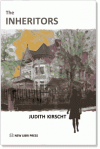
    The INHERITORS by Judith Kirscht – Literary Fiction, Contemporary

    The year is 1980, and our introduction to Alicia Barron’s life begins with tragedy.  Alicia has recently returned to her childhood neighborhood to teach elementary school and her closest friend, Maria Sandoval, has died in a car crash along with her husband and their oldest child.

    Growing up in a largely Latino neighborhood where the cultural and family ties were extremely strong, Alicia always had the nagging doubt that her mother didn’t belong.  When she sided with the protesters against the Viet Nam Conflict, she found herself on the opposite side of many lifelong friends and family members—some who lost loved ones in the Korean War and in Viet Nam. It wasn’t long before Alicia found herself feeling ostracized even by her own mother, Carla.

    When Carla dies, Alicia inherits her grandfather’s house along with keys to unlocking her family’s past. Alicia sets out to learn more about her mother’s family in an effort to achieve greater understanding of her mother and give herself the roots and family history she so desires.  She has already learned and accepted that her mother was white, but what she learns next shakes the foundation of what she holds true—that family heritage may determine a large part of who we are.

    Growing up Alicia craved the kind of roots and dynamics that she thought a big strong family should have–such as the ones she saw growing up. She felt that her mother was unwilling to provide these things. Whenever Alicia would question her mother about who they were her mother would tell her she had a “Latin soul” and that was all that mattered.  Alicia spent the first part of her life believing she was a “Latina princess” while the other children in school whispered she was mestiza.

    Some readers may be unfamiliar with the term mestiza and it is never really defined in the novel.  The term mestiza roughly refers to someone of mixed racial or ethnic heritage and specifically refers to someone with mixed European and Native American heritage. Alicia is Chilean and European and therefore “mestiza” in the eyes of others, most notably the large Mexican population that makes up her neighborhood. Alicia finds herself in limbo feeling that she is not fitting in anywhere.

    Alicia must overcome several hurdles in her journey to learn more about her mother and herself, one of which is her boyfriend, Ricardo Moreno.  Ricardo is conflicted about Alicia’s heritage.  While he loves Alicia’s passion for life and dancing and her Latina heritage, he is unable to accept her “gringa” side.  This is a part of Alicia he wants to ignore completely (along with her mother) or at the very least, avoid as much as possible. But Alicia feels this is a rejection of a part of her that she cannot deny exists.

    Kirscht deftly tackles the sensitive issues of racism, cultural bias, and discrimination from, what may be considered by some, a new and different perspective. She shows through The Inheritors  timeline the ever changing nature of ethnicity, culture, and belonging. Readers are instantly dropped into the changing culture of Chicago under the prism of the 1960s through the 1980s with narrative flashbacks.

    The Inheritors by Judith Kirscht is a novel of one woman grappling to find her cultural and personal identity. Tolerance of others and the need for communication is required from each of us is an overriding theme in this second work of Kirscht’s that explores the complexities of human nature and family bonds.


  • An Editorial Review of “Home Fires” by Judith Kirscht

    An Editorial Review of “Home Fires” by Judith Kirscht

    Home Fires by Judith Kirscht is a deeply emotional and dramatic story that unearths buried secrets kept by a family that spans three generations. The author unflinchingly faces the darker and often concealed sides of families and marriages and the dysfunctions that surface in a myriad of unexpected ways.

    Kirscht takes the reader to sunny Goleta, California, where her protagonist, Myra, takes her morning ritual of a walk by the tide pools. Then, immediately we learn the need for the ritual. Myra is fighting to keep troubled feelings about her marriage at bay.  The story takes off at breakneck speed when Myra can no longer deny her suspicions that her husband, Derek, has recently had an affair. When Myra confronts Derek, their conversation opens a Pandora’s Box of pent up feelings in her. Realizing this is not the first, nor likely will this be the last time he will cheat on her, Myra falls into a depression.

    Myra finds herself on the receiving end of several differing opinions as to what she should do about Derek’s infidelity. Derek’s mother tells Myra that in Derek’s profession, that of college professor, his behavior is to be expected, but more than that, it doesn’t make their relationship less important. She tells Myra that their men will always come back home to them after they become bored with their latest dalliance.

    Despite these reassurances Myra cannot bring herself to forgive Derek for what he has done. Myra decides to stay with Derek for the time being for the sake of their two teenage children, Peter and Susan.

    Late one night though, dark fears arise in Myra’s mind. Accusations and suspicion abound when Myra hears her daughter cry out and catches Derek coming out of her room. He tries to convince Myra that their daughter was merely having one of her many nightmares, but she is unable to believe him.

    Myra divorces Derek and begins a new life for herself. But when Derek makes a sudden reappearance, her world is turned upside down with new doubts, fears, and suspicions.

    Although this novel masterfully renders the emotional hardships and tragedies that are sometimes part of dysfunctional relationships, it is not depressing to read. It is an evocative story that does not force opinions or an agenda.

    Home Fires is an intelligently written, fast-paced family drama that unfolds into a suspenseful page-turner. With spot-on dialog and believable characters, Kirscht explores the complexities of human nature and family bonds that sometimes lurk beneath seemingly idyllic veneers of normalcy.

  • An Editorial Review of “Fatal Induction” by Bernadette Pajer

    An Editorial Review of “Fatal Induction” by Bernadette Pajer

    Set against the backdrop of a national tragedy—the assassination of President McKinley—Fatal Induction by Bernadette Pajer follows Professor Benjamin Bradshaw as he scrambles to catch a killer. The year is 1901 and Seattle is a vibrant and up-and-coming city. Bradshaw, a professor of electrical engineering and a passionate inventor, has entered a new invention competition for a  device that will carry the sounds of a musical theater production through telephone wires to listeners in the comfort of their own homes.

    Bradshaw is unaware that a seemingly trivial domestic concern at home is about to sweep him into the underworld of Seattle. With the needling of his housekeeper, Mrs. Prouty, Bradshaw inspects a peddler’s cart that has been abandoned near his house. “Ralph’s Redeeming Restorative” is emblazoned across the side and upon further investigation, Bradshaw discovers a small and well-loved doll inside the cart that must surely belong to a young girl.

    Bradshaw turns to good friend Detective James O’Brien for help in locating the girl and her father. He discovers the missing peddler’s body in his own neighborhood and quickly realizes that the only witness to his murder may be his missing daughter, Emily, which puts her in grave danger.

    When Bradshaw finds that solving the murder of a roving peddler is not high on the police department agenda, he must rely on his own skills of deduction to locate Emily. Bradshaw finds himself delving into the seedy underbelly of Seattle, the wicked tenderloin district. Death threats are quick to follow and Bradshaw finds himself embroiled in something much larger and more far-reaching than he ever suspected. Bradshaw has something else to cope with as well—his growing affection for a young woman named Missouri, the niece of his best friend and a woman Bradshaw feels he can never be with.

    Pajer’s vivid writing takes readers to this exciting time that is in the crossroads of scientific investigation and innovation, when automobiles and horse drawn carts compete for the same streets, and the United States reels with political unrest and social upheaval. Readers will warm to the curmudgeonly and reserved professor who has a heart of gold and a penchant for investigation. All four books in the series have earned the peer reviewed Washington Academy of Sciences Seal of Approval for scientific accuracy.

    Like all important novels, this mystery has wider implications for the larger world than the story is set in. We posit that the Professor Bradshaw series is on its way to being considered a classic in the mystery genre.

    “Fatal Induction” by Bernadette Pajer was awarded the Overall Grand Prize for Best Book in the Mystery and Mayhem Awards 2013, a division of Chanticleer Blue Ribbon Writing Competitions.


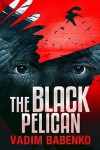
  • An Editorial Review of “The Black Pelican” by Vadim Babenko

    An Editorial Review of “The Black Pelican” by Vadim Babenko

    Vadim Babenko is a master of delving into the mind and heart of post-Soviet Russia with his contemporary literary works. The Black Pelican, his first novel, transcends genres with its complexity of story and supernatural elements. It was nominated for Russian Big Book Awards and the National Bestseller Awards.

    Told in two parts, The Black Pelican, utilizes a borderline stark narrative style that does not follow a traditional plot driven storyline. Written with intermittent lush and beautiful turns of phrase, Babenko  describes his hauntingly bizarre world. Readers may find themselves wondering if there really are mysterious men randomly running through restaurants or if animals with unsettling purple eyes really do exist. Rest assured, every bizarre scenario where the narrator finds himself in is one hundred percent real.

    The story centers on Vitus, the narrator, who is journeying to the mysterious and enigmatic City of M., in pursuit of Julian, a former co-worker. Vitus cannot forgive Julian his sins: his success at work, his charisma, and perhaps worst of all, his triumphant wooing of Vera back from Vitus. Vera is one of the few women Vitus has connected with on an emotional level.

    When Vitus arrives in the City of M. he is paranoid, on the border of nihilism, and at a tipping point in his life. The one thing he holds dear is his secret–his plan to kill Julian and get his revenge.

    Soon after his arrival, Vitus meets the menacing hotel-keeper Piolin, and Gibbs, a man with only half a face that he says is due to an encounter with the Black Pelicans—birds that live only in myth for most of the population despite their very real and incredibly violent existence.

    Unable to find Julian, Vitus fears that he will fail to carry out his murder. Piolin and Gibbs quickly come up with a plan to help him track down Julian. Vitus finds himself going to the surreal landscape of the Dunes with Gibbs and a motley crew: Sylvia and Stella. He soon realizes that the group itself has an ulterior motive. Meanwhile, the Black Pelicans loom menacingly on the horizon.

    Inevitably, Vitus finds himself face to face with one of the Black Pelicans. His encounter leaves him scarred both mentally and physically. After the occurrences in the Dunes, Vitus takes time to heal and begins to contemplate his life.  What happens next is something neither the reader nor Vitus expect.

    Marked for life after his encounter with the Black Pelicans, Vitus must face several choices.  Shall he return to the Capital and his old way of life?  Should he go back to the City of M.?  And most importantly, what should he do about Julian?  At the heart of the novel is one man’s quest for fulfillment and meaning in an often cold and irrational world.

    Those who take pleasure in contemplative literary works will find Vitus’ scenes of self-reflection, philosophical conjectures, and observations of others satisfying. This novel reflects the emotional turning point in Babenko’s life where he, indeed, met his own Black Pelicans face to face. His writing draws you into the construct of this treacherous and threatening landscape and engages you with its twisted and gripping characters.

    The Black Pelican is a sagacious novel that is powerfully written. You will find yourself reflecting on the philosophical questions Babenko puts forth long after you have read the last page. We look forward to reading Babenko’s next work.

    “Each book is a separate universe, a cosmos with its own metrics. The only thing that makes sense in my life is nourishing these universes in my mind for years, and when they’re mature enough, converting them into written narratives, fixing their inner logic, setting the laws of their physics.” – Vadim Babenko